← Beyond Blind Blaming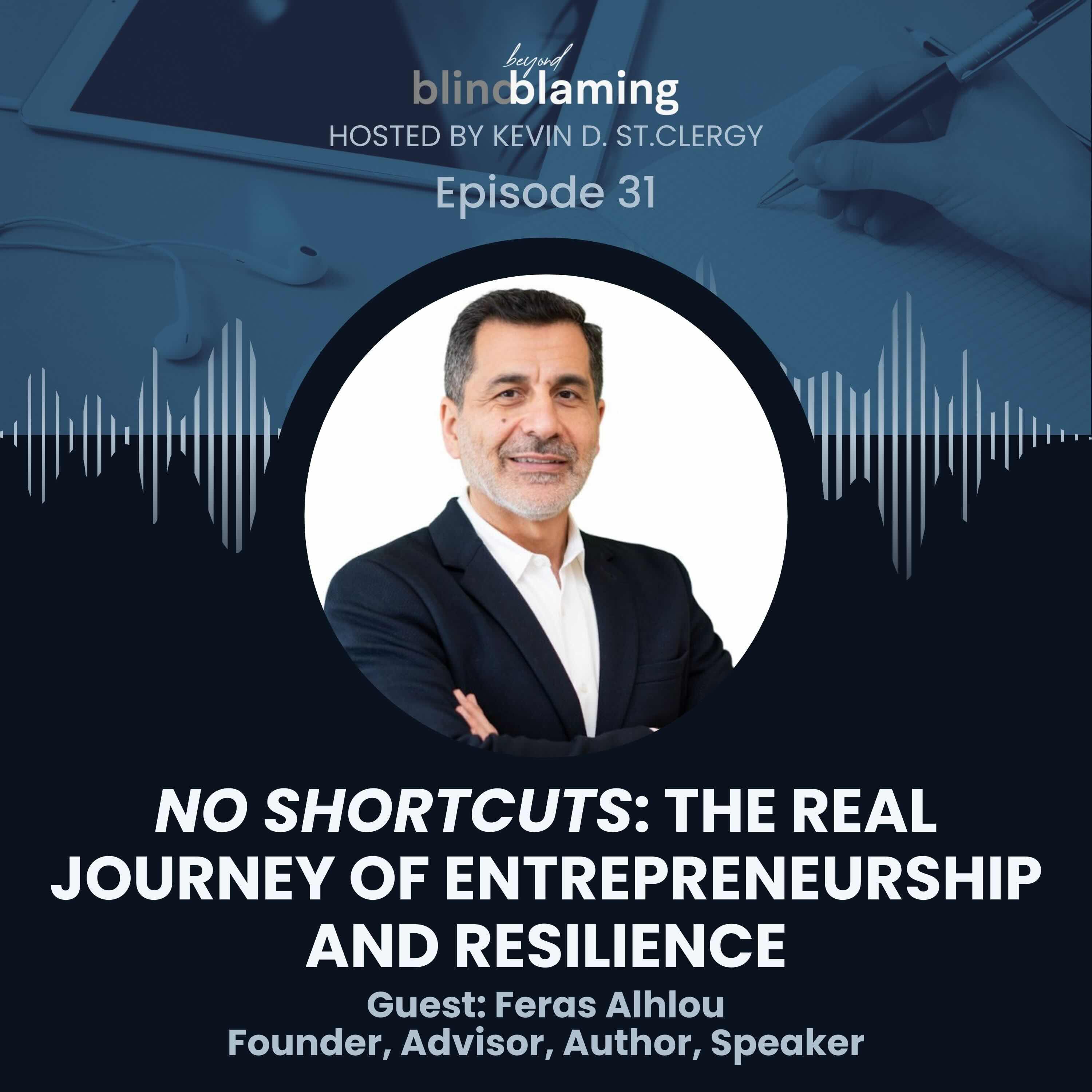
Loading summary
Transcript67 lines
- [00:00]
A
So that was really the story of focus and pivoting and saying no to distractions. To be able to be an expert and to be a known entity, a known consultant in the industry. Because you niche down and focus so much on this one area, I figured there's only so much time in the day for me as a founder and also for the team. So if we want to be really, really great at something, we have to dedicate time and effort to it, which means we have to let go of other things.
- [00:30]
B
Today I'm joined by Ferris and I'll say it again, I said it twice. Al Hulu Faris is a seasoned entrepreneur, author and has owned several companies and sold several companies. He's best known as the co founder of Epsilon Technologies where he led an innovative data strategy that helped businesses scale globally.
- [00:48]
A
This is the best time for you to start a business is when you dedicate time to do the research, to do the hard work to do and willing to sacrifice some of the comfort. Some of the comfort.
- [01:10]
B
Welcome to Beyond Blind Blaming. This is the place where we explore how easily hidden truths can hold us back, trapping us in cycles of frustration and blame, often without even realizing what's truly stopping us. Each week I'm joined by experts and professionals who share their journey of taking back control of their story, overcoming hidden challenges and stopping blind blaming from dictating their outcomes. The insights you're about to gain will help you see beyond your current limitations, find the courage to seek new perspectives and ultimately live a life that's both purposeful and powerful. So if you're ready to break free from blind blaming and discover what's possible, you'll definitely want to listen to my next guest. I'm your host Kevin Saint Clergy and today I'm joined by Ferris. And I'll say it again, I said it twice. Al Hulu and I think I got it right. Ferris is a seasoned entrepreneur, author and has owned several companies and sold several companies. He's best known as the co founder of Epsilon Technologies where he led an innovative data strategies that helped businesses scale globally. Ferris has a passion for helping startups and entrepreneurs navigate the complexities of business growth, digital analytics and strategic innovation. He's also the author of Google Analytics Breakthrough, a highly regarded guide on data driven decision making and a frequent speaker at industry events. Ferris now devotes his time to mentoring founders and providing practical frameworks for building sustainable companies. His mission is to help entrepreneurs move beyond blind blaming and identify the real obstacles holding them back from success. Ferris, welcome to the show.
- [02:38]
A
Thank you so Much. Kevin, I'm glad to be here.
- [02:40]
B
Hopefully I got the bio right.
- [02:42]
A
Oh yeah, you know, we'll talk about it some more. But yeah, it's all good.
- [02:46]
B
Well, you've built and sold successful companies from what I read. And what first got you into entrepreneurship and what fuels your passion for helping others today?
- [02:55]
A
You know, I joke around and I say I was forced into entrepreneurship. This was back in 2003. I was a VP at a tech startup here in Silicon Valley. And one day the CEO walked into the office and said, hey Ferris, do you have a few minutes? I said sure. And then he closed the door, which something he didn't usually do. And he said, hey Faris, tomorrow we have a layoff and you're impacted. So I'm a VP in this high tech company. We raised $96 million at the time we were building the next telecom infrastructure and then I'm getting this notice that I'm laid off. So my heart was racing, my stomach dropping, earth shattering under my feet. What do I do? What do I tell my wife? I had a young family, family at the time with three children. It was one of the most difficult moments in my professional life. I went home and talked to my wife and she was very supportive as she has always been for the last 37 years.
- [03:55]
B
Wow.
- [03:56]
A
You know, it took me a couple days to mourn and, and why me and what did I do wrong and why did they pick on me and all that and, and then, you know, you know, you have to, I have to bring food to the table. So after the, the two day of morning, the two day, this period of two day of morning for two days and decided, you know what, I got to go out and start to send out resumes. Seven weeks into it, zero interviews. It was a tough market similar to now in a way. After the dot com burst, I ended up walking into a conversation with a friend who wanted to start a business and we joined hand and resources and we, we, we started our very first business business in 2003 selling websites to small business owners. So that's, that's how I got into it.
- [04:41]
B
I love it. That's, that was actually my first big business that I sold a couple years ago. We, we had a, a digital marketing company that, and we started building websites and we grew it to about 900 customers.
- [04:55]
A
So nice, nice.
- [04:56]
B
So yeah, it was a great exit. So yeah, we got that in common. Well, how did you get into some of the Google Analytics stuff that you wrote your book on? Your book? I think if I read, I Kind of skimmed it to get ready for this. I want to go back and read it again. But it emphasizes data driven decision making, which I loved. How did you come to realize the power of analytics and business success?
- [05:14]
A
Yeah, sure. So 2003 was the dawn of the Internet. So we were convincing these small, very small business owners, restaurants, small dental offices, why they needed a website. I know for the younger listeners. Now wait a second, you can go on GoDaddy.com and build a website. Well, you can go on ChatGPT, whatever in five minutes. Right at the time it was cutting edge. So we got into websites. Then we got into online marketing. That was the next logical thing. Now that we have customers and we struggled a lot. It took us a couple years to figure it out, was not an overnight success. Then we have the website, we're maintaining the website, we're making, we have some recurring revenue. Now we can also upsell online marketing services. And then with online marketing, there's data. So we used to go to these business owners on a monthly or monthly meeting, say, look at how many traffics, how many hits we got to your website, look how many leads we got you off of your website. So we saw in their own eyes, like their eyes would, they would, their ears would perk up and they would look us and they've never seen anything like this. They were advertising in all these other forms or formats and they were not seeing data. So we saw that business owners cherished data. And then Google has introduced Google Analytics at the time. So we learned it, we, there were a couple of books on it at the time. And then we became a Google certified partner which brought us bigger leads, brought us significantly different. We went from selling to small businesses to, to like the Fortune 1000 initially and later to Fortune 100. And, and we got, we, we, we sort of success, breed success. So as we got better with data and with planning, with implementing, with showing dashboards to business owners, to executives, we saw their reaction. We saw how we were helping businesses improve the cost, improve on their return on investment for their ads, you know, for their campaigns. And we doubled down and more or less left everything behind. So gradually got out of online marketing, gradually got out of web design, web development and really doubled down and focused on, on analytics and became, eventually we became one of the top Google Analytics certified partners globally out of a, maybe a network of 200 plus partners. So that focus, that doubling down and really leaving everything saying no to other businesses helped us grow that business. Eventually in 2015, 16 to 8 figures that we later Sold to Dentsu, the global media giant in 2019. So that was literally the story of focus and pivoting and saying no to distractions. To be able to be an expert and to be a known entity and known consultant in the industry. Because you niche down and focus so much on this one area.
- [08:02]
B
Yeah, we do the same thing. We focus just on audiology as you and I discussed before we got started. And it worked really well to have a niche that we did. It's very different having this podcast and this new book that kind of focuses on everybody, which it sounds like you're working with other businesses. But you said something I liked you, you niched it down and you started saying no to customers. Talk to us about where you, how you got to that level. Because when I learned how to say no is when my business really started to grow. Can we spend a little time there?
- [08:30]
A
Yeah, sure. So let me back up a little bit. So when I was forced into entrepreneurship, I had to make it work because bring food to the table, right? So, so I didn't know how to do sale. I didn't know how to do marketing. I was selling or, sorry, I was servicing. I was, I was VP of professional services. Meeting with C level at Comcast, at Cox, at AT&T. That was the environment I was in. Forced into entrepreneurship now having to sell and talk and knock on doors to small business owners. So, so, so I learned sales from the ground up because I had to. And, and, and then, and then for me, every little revenue was a success because I can sell, right? So later to go from selling and loving, you know, ended up really enjoying what I was doing because I'm adding value to the customers. Saying no to, to, to, to revenue and to sales was really hard. But I figured there's only so much time in the day for me as a founder and also for the team. So if we want to be really, really great at something, we have to dedicate time and effort to it, which means we have to let go of other things. So we came up with a plan where over about a year or so, all the web design, all the online marketing clients we had, we had a plan to gradually pass them on to industry friends that we've known over the years. And we knew that they could take care of those customers. And we didn't do any, any commissions. We just pass on clients. And we had these one on one discussions with the clients that, hey, you know this, you know, we're moving, we're pivoting to something else. And then this this partner of ours can take care of you. And you know, life works in amazing ways. The universe or God, whatever you believe in, these same clients or these same partners that we pass on business to, they ended up sending us amazing leads in analytics. So the lesson there is, I think, focusing on one thing. If you want to focus on one thing, you have to let go of other things. Now. Don't do it abruptly, don't do it emotionally, plan it, have partners ready to help you if you're sort of saying no to business. And then the universe will work its way to get you a whole lot more business in the area that you're focusing on.
- [10:46]
B
That's so interesting you say that because there was a time during that whole journey where I had, we had one big client. I got this huge corporate client. I was so excited. They ended up getting to the point after a couple of years, we were their digital marketing company behind the scenes. And within a couple of years, they were a buying group in our, that chosen profession. And after a couple of years, we got them so big that they decided to bring it in house.
- [11:08]
A
Yep.
- [11:08]
B
And I remember the call like it was yesterday. And it was actually my coach at the time who said, kevin, why are you freaking out there? 90% of your support tickets and 15% of your revenue, this is going to give you so much more time to take care of people better and grow. And it did. And, but at the time I felt like, oh my God, this is a huge hit. What am I going to do?
- [11:29]
A
It's hard. Yeah. You know, especially, especially if it's a big client. Yeah. So diversifying is important, but yeah, I'm glad it worked out well.
- [11:35]
B
So a lot of entrepreneurs now we're getting into some of the blind blaming stuff. Many entrepreneurs blame market conditions, bad hires, or external factors when their businesses struggle. From your experience, what are some of the biggest internal blind spots that hold founders back? Yeah.
- [11:50]
A
You know, I love that quote from Jim Collins. I think it was in his first book, the Good to Great. I think he said something like this, say as a founder, as a, as a leader, when things go well, look out the window and credit others. And when things go bad, look at the mirror. So you have to take this and in my mind, from a self improvement perspective, if you want to grow as a person, as a founder, as a leader, you always want to learn from what happened. But you also have to balance that with blaming yourself because that's not a, not a healthy space to be in. And I, you know, in, in today's Society sometimes these people in a, in a way glorify failure. Yeah. Failed. I failed. I failed. Well, okay, you gotta. If you keep failing, that's not a good thing. You know, failure is there. You know, you want to get back and learn from that failure. So I think it's important to balance between understanding and assessing what happened to you as a business owner or, or if you were laid off, assess. Why were you part of the bottom of 20% if that was the case? Sometimes layoffs happen to the best of us because an entire division is, is, is just shut down. But if you're laid off, why. What could have. What could have been could have I done better? So you do it next time around. But don't stay in this, in this zone of, of, of. They picked on me. I could have done things in a different way. It's just not healthy. You know, you want to learn from what happened and then that's. I think the definition of resilience is to get back up quickly. So failure will happen. Things will hit us without our control. Covid is just not too far away. Right. You could have done the best business, but if your business depend on people walking in, you're hit with something beyond your control. So learn from that and then, and then, and then go back to, to the next thing and, and start the next day with it, with, you know, with new energy. Not. Not easy. I'm not saying it's easy, but, but that's sort of how I look at it and that's what I advise founders.
- [13:57]
B
I think it's incredible advice. You're teaching people how to stop blaming and complaining and get to work and focus on solutions, not what's happening. That's what I hear you saying.
- [14:04]
A
Absolutely. I mean, there's just so much to complain about. You know, people ask me all the time, when is it a good time to start a business or is there. There is economic conditions and we hear, you know, national news. It's don't, don't watch the news more than.
- [14:22]
B
Right. The world's a do.
- [14:23]
A
You can watch it for comedy. You know, that's, that's a different. We're not going to get into politics. But, but the best time to start a business is not about a recession or the lack thereof. It's when you've done your preparedness, you've done your homework, you've vetted your idea, you've vetted the market, you've spoken with potential clients, you've learned from them about their pain points, you've researched your competitors. And you figured out a way, your offer and how you can stand out. This is the best time to start a business. Whether you are working today and you're spending an hour a night and a couple hours on the weekend to prepare for that venture or if you laid off and, and now you have time and you have maybe a bit of a financial Runway, this is the time, this is the best time for you to start a business is when you dedicate time to do the research, to do the hard work and willing to sacrifice some of the comfort, some of the comfort that like that's I think when it's a good time to start a business, don't, I mean of course don't go into a vertical that is, you know, go in a vertical that is growing healthcare for the elderly. It's booming. It's the number one sector in the next 10 years. Right. We have an aging population. So there are a lot of, you know, AI things to do with AI of course on the consulting side, not just on the product side. So look obviously for growing industries but don't blame others, don't blame the competitors or the customers or whatever you know, you could blame. It's that, that's at least how I think about it.
- [15:54]
B
And I, I'm going to go back to that Jim Collins quote because it's what you quoted was exact opposite of something called self serving bias. Have you heard of that? It's one of the cognitive biases that we have.
- [16:04]
A
Yeah, absolutely.
- [16:05]
B
So it's where we think when things are going well. It's all us, we did it all, it was us. I'm awesome. And when things don't go well, that's when we start to blind blame and we like oh no, it must be the market, it must be something else.
- [16:16]
A
Yeah, you know, I think, you know, in data, back to data and analytics, one of the toughest challenges to, to solve for, especially for larger brands when you're doing multiple, you have multiple marketing channels like what led to a customer, like what, you know, attribution. You know, we spend a million dollars on social, a million dollars on search, a million dollars on paid ad. Like what led this customer to convert to buy from us. And it's a really hard not to crack but you can't sort of. It's not just a X plus Y plus Z, you know, formula. It's, it's, you look at different factors and I think in life when things happen to us or things, you know, we cause things to happen to ourselves, there are a lot of contributing Factors in relationships, if the wife is not happy with you, it's probably not that last thing that you just did that made her unhappy. There are probably other things that you've done for the last 48 hours that led to that, that maybe moment where when she, you know, she may be rightfully or otherwise told you that, you know, you got to fix something. So, so I think assessing what contributed to a situation, success or failure, I think is important because then you can understand the root causes and then maybe change your habits, change your behavior, change your team members to help you in the next, you know, the next go around.
- [17:37]
B
I love it. Can you think of another example where a founder thought they knew what the problem was, but then they realized it was something completely different and, and once they fixed it, they took off?
- [17:47]
A
Yeah, I think, I mean it's at the sort of, if you're an early state founder, tech or services, a lot of times I forget the exact number, but a high percentage of failure is due to founders not doing enough market research. So especially early stage, I mean late stage founders, they're different reasons for failures. But, but do you really understand the pain points of your clients? So if I'm here, I remember from one of our businesses when, early on when we were doing web design, basic websites initially, later we saw an opportunity to build portals and portals like, like a matrimonial portal, like really complex websites with a lot of databases at the time. And all that. And we had zero background in this, but we saw it was, you know, we can, instead of selling a website for $2,000, I can sell this porter for $20,000. And I can tell you, Kevin, that we lost our shirt on two big projects. I was the happiest person when I sold them at 16, 16, 5 at the time and won about $20,000. But we could not deliver because we just, we didn't have the know how, we didn't have the right developers. And we were, we were, we were, we, we noticed, we would notice that companies are now starting to offshore. And so our cost basis was so high we couldn't compete. So, so realizing that instead of, instead of just being stubborn, I want to go after this revenue, we decided to meet those clients and say, you know what? We, we just can't deliver for you. It was a very awkward conversation and we had, obviously there were some financial ramifications, but we had to be honest with ourselves and honest with our clients to that. We just could not do that. And then we pivoted, we stayed that way. We said I will never do web development ever, ever, ever. It just did not, it did not work out for me. And there were some trends in the industry where people were offshoring and we just did not compete with that. So I think it's okay to, to be a little bit stubborn, persistent as a founder and, and pursue things and, and doubling down. But at one point there's a lot of signals for, from people from the market, from people who know you and know your business. You might want to maybe pivot or even just shut down this initiative and then move your resources elsewhere.
- [20:09]
B
I like that advice because I think a lot of people stay stuck because they keep trying to solve the same problem over and over again and sometimes they just need to let it go. That's what I hear you're saying. Yeah.
- [20:19]
A
And it could be sometimes behavioral, you know, like it could be back to blaming. My customers are not converting. You know, actually I was, I was on Reddit the other day and I saw this, this title of an article. Someone says I'm 30, almost 30 and I'm still not a millionaire. So I mean, not to bash Gen Z, we have Gen Z working for us here and I love Gen zers and all that and I have children, all that. But I don't know what got to people's mind that it is the norm that you become a millionaire at 30. This is not the norm. So sometimes in terms of blame or in terms of looking at life, I think the right way. It's a mindset. It's not something that you do. It's not a skill that you have to acquire. It's really in your mind. Yes, I want you to work hard. I work very hard. Even after selling an eight figure company, I still work hard. I volunteer, I do other things. I'm building new venture now, producing a lot of content. But you have to be also you, you want to, I want you to work hard. I want you to, to, to. To give it your best, but also understand, be realistic. So, so I think a lot of, a lot of founders, from my experience, they haven't had the opportunity maybe to learn from other founders, from advisors, coaches, people who have been down this path before them on, on, on the importance of having the right entrepreneurial mindset and the right expectations. I think that's, that's something I, I see a lot as well.
- [21:52]
B
That's great advice because I think we've addressed that a couple of times on the podcast already. There's a woman who wrote a book called the New Happy and she notices That a lot of times people, especially younger people, associate happiness with things and money. And we all know that, you know, we've all made a lot of money there. At least you and I have. Sometimes that's not going to make you happy. It was something I thought in my 30s that would make me a lot of happy, but it didn't.
- [22:17]
A
Yeah, I think spot on. And, and I think it was, I think I just saw something on, on LinkedIn. It was Jeff Bezos. Although now I think he changed his lifestyle. But at one point, even when he was a billionaire, this is maybe 15 years ago or something, he was still driving a Honda or very, very modest car. And the interviewer asked him, what's up with the Honda? He said, well, it's a perfectly good car. I think now it's, maybe it changes.
- [22:43]
B
Yeah, he's got a, you know, $300 million yacht or something like that.
- [22:46]
A
Exactly.
- [22:46]
B
And the wedding, all that.
- [22:47]
A
So I mean, good for him.
- [22:49]
B
You know, there it's, you know, it's interesting you bring that up because I lived very small for many years until I sold my company. And then I have a nice house and I've had a few kids that have said things like, you know, Kevin, not everybody's afforded the same luxuries as you. And I took offense to it. I was like, well, like, you're right. Not everybody wants to work seven days a week for six years trying to figure this out.
- [23:10]
A
So spot on. And again, maybe this is old school, but I tell founders, I mean, if there's whole get rich quick scheming out there and this overnight success myth, and you know, we have a YouTube channel and I follow things on YouTube and there's a lot of that. And in my mind, this is the biggest disservice to all on want to be entrepreneurs. There are no shortcuts in, in life, in relationships, and also in business. Same thing at the gym. If you want to run a, or if you want to run a marathon. I'm into martial arts. You cannot get a black belt overnight. Different, different arts will give you black belt at different stages. But to really. And mastery is, is a lifelong journey. So. So if you want to get to seven figures and you're still struggling to sell a ten thousand dollar project, my friend, you have a long way. Now you can expedite, you can get there with less gray hair. You can get there with, you know, with someone showing you maybe the map that will make the terrain easier. Right. It will be your journey, though. It will be your journey. You'll get a good coach, a good advisor, someone you read books. I'm all for that. But you still have to travel the journey. There are no ifs, buts about it. There are no shortcuts. Yes, you can get lucky 100%. Yes. Your chances of making it big is just like the chances of winning the lottery. One in, I think 293 million. So, so that's. You got to put the time, you got to put the time and put the effort and then, and then success is not guaranteed. But I think you'll learn and then you can improve your chances of succeeding.
- [24:50]
B
You bet. I always tell younger people, just play the long game. If you can learn to do that, you're going to be great. I wanted to be super rich at 25. You know, I wanted to be done when I was 40. Well, that was dumb. And just. And now, you know, even after I sold and I came home and somebody said, what's next? And I was like, I don't know, I didn't really think about it yet because I signed a three year deal to stay on so I wouldn't be day drinking, you know, and I had something to do. And we're like, you're only 50, Kevin. There's got to be something next. And now it's allowed me to find something that I'm actually passionate about. It's not work anymore. It's actually a lot of fun. But it was fun before, but it was just time for me to move on. Do you ever see that with people as they get more into their careers?
- [25:26]
A
Yeah. No, I mean, spot on. It's. And you know, entrepreneurship, I would say is I used to. My advice to people who want to get into it, I say, yeah, yeah, of course, do it. Yes. You know, here's what I've done. Da da da. Now I've changed this a bit. I would say entrepreneurship is not for everyone. There are 60 million Americans who have business ideas and I think only 9% execute on these ideas. And then there's a huge failure rate. Depending on what stats you're reading, could be 50% higher. So there's a huge failure rate in entrepreneurship. So it does require a whole lot of time. I always say it's five times harder. Entrepreneurship is five times harder than what people think. So you have to have the time and sometimes based on the season in life that you're in, you might not be able to do so if you are dealing with, let's say you have someone with a situation with an addiction at home, or maybe you have aging parents or maybe you have some personal challenges. Your financials are not in order. So I think they're all you want to start entrepreneurship and increase your likelihood to succeed. And to do that, can you check off a few boxes that you have that the willingness and the actual physical resources and the time to commit to it. If you're planning on putting 30, 40 hours a week and expect to grow to six figures and seven figures and maybe later to eight figures, you are daydreaming. It ain't going to happen. You have to be planning on putting. I don't like to put a number around it, but work a lot. And I'll add this one disclaimer here. I'm big on relationships, so you have to maintain key relationships. You have to, if you're into religion or spiritual, take care of that aspect or into mindfulness. That's important. You have to also work out and stay physically fit and obviously eat healthy. Those are sort of foundational. But tell your spouse or your life partner or whomever is impacted by you, you committing the time that this phase, for the next maybe 12 to 18 months, you are going to work really hard because that is what's required to succeed. So that's, that's what I generally tell people who want to get into entrepreneurship these days.
- [27:49]
B
I love it. It's absolutely great advice and I think it's well needed. The message that needs to be heard. Now, you mentioned before a little bit about team members. What do you think it takes to get team members at that founder stage? Like the right team on the bus? Because I've had, I hear it a lot. It's, it's in my book quite a bit about Kevin. Do you ever run into people that just don't want to work anymore? And I'm like, well, I just don't think they want to work for you is what it sounds like. But tell me more.
- [28:18]
A
Spot on. I think people say, I've heard this one time, people don't leave companies, they leave bosses.
- [28:23]
B
Yeah.
- [28:24]
A
And in most cases, sometimes they have to relocate. Sometimes just they need to move on to do something different. So I, I, I think especially in services business, I think in all businesses it's all about people. And you are the luckiest founder if you run across someone who is what I would call an A, people like you gotta have a people on your team that the founder like people especially early on. So it's a tough balance as well because these are amazing people. They're successful. Why would they leave their current salary, current position and join this new company of yours, smaller company than yours, maybe not getting paid as much. So you have, in my mind, you have to really take care of these people. You have to compensate them well. You have to treat them well. You have to make sure there are opportunities for them to grow. You have to be there for them. If they have, on the customer support, account management front, if they have a horrible customer, sometimes you have to stand your ground and say no to certain, you know, to business, to protect your people. So I think it is on the founder, on the executive, on the leader to take care of their people. And again, it's not just about money. It's I think about how, you know, different people are looking for different things from work money. I think once money is established and you have, you know, you're fairly compensated, then what's at play is am I enjoying what I'm doing? Am I supported? Is there room for me to grow? Is there flexibility? Flexibility instead of life work balance? You know, I can work at maybe different, different hours, maybe from a different location. So I think we underinvest in general founders until we learn that, you know, you under invest in treating your people like co founders, including compensating them well and giving them the opportunity to grow. But I think once we do that, in my experience, the ROI and more importantly the lifelong relationships and friendships you have with these people is beyond my wildest imaginations. I have some really good friends from 2007 that worked with us for many years. Some of them stayed with us till we sold the business and some of them moved on. But every once in a while we still catch up and talk about life and children and things. So take care of the people, take care of the people and they'll take care of your business.
- [30:53]
B
I've always said what it takes to be successful is the quality and quantity of the personal relationships you take the time to build. And a lot of people always think I'm talking about employees or not employees, customers. But what I'm really talking about is three things. The relationship you have with yourself, your family, your team members and your customers. So you said it perfectly.
- [31:12]
A
No, absolutely. And you know, if, if, like I remember when, when and you know, for those of us who are just starting and cash is tight, I get it, you can't, you can't afford to, to compensate your people at the level that you'd like and they'd like. You can't offer all these. We were a Google partner, so we have these googly googly benefits. If you Want to babysit your kid and go have a dinner, you know, with your spouse, you know, send us the bill if you want to take a class or this is like 2013, 2014, before this was common. So, so, so if you take care of them that way and, and, and, and you really, really care about their growth, I mean they, they just, you can do more. One more thing and which we did is, is if you, if you're planning on selling the business, if you're planning on maybe some sort of exit strategy, maybe it's too much to make everyone a co founder, that's just legally and operationally just too much of a hassle. But have a profit sharing plan, have. If you can't afford to compensate them today to the level you want, tell them that as we increase in our profitability, as we get more revenue, I will share more with you. So our first couple of employees, we had zero benefits, not even insurance. We couldn't afford it. But we promised that as we get more profitable, we will increase our benefits. And that led me to be very transparent. And on a monthly basis, on a quarterly basis at least, we would share our finances. Top level, here's what we got here are expenses, here's our profitability. And we stayed true to this principle by sharing our numbers and profitability with our team. And we had these quarterly planning, profit sharing, bonuses, whatever you want to call it, to see that your effort as we all collectively work hard, then you'll be compensated and reaping the benefits, not just the owner or the co founders who are getting the benefits of this hard work.
- [33:16]
B
That's great advice. I'm glad you brought it up. And I know there's people that are listening that are cringing when you said share your numbers. Do you want to talk a little bit more about that and why they should? It sounds like it worked really well for you, but I'm hearing that more and more and more with startups and even more established companies. But I know a lot of small business owners who are at that half a million to a million five somewhere in there that are a nervous wreck about sharing profits and everything else. Any advice there?
- [33:42]
A
Yeah, I mean, everyone is different. But in our company we had, we had three or four values that were, you know, I'm a believer of working really hard, of sharing, sharing knowledge and sharing resources and just being nice. Like those are when we, when we were looking to hire people. I always say I'm looking for these three things. You want to work hard, you're nice, you're Not a jerk. And you're willing to learn. Those are the three things. And we've hired people who were in a completely different industry and they committed to learn but they had the right skill set in terms of customer relationships, in terms of the skillset. We were looking for that role but they didn't know our domain. But we invested in them and they ended up doing amazing work. So one of our values in the company was transparency. So if there's an issue, we brought it to the table. If I messed up as a president, as a CEO, as a founder, people talked about it on the company, on the weekly ops meeting, right? So part of being transparent, that was the value we had is that we shared our numbers. We did not share salaries, we did not share specific, maybe individual numbers. But as a company we said here's our goal for this year. We want to grow by 20% top, bottom line, 20% top line. And every quarter we would share those numbers and we, we would announce the formula like we would give 25% like we, I had it. If we make this, these, these targets and that then that's what everybody would get. A portion was based on the salary and a portion was based on, on how the company did as, as, as one unit that worked well for us. And even, I mean I'll tell you one more step, know one, one thing further. When we wanted to sell the business because we said transparency is part of, part of, you know, one of our values, I told everybody in the company that we're going to do that. I said this is going to be a different period. It took us about a year, about 14 months to, to from the day we started till we sold the business. Said I don't want people to get anxious. I'm going to be busy with this whole due diligence and, and talking to people and talking to potential buyers. So I need your support to fill in the gaps. But I will update you on a monthly basis. And we did tell our team that we will take 30% of the proceeds and share with the team based on a simple formula based on their tenure and their salary level basically. And I know when we closed that deal with Dentsu Jun 3, 2019 at 9:30am Obviously it was a life changing moment from a financial perspective for myself and my family and my co founder and his family. But I was as happy that a good chunk of money was distributed to our team members because it was also life changing for them. So yes, I'm big on making a lot of money. I'm capitalist at heart. At the same time, I like to share. I think it's important for us, especially now, getting into, not politics, but into our societal issues. Income inequality is a huge issue in our society. So I think it's for us, on us, those who have made it with the help of so many other people around us, it is on us to share our time, our resources, and also financially with whatever cause you believe in. But that was really important for me and for my co founder. Three years prior to selling the business, we decided that when we sell we would share 30% of the proceeds of the team. And yeah, I love it because they.
- [37:20]
B
Got you there or they helped you get there.
- [37:22]
A
Absolutely, absolutely. Yeah, yeah. I mean it's, and, and you know, I mean again, it's not easy. You have to, you have to balance because if you share some, especially around, you know, due diligence and you have different buyers and, and some buyers decided to buy and then they changed their mind. So, so it could be a roller coaster. So you have to, to again. But if people believe in you as a leader, if you've been consistent, if you're, you know, they confined in you and you can find in them and you've established that relationship that you mentioned, Kevin, earlier, you've invested in those relationship with your senior team and with the company in general, then they will believe in you and they will trust you. And if you stay honest and share, sometimes you can't share every little detail because people will freak out because they're not close to it. As close to it as you are. But just consistent, be consistent in what you say and how you translate your thoughts and ideas and values into action every day. If you're consistent, people see that they believe in you and they're willing to sacrifice along with you on the journey. And again with an exit or success, share the fruits of that with people around you.
- [38:33]
B
I love it. Well, you've also built, scaled and sold companies. It sounds like you're helping a lot of founders. What are the top three things that you feel every entrepreneur should invest in early to set themselves up for long term success?
- [38:45]
A
Skills. Man skills, hard skills, especially for the younger, younger entrepreneurs. One thing you have, in general, one thing do you have that some of us who are a bit older don't have is time. Typically you have less responsibilities, less obligations. You have time. So this is gonna, this is going to sound boring, but that's what it takes. Less tv, less scrolling. I think I heard you saying that on one of the podcasts. Oh yeah, right. Have A hobby, but don't have three hobbies, you know, work out, but don't, don't, don't spend three hours at the gym every day. I mean, decide what you want to do with your life. So the more you invest in skills early on, the harder you work and the more of a network you have, people who think highly of you early on in your career, the more likely that you are to make it and make it big and do it in a shorter amount of time. So I think learning hard skills, whatever your domain is, accounting, hr, it, coaching, whatever the technical skills are, those are important at the same time. Soft skills, communication, active listening, be there for people like those things are as important as the hard skills. And if it's hard for you to be the sales and marketing person because you have to do that as an entrepreneur, maybe if you just can't force yourself into it, find a co founder who will do those things so you can complement each other. But I think skills, skills and then the people that you surround yourself with and your network, these are key, key to success.
- [40:28]
B
Well, I love it. That's a perfect segue into my next, my, my next and last question for the day. And it's my favorite one to ask any guest that I have. Clearly you've invested in yourself. You're rec, you're recognizing that people need to do the same for themselves to get those skills. What's your favorite way that you've invested in yourself the last couple years? You mentioned reading, which I love.
- [40:47]
A
So my goal. Yeah, thank you. So my goal every year for the last maybe 15 years or so is to these days I listen to audiobooks more than I read. I still read, but my goal is to listen to a book a week every. So I think it was only one year that I did that. But I end up with about 30, 30, 35 books every year. I'm focusing these days on also retaining more. Maybe as I age I need to take more notes. So not just listening, you got to, I think focused listening and then taking notes. And if you get 10 gems out of a book, I think, or even fewer, I, you know, try to apply those because learning is education and application. I don't know who said this, but it's an amazing, I think statement. So I, in terms of investing in, I think learning is a journey. And I'm into martial arts and I'm, I'm a fourth degree black belt in the art of aikido. And when you tell other people who are not into martial arts, oh my God, you Know, fourth degree black belt. You know, I've been doing it for 16 years or so and I've done other, other arts as well, but I'm nowhere and I'm not being humble here. I'm no, nowhere close to mastery. You know, if I get a white belt I show off what I can do. But I, you get, get someone who's been doing it for 30 years and who's a 60 degree black belt and I'm like taking notes on how they're taking, doing their techniques more elegantly, more efficiently. So learning is an ongoing thing and applying what you learn. I think that's what I invest in. I spend a lot of time at the dojo, at the martial arts club. And then as we age also relationships become very, very important. You have older children, maybe grandchildren. So allocating time, still work hard, but allocating time to important people and important relationships in your life, that's something I've really invested in. I'll say. My wife, when we started a family, she took a hit on her career, on her education for 10 years till the three kids went to school. And later around Covid time she was a teacher in the public school system here. We spoke and she wanted to get into social work. She does a lot of volunteering and she wanted to do that as her second mountain. So I said go ahead and you know, focus on your get your masters. And I said I, I'll commit to do more things around the house. So, so those are the skills I've, you know, I've learned how to be a better cook. Although she still questions that. Rightfully so.
- [43:15]
B
Well, you should do it more. Yeah, I love it.
- [43:17]
A
Yeah, yeah. And you know, so, you know, I think do things where you can help others, that's something I also, you know, being of service, volunteering a bit more that, that is really important to me in, in this last, in this phase of my life now.
- [43:30]
B
Yeah, I like how Tony Robbins is calling it seasons now. So you're in the third season of your life and now it's time to give back or find some. I like.
- [43:37]
A
Exactly, yeah.
- [43:38]
B
Wiping out hunger. So well, if people want to get a hold of you, Ferris, we're at the end of the hour. It was amazing time together. I wish we had more time. But if they want to get a hold of you and work with you, what's the best way for them to get to get in touch?
- [43:50]
A
Yeah. Thank you Kevin, I appreciate it. So you can go on YouTube at startup with Ferris and Ferris is spelled F E R A s like my first name. Or go to our website to startupwithferrous.com we have a weekly newsletter. It's all about entrepreneurship, about how to start, how to grow, how to scale your businesses. So, yeah, just email me@ferrisstartupadferris.com Great. I'm also active on LinkedIn, so, yeah, anywhere there you can connect well below.
- [44:13]
B
Our when we, when we publish these below, we always put the resources, we put them on my website. We put them at the below. That way people can find it. And so if you didn't take notes quickly enough, just know it's in the, in the description of the podcast for today. But thank you again, Ferris. Amazing time, and I look forward to talking again, hopefully.
- [44:28]
A
Appreciate it. Thank you so much. Kevin. Thank you so much.