← Beyond Blind Blaming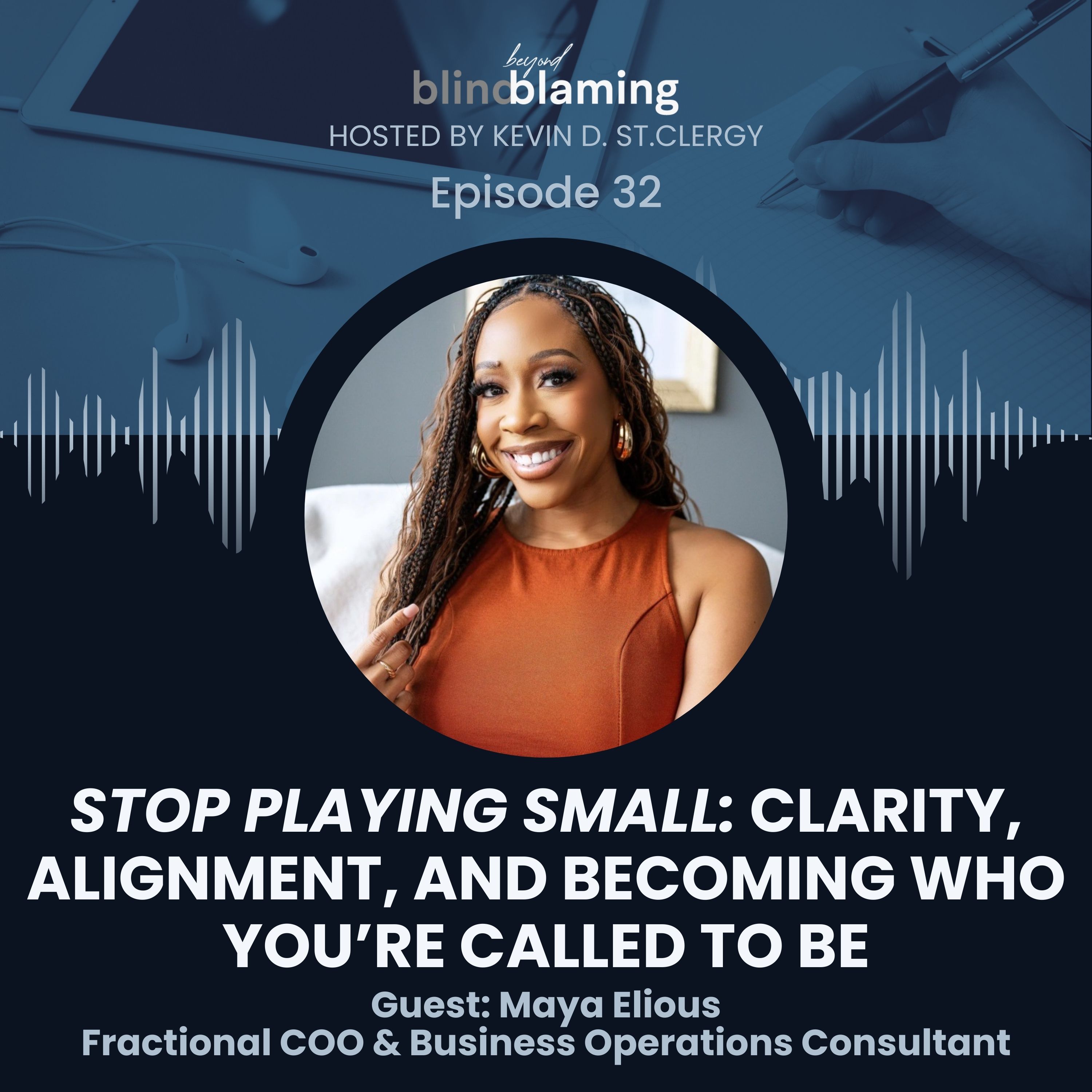
Beyond Blind Blaming
Seasons of Reinvention – Elevate Your Brand and Own Your Worth | Maya Elious
00:40:03
Loading summary
Transcript84 lines
- [00:00]
A
And one thing I tell my clients is I need you to look at content as simply having a conversation between you and the person that you want to help. And so I think if we can just get rid of all of the overthinking and just get back to I want to serve people and I want to tell my story in a way that serves people, it can feel a little bit less overwhelming.
- [00:22]
B
Today I'm joined by Maya Elias. Maya is a personal brand strategist, entrepreneur, and CEO of Built to Impact, a coaching company that helps experts clarify their message, build a powerful online presence, and turn their expertise into a profitable coaching business. She's been featured in Business Insider Success magazine and seen on stages across the country, empowering women to own their worth and articulate their value.
- [00:45]
A
I want people to think about who are you in terms of your values, And I think this is important because if you're building a brand that you love and you're building a brand where you get to work on projects and work with people that you enjoy working with, you first have to truly know yourself to the core. And I believe that starts with your values.
- [01:15]
B
Welcome to Beyond Blind Blaming. This is the place where we explore how easily hidden truths can hold us back, trapping us in cycles of frustration and blame, often without even realizing what's truly stopping us. Each week, I'm joined by experts and professionals who share their journey of taking back control of their story, overcoming hidden challenges, and stopping blind blaming from dictating their outcomes. The insights you're about to gain will help you see beyond your current limitations, find the courage to seek new perspectives, and ultimately live a life that's both purposeful and powerful. So if you're ready to break free from blind blaming and discover what's possible, you'll definitely want to listen to my next guest. I'm your host, Kevin St. Clergy, and today I'm joined by Maya Elias. Maya is a personal brand strategist, entrepreneur, and CEO of Built to Impact, a coaching company that helps experts clarify their message, build a powerful online presence, and turn their expertise into a profitable coaching business. She's been featured in Business Insider Success magazine and seen on stages across the country, empowering women to own their worth and articulate their value. She believes that clarity is a form of kindness both to yourself and to those you've been called to serve. Through her signature program, she's helped hundreds of clients stop hiding, start leading, and step into lives they never thought possible. Maya, welcome to the show.
- [02:32]
A
Kevin, thank you so much for having me. I'm excited to Be here.
- [02:35]
B
Well, you've had such an inspiring journal, from personal branding to coaching high level women entrepreneurs, if I got that right. Can you share a little bit about what led you to do the work you do today?
- [02:44]
A
Yeah. So I got into my industry back in 2008. I was creating custom MySpace pages, actually, and that is how I started making money into the branding world. And, you know, I was helping people build their brand before I even knew what branding was. During the time MySpace was really popular, especially for people in the entertainment space. So reality TV stars, models, musicians, and it was something I played around with in high school. And then when I got to college, college, somebody offered me money to create a custom MySpace page. And I'm like, I can't believe somebody's gonna pay me money to do something that I do for fun and for free anyway. But they paid me $50, and that was how I began my entrepreneurial journey. And then I eventually transitioned to building websites and creating my own creative agency, helping people build their websites, write their copy, grow their social media. And then I transitioned into coaching probably about six to seven years later. I started coaching full time in 2015, and I recognized my gifting in messaging and helping people get clear. Because when people would come to me for web design, they would struggle with what to say on their website. And they would, you know, they would pay me to make the website look pretty, but they really struggled with their messaging. And that's how I got into, you know, brand strategy, messaging and helping people grow their business.
- [04:11]
B
I love it. We have very similar paths. I had started a digital marketing agency back in 2005. Very unique, but we worked with physicians, doctors, medical.
- [04:21]
A
Oh, okay.
- [04:22]
B
And talk about struggling to draft their messages. We took it completely off their plate and we just wrote the websites for them because we felt that we could do it better. And we did. At the time we sold in September 22, I think we had about 900 locations that we worked with. Wow, that's amazing. Pretty cool. But my point was that we actually started coaching clients as part of their packages because we found that as we generated leads, they weren't converting those leads to appointments. So we'd start working with them on that, and then we'd find out that they weren't converting those appointments into revenue. And then we found out that they needed help with leadership. So that's what kind of started me down. The coaching stuff as well, that I.
- [05:02]
A
Resonate with that so much, because I think, you know, we have the saying, if. If you build it, they will come and it just couldn't be further from the truth, which I know. You know, it's like, just because you built a website does not mean that people are going to come to it. You have to learn how to market yourself then even when they come to it, you have to make sure the words you're saying make sense. So the coaching side of being a designer, I think is definitely a really important element.
- [05:26]
B
I think so too. And we, we wrote a style we called edutainment. We tried to educate but entertain at the same time. So it wasn't just your boring. I've been doing this for 35 years, which I always thought nobody cares how much you know until they know how much you care. And then we'd show them that you care by giving them the right information.
- [05:43]
A
Yeah, totally agree.
- [05:44]
B
Well, what are some of your biggest struggles you see high achieving women face when they. And that is your target market, right?
- [05:50]
A
Yep.
- [05:51]
B
What do you see them face when they're trying to step into greater influence and visibility?
- [05:55]
A
Oh, I think imposter syndrome. And when it comes to building a personal brand, I think having the misconception that a personal brand, brand is just solely about you. And I think, you know, building a personal brand is about who you are, but mainly about how who you are can help your ideal client. And so when people hear personal brand, they're like, does that mean I need to post my family? Does that mean I need to post what I ate for lunch today? Does that mean I need to, you know, share what I ate for dinner? And I think people, they start to overthink what a personal brand means. I think they overthink. What does creating content mean? You know, content marketing and content strategy is such big part of where we are in 2025. And I think they overthink that. And one thing I tell my clients is I need you to look at content as simply having a conversation between you and the person that you want to help. And so I think if we can just get rid of all of the overthinking and just get back to, I want to serve people and I want to tell my story in a way that serves people. It can, it can feel a little bit less overwhelming.
- [07:04]
B
I love that. So I, I think I got it right. But I've spent time exploring your frameworks, especially around simplifying your message, which you just discussed. So, and you tried to communicate how they clearly articulate what they're doing for clients. Is there any more specifics you can share about how people do that? Because I loved where you're going with that?
- [07:23]
A
Yeah. So when it comes to your message, there are three questions that you want to answer. Who am I? Who do I serve? And how do I serve them? And when we first answer the question, who am I? Typically, we'll start going into titles, right? Like, do I want to call myself a coach or a course creator or a strategist? Which, yes, is important from, you know, a professional standpoint. But I want people to think about, who are you in terms of your values? And I think this is important because if you're building a brand that you love, you're building a brand where you get to work on projects and work with people that you enjoy working with, you first have to truly know yourself to the core. And I believe that starts with your values. So when I ask people, who are you? I say, let's figure out what your values are. What's really important to you? Is family important to you? Is freedom important to you? You know, what are the things that truly matter to you? And then how do we incorporate that into what you do? A lot of women especially, they want to build a brand around something they love, something that they're passionate about. And what I explain to my clients is passion just isn't about what you love. Passion is also about what you hate. What are the things that make your blood boil? What are the things that get under your skin? What are your biggest pet peeves? When you look at the biggest movements in the world, they're not based off of a love. They're based off of a hatred towards some type of injustice that we want to solve. And so when we get down to the core of our values and we think about what are some things that violate my values and then how can I leverage my skill set to then kind of make the world whole around this thing? Again, that's really answering the question of who am I? Then we ask the question of who do you serve? Who do you best connect with? Who can, who can best benefit from your skill set and the problem that you're wanting to solve? And then last but not least is, how do you serve them? And when we're answering the question, how do you serve them? We then start thinking like, well, I serve them through a course, or I serve them through my three day event, or I serve them through my program. You know, you know this. I'm sure you've dealt with this with your clients. They're thinking about the tangibles in the future. And again, yes, we want to answer that question. But when I say, how do we serve them? I mean, what is the outcome that we want? What is the promise of that course? What's the promise of that program? What's the promise of the book? And so being able to answer those questions clearly makes content creation so much easier, makes client attraction so much easier. It just makes you so much more clear and focused while you're running your business.
- [09:54]
B
I love it because we went through something very similar the last year and a half as we finished the book or we. I finished the book. You know, me and my friends. You know. Chatgpt Claude.
- [10:05]
A
Yes. Yeah.
- [10:05]
B
My new friends. They're my new best friends. Because when you plug your book into there and ask them how they. What they think about it, man, you don't even want to talk to anybody else.
- [10:12]
A
That part. Yeah.
- [10:14]
B
But we went through the same thing. We had started off with a very vague. I've always been big on values. The only thing I didn't hear you talk about. Maybe you do. Is something that helped me a lot, was when I outlined my core values and I created a to be list. Like, I have to do lists. But Brendan Burchard taught me, you know, Kev, I think you need a to be list. Who do you want to be? Love that. That shaped a lot of what we're doing now. And we did move. I felt kind of. We moved from coaching to what I call myself now, which is a breakthrough specialist. So it's a little different because when we help people get to the root cause of something that they aren't sure or a problem they can't seem to fix, we seem to really help people break through with the different programs that we have.
- [10:53]
A
Yes. I love that so much. And I think anybody who's been a coach for a while can start to recognize that coaching just isn't about, you know, just a generic skill or a generic strategy. But when. When you're a coach, your job is to create transformation. And when you're creating transformation, it can't just be a focus on the skill set. You also have to focus on the mindset and understand, why is my client, you know, thinking the way they do or why, you know, why is there behavior in this way? And so I love that you prioritize breakthrough because breakthrough requires you to really understand what is that block? What is that plateau, which is usually something mental that you have to overcome.
- [11:33]
B
Yeah, we help them dig deep. There's a framework. I'll get you a copy of the book. I know we don't have time to send the book, or did we Send the ebook to you or just the intro?
- [11:41]
A
I think you guys. You guys sent chapter one, so I'd love to get the full book.
- [11:44]
B
Yeah, well, if you enjoyed it, I'll send you the book. Because it's. It gets a little deeper. It actually tells people that they need to have coaches and masterminds in their lives, because that's. I've just. And we'll get to this for you, but at the end of every show, I always ask people the same thing. How do you like to develop yourself? And I was shocked way back when, like, 30 years ago, that my mentor at the time was talking about his coach. And I'm like, wait, you have a coach? And he's like, oh, yeah. How many Olympic gold medals do you know that won the gold medal that didn't have a coach? And I'm like, wow, okay, great point. But back to your message about who do you serve and the outcome. We had kind of a vague thing on the book, and after getting feedback and testimonials from people, we started to figure out that our new tagline is now stop solving the wrong problem and instantly unlock results. And do you have any experience with that where you've actually helped somebody dig deep or they think that something else was going on, or it came to what you teach them to do, whether it's their coaching program? Back when you're doing websites and being some completely something else, can you think of a story there?
- [12:48]
A
Yeah, I mean, I think there's so many. There's so many instances. And I'm laughing because we just did a reel about. It was kind of just making, you know, a little bit of fun of the coaching industry. How typically you go to a coach with a problem and they'll say, just be consistent. Just be consistent. And now I'm a power. You know, I'm a. I'm a believer in consistency and being disciplined. But I do find that people can sometimes become consistent in doing the wrong things. Whether it's, oh, just keep consistently posting on Instagram or just keep consistently sending out emails, or just keep consistently whatever. And it's like, well, there might be a deeper issue there. Maybe they're speaking to the wrong audience. Maybe their messaging is off. Just be consistent. Get new brand photos, get a new website. And so I think for everybody, it can be different. Some things can be the right thing, but in the wrong season, I think some great advice can be misapplied to the wrong person, the wrong circumstance, or the wrong season. And so I've seen that quite often Where I'll see a client who's like, I've been, I've been talking about this thing and it's, it's not working. And then we just kind of, you know, take a look at what is your actual end goal. And then we, we diagnose what's actually happening.
- [14:02]
B
Oh, that's great. I love it. Well, I, if I also read correctly, I noticed you emphasize alignment over hustle. A message that resonated with not only me, but I think a lot of other people. How did that philosophy take shape for you personally?
- [14:14]
A
Yeah, I mean, I think, you know, it's interesting. I think when it comes to hustle, there are seasons for hustle. And I, and I, I even love sometimes going through those seasons just to remind myself like, I still got it, I can still be, you know, the 20 year old Maya working 12 to 16 hours to get ready for her launch. But now in this season, If I'm working 20 hours, to me that's an indication that I'm out of alignment because I'm like, well, what's going on with my team? Am I not relinquishing control? Why am I working so hard? And I think sometimes when we get into hustle mode too long or when we find ourselves overworking, we're really trying to mask a different issue. I think sometimes we're trying to mask a fear of something not working or whatever it is that we're trying to mask. And I think things happen so much more rapidly when you're in alignment. And I've recognized in my business, you know, recently I started talking a lot about reinvention and what that looks like and how, you know, you need to reinvent. And when I look at the different transitions of my business, I find myself reinventing about maybe every five to seven years, going from MySpace designer to web designer, from web designer to agency owner to agency owner to one on one coaching, one on one coaching, group coaching, masterminds, conferences, international retreats. And the three questions that I ask myself when I'm making these transitions and making these pivots are, will this make me money? Will this impact others? And will this bring me joy? And I want the intersection of all three of those things to be together. And the moment one of those things fall off, I am no longer in alignment. It has to be profitable. If it's a business. All, all businesses have to make money. So if you're hearing this and you're feeling guilty a little bit and you're kind of thinking like, am I being money hungry if you're running a business, your business better be hungry for money, or else it's. It's going to die. So the first thing is it has to make money, and you cannot feel guilty about that. Second thing, though, it has to serve people. Because making money without serving people, that is when you're out of integrity. Then the third thing, it has to bring you joy or fulfillment or peace. However you describe what's most important to you, because that is what leads to burnout. And I have no desire for myself or my clients to run a business that leads to burnout. I know that burnout is not a result of overworking. It's a result of working out of alignment. It's a result of doing more work that drains you energetically, spiritually, creatively, than just just doing busy work. And so if it doesn't bring you fulfillment at all, in any area, it's going to be out of alignment. If it doesn't serve people, it's out of integrity. And if it doesn't make you money, you're going to be broke or you're just running an expensive hobby. So those are the three things that I look at when I seek alignment.
- [17:00]
B
It's amazing. So spot on.
- [17:03]
A
Thank you.
- [17:04]
B
Well, the other thing we have in common is you speak often about pricing with confidence and not undercharging, which I know is tough for a lot of entrepreneurs. It's one of the first things that I do. No matter what industry they're in, the first thing I try to have them do is raise their prices, because it instantly justifies what they're paying me. But how often do you help people shift out of a scarcity mindset and into that bolder pricing model?
- [17:25]
A
I'm like, every single day. It is typically one of the first things that we do help our clients with, because, I mean, you know, you got to figure out, what are you giving to people, what are you putting out in the marketplace. Right. If your business is going to make money, we have to know what you're selling and how much you're selling it for. And then we need to know how many of it you need to sell to actually be profitable and to hit your revenue goals. And so a lot of the clients that I work with, I work with a lot of women of faith. And sometimes there is this. This mental block or this misconception of, I can't make a lot of money and be a good person at the same time. And I have to remind them that those are two completely different things. And typically, money makes you More of who you already are. So I know for me, one of my personal core values is generosity. The more money I have, the more money I give. And so I'm like, if you were already a bad person, the money is just going to make you even more of a bad person. If you're a good person, the money is going to make you more of a good person. So if you want to be more of who you are, you should desire to make more money because money gives you the financial resources to be more of who you are. So you're not making decisions on lack, but making decisions on what you truly desire to do and making decisions based on values. So that's the first thing, the money mindset. But then when we come to the practical part of it, I love talking about mindset. But then I have to get practical with some of my clients so they can really understand, well, why is Maya telling me to increase my prices or how can I justify what my rate is? And so that is when we start having a conversation of value. How do we define value? And I think a lot of people struggle to assess value. When you can't assess value, you're going to think that everything is a scam or you're going to think that everything is too expensive. So we have to have an honest conversation. Value is something that is also subjective. Value is going to be based on the person's desire and the person's pain point, the thing that they want to overcome. So as somebody, you know, I primarily work with people who are wanting to have their first hundred thousand dollar, first quarter million dollar a year. If I'm targeting people who simply just want a side hustle where they make one or $2,000 a month, you, they're not going to find my coaching valuable because I'm not selling them an outcome that they are seeking. I'm not selling them an outcome that they are desiring. So whatever it is that you're selling and has to be in alignment with the desire of your ideal client. I think another thing is that people also make the assumption that as a coach or strategist or service provider, that you're only valuable if you're teaching people how to make money. And I'm like, that couldn't be, you know, further from the truth. It's actually easier to just sell to people who have so much money that they're not worried about how to make more money, that they have other problems. If you are a relationship coach, right, and you're trying to help somebody mend their marriage if you really love your spouse but you just cannot get on the same page with them and you guys are on the brink of divorce and you really want to keep your family together, your brain is not thinking about, how do I make an extra $5,000, an extra $10,000? Because money is not, you know, assuming that money isn't their issue. Money is not the main thing on their mind. If you are, you know, working with a mom who just had, you know, she's a first time mom, she gained a lot of weight, she's not feeling confident, so she's not showing up in her relationship. She doesn't go out anymore. She doesn't feel like herself. She's not thinking, how do I make more money? She's thinking, how do I find myself again? How do I get my body back? How do I get that glow back? And so there's so many different problems we can solve. But in order to know what is valuable to your ideal client, you have to know what do they desire and what are some of the things keeping them up at night? What is painful to them right now in this season?
- [21:13]
B
I love it. And I like how you're doing the seasons too. We just saw Tony Robbins in Vegas and he talked about seasons a little bit as well. My bet. And then my favorite winery here, when I could drink. I had a competition coming up in September, so all that got cut off. But they're called season three winery because it's the third season in their lives life. So I'm hearing that more and more. So a little while ago you talked about imposter syndrome or sometimes people assume lack of confidence is just a mindset issue. But you've talked about identity being the deeper struggle, which hit home for me because the way I lost 40 pounds and I got 30 more to go in the next 70 days before my competition.
- [21:54]
A
Congrats.
- [21:55]
B
Thank you. It's going well now. They're really turning up the heat though. So we'll see how the next two and a half months are going to be really fun.
- [22:01]
A
Yes.
- [22:02]
B
Anyway, but for me, it was my identity. Like, everybody's like, no, it's your process, it's your diet, it's this. And, and when I read, I read a book called the Mountain is you. I don't know if you've read that yet. Fantastic book on.
- [22:12]
A
I've heard great things. Sabotage.
- [22:14]
B
Yeah.
- [22:14]
A
Yeah.
- [22:15]
B
So how do you help someone reshape their identity? And what made me think of this is there's some younger people that I've worked with recently. Who they keep self sabotaging themselves when it comes to money or charging what they're worth. And when I really dug deep and we took them through our framework, we found out that they didn't want to be that person that's a jerk with a bunch of money. So they assumed if they made a bunch of money, kind of like what you just talked about, that they were going to be a jerk too. Is that what you were saying before? Or do you want to go into that a little bit more?
- [22:45]
A
Yeah, yeah. I mean, I think identity, it can be challenging. I think that is the number one thing that everybody is searching for. And I think that now more than ever, people are so confused about their identity that they don't know who they are. They don't know how to articulate. I mean, if you just pay attention, you open your eyes, people are simply confused about who they are. I think there's a lot of distraction and noise now, more than we've ever had in decades before. I think with social media, I think with regular media, our minds are being programmed to think very specific ways and we don't even know how to think for ourselves. And so I preface all of that to say, when it comes to identity, we have to be very honest about who we're allowing to speak into our minds and what we are choosing to believe about ourselves. As I mentioned, I work with a lot of women of faith, and so we're always going to go to just the foundational principles of the word. Well, what does God say about who you are? Because you might be defining who you are based on what your parents said, based off of what the Internet said, based off of what your homegirl said, based off of what, you know, the feminist movement said, based off of what, whatever it is. And this is not me, you know, trying to demonize any movement. It's. We gotta just go back to the basics of who's. Who do you believe your creator is? And what did they say about you? What do you truly desire? If nobody were to judge you for what you truly desired, what would you actually desire? What do you truly value? And that is who you are. I do believe that the reason values are so important is because values answers questions. And so when you're making decisions which when you don't know who you are, you, you're not going to be able to do the right things, right? It's be do have. You got to be clear on who you are, who you want to be, then that's going to dictate what you do, then it's going to dictate what you have. And so because values answers questions, it makes it so much easier for your execution. What would this version of Maya do? What would the version of Maya who values generosity but also values family, but also values personal accountability? What decision would personal accountability make right now? What decision would kindness make right now? Right now? What decision would whatever your values are make right now? But we got to go to your values and say, what do I value? These. These can't be values that I adopted from my parents or I adopted from the Internet. And based on what people said I should be, who do I desire to be without just even any influence?
- [25:18]
B
Oh, I love it.
- [25:20]
A
Thank you.
- [25:20]
B
I love it. Great stuff. Have you ever had a season in your own journey where you were unknowingly blind, blaming rather than other than this morning, maybe blaming the algorithm, your audience, or even yourself, only to later realize the issue is something totally different?
- [25:34]
A
Oh, I mean, so many times. Can you even be an entrepreneur? Can you even be an ambitious person without, you know, you know, blaming other things? Even as somebody who takes, you know, I like to think that I take personal responsibility as a core value. Whether it's blaming myself and I'm misplacing the blame, or I'm blaming the algorithm or whatever it is, I think it's when we feel desperate or in a rush to find a solution, we do start blaming and we're like, okay, this must be the problem, so let me go work on this. And we realize it's not it. So this must be the problem. So it must be this. Let me go work on this. Versus just sitting, really reflecting. If you're the type of person that meditates. Meditating on, okay, what has been going on? What patterns am I noticing? Have my habit change what is happening to really sit and reflect on what's going on? You know, I was reading your story about when you were 10 years years old and you were phenomenal in baseball, then you realized weeks later it was your eyesight. And I'm reading it, I'm like, how do you not notice that something's going on with your eyesight? But it's like if you don't sit and reflect and maybe pay attention, or I guess if we don't ask the right questions or we don't go see a specialist who can diagnose that for us, sometimes we're just not going to be able to see those blind spots, which is why having, you know, a professional be able to give us a diagnosis can be really Helpful.
- [26:55]
B
Yeah, I agree. You were describing some, what it's called availability bias. I don't know if you've heard of that. There's a lot of cognitive biases in the book. Availability biases where you just latch onto the first thing you think it is and then you suffer from confirmation bias because once you think you know what it is, you go search for information that, that validates what you think is the real problem. And it's almost impossible for you to see other things that are going on. Which is why we had to develop a framework to help people look a little deeper and ask one simple question. Could there be something else going on that I'm not thinking over that I can't see? And this is one of the issues I have with the self help industry is that there's a lot of stuff out there on 100% responsibility. And Jack Canfield and I talked a lot about this. In fact, I'm going out to interview with him.
- [27:37]
A
That's awesome.
- [27:38]
B
In September. Yeah, it was great. He loved the book. He was only the second person I had to read the book. And it was a coaching program and it was kind of funny because here's this 80 year old sweetest man alive that I've known for a long time. It was made a big difference in my life because he talks a lot about taking 100 responsibility. You got to give up blaming and complaining. But I think there's so much out there about extreme ownership and things like that, which I love those books. But sometimes like my baseball story, there is a lot of stuff going on that's out of our control and I just knew there was something deeper and, and so he loved it. And you just made that very clear.
- [28:11]
A
Love it. That's amazing.
- [28:13]
B
Well, you've coached some incredible successful entrepreneurs. What's one of the biggest transformations you've witnessed in a client who fully stepped into their voice and visibility?
- [28:21]
A
Oh man, there's so many good ones. I, I love seeing the transformations because by the time my clients come to me, they're already brilliant. I'm just pulling it out of them and teaching them how to market it. Let's see one, I'll say one of my clients, Gabby, when she came to me, she, she got into real estate. It was something she wanted to do for herself and her family. And then she started helping friends and family get into real estate. So she decided to create an agency where she would teach people how to get their real estate properties and how to instantly cash flow from them. And when she came to me she was charging maybe $750, if that, to help people get into this industry. And I'm like, you are helping people create generational wealth. Like you're helping people on their wealth journey. They're getting investment properties and you guys were handling all of it. And she was a little nervous. She's like, are people going to pay me more than $1,000 for this? And after a couple months of working together, she was charging $10,000 for her agency. They streamlined their processes because also when you increase your prices, you show up as a different person completely. Right? Like the work you do at 750 looks different than the work you do at $10,000. Then she raised her prices again to $20,000 and was just getting higher end clients, was, you know, attracting a different level of clientele and was able to get her business to seven figures within, you know, the first 18 months of working together. So I would say that was one of the big transformations. Another client came to me and I can't even remember what she was doing when we first started working together. But I think one thing I notice with entrepreneurs is that they downplay their skills and they downplay their stories because the things that come to us naturally, because they feel easy, we think that it's not a big deal. And I'm like, because it's easy is why people pay you. I wouldn't pay somebody, I wouldn't pay somebody to build my website who thought web design was hard. I'm going to pay somebody to build my website who thinks web design is easy. That's why I'm paying them, because they're going to get it done right, they're going to get it done accurately, they're going to get it done in a more efficient time frame than I or somebody, you know who a web designer that finds it hard would do it. And so just helping people really figure out what their zone of genius is and then blow that up is exciting. I remember working with a client, Tatiana, and I can't remember what she was doing when she came to me. It probably was something I'm like being a VA or like an admin work or she was a store manager for a bunch of different stores. And I recognized like, you were really powerful at operations, you're really powerful at managing teams. And I'm like, just because your title was one thing when you were working a 9 to 5 as an entrepreneur, this is what your zone of genius is. And then she went on to, you know, help a lot of people, help a lot of entrepreneurs. Run their teams and become better leaders and become better managers. People who were first time entrepreneurs. And I think she took her business to half a million in about six to eight months of working with me. So just seeing those transformations when people, one, understand their zone of Genius, two, understand the value of what they do, and then three, learn how to communicate and market the value of what they do.
- [31:31]
B
2. Good stuff. I love it. Yeah, you had mentioned, I love zone of genius, by the way. I might have to ethically swipe and redeploy that one. That's a great one.
- [31:40]
A
Yeah, yeah, that's from Gay Hendrix. The Big Leap. So good.
- [31:44]
B
I love it. Okay, so. Well, you mentioned storytelling. So storytelling is such a big part of both branding and healing. How do you encourage your clients to share their stories authentically without feeling overexposed or unprofessional? Or do you run into that, that.
- [31:58]
A
I love that. So when I, when I have them share their stories, I have them think about what are the past experiences that you've been through before we even formulate the story? Because clients start to overthink when you want them to create content or you want them to tell a story. They're like, okay, it has to be polished and perfect. So first I just ask them, how did you even get into this? How did you get into this industry? Why does this even matter to you? And then they start to really think back, what is my origin of this? Because most people don't ask them what their story is. And so they'll go back and they'll start to think, how did I actually get into this? And then I, I encourage them to tell the story where there's a lesson attached to it. Because also, and, and I see this mainly sometimes with women, sometimes it can be easy to tell a story that they're still in. And it's like they're still trying to overcome some things. And I'm like, don't tell the story that you need to be telling your therapist. Tell the story that's going to position you as an expert. Right. Tell me how you got into this, but then tell me how you overcame it. Because how you overcame it is what people are interested in. How you overcame it is what you're essentially going to package and sell as an expert. So when it comes to story, we first get clear on what are your past experiences, what were the problems that you dealt with? Then what was your pivot point? And then what did you realize was the purpose of going through all of that? And that's the framework that we use to create stories that sell. And once we can fill all of those boxes, I'm like, that is your story right there. But if there's no pivot point and there's no purpose and you're just stuck in your past and you're stuck in your problems, I'm like, that's not the story we're going to lead with yet. That story is not yet ready for the world. But if we can get your past, your pain, the pivot and the purpose, that is the story you want to lead with.
- [33:44]
B
I love it. And that sounds like something, because one of my next question was, well, for the people listening today that feel like they're stuck, maybe they're playing small or waiting for clarity. What's one powerful step they can take this week to start shifting that energy? And it sounds like that was it. Or do you have something else you want to add?
- [33:59]
A
I would say do the thing that scares you, because I think we often, we try to play really comfortable. We try to do the things that we're ready for. And I remind my clients, like, you're not going to be ready. That's not the point. People don't. People aren't successful because they were ready. People are successful because they did what they knew they needed to do, even when they were scared. And it's all of our first time doing anything right. Like, you know, Kevin, you mentioned losing 40 pounds. I think you said you have another 30 to go. I imagine this is maybe your first time losing 70 pounds altogether in a lifetime. It's Kevin's first time. Do you think that he wants to give up drinking? Do you think that he's gonna wanna, you know, work out with his trainer? You think he's gonna. This is his first time doing it. He's doing it anyway. When he wrote his book, it was.
- [34:46]
B
Was.
- [34:46]
A
And he wrote his first book, it was his first time writing it. Was it easy? He did it anyway. When I increased my rates from going from MySpace designer to web designer to coaching, it was scary. It was my first time being a web designer. It was my first time calling myself a coach. It was my first time running a conference. It was scary. I did it anyway. So don't focus on doing work that you've already done. Focus on doing something new, or else you're going to continue being in the same place that you were last month, six months ago, a year ago. If you want to be in a new season, you've got to start doing new things, even if they're scary.
- [35:22]
B
Great advice. And, yes, you're right. When the trainer had me. When Dr. Mike had me sign up for the competition in September and January, it scared the crap out of me. I was like, this scares the out of me. Sorry to cuss, but that's exactly what I said. And he's like, kevin, you've had it on your dream board for seven years. That.
- [35:42]
A
That part. That part. So if y' all aren't getting that this scares the out of me feeling inside of you, you're not doing something big enough. You. Yeah, it should be something that you're like, I want to back out of this. I'm so nervous. What am I doing? What are people gonna think? Your ego has. Is gonna start flaring and just having all of the signs. That's how you know you should be doing it.
- [36:02]
B
I love it. Well, clearly, you've invested in yourself over the years, just from the way that you talk and the information you shared and your success as a coach and as an entrepreneur. What are your favorite ways to invest in yourself?
- [36:13]
A
Ooh, my. The favorite ways for me to invest in myself, I would say 1. Being intentional with my time and my money. Exercising, making sure my brain is clear. Reading books. I was just listening to an audiobook right before we hopped on coaching programs. I don't do them as much as when I In the first 10 years of my business, but finding a really good community and mastermind of people who are also thinking bigger. Going to conferences, going to workshops. I try to put myself in environments where I'm not the smartest person in the room. I put myself in environments where I can learn something new and where I can be humbled, lovingly, respect, you know, respectfully, all of that. But I don't want to be the smartest person in the room. I want to be the person that gets to soak in all of the wisdom, the genius. And, yes, I can contribute, but I'm there to learn.
- [37:04]
B
Amazing. I do think God brings people together for a reason. I've said all the time, I never want to be the smartest guy in the room. And last year when I joined Russell Brunson's mastermind group, he was my coach 20 years ago. I don't know if you know who he is.
- [37:16]
A
Oh, yeah, of course. Who does it?
- [37:18]
B
Well, I got to work with him 20 years ago for five grand. That's what he charged in his coaching program. So when I tell people that they're like, you, what I'm like, Yeah, I know, right? He was the first guy I called when I Sold. It was just a. And I argued with him too, because he convinced me to give my first book away for free, which built an eight figure business. And it was. He's the first guy I called when I sold. I was like, dude, if you wouldn't have showed shared with me how to create a book funnel and give my book away for free, I never would be here today.
- [37:44]
A
That's amazing.
- [37:45]
B
It was pretty crazy. And now we're doing the same thing. But now I went back and I'm like, well, geez. Because it was a 45 minute coaching call that I had with him. We spent a couple days with his team, but he's like, Kevin, I did 6 million this year, which is way less than what he does now. And you did like 60,000. Who do you think you should listen to? I was like, okay, you're right. So we did it and it was hugely successful. And we're doing something similar now, but now it's. This is. Even before like click funnels or any, we had to build it all with like aweber and one shopping cart and all the stuff we had to kind of compile together. Yeah, it was pretty wild times back then.
- [38:18]
A
Wow, that's amazing. And like, you know, even thinking about him to be doing 6 million 20 years ago is wild. So that's really cool that you had a chance to work with him and fight yourself.
- [38:29]
B
It's not crazy. We kind of. I did, I went to work. I'm doing the same thing now. I had 45 minutes with him. I got to pitch blind blaming. Before it was when it was just a TED Talk before the book. And I was like, look, I don't really want to write the book unless you think this is a thing. And he's like, I freaking love it. I don't think you should niche it out. I think you should go wide as quickly as possible, which is what we're doing.
- [38:46]
A
Yeah.
- [38:47]
B
And I think he got something here, so. And a lot of other people have agreed. So it's been a really wild ride.
- [38:52]
A
I love it. I'm excited to see it reach the masses and really help people.
- [38:57]
B
Yeah, we had. I was a little shocked because we were very niched out in audiology, which is where my career started. Hearing, Hearing and balance. And we had 21,000 downloads for the podcast last week, which is more than I had in an entire year because it's such a small profession.
- [39:10]
A
Yeah.
- [39:11]
B
So it was pretty exciting stuff. Well, anyway, thank you for being here. If people want to get in touch with you, what's the best way for them to get in touch.
- [39:18]
A
Yeah. So best way to get in touch with me. Reach out to me on Instagram. I'm always there posting fun stuff. Y S M A Y A E L I O U S if want to work with me, go to my Elias.com and let's see if any of my programs are a good fit for you.
- [39:34]
B
That's great. And we'll make sure we put all the resources down, not only on my website, but on all the other stuff that we post this too. So thank you so much for being here. You're incredible speaker, you're incredible and I had amazing information to share. I can't wait to get this produced and out.
- [39:48]
A
Thank you so much, Kevin for having me.
- [39:54]
B
Sam.