
Podcast
Beyond the Headlines
Hosted by The Local NEWS Network · EN
Dive deeper into the local news. Get more information about what's happening in and around your community.
22episodes
Episodes
Newest firstAll episodes

Voices of the Past: Lessons from the Rails (Part 2)
4w ago00:03:23Tap to summarizeDurango exists because of a railroad that almost went somewhere else. In this documentary, Jeff Johnson traces the arrival of the Denver and Rio Grande in Southwest Colorado — from General William Jackson Palmer's original 1870 push south out of Denver, to the mining boom that pulled the rails toward the San Juans, to the founding of Durango itself in 1881 as a town built by and for the railroad. Jeff follows the line through its boom years serving the Silverton mining district, its near-collapse after the Silver Purchase Act was repealed in 1893, and its unlikely second life as a beloved tourist attraction in the postwar decades. It's a story about how a railroad meant to carry a young civilization toward the future became, in time, our clearest window into the past.The Power of Place Magazine is a special initiative of the Colorado 150 Southwest organizing committee, featuring 20 articles by professional historians and local writers exploring Southwest Colorado's rich and complex heritage.By Jeff JohnsonThis story is sponsored by Alpine Bank, Sky Ute Casino and Strater Hotel.Watch the full series, Voices of the Past: Southwest Colorado.
Transcribe →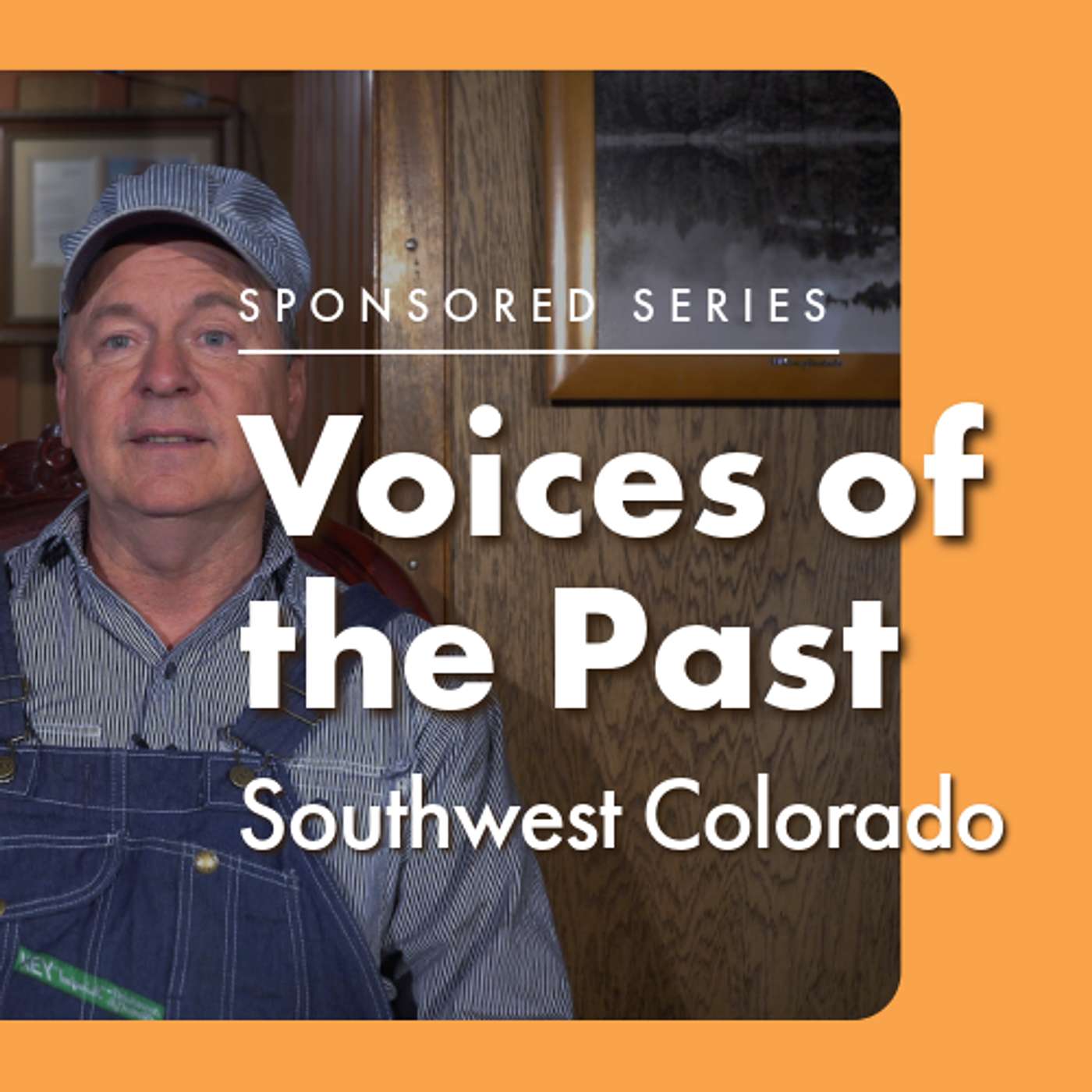
Voices of the Past: Lessons from the Rails (Part 1)
4w ago00:03:24Tap to summarizeJeff Johnson's connection to Durango began with a single train ride in 1973, when a family vacation turned into a lifelong calling. That trip aboard the narrow gauge to Silverton set him on a path of decades-long devotion to Colorado railroad history, from the earliest push of the Denver and Rio Grande down through Walsenburg, Alamosa, and Chama into Southwest Colorado, to the mining boom in Silverton that the rails were built to chase. In this episode, Jeff traces the routes, the resources, and above all the people — the laborers, the families, and the women who left comfort behind to build new lives in a rugged frontier. It's a conversation about how the past never really feels that far away, and why understanding the people who came before us matters for where we're headed.The Power of Place Magazine is a special initiative of the Colorado 150 Southwest organizing committee, featuring 20 articles by professional historians and local writers exploring Southwest Colorado's rich and complex heritage.By Jeff JohnsonThis story is sponsored by Alpine Bank, Sky Ute Casino and Strater Hotel.Watch the full Voices of the Past: Southwest Colorado series on our YouTube.
Transcribe →
Voices of the Past: Lessons from the Land — The Agricultural History of Southwest Colorado (Part 2)
Jun 1900:02:55Tap to summarizeColorado was shaped by the people who fed it. In this documentary, Scott Perez traces the agricultural history of the region from its earliest roots — from the orchards that sprang up near Hermosa Creek in the 1870s to serve hungry miners, to the ditch irrigation systems first developed by indigenous communities and later adapted by American settlers, to the narrow gauge railroads that opened new markets and transformed farming across the valleys. Drawing on diaries, oral histories, and a lifetime of working the land himself, Scott paints a vivid portrait of how agriculture has always been both a livelihood and a lifeline in Southwest Colorado — and why the small farms still taking root here today carry that legacy forward.The Power of Place Magazine is a special initiative of the Colorado 150 Southwest organizing committee, featuring 20 articles by professional historians and local writers exploring Southwest Colorado's rich and complex heritage.By Scott PerezThis story is sponsored by Alpine Bank, Sky Ute Casino and Strater HotelWatch the full series, Voices of the Past: Southwest Colorado.
Transcribe →
Voices of the Past: Lessons from the Land (Part 1)
Jun 1700:02:24Tap to summarizeScott Perez grew up in farm country and spent nearly 50 years as a working cowboy. But it was his passion for oral history that led him to dig deeper into the agricultural past of Southwest Colorado — poring over old journals, talking to longtime residents, and uncovering the small, vivid details that bigger histories tend to overlook. In this episode, Scott shares what drew him to write for the Power of Place Magazine, why he believes local agriculture deserves protection, and what indigenous land stewardship can still teach us today. It is a candid, grounded conversation about the hidden costs of losing farmland — for wildlife, for water, and for the communities that depend on both.The Power of Place Magazine is a special initiative of the Colorado 150 Southwest organizing committee, featuring 20 articles by professional historians and local writers exploring Southwest Colorado's rich and complex heritage.By Scott PerezThis story is sponsored by Alpine Bank, Sky Ute Casino and Strater HotelWatch the full Voices of the Past: Southwest Colorado series on our YouTube.
Transcribe →
Voices of the Past: Remembering the Sheepherders of the San Juans (Part 2)
May 2200:02:57Tap to summarizeLong before the roads came to Southwest Colorado's high country, the San Juan Mountains were shaped by the labor and lives of Hispano and Basque sheepherders who drove their flocks through these rugged passes each season. In this video, Peggy Montaño reflects on that deep legacy through her own written words — one that runs through her own family across multiple generations. Drawing on oral history, on-the-ground exploration of ancestral sites, and collaboration with Forest Service researchers, the film traces the parallel journeys of two immigrant communities who found common ground in these mountains. It is a portrait of sacrifice, resilience, and the enduring bonds between people and place — and a reminder that the landscapes we treasure have always been shaped by those who came before us.The Power of Place Magazine is a special initiative of the Colorado 150 Southwest organizing committee, featuring 20 articles by professional historians and local writers exploring Southwest Colorado's rich and complex heritage.By Peggy MontañoThis story is sponsored by Alpine Bank, Sky Ute Casino and Strater HotelWatch the full series, Voices of the Past: Southwest Colorado.
Transcribe →
Voices of the Past: Remembering the Sheepherders of the San Juans (Part 1)
May 2000:02:52Tap to summarizeSouthwest Colorado's mountains are celebrated today as a playground — but for Peggy Montaño, they have always meant something more. As a descendant of Hispano sheepherders with deep roots on both sides of her family in northern New Mexico and the Ignacio area, Peggy grew up understanding these peaks as a place of labor, sacrifice, and identity. In this podcast episode, she reflects on why she felt called to write and share this story — and why she believes understanding the full history of a place matters not just for those living here now, but for the generations still to come. It is a thoughtful, personal meditation on what it means to belong to a landscape, and to honor the people who shaped it long before recreation ever entered the picture.The Power of Place Magazine is a special initiative of the Colorado 150 Southwest organizing committee, featuring 20 articles by professional historians and local writers exploring Southwest Colorado's rich and complex heritage.By Peggy MontañoThis story is sponsored by Alpine Bank, Sky Ute Casino and Strater HotelWatch the full Voices of the Past: Southwest Colorado series on our YouTube.
Transcribe →
Voices of the Past: Saving a Castle in the Clouds (Part 2)
May 100:03:28Tap to summarizeHigh on the slopes of Galena Mountain at 12,500 feet, the Old Hundred Mine's 1908 boarding house stood as a testament to the audacity of Colorado's early miners — until decades of heavy snow and neglect brought two-thirds of its roof caving in. In 1996, Beverly Rich and a consortium of partners launched what they called "extreme preservation," airlifting supplies by helicopter up a precarious mule trail to save the historic structure before it plummeted 3,000 feet into Cunningham Gulch below. Workers stayed a week or two at a time, rebuilding the roof and securing the building to the rock cliff with cable. A year later, the tram house was also restored. The effort was immortalized in a documentary, Castle in the Clouds: The Saving of the Old Hundred Boarding House — a tribute to the immigrants from around the world who left everything behind to chase the promise and adventure of America in one of its most remote corners.The Power of Place Magazine is a special initiative of the Colorado 150 Southwest organizing committee, featuring 20 articles by professional historians and local writers exploring Southwest Colorado's rich and complex heritage.By Beverly RichThis story is sponsored by Alpine Bank, Sky Ute Casino and Strater HotelWatch the full Voices of the Past: Southwest Colorado series on our YouTube.
Transcribe →
Voices of the Past: Saving a Castle in the Clouds (Part 1)
Apr 2900:01:53Tap to summarizeBeverly Rich was born in Silverton in 1950 and has been involved with the local Historical Society since she was 14 — making her one of the most dedicated keepers of San Juan County's storied past. In her article, Rescuing Relics: Extreme Preservation and the Old Hundred Boarding House, she reflects on what made Silverton remarkable from the very beginning. Few people realize that Silverton is nearly ten years older than Durango, and that without Silverton, Durango wouldn't exist. In its heyday, this remote mountain town was the Silicon Valley of its era — a hub of technological innovation, incredible wealth, and relentless ambition. But like all mining towns, Silverton rode a cycle of boom and bust, its fortunes tied closely to World Wars and commodity prices. The hardest blow came in 1991 when the Sunny Side Mine shut down, taking half the town's population with it. What followed was a period of honest reckoning — and visioning. Silverton leaned into its two greatest assets: spectacular scenery and fascinating history. Today, for the first time ever, Silverton is no longer primarily a mining town. It has become a thriving high-mountain destination, with a booming recreation industry, rising property values, and a new generation discovering what Beverly Rich has known her whole life — this place is something special.The Power of Place Magazine is a special initiative of the Colorado 150 Southwest organizing committee, featuring 20 articles by professional historians and local writers exploring Southwest Colorado's rich and complex heritage.By Beverly RichThis story is sponsored by Alpine Bank, Sky Ute Casino and Strater HotelWatch the full Voices of the Past: Southwest Colorado series on our YouTube.
Transcribe →
Voices of the Past: Colorado's Wild History: A 150-Year Wildlife Story (Part 2)
Apr 1700:03:37Tap to summarizeSouthwest Colorado spans dramatic terrain from desert floors to towering mountain peaks — and the wildlife that call it home have a story as compelling as the landscape itself. By the late 1800s, bighorn sheep, elk, deer, turkeys, and native trout were pushed to the brink of vanishing entirely. What followed was one of the most extraordinary conservation turnarounds in the American West. Today, Colorado boasts the largest elk population of any western state, wild turkey numbers have rebounded from just 250 birds to over 35,000, and native bighorn sheep once again navigate the craggy high country. But the story isn't over. Gray wolves are returning, Gunnison sage grouse are being protected, and the native Colorado Pikeminnow is being restored to the Colorado River Basin. All thanks to the ongoing efforts from communities that care.The Power of Place Magazine is a special initiative of the Colorado 150 Southwest organizing committee, featuring 20 articles by professional historians and local writers exploring Southwest Colorado's rich and complex heritage.By Patt DorseyThis story is sponsored by Alpine Bank, Sky Ute Casino and Strater Hotel.Watch the full series, Voices of the Past: Southwest Colorado.
Transcribe →
Voices of the Past: Colorado's Wild History: A 150-Year Wildlife Story (Part 1)
Apr 1500:02:41Tap to summarizeRetired Colorado Parks and Wildlife manager Patt Dorsey spent 28 years protecting the wildlife of Southwest Colorado. Now, in honor of Colorado's 150th birthday, she's telling the region's untold wildlife story — digging through old biological reports and vintage archives to uncover history that even surprised her. Her core message: wildlife needs people. Without public connection and care, species disappear from our landscapes forever. To read the full article, visit coloradol50southwest.org. The Power of Place Magazine is a special initiative of the Colorado 150 Southwest organizing committee, featuring 20 articles by professional historians and local writers exploring Southwest Colorado's rich and complex heritage.By Patt DorseyThis story is sponsored by Alpine Bank, Sky Ute Casino and Strater Hotel.Watch the full series, Voices of the Past: Southwest Colorado.
Transcribe →