Loading summary
Transcript81 lines
- [00:01]
A
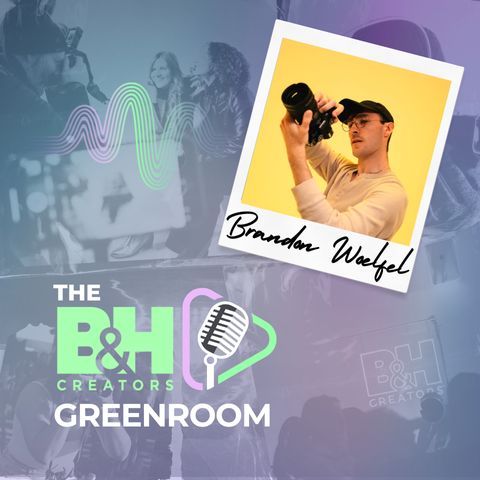
Welcome to B and H Creators green room. And just like a real green room, we're here to spill the tea with some of our favorite creators. When I think photographer and creator, the only one person that honestly comes to my mind is Brandon Woelfel. So I'm so excited to have you on today. Hi, Brandon.
- [00:17]
B
Hey, what's up? How are we doing?
- [00:19]
A
Good, good. Honestly, I want to 1 thank you for your time and for doing this because you've long been a part of the B and H creator community, so I couldn't do this podcast without you. So thank you.
- [00:30]
B
Oh, thank you. Of course. No, I'm super exc. Excited to be here today.
- [00:33]
A
Yeah. So let's tell the audience. I guess when. When we first, like, met, I think it was like we did an icon activation and you led a workshop last year.
- [00:43]
B
Yes. So, yeah, I guess I could start with like just a little background of me. I AM Brandon, I'm 30 years old and I. I grew up on Long Island, New York, and now I live in Brooklyn, New York, which is how we got connected because we're both in New York City and I have a sort of long term relationship with Nikon, which is really cool. So, yeah, we came together back in the fall to host a workshop with two other creators where we each had our own, like, little stations and people could come through and we kind of got to teach them a little bit about like composition and lighting. And I think there was also like some slow mo tips in there as well. So it was just like a super fun night to kick off. I feel like just a year of fun photography for everyone.
- [01:32]
A
Yeah. And honestly, like, that's really what the B and H creator events aim to do, like bring that core audience together with education as like the backbone of it. So the fact that you were teaching portrait style and the fact that we had Amari there doing like composition and yeah, we had a trampoline, I think, which broke way too early into the evening. But it was supposed to be to get kind of like slow motion video clips.
- [01:57]
B
Yes, exactly.
- [01:58]
A
Yeah. Yeah. So fun. Thank you again for doing that. And we love the Nikon team, so I think it was a huge hit. Yeah. So take me back. Take me back to the beginning because a lot of the listeners are probably early career starting creators, like folks who maybe have launched their channels but really are looking for ways to level up and grow. And I really, I don't want to like, gas you up. That's not the point of this. But like, you are such the goat, like Everyone at B and H follows you. I think you're like, the epitome of, like, how do I take photography and, like, and couple it with social media? And I think you kill it every single time. So, yeah.
- [02:32]
B
Thank you.
- [02:33]
A
How did this start? How did you become a photographer?
- [02:36]
B
Yeah, so I always started like this. Like, I. Photography was sort of like the last medium I sort of touched. Like, I was always into art growing up. Like, I. I was taking, like, drawing classes, painting classes, like ceramics. I was like, doing everything related to art that I could, especially, like, in high school. I was like, super into it. And I kind of always thought that, like, photography was like, the easy way out in a way, because I was like, I had no concept of it and I would just see maybe like, other people my age or in my class do it. And I was like, oh, well, you know, they're just like, snapping a picture and I'm spending like, three weeks on this drawing. And I feel like I kind of had this, like, a bad taste about photography. Photography. When I was getting into art, and it wasn't until, like, Instagram came out that I. I wanted to, like, dive into it. So I first got Instagram when I was like. I think I was a senior in high school when it came out, and so I.
- [03:32]
A
But you just made me feel so old.
- [03:34]
B
No, me as well. I'm like, geez, unwell. But when Instagram came out, like, I. Something about, like, social media for me, even back then was super important. Like, I was on Twitter, like, back in, like, I feel like I was constantly just super into new platforms that were coming out, and I really wanted to try it out and kind of take my art in a way and like, use it for and like, in a different kind of media method per se. So I dived into Instagram and got really into it. So I went to SVA for computer
- [04:11]
A
art and yeah, shout out sva.
- [04:13]
B
Yes, we love them. And throughout schooling, I was kind of getting, like, my toes in different types of, like, 2D, 3D, 3D media. So I was still doing Instagram, like, having shoots and. And having fun with that. But I feel like I was also trying to take my, like, schooling seriously, so I would kind of separate the two into, like, almost like, business and, like, fun and, like, pleasure. I feel like I would. I would kind of do photo shoots and have fun with that, but I wouldn't ever really, like, blend the two. Like, I feel like they were pretty separate in my brain. And it was funny because we were still, like, sort of learning the ways of photography. Like, we had a class all about, like, settings and I took a class all about, like, color and how that sort of comes to be in a photograph. But I wasn't like ever blending the two in my brain. Like, I just tried to keep them separate. But when I graduated after four years, I was like, kind of at this crossroad of, like, do I pursue computer art and this 2D, 3D, 3D media that I was learning, or do I go the route of photography? I've been building my, like Instagram and starting to work with brands and I feel like when the summer hit, I just was like, I'm just going to take the next few months and try and really focus in on this photography social media sort of journey and see where that takes me. And from that point, it's now been where I'm aging us again. But it's been like nine years because I, I think I graduated in College in 2016, so I've been freelancing since doing social media since I graduated. So I haven't done anything. Like, I haven't ever gone to like into an Office for a 9 to 5. I've just been doing Instagram, social media, YouTube since, oh my gosh, the dream. Yeah, yeah, yeah. It's been crazy.
- [06:09]
A
Um, that's crazy. I was like doing quick math in my head and I graduated college in 2010, so I'm just gonna pass away now.
- [06:18]
B
No, I'm like, maybe we could just leave like, numbers.
- [06:21]
A
Yeah, no more numbers, lady.
- [06:23]
B
We're two years old.
- [06:24]
A
Yeah, exactly. It's as young as you feel.
- [06:27]
B
Um, yeah, there you go.
- [06:28]
A
But obviously I like, I love that you've been on the journey the whole time though, because the algorithm has changed every five minutes and even the way Instagram was so photo centric to begin with and now it is really video. It's really a video platform just like all the other platforms. How are you adjusting and pivoting or like, at this point are you like. No, I'm a photographer and this is it. And I don't have to adjust for every algorithm switch.
- [06:51]
B
Yeah, no, it's a great question. I think what's really cool about, like Instagram and these social media platforms that are constantly changing? I feel like, because I grew up using them and that's really how I got my start within photography is like, I, without even knowing, will sort of like blend and like kind of flow with the changes without even knowing it. And I feel like that's what really kind of keeps me going and doing this for so long is because I'm having to like, adapt to these platforms. And sometimes I definitely get a little bit stubborn. Like, I feel like I was kind of known back in the day for like, adding like, white borders on my photos for a while. And like, I kept those going like, a little too long. I feel like, like they kind of announced like, you know, reels and. And vertical, like four by five photos. And I was still like, posting square, like four by threes with whiteboard. Like, I was like, stuck to it. And I feel like it's been really cool to just kind of transition my work with kind of how again, like, these platforms change. And I have really, especially this past year, kind of like dived into reels and video creating as well. And it's been like, super to like, have that be a part of my process as well. Like, I think at first I'm very, like, I. I get very comfortable with. With how things are and I. I kind of almost need that, like, switch up for me to be able to like, change my work in a way. And so especially when, like, even I remember the day when like, stories came out. Like, I was like, oh my God, I have to like, do the, like, now I have to focus on this. And. And now it's reels. It's all these things. And it's. It's definitely like a lot as creators up with everything. I don't think we should strive to be able to, like, you know, people are being like, post five times a day. Like, I feel like I'm still trying to stay true to how my process is, but just kind of pivot in ways where it also works for me.
- [08:55]
A
And I mean, you have a massive following. I mean, like, and I. I think it's an. I think it gets attributed to your art. I think that's probably the driving force of like, why people are following you. But do you ever get like, that pressure of like, well, I need to meet what the community wants, or is the art just what they want and therefore you can kind of stay true to like, whatever's true to you at that stage?
- [09:16]
B
Yeah, I think. I think back in the day I like talking about maybe like 2015, 2016. I definitely had that mentality of trying to create images that other people and my followers would like. So I would like, almost study different, like, likes that I got in an image and be like, okay, well they like this better. I should do more of that. And I feel like more recently, especially within the past few years, I obviously that's still going to be in your brain. Like, I'm not saying that I've completely, like, kind of washed that away, but I definitely don't care about that as much. And especially with, like, even talking about, like, a posting schedule or things like that, I've kind of, like, completely gotten rid of things like that and just kind of tried to listen to, like, my body and my brain and see where I'm at that month, that week, even that day, and kind of ebb and flow with the inspiration that comes. Because I feel like if not, you would just sort of, like, burn out. And I feel like I do see a lot of different, like, creators, like, take breaks or do certain things. And I feel like I. I almost like, even if I do go on, like, a break or something like that, like, I never. I'm never, like, announcing it. I feel like I'm just like, oh, I'm just. This week, I'm not going to post. And I never. I don't take it too seriously, even though it is my job. I just. I think I try to just come, like, kind of, like, have my inspiration kind of ebb and flow with how I'm feeling, you know?
- [10:43]
A
Right, Right. Absolutely. And I think that's so important. Every episode so far of this podcast has been about creators avoiding burnout. Cause it's so real. And I think now it's, like, gonna be a game or something next season where every, like, we take a little drink every time someone says burnout to avoid burnout. But it's so true. Like, how do you. I guess, do you have any pressure when you have brand work, though? Because I know you do so much brand work and you can't tell the brand, like, well, I'm taking a week off. Or can you. Can you empower yourself to kind of put those boundaries in place?
- [11:15]
B
I feel like, what's funny about my brain, I kind of separate, like, my personal work and the brand work. And when I'm working for a brand and have, like, a set, like, set of deliverables, I really, like, lock in, in a way. And I feel like I kind of push all my, like, personal, like, work and my test shoots to the side and really just, like, focus in on what me and the brand are working on in that moment. And I think that kind of helps me in a way, too, like, being able to work off of a team. Because I feel like within this freelance world and me working by myself, like, I don't. Yes. I have people I like, bring on as, like, assistants or, like, a makeup artist. And things like that, but I'm, like, reporting to anyone. Like, I kind of do everything myself in a way. Like, I don't even have a direct, like, manager. I kind of do everything on the back end myself as well because I just. I like, enjoy it. And it. It kind of. It's just what I've been doing and it's been working. And so it's kind of been fun to be able to then transition into these jobs with, like, a full team and be able to work with them and jump on calls. And it feels more of like a schedule, per se. Like, I. I feel like when I was in school, I was kind of scared of having, like a real job person, like a 9 to 5 or something like that. I always wanted to do, like, wake up when I want and do all these things when I want. But it is nice, you know, to be able to work with people, have calls with people, and like, bounce ideas off of. And I definitely do sort of like, separate the two. And I think that's how I try to avoid burnout, I guess, in a way too, is by sort of taking a break on more, like, personal shoots and tests while I am focused on, like, a job.
- [13:02]
A
Right, right. And I think so much of, like, your aesthetic and your style is so, I want to say whimsical.
- [13:09]
B
Yeah, yeah, for sure.
- [13:10]
A
And I think, like, you're just epitome of an artist in my mind. You know what I mean? No, truly.
- [13:16]
B
So.
- [13:16]
A
And I feel like being a creator is almost. It does become so very business like, you know what I mean? Because now you're an entrepreneur, you are running this thing that is sometimes way bigger than people really expected it to be. And for sure, usually I would say, like, you know, at what point you get a team, but like you just said, you don't have a team. So is there, like, a plan for the next phase or are you really happy? Kind of, yeah. Because I feel like it's going to scale to a point where maybe you do need somebody.
- [13:44]
B
Yeah, yeah. No, it's funny, I feel like I've kind of like, although I don't have, like, a set team, I feel like I still have, like, almost like a community, it feels like, because I kind of have almost like this roster of people I am, like, coming to or pulling from for certain jobs. So, like, if, you know, a client does come to me and they're like, oh, like, we need. This is our budget. We need you to almost like, produce a shoot. Like, I know, like, exactly who to call and, like, what studios to rent and it feels, feels really nice to be able to have those people that are also down to create with me. But yeah, it is funny because I feel like when it comes down to like almost having maybe like a social team, like the managers of all of it all, I definitely have had like calls with different like managements and things like that, but I feel like I haven't found anyone or like anything. I guess that like will rep me as hard as like I can in a way because I feel like I always like at this point I kind of, I know how my schedule is and so I know where my rates can fall in certain times of the year. And I, I think I just know myself at this point like really well and how I work and I feel like it would take a lot to be able to like find someone to represent me in a way. I guess that could almost do it better than me. And I don't want to sound like conceited in a way. I think it's just more of you know, you know yourself better than other people know you.
- [15:14]
A
Yeah, 100%. I'm very similar and I feel like it's probably aspect of being a creator too is like you want to control the product, you want to control the, the vision behind it. So why not also control the contract or the negotiation or all that other stuff? For sure, yeah. Have there been things you've learned along the way? Like I mean I've worked in corporate for a long time so I've seen my fair share of contracts. But as a creator, the first time you get like a brand dealer, is it just like gibberish? Like how did you navigate that, you know.
- [15:44]
B
Yeah, it was, it's definitely been a long time coming with like just learning throughout these contracts and these negotiations. And I think more recently I've learned a lot about just like yes, like a certain number, a certain budget may look really nice. But also think to yourself like how like all the time and the, and the energy it's going to take like leading into that deal. So like if it's you know, a six month thing or like a year long contract, which I've had before, yes, that like big chunk of money sounds really nice but just know like that will kind of take you throughout the whole year and you're gonna put be putting depending on what the deliverable is. Like you're going to be putting a lot of your time, your energy, your resources into that and just making sure it's like worth it for me and you know, for you if you're doing something similar to move forward with that. Because I feel like with me specifically, I'm talking more so like renting a space, I'm like having maybe to like pay for a location release and then paying people on the team. So it's like, yes, a nice, again, chunk of money might look nice, but you definitely have to think about where that money's going and divvying it up and also making sure there's some leftover for you and your time and your energy that you're putting into everything.
- [17:07]
A
Right, Right. I heard a really great tip one time that said, always pay yourself first.
- [17:11]
B
Yeah.
- [17:12]
A
And I think for sure, yeah, creators maybe don't do that enough or like don't think through that enough because like you said, there's so many other parts of it that you have to, you know, are non negotiable. Like the space is the space. You know, the hair makeup person is the hair makeup person. But also like you are a person and you deserve, you know, a flat set rate that you're comfortable with too.
- [17:32]
B
Yeah, absolutely.
- [17:34]
A
How do you navigate, like, I guess, advocating for yourself? I mean, at this point I feel like people are coming to you, they know who you are, they're going to put the respect on your name. But, but the creators who are like, I'm overwhelmed. I have imposter syndrome, I don't know how to do this. Like, how do you advocate for yourself? And this also might just be good for everyone, right? Like not even just creators. Like people in corporate need to hear this advice too.
- [17:56]
B
Yeah. I think it goes back to just like kind of being. Obviously it takes a lot to just come up with confidence, but I think that confidence is sort of like learned within the space. Like just the more time and the more shoots I've been able to produce and shoot, the more like, you know, you learn from mistakes, the more confidence you gain. And obviously it takes a lot of time. It takes a lot of trial and error. But when you know, the longer you do it, I feel like the more sort of confident you get within your work and not only your work, I feel like your, your rates as well. So like, if a brand is coming to me and you know, I really want to work with them, but they can't like maybe meet where I'm at. Like I will just at this point just walk away from what that looks like because I know like what I have to offer in a way. So I think it's all about just like getting to a point where you don't always have to feel confident in your work, but knowing that you have your work out there, at least for people to see and can relate to what you're able to produce.
- [19:01]
A
Right, right. That's such good advice. I love that. And you've also been doing a lot of other types of projects now, too. Like, every time I go to these trade shows and Nikon has a booth, you're there, fret and setting. So do you love being at panels? I mean, you were at Build. You've done a bunch of other things. Is that, like, the next stage in your career, too? Like, could you teach? Is that on the radar?
- [19:22]
B
Yeah, for sure. It's funny, I feel like these conventions have been super interesting because it's been, you know, you're teaching live, and when you have. When you take that and you compare it to, like, a YouTube video or something, it's like there are so many different cuts. Like, if something goes wrong, you could just simply cut that no one will see. And it feels very polished in a way. But it's been really fun to, like, almost take down those walls. And I've done, like, a live shoot at, like, the Nikon booth in front of, like, I don't know how many people, but yeah, and it's just like, you know, you're. You're. I'm shooting, and I'm, like, forgetting that there's people watching. And it's definitely something I'm sort of getting, like, dipping my toes into and getting used to, but I definitely want to improve and get better at it. And I think that's just really. What's really fun about photography is there's so many, like, different pathways you can take. And even though I have been doing freelance work and photography for, like, over a decade now, it's like, I'm still being introduced to, like, new parts of photography and where it can take me. And I'm just trying to, like, be more open about also saying, like, yes to certain things. And I feel like public speaking and showing up and showing my work on a giant screen like we did at the. At the Build convention, is definitely something I'm. I'm still getting used to. But it's been so fun to be able to also just connect with the people who may watch me online, like, and take. Take them. And now meeting them in person, like, at these conventions, like, it's been so cool to put, like, faces to names and also hear just their feedback, because I think it just hits different, like, in real life, you know?
- [21:04]
A
Oh, my God. So different. And it's such a nice way to like, it's taking the community out of like. Yeah, like a forum or like the chat of YouTube and like bringing it in person is such a different, like just like, I think re. Energizes people too, you know, and kind of creates that like, oh, yeah, I'm doing this for. Yes, there are thousands of views, or in your case, millions of views. But now it's also like, you know, like, I'm actually connecting with someone and I'm seeing maybe like how their photography has changed because you've influenced them. Like, that's such a cool. I'm sure. Yeah. So tell me what, what's coming up? Like, obviously, like so many things, but anything on the next couple months.
- [21:42]
B
Yeah, I think I've really just been like, we were talking about like photography education. Like, I, I definitely want to dive into that more. So like, I expect me at more like conventions and different, like live workshops and just like trying to offer like what I know to other people because I feel like it's taken me a bit now to get to where I am and I definitely want to like, offer that to anyone who's, who's asking. So definitely a lot of bit. A lot of that. And I'm also just trying to like, I don't have any like, specific things I can say, but like, I feel like I'm just trying to also get more into like reels in a way. Like, I know that might sound like, like, what's coming up, like me making reels. That sounds kind of stupid, but. No, it is like something that I've always kind of like shied away from like video and I am so familiar with photo and I think opening the door to a different, like, sort of media and a different process is just like how I want to take photography and this space, like moving forward. Like, I just want to always sort of make room for things I don't know that well and try and see where I can go with that.
- [22:52]
A
Yeah, yeah. And I feel like there's so. It's so easy now too, to make videos. I mean, I've, I, I learned video editing back in the day. You had to use like a proper software. You had to shoot on a real camera. But now, like, I think short form content has blown up. You can do in app, like within Instagram, you can edit a whole video. So even if a photographer might feel like that maybe is a little bit of like a learning curve, like, I think that was true a few years ago. A lot of creator Photographers were like, oh, I don't want to do video at all because the, you know, the entry to barrier to entry is harder. And we haven't talked at all about like AI, but obviously like AI is the new frontier, I think for photographers in general. Is it something you're worried about, something you're embracing? Is it something you're like, no comment.
- [23:35]
B
No, I mean, I'll delete. I think for me and like in photography I use it in a way where I'm trying, I like speed certain things up. Like if I am expanding a background, if I'm like trying to maybe change, like extend like a forest, like upwards. Like I'll use it for things where like in an end result image you wouldn't like even think about things being AI because it just seems natural. So I think that's how I use it in my process. Like I like to use like generative fill in Photoshop. I feel like that's a really helpful tool. And I just recently went to like a Adobe summit like and we talked a lot about AI because I feel like it is so up and coming and it really is like changing the game. And I think as a photographer I use it in a way of just like aiding my process along in ways where I can save time. Especially like in the past, like I remember I, when I was shooting with like an old camera that didn't have a lot of megapixels per se, like I would shoot my subject and then I would literally capture like images around my subject and then go into like Photoshop and like manually place them all together like a puzzle and like erase and like just try to make the image bigger and better. And now you can do those things within like a click. And I think within this space like there are certain things you don't have to embrace but like you could choose to do that. And I think for me I choose to use it in a way where it speeds up my process. But I'm not like completely like taking away the creative aspect and that's what's really cool. I think about also shooting subjects is if you're going to use like AI in a way along with like a person. I feel like AI is not at the spot where like it can replicate a person. You know, it's, it's getting there like which is like a little scary. But I think that's what's really cool about like portrait photography is that it's still like that raw person, but maybe elements again like expanding the background or cleaning things up. Can Be, you know, you could save time with that.
- [25:52]
A
Right, right. That's such a good tip. Yeah. Yeah, I was gonna say mine's my therapist. I don't know if you have been telling Chat GPT everything.
- [25:59]
B
Yes.
- [26:01]
A
Do not recommend, actually.
- [26:03]
B
Yeah, I know, because then it just feeds you what you want to know. But I know for me, like, also, I am definitely not the best writer, and so I will, like, sometimes use it for cleaning my work because I never want it to, like, use it for, like, everything, especially with, like, the impacts of, like, energy and all of that. Like, I'm trying to be mindful of things like that, but I think when it comes down to just, like, taking my words and like, still being true to me, but just kind of cleaning it up and. And making move. Making things move a little bit faster. And like I said, like, I don't have a whole team around me, so sometimes it is nice to be able to use these tools that do feel like a team member in a way. So, like, if you're someone like me who it's maybe just you behind the computer to behind the camera, like, you know, you could take advantage of certain tools to be able to make your workflow a little bit faster. Just being mindful of the end result product and never, like, just copy pasting whatever it says, throwing it in the email. Definitely wouldn't suggest that now because I think they're are like, key little things now that you can sense our AI, like, especially within writing. There's like, the long dash that ChatGPT always uses and like, just the word flow of it all. Like, you can kind of tell. So, yeah, I wouldn't recommend that, but if you want to maybe take what you wrote and sort of clean it up like once in a while, like, I mean, you know, no harm, no foul.
- [27:35]
A
Yeah, yeah, yeah, yeah, I agree. I think it's about, like, speeding up your existing workflows, not, like giving up workflows or changing or using a shortcut.
- [27:43]
B
Yeah, yeah, exactly.
- [27:45]
A
Okay, let's play our little hot potato question game that we have with all of our guests. So I'm gonna read the previous question that we had from Nervous. I don't know if you know DG photo, that's his handle, but yes, it sounds really familiar. Yeah, he. You probably do. You probably follow each other. He's a portrait photographer who, like, shoots on the streets and he, like, captures the BTS for TikTok. So he'll, like, go up to strangers.
- [28:09]
B
Of course.
- [28:10]
A
Yeah, yeah, David, he's. He's so Sweet.
- [28:12]
B
Sometimes the. The usernames and the names don't. Don't match, but yes, yes.
- [28:15]
A
Okay. So this is from David. David asked if you could do content with someone in the present or the past, who would it be?
- [28:23]
B
Oh, I feel like for me, like, I. I really want to also get into, like, more, I guess, like celebrity shoots or like, press shoots for different, like, movie junkets or things like that. So I feel like I would try to pick, like, maybe a celebrity to be in front of the camera.
- [28:44]
A
Yeah.
- [28:46]
B
So I don't know, maybe I would go with, like, Billie Eilish or someone that is, like, doing really cool work in like, a different sort of, like, genre and, like, also knows how to, like, move in front of the camera too, because I feel like I'm definitely not the best when it comes down to, like, posing. So it would help also to have someone that kind of knows what they're doing, but just, like, in a different way.
- [29:05]
A
Yeah. Oh, my God. A Billy Brandon collab is something I need right now.
- [29:10]
B
I like that the name sound good together. So I feel like hopefully we're going
- [29:14]
A
to add her and see what she's doing later. Okay, I love that. And then if you could ask our next question. A question. And again, you don't know the guest is. It's a surprise. But it could be anything on their kind of content creator journey or you can get deep with it or, you know, keep it fun.
- [29:34]
B
Yeah. Okay. So I would ask them if they had, like, they could choose whatever camera and, like, lens and gear they want to use, but I guess what kind of light would you bring if you only had, like, one light to bring with you, like, for everything and like, every shoot.
- [29:50]
A
Oh, I love this. I love this. And I. I hear Profoto sponsoring this episode as we speak.
- [29:57]
B
It would need to be, like, universal. You need to be able to, like, use it anywhere, I guess.
- [30:02]
A
Sure.
- [30:02]
B
So it would need to be, like, specific, but I would. I'm very curious as to what maybe someone would say.
- [30:08]
A
Okay. And before we wrap up, you have to tell me what your light would be because we can't let you go on that cliffhanger.
- [30:13]
B
Yeah, I think for me, like, I. I would opt for something I'm using literally right now, and that's a ring light because it feels so, like, versatile, especially with, like, creating content, but also, like, calls you're taking. Also, like, I'm using it in a studio for, like, hair and makeup. Like, it's so, like, versatile where one time I've used it out of shoot for hair and makeup. And then, like, I transitioned it into, like, lighting my subject, like, on the shoot.
- [30:40]
A
Oh, wow.
- [30:41]
B
So. And like, one that, like, also you can charge but is, like, battery operated. You can, like, unplug and bring with you. I think for me would be.
- [30:48]
A
Yeah. Portable, easy, light. Genius.
- [30:50]
B
Yes.
- [30:50]
A
Yeah.
- [30:51]
B
Yes.
- [30:51]
A
Okay. Well, thank you so much, Brandon. This was such a great episode. Can you tell everyone where to follow you if they're not. If they are behind the times for whatever reason?
- [31:01]
B
Thank you. Yeah, you can follow me anywhere, like Instagram, YouTube, Facebook, TikTok. I'm BrandonWolfel on TikTok. I am at Brandon underscore woelfel. But if you search my name, you'll find me and then we can chat.
- [31:16]
A
And thank you so much, Brandon. I really appreciate your time. I hope everyone follows him if you're not. And make sure to follow us @BH creators on Instagram and BHcreators on TikTok. Until the next time. Thank you.