← Big Ideas Lab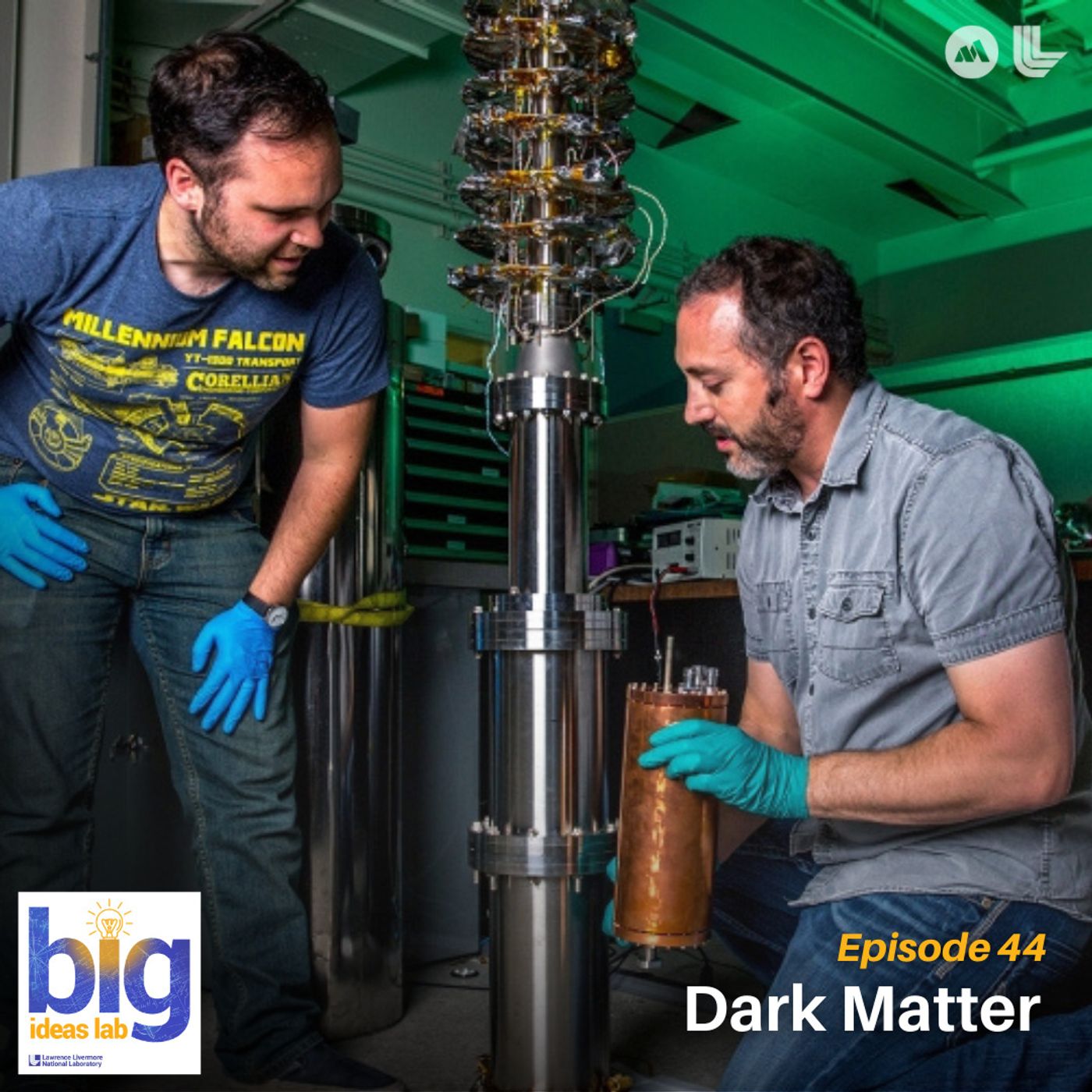
Loading summary
Transcript55 lines
- [00:02]
Narrator
Australia, 1993. The night sky is clear in a way that feels intentional, as if something pulled the clouds aside to reveal what's behind them. The steady hum of the Mount Stromlo Observatory computers has become a comforting background noise. For months, its macho survey has stared at millions of stars, waiting to witness what some called impossible. And then it happens. A ripple in the dark. A distortion in the fabric of the universe. A single star brightens not much, but enough. The gravitational signature of something massive and invisible. A microlensing event witnessed for the first time.
- [00:52]
Greg Soliberry
If you look at a place where there's a dense enough number of stars, you will at some point, hope to see something pass in front of one of them. This massive object bends the light and makes it look like the light from the star is actually being amplified for a little bit.
- [01:08]
Narrator
This brief, unexpected brightening may open the door to measuring what can't be seen.
- [01:14]
Gianparlo Carose
It's there. It's in almost all these galaxies that you see at different levels. So it should be all around us here on Earth. The reason we haven't been able to detect it so far is because so far it interacts only gravitationally that we've seen. We're not sure at what point it'll
- [01:29]
Narrator
interact with ordinary matter, the silent majority of the material universe. Dark matter. Welcome to the Big Ideas Lab. Your exploration inside Lawrence Livermore National Laboratory. Hear untold stories, meet boundary pushing pioneers and get unparalleled access inside the gates. From national security challenges to computing revolutions, discover the innovations that are shaping tomorrow. Today, Lawrence Livermore National Laboratory is hiring. If you're passionate about tackling real world challenges in science and engineering, business or skilled trades, there's a place for you at the lab. Right now, positions are open for a senior Labor Relations Advocate operations, Cybersecurity Manager, and a senior Database administrator. These are just a few of the more than 100 exciting roles available at Lawrence Livermore. You'll work on projects that matter, from national security to cutting edge scientific advancements. Join a team that values innovation, collaboration and professional growth. Explore opportunities@llnl.gov careers where your next career move could make history. What keeps galaxies together? Galaxies spin faster than they should. Clusters of those galaxies hold themselves intact against all expectations. By every visible measure, the universe should not look the way it does. Something's missing mass. We call that missing mass dark matter. A hidden, invisible substance threaded throughout the cosmos. Dark matter makes up a staggering 85% of the total estimated mass present in the universe. Yet it remains hidden from view, difficult to observe, and even Harder to understand. Which leads us to the question scientists keep returning to.
- [03:54]
Greg Soliberry
What is dark matter? We really don't know.
- [03:56]
Narrator
That's Greg Soliberry, a staff scientist in physics at Lawrence Livermore National Laboratory.
- [04:02]
Greg Soliberry
The only way that we can really infer that it's there is because it interacts with the stuff that we can see.
- [04:07]
Narrator
Astronomers first suspected dark matter more than 90 years ago when Swiss American scientist Fritz Zwicky noticed something strange in the Coma cluster. The galaxies inside the cluster were whipping around so fast that, by all rights, they should have been flung into space, yet they stayed bound together. Something is holding galaxies, stars, and entire clusters together, Something we can't see. And although it's invisible to the naked eye, there are clues to everywhere that allude to its presence.
- [04:42]
Greg Soliberry
You find that things are moving a lot faster than they should be, which makes you think, okay, maybe there's something that we can't see that's just really massive. As, like, a constituent of this galaxy,
- [04:53]
Narrator
Dark matter exerts a powerful influence on gravity, guiding some galaxies into their familiar spiraling forms. Its presence can also be traced as we study the way it subtly bends and warps light. All these clues reveal what dark matter does, but not what it is. For nearly a century, scientists have explored a wide range of possibilities for what dark matter might be. One early idea focused on the possibility that it could be made of enormous heavy objects hiding in the outskirts of galaxies. Things we now call machos, Massive compact
- [05:32]
Greg Soliberry
halo objects, or machos that we call them, which is basically pretty compact. Things that are very massive in space but are really dark. So think stuff like black holes.
- [05:43]
Narrator
Dark matter could also be made of tiny, elusive particles drifting through space.
- [05:48]
Greg Soliberry
From the particle side, you get things like really fun acronyms, Weakly interacting massive particles. We call them WIMPs or things like axions. And there is a lot of stuff going on in the world of particle physics to try and detect those.
- [06:01]
Narrator
But their unknown mass makes it nearly impossible to know where or how to look for them. It's like charting an invisible ocean current. You can see the tug on galaxies, watch the cosmos bend, but the source of the flow remains invisible. In the early 1990s, scientists at Lawrence Livermore National Laboratory joined the search for dark matter through their project called the macho Survey.
- [06:27]
Greg Soliberry
One of the constituents of dark matter could be are just these really massive things floating around in space that we can't really see. It was posited that, hey, these could be, like, a serious dark matter candidate. And they did a whole survey to look at the galactic bulge and to look at the lmc, a large magellitic cloud, to kind of say, can we look and find some of these massive compact halo objects?
- [06:48]
Narrator
At the Mount Stromlo Observatory, the team began searching for machos using extremely sensitive cameras and powerful parallel processing computers, capturing and analyzing thousands upon thousands of images of stars every night.
- [07:04]
Greg Soliberry
If you look at a place where there's a dense enough number of stars, you will, at some point, hope to see something pass in front of one of them.
- [07:12]
Narrator
When that unseen object passes by a distant star, its gravity bends the star's light, creating a subtle distortion far too small for the eye to catch. A phenomenon called gravitational microlensing.
- [07:28]
Greg Soliberry
That's one of the other ways that we can kind of tell that dark matter exists somewhere and is. You'll see light deflected in a way that you can't explain through just the existence of what we can see there. This massive object bends the light and makes it look like the light from the star is actually being amplified for a little bit. And there's a very, very specific signature across whatever this crossing time is that
- [07:52]
Narrator
you can look for that tiny brightening, while just a flicker would reveal that something massive had passed by, even if the object itself remained invisible. But detecting these subtle microlensing events is no small feat.
- [08:07]
Greg Soliberry
I think one of the challenges there is source selection and a little bit of luck. At its core, you're waiting for something very small to pass in front of something much smaller somewhere in the galaxy at some point in time. And the thing that's going to be passing in front of it is very dark. And really the only sort of indication that you're going to get that a microlensing event is about to happen is you see the light from the star change ever so slightly. Because a massive enough object will have gravitational lensing effects, A lot of it relies on needing an absolutely ridiculous amount of stars being observed all the time.
- [08:49]
Narrator
So in 1993, when the macho survey detected the first gravitational microlensing event in history, it created a landmark moment in the hunt for dark matter. That turning point reshaped our understanding of dark matter and set a course for the tools that would drive its pursuit. As the data rolled in, a startling truth emerged. Machos were out there silently drifting through the Milky Way, but not nearly enough to explain the universe's hidden mass.
- [09:20]
Greg Soliberry
One of the results did end up being constraining the amount of dark matter that could be in. Like black holes and brown dwarfs.
- [09:28]
Narrator
The MACHO survey was only the beginning. Microlensing events are Rare and finding them requires watching millions of stars at once. That challenge falls at the intersection of astronomy, physics and advanced technology. Gianparlo Carose is a staff scientist at Lawrence Livermore with 20 years of experience experience in the dark matter hunt.
- [09:50]
Gianparlo Carose
Dark matter requires huge steps up in technology and our understanding of how detectors work and being able to deploy long term operations of experiments that are extraordinarily sensitive.
- [10:01]
Narrator
One of the most ambitious attempts to meet that challenge is the Vera C. Rubin Observatory's Legacy Survey of Space and Time, or lsst. As we discussed in our World's Largest camera episode, the LSST's 8.4-meter telescope will scan the entire southern sky every few nights over the next decade, creating an ultra deep time lapse movie of the universe.
- [10:28]
Gianparlo Carose
The LSST camera the camera for Vera Rubin is unique amongst all telescopes. It's a massive system. It's a gigapixel camera, just a huge system. It has a huge field of view and and the past decade and a half or so of development this was led out of Lawrence Livermore National Lab.
- [10:47]
Narrator
With each pass, LSST will capture billions of stars, galaxies and transient events, providing exactly the kind of continuous high precision monitoring needed to spot the faint momentary brightening caused by gravitational microlensing.
- [11:04]
Greg Soliberry
When you have a giant camera and a very wide view and you're scanning the sky night after night, you will very likely be able to see some of these events.
- [11:15]
Narrator
LSST doesn't just take pictures of the sky, it watches the sky transform frame by frame. This makes it one of the most powerful tools we have for uncovering dark matter candidates. To turn LSST's massive flow of images into discoveries, the task falls to the LSST Dark Energy Science Collaboration. Lawrence Livermore contributes to this team which aims to detect giant black holes through gravitational microlensing.
- [11:45]
Greg Soliberry
Lsst, its main power again is in the sheer volume of things it's going to see.
- [11:52]
Narrator
LSST will search for dark matter at the largest scales. But Lawrence Livermore scientists are also looking for answers at the opposite extreme. Minuscule particles that could be one of the universe's most elusive ghosts. Axions Looking for a career that challenges and inspires. Lawrence Livermore National Laboratory is hiring for a nuclear facility engineer, systems design and testing engineer, and a senior scientific technologist, along with many other roles in science, technology, engineering and beyond. At the lab, every role contributes to groundbreaking projects in national security, advanced computing and scientific research, all within a collaborative mission driven environment. Discover Open positions@llnl.gov careers where big ideas come to life. An axion is a hypothetical subatomic particle and one of the leading candidates for what dark matter might be. They're believed to interact very weakly with ordinary matter and yet also be abundant and pervasive, passing through all of space, even Earth itself, almost without a trace. Axions can't be detected by watching gravity bend light. Scientists have to search a different way. The Axion dark matter experiment, or admx, is a haloscope, a finely tuned instrument that uses a powerful magnetic field to nudge these invisible particles into revealing themselves as faint microwave signals.
- [13:45]
Gianparlo Carose
ADMX is really the flagship project from the Department of Energy to go after axions.
- [13:51]
Narrator
This is one of the few experiments in existence that has been operational long enough to plausibly discover the axion.
- [13:58]
Gianparlo Carose
There's only a few experiments in the world that have been sustained operations to be able to really reach and get parameter space. It started here at Livermore back in the early 90s. I could describe ADMX basically as a glorified AM radio.
- [14:11]
Narrator
The analogy might sound simple, but the physics it enables is anything but that.
- [14:17]
Gianparlo Carose
What we're using is a large magnetic field. We put in what we call a microwave cavity. And a microwave cavity is just like a cylinder of metal. That microwave cavity is essentially an LC resonator. It has an inductor and a capacitor. You can make a little resonance circuit where your electromagnetic field goes from the charges in your capacitor to. To the currents on the wall that are your inductor, and you oscillate back and forth. And so that resonator provides a way to couple to an axion.
- [14:46]
Narrator
These axions are nearly massless, and they interact at unimaginably tiny energies. Finding them takes scanning multiple frequencies, which is one of the challenges when it comes to admx.
- [15:00]
Gianparlo Carose
We're looking for a tone. So we have one narrow frequency that we look at. We sit there for about a few minutes or so, and we ask the question, is there an excess power source here? If we don't see anything, we turn the dial. We move that small bits of copper that we have inside our tuning system, and we move that resonant frequency slightly. And then we repeat the experiment, and we keep scanning the frequency range, looking for this little tone to show up.
- [15:29]
Narrator
When an axion finally interacts, it releases a single photon, a tiny flash of light that has to be amplified to be seen.
- [15:37]
Gianparlo Carose
Now, that coupling to the magnet is extraordinarily tiny. So we have to use quantum amplifiers, very sensitive amplifiers that don't add any noise to the System to be able to boost that signal, to be able to look at it on a data acquisition system.
- [15:52]
Narrator
Scientists suspect the axion could be the particle behind dark matter, Quietly shaping the universe from the shadows. But studying it demands instruments sensitive enough to catch the faintest signal.
- [16:06]
Gianparlo Carose
The challenge is our backgrounds are really noise, and that noise comes from thermal radiation, but also the standard quantum limit. Our mantra has always been we want to either discover or if not discover, rule out the axion over a certain mass range. We want to be able to scan that. We want people not to have to come back and say, okay, well, maybe it was below that sensitivity. You have to rescan the whole frequencies. So the game has always been how sensitive can we make it.
- [16:31]
Narrator
This dedication to sensitivity has also equipped ADMX with the ability to eliminate axions as dark matter candidates in specific frequency ranges.
- [16:41]
Gianparlo Carose
We've been able to rule out axions as dark matter candidates between around 650 MHz up to about a gigahertz or so in different sensitivities. That whole mass range, if the axion had sat there, we would have found it. And we've continually increased our scan rate. Our goal is to really get up to about 2 gigahertz and start actually scanning higher, if possible.
- [17:03]
Narrator
Next to the work happening at much larger scales, the contrast is stark.
- [17:08]
Gianparlo Carose
I would say the searches for axions is extremely different search than you would be doing for machos. It's kind of the opposite end of the spectrum. But being able to do both simultaneously and utilize different technologies Here. Things have been developed for big programs allows us to be a leader.
- [17:24]
Narrator
ADMX will continue listening for the faintest whispers from the smallest invisible particles, Tuning its instruments to detect what may make up dark matter on the smallest scale.
- [17:36]
Gianparlo Carose
We're not sure what the answer is. We have to ask from different views.
- [17:40]
Narrator
Meanwhile, the Vera C Rubin Observatory and the LSST will continue mapping the universe on an astounding scale, Searching for subtle clues for invisible mass bending light.
- [17:52]
Greg Soliberry
LSST is just in its infancy. We're still in the data preview stage. We need a lot of data.
- [17:58]
Narrator
Over the coming years, that deluge of images and measurements may reveal patterns, distortions and anomalies we've never seen before, Acting as clues that could reshape our understanding of dark matter. Together, these approaches are put together, Pushing the boundaries of discovery, Inching us closer to uncovering the hidden mass, Shaping everything we see. They speak to something deeply human, the desire to understand what lies beyond our reach.
- [18:29]
Greg Soliberry
We should be curious about things that we have no idea like what they are. It's in human nature, throughout all of our history to see something and wonder, what is that? So who knows? Maybe many years from now they'll be like, how did they not know what dark matter was?
- [18:42]
Narrator
Dark matter isn't just another cosmic mystery. It's the framework everything else is built on. Identifying what it is would reshape our understanding of galaxies, gravity, and the history of the universe itself. At Lawrence Livermore National Laboratory, that work continues across vast surveys of the sky and experiments tuned to the smallest imaginable signals, pushing closer to answering one of the most fundamental questions in science what is dark matter? Thank you for tuning in to Big Ideas Lab. If you loved what you heard, please let us know by leaving a rating and review. And if you haven't already, don't forget to hit the Follow or Subscribe button in your podcast app to keep up with our latest episode. Thanks for listening. Join a team where Expertise Makes a Difference Lawrence Livermore National Laboratory is hiring for a nurse practitioner, physician assistant, a senior health physicist, and a laser modeling physicist. And the list of open positions doesn't end there. There are more than 100 job openings across science, engineering, IT, HR and the skilled trades. This is more than a job. It's an opportunity to help shape the future. Explore all open positions and start your next career adventure today@llnl.govcareers. that's llnl.govcareers.