← Big Ideas Lab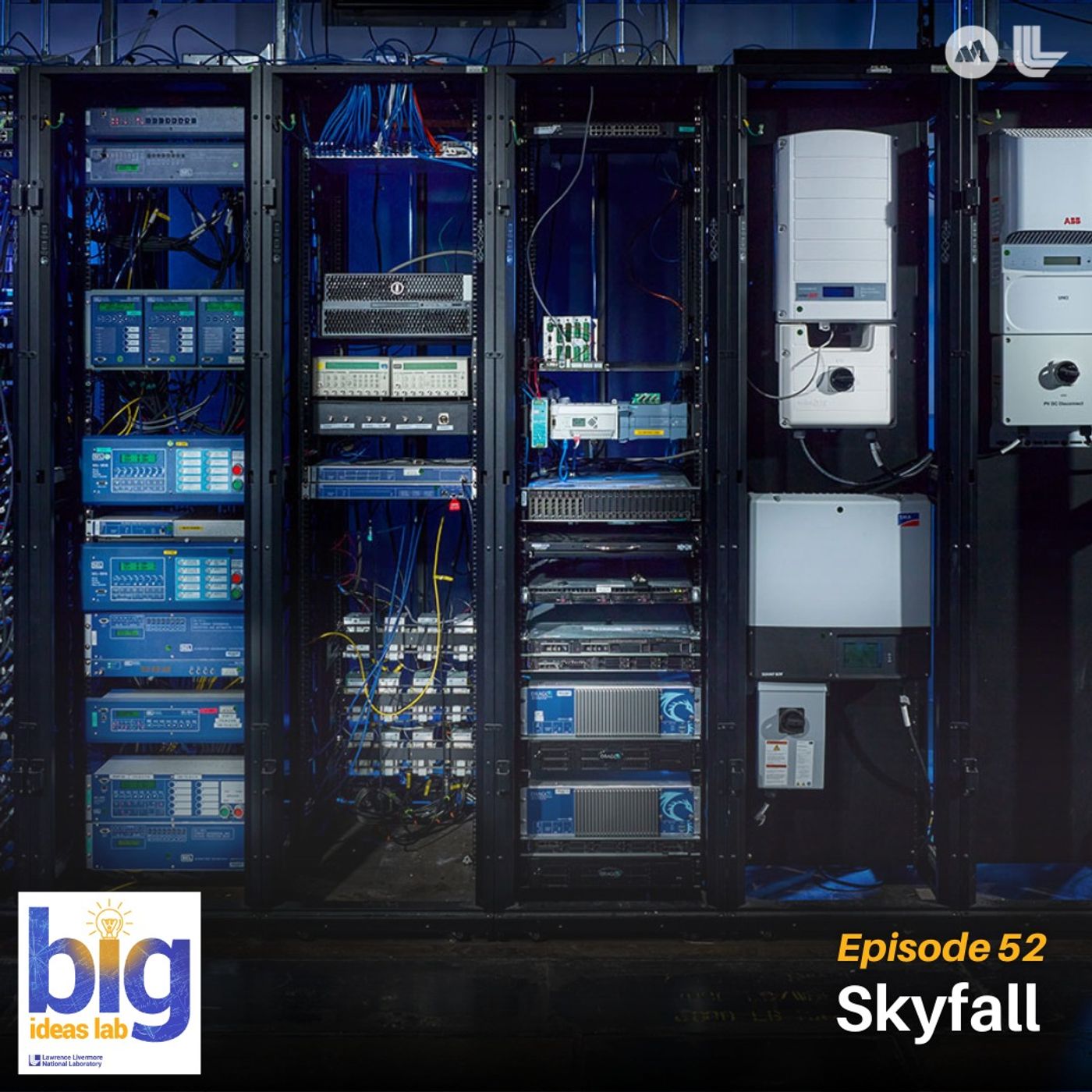
Big Ideas Lab
Skyfall
00:16:56
Scientists are simulating cyber attacks and system failures on real-world energy infrastructure.
Loading summary
Transcript70 lines
- [00:03]
Narrator
Ukraine, 2015. Inside a grid control center, operators monitoring the flow of electricity heard something they couldn't explain. Then they didn't just hear it, they saw it. The cursor was moving, clicking, but no one was touching it. They watched, frozen, as someone else moved through their system, opening breakers. One section, then another, almost random, chaotic. Until a city of 200,000 completely lost power for the first time at this scale, a cyber attack didn't just steal data. It reached out and turned off the infrastructure on which the nation depends.
- [01:11]
Nate Gleason
It's the stuff you don't think about until it doesn't work. And then it's the foremost thing on your mind.
- [01:17]
Narrator
What happens when the systems we trust are taken over by malicious actors? When bad software turns off energy or telecommunications systems? At Lawrence Livermore National Laboratory, there's a place designed to answer that question and prevent it. A place where scientists don't just study failure, they build it. This is Skyfall. Welcome to the Big Ideas Lab. Your exploration inside Lawrence Livermore National Labyrinth. Hear untold stories, meet boundary pushing pioneers, and get unparalleled access inside the gates. From national security challenges to computing revolutions, discover the innovations that are shaping tomorrow. Today, Join a team where expertise makes a difference. Lawrence Livermore National Laboratory is hiring for a nurse practitioner, physician assistant, a senior health physicist, and a laser modeling physicist. And the list of open positions doesn't end there. There are more than a hundred job openings across science, engineering, it, HR and the skilled trades. This is more than a job. It's an opportunity to help shape the future. Explore all open positions and start your next career adventure today@llnl.gov that's llnl.gov careers. When you decide to sit down in your home, there's no hesitation as you put all your faith into that chair you've used time and time again. One small contained system of trust. Now imagine that trust at scale. Traffic lights, data centers, hospital equipment. Things made possible through essential energy systems we use every day. Energy systems deemed critical by the US government.
- [03:40]
Nate Gleason
The US has defined 16 critical infrastructure sectors.
- [03:43]
Narrator
Nate Gleason is the program leader for the cyber and infrastructure resilience program at Lawrence Livermore.
- [03:49]
Nate Gleason
Energy is a critical infrastructure sector. That's your power grid, your oil and gas pipelines. It's basically the structure that allows a society to function and do the things that we need to do to meet
- [04:01]
Narrator
the needs of society. These energy systems are complex, interconnected, and increasingly controlled by software. But when that software fails, it can have devastating consequences.
- [04:14]
Nate Gleason
Ukraine says hackers are behind a big power outage in that country, the lights went out for hundreds of thousands of people.
- [04:20]
Narrator
Russia appears to have figured out how to crash a power grid with a click. One year after the 2015 Ukraine energy grid was hacked, the attackers returned. This time, they didn't need to control a mouse. They had built something else.
- [04:37]
Nate Gleason
The Ukrainian government saying that they've come under at least 10 major cyber attacks that forced a blackout of more than 100 cities across this country, saying that a virus was responsible for that rather large blackout that took place.
- [04:53]
Narrator
Software.
- [04:55]
Nate Gleason
The attacker created custom malware that infected the networks of the Ukrainian power companies, causing them to again open up the breakers and cause the power outage.
- [05:06]
Narrator
Not the access and chaos of the first attack. This was control.
- [05:12]
Nate Gleason
It was directly speaking the language of the industrial control systems, as opposed to basically just getting a password and remoting into a system. What we saw in the first attack is people with good cybersecurity knowledge were able to penetrate the defenses, but once they got in, they were just clicking around randomly. They were just causing chaos. In the second attack, when you have a malware that's actually speaking the language of the devices on the system, that indicates a greater level of understanding.
- [05:38]
Narrator
In that moment, the world was exposed to a new kind of cyber attack, one intentionally directed at physical infrastructure, forcing a new question.
- [05:50]
Nate Gleason
Would that work in the United States? If that same attack were perpetuated on California's grid, what would the impact be? We were tasked to simulate that, but there's a problem.
- [06:02]
Narrator
You can't just shut down a city to test the system in real conditions, and no single company can test failures at that scale. Scientists needed to speak the language of the grid, but in a place outside the live system. So they created Skyfall, a testbed at Lawrence Livermore that connects real world equipment with high performance computers. A power grid. Hardware convinced through software and voltage signals that it's the real grid, what they call hardware in the loop.
- [06:35]
Nate Gleason
What Skyfall is at its core is we can take actual hardware that exists in real critical infrastructure and then leverage the high performance computing simulation environment of the lab to simulate the broader system that that hardware exists in.
- [06:51]
Narrator
Not in theory. In practice.
- [06:54]
Nate Gleason
Skyfall takes data from that simulated environment, converts it into real electrical signals, feeds it to that equipment the way it would if it were out in the field, returns a response that goes back into the simulation. So it lets us take those real devices and make them think they are on the grid.
- [07:11]
Narrator
The same mechanism that makes attacks possible is also what makes defense possible. Scientists at Skyfall take these abilities and play out Worst case scenarios in a simulated environment.
- [07:24]
Nate Gleason
Shall we play a game? We play out these scenarios, we say, here's the stuff we think the adversary is thinking about. Here's some of the capabilities we've seen out in the wild. What would it look like if those were on our system? The really cool thing, though, is we can also do that in reverse.
- [07:41]
Narrator
Scientists at Skyfall don't have to begin at the same point attackers would in their simulations. They can also start with the part of energy infrastructure they don't want shut down and work backwards to see what critical systems they need to protect.
- [07:55]
Nate Gleason
We can start with the consequence. Say San Francisco loses power for a week. That's our consequence. Then we can run our models backwards and say, what are all of the ways that we could have gotten to that consequence? This is what we think the adversary wants to achieve. What are all the different tactics they might try to try to achieve that goal? It really aids the defense in being able to understand and anticipate the whole universe of what the adversary might do.
- [08:24]
Narrator
The way this software can reach into the physical world is exactly how Skyfall ended up with its name in the first place.
- [08:31]
Nate Gleason
From the James Bond movie. Skyfall was the first mainstream movie that prominently featured a cyber attack causing physical damage, a critical infrastructure element, as a major piece of the plot. The assailant hacked into the environmental control system, locked out the safety protocols and turned on the gas. Looks like obfuscated code to conceal its true purpose.
- [08:51]
Narrator
Security through obscurity.
- [08:53]
Nate Gleason
Just point and click. Skyfall sounds awesome. There were other ridiculous names. One of my colleagues, very wisely at the time, said, Nate, imagine one day, years from now, having to testify in front of Congress. Pick something that you would be okay saying in front of Congress.
- [09:09]
Narrator
Outside of Hollywood, it's not a single villain against a system. It's weather events, equipment failure, software errors. So what happens when they all collide?
- [09:22]
Nate Gleason
Bad days on the grid can take a lot of different flavors. It's not just bad guys that can cause problems.
- [09:34]
Narrator
Looking for a career that challenges and inspires, Lawrence Livermore National Laboratory is hiring for a nuclear facility engineer, systems design and testing engineer, and a senior scientific technologist, along with many other roles in science, technology, engineering and beyond. At the lab, every role contributes to groundbreaking projects in national security, advanced computing, and scientific research, all within a collaborative, mission driven environment. Discover Open positions@llnl.gov careers where big ideas come to life. August 2003. On a stretch of the grid in northern Ohio, high voltage power lines sag under a heavy load. They brush against overgrown trees and shut down at just the wrong moment. Other lines take the extra load and also begin to fail, pushing even more strain onto the next and the next, one by one, failure upon failure, until 50 million people had lost power across the United States and Canada. This is cascading failure.
- [11:03]
Waipao Dande
It's all the history of events happening. They will add up and something big will happen.
- [11:09]
Narrator
Waipao Dande is the Associate Program leader for Energy Infrastructure modernization in the Cyber and Infrastructure Regime Resilience Program at Lawrence Livermore.
- [11:19]
Waipao Dande
Certain threats are not obvious. What we call incipient faults.
- [11:23]
Narrator
A small early stage problem in a system that hasn't fully failed yet.
- [11:27]
Waipao Dande
It's not a short circuit, it's not anything big that happening. So why would I care about that? It's not damaging the system. It's not unsafe for humans who are interacting with the systems. But if you take the long time series of events happening, you will see a small spike, another small spike, spike, spike, spike, and then it goes boom.
- [11:49]
Narrator
Just like the northeast blackout of 2003.
- [11:52]
Waipao Dande
A tree touching a power line. There is wind and the line is touching the branches and nothing happens. There is a little spike in the measurements, but eventually the branch will burn and there is arcing and that will cause a cascading of devices and circuit breakers and switches which are installed on the power lines. One disconnects the line, that causes other parts of the lines and system to get overloaded. This is that domino effect.
- [12:22]
Narrator
It doesn't take a massive failure, just the right sequence of small ones. And if someone understands that sequence, they can recreate it.
- [12:32]
Nate Gleason
What a really bad day would be. Let's say we're sitting in the middle of summer and electricity usage is really high. Everyone's got their air conditioner on. They're a cyber attack comes in, that takes out a major transmission line, takes out a generation facility, and suddenly we have a power outage that affects a large portion of a region. If that's coupled with additional attacks, if you imagine a sustained campaign by an adversary, theoretically you can have a cascading power outage. Something similar to the Northeast Blackout back in 2003, but done intentionally. If you know what you're doing.
- [13:08]
Narrator
Not every threat looks like an attack. Some of them don't announce themselves at all.
- [13:14]
Nate Gleason
A couple of years ago, we had discovered some of the security cameras that were manufactured by Chinese companies. Our examination of these devices found that these security cameras had a lot of extra features in them.
- [13:27]
Narrator
Encrypted video sent back to Chinese servers, quietly serving as backdoors into the network.
- [13:35]
Nate Gleason
One of the things we do in Skyfall is find those vulnerabilities, mitigate them, or make sure that people know not to put those devices in their system.
- [13:43]
Narrator
So how do you defend a system where failure can come from anywhere and everything is connected?
- [13:50]
Waipao Dande
How do we harden our systems? How do we understand the systems? Harden them in such a way that we minimize the possibility of bad things happening. And if they do happen, then how do you make sure that these systems, critical systems, get back to life as quickly as possible and as nicely as possible?
- [14:07]
Narrator
The answer isn't bigger systems, it's smarter ones. Systems that feel a little bit like magic.
- [14:16]
Colin Ponce
I always kind of wanted to be a wizard. Who hasn't?
- [14:19]
Narrator
Colin Ponce is a computer scientist at Lawrence Livermore.
- [14:23]
Colin Ponce
And I decided that given that fantasy magic isn't real, I wasn't going to be able to probably achieve that particular career goal.
- [14:30]
Narrator
But through Skyfall, Colin gets close.
- [14:33]
Colin Ponce
Being able to teach computers to do things for me was the closest that
- [14:39]
Narrator
I could get, specifically through AI. At Skyfall, the AI is consistently learning from the data it's given, and over time, those patterns explain threats and predict them.
- [14:52]
Colin Ponce
It feels like magic sometimes, but they're not. What they do is they learn patterns. They learn the patterns in the data that you give them.
- [14:58]
Narrator
While scientists at Lawrence LiverMore are using AI, so are potential adversaries.
- [15:03]
Nate Gleason
If there's an AI tool that is designed to, say, attack the grid, how scary is that?
- [15:09]
Colin Ponce
If there's something that keeps me up at night, it's that we are in an automation race. Our adversaries are leveraging this technology to automate their attack workflows. They're doing the same kinds of stuff that they would have been doing before, but faster and at bigger scale. And we're trying to leverage this technology to automate our defense workflows. I don't know right now who's going to win that race.
- [15:31]
Narrator
That's exactly why Skyfall is needed.
- [15:34]
Nate Gleason
How do we design and architect our system so even if the adversary wins, we're still okay? That's a really exciting area of research that leverages a lot of the innovations in artificial intelligence.
- [15:46]
Narrator
At Lawrence Livermore, this approach has a name, immune infrastructure.
- [15:52]
Nate Gleason
The idea that you can build big, strong fence around your system and keep the adversaries out just isn't realistic. So instead, what immune infrastructure is, it's a layered approach designed to make it as difficult as possible at every step for the adversary to achieve their objectives. The analogy I compare this to is Terminator movies. You have the original Terminator, you shoot him, is very robust, but eventually he breaks.
- [16:15]
Waipao Dande
Come with me if you want a
- [16:17]
Nate Gleason
bit little, then you have the next generation Terminator. That's that liquid metal T1000 advanced prototype emimetic polya liquid metal. So you shoot him. There's a hole that appears. It just fills right in and he keeps going. That's what we're trying to do. Rather than make a system that can take a beating, it's take the system that can dynamically adapt to the different threats. Whatever you care about the most, you can still protect.
- [16:42]
Narrator
The tools are evolving on both sides. AI isn't just shaping how we're attacked, it's shaping how we defend. The systems that power our world can be turned against us, but they can also be understood, tested and protected. Work that could not happen without the team at Skyfall.
- [17:02]
Nate Gleason
When you think about cybersecurity of critical infrastructure systems, in order to either effectively attack one of those systems or effectively defend a system, you've got to have a complex set of knowledge all together in one team.
- [17:15]
Narrator
Because understanding the live system is the first step to keeping it running.
- [17:20]
Waipao Dande
That's sort of the theme that runs through the program. These are not just academic scenarios. These are real world scenarios and the kind of things that we see happening
- [17:31]
Narrator
in the world, the kind of work that depends on every detail, every perspective, every discipline, even down to the name.
- [17:41]
Nate Gleason
The funny thing was, I did have the opportunity to testify in front of Congress and had to use the name Skyfall. Glad we picked a name that wasn't silly.
- [18:03]
Narrator
Thank you for tuning in to Big Ideas Lab. If you loved what you heard, please let us know by leaving a rating and review. And if you haven't already, don't forget to hit the follow or subscribe button in your podcast app to keep up with our latest episode. Thanks for listening. Looking for a career that challenges and inspires? Lawrence Livermore National Laboratory is hiring for a senior labor relations advocate, a unified communications engineer and a laser modeling physicist, along with many other roles in science, technology, engineering and beyond. At the lab, every role contributes to groundbreaking projects in national security, advanced computing, and scientific research, all within a collaborative, mission driven environment. Discover Open positions@llnl.gov careers where big ideas come to life.