← Big Ideas Lab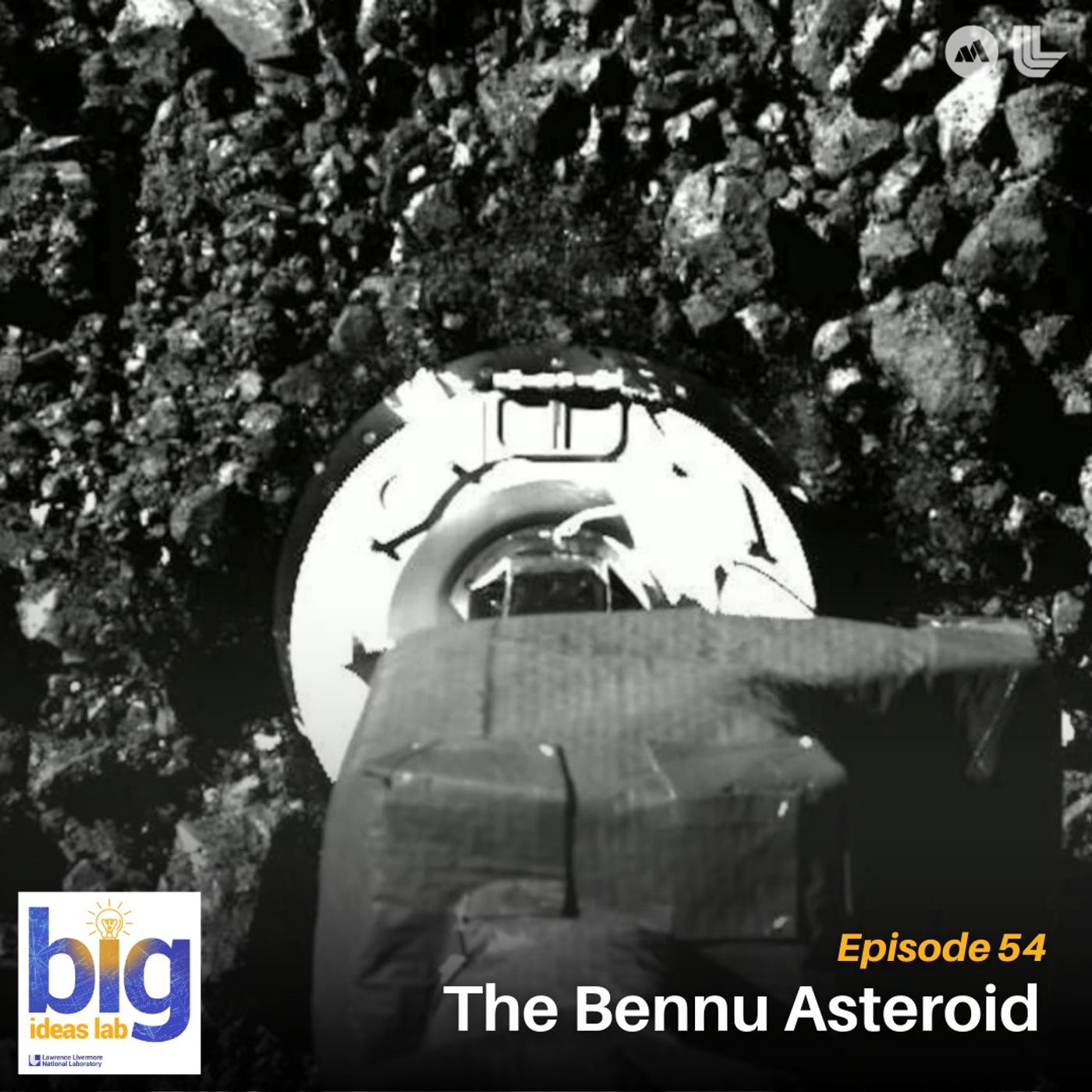
Loading summary
Transcript53 lines
- [00:02]
Narrator
In a remote corner of Utah, a distant boom rolls across the desert. A capsule only 32 inches wide has just separated from NASA's Osiris Rex spacecraft and entered Earth's atmosphere.
- [00:23]
Mission Control
Touchdown. I repeat, PDL SRC has touched that.
- [00:28]
Narrator
NASA's Osiris Rex, the first, first ever US mission to collect a sample from an asteroid. Returning to Earth after a round trip journey of more than 2 billion miles, the capsule hits the desert floor and the recovery team moves in carefully.
- [00:43]
Mission Control
Roger that. Eyes on the capsule. Start your retreat.
- [00:49]
Narrator
Fast forward three months and the desert sand has given way to white surfaces, sealed containers and the sound of people taking every precaution to protect what NASA spent separate seven years to bring home. A scientist reaches for the sample container slowly because he knows it's impossible to replace.
- [01:13]
Greg Brinicka
I was using a gloved hand due to contamination issues, but it was pretty spectacular. You really are looking at something that has changed very, very little since its inception.
- [01:22]
Narrator
The object in that room was a delivery four and a half billion years in the making. And somewhere inside it, written in chemistry, may be the story of where everything began. The next challenge Reading it, NASA partnered with a team that could measure what almost no one else on Earth could. A sample from the Bennu asteroid. Welcome to the Big Ideas Lab. Your exploration inside Lawrence Livermore National Laboratory. Hear untold stories, meet boundary pushing pioneers and get unparalleled access inside the gates. From national security challenges to computing revolutions. Discover the innovations that are shaping tomorrow. Today, Looking for a career that challenges and inspires, Lawrence Livermore National Laboratory is hiring for a senior labor relations advocate, A unified communications engineer and a laser modeling physicist. Along with many other roles in science, technology, engineering and beyond. At the lab, every role contributes to groundbreaking projects in national security, advanced computing and scientific research on all within a collaborative mission driven environment. Discover open positions@llnl.gov careers where big ideas come to life. In the early 2000s, a team of planetary scientists at NASA began planning something audacious. They would build a spacecraft, aim it at an asteroid, launch it across more than a billion miles of space. Map the asteroid's rugged terrain at an unprecedented centimeter level resolution, hover over the surface to collect a sample and bring it all the way home. The mission was called Osiris Rex. The target was Bennu. Any moment now, NASA will launch a space probe that will embark on a seven year mission.
- [03:49]
Greg Brinicka
3, 2, 1.
- [03:51]
Mission Control
Go.
- [03:52]
Greg Brinicka
Osiris Rex and lift off of Osiris Rex. Its seven year mission to boldly go to the asteroid venue.
- [04:02]
Narrator
And back in September 2016 the spacecraft launched from Cape Canaveral. It would take nearly five years to reach the asteroid, map it, collect a sample, and begin the journey back. The question driving the mission is one that humanity has asked since its inception.
- [04:21]
Greg Brinicka
Curiosity. Of where we came from and where the ingredients in our solar system came from and what they were. Where we came from as humans, where we came from as planets.
- [04:30]
Narrator
Greg Brinicka is a staff scientist at Lawrence Livermore National Laboratory.
- [04:34]
Greg Brinicka
One of the ways to do that is to look at samples that formed in the early solar system and analyze them and figure out when it happened, where it happened, and what it's made from.
- [04:44]
Narrator
Greg has spent his career studying meteorites, rocks from space that have landed on Earth, and the answers they may reveal about the solar system's beginning. Bennu is roughly as wide as the Empire State Building is tall. A rubble pile held together by its own gravity. Never melted, never differentiated into a core, a mantle, or a crust. Never weathered by Earth's wind, oceans, or atmosphere. Scientifically pristine.
- [05:14]
Mission Control
Hazard probability is 0%. Orex has descended below the 5 meter mark. The hazard map is go for tag. Touchdown declared. Sampling is in progress. Sample collection is complete. And the back away burn has executed.
- [05:29]
Greg Brinicka
It's a very cool way of collecting a sample, actually. So there was a spacecraft that was orbiting the. The scientists decided, this is an area we want to land. It's safe, and it has the stuff that we want to collect. So they picked an area that they knew they could get out of that wasn't near a lot of large boulders. They basically went down and essentially looks like a pogo stick. Fired the retro rockets and blasted off
- [05:50]
Narrator
of the asteroid in October of 2020. The long journey back into Earth's atmosphere began three years through the vacuum. But before it ever arrived, the mission was entering its next phase, finding someone on Earth who could actually interpret the material.
- [06:08]
Greg Brinicka
I kind of like to think of this as if somebody sends you a picture of a birthday cake. You can kind of tell what that birthday cake's made of. You may have an idea about what it tastes like. You don't really know. And we can take pictures of a lot of asteroids. We can take pictures of distant planets. We can have ideas about what they're made from, but we don't really know until we get it in the laboratory and really analyze it. You don't really know until you have that birthday cake in front of you and you can taste it.
- [06:33]
Narrator
For decades, telescopes revealed spectra wavelengths of light reflected off asteroid surfaces. Useful suggestive, but indirect from Earth scientists could See the surface. But that surface had been marked by billions of years of sunlight, radiation and impact. The birthday cake was in the picture. Scientists just couldn't taste it. And even when space rock did arrive on Earth as meteorites, there was another problem.
- [07:06]
Greg Brinicka
All the meteorites we have on Earth have passed through Earth's atmosphere and have landed on Earth. And that in itself contaminates that sample. And particularly for this mission, it was really important to have an uncontaminated sample because what they're looking at, in addition to the chemical and isotopic compositions that Livermore was involved in, was some of the organic biologic precursors, ingredients that may lead to the emergence of life later on. Those ingredients already exist on Earth. So if you have a meteorite that's flying through the atmosphere and lands in a bog, of course it's going to be contaminated.
- [07:41]
Thomas Cryer
Banu It's a very primitive asteroid.
- [07:44]
Narrator
Thomas Cryer is a staff scientist at Lawrence Livermore.
- [07:48]
Thomas Cryer
And that means that it has not been changed or modified much over geological history, so over the billions of years since it formed. And that means that we get a very clear and true perspective of how the solar system looked like billions of years ago, even before the Earth was around.
- [08:05]
Narrator
So what exists inside a preserved primitive asteroid born in the outer solar system?
- [08:11]
Thomas Cryer
I find this really incredible. To have extraterrestrial samples, you can hold them in your hand.
- [08:24]
Narrator
Lawrence Livermore National Laboratory is hiring. If you're passionate about tackling real world challenges in science, engineering, business or skilled trades, there's a place for you at the lab. Right now positions are open for a senior Labor Relations Advocate, Operations Cybersecurity Manager and and a senior Database Administrator. These are just a few of the more than 100 exciting roles available at Lawrence Livermore. You'll work on projects that matter from national security to cutting edge scientific advancements. Join a team that values innovation, collaboration and professional growth. Explore opportunities@llnl.gov careers where your next career move is could make history. Livermore's case for getting to study Bennu rested on a reputation built over decades.
- [09:28]
Thomas Cryer
It's a competitive process to become a participating scientist that allows you to receive a sample of Bennu and be part of the science team that does this work. NASA wants you to prove to them your eligible and are capable of doing the sophisticated analysis that you promised to do. In order to do this type of work, you need to be a leading expert in your field. You need to be able to do these very sophisticated isotopic measurements. And we are world experts here at the lab in analyzing very small samples with very advanced analytical tools. And that specifically is related to the ability to measure isotopes in these rocks using mass spectrometers. And these isotopes then in turn, tell you about where the material formed, how it formed, and when it formed.
- [10:18]
Narrator
Fortunately, that expertise connects to another Lawrence Livermore mission, National security.
- [10:24]
Greg Brinicka
There's a great handshake between nuclear forensics and cosmochemistry, because we are always pushing the boundary on what we can measure and getting better at it by looking at these really small samples that we see oftentimes in cosmochemistry, you want to find out where it came from, you want to find out how old it is, you want to find out what it's made from. Those are also the same types of questions that we ask in nuclear forensics.
- [10:48]
Narrator
But before Bennu could be measured, it had to be protected not from the world beyond earth, but from earth itself.
- [10:56]
Thomas Cryer
This is done under very clean conditions in a clean lab at the skills of air HEPA filters. And the reason for that is that we need to prevent any contamination from the earth from being added to that sample. So we want to keep our environmental background levels very low.
- [11:12]
Narrator
A breath, a flake of skin, a particle of dust, Any of it could contaminate the sample. By the time the sample reached LIVERMORE, Scientists at NASA's Johnson Space center had already seen the complication. Bennu was not only one thing.
- [11:30]
Greg Brinicka
When the sample returned back to earth and they were able to open the canister, it became pretty obvious just with the naked eye that you could see There were slight differences in different lithologies, which is basically rock type that we're seeing in the sample. And, of course, this gave everyone pause and thought, okay, well, we need to measure each individual rock type to see how different they are.
- [11:49]
Narrator
Each lithology could carry a slightly different history, and each one needed to be decoded.
- [11:55]
Thomas Cryer
We use a technique known as mass spectrometry. You extract information that has been retained within that sample for billions of years. It's basically locked in there. And using sophisticated methods that we use at the lab and have at our disposal, that allows us to measure the abundances of isotopes, individual isotopes within a rock, so of a particular element. But we can measure the isotopes of many different elements, and we have multiple such mass spectrometers at our disposal. And here at Livermore lab, to read
- [12:25]
Narrator
Bennu, they were looking for tiny differences inside the atoms themselves.
- [12:30]
Greg Brinicka
Isotopes are different versions of an element. What that tells us is that those different isotopes behave Slightly differently in conditions like in outer space or on Earth. A story that's being told by looking at the isotopic composition. So much like a very large dog is going to be able to make a different type of cut than a very small dog. If a Great Dane and a Chihuahua are running around a corner, the Chihuahua is going to be able to make that corner earlier. So we know how those behave because we've seen it in the past. And so we can make predictions on how different isotopes behave in different environmental situations.
- [13:07]
Narrator
An isotopic fingerprint, a way to read where Bennu came from and what it had been through. And when Lawrence Livermore finally measured that chemistry, all 18 isotopic systems from a fragment smaller than a coin, what they found stopped scientists in their tracks.
- [13:26]
Greg Brinicka
I guess what surprised me the most is how similar it was to the Sun. And we're able to determine the composition of the sun with spectral measurements. They have fairly large uncertainties, but we can easily tell the difference between certain different types of meteorites and the Sun. And what we noticed very early on is that this is indistinguishable from what we see in the Sun. And that tells us that this hasn't really changed much from an ingredient standpoint over the four and a half billion years. So it really is the makeup of the sun, which is 99.9% of the solar system's mass. We have a sample of it now.
- [14:01]
Narrator
The result connected Bennu to the rarest and most primitive meteorites ever found on Earth.
- [14:07]
Thomas Cryer
You have meteorites falling on Earth. They fell maybe 50 years ago, maybe 100 years ago, from another body. They pass through the atmosphere. They traveled all the way to Earth. And then you have NASA taking a spacecraft to another body and return some material by a spacecraft.
- [14:22]
Narrator
The composition of Bennu turns out to be identical to the Sun. It's also very similar to cichondrites, a rare class of primitive meteorites, and the most unprocessed material in any known collection on Earth.
- [14:38]
Thomas Cryer
It is really a special class, and there's only very little material of that in collections on Earth. And on top of that, the material, of course, that's returned by a spacecraft is much more pristine, because when a meteorite falls on Earth, it has to pass through the atmosphere.
- [14:54]
Narrator
All while Lawrence Livermore was tracing isotopic fingerprints, placing Bennu's origin and confirming chemistry, another team was working on the same sample. Because inside Bennu's dust, scientists were not only finding chemistry from the birth of the solar system, they were finding chemistry that is relevant for life.
- [15:15]
Greg Brinicka
You have a lot of amino acids. You have all five of the nucleotide bases of DNA and rna. You have the sugar backbones. These are all contained in meteorites. And we found these in the Bennu samples. Our colleagues have found essentially all the components of DNA and RNA in the Bennu sample. And that's just super exciting. If you talk about origins, about where the ingredients for life may have come from or developed, that's pretty exciting to be able to find those in space rocks.
- [15:41]
Narrator
Not life itself, not evidence of organisms, but molecular building blocks used by life on Earth. Found in a rock from outer space that's never touched Earth's atmosphere.
- [15:53]
Thomas Cryer
That's quite remarkable because that means that even though as of now, we only know for certain that life exists on Earth, at least some of the building blocks for life are also present in these meteorites. And what that exactly means, I think we don't know yet. But it is certainly a worthwhile pursuit.
- [16:12]
Narrator
Not every answer locked away inside Bennu will come from the first round of analysis. Most of the asteroid sample is sealed at NASA's Johnson Space Center, Saved for scientists who will have better tools, sharper methods, and questions no one has thought to ask yet.
- [16:29]
Greg Brinicka
You look at the Apollo samples that were brought back in the 1960s and 70s, and we're still uncovering secrets from those samples. We're still learning a ton about the moon from the Apollo samples. And when you archive samples like this, it allows people in the future to look at them with better instrumentation. I mean, we went have better instrumentation in a decade, in two decades, in five decades. There's no question we have improved our instrumentation, We've improved methodologies. People in high school listening to this now will have the opportunity to look at Bennu samples. And I think that's impressive in itself for us to be able to look forward enough to say, let's look at this in 20 years and see where we are. Let's look at this in 50 years and see where we are.
- [17:10]
Narrator
Bennu is not the end of this work. At Lawrence Livermore, the team is already studying lunar samples and expanding its capture capabilities for the next generation of return material, including samples from Artemis. The same expertise will matter again. Clean rooms, mass spectrometers, isotope measurements, and the patience to let ancient material speak for itself.
- [17:35]
Thomas Cryer
You cannot simulate or compute your way to a discovery. You need to actually measure these samples. It's an empirical science. We do measurements. And that will continue to remain important.
- [17:46]
Narrator
A rock from outer space, four and a half billion years of chemistry. A sample small enough to fit in a hand, but also old enough to carry the memory of the solar system. The measurement is what unlocked it. The understanding is what Lawrence Livermore is sending back into the world. Thank you for tuning in to Big Ideas Lab. If you loved what you heard, please let us know by leaving a rating and review. And if you haven't already, don't forget to hit the Follow or Subscribe button in your podcast app to keep up with our latest episodes. Thanks for listening. Lawrence Livermore National Laboratory is hiring. If you're passionate about tackling real world challenges in science, engineering, business or skilled trades, there's a place for you at the lab. Right now, positions are open for a senior Labor Relations Advocate, Operations Cybersecurity Manager and and a senior Database Administrator. These are just a few of the more than 100 exciting roles available at Lawrence Livermore. You'll work on projects that matter, from national security to cutting edge scientific advancements. Join a team that values innovation, collaboration and professional growth. Explore opportunities@llnl.gov careers where your next career move is could make history.