← Blank Check with Griffin & David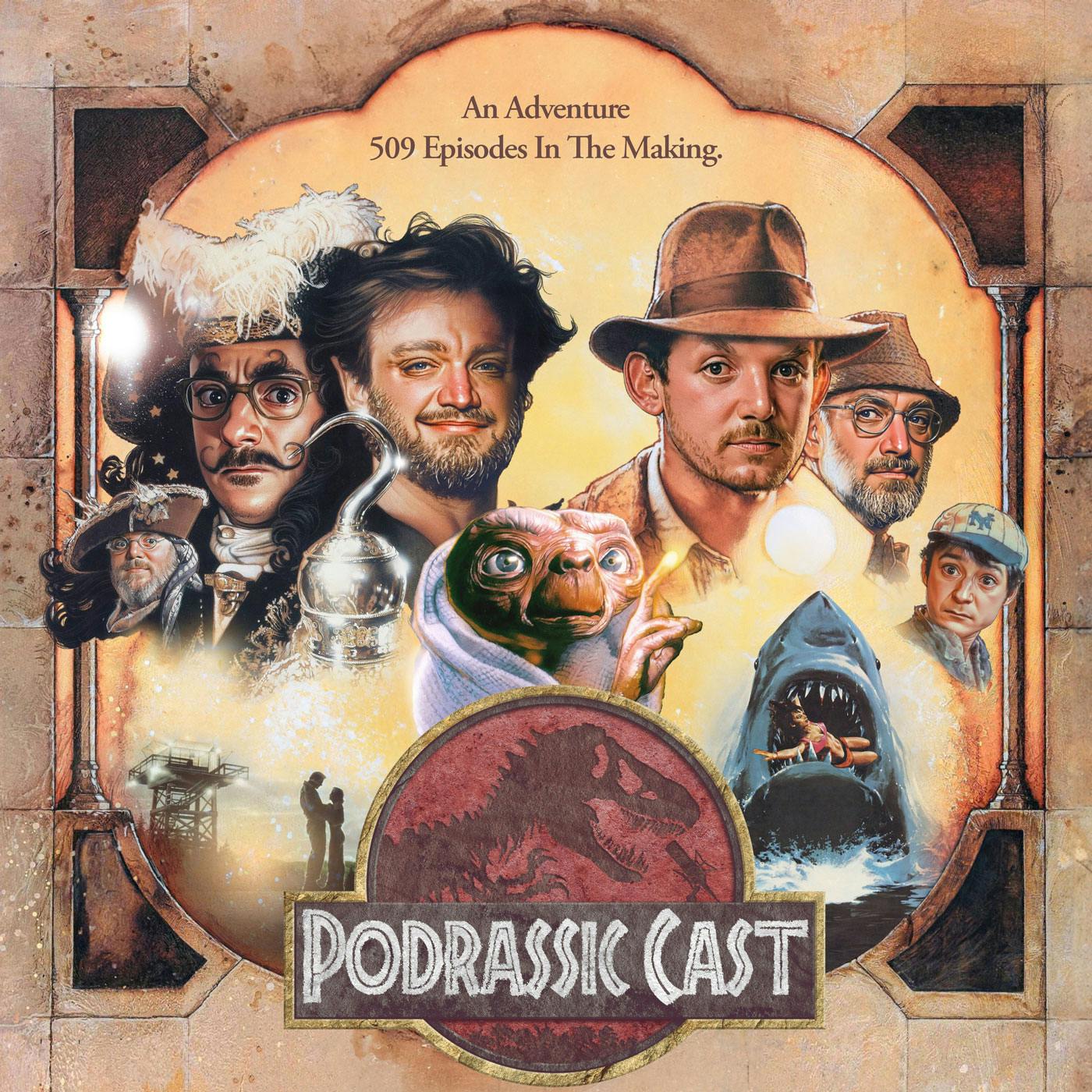
Loading summary
Transcript1,637 lines
- [00:02]
Griffin
Blank check with Griffin and David. Blank check with Griffin and David. Don't know what to say or to expect. All you need to know is that the name of the shadow is Blackjack.
- [00:22]
David
Do I have to get. I have to harmonize. I have to get the right note.
- [00:27]
Griffin
Yep, yep, yep, yep, yep.
- [00:30]
David
Do, do, do podcast.
- [00:33]
Griffin
All right, so here's my pitch.
- [00:34]
David
Do, do do podcast.
- [00:37]
Griffin
Obviously, that's great, but, you know, you sound really impressive. The poster.
- [00:42]
J.D. Amato
That's not the voice of someone who's.
- [00:43]
Griffin
No, no, I think that's the poster. Right. It is an iconic poster in its own right. I'm going to do the tagline. And so here's my. Here's my picture. Close encounter of the first kind. Sighting of a ufo. Close encounter of the second kind. Physical evidence. Close encounter of the Third kind podcast.
- [01:04]
David
Well, that's my pitch. You gotta put a little muscle.
- [01:07]
J.D. Amato
Would this be the first time that it's the. The tagline.
- [01:10]
Griffin
No. Austin used to do that. Used to be our way in.
- [01:14]
David
J.D. i'm.
- [01:16]
J.D. Amato
I'm new to the bus.
- [01:17]
David
Well, no. Well, here's what you're new to. You're new to year 10. A decade of dreams. Blank check. A decade of dreams. And this year, we're pointing back at our history.
- [01:30]
J.D. Amato
Wait, I'm the beautiful strings in the background.
- [01:34]
David
Decade.
- [01:36]
J.D. Amato
That's the theme. I'm on the episode. No, that the theme comes from the whole.
- [01:42]
David
The whole decade is a decade of dreams. Or the whole year.
- [01:45]
J.D. Amato
The whole year is a decade of what if you do this for the next 10 years? But we got the decade of point back.
- [01:50]
David
Remember when we used to do the tagline.
- [01:53]
Griffin
Used to, you know, focus on the movie poster tagline first. And then maybe, I guess if there was nothing, we would try a quote. And it starts.
- [02:01]
J.D. Amato
I don't remember this.
- [02:02]
David
Here's another thing. Miniseries names used to be riffing on the director's names.
- [02:06]
Griffin
Pod Night, Shamma, Cast.
- [02:08]
David
Right.
- [02:08]
J.D. Amato
Like the podcast.
- [02:09]
Griffin
And then we eventually were kind of like, it's boring.
- [02:12]
David
Couldn't do it with Cameron Crowe.
- [02:13]
Griffin
Yeah. Pod Marin. It doesn't matter, right?
- [02:16]
David
It does matter, because in another universe, we could be doing Steve Pod Spielcast right now.
- [02:22]
Griffin
Right? Which, again, you know, there's a reason we moved on, because that's just kind.
- [02:25]
David
Of a decade of dreams is a time to look back.
- [02:27]
Griffin
Yeah, that's fine. I mean, if you want me to look back, I just want to look back to the. You know, when we just did Star wars movies, the prequels. Right. For our first year, 10 years ago. And so we didn't do quotes at all usually. Oh, sure, right. And there's one episode I think a really bad one where we just decided to do like the politics of Star Wars. I think that was for Attack of the Clones of the Sith.
- [02:47]
J.D. Amato
Did I show up to a clip.
- [02:48]
David
Show Decade of Dreams? Like, what could be coming in?
- [02:52]
Griffin
What's in this box in the attic? Oh, well, look at all these memories.
- [02:56]
David
It's even better than a clip show. It's two guys going, hey, remember when this happened? And not cut. Cutting back to the.
- [03:01]
J.D. Amato
I just remember the first time that I was ever on Blank Check.
- [03:04]
Griffin
Yeah. It was first Star Wars Episode 2.
- [03:07]
J.D. Amato
We cut to the clip, do all that later.
- [03:10]
David
But I just decaded dreams. So we don't do.
- [03:11]
Griffin
I just want to say for the.
- [03:12]
J.D. Amato
Politics episode, Shooting daggers at me right now.
- [03:15]
Griffin
For the politics episode, this ill begotten politics episode. I believe Griffin just opened the episode by going, politics. Yeah, just yelling, man.
- [03:23]
David
Yeah. And we. You know what? I'm gonna make a promise. I will do that again at some point within year 10 decades.
- [03:28]
Griffin
Ben, you didn't start the clock.
- [03:29]
David
Oh, David's in a great mood.
- [03:30]
Griffin
I'm in a normal great mo. The greatest mood.
- [03:33]
David
I will say the greatest mood.
- [03:35]
J.D. Amato
To the average person who doesn't know David, they'd be like, David's not in a good mood because he was immediately talking about starting on time and wanting to get going.
- [03:43]
Griffin
Yeah, well, we're doing.
- [03:44]
J.D. Amato
Having known David for a really long time, David's actually in a really good mood today.
- [03:50]
Griffin
Why am I in a good mood or why do you think that?
- [03:52]
J.D. Amato
I just think you have a verve. You have an energy of a life to you that is exciting.
- [03:56]
Griffin
Nice to see you.
- [03:57]
David
You heard that, that vervy sigh, the verbies.
- [04:00]
J.D. Amato
I hear the he types of work.
- [04:04]
Griffin
Email, you know, nice to see you. I don't see a lot of like grown ups right now. It's nice to see grown ups.
- [04:09]
David
Well, this is where grown ups live in the Blank Check Studios. Entering year 10, a decade of dreams. This is where grown ups live.
- [04:18]
Griffin
This is. That's the worst, like, you know, theme park. Like my. This is where grown ups. Like, who would be drawn to that?
- [04:27]
David
Well, good thing, I guess, like a sex club.
- [04:29]
Griffin
But even then it would be kind of like, yeah, I hope so.
- [04:31]
David
This isn't a theme park. This is a place of business. It's like a place of seriousness.
- [04:34]
J.D. Amato
Name of this park is grown Up.
- [04:36]
Griffin
I used to work at a chess shop a zillion years ago.
- [04:39]
David
Well, that's where grown up.
- [04:40]
Griffin
My first job in New York, basically, it was called Chess Shop. It doesn't exist anymore.
- [04:44]
J.D. Amato
Is it the two competing ones that were across the street from each other?
- [04:46]
Griffin
Chess Forum was the. Was the spin off that. Yeah, right. That employees of the Chess Shop had started, and I believe Chess form still exists.
- [04:53]
David
That was the patsies.
- [04:55]
Griffin
Exactly. Yeah. Chess form still exists. God bless him. Whereas Chess Shop finally has turned into a sort of different game store. I don't really know.
- [05:02]
David
There's a weird chain now that's called, like, Hexencross.
- [05:05]
Griffin
Yeah, she knows. Yeah.
- [05:06]
David
That's like board game, coffee, some co or something.
- [05:08]
Griffin
Yes. But anyway, when I worked at the Chess Shop, which was this sort of shambling institution from back in the day in the village on Thompson street, we had lots of chess sets for sale, many of them from India, because India is the home of chess sets. And the boxes would say, like, made with no child labor.
- [05:25]
David
Oh, sure.
- [05:25]
Griffin
And you would be like, that's great. But we have to. We have to announce that, like, what does that mean for all the ones that don't say that? You know, so it's kind of like the sex.
- [05:35]
David
The fairestly difference. Come with your kids, leave with your kids.
- [05:38]
Griffin
I've, as. I think I've told you that I waited on Gandolfini once because his son used to be really into chess. I think at some point, Mike. I think Michael.
- [05:45]
J.D. Amato
Right.
- [05:46]
Griffin
I think his son Michael, he's only got one child.
- [05:48]
David
Yeah.
- [05:49]
Griffin
And James Gandolfini was an incredibly nice customer, like, polite customer. But the act, that man standing and waiting.
- [05:58]
David
Yeah.
- [05:58]
Griffin
Just breathing and like, maybe looking at his watch is one of the more stressful, like, work experiences where I'm like, yes, yes, your order is here. And I'm, like, rushing, and he's just, like, just freaking me out.
- [06:11]
David
But I remember that being a pretty small, delicate, cramped store.
- [06:15]
Griffin
Not a big store, not a huge store.
- [06:16]
J.D. Amato
What year were you working there?
- [06:18]
Griffin
2008. 2008 year I moved here.
- [06:21]
David
What are you doing, J.D.
- [06:22]
Griffin
Like, could I have waited on you? I mean, it's very possible. It's very worth 24 hours.
- [06:27]
David
Do you think David sold you a rook?
- [06:29]
J.D. Amato
I think he sold me my first chess set that I ever bought.
- [06:32]
Griffin
Okay, what did you do you remember what you bought? Did you buy, like, a mat in pieces? Yep. I mean, because that was the thing. People would come in and say, hey, I just want, like, what can I get a chess set for, like, the least amount of money, essentially.
- [06:43]
J.D. Amato
This is probably a screen memory. That I am inventing. It's possible, but the person.
- [06:47]
Griffin
I mean, you probably hung out in the village a lot back then, right?
- [06:50]
J.D. Amato
The person that I'm remembering who helped me on that day now, a long time ago, had David characteristics to the point that I'm like, was it David?
- [06:58]
Griffin
I worked there. I mean, like, there's.
- [07:00]
J.D. Amato
That's so funny.
- [07:01]
David
When can I get a mat in pieces?
- [07:02]
Griffin
And he went, no, no. The whole thing was like. You knew when people came in, right?
- [07:07]
J.D. Amato
My God. Wait, I'm remembering it now. The person went, boy, if someday I had a blank check.
- [07:15]
Griffin
I'm pretty sure I was like, logged into AIM on the, you know, computer.
- [07:18]
David
And like I was going to say, bored out of my mind, furiously messaging. Hey, you know what? What a fun thing to look back on as we start our Decade of Dreams.
- [07:28]
Griffin
You're acting, Griffin, like this is the first episode of like 2025, which is not just, just to be clear, the.
- [07:34]
David
Fifth episode of 24th.
- [07:36]
J.D. Amato
I think it's the first time that Decade of Dreams has been starting this.
- [07:40]
David
No, I've seen it in a couple other episodes, but because of us recording in advance and slightly out of order, I didn't, I. I didn't have the foresight to launch it on the.
- [07:47]
Griffin
On the dual episode, you probably.
- [07:49]
David
So I'm catching up.
- [07:50]
Griffin
Well, this is a more nostalgic film anyway. This is a film about.
- [07:54]
J.D. Amato
You wait until you had a friend that would. Yes. And you also.
- [07:56]
David
Maybe that's part of it.
- [07:57]
Griffin
People would come in and then we'll talk about Close Encounters people.
- [08:00]
David
We'll talk about a lot of things.
- [08:01]
Griffin
Well, we got our lot of things. Episode next is the whole. This is the whole. It's a backwards thing. It's like when we were listening when there was that crunch of Doughboys episodes where they were getting ready for Mitch to work.
- [08:12]
David
Yeah, let's just call out that. This episode is being recorded the week before Mitch has his colonoscopy.
- [08:18]
Griffin
But it's also.
- [08:19]
David
We have to bank up.
- [08:20]
Griffin
We're doing our silly episode next, but it'll have come out before this one.
- [08:25]
J.D. Amato
Oh, cool.
- [08:25]
Griffin
You know what I mean?
- [08:26]
J.D. Amato
Yes.
- [08:27]
Griffin
So, like the sillies, like, they'll are front loaded. People are the listener.
- [08:32]
J.D. Amato
They've gotten their sillies out, but we haven't.
- [08:34]
Griffin
But yeah, we're like the Rashomon of Doughboys episodes where you're like, this is day after Colinowski day before. Anyway, people would come in and there'd be three kinds of people. One is a person who's just like, hi, I'm interested in chess. I have $30. You know, like, what can I get for. And it's like, yeah, you just want a mat and some plastic pieces. Right. Chess people come in being like, hey, I would like a nice chess set. And you're like, great. You want a wooden chess set. It's gonna cost you, like, a hundred and twenty dollars or whatever, Right? Like, you want, like, a nice wood rosewood chess set.
- [09:02]
J.D. Amato
Yeah.
- [09:02]
David
And then some people come in the Simpsons set.
- [09:04]
Griffin
Well, that we did sell.
- [09:06]
David
I was gonna say it was popular.
- [09:07]
Griffin
Very nice set. But no, some people come in kind of with, like, if you kind of pitch me enough, I'll drop, like, a lot of money on a slightly sort of absurdly expensive chest.
- [09:18]
David
But they're kind of testing you, right?
- [09:19]
Griffin
They're like, so, you know, come on, make me believe that I need to spend, like, 400 bucks on this, like, really fancy wrought iron. Or there was the Bauhaus chess set. What? I don't know what just happened.
- [09:32]
David
Ben just handed a phone to JD with something.
- [09:34]
Griffin
He brought up the part in the movie that he wanted to read the quote.
- [09:37]
David
Oh, great. Okay, now we can finally start the podcast.
- [09:40]
J.D. Amato
How do we do this, though, where.
- [09:42]
David
Okay, I'm subtitles. You press play. Subtitles are on. And I'm gonna do it, and you do the. The feedback. Okay. Ready?
- [09:49]
J.D. Amato
Okay. Okay. This is suddenly a lot of pressure, but we're gonna try it. Well, I don't know where we are, but we're gonna try this. Okay. Okay. Start with the tone.
- [10:01]
David
Podcast. Podcast. Podcast.
- [10:11]
Griffin
Why is it Southern accent?
- [10:12]
David
I'm trying something.
- [10:14]
J.D. Amato
Up a full note, down a major third. Now drop an octave.
- [10:26]
David
Podcast. You do podcast.
- [10:32]
Griffin
Cool.
- [10:33]
J.D. Amato
Blue go.
- [10:34]
David
Do, do, do podcast.
- [10:40]
Griffin
One of the guys is Foghorn Leghorn. Like, but with, like, glass, big, thick glasses.
- [10:45]
David
Podcast. Podcast.
- [10:48]
J.D. Amato
Give me a tone. Read to the second upper. Full tone, meet the third. Down a major third, go to the first, drop an octave. Do a perfect fast start in the fifth.
- [11:01]
David
Wasn't that worth it, David? David is now checking two devices. We're doing the podcast.
- [11:07]
Griffin
Yeah, we're doing the podcast.
- [11:08]
J.D. Amato
Hey, it wasn't the section that I was imagining.
- [11:10]
Griffin
Well, okay, whatever.
- [11:12]
J.D. Amato
Thank you for pulling that up, though.
- [11:13]
David
Thank you, Ben. Hey, Ben. Ten years from now, we're going to be looking back on this moment. This is Blank Check with Griffin and David. I'm Griffin.
- [11:21]
Griffin
I'm David.
- [11:21]
David
It's a podcast about filmographies, directors who have massive success early on in their careers and are given a series of blank checks to make Whatever crazy passion products they want. And sometimes those checks clear, and sometimes they bounce, baby. This is a miniseries on the early works of Steven Spielberg. And you know it's serious because David has unzipped his hoodie.
- [11:40]
J.D. Amato
He's wearing a sleeveless shirt.
- [11:44]
David
He's wearing a dicky.
- [11:45]
Griffin
I'm wearing a Quint. Quint's shirt. Oh, hey, this is Steven Spielberg.
- [11:49]
David
That's a miniseries on the early works of Steven Spielberg.
- [11:51]
Griffin
Yes.
- [11:52]
David
The first half of it, it's called Potterrassic cast.
- [11:55]
Griffin
Sure.
- [11:55]
David
Podrasic cast.
- [11:57]
Griffin
I said sure.
- [11:58]
David
JD Is making a face that's like, yummy. Sounds good.
- [12:02]
J.D. Amato
That's a. Of all the options. That's what you went with.
- [12:05]
David
Make a better pitch. Because we went through it all. We went through it all, and you think, oh, there are a lot of options. But then you start working on them.
- [12:12]
J.D. Amato
What are you ending with?
- [12:14]
David
What are we ending with? Schindler's List.
- [12:16]
Griffin
I heard of that.
- [12:16]
J.D. Amato
Oh, interesting.
- [12:17]
David
I would say not to riff on that title.
- [12:19]
J.D. Amato
Maybe I'm not Steer your riff truck.
- [12:23]
David
Away, but like, Pod Encounters of the Third cast.
- [12:27]
J.D. Amato
Yeah, you're right, actually.
- [12:28]
David
Encounters of the Cast kind.
- [12:30]
J.D. Amato
It's not until later that he did.
- [12:32]
Griffin
Which was fine, you know, but like, kind of like.
- [12:34]
David
Yeah, but you're like. They're the Indiana Jones titles. There's Close Encounters and there's Jurassic Park. Otherwise, he has a lot of short.
- [12:41]
Griffin
Yeah. What are you gonna do with Hook? You know, what are you gonna do with the. The Potterland cast?
- [12:48]
David
We're not gonna do the color podcast.
- [12:50]
J.D. Amato
PC. The Padre Terrestrial.
- [12:53]
David
I pitched it. You better believe I pitched it.
- [12:56]
J.D. Amato
Yeah, you're right. That's rough.
- [12:58]
David
PC. The podcast caster.
- [13:00]
Griffin
Rest of your Indiana Jones and the Temple of podcast.
- [13:03]
David
Well, yeah, of course.
- [13:04]
J.D. Amato
Yeah, that's probably it.
- [13:05]
David
Yeah.
- [13:06]
Griffin
Yeah, I think. I think Podrast. The cast is fun.
- [13:09]
David
Podrast.
- [13:10]
Griffin
And we can maybe have, you know, art like the Al Yankovic album.
- [13:14]
J.D. Amato
Yes, you're right.
- [13:15]
David
It's time for our. Yeah. Owl Yankovic.
- [13:17]
Griffin
Go on. What do you mean? Well, remember he. He has the one album it's called. I can't remember what it's called even.
- [13:24]
David
But the song is just called Jurassic Park.
- [13:26]
Griffin
But the album cover is just like the Jurassic park logo with, you know, Al instead of a dinosaur. I mean, you're laughing already.
- [13:35]
David
Yeah.
- [13:36]
Griffin
Turned off his mic because he was.
- [13:37]
J.D. Amato
Laughing so much too hard right now.
- [13:40]
Griffin
It's called. I mean, I won't actually.
- [13:44]
David
It's called Alapalooza a Palooza.
- [13:46]
Griffin
You know, it looks like, you know.
- [13:48]
David
I Think we're all gonna have a great time.
- [13:49]
Griffin
It's fun. It's fun.
- [13:51]
J.D. Amato
It's fun.
- [13:52]
Griffin
I won't hear anything against Weird Al. I think Weird Al is, like, one of the few pure.
- [13:57]
David
I agree.
- [13:57]
Griffin
Kind of. I know you agree.
- [13:59]
David
Yeah.
- [13:59]
Griffin
I'm just saying it out loud. Like, you know how, like, back in the day, people would be like, man, if Obama was. Whatever. Turned out to be, like, cheating on his wife, that would be such a bummer. Now everyone's like, oh, Obama's probably cheat. Everyone cheats on their wife. Or whatever. Now morals have shifted, I guess.
- [14:13]
J.D. Amato
I'm waiting to see where Al Yankovic got canceled.
- [14:17]
Griffin
That would, that would put me out so much more than, like, 99.9% of celebrities. Right? Like, that's one where I'm like, no, I, I, I have always heard what a great guy he is, and I refuse to believe otherwise. Most celebrities these days, I'm like, yeah, whatever. Hollywood is a pit of scum, and I'm. They're all up to no good.
- [14:34]
David
He's one of the only good ones we got.
- [14:35]
Griffin
You know, if he was on Jay Z's island or Diddy's island or whoever had an island, I don't like it.
- [14:42]
David
JD's doing swerve gestures. Hey. Our guest today. Return to the show. A legend across the decade of dreams that we've lived through. From after midnight.
- [14:54]
Griffin
That's right.
- [14:54]
David
New credits since the Last time on CBS. On CBS, 1230 Network Television. J. D'Amato.
- [15:01]
J.D. Amato
I'm so glad to be here. I'm J. D'Amato and I love movies.
- [15:06]
David
Blanket.
- [15:06]
J.D. Amato
Thank it.
- [15:07]
David
JD, I'm so happy to have you here.
- [15:10]
J.D. Amato
I'm so happy to be here. It's been worse.
- [15:14]
David
The more we say we're gonna carve it into the door.
- [15:18]
J.D. Amato
It's been a minute.
- [15:19]
Griffin
It's been a minute. When was it last?
- [15:23]
David
This has basically become a yearly event that tends to happen at the end of the year where we double up.
- [15:29]
Griffin
Yeah.
- [15:29]
David
Because I get a Patreon episode where you have this sort of December slot sort of for your choosing.
- [15:38]
J.D. Amato
Yeah. I feel like the past three years, we've, we've tried to schedule something we do more frequently.
- [15:43]
David
Yeah.
- [15:44]
J.D. Amato
And it hasn't happened. And so now it's turned into we.
- [15:46]
David
Just last year was we. We doubled a Patreon record with Boy in the Heron.
- [15:52]
J.D. Amato
Yep.
- [15:52]
David
Year before that, we doubled one with Coraline.
- [15:54]
J.D. Amato
Yep.
- [15:55]
David
And the year before, I'm trying to think what the last main feed appearance was. Before the walk, there was a Bit of a gap.
- [16:02]
Griffin
Yeah. I mean you did talking the moonwalk with us and we ranked the walks theory before that, you know. But you hadn't done a main feed since the walk. But welcome. This is your one. This is your tenth main feed episode. Main feed.
- [16:17]
David
Look at this.
- [16:17]
J.D. Amato
A decade of dreams.
- [16:18]
Griffin
It's all lighting up.
- [16:20]
J.D. Amato
It's a decade of dreams. That's true.
- [16:22]
Griffin
Over.
- [16:22]
David
He's laughing over the decade.
- [16:24]
Griffin
You're about a once a year guest.
- [16:26]
J.D. Amato
I'm hearing the strings come back.
- [16:28]
Griffin
It's a hit.
- [16:30]
J.D. Amato
10Th time for the Decade of Dreams.
- [16:31]
David
10Th time for the decade of dreams. And a big. A big ass movie.
- [16:35]
J.D. Amato
And this I. A movie that I'm so delighted to talk about.
- [16:39]
Griffin
A big ass movie. I'm not denying this. Right. Big movie at the time. Big movie in the man's filmography.
- [16:46]
J.D. Amato
Yeah.
- [16:48]
Griffin
Is it the least remembered or discussed of his like totemic top of the pile movies these days?
- [16:54]
David
Yeah. But I think that's weirdly only the last 10 years.
- [16:57]
Griffin
But 10 years is a long time. For example, all of Blank check contained within it.
- [17:01]
J.D. Amato
The strings are back.
- [17:03]
Griffin
I'm just like I was just considering that because I watched this movie when I was young and I want to hear obviously because my dad showed it to me as this kind of like I am now showing you a really big movie for me exact same experience.
- [17:16]
David
With my mother as a child.
- [17:17]
Griffin
You know, here we go. And we can talk about what I thought of it when I was a kid but you know, whereas now I feel like it's like whatever you know, below your Jurassic park, your Indiana Jones.
- [17:29]
David
I think all that stuff a parent who is vaguely interested in movies and trying to show their kids important things puts like Indiana Jones, Jurassic ET they're even saying Lincoln Bridges, spies. But I think they're even saying like hey, someday you'll be old enough to watch Jaws. Like they're calling the shot of Jaws. They're pointing off to Jaws in the distance.
- [17:51]
J.D. Amato
Someday you'll be able to watch the Fableman's.
- [17:54]
David
Well that's. You have to really grow up. You show a kid Fableman's too early, it might score him for life. Turn him into a filmmaker.
- [18:00]
J.D. Amato
Yeah, exactly.
- [18:01]
Griffin
It's not like this is a forgotten film. No, I just feel like it's a slightly less discussed film than its heyday, I guess. I don't know.
- [18:10]
J.D. Amato
And I my experience on this watch of it is that weirdly in school I remember there being a lot of learning a lot of information about this movie. And so when you like in Film school? Yes.
- [18:24]
Griffin
Not in, like, elementary school.
- [18:25]
J.D. Amato
No, no, no. And film school. And I was like, oh, yeah, I've. I remember a lot about the learning about the making of this film. And then I was like, wait, are any of those things correct? And I sort of had started to have this skepticism over my. True.
- [18:38]
Griffin
Of a lot of Spielberg movies. Just. Right. The lore gets only.
- [18:41]
J.D. Amato
And I was like. And there was one professor that was the one that would talk a lot about it. And so I was sort of like, do I trust this guy? So then I was like, let me actually dive into. I. I read the. The Making of book and I read the Balabin Diaries.
- [18:56]
David
I'm eager to talk about.
- [18:58]
Griffin
Do they always begin with, like, wake up comb beard?
- [19:01]
J.D. Amato
Yeah, that's most of it.
- [19:03]
David
The beard looks soft.
- [19:05]
Griffin
That's what I'm saying. I want to know how is he maintaining that full.
- [19:08]
David
Yeah.
- [19:08]
J.D. Amato
But in reading about all of the development of this and what happened, I was struck by how actually important this film was in Spielberg's career. And what I. I guess, and to your point, I think it has fallen in the folds of an otherwise sterling career.
- [19:29]
Griffin
Maybe not all the way in the.
- [19:31]
J.D. Amato
Folds, but I think people don't. This is such an important movie in his. It is his launch.
- [19:37]
David
Well, also, look.
- [19:38]
Griffin
And his lunch.
- [19:41]
J.D. Amato
The smile that David gave after that.
- [19:43]
Griffin
Just really, really searching for some kind of sandwich joke I could make, but I couldn't. I couldn't.
- [19:48]
David
You look at, like, the first decade of Spielberg's directing career, right? Dual Sugar Land. Okay. That's like developmental years, right?
- [19:56]
J.D. Amato
Yeah.
- [19:57]
David
Then Jaws. Just straight through jaws. Close Encounters, 1941 is at least a big flashy bomb. Right? And then E.T. raiders.
- [20:08]
Griffin
No Raiders. E.T.
- [20:09]
David
I'M sorry. Yes. But like, those four movies, I think, were held on vaguely equal sort of esteem.
- [20:19]
Griffin
Jaws, Close Encounters, Raiders, ET Is what you're saying, right.
- [20:22]
David
This guy has made four blockbuster masterpieces. And it does feel like of those four, this one's fallen out a little bit where it feels like it's more the egghead pick.
- [20:32]
Griffin
It's more the egghead pick. It's got. It doesn't have action in it. It's, you know, it's. I. In the best way. Cheesier already. You know, like, not cheesy, maybe, but, like, it's very sentimental. And so it's.
- [20:43]
David
In a certain way, it's like, less emotional than a lot of. I don't know. It's funny how much this feels like a key Spielberg text. And you watch it now and there are, like, parts of this movie that almost play like. Like verite, you know, that feel very stripped down. And a lot of the emotion is kind of like subtextual.
- [21:04]
J.D. Amato
Interesting.
- [21:05]
David
It doesn't go for like. Do you disagree?
- [21:08]
J.D. Amato
I kind of disagree.
- [21:09]
Griffin
I can hear both sides.
- [21:10]
J.D. Amato
Yeah. But I also think based on what happened with Jaws and what a disaster the production was, but how successful the film. Yeah. I mean, and to have cameras there.
- [21:21]
David
To see it all, that's the worst part of it.
- [21:22]
Griffin
And not intervene.
- [21:23]
J.D. Amato
But if this didn't go well. Yeah, that would have been who he was. Is. He was sort of like.
- [21:29]
Griffin
I think then it would if say. Right. Say this movie is some sort of giant bomb. It would be like, okay, buddy, back to, you know, make. Make me a thriller. Make me a creature feature. Make me, you know, not like, okay, anything you want. What do you want to do?
- [21:40]
J.D. Amato
Yeah. And I think the success of this because also I didn't realize what a huge. Learning about where the industry was at the time was very interesting and also very comforting because we're in a. A dire industry place right now in film and television into great.
- [21:53]
Griffin
No problems.
- [21:54]
David
It's good for podcasting, but. Yeah, sure.
- [21:56]
Griffin
But to learn Cravens out there hunting is there. Although by the time this came out, that movie is whatever.
- [22:03]
David
I have tickets for Craven theaters tonight. Craven has been out for, I think four days. I bought tickets for Craven and 40X. It is playing in 40X one time a 10:20pm yeah, well, he hunts at night. This is true.
- [22:16]
J.D. Amato
I didn't know this was a movie.
- [22:17]
David
Yeah.
- [22:18]
Griffin
Like you're saying, we're telling you it's a movie. That this is the first.
- [22:23]
J.D. Amato
There's like posters I have not seen.
- [22:25]
David
It's been pushed back so many times. This movie has basically been advertised for two years.
- [22:29]
J.D. Amato
I did not know about this.
- [22:31]
David
J.D. you're familiar with Craven the Hunter, his work?
- [22:33]
J.D. Amato
Yes.
- [22:34]
David
You want to take a stab at who directed the Craven the Hunter movie?
- [22:37]
J.D. Amato
I have no idea. I. I don't even know who we're.
- [22:39]
David
Going to tell you, knowing nothing about it. Just. Do you think would direct a Craven the Hunter movie? A solo Craven the Hunter movie where they're legally not allowed to say Spider Man.
- [22:50]
J.D. Amato
I can't even imagine.
- [22:53]
David
Of course, J.C. chandor, director of Margin Call. A Most Violent Year and all is Lost.
- [22:58]
Griffin
Triple Frontier.
- [22:59]
J.D. Amato
No way.
- [23:00]
David
Yeah.
- [23:01]
J.D. Amato
Who's playing Craven the Hunter?
- [23:02]
Griffin
Aaron Taylor Johnson, of course, your favorite star. The most Hunt. Hunty. He. He's. He's always on the hunt.
- [23:09]
David
Audiences are on the hunt for his next great picture.
- [23:12]
J.D. Amato
Fascinating.
- [23:13]
Griffin
Audiences are on the hunt for different tickets.
- [23:15]
David
Well yeah, that's what actually happened seeing Wicked a fifth time, right.
- [23:18]
Griffin
Like they're like, they see the craven, the hunter ticket and they're like turn right. Anyway, industry is going great now and in 1977 also going great is what you're saying.
- [23:28]
David
Not to your point. He had a blank check in a way that I would argue to a certain degree. 70s New Hollywood is a little bit more directors carving out control of their own career rather than just you're slotted into the studio system, you're assigned movies, right? He's like in the early days of like Jaws is undeniable. What do you want to do? Well, and we'll get into the development of it.
- [23:53]
Griffin
I'll crack the dossier.
- [23:54]
David
But it does feel like this movie is him being like, what if I'm not trying to make Jaws again? What if I'm trying to do something else? And it working is the thing that kind of is like okay, he expanded.
- [24:07]
Griffin
He showed us he can do what he wants.
- [24:08]
J.D. Amato
So I read, I read the, the Ray Morton, Close Encounters, the Third Kind, the Making of Steven Spielberg's classic film book. And what I based on that, what I gleaned is it wasn't a blank check. It was no, he, no, not quite. He sold Paramount on this being a 2.8 million dollar movie and then just kept being like we need more. And eventually it was like kind of this like, like 20 million sunk cost thing where they were like, all right, we think this is going to be good, so we'll keep writing the check. But like if it's trouble, right? We're like, we have put so much into this in a way that I'm like, I think it was a weird bet that they kept raising the stakes on.
- [24:48]
David
I, yes, I agree with you. I do think they wouldn't have, they wouldn't have made by for that if he hadn't made Jaws.
- [24:55]
Griffin
Like it's like that's the way in.
- [24:57]
David
Which it's a blank.
- [24:58]
Griffin
Now obviously he eventually becomes, it's funny that his early career is defined by these movies that over budget and schedule and stuff. Because he became this very like no, I don't do that. I'm on time. I, I, I go under budget.
- [25:10]
David
But that's Raiders is what right.
- [25:12]
J.D. Amato
He was also very young.
- [25:13]
Griffin
He was quite young, only 7, 7 years old. No, he was very, but like early in his career it's like, Jesus, the Spielberg guy, this better work. Like and then 1941 is the one where it Doesn't. And he, Spielberg himself is like, okay, I need to storyboard everything, like really closely. I need to get my budget under control. I cannot become the guy who always.
- [25:35]
David
Goes over budget because he did it three times. But two of those, it was so wildly successful that people were fine with it. I mean, fine with it. Let's. They tolerated it because the bet would pay off the first time. That bet doesn't pay off. People are like ready to shut you down.
- [25:52]
J.D. Amato
Yeah, it was fascinating. David.
- [25:58]
Griffin
Yes.
- [25:58]
David
It's the most wonderful time of the year. Oh, January and February, movie going Mecca.
- [26:05]
Griffin
Ho, ho, ho. Happy January and merry February.
- [26:11]
David
Here's the, here's the thing.
- [26:12]
Griffin
It's a time of just, just wall to wall banner releases.
- [26:17]
David
You know, people think we might be speaking a little facetious, being a little sarcastic. No, for me, this is the health of the moviegoing industry is the weirdo releases of January and February that help support this ecosystem.
- [26:31]
Griffin
It is a time I look forward to because I'm always getting a little tired of awards season and all these big serious movies you gotta see. And then here comes January. Horror, romantic comedies. Weird, bud.
- [26:45]
David
Genre exercises.
- [26:46]
Griffin
Right. Mid budget action thriller. Someone's on a plane. Someone's on a boat. Someone's on a jet ski.
- [26:51]
David
Yes. Look. And maybe they're falling in love at the same time.
- [26:54]
Griffin
Should there be a whole movie set on a jet skis?
- [26:55]
David
Absolutely. This episode is brought to you once again by your friends at Regal. Okay. And the Regal Unlimited program is an all you can watch movie subscription pass that pays for itself in just two visits. Why is that relevant now? Because maybe this is a two month run without your obvious tentpole blockbusters. Maybe you want to sign up for a subscription service that allows you to sample.
- [27:13]
Griffin
Yeah.
- [27:14]
David
Check some entries.
- [27:15]
Griffin
Yeah. Don't you want to see one of them days? Is that what it's called?
- [27:18]
David
A big hit. A big surprise hit people.
- [27:20]
Griffin
A little sleeper hit for January.
- [27:22]
David
Written by daughter of past miniseries subject, John Singleton.
- [27:26]
Griffin
Nice. I read a Singleton.
- [27:27]
David
Yes. And, and there's a movie coming out January 24th, flight risk that I see here is from the director of Apocalypto and Hacksaw Ridge. I wonder who that could be. No name above the title, just those two credits. Who could that be? New Soderbergh presence.
- [27:42]
Griffin
Yeah. Presents. It's good. Check it out. I've seen it.
- [27:45]
David
This is a good time. Look, with, with Regal Unlimited you can see any standard 2D movie anytime with no blackout dates or restrictions. And if you like those premium formats, it's Just a little surcharge on top of that. Right. You can still reserve those tickets.
- [27:57]
Griffin
And you won't just save money on tickets, you save on snacks.
- [28:00]
David
Yes.
- [28:00]
Griffin
10% off all non alcoholic concession items. If you're just going to see a couple movies a month, Regal Unlimited makes sense.
- [28:06]
David
And I'm putting this the opposite, opposite way. I'm saying maybe you want incentive to see two movies a month. You weren't planning on it, but go out there. Yeah. Get some of these things. There's a movie where Kristen Stewart falls in love with Steven Young playing a satellite. Isn't that a movie?
- [28:19]
Griffin
I think they're.
- [28:20]
David
Are they both satellites?
- [28:21]
Griffin
One's a satellite, one's like a buoy or something.
- [28:23]
David
There is only one way to settle this and it is to go to the theaters and see it.
- [28:27]
J.D. Amato
Yes.
- [28:27]
Griffin
Sign up now in the Regal app.
- [28:29]
David
Yes.
- [28:29]
Griffin
Or at the link in the description in our show notes and use code blankcheck to get 20, 20% off your three month subscription. And then you're gonna be in the Crown Club. You're gonna get rewards, you're gonna build.
- [28:42]
David
Up points, get free popcorns and sodas.
- [28:44]
Griffin
25% off candy on Tuesdays, 50% off popcorn, discounted ticket.
- [28:48]
David
Go into the Regal Crown Club website. And as I said, it's a little deep, it's a little buried in here. There is a section where you can redeem your points for old promotional movie memorabilia like Red one socks.
- [28:59]
Griffin
Right.
- [29:00]
David
Follow the link in the show notes, go to the Regal app, click on the unlimited banner and then follow the instructions to sign up and enter promo code Blank check when prompted to receive your discount and find out whether Steven Yan or Kristen Stewart is the satellite. And look, I'm just going to say it again, David. Signing up for Regal Unlimited or maybe gifting a membership to a moviegoer in your life.
- [29:21]
Griffin
Sure.
- [29:21]
David
Great way to support the show. This is, this is a dream advertiser.
- [29:25]
J.D. Amato
Yes.
- [29:25]
David
A dream partner for us. We want to keep this going. We think it could benefit everybody, especially the movies.
- [29:38]
Griffin
When did you first see. Before I crack the dossier, when did you first see Close Encounters? Or if you have a memory of that at all or what's your experience with the movie?
- [29:45]
J.D. Amato
So strangely I can't even pinpoint how or why. This is one of my earliest movie memories.
- [29:52]
Griffin
I can believe it again. Again, generationally, for us, the parents, this was a big movie. Maybe, I don't know. Yeah.
- [29:58]
J.D. Amato
And I remember watching it with my parents when I was, I think, too young to see it. And it, it Felt like a very serious horror movie in a way.
- [30:08]
Griffin
Yeah, that was my memory of it too.
- [30:11]
J.D. Amato
Like I, of course I have memories of seeing Disney movies, things like that before. This is the first sort of like adult movie that I can like remember seeing. And I. I had a lot of fears around it.
- [30:22]
Griffin
It felt like scary, lingering fear. Like it sort of scarred you slightly or whatever.
- [30:27]
J.D. Amato
I think it might have. Well, not scarred me, but I think had an impact on me.
- [30:33]
David
It's also like a sad grown up move.
- [30:35]
Griffin
This is the thing, because this is. My dad showed me this movie. Probably way too young for the exact same reason of like, well, I really, I want you to see this one. And then I think I remember him kind of being like, yeah, I guess we gotta ride out a lot of stuff you're not gonna care about or understand before we get to the end, which I think you'll like. All the grown up feelings.
- [30:54]
David
The wild thing for me is I think I. I was like five or six, maybe seven at the oldest. I remember it playing on the Disney Channel, my mom being like, oh my God, Close Encounters. We need to watch this. Right? And sitting there and watching it with her, I remember being totally locked in the whole time. I bring this up only because I feel like within that same year, if not the year before, my mother rented Star wars and was like, you should watch Star Wars. And I tapped out in the first five minutes. I was like, yawn. She might have even done the same thing with Indiana Jones.
- [31:25]
Griffin
When you're a kid, you never know when, like, something will grab your ear.
- [31:29]
David
But she was like, you're not paying attention that this is Star Wars. And it was just like playing in the background. I didn't really watch until the re release. I'd certainly seen E.T. i think it was all in on E.T. but this was, I believe my mom framing it to me is like, oh my God, that's on TV tonight. This is the other Alien movie by the ET Guy. You need to see this. This is important. And the child abduction sequence is the thing that always lived in my brain. Very large. But I remember sitting through the whole movie being engaged. I don't present this as some sign of maturity. I almost was more looking back on it and being like, right. In an era where only Disney makes children's films, in the 1970s, where there are not a lot of movies made explicitly for children or families, period. This was like seen by small children.
- [32:18]
Griffin
Absolutely. This is a. Right, a PG movie or whatever. I mean, yeah, my life. Even a G. I don't know my.
- [32:24]
J.D. Amato
Flashbulb memories of movies as a kid, I remember coming down from my room and my parents were watching Return of the Jedi and Jabba the Hutt was on the screen, and it freaked me out.
- [32:37]
Griffin
Yeah, well, he's no good.
- [32:38]
J.D. Amato
He's no good.
- [32:39]
Griffin
He's a gangster.
- [32:40]
David
Excuse me. He's a businessman.
- [32:42]
Griffin
And he is what scared me about Alan White. Thank God.
- [32:44]
J.D. Amato
So what scared me about Jabba was not that he was a gangster. It was not. It wasn't his crime.
- [32:50]
Griffin
Oh, I guess you love criminality then.
- [32:52]
David
Oh, so you want to tax him.
- [32:53]
Griffin
Because you love racketeering. Desert racketeering.
- [32:58]
J.D. Amato
And then I. I have this flashbulb memory of sitting on the couch next to my parents during the child abduction scene of Close Encounters. And it's funny because I don't think I. I think I watched it then. It had a big impact. And then the next time I watched it was I.
- [33:14]
David
My same experience. We went and saw it when they re released it for the 40th anniversary. I checked. That was 2017, two years into our decade of dreams. And yes, I had the same thing where I was like, the movie lived really large in my mind. I was eager to see it again because I was like, this is one of the Spielberg masterpieces I haven't revisited since, leaving this huge impression. I think both of us walked out of that screening being a little like, that movie's weird.
- [33:39]
J.D. Amato
It's different than the movie I remember.
- [33:41]
David
That was the thing.
- [33:42]
Griffin
Because everyone just remembers the kid abduction in the last 20 minutes.
- [33:45]
David
Yeah.
- [33:46]
Griffin
And I really think that's what most people. And then I guess. Mashed. Potatoes.
- [33:49]
David
I was gonna say all the obsession stuff. Yeah, yeah.
- [33:51]
J.D. Amato
And when you're a kid, your perception of the characters and how they're behaving is different than your perception of it as an adult. The big thing, which is my opinion of these characters as an adult is I would say I'm. I'm much more critical of the adult characters in this movie than when I'm a kid. I'm just like, oh, the adults must be doing the right thing. And now I look at it and I understand it's not a movie about.
- [34:15]
Griffin
Them doing the right thing, to be clear. But no, you're a kid. You're just.
- [34:18]
David
No about that. If you want. If that's what you're looking for in your movie.
- [34:22]
J.D. Amato
Going experience about people doing the right thing.
- [34:24]
David
Spike Lee made one of the best films on that side.
- [34:26]
Griffin
Always do the right Thing.
- [34:27]
David
Yeah, well, not always. Spielberg made do the Right Thing. Spike.
- [34:30]
Griffin
Right, right. Yeah, that's a good point.
- [34:32]
David
Yeah.
- [34:33]
Griffin
Steven Spielberg. I'm going to take you all the way back to his childhood. Something he's never discussed.
- [34:38]
David
So I ask one thing before. Yeah, what is we dig into the dossy. Which version did all of you watch for this episode?
- [34:42]
Griffin
For this episode I watched the Director's Cut. The. I guess the most recent cut. My dad definitely showed me, I guess what was the Special Edition or whatever the sort of like. I think that's what he showed me back in the day.
- [34:54]
David
Have you not seen it at all between childhood?
- [34:57]
Griffin
I think I'd seen it one more time in between. It's definitely not one of my movies but it's also. It is quite lodged in the brain I guess for the same sort of childhood reasons. But no, I have the 4K. It's been sitting on the shelf.
- [35:13]
David
Did you get the box that plays the music or the Steelbook?
- [35:15]
Griffin
No, I didn't get. I have the Steelbook. You know one where you push the.
- [35:18]
David
Button, you'll never believe what sound comes out of it.
- [35:23]
Griffin
Redneck out and wait, I can't even. Oh, this time I watched the Director's Cut, which I don't think I'd ever seen before. Probably the one that's sort of like. Yeah, sort of like the Special Edition with a little stuff out.
- [35:38]
David
We, we'll get into the differences. But my, my belief is that cuz the Special Edition, what was, was what was in circulation for a long time.
- [35:46]
J.D. Amato
Right?
- [35:47]
Griffin
That was the one he wanted out there for a long time.
- [35:49]
David
Well, I think even when he regretted, he took a while for him to. To be able to do the new version. So I think I must have seen the Special edition. Originally we saw the Director's Cut at the re release. So I watched theatrical last night I.
- [36:02]
J.D. Amato
Watched whatever Apple had.
- [36:04]
David
Interesting.
- [36:05]
Griffin
Probably the theatrical. I don't, honestly, I don't know.
- [36:08]
J.D. Amato
Couldn't tell you.
- [36:09]
Griffin
Couldn't tell you. But listen, what's important is that when Steven Spielberg was a child one day, this is in his Arizona era. So I guess he's a young teenager. His dad woke him up in the middle of the night, rushed him out of the car in his pajamas and they drove, you know, for like an hour, half an hour to the desert. And then there's a lot of people on the side of the road laying down and they lay down too and they watch a meteor shower. And it's, you know, his dad obviously this big nerd, sort of a Paul Dano type, kind of haunted, sort of feels Like Seth Rogen cucked him at some point in his life.
- [36:45]
David
And how would you describe his mom?
- [36:47]
Griffin
You know, kind of just like this like willowy, energetic pixie. Cut. Michelle Williams.
- [36:53]
David
Got it. Okay.
- [36:55]
Griffin
And like one of his sisters definitely is like a Julia Butters type.
- [36:59]
David
Oh, sure. That gives me a lot to go off of. Yeah, yeah.
- [37:02]
Griffin
An indelible memory for Spielberg. Both. Both. His dad kind of behaving in this maniacal way, I think, like, which I think was not what his dad was usually like.
- [37:10]
J.D. Amato
Yeah, right.
- [37:11]
Griffin
But then obviously the majesty of the night sky and, and you know, the other worlds and of course, I think what then happens is his dad starts being like, so what's happening? There's meteors, you know, and Spielberg's like, shh. Like the majesty of the night sky is what I'm taking away from this. His dad was a nerd, kind of a Paul Dano.
- [37:28]
David
Yeah, I saw the movie.
- [37:30]
Griffin
So when he's 17 years old, Steven Spielberg makes a movie called Firelight which you cannot watch, but it was like a two and a half hour amateur science fiction epic screened in his town.
- [37:43]
J.D. Amato
Right.
- [37:43]
Griffin
It's the last thing he makes before he, you know, gets his bindle and goes off to California to make real movies.
- [37:49]
David
Yeah, yeah.
- [37:50]
Griffin
It's like the end of his sort of teenage.
- [37:52]
David
Right. Amateur Amblin is the first thing that he's like showing two studios to try.
- [37:56]
J.D. Amato
To get hired and his dad helps to make Firelight, I believe.
- [37:59]
Griffin
Yeah, I mean, you know, again in the fableman's. I mean, sorry, that's not a movie that exists. I'm in reality. You can see like, you know, how the community would pitch in his friends and all that.
- [38:10]
J.D. Amato
Right.
- [38:11]
David
Are we doing a bit where we pretend the Fablements doesn't exist?
- [38:14]
J.D. Amato
I don't know. I was like, are you going back to the Star wars era where you're.
- [38:17]
Griffin
Like, his dad was like a Paul Dano type. I'm not saying Paul Dano would ever play.
- [38:21]
David
Of course not.
- [38:23]
Griffin
And in 1970, apparently Spielberg wrote a short story called Experiences. Do you guys know about this?
- [38:30]
David
No.
- [38:30]
Griffin
Which was sort of like a Lover's Lane set. You know, it's like a small Midwestern town and it's kids at Lovers Lane watching a meteor shower. So he's plucking memories. Okay. And then post Sugarland Express, Spielberg's thinking about UFOs again and maybe is like, should I do a UFO movie? He wanted to maybe do a documentary about UFO. Like, you know, abductee type people, you know, people who, you know 50s, 60s, said they were abducted. Realizes quickly, like, I'm going to need some money, right? I can't just fucking firelight this.
- [39:03]
David
Well, the thing I read was that he. He sort of goes to Columbia. They're interested in the idea of him doing a UFO film. He has that in development. And then he's sort of like, the vision I have in my head would require so much money. I couldn't do it for $2 million, say, which is maybe what they would give me now. So then he starts reconceiving it as, like, do I do it as a fake documentary? Do I do it in the style of newsreel footage? Like he's trying to figure out a.
- [39:29]
Griffin
Cloverfield approach, Almost probably to save money as well as anything else.
- [39:33]
David
Yes. He's like, I. No one's gonna give me the resources to make the vision. I have a connoisseur.
- [39:38]
Griffin
May I add some context? He also told the story on a Tom Snyder interview that I watched last night.
- [39:45]
David
Well, well, well.
- [39:46]
Griffin
He was a Boy Scout, and he was, like, very into it. Would go every single weekend to go camping. And the one time he was sick and missed it, they had a UFO experience. Fuck. So he, the troop, or at least they're all like, we saw this. They witnessed some weird light. And there were like 30 witnesses. And that always really stuck with him.
- [40:10]
J.D. Amato
Yeah, in the. The book, it references that, that he has several instances throughout his life where other people saw UFOs. And he was supposed to be there.
- [40:19]
Griffin
Right? He was.
- [40:19]
J.D. Amato
He missed it out. Including during the making of this film.
- [40:23]
Griffin
Well, he. When he's making this film, he's stirring it up in people's brains too. Right. He's suggesting it to people. Okay, so he throws the alien idea vaguely at Gloria Katzen, Willard Hayek, who wrote American Graffiti. They're like, eh, we don't care. Throws it to Paul Schrader, very young. Paul Schrader at that point. Paul Schrader, I think, was somewhat involved in the crafting of this script. And in 1973, he signs a development deal with Columbia for a movie called.
- [40:51]
David
Watch the Skies, which is largely on the strength of Duel.
- [40:56]
Griffin
Right, right. It wasn't at Fox, which I guess I don't know why Fox would have been the first choice, but whatever. Michael Phillips and Julia Phillips, who had just made the Sting, really liked Duel. And so they come on as producers. They're obviously hot producers. Julia Phillips wrote the famous book, you'll never eat Lunch in this Town again. She's a legendary Hollywood figure. Exposed the fact that some people do cocaine in Hollywood. Crazy stuff.
- [41:23]
David
And some people eat lunch and some people will never. Some people.
- [41:29]
Griffin
And it's set to be made in 1974. But then Spielberg gets put on Jaws.
- [41:35]
David
The script is he still got his Universal deal. If they want to put him on something, he's got to do it.
- [41:40]
Griffin
And I think both Spielberg and the Phillips are like, this script needs to bake. It's not. We're not quite right.
- [41:45]
David
But also at that time it was much more like he wanted to make a movie about like the government hiding.
- [41:51]
Griffin
More of a Watergate style conspiracy thriller.
- [41:54]
J.D. Amato
So what I had read about was that that the original premise was that it was about a guy who worked for Project Blue Book and his job was to discredit people who had seen.
- [42:07]
Griffin
Someone would say, I've seen a ufo and this guy comes in to debunk.
- [42:09]
J.D. Amato
Yes, yes. And then he sees a ufo and then his whole life has turned topsy turvy and he has to figure it out. They wrote a draft of it and then were like, this is boring.
- [42:21]
Griffin
I think they were like.
- [42:22]
J.D. Amato
And then had traders do a version.
- [42:24]
David
Yes, right.
- [42:24]
J.D. Amato
And apparently Schrader's. Oh, sorry.
- [42:26]
Griffin
That's okay. No, you go ahead.
- [42:28]
J.D. Amato
Sorry, I thought you were done with the script session.
- [42:30]
Griffin
Never done.
- [42:31]
J.D. Amato
Keep going.
- [42:31]
Griffin
I mean, well, I will be done. But the boy. Oh, the bar is pretty low small on this one, jj. No, you're like, that's the original script. And they decide that, I guess that Watergate's passe. Like it's that quickly. They're kind of like, eh, there's been a lot of conspiracy.
- [42:49]
J.D. Amato
The straighter version apparently is just like, like hyper religious pseudo, I can tell you that.
- [42:54]
Griffin
It was called Kingdom Come and Spielberg says it was one of the most embarrassing screenplays ever professionally turned into a major studio.
- [43:01]
David
You might be surprised to hear that it was a film about a man struggling with guilt.
- [43:06]
Griffin
Yes, it was. Schrader was like, I don't think the script is good, but I deserve credit for changing Spielberg's mind on like, it shouldn't be a Watergate thriller. Essentially it should be about someone having a spiritual experience, which is what the movie is. You know, definitely on that track.
- [43:23]
David
I feel like in Trader's Draft it was a cop. Like Spielberg after that he, he doesn't want to write the film. He's bringing so many other writers in. It's shortly after that that he's like, let me just fucking try it. But the other thing that's happening is these earlier drafts are coming through he's like, that's not right. That feels too rote. What am I, like, trying to get at that I can't express here? But also, every draft he's getting is like, they're never gonna make. Give me the money to make this at the level I want. Because I think what he's very aware of is not wanting to make something that feels like a sci fi B picture. Like, his whole vision for this, before he can even figure out what the story is, is like, can you make something that feels tangible and real and feels like kind of a quote unquote accurate representation of what a UFO encounter would feel like, rather than saucer men from Mars.
- [44:10]
Griffin
Paul Schrader. There is no point in Paul Schrader's life where he is a particularly commercially minded writer, obviously, or director, master gardener, Right. Like, and Schrader is like. I mean, like the epitome, of course, being Schrader's exorcist movie where he's like, studio, do you like what I made this, like, very quiet throw. And they're like, is anyone even gonna get exercised? Are there demons? Where's the blood?
- [44:32]
David
Not only that, they're like, we need to establish a new way of telling you we don't like your movie.
- [44:37]
J.D. Amato
I also feel like for the first.
- [44:39]
David
Movie to unexist for Schrader, I feel.
- [44:42]
J.D. Amato
Like he made that weird move towards the mainstream when.
- [44:46]
Griffin
Oh, boy.
- [44:47]
J.D. Amato
No, this is serious. Yeah, he made that very serious when he was fighting the turtles under the dock, of course. And then the dock fell on him and the ooze fell on him.
- [44:57]
Griffin
Right.
- [44:57]
J.D. Amato
And then he became super, super stranger.
- [45:00]
David
Yeah, that was a. That was a pretty mainstream sellout move to become super freighter.
- [45:04]
Griffin
Yeah, that's. What if the turtles had said that? Like, you're selling out, like, super shredders coming at them. This is so mainstream of you.
- [45:13]
J.D. Amato
What if the movies was like, yeah, the ninja shro movies are good, but why are they fighting? Paul Schrader, he's just like, God is.
- [45:21]
Griffin
Real, God is dead. He's just screaming about God.
- [45:24]
David
But look, Paul Schreider's had a lot of ups and downs in his career, right?
- [45:27]
Griffin
Sure.
- [45:28]
David
There was like, you know, the kind of like, 90s period where he wasn't, like, financeable and he went back back in time to feudal repair, which wasn't a great decision.
- [45:42]
Griffin
Then eventually, you know, he goes back in the shadows. But then he came out of the shadows.
- [45:46]
David
He came out of the shadows.
- [45:47]
Griffin
Look, Schrader says that his idea was for a modern day Saint Paul named Saint Paul Van Owen, who is the debunker. He's still got that concept, but then he has his own encounter. And basically Schrader says, the only thing. The idea of the mountain, that was in my idea. So Spielberg used that. But then he says, what I had done was write a character with the resonances of Lear, a Shakespearean tragic hero. And Steven couldn't get behind that. I said to him, I refuse to send off to another world as the first example of Earth's intelligence, a man who wants to go and set up a McDonald's franchise. And Spielberg said, that's exactly who I want to send.
- [46:26]
David
But that's the other thing.
- [46:27]
Griffin
We had this instructive ideological disagreement where Schrader's like, no, it should be a modern Lear. And Spielberg's like, no, it should be like a guy in a flannel shirt. Like, this is a Frank Capra thing. I want an everyman.
- [46:39]
David
Two big things that come out of that, right? One is Schrader makes this film where it's like a man's looking for meaning in, like, the response from the skies and the aliens. And then he finds that he has to come in to terms with the spiritual crisis inside himself. That that's the answer. Spielberg's like, I don't want to make that. But you're right, this should be more of a spiritual thing. Like, I want it to actually be about the aliens and not the guy.
- [47:00]
Griffin
But that's the advance that gets made, right?
- [47:02]
David
And then the second advances. He's making these films. He's going through these scripts and these story ideas where it's someone who has a role that is integral to the interaction between humans and UFOs, someone who works for the government in some capacity or this or that, that. And he's like, no, it should just be some guy. There's this sort of like, contagion like, thing of this where it's just like, make the movie about just people experiencing this.
- [47:30]
Griffin
I also feel like conspiracy stuff on the edges, like the missing.
- [47:33]
David
Well, that's the contagion part exactly. Right, right, right.
- [47:36]
J.D. Amato
To me, I feel like this is also the first. This is a total. Just me, my own taste here, but I think it's the first Spielberg that we see Spielberg diving into the self to make a movie. And it's not a capital M movie. It's him being like, I. There's. I mean, we can get into all.
- [47:58]
David
But do you know the three screenplay credits he has on his own films?
- [48:02]
J.D. Amato
What are they?
- [48:02]
David
Close Encounters, AI and Fablements.
- [48:05]
J.D. Amato
Right.
- [48:05]
David
Like, something's very instructive about those being the three.
- [48:08]
J.D. Amato
Well, I also later I want to go over. I have a whole Spielberg theory of types of movies.
- [48:14]
Griffin
The thing about those three credits is with Close Encounters, he says, look, I only wrote it because I couldn't find anyone who would wanted to write it the way I wanted to write it, so I had to do it myself. But no, there is no doubt that many, many people worked on this script. Hal Barwood and Matthew Robbins from Sugarland Express, John Hill, David Giler, Jerry Bellson, Shrader, like. And Schrader. And Julie Phillips in her memoir says that she kind of put pressure on people to back off re arbitration. Schrader says, I withdrew from credit arbitration, which I regret because, like, I would have made a lot of fucking money if I had my name on that thing. But it is Spielberg's script. Like, I think everyone who worked on it will still say, like, it's his.
- [48:52]
David
Script, whereas I worked on it, kind of helped him get there.
- [48:55]
Griffin
Right, exactly right. AI it's like, well, that's kind of Kubrick's movie. And Spielberg, like, puts it together, makes it work, and that's why he gets the credit, I guess. Fabelman's, he wrote it with Eric Roth, right.
- [49:06]
David
Or with Tony Kushner, that dank ass Kush. But I think the commonality between those three films is it feels like with all three of them, even though AI is starting with someone else's material, it's like there's a feeling of what I want to capture here that I cannot.
- [49:19]
Griffin
Figure out and I can't tell someone how to get there.
- [49:21]
David
Right.
- [49:22]
Griffin
Like, usually I can, but usually I.
- [49:24]
David
Can hire someone and give them a very clear, like, marching order. Those close encounters in AI feel like there's some form of therapy of him just needing to like, like, pull something out to get it there. And then Fableman's is him, like, hiring Tony Kushner to be like, this one's so painful. I need you to literally sit on the other.
- [49:41]
Griffin
I'll tell you the stories, right?
- [49:43]
David
And he'll like, get this still it.
- [49:45]
Griffin
Yeah, right.
- [49:46]
J.D. Amato
I feel like it is no secret that Steven Spielberg's divorce that he experienced as a child.
- [49:55]
David
He got divorced young, like 5, 6.
- [49:57]
J.D. Amato
Yeah. Had an impact on the types of stories he was telling. And I think you can go through and pick out the films in Spielberg's careers that are in some way reckoning with that element of his life.
- [50:09]
Griffin
You would pick.
- [50:10]
J.D. Amato
Okay, go ahead. I made my list.
- [50:12]
Griffin
Yeah.
- [50:13]
J.D. Amato
I have to Look, I want to.
- [50:13]
Griffin
See if I agree.
- [50:15]
J.D. Amato
Okay. I think Close Encounters is the first obvious1, right, et oh, yeah.
- [50:20]
Griffin
Is that one. Is that one present in that one?
- [50:22]
J.D. Amato
Poltergeist.
- [50:23]
David
Sure.
- [50:23]
J.D. Amato
I mean, not Goonies. Empire of the Sun.
- [50:28]
Griffin
Yeah, yeah, a little bit, at least.
- [50:29]
J.D. Amato
Last Crusade.
- [50:30]
David
Yeah, sure.
- [50:31]
J.D. Amato
Hook.
- [50:32]
Griffin
Jurassic park, to some extent.
- [50:35]
J.D. Amato
Saving Private Ryan.
- [50:37]
Griffin
Where's that one? Where's the divorce in that one?
- [50:39]
J.D. Amato
I think. I think there's a lot of people.
- [50:41]
Griffin
Get divorced from their lives on Omaha.
- [50:43]
J.D. Amato
Beach, and I think. I think that is the. The melding of the two versions of. Because it's about this feeling of sense of self and family and being alone and want that. That. The fantasy of. Of rescue.
- [50:58]
Griffin
Yeah. I mean, it's a movie. I love to think about in that.
- [51:00]
David
Way, the amount of his films that in some way deal with the separation of parent and child or, like.
- [51:06]
Griffin
Yeah. Creation of new family units, things like that.
- [51:08]
David
But Saving Private Ryan has that thing of, like, the government intervening and being like, we can't.
- [51:12]
Griffin
This family cannot.
- [51:14]
David
This mother a fourth time.
- [51:16]
J.D. Amato
AI.
- [51:16]
David
Yeah.
- [51:17]
J.D. Amato
Yeah. War of the Worlds and the Fablements.
- [51:20]
David
Yeah.
- [51:21]
Griffin
He kind of takes a divorce break after War of the Worlds. Maybe he's even like, jesus, enough with this.
- [51:26]
J.D. Amato
But also, I want to be clear, that is not a criticism. I think I. I am someone that believes that when it's a little bit.
- [51:33]
Griffin
In Lincoln, a little bit of that.
- [51:35]
J.D. Amato
Lincoln, Yes. I think when artists tell the same stories or have the same themes recurring in their work, it's often that's levied as a criticism of. And I'm like, that's what I think is interesting because it means there's something there. Like, And.
- [51:49]
Griffin
And the thing that annoys me about, like, YouTube accounts that are like. He kind of redoes the same stuff where I'm like, yeah, you're talking about an artist.
- [51:56]
David
Like, also, it's even Spielberg. Like, he's done it in such wildly.
- [52:00]
Griffin
Different ways, and it's been seen by so many people. So.
- [52:03]
David
Right. He's not just making, like, autobiography every time.
- [52:06]
Griffin
Right.
- [52:07]
J.D. Amato
And that's why I think it's interesting is it's like, oh, he's gonna make his Peter Pan movie. And it's like, well, it actually ends up being about this theme. He's gonna make his movie about rope. Well, it's. And it all gets pulled back towards the magnetic core of these things that he's trying to work out unconsciously. Like, you know, in my assumptions.
- [52:23]
David
Yeah, yeah. Analysis of his work in, like, the 70s, 80s, even through the 90s, is just like, man, this gu. Really never got over his parents getting divorced, which I think was a. A very fun thing for people to try to, like, to notice. Yes. But also it's just like, I guess, you know, in the same way that he was like the first generation of filmmakers who were raised on TV and shit like this, you know, that he represented these cultural shifts. It's like divorce was becoming more commonplace. He's one of the first major filmmakers who was able to make personal films, go through an experience like that. It felt sort of novel. Whereas today you'd be like, yeah, a lot of people get divorced. What are you talking about? But. But we now look back on it and you're like. Over the years, more and more details came out where it's like. It's not like what shook him to his core is just that, like, his mom and dad stopped being married. Like, all the weird wrinkles and the things that I think you see in, like, Close Encounters, him trying to work through, which is like, why did my dad, like, leave and kind of never re. Engage with us? You know, which he ultimately comes to realize as an adult was, like, a combination of shame and protectiveness and whatever mother's reputation for. But at the time, the. Like in Close Encounters, where he's just like, I would never make that movie that way today. I'd never have him just leave his kids behind. I think that's what's so interesting about this movie. And that comes from a place in his journey with all of that where he's just like, this is what it looked like to me. Like, my dad just got fucking, like, walked onto a spaceship and I don't fucking know what was driving him. It made no sense sense what was pulling him out of the house.
- [53:55]
J.D. Amato
I also think there's a universality to that feeling beyond.
- [53:58]
Griffin
The studio is called Universal.
- [54:00]
J.D. Amato
Yeah.
- [54:00]
David
And this is a Columbia.
- [54:02]
Griffin
This is a Columbia picture. So there's more of a Columbiality.
- [54:04]
David
That's actually pretty foolish of you to say when you've read two books on the movie.
- [54:08]
J.D. Amato
I think there's a Columbia to. To these films, though, where it's not.
- [54:12]
Griffin
Just about, what if I did that as a critic? Or like, this is a Foxy movie. Like, you mean it was released by Fox? Yeah, this is Foxy.
- [54:19]
J.D. Amato
This thing's. This thing's crazy.
- [54:22]
David
It's not too late to start doing that.
- [54:24]
Griffin
Good.
- [54:24]
David
You're just going back to work now.
- [54:25]
Griffin
I know.
- [54:26]
David
Ending your fraternity.
- [54:26]
Griffin
I'll do that with the two Fox movies a year or whatever. Whatever. We're Gonna get.
- [54:30]
David
Yeah, yeah.
- [54:31]
J.D. Amato
You just call this movie completely through the lion's gates.
- [54:36]
David
Locks shattered.
- [54:37]
J.D. Amato
Locks shattered in the lion's gates. The lions are out. There's a universality to it. Beyond it being his personal experience, these movies all. All touch the zeitgeist in a major way because these feelings of child parent dynamics and feeling alone or people, the world feeling out of control and feeling small and large at the same time are things that are universal. So even if it's coming from a place that is a specific core feeling of his, I think what David said.
- [55:07]
David
Columbia again.
- [55:08]
Griffin
It's such an easy job.
- [55:10]
J.D. Amato
It's not. It's barely a joke.
- [55:12]
Griffin
That's why it's easy.
- [55:13]
David
I think it's get really funny if we say it a couple more times. No, I. I think you're right. And there's something interesting. I don't know. This, like, really worked for me on this rewatch.
- [55:22]
Griffin
It's a great movie for like, melancholy people in their 30s as well. And also people who are dealing with. Who think too much about the state of the modern blockbuster. Not that this movie was a traditional blockbuster, but you watch it and you're like, this was a gigantic movie, right? Imagine, huh, with the Sting.
- [55:42]
J.D. Amato
The state of the modern blockbuster. I think, David, I think they're in most states.
- [55:48]
Griffin
It's not bad. And I appreciate you trying to jab me back, but I don't know, I think we could do better.
- [55:56]
David
Craven's only playing in Oklahoma now. It's playing all 50 nifty United States.
- [56:01]
Griffin
You know, you're just watching it, this contemplative movie that's mostly kind of a bummer. And you know, it's so boring to say, but they wouldn't make it like this anymore.
- [56:12]
David
But this is what's so fascinating about. I mean, like, blank. Maybe the check wasn't blank, Right? But like he has a certain control of the checkbook at this point. He's going through this development process in a wunderkind state of just like, this kid's got a lot of potential. We're willing to hear him out. He's got these two producers supporting him who then immediately win best picture. So that gives him extra force. Right? But in this pre Jaws era, he's like, ah, can't put my finger on what it is. Revolving door of writers. My vision's too big for the budget. I don't know, I'm frustrated. They hand me Jaws. Jaws is a blockbuster. Then he goes back and is like, I, I'm ready to make this is My next movie I now have Columbia, is like, wetting their lips. They're like, we lucked out. We already signed the deal. We got the next Spielberg blockbuster. And he's like, I don't want to make it like a kind of blockbuster thing. And they're like, please make Jaws with aliens.
- [57:01]
Griffin
Right, right.
- [57:01]
David
And he then, like, has this new confidence to be like, I'm really gonna get into my feelings.
- [57:06]
Griffin
Well, so let me get back to the dossier. So he meets this guy, Dr. J. Allen Heink.
- [57:11]
J.D. Amato
Yep. Hynek from Northwestern.
- [57:13]
Griffin
Hey, Chicago boy. Yeah, Evanston. But still, you know who I guess is sort of an inspiration for, like, this kind of debunker character they were originally going to do. He's the one who has the three kinds of encounters. Right. The first kind, second kind, third kind that Spielberg uses for the title.
- [57:34]
David
Good title. Because up until that point, it was still Watch the Skies.
- [57:37]
Griffin
Yeah. Which is fine. Or Schrader's movie that was called whatever, like, St. Paul reborn or, like, you know, Jerking off onto the Cross or whatever Schrader had submitted.
- [57:46]
David
Encounters of the Third Kind is just such an evocative title that was so mature for you. Like, explain that to me. And the tagline is what you read where it's just like. Like a tagline being like. Let me tell you what this is. Well, is kind of intriguing.
- [58:00]
J.D. Amato
I also read that they had to. Orig. They. It was Watch the Skies, then Close Encounters, the Third kind. And then the Northwestern guy was like, that's my thing. Close Encounters, the Third Kind. You can't use it. And that's when Spielberg and the Prussian were like, well, what if we pay for the rights to your book and then you come work on the thing? And he's like, like, okay, I'll do that.
- [58:23]
Griffin
Classic Hollywood style.
- [58:24]
J.D. Amato
Yeah.
- [58:26]
Griffin
So obviously, Steven Spielberg is like, well, I had such a good time working with my friend Richard Dreyfuss. He'll be the lead of my movie.
- [58:33]
David
Not at all easy.
- [58:35]
Griffin
He had told Richard Dreyfuss on the set of Jaws, like, here's a movie I'm, you know, working on.
- [58:39]
David
Yes.
- [58:40]
Griffin
And Richard Dreyfuss spends the whole time on Jaws when he's not, I guess, being like, I'm sunburned and this sucks, and fuck you. He's like, I want to do that movie. I'm your guy for that movie. But Spielberg is like, no, you're Hooper and Jaws. Like, so I can't think of you as fucking another, you know, another character.
- [58:57]
David
Which we'll talk about this in the Raiders episode. But, like, Lucas had the same thing of, like, I don't want to be reusing the same guys. I think part of that is probably once again this sort of new kind of autourist generation. As much as they adored people like John Ford and Howard Hawks and whatever, we're probably, like a little weary of being like, we don't want to be in a factory line where we're making four movies a year and working with the same star and some of the mush together.
- [59:25]
Griffin
No, but I think the other thing is Steven Spielberg and George Lucas etc, and because Steven Spielberg's first choice of the part was Steve McQueen, I think he's like, I want to work with the movie stars that I fucking love. Like, I'm hot stuff. Can I have Steve McQueen, please?
- [59:38]
David
Yeah. And Steve McQueen, I think Richard Dreyfus at home. Literally, he's on my couch.
- [59:42]
J.D. Amato
He won't BE Exactly.
- [59:43]
Griffin
Steve McQueen reads the screenplay and then agrees to meet with him. And they meet at a bar called the Dune Room. And there was a fistfight, apparently, and Steve wanted to break it up. And I assume Steve had like a kind of a cool coat on and maybe smoked some grass and was like, hey, your script's cool.
- [59:58]
David
Which Steve, you're saying, had a cool coat on with smoking.
- [60:03]
Griffin
Tried to break, I mean, and like, it's so fat, you know? And McQueen is basically like, I can't cry, like on film.
- [60:11]
David
Yeah.
- [60:11]
Griffin
I just am not going to be able to play this character. Like I'm. There's a. You know, there's a self awareness with McQueen, I think, which is always true, where he's just like, I can really just do what I do. You're not gonna, you know, chisel away at me and somehow get me to turn into a new kind of actor.
- [60:30]
David
What's interesting is also 1977, this same year, Sorcerer, which is William Friedkin's blank track movie, coming off a big best picture win and such. The studio really wanted Steve McQueen for that. And he put his foot down and was like, fucking star of Jaws, Roy Scheider. And Friedkin always says that he regretted it, that he was just like, I thought Scheider was the right guy for the role and Shider is awesome.
- [60:57]
Griffin
But it is. It's interesting to imagine McQueen making a movie like that, Be it Close Encounters or Sorcerer, like a new Hollywood movie.
- [61:05]
David
Because here's the thing, like, Sorcerer is a new Hollywood movie that his type fits into. Yeah, that's not happening. He would rock something outside of his movie star. Persona. Whereas Close Encounters wouldn't work. It would be a calamity if you.
- [61:20]
Griffin
It probably wouldn't work. Unless. What if it worked? Wow. Cool to imagine, but yeah, it probably wouldn't.
- [61:25]
David
Sure. But I think that's an entirely different character. The script would have to be rewritten so thoroughly.
- [61:31]
J.D. Amato
Yeah. And also, like, why are there talking cars in this universe? Would be the big question.
- [61:35]
David
Great points, Kachow.
- [61:37]
Griffin
So Spielberg then goes to Dustin Hoffman. He goes to Al Pacino, he goes to Gene Hackman. He goes to a lot of like the new Hollywood people. Makes sense. They all turn him down. So finally, with his tail between his legs, he's like, you know what? Richard Dreyfus is the modern Spencer Tracy.
- [61:53]
David
And I'll just hire him as like ringing his doorbell. Please, Steven.
- [61:59]
Griffin
And you know, Richard Dreyfus is really good in this movie.
- [62:03]
David
He is phenomenal.
- [62:04]
Griffin
Like, and obviously he wins the Academy Award this year for the Goodbye Girl. But it's a combo award.
- [62:08]
David
I. I never put that together. Somehow his best actor win make a lot more sense when you consider this movie comes out in the same year and is such a blockbuster. The other thing that I, in looking at the Oscar year, couldn't believe was that this wasn't nominated for best picture.
- [62:24]
Griffin
It wasn't. They gave the sci fi spot to Star Wars.
- [62:28]
J.D. Amato
I really feel like that was it fascinating.
- [62:30]
Griffin
Like it was enough of a stretch for the Oscars to recognize one sci fi movie. Best picture. And it's going to be Star Wars Wars. That thing is the global phenomenon of the year.
- [62:37]
David
What's wild is like in any silver.
- [62:39]
Griffin
Gets the directing knot.
- [62:40]
David
Right. Whereas Jaws, they did the opposite. Jaws, they gave him like the blockbuster look. Your film was so big, we have to give it a best picture nomination, but you're not serious enough for best Director. And then this time they flip it.
- [62:51]
Griffin
They. They don't give the Goodbye Girl, which got a best picture nom. They don't give Herbert Ross the. You know, Spielberg comes in for Herbert Ross in director.
- [62:59]
David
Yes, but it's.
- [63:00]
Griffin
But Herbert Ross was nominated for the Turning Point. He made two best picture movies that year.
- [63:05]
David
That's why.
- [63:06]
Griffin
That's why.
- [63:06]
David
That's why. No, it's. It's very bizarre to me. There's a certain part of me that's like, you know, Annie hall wins this year. People are like, star wars should have won. Not just because of modern cultural reappraisal. Woody Allen, but.
- [63:20]
Griffin
But, sorry, go on.
- [63:22]
David
No, but a lot of people go like, Star wars was so transformative for the industry. There'd been no movie like that before. Not just because of its success and what it pioneered, technology, but that film is so culturally important. That feels like the more meaningful Best Picture win. I rewatched this last night. I'm like, this would have made sense as a best Picture winner.
- [63:39]
J.D. Amato
It's also interesting that there's two sort of seminal sci fi films that happen the same year for the genre in totally different direction.
- [63:47]
David
Right. Like, one of them is just like, we're going total space opera, like childhood fantasy, mythic. And the other one is like, this is the first real Alien movie. You know, in its approach. They famously, like wanted to swap their back end points on the movies because each guy was convinced that their movie was going to flop and the other guy had a hit and they both had the feeling of like, they're not both going to work. Audiences are going to want one or the other. And it's insane that they both worked. And you're like, if Star wars hadn't come out this year, Close Encounters would have been the highest grossing movie of all time.
- [64:23]
Griffin
Is that right?
- [64:23]
David
Maybe. I mean, I think it outgrows Jaws at the time.
- [64:28]
Griffin
I don't think so. But it was a big hit. It made $116 million and Jaws definitely made more than that. And like Exorcist and Godfather had as well, I think. Right.
- [64:36]
David
Well, Closing Hours was humongous.
- [64:38]
Griffin
It was a big movie. It was a big hit. I just want to say about Annie Hall.
- [64:40]
J.D. Amato
Yeah.
- [64:41]
Griffin
I, you know, not to say, but like, that movie was also revolutionary and like it's winning for the exact same reason. It's a revolutionary movie.
- [64:48]
David
Sure.
- [64:48]
Griffin
And it's being recognized as such. And it. Movies like that also didn't really win Best Picture. It's a crazy year.
- [64:55]
J.D. Amato
What were all the nominees that year anyway?
- [64:57]
David
That's what's weird is it's like a couple seismic things and then a couple things that are so forgotten.
- [65:01]
Griffin
Annie Hall, Star wars and then three. The Goodbye Girl, which is a bit of a stretch, is a Best Picture nominee in my opinion, but was a huge hit comedy, Julia, which is like, you know, a solid Fred Cinnamon Serious, based on a true story movie. World War II movie, you know, like that's, that's a. And then the Turning Point, the ballet movie with Anne Bancroft and Mikhail Baryshnikov, which got a ton of noms and no wins, you know, not as well remembered.
- [65:32]
David
Julia, like a classic kind of 70s Oscar movie that just has disappeared a little bit. A lot of it forgotten.
- [65:38]
Griffin
I think it's Kind of hard to. I was finding it these days, but it wins Best Supporting Actress and.
- [65:43]
David
But then Turning Point in Goodbye Girl feel like the classic. You look at 70s best picture lineups and you're like, three, like, maverick, exciting, totemic movies. And then like this, you know, not to be dismissive. Things where you're like.
- [65:55]
Griffin
Because Goodbye Girl is like. You get it. You're like, yeah, it's a fun comedy that made a lot of money, but.
- [65:59]
David
You'Ll see these things that are so exciting and feel like revolutionary, and the industry is, like, finding itself anew. And then there's stuff that feels like kind of middlebrow, even if it's good.
- [66:09]
Griffin
But anyway, Close Encounter. Anyway, he hires Dreyfus to finish that point. And then, of course, he had written the part of Claude. Claude Lancome for Francois Truffaut, one of his heroes.
- [66:24]
David
Yes. I don't know if it's a hypocrhal, but the. The story I had always heard was that Spielberg saw the Wild Child.
- [66:31]
Griffin
Correct.
- [66:32]
David
And was just one of the only.
- [66:33]
Griffin
Movies that Truffaut had acted in before.
- [66:35]
David
Right. And was like, this actor's great. Writes a letter, Truffaut. And is like, I have a part for a Frenchman in my movie. Who is that guy? And he was like, that. That's me.
- [66:43]
J.D. Amato
I.
- [66:43]
Griffin
That's not.
- [66:44]
David
Well, well, I've heard Spielberg told that story, but Spielberg loves to kind of create cuter versions of stories. Yes.
- [66:51]
Griffin
He figured he was a little too scared to ask Truffaut is what he says here in the dossier, at least. And so he writes it, sort of thinking of Truffaut. Then he goes to Paris. He meets, like, Gerard Defrajou and Philippe Noir and Jean Louis Trintignant, you know, all these, you know, guys. And before he's going to offer it to Trintignan. And he's like, let me just.
- [67:11]
J.D. Amato
Just.
- [67:11]
Griffin
I'll just do the Hail Mary. I'll just ask. And he sends Truffaut the script. And three days later, he gets a telegram that says, Dear Mr. Spielberg, I read the script. Where do I report for costume fittings? Sincerely, Francois Truffaut.
- [67:24]
David
Cool.
- [67:25]
Griffin
It is cool.
- [67:26]
David
It is cool.
- [67:27]
Griffin
I love Francois Truffaut very much. One of the first directors I ever had a meaningful relationship with. This.
- [67:33]
J.D. Amato
And it's very interesting having read the Bob Balabin Diaries and hearing all this, like, for everyone, having Truffaut on set was like this in a way. I also think what I was gleaning was that, like, Spielberg Felt he had to be on top of his game because Truffaut was there.
- [67:52]
Griffin
Yeah.
- [67:53]
J.D. Amato
Everyone was, like, keeping him correct. Everyone was like, we have to really do good because Truffaut is here. And I was trying to think, is there a modern director who would be the modern director that isn't an actor, but that would act in something? And people would be like, oh, my God, can you believe Scorsese?
- [68:12]
Griffin
I mean, there's also, like, Sidney Pollock when he was sort of in his grand old man face. He's less of a totemic director, but, like, I think. But I think having him on set.
- [68:22]
David
I think he's has more. Had more of his own integrity as an actor and a little bit less as a director.
- [68:28]
Griffin
Something like Michael Clayton, like, I'm sure people.
- [68:32]
David
But I think to some degree, he showing up and people are like, cindy Paul, God, he's a good actor. Like, he's a great director, but this guy's got an incredible resume just as a supporting actor versus Scorsese. If he's on set, you're like, this is Scorsi, the king of movies, the Seth Rogan. There was a piece in Vanity Fair about the Apple plus show that I guess will probably have come out by the time. Yes. That's about the collapse of the entertainment industry with Seth Rogan playing a studio executive. And they got a lot of people to play themselves in. Scorsese's in. And he was just talking about that. That feeling of, like, we wrote a part for Scorsese. He agreed to do it. We're thrilled he shows up on set. We were like, now we have Scorsese on our set. Like, he's going to be judging us. We have to do this correctly. And he was like. At one point, I saw him in the corner and he was muttering to himself, and I was like, is everything okay? And he was like, yeah, you were doing the wrong thing. And I didn't want to say it because I thought it might, like, infantilize you. So I just, like, held back and said to myself. And then you guys came around and you figured out and you started doing the right thing. But, like, that exact experience of him just sitting there and being like, I'm just here to act. I'm not gonna, like, weigh in. But they're like, we know he knows the answers. He's got it figured out. This movie has, just because we're billing boys some of the weirdest billing of all time in the opening credits. It is starring Richard Dreyfus with Francois Truffaut. As lacombe. End.
- [69:54]
Griffin
Right.
- [69:55]
David
Those are the two names.
- [69:56]
J.D. Amato
Fascinating. Yeah.
- [69:57]
David
Which you just don't see that structure ever. And then on the poster, it's only marginally different, which is starring Richard Dreyfus, also starring Terry Garr and Melinda Dillon. With Francois Truffaut as lacombe.
- [70:13]
Griffin
Terry Gar.
- [70:14]
David
But the billing of this movie is like, Richard Dreyfus, one of the stars of Jaws, the man who's going to win Best Actor this year, and Francois Truffaut are putting multiple circles around his name.
- [70:24]
Griffin
He's a weird kind of get. He's interesting. Terry Garr. Spielberg loved her in a coffee commercial. Melinda Dylan. They were close to production and hadn't cast that role. And Hal Ashby had just worked with her on Bound for Glory and recommended her, and she turned out to be the perfect choice. Obviously, she gets an Oscar nomination. Balaban. Griff Spielberg liked in Midnight Cowboy.
- [70:48]
David
Yeah, he's great in that.
- [70:49]
Griffin
And he liked the idea of him with Truffaut. He was like, that's a funny team. Like, looks wise.
- [70:55]
David
Like, spoke French. Right.
- [70:58]
Griffin
Of course. Bob Balaban speaks French. He speaks every romance language.
- [71:01]
David
Well, JD's been referencing it, but Balaban kept diaries while he was filming, largely about his experience just with Truffaut, but also being part of this major movie. And then those were published in the wake of this movie being a seismic blockbuster. Which you read for this episode.
- [71:15]
J.D. Amato
Yeah, yeah.
- [71:15]
Griffin
And then to be clear, they have a $2.7 million budget. And as you mentioned, it went up to five and a half and then seven and then nine and then 11 and a half, and it ends up at 19. And Columbia was basically like, if we had started at 19, the movie never would have been made. Right. Like, we didn't have the money for that kind of movie. Like, that wasn't.
- [71:35]
David
But also, Colombia was in a bad place. And this movie's so successful that it's credited with saving Colombia from the brink.
- [71:41]
Griffin
Right. Very interesting studio that's, like, had weird peaks and valleys over the years. That was like, kind of like a trashy studio back in the day. And, you know, then there's. Yeah.
- [71:49]
David
Anyway, want to call out as well. There's a great Douglas Trumbull quote talking about how overblown the budget got in this movie, where he's like, we had a $3 million budget just for special effects. You could make a whole movie with just that. And I'm like, I. I did the math on adjusting for inflation in $1977. 3 million today would be $15 million. The notion of him saying like, it's insane how much we're spending on special effects.
- [72:17]
J.D. Amato
Well, since you, since you've invoked comedies.
- [72:19]
David
Have 15 million dollar special effects budgets now.
- [72:22]
J.D. Amato
The, the Doug end.
- [72:24]
David
Yes.
- [72:24]
J.D. Amato
Is fascinating. So one thing on that that was funny is that reading this, this one book, they're talking about how when they're figuring out the budget for the special effects, they're like, how much will this cost? Cost? And he was like, I think It'll be like $6 million of special effects.
- [72:40]
David
Right.
- [72:40]
J.D. Amato
And the person was like, she was like, no, you're gonna, you're gonna crazy. You're gonna tell them it's $1 million because otherwise they won't approve it. And then later you're gonna tell them, oops, it costs more and we'll keep upping it. Yeah. Apparently she was like, this could end my career right now. But like otherwise we won't get this done.
- [72:57]
David
Yes.
- [72:58]
J.D. Amato
So the fascinating thing also is Douglas Trumbull didn't want, he wanted to be doing his own stuff. He didn't want to be working on other people's films is what I, I glean from reading these books.
- [73:09]
Griffin
Every Douglas Trumbull quote has that energy to it.
- [73:12]
J.D. Amato
But do you know why he ended up doing this movie?
- [73:15]
David
Why?
- [73:16]
J.D. Amato
It gets back to some blank check lore. That is very wonderful that of course we're going full circle here.
- [73:21]
David
It's a fun show. Scan.
- [73:23]
J.D. Amato
Yes.
- [73:23]
David
Hell yeah. So high frame rate bad. David, y'know what I love?
- [73:30]
Griffin
How about Quince New year, new chance for new clothes. Okay, well, listen to me. I think everyone needs to try and refresh their look with quality pieces but stay on budget. I think everyone needs Quince's Mongolian cashmere sweaters from $60. I genuinely love Quince. I think I've talked about this on the show before, but I am Quince pilled.
- [73:53]
J.D. Amato
Right.
- [73:53]
Griffin
I be loading up quints and buying some nice soft shirts and good fitting pants all the time. They've got some activewear, performance tees, tech shorts. They've got, you know, soft shirts that are warm, which I've been really favoring in the winter. And you know, they're priced 50 to 80% less than the similar brands because they partner directly with the top factories. No middlemen.
- [74:15]
David
Perfect.
- [74:16]
Griffin
And they only work with factories that use safe, ethical and responsible manufacturing practices.
- [74:19]
David
No sharks.
- [74:21]
Griffin
Anyway, so yeah, if you want to upgrade your closet this year without the upgraded price tag, you should go to quint.com check for 365 day returns plus free shipping on your order. That's Q-U-I-N C E.com check to get free shipping and 365 day returns. Quints.com check. Bye. Bye.
- [74:45]
J.D. Amato
If you need three new reasons to.
- [74:47]
David
Love Jack wraps at Jack in the.
- [74:48]
J.D. Amato
Box box even more, here they are. Chicken fajita, chicken Caesar, and delicious. Starting at $3.
- [74:54]
David
Coincidentally, those are the same three reasons.
- [74:57]
J.D. Amato
You should come to Jack in the Box right now at Jack, every bite's a big deal. So Lucas wanted Trumbull to do Star Wars.
- [75:09]
David
Yes.
- [75:09]
J.D. Amato
He was like, no, I'm all in on show scan, baby.
- [75:12]
David
Yeah.
- [75:13]
J.D. Amato
Then Spielberg reached out and was like, hey, can you help? And he was like, no, I'm all in on show scan, baby. And then they were like. Spielberg was like, but we're shooting the film, the effects in 65 millimeter. Which Trumbull was like, I need 65 millimeter equipment. I'll do your movie if I can keep the 65 millimeter stuff. And Spielberg's like, done. And so he was like, fine, I'll do it so I can steal that stuff for show scan. Show scan. Ben is Douglas Trumbull's vision for.
- [75:43]
Griffin
We definitely discussed in our funeral for frames.
- [75:45]
J.D. Amato
I'm sure we did.
- [75:46]
David
Yeah. But this is a decade of dreams, so it's time to look back.
- [75:48]
J.D. Amato
Decade of dreams. Just saying it was his. He had done studies and found that the audience's emotional reaction to film peaked when it was 60 frames a second. And he was like, at 24 frames a second, the audience's subconscious is aware that it's a movie and it distanced itself. And at 60 frames a second, they are most emotionally overwhelmed by cinema. And so he's like, cinema needs to be 65 millimeter, like, IMAX, little shorter than IMAX and high frame rate. And this is his thing in the 70s. He is, like, all in on this. This is like the most important thing.
- [76:29]
Griffin
Because it's really. What he's saying is, like, it should hurt your head to watch a movie. It's not emotions, because this is what, you know, Ang Lee or what? And they're like, yes, yes, yes. And people are watching and they're just like, ah.
- [76:40]
J.D. Amato
But I just.
- [76:41]
Griffin
Too much.
- [76:42]
J.D. Amato
I just love. Like, throughout the history of cinema, there's these, like, Hellraiser.
- [76:46]
Griffin
There's other. There's just one guy trying to unlock.
- [76:49]
J.D. Amato
The puzzle box of high frame rate. And everyone's like, no, we don't want this. And everyone's like, this. These people are like, we have to try it.
- [76:57]
Griffin
Always Ends the same way too.
- [76:58]
David
But this is what I love.
- [76:59]
J.D. Amato
It's great.
- [77:00]
David
Oh, it's incredible. What's fascinating about it is that, like, when high frame rate does finally have its moment of experimentation in popular cinema, that is because of the digital conversion, right? Like, high frame rate film never becomes a fucking thing. There are like, test things that Douglas Trumbull does that are screened, like, occasionally. You know, there are times it's used in like theme parks or whatever, but it like never works for narrative film like distribution and exhibition. He spends decades on this. Even when things are starting to go digital, he's like, I've come up with show scan digital. I'm going to be the guy who cracks it. He never, ever cracks it. Douglas Trumbull is like the greatest special effects artist in history, maybe. Or at least in the conversation. Basically, anytime he does something for hire for other people, it is like historic. He wins multiple Oscars. His career spans from like 2001 to the tree of Life. He's like, deeply, like, knowledgeable in every single form of how you could possibly approach visual effects. And yet anytime he's like offered a job, it's like, I don't want to be doing this. I have my own to work on. And his. Nobody wants, no one wants his technology. And when he directs his own movies, people die. Like the balance between his career where he's just like, ah, these jobs taking me away from my work. And the jobs are 2001, Star wars, close Encounters. And then his work is always like non starter.
- [78:29]
J.D. Amato
It's wild. It's a wild career. We love Douglas Trumbull.
- [78:33]
Griffin
If there was something I should check.
- [78:35]
J.D. Amato
Out of of his work, I mean, most famously 2001 Space Odyssey.
- [78:40]
David
Yeah, I mean, it's like. Of his own work.
- [78:43]
J.D. Amato
Yes.
- [78:43]
David
None of it really. I mean, I'm not rude, but it's like, it's experimentations. It's like odds and ends.
- [78:50]
J.D. Amato
Yeah, well, he is a. He is a great mind in problem solving and creative ways to do things. And I think his legacy is marked in the things that he helped make amazing and not necessarily his own works.
- [79:06]
Griffin
So the only thing about production that I want to emphasize that is kind of funny is Spielberg's like, this would have been a really tough and hard shoot except I just made Jaws, so it seemed a lot easier because the set didn't move around on the water. You know, it's like I had already gone through Jaws thoughts.
- [79:23]
J.D. Amato
But there's this audacity to Spielberg that I really respect that I think he holds on to for a lot of his career, which is he's this young filmmaker who is like, no, we're gonna build the biggest set that's ever been built. No, no, no, no. We're gonna use effects that have never been done before. That is an audacious way to craft a career is to be like, I'm gonna jump into the deep end on things that budgetarily and scale wise haven't been done before. And I'm just gonna like, like assume it'll all work itself out.
- [79:53]
David
There's that. And I guess, you know, if it's not a blank check status, it's at least him sort of, I think, operating under the assumption that like, I made Jaws. However poorly this goes, someone will hire me to do something after this. You know, like maybe they never give me this level of freedom again.
- [80:10]
Griffin
Well, let me take the swing.
- [80:11]
David
Right?
- [80:11]
Griffin
Absolutely.
- [80:12]
J.D. Amato
And there's like that, that new Hollywood sort of like part of it is this sort of like, like, hey, I'm just gonna take this big old swing and I'm gonna do this thing and I'm gonna do this thing over like those guys all sort of trying to one up each other in terms of how audacious they can be.
- [80:27]
Griffin
Another thing apparently Spielberg would do relatable King. Is that him? And Vilmos Jigmund, the cinematographer.
- [80:33]
David
This movie's only Oscar or won an honorary.
- [80:36]
Griffin
It won a sound effects editing honorary award back before they would like officially have that category. Right.
- [80:42]
David
Cinematography, it's only competitive.
- [80:44]
Griffin
Spielberg every night would see like one or two movies a night night and like write down more ideas and sketch stuff and stuff. And interesting.
- [80:51]
David
I did Notice that the UFOs look like the letterbox logo. And at one point the original analog letterbox.
- [80:59]
Griffin
Spielberg is complaining about the schedule or something. And again, the old gaffer, Earl Gilbert, like a, you know, old hand was like, Spielberg, if you stop watching those movies every night, we'd be on schedule. They shot in Mobile, Alabama, which I guess is. They needed to control the weather and use this giant hanger. They had this giant like security detail and this massive set and these giant.
- [81:26]
J.D. Amato
I mean, there's no space big enough, right?
- [81:28]
Griffin
Exactly.
- [81:29]
J.D. Amato
And then they're originally just going to shoot that stuff in Mobile. And then they're like, well, if we're doing all these parts, why don't we just shoot the whole thing here?
- [81:36]
Griffin
But then they do find Devil's Tower, Wyoming for the big location shoot outside that they realized they were like, we should do that on location. So it's weird that they found that late, in a way. And then they, like, build the, you know, sculpturing and stuff around Devil's Tower, like, having discovered it as a location.
- [81:57]
J.D. Amato
There was. I mean, there's a lot of fascinating aspects to this production, but another one is this. I mean, it still exists to this day, but these movies where people are sort of, like, making it up while they're in production.
- [82:08]
Griffin
Right. Like, they didn't know what the mothership was going to look like, and they had a lot of different ideas. Ideas. And then Spielberg sees this big, like, refinery in the San Fernando Valley, and it's like that, like, you know, big spokes and stuff.
- [82:21]
J.D. Amato
The refinery, I think, was when they were shooting the stuff in India.
- [82:25]
Griffin
Yes. Well, I guess, yeah, he saw a refinery, but. Oh, I see. And then he sees the San Fernando Valley and he, like, superimposes. Like, what if we had this structure on? This structure? Yeah, yeah, yeah.
- [82:38]
David
But, like, I mean, the ILM documentary gets into a lot of this, but, like. Like, in this era, these guys, these directors would go to Trumble or people like Trumbull and go, like, here's what I'm thinking after everyone else had said, that's impossible. I don't understand what you're saying. I don't know how I'd begin to approach that. And Trumbull's a guy who's kind of activated by. I'm going to pioneer something new here, and they're figuring it out in real time. So there's the whole process where let's hope this works, but no one has a concrete idea of how they're going to get there until it actually happens.
- [83:13]
J.D. Amato
Well, that's a part of this that I think is very interesting, is. I mean, we. I. Sorry, I don't want to interrupt.
- [83:19]
Griffin
No, no, go ahead. No, no, no.
- [83:21]
J.D. Amato
We've talked about how the. The core of this movie feels like it is about the childhood feeling of divorce and loss and confusion and family.
- [83:32]
Griffin
Members acting rationally, you know, like. Yeah, yeah.
- [83:36]
J.D. Amato
And watching the film now as an adult. Right. I have a low opinion of our main characters, especially Dr. Especially Drus. But also it's fun rewatching the scene of the. The abduction, the kidnapping of the child. I have this feeling where I'm like, she kind of gives up. There's, like. There's a. There's not really a resiliency there. Like. Like, she. It's. As a kid, it felt like this scary thing where these aliens were stealing this boy. And then watching as an adult, you're kind of like, wait, she's kind of letting them. Like it's, it's. The dynamic is different.
- [84:16]
David
It's. Yes, I agree. It's fascinating also that when she's reunited with her son at the end, I think the first thing she says to him is something like, oh my God, I looked everywhere for you. Do you remember that? Did you see me looking for you?
- [84:27]
J.D. Amato
And so there's this like she's like.
- [84:29]
David
Needing him to validate state. Like, I didn't give up.
- [84:32]
J.D. Amato
Did you see mommy running after you? There's this like strange energy of these sort of delinquent or not resilient parents that is like this theme of the film. And when you watch the movie through that lens, it's sort of like the first, you know, 70% of the movie feels like it is like what a divorce feels like or what a. A family schism feels like from the POV of a child where it's like adults acting strange, the home becoming an unstable place. Yelling, arguing, people doing things. I don't understand why the home is no longer this like clean, safe place now. It's infected with all of these things and ideas. And obviously the movie is this buildup to this like, you know, 25 minute super sequence that takes place in the top of Devil's Tower. And that's the showpiece of this whole movie. It all builds up to that and that has to work. But what's so fascinating is that reading about the making of and like the diaries and all of this stuff as a viewer, that big finale on Devil's Tower, that is the film, that is what makes it right. If that wasn't there, that whole first part of the movie, it would be not remembered as this great film.
- [85:42]
Griffin
Not to diss this movie in comparison to Close Encounters. Close Encounters is tough. But Midnight Special, the Jeff Nichols movie, which is a very Close Encounter Z movie. Right. Like it's also about disparate characters being linked to this weird and you know.
- [85:55]
David
Yeah, I also, I rewatched it, watched Super 8 last week.
- [85:59]
Griffin
Obviously very Spielbergian.
- [86:01]
David
Yes. And I feel like that movie gets compared a lot to ET in particular and, and more of the Amblin produce films and things like that.
- [86:07]
Griffin
The child adventures.
- [86:08]
David
Right. But there's like a lot of Close Encounters in the structure of that movie. Even if it's pushing more towards the nakedly child perspective. Emotional stuff.
- [86:16]
Griffin
But like Midnight Special is a movie where the, in my opinion the ending is not spectacular enough or yeah, resting enough or whatever. And that's why you exit kind of being Like, I don't know if I'm gonna remember that movie. Like, interesting, right?
- [86:30]
David
Close Encounters absolutely delivers on the finale. You want to leave feeling ecstatic.
- [86:36]
J.D. Amato
But here's what's fascinating. Throughout the production of the film, Spielberg seemed not to have a vision, right?
- [86:43]
Griffin
What?
- [86:43]
J.D. Amato
Well, for that ending, right, like the joke is throughout the thing. Dreyfus and Balbin and Truffaut are like, what are we looking at? And Spielberg's like, I don't know. I have no idea what the aliens look like, what the spaceships look like. There's all these things in the production of it where they change what the alien looks like, like four different times. Which is why in the final cut there are like four different types of aliens. Because every time like, ah. Which I kind of like, which I think is great. Yeah, it's funny because there's a. A making of documentary where he. I think it's a retcon. This is just my theory where he's like, well, you know, the. In on Earth we have all different types of races of people. And so I want to have the aliens. And I'm like, based on the production diary you kept changing what it was.
- [87:26]
David
That'S a good justification delay.
- [87:28]
J.D. Amato
But I think it's so fascinating then that he is so dead set on this film and has such a clear vision for it. Except for the thing that he seems to actually care least about is the aliens, the spaceships, what that all is, how that works. Because the core of it to him is. But the thing is the human experience.
- [87:47]
Griffin
The ending rocks. But the ending is not. Not plot heavy or like it's. Nothing really happens in the ending that's like. And now everyone's. Everything's been totally explained.
- [87:57]
J.D. Amato
Because I don't think the ending is.
- [87:59]
Griffin
Just like, the aliens are real. Here they are. And they had abducted the guys. And good news, they're nice. They seem pretty nice.
- [88:05]
David
This movie is better for Spielberg not having gone through therapy at this point in his life. Like, everything that's interesting about this movie is him like trying to translate something that he can't even totally justify.
- [88:18]
J.D. Amato
Well, that's. That's my scorching hot take here. Is that based on everything that I've read and seen of this, I don't think he was comp. Ultimately not compelled by the aliens or any of the stuff. He was compelled by all the build up to that. And that was the story that he wanted to tell. And this was kind of like what he knew as a storyteller. He had to deliver on but it didn't feel like it actually. That didn't come from his heart and soul the same way the rest of it felt. But the weird, like, well, okay, so.
- [88:44]
David
The movie, the, you know, the real, like, incubation point for this as an idea is the meteor shower experience with his father, right? And like capturing something that felt the way that felt to him as a child on screen. Which part of that is like, could I make this happen visually? Could I? You know, whatever. So there. It starts there, right? And then he goes through so much wrestling of like, what is the story around this? And then the story he lands on that only he ultimately can like, really wrestle into a script. Script is something that then means more to him to the end than the ending. Ben, just to clarify, Wishful Ben Hosley. Decade of Dreams. That's the nickname we're going for with for this episode. Just to jump ahead, this movie comes out in 1977. It's a huge hit. Columbia Pictures really wants a sequel. He does not want to do it. He plays around with it. He's just like, leave it where it is, right? But he was like, I still have some regrets about the movie. And there's some shit I didn't film that I wish we could have because of schedule and budget. And there's some changes I'd want to make in editing and some things with the characters I dislike. Now, would you give me money to do a special edition and you can re release it, which was the first time that ever happened.
- [89:51]
Griffin
It's the sort of invention of that.
- [89:52]
David
He created the thing, right? So they give him money, he goes back, does additional shooting, like two years later, a year later, I think comes out in 1980, right.
- [90:01]
Griffin
He says, like, I really wasn't finished with the movie. It is 1980, right.
- [90:04]
David
And the trade off is we'll give you the money to do this and we'll put it back in theaters and all of that allow you to recut it. But part of it is you have to use some of this budget to do more crazy effect shit. We want to go inside the spaceship. And that's like the marching orders from Columbia.
- [90:21]
Griffin
Interesting.
- [90:22]
David
So then they shoot this new footage that's even crazier effect shit, right? They put that in theaters, it makes a lot more money. It gets good reviews. That's the version circulation for a while.
- [90:31]
Griffin
For a long time.
- [90:32]
David
Then over time, this version, okay, I.
- [90:34]
Griffin
Must have just saw the original cut.
- [90:35]
David
The main one now is the director's cut. So then over time, Spielberg is like, I regret that I wish we hadn't gone inside the station ship. It removes some of the mystery for me. And then in the 90s.
- [90:46]
Griffin
Yeah.
- [90:46]
J.D. Amato
What does he do in the ship?
- [90:47]
Griffin
He just stands there and you just see cool set stuff.
- [90:50]
J.D. Amato
It's.
- [90:51]
David
I'll pull it up.
- [90:51]
J.D. Amato
Fine.
- [90:52]
David
The effects are incredible.
- [90:53]
Griffin
It looks good.
- [90:54]
David
It looks amazing.
- [90:55]
Griffin
I've.
- [90:56]
J.D. Amato
I've been on the record saying I.
- [90:57]
David
Want to get abducted, of course. Like, I'm dying.
- [91:00]
Griffin
But you're not gonna. Because you're putting it out there. You know what I mean? You gotta play hard to get.
- [91:04]
J.D. Amato
I want it too bad.
- [91:05]
David
You want too bad.
- [91:05]
Griffin
But it is the thing where I'm like, then what happens when you get.
- [91:08]
J.D. Amato
On the show ship?
- [91:09]
Griffin
What do you do?
- [91:10]
J.D. Amato
Do they serve you lunch? I don't think so.
- [91:11]
Griffin
Probably. I think you might.
- [91:14]
David
So Ben, in the 90s, he's like, I'm still not happy with it. Going inside the ship was a mistake. Some of my reshoots were a mistake. They're things I cut out, I wish I could put back in. And he gets Sony for an anniversary to let him do his final director's cut. That is a mashup of the two. He resets some things back from the theatrical. He takes out some of the extra stuff, notably the inside of the spaceship. That is the version that mostly exists in circulation now.
- [91:42]
Griffin
It sounds like that's as close to a finished version as I.
- [91:45]
David
The 4K. I think maybe the Blu Ray has this feature as well. I know the itunes version has this. If you buy it, they have a feature called A View from above where you can actually compare the three versions through branching timelines. And it makes an interactive thing of explaining to you this shot shorter. This here, you can just watch the clips, compare them all. Whatever the point of all of this is. There's this part of Spielberg that was just like, I didn't. What is. I can't. Like, for decades after this movie still being like, what's the thing I didn't quite get at? Right. And a lot of these changes go back and forth of like, I think I didn't make this guy likable enough. I didn't justify his obsession or the dissolution of the family or why he leaves leaves or all this stuff. The big scene he adds in the special edition that is then is carried over is this fight that he, Terry Garr and Richard Dreyfus have in the shower where she comes in. He's like muttering to himself, and she's trying to break through to him, and the kids are screaming because he Was like, it was too abrupt before that. He's just building the thing in the home, and she's just like, I'm fucking out of here. And he doesn't chase after them, really. You know, he's like, freaking out, but he lets it happen and doesn't follow up with them ever again. And he was like, I need this scene where Terry Gar's trying to break through. And he's sort of transparently saying, like, I don't know. I don't know what's going on with me. He felt the need to explain to make this guy more likable. And I'm like, the whole thing that's interesting about this movie is that this guy's annoying, but also that I think I viewed this film the same way as a child. This is a movie about the anxiety of the family falling apart. Right? Being taken away, all of this sort of shit. Now I think this movie is about being a grown up and not knowing how to be a grown up. Like, that is the commonality between these characters. That is the thing that Spielberg's commenting on, and he's talked about that. It wasn't until ET and his experience working with the kids on ET that he was like, huh? I actually think I could maybe be a parent. But up until that point, he was like, I will never have kids. And part of that is I think he's like, my parents, me up. I don't want responsibility. I just want to like.
- [93:51]
Griffin
And I don't want to. My kids up. My imaginary kids up.
- [93:54]
David
There's that. But the other part of it is he's like, I want to be part of the circus. I want to make movies. I want to go around and I want to be tied down to. Right. That part of Spielberg is, like, really big in this movie. This kind of like, sad, lonely kid who isn't over, like, what happened to his family when he was young, but also doesn't know how to be a grown up in the present tense. And it's just like, let me just, like, fucking make stuff and, like, go on adventures and just sort of like, follow the light and see what happens. That part of it's really interesting to me. And the other thing that kept coming up, I was reading. I don't know if you came upon this in. In either of the books you read, J.D. but that he talked about when he was trying to find this movie to people. He kept citing when youn Wish Upon a Star.
- [94:38]
J.D. Amato
Yeah.
- [94:39]
David
And he was like, I want to make a movie. That is the way that song feels.
- [94:43]
J.D. Amato
Yes.
- [94:44]
David
That he was just like. I'm not literally trying to interpret anything from that, but there is, like, a feeling of, like, there's something magical, but something also deeply sad and wistful in that song. And I want the entire movie to have this tone. And in the three cuts, he's, like, changing how much he directly points at when you wish upon a star. In a theatrical cut, like, Nuri is introduced with a music box of Pinocchio playing the song. And then he's arguing with his kids that he. We should go see Pinocchio because Pinocchio is being re.
- [95:13]
Griffin
Released. Magical.
- [95:14]
David
Right? And in that first version, the test screening, the end credits played over when you wish upon a star. And the audience laughed and he was like, got Tony.
- [95:23]
Griffin
Too cheesy.
- [95:24]
J.D. Amato
Yeah, Right.
- [95:24]
Griffin
It's just funny that. AI the next movie, he writes, of course, you know, blue Fairy.
- [95:29]
David
But then the special edition, the footage when he's inside the show ship is orchestrated with John Williams version of when you wish upon a Star. Like, there was this thing of him looking back to this. What was clearly like a seismic movie for him as a child that activated something in him emotionally that he could not quite process. And that he's just telling everyone, make a movie the way this song feels. And they're like, the way it feels to you, bro.
- [95:55]
Griffin
I hate the mothership sequence. I'll say I hate it because I really.
- [96:00]
J.D. Amato
Wait. The sequence inside the. Oh, sorry.
- [96:01]
Griffin
Because I really. Yeah. What if I was like, I hate the end of this movie.
- [96:03]
J.D. Amato
I was like. I was like, that's a wild no.
- [96:06]
Griffin
Him going in. Because to me, it is like he makes an incredibly selfish decision. It's the kind of. This is kind of an ultimate boomer movie in that way of, like, the fantasy of, like, what if I just did get in the spaceship and left?
- [96:20]
J.D. Amato
And what if the military gave me permission? Yeah.
- [96:22]
Griffin
And what right I get permission? What if it's triumphant that I do this? What if.
- [96:25]
J.D. Amato
What if the government says it's good that I go away from my family?
- [96:28]
Griffin
Which is true.
- [96:28]
David
Fosi another thing.
- [96:29]
Griffin
It's telling. Exactly.
- [96:30]
J.D. Amato
Telling about what if Francois Truffro gives me permission to leave my family forever?
- [96:35]
David
Yeah.
- [96:35]
Griffin
Like, it's. It's. It's so telling of his mindset at the time. Yeah, exactly. Of like, kind of forgiving a person for doing that or trying to understand why they would do it. And then like, just seeing Dreyfus in the ship going, like, you know, while you see a bunch of cool. I'm like, no, he needs to vanish. And it's like, we just don't know.
- [96:54]
David
His line was always, it takes away the mystery.
- [96:57]
Griffin
It does. He's right. Right.
- [96:58]
J.D. Amato
Good.
- [96:58]
Griffin
Good. Eventual realist. This is the thing with Spielberg. This is the one movie he with a lot. And then when he. No ET when he. With ET which is when George Lucas is sitting in the bathroom with his special edition, you know, pills being like, come on, Steve, do some special editions. And he does the ET Special edition is like, worst mistake I ever made with that.
- [97:20]
J.D. Amato
The weird scene where ET Says my clunky and then shoots like, the ET Special edition stinks.
- [97:27]
Griffin
And Spielberg, to his credit, is like, I never should have done that, and I'll never do like that.
- [97:31]
David
I agree. But what I'm saying is, don't they have, like, E.T.
- [97:33]
J.D. Amato
Like, running and stuff?
- [97:34]
Griffin
And, like, there's an actual sequence with cgi. And of course, he changes the guns to flashlights and all this where it's like, no, don't mess with your movie.
- [97:42]
David
But that's like Close Encounters, he. He kept going back to. Because he felt unsettled.
- [97:47]
J.D. Amato
Right.
- [97:47]
David
The difference with ET Was he was sort of like, I guess this is the thing to do now. And he tries and then immediately is like, wrong.
- [97:55]
Griffin
No.
- [97:56]
David
Whereas Close Encounters, I. There is a part of him where he talks about today where he's like, it's unfinished. You know what?
- [98:01]
Griffin
Yeah.
- [98:01]
David
I'm not gonna futz with it anymore. The director's cut is probably the closest I'll ever get. But there are parts of this movie that still irk me.
- [98:08]
Griffin
What if you do it reshoot now with Dreyfus now, and Dreyfus gets to just kind of talk about issues. What if it's five minutes of Dreyfus to the camera?
- [98:17]
J.D. Amato
It's just. It's just a bunch of these aliens. Aliens sitting in little. A little, like, Alien Theater, like, sitting in their seats. They're kind of like. You can tell they've been, like, here for a while. They don't want to. And just Drive is monologuing to all of them. And there it's on the ship, and he's just been going on and on.
- [98:33]
David
You can tell all the aliens wearing a dress.
- [98:35]
Griffin
Right. And then Spielberg is, like, dragged on stage, uncomfortably. And Dreyfus, like, the shark didn't work. Right. I don't know why I'm doing this.
- [98:43]
J.D. Amato
I don't know why I'm in the spaceship now.
- [98:47]
Griffin
Be honest. When's the last time you had a homemade meal?
- [98:50]
David
We get it between meetings, workout classes.
- [98:53]
J.D. Amato
And the kids, after school, sports.
- [98:54]
David
Who's got time to cook?
- [98:56]
J.D. Amato
That's where HelloFresh comes in. No matter how busy you get, HelloFresh.
- [99:00]
Griffin
Has everything you need to get an easy home cooked meal on the table.
- [99:04]
David
With flavor packed recipes like Parmesan Herb.
- [99:06]
Griffin
Crusted Salmon, you'll be filling your kitchen.
- [99:08]
J.D. Amato
With the cozy aromas of a homemade.
- [99:10]
Griffin
Meal in no time. So go ahead, try HelloFresh. It's homemade made easy. Learn more@hellofresh.com Close Encounters the third kind though, we're talking so much about the big sequences and I love this movie. I think it's a five star movie.
- [99:27]
David
I agree.
- [99:28]
Griffin
I think it's a great movie.
- [99:29]
David
I agree.
- [99:29]
Griffin
But it is one of those movies where when you watch it again, you're like, oh, yeah, this scene, right? We're setting up an air of mystery. Oh, and there's another one of these. Oh, and then there's another one where it's like, there's nothing wrong with those scenes, but once you've seen the movie and you know where it's going, you're kind of like, yeah, I get it, the plane is missing. Yeah. You know, okay.
- [99:48]
J.D. Amato
You know, see, I felt differently and I, I had this experience. This is going to be the wildest comparison of movies is that me and my friend recently rewatched 8 Mile.
- [100:01]
Griffin
Okay. A movie I probably haven't seen in 20 years.
- [100:03]
David
Haven't seen since it came out.
- [100:04]
J.D. Amato
Okay. The funny thing about 8 Mile is there's like two or three scenes that you remember and then there's like 80 of the movie that you're like, oh.
- [100:12]
Griffin
Isn'T most of the movie just kind of them hanging out like. And, well, it's like each other's balls and stuff.
- [100:17]
J.D. Amato
It's a weird local politics kind of class struggle in my memory.
- [100:26]
Griffin
It's a good movie.
- [100:27]
J.D. Amato
I love movies. I think movies are great. But it's so funny because I had that feeling watching this a little bit where it was like, oh, right, this scene. Oh, I forgot there's all of this.
- [100:38]
David
8 mile is kind of like Saturday Night Fever where you're like, oh. It's remembered as this iconic thing that was triumphant. We all loved it. We had a great time. There are three scenes and images that get replayed all the time and parodied and then you're like, all the movie in between. Everyone forgets how, what it is, People.
- [100:55]
Griffin
Arguing with each other and.
- [100:56]
J.D. Amato
Yeah, here's what I'll say though, because I don't, I, I, that my, my opinion is not that close encounters is 8 mile. I actually. All the scenes that I was like, oh, right. I really like in Close Encounters. I like the buildup. I think the buildup is interesting too. And I found myself recognizing in the buildup of Close Encounters what a wonderful, amazing filmmaker Steven Spielberg is. And he does specific things so well that no one else does at all. All. And I say, I think a lot of them are on display in Close Encounters in a really interesting way.
- [101:31]
Griffin
Moments that are. You're thinking of for. I like when this spaceship goes mentioned.
- [101:36]
J.D. Amato
That I've heard of that part that hurts hell. And that's what I'm thinking of.
- [101:41]
Griffin
I like when Truffaut eats a big plate of snails and he doesn't do that. Be funny if he did though. I'm just trying to think of a French thing for him to do.
- [101:49]
J.D. Amato
I like when Truffaut and Dreyfus touch fingers and they glow. Okay, so I think here I had some, some notes written down that I'll pop open. There's some very. There's things that I love about Spielberg and the things that are like very Spielbergy things. So number one is the opening sort of like prologue scenes are very Spielberg and I like them a lot. Where it's like you're, you're learning about.
- [102:12]
Griffin
The, the lore, extraterrestrials, missing flights and the, the, the bombers and in the Bermuda Triangle and stuff.
- [102:20]
J.D. Amato
And it's done in a very Spielberg way that he. It's these tricks that he does over and over again. Like he does the thing where it's someone speaking in a foreign language and like they're clearly like worked up about something. Then like the translator turns and is like, he says that they come from this, you know, whatever.
- [102:36]
Griffin
Like that seems really cool.
- [102:37]
David
No, but that's a trick.
- [102:39]
J.D. Amato
That's a trick that Spielberg does constantly. Yes. Where it's like someone's explaining something. Someone like very dramatically like sums up what they're saying.
- [102:47]
Griffin
Not, not. Not only is it a trick he does, it's a trick that people then copy so much like over the years.
- [102:54]
David
And even just like I feel like people still try to replicate the feeling of Spielberg family scenes in this era where he gets like the chaos of a house full of handfuls and like beleaguered stressed out parents. Like the second you get into the Neary household and it's just like everyone yelling at the same time, you know.
- [103:15]
Griffin
Which ET Is like that too. And I remember as a kid being kind of, again, kind of disturbed by it being a little Too real. Like, because I'm watching these movies because I'm a kid and kids are allowed to watch these movies, right? Because it's like, well, Steven Spielberg, you know. But mostly the movies I watch do not have that sort of. Sort of close to realism to the, you know, can I Disney movies?
- [103:33]
David
Can I read something from the Sight and sound when I was talking earlier about this movie? Almost at times feeling like sort of verite.
- [103:39]
J.D. Amato
Yeah.
- [103:39]
David
And obviously there is the Spielberg, like, big emotionality. But the moments, like Truffaut with the plane out in the desert, you know, like shit like that feels like classically Spielberg, what we see for the rest of his career. And then there are other parts of it in like the human drama of this movie that feel very different. His quote from Sight and Sound, the year this movie came out, the months leading up to its release. This movie is more like the French Connection as brutally realistic within a dramatic storytelling structure. I think our film does to UFOs with the French Connection set about crime in the streets and narcotics in New York City. It's more of a movie than it is a film, really. It's quite entertaining. It's about people and not events, but it's about people who are innocent until they are ensnared by the event and then have to rise above it.
- [104:21]
Griffin
I don't think that an apt. You know, I don't think. I think he's maybe wrong in a way.
- [104:28]
David
Still wasn't quite clear on what the movie was.
- [104:31]
J.D. Amato
That's Spielberg.
- [104:32]
Griffin
But I also think what Spielberg is trying to do there a little bit probably is trying to be like this. FYI, this is not going to be an adventure movie. Like, God warning.
- [104:42]
David
Still, it's not going to end with the alien coming out and giving a monologue on humanity's purpose. You know, like, he's just trying, I.
- [104:48]
Griffin
Guess, to be like, no, no, no. It's more grounded. It's more grounded. Now saying that and then being like, it's like one of the most grounded, you know, then that's maybe a mistake.
- [104:55]
David
Because I was watching it, I was like, aside from the key, obviously, like incredibly Spielberg movements, I was like, what? What is the movie? This is reminding me of watching it. And I was like, oh, the answer is it feels at times like an Alan Pakula movie.
- [105:09]
Griffin
Yeah, sure.
- [105:09]
David
Like, there are elements of it being a sort of like just the facts process. This is how it played out. Where it does almost feel like this movie is a like, dramatic retelling of how things really happened. Right. Like, this is A a ripped from the headlines movie four years after there was a UFO encounter like this.
- [105:28]
Griffin
The Spielberg thing is like that. He's like, well, no, that. But also that. It's like, so what happened? It's like, what happened was the aliens were so nice, and we had this moment of transcendent, beautiful communication with them, and it was great. Goodbye. Like, you know, it's like you're like, wait, what? You know, like what?
- [105:46]
David
Yeah.
- [105:47]
Griffin
So weird.
- [105:47]
J.D. Amato
There's no guns.
- [105:48]
Griffin
It's like, weird, but there's no kind of cool. No, it's super cool. But it's like cr. It's like, crazy. But to see it.
- [105:56]
David
Yes.
- [105:56]
Griffin
I had never seen this movie before.
- [105:58]
J.D. Amato
Did you watch it?
- [105:59]
Griffin
Oh, you've never seen it before?
- [106:00]
J.D. Amato
I've never seen it before.
- [106:00]
Griffin
I would have thought maybe just because I know your dad's kind of like a sci fi head or whatever.
- [106:04]
David
You love UFOs.
- [106:05]
J.D. Amato
I don't think my parents want to encourage the abductions.
- [106:07]
Griffin
To your point, running around.
- [106:09]
J.D. Amato
Was this a lifelong long obsession of being abducted?
- [106:14]
David
To your point, Ben, there is a quote in the dossier from Spielberg talking about how miffed he is that he's never had a UFO encounter, much like you, where he's just like, can you believe I'm the one guy who's never.
- [106:28]
Griffin
I really deserve it.
- [106:29]
David
Yeah, he said I deserve it.
- [106:30]
Griffin
Yeah, you know, he does. He deserves it.
- [106:32]
David
But what are you watching it? Yeah.
- [106:35]
J.D. Amato
There's no guns.
- [106:36]
Griffin
There's no threat. They're not, like, planning to, like, somehow use the technology, like, to kill people and cause harm. Harm. It's like they just want to play the piano. No, I know.
- [106:47]
J.D. Amato
How much did you know about it? Going into watching it?
- [106:49]
Griffin
Not very much at all. But did you know, like, the.
- [106:53]
J.D. Amato
Did you know, like, the.
- [106:54]
Griffin
No.
- [106:55]
J.D. Amato
Fascinated.
- [106:56]
Griffin
What I'm saying, I do think this movie has a little less cultural hook, you know, than it did 20 years ago.
- [107:02]
David
But it did for. Yeah, it did for 25. Def.
- [107:05]
J.D. Amato
Cultural hook than hook.
- [107:07]
David
Well, certainly.
- [107:08]
Griffin
Good point.
- [107:09]
David
I'm trying to find which is the.
- [107:10]
Griffin
Other movie you wanted to do on this show. We said Spielberg and you said it were Close Encounters are Hook.
- [107:14]
David
You. You got bumped for.
- [107:16]
Griffin
Well, you didn't get bumped. You. You said two movies.
- [107:18]
David
Well, you texted us and said, I can't believe I'm being bumped.
- [107:22]
J.D. Amato
I wasn't gonna bring any of. This is the alternate.
- [107:25]
Griffin
Because hook is being discussed on episodes before we get to Hook. And you're a hook. You're pro hook. Right?
- [107:31]
J.D. Amato
I'm pro hook. I. Hook was A. There's a few movies that I watched a lot as a kid.
- [107:35]
Griffin
Right. You're. You're. It's. You're the perfect age for Hook.
- [107:38]
J.D. Amato
Yeah. Labyrinth was a movie that I watched, like, you know, every week.
- [107:41]
Griffin
I would say, I don't see that movie in your current, like, interests or obsessions at all.
- [107:45]
J.D. Amato
That's weird.
- [107:46]
Griffin
Yeah.
- [107:47]
J.D. Amato
And then Hook was another one that I watched a ton of times and I loved and I still have a fondness for. And it's. It was only as an adult that I realized that people are like, hook is a bad movie. And that was like a shocker to me.
- [107:58]
Griffin
I mean, I think for you, it's like when we had Emma Stefanski on about Treasure Planet, and she was like, I didn't realize this movie was a bomb. Right. Like, you know, it's like there's generations where they're just like, oh, I just grew. Grew up watching that movie. It was fun. It was great. And then I'm a grown up and people are like, you know, that movie was of disappointment. Right?
- [108:13]
J.D. Amato
Yeah. And so Hook was near and dear to me. And it's something that I think is often maligned and now more beloved. It's. Is it?
- [108:21]
Griffin
I think so. Your generation, our generation, when we were.
- [108:25]
David
Dredged it higher, throwing out the Spielberg spreadsheet to people, possible guest ideas, like, four or five people lined up and were like, blank or Hook, I love.
- [108:36]
Griffin
Give me the Hook.
- [108:37]
David
I'm ready to defend Hook, maybe partially knowing that David and I dislike it.
- [108:41]
Griffin
We certainly talked over the years about how we're not as pro Hook now. I'm not pro Hook because he's a dread pirate. Okay. And I don't support that kind of behavior.
- [108:51]
J.D. Amato
I'm pro Hook because I think kids need to be kidnapped. Yeah. He's a really.
- [108:57]
Griffin
Hook's not a cool dude. He kidnaps children.
- [109:00]
J.D. Amato
He kidnaps children and then, like, basically becomes their parent. Yeah. I. I was excited to talk about Hook, I think, because you guys, I know canonically you are anti Hook, and so I wanted to defend it.
- [109:10]
Griffin
I'm like, but also, I'm anti Hook, but I've seen it 20 times.
- [109:14]
J.D. Amato
Also, I have an obsession with an aspect of Hook that I, I. My one request was that you would talk about this during the Hook episode.
- [109:21]
David
Do you want to put it out to us now to make sure we talk about it in the episode?
- [109:25]
J.D. Amato
Okay. There is a trend in Hook that I'm. If, If I, If I had to go to grad school, it would be about trying to unearth Earth. The sort of, like the. This. This trend in part and where it came from and. And track it and where it's gone now. Which is the clubhouse for kids with skate ramps.
- [109:43]
David
Great. Yep. We'll talk about this.
- [109:45]
Griffin
We'll talk about it. And Turtles being another.
- [109:48]
J.D. Amato
Ninja Turtles being one of them. Double Dragon.
- [109:51]
Griffin
Every kid's fantasy, right?
- [109:53]
J.D. Amato
Hackers. There's. There's a lot. There's a lot of them. And there's a period of time where they came and then they went away. Day. And I'm fascinated with where they started, where they came from and where they went.
- [110:04]
David
We will discuss this. I found a quote I wanted to throw out because it goes back to the. Like, this movie not setting the aliens up as a conflict at all, right? Like, the movie is entirely about the way these human beings process the idea of the existence, the proof coming closer, right? Like the wake of it, the sort of yearning towards it.
- [110:27]
Griffin
The aliens don't come out and then say, oh, by the way, here's what we're interested in.
- [110:31]
David
Right?
- [110:31]
J.D. Amato
We don't know.
- [110:31]
David
There's no explanation.
- [110:32]
Griffin
We just know they exist.
- [110:33]
David
There's no antagonism. There's never even really a feeling of antagonism. It's just about the idea of, can we make that connection? There is a review, I think it was from the time by Charlene Engel. Or. No, I'm sorry. This was in a book she wrote called the Films of Steven Spielberg. She said close encounters suggest that humankind has reached the point where it is ready to enter the community of the cosmos. While it is a computer, which makes the final musical conversation with the extraterrestrial guest pop possible. The characteristics bringing near to make his way to Devil's Tower have little to do with technical expertise or computer literacy. These are virtues taught in schools that will be evolved in the 21st century. I think there's this feeling in that movie that speaks to, like, culturally what was going on in the 1970s, which is just like, reality is getting overwhelming. And people kind of almost wanted some sense of divine intervention like that, where it's like, you know what? Maybe it would make more sense if suddenly our, like, understanding of the universe was expanded with concrete proof because we're suddenly getting inundated with too much news. And, like, you know, everything was just like, all the things that we are now, like, fucking drowning in today were really starting to rear their head at that point in time. And this is people who, like, in that sort of way, what was going on in that moment of People who dreamt of, like, dropping out of society. It's like, there has to be something more. There has to be a better explanation. And this movie's tension is just, can we like, touch that membrane?
- [112:00]
J.D. Amato
Can we just get there piggybacking on that? But then also about the. The hook versus Close Encounters. To be clear, Close Encounters wasn't like, I don't know, I guess I'll do that. This is a close Encounter as a movie that is very near and dear to me. Like I said, it's one of my first adult, my, my grown up film memories simultaneously. I'm currently working on a project that has very similar themes that has caused me to dive very deep into this world. And a big aspect of my childhood was centered around a fascination with extraterrestrials and aliens and reckoning with those ideas.
- [112:41]
Griffin
It was also just a time the X Files and you know, like, it was a time of fascination with that stuff.
- [112:47]
J.D. Amato
And so I think if we're talking about the sort of like, like symbolism and sort of like cultural semiotics of extraterrestrials and aliens and what those represent, I think there's a really interesting. There's a lot of interesting patterns in the evolution of extraterrestrials throughout art and cinema, especially movies, because movies become this vessel for them. And when you think about alien stories, so much of it is about seeing, hearing, experiencing that, which is like, movies are a perfect place for, for that. But Close Encounters is a, a slight pivot in that culturally from what had been going on before that. But tying back to the. The whole point of aliens. I don't know if you are like this, Ben. I was obsessed with aliens as a kid. I remember one of my. This is probably fourth or fifth grade. We are assigned that we have to do our first big report paper where we have to do a project on something scientific or whatever. Like you have to have a thesis statement and a this and you have to have sources is. And I was like, clearly, I'm going to do mine about aliens. A real scientific thing of which there's going to be.
- [113:53]
Griffin
You're going to. You're going to.
- [113:54]
J.D. Amato
I'm going to research this and I'm going to figure it all out.
- [113:56]
Griffin
Oh yeah.
- [113:57]
J.D. Amato
Because as a kid, I was like, why would I, you know, you're not.
- [114:02]
Griffin
Going to do it about, like, gravity.
- [114:03]
J.D. Amato
Yeah. Rebecca over there is doing a thing about the blue whales.
- [114:08]
David
Right?
- [114:09]
Griffin
Kind of cool, actually.
- [114:10]
J.D. Amato
Yeah. Yeah. And the will is doing a thing about, about, you know, how can Canada's government is Different. The United States or whatever. And I'm like. I'm like, these dumb dumbs don't realize you could be doing something about aliens here. Yeah. And I'm gonna get to the truth of it.
- [114:25]
David
You're gonna crack the case.
- [114:26]
J.D. Amato
And I remember our. Our school library had a little section that was like, maybe, like, four books wide about Annalene's and extraterrestrials. And I remember being very excited to read all of these because I. I was a kid that wanted to learn about ghosts and monsters and aliens and magic and all this stuff. And I had this. I would say, a repeating experience where I would dive into something and then be sort of disappointed. I remember as a kid being like, I want to learn how to do magic, like, how to have magical powers. And then reading books on how magic was. I'm like, these are all, like, mostly just tricking people. This is, like, tricking people. And I was like, oh, no. I want to learn how to.
- [115:03]
Griffin
The book is like, here is how to become a wizard.
- [115:06]
J.D. Amato
Yes. Here is the spell that you say that makes the coin disappear. Here. It was like, no, you just put it in your pocket when they're not looking. And I was like, what the. And then, you know, you read these stories about Bigfoot and this and that, and then you sort of. Even as a kid, start seeing the sort of. I don't know. That this is all lining up.
- [115:22]
Griffin
Huh. Okay.
- [115:23]
J.D. Amato
And my experience with extraterrestrials doing this report was. And me and my friend Dale, we. We both chose the same topic, and we were doing this research together, and we're reading all of these now that are very famous, famous. The.
- [115:36]
Griffin
The classic encounters.
- [115:38]
J.D. Amato
Yeah.
- [115:38]
Griffin
Abducting stories and all that. Right.
- [115:41]
J.D. Amato
And throughout my life, the.
- [115:42]
Griffin
More.
- [115:43]
J.D. Amato
Starting at that moment, I gleaned this, and only. More now have I sort of come to understand aspects of it or. Or make my own assumptions about it. But a thing that I noticed even back then was I was, like, interesting. A lot of these people who had these experience also had very deep trauma in their lives.
- [116:02]
Griffin
Benny and Barney Hill. Right. The most famous abduction story of all time, where it's. It's like they. Right. They were an interracial couple. Like, they'd experienced so much discrimination. Right. Like, there's all this. Right. When you learn about them, you're like, right. This was like, an incredibly complicated story.
- [116:15]
J.D. Amato
Yes.
- [116:15]
Griffin
Outside of we got abducted by aliens.
- [116:16]
David
And there's a lot of skin thing. Yeah, yeah.
- [116:19]
J.D. Amato
And there's a lot of these stories where you hear these amazing experiences they had with aliens reproductions. And then secondary to that, you also weaved into those stories is also, oh, this incredible trauma that this person went through in their life. Life, and that that pattern sort of repeated itself. And so I have this sense that often times extraterrestrials or those experiences end up being ciphers for these sort of traumas that we can't. In the same way that a lot of otherworldly things become these projections of these aspects of ourselves or our experiences that we don't know how to reckon with. And so to what you're saying about what's going on culturally at the time, there is something interesting about the fact that. That Spielberg makes a film where there is all of this complicated, difficult stuff happening with families and, you know, in the. The. The. The. The world of Close Encounters. But the result is, it's. Oh, it's these benevolent aliens that are just there to be our friends.
- [117:20]
Griffin
Right. This is a movie that is scary and foreboding for 75% of its running time. But then the answer in this sort of people later sort of decry kind of Spielbergy way is like, no, no, it's all good.
- [117:31]
J.D. Amato
Which is a. A cultural relief.
- [117:34]
Griffin
It is.
- [117:34]
J.D. Amato
I mean, to be like, all of these scary foreboding things happening both in your personal life and globally are actually part of something that's benevolent and ultimately good.
- [117:43]
David
You could cut every visual effects shot out of this movie and it would read as a pretty, I think, thorough and, like, accurate portrayal of someone having a psychotic break and someone dealing with fallout of trauma of losing a child. Right. If you remove any proof of the.
- [118:01]
Griffin
Supernatural, it's like a collective hysteria.
- [118:04]
David
Their behavior makes sense as that. And like, Terry Gar believes him. Right. And is, like, accompanying him to these, like, sort of trying to get acknowledgment, you know, in the wake of this event that happened to him. But then what really causes the family to, like, unravel isn't that she thinks it's. It's almost not played as he's getting so obsessed with this thing and she has to leave in revolt. It's like, it's scary that he can't function anymore. It is like living with someone with, like, a borderline personality.
- [118:38]
Griffin
Exactly.
- [118:39]
David
And you're just like, their behavior is now inexplicable and extreme. And I don't think he can watch the kids safely and like, Right.
- [118:47]
Griffin
The movie is them. Of course, the military is like, yeah, we'll create this cover story of, like, people can't come here because there's a toxic league. But then all they're all saying, like, but there will be people who come because there always are. And again, if it's a movie where there are no aliens, it's a movie about how the military is, like, don't go there. It's dangerous. And some people are going to go to the thing because of that. Like, out of interest. Right? Like, no, no, you're hiding something from me. Anyway, this is like a cultural thing.
- [119:11]
David
That maybe wasn't depicted in films up until this point. Like, this notion of our relationship to you.
- [119:17]
Griffin
Like, obviously there have been alien movies and alien invasion movies and stuff, but, like, yeah. Had there really been, like, an alien?
- [119:25]
David
Like, movies about the phenomenon of people saying they've had an experience with UFOs. Like, that feels kind of new, I think.
- [119:33]
Griffin
So I'm not. I always wish I could build a sort of, you know, a timeline before one of these episodes being, like, where had there. Because there's things like Slaughterhouse Five that has, like, aliens in them. Right. Like, and there's a movie of that. But, yeah, I don't think there's much.
- [119:48]
David
Like, this is the first movie that's basically. Let me say I. It feels to me like this is the first movie that is in conversation with the culture of, like, folklore of UFO abduction and, like, encounters and this being a thing that, like, the fringe press is starting to report on.
- [120:07]
J.D. Amato
Well, yeah, it's.
- [120:08]
Griffin
Right. Yeah.
- [120:09]
J.D. Amato
An interesting aspect to it.
- [120:11]
Griffin
Yes.
- [120:11]
J.D. Amato
That I don't know if that was intentional or not, is that there are aspects to the. The finale of this that Spielberg intended or he had wrote of his own ideas of, oh, we'll have this happen and this happen, and maybe the aliens can do this and that. And there's a lot more complicated aspects to the aliens. Like, there was a whole section where there was these tiny glowing cubes that went and attached themselves to everyone and then went inside everyone's bloodstream. And the. There was a whole zero gravity thing and different kinds of aliens and all this stuff going on. But ultimately it felt like he ended up. He kept deferring back to whatever there was. Whatever aspects were part of the collective storytelling of actual ET Encounters.
- [120:57]
David
Yeah.
- [120:57]
J.D. Amato
Or people's, you know, believed experiences with those. Which I think is actually very interesting because that means that that ties in more, I think, with that sort of emotional experience of what aliens represented versus if he had invented his own thing.
- [121:12]
David
That's very.
- [121:13]
Griffin
You're getting into lore and you're getting.
- [121:14]
J.D. Amato
Into specific creation, and it might not connect. It might not be as everlasting as it is now because that's. It's. It's based on whatever was going on in the cultural zeitgeist, the James Lipton.
- [121:24]
Griffin
The greatest moment in the history of inside the actor studio. You know what I'm talking about, right? Where. Where Lifton's talking to Spielberg and he says, like, I had.
- [121:31]
David
I have the exact.
- [121:32]
J.D. Amato
I haven't.
- [121:32]
David
I.
- [121:33]
Griffin
Your father was a computer scientist, your mother was a musician. When the spaceship lands out of the community, communicate. And Spielberg, I mean, you got to watch it really, to watch it dawn on Spielberg.
- [121:42]
David
It's incredible.
- [121:42]
Griffin
Like, I can't replicate him realizing something he's always known is like, I'm melding my parents, right?
- [121:49]
David
But he literally says, like, I've never thought about.
- [121:51]
Griffin
Thank you for that. Thank you.
- [121:54]
David
But it's. It's this being the Unresolved man movie, right? It's why it's always going to sit weirdly with him. Because this is the movie that comes out of him not having figured out all this in his life. Like, he's like speaking things that are so unsett in his mind and in his heart. I also, you know, how much of this is once again like sort of Spielberg myth making. But he says, I think especially when it was the. The earlier versions of the like sort of Project Blue Bookie versions of the script and he was reaching out to the government and trying to get like, you know, I want to make this accurate. Like, what is your own. What is the government sort of protocol for dealing with these types of claims and things like that. And they kept on being like, don't make this movie. And like, NASA wrote him letters and they were like, if you make this, we think it will have like a damaging effect on the public. And he was like, that was the thing that made me feel like I was onto something good and made me double down twice as hard as, like, I have to make this. I don't read the implication of that being, hey, Steven, you're getting too close.
- [122:52]
Griffin
To we don't want kids Naruto running at Area 51. That's the thing, right?
- [122:58]
David
Making the movie in this sense feels like it's validating to people. People who want to believe more than it's revealing a truth. It's like this movie is sort of saying like, maybe if you like feel it, if. If the mashed potatoes are like telling you, go out to the desert and see what happens.
- [123:16]
J.D. Amato
But then what I think is good is that he ended up not piling. I mean, this Is silly to say because this whole special effects finale and all this stuff, but to me, there's not enough artifice piled onto it to snuff out the. The. What I think lasts about this film, which is those very human, very relatable sort of traumas and experiences that the story is actually telling. The fact that we don't have answers to any of these things, the fact that they're the aliens, don't really communicate. The fact that we don't get answers to those questions I think makes this film work really, really well.
- [123:49]
Griffin
Say, hi, here's why we took all those people. We're so sorry. They just show up and say, we are here, and we. Me hear you and respond in kind, like, that's pretty much it. And come with us.
- [124:01]
J.D. Amato
Right.
- [124:01]
Griffin
You know, but they also would literally.
- [124:03]
David
Say none of that.
- [124:04]
Griffin
They don't say words.
- [124:05]
David
But, like, what is so profound is, like, you have this. I mean, to jump all the way to the end, but, like, all the.
- [124:10]
Griffin
Way to the end. It's the home.
- [124:11]
David
Hey, we're gonna go through some of the film scene by scene. But you have, okay, the ramp come down. And the first reveal. The alien is like this bizarre spider, like. Like, it looks like a marionette net. It's moving very strangely. And then it, like, kind of slowly unfurls itself and looks like the most classical, like, gray.
- [124:28]
Griffin
Gray saucer Baldi creation. Right? Like he was involved.
- [124:33]
J.D. Amato
Yes. And they also hired Bob Baker to help try to figure this out.
- [124:36]
Griffin
But not Bob Barker.
- [124:37]
David
No, Bob Baker. Bob Baker Marionette.
- [124:39]
J.D. Amato
From Bob Baker Marionette Theater in eastern Los Angeles.
- [124:43]
David
From Bob Baker Marionette Theater. No, this is important.
- [124:46]
J.D. Amato
David.
- [124:47]
Griffin
David, I'm going to the bathroom.
- [124:50]
J.D. Amato
You're gonna stay here and learn who Bob Baker is.
- [124:52]
Griffin
David, I'm running away.
- [124:56]
David
This is unbelievable. Every time he does this and he's acting like this is some we do to him, or you guys doing this.
- [125:03]
J.D. Amato
Thing where you team up and we act like.
- [125:06]
David
No, David, these are important artists.
- [125:08]
J.D. Amato
David. If the. If the Atlantic.
- [125:10]
David
If the Atlantic.
- [125:11]
J.D. Amato
If the Atlantic. If the Atlantic is not. It's not of. Of the ilk enough to respect Bob Baker.
- [125:18]
David
Disregard entire art forms. You're disregarding entire hire.
- [125:22]
Griffin
Who's Bob Faker? I'll fight.
- [125:23]
David
What a good question.
- [125:25]
J.D. Amato
He's a puppeteer guy who did a lot of marionettes, did, like, cool puppet show, and he did a lot of cool puppet for movies and TV show, and then eventually opened up a little theater in Los Angeles where you can go see marionette shows all the time.
- [125:37]
Griffin
Like, and Kind of in Highland Park.
- [125:39]
J.D. Amato
Yes, in Highland Park.
- [125:41]
David
Theater was in.
- [125:41]
Griffin
A friend of mine who I stay with when I'm in la lives very close.
- [125:45]
David
Theater was at risk of closing and then there's a big fundraising effort. Now it's had this like incredible second life and all the shows sell out and it's. It feels celebrities who like, sort of support it financially, and it feels pretty sad. And it's like this beautiful. Like here we study and refine this one very particular ancient art form.
- [126:04]
J.D. Amato
I resent the toilet noises happen in the background.
- [126:07]
David
That's the worst thing.
- [126:09]
J.D. Amato
We're talking about the beautiful career of Bob Baker. And as Griffin, as Griffin was, the jazz was hitting in the like poetry. The. It was off his tongue. As he's getting into the, The. The life and the career of Bob Baker, we hear the toilet flush in the background.
- [126:26]
David
Flush some stinky dookie going down the pipe.
- [126:29]
Griffin
There's no stinky do.
- [126:30]
David
And then that's the smelliest pee I've ever come across.
- [126:33]
J.D. Amato
Okay, now Griffin's taking this to a weird place. I'm sorry, Bob Baker. But anyways, it's a great little marionette theater that they have these shows that are. It feel like you're being time traveled back to, you know, the 1960s.
- [126:45]
David
But that makes sense because it does feel like when he first comes out, it looks. Looks puppeteered, like a marionette that he unfurls into this sort of like animatronic state. Then you have these small children, you know, in these costumes, fixed, just clearly just kind of like waddling out with these heads, right? And then you go back to the main alien and he has like one non verbal sort of like hand signal. He's doing smile exchange, of course, but I'm saying, like, there's no dialogue, there's no monologue. It is all just like these two species, like observing and acknowledging each other. And you're still like, I don't really understand the relationship between this one tall one and the munchkin ones, you know, I have no idea what their intent are. They're returning some people to us. They're taking some new people aboard. Everyone's just kind of like nodding and like. Then ramp goes up into the sky. Movie over.
- [127:40]
Griffin
Well, the kid says bye. The kid says, and also, the one thing that I might not do if I'm Spielberg is that the tall alien kind of smiles. Smiles, which you love, but you're almost like, I don't think I need him to smile. I already get that.
- [127:51]
David
It's benevolent by the Effect.
- [127:52]
Griffin
It's a cool effect.
- [127:53]
J.D. Amato
It's a cool effect, but it's just kind of like.
- [127:55]
Griffin
Yeah, we get that.
- [127:55]
J.D. Amato
Therefore, you know, among those aliens, kind of like dogs smiling is actually really aggressive.
- [128:02]
David
That.
- [128:02]
J.D. Amato
That's an aggressive.
- [128:03]
Griffin
Oh, you think? It's like a Mars Attacks thing where it's like. That's actually them communicating. Like we're about to nuke you. We're gonna take out from space and obliterate this.
- [128:10]
J.D. Amato
When those aliens show their teeth, it's a sign of aggressive depression.
- [128:13]
Griffin
What are some other scenes we haven't touched on? Because obviously Close Encounters, I feel like everyone is like mashed potatoes. Abduction of the child, the ending. Those are the big three remembered scenes. Him building the Devil's tower. The mashed potatoes. Yeah. No sculpture.
- [128:32]
J.D. Amato
That.
- [128:32]
Griffin
That whole.
- [128:33]
J.D. Amato
It's freaky. I will say that. That the early scene of the. The. We're talking about the foreign language and it's like, what do you say? He said that scene came out and it spoke to. And it sank.
- [128:43]
Griffin
Sun came out at night and sang to him.
- [128:45]
David
I have. I have a very distinct memory of us going the 40th screening and after he has the like sunburn on half of his face from the ship. You going, really good Halloween costume. I view it is.
- [128:58]
Griffin
But no one would remember it anymore.
- [128:59]
David
Just red shirt, half burned face.
- [129:02]
J.D. Amato
I'll also say Spielberg is, I think, one of the. The best directors at showing people listening. So one of.
- [129:09]
Griffin
One of the great, but also listening.
- [129:11]
J.D. Amato
Oh. At famu, a film school in Prague, there is a professor that I. That was where I did my study abroad. Marik Yika, a cinematographer, cinematography professor, who gave me a very harsh note because the script that I was working on had a moment where you see a character have a. A feeling or an idea. And he was like, never show someone have an idea. Only show the actions that are result of the idea. And I was like eviscerated in front of the class for that. And it was funny because I was watching Close Encounters and I'm like, Spielberg's always showing people have ideas. One of the things seeing people listen.
- [129:49]
Griffin
And think, I don't understand film school. Not that I think it's like stupid. I just have never been. Because I don't understand people being like, you cannot do that. I'm like, there's always an example of someone doing whatever, breaking whatever rule.
- [130:00]
J.D. Amato
Fama was fascinating because this sort of the. The Czech cinema universe, they had a lot of rules that. Because for them, what was taught to us was that cinema was a. A A. Both a political and a social tool that as artists, you had to use responsibly. And because of that, here's the. Here's the ways that you do it.
- [130:22]
Griffin
I mean, I love.
- [130:22]
J.D. Amato
Which was a completely different.
- [130:23]
Griffin
Right.
- [130:24]
J.D. Amato
Because NYU was like, well, you know, do you want to, you know, be an artist? And going to f. With. They're like, no. This is what films are about. This is how you do them. This is how you shoot them was very fascinating.
- [130:35]
Griffin
It's a good. Right. It's a good. Other perspective.
- [130:37]
David
But that, like, I mean, the, the main three adult characters in this film. Right. Like the three main threads that converge by the end are Trufo, Melinda Dylan and Richard Drus.
- [130:48]
Griffin
One of those performances.
- [130:50]
David
Yes. And I, I want to talk about Melinda Dylan a bit in particular, but Truffaut doesn't speak English. Wright has like five lines where he maybe, like, cobbles together some English. That is in the dramatic setup of the movie, a performance that is mostly going to be about listening. It's mostly going to be. He's going to blather things in an excitable tone in French without subtitles, have a very calm man, just kind of like flatly relay them. And most of this performance is going to play out on watching his face process that He's. But this is my point. It's like Spielberg's like, just showing off at how good he is at doing this.
- [131:29]
J.D. Amato
Truffaut Cl. Was writing a. A. A book about acting, he claimed, and that's why he took the part, so that he could. He could explain the experience of being an actor.
- [131:39]
David
There was also an abandoned film he wrote, the man who Loved Women, while he was filming this that makes sense.
- [131:46]
Griffin
Comes out around the same.
- [131:47]
David
Another movie that he never ended up making that I want to say was a. About acting.
- [131:52]
J.D. Amato
Yeah.
- [131:52]
David
Maybe some of which ends up going into the soup in Last Metro.
- [131:55]
J.D. Amato
But it's funny because in all these interviews, people are like, I think he just wanted to do it, but he had to, like, come up with an excuse for like.
- [132:01]
Griffin
Yeah, yeah. But I think this movie was well liked in France, partly because Truffaut was involved, partly because France was like, early on, Spielberg in a way, like. And like Jean Renoir was like, he's. I think he is very talented, you.
- [132:14]
J.D. Amato
Know, and that is John R. War was like, what they would say, hey.
- [132:17]
Griffin
Yes, he's very good, though.
- [132:18]
David
He's like the best of his kind since Mil Yates. Yeah. He was like, ecstatic.
- [132:22]
Griffin
And then eventually, of course, whatever. I'm sure France Got sick of Spielberg, but now they're probably.
- [132:27]
David
Exactly.
- [132:27]
Griffin
No, that's the thing.
- [132:28]
David
Like France single handedly only in their countries made fablements and drew number two blockbusters. And it's like our most beloved American autours are being like vaguely disregarded by the studios and audiences in France. They're like, Wilson, take them. And Jerry Lewis, of course, he's the third one.
- [132:46]
J.D. Amato
I also love that this movie, the. The beginning part of it is this parallel cutting between these sort of like disconnected UFO experiences and the family drama. Because it builds this tension where you're like, I know these things are going to collide and resolve together, whatever, but right now they are very far apart.
- [133:04]
Griffin
Sure. Yeah.
- [133:04]
J.D. Amato
Right now we're in India and now we're in Mobile, Alabama. And now we're in the military base and we're in Mobile and you're like, something's about to happen.
- [133:14]
Griffin
The movie is set in Indiana. It's set in Mon.
- [133:15]
J.D. Amato
Oh, sorry. Yes. It's set in Muncie, Indiana. Sorry about that.
- [133:17]
David
They shot in Go Muny.
- [133:19]
Griffin
Sure.
- [133:20]
J.D. Amato
Spielberg works out a lot of stuff that he ends up doing in Poltergeist. A lot of toys going crazy.
- [133:26]
David
Sure.
- [133:27]
J.D. Amato
A lot of houses. All those suburbs being weird suburbs.
- [133:30]
David
The knows how to do that line of mailboxes wild and out where you're just like, this is so simple and so effective like that of just like the. The cupboards clacking like there. There's the great sort of first Melinda, Dylan and son sequence. We're rewatching it. I'm like, does the kid get abducted this early on? And you're like, no, there's a fake out one and it goes on really? Right?
- [133:53]
Griffin
Yeah, yeah, yeah, yeah.
- [133:55]
David
That's just all the stuff that's happening around the house or even just the timing of the lights going out. Like he's so good at making a scene feel really organic and lived in. Not staged, not expository. Even if like info dumps are happening. And then when something that's just like a little bit supernatural happens, especially when it's like a very unflashy practical effect, it feels so profound in the middle of that.
- [134:20]
J.D. Amato
Yeah. I've got a big bone to pick with the film.
- [134:23]
Griffin
What's that? Not enough bones.
- [134:24]
J.D. Amato
There's not enough bones. But also there's a scene where Dreyfus son complains that he doesn't understand how fractions work. And Dreyfus has this toy train set and the son has to do like. I think it's 2/3 of 60 is what he needs to learn. The fraction of the toy train comes around and Dreyfus picks it up and it's three cars. He picks up the three cars and then puts two of them down and goes. Imagine this car is 60ft long. How much the car would have to be.
- [134:59]
Griffin
You're saying he had the perfect example. He had a perfect example. He's not that good at dad.
- [135:04]
J.D. Amato
No. In his hand. And then instead makes it way more complicated.
- [135:08]
David
This goes back to my. The movie's about I don't know how to be a grownup. Like, the movie is not from the perspective of the kid. ET Is the one where, like, for how much the abduction is so iconic.
- [135:18]
Griffin
Dreyfus is only like 29. When he's making this movie again, he always reads older. Like, because he's got an old face. But like, yeah, like his kids are pretty old for him to be like, not even 30.
- [135:30]
J.D. Amato
How did he respond? Respond with that? That.
- [135:32]
Griffin
How would Richard Dreyfus respond to me saying that?
- [135:33]
J.D. Amato
And that's a one on one interview you did with him.
- [135:37]
David
No, but it makes sense that he was like leaning towards Hackman or whoever. You know, that like the other guys he was considering were all.
- [135:44]
Griffin
Or Hoffman. Like, yeah, ornery older.
- [135:47]
David
It works that he's like an old child, right? Like, it works. The weirdness of Dreyfus being like a young dude who has old man energy and doesn't seem settled in either. And just from that first scene, his response to his son is like, these are your problems. You solve your problems. I don't want to solve your problems. Like, he. He just seems so unhappy in all aspects of his life.
- [136:08]
Griffin
Hoffman is 10 years older, by the way. 10 years older. That's how quote unquote, young Dreyfus is in a weird way.
- [136:14]
J.D. Amato
The argument about goofy golf versus going to the movies. What would you guys have chosen when you were a kid? Goofy Golf.
- [136:24]
Griffin
I did. When I was a kid. I did enjoy a mini golf type thing, but I probably preferred going to the movie movies. Ben. Ben's thinking about it. What's. What's goofy?
- [136:34]
David
How goofy we get.
- [136:35]
Griffin
How goofy. Warning. It probably won't be as goofy as you want.
- [136:39]
J.D. Amato
What you're imagining.
- [136:40]
Griffin
It's not that like, goofy means like there's a windmill.
- [136:43]
David
It's not going to be like goofy jail with the zigzag bars.
- [136:46]
Griffin
Melinda, why do I feel like we talked about her?
- [136:51]
David
We talked. There was a recent movie.
- [136:52]
Griffin
What was it, though? Because I'm looking at her filmography.
- [136:55]
David
The last year that we covered, I'M gonna figure out what it is. But I feel like she's. She passed away recently. I feel like she's weirdly a kind of overlooked actress for this era, despite the fact that if you just reduce her to her top ballot work, you're like, she is in a handful of movies that are evergreen.
- [137:15]
Griffin
She's in great movies. Like, some. She didn't make enough for, like, she didn't make a ton of movies.
- [137:19]
David
Prince of Tides.
- [137:20]
Griffin
Oh, that's what it is. That's right. And she's good in that. I mean, obviously, she's amazing and bound for glory in this. Like. And then like, I slap shot. She rocks in Close Encounters. I think, you know, Christmas Story is.
- [137:34]
David
One of the most watched movies of all time.
- [137:37]
Griffin
But that's the. That's the thing. I've never seen it. Oh, that's the one where I always forget about Christmas Story because I've never seen it. But I know it's a big movie for lots of people.
- [137:44]
David
She got an Oscar nomination for this. Right.
- [137:46]
Griffin
Christmas Story. Absence of Malice.
- [137:48]
David
Christmas Story is the most, like, one of the most replayed, rewatched.
- [137:53]
J.D. Amato
I completely disconnected.
- [137:55]
Griffin
She's one of the Hendersons, right? She's a Henderson.
- [137:58]
David
Yes. John Lithgow's wife. But I'm just like, if you just reduce her to.
- [138:02]
J.D. Amato
Oh, my gosh.
- [138:03]
David
Slapshot. Close Encounters. Magnolia.
- [138:06]
Griffin
Sure.
- [138:06]
David
Christmas.
- [138:07]
Griffin
Yeah.
- [138:08]
David
Right. You're like. Those are like. And even Harry and the Henderson's like, one step below that. You're like. Those are four of the, like, most rewatched movies. Movies.
- [138:16]
Griffin
Yeah. She's in big movies, but she obviously in supporting roles.
- [138:20]
David
But pivotal supporting roles in all four.
- [138:22]
Griffin
I'm pro. Melinda Dillon. I'm just saying there's a reason she's under sung.
- [138:26]
David
Maybe, but it's maybe the exact effect of you never putting together. That's the same person.
- [138:30]
J.D. Amato
Yeah. Right.
- [138:31]
David
Yeah.
- [138:31]
Griffin
She's so good.
- [138:32]
J.D. Amato
Fascinating. I. I didn't piece that together. You seen.
- [138:35]
David
Yes. Rules.
- [138:36]
Griffin
So good.
- [138:37]
David
Yeah.
- [138:40]
Griffin
Melinda Dylan. Yeah. But she's amazing in this. I mean, she lost. Lost the Oscar to. It's a Vanessa Redgrave. I think this is the famous. Where Vanessa Grave maybe didn't accept and no. She read out statement about Palestine. Right. Is that. Yeah.
- [138:54]
David
Incendiary. Her statements were incendiary. As incendiary at the time.
- [138:59]
Griffin
And unfortunately probably would be pursuing incendiary now.
- [139:01]
David
Unfortunately.
- [139:02]
Griffin
But, you know, that's one of those things where you're like, oh, who? Oh, Julia. Well, I haven't seen that, so I can't really weigh in I still haven't seen Julia. Maybe I need to watch Julia. Just have a better perspective on the 1977 Oscars.
- [139:17]
David
I feel like the, the big picture in their 77 draft, it sounded like both of them watched it for the first time and kind of wardrobes by it, right? Yeah, but one of those movies that just like you look at the Oscar year and you're like, I guess this was a juggernaut.
- [139:31]
Griffin
I mean it won those two Oscars and it got a bunch of other noms. It won best screenplay as well, best adapted screenplay. I don't know. I mean, but it's, you know, that's the Oscars of where it's like, yeah, there was, there was acknowledgement of new stuff and excitement. But also I'm sure there were lots of ornery old voters who liked a, you know, sturdy true story movie about.
- [139:53]
David
This World War II. I don't know, I just like think this was him trying to make something more serious and consciously like or if nothing else, make something certainly deeply personal. Right. And like all of his kind of lampshading of lampshade is the right word. But the pre framing of like, I'm not making Jaws again. This isn't a blockbuster. This is something spiritual. This is about ideas and feelings and whatever. I look at it now from the modern perspective and I'm like, I can't believe they weren't doing cartwheels and like tripping over themselves to give him the Oscar for this. But there was this feeling of like whiz kid Spielberg, slow your roll role. Like we're not gonna give you everything.
- [140:34]
Griffin
Who hosted those Oscars?
- [140:36]
David
Bob Hope.
- [140:37]
J.D. Amato
Yeah.
- [140:37]
Griffin
You know, so it's like you still got plenty of old fashioned.
- [140:40]
David
This just feels like such a perfect mashup of like everything new Hollywood was exploring and a kind of like old fashioned movie wonder.
- [140:48]
Griffin
Frank Capra esque. That's. That's Spielberg for you.
- [140:51]
David
But I'm like, if he gets as as much as this movie was a wild success, huge reviews, huge box office. If he had won the Oscar for this, this, the rest of his career probably would have been less interesting.
- [141:02]
Griffin
That that might be true.
- [141:03]
David
There's something kind of interesting about him after this needing to like sharpen his blade as just like a commercial entertainer. Then he goes through his weird period of like, how do I make grown up movies? And then he finally figures out how to bring the two together. The BFG finally we got there. But there's like the interesting 1977-2001 space where it feels like he's not trying to make something this overtly. I don't want to say personal, but in a certain way it feels like revealing again, you know, like E.T. he's like, hey, I'm hiring someone to write the script. I'm adding in a lot of elements that aren't about me. I'm trying to tell a story.
- [141:47]
Griffin
I would say E.T. is pretty revealing. We'll talk about E.T.
- [141:49]
David
Oh, we'll talk about. About it.
- [141:51]
Griffin
Actually, we're not. We're going to skip that one.
- [141:52]
J.D. Amato
It's pronounced E.T.
- [141:54]
David
The thing you said, your first comment when you saw the fablements and I asked you how it was and you said, it's like watching your dad cry. AI Close Encounters and Fablements all have that feeling to me where it's just like, there's something a little bit uncomfortable here about what he's saying. To me. This feels like a little too intimate rather than personal. That, I think is a unique power to this one that he then maybe avoids a little bit for the next. Next. For the following two days, I feel.
- [142:22]
J.D. Amato
Like for Close Encounters, it's almost like. I don't know that it. What it comes off as is that I don't know that he realizes how revealing.
- [142:32]
David
Exactly.
- [142:32]
Griffin
That's.
- [142:33]
David
That's what's up.
- [142:34]
Griffin
He doesn't. I think he does.
- [142:35]
J.D. Amato
I'm sure he does.
- [142:36]
David
That's the intimacy for me. Whereas ET it's like it's perfectly packaged. And the other thing is the part of him that's like, oh, I never quite crack that Neri character. His motivation doesn't make sense to me. He's a bad father. I can't get over. Over this. By the time he gets to E.T. it's like, I know how to characterize everyone. Everyone's arcs are clean and digestible.
- [142:57]
Griffin
It's from the point of view of children, and this movie is not from the point of view of children.
- [143:01]
J.D. Amato
Although a part of me feels like I was just talking with mutual friend Connor Ratliff about this. Weirdly, I think Close Encounters kind of is from the POV of children. Like. Like, I almost feel like all of the family stuff feels more from the pov especially. And then it almost. It almost comes off as how a child would view and understand divorce. And then, like, when they drive away is when the fantasy begins of, like, oh, and then, like, dad's gone because, like, there's, like, this.
- [143:38]
Griffin
He had to go.
- [143:39]
J.D. Amato
He had to go because there's this, like, really important benevolent thing that he's doing. That's why that's what's going on.
- [143:44]
David
Kiss a lady who is, like, stirred by the same demon that stir him. You know, it's sort of. That's a really heartbreaking moment in the movie is when he comes home and he's like, trying to scrub the burn off. And he's like, terry Garden, you have to come with me right now. And she's like, what? I'm. I'm in my sleeping gown. And he's like, you're always saying we don't go enough play. Come on, go. And it, like, gets her in the truck, brings her to the site where Robert's Blossom is. Right. And her and the kids. Yes.
- [144:10]
J.D. Amato
Yeah.
- [144:11]
Griffin
They don't leave the kids.
- [144:12]
David
Right. And she's trying to provoke him with the like. Remember when we used to do spontaneous things like this? Like, you take me to a spot like this and you kiss me. And she just in real time has to work through, like, oh, how they.
- [144:23]
Griffin
Got into this mess.
- [144:25]
David
He's gone, right? Like, the feeling of there used to be passion in this relationship. Now they're kind of just like worn down. She briefly thinks he's trying to reignite that. And then she's like, oh, he's even further away than I thought he was before.
- [144:39]
Griffin
It's his new obsession.
- [144:41]
David
Yes. And from that moment, it almost feels like she's a little bit. Not resolved. Dined, but that she's like, I've lost him. Things haven't been good, and now they've become untenable.
- [144:52]
Griffin
Can we talk about the ships? I want a spaceship.
- [144:56]
J.D. Amato
These ships are great.
- [144:58]
Griffin
Three little ass ships.
- [144:59]
J.D. Amato
And then the baby one.
- [145:01]
Griffin
The baby one's the best one.
- [145:03]
J.D. Amato
Truly. They look fun. Yes, they look fun to drive.
- [145:06]
David
They're such good designs.
- [145:08]
Griffin
Would you. You're not a car driver.
- [145:10]
David
Would I drive a spaceship? Absolutely.
- [145:11]
J.D. Amato
And they like.
- [145:12]
David
I don't like roads. I love off the sky.
- [145:15]
Griffin
It's interesting because. Right there's. There's definitely. I don't know, when you're in the sky, you know, you don't want to go down.
- [145:21]
David
There's like a whole other.
- [145:22]
Griffin
There is a whole other axis. That is absolutely right.
- [145:25]
David
Yeah.
- [145:25]
J.D. Amato
And what I like about these spaceships is they. They tumble through the air. They don't seem to have an upward. They sort of.
- [145:32]
Griffin
There's a spinny guy.
- [145:34]
J.D. Amato
They just go sort of whatever direction they want. Do you know, originally Spielberg's idea for the ship ships was that the ships would present in ways that they thought people would like, like that. That. Like that. Like, humans would feel comforted and so it was the McDonald's arches and the chevron logo. And, like, they made these ships that were like, oh, it's the McDonald's arches going through the sky and all this stuff. And then he was like, no, this is too goofy. This is too. But they are great ships.
- [146:01]
Griffin
They're cool ships. I mean, I think the mother ship's amazing. It's an. You can see it, right? Like, the model is viewable somewhere. Some museum or something.
- [146:07]
David
It's a Smithsonian, I think. Yeah.
- [146:08]
J.D. Amato
Right.
- [146:09]
David
It's very cool.
- [146:09]
J.D. Amato
It's just lights.
- [146:11]
Griffin
It's just darkness and light, but it's also a very.
- [146:14]
David
It's like a city.
- [146:15]
Griffin
Yeah. It's like. There's all these, like, spokes and skyscrapers on it that you.
- [146:18]
David
You saw the. I just showed you the footage from the special edition. But that's like, when you're inside the ship, you don't see aliens any further. You just see that it's basically like a city inside. Right. It's just crazy to think that Trumbull worked on this and Star wars wars and John.
- [146:36]
Griffin
Star Wars.
- [146:37]
David
Why did I see that? He worked on Star Wars. I know he turned down Star wars, but did he not do any work on.
- [146:42]
J.D. Amato
He probably. Maybe he gets, like, a thank you for something. He wasn't.
- [146:46]
David
He obviously didn't leave, but famously, he.
- [146:48]
J.D. Amato
Said no to Star Wars.
- [146:49]
David
I know that.
- [146:51]
Griffin
Yeah. I don't know.
- [146:51]
David
The thing I know is that he put R2.
- [146:53]
J.D. Amato
Dykstra did it.
- [146:54]
David
Right. But I think he did some pinch hitting.
- [146:58]
J.D. Amato
I have no idea.
- [146:59]
David
Trumbull put R2D2 and the X Wing on the model.
- [147:03]
Griffin
No, it's a TIE fighter, I believe.
- [147:04]
David
I'm sorry. You're right.
- [147:05]
J.D. Amato
Well, R2D2 is on the model.
- [147:06]
Griffin
Yes. He just said that.
- [147:07]
David
And a TIE fighter.
- [147:08]
Griffin
He literally said that two seconds ago.
- [147:10]
J.D. Amato
And then I thought you corrected it.
- [147:11]
Griffin
No, he said it's a TIE fighter. Okay. Twin ion engines.
- [147:17]
David
A decade of dreams.
- [147:19]
J.D. Amato
I don't like how the alien spaceship is, like, spotless. It bothers me inside of it.
- [147:27]
Griffin
The inside. Which is. Right. It's like, get rid of that.
- [147:29]
J.D. Amato
But that's.
- [147:30]
David
Star wars is for Star Wars.
- [147:31]
Griffin
Dirty, dirty space.
- [147:32]
J.D. Amato
Yeah.
- [147:33]
Griffin
Anyway, Star Trek the Motion Picture is what Trumbull then works on because they're like, we want 2001 vibes, which that movie has.
- [147:38]
David
So was it just him being friends with the Star Wars? Yeah.
- [147:41]
Griffin
I think it's just a little joke.
- [147:42]
David
Him putting them on the ship is when they're in production.
- [147:46]
Griffin
I know. Like, it's funny.
- [147:47]
David
Two conversations.
- [147:48]
Griffin
But he's also like, no one's telling him, like, hey, years later there'll be discs and people can go frame by frame and see your little joke.
- [147:54]
J.D. Amato
And I think, you know, he's meaning.
- [147:56]
Griffin
It is like, ah, no one will ever catch that.
- [147:58]
J.D. Amato
I think it was more the miniatures guy worked on.
- [148:01]
Griffin
I think you might be right.
- [148:02]
David
I think you're right.
- [148:03]
J.D. Amato
And then. So something that I want to talk about is cloud boxes.
- [148:09]
David
Let's do it.
- [148:10]
J.D. Amato
This film is one of the innovations in cloud boxes, which is an effect that Spielberg uses a lot and that branches off from here. So this film has these amazing effect shots where the cloud. Clouds billow out from the sky.
- [148:29]
Griffin
They sort of. Their first clouds, then ship.
- [148:31]
J.D. Amato
Yes. And this is a film. This is a film with no CGI in it. It is all practical VFX done through optical tricks. And the cloud box was this really cool effect that basically Spielberg had this thing where he's like, I want cloud. I want the ship to be hidden in clouds. And for clouds to sort of like, form to continue to hide the ships. Because originally the mothership was supposed to be. Be a lack of light. It was going to be a big black.
- [148:55]
Griffin
A pie plate.
- [148:56]
J.D. Amato
Yes, it was. It was going to be like, oh, the stars go away. And that's what the mothership is. Which is why when you watch the finale scene, it's very interesting when you learn about the production of stuff and you watch the finale, you realize what kind of a mishmash because it was such a crazy production.
- [149:12]
David
Well, the backlighting of the aliens is like, maybe the single smartest filmmaking decision to make in the entire film. Where every time you see a glimpse, you're like, I can't believe how good that looks. But you're like, if the shot lasted a second longer, the angle was like, one degree.
- [149:25]
J.D. Amato
The only shot would really show you of the face is like a boop.
- [149:28]
David
I know.
- [149:29]
J.D. Amato
Shot where it cuts between the kid Barry's face and the alien face really quick. And it's like, there it is.
- [149:34]
David
It's why the smile is effective for me, because it's the one kind of sustained thing along with the hand gesture where you're like, I can't believe this works. But there's very dark. He's mostly silhouetted.
- [149:44]
J.D. Amato
Like, there's a lot of lack of continuity in the finale. That's very fascinating. Where it's like they shot some stuff where it's like, oh, the mothership comes down. And when it was supposed to be a black void, you See a big shadow go over everybody and it's like this really great shot where a shadow goes everyone. But then in the final thing, it's this bright glowing thing and other shots blowing everything up. And you're like, wait, what? But what I love is Spielberg just like, whatever. It's more the feeling of it all.
- [150:08]
David
Yes. This is also his first movie with Michael Khan, who then becomes one of his closest and most important collaborators.
- [150:15]
Griffin
I think their relationship has always just been defined as like, they can finish each other's sentences or whatever. It's just like very, very, very tight collaboration.
- [150:21]
David
But that also that Michael Khan is like, I. This is an emotional art form for me. I do not care about, like maintaining continuity or like a sort of cleanness or precision. It is about like cutting to emotion and story.
- [150:35]
J.D. Amato
Like the big one they talk about is like, when the mothership rises from above, it starts low and then comes up over the horizon. But then you see the wide shot and it's larger than the entire mountain. And you're like, well, then where was it to come up from? And Spielberg's like, it doesn't make sense, but who cares? It's better than it lowering. It's rising is better than lowering.
- [150:54]
David
But then you get to like Jurassic Park. And Jurassic park has the thing where like the. The T. Rex in the rain sequence, you can clearly see the other side of the fence is like forest where the T. Rex is coming from. And then like five minutes later, they're hanging over a cliff in that exact same spot and all that forest has disappeared. And like by 20 years later, Spielberg is consciously designing sequences and buildings, sets to ignore continuity because he's basically learned it doesn't matter if you're making the audience focus on the right things and you're carrying them along in the story. Who gives a yes?
- [151:29]
J.D. Amato
So back to cloud boxes. It's this effect that I think defines the 80s we got. We get it in Ghostbuster, we get it in Poltergeist, we get in Close Encounters, we get in Indiana Jones, we get it never ending story. We get it in tons of stuff. They even use it in Tree of Life and all these things. And it's that amazing effect where it's like clouds are like appearing out of the sky and like billowing forward.
- [151:50]
Griffin
It's like fast motion clouds is what it looks like.
- [151:52]
J.D. Amato
It's unbelievable. But when you think about it, you're like, how did they do that without cgi?
- [151:56]
Griffin
Put a bunch of in a box.
- [151:58]
J.D. Amato
So what they did. So it. It came because I guess Douglas Trumbull was like making coffee and he put cream in his coffee and saw that it like billowed. And he's like h. And then his assistant at time was this guy Scott Squires and was like, hey, go like buy stuff at the grocery store and like experiment and figure some stuff out. What's cool is this guy Scott Squires now has a blog. It's like an old blog spot where he just tells stories about like the old days of vfx. And he has a whole thing about the cloud box and how it came to be. And so what they ended up doing is they had a. A tank that was like 7 foot by like whatever, like 16ft feet or something, this giant tank that. And like 3ft deep. And they filled it with filtered water with salt in it. Salt water, filtered. And then they put a thin layer of plastic over it and then carefully poured non salt water over it. So at the top, because of density, the salt water stayed at the bottom and the regular water stayed at the top. Then they very carefully removed the plastic so that you had this tank that had one layer of regular water and then beneath it a layer of salt water. And then they got like tempera paints, you know, like the type of paint that you might use to do like an art project. And they used a syringe and they put it in the water. And because it. It billows out in the regular water, but the salt water is dense enough, but you can still see through it, it doesn't go to the saltwater, it just stays at the top. And they put the camera beneath, beneath it. And it looks like it. This cloud thing and it stops the salt water and keeps building force. It looks. And it's just like a beautiful effect and it's such a practical, cool thing. And this was where they sort of figured it out and started really doing that. And similar types of effects been used with ink and water and stuff like that.
- [153:46]
Griffin
Right.
- [153:46]
J.D. Amato
But this cloud box was like the beginning of this effect that then they started using in all these, you know, famous movies. And it's such a beautiful, very haunting effect. Oh, it's so good.
- [153:57]
Griffin
I prefer CG though. Just.
- [153:58]
J.D. Amato
I know you do regular ass cg.
- [154:00]
Griffin
I know you like Polar Bear with the Rock.
- [154:02]
J.D. Amato
Your favorite part of Star wars is when like the. Before the scene starts, a robot bonks another robot.
- [154:07]
Griffin
I like to pull out and see more of Moss Eisley. And it's like there's like one creature.
- [154:11]
J.D. Amato
There you like when ET run, you look like when ET runs.
- [154:15]
Griffin
Yeah. God, I love that.
- [154:18]
David
Yeah.
- [154:19]
J.D. Amato
Okay, one thing, the most 70s part of this movie, because it was a movie that I didn't really remember was a 70s movie.
- [154:26]
Griffin
Sorry much a 70s.
- [154:27]
J.D. Amato
For some reason in my head it's like lodged in the 80s cuz like that's, you know, carry on.
- [154:32]
Griffin
More than Spielberg, the AT is an 80s movie.
- [154:34]
J.D. Amato
So the most 70s thing, this movie is that in the middle of it they have a shot where police car falls off a cliff, which is like, that's like this the time preloaded stunt of the era. It's like, well, it's a movie so we have to have a car go off a cliff at some point. The other thing that I think is very funny, that, well, okay, another thing is Spielberg. We love Spielberg. I love Spielberg. I think he's great, he's wonderful.
- [154:58]
Griffin
It would be weird if two and a half hours and you were like, Spielberg, this guy's, in my opinion, a hack.
- [155:03]
J.D. Amato
This is not me trying to get on Spielberg. He's not great with foreign cultures.
- [155:07]
Griffin
Well, I think also the era is not great.
- [155:10]
J.D. Amato
The era is not great.
- [155:11]
Griffin
Yes.
- [155:11]
J.D. Amato
But like there's a couple of things in this where it's like some weird stuff and I'm like, okay, but you.
- [155:16]
Griffin
Look at Independence Day 20 years later, 20ish years later, where they're like, America defeats the aliens. Let's. Can we cut to like a, I don't know, Africa for five seconds where there's some like tribesmen also being like, yay, the aliens died. You're like. And that's enough of that. You know.
- [155:31]
David
That was the third major new thing film for the special edition. It's the shower conversation between Neri and his wife. It's the end inside the spaceship. And it's the Gobi Desert thing with the ship with the ocean liner.
- [155:44]
J.D. Amato
Yes.
- [155:45]
David
Which that was the big one where he's like, I had this idea in my head no one would give me more money at this point to do an even bigger event effect. And you get the sense that he wanted maybe more of a structure of like the first half the movie we're watching. Truffaut and Balaban follow different strange occurrences before the threads finally converge. But that becomes like, to your point, David, the way that like all Roland Emmerich movies are structured after this, which is like every 20 minutes there's a new inexplicable event happening in some other country.
- [156:13]
J.D. Amato
Right.
- [156:14]
Griffin
But the other events are usually like, yeah, Hong Kong gets obliterated. Moving on back to, you know, like, you know, and you're like, okay, sure, great. I get that this is global now, anyway.
- [156:22]
J.D. Amato
And then the last thing that was making me laugh was that made this like very clearly a 70s movie, is that the whole idea is that there's this Project Mayflower, which is these, like, group of people that have been like, selected to like, go, like, right. Be the, continue that.
- [156:36]
Griffin
Right? Yes.
- [156:37]
J.D. Amato
Number one. My question I think is so funny is that they accept all the humans back from the aliens. Right? Like, all of the, like, people.
- [156:45]
David
It's a straight trade.
- [156:46]
J.D. Amato
They don't look okay day. And no one asked them, like, hey, what happened to you? Before they send a bunch of humans back in the thing, they take these, like, traumatized looking people back. Yeah, but they're not coming out of the. But, but don't you think you, you'd be like, hey, before we send a bunch of new people on a, like, is everything okay in there? Like, did something bad happen? But instead there's like, welcome. Well, no questions then. And then the Project Mayflower people, people that they select to be the representatives of the human race on this ship, it's like 13 people. 10 of them are white dudes. There's two women and then one black guy.
- [157:25]
Griffin
Yeah.
- [157:25]
J.D. Amato
And they're like, great 90s representative of the human race.
- [157:29]
Griffin
Right. You know, it's like, oh, we had the best writing staff on our sitcom, 11 White Guys and the lady and maybe a black guy.
- [157:35]
J.D. Amato
Right.
- [157:35]
David
The wildest thing is that's also like the writing stuff of the Richard Pryor Show.
- [157:39]
Griffin
Right? Exactly.
- [157:39]
J.D. Amato
But it was like, like 10 white.
- [157:41]
David
Guys named Melvin, Sandra, Bernard.
- [157:43]
Griffin
You don't get Bob. Bob. Jim was so funny. You got to this guy, like eating a sandwich.
- [157:50]
J.D. Amato
It's like, they're like, this is going to be the representative of all of you. And it's, it's like 10 of the same dude.
- [157:58]
David
I love those red jumpsuits.
- [158:00]
J.D. Amato
The one edition the last time. Like, we need to add another one. And it's Richard Dreyfus. And you're like, guys, come on, can.
- [158:06]
David
We get add one more. A white dude with really bad energy.
- [158:10]
J.D. Amato
Yeah, yeah. Let's add a guy who's here who does not seem okay on Earth. And let's. Because also if you're the aliens, you're probably like, who is this guy? Who's this, like, sunburnt guy?
- [158:22]
David
A little too eager. Yeah.
- [158:26]
Griffin
The film was released in November 16, 1977. It was a huge hit.
- [158:30]
David
Delayed. Was originally supposed to be a summer release.
- [158:32]
Griffin
Correct.
- [158:33]
J.D. Amato
Wait, I was, I, I, I was seeing that it was released on December 14.
- [158:38]
Griffin
You are wrong.
- [158:39]
David
It's December 14. When it went Wide Apostle, I think.
- [158:42]
Griffin
It had some exclusive runs, but I.
- [158:45]
J.D. Amato
Was being sent a text from someone saying what that people were saying, like this week. Oh, it's the, the anniversary of when it's. It's.
- [158:53]
Griffin
I. I don't know what to tell you. I don't know what to tell you. They wanted it to be a summer movie and instead they platformed it and did exclusive runs, which is maybe what you're thinking of.
- [159:03]
David
Of, I mean, absolutely. To this movie's benefit that it didn't come out in the same summer as.
- [159:07]
Griffin
Star wars that they had six months later. It is the second biggest hit of the year after Star Wars. The other big hits being Saturday Night Fever, Smokey and the Bandit and the Goodbye Girl. Worth mentioning what a big hit that five Dreyfus is in. Two of the five, you know. But it's opening number nine at the box office because, you know, that's how it is back in the day. So what's number one at the box office? A movie that screams number one, the Goodbye Girl. No.
- [159:34]
David
Okay, but it's in that zone. No, no.
- [159:37]
Griffin
Very dark movie based on a bestseller.
- [159:39]
J.D. Amato
Okay.
- [159:39]
David
Opposite zone in 1977. It's based on a bestseller. Is it based on. Is it a non fiction bestseller?
- [159:48]
Griffin
No, it's sort of. No, it's based on.
- [159:50]
David
Is it looking for Mr. Goodbar?
- [159:51]
Griffin
It's looking for Mr. Goodbar.
- [159:53]
David
There we go.
- [159:54]
Griffin
The movie about a school teacher who, played by Dan Keaton, who has something of a sexual awakening, starts having random sex with people and gets Spoiler alert mov.
- [160:02]
David
It is kind of funny that it's like 1977. It feels like the two big stars of the year are Dreyfus and Keaton for the combined, like, Goodbye Girl, Close Encounters, Annie hall looking for Mr. Goodbar, which is kind of like a perfect four square of where commercial cinema was in the 1970s.
- [160:22]
Griffin
Well, here's another square for you though. Number two at the box office. It's the. It's a franchise starter. We'll do this franchise one day.
- [160:29]
David
Okay.
- [160:30]
Griffin
Comedy.
- [160:30]
David
It's a comedy. Is it any which way?
- [160:33]
Griffin
No.
- [160:34]
David
No.
- [160:34]
Griffin
Okay.
- [160:34]
David
It's not smoking the Bandit.
- [160:36]
Griffin
No.
- [160:36]
David
No.
- [160:37]
J.D. Amato
Austin Powers 1.
- [160:38]
David
What was that reaction? You were getting ready to say something?
- [160:41]
Griffin
No, I was just. I. No, I was. I was just like, oh, he's gonna do a joke. And then he did that joke and I was like, do I. How do I respond to that?
- [160:47]
David
No, it was funny. Laugh with a kind laugh. A Chuckle smile to a friend.
- [160:51]
Griffin
Fair enough.
- [160:52]
David
Is it. Oh, God.
- [160:53]
Griffin
There you go.
- [160:54]
David
Okay.
- [160:54]
Griffin
We've been long in oh God.
- [160:57]
David
Have you seen any of the oh God trilogy?
- [160:59]
J.D. Amato
Have not we.
- [161:00]
David
We just feel like we will find them funny. But I think we have avoided.
- [161:04]
Griffin
Actually I think we might find the first one funny. That will happen because there are two sequels that it might be a bit.
- [161:09]
David
Of a jelly trilogy.
- [161:11]
Griffin
Oh God. Book two and oh God, you devil.
- [161:13]
J.D. Amato
Okay. I don't know these movies.
- [161:14]
Griffin
It's about George Burns is like I. I've. I'm God.
- [161:18]
David
Here was the pitch in 1977. They said, what if George Burns was God? And America like screamed in joy.
- [161:25]
Griffin
They did.
- [161:26]
David
More. More, more, more, more.
- [161:28]
Griffin
Number three, in its 26th week in the box office is the biggest movie of the year.
- [161:32]
David
Star.
- [161:33]
Griffin
Star Wars.
- [161:34]
David
Star Wars. Star wars.
- [161:35]
Griffin
Number four. Wait. Good movie.
- [161:37]
David
Yeah.
- [161:38]
Griffin
Is the first movie that Harrison Ford is Frisco Kid after Star Wars. It's not the Frisco Kid. Heroes. He had made it before Star Wars. The film is called Heroes. Henry Winkler with Winkler with like a fright wig. Winkler's got this crazy hair bear and Sally Field. It's like a Vietnam sort of coming home type. Yeah.
- [161:59]
David
And Ford's kind of key supporting it.
- [162:02]
Griffin
Is it. Have you seen it?
- [162:03]
David
I have. Yeah. It's okay.
- [162:05]
Griffin
Fair enough.
- [162:05]
David
It's okay.
- [162:07]
Griffin
Heroes number four. Yeah. I don't know it very well. And number five is largely forgotten. It's sort of like a sports movie. It's from a big director with a big star. I've seen it.
- [162:20]
David
It's not bad, but it's largely forgotten.
- [162:22]
Griffin
Yes.
- [162:23]
David
In 1977. Seven. It's not bad. News bears.
- [162:26]
Griffin
No, that's not largely forgotten. I know.
- [162:28]
David
That's why I'm trying. What is largely forgotten? But you've seen it and it's a big director and a big star.
- [162:34]
Griffin
Yeah, but it's like a flop for both of them.
- [162:35]
David
Is telling me what sport it is. Would that give it away?
- [162:38]
Griffin
I'll tell you.
- [162:39]
David
Racing motor racing movie.
- [162:42]
Griffin
Yes.
- [162:44]
David
And is it. Is it a McQueen?
- [162:46]
Griffin
Nope.
- [162:46]
David
No.
- [162:47]
Griffin
But it is a star that Spielberg went out to for close kenners.
- [162:51]
David
Is it?
- [162:54]
Griffin
Yeah. You probably know what it is, but can't even remember the name.
- [162:57]
David
Is it the Robert Redford one?
- [162:58]
Griffin
Nope.
- [162:59]
David
No. Okay. It's not Paul Newman.
- [163:01]
Griffin
Nope.
- [163:01]
David
I'm trying to think of stars who did car racing movies. It's Grand Prix is obviously much earlier. Well, that's what I said. I'm working through it. Big star, big director.
- [163:14]
Griffin
Big director.
- [163:15]
David
Big director. Actor.
- [163:16]
Griffin
Yeah.
- [163:18]
David
It's racing car racing.
- [163:20]
Griffin
Yep. Formula one.
- [163:21]
David
It's Formula one, huh. Do you have any idea what this is? Training.
- [163:26]
Griffin
Well, I'll tell you then. Do you know?
- [163:28]
J.D. Amato
I was not paying attention.
- [163:30]
Griffin
It's an Al Pacino movie. And if you don't know after that, then you probably just don't know the name of the movie.
- [163:35]
David
Yeah. What is this?
- [163:36]
Griffin
The movie is Sydney Pollock's Bobby Deerfield.
- [163:39]
David
I was gonna say. I didn't.
- [163:40]
Griffin
You didn't know that was a racing movie?
- [163:41]
David
I didn't know it was a race.
- [163:42]
Griffin
You just know, like, the poster.
- [163:43]
David
I know the poster of him with, like, a scarf.
- [163:45]
Griffin
And, you know that's like a classic classic. Bad Al Pacino, like, Al Pacino movie that didn't work. Right in between all the ones that did.
- [163:51]
David
I've seen that poster, which is like. I feel like black and white. Him with a scarf. Cindy Pollock movie. And I was just like, that's probably about like a poet or something.
- [163:58]
Griffin
Bobby Deerfield.
- [164:00]
David
Okay. I was almost gonna guess that. And I was like, that will sound silly that I thought that was a racing movie.
- [164:05]
Griffin
Other movies in the top 10, you've got a Burt Reynolds movie called Semi Tough. Oh, yeah. Sports movie. Michael Richie movie. Where is it? It's a football movie with.
- [164:17]
David
It's him going back to the football.
- [164:18]
Griffin
Well, Jill Clayberg is like a love triangle or something. Never seen it. You've got first love, which is a romantic movie, if that might surprise you. William Cat.
- [164:31]
David
Oh, sure.
- [164:33]
Griffin
Yeah. I don't know. You seem excited by this. It's got some Cat Stevens songs in it.
- [164:39]
David
Oh, well, I don't know. That must have been novel. What's a young man works through his feelings while cats survive.
- [164:47]
Griffin
Yeah.
- [164:47]
J.D. Amato
I feel like you can sort. I feel like, especially this era. I mean, I guess it happens all the time, but, like, you can sort movies into, like, are they part of the future or the past?
- [164:57]
Griffin
I think this is trying to be part of the future, but it's just not a very good.
- [165:00]
David
And then there are, like, movies that are.
- [165:01]
Griffin
It's trying to be a.
- [165:02]
J.D. Amato
You know what I mean?
- [165:02]
Griffin
I just feel like drama, you know.
- [165:04]
J.D. Amato
As you list these movies, I'm like, oh, these movies are from the 70s and these movies are. Are about to be the 80s.
- [165:09]
David
But you have movies like that almost that are like movies from the past that are trying to dress up like movies from the future where they're like, look, he's got long hair and Cat Stevens is playing.
- [165:20]
Griffin
Right, right, right.
- [165:21]
David
And you're like, this movie could have been made in 1925.
- [165:25]
Griffin
The. You've also got the Richard Pryor comedy which Way is Up, which is like a. It's a remake of the Seduction of Mimi. I've never seen it, but it's like.
- [165:33]
David
Prior, he plays multiple characters, right? Yeah.
- [165:36]
Griffin
Never seen it. And then you've got Julia, the aforementioned, you know, Lillian Hellman drama.
- [165:42]
J.D. Amato
Julia.
- [165:42]
David
Right. The prequel to Julian Julia. Decade of Dreams. I'm just calling out other movies we've covered in the past.
- [165:49]
J.D. Amato
Absolutely.
- [165:49]
David
Yeah.
- [165:50]
Griffin
Hilariously enough. Guess what goes to number one the next week.
- [165:53]
David
Hilarious. It's hilarious. What goes to number one? It's making you laugh.
- [165:58]
Griffin
Not really.
- [165:59]
J.D. Amato
It's just David's on the floor cracking up.
- [166:02]
Griffin
Number one the weekend after, which I guess is basically Thanksgiving week.
- [166:05]
David
Sure.
- [166:06]
Griffin
Star wars. People are just like, let's just go see it again.
- [166:09]
David
Yeah.
- [166:09]
Griffin
You know, it's been like six months of people, like, Thanksgiving. I'm feeling Star wars, though.
- [166:13]
David
You were right.
- [166:14]
Griffin
Star Wars.
- [166:15]
David
It probably also, like, that was an era where movies would play for so long that they would refresh the newspaper ads by Christmas.
- [166:21]
Griffin
To speak to your point, by, like, the weekend of mid December, Close Encounters has jumped to number one. So I assume by then it's gone.
- [166:28]
David
Quite wide, but they probably bought a bunch of newspaper ads where it's like Chewbacca with a turkey. And then people were like, you're right. I should go again.
- [166:34]
J.D. Amato
The Christmas special drop.
- [166:36]
Griffin
People are like, close Encounters is number one through February. Like, you know, because that's how it was back in the day. It's like, you would have these. Right. You know, these giant hits that just played them and there's no oil. You know, people want to see MC over and over.
- [166:49]
J.D. Amato
I mean, people are big Bob Bin fans.
- [166:51]
Griffin
Anyway. Spielberg, on reflecting on the movie, says, it's a piece of. And I don't like it very much. He says, what you said, you know, the thing you said near the start of the episode, which is like, I was a kid when I made that movie. I didn't have a family, I didn't have kids. So I could understand following your obsession at all costs. And now I wouldn't. But, hey, that speaks to Spielberg's life.
- [167:09]
David
As a. I think this is part of what I find compelling about this movie, and it exists a lot in Sugarland as well. And then I'd say sort of goes away. Is like, he becomes such an incredible kind of technician of emotion on top of everything else. Like, he just figures out the codex of, like, the perfect narrative arcs for characters and how to Express that visually and how to get that performance and all of that. That I like. What I think irksome about this film is that it's like, I didn't make this character work. And I like that it sort of feels like his last kind of deeply unresolved, ambiguous character. You know, that like, even when he's making movies about moral ambiguity, from this moment on, you always feel the sense of how Spielberg wants you to feel in that scene or that trick shot.
- [167:59]
J.D. Amato
I also think we've talked about this before, that when directors are starting their. Around the time when they get their blank checks or just starting their careers, often times the movie is bigger than them and they're trying to rain it in and wrangle this thing that seems impossible.
- [168:16]
David
Trying to reign it in. Maestro. Decade of dreams.
- [168:19]
J.D. Amato
Yes. And often times I find that in those moments of stress while making something that feels like this is impossible, I'm not able to pull this us off. Is when the only thing you can rely on is truth.
- [168:31]
Griffin
Yeah.
- [168:32]
J.D. Amato
And just like what. What is inside you and that makes movies really special, interesting. And when movies are being like, sort of like broken apart at the seams is when the only thing they can fill that is either the thing's going to not work or you have to fill it with truth. And that's the only thing you got.
- [168:45]
David
And I think he finds some of that unbecoming to re. Watch.
- [168:50]
J.D. Amato
Yes. Because also in learning about the making of this, the production was crazy. The set was insane.
- [168:55]
David
Alabam was John down in a diary.
- [168:59]
J.D. Amato
I mean, one of the. They talk about is how the. The. The. The weather and how hot and horrible it was. And they had hundreds of extras they needed to have. And one of the things I think is wonderful about this movie is that they cast locals to be all of the extras and eventually just were like giving people parts because they're just losing people left and right. So when you watch this film now, it's not. You got some really good faces. There's some really good faces of people who are just like real people that are not movie stars that will never be in a movie again. Again. And this energy that comes through that's very. There is an unrefinement to it that I think is that mixed with the refinement of Douglas Trumbull and Spielberg, mixed with the unrefinement of this giant, huge budget thing that's sort of like falling apart at the seams in some places, makes it really amazing.
- [169:47]
David
And in a movie that's sort of about the. Inexplicable and the unresolvable.
- [169:51]
J.D. Amato
And that's one of the, one of the, the Balabin moments that's really funny is he's talking about the aliens. And so Spielberg wanted the aliens to be played by like 12 year old girls, like dancers. He's like, he's like just people that are like small li and will be able to like move with some sort of a femininity that isn't stunt people or whatever. And so they cast a bunch of like local dancer girls to be all of the, the aliens. And they're like, I think like 9 and 10 year old girls. But because of that, Balin tells this like really funny story about shooting that scene and how the, the, the girls were really well behaved, but they're still kids. And so like there was a bunch of takes where it's like first the idea was that they're going to have them all on roller skates and have them roller skate down. So that felt like they were gliding but the, the ramp was too steep. And so instead they, all the girls just sort of like tumble and slide down the thing. And inside that the, the spaceship was so dangerously hot that they could only put them in there for a couple minutes and they'd have to open it and then do the scene. So when it opens up you just see all these kids sort of like sliding down and like rolling down this thing sort of very unceremoniously. And then they can't really see, so they're all sort of like moving around. And then he tells a story where like the kids would get bored. So in the middle of the take, aliens would just start dancing and like doing like disco moves and stuff because they're just like bored and super like cut, cut, cut, cut, cut. Okay, like guys, you can't dance in the middle of it. And there's a story where one of the girls pulled off the other one's hand, started hitting her with it and it became this like. But when you watch it now you see that it's not this like refined choreographed, it's like a mess of kids that they're just like using the takes where like they're not dancing and hitting each other and being kids. And so it feels like a bunch of like anxious kid energy. And I think those, those rough edges are what make this really beautiful. Beautiful. And you know, I think we talked about this with Burton and other people where it's like once you get enough control and power and budget, those rough edges get sanded away and it just becomes whatever you want it to be, which is usually within your comfort zone as a creator and a lot of really great art and great films. And it's, it's a bummer to say, but it comes from when these things sort of feel like they can barely hold together. And from those rough edges is where, like, interesting stuff happens.
- [172:08]
David
Spielberg is, though, I feel like, like one of the rare examples of someone who got access to everything and all the acclaim and success in the world and still found ways to stay vital and connected. And I think part of that is him being smart about knowing how to challenge himself. The challenge isn't going to come from the limitations of me not knowing what I'm doing or no one believing in me. But can I go into a genre? I don't know, can I try to make the film fast? Like, I mean, I do think, much like Soderbergh, a lot of it for him is like, go in and try to game it out on the day and challenge myself to see how quickly I can get through pages. Not because I'm lazy, but I need that sort of pressure and struggle. Yeah, but it is true. This is one of the last times that he has that. Even on Raiders, where he's like, I'm trying to be on rails. I need to come in under budget, under schedule. That's self discipline. He's. Lucas is giving him the money for it. Paramount, they got like a sweetheart deal. He doesn't need to do that. He's proving that to himself. That changes the rest of his career. But basically he gets to do whatever he wants from Raiders on.
- [173:12]
Griffin
Yeah.
- [173:13]
J.D. Amato
And here the budget's blowing up, the sets falling down. He has no idea what he wants the ending to be, what the aliens look like. And from that you get this really personal film that comes out that has these elements of truth. And I think that's. I think those are really beautiful films when that happens.
- [173:26]
Griffin
I agree.
- [173:27]
David
Beautifully said, J.D. after Midnight.
- [173:29]
J.D. Amato
After Midnight. CBS People love it.
- [173:32]
Griffin
Yeah.
- [173:32]
J.D. Amato
The people are talking.
- [173:33]
Griffin
I. I see clips. I don't watch it live. I'm sorry.
- [173:36]
J.D. Amato
We're trying to do fun stuff. We're trying to do cool stuff.
- [173:37]
David
I walk into the office, everyone's red eyed, they're bleary eyed. Oh, they haven't shaved, their shirts misbuttoned. I go, what happened to you last night? When I stayed up after midnight? Oh, it couldn't turn out the tv. I was watching the show. I didn't get no sleep.
- [173:51]
J.D. Amato
Taylor Tomlinson, one of the best comedians working right now. She's great Wonderful. A fun part of that job job is that we. We're. We're on the Paramount lot.
- [174:00]
David
Hey.
- [174:01]
J.D. Amato
And it's very fun iconic old movie lot. I get to drive in past the Paramount arches.
- [174:06]
David
You walk past that. My Ten Commandments tank.
- [174:08]
J.D. Amato
My parking spot is in the Ten Commandments. It's in the tank.
- [174:12]
David
The tank.
- [174:13]
Griffin
Very cool.
- [174:14]
J.D. Amato
The Truman. And then I have to wake walk through fake New York City. It's my office. And then our stage is the Godfather stage.
- [174:20]
David
Thank you for being here, JD.
- [174:22]
J.D. Amato
Thanks for having me. I'm excited to be be back. I love close third time.
- [174:25]
Griffin
You're. You're excited to be back six weeks before.
- [174:28]
J.D. Amato
Yeah. I. This is. This is for the real people. The working class. The people who. Not the Patreon elites. These. This is for.
- [174:36]
Griffin
The episode just has to end.
- [174:37]
David
JD hates being paywall amato. He's. He's got to play both sides.
- [174:40]
Griffin
Yes, I get the.
- [174:41]
David
Ben is rubbing his temples. Thank you all for listening. Please remember to rate, review and subscribe. Tune in next week for 1941.
- [174:50]
Griffin
Yeah. Right.
- [174:51]
David
Calamity bounce.
- [174:52]
Griffin
Yes. Yes. 1941.
- [174:54]
David
Yes. Yeah. When are the blinkies happening?
- [174:56]
Griffin
A couple end of Feb. Later.
- [174:58]
David
Okay. So, yeah. Tune next week for 1941.
- [175:01]
Griffin
Yes. Which hopefully will be a good episode.
- [175:05]
David
We're.
- [175:05]
Griffin
We're working on it.
- [175:06]
David
I'm. I'm promising that's the.
- [175:08]
Griffin
We're working on.
- [175:08]
David
I'm promising it'll be a great episode. You know why? Because, and as always, this is a decade of dream.