← Blank Check with Griffin & David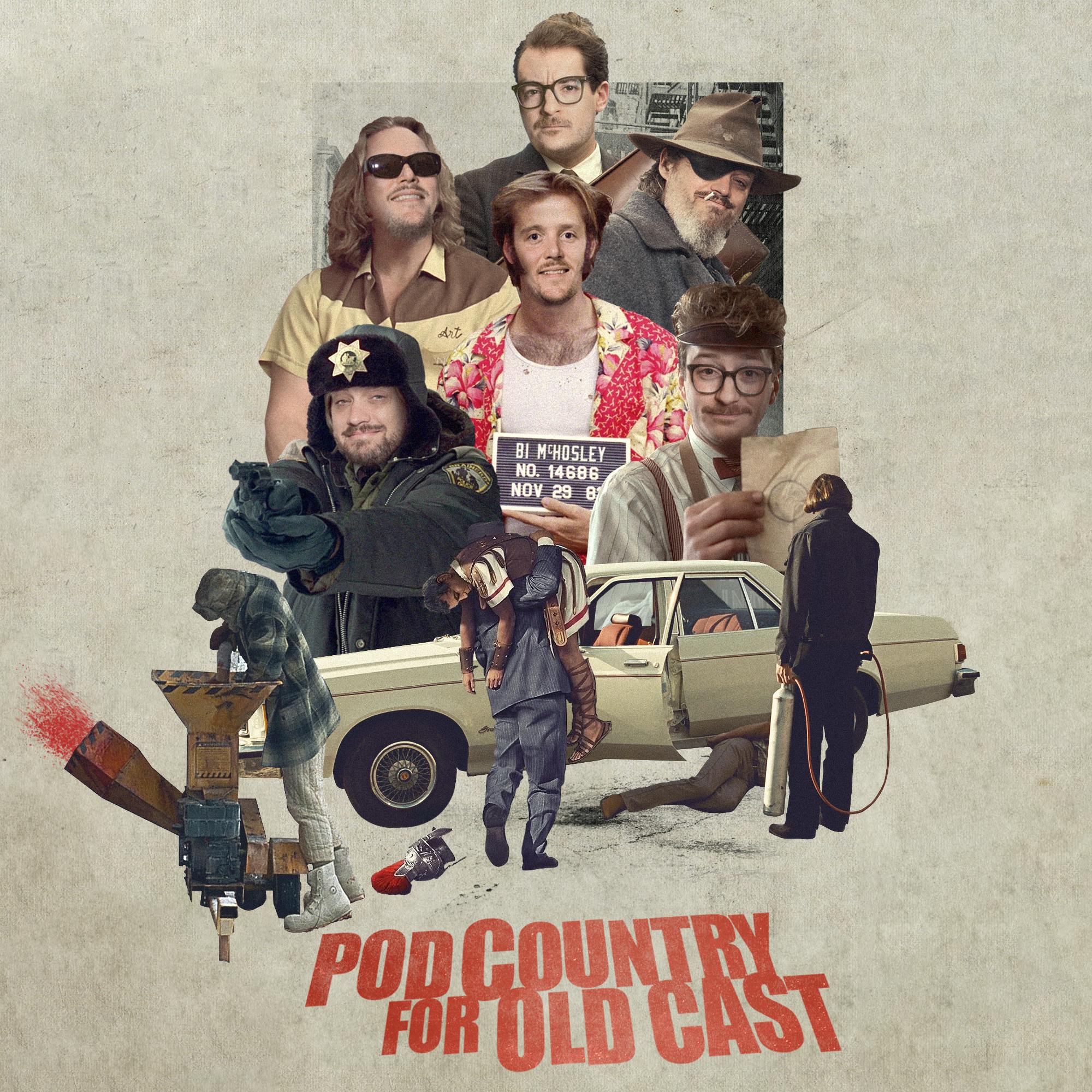
Loading summary
Transcript1,875 lines
- [00:02]
Griffin Newman
Blank check with Griffin and David.
- [00:06]
Ben Hostetler
Blank check with Griffin and David. Don't know what to say or to expect.
- [00:13]
Griffin Newman
All you need to know is that the name of the shadow is Blackjack.
- [00:21]
David Sims
Have you all decided?
- [00:23]
Ben Hostetler
Madam, we must have podcasts. We must have podcast forthwith. We must all think and we must all have podcasts and thank each and every one of us to the best of our ability. I don't know why it went British.
- [00:32]
David Sims
It did coverage.
- [00:33]
Ben Hostetler
I. Adam, we must have what? Fuck.
- [00:36]
David Sims
I remember that being, like a key part of the trailer.
- [00:40]
Ben Hostetler
It's one of two big touchstone comedies based on breakfast starches in their ad campaign. That was the main push. What was the other in real life?
- [00:52]
David Sims
God, that.
- [00:52]
Ben Hostetler
That guy, lady killers was going walk forward. Dan was going pancake forward. This may be the worst opening of an episode we've ever done.
- [00:58]
David Sims
Absolutely not. It's a good opening, but I want to. I just.
- [01:02]
Ben Hostetler
We must have. Can our guest. Do you feel like you can do a professor?
- [01:05]
Griffin Newman
No, not right now. I don't think I can.
- [01:06]
Ben Hostetler
Madam, Madam, I was watching last night.
- [01:09]
Griffin Newman
Podcast.
- [01:09]
Ben Hostetler
We must have podcast.
- [01:10]
Griffin Newman
Madam, we must have podcasts and we must have podcasts.
- [01:12]
Ben Hostetler
Forth with the fact that we can't do it proves that it's a good performance in a good movie. Glad we settled that. Thank you all for listening. Please.
- [01:20]
Griffin Newman
Do you like that you're starting off saying this is the worst episode that.
- [01:24]
David Sims
No, this.
- [01:25]
Griffin Newman
That you've ever done.
- [01:25]
David Sims
This is totally. Stop putting it in people's heads. This is completely normal for us.
- [01:31]
Griffin Newman
This episode is off to a terrible start. I think it might be the worst episode you've ever recorded. And we're only. We're minutes into it.
- [01:39]
Ben Hostetler
And that's also a Webby award winning podcaster saying that's true.
- [01:42]
David Sims
You know, from PCast.
- [01:43]
Griffin Newman
A real low point for me.
- [01:45]
Ben Hostetler
And the Webbies.
- [01:47]
Griffin Newman
And the Webbies. Yeah. No, no, the. This is point for the Webbies. The Webbies being like, oh, geez, like.
- [01:52]
David Sims
One of our winners is on some bad podcast.
- [01:54]
Griffin Newman
This is bad, bad day for the Webbies.
- [01:56]
Ben Hostetler
I want to say that this is maybe the best episode we've ever done. I want to. I want to change the messaging right here. I want to say you were correct, David, that the waffles were.
- [02:04]
David Sims
It was a big thing. It was like. The trailer was like. And just wait until Tom Hanks orders waffles in this funny voice.
- [02:10]
Ben Hostetler
It was the push.
- [02:11]
David Sims
Right.
- [02:11]
Ben Hostetler
I was looking for the monologue where he tells her that they are, in fact criminals. I wanted to change that. Criminals to Podcasters was not on the IMDb page. Quotes page, which is quite long.
- [02:21]
David Sims
I think someone tried to transcribe it and fell asleep. You. No. Griff.
- [02:28]
Ben Hostetler
Griff.
- [02:29]
David Sims
I don't hate this movie, but let's not go to the bat saying we love this movie.
- [02:33]
Ben Hostetler
We don't love it. I think it's good.
- [02:35]
David Sims
This movie made me, I gotta say, a little uncomfortable watching it in 2024.
- [02:40]
Ben Hostetler
There's stuff in it I is pretty racist. There is something.
- [02:43]
David Sims
I'm just going to lead with that.
- [02:44]
Ben Hostetler
No, I'm going to. I'm going to agree with you. Here's the thing. When I walked out of this movie in 2004.
- [02:49]
David Sims
Yeah.
- [02:49]
Ben Hostetler
My first two comments were that's not as bad as everyone's saying. Sure. Followed immediately by pretty racist.
- [02:55]
David Sims
Not sure the Cohen should be just writing. I don't. When Is this set?
- [03:01]
Ben Hostetler
2004.
- [03:02]
David Sims
Yeah. What's going on there, my friend?
- [03:05]
Ben Hostetler
There was a moment, I don't know if you remember when the Cohen's were getting kind of ransacked in interviews with the Oscar. So White's questions.
- [03:12]
David Sims
Yeah, it was late.
- [03:13]
Griffin Newman
Later.
- [03:13]
David Sims
It was later in their careers like.
- [03:14]
Ben Hostetler
Like around like True Grit, Lewin Davis era.
- [03:17]
David Sims
Right.
- [03:17]
Ben Hostetler
And Ethan had a comment that people thought was kind of snarky and dismissive. Right. And everyone was like classic white filmmakers upholding white supremacy, refusing considering black characters.
- [03:28]
David Sims
Everyone was like that.
- [03:28]
Ben Hostetler
But they're corner of the Internet. And I just wanted to tell those people maybe watch the Lady Killers.
- [03:33]
Griffin Newman
Yeah.
- [03:33]
Ben Hostetler
Circle back and tell me if you think they should now. I think it's primarily a corner of characters.
- [03:40]
David Sims
Huh.
- [03:41]
Ben Hostetler
The Marlon Wayans character is a giant problem. And it was another thing walking out of this movie where I was like, man, Marlon Wayans is bad in that. And the two times I've rewatched it in the last five years, I'm just like, he was doing exactly what they asked him to do. And what they asked him to do was not great.
- [03:56]
David Sims
I think so. I don't know. It's not like I'm right. I'm like, oh, they have paid in their heart.
- [04:00]
Griffin Newman
I have a question though. I have a question about how tightly scripted Marlon Wayans character was.
- [04:07]
David Sims
You always hear that the Cohens, everyone is tightly scripted.
- [04:11]
Griffin Newman
Everyone is tightly scripted. Do we feel as if Marlon Wayne's character, if we were to look at the shooting script for the Lady Killers, which I am assuming none of us have.
- [04:19]
Ben Hostetler
None of us have. Don't think it's been published.
- [04:22]
Griffin Newman
How tightly scripted do you think that character is on the on the. Compared to most Coen brothers characters.
- [04:28]
Ben Hostetler
Here's the thing.
- [04:30]
Griffin Newman
I feel like there might have been some improv.
- [04:32]
Ben Hostetler
Interesting. Because I watch this and I think if they had just let him improvise, it probably would be funnier and less offensive. I think this reads big time as hyper literate, incredibly strong dialogue writers being like, how do those young black people talk? It is overwritten, but it very much feels to me like he's trying his best to make it sound natural, to.
- [04:56]
Griffin Newman
Make it his own.
- [04:57]
Ben Hostetler
And yet I was like, re watching it with the subtitles on really kind of like wrestling with that question. And I'm like, I can see Joel and Ethan typing this out and being like, I think we've hit it. Right.
- [05:08]
David Sims
Game of the character is that he just says the N word a bunch.
- [05:14]
Ben Hostetler
That's one of his games.
- [05:15]
David Sims
I'd say that's what they thought was funny.
- [05:18]
Ben Hostetler
Kind of. Kind of.
- [05:20]
David Sims
I don't think the character has much of a game, which is almost more annoying because the other criminals kind of do, like, have more of a specified bit. Sure. For sure. And then with Marlon Wayans, they're kind of just like, yeah, I don't know. He's just like a loser.
- [05:40]
Ben Hostetler
It's loud, angry black man.
- [05:41]
David Sims
Like, that's just bowel mouth.
- [05:43]
Ben Hostetler
Right.
- [05:44]
David Sims
You know, I guess.
- [05:45]
Griffin Newman
But he's the one who. Who is the inside man.
- [05:47]
David Sims
They keep stressing that he is the inside man.
- [05:49]
Griffin Newman
Well, that not only are they stressing it, it is actually a fact of the text.
- [05:53]
David Sims
It's what? He's what?
- [05:54]
Griffin Newman
He works. He works at the casino. So he's the one who has access. So this is not, like something that the characters are speculating.
- [06:01]
David Sims
He loves big butts.
- [06:02]
Ben Hostetler
He loves.
- [06:03]
Griffin Newman
And he cannot lie.
- [06:04]
Ben Hostetler
He can't lie about it. In fact, it is sort of his fatal character flaw is when he sees a big butt. He must have a conversation with this.
- [06:12]
Griffin Newman
He is honest to a fault.
- [06:14]
Ben Hostetler
We're building a good bed for me to mount a defense of this movie's. Okay.
- [06:17]
David Sims
This movie begins with the wonderful Irma P. Hall coming in to the police to complain about the hippity hot music.
- [06:24]
Ben Hostetler
To the wonderful George Wallace.
- [06:25]
David Sims
Would love to see him.
- [06:26]
Ben Hostetler
Yeah.
- [06:27]
David Sims
To complain about the hippity hop music that, you know, her tenant is playing. And I'm like, oh, okay, so this is set maybe is this set in, like, the late 70s when, like, hip hop music would have been a sort of a new thing for a woman like this to reckon with.
- [06:41]
Ben Hostetler
It was set in 2004.
- [06:42]
David Sims
Right. And they're listening to Tribe Called Quest, a song that came out in like.
- [06:47]
Ben Hostetler
The fucking early 80s.
- [06:48]
Griffin Newman
Yeah. I will say, I will say as someone who came from the Midwest, but.
- [06:52]
Ben Hostetler
Probably the last rap album that Jolen.
- [06:54]
Griffin Newman
You can ever listen took a while for culture. The joke is transmit is that things are on a different timetable. That like.
- [07:02]
David Sims
Yeah.
- [07:02]
Griffin Newman
Something that you hear that's like, oh, is that a new song? And it's. And then it's like, well, it's new to her now.
- [07:09]
David Sims
Where's this set? I will also ask Alabama, because Bob Jones University, which of course is cited a lot. That's in South Carolina. So it's up in the South.
- [07:17]
Ben Hostetler
Okay.
- [07:19]
David Sims
Why not? I guess that I know Marlon Wayne's.
- [07:21]
Ben Hostetler
Character Gawain is his last name.
- [07:24]
David Sims
It's not McKID, it's Mech Sam. I don't know.
- [07:28]
Ben Hostetler
Dwayne Max Sam. He is I think the turnkey that this film is supposed to be set in the present day. I think this is their best approximation.
- [07:38]
Griffin Newman
We have cultural references that can help us to narrow it that at this.
- [07:42]
Ben Hostetler
Point he is the most of his time character.
- [07:46]
Griffin Newman
Bobbit. The Bobbit reference is post Bobbit incident. Post Bobbitt. Shooting porno movies.
- [07:54]
Ben Hostetler
Post Franken Penis.
- [07:56]
Griffin Newman
Post Franken Penis.
- [07:57]
Ben Hostetler
Post Franken Penis. And we can use that as barometer for the rest of this podcast going forward. Our movie set pre or post Franken Penis.
- [08:06]
David Sims
So what's the podcast?
- [08:07]
Ben Hostetler
Split check with Griffin and David. I'm Griffin.
- [08:09]
David Sims
I'm David.
- [08:10]
Ben Hostetler
It's a podcast about filmographies. Directors who have massive success early on in their careers and are given a series of blank checks to make whatever crazy passion products they want. And sometimes those checks clear and sometimes they bounce, baby. We are looking at what has to be the single biggest bounce of their career, if only because it is the only movie of theirs that really has no reclamation project. Really horribly received. When it came out, I was looking at the numbers and it's like it actually didn't lose money and outgrossed many of their films. And yet it was undeniably seen as a huge flop considering it was a Disney release starring Tom Hanks. It is the film that breaks Tom Hanks's decade long hundred million dollar streak.
- [08:56]
Griffin Newman
Yeah.
- [08:56]
Ben Hostetler
But also it was his first kink in the armor.
- [08:59]
Griffin Newman
I also think we have to look at this from the point of view that as a debut film, you know, every, every, every. Because it's the first film by the Cohen brothers.
- [09:09]
Ben Hostetler
It's the first film by the Cohen brothers.
- [09:10]
David Sims
Joel Cohen had had A little experience under his belt.
- [09:13]
Ben Hostetler
Do you know? Weird fact, Ben, this is.
- [09:15]
Griffin Newman
This is the first Coen brothers movie directed by the Coen brothers, as we talked about. Oh, right.
- [09:20]
David Sims
Yeah, yeah, yeah, yeah, yeah. With.
- [09:21]
Ben Hostetler
With Chris Weitz.
- [09:22]
David Sims
Yes.
- [09:23]
Ben Hostetler
And. And how difficult the DJ makes it to be recognized as a pair. This one is the first time a movie is directed by Joel and Ethan Cohen.
- [09:31]
David Sims
And it shows.
- [09:32]
Ben Hostetler
It shows.
- [09:33]
Griffin Newman
But they're figuring it out.
- [09:35]
Ben Hostetler
Like, figuring it out there.
- [09:37]
Griffin Newman
You can feel it in every frame of this film. These. These guys are like, how do we do this?
- [09:42]
Ben Hostetler
Who had a director. This is a miniseries on the films of Joel and Ethan Cohen for the first time as a team.
- [09:49]
David Sims
Sure.
- [09:49]
Griffin Newman
Yeah. This is the first time that. That these brothers say, let's direct a movie together. Not just like, I'll direct a movie you produce.
- [09:55]
Ben Hostetler
Ethan's just standing back, crunching the numbers.
- [09:58]
Griffin Newman
Just breathing down his neck.
- [10:00]
Ben Hostetler
I loves producing.
- [10:01]
Griffin Newman
What do you do anyway?
- [10:04]
Ben Hostetler
It's a miniseries called no Pod country for no cast.
- [10:08]
David Sims
Old casts.
- [10:09]
Ben Hostetler
God damn it.
- [10:10]
David Sims
Jesus. We know.
- [10:11]
Ben Hostetler
Getting it wrong.
- [10:12]
David Sims
You keep getting it wrong.
- [10:13]
Ben Hostetler
Pod country for old cast, singular.
- [10:18]
David Sims
Sure, whatever.
- [10:19]
Ben Hostetler
That's what the artwork says. It's official. Now. This is our episode on 2004's The Lady Killers, a remake of 1955.
- [10:27]
David Sims
Correct.
- [10:28]
Ben Hostetler
The Alexander McKendrick movie, the Ealing comedy. And today on the show, returning for the. Well, the math here is a little tricky.
- [10:37]
Griffin Newman
Oh, let's. Let's get an accurate number.
- [10:40]
Ben Hostetler
Connor Ratliff.
- [10:41]
David Sims
Here he is.
- [10:42]
Ben Hostetler
Has appeared main feed.
- [10:44]
David Sims
As himself or in.
- [10:46]
Ben Hostetler
Well, who else would I be talking about? I'm talking about. Connor Ratliff has appeared main feed. I believe this is number three somehow only.
- [10:54]
David Sims
You appeared on a commentary episode in our Phantom podcast days. And then you did Twin Peaks, the return main feed. You've also done Twin Peaks season two with us. That was on Patreon.
- [11:06]
Ben Hostetler
And George Lucas appeared three times.
- [11:09]
David Sims
Just twice.
- [11:10]
Griffin Newman
I'm seeing just twice.
- [11:11]
Ben Hostetler
I believe there was one time in studio where we had a talk with him. There was live show at the Bell House. And then you're, of course, forgetting Denim Invasion Live at the Del Close marathon.
- [11:23]
David Sims
That's not listed on the Wikipedia. I will say.
- [11:26]
Griffin Newman
Oh, wow. How do you change a Wikipedia?
- [11:28]
David Sims
I don't know. Just saying. It's not listed.
- [11:30]
Ben Hostetler
George was definitely part of it.
- [11:31]
Griffin Newman
Someone needs to list it.
- [11:33]
David Sims
Hey, we gotta. We gotta shout.
- [11:34]
Griffin Newman
And also both Broadway shows.
- [11:36]
Ben Hostetler
This is true.
- [11:37]
David Sims
It does say in the Denim Invasion entry, they. They note cameo appearances from Diana Kolski, Murph, Mayor, and.
- [11:46]
Ben Hostetler
Yeah, but. But this is right. This is true. Also Peter Jackson and Sir. Sir.
- [11:55]
Griffin Newman
Two characters. Two characters, really?
- [11:56]
Ben Hostetler
Who then became Josiak.
- [11:58]
Griffin Newman
Yeah, I guess one character with a.
- [11:59]
David Sims
With an alias, sort of like Professor Door is.
- [12:03]
Ben Hostetler
Yeah, well, I guess he has the producer brand. You were going to make a season.
- [12:07]
David Sims
Two episode for us on Patreon was a really like big.
- [12:12]
Ben Hostetler
That was.
- [12:13]
David Sims
That was big episode where he got a lot of new fans.
- [12:15]
Ben Hostetler
What they call a driver in the biz. It was a driver.
- [12:18]
Griffin Newman
I mean, it was very important for me to be a part of that.
- [12:21]
David Sims
It's a good one.
- [12:21]
Griffin Newman
Yeah. And if I can just digress. I now know you don't like digressions, but I recently saw about half of Twin Peaks, the Return at the Metrograph.
- [12:32]
David Sims
Right. They played it all.
- [12:33]
Griffin Newman
They played it all. I wasn't able to attend all of it.
- [12:36]
David Sims
Right. It's weird because people kind of coming in and out.
- [12:39]
Griffin Newman
Like, was it a. Yeah, there was. I talked to some people who went for the whole thing. It was two days. On the one hand, because of the sound mix, which is a theatrical sound mix, which apparently the. David lynch hated the sound mix for TV because it's all compressed. So on the one hand, this is the way it is supposed to be seen. This is like the. It sounded different to me. Like there were times when it felt silent at home, but in the theater it felt like, oh no, there's like so much sound happening. But on the other hand, absolutely not. The way it's meant to be seen. Nine hours in one day and nine hours the next day. Just absolutely, absolutely right.
- [13:19]
Ben Hostetler
The way it's meant to be seen is 18 hours in one day.
- [13:22]
Griffin Newman
It is the parts that are. But I will say this as just a follow on comment from the season two episode as a reward to people who liked that episode and just want a little bit more. The Dougie Jones plot in Twin the Return, it never occurred to me anytime I saw it before this how true it is to the spirit. Of all the plotlines people hate in season two. It is the most. Little Nikki. It is the most. Nadine with superpowers who thinks she's back in high school. It is the most like, it is just like all of those. Like Ben thinks he's in the Civil War. All of those things. Dougie Jones is like, let's do a version of the. I don't think this is intentional necessarily, but it's like, let's do a version of this. Of those kind of dopey plots.
- [14:08]
Ben Hostetler
It's Canto Bight. It's Like Rian Johnson saying, we can't ignore the prequels.
- [14:13]
Griffin Newman
Yes.
- [14:14]
Ben Hostetler
There has to be something that is on the same continuum as the energy of the prequels.
- [14:18]
Griffin Newman
Yeah. Like, my favorite move from that being that what can we do that kind of nods to the inappropriate stereotypes but doesn't actually do anything wrong. So let's have, like, a little drunken leprechaun.
- [14:29]
Ben Hostetler
Exactly.
- [14:30]
Griffin Newman
In the casino. This is the one thing we can do that's a little bit like a jar jar kind of move.
- [14:35]
Ben Hostetler
We're allowed to make fun of the Irish. Right. Ben Hosley, Connor Ratliff.
- [14:38]
Griffin Newman
Yeah, I think approval.
- [14:40]
David Sims
Yeah.
- [14:41]
Griffin Newman
All right. Anyway, end of that.
- [14:42]
David Sims
Can I speak to Tom hanks's streak of $100 million gross?
- [14:45]
Ben Hostetler
Yes. And let's just call out. The reason Conor is on this episode is over the last couple years, Conor, you started listening to the podcast again. And then you'll text me at errant times and say, if you ever do this, or. I'd love to come on to talk about this type of movie. And you did a while ago, just pinned for me. I'd love to come on and talk about Hanks. So just let me know the next time you have a Hanks movie on the schedule. And this felt like a particularly fascinating one to do. You are currently wearing a big T shirt.
- [15:11]
David Sims
Right. You had your podcast. Good eyes.
- [15:13]
Griffin Newman
Well, specific eyes.
- [15:14]
David Sims
Good eyes.
- [15:15]
Ben Hostetler
Good podcast.
- [15:15]
David Sims
Guys got good eyes.
- [15:17]
Griffin Newman
And I want to be clarify. When you say I'm wearing a big T shirt, he doesn't mean I'm wearing, like, an oversized shirt. Like, oh, that'd be a good shirt to, like, go to sleep in. Like.
- [15:26]
Ben Hostetler
No.
- [15:26]
Griffin Newman
Although.
- [15:26]
Ben Hostetler
What? It's an xl.
- [15:27]
Griffin Newman
It's an xl.
- [15:28]
Ben Hostetler
Okay. Yeah. It is a large shirt.
- [15:31]
Griffin Newman
It's an xl.
- [15:32]
Ben Hostetler
Yeah. It's a comfy shirt.
- [15:33]
Griffin Newman
Extra large. Yeah, but it is specifically. And I love talking about Penny Marshall on the pod. Penny Marshall is big. That's what the shirt is.
- [15:40]
Ben Hostetler
That's what.
- [15:41]
David Sims
But now, do we count that thing you do which interrupts his run?
- [15:46]
Ben Hostetler
No, that's the one qualifier. It has to be leading role.
- [15:49]
David Sims
So if you take that out, the run is from Gump to cast me. If you can. There's one bump. If you. It can go even longer. All the way to League of Their Own. Yeah, but there's Philadelphia only made 77 domestic.
- [16:04]
Ben Hostetler
Yeah.
- [16:05]
David Sims
But if you go.
- [16:06]
Ben Hostetler
Give me the streak from. Cause what I'll give you from League of their own. That's 91.
- [16:11]
David Sims
92.
- [16:12]
Ben Hostetler
92. Okay. Give me Marshalls.
- [16:13]
David Sims
League of Their Own.
- [16:14]
Ben Hostetler
Yes.
- [16:14]
David Sims
I Will. We'll say.
- [16:15]
Ben Hostetler
We'll have you.
- [16:15]
David Sims
Also about League of Their Own. Sleepless in Seattle.
- [16:18]
Ben Hostetler
100.
- [16:19]
David Sims
Philadelphia makes 77. Forest Gump, obviously. Colossal hit.
- [16:23]
Ben Hostetler
Plus one of the biggest hits.
- [16:25]
David Sims
Apollo 13, a gigantic hit. Toy Story, a big hit.
- [16:28]
Ben Hostetler
Hit.
- [16:28]
David Sims
That thing you do. We don't count, I guess. Saving Forever. Ryan, a colossal hit.
- [16:32]
Ben Hostetler
Big highest grossing film this year.
- [16:33]
David Sims
You've Got Mail. A very solid hit. Toy Story 2.
- [16:36]
Griffin Newman
Master Movie.
- [16:38]
David Sims
Green Mile. For a movie that long and difficult, made a lot of money.
- [16:41]
Ben Hostetler
Made 130.
- [16:42]
David Sims
That's right.
- [16:43]
Griffin Newman
Yeah.
- [16:43]
David Sims
Cast Away. Road to Perdition. I will say if I'm, you know, the seismologist looking for the earthquake and the, you know, that's where you start.
- [16:53]
Ben Hostetler
It makes it to like 101.
- [16:54]
David Sims
Makes 104.
- [16:55]
Ben Hostetler
But was even like, oh, my God. For a movie like playing a murderer in July, it did all right in an austere period.
- [17:03]
David Sims
Catch Me if youf can. Obviously, you know, big hit back. Back to. And then Lady Killers. And terminal in 2004 is where he crashes into the wall. Doing broad comedy for great director in one year.
- [17:15]
Ben Hostetler
He has two movies in a row. Because I. Even when this bombed, I remember people being like, yeah, but he's got a Spielberg comedy coming this summer. He's going to rebound really quick. And when Terminal ends up at 70, people were like, is Hanks cooked?
- [17:29]
Griffin Newman
And I'll confess, as we're looking through those numbers, there's something we're not even accounting for, which is when I went to see Castaway in the theater, I didn't buy a ticket for Castaway. I bought a ticket for a different movie and then went into Castaway because I was still feeling a little too salty.
- [17:44]
Ben Hostetler
So you're saying that Castaway's box office is low.
- [17:47]
Griffin Newman
The numbers are at least one deduct $10.
- [17:51]
Ben Hostetler
Do you remember what you bought a ticket for instead?
- [17:53]
Griffin Newman
I don't remember what else would have been out at that time, Griffin.
- [17:57]
Ben Hostetler
Well, let me. Let me do this math. But just for listeners who don't know the great Conor Ratliff, your podcast Dead Eyes was about the fact that coming out of drama school, you got a big job. One episode, one scene role in Band of Brothers, an episode directed by Tom Hanks. You were cast. The role was yours. The day before they call you and say, you need to meet with Tom.
- [18:17]
David Sims
They need to re audition.
- [18:19]
Griffin Newman
Essentially, yeah. I would already sign the contracts. They had cut my hair. It was ready to go. We were ready to film.
- [18:24]
Ben Hostetler
Uh, he's having second thoughts.
- [18:25]
David Sims
Love that we're Making you revisit this yet again.
- [18:27]
Griffin Newman
I don't mind because Griffin's saying most of it, so I'm not.
- [18:30]
Ben Hostetler
I'm doing it really quickly.
- [18:31]
Griffin Newman
Yeah.
- [18:31]
Ben Hostetler
And they ended up recasting your role.
- [18:35]
David Sims
You hurriedly audition. It doesn't go well.
- [18:37]
Ben Hostetler
The explanation you hear from your representation is Tom thinks you have dead eyes.
- [18:41]
Griffin Newman
Before I did the re audition, I was told this. So I went into the audition with like, holy shit. What do I do with this part that doesn't have a lot of dialogue, doesn't have a lot of opportunity to show off your emotional range?
- [18:52]
Ben Hostetler
You lose the part. It's an albatross around your neck for many years. It defines a lot of your sense of self and your relationship to your career and the idea of pursuing life in the arts and all of these things. But the thing you always talk about on the podcast, which is great and people should listen to if they haven't already, is that, like.
- [19:10]
Griffin Newman
And if you have apologies for all of this recapping, go ahead and hit that button that just moves you ahead 40 seconds.
- [19:16]
Ben Hostetler
We call it the ad break button. Yeah.
- [19:18]
Griffin Newman
That he should play the music under.
- [19:21]
Ben Hostetler
This part was possibly your favorite actor at the time.
- [19:25]
Griffin Newman
He's absolutely one of my favorite actors of all time.
- [19:28]
Ben Hostetler
And what was so damaging about it was not just that you were fired from a big job, but that it was by someone who was one of your personal heroes, and that it was also at the peak of. Tom Hanks is undeniably America's favorite person. He's the nicest guy in the world. We all love him. And this guy ruined your life. And so would Castaway have been the first Hanks movie that came out post firing?
- [19:53]
Griffin Newman
Well, when I got fired, Green Mile had just been released in England. And that was one of the things about the day I got fired. Walking around London, this giant policeman.
- [20:03]
David Sims
I mean, he's a prison.
- [20:04]
Ben Hostetler
This true Scott uniform.
- [20:06]
Griffin Newman
An angelic, a beautiful portrait of a good man, glowing.
- [20:10]
David Sims
A movie that listeners get mad when I diss it.
- [20:13]
Ben Hostetler
Yeah.
- [20:13]
David Sims
But I think it's a very bad movie.
- [20:14]
Griffin Newman
Yeah.
- [20:14]
Ben Hostetler
Maybe give that one a watch again.
- [20:15]
Griffin Newman
I love it.
- [20:16]
David Sims
Yeah, I will. Here's a little trivia cue I have for you guys. Read this. Sort of like Hanks dominant figure of the 90s, right. As we just sort of illustrated post the lady Killers. It's not like Tom Hanks has ever left our life. We love him. We can do hit indie podcasts about him, and we can have him get Covid to prove the seriousness of a pandemic.
- [20:37]
Ben Hostetler
Yeah.
- [20:37]
David Sims
And other. Many other things. But how many movies has Tom Hanks made? Live action.
- [20:43]
Ben Hostetler
Live action.
- [20:43]
David Sims
I'm going to cut out Polar Express and the Toy Stories and all that because you know those did that made over 100 million domestic.
- [20:50]
Ben Hostetler
Domestic. Okay. So the first two.
- [20:51]
David Sims
Robert Langdon's Da Vinci Code and Angels and Demon.
- [20:55]
Ben Hostetler
Because Da Vinci Code is definitely seen as a. Hanks is strategizing how to have a surefire hit.
- [21:01]
David Sims
Right. What's this sort of more middle aged starring role.
- [21:04]
Ben Hostetler
But that is very much I think a post lady killer's terminal move of. He needs to attach himself to IP and something that could be a Da.
- [21:11]
David Sims
Vinci Code is a huge hit. Angels and Demons is a very mild hit.
- [21:14]
Ben Hostetler
Inferno flops.
- [21:16]
David Sims
We're not even talking about.
- [21:17]
Ben Hostetler
Captain Phillips did make 100.
- [21:18]
David Sims
It made $107 million. Obviously. Wonderful performance.
- [21:21]
Ben Hostetler
Sully makes 100.
- [21:22]
David Sims
Sully made $125 million. Not only are you getting this, you're getting them in order.
- [21:27]
Griffin Newman
David, David, did you ever watch my crash cut of Sully that I gave you last year?
- [21:31]
Ben Hostetler
Yes.
- [21:31]
David Sims
I loved it.
- [21:32]
Griffin Newman
Thank you.
- [21:34]
Ben Hostetler
And is there one more?
- [21:35]
David Sims
There's one more.
- [21:36]
Ben Hostetler
There's one more.
- [21:37]
David Sims
There's one post and it's not a starring role.
- [21:39]
Griffin Newman
Elvis.
- [21:41]
Ben Hostetler
Yeah, there we go.
- [21:42]
David Sims
In which he. He noticed something about the fair singer Elvis Presley. What was it?
- [21:47]
Griffin Newman
It's what.
- [21:50]
David Sims
Santa Claus.
- [21:51]
Griffin Newman
What did he say?
- [21:52]
David Sims
What?
- [21:55]
Griffin Newman
Santa Claus. You'll sing Here Comes Santa Claus.
- [21:58]
David Sims
A performance where the seeds are being planted in the Lady Killer.
- [22:02]
Griffin Newman
I'm also. I am also going to put it out there. I don't want to talk any more about Elvis on this episode because I, I'm.
- [22:08]
Ben Hostetler
I regret to inform you that's impossible.
- [22:10]
Griffin Newman
No, I don't want to talk about. I won't participate. I'm going to remove myself from the conversation.
- [22:15]
Ben Hostetler
You'll recuse yourself from the Elvis tangent.
- [22:17]
Griffin Newman
Because I will say that I'll put it out there. If Lerman ever wins one of the. I have put my name on the. That's one night.
- [22:24]
Ben Hostetler
Oh, you want.
- [22:25]
Griffin Newman
Frequently I want to do the Elvis episode because I have a lot.
- [22:28]
David Sims
Oh I want to do best.
- [22:30]
Griffin Newman
So if you know, next March.
- [22:32]
David Sims
What's just interesting about looking at his career as I'm looking at it right now is it's like he still makes these kind of grown up dramas that do pretty good. Like Charlie Wilson's War did pretty good.
- [22:43]
Ben Hostetler
Bridge of Spies. Bridge of Spies did quite kind of grown up triples.
- [22:48]
David Sims
Another one that did like, you know, the post made 80 domestic, 180 world.
- [22:52]
Ben Hostetler
His own kind of becomes more. He can take a grown up drama to 60 to 80 which very few other people.
- [22:59]
David Sims
A Man Called Otto made a fair amount of money not that long ago despite being not very good. And about A Man Called Otto like it's like in Bridgest Spies. You're like this is set during the Berlin, you know wall like the. The. You're like oh and man called what's about. It's like I don't know there the.
- [23:14]
Griffin Newman
Called Otto Grim Dark.
- [23:17]
David Sims
Quite a dark.
- [23:18]
Griffin Newman
That is a movie that really you see the star power. The star power is able anyone else in that movie. It does not make that money like Tom Hanks.
- [23:27]
Ben Hostetler
Getting A man called Otto to 6:65 is arguably more impressive than Hanks at his peak getting Apollo 13.
- [23:34]
David Sims
That's the last time Hanks made a movie that was big in theaters. I will say because since then and.
- [23:40]
Ben Hostetler
Sort of around them 2 Wes Anderson's well beyond that.
- [23:43]
David Sims
I want to point out he's made some streaming movies. Greyhound, Pinocchio. News of the World was sort of like that's a pretty good movie. But that was sort of a pandemic movie.
- [23:52]
Ben Hostetler
It was Finch because his things were in this sort of like mid tier grown up movie zone with budgets but. But I think Sony had both Finch and Green a greyhound. And like the moment the Pandemic started Sony sold both of them Apple. He was like one of the first guys where his movies went straight to streaming rather than theaters holding Greyhound is pretty good.
- [24:13]
Griffin Newman
Those are never seen. Greyhound and Finch are both movies I'd love to see in a theater.
- [24:17]
Ben Hostetler
I really want to see.
- [24:18]
Griffin Newman
I keep waiting for there to be a moment when some of the Pandemic Streamys in particular get even the slightest of. I think it'd be a great film festival to for some theater do like Connor.
- [24:31]
Ben Hostetler
I think the curated the streamies the Streamy era. But yes, as you said those two movies got sold straight to Apple. Plus Greyhound is still I think their most popular movie ever. Making a sequel video they decide is going to stream before it starts filming. And then turned out horribly. News of the World was like a same day VOD thing.
- [24:51]
David Sims
That's a good movie.
- [24:52]
Ben Hostetler
Pinocchio, Robertson, Mackassist. Probably the worst film he's ever been in.
- [24:55]
David Sims
It's a tough movie and since then he's done two Wes Anderson movies which he's excellent in both.
- [25:00]
Ben Hostetler
He's got one great scene in Freaky Tales. A movie. I'm the only person who talks about Freaky Tales.
- [25:05]
Griffin Newman
I ordered it Sight Unseen because there was a point when I was making Dead Eyes before we got to. Spoiler for Spoiler for the most recent episode of Dead Eyes before I got to Tom Hanks and resolved everything with him. We are now on good terms. I want to say that going you've.
- [25:21]
David Sims
Talked to Tom Hanks?
- [25:22]
Griffin Newman
We have. We have had multiple inter. He has been very good to me.
- [25:26]
David Sims
Have you interacted with him much since you interviewed him? Yes, yes. What do you just text him like, you know.
- [25:30]
Griffin Newman
No, no, I don't take it. I have his email, but I do not take advantage of that. I emailed him once when the episode came out, but I've. He put me in his audiobook. Oh, that's his audiobook which he wrote a novel called the Making of Another Major Motion Picture masterpiece. In it is about the fictional making of a Marvel style superhero movie and about all the things that go on. And we said there is an actor in that novel who gets fired.
- [25:56]
David Sims
And you voice the actor?
- [25:57]
Griffin Newman
I voice the actor. I voice the actor who replaces the fired actor and specifically says that the fired actor has dark eyes. So that his novel is very much, I feel in conversation in some small way with my podcast.
- [26:10]
Ben Hostetler
Yeah, sorry, what? The email you exchanged you had with him after the episode was released. I just want to circle back to that.
- [26:18]
Griffin Newman
Yes, we can. Absolutely. But freaky like I got into the.
- [26:22]
David Sims
Anna Bowden Ryan Fleck that I like.
- [26:24]
Ben Hostetler
And it has anthology been roundly ignored and Lionsgate Limited put out a special VHS edition of the 4K.
- [26:30]
David Sims
It's on my to watch list. I like quite a bit. Check it out.
- [26:33]
Ben Hostetler
Hanks kills one scene in it and his casting is really interesting. The way they use him.
- [26:38]
Griffin Newman
It's. It's really fun. I. But I. When I was doing the podcast, I decided I was going to own every Tom Hanks thing on Blu Ray or on whatever format, the best format I could get them on.
- [26:49]
Ben Hostetler
Don't explain to me. It's how I interact with this podcast.
- [26:52]
Griffin Newman
And I decided, well, this is a good news. I'm investing in. Like I think I'm going to get to Tom Hanks. It was my way of sort of manifesting. I was gradually collecting all of his work and I have it on this little shelf in front of my desk. I also started doing it with Funko Pops because I realized you have all the Toms. So many Tom Hanks. Like a crazy number of Tom Hanks Funko Pops and variants.
- [27:10]
Ben Hostetler
He's kind of the anti Griffin Newman in that sense.
- [27:13]
Griffin Newman
I. I did this because I thought I was going to have the podcast would go on for 10 years before I got to him. And I had this vision of touring with live episodes where the Funko Pops would be like the set.
- [27:24]
Ben Hostetler
Yes.
- [27:24]
Griffin Newman
But instead I just have this insane wall in my apartment.
- [27:27]
Ben Hostetler
It is just one of the walls of your home.
- [27:29]
Griffin Newman
It's just like five different Forrest Gumps.
- [27:32]
Ben Hostetler
Yeah.
- [27:33]
Griffin Newman
Also parts characters that don't have a Tom Hanks funko. But he played Walt Disney, so I have the Walt Disney. So I started expanding into that. But anyway, Freaky Tales.
- [27:42]
David Sims
Wait, can I pitch something, Bring the show back and then make it about getting rid of the Funko?
- [27:47]
Griffin Newman
I don't want to get rid of the Funko.
- [27:48]
Ben Hostetler
Yeah. See this is that kind of like buzz kill.
- [27:51]
David Sims
I sort of thought.
- [27:52]
Ben Hostetler
I think this sort of weird stance of maybe you should stop buying toys.
- [27:56]
Griffin Newman
If I find out. If I find out I'm sick or something and I have a certain amount of time left, I will definitely do.
- [28:01]
Ben Hostetler
The first thing to sell.
- [28:02]
Griffin Newman
Yeah.
- [28:03]
David Sims
Well, I hope then that it doesn't come back soon.
- [28:06]
Griffin Newman
Oh, that's nice.
- [28:09]
David Sims
I would love it to come back too.
- [28:10]
Griffin Newman
But I bought Freaky Tales sight unseen and I really enjoyed it.
- [28:14]
Ben Hostetler
Yeah, I like it a lot.
- [28:15]
Griffin Newman
And I do think to bring it back to Lady Killers. His performance in Lady Killers is part of this little corner of Tom Hanks his filmography that I think of as Weird Hanks.
- [28:27]
David Sims
I agree with you.
- [28:28]
Griffin Newman
And it might be the first.
- [28:30]
David Sims
I think it's kind of the first. That's what it's is looking at. I'm like, oh, his career does start to change.
- [28:34]
Ben Hostetler
Here it is.
- [28:36]
David Sims
Or he seems more interested in taking risks.
- [28:38]
Ben Hostetler
I feel like what you're talking about. Which is what I found really interesting about this era of Hanks were in. Right. Which is he did some really smart like oh Sully Captain Phillips, who are.
- [28:49]
David Sims
Real life figures he'll still play in every man.
- [28:52]
Griffin Newman
Like he was doing all the forms of transportation and the most heroic person involved in a mishap. So like who's the boat guy?
- [28:58]
David Sims
Submarine plane Captain Phillips, I guess. What is it?
- [29:03]
Griffin Newman
Polar Express. He got the train.
- [29:04]
Ben Hostetler
Although he's.
- [29:05]
David Sims
Although, honestly, as someone who's now seen the movie a billion times because my daughter. He's malevolent in almost every form.
- [29:10]
Ben Hostetler
Even a Santa Claus.
- [29:11]
David Sims
Yeah.
- [29:11]
Ben Hostetler
Kind of bad.
- [29:12]
David Sims
Very strange performance. I wanted to. Here is the other film he made.
- [29:16]
Ben Hostetler
Oh, yes.
- [29:17]
David Sims
Remember here?
- [29:17]
Ben Hostetler
Yeah.
- [29:18]
Griffin Newman
Okay.
- [29:19]
David Sims
Carry on.
- [29:20]
Ben Hostetler
Carry on.
- [29:20]
Griffin Newman
I had a Griffin and I had a long conversation on a. On a ferry boat right after he watched Here, which I liked here more than you guys did.
- [29:28]
David Sims
Yeah.
- [29:28]
Ben Hostetler
I promised a lot of close people in my life that they were going to hate here as much as I did and then had to listen to you and Alex Ross Perry and several others be like, you're wrong. Here is good.
- [29:37]
Griffin Newman
I don't know if I said it was good. I just felt like by the end of it, it had won me over on an emotional level.
- [29:42]
David Sims
It's certainly trying to do that.
- [29:43]
Ben Hostetler
I'll say. I'm really considering importing that Italian 4K.
- [29:48]
David Sims
They're not gonna do anything in the.
- [29:50]
Ben Hostetler
U.S. there's a Blu Ray only. And I'm just like, am I. Is am I really giving it a fair reconsideration if I'm not watching it with full pixels?
- [29:59]
Griffin Newman
Yeah, you gotta see all the kids.
- [30:00]
Ben Hostetler
I gotta see the case.
- [30:00]
David Sims
To me, the apex of Weird Hanks is Cloud Atlas. Because that is just both a movie he talks about so fondly.
- [30:07]
Griffin Newman
I love it.
- [30:07]
David Sims
Me too. And a movie where he's getting to.
- [30:10]
Griffin Newman
Be six weird nothing. Nothing but big swings. The whole movie.
- [30:14]
David Sims
One of the Swings characters is sort of a classic Hanksy guy. The guy with Halle Berry. Everyone else is Hanks being like, let me do this, let me do that. You know, like. And this Lady Killers feels like it's him beginning to open that tool.
- [30:27]
Griffin Newman
It's part of. I poke around. If I were to consider like Tom Hanks's career, like a map of a theme park, like a. Like a Disney World style map.
- [30:35]
Ben Hostetler
Sure.
- [30:36]
David Sims
The kind of language will get you nowhere. On this podcast, the weird.
- [30:39]
Griffin Newman
The weird Hanks area. The mayor of that area is David S. Pumpkin. Like, he rules over all of the Colonel Tom Parker. And this is great.
- [30:49]
Ben Hostetler
Okay, so here's. Here's the point I want to make.
- [30:51]
Griffin Newman
Right.
- [30:52]
Ben Hostetler
You know what?
- [30:53]
David Sims
David S. Pumpkins still holds up.
- [30:55]
Ben Hostetler
Yeah. It's still fun.
- [30:56]
David Sims
I watch it like every few months.
- [30:57]
Griffin Newman
The Halloween special that I have yet to check out.
- [31:00]
Ben Hostetler
I think. Here's what I think. I think the Halloween special is a little underrated.
- [31:04]
David Sims
Sure. It's certainly not overrated.
- [31:06]
Ben Hostetler
Nobody's really slammed and I think it's a little funny. It's much like my taste take on the Lady Killers. I'm like, I'm not going to argue. This is a masterpiece to me. I think it's a little funny.
- [31:14]
David Sims
It's crucial that there is a sort of not very good sequel within the show to David S. Pumpkins and a Halloween special no one remembers. That's part of being a one hit.
- [31:23]
Ben Hostetler
I was going to say I think the second sketch was bad and was a mistake.
- [31:26]
David Sims
It was. It was definitely a mistake. But don't you think that's good? It makes David S Pumpkins all the more special because you're like, right. This isn't something that gets to recur. I think tried and it failed.
- [31:35]
Ben Hostetler
I think they waited so long to do the second one.
- [31:38]
Griffin Newman
I don't remember the second one.
- [31:39]
David Sims
I don't like what. What even happens in it.
- [31:41]
Ben Hostetler
What is.
- [31:42]
Griffin Newman
I think New York City is having, like, negative emotions. And there's, like, this river of pink slime under the city, and David S. Pumpkins has to deal with it.
- [31:50]
Ben Hostetler
And they let Rick Moranis be SA d Pumpkins. His brother. Yeah.
- [31:57]
David Sims
Yeah. It's like. It's a jump scare attraction. This.
- [32:01]
Ben Hostetler
I don't know. I'm trying to remember what the structure is. I remember it was in the. What's his name? It was. Jack Harlow was the host.
- [32:09]
David Sims
That's correct.
- [32:09]
Ben Hostetler
And he fucks it up. He's playing the Beck Bennett sort of reaction and he's.
- [32:14]
David Sims
But the.
- [32:14]
Ben Hostetler
The joke.
- [32:15]
David Sims
He's into it or something. Like, they. They change the. Because Beck Bennett is vital to David S Pumpkins.
- [32:22]
Ben Hostetler
Yes.
- [32:22]
David Sims
Like, I am so in the weeds with David S Pumpkins. Is the best line in David S Pumpkins. Either that or Leslie Jones saying, I'm crazy. Long beat for David S Pumpkin.
- [32:32]
Ben Hostetler
Yes.
- [32:33]
David Sims
Long wait.
- [32:34]
Ben Hostetler
But Bennett's got Swiss watch timing in that thing, which is so key to making it work. And Jack Harlow continues to be offbeat.
- [32:40]
Griffin Newman
Well, it's interesting because you think of early Hanks snl, and he's the king of guest recurring sketches. Because you have Mr. Short Term Memory. You have him and Lovett. Says the two guys who like the creeps and these things were Conan o' Brien written sketches. They were sort of built to recur. And then you have these classic late period Tom Hanks, Celebrity Jeopardy, Black Jeopardy. And they. And they. They are not built to repeat. Like, when they come back, they.
- [33:07]
Ben Hostetler
They brought that character back on the S. And they did the same beat and it didn't get laughs. I'm like, my guy. You're copying the same exact dialogue.
- [33:16]
Griffin Newman
People know the button Conan to come in and write the second. The recurring one.
- [33:21]
David Sims
It's even more fascinating because that was just a sketch they had that they would throw at everybody. And everyone was like, h maybe. And then remember, like, Hank said, like that he was like, Chris Hemsworth feels like a David S. Pumpkins. Like, I don't know if I should do this.
- [33:34]
Griffin Newman
This.
- [33:34]
Ben Hostetler
Yeah. Anyway, they also, they talk about that like he didn't have the take on the character until air that he didn't have the voice and he didn't do the pointing.
- [33:41]
Griffin Newman
Do a whole episode of Dead Eyes talking to Bobby Moynihan that if you want to go deep into the weeds on how it happened, it's right there along with the oral history of David S Pumpkins, which you can find on.
- [33:50]
Ben Hostetler
He kept being like, I'll figure it out. I don't have it yet. And then it's just the one moment it matters.
- [33:55]
David Sims
His own thing. Still funny. It's still fun.
- [33:57]
Ben Hostetler
It's still funny.
- [33:58]
Griffin Newman
And. And the roots of Pumpkins can be found in his performance in Lady Killers. I think in terms of like that.
- [34:04]
Ben Hostetler
I want to put out. This is the theory I want to put. I think he's good in this movie. David.
- [34:11]
David Sims
What?
- [34:12]
Ben Hostetler
This episode of Blank Check with Griffin David podcast about filmographies is brought to you by booking.com booking. Yeah, I mean that's what I was about to say. Booking. Yeah. From vacation rentals to home hotels across the U.S. booking.com.
- [34:28]
Griffin Newman
Yeah.
- [34:28]
Ben Hostetler
Has the ideal stay for anyone, even those who might seem impossible to please. God, I'm trying to think of anyone in my life, perhaps even in this room. Ben who's like, what's an example of someone I know who maybe has a.
- [34:41]
David Sims
Very particular set of bringing me in and there's only one other person in the room.
- [34:46]
Ben Hostetler
There's one other person in the room right now.
- [34:48]
David Sims
My goodness, is so rude. I sleep easy. I'm definitely not a. Someone who insists on 800 thread count sheets. No, that's a, that's a, an example of a fussy person.
- [34:58]
Ben Hostetler
But people have different demands. And you know what? If you're traveling, that's your time to start making demands.
- [35:03]
David Sims
You know, you've got a partner who's sleep light, rise early. Or maybe you know, like you just want someone who wants a pool or wants a view or I don't know, maybe any kind of demand.
- [35:14]
Ben Hostetler
And I need a room with some good soundproofing cuz I'm going to be doing some remote pod record.
- [35:21]
Griffin Newman
Sure.
- [35:21]
David Sims
Maybe you're in Europe and you want to make sure.
- [35:24]
Ben Hostetler
That's very demanding to be in Europe.
- [35:26]
David Sims
You got air conditioning. Well, think of one person in particular, although it's really both of you.
- [35:31]
Ben Hostetler
Yes.
- [35:32]
David Sims
Got to have air conditioning. I need air conditioning if I'm in the North Pole. Look, if I can find my Perfect stay on booking.com anyone can. Booking.com is definitely the easiest way to find exactly what you're looking for.
- [35:48]
Ben Hostetler
Like for me, a non negotiable is I need a gorgeous bathroom for selfies.
- [35:52]
David Sims
You do. You love selfies.
- [35:54]
Ben Hostetler
As long as I got a good bathroom mirror for selfies, I'm happy with everything else.
- [35:58]
David Sims
Look, they're again, they're specifying like, oh, maybe you want a sauna or hot tub. And I'm like, sounds good to me. Yeah, please can I check that you.
- [36:06]
Ben Hostetler
Want one of those in the recording studio?
- [36:08]
David Sims
That'd be great.
- [36:08]
Ben Hostetler
You want to start being. You want to be.
- [36:10]
David Sims
I'll be in the sauna when we record.
- [36:12]
Ben Hostetler
I was going to say you want to be the Dalton Trumbull, a podcast. You want to be Splish Splash.
- [36:16]
David Sims
It would be good if I had a sauna and a cold plunge and. And while recording, I'm on mic. But you just, you're going back like, like as I moved to the.
- [36:27]
Ben Hostetler
These are the kinds of demands that. Booking.combooking. yeah.
- [36:30]
David Sims
Yes, you can find exactly what you're booking for. Booking.com booking, yeah. Booking.com book today on the site or in the app. Booking.com booking. Yeah.
- [36:47]
Ben Hostetler
This is the theory I want to put out in the way he talked to you on Dead Eyes, right? Especially about his early career and him being like a summer theater festival Shakespeare guy, you know, a guy who had ambitions. But it does seem like he is still kind of surprised he became as big of a star as he did. Right. That at some point he got slotted into sort of like inoffensive leading man territory in a way that got him sitcom guest roles and then TV movies and bosom buddies and all this sort of stuff. You know, he was sort of like I was a guy at the moment. It kind of made sense. And then he just keeps evolving into becoming like America's truest North Star. Right. And I do not get the sense that he is a guy who feels imprisoned by what the Persona of Tom Hanks became. Everybody I know whoever has worked with him, crew and cast alike, is like, that guy loves being Tom Hanks. Like not in a self centered way. But I have rarely see someone less burdened with their public reputation than Tom Hanks, who is happy to be Tom Hanks all the time. And yet I do think you sense in him a little bit in the 90s where it's like, huh, I'm a victim of my own success.
- [37:57]
David Sims
I can't quite get out of this.
- [37:59]
Ben Hostetler
Lane in the sense that like I wanted to be an actor and now I'm a little restricted in what I could do as an actor.
- [38:04]
David Sims
Like what is his riskiest 90s performance? Let's exclude Bonfire of the Vanities or whatever.
- [38:10]
Ben Hostetler
Like very early 90s league of their Own. It's like it was him playing bad.
- [38:14]
Griffin Newman
League of Their Own is my all time favorite Tom Hanks performance. He's so good. It's the time capsule one because it has all of the ambition and the striving of him doing something different. But it also has everything that's great about classic splash Hanks.
- [38:28]
Ben Hostetler
Agreed.
- [38:29]
Griffin Newman
Because one of my frustrations as a fan of Tom Hanks is how infrequent David's peeing. All right, you'll hear this.
- [38:37]
Ben Hostetler
He's gonna make his own splish splash in the toilet.
- [38:41]
Griffin Newman
Oh, my gosh.
- [38:43]
Ben Hostetler
And really project so he can hear while he's in the bathroom.
- [38:45]
Griffin Newman
Or should this be just for us?
- [38:47]
Ben Hostetler
Maybe it's just for us.
- [38:48]
Griffin Newman
Maybe this is. Maybe let's. But let's let him catch up and.
- [38:51]
Ben Hostetler
Let'S keep referencing back to this but not explaining what was said. Connor, make your point.
- [38:55]
Griffin Newman
Yeah. So basically.
- [38:59]
David Sims
David Sims. No, David.
- [39:02]
Griffin Newman
David S. David S. Connor's got to.
- [39:06]
Ben Hostetler
Make his point before he flushes the toilet.
- [39:08]
Griffin Newman
So I think Tom Hanks. I'm going to have a lot of Hanks takes in this episode, but one of the things is in his own natural voice.
- [39:16]
Ben Hostetler
Flush. Yeah. Fuck.
- [39:18]
Griffin Newman
I didn't make it. He's going to feel completely caught up.
- [39:21]
Ben Hostetler
David, great news. Connor. Waited for you to.
- [39:23]
Griffin Newman
Yeah, I wanted to. You didn't. I didn't want to.
- [39:25]
David Sims
Please, go ahead.
- [39:26]
Griffin Newman
Leave you out.
- [39:26]
Ben Hostetler
He thought it'd be rude to keep talking.
- [39:28]
Griffin Newman
Tom Hanks in his own natural speaking voice. Especially yelling is one of like there's. There's no. There might be some who are his match, but there's no one better at yelling at another person in a movie that.
- [39:41]
David Sims
That yelling is 90% of Woody the cowboy.
- [39:43]
Griffin Newman
The first thing that I'm going to.
- [39:45]
David Sims
Go absolutely are a toy.
- [39:48]
Griffin Newman
Like that's all that stuff.
- [39:49]
Ben Hostetler
Yeah.
- [39:50]
Griffin Newman
No one else is as good. It really is. And the first thing I remember him doing in a movie that really had an impression on me was the I am not a fish in Splash where he's fully naked cupping his genitals. And I was just like, this guy is putting it all out there.
- [40:07]
David Sims
He doesn't put it all out there, though. And I will call his cowardice out.
- [40:10]
Ben Hostetler
He's never shrinked on.
- [40:11]
David Sims
I don't think so. I mean, I've not checked every nook.
- [40:14]
Griffin Newman
And crap but you haven't seen Freaky Tales.
- [40:16]
David Sims
No, no. Maybe he hangs dong and freaky.
- [40:18]
Ben Hostetler
You know what I said? He's got a really interesting small.
- [40:20]
David Sims
Just him standing there naked.
- [40:22]
Ben Hostetler
Yeah.
- [40:23]
David Sims
60 something. How old is Tom Hanks?
- [40:25]
Ben Hostetler
He upper 60s.
- [40:27]
David Sims
69 years old.
- [40:28]
Griffin Newman
Nice.
- [40:28]
Ben Hostetler
Yeah.
- [40:29]
David Sims
Brother just turned 69.
- [40:32]
Ben Hostetler
But.
- [40:33]
Griffin Newman
But league of Their Own is that perfect thing. The. There's no crying in bed. There's no crying in baseball. It has that tone that. That. It has that timber. There's that little scratch in it.
- [40:42]
David Sims
Whatever.
- [40:42]
Griffin Newman
He's getting mad. Yeah. And it's. And then we are deprived of that. In a lot of. A lot of his post 90s work or mid-90s and on is he's doing a dialect or he's doing a different kind of voice. Woody is one of the rare things where you hear that Hank's voice.
- [41:02]
David Sims
Yeah.
- [41:03]
Ben Hostetler
It's part of the juice of the Toy Story franchises. Becomes the one outlet for kind of a classic Hanks that's frozen in time because it's a. A different physical representation, but he can still give it that energy vocally. Here's. Here's kind of my master take I want to throw out. Right. Big is the moment that completely mints him as a star. He gets the Oscar nomination, and then infamously, he kind of missteps for the next handful of years after Big.
- [41:26]
David Sims
He can't quite find what he's supposed to be doing. He stays in the big lane of doing kind of comedy dramedy.
- [41:36]
Ben Hostetler
Big is a weird example.
- [41:37]
David Sims
Turner & Hooch, Joe vs. The Volcano.
- [41:39]
Ben Hostetler
Studio comedy that gets an acting nomination. So it's sort of like, okay, so I'm a more serious comedy star, but right punchline, the burbs. Turner and Hooch, Joe versus the Volcano Bonfire.
- [41:48]
David Sims
The Van bonfire. The Vanities is the. Is the nadir because he's horribly miscast.
- [41:53]
Griffin Newman
And, like, there's no bonfire in Vanities.
- [41:57]
David Sims
I mean, it is put out that fire. You read the book and you're just like, how on earth. Like, they should swap him and Willis.
- [42:03]
Ben Hostetler
Yes.
- [42:03]
David Sims
Is I guess, the simplest, like, solution, because Willis is also kind of miscast. Although he actually, I kind of like.
- [42:10]
Griffin Newman
By the time they realized that they'd already done that one opening shot, and they're like, with the plan.
- [42:17]
Ben Hostetler
With the opening.
- [42:18]
David Sims
And so, right. League of Their Own, which is two years later, is him hitting a reset button, taking a supporting role.
- [42:24]
Ben Hostetler
And I think in those years, people were like, sort of. Does he not get what he's good at? Right. League of Their Own was this ingenious like, isn't the audience going to reject you? They're starting the movie playing a son of a bitch. Didn't this just backfire and bonfire the vanities? But he's really smart of, like, the motor that movie needs is, here's Tom Hanks having fun, playing washed out, playing angry, playing an asshole. But you see the Tom Hanks goodness in him, which gives you the arc over the course of the movie of, we want to see this guy get his act together. Right.
- [42:55]
Griffin Newman
Also, there's a shift, I'll point out, and I don't know where you mark this exactly, but if you were to watch, just go through his filmography. The first, let's say act one of his film career is very horny. Horny. Horny Hanks.
- [43:10]
Ben Hostetler
No, you're not wrong.
- [43:11]
David Sims
Too hoony.
- [43:12]
Ben Hostetler
80S Hanks is pretty horny.
- [43:14]
David Sims
Bachelor party.
- [43:15]
Griffin Newman
So horny. Volunteer. Volunteers.
- [43:17]
Ben Hostetler
Yeah.
- [43:17]
David Sims
Like, I mean, Dragnet. He's all over Ackroyd and that thing.
- [43:20]
Griffin Newman
Yeah. I remember a shot from volunteers. I remember a shot from Volunteers where he's, like, having sex with someone in, like, the dorm room. And it's on Simulator. It's just like. Yeah, yeah. There's just so much stuff that you don't. If you start watching from, like, big on, you don't find it as much.
- [43:38]
Ben Hostetler
No. Because he becomes like America's old oak tree, Right? Yeah. George Washington of cinema. And then the other thing is you're calling out dialects, but I'd argue like 90s, early 2000s. He's basically always staying within 10 degrees of his home bass voice. Right?
- [43:57]
Griffin Newman
Yeah.
- [43:57]
Ben Hostetler
Like, it feels like there's this conscious thing of, like, I can do a little bit of a dialect, but if I try to sound less like Tom Hanks, the audience is going to reject it. And you'd see him do talk show interviews or you'd see snl, which I'd argue is actually the starting point of Weird Hanks, where like, once a year, once every other year, he comes on. He's a great host. People are like, man, he's so gamey. Can play all these different characters. And then people in the movies are like, but don't get too far away from that.
- [44:22]
David Sims
I'm gonna open the dossier then.
- [44:24]
Ben Hostetler
Catch me if you can. He's doing a big swing Boston accent, and people are sort of like, huh, that leads to Lady Killer's terminal and as you said, Polar Express, which is a big hit. But all three of those movies are 2004. Polar Express is him trying to do Weird Hanks in a movie. Sure.
- [44:37]
David Sims
Sort of. I mean, sort of.
- [44:38]
Ben Hostetler
It's part of why the performances don't work.
- [44:40]
David Sims
I mean, the. The hobo especially and stuff like that. What's up? I'm gonna open the dossier.
- [44:45]
Ben Hostetler
And then. And then from that point on, it's this balance between him finding sturdy adult fare and opportunities for weird Hanks. But it does feel like when he's doing, like, saving Mr. Banks, he's a little.
- [44:58]
David Sims
He's phoning it in in something like saving Mr. Banks.
- [45:01]
Ben Hostetler
I think he's not bad in it. And that's another one that makes like 80 or 90 or whatever.
- [45:05]
David Sims
That's him, like, putting the twinkle on autopilot.
- [45:08]
Ben Hostetler
Yes.
- [45:08]
David Sims
Taking a nap.
- [45:09]
Ben Hostetler
It is him feeling still. I gotta represent some idea of what Tom Hanks is. I would argue in the last five or 10 years, he's like, I fully do not give a Anymore.
- [45:18]
David Sims
Yeah.
- [45:18]
Ben Hostetler
And he doesn't do any calculation about, like, is it beneath me to do one scene in Freaky Tales? The west parts aren't as big as you would imagine.
- [45:27]
David Sims
He loves doing the west parts. And, like, when I interviewed Wes Anderson, it was so obvious. I think I said this, like, how proud Wes is that Hanks came to set. And Wes is like, look, this is how we do it here. There's no trailers. We all live in the hotel. We all eat dinner together. Everyone is on set at all times. And Hanks was like, this rocks. I wish everything was like this. And apparently can just sit down in a chair and go like this. Like, just go to sleep. But he's so good in those movies. I still think he's concerned with boomer representation. Like, here, that's a boomer movie. Greyhound Boomer. Like, he's still, like, out there being like, don't worry. The boomers have their man on screen.
- [46:05]
Ben Hostetler
When he's the guy.
- [46:06]
David Sims
When he's the guy.
- [46:07]
Ben Hostetler
When he's trying to mount a movie under his name. But I feel an energy from him showing up for literally one scene in Phoenician.
- [46:14]
David Sims
I'm such a great scene.
- [46:15]
Ben Hostetler
That's so free.
- [46:16]
David Sims
The Phoenician thing strikes me definitely also, as him just being like, I really enjoy. I hope sitting like, I like that vacation also.
- [46:25]
Ben Hostetler
I want to play. I just want to act. I want to not feel burdened by my reputation.
- [46:30]
Griffin Newman
I am so excited that possibly that he might be part of the ensemble in all future west things. And eventually, like, we'll get our Steve's azu. We'll get our. Wes will do a movie that'll be like, let's give Hanks a really, like.
- [46:41]
David Sims
Del Toro where it's like, Wes keeps seeing him, and it's like, I keep thinking of you as like, Aristotle Onassis. And Del Toro apparently was just like, I could do that. And Wes. All right, like, hold that thought.
- [46:52]
Griffin Newman
The last thing I'll say is that I had a thing, and this is something I never. I always had it in my back pocket as like, oh, we could do a Dead Eyes episode that'll sort of explore this. But I never really talked about it because we never got around to it. And it is that the Ladykillers. See, I'm tying it back in here. The Lady Killers lands in an era where I have this observation about the movies that Tom Hanks was doing and why he was doing them. And it was frustrating to me.
- [47:19]
Ben Hostetler
Connor take. And it's the main reason I wanted to make sure you're on this episode because this is a great example of it.
- [47:24]
Griffin Newman
Well, the pre part of the take is I always felt like the best Tom Hanks movie that Tom Hanks never made was the Truman Show. Sure. Because I always felt like Jim Carrey was too weird to be playing. And the way he plays it is like a weird guy. And I'm like, that movie, I think, makes more sense to me if it' sit's like the ultimate Tom Hanks movie. I'm just a normal guy. And then I find out this neighborhood is a TV show as opposed to, like, hi, I'm the guy who lives in the neighborhood, and it's a TV show.
- [47:49]
Ben Hostetler
What the camera's doing here.
- [47:52]
Griffin Newman
But I say that as that I always wished that was a Tom Hanks movie. I started looking at this period of movies where Tom Hanks would show up in the movie after the one that would have been the slam dunk, Meaning he. He sees Shawshank Redemption, he's like, I gotta. I gotta do a film like that.
- [48:09]
Ben Hostetler
What's that guy's next movie?
- [48:10]
Griffin Newman
What's Frank Darabont's next movie? I want to star in it. It's the Green Mile. Everyone's less favorite of the two.
- [48:15]
David Sims
But still.
- [48:16]
Ben Hostetler
Still a good movie.
- [48:17]
Griffin Newman
But it's not Shawshank Redemption.
- [48:18]
Ben Hostetler
And you're like, hanks could have played Andy Dufresne. Like, that was too risky a move for his stardom.
- [48:23]
Griffin Newman
Then you have American Beauty. American Beauty, which I maintain, even before all of the Kevin Spacey news, I maintain that that movie is far more subversive if it was Tom Hanks playing that role. I Think the whole movie works better because Kevin Spacey, even just his cinematic history, you're like, if he's not cutting off Gwyneth Paltrow's head, he's a good guy. The bar is so low for Spacey.
- [48:54]
David Sims
Was always a slime ball. That was his thing. Whereas where back to working.
- [48:58]
Griffin Newman
Tom Hanks playing that role, I feel it would be like, oh, my God, he's like, really going through this midlife crisis.
- [49:03]
Ben Hostetler
American Beauty, that movie would still have some juice.
- [49:05]
David Sims
Tom Hanks jerking off in the shower, which is the start of American Beauty, would actually, like, sort of throw audiences out of their seats.
- [49:12]
Griffin Newman
And when I picture, like, the comedy.
- [49:13]
David Sims
But it's actually not possible. That movie couldn't be made.
- [49:15]
Ben Hostetler
I'm serious.
- [49:16]
David Sims
It would be too shocking.
- [49:16]
Ben Hostetler
Even a DreamWorks.
- [49:17]
Griffin Newman
It would have been. I think it would have been a great movie. And the ending would have made sense.
- [49:21]
Ben Hostetler
You wouldn't have.
- [49:22]
David Sims
Yeah.
- [49:22]
Griffin Newman
Him being like, I don't. This isn't who I. This isn't who I am. The decency of that last scene and the tragedy of that movie would have felt like, I still don't disagree with you. I'd still be crying about that movie if that was a Tom Hanks movie. But then he shows up for the next Sam Mendy's film, Road to Perdition.
- [49:39]
David Sims
Which he's good in.
- [49:40]
Griffin Newman
I think he's good in.
- [49:41]
Ben Hostetler
Yeah.
- [49:41]
Griffin Newman
But when I think of what the Tom Hanks American Beauty would have been, I would have been like, that would have been a movie that actually said something. Whereas when you cast America's favorite, like, sociopath as the main guy, you're kind of like, okay, right, Yeah, I hear you.
- [49:56]
David Sims
I hear you.
- [49:57]
Griffin Newman
And then you have George Clooney doing oh, Brother, Art Thou, kind of making the Coen brothers. Like movie stars can star in Coen brothers movies.
- [50:05]
Ben Hostetler
It has to be the thing that Hanks is looking at that gives him the security.
- [50:08]
David Sims
Why can't I do that?
- [50:09]
Ben Hostetler
I can do this. Yeah.
- [50:10]
Griffin Newman
And. And then you have this movie that has, like, T Bone Burnett infused soundtrack. We're going like Americana, like.
- [50:16]
Ben Hostetler
Like, it is the closest cousin to a brother in their filmography.
- [50:21]
Griffin Newman
And. And I could. You could always feel this thing of like, someone does something, and then Tom Hanks will be like, I want to be in that next person's thing. And it always ends up being a little bit like, it's not quite the thing.
- [50:32]
Ben Hostetler
And what is the movie that the Cohen's make right after Lady Killers three years later, but their immediate following film.
- [50:38]
Griffin Newman
No country for Old men.
- [50:39]
Ben Hostetler
Correct. Like you. This is the other part of your argument I like is sometimes he's a little early.
- [50:43]
David Sims
Right. He. He's thought of the person to collaborate with, but he's picked the wrong.
- [50:47]
Ben Hostetler
They're at the wrong point. Yeah.
- [50:49]
Griffin Newman
Because any.
- [50:49]
Ben Hostetler
Like, he's primarily a filmmaker. First actor.
- [50:54]
Griffin Newman
I weirdly can imagine Tom Hanks in any of those three roles in no country for All Men. Like, there's a version of that movie. I don't know if which of those is the best. And it's hard to picture anything in that movie changing in such a drastic way and not feeling like a diminishment, but it is. There is part of you that has to feel like, I do this movie. And then their next one is the one that like.
- [51:15]
Ben Hostetler
And if they announced tomorrow that the Cohen's were reuniting and making a Neo Western and Tom Hanks was one of the three leads, I'd be hootin and hollerin if the implication was that Hanks was gonna be in a Coen's movie in that mode at his current age. That's the other thing is he's got just like so much innate gravitas now that he can throw out.
- [51:38]
David Sims
The Lady Killers, of course, is an Ealing comedy directed by ealing legend Alexander McKendrick. Have you guys seen the Lady Killers 1955?
- [51:45]
Ben Hostetler
I In fact, rewatched it last night.
- [51:47]
David Sims
And how'd you find it?
- [51:48]
Ben Hostetler
I like it a lot.
- [51:49]
David Sims
It's not my favorite Ealing comedy neither, but it's. It's totally good.
- [51:53]
Ben Hostetler
Now, both of you.
- [51:55]
David Sims
And it has Alec Guinness doing this. You know better than anyone can do it. Alec in this, who is one of the sort of 10 guys, I think Hank can make the argument for the greatest screen actor who ever lived. No offense to Tom Hanks, who I like a lot.
- [52:09]
Ben Hostetler
Well, the thing that's impressive with Alec Guinness, it was how versatile and chameleonic he was while also being able to do a really incredible home base performance.
- [52:18]
David Sims
Right. And also he could sword fight like nobody else.
- [52:21]
Ben Hostetler
He could do it.
- [52:21]
David Sims
Take that, Garth Vader.
- [52:22]
Griffin Newman
Yeah, I only saw the original Lady Killers.
- [52:26]
Ben Hostetler
David's doing some lightsaber.
- [52:27]
David Sims
I'm doing Obi Wan's very forced lightsaber stuff.
- [52:29]
Griffin Newman
I only saw the original Lady Killers last week and I watched it in preparation for this episode.
- [52:34]
David Sims
Do you like the Ealing comedy? Do you have a base on the Ealing comedy? I watched it. You got a lot of those. When I moved to England, I have.
- [52:39]
Ben Hostetler
More of a relationship to British culture than I do. So I'm kind of looking to you for a little bit of understanding on the original.
- [52:45]
Griffin Newman
I don't know if I've even seen any other Ealing comedies you ever see. I also, I lived in England for a while. I went to school in England. I didn't see any of the Carry on films and I didn't see any of the Ealing comedies.
- [52:55]
David Sims
The Carry on films is. Is one of those things where it's like, watch Carry On Camping or something and like you're fine. The rest of them the exact week.
- [53:02]
Ben Hostetler
That's just 47 movies tonight.
- [53:05]
David Sims
They're. They're the epitome of like old fashioned British comedy, which is basically like, you know, there's a bunch of situations happening.
- [53:11]
Griffin Newman
I want to light the fire.
- [53:12]
David Sims
It's always like a lot of like, oh, you know, like. And like someone's top flies off and everyone's like.
- [53:16]
Ben Hostetler
But they were also, they were like the early British equivalent of like the Friedberg Seltzer, like date movie, epic movie where you're like, three of these are coming. How do they turn them out so quick?
- [53:26]
David Sims
You know, and there's a posh guy who goes like, you know, it's just, it's the epitome of like corny 40s.
- [53:33]
Griffin Newman
I want to light the fire for the blankies on the Patreon. This sounds like a great Patreon.
- [53:37]
Ben Hostetler
Yeah. It only took us three years.
- [53:38]
Griffin Newman
All of the Carry on every year.
- [53:40]
Ben Hostetler
For decades there'd be like three of them and they were like, Carry on receptionist. Carry On Shoe salesman. Carry On Ancient Rome.
- [53:50]
Griffin Newman
Speak to the sort of British tradition where their dedication to like, ceremony is that if like you accidentally make something like a Carry on movie, then you have to keep making them.
- [54:02]
Ben Hostetler
It has to take the piss out of every single thing before the series can be retired.
- [54:06]
David Sims
So the Ealing comedies, Ben, just to give context for listening, the sophisticated counterpoint. It's post war. There's Ealing Studios, which Ealing is a neighborhood in West London like that produces a lot of films that I really think epitomize Britain after the war. This kind of like chipper, sort of mordant, like, it's. They're very sweet but they're a little dark and like whiskey galore. Kindhaching Cornets is obviously a famous one. That's the one where.
- [54:36]
Ben Hostetler
The one I like the best, although I have not seen many of them.
- [54:38]
David Sims
Alec in this plays a bunch of roles I highly recommend to anyone. The Lavender Hill Mob, which is an amazing movie, really, really funny. With Alec Guinness and Alec in. This is in a ton of them. Man in the White Suit, Barnacle Bill, the Lady Kill. You know, there's lots of them. They tend to be funny, but kind of dark comedies. And the Coen brothers. What I want to know is what's their relationship to it? I guess a remake of the Lady Killers had been sort of at fox since the mid-90s. Sorry, at Disney since the mid. Touchstone.
- [55:13]
Ben Hostetler
Perfect sense as a title to remake. There is a sort of just like simple logline for this movie. And especially because I think it is. It is kind of seen as one of the canonical classics in British comedy.
- [55:26]
David Sims
And it has this sort of simple setup of like a bunch of criminals are trying to get one over on this old lady and like, she somehow is indestructible.
- [55:34]
Ben Hostetler
But it's not as well known here in the States.
- [55:35]
Griffin Newman
I've always been a little piece of ip. And Disney had it. They have this. We got this. We got the Lady Killer's ip.
- [55:41]
Ben Hostetler
I guess they bought it in some way.
- [55:42]
David Sims
Robert Harling, who wrote Steel a Magnolia. Steel a magnolia.
- [55:47]
Ben Hostetler
Magnolia.
- [55:47]
David Sims
Take them in 1998, was announced as the writer and director of a Touchstone Lady Killers remake that was going to take the original London setting and bring it to the Big Easy. Nolan. And yes, this. This cup of tea was gonna turn into a pot of gumbo snow gators. They're what? Sorry. Harling leaves the project and on comes Barry Sonnenfeld, the Coen Brothers cinematographer of yore.
- [56:16]
Griffin Newman
Get out of here.
- [56:18]
David Sims
Who had just made Wild, Wild, Wild.
- [56:21]
Ben Hostetler
West.
- [56:23]
David Sims
And Wild Wild west had not done very well. Nonetheless, he is prepping men in Black 2. He's also prepping Big Trouble. He's the one who brings in the Coen brothers to polish the script because he's their old pal. It was a writing assignment. They obviously, the Cohen's had an English father. He's an American citizen who joined the army and like. But he was born in Britain or something. Like, Edward Cohen is the guy.
- [56:49]
Griffin Newman
And Joel and Ethan had written together before. They never directed a movie together, but they've been writing together there as a writing team.
- [56:56]
David Sims
They've grown up with the Ealing comedies, and they love them. This is not a situation like True Grit coming up where they're like, fuck that movie. They have plenty of reverence for the Lady Killers.
- [57:07]
Ben Hostetler
Yes. But also, as we've said before post Big Lebowski, which was really like a kind of knockdown moment for them. They start taking four higher writing gigs. In a way, they hadn't before and being like, you know what, sure, we'll polish a script, we'll do a pass, we'll like on assignment, adapt your material. This was straight up just a gig for them. Now can I jump in for a second because this is not in the dossier, but I cross reference with JJ My friend Barry Josephson, producer of the Tick and Disenchanted but and of this. He was Barry Sonnenfeld's producing partner. I think it's a little bit more of a title than when I talked to him about it. He was not a very hands on producer on this.
- [57:47]
David Sims
But he would have been had Barry directed it. One assume exactly.
- [57:51]
Ben Hostetler
So he was developing it with Barry Sonnenfeld for a very long time.
- [57:55]
David Sims
He teams up the first time that they teamed up.
- [57:58]
Ben Hostetler
So he had been the head of production I think at Columbia Pictures. And then after Men in Black is delivered, he's like, this guy is going to be on such a hot streak. I'm leaving my position and going into business with him as a producer. And then they proceed to make three shitty movies.
- [58:14]
David Sims
Wild West, Big Trouble. And I guess that David, listen.
- [58:18]
Ben Hostetler
So the wheels are already kind of coming off the wagon at this point. Also do the, the pilot of the War Burton Tick show together. The thing that Barry told me that is not on the record anywhere, but he said I'm allowed to share here, was that the Sonnenfeld.
- [58:33]
David Sims
Go ahead.
- [58:34]
Ben Hostetler
Cohen's scripted Lady Killers was meant to be a vehicle for Nicolas Cage. I think I might have said this in the Raising Arizona episode.
- [58:43]
David Sims
You could see that that makes sense.
- [58:45]
Ben Hostetler
He drops out of it. I want to say maybe to do adaptation.
- [58:49]
David Sims
I mean it's sort of the Nicholas Cage era of like him doing like Family man and Weather man, like these sort of like comedy. I can see that he would seek this out.
- [58:58]
Ben Hostetler
But Nicholas Cage is a star who, even though he had become a little.
- [59:02]
David Sims
Broader, realizing he did a lot of movies about men.
- [59:05]
Ben Hostetler
He loves men. Yeah, he was kind of the original manosphere, right? Yeah, I'm sorry, the manosphere. But he makes sense as a guy who had become such a big star and yet being weird was part of his brand. And if he had shown up with weird teeth and weird facial hair doing a voice in this movie, people wouldn't have been like, absolutely not. My Nic Cage. Right. Cage drops out for some other project. I think it was adaptation. And when that happens, Sonnenfeld's like, I really just wanted to do it with Cage. If he's not doing it, I'm not Interested. And that's when the Cohens get the call up.
- [59:38]
David Sims
The way the Cohens described adapting the film, they say it was fun to desecrate it, essentially. This is Joel. Frankly, the idea of despoiling a work of art kind of appealed to us. So they're sort of having fun mucking around class.
- [59:53]
Ben Hostetler
Well, another part of it is they're writing it, assuming they're not going to direct it. So they're like, who cares? To a certain degree, probably a little bit.
- [60:01]
David Sims
Who cares? They have the. You know, the original.
- [60:03]
Ben Hostetler
The.
- [60:03]
David Sims
The lady is a stereotypical old lady. She's a genteel English lady. Right. And they were like, we want the lady to be more of like a kind of rock of faith type. Like more of a sort of toffel broad. Right. And so they have this idea of the sort of Southern Baptist black woman and this, you know, similar to intolerable Cruelty, which we just discussed, starts as a writing job. So, yes, maybe their passion for it is not as initially intense as some of their projects look.
- [60:33]
Ben Hostetler
I think they liked the idea of doing it. It doesn't feel like a movie they would have strategically developed from the ground.
- [60:39]
David Sims
Once Barry drops out, they decide they want to do it. Like, it's not like they got forced into it.
- [60:44]
Ben Hostetler
No, no. It was their choice. But this is that era. It's the two movies in a row that feel like things that were for hire jobs at bigger studios that could be seen as broader, more commercial plays that they decide to direct themselves. The third movie in this trilogy that never comes to pass is their Gambit remake, which they had similarly written on us making that. I think it's Michael Hoffman that sounds right. Made it with Cameron Diaz and Colin Firth and Alan Rickman is an ultimate movie that doesn't exist, but is a movie that.
- [61:14]
David Sims
It did make a name for itself out here, though, just to complete the. Both the New Orleans and the gambit.
- [61:19]
Ben Hostetler
Well done. 100 flaming cards. They.
- [61:22]
David Sims
They claim, and perhaps they're correct, that this is the first IBS movie. They're kind of proud of how lowbrow the humor is.
- [61:30]
Ben Hostetler
I. Here's. Here's my big. Take this movie.
- [61:33]
David Sims
At a certain point, they're like, we're doing like loser. Ocean's Eleven. We're doing like an Ocean's Eleven where everyone's an idiot.
- [61:39]
Ben Hostetler
This movie feels, to me. It finally hit me last night, this feels like if the Coen brothers had directed a happy Madison movie in this era. And I think to a lot of people, that sounds like an absolute Nightmare. And there's a cross section of two things. I like that. Even if I'm like, this is not the best use of anyone's time, I'm kind of happy it exists. But absolutely. The amount of shit jokes in this combined with everything else.
- [62:00]
Griffin Newman
Well, especially the fact that the IBS runner in the movie.
- [62:07]
Ben Hostetler
And it does run it.
- [62:09]
Griffin Newman
Does it ever.
- [62:09]
David Sims
J.K. simmons character, to be clear, is the.
- [62:12]
Griffin Newman
It all just builds to a very quick sort of bait and switch gag, which is. You think he's having a bowel movement, but he's being killed. It doesn't actually really impact the heist, which is sort of your expectation, is.
- [62:26]
David Sims
That the heist in general is not that important in this movie.
- [62:30]
Ben Hostetler
It's funny, actually, though, you're right, though, because it's like they keep setting it up as, like, and here's another ticking bomb that's a complication, and it goes off twice, but neither time in a way that actually causes problems. He both has to shit when they're on the riverboat, and he needs to shit when he's in the tunnel.
- [62:48]
Griffin Newman
But, like, whenever. Whenever he needs to use the bathroom when they're actually in the casino, you feel like, oh, they're gonna get caught. Nothing goes wrong with it. There's a lot of sort of the way that, like, Lebowski keeps defying your expectation of how one of these things is supposed to go. Like, how the way things go wrong will frequently be like, well, that's not the way I expected it would go wrong. And there's a lot of things like that in this.
- [63:14]
Ben Hostetler
They set you up to know how things will go wrong, and then they kind of don't happen.
- [63:18]
Griffin Newman
Yeah. And I think that. I mean, that's one of the reasons why I think a lot of people initially were not satisfied by the big Lebowski, because they're actively sort of defying the thing that we know will satisfy an audience, which is you set something up and then you pay it off. And I think they're enjoying that. And I think they also do that in the man who Wasn't There. There's a lot of, like, the Coen brothers, like, doing that thing, which is, like, you think, we're gonna do this, this, but that. Because they know how to set up a joke, and I think there's a part of them that likes, like, we're gonna set up the joke and then tell you a different punchline at a different time than you're expecting, and you'll never get the thing that you were expecting.
- [63:55]
Ben Hostetler
Now, that having been said, when they do that in a drama, I generally, I think people receive it as, oh, it's kind of a profound statement on the unknowability of life. Right. And the lack of control these characters have when they do it in a comedy. There is often this response of, so they're just, with me, none of this matters. You know, I. I feel like there's this kind of knee jerk that Lebowski got of just like, oh, so there's. They're just like, around. This whole movie's a lark that I think then gets filed under people's like, are these guys arrogant?
- [64:28]
David Sims
The Cohen's, while they finish their script and decide to take over the director's chairs, realize Tom Hanks is their first choice. They approach him. Foghorn Leghorn. Yeah, they. They. He turns out he's just a cartoon.
- [64:41]
Ben Hostetler
Foghorn did test, though. Yeah. And that's when they realized he was just a.
- [64:44]
Griffin Newman
Also, I believe this was. This was after Back in Action.
- [64:47]
Ben Hostetler
It was so his box office, he was poisoned.
- [64:51]
Griffin Newman
At this point in the. In the early 2000s, Hollywood was like, we are not in the Foghorn Leghorn business anymore.
- [64:58]
Ben Hostetler
People forget how much the failure of Looney Tunes Back in Action at the box office got pinned on Foghorn, which I don't think is fair because he's not.
- [65:05]
Griffin Newman
Which I say. I say that's not fair to Foghorn.
- [65:08]
Ben Hostetler
Yeah, I say. I say I. Yeah.
- [65:11]
David Sims
So Hanks, obviously is not that drawn to we're remaking the Lady Killers, but loves the Cohen, had never met them. Likes their movies, really. Likes Raising Arizona Blood simple far too.
- [65:23]
Griffin Newman
Opportunity to go where and has every reason at this point to trust that this will be a fantastic film.
- [65:30]
David Sims
They have a great track record. He's never seen the Lady Killers, he says. He's probably seen Kind Hearts and of course, but that's. That's it. So he doesn't have, like, a big grounding for the Ealing comedies outside of reputation. He doesn't watch it. He doesn't want, like, Alec Guinness entering his brain.
- [65:44]
Ben Hostetler
They do style him fairly similarly. I mean, they come up with an Americanized Colonel Sanders fied version of it. But the paleness and the red around the eyes and the teeth. Clearly the Cohens are latching on to some element of this character. Looking sickly and like a zombie is part of.
- [66:03]
Griffin Newman
I also think, though I think it was a good impulse sometimes. I think, like, the danger is that you'll accidentally do something that's stealing without meaning to because you'll just have Parallel thinking. I do think it would be if you would just watch a bunch of scenes, just scenes of the character and put them in a mix with a bunch of other scenes. I don't think you'd be like, oh, those two are the same character in two different movies.
- [66:25]
Ben Hostetler
Sure.
- [66:26]
David Sims
He invented a whole backstory for him of like, he's on sabbatical from some university because there was a sexual harassment lawsuit and he's a boy. You know, like Hanks gets to work figuring out who door is.
- [66:41]
Ben Hostetler
I love that none of the Cohen's.
- [66:42]
David Sims
Kind of just let him do that. And his first trip to the Cannes Film Festival is with this movie.
- [66:49]
Ben Hostetler
And it plays at the Cannes Film Festival in competition after it has come out in the United States and flopped.
- [66:54]
David Sims
Yes, because it came out in March in the US and so it was March or April.
- [66:58]
Ben Hostetler
Yeah.
- [66:59]
Griffin Newman
And it wins the jury prize for Irma P. Hall.
- [67:03]
David Sims
It's a very. It's a special award for Irma P. Hall. Outside of the two acting awards that they. It's the Tarantino jury, the Cannes Film Festival.
- [67:11]
Ben Hostetler
Ben usually just gives out two acting awards gendered. Right. And it's just. It's two performances, male and female. They gave a special award created just for this extreme circumstance handed out by Quentin Tarantino to Irma P. Hall in this movie. Six weeks after it flopped, it's another.
- [67:32]
Griffin Newman
Cannes triumph for the Coen brothers.
- [67:35]
Ben Hostetler
Is. Is Samuel Jackson Jungle Fever the only other time that happened?
- [67:38]
David Sims
I don't know. It's a time that it happened. I don't know if I don't know everything, but what he. His memory is that he had a great time at CAN with the Lady Killer. Big standing ovation. Everyone enjoyed it. Makes sense. This is the kind of movie French people like. Yeah, this is what America's like, right? And then he's like. And then the next year he went with the Da Vinci Code, and obviously we had a giant reception, like, you know, red carpet and all that. But by the time the movie was over, he was like, the theater was half empty.
- [68:00]
Griffin Newman
Right.
- [68:01]
David Sims
And he's like, obviously that movie made a billion dollars or whatever. But, like, I had a better time.
- [68:09]
Griffin Newman
David.
- [68:12]
David Sims
Okay, okay, okay.
- [68:13]
Ben Hostetler
I'll be quiet. Quiet.
- [68:14]
David Sims
Oh, I'm. I'm used to it.
- [68:15]
Ben Hostetler
Producer Ben is sleeping.
- [68:17]
David Sims
Oh, hy boy is getting some.
- [68:24]
Ben Hostetler
Getting some multiple dashes.
- [68:25]
David Sims
What's he sleeping on?
- [68:27]
Ben Hostetler
He's sleeping on one of the new beds we got from Wayfair for the studio for our podcast Naps. But this is a big opportunity for us. We get to do the first ad read for Wayfair on this podcast.
- [68:40]
David Sims
No, no, Griffin, you're clearly not listening to past recordings. Ben did a Wayfair ad for us recently.
- [68:45]
Ben Hostetler
You listen to past recordings?
- [68:47]
David Sims
Yeah, sometimes.
- [68:48]
Ben Hostetler
That's psycho behavior.
- [68:49]
David Sims
It is.
- [68:49]
Ben Hostetler
Look, he did that when we were sleeping.
- [68:51]
David Sims
Look, apparently we need to talk about how when you hear the word game day, you might not think Wayfair, but you should. Because Wayfair is the best kept secret for incredible and affordable game day fines.
- [69:03]
Ben Hostetler
Makes perfect, perfect sense to me.
- [69:06]
David Sims
Absolutely.
- [69:07]
Ben Hostetler
And just try to. David, just if you could please maintain a slightly quiet. We don't have to go full whisper. Just want to remind you that Haas is sleeping.
- [69:14]
David Sims
I mostly just think of Wayfair as some. A website where you can get basically anything.
- [69:18]
Ben Hostetler
Yeah, of course. But Wayfair is also the ideal place to get game day essentials. Bigger selection, created collections options for every budget slash price point.
- [69:27]
David Sims
You want to make like a sort of man cave. Okay, fine. Okay. All right. Sorry. You know, Wayfair stuff gets delivered really fast, hassle free. The delivery is free for game day specifically. Griffin, you could think about things like recliners and TV stands. Sure. Or outdoor stuff like coolers and grills and patio heaters.
- [69:52]
Ben Hostetler
Like that's, you know, that's all the winter months. David, you have like big basically a football team worth of family at home. You got a whole team to cheer up.
- [70:01]
David Sims
This is true.
- [70:01]
Ben Hostetler
You need cribs. Your place must be lousy with cribs.
- [70:04]
David Sims
I do have fainting beds.
- [70:06]
Ben Hostetler
I have cribs, sconces, Shay lounges.
- [70:09]
David Sims
I'm low on sconces. Maybe. Maybe it's time to pick up a few.
- [70:12]
Ben Hostetler
This is the kind of thing that would make your home team cheer.
- [70:16]
David Sims
Look, I'm just gonna say that Wayfair is your trusted destination for all things gaming. Same day from coolers and grills to recliners and slow cookers. Shop, save and score today@wayfair.com. that's W A Y-F-A-I-R.com Wayfair. Every style, every home.
- [70:34]
Ben Hostetler
David, there's only one shame to this ad read.
- [70:36]
David Sims
Don't weigh Kazi.
- [70:37]
Ben Hostetler
There's only one shame to. What is the that I didn't find out about this in time before. I already purchased coolers, grills, folding chairs, patio heaters, recliners, barware, slow cookers, sports themed decor merch for my favorite teams and more. If only football team, Cleveland Browns, of course.
- [70:58]
David Sims
No matter what.
- [70:59]
Ben Hostetler
Okay, that's the end of the apprehension. David.
- [71:12]
David Sims
Yes.
- [71:12]
Ben Hostetler
This episode is brought to you the listener by mubi, a curated streaming service dedicated to elevating great cinema from around the globe. From iconic directors to emerging auteurs, there is always something new to discover. With mubi. Each and every film is hand selected so you can explore the best of cinema streaming anytime, anywhere. And here's a hand selection. Here's a. Here's a spotlight.
- [71:35]
David Sims
Nothing more to discuss here.
- [71:37]
Ben Hostetler
Everything's.
- [71:37]
David Sims
Wait, what's.
- [71:38]
Ben Hostetler
David, I've turned the spotlight on. I've put my glove on to select by hand through the creek of the door. We have three different visuals going on here. The glove to hand pick.
- [71:52]
David Sims
Oh, of course, David.
- [71:54]
Ben Hostetler
Mussolini, Colon, Son of the century.
- [71:58]
David Sims
It is, it. Look, it's an exciting project, but it's really funny to be like, guys, Mussolini.
- [72:06]
Ben Hostetler
Here'S what's funny about it. Just to peel back the curtain for a second, we get like messages that are like, hey, you guys good with this ad?
- [72:13]
David Sims
Yeah, here's the copy for the ad.
- [72:15]
Ben Hostetler
And as shorthand it was texted to us as. You guys good with the Mussolini ad? And I was like, Mussolini sponsoring the podcast. What do you mean?
- [72:22]
David Sims
To be clear, we decry Il Duce Mussolini, Benito Mussolini, the terrible dictator of Italy.
- [72:29]
Ben Hostetler
But we celebrate Joe Wright and his new newest project.
- [72:32]
David Sims
The filmmaker Joe Wright, in quotes, has.
- [72:34]
Ben Hostetler
Created Son of the Century, an eight.
- [72:37]
David Sims
Episode series about Mussolini's rise to power. And I will say not to sound like a, you know, little nerd over here, but it is actually very interesting to consider Mussolini's rise to power in these times. You know, he was sort of the original fascist and the way that he seized power in Italy is unfortunately something we should probably have to on our minds right now. I'm not trying to be a loser right now.
- [73:01]
Ben Hostetler
You sound like me right now. This is the kind of thing I say.
- [73:04]
David Sims
It's, it's very, it's a very interesting part of history and I feel like because, you know, other World War II things became whatever the History Channel's favorite thing you don't hear quite as much about.
- [73:14]
Ben Hostetler
No, you're right. Unfortunately, sadly, tragically, frighteningly, he's not a hugely. This is a hyper relevant time. And this is a theatrical, hyper visual Tour de forstar in the Luca Marinelli, Martin Eden himself. Remember that beloved member of the old guard movie I love episode that people considered normal. Sequel turned out.
- [73:34]
David Sims
Let's not litigate everything.
- [73:35]
Ben Hostetler
Checking notes here. Great start. Calling it a towering performance of puffed up vanity. It features an era bending score by Tom Rollins of the Chemical Brothers.
- [73:44]
Griffin Newman
That's cool.
- [73:44]
David Sims
Imagine techno beaks scoring fascist rallies. It just sounds kind of Joe Righty.
- [73:49]
Ben Hostetler
It does.
- [73:49]
Griffin Newman
Does Joe Wright, you know, he won't.
- [73:50]
David Sims
Just do a typical costume drama. He likes to, you know, think about things in a different way. Got futurism, surreal, surreal, stagecraft, cutting edge visuals. Guardian calls it, quote, a brilliantly performed portrait of a pathetic monster.
- [74:05]
Ben Hostetler
It's part political burlesque, part urgent contemporary warning about how democracies fall.
- [74:10]
David Sims
This is heavy ad copy, guys. Usually it's kind of like eh, shirts. You know, critics are raving words.
- [74:16]
Ben Hostetler
A gripping, timely series. The Guardian. Remarkable. The Telegraph, a complex portrait of evil. Financial times.
- [74:22]
David Sims
Yeah, no, I. It's Joe Wright.
- [74:24]
Griffin Newman
One of the.
- [74:25]
David Sims
One of the scariest people I ever interviewed. I've told you that story.
- [74:28]
Ben Hostetler
Right?
- [74:29]
David Sims
He was. He was. He knows. He's kind of a cool guy. We batted him already.
- [74:33]
Ben Hostetler
He's certainly gotten interesting. He's very interesting.
- [74:36]
David Sims
He's made some great movies and he's made some like big swings that didn't totally connect.
- [74:40]
Ben Hostetler
Totally. That's really interesting. He actually is a blank check filmmaker, unlike a lot some people that get suggested. You're like, sure doesn't fit the model.
- [74:48]
David Sims
This one does.
- [74:49]
Ben Hostetler
This one does. Look to stream great films at home, you can try Mubi free for 30 days@mubi.com blank check. That's mbi.com blank check for a month of great cinema for free. You can watch Mussolini or you can. You can watch not Mussolini things.
- [75:05]
David Sims
Yeah, the gossip movies.
- [75:06]
Ben Hostetler
I got a lot of. Of things.
- [75:07]
David Sims
Bye. Marlon Wayans begged to be in this movie. He said, you know, he said, I begged and pleaded and hit the casting couch. And I did both of them. J.J. note. Jesus. He hit the casting couch.
- [75:28]
Ben Hostetler
That's Marlin's quote that I'm sure is meant to be a joke. And thank God JJ editorialized to let us know that he does not approve of that joke.
- [75:36]
David Sims
You know, he basically, you know, Marlin's like, I watched all their movies. I found, you know, I sort of get the kind of like cartoonish Bugs Bunny and Ethan, then Joel.
- [75:46]
Griffin Newman
See, this is why I do think.
- [75:48]
Ben Hostetler
That there is a kind of 1906.
- [75:50]
Griffin Newman
When I hear that, because that is a. That is a Marlin original joke. Yeah, I detect some of that voice in his character in this movie.
- [75:56]
Ben Hostetler
Yeah, it's an interesting question. I mean, Marlon is so interesting. I think he is such a powerful performer. And there is the swing between his own projects, which are not always exactly my cup of tea. But I can't Deny. He is, like, very engaging on screen. And then anytime he, like, hands himself over to a director and is like, I want to do your thing. I think he's kind of incredible. Okay. Like, he's great in Requiem.
- [76:20]
David Sims
He's good in Requiem. I don't like that movie at all.
- [76:23]
Ben Hostetler
I don't either, but I think he's.
- [76:23]
Griffin Newman
Great for A Dream.
- [76:24]
Ben Hostetler
Yeah. Yeah.
- [76:26]
Griffin Newman
B. He's excited. B. B. Excited.
- [76:29]
David Sims
Everyone in that movie is just dialed to 5,000.
- [76:32]
Griffin Newman
He's so badly for some of those.
- [76:35]
Ben Hostetler
Characters, but I'm not counting that as a real.
- [76:38]
Griffin Newman
Some of the characters in that movie, it ends badly for them.
- [76:41]
Ben Hostetler
Yeah.
- [76:42]
Griffin Newman
They don't have. That's what I. That's my take on that movie. I feel like a lot of those characters meet a bad end.
- [76:47]
Ben Hostetler
I love Air.
- [76:48]
David Sims
I think he's great in Air.
- [76:50]
Ben Hostetler
I liked him a lot in on the Rocks.
- [76:53]
David Sims
Yeah. I thought he worked in that on the Rocks mostly. Why Take Away was like, God, he's still hot as.
- [76:57]
Ben Hostetler
This is the other thing. Marlon Wayne is so handsome.
- [77:01]
David Sims
He's a really good.
- [77:01]
Ben Hostetler
And he's aging impeccably.
- [77:03]
David Sims
And it's not like Sean isn't handsome. Sean's also.
- [77:06]
Ben Hostetler
No, but. Marlins. Yeah. Yeah.
- [77:09]
David Sims
But obviously he doesn't do a lot of what we're talking about. He largely is in other stuff. I think he's really funny in Norbit.
- [77:16]
Ben Hostetler
He's really funny. Or bit. I also think he's good in GI Joe.
- [77:20]
David Sims
Yeah. Is he?
- [77:21]
Ben Hostetler
I think he's kind of good.
- [77:22]
David Sims
Is he? Or are you just saying that because that's the other one?
- [77:24]
Ben Hostetler
I think he's kind of good in.
- [77:26]
David Sims
GI I don't remember him being much of anything in that movie.
- [77:29]
Ben Hostetler
Wallace Whipcord, Reams Court, wi.
- [77:32]
David Sims
Nobody in that. Everyone feels. I enjoy that movie. Okay. Everyone feels a little lost in it. It's a lot of garbage.
- [77:38]
Ben Hostetler
So silly.
- [77:39]
David Sims
Yeah.
- [77:39]
Ben Hostetler
It's one of the silliest movies ever made.
- [77:41]
David Sims
I've never seen any of them silly. There's just two.
- [77:44]
Ben Hostetler
No, there's.
- [77:45]
David Sims
Oh, no.
- [77:45]
Ben Hostetler
There's three of Sn. You got the origin of Snake Eyes.
- [77:49]
David Sims
I don't think I. I think I tried to watch that one and couldn't even finish it.
- [77:52]
Ben Hostetler
Here's the thing about it. It's not very engaging. No, it is a classic. Like Patton Oswald joke. You know that guy, Snake Eyes? Oh, yeah. With the mask. And he doesn't talk. He's so awesome. Here's a movie about who he was before he got the mask, when he used to talk a lot.
- [78:06]
David Sims
Bad happened to him involving Dice. Wayans decides his character is the audience's point of view. I guess I can kind of see that. I don't really know.
- [78:14]
Ben Hostetler
Only in the sense that he's the only person who talks.
- [78:17]
Griffin Newman
Yeah.
- [78:17]
Ben Hostetler
And he's in a modern world.
- [78:19]
Griffin Newman
I also think that. I also think that's a helpful thing for an actor to have.
- [78:24]
David Sims
Speaking to a point we made. This is a quote from Joel Cohen. Marlon was funny as hell and he improvised a lot of that. Well, well, we were telling Marlin.
- [78:32]
Griffin Newman
Well, well, I seem that Marlon improvised a few of the lines in the movie.
- [78:36]
Ben Hostetler
And we shall get waffles. Maybe. I just.
- [78:39]
Griffin Newman
I couldn't be in the movie because I was box office poison at the time.
- [78:42]
David Sims
We were telling Marlon blacklisted. I say really be given a writing credit because of what he does in some of those scenes. He was great. Irma P. Hall, kind of one of those, like, you know, actors with a million credits.
- [78:55]
Ben Hostetler
But much like. What was the name of the woman in the original Lady Killers? She. She only started acting in her 50s. And then the original. That was her first major role. She wins BAFTA for best British Actress and dies two years later. Johnson her only above the title role. Irma P. Hall, similarly, I think doesn't have her first screen credit until her 50s.
- [79:17]
David Sims
Yeah. She's got like a couple things, like back in the day, but really, I think properly starts acting in the late 80s. She's very good in the film A family Thing I did, which she got like some critics notices.
- [79:30]
Griffin Newman
I didn't realize at the time that that was the same actor who's in when the Lady Killers came out.
- [79:35]
Ben Hostetler
Not.
- [79:36]
Griffin Newman
Her performance is so different.
- [79:38]
David Sims
She's a. I think, generally, yeah. Anytime you see her in a movie, you're like, right, this is like a very, very good character.
- [79:43]
Griffin Newman
Just the briefest of moments to lament the loss of Billy Bob Thornton as a screenwriter. Because there was that era where he was writing a bunch of movies, and I felt like the family thing was my favorite thing he wrote.
- [79:53]
David Sims
He also wrote movies that were about, like, real life in the South. And it was like, oh, yeah, this guy has, like, some grounding on that. Now he's like, can I just.
- [80:00]
Griffin Newman
Now he puts it all into his songs.
- [80:02]
Ben Hostetler
Could I just give a really quick armor run down? Because I think it's interesting. She was a high school teacher. She taught languages. Right. Then she got a side work during the summer as an interim publicist on an independent film that was filming in Dallas, where she lived.
- [80:19]
David Sims
It's called Book of Numbers, sort of like a early 70s crime movie.
- [80:23]
Ben Hostetler
The director saw her do a poetry reading and was like, let me give you a little role in this. Kind of gets the bug. But then she basically is like, I like acting. Let me start a local theater company. So she builds a very successful and I think still existing to this day theater company and then does little roles on the side. She doesn't full time act.
- [80:42]
David Sims
She's 90 years old. She's still alive.
- [80:44]
Ben Hostetler
She doesn't full time act until 1984.
- [80:47]
David Sims
Yeah.
- [80:48]
Ben Hostetler
And then at which point she's. She's like 50 years old, apart from.
- [80:53]
David Sims
A family thing, which I do feel like was her first sort of quote.
- [80:56]
Ben Hostetler
Unquote, breakout soul food.
- [80:57]
David Sims
She's in Soul Food, which is a very fun movie she's in. She's apparently the Grandma and Steel. I'm gonna watch Steel one day.
- [81:04]
Ben Hostetler
We are the Friends of Superman Patreon series.
- [81:06]
David Sims
Right. I remember her in the. In the Clint Eastwood Midnight in Garden of Good Evil, which is not one of Clint's best, but okay. She's in Beloved, which we covered.
- [81:14]
Ben Hostetler
I don't remember.
- [81:14]
David Sims
No, I think that it's a pretty small.
- [81:16]
Ben Hostetler
Patch Adams.
- [81:17]
David Sims
She's in Patch Adams, which I have.
- [81:19]
Ben Hostetler
Seen your favorite movie, Bad Company.
- [81:22]
David Sims
That's a tough one. What's she in that one? She's pretty far down the cast.
- [81:26]
Ben Hostetler
She is Jamie Foxx's mom in Collateral Role. The same year as this. Am I correct about that?
- [81:30]
David Sims
An incredible performance. It's the same year. It's the sort of the fall, you know, when this is coming out in the spring. That's a great scene because that's the scene where she's. Vincent's so nice to her in the hospital bed and she's going like, oh, my son this and that. You know, he has his own limo company. And Vincent's realizing like, what a loser.
- [81:47]
Ben Hostetler
All the autographed photos on her and.
- [81:49]
David Sims
Like the whole dynamics of the movie start to shift. But like Cruz and her are so long locked. They're so good in that scene. She's great. And like since then I feel like.
- [81:59]
Ben Hostetler
She'S basically been retired for 10 years. At 80, she steps away. She did the Werner Herzog double header.
- [82:06]
David Sims
Yeah. My son. My son. And Bad lieutenant.
- [82:08]
Ben Hostetler
Quite good. Bad lieutenant, yeah.
- [82:10]
David Sims
She's a great actor. She's incredibly the Cohen's founder. Through casting, they saw her almost immediately. She was like the first person to walk through the door. They were like, she rocks, but let's see some other people. And they were like, no, I, I.
- [82:20]
Ben Hostetler
Do feel like she's the undeniable juice of this movie. You know, I, I was talking to Barry about. It was like by the time the Cohen took over, you know, they handled their own shit. So we were not very involved. But he was just like, she, she's just undeniably. We would watch the dailies and be like, this is a home run because of her.
- [82:41]
David Sims
Her quote. It was a wonderful experience working with Tom Hanks. We bonded. I bond easily. I guess I say that I have all these God children. God sends them to me and he's become one as well as the Cohen brothers film was shot in Mississippi. Carried a budget of about 35, $40 million. They built a lot of sets. Everyone had a good time. The Cohen's had final cut and they turned this movie in. That was what was released.
- [83:07]
Ben Hostetler
Absolutely feels like a final cut movie. It does not feel like it has odd rhythms.
- [83:12]
David Sims
Yep.
- [83:12]
Ben Hostetler
You know, it is not playing the conventional studio comedy game.
- [83:16]
David Sims
And Joel Cohen has this idea of like, let's try to combine gospel music and hip hop music for the score and for the soundtrack.
- [83:26]
Ben Hostetler
I think the soundtrack is incredible. I listen.
- [83:29]
David Sims
The Burwell score is very interesting. I will say. Yeah.
- [83:33]
Ben Hostetler
And the. There are the multiple uses of. What is it? Trouble of this World.
- [83:37]
David Sims
Yeah, the hymn is called or sort of.
- [83:39]
Ben Hostetler
Yeah.
- [83:40]
David Sims
Trouble of this World. You listen to this.
- [83:42]
Ben Hostetler
Ben, I swear to you, I bought the CD at the time. It would be a cd. I would absolutely. It's a good ass soundtrack, full price.
- [83:53]
David Sims
Such a weird.
- [83:54]
Ben Hostetler
I like this movie. God, it's a B minus.
- [83:58]
Griffin Newman
I, I will not, I will not stand here and let Griffin be bullied for this. I think it is pretty funny. He bought the C. I do not think it is weird. Griffin, Griffin, look at me, look at me, look at me. You are normal.
- [84:10]
Ben Hostetler
Thank you.
- [84:10]
Griffin Newman
You are normal, normal person.
- [84:12]
Ben Hostetler
Am I big and cool?
- [84:13]
Griffin Newman
You're big and cool and normal and cool and tough and normal.
- [84:16]
Ben Hostetler
Thank you.
- [84:17]
Griffin Newman
You all right?
- [84:18]
Ben Hostetler
It's a good cd. If they re released it on vinyl, I'd buy that again. Record store day, limited colorway. I'd buy the out of that.
- [84:25]
Griffin Newman
You'd be lining up. He'd be lining up at Rough Trade.
- [84:27]
Ben Hostetler
Yeah.
- [84:27]
Griffin Newman
In Manhattan.
- [84:28]
Ben Hostetler
Yeah. Now realistically what I'd be do is I'd be texting Connor and saying, hey, are you lining up at Rough Trade?
- [84:33]
Griffin Newman
Yeah, that does sound like a Griffin.
- [84:34]
Ben Hostetler
I do usually text you the morning of record store day and go, are you lining up?
- [84:38]
Griffin Newman
Oh, I'm. I just want to. Because I don't think there's anything in the dossier. There's a song I like by the band Lush. The UK band Lush. They had an album and a song called Lady Killers.
- [84:48]
Ben Hostetler
Okay.
- [84:49]
Griffin Newman
And I really like that a lot.
- [84:49]
David Sims
Is it inspired by the movie or is this.
- [84:51]
Griffin Newman
No, not at all.
- [84:51]
Ben Hostetler
You're just bringing it up because I'm.
- [84:54]
David Sims
Confessing to a horrible crime.
- [84:55]
Griffin Newman
No, I'm on my. I'm on my dis. It's a Point of View song. It's a character song a la Randy Newman, sort of. No, I don't think it is actually. It's a stretch now that I remember the lyrics, but it is dealing with a type of problematic man.
- [85:08]
Ben Hostetler
But I think you're right that it was part of the calculation for this movie. Especially them working at touchdown again. We're getting T Bone Burnett back and we're going to do an unconventional soundtrack.
- [85:16]
Griffin Newman
T Bone first consulted on Big.
- [85:19]
Ben Hostetler
Oh, oh, right. Yes.
- [85:20]
Griffin Newman
He like put that. Because that's why that has a really cool soundtrack. And then oh Brother art thou was the soundtrack's more successful than the movie. And Lady Killers feels very much like we're going back to that like surprise best selling album.
- [85:32]
Ben Hostetler
And in fact it sold one copy to Griffin Newman, full price Virgin Megastore.
- [85:37]
Griffin Newman
I am in the Discogs app now. I know because almost positive, no shade to JJ but I'm almost positive he did not go deep on the soundtrack release formats in the dossier. Am I wrong? Am I wrong?
- [85:48]
Ben Hostetler
Is there a vinyl?
- [85:50]
Griffin Newman
No, there are five CD editions. Europe, Mexico, Canada, the US and then another one that seems like it almost might be unauthorized. No, it was a reissue.
- [86:00]
Ben Hostetler
It was a reissue but unknown year.
- [86:02]
Griffin Newman
When it was reissued.
- [86:03]
Ben Hostetler
Okay, I didn't buy the reissue.
- [86:04]
Griffin Newman
I got the original and it is. Hold on. I want to see how available it is. There are 76 versions of it. Copies of it available on Discogs. I'm going to get it.
- [86:18]
David Sims
So the film is a contemporary story somehow.
- [86:25]
Ben Hostetler
Say that with your full chest about.
- [86:29]
David Sims
A lady, a widow named Marva Munson. She's got a big picture of her lost her. Her former husband.
- [86:37]
Ben Hostetler
It's a big Sturgis move.
- [86:38]
David Sims
Although other the.
- [86:40]
Griffin Newman
The.
- [86:40]
David Sims
The portrait changes which does Verya does that with.
- [86:44]
Ben Hostetler
With Len and I want to say.
- [86:46]
David Sims
But I think there's.
- [86:46]
Ben Hostetler
There's at least one travels there a.
- [86:48]
Griffin Newman
Couple Sturges there by this point. You know it was done on the Beverly Hillbillies, the TV series where Mr. Drysdale had a portrait of his dad. And it would always change its reaction.
- [86:59]
Ben Hostetler
I want to say it is a bit that I always like portrait responding with faces.
- [87:06]
David Sims
Yes. So she's got a house and she rents it to having. After having complained about her former tenant playing hippity hop music to the great George Wallace, rents it to a classics professor named Goldthwaite Higginson Dorr.
- [87:22]
Ben Hostetler
She discovers him on her front lawn chasing a cat up a tree. I. I love it. As an immediate save the cat subversion of we're seeing the worst character in the world ostensibly saving a cat as an introduction. Like, it feels like their rebuke to the sort of idea of schematic screenwriting.
- [87:41]
David Sims
Right?
- [87:42]
Ben Hostetler
Yeah. But it does immediately endear him to her. And then he sweet talks her. He is the most flowery speaking man in history.
- [87:52]
David Sims
Yes. He is a mellifluous. You know, he's ten words when one could do.
- [87:57]
Ben Hostetler
He looks like Colonel Sanders was sepsis.
- [88:00]
David Sims
And he ostensibly wants her seller, her root cellar, to rehearse music in with an ensemble of weirdos.
- [88:09]
Ben Hostetler
Church music, Rococo era.
- [88:12]
David Sims
And she. And he says rococo like 400 times.
- [88:14]
Ben Hostetler
And every time I find it funny for sure.
- [88:17]
David Sims
And she is mostly concerned with God and what's it called? The university. A real university, of course, which is like a very.
- [88:27]
Ben Hostetler
Christ them $5 a month.
- [88:29]
David Sims
Right. She's on their. Their plaque.
- [88:32]
Griffin Newman
And I think one of the more subversive jokes in the movie is the fact that you have this character that you are rooting for who is a well intentioned person. And the, the. Her monthly donation, like ultimately any windfall that she gets at the end of this movie is going to go to this institution that has a history of racial segregation.
- [88:55]
David Sims
Not a great university.
- [88:56]
Griffin Newman
But that's the joke. Like this is the.
- [88:57]
David Sims
Oh yeah, 100%.
- [88:58]
Griffin Newman
Which I actually think in 2025 is a joke that plays really interestingly because there's so much of the kind of like, I didn't vote for this. There's so much of the sort of like people who, like we've had a decade now of trying to parse the intentions of voters and like, are there good people who vote for bad people and then bad things happen and they didn't mean that. The fact that you have a hero of the movie that at the end is going to be like, oh good, I can donate them to this.
- [89:24]
Ben Hostetler
That's the win poisoning business.
- [89:26]
Griffin Newman
Like, it's a very. That's. It's as dark an ending as the Coen brothers have had in terms of like, what looks like a sunny win for a good character is like, oh yeah, but the money is going to go to this group that as of 2004. I know that. I don't know that. I know that there have been, like, some shifts. I don't know how meaningful. But at the time, yes.
- [89:46]
David Sims
I don't want to get sued by Bob Jones University or whatever.
- [89:48]
Griffin Newman
Oh, you don't want to get sued by them?
- [89:50]
David Sims
I don't know. They feel like, all right, well, then.
- [89:51]
Griffin Newman
Bleep me, me, bleep me, bleep me. I just want to edit out what I said. If. If what I said was too hot.
- [89:57]
David Sims
I get your gag of.
- [89:59]
Griffin Newman
Of like, they have controversies.
- [90:02]
Ben Hostetler
Yeah, I just want to call out the original Lady Killers has the same exact kind of narrative bookend of opening with her going to the cops, saying something that they kind of dismiss as a little crazy, and ending with her going in and confessing and offering to give them the money. And then being like, this woman's making stuff up. Why don't you keep it? Right. It's got the same thing, the Cohen's add the idea of specifying where the money would go in such a specific way that's seeded from the very beginning of the movie, which I do think is smart. Like, at the end of the original, she's just sort of like, oh, I guess I'll.
- [90:41]
Griffin Newman
Well, we see her give money to, like, a panhandler. A panhandler. And the implication is, like, the money is going to go to.
- [90:48]
Ben Hostetler
She'll be very generous.
- [90:49]
Griffin Newman
She'll be generous and kind because she's a nice lady.
- [90:51]
Ben Hostetler
But you have this idea of this woman who doesn't have much already given giving whatever she can to Bob Jones every month. It's. The other thing I like is, like, the character is funny in the original lady colors, but the bit there is more. This woman is incredibly oblivious.
- [91:04]
Griffin Newman
It's all going on under Dotty.
- [91:06]
Ben Hostetler
Yeah, I like that Irma P. Hall's character has agents active. I like that she's active.
- [91:11]
David Sims
It's a great performance, in my opinion. And it's kind of like, to me, sort of the reason to recommend the movie if, If. If, you know, if. My. My big problem with this movie is that it feels kind of lifeless and low energy, which makes no sense to me given the tone and, like, how heightened the performances are and how silly everyone is. I find it kind of dreary to watch. I want it to be like, really goofy, really Looney Tunes. And instead it's not like. And at the end, it kind of picks up the pace a little bit. Stuff's finally happening. People are dying, but a lot of it is just them sitting around.
- [91:45]
Griffin Newman
One thing I had forgotten is that that the. In my memory of. I've seen the movie twice, once when it came out and then once recently for this and not.
- [91:56]
David Sims
I watched it all the time.
- [91:57]
Ben Hostetler
I think I've seen it four times.
- [91:58]
Griffin Newman
My memory of it was that the runner of throwing the bodies over onto the barge happened over a longer period.
- [92:06]
David Sims
Instead, it's kind of the last 20 minutes.
- [92:07]
Griffin Newman
It's all bundled at the end. It's like that.
- [92:10]
David Sims
Doesn't they have the barge before then? I guess is sort of see the barge.
- [92:14]
Griffin Newman
But I'm like. Like the movie was almost over and they had yet to dump a body. And I'm like, oh, I remember it being spread out a little bit.
- [92:20]
Ben Hostetler
But that is structurally exactly how the Ealing one works as well.
- [92:24]
Griffin Newman
I think this movie. I like this movie. I think it's the worst Coen Brothers movie inarguably.
- [92:31]
David Sims
I think inarguably.
- [92:32]
Ben Hostetler
Inarguably.
- [92:34]
David Sims
There's probably some people out there who pick and Tolerable Cruelty.
- [92:37]
Ben Hostetler
And to all of those people, I go rewatch it. You're wrong about Brett.
- [92:40]
David Sims
I think think. I think kind of has a muddled reputation, but I really like that movie.
- [92:46]
Ben Hostetler
That'S partially Netflix and partially just omnibus stuff.
- [92:48]
Griffin Newman
Intolerable Cruelty, the last solo film that Joel Cohen sponsored.
- [92:53]
David Sims
Well, no, no, no.
- [92:56]
Griffin Newman
Yeah.
- [92:56]
David Sims
No, it's Joel.
- [92:57]
Griffin Newman
Joel until Macbeth.
- [92:59]
David Sims
Right. It was funny that in the interviews, he was like, yes. Since Intolerable, I've been looking for a project that really found me.
- [93:05]
Ben Hostetler
Joel didn't direct a movie for like 20 years back. Yeah.
- [93:10]
Griffin Newman
But I do feel like it's their worst movie. But I also feel like I had this thought about it, that if this movie hadn't been released, let's say that Disney looked at and said, we're going to Zaslav this. We're going to take the text right off. We're never going to. No one's ever going to see this. Imagine we had spend the last 20 years. Just please release the Lady Killers. Why? They made a movie with the Coen brothers. Made a movie with Tom Hanks.
- [93:35]
Ben Hostetler
Thanks.
- [93:36]
Griffin Newman
It's a remake of this classic movie, and it just hasn't been released. I think if we saw it now, we'd be so excited by all the things that work in. It'd be like, why didn't they release this at the time? It's not perfect, but it's. You know, I think there's.
- [93:48]
David Sims
There's a feeling Some things people might bump up against. Sure, sure.
- [93:51]
Griffin Newman
Yeah, sure.
- [93:51]
Ben Hostetler
They're bumps. I'm not denying the bumps in this movie.
- [93:54]
Griffin Newman
But I do think that in the same way, I think a lot of the things that don't work in this movie are built into things that also kind of don't work in the original.
- [94:05]
Ben Hostetler
I'm a little inclined to agree with you. I've always, always been said with no disrespect, a little perplexed by Lady Killer's seeming status as, like, one of the ten greatest British comedies of all time.
- [94:15]
David Sims
I would not put it above other Ealing comedies. To me, it's a sort of, like, Middle Ealing comedy.
- [94:21]
Ben Hostetler
I just feel like I often see it cited as, like, perhaps the pinnacle of the Eiling era.
- [94:27]
Griffin Newman
To me, there's something about the way the story is structured that makes it feel like this trifle, this minor sort of little story. It's not. Not. It's not told with satisfying beats. I think there are things the com brothers actually improve in the sense that I think the original heist doesn't feel as interesting to me as the heist in this movie.
- [94:47]
David Sims
Agree.
- [94:48]
Ben Hostetler
The original heist is really uninteresting.
- [94:50]
Griffin Newman
And it. And it kind of. In this movie, they need her house because it's crucial to the heist.
- [94:57]
Ben Hostetler
It's another thing I like in the original.
- [94:59]
Griffin Newman
It's sort of just a happenstance thing.
- [95:01]
David Sims
They just, you know, I mean, they're, like, near.
- [95:03]
Griffin Newman
They're near, but they could have. They could have. It's just bad luck that they ended up in this lady's house. They could have done it in any number of places. And I think there are certain things that feel a little bit more interesting to me. When I was watching the original Lady Killers, every. Everything that was a little different about the heist. In most cases. Not every case, but in most cases, I felt like the Coen brothers had made it a little bit more interesting on the heist level.
- [95:28]
Ben Hostetler
Yeah. And then the original film, film, it's sort of just what a weird house you have. They're sort of transients who seemingly are going to only rent the room for, like, two days a night, that the original film takes place over only a couple of days.
- [95:42]
David Sims
The original is really concerned with Guinness, you know, playing this character.
- [95:46]
Ben Hostetler
They move in, like, you know, right.
- [95:48]
David Sims
They do the string quartet stuff. They do the height, right.
- [95:52]
Ben Hostetler
And then they try to get out, and they're immediately kind of like, hot and busted. In this film does the sort of Ocean's Eleven parody of they need to be here for the perfect plan, which.
- [96:03]
David Sims
We'Ll talk about bringing their team. Everyone has a role, but they're gonna.
- [96:06]
Ben Hostetler
Be here for weeks, if not months planning this.
- [96:09]
David Sims
And Marlon Brain Wayne's the inside man. J.K. simmons's demolition Zima is the tunneler because he's from the. He was in the Viet Cong.
- [96:17]
Ben Hostetler
Yeah.
- [96:18]
David Sims
What does Ryan Hurst do? He's just.
- [96:19]
Ben Hostetler
He's the br. He's the brawn.
- [96:21]
David Sims
Yeah, yeah.
- [96:21]
Ben Hostetler
He's the muscle. Russell.
- [96:23]
David Sims
And of course you have Mountain Girl played by the great Diana Diane, who just passed away. Oh, that's sad. She did just die.
- [96:30]
Ben Hostetler
Yeah.
- [96:30]
David Sims
At the age of 67 of cancer. That's so sad. I loved her on the show. Popular.
- [96:35]
Ben Hostetler
It's such a weird reference.
- [96:37]
David Sims
Mountain Girl. What's like pulling from Electric Kool Aid Acid test. Oh, that's Jerry Garcia's ex wife, Mountain Girl.
- [96:45]
Ben Hostetler
That's. I mean that's a very Con Brothers reference.
- [96:48]
David Sims
Well, it's a. This movie is modern. Modern. It's something like grateful. Like that's why. Right. Because there's the bit with Greg Grumberg where they're on set, you know, to introduce J.K. simmons's character and you're like dog food. We're on a movie set. Like that doesn't feel right. Like again, this feels like it's set in the 50s.
- [97:05]
Ben Hostetler
It is. A thing I kind of like about this movie is that the team is made up of five guys who seem like weird out of time cartoon characters and you have these moments where they have to interact with the outside world and you're like, oh. Even within this movie they are struggling. Strange. David.
- [97:22]
David Sims
Yeah.
- [97:22]
Ben Hostetler
This episode's brought to you by Square. Your favorite neighborhood spots run on Square. And I've heard that it's hip to be a square.
- [97:29]
David Sims
Oh, that's so true.
- [97:30]
Ben Hostetler
Sports.
- [97:32]
David Sims
It's another Huey Lewis.
- [97:33]
Ben Hostetler
Oh sure, I got. I tensed up. I don't know if you saw when someone says the word sports, what happened? Oh look, suddenly I'm in a hostile room.
- [97:41]
David Sims
Look, square. We all know square, right?
- [97:44]
Ben Hostetler
Know square. We know from square. We use square when we do our live shows. And we sell merch.
- [97:47]
David Sims
When we sell merch, we have a square terminal. I remember when that square terminal arrived at my home in the deep pandemic. Cuz we were like getting ready for a live show that then got postponed.
- [97:55]
Ben Hostetler
Didn't happen for two years, right?
- [97:57]
David Sims
And I was like, look, it's like I'm going to have a coffee shop. Like you know, like cuz it's like what you see from every store.
- [98:02]
Ben Hostetler
You go, you open that package up, you saw the little square. There was a tear in your eye, and you said, this is the greatest moment of my life. And then like a year later, you call me and you were like, oh, I had a daughter. That's. Now I get the actual uhhuh at the point. The square was right.
- [98:16]
David Sims
The square was. Look.
- [98:18]
Ben Hostetler
Yeah.
- [98:18]
David Sims
You probably. You guys probably see a square, you know, being used somewhere every day.
- [98:22]
Ben Hostetler
Neighborhood. In the neighborhood.
- [98:24]
David Sims
Yeah. These places that are extension of home. Neighborhood business.
- [98:28]
Ben Hostetler
The local coffee shop.
- [98:30]
David Sims
Yes. I mean, truly.
- [98:31]
Ben Hostetler
A java.
- [98:32]
David Sims
Yes.
- [98:33]
Ben Hostetler
Spin off a cup of jalapeno.
- [98:36]
David Sims
You want to say that one more time.
- [98:37]
Ben Hostetler
Topping off a cup of java.
- [98:39]
David Sims
I. I do. I do think of. Yeah. My local places that I'm getting my bagel, getting my coffee.
- [98:44]
Ben Hostetler
Perhaps you're getting a pine of chocolate.
- [98:47]
David Sims
Sure. Maybe a Sant, as my daughter calls them.
- [98:50]
Ben Hostetler
I like that.
- [98:51]
David Sims
Yes. A chocolate sant, but so. Well, it's a pan of chocolat.
- [98:56]
Ben Hostetler
Sure.
- [98:57]
David Sims
Chocolate Sant.
- [98:58]
Ben Hostetler
By the way, neighborhood businesses can mean everything from mom and pop shops to beloved national or regional chainsaw. They're rooted in the neighborhood because all different types of businesses use square. And for me, businesses are what make a neighborhood. I had a vacant storefront.
- [99:12]
David Sims
I do, too.
- [99:13]
Ben Hostetler
Oh, really?
- [99:13]
David Sims
No, of course. You want to see? Yeah, of course.
- [99:16]
Ben Hostetler
Those places. It's the nor Efron. It's the. It's the third place. It's the value of the.
- [99:21]
Griffin Newman
The.
- [99:21]
Ben Hostetler
You've got mail.
- [99:22]
David Sims
You can go to square.com/go/ check to learn more. But before you do, go support your favorite neighborhood spot. You'll be happy you did.
- [99:33]
Ben Hostetler
Because when neighborhood businesses thrive, the whole neighborhood thrives.
- [99:36]
David Sims
Square. See you in the neighborhood. And that quote again, square.com. go check.
- [99:42]
Ben Hostetler
We love a double slash. Yeah, everyone other than Axl Rose loves a double slash.
- [99:52]
Griffin Newman
I'll also say that you talk about people's Coen brothers journey. We haven't gotten into that in my.
- [99:57]
Ben Hostetler
Conor, tell us your Coen brothers journey. You're a little older than us, so.
- [100:00]
David Sims
You can down the river of the con.
- [100:02]
Griffin Newman
The first coen brothers movie I ever saw was raising Arizona. I was taking a college credit course when I was in middle school where in the summer I'd go.
- [100:09]
Ben Hostetler
And you were taking college courses in middle school.
- [100:12]
Griffin Newman
I don't know why I did this exactly, but it was college. I think it was north. Northeast. Missouri state University might be northwest. I can't remember. But it was a thing where for a few weeks, you go, you'd stay at a dorm and you take one college class. I did this for two summers, and one of the summers, the class was creative writing.
- [100:27]
David Sims
Looks like it was northwest. There is no northeast.
- [100:30]
Griffin Newman
Oh, boy. I've been you. Really?
- [100:33]
David Sims
I've nude you to the. Whoa.
- [100:34]
Griffin Newman
Oh, man. People warned me about coming on this show.
- [100:38]
Ben Hostetler
It's a bit of a. Gosh, I.
- [100:39]
Griffin Newman
Didn'T believe them, but I have been.
- [100:41]
David Sims
This is like when. Right.
- [100:42]
Griffin Newman
The.
- [100:43]
David Sims
The presidential debate with the live fact check.
- [100:45]
Griffin Newman
Oh, here I am.
- [100:47]
David Sims
I'm gonna have to stop you there.
- [100:48]
Ben Hostetler
David and his infamous laptop.
- [100:51]
Griffin Newman
I can't get anything past you guys. The teacher of this class showed us a series of movies. And when I think back to the movies he picked, I'm always kind of impressed that this guy had, like, they were interesting things to show us. He showed us Raising Arizona. He showed us Radio Days. He showed us True Stories.
- [101:09]
David Sims
Sure. Great movies all.
- [101:11]
Griffin Newman
And they were all kind of in that time period, like, just to get, like, a young mind thinking about how you can tell certain.
- [101:17]
Ben Hostetler
And, like, unconventional comedies, like, they're different ways to be funny. Funny.
- [101:21]
Griffin Newman
Yeah. And Raising Arizona was by far the one that I was just like, this movie is so funny. And, like, I've seen that. There's a clip of Tarantino talking about Raising Arizona, talking about how it was filmed. And the feeling at the time being that, like, all movies will be filmed like this from now on because there's, like, someone figured a new way to film, like, funny Chasing.
- [101:42]
Ben Hostetler
But it's. It's what everyone who tries to do it learns. So fucking difficult. Yes. Yeah.
- [101:47]
David Sims
That's a movie that has a lot of energy. I would say a comedy by the Coen brothers is sort of madcap about a bunch of dirtbags. That has a lot of energy to it.
- [101:54]
Ben Hostetler
Yes.
- [101:55]
Griffin Newman
A camera is electric. It's just. But I always think about the Coen brothers, their movies as their first two movies, laid this template down. And I think of this spectrum, Blood simple is at one end and Raising Arizona is the other. Because it's hard to think of a 1, 2 punch from any filmmaker.
- [102:12]
David Sims
They are showing you everything they got with those first two movies.
- [102:15]
Ben Hostetler
Raising between these two poles, for which are wide hold.
- [102:19]
Griffin Newman
Raising Arizona feels like the people who made Blood simple should have failed at trying to make a Raising Arizona. It feels like you can't. No one can make.
- [102:26]
Ben Hostetler
Or vice versa. Like, Blood simple is a failure. And then they're like, you know, what we should do is comedy.
- [102:31]
Griffin Newman
And every movie of theirs, I feel like, is on that spectrum. And Fargo being one that lands sort of almost perfectly in the middle, that it's like a blood symbol that's also got this crazy.
- [102:43]
David Sims
You're absolutely right.
- [102:43]
Ben Hostetler
It's why it's their definitive film.
- [102:45]
Griffin Newman
And. And another crazy thing is if you love Blood simple, if you're like, this is what I want from the Coen brothers, you have to wait until no country for All Men before you really get another movie that fully bites at that apple.
- [103:00]
Ben Hostetler
Right.
- [103:00]
Griffin Newman
Like, if your jam is Blood simple, you go to Raising Arizona, you're like, that's not what I wanted.
- [103:04]
David Sims
A man who wasn't there. A little bit noir, you know, like.
- [103:08]
Griffin Newman
Still got a lot. It's still got a little bit more of the kooky Raising Arizona aspect to it. Even, like, Miller's Cross has a little bit more of the crazy camera work a little. There's like a. I hear you. No country for Old Men is the first movie that feels like it's a proper follow up to Blood Simple. Lady Killers is closer to the Raising Arizona side, but it has that sort of, like, darkness and crime and also a little bit of, like, the world of Blood simple feels like a cruel world. A mean. There's something mean. There's something really. There's a mean streak in the Ladykillers. Yeah. That keeps it from that. I think when it works, it's great. But I think there's a lot of places where the mean streak. And I'll start with, like, I went to that website, the very helpful does the dog die? Website for the Lady Killers. Because I genuinely wasn't sure whether the dog had died in this.
- [104:05]
Ben Hostetler
The dog or the cat.
- [104:06]
Griffin Newman
The dog at the beginning on the commercial.
- [104:09]
Ben Hostetler
Oh. Oh, yes, yes, yes.
- [104:10]
Griffin Newman
And it says. It's implied. The dog in the commercial filming dies of suffocation approximately 15 minutes in. And then there's another comment saying the dog is. During filming, an ad. The dog is made to wear a gas mask that suffocates him. He is shown dropping into unconsciousness. Then someone tries to resuscitate him. You see his tongue hanging out. But it's like, that's a joke in the movie that feels to me like, mean in a way that it doesn't. Doesn't buy you much.
- [104:36]
Ben Hostetler
There are people like Bennett Husband. If you kill a dog within 15 minutes of the movie, you've put a boot around your car tire.
- [104:44]
David Sims
It's a tough thing to ask of an audience. Yeah.
- [104:46]
Ben Hostetler
It's just immediately putting you in a bad head.
- [104:49]
Griffin Newman
Hated that part.
- [104:49]
David Sims
Made me mad.
- [104:50]
Ben Hostetler
Yeah.
- [104:50]
Griffin Newman
Like, if. If you're doing it. How. How do you feel about John Wick?
- [104:54]
David Sims
It's what the movie is about.
- [104:56]
Griffin Newman
You're okay when you're like, as long as this movie takes it as seriously as I'm taking what dog dies and.
- [105:01]
David Sims
100 people die in response. And it was justified. Exactly.
- [105:06]
Ben Hostetler
For 100,000 used to be justified.
- [105:08]
Griffin Newman
Whereas the implied comedic death of the dog on the commercial set, well, it.
- [105:13]
David Sims
Has no bearing on the plot.
- [105:15]
Ben Hostetler
Right. It's used as a storytelling tool to communicate to the audience he's bad at his job as props man.
- [105:24]
David Sims
Movie sets are not well run, I guess.
- [105:26]
Griffin Newman
And I would say arguably if you were like, well, we need that moment to indicate to the audience that J.K. sims J.K. simmons character can be kind of sloppy. Sloppy, kind of like bad instincts. It is literally the thing you learn from that moment is the thing you learn from literally every other thing he says or does in the movie.
- [105:45]
Ben Hostetler
Also, by the way, the introduction of the Moment is so J.K. simmons is introduced working on dog food commercial that is directed by Greg Grunberg and Bruce Campbell appears silently as the Humane Society rep. Just always love when the Cohen's throw Bruce in there. Yeah, but he. The. The dog, what is it? The collar is the part prop that they're having an issue with.
- [106:05]
Griffin Newman
We.
- [106:05]
David Sims
We have to move on from this scene. That does not matter.
- [106:07]
Ben Hostetler
No, it is important.
- [106:08]
Griffin Newman
I'm just going.
- [106:09]
Ben Hostetler
It is important as a cancellation, the.
- [106:11]
Griffin Newman
Mean spirited aspect of the movie. I will also say there's another question on this.
- [106:14]
Ben Hostetler
I'm gonna finish my point on this. I must, I must. They go, hey, can you flow? Can you fly in a new collar? And instead J.K. simmons puts a full like World War I gas mask on the dog. And Grunberg is like the. Are you talking about. This is scary. They need to see the dog's face. The dog needs to eat the food. Food. And he's like, well, I just thought it was an interesting take. We're already communicating. He's bad at his job by him not thinking through it creatively. And then while they're having the conversation, the dog dies. Which is just a heightening of he's bad at his job. That leaves a bad taste in people's mouth. I do think that's important to the like, there is nothing gained by killing the dog. The story beat is already accomplished by him just having the bad creative instinct. And it is in line with what this movie is doing, which is as you said, just kind of kind of like unnecessarily mean.
- [107:01]
Griffin Newman
One of the other questions that I really like the answer to on is the. Does the dog die? It doesn't have to do with the dog. So it is a new point. We're starting fresh. Is someone gaslighted? Someone is continually lied to throughout the film, but I don't think it is gaslighting is the response.
- [107:15]
Ben Hostetler
Interesting. How do we. That's a. That's a fine hair to split.
- [107:19]
Griffin Newman
It's a really fine hair.
- [107:20]
Ben Hostetler
I. We have talked about it before, David, on this podcast, Blank Track with Griffin at David. But I think in the 80s, and especially in the 90s, it kind of tapers off. In the early 2000s, there is a run of people attempting the, like, pitch black, dark murder comedy, big studio comedy with movie stars making a movie that feels kind of to its core, evil and is about people trying to kill each other to get ahead, to pull off some con, to cover their tracks or whatever that almost always plays like a fucking lead balloon with audience. Lucky numbers is one that we talked about, and I think in that episode we talked about. Other movies that fit into the Very Bad Things is another one.
- [107:59]
Griffin Newman
It's the meanness. There's a, like, the degree of how funny you have to be to overcome a certain level of meanness. It's just like, I always think of it in terms of. Because I think about this in terms of like, performing improv as well, where if you want to do a scene about certain things, it's just like at Chuck E. Cheese, the. Or any carnival where you have tickets and prizes. That's like some things like, well, that's a million tickets.
- [108:26]
Ben Hostetler
Right?
- [108:27]
Griffin Newman
And there are certain things where it's like, if you're gonna make a joke.
- [108:30]
Ben Hostetler
About this thing, you need to hit the jackpot.
- [108:32]
David Sims
Yes.
- [108:32]
Griffin Newman
You better have a million tickets worth of funny in this joke, or else you don't have enough.
- [108:37]
David Sims
It's the same thing with this movie using the N word twice in its first two minutes.
- [108:41]
Ben Hostetler
Yes.
- [108:41]
David Sims
Marlon Wayans is basically pretty much every single fucking line that that guy says in the movie. You're kind of of like, all right. And it's like, not that funny. If that shit's funny, I will forgive so much.
- [108:52]
Ben Hostetler
But he is the least funny part of the film. Undeniable. What?
- [108:55]
David Sims
Look, if you're going to use the N word in a movie and it's written by you guys, like Joel cone and Ethan Cohen on that's what it says. I. Unless it really, really feels like, yeah, this is part of the story, and I'm just gonna think about you Guys writing that on your computer.
- [109:09]
Griffin Newman
Undoubtedly the thing we don't know.
- [109:11]
David Sims
And then like talking to whoever about how to deliver the line or whatever.
- [109:14]
Griffin Newman
And, and even if it is a scenario where I'm not saying you can't use the.
- [109:18]
David Sims
I'm like, I'm not trying to be some policeman.
- [109:19]
Griffin Newman
I wasn't asking, I wasn't asking to. I was don't. If you thought I was about to use the word. I'm not.
- [109:24]
David Sims
No, I wasn't.
- [109:27]
Griffin Newman
The.
- [109:28]
David Sims
You're not about to call Michael Richards.
- [109:29]
Griffin Newman
On this, the shooting script. If we imagine that it's just like this was word perfect, that they did it note for note. But even if I was making a movie and someone improvised and they use the N word a lot, I would still be editing that movie knowing that, like people don't know that it's not.
- [109:48]
Ben Hostetler
Gonna filter through me.
- [109:49]
Griffin Newman
It's not like a, a little warning comes up on the screen saying Joel and Ethan were just including some pretty.
- [109:56]
David Sims
Free TBR he brought that.
- [109:59]
Griffin Newman
I do want to say one more thing. Just because it amuses me from does the dog die dot com. There is the. And it does relate. It does relate to the dog.
- [110:07]
Ben Hostetler
But I Turning around. This is the best episode I ever.
- [110:10]
Griffin Newman
I am confident that you will on some level appreciate that I included this. One of the questions is, is there dog fighting? And the answer is a dog is dressed as a World War I soldier but does not fight.
- [110:22]
Ben Hostetler
That's really good. Ben. I want to say, I want to ask something of Ben. The, the main archetypes of of the gang in this film are transmuted from the main archetypes of of the British film film. But the characters are transformed pretty substantially. Do you want to wager a guess who played in the original the role that Martin. Marlon Wayans plays in this film in 2004.
- [110:44]
David Sims
Wait, what, what do you.
- [110:45]
Ben Hostetler
Marlon.
- [110:46]
David Sims
We played the British version of Marlon Wayans in the original.
- [110:49]
Griffin Newman
And how much are you willing to wager?
- [110:50]
David Sims
He's probably willing to wager nothing. I'm gonna wager nothing. I, I, I don't. Mr. Bean. I don't know. Kind of close. Peter. Mr. Bean of his day.
- [111:00]
Ben Hostetler
Isn't that wild that in that movie it's cockney Peter Sellers.
- [111:04]
David Sims
It's not wild. That's, that's like totally. I mean, obviously Peter Sellers. Ricky. But he's an Ealing standard guy. Like, that's the guy.
- [111:11]
Ben Hostetler
Griffin.
- [111:11]
Griffin Newman
I'm going to decide on this.
- [111:13]
David Sims
Marlon Wayans is in this movie.
- [111:15]
Ben Hostetler
I'm sorry. That's the wild Part is, who's our generation's Peter Sellers? Yeah.
- [111:21]
David Sims
And, like, I don't dislike Marlon ways. I like him a lot, but I think he's whatever. I mean, I was going to say he's not pitched right, but I don't know that anyone's pitched totally right in this movie because I really think it needs to be actually silly.
- [111:36]
Ben Hostetler
This is my thing, though. Okay? So, like, I. I cannot deny your truth. Right. And I know that I'm Bernie Sanders nightmare. I'm in the 1% on this movie. I'm up against the wall. Right. And it feels a little bit like, funny, funny. 500 comedy points. I'm granting them to myself and taking.
- [111:53]
David Sims
Out a loan against my future distribution of wealth.
- [111:56]
Ben Hostetler
Yeah.
- [111:56]
David Sims
After Bernie Sanders joke, it's.
- [111:58]
Ben Hostetler
It's a more extreme version of what I felt like on our Johnny Dangerously episode where I'm like, I watch this.
- [112:05]
David Sims
And I laugh, but Johnny Dangerously is ten times the movie.
- [112:08]
Ben Hostetler
I agree.
- [112:08]
David Sims
In my opinion, like, that's a pretty intense.
- [112:10]
Ben Hostetler
And I know the Defenders. It's a much larger group. On Johnny Dangerously, it felt like that was a 50, 50 split. On this podcast, but also in our listenership, right. This. I'm firmly Bernie Sanders nightmare, the 1%. But I feel the same way where I watch this and I'm like, I like the energy of this. I'm laughing at this. It doesn't all work for me. There's a ton. I bump on time.
- [112:28]
David Sims
What's the funny parts to you?
- [112:30]
Ben Hostetler
I laugh like once a minute while watching this movie. I chuckle. I'm not kidding.
- [112:35]
David Sims
Once a minute.
- [112:37]
Ben Hostetler
I watched this yesterday. I went like this once a minute. I did a little quietly to myself.
- [112:44]
David Sims
What's the funniest part of this movie? What's the funniest thing that happens in Joel and Ethan Cohen's Lady Killers, their debut film?
- [112:50]
Ben Hostetler
The funniest thing that happens, number one, yes. J.K. simmons face whenever he needs to. Sure.
- [112:56]
David Sims
That's kind of funny.
- [112:57]
Ben Hostetler
No.
- [112:57]
Griffin Newman
Every. Every time. Every time that Tom Hanks and Irma P. Hall are engaging direct with each other, they're good. I am. I am locked in. I'm enjoying it.
- [113:08]
David Sims
Are you laughing?
- [113:09]
Griffin Newman
I think I didn't claim I didn't. I'm not. I'm not a 60 second man the way that Griffin is claiming you're not Gage.
- [113:16]
Ben Hostetler
I am a one minute man, and I want that on the record.
- [113:19]
Griffin Newman
Not just a one minute man. On every minute man man, that's a very different distinction. Can I confess to a thing that made me laugh and it ties into a thing that is problematic about the film and that you don't like about the film. When. When. When I believe that Marlon Wayans uses the N word addressing Steven Root and Steven Root's reaction to that. I thought that was fun.
- [113:45]
David Sims
I think Root nails the discomfort of that scene quite well. Because Steven Root is a Swiss army knife. That guy can literally do anything.
- [113:53]
Ben Hostetler
Talk about an ultimate. When is that guy bad? That guy always nails it. And he is one of the ultimate. He understood the assignment actors where it's like knows what movie he's in, knows what size the role is, knows what needs to be accomplished in that scene.
- [114:08]
Griffin Newman
Can I tell a blind item thing. A thing I can't talk about. But it's Steven Root related.
- [114:12]
Ben Hostetler
Please. Let's get to the root of the issue is.
- [114:14]
Griffin Newman
Oh, a new segment on the show.
- [114:16]
Ben Hostetler
The root of the issue.
- [114:17]
Griffin Newman
The root of the issue. Do we have any playing music for that?
- [114:20]
Ben Hostetler
Yeah. Ben. Ben, drop the road of the SGU theme song.
- [114:25]
David Sims
Who is the guy in Office Space? King of the Hill and don't know his name But I know his face.
- [114:33]
Griffin Newman
But his name is Steven R. That's.
- [114:36]
David Sims
The word of the issue. Okay. We just heard it.
- [114:40]
Ben Hostetler
Great.
- [114:41]
Griffin Newman
I love it. So every time we do this and I'll come back to do this segment.
- [114:45]
Ben Hostetler
We should press that on vinyl.
- [114:47]
Griffin Newman
Oh, limited edition.
- [114:49]
David Sims
Character from a brother could do it. Press it on vinyl. Singing into the can. Yeah.
- [114:54]
Griffin Newman
All right. I. I worked on a thing. I can't talk about it. So I gotta be very careful here.
- [114:59]
Ben Hostetler
Oh, my God.
- [115:00]
Griffin Newman
All right.
- [115:00]
Ben Hostetler
This item is as blind as Stephen Roots character and no brother where Arthur truly is.
- [115:04]
Griffin Newman
Oh, classic Root of the Matter. What is the segment called?
- [115:07]
Ben Hostetler
But maybe it's Root of the Matter because Root of the issue makes it sound like there's an issue.
- [115:10]
Griffin Newman
Can we get a remix for the newly titled Root of the Matter?
- [115:15]
Ben Hostetler
I told you before.
- [115:16]
Griffin Newman
I know. I'll tell you again.
- [115:18]
David Sims
Steven Rude is a God among men. I'm telling the truth.
- [115:22]
Ben Hostetler
I don't mean to flatter.
- [115:24]
Griffin Newman
He's the number one character actor. That's the root of the matter. Ooh, that is tasty.
- [115:30]
Ben Hostetler
I like that. Press that on vinyl.
- [115:32]
Griffin Newman
Press that on vinyl. Record store day single.
- [115:34]
Ben Hostetler
What color do you think?
- [115:35]
Griffin Newman
What color? Beetroot?
- [115:38]
Ben Hostetler
Red.
- [115:38]
David Sims
Beet.
- [115:38]
Ben Hostetler
There you go.
- [115:40]
Griffin Newman
What's the thing I was on? I can't tell you what the thing is.
- [115:42]
David Sims
I'm done. What's the fucking story?
- [115:44]
Griffin Newman
For crying.
- [115:46]
David Sims
I'm gonna leave this podc.
- [115:48]
Ben Hostetler
There we go.
- [115:49]
Griffin Newman
I was on a call sheet and I know. Which is a thing in the.
- [115:53]
David Sims
We all know what a call sheet is.
- [115:54]
Griffin Newman
I was hoping I was talking to your least informed listener.
- [115:56]
David Sims
Keep going.
- [115:57]
Ben Hostetler
And were you number one on call?
- [115:58]
Griffin Newman
I know there's one person out there who's thinking, I can't.
- [116:00]
David Sims
Where were you on the call?
- [116:03]
Griffin Newman
I don't.
- [116:03]
David Sims
Low.
- [116:04]
Griffin Newman
Low double digits. I don't remember. I just remember being on a call sheet and noticing that Steven Root was also on this call sheet, being very excited. I can't tell you how this thing was made, where it was made, but I was.
- [116:19]
Ben Hostetler
If you want to know how this thing got made, you could listen. How did this get made?
- [116:23]
Griffin Newman
I was in a situation, though, where I could hear him in the next room, and I heard Root at work, and it was really thrilling. I never saw him, but it felt like, oh, I've really arrived. A moment. I also put myself on tape for a role. Role that I did not get in the movie Paint.
- [116:43]
Ben Hostetler
Paint. Oh, the Owen Wilson. Yeah.
- [116:46]
Griffin Newman
And I believe Steven Root got that role.
- [116:48]
David Sims
He's in a film. Yeah.
- [116:49]
Ben Hostetler
You can never feel bad about losing a role to Root.
- [116:51]
Griffin Newman
No, it actually feels good. It feels like whenever someone like that gets a role that you. I just feel honored that there was even a point where they were like, we're looking at other people.
- [117:01]
Ben Hostetler
I was running in the same route as Root.
- [117:03]
Griffin Newman
I was on the root route.
- [117:05]
David Sims
Is this story. Has it happened yet? Is it done? What are we doing here?
- [117:08]
Griffin Newman
What do you mean?
- [117:09]
David Sims
Okay, great.
- [117:10]
Griffin Newman
Okay, wait.
- [117:10]
David Sims
Moving on.
- [117:11]
Griffin Newman
I never said. Did I say it was a story?
- [117:13]
Ben Hostetler
You said it was a blind item.
- [117:14]
Griffin Newman
Yeah, it was an item, and we.
- [117:16]
Ben Hostetler
Got the root of the matter.
- [117:17]
David Sims
But let's just pause for the outro.
- [117:21]
Griffin Newman
Stephen Rude. Stephen Rude. Stephen Rude. Oh, the outro is even better.
- [117:40]
Ben Hostetler
Great Bside.
- [117:43]
David Sims
So what's the film about? They. They need to tunnel into this vault from a riverside river.
- [117:50]
Ben Hostetler
Ironically, the value of this house is that it has a root cellar.
- [117:57]
David Sims
Yes, it does. It does.
- [117:59]
Ben Hostetler
And there's a riverboat casino in this terr. Casinos cannot operate on land. They have to operate on the water. Maritime law. But they have a vault, an underground on land vault where the money goes every night before they lock it up. And the door is impenetrable. But if you were to dig through the back wall and this house is the closest you could go in. Marlon Waynes is their inside man. The idea is that much like the movie inside man, they can break down the wall and repair it so that it looks like the money magically vanished and no one was ever the wiser.
- [118:34]
Griffin Newman
I think a little spoiler for a. If you don't like spoilers, get out now. Jump ahead 40. This is pre Inside man, the Spike Lee movie. And it kind of is the same.
- [118:48]
David Sims
Yes, it is a little bit.
- [118:49]
Ben Hostetler
It's a similar.
- [118:50]
David Sims
I want to point something out. I'm looking at the Wikipedia page for this movie. This is a four paragraph plot description. The first two paragraphs I would say are 80% of the movie movie which to. And the final long paragraph essentially is the. The climax where everyone dies. Spoiler alert. Everyone but Irma P. Hall meets their end. Grizzly end kind of speaks to me to how like there's not much. Once they've sort of begun their scheme, there's not much happening.
- [119:18]
Ben Hostetler
The the original film is 90 minutes long. This film is.
- [119:22]
David Sims
It's 104 and shouldn't be. It should be more like 90.
- [119:26]
Ben Hostetler
Yeah. So this film's about.
- [119:27]
Griffin Newman
Wasn't made in the 90s.
- [119:28]
Ben Hostetler
It wasn't made in the 90s. It was made in the early 2000s. This one's about 15 minutes longer than that one. Right. I was watching the original last night. The. The old lady catches them at the exact halfway point. And that movie has much less of a planning the heist. The heist takes a. A while thing. It's like they show up, up. They basically do a robbery of an armored truck.
- [119:55]
Griffin Newman
They just block. Yeah, they block a street and are pretty lucky about nobody sees them.
- [120:00]
Ben Hostetler
It's like a quick hit job and then they're ready to immediately run out. And it's the same gag executed in different way where the money flies all over the place. And she goes, where'd this money come from? And they try to come up with an explanation, a lie. She says, you got to go return the money. And then they all decide to take turns one at a time killing her. But it's at the halfway point, 45 minutes that she catches them. And even then I still think it takes another 15 or 20 minutes before the first attempt is made. So the original structured the same way proportionately in the lady killing chunk of it is only the last 25% of the film. And it's the same thing where it's the repetition of the death. They do their own thing with throwing the bodies over a train track. That's similar with the garbage barge in this movie. But I'm just saying thing that's. That's from the material.
- [120:48]
David Sims
Yeah, sure.
- [120:49]
Ben Hostetler
I think this movie, you guys, I.
- [120:51]
David Sims
Don'T like that movie that much. So that's not really. I don't. I'm not a big fan of the 50s lady.
- [120:56]
Griffin Newman
Now I got you.
- [120:57]
David Sims
You didn't get me. That's not. I've seen that movie like once I.
- [121:00]
Griffin Newman
Crash the E movies from your beloved home.
- [121:04]
David Sims
The defense of this movie can't be like, oh, well, the original isn't that good. Because I'm like, well then it don't.
- [121:09]
Ben Hostetler
I think a bunch of listeners are going to be like, what are these guys dismissing? The original. The original is incredible.
- [121:14]
Griffin Newman
And I think the original. I think the original was used as a cudgel to beat this movie with when it came out.
- [121:21]
David Sims
This movie is. This movie. This movie is not very good. I'm sorry, guys.
- [121:26]
Griffin Newman
I think it's pretty good.
- [121:27]
Ben Hostetler
Here are things I laugh at.
- [121:29]
David Sims
Five out of ten. Any.
- [121:30]
Ben Hostetler
I think it's a six. I think it's an ultimate gentleman six.
- [121:34]
Griffin Newman
And a rude man seven.
- [121:35]
David Sims
To me it's a. I'm very politely extending the five because everyone tried.
- [121:40]
Ben Hostetler
I think it's a B minus. Can I. Can I make a couple little cases for it and just explaining what I like out?
- [121:46]
David Sims
Honestly? Yes. Because we're wrapping up soon.
- [121:47]
Griffin Newman
Oh, what? This is the first I'm hearing of this?
- [121:50]
David Sims
Yes. I'm letting you guys know.
- [121:52]
Ben Hostetler
And I want to talk about Hanks's performance a little bit more because I like it. I like it anytime he has not just cuz we're friends, a continuous paragraph of dialogue. I laugh at at least one thing he says.
- [122:02]
David Sims
I think that stuff's pretty funny.
- [122:03]
Ben Hostetler
I think that is the. The exact kind of language stuff that I think the Cohen do better than anyone else on the planet is people getting caught in circular monologues that have jokes nestled within jokes within jokes jokes. And then the character reacting, the outside being like, I have no idea what the you just said.
- [122:17]
David Sims
I does think it. I do think it grinds the movie to a halt. It's kind of. It's funny to watch him do it. He's having so much fun. And I do appreciate watching him have fun.
- [122:26]
Ben Hostetler
And he's unencumbered. You feel him for the first time in 15 years being like, I can do anything.
- [122:31]
David Sims
But it does grind the movie to a halt. It's sort of like, okay, let's stop and watch this funny thing sort of happen.
- [122:36]
Griffin Newman
And I would say that is both part of what's wrong with the movie and it's also so intentional in the sense that like you not liking it is different than them like fucking up that part of. Part of what doesn't work about this movie is that it's a. It's a very minor kind of movie. It feels like this is.
- [122:59]
David Sims
This is my favorite defensive.
- [123:01]
Ben Hostetler
It's a lurk, this movie. No, but it's like, you have to acknowledge the most I can defend this movie is still like. I think it is a well executed.
- [123:08]
David Sims
Unimportant thing where suddenly George Lucas is in a cor. He's like, star wars is for children and nobody needs to like it. Like, I'm like, okay, all right, George.
- [123:17]
Griffin Newman
But I'm also.
- [123:18]
David Sims
This movie is pointless. It's fine that it's bat. No, that's not actually a defense.
- [123:22]
Griffin Newman
No. What I know.
- [123:23]
Ben Hostetler
I'm not saying it's minor by design.
- [123:25]
Griffin Newman
I'm saying that.
- [123:27]
Ben Hostetler
Sure.
- [123:28]
Griffin Newman
Because. Because I'm also defending the movie, saying it is undeniably, in my opinion, their worst movie. But I also think as low points to filmmakers go, there's still. So I There.
- [123:38]
David Sims
There's no defense that this is a great low point to have.
- [123:41]
Griffin Newman
There are a lot argument. There are a lot of low points for filmmakers where I'm like, I just wish they hadn't made that movie. And with Lady Killers, I don't wish that they hadn't made this movie.
- [123:51]
Ben Hostetler
This is one of our.
- [123:52]
Griffin Newman
Glad that it exists.
- [123:53]
Ben Hostetler
This is going to be one of our longest miniseries ever. Right? It is over 20 films, including the films directed by Joel Cohen Solo. Ethan Cohen with his wife and Joel and Ethan together. Right.
- [124:05]
Griffin Newman
Which. This is the first. They're figuring it out, man.
- [124:07]
Ben Hostetler
But this is the lowest point.
- [124:09]
David Sims
Babes in the woods.
- [124:10]
Ben Hostetler
And I think this is pretty high for the worst film in filmographies. And as far as covered on this.
- [124:15]
Griffin Newman
As far as reclamation goes, when this movie came out, I fully was. I know you've talked about this before. I fully was of the belief that they had lost their ability to make movies and that they were on a decline. That would never stop me.
- [124:30]
David Sims
Where it was like, I wouldn't go so far as are they cooked. But it's the closest.
- [124:35]
Ben Hostetler
I think the fact that this and Todd Cruelty were both disliked and were both seen.
- [124:40]
David Sims
No.
- [124:40]
Ben Hostetler
As them attempting to go more mainstream.
- [124:43]
David Sims
Mainstream with a big star. And both times the reaction from the general public is negative.
- [124:48]
Ben Hostetler
Not only do we not like what they're making, but it seems like they've sold out their own values and now I guess they're just looking to get assignment jobs. I think people were like, well, they're done. The fact that it's like three full years before no country and it Felt like it kind of came out of nowhere.
- [125:03]
Griffin Newman
I, I feel like I'm. I. When I watch it now. I feel like there is pleasure to be had in another crazy Coen Brothers movie that has its specific thing. I don't like the mean spirited aspects of a lot of it. There's a lot of things in it that don't work. I think the structure of it veers intentionally away from satisfaction in places.
- [125:23]
David Sims
Yeah. Except for right at the end. I do feel like, well, okay, so my.
- [125:29]
Ben Hostetler
I think it is satisfying to watch all these guys get killed. I think in that sense it's smart. Yes.
- [125:34]
David Sims
So like, you know, they get rumbled. They decide they have to kill Irma P. Hall first. Tom Hanks tries to win her over, which is a pretty fun scene.
- [125:42]
Griffin Newman
And I. That's one of my favorite beats in the thing is when he's like, I'm just gonna.
- [125:46]
David Sims
And you're sort of watching him almost, you know, knock her down.
- [125:50]
Ben Hostetler
By the way, I'm sorry to circle back to your question of what is the funniest part of this movie? I can tell you what I think the funniest part of this movie is the question. And it's the scene that almost for me represents its key value. Irma P. Hall trying to get George Wallace to meet the professor. And Tom Hanks is eluding him. And George Wallace increasingly thinks.
- [126:09]
David Sims
George Wallace plays a sheriff who basically is only sitting in a chair.
- [126:12]
Ben Hostetler
This is an imaginary figure. She's an old lady who lost her mind and she clocks that he's hiding under the bed. And Irma P. Hall has this conversation with Tom Hanks under the bed where she's giggling and going, professor, why are you drinking tea under the bed? And George Wallace looking at her like, this is like a weird.
- [126:29]
David Sims
Right.
- [126:30]
Ben Hostetler
That's pretty breakdown for a woman to have. And him just making the shush, finger under the bed. I just find everything about that scene funny.
- [126:37]
David Sims
I think we should maybe call back something that came up in the Johnny Dangerously episode, which is that I would say drop the ny.
- [126:44]
Griffin Newman
Why?
- [126:45]
David Sims
And it's fun.
- [126:46]
Ben Hostetler
I'm giggling, but that is. Professor, why are you drinking?
- [126:49]
David Sims
Something we really hit on in that Johnny Dangerously episode where it's like, right, do you find something kind of fun versus Actually, if you don't find this.
- [126:56]
Ben Hostetler
Movie funny, there's nothing I can say to convince you of its value. Like I, I can see that.
- [127:00]
David Sims
That most people did not. Absolutely.
- [127:02]
Griffin Newman
I want to say this, and no disrespect intended. I've lived in New York for almost A quarter of a century. I will never drop the ny.
- [127:10]
David Sims
That's a good point. Thank you. And thank you for saying that. And you know what? So Random Dami is happy that you're gonna stay here. Our future wonderful mayor.
- [127:17]
Griffin Newman
Yeah. Somewhere.
- [127:19]
Ben Hostetler
Oh, boy. Let's hope so.
- [127:21]
David Sims
Anyway. Lady killers. Yeah.
- [127:23]
Ben Hostetler
Like, the first half the movie is the heist. Planning into the heist, and then. Right. An explosive goes off that throws the money all over the place. She won't walk, so they think she's gonna be a church. She comes home early to make tea.
- [127:35]
David Sims
The deaths proceed in this order. The first is Marlin, who is almost happy initially to kill her, but then flashes back to his childhood and his.
- [127:45]
Ben Hostetler
Own mother, who used to sit in the living room in the same way.
- [127:48]
David Sims
Right. And realizes he can't do it.
- [127:50]
Ben Hostetler
And. And, sorry, just to circle back briefly. Tom Hanks first tries to sell her a load of. She doesn't buy it.
- [127:57]
David Sims
Yeah. She almost buys it. He's like, we're going to. We're barely. We're just affecting.
- [128:01]
Ben Hostetler
First he says, everything you saw was a misunderstanding. The money was flying. Because he doesn't believe in banking. This and this.
- [128:06]
Griffin Newman
And that's one of my favorite moments, because you have. I. I feel like both of those characters have to operate at a higher level of intelligence because it's like, I don't buy this. And he's like, oh, I have to. I have to make my lies better to fool this lady.
- [128:18]
Ben Hostetler
It is my favorite Hanks performance moment, which is in that scene when he finally goes like, let me level with you. We are not musicians of the Rokoko era, nor any other era. Right. We are criminals. And in one sustained shot, the light behind Hanks's eyes goes out. All of the effort he does to play charming, when he hits the word criminals, he starts looking evil without doing anything demonstrable on his face and.
- [128:43]
Griffin Newman
And establishing the importance of eyes in film acting.
- [128:47]
Ben Hostetler
They got to be alive.
- [128:48]
Griffin Newman
Got to be.
- [128:48]
Ben Hostetler
But then he admits to her, this is what we did because of the insurance policy. It's not like anyone lost their money. It's $1 added on to everyone's plan. And we could cut you into this and give you money to donate to Bob Jones University seller on that. She says, it's not right.
- [129:02]
David Sims
She almost gets there.
- [129:03]
Ben Hostetler
Almost.
- [129:04]
David Sims
Yeah. And then she gives up.
- [129:05]
Griffin Newman
We're going to. I like thinking.
- [129:07]
Ben Hostetler
And you're going to hand the money back.
- [129:08]
Griffin Newman
I like thinking. It's never occurred to me that that moment where Tom Hanks literally, like, drains the Life from his eyes. It was that he maybe thought back to my Band of Brothers audition. Thought like I saw an actor do something once. If I can pull it off in this moment, then maybe we got a movie.
- [129:23]
Ben Hostetler
It truly is. He goes Connor mode.
- [129:25]
David Sims
So Marlin is. Flashes back to his mother.
- [129:28]
Griffin Newman
Yeah.
- [129:28]
Ben Hostetler
He's trying to really work with a handgun and a. And a pillow.
- [129:32]
David Sims
And so then he comes back and gets shot in a struggle with J.K. simmons with pancake.
- [129:36]
Ben Hostetler
Pancake has been anglin for a bigger cut. A He brings Mountain Girl into the arrangement which was not agreed upon. She enters the circle of trust and they agree that she's gonna have to split his share. But then he also loses his finger. An explosion wants workman's comp is not granted it.
- [129:55]
David Sims
J.K. simmons, of course, at this point he was just such a reliable.
- [129:58]
Ben Hostetler
This is the first film with him.
- [130:00]
David Sims
Yeah. But I mean like in any movie.
- [130:01]
Ben Hostetler
The first same year as Spider Man 2.
- [130:03]
David Sims
Right.
- [130:03]
Ben Hostetler
I love his character. I love his mustache.
- [130:05]
David Sims
Mustache.
- [130:05]
Ben Hostetler
Great. I love his repeated. The Coen brothers sort of cycle repetition of both images and dialogue. And you know, I. I like the. The rhythms of Coen brothers films. The way he keeps going just a trial balloon pitching bad ideas.
- [130:23]
Griffin Newman
Easiest thing in the world is another good runner.
- [130:25]
Ben Hostetler
Yes. But then he. Yes. Struggles with Marlon Waynes as they get into a fight. They've been bickering the whole time.
- [130:32]
David Sims
So that's Marlon dies. They throw him on the barge and we're like, okay, now we are in. The people get thrown on the barge. Like, you know, this is the thing.
- [130:39]
Ben Hostetler
Right. Then Zima is up next. Another thing that makes me laugh every time he swallows the cigarette.
- [130:45]
David Sims
Well, it only happens once or twice.
- [130:47]
Ben Hostetler
Right.
- [130:48]
David Sims
He. Well, he hides the cigarette is what you're referring to.
- [130:51]
Ben Hostetler
And then he's able to kick it back out, which is great.
- [130:53]
David Sims
Zima is the incredible part of the physical acting, but he dies because he swallows the cigarette. He's startled. No, what happens next is Pancake tries to escape with the money and Zima kills them. And then he tries to kill her, but startled by a cuckoo clock swallows his cigarette, falls down the pancake tries.
- [131:12]
Ben Hostetler
To escape while the rest of them are disposing of Gwen's body.
- [131:15]
Griffin Newman
There's a gag that I remember noticing the first time and it feels like the type of gag. It didn't make me laugh. It's a little mean spirited, but it felt like the type of thing that's like. I bet the Cohens enjoyed this detail, which is that when J.K. simmons and Mountain Girl are both killed. So they have two bodies to dispose of. And you see them holding these legs with boots and pretty hairy legs. And you're like, oh, that must be J.K. simmons. They drop the body and then you see the next body and the legs are even hairier.
- [131:41]
Ben Hostetler
Yes, yes.
- [131:45]
David Sims
The Zema one is the one that is, I think, is good because it's physical humor that's part of the story. It's part of the house they're in. Marlon Wayans one is kind of an anti climax. The Ryan Hurst, the character we haven't mentioned because he's not that interesting, although.
- [131:59]
Ben Hostetler
I do think it's a good performance. And after this, he becomes like, he's.
- [132:02]
David Sims
The Sons of Anarchy guy and he.
- [132:04]
Ben Hostetler
Was on Walking Dead. Like, he becomes after this exclusively, like big weird beardos, full flesh, all haunted men.
- [132:12]
David Sims
He basically has a change of heart and is like, actually, maybe we should turn ourselves in, try.
- [132:17]
Ben Hostetler
Which is the same thing happens in the original. That one round Hank doesn't want to kill.
- [132:23]
David Sims
Shoots himself.
- [132:24]
Ben Hostetler
Yes.
- [132:24]
David Sims
By mistake.
- [132:25]
Ben Hostetler
I think it's a good gag.
- [132:27]
David Sims
Physically it works.
- [132:29]
Ben Hostetler
And that he basically. Right. Just immediately falls over. Yeah.
- [132:31]
David Sims
And then he's gotten away with it. He's going to take all the money and then gets clocked in the head.
- [132:37]
Ben Hostetler
With a gargoyle with a raven on top. He loves. Loves Edgar Allan Poe. And the gargoyle is the opening shot.
- [132:43]
David Sims
Of the movie and he breaks his neck. Classic Gwen Stacy style.
- [132:47]
Griffin Newman
And the anti climax aspect of it, which also comes from the original, which is that these things sort of happen and are like, oh, they sort of just like one dies, then the other.
- [132:56]
Ben Hostetler
The problem kind of completely solves itself.
- [132:58]
Griffin Newman
You have like a villain, a comedic villain who's set up in both versions where you're like sort of waiting for him to do the villainous thing.
- [133:05]
Ben Hostetler
He's presented as a criminal master mind. In neither movie, you're like, is this guy just a total blowhard?
- [133:11]
Griffin Newman
In neither movie does that character ever truly. You never see him actually, like, kill somebody in a way that feels like, oh, this is the moment we've been waiting for in.
- [133:19]
Ben Hostetler
In the Ealing one, there's the bit with Herbert Lom where he's crowbarring the.
- [133:24]
Griffin Newman
The thing that.
- [133:26]
Ben Hostetler
The ladder that feels like the closest to him, sort of screwing a guy up.
- [133:30]
Griffin Newman
But in this one, it feels like Hanks is going to have to kill the strong dumb guy. And then he doesn't. And it's like, oh, I didn't have to do that. That beat that. We're still sort of anticipating from the.
- [133:39]
Ben Hostetler
Beginning, but he's just im.
- [133:40]
Griffin Newman
And then we're thinking, oh, now we're going to see. He's going to have to do the killing. And then the. The movie takes care of it. Before you ever have to have a scene where he tries and fails to kill.
- [133:48]
Ben Hostetler
Yes.
- [133:50]
David Sims
Yeah. You know, it's all right. Deacon's popping off at this point. I would say it looks pretty good.
- [133:55]
Ben Hostetler
A couple things here. Okay. First of all, I just think this movie looks incredible.
- [134:00]
David Sims
Yeah, it looks good.
- [134:01]
Ben Hostetler
I. I think is great. If we're not viewing this through the prism of the Coen brothers filmography, which I know is the main exercise of the show, and we're thinking like, this, a touchstone comedy that is released in April, I. I do the mental exercise while watching this movie of being like, what if this was directed by a first timer?
- [134:19]
Griffin Newman
Because of course it is.
- [134:20]
Ben Hostetler
It is. What if this came out of the blue and it was like, oh, it's directed by some guy who did commercials before this? I do think I'd be like, that movie isn't great, but who the directed this? It is, like, so well constructed. Obviously you think it's lifeless. I think it's got energy.
- [134:34]
David Sims
Lifeless, but low energy.
- [134:35]
Ben Hostetler
Every time it does one of the, like, trouble this world montages, I'm really kind of like, in on the kinetic energy of the motion of this movie and the way it uses the music, the look of it, the performances, the styling. Like, I think on a basic craft level, it is not, like, markedly a step down from their best work. You could just say all of that craft is applied to something that is less worthy of their craft than most of their films. But it's not like they have have a film in their filmography where it's like, that's a complete drop of the ball fart. It's incompetent. It is lacking identity.
- [135:14]
Griffin Newman
I think this movie benefits from going into it. No, I think everybody who watches it at this point, I think it's to the benefit if you go in with a feeling of like, this is their worst one.
- [135:24]
Ben Hostetler
Absolutely.
- [135:25]
Griffin Newman
Lower your expectations.
- [135:26]
Ben Hostetler
You got to watch it that way. And at this point, we also don't have to watch it with the fear of, like, have they lost it? And it's like, hey, guess what? Right away, right after this, they won best Picture. They've continued to make great films. This wasn't the end of a golden age for them. This just becomes a weird blip.
- [135:42]
Griffin Newman
And there are things they do in this film. That it's not like they just made a film that's like. Well, it's like a bad version of this other film of theirs. There are the things that I find pleasurable in this movie aren't just things where I'm like, oh, I could just go watch Barton Fink again and I'll get that out the of of it.
- [135:59]
Ben Hostetler
And I know you like Burn After Reading Less Than Me. David, that is a movie I love. But Burn After Reading is actually weirdly similar to this one and feels like a much better version of this, even down to like the comedic deaths and the misunderstanding and all of that. That movie, I would argue, has a point of view that this film does not have.
- [136:16]
Griffin Newman
I. Well, I tend to think.
- [136:18]
David Sims
I think that movie has more. Right. More driving its tone.
- [136:21]
Ben Hostetler
It has, yeah. It has ideas in it that are. Relate to the way that Joel and Ethan see the world. Whereas this is a comedy about comedy. Like it's not actually about.
- [136:32]
Griffin Newman
I'm gonna push back on that slightly and say this because I always tend to think of their next film as a trilogy, their next three films as a trilogy of sorts. Because I always feel like no country for Old Men is about this sort of. It's the drama version of like there, there's an evil, there's a darkness in the world. And we're gonna look at these systems that are trying to deal with it, but ultimately like, can they. Maybe they're not built for it. Burn After Reading always feels to me like the comic B side of no country for All Men. The same word world, the same fucked up systems, but instead it's all these ridiculous bureaucratic fools that are sort of. They don't even know what's going on. Both movies end with a similar thing which is like, I don't know what's going on.
- [137:07]
Ben Hostetler
Maybe none of this mattered or meant anything.
- [137:09]
Griffin Newman
And. And then a serious man, sort of like in a. In a. Takes a. An even like broader view of like the. The universe in a way. And now I'm sort of for the first time thinking of Lady Killers as being sort of like. Sort of like a pretty. Those four movies. Because there is a worldview to this in the sense of you have a main character who is put forward as a smart person who is well intentioned, but in this world where you have these bad men who are trying to do something, she's ultimately going to get this windfall of money at the end and donate it to. And I pray their lawyers aren't listening. Listening. Bob Jones University. Oh, this is a comedy podcast in many ways. I gotta be allowed.
- [137:58]
Ben Hostetler
Comedy's about pushing boundaries.
- [138:00]
Griffin Newman
Sometimes we miss, please do not sue this.
- [138:02]
Ben Hostetler
Please don't sue us. Please. And if you want to sue us, I want to remind you that the opinions expressed by Connor Ratliff do not reflect the opinions of Blank Check Podcast or Blank Check Productions overall. They are the opinions of one individual. Please sue Kunner Ratliff, but don't. Please also don't sue him. But if you're gonna sue us, sue him.
- [138:21]
Griffin Newman
But I do feel like that is a subversive ending at the beginning of a series of. I think the endings of the next three co brothers movies are all these like, oh my God, that's the way to end a movie. And I love the fact that this kind of like broad Disney comedy ends with like a happy ending that also has, like, if you know where the money is going, this is a movie about. About a bunch of criminals who all die and the money ends up going someplace that is not ultimately like a happy ending.
- [138:49]
Ben Hostetler
No, I also. It is a funny thought experiment to consider. If Barry Sonnenfeld had made this in 2004 with Nicholas Cage, I don't think it would have been a big hit. But I do think people would have been like, kind of an upswing for Barry Sonnenfeld versus where it was at with the Cohens, like, if he had made.
- [139:08]
David Sims
But this movie wouldn't be very good if Barry Sonnenfeld made it. Like, even compared to the Cohen version.
- [139:13]
Ben Hostetler
But I also think it would have been a little similar. Of all of the films they made with Deakins, this is the one that feels the most Sonnenfeld. True.
- [139:22]
David Sims
But I just want to point out to you this thing in Barry Sonnenfeld's career where after Get Shorty and Black, absolutely abhorrently bad movies.
- [139:31]
Ben Hostetler
I agree.
- [139:31]
David Sims
And so it's sort of that thing of like, maybe he just didn't know how to make a good movie anymore.
- [139:35]
Ben Hostetler
But this feels like the kind of film he should have been making. That having been said, big trouble feels like him trying to get shorty again. He couldn't pull that off.
- [139:42]
Griffin Newman
Can I ask a question, please? One of the things, one of the questions on does the dog die.com says good.
- [139:49]
Ben Hostetler
No, no. We gotta answer.
- [139:50]
David Sims
I want to get out of here.
- [139:51]
Ben Hostetler
David, we gotta answer.
- [139:52]
Griffin Newman
If I. I'll tell you this. If I don't say what I'm about to say, your listeners are gonna lose it. Conor, you're saying they'll always wonder, what.
- [139:58]
Ben Hostetler
Was it you're saying it right now. And also I have to do a merchandise spotlight.
- [140:01]
Griffin Newman
Connor, go on the question under the. Under the category fear. It says are there ghosts? And the commenter says no ghost appeared. But I am pretty sure that all of the stuff happens because of the ghost of the lady's dead husband.
- [140:15]
Ben Hostetler
I like this.
- [140:15]
Griffin Newman
His portrait also continually changes throughout the movie and there are flickering candles.
- [140:19]
Ben Hostetler
This movie has good, good what's the.
- [140:21]
David Sims
Merchant is part of a nice spotlight.
- [140:23]
Ben Hostetler
First you gotta say the sentence spotlight. David. Your alma mater, the AV Club that has now gone through many different hands of corporate ownership and is a website that is like fucking nerfed to death and trying to read archives of the AV Club is.
- [140:36]
David Sims
It'd be tough to sift through that headache.
- [140:37]
Ben Hostetler
Especially any article that originally used to to have images. They would do a yearly feature. Do you remember Swagology? A feature I loved when I was young. That was in an era before social media where people share this stuff all the time. The A.V. club once a year would do a roundup of all the promotional items they had gotten from studios for TV shows and movies, new releases. And they would rate what's the best and what's the worst swag we got. And in 2004, 4 they reference that the fine folks at Walt Disney Pictures sent them a Lady Killers branded waffle iron. To your point about the waffles being the main hook of the marketing, I think it's because, by the way, that scene in a microcosm is what in theory the comic juice of this movie should be, which is this guy acts like this and has to confront the real world being like, why are you talking like that? And why are you dressing like that? The inherent comedy of him ordering waffles at the Waffle House in a way that no one understands.
- [141:38]
David Sims
Not finding a single thing about this on the Internet.
- [141:40]
Ben Hostetler
I was doing such deep googling I found them referencing it in a later Swagology. I have been looking for years to find one on ebay. I've never found an image of one. I remember there being one at AV Club at the time. But in their 2009 Swagology they talk about getting swag from Gordon Ramsay, Ramsay's Hotel Hell and Kitchen Nightmares. And they say this will go in our pantry right next to our lady killer's waffle iron. It exists. And if any one of our listeners can find one or send me one, please, please, I need to know. I'm not crazy.
- [142:14]
Griffin Newman
Can I just hop on real quick? I. I know that Griffin put out the Offer first. If anyone has one, please send it one his way. If someone has two.
- [142:21]
Ben Hostetler
Yes.
- [142:21]
Griffin Newman
I really love that second one. I don't wanna. I don't wanna rain on Griffin's prayer. They want someone's like. I got two of these.
- [142:29]
Ben Hostetler
First.
- [142:29]
David Sims
In the box office. Griffin is opening number two to $12 million.
- [142:34]
Ben Hostetler
It ends up making 30.
- [142:35]
David Sims
It made domestically. It made 30. The numbers nine.
- [142:40]
Ben Hostetler
It cost like 40.
- [142:42]
David Sims
35 to 40.
- [142:43]
Ben Hostetler
Yeah. Which is pretty crazy considering that Hank's probably got 20 or close to.
- [142:47]
David Sims
There's no way he got 20.
- [142:48]
Ben Hostetler
What do you think he got? 10, 15.
- [142:50]
David Sims
A lot less.
- [142:50]
Ben Hostetler
My man took a haircut on. On this one.
- [142:52]
David Sims
100%. I'm sure he was way below his court on this.
- [142:54]
Ben Hostetler
And the budget was under 40. It made 70 something worldwide.
- [142:58]
David Sims
Yeah. It probably. You know.
- [142:59]
Griffin Newman
And how much money were they. How much money were they stealing in the heist in the. In the. From the casino?
- [143:05]
Ben Hostetler
That's a great question. The original $60,000. I'm guessing it's like 600,000 in this. Yeah.
- [143:10]
Griffin Newman
Cuz I'd love to know how much more money the movie made than the heist was.
- [143:13]
David Sims
Quite a bit.
- [143:14]
Griffin Newman
That'd be like a fun in that sense.
- [143:15]
David Sims
It was number one at the box office. Is a sequel okay. Sort of a family.
- [143:21]
Ben Hostetler
I guess it's a family adjacent movie sort of genre.
- [143:24]
David Sims
I'm sure you were there opening weekend 2004.
- [143:26]
Ben Hostetler
Is it live action or animated?
- [143:27]
David Sims
It's live action with some animated characters.
- [143:30]
Ben Hostetler
You say I was there opening weekend derisively. That means of course it has to be Scooby Doo 2 colon. Monsters Unleashed is one of my favorite subtitles. But it is also one of the worst titles of all time now. Because they should have done Scooby two two Scooby too. Scooby Doo. There's so many opportunities there. And they whiffed on all of them.
- [143:51]
David Sims
Scooby Dooby doo.
- [143:52]
Griffin Newman
Scooby Scooby Dooby 2.
- [143:54]
Ben Hostetler
Scooby Dooby 2. Any of these they could have done. And they did not. It's just called Scooby Doo numeral 2 colon. Monsters unleashed. A movie with a great premise and terrible execution. Written by James Gun.
- [144:08]
David Sims
Scooby Doo 2 Monsters Le opening to a healthy $29 million for a movie that bad.
- [144:13]
Ben Hostetler
But. But the first one came out in the middle of the summer and opened to like 55. It was the biggest opening weekend Warner Brothers had had.
- [144:19]
David Sims
Yeah. I mean I think it. This one's.
- [144:21]
Ben Hostetler
The whole cast talks about that. They felt like they dumped it Coming off a big hit. Yeah, yeah. And it ends up at like 90.
- [144:30]
David Sims
It ends up at 84.
- [144:32]
Ben Hostetler
It does like half of what the previous. Yeah.
- [144:34]
David Sims
Number three at the box office is the actual box office success of this era. This moment.
- [144:39]
Ben Hostetler
I believe it's called the Passion of the Christ.
- [144:41]
David Sims
That is correct.
- [144:42]
Ben Hostetler
One of the most movies of all.
- [144:44]
David Sims
Time in five weeks has made $315 million.
- [144:47]
Ben Hostetler
Insane.
- [144:48]
David Sims
Number four at the box office is a collabo between the two most recent people to be involved with Superman.
- [144:54]
Ben Hostetler
Oh, it's dawn of the Dead.
- [144:55]
David Sims
Yes.
- [144:55]
Ben Hostetler
So GUN has two movies and theaters.
- [144:58]
David Sims
Zack Snyder's dawn of the Dead which is. Has a 60% drop after being number one last weekend. But nonetheless a decent hit. Yes. And a good movie. Number five at the box office. Probably drawing a lot of fire away from Tom Hanks. Sort of having a bit of a flop on his.
- [145:12]
Ben Hostetler
Someone Else is flopping Harder is a huge flop. A notorious flop.
- [145:16]
David Sims
I. I would say somewhat notorious Directed by some. Someone who's been on this show multiple.
- [145:20]
Ben Hostetler
Times who's been a guest on the show two times. Two time guest, A two time guest directed. A huge flop.
- [145:28]
David Sims
It's him swerving to a more sort of like kind of grownup type movie. Doesn't work.
- [145:33]
Ben Hostetler
Is it in good Company?
- [145:34]
David Sims
No, that's a good movie.
- [145:35]
Ben Hostetler
Yeah. That's why I'm confused. Oh, and that was also Paul Solo, right?
- [145:38]
David Sims
I believe so, yes.
- [145:39]
Ben Hostetler
Okay.
- [145:40]
David Sims
No, it's. But it's. It's more. It becomes a. It's not a particularly big hit but it's gets a lot of press because of the star and another of co star and the press around them at the time. Unrelated to this movie was there a.
- [145:52]
Ben Hostetler
Romantic entanglement in 2004 and they were swinging. Serious.
- [145:58]
David Sims
It's more grown up. It's a comedy. Light comedy.
- [146:01]
Ben Hostetler
Yes. The film is called Jersey Girl. Yes.
- [146:03]
David Sims
Kevin Smith's Jersey Girl.
- [146:04]
Ben Hostetler
Not a bad film at all.
- [146:05]
David Sims
It's totally fine.
- [146:06]
Ben Hostetler
It. It is so much better than its reputation suggests, I do believe.
- [146:10]
David Sims
Hammered by the press, he.
- [146:11]
Ben Hostetler
At his Atlantic SM Castle theater that he owns, New Jersey. I have once or twice in the last couple years done secret screenings of his director's cut that I've heard is quite a bit better. That is a movie that obviously there was a lot of Weinstein panic cutting around JLO after Gigi bombed where they were trying to hide her in the movie but either way she dies in the first act anyway. Not a bad. Not a bad film.
- [146:35]
David Sims
Number six of the box Office is Taking Lives.
- [146:37]
Ben Hostetler
That's the Angelo Caruso.
- [146:40]
David Sims
Yeah. Not a good movie movie.
- [146:42]
Ben Hostetler
No.
- [146:42]
David Sims
Number seven is Starsky and Hutch.
- [146:45]
Ben Hostetler
Yeah. Really kind of not a good movie, but, like, terrible movie.
- [146:49]
David Sims
Skates along, Right? It's got a couple of moments.
- [146:51]
Griffin Newman
I do remember there was a point where I was checking out movies from the New York Public Library when I realized you could check them out on dvd. And a movie that. And that was a movie that had such a long waiting list that you would never be. It had, like, hundreds of holds. So it's like, oh, you'd never be able to get Starscanned in the New York Public Library. They just didn't have enough content copies to meet with demand for people who wanted that movie for free.
- [147:13]
Ben Hostetler
Todd Phillips did an interview when that movie came out where he was like, we're not trying to do, like, a parody of the original show. We're not trying to do a Brady Bunch movie thing. Our pitch was like, this was the original pilot for Starsky and Hutch. And the network said, can you make it 10 less funny. And then I remember seeing the movie and going, that's exactly what it is. And that's a weird thing to aim for.
- [147:32]
David Sims
Waited, but it was a solid hit.
- [147:34]
Ben Hostetler
It did well.
- [147:35]
David Sims
Number eight at the box office. Bit of a. Did okay, but a bit of a flop. The Vago Mortensen film Hidalgo.
- [147:41]
Ben Hostetler
That's a big flop.
- [147:42]
David Sims
Well, how much money do you think it made, though?
- [147:45]
Ben Hostetler
It cost over 100 million.
- [147:46]
David Sims
It was an expensive movie, but it.
- [147:48]
Ben Hostetler
Made 70, which is like, you know.
- [147:49]
David Sims
It'S like, big flop. Number nine of the box office is a film about a window. Oh, I'm seeing here that it's a secret window.
- [147:57]
Ben Hostetler
Okay, let me guess what this is. Give me a hint. Who's the lead actor?
- [148:01]
David Sims
Johnny Depp.
- [148:02]
Ben Hostetler
Is it based on the work of a famous writer? Probably Stephen King. You're up my bed.
- [148:08]
David Sims
I know. I forgot.
- [148:09]
Ben Hostetler
Secret window number 10 at the box office.
- [148:11]
David Sims
And people forget how early.
- [148:12]
Ben Hostetler
I'm counting that as a win that I got that one correct, because I would have if David hadn't spoiled it.
- [148:16]
David Sims
I got you number 10 of the box office. People forget how early this film came out in the year. Eternal Sunshine of a Spotless Mind.
- [148:21]
Ben Hostetler
Yeah.
- [148:22]
David Sims
Which of course, goes on to win an Oscar. And number 11, opening just below all that. But a film we'll cover on the box office one day. The Ernest Dickerson film Never Die Alone. That's like, what if DMX is the lead rather than like. Kind of like the off ball?
- [148:35]
Ben Hostetler
Well, but the movie opens with DMX's death. And then it's David Arquette investigating the life of a guy via flashbacks.
- [148:41]
David Sims
Oh, so he. Did he die alone? Alone. I think he And David Arquette turns the camera at the end. He's like. And that's why you should never die alone.
- [148:47]
Ben Hostetler
It's an interesting movie. Str. It's a pretty good film. Cool. I remember going to see with my friend in high school and being like, oh, this could be like Exit Wounds. Like dmx just like being a badass. And then it's kind of a character study.
- [148:57]
David Sims
Fascinating. All right, I'll check out Never Die Alone.
- [148:59]
Ben Hostetler
Save it for the series.
- [149:01]
David Sims
Maybe I will. He actually has made quite a lot of movies. Might be tough.
- [149:04]
Ben Hostetler
Earnest.
- [149:04]
David Sims
Yeah.
- [149:05]
Ben Hostetler
I did account recently. It's doing.
- [149:06]
David Sims
I think some of them are TV movies.
- [149:08]
Ben Hostetler
Yeah. I circle back. I always. I always check the viability of account. Canada. Oh, do you want to leave us with any final Tom Hanks thoughts? Because I feel like we didn't discuss his performance enough. David was rushing us along.
- [149:19]
David Sims
We talked about Tom Hanks for a.
- [149:22]
Ben Hostetler
Hour, committed to the idea of this being the worst episode ever.
- [149:25]
David Sims
Gay movie. I have to go see a gay movie.
- [149:28]
Ben Hostetler
You have to go see a gay what movie?
- [149:30]
David Sims
It's the one where they kiss Connor.
- [149:33]
Ben Hostetler
Okay.
- [149:33]
David Sims
I think. Is that who it is?
- [149:35]
Ben Hostetler
I didn't realize there's an artificial. Do we shot clock on this movie? On this episode? Yeah.
- [149:40]
Griffin Newman
Do we think that Pickles is the descendant of Ulyses from inside L. Davis.
- [149:45]
David Sims
He's talking about animal.
- [149:47]
Griffin Newman
David's leaving the room. He doesn't want. He says David's scratching his literally said.
- [149:50]
Ben Hostetler
Slam in the bathroom.
- [149:51]
Griffin Newman
He was off mic. He said he's talking about animals. As if that was somehow. Did I miss a memo? We're not allowed to talk.
- [149:57]
Ben Hostetler
And I just want to make it.
- [149:58]
Griffin Newman
Clear that no wonder as he said.
- [150:00]
Ben Hostetler
This, as he muttered this, he stood up and scratched his butt.
- [150:03]
Griffin Newman
No wonder he got so. I didn't realize there was a no talking about animals rule on the podcast. I am so sorry that I violated obviously, the dog stuff. I really like Connor.
- [150:12]
Ben Hostetler
It's not your fault.
- [150:14]
Griffin Newman
So mad every time I mentioned that website.
- [150:16]
Ben Hostetler
He sent us an inner office memo recently.
- [150:18]
Griffin Newman
No more animal talk here.
- [150:19]
Ben Hostetler
By forbidding animal talk from the podcast. Also no Poppins. Oh, do you remember no Poppins? Do you get the joke I'm making?
- [150:25]
Griffin Newman
No Poppins. Mary Poppins.
- [150:27]
Ben Hostetler
There was a. Steve Harvey sent out a memo to the entire staff of his talk show, and the first thing on it was no Poppins. Do not let someone come back visit my dressing room before show. But he described it as no pop ins.
- [150:42]
Griffin Newman
Sounds like something that Mr. Banks would have said.
- [150:43]
Ben Hostetler
Yeah, absolutely. Save that guy.
- [150:46]
David Sims
There's no, like, no record of this waffle iron on the Internet.
- [150:51]
Ben Hostetler
I know. I had to do such deep googling to find. I will screenshot it up and we will post on social media the AV club write up that still acknowledges it. But I searched really hard last night to find the proof because I was like, am I imagining this?
- [151:05]
Griffin Newman
We gotta get two of these.
- [151:08]
Ben Hostetler
We gotta get two.
- [151:09]
Griffin Newman
I'll be so sad if we only ever find one for Griffin.
- [151:13]
Ben Hostetler
But you know what?
- [151:13]
David Sims
I just left with Connor. It was a delight having.
- [151:16]
Ben Hostetler
Maybe we should get three. No, triples is best that.
- [151:18]
Griffin Newman
Oh, sorry. I accidentally felt like we were about to wrap up the episode.
- [151:21]
Ben Hostetler
That's a weird energy floating around here.
- [151:24]
Griffin Newman
I have so much more to say about the lady killer.
- [151:26]
Ben Hostetler
David, what if we only talk about humans? Can we keep the episode going a little?
- [151:29]
David Sims
You have keep talking to go to his screen. I'm going. We keep going. It's fine. You guys have fun. Connor, it really is so much fun having you.
- [151:36]
Griffin Newman
Thank you for having me.
- [151:36]
David Sims
I want to deliver you a true compliment sometimes. I'm coming to this show. You know, we got a podcast scheduled. Maybe we have some guests that I don't know. And there's the slight nerves of, like, what's that going to be like? Right. You coming on this show? I truly was, like walking into the studio, like, I'm going to have a good time this morning.
- [151:52]
Griffin Newman
Did you have a good time?
- [151:52]
David Sims
Absolutely.
- [151:53]
Ben Hostetler
That's a lovely compliment. And he hasn't given a compliment in a day decade.
- [151:56]
Griffin Newman
Wow.
- [151:56]
Ben Hostetler
To anyone.
- [151:57]
David Sims
I keep them close to the chest.
- [151:59]
Griffin Newman
Can I.
- [151:59]
David Sims
Can I. I actually have a bunch of letters that on my death will be released that are compliments for every flowery compliments written.
- [152:05]
Griffin Newman
That's a nice thought, Ben.
- [152:06]
Ben Hostetler
You're a good listener.
- [152:07]
David Sims
Right?
- [152:08]
Ben Hostetler
It's like, that's the full letter. He waited until his death. So tell me he doesn't say that.
- [152:13]
Griffin Newman
Can I. Can I put that compliment into my press quotes and say it's from the Atlantic?
- [152:17]
David Sims
Absolutely.
- [152:18]
Griffin Newman
All right.
- [152:19]
David Sims
All right, I'll see you later.
- [152:20]
Griffin Newman
All right, see you later.
- [152:21]
David Sims
Truly lovely to talk to you. Too bad I don't like this movie. I wish I liked it a little more.
- [152:26]
Griffin Newman
That's a great wish. What if that came true? What a waste of a wish.
- [152:28]
David Sims
That seems like a gigantic way to wish.
- [152:31]
Ben Hostetler
My. My stance is I give this film Barely a passing grade. Which means, to me, they have never made a truly bad film. This is their absolute worst movie. Yeah, I've seen it.
- [152:40]
Griffin Newman
I would love it. Like the Blue fairy from the Zemecka's version of Pinocchio came to you tonight. It was like, your wish is granted. You now like the Lady Killers.
- [152:49]
David Sims
I'm like, great. Now wishes.
- [152:51]
Griffin Newman
No more wishes.
- [152:52]
Ben Hostetler
My. My girlfriend and I were watching the Ealing movie last night, and she was like, and everyone hates the Cohen one. And I was like, yeah, let me just show you the opening scene of what Hanks does so you can see how weird it is.
- [153:03]
David Sims
I want to know what she thought.
- [153:04]
Ben Hostetler
And I put it on. And she goes like, this is funny. I like this. And I was like, right, I'm going to take a shower. But if you want to keep watching, feel free. I go take a shower. I come out, I'm like, what do you think? She was like, I like parts of it. And I was like, really? It's lost you. And she's like, I'll admit, after two minutes of you in the shower, I started checking my formula, and I was so ready for her to back me up. And she immediately was like, I kind of get what other people are saying.
- [153:29]
Griffin Newman
Yeah, I would. It's not a movie I would ever fight with. If someone's like, I don't like it, it's not like I'm going to convince you.
- [153:34]
Ben Hostetler
No, I did not break up with my girlfriend on the spot over there.
- [153:36]
David Sims
That would be weird.
- [153:37]
Griffin Newman
But it. But I do find pleasure in the things that work in this movie.
- [153:40]
Ben Hostetler
I do as well.
- [153:41]
David Sims
Pleasure in so much stuff. And I love all you guys. And I'll see you on Thursday.
- [153:44]
Griffin Newman
All right.
- [153:44]
Ben Hostetler
Did we get any of that on Mike? We'll see. He's projecting.
- [153:48]
Griffin Newman
I like the way it feels when someone leaves a podcast. You hear them go away. It makes you feel like you're really in the space.
- [153:53]
Ben Hostetler
I mean, now we can actually get.
- [153:54]
Griffin Newman
To every now and then when you're in a movie theater and they make a really bold choice about having a sound happen in the back corner of the theater. And it pulls you out of the movie in a way that you're like, that's a big choice.
- [154:05]
Ben Hostetler
These are also. These are the reasons I love this show not being on video. Do you know what I'm saying? They're sort of like theater of the mind. And, like, you heard David get further away from the mic. And then a door shut, the flush of the toilet.
- [154:17]
David Sims
I'm kind of thinking Maybe to mirror the movie, one of us should each get up and leave.
- [154:22]
Griffin Newman
Oh, it's like he went on the barge that him leaving there was the first one.
- [154:25]
Ben Hostetler
Let me make sure my devices are synced in terms of Disney emoji blitz. Just if I'm going to leave abruptly, I have to. Yeah, good place. I'm in a really good place actually.
- [154:35]
Griffin Newman
I really feel like, and I hope that people have enjoyed because I know that sometimes listeners, they're like, oh, well, I'll enjoy the movies that I like. But it's actually, sometimes that's not the case. Sometimes it's more fun to hear people talk about a movie where there's a little bit more interesting stuff to chew on. Because some Coen Brothers movies. I texted you at one point and I said, I don't want to do Lady Killers anymore.
- [154:59]
Ben Hostetler
You really want to do Barton Fink?
- [155:00]
Griffin Newman
Barton Fink. Because Barton Fink is not just my favorite Coen Brothers movie, it's one of the, my top four favorite movies of all time.
- [155:06]
Ben Hostetler
And we had literally like just promised it to whites the day before you texted me that. And I was just like, he wants to do it for a lot of reasons. He feels really strongly. We feel really strongly. I'd still love you to do Lady Hill.
- [155:17]
Griffin Newman
It makes, and it makes sense for me to do this one given all the Dead Eyes crossover and it's everything but.
- [155:24]
Ben Hostetler
And he's stealing your moves in this movie.
- [155:26]
Griffin Newman
Oh yeah, my dead eyes move. But like Barton. I just saw a quote about Barton Fink in that new John Goodman interview that's out and where he specifically said he wishes he could go go back and redo some things about Barton Fink. And I'm like, crazy. What on earth could you be talking about?
- [155:42]
Ben Hostetler
This is. Look, we've been doing a lot of Goodman this year and he, I, I say this all the time. No actor of his stature is more publicly self critical than Goodman. It is incredible how unsatisfied he seems to be with everything he's ever done. And I'm like, that's a good a guy who is so natural, makes it seem so effortless and always hits for me. And he's like, I watch Barton Fink and I like shudder as as much I think I it up.
- [156:11]
Griffin Newman
Oh no, he's perfect. It's, I mean, it's crazy. I, there's one part of that movie that I don't like. You guess what it is.
- [156:19]
Ben Hostetler
No, but I just had a big thought. Tell me what it is. I need to hold on to this.
- [156:23]
Griffin Newman
There's one scene that I bump on. It just feels a little bit like. Always feels a little out of place to me. And it's the part where he's at the USO dance and he's doing his, like, silly dance and yelling at people. And there's something about it tonally that feels like it's from another movie. And every other scene in that movie feels perfect to me. And that one scene, I always. Whenever I get to it, I'm always like.
- [156:47]
Ben Hostetler
I like the sailors fighting with him, though. I know what you're saying about the dance itself.
- [156:50]
Griffin Newman
Yeah. There's something about it that seems a little bit too. Like. It looks like a scene that if you saw it as a deleted scene, you'd be like, I know why that didn't make it in. It kind of doesn't.
- [156:59]
Ben Hostetler
I had a humongous thought just now. This all just came together for me. And I can't believe David's not here to hear this. And I hope he never hears it. I want to make it clear. I hope he never listens back to this part.
- [157:11]
Griffin Newman
For everyone on earth but David.
- [157:12]
Ben Hostetler
And if you're listening to the show, never, and you meet David or you already know David and you see him again, never repeat this to him.
- [157:19]
Griffin Newman
But maybe say, I know something from the podcast that you don't. You don't know.
- [157:22]
Ben Hostetler
Here's my big.
- [157:23]
Griffin Newman
Refuse to explain it.
- [157:24]
Ben Hostetler
Yeah. Would this movie work better with John Goodman in the Tom Hanks?
- [157:30]
Griffin Newman
I was literally. That was my next point I was about to make that Hanks is kind.
- [157:33]
Ben Hostetler
Of doing a Goodman performance in this. Right. In terms of, like, the bigness.
- [157:39]
Griffin Newman
And as much as I enjoy Hanks's performance in this, to imagine John Goodman in the role is to imagine an effortless seeming performance.
- [157:46]
Ben Hostetler
John Goodman's kind of better at that, like, charming menace than anyone. Like, he would know how to make this character scary and funny at the same time.
- [157:56]
Griffin Newman
I think you would be more genuinely scared for Irma P. Hall's safety if it was John Goodman.
- [158:00]
Ben Hostetler
And I think when he dies at the end, you'd be like, yes, we did it. Like, you'd feel a relief that he had been wiped off the board. Goodman in this would kind Ben. If they don't kill the dog and it's Goodman and Goodman is doing Foghorn, like, Leghorn.
- [158:15]
David Sims
I would like to see that. I would like to see that. It's hard for me to say that I. I would maybe, maybe like it.
- [158:24]
Ben Hostetler
Is there anything you liked about this movie? Or was it, like, A total over. You like the tunnel.
- [158:29]
Griffin Newman
Big part of the movie.
- [158:30]
Ben Hostetler
Huge part of. I like the tunneling with the cigarette. That's quite impressive. That's a good part.
- [158:36]
Griffin Newman
Were you amused when he was hiding under the bed and she was saying, what are you having tea under the bed for?
- [158:40]
Ben Hostetler
It's a funny thing. Thing for someone to witness. And imagine that this old lady has an imaginary friend named the professor who.
- [158:48]
Griffin Newman
Drinks t. Imagine that Tom Hanks hiding under the bed and getting caught under the bed would still work.
- [158:54]
Ben Hostetler
Right. And that he's shushing her. Right. And that it in her mind she's like, this is funny that he's playing this game of saying shush. Meanwhile, he can get away with it.
- [159:05]
Griffin Newman
It's a great scene in which each character is kind of correct about what's going on. Like they always have their own version of what's happening.
- [159:12]
Ben Hostetler
And it leads to the ultimate victory of them not taking her credibly when she confesses and offers to give them back the money, which then leads to her giving all the money to Bob Jones University. And Connor, Is there anything you want to say about Bob Jones University on the record? That is your viewpoint, not ours.
- [159:30]
Griffin Newman
I don't know a lot about them. Everything that I've heard has been unimpressive to me. And if that's a crime, throw me in prison.
- [159:40]
Ben Hostetler
Okay. Ben's going to leave. That's getting a little too hot for him.
- [159:44]
Griffin Newman
And of course, I hope that my. My big, big hope. Always. And I tweet about it every few years or post about it on social media that the one sequel the Coen brothers claim they're going to make. Old Fink.
- [159:57]
Ben Hostetler
Old Fink would rule. It's the best thing they could reunite to make now that they're in this extended rum spring of working with their wives and not with each other.
- [160:05]
Griffin Newman
I. And the last I heard of it was them saying that they thought that Church was aging better than they had hoped. They. He's. We're past the age because they wanted to be Barton Fing in the Summer of Love. We're past the age chronologically, sure, where that should have happened. But I think they want their idea of what John True Tro as an old man is. Is still.
- [160:28]
Ben Hostetler
The guy's aging great. But he doesn't look. Look young.
- [160:31]
Griffin Newman
Yeah. And I think, you know, that's caught up movie magic. I want to see what the Fink hairdo in the late 60s is.
- [160:38]
Ben Hostetler
I can only imagine the finger do in the late 60s.
- [160:41]
Griffin Newman
I, you know, basically, I just can't believe the Dial of Destiny beat them to it. We already got. We got old Indiana Jones before we got old Fink.
- [160:50]
Ben Hostetler
Old Jones, yeah.
- [160:51]
Griffin Newman
And I. And I don't even worry about, like, Barton Fink is a movie that just means so much to me. It captures so much. Much. It's a movie I think about constantly. And I'm not scared whether old Fink is good or bad, because I'm not one of those people who thinks like, oh, it gets ruined. You don't like. I never think that way because I always.
- [161:11]
Ben Hostetler
You never think that way?
- [161:13]
Griffin Newman
I never think that way. That's not how I think. That's not how I think, Governor.
- [161:16]
Ben Hostetler
Yeah.
- [161:17]
Griffin Newman
It's not how I think. I always prefer the notion of, like, just try it. Try to do the thing if you have the idea, if you have the impulse, and if it doesn't work if.
- [161:27]
Ben Hostetler
Out, no slate off the original.
- [161:29]
Griffin Newman
It's the same way that ultimately, I know David really hated the argument that we were. I don't remember exactly what he was objecting to, but when I think about lady killers and what works about it and what doesn't, I always just land on the side of. I'm glad they tried this, because especially.
- [161:49]
Ben Hostetler
Now, knowing it wasn't a dead end for them.
- [161:51]
Griffin Newman
Especially now, talking in terms of moose porting.
- [161:54]
Ben Hostetler
We're going to introduce the concept of moose porting. This late.
- [161:57]
Griffin Newman
Well, all right, because I haven't said this on the pod. I've only just said this to you in person. Right?
- [162:02]
Ben Hostetler
Correct.
- [162:03]
Griffin Newman
This is a great, great place to introduce it. So with the recent passing of Gene Hackman, I had never seen the movie. Welcome to Moose Port.
- [162:10]
Ben Hostetler
Yeah. Let me make clear as well. My father had prostate surgery on the day that Gene Hackman died. I was in the hospital with waiting room for him to be released, and you called me and we. You pitched the idea of moose porting to me on the day of Gene Hackman's death. The body. I was gonna say the body was still warm, but of course, when they discovered him, he had been dead for a couple weeks. Yeah, but this is the. The context in which I received the idea of moose porting for the first time. Is hospital waiting room.
- [162:41]
Griffin Newman
All right? And it's. It's as good a place as any to. To receive this idea. So if you're listening. Listening to this in a hospital waiting room, congratulations. You're pulling the same classic move that Griffin did. If you're near a hospital, we don't want people overcrowding the waiting rooms of hospitals. But if you're near a hospital, you see the waiting room is basically empty. Maybe walk inside, listen to the zest. Bart.
- [163:02]
Ben Hostetler
Or free WI fi.
- [163:03]
Griffin Newman
Hit pause. Go. Well, we also don't want people draining the WI fi from people who need it.
- [163:08]
Ben Hostetler
Yeah, but only sign on if you need it.
- [163:11]
Griffin Newman
I had never seen welcome to Moose Port when it came out. At the time, it was poorly received and I just didn't feel. I didn't see it. But I always thought, I will see it eventually. And then eventually it became sort of it canonized as Gene Hackman didn't make any more movies. People were like, I can't believe his last movie was welcome to Mooseport. It kind of has this reputation of.
- [163:27]
Ben Hostetler
Like, I can't believe he lived for another 20 years. And welcome to Mooseport remained his final film.
- [163:31]
Griffin Newman
And so he died. And I thought, you know what? I should see welcome to Mooseport now. And it occurred to me that maybe I will enjoy it more because now I have a different context. Maybe I will appreciate now that there aren't going to be any new Gene Hackman performances. I will just appreciate aspects of it that wouldn't have been as enjoyable to me back when it originally came out. And I did watch it, and there were a few things I really did enjoy. And I do think it was enhanced by just appreciating seeing him now, by.
- [164:03]
Ben Hostetler
Happenstance, the day you're pitching this to me, the day of Gene Hackman's death, I had watched Mooseport for the first time. Name within the two weeks leading up to that, for whatever weird reason, I got on a run of watching Donald Petrie films. Donald Petrie directed Welcome to Moose Poor. He directed the Macaulay Culkin, Richie Rich. He directed the first Miss Congeniality.
- [164:24]
Griffin Newman
Wow, you filled up a whole dish.
- [164:25]
Ben Hostetler
And there was another. There's another Petri. I watched, for some reason, I got in a Petri run and I was.
- [164:31]
Griffin Newman
Like, oh, you were filling up your Petri dish, right?
- [164:33]
Ben Hostetler
I was like, petrie's kind of an interesting journeyman comedy filmmaker, had who some big hits and some big misses, but never really had a defined identity, right? And I was like, maybe it's time to watch Moose Port. And I watched Moose Port and you were pitching Moose Porting to me. And I thought the framework you were pitching was specifically watching a movie that was disregarded at the time because of the context in which it was released. That now, with some distance, plays a lot better removed from that burden, right? Of however, whatever was held against it at the time. And I said to you, and you said, I think it should be a thing that we start doing and calling Moose porting. That Moose porting should be the verb for. For going through that process of reclaiming a movie that was a victim of circumstance and timing. And I said to you, connor, I have watched this film in the last two weeks, and it is not very good. I do not know how much of a bump you're going to get from rewatching it in the wake of his passing. And you said, then maybe moose purding is just the term for filling in a gap in someone's filmography after they die. And since then, I feel like you have morphed it again to just be filling in a gap.
- [165:41]
Griffin Newman
Well, it's specifically a thing you. It doesn't like going back and seeing an old Orson Welles movie, something that came out before you were born. That's not moose sporting. It's something that you could have gone to see at the time. You passed on it for whatever reason, you missed it. You maybe didn't even know it existed.
- [165:56]
Ben Hostetler
And things kind of dismissed with a shrug. Lady Killers is the kind of movie that a lot of our listeners might be Moose porting.
- [166:02]
Griffin Newman
A lot of them will be Moose porting. I'll also say this. I want to clarify. It's not. I. I just said something and I realized, no, that's not moose porting. If you didn't know that a movie existed, that's not Moose porting. It has to be something that you actively, like, knew it existed, didn't see.
- [166:15]
Ben Hostetler
It, never bothered to watch it.
- [166:16]
Griffin Newman
And then you go back, but you were making an. I recently. Moose ported the movie. It's packed. And I realized that a lot of the. A lot of the. Well, it's better than its reputation. Certainly there's a lot to recommend. We don't have time for that right now.
- [166:29]
Ben Hostetler
No, that's its episode.
- [166:30]
Griffin Newman
But I realized there are a lot of SNL movies that I didn't see in the 90s.
- [166:34]
Ben Hostetler
Oh, so you're doing a big SNL.
- [166:35]
Griffin Newman
I never saw Coneheads. I never saw Stuart Saves Coneheads.
- [166:38]
Ben Hostetler
I really like.
- [166:38]
Griffin Newman
I never saw Night at the Roxbury. I never saw Superstar. There's a lot of. First half of Roxbury never saw the Ladies man on Fire. Yeah, any of those movies. If I saw them now, they. Let's say they're all C minus. There still might be a part of me now that is nostalgic for that era of comedy.
- [166:55]
Ben Hostetler
We don't get that kind of character comedy. The last SNL movie was MacGruber, which is now 15 years old, and that was itself the first one in about a decade.
- [167:02]
Griffin Newman
If you go see a movie like that in the theater when it comes out and you think it's 25% funny, you still feel like, ugh, 75% of that was not worth it. Now, in my dotage, as I near my 50th birthday, congratulations. It may. Well, I haven't got there yet. Okay.
- [167:17]
Ben Hostetler
Humble brag.
- [167:19]
Griffin Newman
I think I might. Those are examples of movies that are. They are on deck to be moose ported. Because I think at this age, there are certain things, even if I don't love them, even if I don't really like them, there'll be an. An. An element of appreciation.
- [167:34]
Ben Hostetler
Sure.
- [167:34]
Griffin Newman
That wouldn't have been there in its context.
- [167:36]
Ben Hostetler
I feel that way basically now whenever I watch any studio comedy, because we never get them anymore and we never get them theatrically. And anytime I watch a true, pure theatrical comedy starring real comedy stars that has, like, production value and any degree of craft behind it, I'm just like, this is automatically gaining another half star for me. Just because we're living in a vacuum of these types of movies.
- [167:59]
Griffin Newman
And I would say in an era now are awaiting. Will the Coen brothers make another movie together? I think Lady Killer is an ideal moose port because there's a limited number of Coen brother movies. If you liked the other ones and you haven't seen this one, you're also getting to see Tom Hanks and these actors in this era.
- [168:21]
Ben Hostetler
Yeah.
- [168:22]
Griffin Newman
And no matter what, they're not making 2004 era Tom Hanks movies anymore. They don't. He's older than that.
- [168:29]
Ben Hostetler
This is a movie.
- [168:31]
Griffin Newman
Well, they did with. Here they are kind of making.
- [168:33]
Ben Hostetler
But I think, even if you dislike this movie as much as David and Ben did, I think this is a film worth moose porting and hopefully moose porting within the context that we're helping to provide of how strange it was that everyone made this movie and how it's at kind of a fulcrum point of career. Best work for everyone involved on either side of it. But it's interesting that they all met in this middle fashion, fallow sort of. They met. They met briefly in a pit and then all climbed out of it.
- [169:00]
Griffin Newman
And I also think, to be honest, the one thing that I would definitely say about this is I don't think that you could accuse this movie of like, well, this is the Coen brothers just phoning it in.
- [169:11]
Ben Hostetler
It is not a phone in. And it's not anonymous.
- [169:13]
Griffin Newman
It is. They are trying some things. Not all of those things work, but.
- [169:17]
Ben Hostetler
It'S clearly built around things that they personally find funny and repeated themes and visual ideas that are throughout their entire filmography.
- [169:24]
Griffin Newman
And sometimes, honestly, like when you really like an artist, their flawed, deep cuts sometimes are more. More interesting to revisit than some perfect movies that you. There are some movies of theirs that I've probably seen so much.
- [169:38]
Ben Hostetler
But this is the value of moose boarding.
- [169:40]
Griffin Newman
Yes, this is. And. And moose boarding is also great as you get older because it is a form of time to travel. It is a way of revisiting things that you, you, you.
- [169:51]
Ben Hostetler
It's like a butterfly effect. You watch it and you imagine what. How would my life have been different if I had seen this in theaters at the time? Because you have to. You can only. Moose port a movie that you were aware of when it was Charles Dickens. Run.
- [170:02]
Griffin Newman
Charles Dickens knew about moose porting. In a way, he may have invented it with A Christmas Christmas Carol is.
- [170:07]
Ben Hostetler
Kind of the ultimate tale of Moose Porter.
- [170:08]
Griffin Newman
Ultimately, it's like, you know, there's some stuff that you missed, Ebenezer. And he's like, I'm gonna. And he's like, I've seen some of this. Like, you haven't seen this.
- [170:14]
Ben Hostetler
You haven't.
- [170:15]
Griffin Newman
And he's like this feel. This hits different for me now.
- [170:17]
Ben Hostetler
Mooseport pass. Moose port yet to come.
- [170:19]
Griffin Newman
Yeah. Connor, spirit, please, no more moose porting.
- [170:22]
Ben Hostetler
Connor, I have a podiatrist appointment, but I'll of course just let you keep going. Is there you.
- [170:28]
Griffin Newman
Oh, you're gonna go.
- [170:29]
Ben Hostetler
Was there anything you want to plug?
- [170:30]
Griffin Newman
So I'm gonna.
- [170:30]
David Sims
Okay.
- [170:31]
Ben Hostetler
Is there anything you want to plug? Oh.
- [170:33]
Griffin Newman
Connor Ratliff presents the acting class.
- [170:36]
Ben Hostetler
Incredible.
- [170:36]
Griffin Newman
On YouTube, Griffin has appeared on a.
- [170:38]
Ben Hostetler
Couple of twice now.
- [170:40]
Griffin Newman
It's a one person improvised show. Occasionally, I have a guest join me in my one person improvised.
- [170:45]
Ben Hostetler
The great Jeff Heller.
- [170:46]
Griffin Newman
Recently, it pretends to be. It's a one person improvised show that pretends to be an acting class.
- [170:51]
Ben Hostetler
You do them live. You've been doing them in New York. You've been traveling a bit with them. But all of them go up on YouTube eventually, most of them.
- [170:57]
Griffin Newman
And what I would ask people is, please subscribe to the YouTube channel because it is the thing that I want to. I'm going to give it another year and see if I can build it.
- [171:09]
Ben Hostetler
At this point, it's an incredible show. I cannot endorse it enough. Everyone I know who has seen it is blown away. The kind of thing that I. I think only you can do and is a perfect vehicle for your unique mindset.
- [171:21]
Griffin Newman
And I would like it to eventually be a thing because it's basically like a talk show where I make the guest improvise when I have a guest. And I really like the idea of it. I sort of want it to be like hot ones without the wings or the sauce. So just what's left?
- [171:38]
Ben Hostetler
I will say also, by the time this episode comes out, it will be close to ish to us doing the first George Lucas performances. George Lucas talk show in a little while. New York Comic Con and I believe we have some New York show date set. We'll put the information in the episode description. Are you allowed to plug the Stitch comic?
- [171:59]
Griffin Newman
Oh, yeah. James III and I, past and future guest friend of the show, have written a series of eight issues of Stitch comics that Dynamite Comics is putting out for me. So we're writing official Disney comics. And basically these are comics in which Joomba, he's in danger of losing membership in one of his evil guilds. And that's where he has his dental plan. And so he has to come up with a series of inventions to try to gain enough points so he doesn't lose membership in this evil organization.
- [172:31]
Ben Hostetler
It's a really funny idea.
- [172:32]
Griffin Newman
And in each issue he has a new invention that. That could be used for evil. Stitch usually does something that will then send things in a chaotic direction. And I think they're turning out really funny. I've seen the first Show Me a couple pages.
- [172:44]
Ben Hostetler
They were really funny.
- [172:45]
Griffin Newman
First two issues with the art back, and it's really good. So please check those out. I think the first issue's out in early August, then monthly for eight months or whatever.
- [172:55]
Ben Hostetler
Connie, thank you for being here. I love you. Thank you so much.
- [172:57]
Griffin Newman
I'm going to wander away.
- [172:58]
Ben Hostetler
Okay. Yeah. And I guess I'll just figure out how to end the episode.
- [173:05]
David Sims
Yeah, right.
- [173:06]
Ben Hostetler
Garbage Barge. Of course. No, thank you. Thank you for being here. Talk to you soon. I love you. Guess it's just me left alone with my lady killer's thoughts. It's like a 6 out of 10. I acknowledge there are a couple major strikes against it, so it's bordering on being like a. A 5.9, but I give it the 6. I prefer the sound of A B minus over C. Even though I guess both are passing grades. Just getting into C territory. Even if it was a passing grade. Always felt like I. I can't hold my head high versus anything with a B. I'm like look, it's more good than bad. Rotten Tomatoes 60% positive reviews as the cut off. I think this movie ended up at like 44. I think that's rude. It should have been 60 right there. 60. It should have been barely fresh or if it were rotten, should have been like a 59. Should have been a pretty high rotten or very low fresh. It's not a great film. It's deeply flawed, but I think compared to a lot of the worst movies we've covered on the show, pretty good standing. If this is your worst film, especially for how many films they've made, tune next week for no country for Old Men, a movie I don't think we'll argue about a lot. It's pretty, pretty great, great one Best Picture. It's not racist, which is definitely a feather in its cap. And as always, I think I'm just going to go jump on this garbage barge, ride it all the way to my podiatrist appointment.
- [174:47]
David Sims
Blank Check with Griffin and David is hosted by Griffin Newman and David Sims. Our executive producer is me, Ben Hostley. Our creative producer is Marie Barty Salinas, and our Associate producer is AJ McKeon. This show is mixed and edited by AJ McKeon and Alan Smithee. Research by JJ Burch. Our theme song is by Lane Montgomery in the Great American Novel with additional music by Alex Mitchell, artwork by Joe Bowen, Ollie Moss, and Pat Reynolds. Our production assistant is Minick. Special thanks to David Cho, Jordan Fish and Nate Patterson for their production production help. Head over to blankcheckpod.com for links to all of the real nerdy. Join our Patreon Blank Check special features for exclusive franchise commentaries and bonus episodes. Follow us on social at blankcheckpod. Subscribe to our weekly newsletter Checkbook on Substack. This podcast is created and produced by Blank Check Productions.