Podcast
Blankenship On Trial
Hosted by Unknown Author · EN
On April 5, 2010, 29 men were killed in an explosion at the Upper Big Branch Mine in Montcoal, West Virginia. Federal regulators say a history of unsafe practices led to the explosion and prosecutors are now trying to prove that culture at Massey Energy came from the top down, starting with former CEO Don Blankenship. These are the stories as they are told in the courtroom, the evidence as presented by both sides and the community's reactions to the trial of Don Blankenship.
100episodes
Episodes
Newest firstAll episodes

A Look At Baseball’s ‘Miracle Fields,’ This West Virginia Morning
Jun 2Tap to summarizeOn this West Virginia Morning, while baseball fields are run of the mill in most communities, there’s a certain type of diamond that’s less common: it’s called a “Miracle Field.” There are three of these in West Virginia – in Morgantown, Wheeling and Green River. These are accessible baseball facilities that can accommodate players with disabilities. For the Appalachia + Mid-South Newsroom, WPLN’s Cynthia Abrams reports that these fields are a growing trend across the country. Also, Gov. Patrick Morrisey is doubling down on prevention as medicine to improve the state’s health. And, collections for West Virginia’s General Revenue Fund surpassed $381 million in May. That’s $44 million more than estimated, according to Morrisey’s office. West Virginia Morning is a production of West Virginia Public Broadcasting which is solely responsible for its content. Support for our news bureaus comes from Shepherd University and Marshall University School of Journalism and Mass Communications. Maria Young produced this episode. Listen to West Virginia Morning weekdays at 7:49 a.m. on WVPB Radio or subscribe to the podcast and never miss an episode. #WVMorning
Transcribe →
Black Bear Encounters On The Rise, This West Virginia Morning
Jun 1Tap to summarizeOn this West Virginia Morning, black bears now inhabit all 55 counties of West Virginia, and bear encounters are on the rise across Appalachia. Climate change is often a hidden culprit. For the Appalachia + Mid-South Newsroom, WPLN’s Caroline Eggers reports that state wildlife managers are working to promote peaceful coexistence. Also, Sierra Club West Virginia will debut its finished “Quilting for Community” project Tuesday evening in Morgantown – designed, cut and sewn by community members who may or may not have had any sewing skills when they began. The project will then launch a statewide tour that is expected to lead to similar projects across West Virginia. West Virginia Morning is a production of West Virginia Public Broadcasting which is solely responsible for its content. Support for our news bureaus comes from Shepherd University and Marshall University School of Journalism and Mass Communications. Maria Young produced this episode. Listen to West Virginia Morning weekdays at 7:49 a.m. on WVPB Radio or subscribe to the podcast and never miss an episode. #WVMorning
Transcribe →
The Drought Continues And Amphibians Struggle, This West Virginia Week
May 30Tap to summarizeOn this West Virginia Week, the springtime drought lingers, beverage distributor workers continue to strike and the state’s amphibians are struggling. Bill Lynch is our host this week. Our theme music is by Matt Jackfert. West Virginia Week is a web-only podcast that explores the week's biggest news in the Mountain State. It's produced with help from Bill Lynch, Chris Schulz, Eric Douglas and Maria Young. Learn more about West Virginia Week
Transcribe →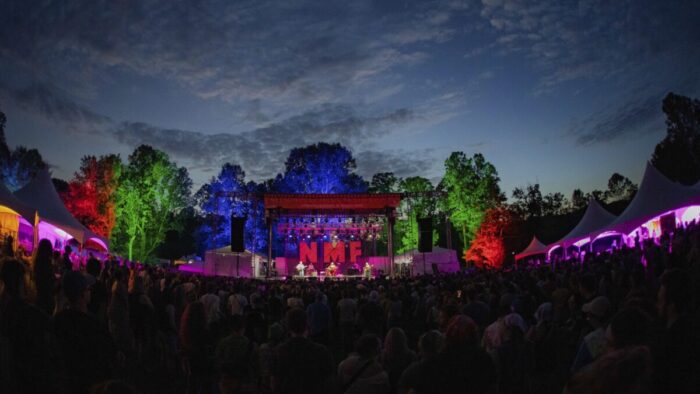
Appalachian Monster Game And Nelsonville Music Festival, Inside Appalachia
May 30Tap to summarizeA new roleplaying game gives folks in the workplace a chance to be a mythical Appalachian monster. Also, southeast Ohio’s Nelsonville Music Festival celebrates its 20th anniversary in June. We talk with the founder about what keeps people coming back. And, members of a Ukrainian Catholic church in Wheeling, West Virginia, make pierogies for their community every week. What makes them so good? You'll hear these stories and more this week, Inside Appalachia. In This Episode: Monsters Of Appalachia Game Connects Coworkers Rail Trails Connecting Appalachian Cities Pressure On Power Grids Southeast Ohio Residents, Wildlife Experts Warn Against Fracking Flash Flooding In Dante, Virginia Tick Season Could Be All-Year Round Rebuilding After EF4 Tornado Struck Somerset, Kentucky Nelsonville Music Festival Celebrates 20th Anniversary A Passion For Pierogies In Wheeling, W.Va. Monsters Of Appalachia Game Connects Coworkers People in the workplace often have to do team-building exercises. But instead of the stale old icebreakers, a team of university developers are using Appalachian cryptids. Bigfoot, the Flatwoods Monster and Moth-person are all part of the game called Monsters of Appalachia. It was developed by the Center for Transformational Play at Carnegie Mellon University in Pittsburgh. Host Mason Adams spoke with Jessica Hammer, associate professor and director of the center. Rail Trails Connecting Appalachian Cities Only four gaps remain in all of West Virginia to complete the 238-mile Parkersburg to Pittsburgh Corridor. The terminus of the Marion County rail trail in Fairmont represents one of those gaps. Photo Credit: Chris Schulz/West Virginia Public Broadcasting Across the country, old railroads have been converted into multi-use trails for folks to get out and enjoy nature. WVPB’s Chris Schulz has more on an ambitious vision to connect communities in West Virginia and Pennsylvania by rail trail. Pressure On Power Grids An electrical substation sits off Poindexter Road in Louisa County, near Crossroads Community Church. Infrastructure maintenance and upgrades are one of many factors currently driving up electric bills in Virginia. Photo Credit: Anjoleigh Schindler/WMRA Northern Virginia is home to the biggest concentration of data centers in the world. It’s known as “data center alley.” And now, its power needs are affecting rural places throughout the region. As utility companies expand the power grid to keep up, new substations and transmission lines are being proposed. One project stretches across Pennsylvania, West Virginia, Maryland and Virginia. Another extends through nine counties in Virginia. It’s drawing pushback from environmentalists and residents. WMRA’s Anjoleigh Schindler reports. Southeast Ohio Residents, Wildlife Experts Warn Against Fracking Driving into the Egypt Valley Wildlife Area. Photo Credit: Julie Grant/The Allegheny Front An Ohio commission is accepting bids to lease thousands of acres of a remote, state-owned wildlife area for fracking. The Allegheny Front’s Julie Grant visited the area and has more. Flash Flooding In Dante, Virginia James Mabry stands on his back porch that overlooks the creek along Saw Mill Hollow Road in Dante. In July 2025, an unexpected and unprecedented amount of rain caused flash flooding requiring evacuations and rescues in this small community. Access was difficult for the emergency crews who partnered amongst counties to respond. A bridge that connected him to the other side of the creek was washed away. Photo Credit: Stephanie Klein-Davis/WVTF A 2022 scientific paper suggests Appalachia could see nearly twice as many flash floods by the end of the century. Climate change is causing more extreme rainfall, and the town of Dante, Virginia is one of many places where flooding is getting even worse. Dante has had floods throughout its history.&nbs...
Transcribe →
Team Building With Appalachian Cryptids, This West Virginia Morning
May 29Tap to summarizeOn this West Virginia Morning, monsters in the workplace? Maybe. Carnegie Mellon University in Pittsburgh is developing a team building game using Appalachian cryptids like Bigfoot and the Flatwoods Monster. Inside Appalachia’s Mason Adams spoke with Jessica Hammer, associate professor and director of the university’s Center for Transformational Play, to learn more. Also, despite the recent soggy weather, most of West Virginia remains under drought conditions. And, three treatments for cancer patients are available for the first time in southern West Virginia. Finally, bells will be ringing across the state as part of the America 250 celebration. West Virginia Morning is a production of West Virginia Public Broadcasting which is solely responsible for its content. Support for our news bureaus comes from Shepherd University and Marshall University School of Journalism and Mass Communications. West Virginia Morning is produced with help from Bill Lynch, Chris Schulz, Eric Douglas and Maria Young. Eric Douglas is our news director. Teresa Wills is our host. Maria Young is our producer. Listen to West Virginia Morning weekdays at 7:49 a.m. on WVPB Radio or subscribe to the podcast and never miss an episode. #WVMorning
Transcribe →
How A Wide Range Of Agencies Are Tackling The Foster Care Crisis, This West Virginia Morning
May 28Tap to summarizeOn this West Virginia Morning, America’s foster care crisis is serious for nearly 400,000 kids who rely on the system. In the latest episode of Us & Them, host Trey Kay looks into the shortage of licensed foster homes – and the wide range of agencies and nonprofit organizations who offer help navigating what can be a complicated system. Also, state lawmakers are making it easier for workers to get training on new skills faster. And, a bitcoin mining company has acquired property in northeastern Kentucky, near Ashland, to build a hyperscale data center. This story was produced as part of the Appalachia + Mid-South Newsroom. Finally, improved water quality in West Virginia has led to fewer restrictions on sport fish consumption across the state. West Virginia Morning is a production of West Virginia Public Broadcasting which is solely responsible for its content. Support for our news bureaus comes from Shepherd University and Marshall University School of Journalism and Mass Communications. Maria Young produced this episode. Listen to West Virginia Morning weekdays at 7:49 a.m. on WVPB Radio or subscribe to the podcast and never miss an episode. #WVMorning
Transcribe →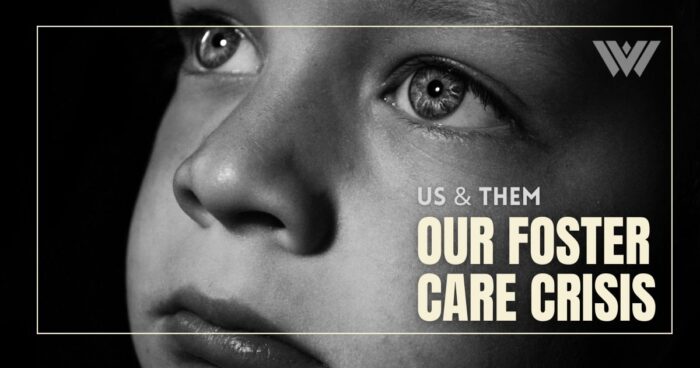
Us & Them Encore: Our Foster Care Crisis
May 28Tap to summarizeHundreds of thousands of kids rely on America’s foster care system. West Virginia has the highest rate of foster care placements of any state - four times the national average. Foster care is most often needed because of parental substance use, mental health challenges, poverty and neglect. Six-thousand Mountain State kids are in foster care, but there’s a shortage of licensed foster homes and residential facilities and that’s why nearly 400 kids live in out-of-state institutions. On this Us & Them, an encore episode finds more than half of all states have seen their number of licensed foster homes drop, some by as much as 60 percent because many new foster parents don’t stay in the system for long. While official foster care cases are tracked and overseen by state agencies, many types of so-called kinship care are not official or included in state data. This episode of Us & Them is presented with support from the West Virginia Humanities Council, CRC Foundation and Daywood Foundation. Subscribe to Us & Them on Apple Podcasts, NPR One, RadioPublic, Spotify, Stitcher and beyond. Dominic Snuffer was 5 when he and his four younger siblings entered foster care.Photo Credit: Trey Kay/West Virginia Public Broadcasting “I was in several foster care situations… I think three or four. It always seemed short and seemed as if we were getting bounced around.The hard part was probably just the beginning, how much I just always try to keep my siblings in check. I felt as if, if they behaved in a way, just like the other situations we might get taken away. It feels like yesterday that I got adopted. It went by fast. The things that make me smile was definitely adoption day. ‘Cause I knew, I finally found a family and I could try and live out the rest of my childhood.” — Dominic Snuffer Larry Cooper is executive vice president of innovation at The Children’s Home Network (CHN) in Tampa Bay, Florida. The agency works with children in foster care and provides services to help prevent families from entering the system. Cooper has worked at CHN for more than 20 years, including eight years licensing foster homes and recruiting and training foster parents. He says the approval process is strict by design but can take more than a year, and some prospective foster parents drop out along the way. Photo courtesy of The Children’s Home Network “You might fall off because of just life experiences that you may be going through. You might have a change in jobs. You might have an illness in your family. You might have a death in the family. And so I used to see for every 100 parents that I recruited, I might get only four to six families actually get a kid into their home for every hundred that would call me and be interested in becoming a foster parent.” — Larry Cooper Marc and Brandi Wilson live in St. Clairsville, Ohio, just across the river from Wheeling, West Virginia. Brandi worked as a Child Protective Services worker in West Virginia for 20 years. In 2014, her work at the Department of Health and Human Resources and her personal life collided when they became foster parents to a baby related to Marc. Photo Credit: Trey Kay/West Virginia Public Broadcasting “ They both took the stand and said that they give up the rights to their child, I just started breaking down. She [Brandi] was sitting beside me like this and she looked over at me. She said, ‘What's wrong?’ I said, ‘I can never imagine saying that about my own child’. She was kind of numb to it because she's worked in the field. It was hard to hear somebody say that.” — Marc Wilson “It wasn't until he was sitting next to me in the courtroom that I realized not everybody hears relinquishment. Not everybody hears abuse, neglect. Not everybody hears that - as CPS workers [this is] just everyday language. So once I was with him and realized, okay, this isn't everybody's life. They may have drug issues, domestic violence, gangs coming in and out of their home, but these words are not everyday life for a lot of people.” — Brandi Wilson Rachel Kinder oversees several family support programs at Mission West Virginia, including kinship care initiatives. She has worked in the foster care system for more than two decades. Kinder says the number of children in West Virginia’s formal foster care system peaked at 7,200 in 2019 and has declined somewhat since, though many informal kinship care arrangements are not reflected in state data. Photo Credit: Mission West Virginia “I can tell you the number of kids in formal care, so if there are 6, 078 kids in foster care in West Virginia, right now 58 percent of those are in kinship relative placements. For kids in informal care, where grandma or an aunt or some type of relative or even what we call fictive* kin has stepped in, it's almost impossible to get numbers on that.” — Rachel Kinder *Fictive care refers to placements where a foster parent knows the child, but is not related to them. This could be a teacher, family friend, or a neighbor. Nikki and Louisa Snuffer live in Sissonville, West Virginia, and have long considered foster parenting part of building their family. The couple has 12 children ranging in age from 10 months to 20 years old and they also breed French bulldogs. The Snuffers say their oldest daughter welcomed a baby last fall, making them grandparents for the first time. Their son Dominic attends Marshall University and is on track to graduate soon. The couple has also welcomed another child through a kinship placement. Nikki Snuffer now works with the Mountaineer Challenge Academy, a residential program that helps at-risk teenagers pursue education, structure and career training. Photo Credit: Tre...
Transcribe →
How A Tornado Affected Threatened Orchids, This West Virginia Morning
May 27Tap to summarizeOn this West Virginia Morning, researchers have spent almost two decades restoring a threatened species of orchid in southern Kentucky. But those efforts were disrupted when an EF-4 tornado swept through the area in May 2025, carving visible lines in the landscape. For the Appalachia + Mid-South Newsroom, WEKU’s Lily Burris went to Mount Victory to learn about the recovery. Also, area residents in northern and eastern West Virginia can offer their feedback in person next month on a proposed electric transmission line in the region. And, beverage distributors for southern West Virginia have now been on strike for two weeks and counting. West Virginia Morning is a production of West Virginia Public Broadcasting which is solely responsible for its content. Support for our news bureaus comes from Shepherd University and Marshall University School of Journalism and Mass Communications. Maria Young produced this episode. Listen to West Virginia Morning weekdays at 7:49 a.m. on WVPB Radio or subscribe to the podcast and never miss an episode. #WVMorning
Transcribe →
Protecting Frogs And WVU Explores New Cancer Treatment, This West Virginia Morning
May 26Tap to summarizeOn this West Virginia Morning, unpredictable weather is making it harder for amphibians to survive in West Virginia – and elsewhere. Kylie Frederick, a journalism student at West Virginia University (WVU), reports on how efforts to protect frogs and similar creatures start at home. Also, the West Virginia University Cancer Institute is enrolling pancreatic cancer patients for a promising, first-in-human clinical trial that doctors hope will improve survival rates for a very challenging disease. West Virginia Morning is a production of West Virginia Public Broadcasting which is solely responsible for its content. Support for our news bureaus comes from Shepherd University and Marshall University School of Journalism and Mass Communications. Maria Young produced this episode. Listen to West Virginia Morning weekdays at 7:49 a.m. on WVPB Radio or subscribe to the podcast and never miss an episode. #WVMorning
Transcribe →A Primary Recount, An Agency Deficit And Termination Of A Farming Grant, This West Virginia Week
May 23Tap to summarizeOn this West Virginia Week, after statewide primary elections, at least one race is headed for a recount. Also, independent audits find potential savings at three state agencies – as well as a critical deficit that could affect struggling families. And, a busy summer is on tap in the capitol city. And, the termination of a federal grant program for first time farmers is leaving some growers – and communities – in a bind. We also discuss the effects of Hurricane Helene in Appalachia. Maria Young is our host this week. Our theme music is by Matt Jackfert. West Virginia Week is a web-only podcast that explores the week's biggest news in the Mountain State. It's produced with help from Bill Lynch, Chris Schulz, Eric Douglas and Maria Young. Learn more about West Virginia Week.
Transcribe →