Podcast
Blue Sky
Hosted by Bill Burke · EN
Hosted by Bill Burke, founder of The Optimism Institute, this weekly podcast will feature inspiring leaders, authors, researchers, and big thinkers who are taking on some of our world's toughest challenges with an infectious sense of optimism. Blue Sky takes its name from the meditation reminder that there's always blue sky above, sometimes you just have to get your head above the clouds to see it.
32episodes
Episodes
Newest firstAll episodes
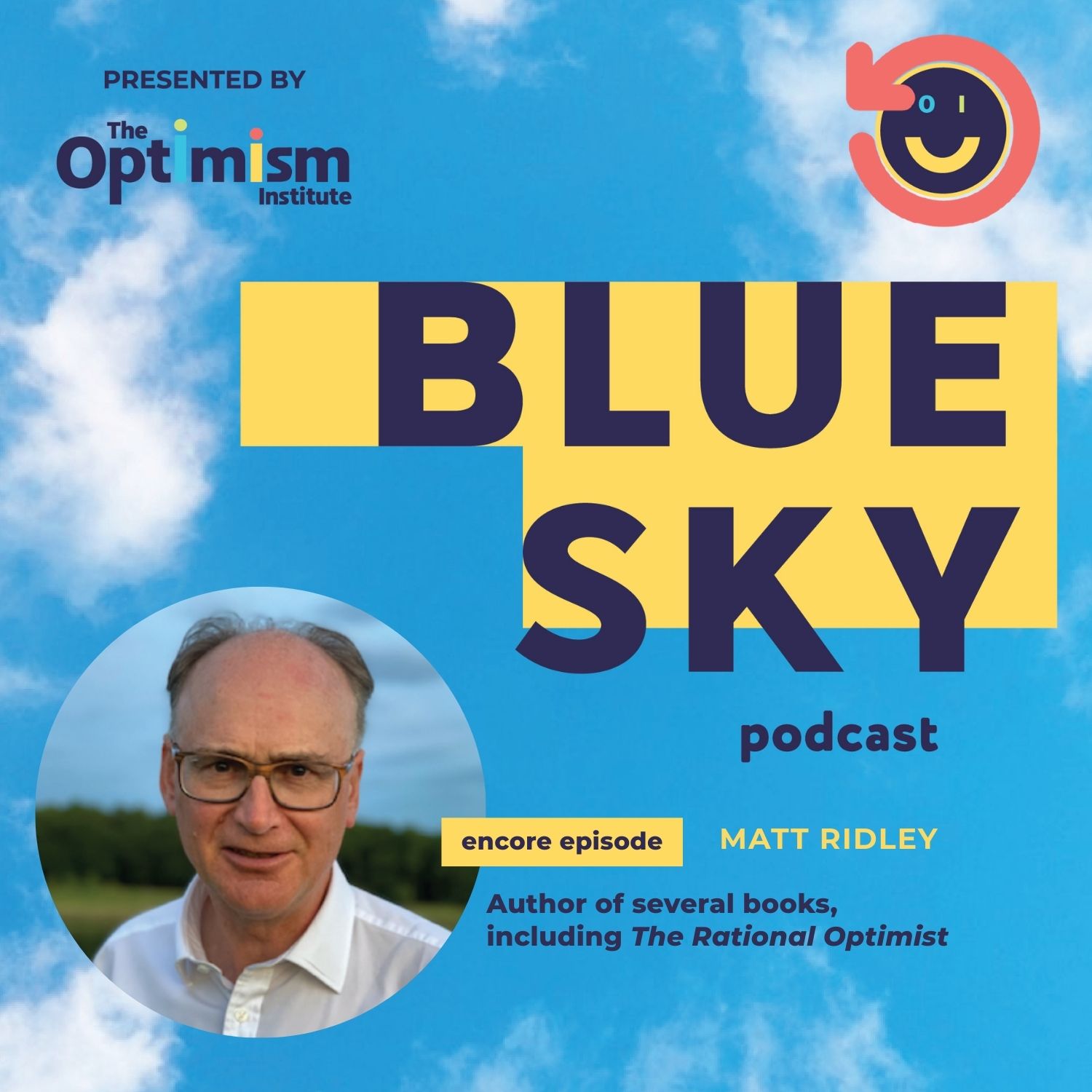
ENCORE PRESENTATION: NYT Bestselling Author Matt Ridley on His Motivation to Write The Rational Optimist and Why He Believes That Human Prosperity Will Inevitably Continue to Increase
Jan 700:49:37Tap to summarizeMatt Ridley's seminal book, The Rational Optimist, has inspired many since its publication in 2010 and greatly influenced the creation of The Optimism Institute. In this far-ranging discussion, Matt will describe an early education that he said was steeped in pessimism but how later in life he found that much of what he'd been taught was simply not true. This led him to set on a nearly evangelical quest to spread the word that interaction and trade between people and nations, including the free exchange of ideas, will continue to set us on an inexorable path towards increasing prosperity. Chapters: 00:00 Introducing Matt Ridley Bill Burke introduces Matt Ridley, acclaimed author of "The Rational Optimist" and other influential books. He highlights Ridley's extensive background, including his service in the House of Lords and his work on various scientific committees. 02:39 From Pessimism to Rational Optimism Matt Ridley shares his personal journey from a pessimistic upbringing in the 1970s to becoming a 'rational optimist' based on evidence. He recounts how his research for 'The Rational Optimist' revealed that many assumed negative trends, like decreasing happiness with wealth, were actually false. 06:01 The Genesis of "The Rational Optimist" Ridley explains his evangelical motivation for writing 'The Rational Optimist,' aiming to counter pervasive doom and gloom, especially among young people. He also sought to explore the evolutionary roots of human prosperity and growth, driven by an innate curiosity about why the world was improving. 07:28 Ideas Have Sex: Cooperation and Trade Matt Ridley delves into his concept of "ideas having sex," explaining how human cooperation, trade, and the exchange of specialized skills drive prosperity. He posits that this fundamental human tendency to swap goods and ideas is as crucial to cultural evolution as sex is to natural evolution. 13:50 Social Media's Impact: Polarization and Progress Ridley reflects on social media's impact on his 'ideas having sex' theory, acknowledging its initial promise for communication but also its role in political polarization. 19:29 Panglossian vs. Rational Optimism Ridley distinguishes his rational optimism from Panglossian optimism, emphasizing that he believes the world can and should be improved, not that it's already perfect. He counters common pessimistic arguments by pointing to long-term improvements in living standards and the gradual nature of good news compared to sudden bad news. 23:56 Trust and the Pencil's Lesson Matt Ridley discusses the importance of interpersonal trust for societal prosperity, contrasting it with institutional trust. He also elaborates on the 'I, Pencil' essay, illustrating how millions of specialized individuals unknowingly collaborate to produce even a simple item like a pencil. 33:15 Gratitude, Specialization, and Daily Miracles Ridley encourages gratitude for the vast network of people who contribute to our daily lives, using the example of a simple meal. 36:50 Climate Change: A Problem to Be Solved Matt Ridley shares his nuanced perspective on climate change, acknowledging it as a real threat but cautioning against panic and exaggeration. He suggests viewing it as a problem solvable through human ingenuity, while also highlighting the overlooked environmental benefits of CO2 and the harm caused by some climate prevention measures. 42:51 The Future of Innovation: Worries and Hopes Ridley discusses the limitless nature of knowledge and innovation, emphasizing communication over population size for progress.
Transcribe →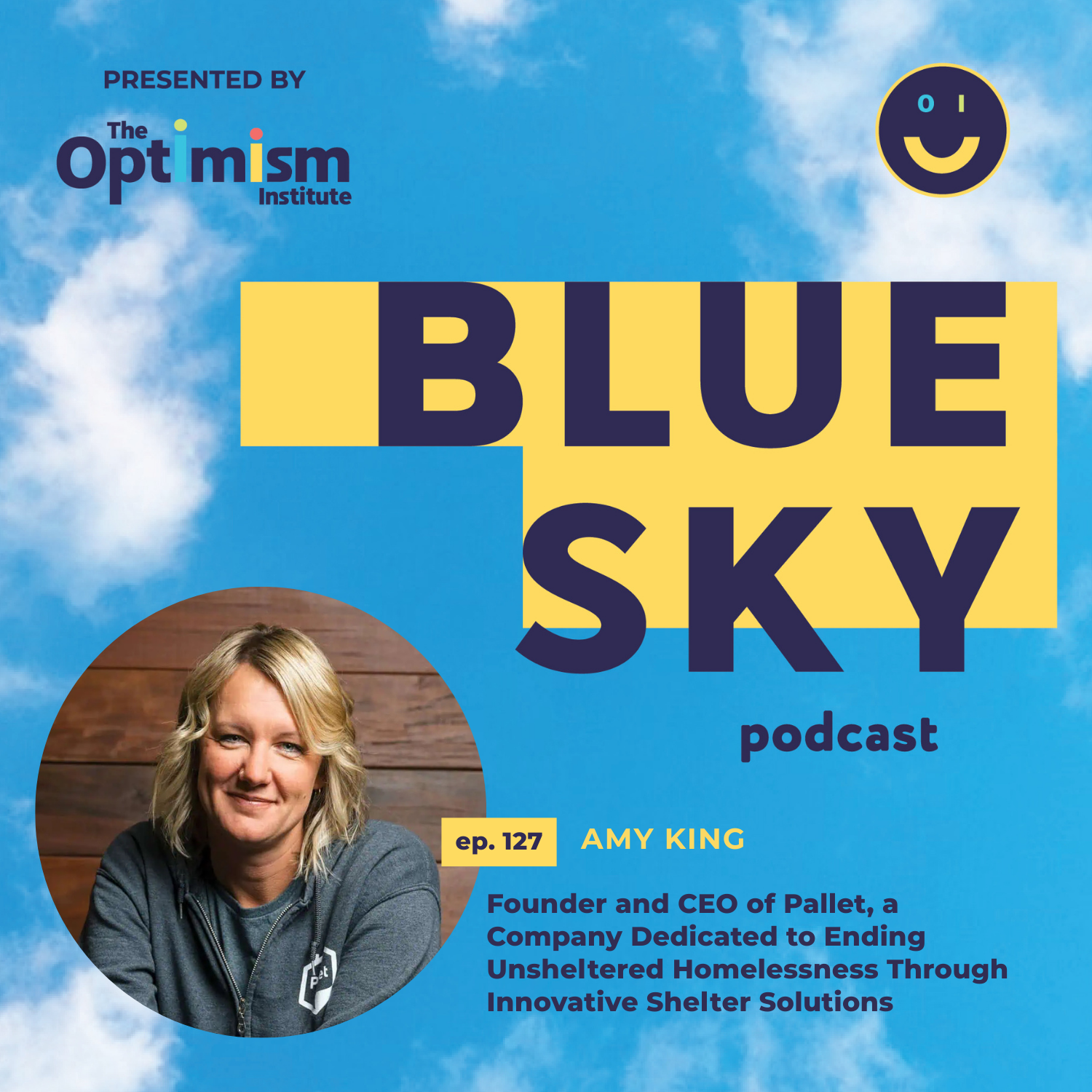
Amy King's Innovative and Optimistic Approach to Solving Homelessness in America
Dec 3100:41:54Tap to summarizeAmy King watched the devastating aftermath of Hurricane Katrina and seeing people sheltered in a leaking football stadium inspired her to work with her husband on shelter solutions. The result was Pallet, a company that makes safe, secure, and easily assembled temporary shelters. In this episode she shares her inspiring story and details about her remarkable company. Chapters: 00:00 Introduction to Amy King and Pallet This chapter introduces Amy King, founder and CEO of Pallet, a public benefit corporation addressing homelessness. 02:07 From Child Psychology to Social Enterprise Amy King shares her journey from studying child psychology, where she observed the impact of troubled homes, to founding Pallet. Her interest in people and the influence of early experiences shaped her path toward addressing societal challenges like homelessness. 04:37 The Genesis of Pallet: From Katrina to Construction Amy discusses how her husband's construction company accidentally led them to employ individuals from the justice system, many of whom had experienced homelessness. 07:19 Public Benefit Corporation Model Amy explains why Pallet operates as a public benefit corporation rather than a nonprofit, emphasizing its dual mission of workforce development and providing shelter. 11:13 Pallet Shelters and Deployment Strategy Amy describes the innovative design of Pallet shelters—lightweight, panelized, and quick to assemble, with features like heat, AC, and easy cleaning. She details Pallet's partnership with cities and Zillow to identify and utilize vacant public land for shelter villages, which are temporary and designed for easy relocation. 15:35 The Transformative Impact of Pallet Shelters Amy elaborates on how Pallet shelters provide more than just a roof, offering a managed care environment with wraparound services for mental health, substance use, and housing placement. This stability allows individuals to engage with services and break the cycle of homelessness, as exemplified by a tenant named Matthew. 20:29 Hope for Ending Homelessness & Political Challenges Amy discusses Pallet's broad reach across the US and Canada and her controversial but hopeful view on ending homelessness. She addresses the political complexities and the need for sufficient services and innovation to address root causes, moving towards 'functional zero' homelessness. 25:57 Disaster Relief and Versatile Solutions Amy highlights Pallet's role in disaster relief, noting the political challenges of working with organizations like FEMA and the need for non-congregate shelter solutions. She explains the versatility of Pallet's product, which can be repurposed for both disaster response and homelessness, providing flexibility for communities. 31:10 Economic Viability and Community Recovery Amy discusses the economic benefits of using Pallet shelters for disaster relief, contrasting them with expensive hotel stays and emphasizing the importance of keeping residents near their communities for recovery. This approach helps maintain local economic bases and encourages volunteer participation by providing convenient housing for relief workers. 34:19 Transformative Impact on Individuals and Families Amy shares her favorite part of the work: witnessing the profound transformation of individuals who gain employment and stability through Pallet. She emphasizes how this not only changes the lives of the employees, many of whom were formerly incarcerated or homeless, but also reunites and positively impacts their families, especially their children. 38:46 Getting Involved with Pallet Amy encourages listeners to get involved with Pallet by reaching out through their website or email to support their mission. She emphasizes the value of local constituent engagement in driving political conversations and understanding community stakeholders to expand their impact.
Transcribe →