
Podcast
Books for Men
Hosted by Douglas Vigliotti · EN
In short episodes, every Monday, host and author Douglas Vigliotti spotlights a different book that men (and women) would enjoy, sharing everything from crime fiction and literary classics to contemporary fiction and memoirs, and providing key insights into authors, themes, lessons, and the big questions from each book. He also touches on craft-related topics like writing, storytelling, and artistry. For more, visit: BooksforMen.org.
39episodes
Episodes
Newest firstAll episodes
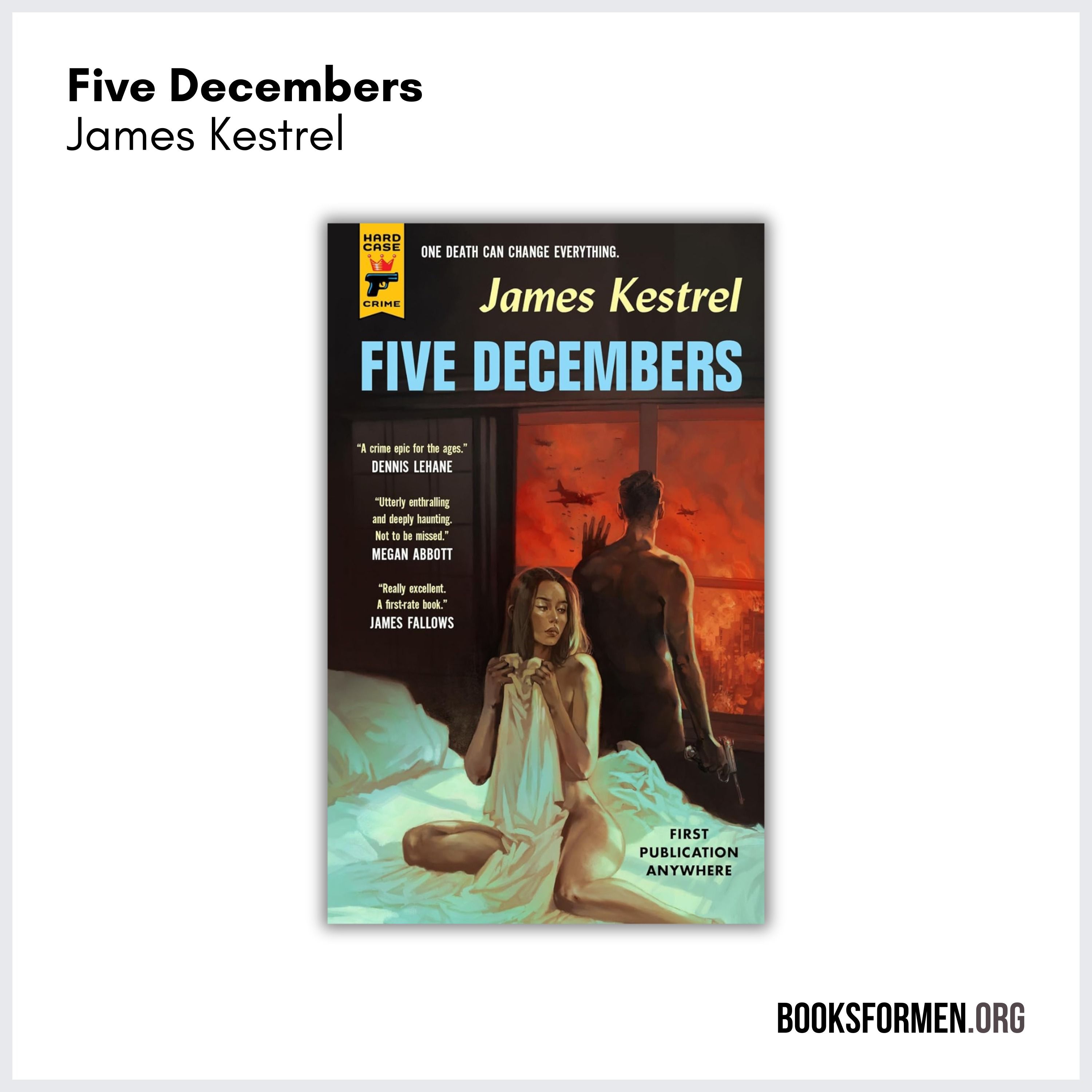
#307 | 'Five Decembers' — Noir, World War II, and Tragic Love
2w ago00:10:28Tap to summarize🎙 This week, we dive into "Five Decembers" by James Kestrel, an outstanding, Edgar Award-winning novel that blurs the lines between noir, historical fiction, thriller, and romance. Set against the backdrop of World War II from 1941 to 1945, the story follows Honolulu detective Joe McGrady as a gruesome double murder investigation is interrupted and transformed by the outbreak of war. I share why this book has been one of my favorite reads of the last five years, and the fascinating commercial reason why the author wrote it under a pseudonym. Inside the Episode: (00:09) Lost in the Shuffle: Why it took me so long to share one of my favorite novels of the last five years, and how a heavy reading volume can sometimes bury absolute gems. (01:33) The Commercial Machine: The pragmatic, business-driven story behind why practicing attorney Jonathan Moore adopted the pseudonym James Kestrel to get this book on store shelves. (04:26) A Five-Year Journey: Setting the stage across Hawaii, Japan, and China, and how detective Joe McGrady’s run-of-the-mill case explodes into an epic, international saga. (05:47) Old-School Hard-Boiled Noir: Breaking down the book's masterful blend of a gritty procedural, a sweeping war story, and a bittersweet romance that stops short of being sappy. (07:50) Inverting the Obstacle: How the author uses World War II as an active obstacle to a crime investigation, resulting in a deeply satisfying, lingering resolution and a closing quote on being lost. Links & Resources: ✓ (Better) Books: Sign up at BooksforMen.org. 📚 Master Your Craft: AristotleforNovelists.com. ⚡️ Connect: Instagram @douglasvigliotti | DouglasVigliotti.com. 💥 Book: Five Decembers by James Kestrel. Life is too short to read sh*tty books. 🫠
Transcribe →
#306 | Writing in Second Person: A Reading of 'Gray'
3w ago00:13:39Tap to summarize🎙 This week, we're taking a slight detour off-script to explore the uniqueness of the second-person point of view. Driven by a narrative perspective I'm playing with for a new project, I look at why the "you" form is so underutilized, how it creates radical intimacy and immediacy, and the fine line between an immersive experience and a jarring style choice. I also break down a few notable examples before sharing an original scene of my own. Inside the Episode: (00:09) The Writer's Sandbox: Why I’ve been practicing random scenes in the second person and wrestling with a perspective that is completely unnatural to how we normally consume prose. (01:39) The Anatomy of "You": Breaking down the three distinct features of second-person narration: placing the reader as the protagonist, creating forced immediacy, and erasing all narrative distance. (04:09) Masters of the Perspective: Looking back at past episodes—from the opening of Ron Currie's The Savage, Noble Death of Babs Dionne to the complete second-person immersion of Jay McInerney's Bright Lights, Big City. (05:35) From Saint-Malo to the MFA: The backstory of an original creative piece tested at a writing workshop in France and read aloud during a recent MFA immersion series. (06:34) Original Fiction, Gray: A live reading of a second-person scene tracking a newly ordained, cynical ruler wrestling with power, family resentment, and the haunting memory of a pair of gray eyes. Links & Resources: ✓ (Better) Books: Sign up at BooksforMen.org. 📚 Master Your Craft: AristotleforNovelists.com. ⚡️ Connect: Instagram @douglasvigliotti | DouglasVigliotti.com. 💥 Featured Episodes: #150 Bright Lights, Big City, #153 Tomorrow, and Tomorrow, and Tomorrow, and #293 The Savage, Noble Death of Babs Dionne. Life is too short to read sh*tty books. 🫠
Transcribe →
#305 | Annie Ernaux's Riskiest Book? — 'A Girl's Story'
4w ago00:10:58Tap to summarize🎙 This week, we shift back into narrative nonfiction with a short but devastatingly powerful memoir: "A Girl's Story" by Nobel Prize winner Annie Ernaux. Written when she was 77, Ernaux looks back 60 years at a pivotal, confusing sexual encounter and subsequent humiliation during the summer of 1958. It’s a book that rejects the easy-to-understand victim narrative—instead, writing a much riskier book, treating her past self like a historical figure worthy of investigation to deliver what might be her most painfully honest work. Inside the Episode: (01:12) The Nobel Outlier: Exploring Annie Ernaux's massive body of work, her 2022 Nobel Prize, and why her famous book The Years is actually the "Nebraska" of her catalog. (03:17) Bone-Dry Transgression: Breaking down her signature aesthetic style—how she uses white space and clinical, matter-of-fact prose to recount highly volatile memories. (04:09) The Girl of '58: The backstory of an 18-year-old girl’s formative summer, and why it took Ernaux six decades to finally get this specific experience down on paper. (05:35) Resisting Easy Conclusions: Why A Girl's Story is so risky; she refuses to lean into a clean "rise from the ashes" arc, choosing instead to interrogate her own agency and contradictions. (07:56) Navigating the Gray Area: A look at how great literature captures the messy, un-bucketable traumas of life, anchored by a staggering closing quote on the power of being the one who writes. Links & Resources: ✓ (Better) Books: Sign up at BooksforMen.org. 📚 Master Your Craft: AristotleforNovelists.com. ⚡️ Connect: Instagram @douglasvigliotti | DouglasVigliotti.com. 💥 Book: A Girl's Story by Annie Ernaux. Life is too short to read sh*tty books. 🫠
Transcribe →
#304 | Robert Greene on Empathy, Judgment, and Discipline
Jun 2900:11:48Tap to summarize🎙 This week, we're back in the archives analyzing the psychology of Robert Greene’s The Laws of Human Nature. I dig into why his story-driven style is so relatable and break down an iconic Abraham Lincoln quote that challenges how we handle immediate dislike. It’s an honest look at why empathy is a strict discipline, how snap judgments are often just internal projections, and how to stop reducing complex people to static images. Inside the Episode: (01:37) Stories Over Data: Why Robert Greene's deeply researched, narrative-driven style offers a more relatable, honest look at human behavior than cold statistics. (03:32) The Laws We Live: A quick look at the tough-to-swallow truths packed into the book, from compulsive behaviors to group conformity and everyday narcissism. (04:46) Abraham Lincoln Quote: Breaking down an iconic Abraham Lincoln quote that flips our normal emotional reflexes to treat personal irritation as a sign of incomplete information. (07:07) The Breakdown of Perception: How freezing someone into a static, unlikable frame reveals far more about your own internal projections than external reality. (08:44) Empathy as a Discipline: Why real empathy isn't about forced warmth or agreement, but a refusal to lock someone into a fixed identity before knowing their full story. Links & Resources: ✓ (Better) Books: Sign up at BooksforMen.org. 📚 Master Your Craft: AristotleforNovelists.com. ⚡️ Connect: Instagram @douglasvigliotti | DouglasVigliotti.com. 💥 Featured Episode: #125 "The Laws of Human Nature" on Apple | Spotify. Life is too short to read sh*tty books. 🫠
Transcribe →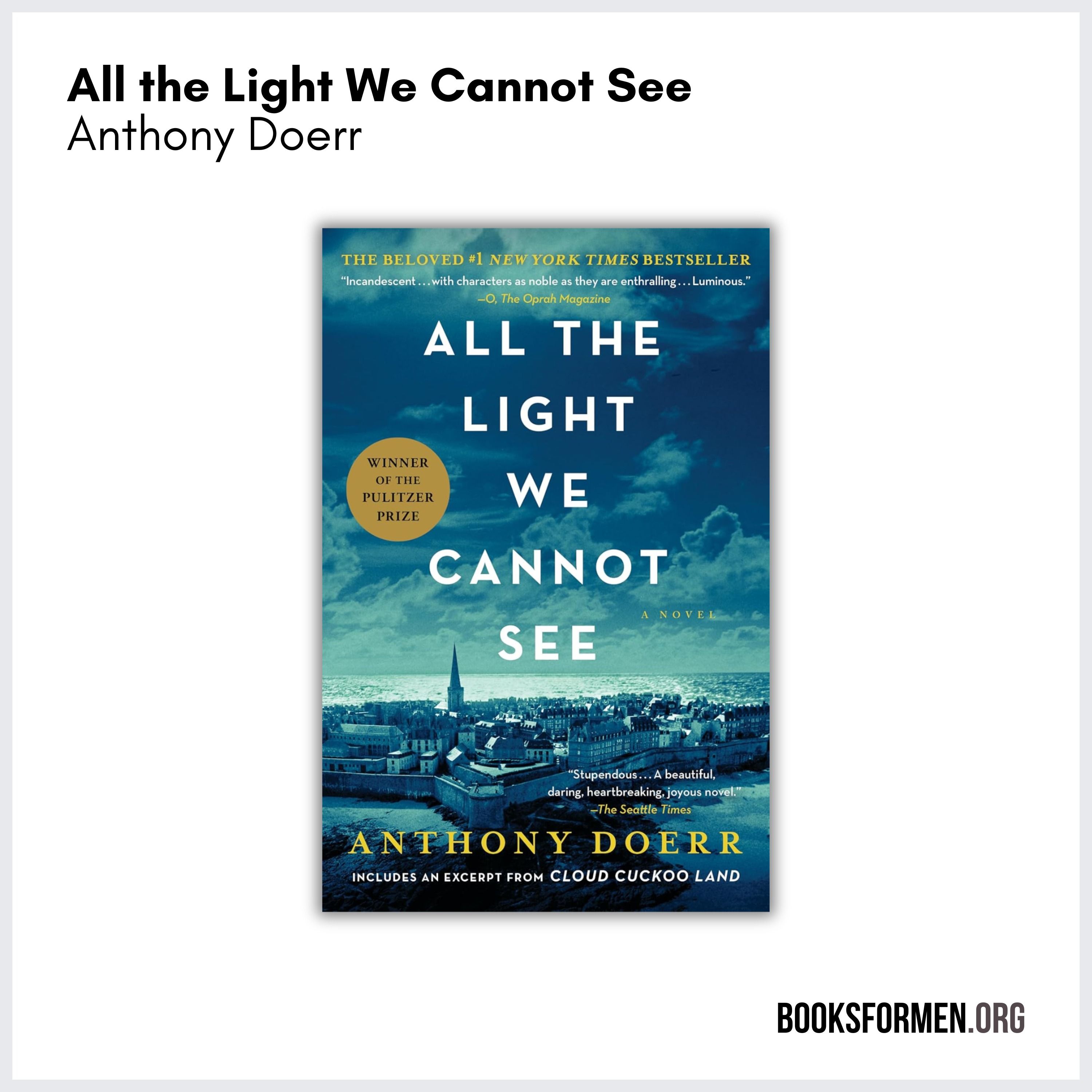
#303 | The Story Engine of a 15-Million-Copy Bestseller — 'All the Light We Cannot See'
Jun 2200:12:31Tap to summarize🎙 This week, we're diving into Anthony Doerr’s Pulitzer Prize-winning blockbuster, All the Light We Cannot See. I break down the foundational story structure and parallel character arcs of this massive World War II novel, which I've been studying closely for an upcoming writing workshop in Saint-Malo. It’s a candid look at the book’s slow-burn mechanics, its heavy thematic focus on unseen goodness, and why its mystical prose reads more like fantasy than historical fiction. Inside the Episode: (03:14) Mapping the Foundation: Why I took a close look at this specific World War II novel to showcase core Western storytelling mechanics to a writing group in Saint-Malo. (04:43) Dual Desires & The Slow Burn: Analyzing the structural spine of the book—the parallel journeys of a blind French girl and a lost German soldier trying to find their way home. (06:36) Juxtaposition and Fakes: Breaking down "Story B," the hunt for a hidden diamond, and an innocuous line from the narration that doubles as a heavy metaphor for life. (08:06) Unseen Value: The true meaning behind the book's title, the symbolic use of radio waves, and how the narrative spotlights the good deeds lost to the chaos of the world. (09:23) Mystical vs. Gritty Craft: A candid take on the novel's aesthetic style—why it reads more like a science-tinged fantasy than a gritty, banal historical fiction frame. Links & Resources: ✓ (Better) Books: Sign up at BooksforMen.org. 📚 Master Your Craft: AristotleforNovelists.com. ⚡️ Connect: Instagram @douglasvigliotti | DouglasVigliotti.com. 💥 Book: All the Light We Cannot See by Anthony Doerr. Life is too short to read sh*tty books. 🫠
Transcribe →
#302 | The #1 Problem with So Many Novels
Jun 1500:12:05Tap to summarize🎙 Lately, I've noticed the same problem arising in novel after novel: nothing happens. Literary or genre, doesn't matter. Too many stories mistake explanation for action, leaving readers trapped in narratives where characters are not making enough decisions. Let alone ones that matter. This episode breaks down why dramatic momentum comes from choice, consequence, and enactment—not endless exposition. Inside the Episode: (01:50) The Diagnosis: Unpacking the frustrating reality behind why so many hyped books fail: the simple, sweeping truth that nothing happens. (03:00) Action vs. Spectacle: Breaking down the difference between cheap explosions and actual dramatic momentum driven by characters making impactful choices. (04:40) The TV Series Bleed: How the structural format of modern streaming television has infected contemporary prose, leading to endless, repetitive explanation. (06:10) Exemplars of Enactment: Looking at masterclasses in action-heavy literature like My Brilliant Friend, The Great Gatsby, and Lush Life, where tragedy is shown, never just revealed. (09:30) The Litmus Test: The ultimate question every reader and writer should ask to separate a great, enduring story from a cheap plot twist. Links & Resources: ✓ (Better) Books: Sign up at BooksforMen.org. 📚 Master Your Craft: AristotleforNovelists.com. ⚡️ Connect: Instagram @douglasvigliotti | DouglasVigliotti.com. Life is too short to read sh*tty books. 🫠
Transcribe →
#301 | 'The Bonfire of the Vanities' — Great Story, Flawed Writing (and Why It Doesn't Matter)
Jun 800:11:57Tap to summarize🎙 In this episode, we tackle Tom Wolfe’s massive 1987 blockbuster, The Bonfire of the Vanities. We look past the historical hype of this 700-page New York City phenomenon to analyze why a book can hold an entire culture captive while still dropping the ball on sentence-level craft. It’s a raw, love-hate examination of an iconic social satire, proving that commercially, timing and cultural resonance often matter far more than pure technical execution. Inside the Episode: (01:46) The New Journalism Vanguard: How Tom Wolfe’s background as a reporter and leader of the subjective "New Journalism" movement heavily shaped his approach to writing fiction. (03:46) Standing on the Tracks: Unpacking Wolfe's polarizing style, the public trashing he received from literary heavyweights like Mailer and Updike, and why you're nobody until somebody hates you. (04:56) Soapy Satire of 1980s New York City: Looking at the plot of Wall Street trader Sherman McCoy and how the book tackles the macro issues of 1980s greed, race, class, and media manipulation. (06:23) A Critique of Craft: Why the novel's prose feels clunky, fat, and structurally janky, functioning as a great story that ultimately starts in the wrong place. (08:07) The Serialization Journey: From its 1984 origin in The Rolling Stone to modern indie "blog-to-book" success stories, exploring how the business of literature adapts to the times. Links & Resources: ✓ (Better) Books: Sign up at BooksforMen.org. 📚 Master Your Craft: AristotleforNovelists.com. ⚡️ Connect: Instagram @douglasvigliotti | DouglasVigliotti.com. 💥 Book: The Bonfire of the Vanities by Tom Wolfe. Life is too short to read sh*tty books. 🫠
Transcribe →
#300 | Hunter S Thompson on Meaning, Purpose, and Goals
Jun 100:15:06Tap to summarize🎙 In this special 300th milestone episode, we dive deep into a legendary piece of correspondence from one of the most polarizing catalysts in literary history: Hunter S. Thompson. We examine a letter a 22-year-old Hunter penned to a friend seeking life and career direction. This profound piece of writing completely flips the script on conventional success, warning us against the structural trap of letting predefined societal paths dictate who we are. Inside the Episode: (00:30) The Milestone Catalyst: Reflecting on why it makes perfect sense to feature Hunter S. Thompson for episode 300, given his status as the show's most popular author and his personal role as the spark for my own writing craft. (03:15) The Danger of Advice: Hunter’s sharp warning on why giving specific life direction borders on egomania, and how all advice is merely a direct reflection of the person giving it. (05:00) Swimming vs. Floating: Breaking down the ultimate choice every individual must consciously or unconsciously make: do you float with the tide, or do you actively swim for a goal? (06:45) The Fireman Illusion: Why adjusting your life to fit a static, tangible goal is a recipe for galloping neuroses as your personal perspective naturally changes and multiplies over time. (10:15) Bending the Path: The core formula for a meaningful existence—making your goals conform to your individual abilities and desires rather than forcing yourself to fit a predefined mold. Links & Resources: ✓ (Better) Books: Sign up at BooksforMen.org. 📚 Master Your Craft: AristotleforNovelists.com. ⚡️ Connect: Instagram @douglasvigliotti | DouglasVigliotti.com. 💥 Featured Episode: #242 "Letters of Note" on Apple | Spotify. Life is too short to read sh*tty books. 🫠
Transcribe →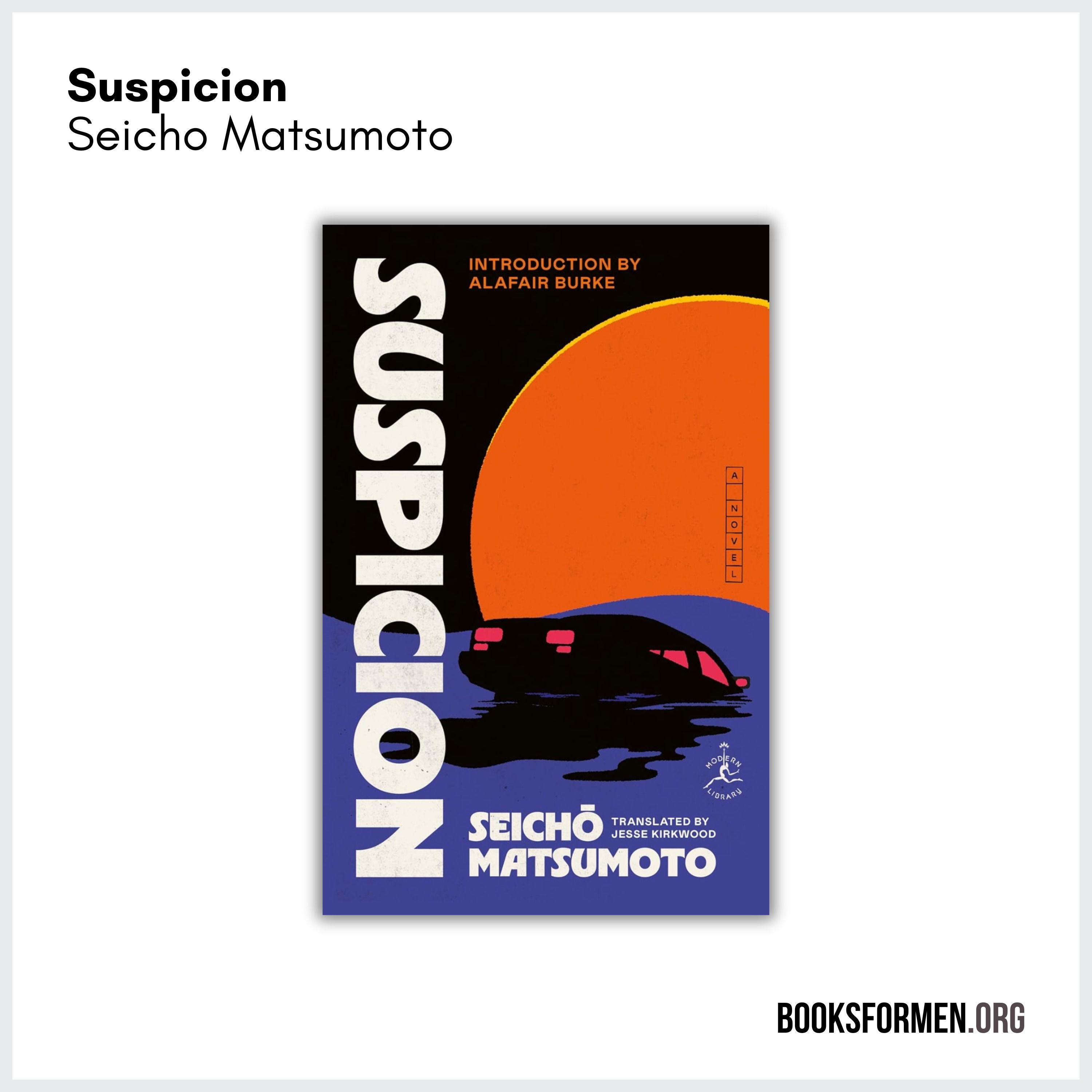
#299 | Blind 'Suspicion' — Why Truth Is More Than a Whodunit
May 2500:10:02Tap to summarize🎙 In this episode, I’m featuring a short piece of translated Japanese crime fiction titled Suspicion by Seicho Matsumoto. We are stripping away the standard whodunit tropes to look at the psychology of influence, media manipulation, and social pressure that often fuel our modern court of public opinion. This 128-page thriller novella explores the dangers of obsessive belief and asks what happens to us when we are willing to go to any length to prove we are right. Inside the Episode: (02:12) The Late Bloomer: The backstory of Seicho Matsumoto, an undereducated, self-taught enthusiast who didn't gain literary recognition until his 40s. (04:45) Translation Matters: Why the work of Jesse Kirkwood and the intentionality of the translator alter how foreign fiction feels and flows. (06:20) Beyond the Whodunit: How the story sets up as a standard noir murder mystery but shifts to focus on the psychology of its characters. (09:15) Court of Public Opinion: Exploring how bias rather than facts often fuel obsessive belief and premature accusations of guilt (11:05) The Final Question: Grappling with what happens when a person is changed by the process of dogged belief, especially if they are wrong. Links & Resources: ✓ (Better) Books: Sign up at BooksforMen.org. 📚 Master Your Craft: AristotleforNovelists.com. ⚡️ Connect: Instagram @douglasvigliotti | DouglasVigliotti.com. 💥 Book: Suspicion by Seicho Matsumoto. Life is too short to read sh*tty books. 🫠
Transcribe →
#298 | Reading Books Builds What the Internet Can’t — 9 Super Soft Skills
May 1800:11:04Tap to summarize🎙 In a world of algorithmic rot and digital noise, reading isn't just a hobby—it’s a necessary antidote for your mind. In this first official Off-Script episode, I share The (Better) Books Manifesto, a raw look at why the form of the book is irreplaceable and how it builds the super soft skills required to navigate real life. You don't need to read (Better) Books, but you do need to keep reading books. Here's why. Inside the Episode: (02:12) The Manifesto: Why I rebranded the newsletter to (Better) Books to filter out the noise. (04:45) The Replacement Myth: Why TikTok, podcasts, and AI can never replicate the intimacy of a book. (06:20) 9 Super Soft Skills: How reading forges essential traits like empathy, patience, and mental stamina. (09:15) Symbolic Literacy: Breaking the internet’s nudge toward binary thinking. (11:05) The Standard: Opening the door to any discerning reader seeking vetted curation. Links & Resources: ✓ (Better) Books: Sign up at BooksforMen.org. 📚 Master Your Craft: AristotleforNovelists.com. ⚡️ Connect: Instagram @douglasvigliotti | DouglasVigliotti.com. 💥 Article: Books Build What the Internet Can't — The (Better) Books Manifesto Life is too short to read sh*tty books. 🫠
Transcribe →