Loading summary
Transcript92 lines
- [00:02]
Adam Wild
Acast powers the world's best podcasts. Here's a show that we recommend.
- [00:10]
Jack Tippograf
Hey, we're the Adam Wild and Jack Show.
- [00:11]
Adam Wild
You can find us wherever you get your podcasts every Wednesday. And Jax, we talk about what?
- [00:16]
Jack Tippograf
Well, we're just two best pals talking.
- [00:18]
Adam Wild
About pop culture dating and also exposing.
- [00:20]
Jack Tippograf
Each other's deepest darkest secrets. And if you've ever been ghosted, we.
- [00:24]
Adam Wild
Have a little segment called Left on Red where we call the person who ghosted you and say, hey, why'd you do that? And usually it leads to some pretty embarrassing and explosive things.
- [00:31]
Jack Tippograf
Yeah, yeah.
- [00:32]
Adam Wild
So check out the Adam Wild and.
- [00:33]
Jack Tippograf
Jack show available every Wednesday. Wherever you get your podcasts.
- [00:40]
Adam Wild
ACAST helps creators launch, grow and monetize their podcasts everywhere. Acast.com.
- [00:52]
Sarah Hofstadter
We know brand growth equals business growth, but do your stakeholders Tracksuit is an affordable, always on brand tracking dashboard dashboard that helps marketers and agencies prove the impact of their work on brand metrics over time. Benchmarked against competitors. Built from best in class methodology, the Tracksuit dashboard is accessible and easy to understand for everyone from CSOs and CMOs to CFOs and founders. Research shows that brand investment in good economic times and bad is essential to driving sustainable growth. The bottom line? Turning off the brand tap will cost you in the long run. Tracksuit gives marketers and agencies a common language to measure and communicate brands impact without the $100,000 price tag. Their in house research experts will have your survey live and your full marketing funnel and brand perceptions visible in just 30 days. Check tracksuit out@gotracksuit.com.
- [01:54]
Adam Wild
So a lot of people may not realize where the name Harry bow comes from. 102 years ago Our founder invented a gummy bear. His name was Hans Riegel so H A R I and he lived in Bonn, Germany. As you mentioned, we're still family run and we're a family based company so we all work for Hans Riegel who's in Bonn, Germany now. Generation 3, our charitable foundation allows us to support the DNA of the brand but even more importantly allows us to stay independent and be a family run company. A family run company that makes decisions for the long term.
- [02:32]
Rick LaBerge
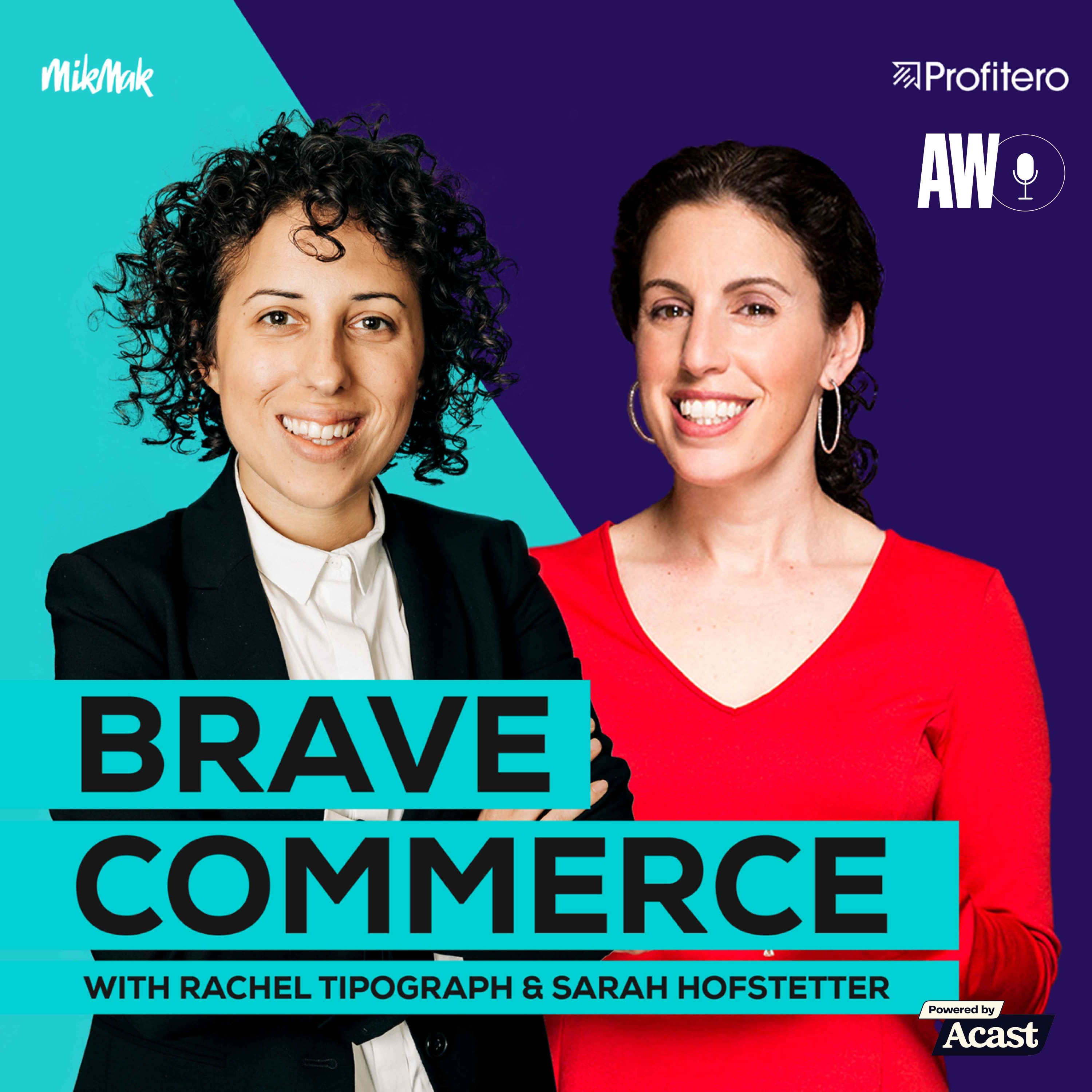
Welcome to today's episode of Brave Commerce.
- [02:35]
Jack Tippograf
I'm Rachel Tippograf, the founder and CEO of Micmac.
- [02:38]
Rick LaBerge
And I'm Sarah Hofstadter, Chairwoman of Profitero.
- [02:41]
Jack Tippograf
Plus and this is a show that talks about what's relevant in commerce for the world's biggest brands. Sarah, you know what I find fascinating about the confectionery industry.
- [02:57]
Rick LaBerge
What do you find fascinating about the confectionery industry, Rachel?
- [03:01]
Jack Tippograf
Well, I think we both have keynoted this conference. The national association of Confectionery Companies, I think that's what it's called. And majority of those companies are family owned and operated businesses and some of them are multi billion dollar family run businesses.
- [03:18]
Rick LaBerge
Let's look at some of the biggest. You've got Mars, by the way. I'm just going to do a cross promo. The episode about Mars on the acquired podcast is required listening for anybody in the packaged goods world. That was, I mean our episodes are nice and bite sized. This was like three and a half hours.
- [03:37]
Adam Wild
Wow.
- [03:37]
Rick LaBerge
But it's so good.
- [03:38]
Jack Tippograf
Oh, I'm going to listen to it.
- [03:39]
Rick LaBerge
Oh, it's phenomenal. And it goes back to the history of how they got into confectionery but also how they got pet food. And considering we've had so many Mars guests on anyway, sidebar. But you look at Mars, family owned and private. You look at Hershey started it goes back to the roots. But there was the trust for the kids in Hershey, Pennsylvania and the trust controls an insane amount. But so many of those businesses that we met when during our times at NCA is there's definitely a lineage and therefore even looking at pin brands. Right?
- [04:14]
Jack Tippograf
Absolutely. All the kids are involved now the company that owns Peeps, I'm blanking on that. That's family run. I mean the list goes on and on. And you know when we were at that conference I did ask a few of them this question which is why in the confectionery industry are there so many family run businesses? And I actually got a very wholesome answer. And they explained to me that a lot of these companies, the factory and the family home were on the same plot of land.
- [04:42]
Rick LaBerge
I have rarely heard you say stuff about. I have a very wholesome answer.
- [04:49]
Jack Tippograf
And so as a result like life and work were completely intertwined. It's a part of the fabric of the family. And then they said at the end of the day, being in the confectionery business is about putting a smile on someone's face.
- [05:00]
Rick LaBerge
Beautiful.
- [05:01]
Jack Tippograf
It really is. It's just amazing that a hundred plus years later these businesses continue to operate with family like values.
- [05:09]
Rick LaBerge
They do. There's a tension point though. There's a tension point of how do you keep that family like value with your North Star Putting a smile on someone's face which is beautiful and wholesome. With the tension of real day realities and innovation pipelines and all that other fun stuff. And do we get too nice?
- [05:27]
Jack Tippograf
That's a good question. It should show up in the numbers, right? I mean, many of these are privately traded companies, so we don't necessarily know.
- [05:34]
Rick LaBerge
Well, they're still around.
- [05:35]
Jack Tippograf
They are, exactly.
- [05:37]
Rick LaBerge
So they must be doing something right.
- [05:39]
Jack Tippograf
I think a great example is Haribo, which originated in Germany and didn't make its way to the US for about, I think, 20 years, and it's been outperforming the category in the US market over the last 20 years.
- [05:56]
Rick LaBerge
And special shout out for making an entire kosher line, which we get into on the show, which I personally am thankful for and enjoy.
- [06:03]
Jack Tippograf
Well, let's bring Rick Liberge onto the show, who's been at Haribo the last decade, really steering the ship in the company's growth in the US Market. Today, we are very excited to have a joyful brand onto the show. We have Rick LaBerge, the chief commercial officer of Haribo within the Americas. Hello, Rick.
- [06:26]
Adam Wild
Hello. Thank you for having me.
- [06:28]
Jack Tippograf
Well, we're so excited, especially because my office loved the treats that you sent us. It was a hit.
- [06:34]
Adam Wild
Good.
- [06:35]
Jack Tippograf
It was actually really fun because while everyone went through the box, they also talked about what their kids would like in addition to themselves. And I think that is the spirit of the brand.
- [06:45]
Adam Wild
Yes, it's interesting. We are known as a gummy bear brand, but as you learned, Rachel, from the box, we are a gummy candy company. And hopefully some of the people in your office found some new textures, new flavors, different types of gummies that they maybe never had seen before. And that's the beauty of working for this global company. We have almost 700 items in our global kitchen that we can bring to the US to really match the consumer's love of flavors and textures. Very fortunate that way.
- [07:20]
Jack Tippograf
Sarah, you're jealous, aren't you?
- [07:21]
Rick LaBerge
Well, here's the thing. So little secret for you, Rick, but not for our listeners. I only eat kosher and Hariba makes a bespoke kosher line. I am addicted to the worms, the sour worms in particular. So, yes, I am highly familiar with the texture. I spoke at the NCAA state of the industry event a few years ago, and your team was so phenomenal about getting me a very healthy supply of the Austrian made kosher stuff that my family has become highly reliant on that as our little special, indulgent treat. So thank you.
- [08:02]
Adam Wild
Well, Sarah, you now know a guy. So if you have a hard time finding the kosher because they are a little bit niche and they're hard. They're not available in stores. Let me know. And the other thing you probably have noticed, there's different shapes and flavors in the kosher one.
- [08:16]
Rick LaBerge
Indeed.
- [08:17]
Adam Wild
Like the clown fish is one of my favorites.
- [08:20]
Rick LaBerge
So yeah, I would geek out with you about this all day, which is not bad. Turning into just full on hashtag, not paid sponsorship. But yeah, big fan and big fan of the diversification, especially when finding options with kusher gelatin are pretty damn hard to find. But granted, I remain a niche. We're going to talk a little bit more about like just massive penetration.
- [08:43]
Adam Wild
You truly got at the core of us understanding the consumer and understanding even big groups, small groups, what are moms and dads looking for and how do we, you know, because we're decentralized, how do we bring and delight that to consumers? So I'm glad you're aware. I'm glad you're a fan.
- [09:01]
Jack Tippograf
Well, Sarah would probably like to think that she was the one who increased your household penetration. There's probably more to the strategy. And the brand has been distributed in the US for over 30 years and household penetration, I believe has gone from 10% to 28%.
- [09:17]
Adam Wild
Correct.
- [09:18]
Jack Tippograf
So that's faster than the category growth. So what's been the strategy to outperform the category?
- [09:24]
Adam Wild
Yeah, Rachel, thank you for pointing. The numbers are exactly correct. And all of what you described happened in the last 10 years. And it started number one with the consumer and putting the consumer and the consumer's likes and wants at the core of what products we had to offer. So over the last 10 years, we have introduced new flavors, new textures. We've combined marshmallow and gummy together to give a really fruit forward, softer mouthfeel. We have actually, besides just new offerings, we've started TV advertising. Hopefully you've had a chance to see our global Kids Voices campaign. It's where adults speak with kids voices and around that DNA of childlike happiness. All kids want to be adults. All adults. Our days are hard and long. We love to act like a kid whenever we can. So between product offerings, advertising, and then really embedding ourselves in the rituals of the American consumer, what I mean by that is, for example, the seasons. Ten years ago we didn't have offerings available for the big candy holidays, and now we do, and we have those right at the core of the Halloween set. Right at the core of the holiday set. Love that we're part of Valentine's traditions, even if it's a children's exchange kit. And it's a really nice way to show someone that you care and love for them. That combined with really helping our retailers. We understand the importance of where people shop and where people find candy. So over the last 10 years obviously we've played a little bit bigger role in the candy aisle. Much bigger role in the candy aisle. But now we're available in the checkout zone which is very important for impulse. We're available on display and as I mentioned we're a part of the seasonal rituals. So it has really caused that momentum that proud of the fact that we're at 28% of households. But if I look at other market, other Haribo markets around the world, my owner would remind us that we still have a long way to go. But the category has grown and so is the brand and once again trying to be true to our core values. These core values around childlike happiness and quality and very very focused on gummy.
- [11:44]
Rick LaBerge
And in addition to being focused on gummy and obviously the other values, you guys are also still owned by a family and a charity.
- [11:55]
Jack Tippograf
Omnisend automates all the busy work for you. It can capture customers who abandon their shopping carts, recommend other products based on.
- [12:04]
Adam Wild
Their purchases, wish them a happy birthday with a personalized offer or instantly notify.
- [12:11]
Jack Tippograf
Them as soon as your best sellers.
- [12:13]
Adam Wild
Are back in stock.
- [12:16]
Jack Tippograf
Start free with Omnisend today and keep keep growing effortlessly sale after sale.
- [12:23]
Sarah Hofstadter
We know brand growth equals business growth but do your stakeholders Tracksuit is an affordable always on brand tracking dashboard that helps marketers and agencies prove the impact of their work on brand metrics over time. Benchmarked against competitors. Built from best in class methodology, the Tracksuit dashboard is accessible and easy to understand for everyone from smart CSOs and CMOs to CFOs and founders. Research shows that brand investment in good economic times and bad is essential to driving sustainable growth. The bottom line, turning off the brand tap will cost you in the long run. Tracksuit gives marketers and agencies a common language to measure and communicate brands impact without the hundred thousand dollar price tag. Their in house research experts will have your survey live and your full marketing feature funnel and brand perceptions visible in just 30 days. Check tracksuit out@gotracksuit.com.
- [13:23]
Rick LaBerge
So you guys have roots in care and giving all the way through. Can you talk a little more about that?
- [13:28]
Adam Wild
Yeah, yeah sure. And if it's solely in our DNA. So a lot of people may not realize where the name Harry bo comes from. 102 years ago Our founder invented a gummy bear. His name was Hans Riegel. So H A R I. And he lived in Bonn, Germany. As you mentioned, we're still family run and we're a family based company. So we all work for Hans Riegel who's in Bonn, Germany now. Generation 3, our charitable foundation, allows us to support the DNA of the brand, but even more importantly allows us to stay independent and be a family run company. A family run company that makes decisions for the long term. You hear me keep mentioning our core values. We have six core values. You heard me talk about quality, childlike happiness, independence, focus, but also trust. And the way you really engage the consumer's trust is you delight and exceed their expectations. So the beauty of what we're doing here in this journey we're on is really to become part of the American ritual. And you mentioned about being independent and about what does that afford us. I'll give you an example. During the beginning of COVID we built our first ever North American factory in Wisconsin, which allows us actually all these questions tie together. You were saying, how did you get to 28% household penetration? 1 way we're able to do it is to make product locally made in America. People love fresher product. We love product that is the US flavors. And we can do it right now in our own factory. It's our 16th factory in our network, but the first one in North America. And there may have been other companies at the time when things were challenging where they may not have made this hundreds of million dollar investment, but since we're run by a family and we're thinking about generations, it was a very smart decision for us to do and one that we're thrilled being part of this community in Wisconsin. It's in Pleasant Prairie right outside of Kenosha, right at the Illinois, Wisconsin border.
- [15:37]
Jack Tippograf
We need the Midwest geography because we're two New Yorkers.
- [15:40]
Adam Wild
Yeah, yeah. Well, we're in Chicago where we run North America. So it's a 45 minute drive north. So it's very much a fabric of the community now right along a major highway.
- [15:51]
Jack Tippograf
So clearly there's been changes in manufacturing, there's been expanded distribution, there's been expanded SKUs. And the other thing that probably has happened over the last 10 years is there's been a lot of new entrants into the space. This isn't just unique to your category. Barrier to entry has been lowered across all consumer product categories. So how does a multifamily owned business differentiate itself amongst all of these upstarts?
- [16:19]
Adam Wild
It's interesting, I'm going to probably say a very basic answer. But we go back to our foundational core values. I've talked a lot about new offerings into the US which have been available as the categories expanded. We just went to our global portfolio. I'm thinking of a product called Watermelon. We took that a bestseller in Spain, and we brought it here in the US Consumer loves watermelon, loves the combination of the multiple layers and the beautiful sugar on the outside. So we go back to what we're good at, what we know works, then focus on the US Consumer. Another fan favorite is a product called starmix. Starmix is a combination of multiple different shapes and textures. Actually comes with a replica of a fried egg in it and a heart, which I don't know if you guys have ever tried starmix. It's the number one selling item in the UK and we were able eight years ago to bring that into the market, and we've continued to enhance that, and it's in our top sellers. There's also a little twist. I'll give you an example. There is. Our second bestseller is Twin Snakes. Just for curiosity, have either of you ever, or was it in your box, Rachel? It's the one with the green package.
- [17:32]
Jack Tippograf
It was in the box. It went fast.
- [17:34]
Adam Wild
Yeah. It's got one half sweet, one half sour. Very playful. You can pull the snakes apart. You can eat them together. That actual inspiration from that product is called Pears of Bears in Germany. So Pearson Bearsen. So it's two bears holding a hand. And we wanted to adapt it to the US Market when we launched that nine years ago, and we know how. And someone just mentioned. I think it was you, Sarah. You talked about the worms. Worms and snakes is a very playful shape for the US Consumer. So we said, okay, pairs of bears. How about pairs of snakes? And then what has grown now into a massive brand for us, which is these twin snakes. It's really a fan favorite.
- [18:19]
Rick LaBerge
Sounds like Noah's Ark. We just have to make a Noah's Ark. We can merchandise it. You guys can sell the ark. You could do pairs of all kinds of things. I'm, like, getting very carried away with your innovation on this.
- [18:29]
Adam Wild
And we just came out of the sweets and snacks show, which was in Indianapolis this year. Someone mentioned the ncaa, and we had a chance to really unveil even different textures and flavors with a focus on sour, which. Sour is a very interesting space in the US Market.
- [18:46]
Rick LaBerge
So you were talking about multiple points of distribution. You said you're really trying to win an impulse that's going to help you Increase not just from the 10 to the 28, but far beyond that. How do you think of the role of digital in influencing that? More than 80% of decisions in store. Our influence based on online. In your role as commercial lead, how do you think about those different points to get somebody to that ultimate conversion?
- [19:14]
Adam Wild
Yeah, you got to think about the DNA and how our brand comes to life. We talked a little bit about color. We're a candy shop. No two products have the same color. Which really creates, remember the old world candy shop or it was pick and mix and you scooped it in. We're replicating that in a retail environment. That's why we have a window in each one of our products because we really want to showcase the flavors, the textures. And so to your point, how do you bring that to life in an E commerce environment? And we've really partnered with our E commerce partners so that we can do unique graphics, unique videos. You look at some of our retailers, one of their top selling items is 12 different varieties of Haribo in one box. So that people can share with friends and family, can try different. Just like the box you mentioned, Rachel, you got envision buying that as a gift, as a planned purchase for someone. So initially people always said, hey, is candy going to be sold in E Commerce? Because it's so impulse. It's sold in a 711 at the checkout zone. And the reality is there's a lot of loyal fans out that are planning something that involves candy. If it's a birthday party, if it's Halloween, trick or treat, if it's a gift for someone else. So the only challenge I'd say, Sarah, is how do you make that candy shop environment come to life on your screen so that you can see the appetite appeal, you can understand what you're buying. But the consumer you mentioned it is really embracing it.
- [20:49]
Rick LaBerge
I think they want to know and I think one of the best things that you can do in that digital environment that you can't do in the in store environment is get consumer feedback. The beauty of your products and the uniqueness of the textures, the flavors, the colors, you may not be able to bring that all the way forward the way you would in store, but there is something that the digital shelf can do which is give you that feedback. And so when people are thinking do I buy a Haribo or do I buy a not going to mention any other name, then if I see the reviews are really reflective of those six values or the quality or the happiness it brings, you could actually drive a higher degree of consideration and lifetime value. If you had advice to give to your customers that you're dealing with, what do you want to see from them? I mean, one of the nice things about this podcast is that all the retailers are listening to this. So if you want to tell your customers, hey, as a supplier, as a, as a beloved, iconic supplier to these guys, what do you want to see them do to up their omnichannel shops?
- [22:07]
Adam Wild
I want to build off something. You said variety. What brings our brand to life is having multiple different formats. We call them variants, which you may not always be able to do in a retail environment because think about different shops can have a small set, can have a larger set, but that's the beauty of E Commerce. You can create that variety perception and allow consumers in an environment where they're not out of stock, where the product is right there at their fingertips, you can make suggested sales. We offer small sizes, which is great for trying, and then obviously there's larger sizes if you want to share with a family member. So I would say please don't lose sight of the importance of variety and that actually Sarah, would appeal to both E commerce and regular retail. And you mentioned it, Rachel. There's a lot of new entrants. Not all those entrants have stayed on the shelf in the space of gummy. So how do you make sure you have the right variety on the items that sell that the consumer embraces? Obviously, I know the importance of innovation. I know the importance of trying to be part of getting more than your fair share of some of a new item. But how do you balance that with the everyday favorites?
- [23:29]
Jack Tippograf
You know, on the spirit of picking your brain about customer relationships, you know, I think feel like you have a very strong POV on how to build a great joint business plan with your customer partners. And on top of retailers listening, we have a lot of brand manufacturers who aspire to have your role one day. So when you think about what are the cornerstones of that, what goes into a great plan?
- [23:53]
Adam Wild
There's a lot of different elements. Number one, you need to understand what is important for the retailer. And we're fortunate. We have US manufacturing and we have a brand that can come to life with shapes and flavors and textures. So we have a retailer out there right now where we're celebrating their mascot's birthday and we're doing it in a way that comes to life uniquely for that retailer. We have other joint business plans where we've taken over an empty warehouse and we brought the decision makers in and we recreated The German candy aisle. We had them just be a kid in a candy shop and, you know, for people who have not seen the way the brand comes to life in Europe, talk about the infamous kid in a candy shop. They were like, oh, my gosh, I didn't know you could do this. I didn't know you were the number one manufacturer. Licorice, you know, here in the U.S. marshmallow plays a very big role in a campfire s' more kind of application. Those marshmallows are sold in the baking aisle. You go to other parts of the world, and a marshmallow can be very much a treat and it can be very much, you know, an option for a candy indulgence. So, you know, by us recreating and bringing them through what could be relevant in other parts of the world helps you kind of dream in that joint business plan. And then the other bit of advice I get, let's do it for multiple years. You know, obviously we can pivot, we can be agile. That's what Pleasant Prairie allows us, the factory allows us to do. But on the same token, we want to build a long term foundational business that has the consumer at the core and really talks about childlike happiness. So how do we make sure that we, for example, use a limited time offer? We all get excited when we see these limited time offers on shelf. They can be a precursor to something that eventually becomes an item that's on the shelf every day. So how do you put that together in a multiple year plan? Is the last bit of advice I would give.
- [25:56]
Jack Tippograf
Well, Rick, we could pick your brain all day, but we have to ask you our famous last question, which is, what's the bravest thing you've ever done?
- [26:05]
Adam Wild
The bravest thing I ever done. I probably should answer from a work standpoint, but I have to say the bravest thing I ever did. I am very fortunate to have two daughters. My wife and I had our kids very young. And I think caring for another individual and shaping them into amazing young women, let's call it the bravest thing I ever did and probably by far the most rewarding thing. And that learning actually has really helped me as I think about, you know, When I started 10 years ago, there was only 11 of us here in the office. If you include me now, we're close to 500 people. So that nurturing, caring, growing with being responsible for the success of another person, what I refer to as kind of my personal brave moment easily is transferred into what we do at work and how we really grow with our associates. So I appreciate that you have to ask me that final question, but I give a nod to my wife Lynn and my beautiful daughters Nicole and Meredith. And now they are moms themselves and I've got four grandsons. So talk about I'm building the consumer pool of gummy lovers.
- [27:24]
Jack Tippograf
So yes, it has to be at least one point of share.
- [27:27]
Adam Wild
Yeah, yeah, exactly.
- [27:28]
Jack Tippograf
Some zip code.
- [27:29]
Adam Wild
My little grandson nephew will say, did you make raspberry this week? I'm like yes, I made raspberry plus all the others.
- [27:37]
Jack Tippograf
Well Rick, it's so cool that your answer was family oriented and you're working at this family business. So clearly your personal professional values are aligned. We appreciate your time and we will be on the lookout for the next lto.
- [27:49]
Adam Wild
Please do. I can give you a list of where to find them. So thank you for being both of you are being fans of the brand. I appreciate it and I could see the way you lit up when you talked about it that we're hitting the mark with childlike happiness.
- [28:02]
Jack Tippograf
So with us you got that.
- [28:03]
Adam Wild
Great. Thank you.
- [28:06]
Jack Tippograf
If you like what you heard and you want to go explore the confectionary industry, we've had plenty of those episodes on the show. But you can go listen to recent episodes we recorded with Perfetti Van Mel's North America CEO Sylvia. You can go listen to another recent episode we recorded with Ferrero's Danielle Sporkin. Or you can go a little further back in the archives and listen to an episode we recorded with Gabrielle west, the CMO of North America, Mars Wrigley. If you like what you heard, tell a friend. Write a review. Thanks for listening.
- [28:55]
Sarah Hofstadter
We know brand growth equals business growth, but do your stakeholders Tracksuit is an affordable, always on brand tracking dashboard that helps marketers and agencies prove the impact of their work on brand metrics over time. Benchmarked against competitors built from best in class methodology, the Tracksuit dashboard is accessible and easy to understand for everyone from CSOs and CMOs to CFOs and founders. Research shows that brand investment in good economic times and bad is essential to driving sustainable growth. The bottom line? Turning off the brand tap will cost you in the long run. Tracksuit gives marketers and agencies a common language to measure and communicate brands impact without the hundred thousand dollar price tag. Their in house research experts will have your survey live and your full marketing funnel and brand perceptions visible in just 30 days. Check tracksuit out@gotracksuit.com.
- [29:59]
Adam Wild
Acast powers the world's best podcasts. Here's a show that we recommend. What's up everybody? I'm Indoma Kinsu, super bowl champ and investor throughout my NFL career. When I wasn't sacking your favorite quarterback, I was networking with some of the sharpest business minds the world. Now I'm bringing those conversations to you on no Free Lunch, a podcast from the Athletic and the New York Times. On the show, I talk to experts and athletes to find out how the.
- [30:28]
Sarah Hofstadter
Most successful people in sports and business.
- [30:31]
Adam Wild
Are growing their wealth and how we can learn from their example. No Free Lunch drops Tuesdays and Thursdays. Find it on YouTube and wherever you get your podcasts. Acast helps creators launch, grow and monetize their podcasts everywhere. Acast.com.
- [30:55]
Rick LaBerge
Hi, I'm Jackie Cooper, Global Chief Brand Officer at Edelman and the host of Touch of Truth, a new podcast launching on the Adweek Podcast Network. My dad gave me this incredibly smart piece of advice. Meet everyone once. As a result, I've met some of the most fascinating and inspiring people on the planet. Now on Touch of Truth, we're coming centre stage and sharing the mic to experience stories of truth, insights and visions for the future that will challenge your way of thinking. Touch of Truth is available wherever you listen to podcasts. New episodes come out every Tuesday. I do hope to see you there.