← Broad History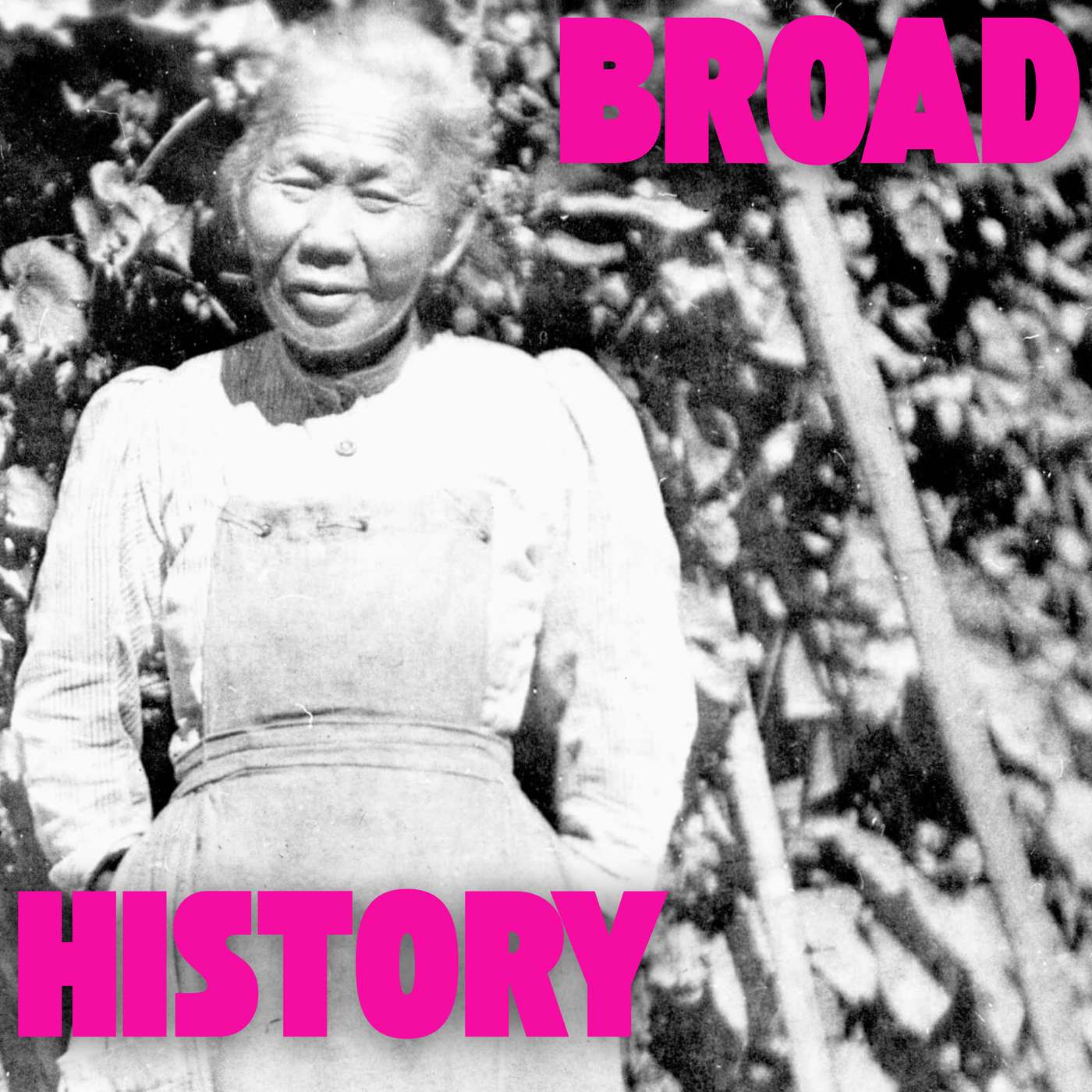
Broad History
The homesteaders trad wives would rather forget about (Megan Kate Nelson, part 2)
00:36:24
Loading summary
Transcript101 lines
- [00:00]
Isabelle Rogol
Hello and welcome to Broad History, a podcast about the history you think you know with women in it. This time I'm your host, Isabelle Rogol. This episode is part two of a two parter conversation with historian of the American West, Megan K. Nelson. So if you missed part one, go back in your feed to episode eight and start there. Without further ado, we're going to jump into the rest of the conversation. Just a quick reminder that if you want to support this show, you can sign up for membership@broadhistory.com SL membership members have already heard the second part of this conversation because members get early and ad free access to every episode and can binge any multi part series on day one. This show is entirely researched, produced, edited and hosted by me and it can only happen with your support. I am so grateful to people who've already signed up for a membership. Again, it's@broadhistory.com membership and there is a big series coming up this summer that you're going to want to be a member for because you will get to binge it on whatever road trip you're planning to be in on. We're going to jump right into the second part of the conversation with Megan Kate Nelson as we get past the American Civil War and into the later half of the 19th century. Sorry, it's a bit abrupt. I did not originally plan to cut this conversation in two, but here we are. This is my conversation with Megan Kate Nelson.
- [01:19]
The thing that I think is maddening when you look at the Civil War is that it feels like it should be a victory for a freer, more liberal, more progressive America because after all, it is the defeat of slavery. And yet everything that comes after feels more segregationist, more racist, more of all the things that we don't like about American history. And so one of the characters her life really travels through that is Polly, who is a Chinese woman. She was trafficked from. Well, sold by her family, which was somewhat common apparently to, to deal with extreme poverty and trafficked to from Southern
- [02:08]
Narrator/Producer
China with a Guangzhou, Hong Kong area
- [02:11]
Isabelle Rogol
to California and then on. Do you want to take it from there?
- [02:17]
Megan K. Nelson
Yes. Yes. So when she was sold. Yeah. And this was something that I had not known that this was a rather common pract in 19th century China for very poor families to sell their girl children to traders. And these girls had a number, there were a number of options. They would either be sold as domestics, sometimes as prostitutes, sometimes as second wives to powerful people.
- [02:44]
Isabelle Rogol
And we should emphasize slavery is abolished by now in America when this is happening to her. So there is. There are still women being sold and traded after abolition.
- [02:57]
Megan K. Nelson
Yes, exactly. There are indigenous women being sold and then also Asian women, particularly Chinese women. And the path that she followed from Hong Kong to Idaho actually was a pretty well traveled route, because Chinese men had followed that route in the 1840s to work in the gold mines of California. And then a little bit later in the 1860s to help to build the Central Pacific Railroad, which is the western half of the transcontinental railroad, which was completed in 1869. And after that was completed, and after that work was done, a lot of these Chinese men migrated then to other towns in the American West. And so we see these rather significant large Chinatowns in all kinds of towns throughout the American west and in the Rocky Mountains. And we also see mining towns that are majority Chinese at this point, which is where Polybemus ends up. She ends up in a little town called Warren, Idaho, which is a gold mining town. Gold had been discovered there in 1870. She arrives in 1872, and by that time the town is 80% Chinese, which, again, this is something we don't think about when we. Any depiction of the mining west is almost always white miners. Most of the history is later in the period with fights against capitalist mining companies, things like that. But this is a very early period of what they called placer mining, which did not take a lot of money or capital to engage in. You were kind of basically scraping gold from rivers and mountainsides. And so you didn't have to have heavy equipment, you didn't have to have a lot of capital. So this is what attracted a lot of poor people across the world, really, to California and then to the Rocky Mountains during this period. And so this is where she ends up. But she is one of the few
- [05:02]
Isabelle Rogol
women, five women in town.
- [05:04]
Megan K. Nelson
This is crazy.
- [05:05]
Isabelle Rogol
I don't know how many men, but like hundreds and five women.
- [05:08]
Megan K. Nelson
Yeah, hundreds and five women.
- [05:11]
Isabelle Rogol
And most of them, I think one is American born and the rest one is indigenous, one is US east coast born, and the other three are immigrants. Which is quite representative, right, of what America looks like.
- [05:23]
Megan K. Nelson
Yes, absolutely. And we don't know much about her life between the moment she arrives and 1880, which is when we first see her in a census. So again, thank God for court records, bureaucrats. Thank God for census takers. Exactly. Because we then know that at this point she's living in the household of a man named Charlie Bemis, who is white, and she is helping to run his saloon and his boarding house. And it's unclear what their relationship is. But a little bit later, people are referring to them as Mr. And Mrs. Bemis, even though they don't. They are not married quite yet. They don't get married until the 1890s. But she becomes a fixture in the town as a boarding house manager. She is meeting and taking care of miners who are moving in and out of the region at a pretty fast rate. So she becomes someone that everyone, pretty much everyone, meets on their way into town or out of town. And she and Charlie just kind of build these businesses together and ultimately buy land a little bit further way to the south on the Salmon river and move there ultimately, and live a life as kind of farmers, really, subsistence farmers, make friends with the sheep farmers across the river who begin to take care of them. They trade goods. The guys across the river will go and get supplies for them as they're getting older. And she's really. I mean, her. Her journey was obviously the longest because she traveled the farthest across the Pacific Ocean. It's easy to think of her maybe kind of standing still because she didn't really leave until later in her life. She stayed in Warren 30 years in
- [07:14]
Isabelle Rogol
one town before, you know, making a trip to the dentist at one point. You know.
- [07:17]
Megan K. Nelson
That's right. That's right. That's right. That's crazy to think about, but I know it is. And. But one of the contentions I make in the book is that even when people stop moving, like she and Hertridice Barcelo is the same way. She lives in Santa Fe for more than 15 years, building her empire, and she doesn't really leave. She makes some trips down to Mexico, but she doesn't leave all that much. But what both she and Poly Bemis have in common is that they are still kind of benefiting from and engaged in a network of, again, trade and kinship, people moving back and forth. And the Bemis ranch was not only on a trail between gold mines, but it was on the Salmon river, which was increasingly filled with boat traffic. And they lived at a curve in the river. And that river, I have seen it, it is big and it is fast. And it had carved out by the Bemis ranch this kind of rocky beach where you can put in and stay. And so people stayed with them. They would come in and they would spend the night, and they would meet her and they would meet Charlie. And so they were not recluses. They knew exactly what was happening. The farmers across the way had a radio, ultimately, and they listened to the news. They knew what was happening. So they were connected. They were connected to a wider world, even though they lived in this very remote place.
- [08:47]
Isabelle Rogol
That's what I love about her story. Why I think her story is the more charming and the less violent part of the book. There is such a strong sense of community, of a diverse community. Her friends are German immigrants and white Americans and the help that they get as they get older from their younger neighbors. It's not an individualistic, every man out for themselves kind of world. It's very different.
- [09:13]
Megan K. Nelson
Yes, exactly. And she, again, she's one of these people who becomes famous later in her life. So she has that in common with Sacagawea. Also a journalist comes down on a boat and meets her and writes a little squib about her for the magazine Filled and Stream, which is a very popular kind of outdoor magazine at the time, and is totally shocked to find this older Chinese woman living in the middle of Idaho. And the reason that she is shocked is because Chinese people have been erased by that point, which is the 1920s, from all of Western history.
- [09:50]
Isabelle Rogol
Yeah. And we forget just how aggressive the immigration policy was against the Chinese.
- [10:00]
Megan K. Nelson
Right.
- [10:00]
Isabelle Rogol
I mean, it's the Chinese community. And again, I think that's something we quite forget when we look at American history. Was the first one that was really, really targeted aggressively by anti immigration laws? Well, we're actually brought in on purpose when we needed them to do the work to build the railroads, and then
- [10:18]
we're really pushed out.
- [10:20]
Megan K. Nelson
Yes. And this is unfortunately a common practice in US History. It is a horrible tradition to welcome people and to celebrate immigration and then to turn back around and deport people or surveil them until you can find a reason to deport them. One of the reasons we have the first image, photographic image of Paul, is that she has to have her photograph taken for a certificate that allows her to reside in the United States. She arrived so early that she was not automatically deported, but she was required to fill out the certificate and she didn't have it with her at all times, then she could be deported. And this was part of those series of immigration acts, the Page act first, and then the Chinese Exclusion act and then its kind of renewal and the passage of the Geary act, which basically said that all Asian people in the United States would be surveilled and kept track of and no one could come in and if you did not have your papers, you would be forced out. So, yes, and they were very much targeted. They were the first ones targeted in these really aggressive, anti immigration Pushes and pieces of legislation.
- [11:40]
Isabelle Rogol
Yeah. And she travels the longest too in time. Right. Because she lives to be quite old and it's fascinating to see the evolution of the United States of technology. I mean, she starts out very much in a frontier world and she lives to see skyscrapers and planes and radios and she lives to see women's suffrage. But she is never considered an American citizen. So she can't vote.
- [12:04]
Megan K. Nelson
Yes, and Sacagawea would not have been able to vote either, ironically, because Native Americans were not considered citizens either.
- [12:13]
Isabelle Rogol
And it's something that you don't spell it out, but you don't need to because it's everywhere in the book is how much that myth of the self made man in the west really is a myth. Because every. The success of white people in the west and the white men especially really is engineered by public policy, by law, by. By big government essentially that pushes everyone else out of the way and gives a lot of handouts right through the Homestead Act. Give you land, subsidize the railroads, help you if you're a white man every step of the way.
- [12:51]
Megan K. Nelson
Oh yeah, and use the power of the US army to make war upon indigenous peoples and force them to surrender and then move them to reservations so that you can then take their land and take it up for yourself. So yes, that at every stage the either state or territorial or federal government was helping white men to get this done. And yet there's this idea across the West, a very anti federal government stance, which is ironic and ridiculous because the west gets lots of handouts and lots of help from the federal government in all kinds of ways. And their control, kind of white control of the west was made possible, as you're saying, by federal policy.
- [13:43]
Isabelle Rogol
And one woman shows us that. And that's going to be our last one. I realize we've been talking for almost an hour. I might take up a bit more of your time if you can, because she is actually my favorite. I don't want to. I love them all, but I really like Ella Watson because essentially what she builds sounds like the dream to me. And she's also the most like the pioneer woman of our imagination. She's the most like, you know, Laura Ingalls Wilder in the Little House in the Prairie. And she just subverts the whole story as well. So Ella Watson is the daughter of homesteaders and a homesteader herself. She is an immigrant, but the kind that, that the United States is okay with because she's Canadian and white and she escapes a violent husband and moves west and becomes a. Or tries to become a so called cattle queen. And I want you to explain what a cattle queen is, because I did not know about them, but I love them now.
- [14:43]
Megan K. Nelson
Yes, I know. Aren't they the best?
- [14:46]
Isabelle Rogol
Yeah.
- [14:46]
Megan K. Nelson
So this is. I knew I wanted to talk about the cattle industry in the west in this period in the 1880s and 90s, because this is hugely important element of American Western history. And she was such an interesting vantage point on that, because initially she, even as a teenager, was widely known as a very good cook. And so she could always get a job, right? This was a skill. You could always get a job in someone's house or in a hotel, an inn. And so this is how she made her money and stockpiled her money is that she worked first in Kansas and then when she left her husband and filed for divorce, by the way, in Nebraska. So she moved across the state lines to do it, worked there at a hotel, and then moved west to Rawlins, Wyoming. And she worked for a couple of years in a hotel there as a cook and a housekeeper. And she was just kind of saving her money up for future plans. And she met a man named Jim Averill who had already claimed land a bit further north in the Sweetwater Valley. And he had this idea. He was like, I want to build a boarding house for travelers. And maybe you could come and cook and you could keep all the money from that, and you could feed travelers, and then maybe you could get some land as well. And this is where the dream began. They figured out they actually did file for a marriage license, but they never got married because only single women could file claims under the Homestead Act. They, you know, were like, okay, later maybe they could get married. And. But for now, they were going to take advantage of this. And so she filed a claim on land adjacent to his that would have access to water, this waterway called Horse Creek. And they started to make their plans. She hired someone to build her a cabin. She started buying things, you know, using all that money that she had saved. And they started going and she started looking at cattle herd. She bought some. And this whole idea that women could be ranchers, that they could run a ranch themselves was. I mean, in reality, it was an old idea. There were lots of women who ran cattle ranches, particularly in Spanish Mexico. And then also there were indigenous women who had huge herds of sheep. And then there were women already in Colorado who were running cattle ranches. And there was a fascination with them. Sort of like there was with Barcelo, that here were these Business women, and that they were doing something that was unusual. And so they were called cattle queens. And some were married, some were widows, and some were single women. And they built up ranches, sold cattle in order to buy more land, then bought more cattle and more land and sort of built these big ranches. And so this was happening really from Texas to Montana. This was ultimately her dream. And Ella Watson did, in fact, buy her first small herd of cattle in 1888 and started and applied for a brand, which is something you needed to do, which signaled your intent to become a rancher so that you could brand your cattle and they would be known as yours. And so if someone stole them, you could identify them. But it was at this point that she came to the attention of many of the cattle barons in the neighborhood, particularly this really evil guy named Bothwell. And. And he offered to buy her land multiple times and she refused over the next year. And he was part of the Wyoming Stalkers association, which was an organization that was gaining kind of mob like power in Wyoming during this period.
- [18:46]
Isabelle Rogol
Made me think of the Yellowstone show quite a bit. If people watch that. Oh, yes, very. You know, it starts, it looks pretty, but it's really a mafia.
- [18:56]
Megan K. Nelson
Yes, exactly, exactly. And they kill with impunity and they take people's stuff. They're never punished for anything. Right. And this is, in fact, what happened with Ella Watson. They came to her ranch on a day, a morning she was away, and she returned to find them cutting the fence of her corral to take her. If she wasn't going to sell them her land, then they were going to take her cattle, which she had not yet branded, I think, because she had not. She didn't have the official brand. Or maybe she had branded them already.
- [19:28]
Isabelle Rogol
Maybe she had branded them.
- [19:29]
Megan K. Nelson
She had branded them already. I seem to recall. I read it this morning. Yes, yes. Okay. So fresh in your mind.
- [19:35]
Isabelle Rogol
It's been a while since you wrote
- [19:36]
Megan K. Nelson
it, but I read it this morning. Perfect. Okay, excellent. Fact check in the moment. Yeah. So she had branded them, but they were going to take them anyway. And she didn't have a weapon, but she had ran at them and started yelling at them like, you can't take. What are you doing? You're like stealing my cattle. Which was, in fact a crime punishable by death in Wyoming. This was so serious. And they had weapons, and so they pointed shotguns at her and forced her into a carriage and they were taking her away when Jim Avril rode up, they forced him into the carriage also, and then they took Them both to an area a pretty far distance away. And they hung both of them from a tree limb and then returned to their ranches and began to spread a story that Ella Watson and Jim Averill were cattle thieves. That she was a prostitute who went by the name Cattle Kate, which was not true. Cattle Kate was a completely different person who lived in another part of Wyoming, but that she, those cattle that they, you know, they had either stolen them or she had traded sex for them. And that Jim Averill was her willing henchman. And therefore these cattle barons had decided to take the law into their own hands and punish the two of them by lynching, which was an acceptable practice for cattle thieves in Wyoming at the time.
- [21:07]
Isabelle Rogol
They're never. The murderers are never really. I mean, there's a little bit of investigation, but they're never.
- [21:13]
Megan K. Nelson
Right.
- [21:14]
Isabelle Rogol
They're never jailed or anything.
- [21:15]
Megan K. Nelson
Right. They are arrested, but they pay one another's bail, which was $5,000, which was a lot, a lot of money. That was a lot of money at the time. So they paid one another's bail, they got out. And ultimately the grand jury was not able to indict them because the witnesses had disappeared, people had gone by the wayside, and yeah, they got off scot free for these killings. And so Ella Watson, though, has continued to be talked about and written about as Cattle Kate.
- [21:46]
Isabelle Rogol
It's so frustrating because not only they kill her, when really she just didn't want to sell her land deal, but also her reputation is maligned for decades. I loved hearing about her. And then I was just so frustrated that she's tried to build something for herself that is taken away. And poor Jim, I have to say, because I knew something bad was coming down the, down the pipeline. And I knew that her first husband was horrible. And by the end of the book, I'm a bit weary of the men out there.
- [22:16]
Narrator/Producer
I thought Jim was gonna turn and. No, Jim is a wonderful husband.
- [22:20]
Isabelle Rogol
Jim is a wonderful guy. And unfortunately, he's killed as well.
- [22:23]
Megan K. Nelson
Yeah, he is. Yeah. And I have to say, my. So my father, I had sent him the advance review copy. He was reading it and he called me. When it became clear that Ella Watson, something bad was gonna happen to her. He called me and was like, what are you gonna do to her? What is gonna. And I was like, it's not a novel. It's not me. I didn't do it. And then when he got to the part, you know, the terrible death scene, my mother texted me and said, you, father has just finished that chapter. And you have broken his heart.
- [23:00]
Isabelle Rogol
I'm with your dad. My heart was beating, too.
- [23:02]
Megan K. Nelson
I know, I know. It's a horrible story. And it's especially a horrible story because I think, as we were talking about earlier, she exemplifies everything that is the pioneer ideal. Right. She makes her way. She does strike out. This is something that all of the Westerners in the book share, too. They have a kind of high tolerance for risk. They do leave. They do kind of set out, either with family or sometimes by themselves, and they are helped along the way. I mean, Ella Watson does take advantage of the Homestead act, and Rollins is on the transcontinental railroad, so she's able to make money because of all of that infrastructure. But she goes and she has this vision and she saves and she takes advantage of a land law and starts to build a life and to build this ranch for herself and does everything the right way. She doesn't do anything illegal, and she's punished for it.
- [24:04]
Isabelle Rogol
Yeah, it is. It is a reminder of the violence that is inherent as well to. To the frontier. It's not all little girls running through the wildflowers in the prairie.
- [24:17]
Megan K. Nelson
That's right. That's right.
- [24:19]
Narrator/Producer
Which.
- [24:19]
Isabelle Rogol
Which would have to be a whole other episode. But the life, even of these typical
- [24:24]
pioneer families was extremely difficult and violent and deadly.
- [24:28]
Not a lot of those little girls survived. I did want to ask you. We've gone through the whole. The whole century, the whole 19th century. Why does telling these stories matter today?
- [24:40]
What.
- [24:41]
What pushed you to write this?
- [24:43]
Megan K. Nelson
Yeah, one of the things was, I was just interested in how we develop and claim regional identities. You know, who. Who is allowed to say that they're Westerners and who feels like that identity can belong to them? Right.
- [24:57]
Isabelle Rogol
Because you are a Westerner, I should say. You're from Colorado.
- [25:01]
Megan K. Nelson
Yes, yes, I'm from Colorado. But I was asking people along the way, and one of my friends who is biracial and has lived her entire life in the west, did say, I don't think of myself as a Westerner because I never thought that that identity belonged to me. And that was a pivotal moment where I was like, okay, that is interesting and also worth investigating. But I did. I started this book during the Biden administration, and I finished it during the second Trump administration. And already in Trump 2, we were starting to get lots of frontier imagery. His inaugural and then also earlier, his RNC speech was trading in a lot of frontier imagery of the pioneer and the rancher and picking up and taking off and moving west from the East. And all of that kind of the frontier myth, the pioneer myth, was coming through in politics. And then we started to see these deportation actions. We started to see ICE recruitment posters that were using Western imagery. And I just kind of had this moment where I said, you know, here we are again. This is how powerful the frontier myth is. It has always been used as a way to marginalize and erase people from a national story. And the reason people do that is that national narratives are really important. They create a sense of belonging. And when you erase people from them, it makes it much easier to take their land, to take their dignity, and to take their civil rights away. If you think of them as an American, if you think of them as anti American, as kind of standing in the way of this white American vision of the pioneer. And those images have gotten even stronger, both in politics and then also in American culture. I mean, what is the trad wife? I was gonna ask.
- [27:10]
Isabelle Rogol
I wanna talk about the tradwife, because it's such a homestead imagery, right?
- [27:15]
Megan K. Nelson
Yes, it is. And many, I mean, not all tradwives are in the American west, but probably the most famous one, ballerina farm, Hannah Neeleman, is in Utah and has a ranch, has a dairy farm. And the imagery there is all a woman in a floaty white dress and cowboy boots taking care of the ranch and her husband and her eight children. And it is a vision of the Western woman as solely the wife and mother. She doesn't need rights, she doesn't need the vote, because here she is living this beautiful life on the Front Range. And this has become a major image within the kind of far right conservative movement in the United States. And we see it as part and parcel of attempts to take women's rights away in terms of abortion rights, in terms of divorce rights. And this push among far right conservatives that women, you know, they don't need to go to college, they don't need the 19th amendment, they don't need to vote. They just need to stay home and have babies. And they are using the pioneer woman, the kind of classic image of the pioneer woman, to bolster that policy.
- [28:36]
Isabelle Rogol
This is something where the show is not very old, it's only a couple months old. But it's a theme that keeps coming back to the various conversations that I'm having, which is that this idea that, you know, by re unearthing women's history, rediscovering women's history or discovering it, period, and complicating it and nuancing gives us movement. I think there is this Idea that women. It's always been that way. There's the idea that women's lives are very static. Right. With the wives and the mothers, and it's a very domestic life. And there is, I think, a particular political project that is very invested in the idea of. Things have always been that way for women in particular. And every time that you complicate that story, it messes with her plans.
- [29:29]
Megan K. Nelson
Yes. Yeah. In the way that Ella Watson was messing with the cattle barons plan.
- [29:35]
Isabelle Rogol
And she paid for it, unfortunately. Hopefully, that's not. That's not the fate.
- [29:40]
Megan K. Nelson
I know. For the rest of us, we are paying for it. Women in the United States are paying for it already, even if they don't feel it like personally themselves. The backtracking on rights has been a shocking development, but it's very real.
- [29:57]
Isabelle Rogol
Yeah, absolutely.
- [29:58]
I went to university in Missouri. I was a Missouri woman a little bit less than 20 years ago. It was always a conservative state, but it's a very different place now. I don't think it would be a safe place for me now in the way that it was 20 years ago. For one thing, you can't get an abortion in the state anymore.
- [30:15]
Megan K. Nelson
Yeah. Anywhere across state lines.
- [30:18]
Isabelle Rogol
Yeah.
- [30:18]
Megan K. Nelson
You know?
- [30:18]
Isabelle Rogol
Yeah.
- [30:19]
Megan K. Nelson
So quite dramatically. Yeah.
- [30:22]
Isabelle Rogol
Well, on that note, I think. I think we're gonna end our conversation, but I want to ask you my traditional, newly traditional final question, which is,
- [30:31]
what is a moment in history that
- [30:33]
you think we should look at, again, from the perspective of women? And optionally, is there someone you would recommend that we have on the show
- [30:40]
to talk about that?
- [30:42]
Megan K. Nelson
This may just be. Because this is my next project, so I'm kind of. Oh, so I'll have you back. Well, no, I mean, it could be me or it could be there are women doing this work. My next book is telling the story of a Kiowa and Comanche raid on a biracial ranching community in North Texas during the American Civil War. And so I'm trying, because one of the major figures who's taken as a captive in that raid is this woman, Eliza Fitzpatrick Patrick, who is a cattle queen. Oh, yes. And she has a ranch. And I still have to figure out. I've got some tax records, so I know her property level. She was not a, you know, huge ranch owner, but she was a ranch owner. And in trying to do research on her, it has struck me just how little we know about women in this particular context. That has become so important to imagining Texas in the west is the kind of the cowboy has taken over as this icon and so we don't know anything really about women who were, in fact, ranchers or who ran cattle, who took them up the Chisholm Trail in the very famous Lonesome Dove type of situation. But we don't know anything about them like the study of women and especially black women, because Eliza Fitzpatrick, it's unclear her racial status, but her first husband was black and her children are biracial.
- [32:19]
Isabelle Rogol
Okay. So that would have been pretty rare and dangerous for a white woman to
- [32:23]
Megan K. Nelson
marry a black man.
- [32:24]
Isabelle Rogol
Right?
- [32:25]
Megan K. Nelson
Yes. And so. Yes. And so would like to know. And again, I think we need to know more about black women and indigenous women, also Mexican women in this context, in this particular job, because it has become so mythic and iconic.
- [32:44]
Isabelle Rogol
Yeah. Because I remember reading about black cowboys a bit. Again, quite recent scholarship, but I haven't read about women cowboys.
- [32:54]
Megan K. Nelson
Yes.
- [32:54]
Isabelle Rogol
Cowgirls.
- [32:55]
Megan K. Nelson
Yes. And especially black women. I mean, it was just 2024 when Beyonce put out Cowboy Carter. Mm. And people were mad. So mad. And part of it is that she is black. Part of it is that she's a woman. And the dominant image is her sitting on that horse with an American flag, a white horse with an American flag in her kind of cowboy gear.
- [33:22]
Isabelle Rogol
She knows what she's doing.
- [33:24]
Megan K. Nelson
She does know what she's doing. And she's evoking this very real history of black cowboys in Texas. But again, yeah, we don't know anything about black cowgirls in Texas.
- [33:35]
Isabelle Rogol
Well, find out and come back and tell us, because that's the joy of doing women's history. Right. We get to uncover things that we don't know about yet. And rather than revisit the 12th biography of Lincoln or Washington, I mean, no offense, they're fascinating. But, like, let's. Let's mix it up.
- [33:56]
Megan K. Nelson
Yes, yes. Let's think about something new.
- [33:59]
Isabelle Rogol
Thank you so much for this conversation, Megan. It was fascinating. Well past the 45 minutes they usually are. But that's the sign. That's the sign of a great episode. We might make it a two parter.
- [34:09]
Megan K. Nelson
Well, I may have to come back because, you know, they are rebooting Little House on the Prairie.
- [34:15]
Isabelle Rogol
Are they?
- [34:16]
Megan K. Nelson
They are. So we might have to watch and then reconvene.
- [34:22]
Isabelle Rogol
Okay, you're on. That sounds great. That sounds great. Thank you so much.
- [34:28]
Megan K. Nelson
Thank you, Isabelle. This was wonderful.
- [34:31]
Narrator/Producer
This was Megan Kate Nelson. Her book is called the Myth Making and Belonging on the American Frontier. It is available, as always, in the Broad History Bookshop, both in the US and the uk that is another way that you can support the show and get yourself a great book. I really recommend reading it. Not only have we barely scratched the surface of these four women's lives in the last two episodes, but there are also three men in the book who are are just as interesting. We have Jim Beckwourth who was a biracial fur trader who also lived among indigenous population and just had an incredible life. There is Ovendo Hollister who was a gold miner, a soldier and a newspaperman. You know, I love that part of the story. And he was a Quaker as well.
- [35:17]
Isabelle Rogol
And we have Little Wolf, Northern Cheyenne chief who led his people to, you know, a semblance of security and a future in the dwindling space that was left to indigenous people in the American West. I also really recommend the book because it reads like a novel. Meghan is a superb writer and I could not put it down.
- [35:36]
We're going to stay in the United States.
- [35:38]
I am preparing a series on the American Revolution, the Women in the American Revolution for the semi Quincentennial this summer.
- [35:46]
I've mentioned it a few times, so
- [35:48]
we're going to take a few weeks off in the feed to leave me space to prepare this sort of multi episode documentary series which I'm really excited to be able to deliver but takes quite a bit of work. If you would like to support this work and help me buy more time to do it, you can sign up for membership@broadhistory.com membership and all members will get binge access to the series when
- [36:14]
it comes out this summer.
- [36:15]
Until then, this has been broad history. A One Lane Bridge production, researched, produced, edited and hosted by me, Isabelle Rogol. I'll talk to you soon.