Loading summary
Transcript491 lines
- [00:22]
Matt Koplick
Ladies and gentlemen, the Apollo Theater continues.
- [00:25]
Jason Vesey
Our legendary talent contest with the delicious, the delectable, the defiant dreamer. Move, move, move right out of my.
- [00:35]
Matt Koplick
Life Move, move, move right out of my life hello, all you theater lovers, both out and proud and on the DL. And welcome back to Broadway Breakdown, a podcast discussing the history un legacy of American theater's most exclusive address, Broadway. This series is called Matt's Picks, and it's covering shows that you submitted that I didn't pick out of a bowl for grab bag, but I wanted to cover anyway. I. I am your host, Matt Goplik, the least famous and most opinionated of all the Broadway podcast hosts. And with me today is a new friend of the pod. You might have seen him on Broadway in a strange loop, on TV in Only Murders in the Building. And you'll be seeing him on TV again with the show Best Medicine. Please welcome, for the very first time, Jason Vesey. Hi, Jason.
- [01:19]
Jason Vesey
I'm so happy to be here.
- [01:21]
Matt Koplick
I'm so happy to have you. Anyone who listens to this podcast knows how much I adore A Strange Loop. I've talked about it so much, and so I am very, very happy to have you today.
- [01:33]
Jason Vesey
Happy to be here.
- [01:34]
Matt Koplick
Yes. You. You were one of the many thoughts of that show. You played one of the many problematic white men in that show. And that's what we call versatility. That subway scene, baby, it lives in my butt. It lives in my butt.
- [01:45]
Jason Vesey
Thank you.
- [01:45]
Matt Koplick
But, Jason, what are we talking about today if not a strange loop and doggy style? Crack smoking.
- [01:50]
Jason Vesey
Correct. Correct. We are here to talk about such an amazing, important piece of theater, which is Dream Girls.
- [01:58]
Matt Koplick
Yes, it is.
- [01:59]
Jason Vesey
That's what you promised me.
- [02:00]
Matt Koplick
Yes, I did promise you Dreamgirls, and indeed Dream Girls. We shall be talking. Imagine if I did a bait and switch on you and I was like, so we're talking about Rags, right? No, no, we are talking about Dreamgirls. And I. God, I adore this show so much. Say one second. Why is your thing not.
- [02:17]
Jason Vesey
What happened?
- [02:18]
Matt Koplick
No, nothing. Oh, no, you weren't talking, so your bar wasn't turning green for a second. That's what I realized would happen. You know, it's so surprising that when you don't talk, your volume levels don't show. Who'd have thunk? Science. Yeah. Guys, it's gonna be a little rough on my end. I have not done a deep dive in about five months, so. Has it been that long since I recorded a deep dive? Yeah, because I was doing Tony Awards for, like, two and a Half months. And then went my hiatus.
- [02:49]
Jason Vesey
That's the devil's word. The same with the Lord.
- [02:52]
Matt Koplick
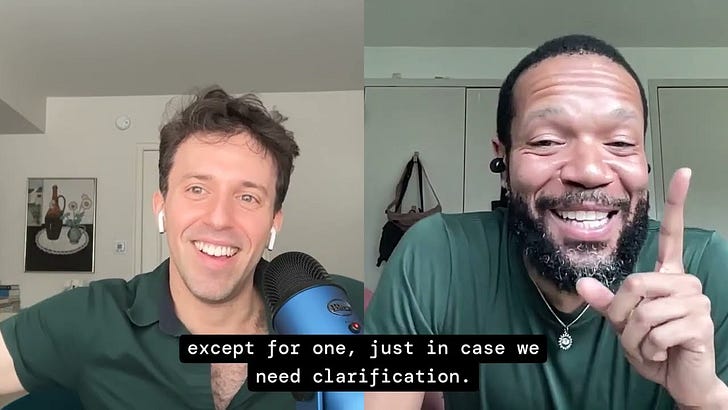
Yeah, I love it and I hate it and I hate to love it and I love to hate it. It's. There's. Yeah, it's a double edged sword for sure. But I have no double edged sword feelings about Dreamgirls. Let it. Let me begin by giving the listeners a brief rundown on Dream Girls. I usually ask the guests to inform the uncultured fucks what Dream Girls is about, but I have decided to do the homework myself. Yeah. Since you are the guest after all. Now I went. My producer sent me a synopsis that I think Concord Theatricals wrote up and it was very incorrect. So I was like, I'm gonna write a very, very brief one and just. Yes. And I'm still not even covering everything. Okay, so it's 1960s America. We follow a group of friends, Effie, Dina and Laurel, who make up the singing trio the Dreamettes. Their big break comes at the Apollo talent competition where they don't win, sadly, but they do meet Curtis Taylor Jr. A former Cadillac dealer trying to become a manager and producer in the music industry. He gets them a gig singing backup for R B superstar James Thunder. Early Curtis Stre undermines Jimmy's act, so he appeals more to white audiences as well as the Dreamettes, who are now going solo as the Dream. Effy's brother Cece writes songs for everyone. Effy is replaced as lead singer by the more conventionally attractive, though vocally inferior Dina. As the dreams get bigger, Effie causes more problems, missing rehearsals, causing scenes backstage at performances shouting at Dina. Because Curtis went from hooking up with Effie to Dina, everyone does the only thing that makes dramatic sense to the story, which is to fire Effie. We then flash forward a few years and the dreams are huge. Laurel has been having a years long affair with the married Jimmy. Sam and Cece is with Effie's replacement, Michelle. Drama. Curtis and Dina are married and nobody is happy. Laurel breaks up with Jimmy because Jimmy has a breakdown on stage. Curtis cuts him off. The Democratic National Convention. I forgot about that. Jesus Christ. Effie is staging a comeback with the help of Jimmy's old manager Marty. Cece and Effie make up. She records Cece's song One Night Only. But Curtis is insistent on inventing disco and releases the Dreams upbeat version of the song and pays to kill Effie. Single. Cece and Effie are like, nope, that will not do. And they corner Curtis with evidence of his payola schemes. Curtis Bends, the dreams break up. Dina and Effie become friends again. Dean is going to go off and become a movie star. And we learn that Effie had a baby that is 100% Curtis's, though Curtis never learns about this baby. The final scene is the dream to have their final concert and bring Effie on stage. And they all sing the title song one last time in four part harmony. End of show. Did I cover all the basics, Jason, except for one.
- [05:18]
Jason Vesey
Just in case you need clarification, these people are black.
- [05:24]
Matt Koplick
So Jason, I don't see race. I only see talent. And there are some videos on YouTube from high school productions past that would challenge that accusation. You just said to me you have not lived unless you've seen that white girl from Florida play fe white. Am I right?
- [05:44]
Jason Vesey
It's Topio.
- [05:45]
Matt Koplick
Mm. Tell down the mountain yell, scream and shout. So Jason, what is your relationship to Dreamgirls? How did it enter your chat?
- [05:54]
Jason Vesey
My relationship to Dreamgirls was a relationship that I don't think I realized I had before college, but I did. I always knew what Dreamgirls was. The fact that I remember seeing knowing that it was a hit. I remember maybe not knowing was the musical, but I knew it wasn't a ticket TV show or a movie because I saw them on the covers of like Jet magazine and time around the time when it was coming out. I remember the song and I'm telling you because it actually played on the radio and I remember seeing her perform it a lot. I knew who Jennifer, Jennifer Holiday was and I knew who that she sang that song and I knew what Dreamgirls was, but I don't remember seeing any images of it in motion or knowing that it was based semi off of the Supremes or the Motown era. I didn't know any of that. And then I got to college and remember seeing the score in our music library. And I had a professor recipes herald on one of our lab days. He would take us to our music library, would blindfold us, pick a score and whatever score we would have to be, you have to get the corresponding cast recording and go listen to it for the lab. And so I picked Dream Girl randomly and it was my first time listening to it. And that's when we were being like, oh, oh, oh, oh. These songs are from this. I remember that I knew one night only. But that's when I realized, oh, this is this show that has must have been so big because it was in the lexicon of black culture. You know, I heard it at my grandma's house. And this is not. These aren't families. And that just went to Broadway, you know. But they knew dream girls. Black people knew dream girls. So it wasn't until I listened to it, number one, realizing it was all self and that the first recording didn't have all of that, realizing how impactful the show was, but also how impactful that performance was. It was. And that began my journey of just dissecting everything. I remember feeling a little. I remember feeling duped that none of my professors or teachers or theater teacher people that I had been around since I was like ten had ever said, you know, dream girls. I mean, they did that with once in the Thailand. I had a lot of teachers in my life give me material that focused on, you know, black people. No one ever told me about Dreamgirls. I remember being pissed. I remember it being also the first time I was kind of like, wow, there was. There are great roles for men and women. And it just kind of became this kind of like north star for me for a while only because it was the only black musical that I could think of that actually ended up reaching beyond the theater space and into specifically black culture. Whether they saw the musical, I thought that that was really cool and important and special. And then I started learning about the other ways that I think that I think it changed.
- [09:08]
Matt Koplick
Right. I. Dreamgirls is fascinating because I. When did. When did you go to school?
- [09:16]
Jason Vesey
Like what, 98 to 20.
- [09:20]
Matt Koplick
Okay, so nowadays 2002. So the thing with Dreamgirls that. And we'll talk about this more in part two, that I think kept its legacy from really reaching our generation and sort of the generation before us is while it was this very sizable hit on Broadway and had a major cultural impact and the song became big. There was no movie version and. And also there was. YouTube did not start until I think 2004, 2005. And I distinctly remember that when somebody posted the Dreamgirls Tony performance when I was in high school, right. Like, I think it was right before the movie came out and the movie coming out and that Tony performance being readily available online kind of relaunched the show's not relevance because it was always been relevant, but it wasn't as potent as say, the Wiz or A Chorus Line, which had movie versions and are done everywhere all the time. And also because. Because Dream Girls is specifically, you know, about race. Granted, there was 25 years where people would ignore this, but it's not that. This is not a show where you are allowed to just sort of cast interracially, right?
- [10:37]
Jason Vesey
Right.
- [10:37]
Matt Koplick
Despite what people tried. And I will say I'm not totally immune from this because one summer at Everyone Take a Shot, Stagedoor Manor. But my auditions, my audition song one summer was when I first saw you. In my defense, it was the summer before the movie came out. So it was a deep cut for everyone else. No one knew it but me.
- [10:55]
Jason Vesey
And then the movie came out.
- [10:56]
Matt Koplick
And then the movie came out. I was like, never again can I sing this publicly. Because now. Because now everyone knows. Now everyone knows.
- [11:01]
Jason Vesey
You know, actually, I did forget one step in my consciousness of Dream Girls and you brought it up. YouTube. Because I always talk about. I didn't have YouTube. But you know what I did have? I had Rosie o'. Donnell and Rosie o' Donnell talks about dream girls all the time on her show. Had Jennifer Hudson, Jennifer Holiday. That's the main. Pisses me off. I was Jennifer Holliday and I believe Sheryl Lee Ralph. And so she talked about that. And then in her. What I think is the best Tony's presentation of all time, had her opening number with Jennifer Patty, you know, Betty doing that. Yeah, the belting Periato. Yeah, yeah. So, so, so, so, so that. So, Rosie, actually, in terms of my consciousness was also a bridge from my childhood of being like dream girls to like, I know Dream Girls is a musical. To being like now I heard Dream Girls in college and started.
- [12:00]
Matt Koplick
Exactly. And I, I had. I mean, I'm a nerd. Welcome to the pod. I'm very much a nerd. So my childhood, I had all these theater history books with photos of the show and whatnot. But I would read about sort of how magnificent the original staging was and the design was. And when, you know, you're 10 or 11, you think that means, like, oh, it had every, you know, kit and caboodle on stage and everything was, you know, you're thinking like choreography all the time always. And so I remember I would listen to. And I am telling you, and I'm like, oh, my God, like, the set changes for this number must have been absolutely out of this world because all these things like, I'm thinking like, cats level tire rising. And I also remember reading the original Frank Rich review after having devoured the original cast recording and going, what do you mean? There's all this recitative. He said, I'm getting none of that. And so a combination of getting the actors fund concert with Audra and Lillius and Heather, that helped a great deal. Yeah. Cause that was the. To this day, I think that's the only professional recording of the entire score.
- [13:01]
Jason Vesey
I ride hard for that. That recording in more ways than one. I write.
- [13:07]
Matt Koplick
I love that recording. It has things about it that it's not that I go, oh, this is a ding against it so much as you kind of just have to accept it.
- [13:16]
Jason Vesey
Yes.
- [13:17]
Matt Koplick
And we'll talk about this more when we talk about the movie as well. We have Audra as Dina. We have Beyonce as Dina, sensational vocalist, which is not a hot take at all.
- [13:27]
Jason Vesey
No.
- [13:28]
Matt Koplick
And that does take away a little bit from it. And Ms. Sheryl Lee Ralph will let you know. She'll tell anyone who will listen the dangers of casting a vocally over qualified. Dina and Audra and Beyonce both scale back as much as they can. You cannot tone down magnificence, though.
- [13:47]
Jason Vesey
I have. I have. I have strong feelings about this. And we will get into that.
- [13:52]
Matt Koplick
We will. We will discuss. We will discuss. Jason. I also want to make it very clear. I. This is not me telling anyone not to listen. This is me telling everyone to listen. Especially because Audra has some vocal options. She does. That I think are incredible. I love everything. I love every vocal choice she makes for the Act 2 opening. I think, yeah. I've heard other Dinas do it quote, unquote, as written. I go, not as good.
- [14:12]
Jason Vesey
No.
- [14:13]
Matt Koplick
And, And, And a lot of that concert also was re recorded. And there are some. There are some vocals from Heather in the re recording that's not as good as when you watch the bootleg from the Bootleg five. Yeah. Which is just a shame because you watch the bootleg and you go, oh, Heather was on fire. Fire. And then in the re record, I just. Some. Something was off.
- [14:33]
Jason Vesey
And it's not always also too like, when people talk about that recording, they're like, you guys, fuck off. It's about the moment at that time. Those three were the one first. They were the one.
- [14:46]
Matt Koplick
Don't you tell me to fuck off. Okay. I bent over for each one of those women on the daily. They don't know who I am.
- [14:54]
Jason Vesey
And they don't.
- [14:55]
Matt Koplick
They don't know what I do for them every day without them knowing my goddamn name. I love each of them. No, this. But this is sort of where I'm at with divas, which is. Yeah, I love. I. I love them. And we. And we support them. We never tear them down. But we can always acknowledge when there's bumps because they're humans and they're artists.
- [15:12]
Jason Vesey
And also real fans can critique. If, you know, if you. If you know the breadth of the career, you can Be like, oh, okay, okay.
- [15:18]
Matt Koplick
Yeah. No, I don't think that it's harmful to say, like, Heather has a couple of bum notes and ain't no party on the official recording. Does that take away from how good she is as Laurel? No. She's got some fucking line deliveries that are Chefs kiss perfection. Did you hear what I said, Dina?
- [15:32]
Jason Vesey
Yes.
- [15:33]
Matt Koplick
I can do all of them in my sleep.
- [15:35]
Jason Vesey
One of the few. And on top of that, too, with. Speaking of the time situation, the reality is this. If Audra were not there, Heather would have been. Heather would have been Dina. Yeah, because. Because remember, at the time, it was just like, those are the three top black girls. And. And she had just. And Heather had just become one of the Tony winners.
- [15:57]
Matt Koplick
Yeah, yeah.
- [16:00]
Jason Vesey
She was the new girl. The new. The new young thing.
- [16:02]
Matt Koplick
Yes, exactly. It's literally not to whitewash, but it's that clip of Mermin Streisand and Judy Garland on the Judy Garland show together. And Merman points to Streisand. She goes, the new Belta. And it's like Lily is pointing to Heather being like, it's the new girl. It's so great. I love it. And they're wonderful. They got amazing chemistry. It's also. Their acting is phenomenal. They got great comedic timing. The dressing room scene they have before family is the best that scene's ever been. Cause it's just. It's really. Yeah, we're not talking about. But so.
- [16:32]
Jason Vesey
Okay, okay, okay, okay.
- [16:33]
Matt Koplick
So that happening. And then when the Tony performance dropped with Jennifer Hudson, I did it too. Look what you did to me. Look what you made me do with Jennifer Holiday. I remember watching it and being so. Not only just flabbergasted by the magnitude of her performance, but then going, oh, like, there is no choreography. It is just her.
- [16:53]
Jason Vesey
And.
- [16:53]
Matt Koplick
And that was a major learning point for me of understanding great direction and great staging. Great choreography is knowing when to not do it and just let it. Yeah. And that was so. That was very impactful. And then having the big coup de gras be the dressing room table move backwards and. Yeah, and then what's so funny is I'm reading all these reviews at the time of when the show opened because, famously, Dreamgirls was not super well received by critics.
- [17:20]
Jason Vesey
Right.
- [17:21]
Matt Koplick
The only person who liked it was Frank Rich in the New York Times. And the reviews are mostly against Michael Bennett and what he did by saying that critics going, michael Bennett doesn't trust that we will follow a black story. And so he's thrown every gadget on stage to distract us, which I think there's something to be said about that. We'll talk about that more. But that's sort of what they all say. And then when the tour came back, they were like, oh, no, the show is great. And Michael Bennett did a great job. I don't know what we were smoking. And Frank Rich is like, yeah, I don't know what you guys were smoking at the time, but a lot of them complain about the final note of. And I am telling you, being cut off by the dreams. Coming on stage to close out act one, they're like, how dare he do that? Doesn't he know when to end on a button? And they're like, it's. It's storytelling. There's a reason why he's doing it.
- [18:07]
Jason Vesey
Correct, Correct.
- [18:11]
Matt Koplick
It just goes to show you, Jason, that critics have been wrong a lot in the past.
- [18:15]
Jason Vesey
A lot, a lot, a lot. And you know what? And critics can be wrong. That's the thing. It is just opinion. Hopefully it's educated and thought out. You know, critics. And also the time period. There are lots. We can look back at a lot of things, a lot of.
- [18:31]
Matt Koplick
In the best case scenarios, in the most optimistic scenarios, you. You want to believe that people are just trying to do the best with what they know and what they have.
- [18:40]
Jason Vesey
Yes.
- [18:41]
Matt Koplick
That's not always the case, but that's what we want to believe. But before there was Jesse Green, there was Clive Barnes, and believe me, all of Broadway would roll their eyes at him all the day.
- [18:52]
Jason Vesey
All the time.
- [18:53]
Matt Koplick
All the time, all the time. The man who saw Follies is like, well, I'll say this, I liked it better than Company. Yeah. So that is ultimately what my Intro to Drink Girls was. And so when the movie came out, I was the only one in my group because I was. I was friends with a whole bunch of theater kids. I was the only one who really knew that show inside and out because, you know, there weren't productions of it happening around us and there wasn't a movie version. And people knew the Broadway cast recording, but I was one of the few who knew the actress on cast recording. And the movie comes out, and I remember we all sort of flipped out, but my teachers at the time did not love the movie because they all were. They were so beholden to the original, seeing the original. And so it's been an interesting journey I've had with the movie since seeing it the first time and coming to now and we'll talk about her more. But, yeah, yeah, this is all I'M teasing the listeners about that. We'll talk about it more because this is a two parter. And in order for people to stick around for next week's Part two, Jason, I got to let them know that we got shit we're going to get down into for Part two.
- [20:04]
Jason Vesey
There's more shit to come. Yes.
- [20:06]
Matt Koplick
So first of all, how well versed are you in the history of Dreamgirls? When I say Michael Bennett, what does that mean to you?
- [20:14]
Jason Vesey
When I say Michael Bennett, the first thing I think of is the fact that this was his. I think the Green Girls represents the thing that he had to his sophomore effort after the huge juggernaut that was, of course, choreographer, director, person who slapped the fuck out of Sheryl Lee Ralph, which he put us at on Clubhouse during rehearsals. You know, he passed away. Those are the things I think about with the mustache. Those are the things that I think about with Michael Bennett.
- [20:43]
Matt Koplick
Yeah. So Michael Bennett, yes. As Jason said, the big thing with Michael Bennett was he was the conceiver of A Chorus Line. He did not write it. No, it was his idea and he helped shape it. And Michael Bennett was sort of known as the Broadway wunderkind at that time because he got like three or four Tony nominations in a row for choreography, like one right after the other at a very young age. The big blow up for him was Promises, Promises with tricky, lurky time, and then worked on Company and Follies, and then for a lot of the 70s, was known as sort of a secret show doctor. He would kind of come in and come in, and he took shows that were disasters out of town and made them passable on Broadway, which doesn't sound like a fairy tale, but a lot of folks in the community at the time were like, oh, this thing would have closed on opening night. And now we ran for nine months because of Michael Bennett. And so with the Chorus Line, it became. Here's what he can do when he actually has the reins from the get go. And. And then he. Does ballroom.
- [21:39]
Jason Vesey
Does ballroom mean anything to you besides 50% and Dorothy? No, it does not. But I know that it doesn't really mean anything.
- [21:47]
Matt Koplick
Exactly. Dorothy, Loudon. And 50% is correct. You. You represent history right here, right now on this. On this podcast. Jason. Yes, it was a. It was a major flop and a huge mulligan for him. And I think what's tricky with Dreamgirls is it was not Michael Bennett's idea. He did not write any of it. He actually came to it sort of late, late. And yet, you can't really discuss Dreamgirls on Broadway without talking about Michael Bennett. And it's a very. It's not even nuanced. It's just complicated because it's more about a conversation of creativity and, like, what is the job of a director and what is the job of the writer and what is the job of the actor? Like. Yeah, it gets very weird with this one, especially because so much of what makes the show emotionally and musically satisfying is not due to any of the writers or the production. It's the actors. Yeah. Yes.
- [22:50]
Jason Vesey
And the culture.
- [22:52]
Matt Koplick
And the culture. So as we were sort of saying earlier. Actually, no, I think we were talking about this off mic beforehand. So Jason does not have something that I do have, everybody, which is a soundboard of the opening night of Dreamgirls on Broadway in 1981. I will be gifting it to him after this as a payment for putting up with me for these three hours. This is what he gets her being a good little boy. But I was trying to be daddy for five seconds and I couldn't do it. My body revolted.
- [23:22]
Jason Vesey
That's good to try. Go for it. You got what you got.
- [23:28]
Matt Koplick
Oh. He just looked at me and went, oh, you sweet thing. It's not Halloween yet. Why are you trying to play dress up but on the soundboard? You listen to the audio, lose their shit, and you can even actually watch it in the. In the bootleg video of it too. The audience losing their shit for everything. And it's not just because it's so good, but it's because it's 1981, 1982, and the show is. Takes place in the era of Motown, and everyone is post Motown at this point. So they know this music super well. They lived it, they loved it. And the accuracy with which it's being done is just so incredible to everybody. And part of that is, you know, everyone on their production team, similar to the audience lived in that era, worked at this time. So it's not like they are, you know, foreigners to it, but it's their theatrical know how as well as the accuracy of having lived it from the actors during the workshop period that gives it that sort of perfect blend.
- [24:21]
Jason Vesey
I mean. I mean, this is a genre of music that kind of reshaped and reformed and added so much to the fabric of America, which era. You'd be hard pressed to find anyone, regardless of their identity, that wasn't immensely impacted by that sound and those people, those artists. So it being in the whole. It was meant for that. It was written for that they felt an ownership over it. Everyone did.
- [24:45]
Matt Koplick
Yeah. And the music. Well, the score of Dream Girls is interesting because it's not totally Motown. How would you describe the music of this score?
- [24:57]
Jason Vesey
I would describe the music of the score at a lower. Very creative on. Way to get out of any copyright, you know. But it feels like a Motown score through the lens of the late 70s, early 80s, which in turn kind of makes it feel like a memory to me. It's a memory because it's not so accurate because you can hear the. Those More art of modern orchestration almost. Almost rock in there, too. It's like. It's like a rock, Motown R B score in ways sometimes a Motown fever dream, if you will. It feels. It feels very kind of like. Okay, yeah, you know, I think.
- [25:43]
Matt Koplick
I think that's actually a really good point because it's developed in the late 70s, early 80s about an era that was earlier. It sounds less dated than if they were writing it in the actual 60s.
- [25:54]
Jason Vesey
Correct.
- [25:55]
Matt Koplick
It's why Promises, Promises sounds like a time capsule because it's. It's literally, we are writing this for 1968, and Dream Girls is. We're writing from on the past with, you know, new lenses and. Yeah, because it is. It has all those flavors to it, but it also has this, like, Broadwayization to it as well, which a lot of critics have dinged it for. For not being accurate enough. But I think, again, that's sort of what makes it evergreen in the end.
- [26:19]
Jason Vesey
I think if it was actually accurate, I don't know if it would stand the test of time in terms of its popularity. And if it was actually accurate, generations of performers would not be able to sing it the way they're singing it now. And it would not be considered exciting.
- [26:38]
Matt Koplick
We'll talk about all of this and more right after this break. Billy, I beg to dip it with you. How do you mean? You're the top. Yeah, you're an Arrow caller. You're the top. You're a Coolidge dollar. You're the nimble tread of the feet of Fred Astaire. And we're back. So, first of all, Dreamgirls, technically speaking, started as the brainchild for one Tom Ion. Tom Ion wrote and directed the massive Broadway flop Rachel Lilly Rosenblum and Don't yout Ever Forget it, which closed in previews at the Broadhurst Theatre.
- [27:13]
Jason Vesey
And I know the show very well.
- [27:16]
Matt Koplick
Did you do the concert at 54 below?
- [27:18]
Jason Vesey
I did.
- [27:19]
Matt Koplick
Oh, that's amazing. That's amazing. I've never, ever gotten to see Anything from it. I just. I know about that concert.
- [27:26]
Jason Vesey
We'll do a trade. I got. I got files for you.
- [27:29]
Matt Koplick
Yay. But I mean, that show is bonkers. Closed in previews. And actually, I mean, that show is one of the shows that sort of ended up launching A Chorus Line because a lot of the ensemble members of that show were just so burnt out by it and so upset by the process that they wanted to start a dancing company, which turned out to be the group that did the tapes for Michael Bennett for A Chorus Line, yada yada yada. Tom Ion was really more of a downtown guy. He had a show called the Dirtiest show in Town that actually was a relatively sizable hit. And he made a musical out of it with Henry Krieger, which Nell Carter was in. This was right before Ain't Misbehavin. And they wanted to develop a show for Nell, I think as Ain't Misbehavin had opened and she was becoming a successor.
- [28:09]
Jason Vesey
I think it was just before. Before the Tony or like leading up to that.
- [28:13]
Matt Koplick
I believe she did the musical version of the Dirtiest show in Town before Aimless Behavior even did the Off Broadway run. And then they wanted to develop this right after she won her Tony because A Misbehaven opened on Broadway like the second before the Tony Awards happened. They opened on like a Thursday. And two weeks later, the Tonys were happening.
- [28:31]
Jason Vesey
Right.
- [28:31]
Matt Koplick
1978 was a different time. Part of me wishes that we still had like the three week span for Tonys. This would make. It would be chaotic, but it would make life also kind of easier.
- [28:40]
Jason Vesey
So. Bloodbath. A bloodbath.
- [28:43]
Matt Koplick
And you know what I miss blood. It was. I believe at the time it was. It was still called project Number nine. And when it was still Nell, that is when I believe Shirley Ralph and Loretta Devine came on board. They came on board very early.
- [28:57]
Jason Vesey
Yes.
- [28:57]
Matt Koplick
And it was being developed with Joseph Papp at the public. And that kind of ended up going nowhere. And then they ended up having to look for a new home because they were trying to hold off on it for Nell Carter, but Nell Carter, Rabbit. Cause they were like, oh, Nell won the Tony. She's gonna be one of our Robbie leading ladies. And Nell's like, oh, no, I'm gonna go get TV money and give me a break. Correct, Exactly.
- [29:19]
Jason Vesey
Because I know what it takes. Yes.
- [29:21]
Matt Koplick
She was like, I would like my money now, please. Which I think was honestly right decision. But so they sort of. There's like a carousel of Effie's between now and opening Night then of like those three years between Nell leaving and then going to opening night. And there's no one can confirm for me how this show came across Bob Avian's desk. But Bob Avian was Michael Bennett's associate and co creative partner. And Michael Bennett had purchased this giant studio downtown. It's like 890 Broadway, I think is the name of the location.
- [29:55]
Jason Vesey
Yeah, yeah.
- [29:56]
Matt Koplick
Which was. Which he purchased. To make into like a hub of creativity. He wanted people to do workshops there and readings there. He just. He wanted a place for artists to create Broadway shows. And that didn't fully happen, but he was sort of looking more into producing stuff. And they auditioned Project 9 for him as a producer and he sort of liked it. And basically enough. Enough to give them a couple of weeks to go off of. And the running theme was always, you have this one great song, which is then I am telling you, and you've got some good music. This story makes no sense. And so they, like, every six months they would kind of come back and rewrite the story. And then ultimately a couple of things happen. They find Jennifer Holiday, who's doing your Arms are too short to box with God at the same time. And she does. I don't think she does the first reading. She either does the first reading or the second reading or workshop, whichever one it is. And she's great, but she finds it exhausting. She hates Michael Bennett, who didn't. And. And she was like, my part also disappears. I'm not in Act 2 at all. Why would I stick around for this? Why would I?
- [30:58]
Jason Vesey
She's also a child. She's like.
- [31:00]
Matt Koplick
She's 20. 19.
- [31:01]
Jason Vesey
20, something like that. Yeah, yeah.
- [31:03]
Matt Koplick
She's. She's very young. And because she's this enormous talent, she didn't like, come to New York knowing how Broadway works at the theater and shows. She just booked a job because she was good and then booked another job on top of that job and was like, it's kind of unsustainable to do a Broadway show eight times a week and a workshop where I have to kill myself singing, like, one of the biggest Act 1 finales of all time. I should probably drop one. I think I'll keep the one that's giving me a steady paycheck.
- [31:26]
Jason Vesey
She's like, I like, like everything. I don't do ooze and odds.
- [31:29]
Matt Koplick
I don't do ooze and.
- [31:31]
Jason Vesey
What do you mean I die?
- [31:33]
Matt Koplick
No, no, sorry. What do you mean? I'm not in Act 2 at all. Not even as a ghost. No, ma'.
- [31:38]
Jason Vesey
Am. No, no.
- [31:39]
Matt Koplick
She said, not. Not. Not on my wa. Not on my watch. Michaela Bennett. But so they knew that they had to keep Jennifer because they had other Effies after her. Jennifer Lewis went in, and Jennifer Lewis will even say herself. To this day, she's like, I was beneficial as an actress in that role, but I couldn't sing it like Jennifer Holiday. Nobody could.
- [32:01]
Jason Vesey
So I thought, I will say you were talking about you. No one's been able to tell you about how it got to Bob Avian's desk. I had been told once, this also leads up to how Jennifer got there, that before it got to Bob, it. Someone got it to Mark Shane. And I think it was something about. Because, you know, Marc Shaiman's wheelhouse is the music from that time period. Da da da da da da. And Mark, whatever. Mark was kind of like, no. For some reason. I remember someone telling me that Mark is the one that took it to Bob Avion. And also with that was the one who said, hey, here's Jennifer. He can help y' all out. Don't know if that's true, but I've been told that it could be true.
- [32:42]
Matt Koplick
It's. Just because it's not in any of the books doesn't mean it's not true. That's the thing with a show that has such a. I'm not even gonna call it a complicated history. Just like it's a very twisty, turny history, that there's a lot of stuff that falls by the wayside. And so all, like, the biggest, boldest moments of its conception are the things that people remember. So I. It makes sense to me. I'm gonna. For my narrative, I'm gonna put that in there. Yeah, that's. Guys, you heard it here. That's. That's officially the narrative from now on. And if anyone tries to come for you for it, just say that Jason Vesey said it was. So the interesting thing is, so Michael Bennett takes over as director on the third workshop, and that's because Tom Ion had been directing it at this point. And it just became clear that as the show became bigger and more. Just more gargantuan, he could not handle helming it, especially when the script was still kind of weak sauce at the time. And Bennett was like, okay, your job now is writing and writing alone, and I will take the helms and direct it. Which caused even more friction in the company because there were people who came on because of Michael Bennett, people who were brought onto the project because of Tom Ion. And Bennett was a control freak, and he did not like having to inherit actors that he did not personally choose. Which was one of the reasons that Sheryl Lee Ralph believes that Michael Bennett was sort of anti her and pro Jennifer, because Jennifer Holliday was. Michael Bennett hired. Sheryl Lee Ralph was inherited from them, too.
- [34:03]
Jason Vesey
Yes.
- [34:03]
Matt Koplick
Yeah. And yet somehow Loretta Divine stayed out of the crossfire. I don't know how that happened, because.
- [34:08]
Jason Vesey
Loretta Divine minds her business, hits those notes, and it's a joy to work with.
- [34:14]
Matt Koplick
This is true. Loretta Devine pulled. Actually, I should say Andrew Rannells pulled a Loretta Divine, which I don't know if you know the story with Andrew Rannells in Book of Mormon. Part of the reason why all of Elder Price's songs are so high is because he kept telling them to raise the keys in workshops because he's like, I don't want to get fired. I'm gonna put. Put this in keys that only I can sing. Loretta Divine did the exact same thing with Laurel because it was 1980. She had the notes, and she was like, yeah, just keep going in higher, higher. Because in her mind, she was like, I don't want to get replaced. Put this in the key that only I can sing. And the joke is that no one has sung Ain't no party in the original keys since her, which is.
- [34:51]
Jason Vesey
She's the rest. My favorite character. We'll get into it. But, like, she made the right choice because the. I have never seen such heated debate about what makes a good Laurel and people's favorite types. I've seen friendships almost.
- [35:10]
Matt Koplick
You've seen friendships almost end over this.
- [35:12]
Jason Vesey
Over the conversation about what Laurel should be.
- [35:17]
Matt Koplick
Jason, I think we're about to become best friends because. Hot take. Hot take.
- [35:24]
Jason Vesey
Yes.
- [35:25]
Matt Koplick
Laurel is my favorite dream.
- [35:29]
Jason Vesey
Laurel is my favorite dream. Laurel is my favorite dream.
- [35:33]
Matt Koplick
When. When the movie announced that Anika Noni Rose was playing Laurel. When I tell you, I felt like I'm Jewish, but I felt like Santa made an exception for me that year. He said, you've been very good. This 2005. Matthew. Anika Noni rose is gonna be playing Laurel in the movie Dream Girls. And I went, you do exist.
- [35:54]
Jason Vesey
She's incredible. She is not my type of Laurel. I'm not in her Laurel camp.
- [36:00]
Matt Koplick
I like her Laurel because I think she's one of the better performances of that movie. But that's also. I have a lot of opinions about the movie that have evolved over time.
- [36:08]
Jason Vesey
Yes, my favorite.
- [36:09]
Matt Koplick
Yes, my favorite Laurel is still Loretta. Just because vocally, it's the most thrilling to me.
- [36:16]
Jason Vesey
It's just beyond.
- [36:17]
Matt Koplick
Yes. Heather's arc as an actress for Laurel, I am obsessed with.
- [36:21]
Jason Vesey
And question, question. Because thing. Do you not think that. That Loretta also. Because the thing is also served that comedy and that. And.
- [36:34]
Matt Koplick
She did. She did. She did. I don't think of Loretta as Laurel. It's hard to say this and not sound like I'm talking down about her, because I'm not. Because I. I consider Loretta Devine as Laurel and Dreamgirls, one of the top five actress in a musical performances that is not nominated for a Tony Award.
- [36:54]
Jason Vesey
Correct.
- [36:55]
Matt Koplick
Her. Stephanie Mills, Chita Rivera in West side Story, Barbara Cook in Candide, and Sally Murphy and Carrie Simlk. Those are the five that all should have been nominated and could have. Could have possibly even won. It's upsetting to me that those five performances were not recognized. But so with Loretta, I think, because she is an actress, but her Laurel is just so naturally bubbly that you don't. How do I say this? Not make it sound negative to either woman? Because I love them both. And I'm trying to say, like, what one does really well, the other one does differently.
- [37:26]
Jason Vesey
Just say it like that. Yeah, okay.
- [37:27]
Matt Koplick
Yeah. Like, Heather is a very methodical actress, and so her choices and her line deliveries are ones that are organic. They make sense. But then I look back and I go, oh, I love the thought process that got you to this moment. Like, that's a choice you're making. And Loretta, it all just sort of feels like in the moment. And it might be because she lived in the show for four years and she could just sort of do it on the fly, whereas having kind of a shot out of a canon, having to get that performance locked in in, like, less than a week.
- [37:53]
Jason Vesey
Right, right, right, right, right, right, right, right.
- [37:54]
Matt Koplick
So just different perspectives. But, like, I love Heather's take on the dressroom scene. I love Loretta's take on the. On the ain't no party scene.
- [38:04]
Jason Vesey
Yeah.
- [38:04]
Matt Koplick
Not just the number, but like.
- [38:05]
Jason Vesey
But the scene. Yes. Yeah.
- [38:10]
Matt Koplick
Her casual disdain of the seven years of unmarried life is. She doesn't push it. She goes, six, seven. Seven years of unmarried life. It's just so dry and perfect. I love it and, like, the gutturalness of her vocals. And I also don't know why they cut it for London, but I'm getting to the point. We need someone to soothe me. Why is that cut? Jason, why is that cut?
- [38:35]
Jason Vesey
We can't talk about.
- [38:36]
Matt Koplick
We don't talk about Bruno.
- [38:38]
Jason Vesey
We will talk about Bruno. Before we talk about.
- [38:41]
Matt Koplick
Okay, okay, guys, we are so back. We're jumping all over the place. I've been. I've been given a bullet point list from my producer of, like, the structure. I have to go on to the list.
- [38:52]
Jason Vesey
Keep me on track.
- [38:53]
Matt Koplick
Keep me on track. My God. No, you're the guest. You have to be like, Matthew moving. Yeah. Your feng shui is off.
- [39:03]
Jason Vesey
So we were talking about. There was a clash, because that clash. Bennett had his people, Tom and his people. It was like whatever, like oil and water.
- [39:11]
Matt Koplick
Granted, some of the most exciting work has come from that. I. I would love a world in which people can work harmoniously and make thrilling, exciting work. That doesn't always happen. Some of the most harmonious production processes have led to garbage, and some of the most toxic processes have led to amazingness. And there's just. There's no formula, unfortunately. But, yes. I don't know. After Jennifer, Holly only did one full workshop of Dreamgirls because they brought her back for the final one, and she still left before the actual presentation. I just love a woman who knows her worth. She was like, absolutely not. She didn't like how she was being treated. She didn't like the process of it. And they still hadn't figured out Act 2 fully with her. And she was like, I'm. Fuck. I'm fucking out. Because first Effie died, and then she became a nurse for an old lady in Florida who was played by Estelle Getty. Estelle Getty never made it to Broadway with Dreamgirls, but for a hot second, for a hot second, she was in the. I think the. The final workshop of Dreamgirls playing the old woman in Florida that Effie is a nurse for. And again, they were like, see, Jennifer, you live. And she was like, I am not a nurse. She goes, I am. She goes, I am Effie White. And she's gonna win.
- [40:24]
Jason Vesey
She's gonna win.
- [40:25]
Matt Koplick
She's gonna win. So they do go back to the drawing board, because the other thing was Michael Bennett, to his credit, did say, like, guys, guys, the music's sounding good. You know, we're coming up with these great moments, especially because, similar to A Chorus Line, there was a lot of improvisation during the process of Dream Girl. So, like. Which is, again, the very unfortunate conversation to have of. So much of the material came from the actors who were never properly compensated or acknowledged. Yeah, exactly. And they talk about this in the book all the time. So many amazing moments were just sort of said on the fly or said in between rehearsals like they were Rehearsing some scene, and it got, like, really heated. At one point, Loretta Devine just went, showbiz. It's just showbiz. And everyone was like, I think that's a repetitive theme. I think that's a motif. And that's exactly what happened.
- [41:18]
Jason Vesey
That's wild.
- [41:18]
Matt Koplick
And Cleavon Derricks, who's the original James Thunder, early, he did all the vocal arrangements, which I'm sure came from improvisation and rehearsals. But so, again, to his credit, this is sort of where the director has to come and be like, we have fire in a bottle with this company, and we are getting moments, but we have to figure out the actual story of this because it keeps falling apart in the third act. And it doesn't matter how amazing everyone sounds, how beautifully they're dressed. If the story makes no sense, if the audience stops being interested, it's all just smoke and mirrors. So they did a final workshop where they all just sort of sat down and like, okay. And then what happens? Which I appreciate. I wish more shows did, that. They eventually get Jennifer back. They go out of town to Boston. She stops the show every night. There is a great book by Ken Mendelbaum that covers the biggest hit and the biggest flop of every Broadway season from 1960 to, I think, 2009.
- [42:14]
Jason Vesey
Jesus.
- [42:15]
Matt Koplick
That's when the book came out. Yeah. And that year, obviously, Dream Girls was the big hit. And he opens by talking about them out of town in Boston and Holiday. Just tearing the house down with it, I'm telling you. And he goes, and here's the thing. She's marking tonight. And he's not saying, like, you know, oh, she's doing a bad job. He's like, people who've seen it consistently will tell you that this is a night that she's marking, and yet the audience is going insane. And she's not doing it because she doesn't care. She's doing it as a power play over Bennett and the production team because Bennett wanted his actors to believe that they needed him more than he needed them. And Jennifer was the first person to really go, no, no, no, no. This is what I bring to the table. And I don't. And I don't have to try that hard in order to keep making history here. So what are you going? How are you going to treat me?
- [43:07]
Jason Vesey
Well, she said, my mama had told me, I have God on my side. I don't need you. I've got this throat. Find someone else. Go out, find her. Find her.
- [43:17]
Matt Koplick
How many of us. How many of us have said in negotiations. I've got this throat.
- [43:23]
Jason Vesey
I've got.
- [43:23]
Matt Koplick
I'm gonna be fine. I've got. I'll be fine.
- [43:26]
Jason Vesey
Find her. Go ahead. See what happens.
- [43:29]
Matt Koplick
See what happens. Make. Make my day. Every. Every date I've ever been on, and they say, I don't know if I'm feeling the vibes. Here I go. Okay. Go find her. I've got this throat. That's what I say every single time you said.
- [43:43]
Jason Vesey
I don't know. I don't know how y' all do things in New York, but where I'm from in Houston, Texas, we don't let little gay white men slap us in the face and say that they own it. We're not doing that. We're not doing that.
- [43:53]
Matt Koplick
No, no, no. I don't care how thick your beard is or how short you crew. Cut your hair. Michael Bennett, wear baseball caps all you want. Susan Stroman's gonna see her look in 10 years anyway.
- [44:04]
Jason Vesey
Correct. She's like, I've already left y' all twice. Think I won't do it again.
- [44:08]
Matt Koplick
Yeah. The Bus is Still Running. That's Jennifer Holiday is the original. The Bus is Still Running. I love it. Yeah. So we opened at the Imperial Theater in December of 1981. Again, mixed critical reception. Rave from the times. Popular audience success. Now we will talk. What can we do first? Would you like to kind of talk about specific moments of the show, or do you want to talk about the Tony words of that year? Because both are. One is a little bit of a shorter conversation, but it's maybe not the meat of what we're trying to get into.
- [44:42]
Jason Vesey
The shorter conversation being favorite moments in the show or.
- [44:45]
Matt Koplick
Yeah, the shorter conversation is the Tony Awards.
- [44:47]
Jason Vesey
The Tony Awards. Let's talk about the Tony Awards. Because that's a very conflicting thing. Because I do love that.
- [44:53]
Matt Koplick
Oh, yeah.
- [44:54]
Jason Vesey
Let's talk about.
- [44:56]
Matt Koplick
I don't think it's hateful to love both or prefer one or the other. I mean, I call it a champagne problem. Have it be Dreamgirls v9. But it is. This is a year where the more you read up about this race and the more you read up about what was going on in the landscape, actually, in retrospect, kind of how simple it was of what went down between these two shows.
- [45:19]
Jason Vesey
Yes.
- [45:20]
Matt Koplick
Because everyone has theories. There's one very big thing that happened in that year that ultimately contributed to.
- [45:26]
Jason Vesey
Nine winning, which is what?
- [45:30]
Matt Koplick
The Great Broadway Massacre of 1982.
- [45:33]
Jason Vesey
Yes.
- [45:36]
Matt Koplick
That is. That was the final straw for a lot of people.
- [45:39]
Jason Vesey
Okay.
- [45:41]
Matt Koplick
There are other Things that obviously contribute to it. There's never one big thing, but that was the of it all. How do you view this Tony race? What? In your Broadway look?
- [45:54]
Jason Vesey
The first time I learned about this Tony race was Fresh Junior. We had a musical theater history class taught by my professor, John. And so a lot of it was from his lens or gaze, from lore or whatever. And my first introduction to this Tony race was bluntly put as a smear campaign and a hate campaign.
- [46:17]
Matt Koplick
A smear campaign against Michael Bennet.
- [46:19]
Jason Vesey
Yeah. Yes. This is. Now, this is from the. This is from the point of view from my professor and what he's been told. It was very clear from my understanding going in that Dream Girls was the front runner to win, most specifically, best musical. From what I. What I was taught, literally, in class, Even when you look at the nomination and what it actually won, on paper, it looks like they were kind of maybe spreading the wealth, but they weren't really spreading the wealth because Green Ghost went so many things, except for the one that it feels like would count or that they knew would matter to Michael Bennett. Which is best music? That is my. That's the first time that that was presented to me in that context. Right. And then nine comes. And then nine comes along. You've got Michael Bennett versus Tommy Toot. I had heard some lore about some personal stuff between Michael Bennett and Tommy, too, but I never put too much into that. But Tommy Tune. I could never tell if Tommy Tune was going to be, like, the upstart that was going to take over the wunderkinds thing or if it was the other way around, because I feel like they were contemporaries in terms of their.
- [47:33]
Matt Koplick
Yeah, it was. Their relationship is interesting because Michael Bennett, it's. They have the same narrative, which is they started off as dancers, became director choreographers, and Tommy Tune got started on that on the director choreographer front a little later than Michael.
- [47:49]
Jason Vesey
Okay.
- [47:50]
Matt Koplick
Because, I mean, I think Michael's a few years older than Tommy Toon was. Not by much, but, like, I wouldn't say mentor so much as, like, big brother type. I'm three years ahead of you on this. So, like, here's what I've learned in the three years ahead of you. So, like, he puts Tommy Toon in See Saw, and Tommy Toon choreographs his own number and wins the Tony for featured actor. And I think in Michael Bennett's mind was, oh, Tommy's gonna become a song and dance man. And that's great. And then Tommy starts going into choreography and does Best little whorehouse in Texas and A Day in Hollywood, in the Night in Ukraine.
- [48:21]
Jason Vesey
And also letting him killing it.
- [48:23]
Matt Koplick
Yeah, yeah, exactly. And Nine was such a last minute thing and was. I believe he was a. No, it wasn't his debut as a director because he co directed Whorehouse and I think he was the sole director on Ukraine, but he.9 was so last minute. And because Dreamgirls had just sort of dominated the season, it was culturally relevant, it was a huge hit. And everyone's like, well. And this season in general was just so poor. Everyone's like. Everyone's like, well, Dreamgirls is gonna win in a landslide. And so there was a bit of a pompous attitude from the Shuberts and Michael Bennett for months. Cause Dream Girls opens in December. The Tonys are that May or June. And so for like five months, the Broadway community has to deal with these people sort of walking around saying, like, I can do what I want. My show's gonna win. And Michael Bennett had already kind of had to get kicked in the butt with Ballroom because he took the successive chorus line so stupidly. He was so nasty. And so Ballroom was very much at the entire community and be like, no, no, no, you don't give. We do not give you this bestowment. And then you act like a brat. Like, you now have to act like a grown up. And so Dream Girls was supposed to sort of be his mea culpa. Like, I learned my lesson and I'm back. But then of course, all that sort of comes back into the mainframe. And Nine, I think the fact that nine came in at the very last second, there was an excitement around. Finally there's a challenger of some sort. People do like Tommy. And what happened was the great Broadway massacre of 1982, where five Broadway theaters on 45th street were torn down. Torn down? Yeah, to make the Marriott Hotel.
- [50:03]
Jason Vesey
Yes.
- [50:04]
Matt Koplick
And they were all Shubert houses. And this was a contentious moment. Like the people in the theater community, Hollywood came to like protest these theaters getting demolished. But demolished they were. And again, it was the Shuberts being like, what are you gonna do about it? We're the biggest game in town. And so with Nine, which was being produced by the Nederlanders, everyone was like, oh, I have an opportunity to not give them everything that they want. And if you watch the Tonys, it's definitely split pretty evenly. Dreamgirls gets three performance awards. They get choreography and they get book. And Book is a pretty big one.
- [50:46]
Jason Vesey
That's a big one.
- [50:47]
Matt Koplick
Yeah. Nine gets score. They get director which is big. They get costumes and I think. And they get featured actors in a musical.
- [50:56]
Jason Vesey
Which. Which. Which the thing is, too, is that, like, I remember my professor being like, there's no way in hell that Tom, you can convince me that Tommy deserved director. I was just like, here's the thing. Both are high concept. Both use concepts extremely well in those things. That there was a. There is a strong debate for it being an equal match, which I think also pissed off the Banne camp even more because they knew that the work that did.
- [51:20]
Matt Koplick
Yeah. I think if Tommy Toon's work wasn't good, it would have been a little. They were like, oh, well, everyone knows that it's better. And we were slighted. Tommy Toon's work in Nine is equally legendary. Nine is a much weirder and flimsier show and less.
- [51:37]
Jason Vesey
Right.
- [51:38]
Matt Koplick
Crowd pleasing than Dreamgirls. And so it never really got to be a mainstream hit in the same way, really. I beg to differ with you. How do you mean? You're the top. Yeah. You're an arrow collar. You're the top. You're a coolage dollar. You're the nimble tread of the feet of Fred. And if anything, Dream 9 getting a revival in the early 2000s actually kind of proves that Nine itself is a solid. A more solid musical than it got credit for when it opened. And it's a. And it's a very different staging from Tommy Toons. But I've watched Tommy Toons production at the library and it's. I mean, it's so elegant and gorgeous.
- [52:19]
Jason Vesey
Yes.
- [52:19]
Matt Koplick
Yet sophisticated and, like, they're just too. It is not a case of which one is better. It's truly a case of. Which do you prefer? Like. Which is to your taste? Because Michael Bennett's staging of Dreamgirls is basically a movie on stage. It's seamless. It never stops. It's exciting. But there was also. I mean, again, if we're kind of going back to what we were saying earlier, there was a little bit. Both Directions had their pushback with Tommy Toon. It was. It's, you know, it's very cool looking, but it doesn't mean anything. It's to cover up the fact that the book makes no sense.
- [52:52]
Jason Vesey
Correct.
- [52:53]
Matt Koplick
And with Michael Bennett, there was a feeling that Michael Bennett went overboard to overcompensate for the fact that this was a show he probably shouldn't be directing to begin with. And you.
- [53:03]
Jason Vesey
And when you say directly begin with, what do you think they meant by that at that time? Because that's Always the thing that, like, I've heard debate about what they meant when they said that, and I'm not convinced that it's what people think.
- [53:15]
Matt Koplick
There's a difference between what they meant then and what people mean now.
- [53:18]
Jason Vesey
Yeah, people.
- [53:19]
Matt Koplick
What people mean now is they have misgivings about a white man directing a show about black characters, which I. Which I understand at the time. I think it was because it was so high tech and it was so spectacle heavy. That wasn't really what Michael Bennett's MO was. And it felt to critics like he was over delivering in a way that was. That just sort of felt like shallow to them.
- [53:50]
Jason Vesey
Okay.
- [53:51]
Matt Koplick
Like, you're like, what are you talking about? You're the chorus line guy. You're the guy who did. Who's that woman from Follies? What are you doing with these computerized towers? And like a. To quick change every five seconds. Stop trying to distract me. Like, what is. What is going on here?
- [54:05]
Jason Vesey
Right, right.
- [54:06]
Matt Koplick
That was. That was the vibe from critics at the time.
- [54:08]
Jason Vesey
That's what I assume. But I. But I. But I've seen many people misinterpret that vibe. I don't think that you guys are getting it right. Because if that were the case, then there are. That was just part of the course back then. There's no way that he would have been singled out for directing a piece about black people.
- [54:22]
Matt Koplick
No, no. In fact, the only question about race with Dreamgirls was actually how it would sell to audiences.
- [54:30]
Jason Vesey
Audiences. Yes.
- [54:31]
Matt Koplick
Yeah. And. And Bennett would kind of try to go on the defensive, which I think also represented his own self as a white man. Directing it of saying, like, it's a human story. Race. It's not about race. It is absolutely about race. And it's not even. I'm not a very smart or deep person, Jason. It's like it's. It's very much just there. Like, it's. They. It's not an overly political musical in the sense of no one's actually talking about, like, you know, what's happening in Congress during that time. But they. It's more about how the music is a political act and how they go about it is political. Like, you can't change the game unless you get invited to the table. And we have to acclimate to get to the table first. And then the question of, well, now that we're at the table, when do we start changing the game? And like, no one's changing the game the longer they stay at the table. Yeah.
- [55:21]
Jason Vesey
It's also, I Mean, so many of the decisions that are made by Curtis are based off of the default audience to make money, which is white people. It's part of the reason why there's a switch out of the singers to begin with is because it's more palatable to white audiences. So it's always there. You know, we have a whole history lesson about it in Cadillac car. It's always there.
- [55:43]
Matt Koplick
It's always there. There's an interview with Shirley Ralph where she talks about sort of when image. When the music industry changed. And this is the same interview where she talks about her misgivings about Beyonce's casting in the movie. Now, granted, this is Sheryl Lee Ralph, and I want. I. I would love to sit her down and be like, name one other actress who's played Dina that you approve of. Because I do feel like she doesn't approve of any of them. She talks about how the moment an artist feels face was put on the COVID of the album, and that became the selling point, not the voice. That's when music changed forever. And. And it. It became about selling an image rather than selling a song. And that is ultimately the Dena Curtis, Effie tension. It's not about. It's not about, oh, Effie's heavy. She can't be on. It's not, oh, Deena's beautiful. It's. It's. Dina is beautiful. And she sounds in a way that doesn't sound aggressive to a white audience. And if we're going to make it, we have to not. We have to not sound threatening to any way.
- [56:44]
Jason Vesey
Correct? Correct.
- [56:45]
Matt Koplick
Yeah. Anything else we want to talk about with the Tony Awards before we get to any of that?
- [56:49]
Jason Vesey
You know, it's funny when I think about the Tony Awards for Dreamgirls, not necessarily in reference to, like, versus nine, but I always think about the ways in which roles that were nominated for or won Tonys wouldn't necessarily have that same success in revivals. Like, I always find it interesting that obviously Ben Harney is criticizing was nominated one, and then you have Clavant for James Thunder earlier, which makes sense. But then Oba as Cece. Cece Demi has never really been a Tony nominated role.
- [57:21]
Matt Koplick
Yeah.
- [57:22]
Jason Vesey
So I was not that. That was like, who was nominated and the fact that, you know, Loretta was not. But, like, things like those little nuances from kind of like DC getting nominated. I mean, you can't even get anyone to remember that there's a Cece in the shot.
- [57:35]
Matt Koplick
It's true. I think that was a case of just what the options Were that season.
- [57:40]
Jason Vesey
Yeah, yeah.
- [57:42]
Matt Koplick
If. If. If it was reversed and there was, like a male nine out, I think it would have been Cleavon and. And men from those other shows.
- [57:51]
Jason Vesey
Men from other shows. Right.
- [57:52]
Matt Koplick
Yeah. And Oba is very good at cece, but, yeah, like, Cece is. Cece is. Is not a bad role. It's not, as you said, he's not the most memorable.
- [58:00]
Jason Vesey
Yeah, yeah. It's not a bad. Actually, you know, I have some tweaks about the way that I think that cece is miscast to begin with anyway. But we'll get to that. But I did feel like things like that. I also think, you know, again, when you look at the Tony performances, that performance of the fight scene leading up to. And I'm telling you, will always go down, I would. It's not. It's always going to be in the top five of best Tony performances. It just equips the entire telecast.
- [58:33]
Matt Koplick
Oh, yeah.
- [58:34]
Jason Vesey
It just. And I'm wondering. I don't know what the rules were back then, but, you know, obviously it feels like productions had more time to sell their show back then, but it felt very new to see an entire montage, which is essentially, it seemed, even though it sung through, they had a lot of time. Yeah, they got a lot of performance time in there.
- [58:57]
Matt Koplick
I think it's about eight minutes. There's the only other Tony performance I can think of that comes close to it in terms of just giving you a full chunk. It's also Michael Bennett show, which is Coco, the Katharine Hepburn musical.
- [59:11]
Jason Vesey
Sure.
- [59:12]
Matt Koplick
But that one's a weird one because that is literally, it's like 10 minutes of dialogue and then we get the number. But you're right, I talked about this, I think, with Rob Schneider, when we did our Tony dissertation on this season, because we were both kind of underwhelmed by a lot of the performances. We didn't think anyone was bad this year on the telecast. This was a year where no one, technically speaking, shat the bed. But we're like, why are there fewer and fewer iconic performances now? And the truth is, it is that there's so little time.
- [59:43]
Jason Vesey
There's little time.
- [59:45]
Matt Koplick
Yeah, you can't do that Dream Girls performance anymore because there are more shows. Performing is the first thing, and then there's more AD time, and they start adding all these other crazy things. So when the year that Dream Girls performed, they were one of, I think, four musical performances. There was no revival performance. There wasn't five nominees for musical. And then on top of that, they were the Big cheese. So I'm sure that they paid to have more time as well, because nine, I think is about four minutes long. But my only critique of the Dreamgirls Tony performance is that they don't have Michelle's bit in there. And say what you will about Michelle, but she comes in for that one scene at the end of act one and she is. She brought a gun to a knife fight. I love, I love that moment with her and Effie.
- [60:28]
Jason Vesey
I. It's, it's, it's. It's the only moment that makes playing Michelle worthwhile.
- [60:33]
Matt Koplick
Exactly. Yeah. Unfortunately, after that moment, you don't ever get anything quite as great again. You do get to be in the. You get to be in the quartet of I met you, no harm. But like, that line is just so good.
- [60:44]
Jason Vesey
But still good. And the movie, the movie did right by Michelle. The movie did right by Michelle. Yeah. Even with, you know. Loved it. Loved it. Yes.
- [60:55]
Matt Koplick
But yeah, they, they, they expanded Michelle and they made her more interesting for sure. But yes, I. So, okay, that's the Tony thing. So let's, let's get into a little bit of, of the, of the girls themselves, the dreams.
- [61:06]
Jason Vesey
Okay.
- [61:07]
Matt Koplick
So why not just sort of go right in on what we were already started to talk about, which is the ending of Act 1 that it's all over into. And I am telling you, that scene, obviously it's the scene where Effie informed that she's being kicked out and she's like an animal in a cage. Right. She's. She's sort of lashing out at everybody.
- [61:24]
Jason Vesey
Right, right.
- [61:25]
Matt Koplick
And I feel like what Dream Girls actually does really well is they do make a solid case for them letting go of Effie. It's like, Effie's not, She's not a total martyr here.
- [61:35]
Jason Vesey
No. And, and, and, and the setup is there from the first time that we meet the dream. Just, just Effie's attitude coming in. We already were kind of like, okay, you know.
- [61:47]
Matt Koplick
Yeah.
- [61:48]
Jason Vesey
The one thing I, I love about that, the end of Act 1, especially if you're going in the context of being a, you know, listening to the cast recording, it is the first moment, if you're really thinking about it, that we see it's the only clue of what the entire score is, because I remember thinking, why did they choose to make this musical? Not realizing that these entire things. So the, the recitative is beyond brilliant. I also love that everyone gets to sing in almost opposite, opposite ends of their. For example, it's where we finally get to hear Dina up There the first glimpse of like something other than head voice and prettiness for some. We can see that like she can also be. Also let us have it vocally. It's just. It's symphonic in a way. It feels connected in a way. It's just one hit after the other after the other. The drive underneath it is non stop. Like I've seen many productions of Dream Girls and I've seen where this number falls flat and I don't understand because that. How can you not be hot and percolating during that entire scene with the score that's going to.
- [63:02]
Matt Koplick
No, absolutely. The show is like operatic Motown is sort of how I would kind of describe it because it lives at such a fever pitch for so long. And that scene is just. It starts at a bubble and then fully boils by the end and then goes back to a simmer for. And I'm telling you. And then crescendo's that big bubble and everyone gets their moment to say their piece.
- [63:27]
Jason Vesey
Their peace.
- [63:28]
Matt Koplick
Yeah. So what you were actually saying reminds me, you were talking about when we're introduced to the Dreams, which is at the Apollo Talent Competition. Right. That that whole opening sequence is so brilliant in economy of explaining who everyone is in the ecosystem of this world of entertainment, like where they are right now in show business and what their personality is. We get that James Thunder early is a star based on his complaint on the food to his agent. We get that his agent is, you know, Marty is working with Jimmy and Jimmy has issues with sleeping with the women in his acts because they've. We open with them quitting. But the way that the Dreams. Sorry, the Dreamettes, at the time when they're introduced, Dina's the first one on stage because they're running late. And she's the one who's talking to the stage manager and getting them back up. Dina is the responsible one. Laurel follows and she's just happy to be there. Laurel is the one who's very like, in the moment, do what feels good in the now.
- [64:29]
Jason Vesey
Yeah.
- [64:29]
Matt Koplick
Effie is the absolute last one, even after Cece. She's the last one to come in. She's tired, she wants to rest. She's. She's angry, she's tired. She, she, she doesn't. She's sort of over it already. And then, you know, complaining about the costume, wearing wigs. And Dina's nervous because she wants them to be memorable. So she comes up with the, you know, let's turn the wigs around. Cause those other girls have our wigs. Whereas Effie is not contributing. Effie is just. Why. Why do we need wigs at all? I don't like this and this dress doesn't do anything for me. And. But Laurel also is the one who's willing to tell Effie to shut up. And you know, it's. It's that this is.
- [65:05]
Jason Vesey
That's the thing about that is that like, I feel like the. The end. The end of Act 2 gives us more clues, if not more reminders of who these people are. Like, I feel like the answers to the souls of the like, for example, at the end of the day with. And it's turning points for them. Right where we see the glimpses of what the act is going to be with Dina, she is the responsible one. She is the one that, you know, has the wits situation. We should not be shocked that she whips back around and says, hold on, this thing, not you. Because remember, Deena's the only one that left the job. Dina's the one that went at the behest of her mother. Has to call someone and risk the something at that time. Laurel consistently looks at FM's kind of site. Baby, shut your mouth. Like, Laurel is always the one to check. Even James Thunder early. Wake up, baby. A star as a slave. From the moment we watch this man, yes, he's a womanizer, yet we watch this man from jump. He is. He is a slave to the business, the industry. We already meet him already in trans in that game. Curtis coming in. Curtis. It's just a reminder that at the end of the day, I can separate feelings from the business. Also, the first time. It took me a long time. It took me years just because of you to realize that is the first time she's trying to tell Curtis. Yeah, it took me years to be. To be like, oh, and for such a long time. I don't think any one of my peers were real. I think that they just thought everyone was just being fat phobic, you know, but like, it's such a great reminding scene to let you know that these are still the same people and how we got here. We showed you what was going to happen in their introduction.
- [67:02]
Matt Koplick
Yeah. It's unclear if this was something that they kind of tweaked later on in the run or if this is something that Lily is just did herself because it's all the hints of Effie starting to get a little heavier. She's been sick a lot lately and. And unclear if Jennifer Holiday plays it as if Effie just came back from the doctor and Found out. Or if, like, she's gonna find out she's pregnant, like, tomorrow. Lilius definitely plays it like she's just recently found out.
- [67:31]
Jason Vesey
Yes.
- [67:31]
Matt Koplick
Because when you listen to the actress on concert and Norm Lewis's Curtis is like, you know, you're getting kicked out in the scene, she says, you know, like, Curtis, I'm your woman. And then as he's still singing, you can hear Lily say, like, no, I got. I gotta talk to you.
- [67:44]
Jason Vesey
Yes, I gotta talk to you. Yes, talk to you, Courtney. Yes, yes, yes.
- [67:47]
Matt Koplick
And so she makes it very clear that, like, there's something else going on that no one's letting her say. But also because Effie is ego forward. Effie is. Everybody in Dream Girls, like, obviously has a flaw to them as well as a pro to them. Effy's biggest flaw as a human, as a performer, is that she thinks that she's owed everything just because she is talented, but she has no work ethic and she doesn't get along well with others. And Dina is less special talent wise. But Dina is a professional and an adult in ways that Effie is not. And as you said, does give something up and is aware of what it takes to try. I love the phone call she has with her mother in law in the Cadillac car sequence.
- [68:30]
Jason Vesey
Yes.
- [68:31]
Matt Koplick
Where she's telling her mother, you know, we're gonna be on the road for a little while. Please let me try, Mama. Like, I want. I. I know you want me to be a school teacher, but I think I can do something, like, important if you, like, just give me this opportunity and go ahead. It's not just that, like, oh, I want to be famous, or like, oh, Mama, it's so glamorous. She's like, I want to make you proud of me. And I think. And I. She's like, I can't explain it, but I think that this is my avenue to get there.
- [68:56]
Jason Vesey
Yes, yes. And we have to remember too. You know, I think it's sometimes hard to forget just based off of the way that Ashton goes. These aren't kids.
- [69:05]
Matt Koplick
Yeah.
- [69:06]
Jason Vesey
We meet them like it. In my opinion, Effie is the oldest. And when we first meet them, the max Effie could be, maybe is 19. I always put Effie at like 17. 18. Like she's just turned 18.
- [69:19]
Matt Koplick
Yeah, well, because Laurel turns 18 in.
- [69:21]
Jason Vesey
Act one and that's one. Yes. Right. Party, party, party, party. And so these, these are, these are kids also to them being from Detroit, if you think about it at that time, the, the, the idea of being able to Become a famous singing group was not that big. Was that not. Was not that impossible of an idea. You saw your neighbors and it was. There were singing groups left and right going to Motown or whatever. Everyone was getting a shot. So like if you got that shot, why not When. When there were so many people that they could pick, you know, these are, these are young people. I remember seeing interview with. I want to say it was Henry Krieger. I want to say was. And he was saying that there was a big debate when they were in, when they were putting up the national tour about whether or not because of their youth, whether or not in the fights that Effie knows that she's pregnant and that there's, there's, there's options for, there's options for it working either way. But then really people standing for she's just found out and it makes it. And it makes the stakes even higher for her. And then people in camping like, well, it doesn't really matter audience wise because at the end of it they've already seen Effy act in the way that other people are talking about or acting like it doesn't really matter whether she just found out or not because she also is someone who is lazy and doesn't have a big good work ethic.
- [70:54]
Matt Koplick
Everyone else, it also. If Effie is finding out within that time that she's pregnant.
- [71:00]
Jason Vesey
Yes.
- [71:01]
Matt Koplick
Like she's not six months long at this point maximum. She like has probably just finished the fourth month.
- [71:07]
Jason Vesey
Month.
- [71:07]
Matt Koplick
Max.
- [71:08]
Jason Vesey
Max.
- [71:09]
Matt Koplick
And which means like we're talking three and a half months from their debut with the title song to this moment. And I am telling you that's a very fast trajectory to go on in a very short amount of time. Like it's clear that they like the dreams are working as a group and people are hungry for Dina as the lead. It works. And the only way that they're going to keep going is if they get rid of anyone or anything that is causing friction. They are. It, it is too early in their success for there to be these kind of problems. And it is again and it's just such a bullet train right now of their career that I think a lot of people just aren't even thinking of long term effects with Effie of just like, don't even think about it. We got to go like we're going to be on Sullivan tomorrow. Like, come on, we got to do this.
- [71:56]
Jason Vesey
Yeah.
- [71:57]
Matt Koplick
And, yeah. And, and that sort of. And it ends up being the right move for them career wise just because of who Dina is and I think I'm not a Dina apologist, but I do love Dina as a character. She is, as we were saying, like, she is an adult. She is a professional. And I think that that ultimately is what helps her case with their success. And the politics of her looks and her voice aside, just the fact that she is a hard worker. And she even defends herself to Cece, who's, like, in that dressing room scene. Yes. Like, I keep working for you Working for you, baby. I've got problems, too, and I don't drag everyone down.
- [72:36]
Jason Vesey
Well, I think this is the thing, because I. I don't like saying Dina apologist, because I also don't like. I don't like people treating Dina as the villain, which people tend to do. I also don't think that Dina can't be a vocalist. She needs to sound different than Effie, and we need to start her with some dramaturgy. That's the thing. We gotta build to it. I think that Dina is probably the one that makes up the dances. I think that Dina is the one. I don't think it's that Dina has never thought about being a star. I think that Dina also really loves and admires Effy's talent and sees that, and, hey, we can do this together. But I think that it's just a matter of, like, once Curtis says you. I think that she just needed someone to believe in her truly. I do not think that Dina should be. I do not think that Dina should not be as special as Effy. I think we should walk away. I love when I walk away from production and I go, curtis was right.
- [73:40]
Matt Koplick
Yeah. I think she's.
- [73:42]
Jason Vesey
She's got. She's got to have. I think she has to have a quality. Like, I love when I noticed Adina in the background during Move. And that's okay. I love the fact that, like, we should. It's okay if we see that she's got something outside of aesthetic that Effy doesn't have. He also has a star quality.
- [74:02]
Matt Koplick
I think when I talk about vocals with Dina, as you said, it is dramaturgy. There has to be a build with it. It has to be a very different and very. I don't say purified is the wrong word, but, you know, I mean, like, a little, like, a streamlined sound. Yeah, yeah, yeah. And I think, as you said, the star quality is present in things like the opening of Act 2. Like, I think Act 2, Dina should feel like Louise in the fourth strip of the strip of Gypsy.
- [74:32]
Jason Vesey
So here we go. There are four roles There's. I'm gonna do four because the material is actually good. There are four roles that I think are such hard cast because if you're lucky, you get one, you get an actress that's good at both. Both acts. But a lot of time, that's Dina, that's Eliza, that's Dipsey or Louise. And I also count the witch in into the Woods. A lot of times you'll see a great first act witch and then a great second act witch, but, like, whatever. And I think that Dina, to me, out of the 10 productions I've seen, I've seen two DINAs that I think are incredible from here to here. Because I also do think that Dina, out of all the ladies, has the best arc she does on paper and material wise. And I think you need someone. You need someone who understands that that Dina is meant, whether the audience wants it or not, that the writing is on the wall. I think it's okay for the writing to be on the wall outside of, just for aesthetic. I love when I hear a Dina that has an incredible voice. I just don't want that Dina to feel that she has to. I want the Dinas to be okay with being Dina.
- [75:53]
Matt Koplick
Yeah. The musical aesthetic of Dina, I have always felt. Because Dreamgirl, and you were talking about this earlier, sort of. As the years continue and the trends of singing change, Dreamgirls becomes. I'm gonna be a little harsher and say the musical Dreamgirls becomes a victim of those trends.
- [76:15]
Jason Vesey
Yes.
- [76:15]
Matt Koplick
Because there is an attitude of. With Dreamgirls, the music comes first and sounding ferocious comes first.
- [76:22]
Jason Vesey
And that's not really true, but I understand it. If you're someone who is around your age bracket and younger and their introduction to Dream Girls is the movie 1000%.
- [76:38]
Matt Koplick
When you go. When you grew up on American Idol and the Voice.
- [76:42]
Jason Vesey
Yes.
- [76:42]
Matt Koplick
And you go, this is singing. And the movie gives you a lot of that vocal pyrotechnics. You go, okay, so this is what I have to do. Dreamgirls, actually. And you listen to that original cast, and especially on the original cast recording and on the soundboard. Even the fucking. The Actors Fund concert where, like, Rilius does riff her face off, but she's not going up and down the scale all the time. It all comes from story. The few times that Audra does do, like, a little change with the melody. She's not diva riffing. It's all organic. And I would argue you. The thing you have to remember with Dina and Effy, musically is that no matter what they can never, ever sound the same. They can't ever.
- [77:23]
Jason Vesey
They can't.
- [77:24]
Matt Koplick
Yeah. Even if you are a vocally wonderful Dina, and you really do want to show that you are a good singer, like, we can figure that out. We can make that arc part of your journey, but you can never be the kind of singer that Effy is. Otherwise, the tension is on. And that's something. That's something that Sheryl Lee Ralph said in her interview that I want tattooed on my arm. Because that was her big issue with Beyonce and Jennifer the movie was that she felt that not that they were interchangeable, but that to give her grace, she was basically saying, like, that Beyonce and Jennifer were two such gifted vocalists, and even Beyonce trying to tone it down was a little too similar to what Jennifer Hudson could do. And thus the contrast was off for her.
- [78:04]
Jason Vesey
It was actually in advocacy of the character of Effy. Because the reality is, if you've got a Dina that looks like that and is singing like that, why the fuck was Effy here to begin with then? Dina doesn't make any sense. And then when I say dramaturgically, we can play with your vocals, the more we get into the disco and into second act. But that first Green Girls. And I do love the title track in the movie as a moment, I think is. I think it's incredible. But, like, vocally, if I were music directing, I'd be like, I know. We'll let them have it later. Flip into that head force, baby.
- [78:46]
Matt Koplick
Yep.
- [78:47]
Jason Vesey
Pull that back.
- [78:48]
Matt Koplick
The thing about. And this is, like, what makes Dean actually even a very vocally difficult track. Not just the trying to withhold for so long, but in It's all over. And even in Heavy, yes, she's got some belting going on backstage in Heavy because that's the first sign of something being wrong. Because Effie is causing scenes, and you have to watch Dina have the star quality, have the pure vocals, then have to see there's a problem. Be a professional with all of the white people around her and be like, we will. We will be back in five minutes. Thank you so much. And then going back and telling Effie what for? With that guttural yes voice.
- [79:26]
Jason Vesey
Because. Because the thing is this. Like, when people talk about Dina in the differences that they are. Here's one thing that is similar about all three of those women. They are from motherfucking Detroit. So at the end of the day, when that door is closed and those white folks leave, I can justify Dina belt because she's just like, bitch, what the fuck is Your problem, bitch. We from the same. Like, come on, girl. Don't play me like that. Like, don't get it twisted. I know that that's all there in the background, but, like, watch yourself, baby. You're fucking it up for the rest of us. And in those rested achieve. Moments outside of performance are also the moments where the actress can show that she has the notes and give glimpses. But in performance, I like it when it's stretched, like. And when it's strict. It just. It just. It just creates more tension and accuracy for the time period. Because at the end of the day, with the exception of maybe Aretha and the bluebells, like the. The Diana track, she wasn't hollering like that until much later in her career.
- [80:38]
Matt Koplick
Yeah. And it's not just. It's not just Dina. It's everywhere.
- [80:42]
Jason Vesey
Everywhere.
- [80:43]
Matt Koplick
Jimmy. Jimmy's whole arc is. We see Jimmy in his natural state of. He finds a lot of success in. At that time, what is the niche market of R B for a very select audience. But he's the top of his game in that respect. Curtis, who I even. I don't even view Curtis fully as a villain. I view Curtis as somebody with honorable ambition who then gets corrupted by his own drive and his. And his own tunnel vision. I would say.
- [81:11]
Jason Vesey
Yes. Yes. I was gonna say. I'll say that's the guys that. Yes. And also, Curtis, to me, is such a great example. Everyone in the show is a great example, but Curtis, to me, he is a young man who has amazing ideas, incredible skill sets, incredible intuitiveness. He's. He has his drive, but he also has lack of options because he's a young black man in America. And he doesn't. He hasn't gotten out Denmark, so he has to corners and figure out the way to make.
- [81:40]
Matt Koplick
Absolutely, you know, thing about Curtis that's so difficult is that for so much of the show, Curtis is right.
- [81:48]
Jason Vesey
Yeah.
- [81:49]
Matt Koplick
His instincts end up. His instincts keep being correct. And Marty may be honorable. Marty may not do payola. Marty may not, like, want to change his artists, but Marty keeps sticking sort of, you know, in this. In the. In the small leagues or the little leagues, whatever it is. And Curtis is able to bring everyone forward. Now, there is compromise with that. There is sacrifice for that. Jimmy is miserable with the success that he now has because it's not what he likes to do. It's not who he is. And Jimmy has to go from flamboyant, outlandish performance style to crooner. And he's good at it. He Finds success at it. He hates it. It's a gilded cage, which is ultimately. And it's. It's what leads to his breakdown. Jimmy's breakdown only works if we get Jimmy as we know him.
- [82:37]
Jason Vesey
Yeah.
- [82:38]
Matt Koplick
And then we watch him have to withhold, withhold, withhold, and then break apart on stage in that. In that breakdown in Jimmy's rap, which I. I don't love how it's done in the movie. We'll talk about that more. But I especially don't. I have a lot of opinions about that national tour that went out in 2009. Did you see her?
- [83:00]
Jason Vesey
I saw her at the Apollo. It was my introduction to Adrian Warren.
- [83:04]
Matt Koplick
Okay.
- [83:05]
Jason Vesey
I will say. I will say, though. What? That I will say, though, that fur coat that he wore. The fur coat. I mean, I. I do. But I do love. I do think that cocaine is a hell of a drug. And I do love knowing that cocaine is present at all times from the moment that we. Jimmy.
- [83:27]
Matt Koplick
I think it was present at every production meeting for Dreamgirl. So, I mean, it makes sense. It's. It's. Here's. I can't get into it too much because we have got a part 2 we're going to get to. But you mentioned Adrienne Warren. Same. I saw it at the Colonial Theater in Boston when I was in school. And I remember walking out going, who the fuck is she? Because she was the one for me. But I had a lot. I had a lot of opinions about that production. I had a lot of opinions about the singing going on. I had a lot of opinions about how they were handling characters. And I remember going to my professor the next day. We were in class, and I was like, ugh. Lafeber. It was all riffing. And he said, well, I mean, this is him being gross. But he was like, yeah, well, that's what it's there for. And I remember wanting to punch him in the face. I was like, that's not what Dreamgirls is there for.
- [84:17]
Jason Vesey
That's not what it's for.
- [84:18]
Matt Koplick
Jason. Jason, I told you so many times, I'm an island, and you're my other island now. But remember that production decided to make Curtis Sleazy and a Predator. And I'm like, what are we doing here?
- [84:32]
Jason Vesey
So this is the thing. This is not my first time seeing that. It's not my first time seeing that. It was the first time that it. It popped out to me because I feel like they were always on the. They all looked like ears in a way. He always read Kirby to Me because he's always used to cast way older than the ladies anyway, so it always reads different. That's another thing I don't like when. I don't like when Curtis casts too old. Like I think I am too long in the tooth for Curtis. I think that Curtis, we should start Curtis, he is maybe 25. We meet him.
- [85:06]
Matt Koplick
Yeah.
- [85:07]
Jason Vesey
At the top. Right?
- [85:09]
Matt Koplick
Agree. Absolutely. Agreed.
- [85:10]
Jason Vesey
He was so pervy and so nasty and I think that there is a connotation in general, even before that production that people look at Curtis as the villain. And I think that that is a grave and huge mistake to make. And if anyone makes Curtis the villain, it means that they're paying attention to the world that they are living in in that time period.
- [85:32]
Matt Koplick
Absolutely. No, he, for so much. Curtis does what he thinks needs to be done for them to get where they need to go. And again, what makes it complicated is that he's right so often there is, you know, a turn in Act 2 and. And he starts to abuse his power and his resources and. But even then he's still not a full blown Disney villain of like, oh, yes, it's all under my control. Like, it's more that he has a vision. And again, to his credit, Dreamgirls kind of implies that Curtis creates disco and disco happened and it was successful. Like, I don't know. I don't know what audiences want from us.
- [86:11]
Jason Vesey
So I have a question for you. This is something. This is a big debate. Do you think the debate is, do you think that he actually had genuine feelings for Effy? Do you think that he was malicious in choosing Effie? I think that he was attracted and drawn to Effy. Obviously they had sex. We know that. And I think that there was some. A small moment in time where there was a connection. I don't think it was. I'm just going, you know, get one. I need to move on. What are your opinions about and when do you think that?
- [86:54]
Matt Koplick
I think this is what's interesting to me. Whether this is what's intended, whether this is what works. This is what's interesting to me. I think that Curtis is attracted to talent and potential. I don't necessarily think that Curtis is an overly sexual being.
- [87:15]
Jason Vesey
Okay.
- [87:17]
Matt Koplick
We see. We don't really see him have that kind of riz. Very often. He turns it on when it's necessary, but it's. And it's. And not in a way of like, I'm going to get you to have sex with me because that's power. It's more I am going to charm you. Because, like, I feel like sex alone is almost unimportant to Curtis. Not that he's asexual. Not that he's asexual, but he's like, there are far bigger fish to fry than fucking. Like, what are we doing here? Exactly. Jimmy gets to distracted by the physical. He's like, the physical's nice, but like, no, there's other stuff going on. So I think he, he watches Effie. He says, you know, I think you look just great with the dress and all that. I think.
- [87:58]
Jason Vesey
Yeah, Jim.
- [87:59]
Matt Koplick
I think especially that point in Curtis's life, it's sort of because he's trying to get into the music industry and he sells Cadillacs. So he doesn't know anybody really. He's like, he's doing the whole be nice to everyone, you know, Going up, you don't know who you're going to meet. Going down, you don't know who's the person that's going to get you in. He watches her on stage, he watches how talented she is and he knows that there's a way in with that. And so I think he's attracted to her talent, to her potential. I also think he finds her a fun enough time.
- [88:22]
Jason Vesey
Yeah.
- [88:24]
Matt Koplick
I don't think he views Dina sexually until after they perform Dreamgirls. There's a moment in the show right before Party Party when they're all going to Laurel's birthday party and he's on the phone trying to get them into the club in Florida. And it's one line he says, he looks at Dina and he goes, dina, that's a nice dress. You look, you look really nice. And she walks off. And in the 09 national tour, it basically was an SVU episode.
- [88:51]
Jason Vesey
Yes. It was nasty.
- [88:54]
Matt Koplick
It was nasty. It was dark sided and she was so uncomfortable. And he's like, oh, Lord, the way that Norm Lewis does it. The way that Ben Harney does it. They don't have that scene in the movie. But there's a shot that they do during the I want you baby where that does that word. It's not Curtis going, deena's hot. Actually, no, they do have this shot. They do have a different shot in the movie. I was thinking when he realizes Dina's potential.
- [89:18]
Jason Vesey
Yes.
- [89:19]
Matt Koplick
But there's also the shot of him looking at her in the dress during Love youe idea. And I hate that shot.
- [89:24]
Jason Vesey
Yes, yes.
- [89:24]
Matt Koplick
Yeah, it's him going, huh? I've never considered Dina as an option for us moving forward. Maybe that's something I need to start Doing. And it's when he sees her star quality realized on stage, that's when he kind of goes in with her.
- [89:44]
Jason Vesey
Yeah. Agree. I agree. After the press conference after Dreamgirls.
- [89:48]
Matt Koplick
Yes.
- [89:49]
Jason Vesey
I'm of the small group of people that think that Effy sees attraction, but I don't think anything happened. I don't think any. Like, I don't. Like. I don't think that they're sleeping together until she's out of the group.
- [90:03]
Matt Koplick
I don't know that. And I love that idea. I used to have that perspective.
- [90:08]
Jason Vesey
Yes.
- [90:09]
Matt Koplick
I realized that in Heavy.
- [90:11]
Jason Vesey
Yes.
- [90:11]
Matt Koplick
When Effie is accusing Dina and Curtis of sleeping together, they never say, you're crazy. You're wrong.
- [90:17]
Jason Vesey
You're crazy. Wrong. Yes. Yes, that's true.
- [90:20]
Matt Koplick
It's. What have I done? You made him love you. Well, then what can I do?
- [90:23]
Jason Vesey
Or. Or.
- [90:24]
Matt Koplick
Or stop doing this, Effie. What? It's not true. Not. It's not true. I'm not sleeping with Curtis. But whatever I did, I did in front of you. She's like, I haven't done anything behind your back. Everything you're seeing is what's happening.
- [90:35]
Jason Vesey
Just. I just feel like there's something about me that always, regardless of how people feel, that one thing that Dina's gonna do is gonna be a good friend.
- [90:45]
Matt Koplick
Yeah. No, I don't. I don't think that Dina did anything maliciously or secretively. I also would imagine, because it becomes clear by heavy that Curtis and Effie are no longer together.
- [90:56]
Jason Vesey
Together. Right.
- [90:57]
Matt Koplick
So my assumption is that. And also, I also would have no problem with the idea that not until Effie's out of the group do they start bumping uglies. I.
- [91:06]
Jason Vesey
Or make it official. I mean, they've definitely, definitely had some side comments and things like that.
- [91:10]
Matt Koplick
Yeah. And I know in the original, and also in the original, original staging, they do kiss at the end of the press conference after Dream Girls, but you don't have to do. You don't have to do that. So it's. It's. It could be anything. And you could also make it like it was just that one kiss, and it was, like, almost, you know, it was a little bit of a mistake. It was like a Grey's Anatomy moment of, like, just an. In the moment we kiss, but we can't do it again six months later. We're not. We're. Now. We can. We can. Billy, I beg to differ with you. How do you mean? You're the top. Yeah. You're an arrow collar. You're the top. You're a Coolidge dollar. You're the nimble tread of the feet of Fred Astaire.
- [91:50]
Jason Vesey
I saw. I saw my favorite production. We'll talk about it. But it was at Prince Music Theater in 2005, which also has my favorite Dina of all time. I saw a production where I just remember catching him. The moment that Curtis realized that there was something about Dina was actually in Fake youe Way at the top.
- [92:11]
Matt Koplick
Interesting.
- [92:12]
Jason Vesey
The first When. When she. When she does her first round and around, the actor made the choice to be like, okay. And then moved on to the Netflix. That's interesting. It wasn't malicious. It's kind of just like, oh, well.
- [92:26]
Matt Koplick
So even that moment, Even that moment is really indicative of who those girls are, because Jimmy's teaching them the song, and he goes, okay. It's like, but you can take your way to the top. Sing that for me. And Laurel sings round and around, like, exactly. Laurel takes direction well. Laurel can do. Laurel has talent. She can do anything you ask her to do. She can't really. She doesn't, like, come up with ideas on her own. But, like, she is a good. She's a good glue. She'll. She will. She will do it, and she'll do it on the first try. Easy, breezy. Dina then comes in, and she comes up on her own. A part that fits in.
- [92:59]
Jason Vesey
Yeah.
- [93:00]
Matt Koplick
She's like, I, I. She goes, I can find the harmony and make this. Make this sound good. And then Effie comes in and she's like, I'm going to show you what I can do.
- [93:08]
Jason Vesey
Right?
- [93:09]
Matt Koplick
Yeah. Like what? What? Effie sings the round and around. That's not in the final harmony.
- [93:14]
Jason Vesey
Even Jimmy's kind of just like, girl, I know you have that.
- [93:17]
Matt Koplick
I know you had this. Moving along. It's the James Thunder Early Show. Come on, sit down, Sit down. But yeah, because then they go into the actual harmony. Like, I also love in the cast recording. I don't think it was intentional, but the way that it's balanced, you can hear Cheryl's harmony crystal clear of the three of them.
- [93:35]
Jason Vesey
Yeah.
- [93:36]
Matt Koplick
Which shows. Which shows you, like, Dina has artistry. She has good intentions. I like your opinion that Dean is probably the one who does the choreography.
- [93:43]
Jason Vesey
Oh, my God. Absolutely. Absolutely.
- [93:45]
Matt Koplick
Because especially when Deena's the one who's saying, like, they have her same wigs. My mom made us these dresses. We need to look. Dean is the one who's watching Ed Sullivan every night and looking at the acts who make it. Whereas Effie's like, she doesn't Sing that good. She doesn't sing that good. And Laurel's probably going, oh, she's so beautiful. And Dina's like, what is she wearing? What are her backup wearing? What are the. What is the consistent moves?
- [94:04]
Jason Vesey
Dina, to me, is the one that just. She's a fan of music. She loves music and does something for her. And I think. And I think that, you know, with Effie, I think part of the reason which we've seen this so many times, she's just good at it.
- [94:19]
Matt Koplick
Yeah.
- [94:19]
Jason Vesey
There isn't. There's. There's no text or clues that say she loves it. It's just what she can do. And it's what's given her a source of validation and shine. So, like, it's like, what? Dina's the one that is just watching. She's the one that has all the posters up on her wall. She's the one that kind of started getting them together and be like, we should do this. Because things when the school shows. She's the one that probably said, hey, Laurel, you can do this, too. Like, she's the organizer of the Girls on the block.
- [94:44]
Matt Koplick
I mean, and that's what makes Dina and Curtis compatible. Because when they're at the Apollo and Effie says, why do we need wigs at all? Dina says, we need a look.
- [94:53]
Jason Vesey
We need a look.
- [94:54]
Matt Koplick
And that is what Curtis is always saying, is that you need a look. You need. You need something to make you memorable.
- [95:00]
Jason Vesey
And she also understand, remember. We have to remember some. It's not like Dina is not aware of everyone's gift. She says to Curtis, she's like, she's right, Curtis. I don't have the voice. That's not what I do. She's okay with the gifts and what everyone brings to the table, because I think it's very easy to also maybe, even though there's nothing dramaturgically that said that she's always wanted this and has just been waiting for a moment she has never even wanted. Thought I'm going to be the lead singer. Because you have to remember, too, if Curtis invented disco, he also invented the commercial sound. He's the one that said it's not like he saw a bunch of black women sounding like Diana Ross. He says, no, we. We. We need a black woman to sound like those white women. Because the thing is, the reason why Dina doesn't think that she's a singer is because all the good singers sound like Effie. Effie is the standard when we meet that. And so he's the one that says, you're going to be the new standard now. And he's right. Yeah.
- [96:04]
Matt Koplick
Well, and then when they get. And then when they get famous and we flash forward a few years, Dina is no longer just satisfied with singing. She wants to go into movies. She wants to be a movie star. There's There. There used to be an Act 2 opener, and you can watch it in the video bootleg. It's not the Act 2 opener anymore. And Jason and I were sort of talking about this off mic earlier. Like, what version of Act 2 were you listening to? Cause there's so many versions. But the one that's the most commonly used is we flash forward five years, and we are at the Dreams Vegas residency after having just done a giant world tour. And it's very good. And it shows, like, the crystallization of Dina as a star.
- [96:44]
Jason Vesey
Yeah.
- [96:45]
Matt Koplick
The original opener was a continuation of their Vegas residency and them doing, you know, a montage of their greatest hits, which is fun, but also it's both a good way of dramatically showing us all these songs that we'd heard in Act 1 be streamlined for the Dreams, like Move Like Cadillac Car. The only one that kind of makes me go insane is that they then sing Family, and I'm like, that. I'm like, that was a book song. How did that be good? But I digress.
- [97:11]
Jason Vesey
Yes.
- [97:12]
Matt Koplick
But then we go into a second press conference, which all the Dreams were being interviewed, and it's not a great scene because they, you know, go into this whole, like, dramaturgy of. Of Laurel and Jimmy. Like, all of a sudden, the press has always known about Laurel and Jimmy. Everyone knows about Michelle and Cece, but they ask Dina, what are you gonna do next? And she goes, movies.
- [97:32]
Jason Vesey
Movies.
- [97:32]
Matt Koplick
I want to be in movies. Like every American girl. I want to be a movie star. And then she makes a Diana reference I love. She goes, movies are my new ambition, and Diana needs some competition. It's so cunt. I love it.
- [97:46]
Jason Vesey
It's cunt. I love it. That's the best. That's the best. There is. There is. There is a world where I think part of the legend that is Jolie Ralph, I think a part of her not overt or obvious support for Dina's is also resting in the way that obviously has been portrayed in the past. I do think. I mean, she talked about this a little bit on. On the Clubhouse. That was the time on Clubhouse happened about the fact that people, you know, it's funny when people think of Adina, even before Beyonce, you know, traditionally was always half lighter Skin, which actually there could be some dramaturgical sense, dramaturgy for that to justify that. But her being a dark skinned, chocolate, gorgeous Nina, I think she took really seriously and still takes serious seriously. And for there to be such a departure after her, I do think adds to.
- [98:41]
Matt Koplick
For being like, yeah, she talks a lot about how when she did Dreamgirls, she would get a lot of interest for acting roles, but never for singing roles. And she had to start doing a cabaret act downtown after the show to prove that she actually was a singer. Because she made the conscious choice to have Dina, again, not be a bad singer. Like, I think Cheryl sounds beautiful in all the songs, but she. She does that head voice. She does a very smooth thing. And it was. And it was very intentional. And people would tell her after her, like, cap ratio. They go, why don't you sing like that in Dream Girls? She's like, because Dina doesn't sound like that.
- [99:24]
Jason Vesey
Dina doesn't sound like that.
- [99:25]
Matt Koplick
Yeah.
- [99:27]
Jason Vesey
And again, because we're so close, this was made so close to the peak of Motown. People have to remember too, that, like, yes, Diana Ross was a hit. I think that Diana Ross has a lovely voice. But back in the day, Diana, you mean Diana Ross was not known for being a powerhouse vocalist.
- [99:45]
Matt Koplick
Yeah, she sort of Trojan horsed her way in with that. Because you listen to Baby Love or Stop the Name of Love and like, it's a lovely sound, but you're not like, oh, my God, the range. It's not until things like ain't no mountain high enough for you to go up, or I'm gonna make you love me and you go, shit. And then we get into the 70s and we get into the Wiz and be like, oh, that's been her entire time.
- [100:06]
Jason Vesey
Once. Once. Once. Once the divorce happened, once she was over, she had. She'd been. Once life had rung her through and messing with that man, Barry Gordy and got turned out, that's when the voice dropped in and we got the symphony at the chest. But it's like, it wasn't like. It wasn't like Diana wasn't like Dionne Warwick. That always showed us that she could do all these different things.
- [100:27]
Matt Koplick
Right?
- [100:28]
Jason Vesey
You know? And so I just think that, like, there's something to be said. And also, too, it is a musical. We want people to sound fantastic. We just have to have some dramaturgy, in my opinion. I also love when there's a Laurel where I'm kind of like, the only reason why it's not why it's not you. Is because you just don't care. Yeah, I don't mind if I. I love when I hear a Laurel. I'm kind of like, y', all, y', all, we're focusing on the wrong person. That girl is the voice.
- [100:55]
Matt Koplick
Yeah, that was true. I think Dina posts the same problem. Not problem, the same challenge of casting as a Sally Bowles in cabaret, which is you have musical theater desire in one hand and storytelling in the other. And because, I mean, you're not new to this. You. You've been around the block, and you've talked to many smart and dumb people about Sally Bowles of the.
- [101:21]
Jason Vesey
Whether she's good or not, whether she's like, where do. And if you. Where do you show that what's appropriate Exactly.
- [101:27]
Matt Koplick
Is Liza sounding too good? Is Jane Horrocks on the Donmar recording, like, appropriate? And I always felt that the best Sally Bullses have a pleasant sound that maybe wouldn't cast them as Mama Rose, but, like, they can carry the melody. It's why I love Natasha Richardson Sally Bowles, because I. Her voice has a lovely sound to it, but she's not a belter. And with Dina, you have. Just because Dina maybe isn't the same kind of vocalist as Effie, it doesn't mean that she, like, doesn't sound good or she can't handle the music. But also, just because you can handle the music doesn't mean you then get, as you were saying earlier, carte blanche to try to sound like Effie or Laurel.
- [102:05]
Jason Vesey
You have to.
- [102:05]
Matt Koplick
The two have to go hand in hand. It's very. It's. It's challenging. It's. Why, if everyone could do it, everyone could do it. Jason.
- [102:12]
Jason Vesey
Well, and I. And I think. And I. And I think in reference, there are two things that are challenges, specifically battling Dina. One, the best Dinas, again, are okay with the vocal dramaturgy. Because I could understand being in a world where everyone can be in six. All of a sudden you get this role where you don't get to show that you can be in six until the end of the show. The best Zeniths have to be okay with the fact that they will get their moment. Even if we put in that fucking stupid song for the movie, you'll get your moment to shine, you know, And. And also the best, you know, are people who relish in the fact that I have to scream for, like, the first two hours of this show.
- [103:07]
Matt Koplick
Mm.
- [103:08]
Jason Vesey
I can just chill. Lay back in the cut. Because the thing about Sally Bowles and the conversation about Sally Bowles And Dina, none of it matters if you can't act. I need, first and foremost, Dina to be an actor.
- [103:19]
Matt Koplick
Mm.
- [103:21]
Jason Vesey
Period.
- [103:22]
Matt Koplick
It's. It's almost like people forget that these are characters and not microphones.
- [103:26]
Jason Vesey
Yes, yes. I mean, I mean, look, with Effie, I mean, I don't. You know, people can be so hard on the Effies when they talk about their acting. I of course want someone who can do both. But like, portion of the score only allows for a certain level of acting, depending on the vocal choices, how you're going to sing the role of Effie. I mean, I find the women that I, who are incredible actors who sing the role of Effie, made different choices vocally that might not be, that might not feel as EPI esque to some people, but like, I'm sorry, when you're like Tennessee belting Fs and GS, most people aren't going to be acting.
- [104:10]
Matt Koplick
I think that if you're auditioning Effie's for Dream Girls, you don't start your girls off with and I'm telling you, you bring them in and have them saying, I am changing.
- [104:20]
Jason Vesey
Yes, I agree. Yes, I agree. Which ends. Which ends up being for a lot of Effies I've talked to, they say on paper, I Am Changing is actually not the harder song, it's the easier song. Just because I don't have to like grip my chords. It's just harder because it comes, it comes after that thing that I have.
- [104:43]
Matt Koplick
To do, that mountain I gotta climb. And I think it shows. It's an example of showing your musicality, how you build a number and what you can do with very little. Then after that, then you have them come in with a callback and do Move.
- [105:00]
Jason Vesey
Yeah.
- [105:01]
Matt Koplick
Then after Move, the final two callbacks are a working session on and I Am Telling youg and then a final presentation on I Am Telling youg. And that is what I wrote. That is all that I've written.
- [105:11]
Jason Vesey
And Move is important because it's usually never part of the packet. Move is important because it also. We do deserve to see that Effy has showmanship. We want to see why she's a star.
- [105:23]
Matt Koplick
Yeah, the, the, the, the. I feel just like the Titanic. I'm always going down, down, down. That is her showing the fuck off.
- [105:33]
Jason Vesey
Yeah.
- [105:34]
Matt Koplick
And I, it's. And it, and it doesn't have to be anything other than just, I don't know, just flair. Not even vocal flair.
- [105:44]
Jason Vesey
Just.
- [105:44]
Matt Koplick
It's an energy, it's a presence, it's a, it's a ta da. Still got it. Kind of attitude. Yeah. What is most important for you when looking at a Laurel?
- [105:55]
Jason Vesey
Okay, so I think that there were two types of laurels, and for me, this. Both work. Both were. My preference for Laurel is I. Even though she is the baby and she is the. There is naivete in her. I don't love a Disney princess. Bogo. I like. I like. I like the girl. I want. I want an around the way girl. I want to see the earring. Then shut the hell up. She's the one that, like, she doesn't have a lot of experience, but if we're fighting, we're fighting. What did you say to my homegirl? I want Bahla.
- [106:30]
Matt Koplick
So that's you throwing my Anika under the bus. Is that what you're doing?
- [106:34]
Jason Vesey
I love. I see. And I'll. And I'll tell you why. Because the clues there are there on paper. Not that it doesn't work. It doesn't work. It's based off of how she interacts with Effie.
- [106:45]
Matt Koplick
Yeah.
- [106:45]
Jason Vesey
They ain't scared of her. She's the first. She's the first one to actually threaten physical violence. She's the first one.
- [106:53]
Matt Koplick
Sorry. Also, my hair is very weird right now, so I'm gonna keep doing this. I'm fully listening to you. But I'm. I'm. I'm turning the wigs around as I'm listening to you. So, you know. Yeah. So she's. She's violent also.
- [107:02]
Jason Vesey
She's. She's fine. She's prone to violence, you know, whatever. And. And the types of guys she's into. You don't like boys to men. She likes Joe to see.
- [107:12]
Matt Koplick
Mm.
- [107:13]
Jason Vesey
You know what I'm saying?
- [107:14]
Matt Koplick
But she also is willing to. She also has some restraint in that respect. Like when Jimmy.
- [107:19]
Jason Vesey
She definitely does. Yes.
- [107:21]
Matt Koplick
Get your married hands off.
- [107:22]
Jason Vesey
What I think is important for Laurel are two things. One, I do think the rel is resigned, but, like, I do think that there's got to be a sense of humor. I don't want to put her in the role of comedic relief, but I. There's levity in the way that she engages with these group of people, which I do think Anika nine narrows was not allowed.
- [107:48]
Matt Koplick
Oh, correct. I think if Michelle was given some more leeway in the movie, they robs Laurel of a lot of what made Laurel. Laurel.
- [107:55]
Jason Vesey
Correct.
- [107:56]
Matt Koplick
And you. Yes, exactly. Listen, I still have the very hot take that I think of the three dreams in that movie. I still think Anika gives the best performance. But it's not the Laurel that she is capable of.
- [108:09]
Jason Vesey
Correct, correct, correct. I agree. I think that Laurel. I need humor from Laurel and I need then vocally. This is the thing about Laurel that always gets the girls around the throat. It's not about Ain't no Party. Even though Ain't no Party is Beastie. It's not a party. It's the background vocals that you do throughout that entire show. Because the legend Loretta Devine said, you know what? I've got a trick, boys. Just, just like, like, I need you like the best Laurels. When they open their mouth, they're already landing on Steve. You know who I thought would have been an incredible Laurel energy wise. And the way that I like my Laurels, Fantasia Barrino.
- [109:01]
Matt Koplick
Ooh, that's quite nice.
- [109:03]
Jason Vesey
Fantasia Barrino, to me is a Laurel. Just boom.
- [109:06]
Matt Koplick
Yeah.
- [109:06]
Jason Vesey
Just pick. Pop, pop, pop, pop, pop, pop, pop, pop. And she can just. She just lives up there forever. And then also watch. We're Friends, but, like, watch him out.
- [109:15]
Matt Koplick
Oh, I thought you were saying that. Sorry. You were acting. Yes, absolutely. Did Rima Webb ever play Laurel at one point in her life?
- [109:22]
Jason Vesey
No. Rima Webb's a dnf.
- [109:25]
Matt Koplick
Oh, is she?
- [109:26]
Jason Vesey
Yeah, she's a dnf. Okay. Even though people forget that she can get up there. Like, you know, I'm trying to think of other people who I think would be incredible. Laurel's.
- [109:39]
Matt Koplick
Because I was introduced to Rima Webb via. I mean, I had seen her in shows before, but the first time I went who is that? Was when she did Violet and then in Color Purple. She was the Laurel line of the church.
- [109:51]
Jason Vesey
Yes, of the church days. But the thing about it is that she would normally be a demon because the way that she produces that sound with the church days is still very, very head voice forward. And I like my Laurel to just be a little dissent, like, like, it's just. But also has the potential to have that facility.
- [110:09]
Matt Koplick
For sure. I think for me, vocals aside, when I'm looking at an acting Laurel. Yes, you. You want that. You know, I like, do not come for me unless I twirl for you attitude, which I love the way that Heather does the what? In It's all over. Like, I always do. You two were together. What? Yeah.
- [110:30]
Jason Vesey
What the fuck?
- [110:32]
Matt Koplick
And if you watch the video, she, like. She literally backs up and goes, like, what? Heather Headley is an actress, but the bubbliness of Laurel in Act 1 of Party Party, and the dressing room scene that then goes into Ain't no Party, that arc of sort of Life has been good to Laurel in a lot of ways. She's in a successful girl group. Life is not terribly hard. The one man she loves has been stringing her along for a long time, and she's been able to go along with it. Like, the reason why it has lasted seven years is because Laurel has been very sort of. It's fine. It all rolls off my back like, life is good. And now she's realizing at the prime age of 25 that, like, oh, God, like, the best years of my life are over now and what do I have to show for it? I am not married to the man I love. And she. When Laurel is sort of a. If I may show my white boy ness for a second, my white gay boyness for a second. Laurel is sort of a Miranda and Samantha combined.
- [111:28]
Jason Vesey
Mm. Yes.
- [111:30]
Matt Koplick
She's fiercely loyal of her friends. She has. She. She is willing to speak her mind. She is willing to compromise if the other person compromises with her. She is capable of love. She loves very deeply, but she is also willing to part with those if it means saving Laurel. Laurel loves Jimmy, but Laurel and Jimmy.
- [111:49]
Jason Vesey
Are through, which does take her some time to get to.
- [111:52]
Matt Koplick
Yeah, she's. I think Laurel has a lot of stuff happening to her and the man she loves within a 10 minute period of being backstage at the Democratic National Convention, kind of having a final. Like, it's on her anniversary with him. Of. And also, by the way, Jimmy at this point is the only man Laurel has ever been with. Yes, yes. So, yes, the love in is good, Laurel, but you also don't know what else is at the buffet. Like, you're very famous and wealthy and beautiful and young. Like, go, go some. Try out some sesame chicken.
- [112:19]
Jason Vesey
I think two of the dreams. We only meet them with the only man that they've ever been. That's Dina. And I think that Dina Curtis is the only man.
- [112:27]
Matt Koplick
Oh, yeah. Well, are you. Are you implying that Michelle has been around the block before she meets Cece?
- [112:32]
Jason Vesey
Not been around the block, but she's made a stop.
- [112:36]
Matt Koplick
I do want to give 1, 1, 1 bit of applause to Michelle. The line we were referring to and it's all over, is when she says, I don't want to get mixed up in this fight. This is between all of you. Effie says, no, this is between you now, too. How much did you put out to get in? And Michelle, who's had 90 seconds of stage time, comes in with one of the most iconic lines. Watch your mouthy, white. I don't take that talk no. Second rate diva who can't sustain cutting her. And you want to know why? That's a. Why that's a good comeback. Effie doesn't have a comeback.
- [113:10]
Jason Vesey
She doesn't have time. Also, too. There's something so specific when a black woman says miss in front of your name. Watch yourself. Miss Effie White. Hold on, baby. I'm new to the group. I'm not new. Who can't sustain me. Meaning. Meaning, like, you're not doing eight shows a week.
- [113:29]
Matt Koplick
Yeah.
- [113:30]
Jason Vesey
You're not on your gig.
- [113:31]
Matt Koplick
Exactly. You don't. You don't. You don't get to speak for me. I may be new to the room, but I'm not new to the world, hun.
- [113:36]
Jason Vesey
Correct. Correct.
- [113:37]
Matt Koplick
It's.
- [113:38]
Jason Vesey
And I was like. And when I. When I walked in and said, oh, I don't know how I'm gonna remember all these homies or those steps.
- [113:43]
Matt Koplick
I was off book two weeks ago, 1000%. Oops, look what happened by accident.
- [113:48]
Jason Vesey
And the dress.
- [113:51]
Matt Koplick
Who knew?
- [113:52]
Jason Vesey
Who knew?
- [113:53]
Matt Koplick
Here's the thing. Effie can say second rate is your opinion. What she cannot say is an opinion is sustained. Because. Effy, how many performances have you missed? How many? How many? So. So this to say. So Laurel, in, like, in 10 minutes, confronts the man she loves. She's like, you gotta leave your wife for me. You say you love me, leave your wife for me and marry me. And he's like, eventually, I will tell her, but I need more time. She's like, it's been seven years. That's. If you're not going to tell her now, you're never going to tell her. And, like, I realize now, you don't love me. Jimmy does love her, but his love is conditional. And that is. No love is perfect. No one can ever really give you 130% of themselves, because we all have to sustain in our own ways. But they can give you more than what Jimmy is giving. And that is sort of the watershed moment for Laurel. And then, while Jimmy goes on stage, Laurel has her heart to heart with Dina, which, again, say what you will about Dina, she is the most famous one in the group. The press only wants to talk to her when her friend is going through something backstage. She stops and she listens.
- [114:57]
Jason Vesey
Correct.
- [114:57]
Matt Koplick
She. She is good people.
- [114:59]
Jason Vesey
Yes.
- [115:00]
Matt Koplick
I love Dina. When I said I'm a Dina apologist, I don't actually feel there's anything to apologize for. I just know how other people feel. And so I soften. I butter up my fingers before I go in and I show Them what's what. Which was very sexual. Me to say to you, Vince, considering we don't know each other very well, but we're friends. We're. We are friends now. So in that moment, you know, Laurel has her epiphany. He'll never marry her. It's all complicated. And then Jimmy has his breakdown, and she hears that Curtis is going to let him go. And Jimmy. And in that moment, the rel is, you know, she's kind of absorbing. She's sort of in and out and ultimately makes the decision to do what's best for Laurel. One of my favorite moments in that scene, because it is. It is has two meanings. When he's like, you know, Laurel, tell. Tell Curtis what's been going on with me. And she goes, curtis, just. Jimmy, just. My Jimmy was doing just what he felt. Jimmy just felt like dropping his belt. Dropping his belt because he was stripping on stage. And she's telling Curtis, you know, you, you put him in these clothes, and you tell him to do this. And when he messes up, you say that he's stupid. And she goes, and of course she's confused. It does. It don't take a ways to know that only a desperate man would drop his pants and show business. And I will say to Anika Noni, Rosa's credit, to Heather Heli's credit, to Loretta Devine's credit. They all do it differently. But the point is the same, which is like I am defending you in front of Curtis because you're asking me to, but hear me when I tell you only a desperate man would do what you just did.
- [116:28]
Jason Vesey
Right?
- [116:29]
Matt Koplick
I have no respect for you right now.
- [116:31]
Jason Vesey
This is not what I signed up. This is definitely not what I signed up.
- [116:35]
Matt Koplick
Exactly.
- [116:37]
Jason Vesey
I, I, I have this I to me with Laurel. I don't want to see a girl that turns into a woman. I like the feeling that there's a woman who just doesn't realize she's a woman yet.
- [116:51]
Matt Koplick
Exactly.
- [116:51]
Jason Vesey
When we meet her, she's a woman. She just hasn't had certain experiences. She sees a couple of buttons pressed, and then boom. Boom.
- [116:59]
Matt Koplick
She's a woman now. Dina.
- [117:01]
Jason Vesey
Yes. Yes.
- [117:02]
Matt Koplick
Yeah, Dina.
- [117:04]
Jason Vesey
She's ready. She's down. She's down.
- [117:06]
Matt Koplick
The line in party. Party is. I really think that I would. I really think that I could, but I really don't think I should.
- [117:13]
Jason Vesey
Yes. Yes.
- [117:14]
Matt Koplick
She know. She knows that if she were to ride Jimmy, she would break him in half. And it scares her. It scares her. The monster that is inside of Laurel.
- [117:22]
Jason Vesey
She's Ready? It's just not the right time. Speaking of Adrienne Warren, one of the things that jumped out at me about Adrienne Warren, she was the only. She sang Laurel like she was James Thunder, which kind of.
- [117:34]
Matt Koplick
She did.
- [117:35]
Jason Vesey
Which helped with their kind of like add a different layer to her. Laurel.
- [117:39]
Matt Koplick
Yeah. We will talk more about Adrienne Warren and my thoughts on her and that production in a second. But first we gotta wrap up part one here. So I am going to do a little outro and everyone will hear everything else we gotta say in part two, which will be next week. So let me just say that is it for this episode of Broadway Breakdown. Stay tuned next week for Dreamgirls Part 2. We will talk about the legacy of the show. Revivals, national tours, pop covers and a movie. If you haven't yet, make sure you join the Discord Channel. The link will be in the episode description. You can also join Discord chat with all the listeners of the podcast about Broadway. About the podcast, about whatever books you're reading. There's a book club that just was formed on the Discord Channel. It's fun. I am your host, Matt Koplik. You can follow me on Instagram at mykoplick. Usual spelling. You can also join the Broadway Breakdown substack which will have exclusive writing and video content for you guys. Some video content from this recording just now. You can watch me fuss with my hair. Dina style. Jason, where can people find you? If you want them to find you.
- [118:36]
Jason Vesey
You can find me. C Bill V E A S Y V I L L E On all platforms.
- [118:43]
Matt Koplick
Perfect. Now, Jason, we close out every episode with a diva. Who would you like to close us out today?
- [118:50]
Jason Vesey
Today I would have to close this out with. This has to be a recording attached, correct?
- [119:00]
Matt Koplick
Yeah, it can be a boot recording if you want. I've done it before.
- [119:04]
Jason Vesey
I'm going to close out with one of my favorite. David, of course, one of my best friends from high school, the Autumn Herbert of Legally Blonde fame, who created the option up as if.
- [119:16]
Matt Koplick
I don't know.
- [119:18]
Jason Vesey
I was talking. I was talking to the people who might not know in the audience.
- [119:21]
Matt Koplick
Yes, the uncultured fox. The children. My God, the children. We. Yes, I will get that audio and we will close out with that. Thank you so much, Ms. Autumn. Thank you, Mr. Jason. If you guys, if you like the podcast, give us a nice 5 star rating or review. Make sure you come in next week for part two where we talk about all the legacy what not. So take it away, Ms. Autumn. Bye.
- [119:40]
Jason Vesey
You qualifies. No.
- [119:47]
Matt Koplick
I love you guys. Oh, my God.
- [119:49]
Jason Vesey
Oh, my God.
- [119:50]
Matt Koplick
Oh, my God.
- [119:50]
Jason Vesey
Oh, my God.
- [119:58]
Matt Koplick
Oh, my God.