← Broadway Breakdown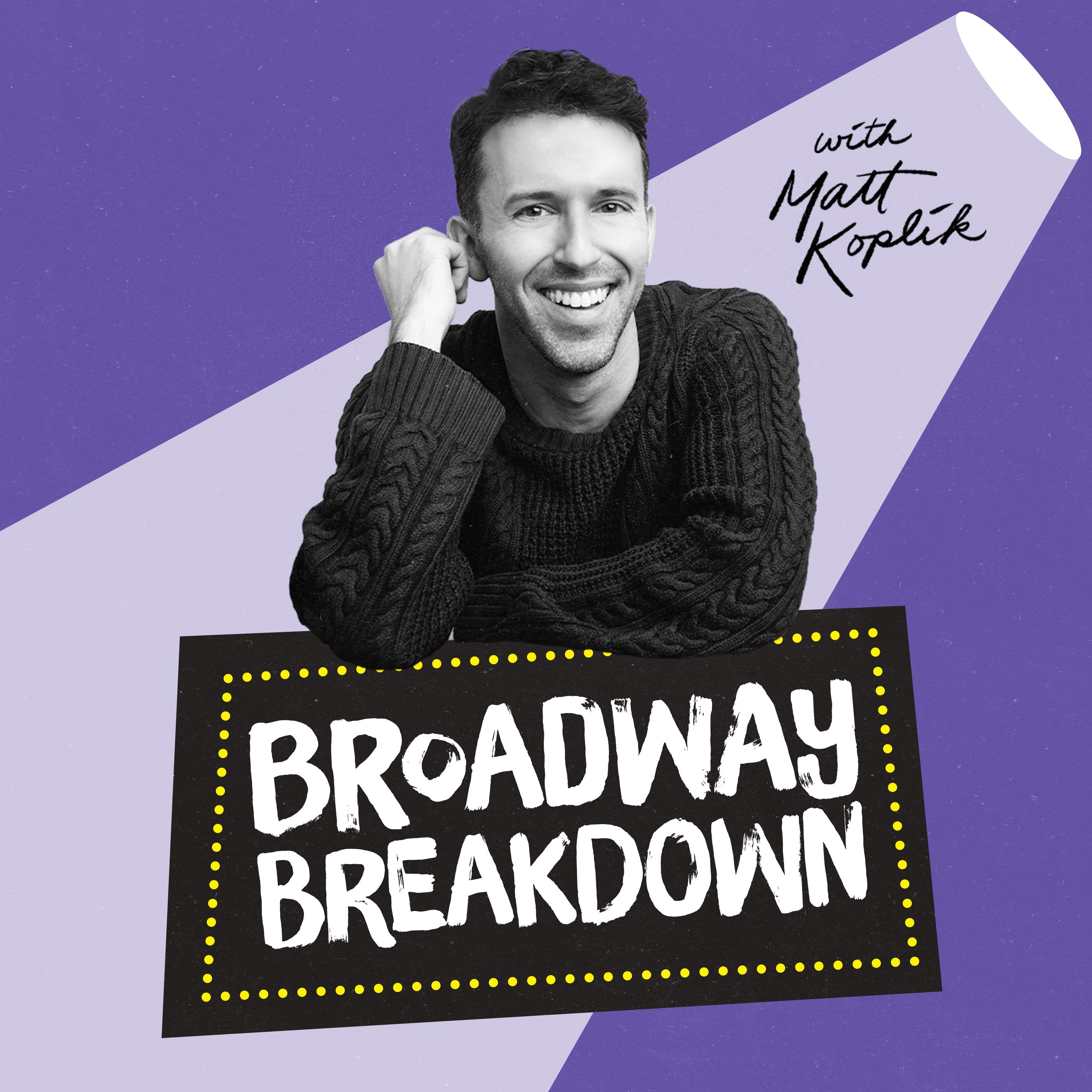
Loading summary
Transcript1 lines
- [00:00]
A
Foreign. Hello all you theater lovers both out and proud and on the DL. And welcome back to Broadway Breakdown, a podcast discussing the history legacy of American theater's most exclusive address, Broadway. I am your host, Matt Koplik, the least famous and most opinionated of all the Broadway podcast hosts. And it has come that point in the season where we've seen, if not everything, nearly everything off Broadway, Broadway, a few things on the West End, sorry, in the West End. And it's time to do a little bit of a final, final rankings. If we should say, yeah, you know, to sort of get our heads around where what we felt about this season, what really stood out for us, what maybe felt by the wayside, things that we loved, that nobody else did, that a lot of people loved that we didn't. It happens. It happens every year without fail. And I'm sure as we go through this ranking, people will be rankled by some of the choices that we have. But that's how this thing goes. Remember, this ranking is my personal feelings on things. And it's a combination of how I feel about the piece itself, how I feel about its presentation, the experience of the theater that evening or that afternoon, sort of my memory of the, of the joy or of the heartbreak or of the confusion and whatnot. We are going to limit it to New York. So nothing from the West End, no Paddington, no Starlight Express. So sorry about that. And as I said, I have not seen absolutely everything. So we haven't seen 25th annual Putnam County Spelling Bee, so that won't be included. We didn't see Mamma Mia. When it was playing in New York for this season. But I've seen Mamma Mia five or six different times. So no, I'm not really missing much outside of a few singular performances. I even have seen this iteration of Mamma Mia with the touring set and staging because I've seen it on tour. Did not see Jeff Ross with the Banana show and I did not see all out, but other than that, we saw everything. So it's a pretty comprehensive list, I should say. Before we begin, if you haven't yet, we have our next and at this moment, finally Broadway Breakdown live show happening at Green Room 42 on June 1, the slightly early Tony Awards show. It is a 75 minute musical live episode covering some of our favorite Tony winners, moments in Tony history, the history of the Tonys in general. Those of you who have been to Broadway Breakdown live shows know that they are joyful chaos is how I would call them, exuberant chaos. Even it is just me. There are no guest stars for this one. It's just yours truly and all of you lovely people out there in the dark. If you do come, there are. There's a link for tickets in the episode description. If you do come, just come guarded with some of your Tony Awards knowledge, some fun trivia that you have locked and loaded. Because we will be asking the audience for trivia answers and there may or may not be a few prizes involved. So keep your eyes out for that. Again, if you like the podcast, make sure to either join the Discord Channel, the Substack Channel, follow me on Instagram Matt Hoplik usual spelling or give us a nice 5 star rating or review. All right, so enough of all of that. Let's get into it. Oh and also I should say if you're watching this on YouTube, which you can also join, I was able to collect most of my playbills from the shows that I have seen. There are a few small handful that are in my storage unit and I did not have the time to go grab them. So just know that when I say I saw it, but I don't have the playbill in my hand. I'm not, I'm not Jo. I'm not joshing you. It's I. I did see it. They're just there. Any storage unit on 61st Street. Oh, also because I was at the beta run of Masquerade, which is ultimately their dress rehearsal, I will not be including Masquerade on this ranking. That's very unfair to them to rank them based off of their first run through with an audience. But here is my mask as proof that I was there. You can even see the little phantomy mask on top of there. But yeah, okay, now let's go get into it. All right, we have 50 entries. Again, this is combination of Broadway and Off Broadway. At number 50 we have. Oh my letter from heaven. House of McQueen, the bio play by Dara Cloud that premiered at the mansion at Hudson Yards. It was starring Luke Newton of Bridgerton fame. It was co starring Emily Skinner, y'. All. This show was so bad that I memory blocked it and forgot to include it in my earlier rankings back in December, slash January. That's how bad this thing was. Very much interested in jumping around in timelines. This is a play that was about the fashion designer Alexander McQueen. His, his childhood, his break into fashion, his success, his failures, ultimately ending with his death by suicide at the end of the show. I remember it was a two act and at intermission you could go into the Lobby and look at sort of this small walking tour of McQueen's history and legacy as a fashion designer, including some of his actual pieces that were on display. And you could see what a bold visionary he was and also how troubled he was and also how much craft and curation went into his work. The detail of it all. And none of that really translated. The best thing I'll say is that it's always wonderful to see Emily Skinner on stage, although she wasn't really given much. And Luke Newton, God bless him, was incredibly game and really committed himself to the piece. And I would love to see him in another stage show in the future, but this, unfortunately, just was not it. Yeah, that's it. On House of McQueen, a show that was so trash that I fully blocked it out of my head. Forgot to rank it last time, and now here we are, and all I can remember is just, like, all the things that stuck out like a sore thumb to me. That's it at number 50. All right. At number 49, actually, it's your royal highness, Tartuffe. Yet another show that I had memory blocked because I disliked it so much that I forgot to include it in the rankings earlier this year. This is a adaptation by Lucas Nath of the Moliere play. Tartuffe is ultimately a drawing room French comedy about the ultimate leech. The aristocrat in this production, played by David Cross. Tartuffe played by Matthew Broderick. The aristocrat's name is Orgon. Oregon thinks Tartuffe is awesome and smart and insightful. He basically hires Tartuffe as, like, his personal life coach and, like, best friend. And Tartuffe just sort of goes around his home and, you know, eats all of his food and drinks all of his wine and spends his money and tries to hit on Oregon's wife, here, played by Amber Gray. Everyone's always trying to tell Oregon Tartuffe is the worst and the maid is the one who's trying the most to convince Oregon and come up with schemes to get Tartuffe out of the house. And ultimately it works out that Tartuffe is vanquished, but it's a very long journey to get there. In Lucas Nath's adaptation, he goes for rhyming couplets almost the entire time, a lot of them rather forced. And the humor is meant to derive from all of the random ways in which Nath is able to find rhymes in the text. It is infrequent that you laugh from said rhymes. It is also infrequent that you laugh from the Goings on of the production. This was done at New York Theatre Workshop and there was a lot of backlash about this because it was not a new work. Tartuffe is a classic. Although New York Theater Workshop, of course, has done their own revivals. It had major, major talent involved. Tony winners, Tony nominees, Emmy winners, Emmy nominees. This was clearly not meant to be a gamble. This was meant to be a surefire financial hit that if it worked, would go to Broadway. Now it totally sold out. It made them some money, but it has not gone to Broadway because it was bad. The truth is that Matthew Broderick and David Cross actually were miscast and should have switched roles. Matthew Broderick should have played Oregon and David Cross should have played Tartuffe. Everyone, tal though they are, were all in very different productions. The one who was giving me the most modern era, Moliere, was actually Bianca Del Rio as David Cross's mother who only shows up for the beginning and the very end of the show. And she is the only character other than Oregon who is into Tartuffe, who thinks that Tartuffe is amazing. And then when Oregon finally breaks back into reality, his mother Bianca still doesn't really believe anybody ultimately was just a misfire. And yeah, I also completely forgot that I saw it. So I had to go back into the depths of my brain to remember exactly what it was that this show did. All right, and that's it on Tartuf. Moving on. Next up at number 48, amateurs and non equity first, Beaches. I can go further into this if you desire, but the truth is that we already did a very in depth review of Beaches a few episodes back. This is a musical albat adaptation of Rainer Dart's novel, not on the 1988 Bette Midler Barbara Hershey movie and don't you forget it. The only two things tying it to the movie are Jessica Vosk's wig design and that they include Wind Beneath My Wings. At the very end of the show, Be just tells the story of two lifelong friends, Birdie and Cece. They meet when Cece is a performer on the boardwalk in Atlantic City and Birdie's very upper crust Pennsylvania family is vacationing there. They exchange letters over the years as pen pals. They grow up, they reunite and they spend their adult years off and on as friends and in and out of each other's lives. The show actually is less friendship focused than you'd think. They have a big growl at the end of the first act and spend half of act two not really speaking to each other. The show is more concerned about their relationships with the men in their lives. Those relationships, of course, fall apart and they come back together as CeCe helps Birdie raise her child. But the moment that CeCe gets a job opportunity, she ditches Birdie. But then Birdie gets sick five seconds later, and cece comes back, and then Birdie dies. And that is the end of the show. Beaches is bad. It's bad. There's no other way to say it. Beaches wants to be both a rousing crowd pleaser and a too hanky cry fest. And for me, it is neither. It is a design that is sparse and cheap and tacky, not to mention, once again, projections that seem like they came straight out of AI or at best, you know, imovie. At our central performances, we have Jessica Vosk as Cece, we have Kelly Barrett as Birdie, and they are both extremely talented musical theater actresses. If anything, Beaches proves that Jessica Vosk is capable of leading a show, of handling more dramatic material than just Wicked or, you know, concert concert material or Hell's Kitchen. She has the ability to create a fully formed character. Beaches does not allow her to do that because Beaches is just so amateurish on a writing level, on a design level, on a staging level. Vosk cannot succeed, nor can Barrett, because the show cuts them off the knees at every given turn. They sound great, they have good chemistry, and you see them trying to find ways to create more depth in a show that won't let them. But that's. It's an A for effort on both of their parts. I won't say it's an A in execution, not their faults, just not how the show allows them to go. The score, best case, I'll say the best thing I'll say about the score is that the music is not untuneful. It has its moments. It ultimately sounds like a modern attempt at being frank lesser, and it just doesn't work. Not in a show like this, not in an era like this. The lyrics by Rainer Dart are just, Oof. Oh, boy, are they. Are they basic. Birdie has like an I Won't Be that girl anymore song to her mother in Act 1 that is just like the most generic song that of course leads with Kelly Barrett having to belt her tits off on top of a ladder. And it's just. It could be applied into any show for any reason. It's not memorable enough or catchy enough or boppy enough to get by on. The fact that it is so basic feels like it was inserted into chatgpt and you know, put onto a Broadway stage. Yeah. Beaches may not be a train wreck because ultimately it's not interesting enough, but it is not good. It is extremely, extraordinarily not good. And that is beaches at 48. At number 47. Christine Dyer could sing it, sir. Dog Day Afternoon. Dog Day Afternoon is actually kind of fascinating because after our bottom three here, 50, 49, 48, we are now in the territory that I would say is not good, but not good in a more of a numbing way, not in a disastery kind of way. And there are things to find positives about in the next couple of entries we have in the rankings of sort of not good with Dog Day Afternoon. The good things I'll say is that we have in our lead performance Jon Bernthal as Sonny, made famous in the film that the play is adapte by Al Pacino. Bernthal clearly is a talented, committed actor, similar to Jessica Voska and Beaches. He proves that he's comfortable on stage, that he can carry a show, that he can, you know, drive home an emotional arc. Ultimately, it's for nothing because the adaptation by Stephen Adley Gurgis is not only extraordinarily faithful to the movie in terms of text, but also does not do anything for stage. It's not, it's not an inventive adaptation. He doesn't find a way to make it live on stage the way that it thrives on film. And Rupert Gould, the director, who's very British and very esoteric and very cold, decides to present the entire thing like a straight up farce, which the movie has comedy in it because ultimately it's about a bank robbery that goes wrong from the word go. But there's a lot of tension to it in the movie. There's a lot of emotion to it because you find out that the reason why Sonny is robbing this bank is because his partner is in need of money for a gender reassignment surgery. And Sonny decides to rob the bank to obtain that money. And it's a. You know, it's ultimately someone doing an act of insanity and boldness for somebody that they love. They're. They're at the end of the rope, they're desperate and they can't think of what to do. And so they do this. And Bernthal, you see that desperation, you see that passion, you see that love in his Sonny, but it can't go anywhere because the production that surrounds him doesn't reciprocate everything that he's giving. The only other person on stage who's kind of as locked in as Bernthal is, is Jessica Hecht as one of the head tellers of the bank. But it's ultimately a production, an adaptation that does not understand what makes its source material work so well and does not understand the heart that is beating within this story. It relies solely on Bernthal, who I'm convinced is what he's doing is at the opposition of the production team because no one else is doing what Bernthal is doing. He sticks out both in a positive way and a negative way because what he's doing is correct. But what he's doing is so at odds with everyone else that I do feel like he went rogue in, like, tech or during previews and was like, all this. I'm gonna. I'm gonna do what I think is correct. Gould as a director has been very miss for me for a while now. He did Tammy Faye last season. He did Patriots the season before that. And it's become very clear that pieces about American life are really not for Gould to do. And this is just another nail in the coffin of that for me. But yeah, that's Dog Day afternoon at number 47. All right. At number 46, actually, it's your royal highness, Call Me Izzy, the first play of the Broadway season starring Jean Smart. Written by Jamie Wax. It is a one woman show where Jean Smart plays a woman who is an aspiring poet in an abusive marriage in a trailer park. And it's mostly a storytelling show. It's. It's monologues about her childhood and her courtship and her marriage and what's been happening offstage in between blackouts. I don't know much what I can say about this show. I did do a review of it at the beginning of the season. So much time, so much life has happened since I saw this show because I believe I saw Call Me Izzy in June. Yeah, I saw Call Me Izzy in June of 2025 because I went straight from a Tony party. It was like a gathering, I think, for AKA maybe. I think that was the press team that was doing their early Tony party. It was a Wednesday or Thursday. And I went straight from there to Call Me Izzy. And it was just going from a really lovely high of meeting new people and making new friends and sort of talking about the season to then seeing this 85 minute one woman show where Jean Smart just goes on and on about the poems she writes and the professor she has an affair with because she's so unhappy in her marriage and just this really inert play that has good intentions and wants to Tackle, you know, difficult subject matter with a character that we really should want to root for. And ultimately, the only reason to have seen it was Jean Smart, who remains that bitch, remains that a phenomenally gifted actress, both depth at comedy and drama, is so charismatic she can hold an audience in the palm of her hand. But similar to Jon Bernthal in Dog Day Afternoon, similar to Jessica Vosk in Beaches, when the material and the production cannot help you, how can you really succeed? You know, a show like this should have been a slam dunk Tony nomination for Jean Smart. And the fact that she didn't get 1A because the show was so early in the season, but also because the show itself just was not good enough for her to get in. And that's all that you can really say about Call Me Izzy. That's Call me Izzy. At 46, at number 45. Oh, my letter from Heaven. The Seat of Our Pants at Public Theater. Written by Ethan Lipton, this is a musical adaptation of Thornton Wilder's the Skin of Our Teeth. It had Ruthie Ann Miles, it had Schueller Hensley, it had Michaela Diamond. I was really interested in seeing what this piece was going to be. I like the cast. Lee Silverman was the director. I am not the biggest fan of the Skin of Our Teeth as a play. I think it's a really intelligent, fascinating piece. But ultimately all the things that made it groundbreaking and mind blowing in the 1940s we have done since then. And I would argue we have done better since then. Not every show that does it first does it the best. Some shows do by accident. But Skin of Our Teeth, I think is one of those fourth wall breaking time fucking theatrical distorting pieces that Wilder must have written while he was like on LSD or something. Wilder in general loved breaking the fourth wall. Skin of Our Teeth, Our Town, the Matchmaker, and Skin of Our Teeth is probably the most esoteric and the most adventurous of all of his pieces, but it's never really stuck with me, especially in the last production at Lincoln Center. But there were moments in the Lincoln Center Theater production with Gabby Beans that did resonate with me and Seat of Her Pants, ultimately, both over musicalizes and under musicalizes the original play. The best thing I'll say about it as a musical is that Ethan Lipton, as a writer, has a really fascinating ear for music. He similar to like a lacusa or tesoriv. He can really fuck with many different genres and adapt to each genre, but he doesn't always really know where the melody should go and how it should land and what the lyrics should scan with those songs. Also similar to a lot of musical theater writers now, not every moment that he musicalizes feels correct. There are songs in Seat of Our Pants where you go, I don't know why there's a song here other than the fact that we're writing a musical. This, this moment doesn't call for it. It feels super shoehorned in. And that's unfortunate because then there are moments where songs do feel like they belong, but they don't feel like the song. The moment that is being musicalized feels correct, but then the song that's been written does not feel like the correct song. It's always been kind of a mind fuck in that respect and Seed of Our Pants tries to adhere to that while also not clarifying but calling out how Skin of Our Teeth is really mind trippy and but it doesn't go further with that. So it's more sort of like a Reddit thread comment that gets punctuated a lot as actors rebel against the author and don't really know where to take the story next. And I could see potential, if not necessarily that potential realized by that Seat of our pants at 45. Okay. Next up at number 44, Christine dye could sing it. Sir waiting for Godot, starring Keanu Reeves and Alex Winter. Directed by Jamie Lloyd. We have a Tony nominee in this company, Brandon J. Dearden, who we spoke very highly of in our review. Also in our final big Tony swings, friend of the pod, Juan Ramirez, also spoke very highly of Brandon J. Dearden. This is another one where it's a classic play that has never really landed for me. Granted, I've only seen it twice now, both with Keanu and Alex as well as with Bill Irwin and Nathan Lane. I. I probably preferred it with Lane and Erwin just because I felt that the company as a whole in that production was stronger. I expected to really detest this production because I don't like the play much and because the idea of Jamie Lloyd directing it just felt like torture. I'm not a fan of Keanu Reeves. I feel like movie buffs have been trying to gaslight us for years that he's a good actor. He's not, but that's okay. It was not painful and that's kind of the highest praise I can give it. Alex Winter actually gave a surprisingly strong performance in this. And Brandon J. Dearden, also very memorable. It was a very striking simplistic set. Those of you who are maybe unfamiliar with Waiting for Gadot, and if you aren't Familiar, you know, you don't need to get that familiar. I don't think you're going to see it in your local theater for a while, other than the fact that it's cheap to do. It's four people and no set. But Keanu Reeves plays a character named Estragon known as Gogo, and Alex Winter plays Vladimir named Didi. They are two friends who are waiting for a man named Godot. They're not entirely sure why they're waiting for him. They're not entirely sure how they met Gadot. They are not entirely sure what he looks like. They don't know what he does. And Dede is more aware of the endless loop that they are in. The endless cycle of waiting. And everything each day changes just a little bit and yet stays the same. And then at the end of the day, a young boy comes out and gives a message to Dede that Godot has been detained, but he will surely arrive the next day. And in this production, Didi seems to understand that Gadot will never come. But also, there's nothing to do but to wait for him. And it's a very sad fate that he's resigned himself to. And there's been so many discussions of who Gadot is, what Godot represents. Ultimately, you know, it's not a. It's not a play I find moving. It's not a play I find enticing. It's not a play I find very funny. Although part of that might be because I've yet to see a production that has cast true clowns in the role, like the original Broadway production did. I would love to see what someone like Bert Lahr did with this show, but I've yet to experience that. In the meantime, we have this production, which was not the worst thing I've ever seen. Not terribly exciting, but, you know, just sort of happened. It just sort of happened. That's waiting for Godot. At 44, at number 43, amateurs and non equity. First art by Yasmin Reza. This is the first Broadway production of art since its premiere in the late 90s. This production stars Bobby Cannavale, Neil Patrick Harris, James Corden. It's about a group of friends that start to tear apart at the seams when one of them, here, played by Neil Patrick Harris, buys a painting for $300,000. And the painting is simply white paint on a white canvas. And at first the discussion becomes, what is art? How does one define what makes good art? And then it starts to give way to the three friends purging out all the things about each other that they don't like, why they have grown resentful of their friendship, why they feel like they are obligated to remain friends even though they share nothing in common. They've grown apart. They don't like who the other ones have become. But at the end of the day and at the end of the play, they still remain friends. This play, like, took the theater scene by storm back in the 90s, and watching it now in 25th, 2025, 2026, all I can say is that this is like very much a 90s, upper middle class, New York elitist play. It wants to be a mocking satire slash mild farce about the hyper intelligentsia. And all that it really does is that it kind of ends up languishing in that hyper intelligentsia. Like the whole thing feels like it was sponsored by Ichthysaurus because there is such a masturbatory use of just language that it goes beyond poetry, it goes beyond satire and just becomes a flex. The best part of the show, unfortunately, is James Corden as the third and least successful and most buffoonish of the Friends. And it's frustrating that he's as good as he was in this show because I like Bobby Cannavale more as an actor, but he is miscast in this play. He understands how to make a character work for him, but he does not live well in the world of the play. Neil Patrick Harris works very well in the world of the play, but he is not able to make his character adapt to him. Corden is able to do both. It's a pretty by the numbers production, as directed by Scott Ellis. There's no real zip to it. No zaniness, no energy, no fire. Ellis does a better job with that in a later show this season. We'll get to that further up in the list. Again, this was not bad. This was just insanely missable. That's art at 43. At 42, actually, it's your royal highness. The Fear of Thirteen, adapted from the documentary of the same name by Lindsay Ferrantino. Remember that name in a second. Starring Adrien Brody as Nick Yaris, a man who is wrongfully convicted of a sexual assault and murder. This production follows Brody as well as Tessa Thompson as a reporter who is writing a piece on the inmates of the prison. And she ends up finding a connection with Brody and is wary of the stories that he tells. She's not sure how truthful he is. She doesn't know whether she can trust him. This ultimately goes nowhere because everything he says is truthful. She does trust him. They actually start to sort of fall in love with each other, but then she moves on with her life as he keeps on trying and failing to have a judge or a jury hear him out on new evidence that is proving his of his innocence. Only when he's finally giving up after 22 years does a judge do an immediate order for the DNA evidence that ultimately releases him from prison. Fear of 13 is a piece that did very well in London at the Donmar Warehouse. It's now playing at the James Earl Jones Theater, which is about three times the size of the Donmar Warehouse. And this is the piece that I would imagine does a lot better with intimacy. And there's moments of humanity in fear of 13. It wants to kind of find the humanity in the small moments, but nothing can ever really fully connect here. I called this trauma tourism. And it does sort of feel like Brody is doing poverty cosplaying. Tessa Thompson, who is a very strong film actress, is one of those film actors for me, it feels like who just cannot translate what they do well on screen to stage because they can lock into the emotion, they can lock into the text, but they can't make it big enough that it translate to the last row of the theater. For more in depth on that, you can listen to my fear of 13 review, but that's fear of 13 at 42. At 41. Oh my. Letter From Heaven the Queen of Versailles with Kristin Chenoweth. Obviously the show has been the punching bag of the Broadway season and I'm actually splitting this show in this ranking twice. Once with Kristin Chenoweth and once with her standby Sheri Renee Scott. More on that later. Queen of Versailles. Also, Lindsay Ferrantino adapte from the documentary of the same name about Jackie Siegel, who is the wife of the billionaire timeshare tycoon and their aim to build the largest home in America in Orlando, Florida. And all the things that go wrong and all the things that Jackie loses along the way. Queen of Versailles kind of wants to be Gypsy meets the Real Housewives of, you know, Florida, similar to how people felt about beaches or Dog Day Afternoon and then walking out and going, that wasn't as bad as people said it was. I went into Queen of Versailles, obviously, after all the reviews came out and the word of mouth was pretty atrocious. And of course, Kristen did not help matters with her online activity. I saw it the night that they announced their closing and I walked out and I went, huh. That wasn't as bad as people said it was, but it also was not good. I can't say that I enjoyed it and it wasn't bad. And this is a case where while my expectations were low in terms of what to expect, because my expectations for Broadway in general are high, I did not walk out of Queen of Versailles going, that was a better show than people give it credit for. There is something to the idea of Queen of Versailles, but I did not see what that something was until I saw it with Sheri, which is why we'll get to her in a second. When I saw it with Kristen, all I could see was a star vehicle where Kristin Chenoweth worked her tiny, tiny little butt off, but ultimately to no avail and a role that proved that did not really fit her. We applaud her on an artistic level for branching out and going beyond the Glinda Lily in on the 20th century bubble of just like pure comedy. There was some. There was something that she was trying to go for with playing a likable antagonist or an unlikable protagonist, however you see it, and delving into a more morally murky area with a character at the end of the day, Chenoweth's desire to be likable on stage and going for cutesiness overrode any chance she had of creating a distinguishable character. That said, there are things to recommend about Queen of Versailles. I do think that the design of the show was incredibly impressive and the double edged sword of that is that it's a show about the building of a house that's under constant construction. So in order to be true to that, a lot of the design was very chaotic and people didn't always feel like they knew where to look. That's sometimes a problem with Michael Arden productions in general. I do think that Stephen Schwartz's score had nuggets where you went, okay, that there's something there. I've said before. I think that the I Want song Caviar Dreams is a good song. I don't know if I think it actually applies, Jackie Siegel, but that is again, sort of the conundrum of this show. For everything that you thought was objectively a well crafted moment, you then ask yourself, but is that a moment that applies well to the story we're telling? That's Queen of versailles at number 41. At number 40. Oh my letter from heaven Joe Turner's come and gone August Wilson's Joe Turner's come and gone. This is a production that unfortunately I have to caveat with. It was the worst theatrical experience I had this season with an audience because it was just nonstop of people showing up late well into an hour into the show, people talking the entire time, eating food the entire time, over a dozen cell phones going off in act one alone, someone trying to sit in the aisle because they weren't happy with the tightness of their seat, and then an usher having to come and put that person back into their seat. Just like constant, constant commotion and interruptions. God bless the company of actors for barreling through. But it was just, it was. I worked so hard to try to focus on the production, and the audience made it almost impossible. I was able to focus enough on it that I could take in what everyone was doing on stage. Joe Turner's Coming Gone is, you know, one of August Wilson's stronger plays, but it's also one of his most odd plays. He was playing a little faster and looser with what reality was with Joe Turner's Come and Gone. He would do the same thing later with the Piano Lesson. And you need a director who has a sure hand on how to bring an audience in with the emotional reality of the scenes while also keeping them on board with when things start to go in the mystical, magical areas. And the same is true of Piano Lesson, which I thought was a production that actually leaned too far into the mystical. This production, I think, leans too far into the reality. Even though the set was very abstract, Debbie Allen as a director kept everything very grounded and earthbound to the point that many scenes would take place around the kitchen table with no one moving. Because in some ways that is what is most realistic. You can hear more about Juan Ramirez's qualms with that in the Big Swing Tony episode. You can hear more details about all my issues with that in my review for Joe Turner's Come and Gone. Highlights of this it is overall a good company. Some performers land a little bit better than others. Cedric the Entertainer and Taraji P. Henson both acquit themselves well. They have good chemistry with each other. They're, you know, very lived in their performances. Their act ones are ultimately stronger than their act twos. Not that their act twos are weak, but their act twos don't build upon their act ones. So while they write a very strong check in Act 1, it's not that they that they that check is unable to be cleared in Act 2. They just actually never cash the check. Someone who is honed is Ruben Santiago Hudson as Bynum Walker. No surprise there. Ruben Santiago Hudson is our living interpreter of August Wilson and thus is the standout performer. He's the lone acting Tony nominee for this production. We also have the actress playing Martha Loomis, Harold Loomis wife. It's a very late in the show entry into the company, but she really brings a great deal of passion that is lacking in Act 2 for this show. Design wise, it feels very cluttered and unfocused. Granted, I have very strong memories of the last production that was directed by Bartlett Sher, who is not a person of color but is a good director of actors. Is a director who trusts text while also giving it enough visual flair that everything sort of just congeals. Debbie Allen is a person who should be directing a show like Joe Turner's Come and Gone. But ultimately, at least at this point of her career, is not able to pull it all together with a unified vision and a sense of urgency and tempo, which you think she would because she comes from the world of dance. But I've just. I've never felt as a director that Debbie Allen has that in her. But yes, that's us for Joe Turner's Come and Gone Again. There's more in depth information on that in our separate review, but that's Joe Turner at number 40. At number 39, Christine Dykes could sing it. Sir Punch, written by James Graham, direct transfer from London, where it recently won the Olivier Award. It was at Manhattan Theater Club. Tells very true story of a young gentleman who while out drinking one night after a football match, punches another young man at a bar. The young man goes down. This is Jacob Dunn, by the way. The young man's name is Jacob Dunn. And he punches a young gentleman by the name of James Hodgkinson. James goes down, goes into a coma and ends up passing away. And Dunn is convicted of of his murder, goes to prison for a number of years, is rehabilitated through counseling and, you know, therapy, he is able to build himself back up again and grapple with his toxic masculinity and his inner anger that has allowed him to has taken over enough of himself that he allows that violence to lead most of his actions. He ends up connecting with Hodgkinson's parents, played by Sam Robards and Victoria Clarke, and is able to not move on, but move through past actions and not let them define you and allow yourself and those you've hurt to heal together. These are all wonderful things. As a play, it's sort of meh. James Graham has a knack for taking real world events and turning them into artistic works, whether on stage or on screen. I ultimately feel like Graham is a better screenwriter than playwright. He likes to write his plays like they are screenplays. And while that can be an exciting thing, it probably works best in Dear England. The truth is that the best scene in the show is in Act 2 when Dunn and Hodgkinson's parents sit down with Jacob's therapist or counselor, however you wanna describe her. And for 20, 25 minutes they all sit down together and just slowly heal through questions that Hodgkinson's parents want to ask him about his life, what would happen in that moment, what he was thinking, what he's up to now, what he plan. And it is a true scene from a play where all four actors are able to sit and relish with each other and connect and have chemistry with each other and not worry about what part they're playing now, what the next scene transition is, what stage picture they have to make. It is just living in the moment and it's very beautiful. The rest of it I find very distancing, which is a shame because the story itself is quite good. But that's Punch at 39. At 38amateurs and non equity. First chess choose, one might say the first Broadway revival since the original with my beloved Judy Kuhn bombed in 1988. It has a new book by Danny Strong and is starring Lea Michele, Aaron De Veit. Nicholas Christopher actually did pretty well at the Tony Awards with nominations. They did not get a revival nomination. And to make it clear to everyone on the Internet, no, the Tony nominators did not eliminate a slot because they just didn't want to vote for Chess. That's not how it works. There were five candidates, which means there were three nominees. If we had six candidates, there would have been four nominees. And yes, Chess probably would have gotten in then. But we only had three nominees and ultimately they felt that Chess was not a worthy third nominee. But Nick Christopher got in, Hannah Cruz got in, Bryce Pinkham got in. You know, chess had always been a blind spot for me. I had only really heard the score for the first time a few months prior, in full. And the score is incredibly wild. Fun, exciting, but also bonkers. And clearly written by. By Cocaine. I don't think it was even written by people. I just think it was written by Cocaine itself. And a story that has never truly made perfect narrative sense to people. Also a story that not everyone has cared much about. The revival tries to go for a campy tone. Danny Strong's book is actually more political than past productions. But also by making Bryce Pinkham as the arbiter the narrator. He becomes not just a commentator to clear up what's happening in each scene, but becomes an Ain't I a stinker Gen Z coded jokester, including RFK Brainworm jokes and Joe Biden jokes and Donald Trump jokes. And it's just for me the jokes are cringe and the plot while he does explain what's happening in each scene, God help you if you remember everything that happened in Chess a few days later, unless you went to go see it again to clear things up. What this production has going for it is its vocals. Everyone in this production is an incredible singer and they sound fantastic. If I were to give like a ding to anyone, it would little it would be Aaron Tveit a little bit as Freddy just because we are used to Freddy having more of a rock tinge sound. Aaron Tveit is not that Aaron Tveit is an incredibly healthy, pure sounding voice, but he hits truly every note in a very healthy way. So you're not worried about what's going to come out. There's less danger to his singing, which you could argue is important to Freddie as he's sort of the wild card character. But in the end it works for the performance that Taved is giving as Freddie, which is less, you know, destructively evil and more manically borderline personality disorder and whatnot. Acting in general in this production for me is sort of waiting for Gadot or where I'm just sort of waiting for it to happen. Not much. Hannah Cruz is giving my favorite performance in the show because she' anyone in the show who feels like a person who like wants and needs and has even had sex. Which is important because sex is a major component of this revival. And yet I feel like it's nowhere to be found except for Hannah Cruz. A lot of moments that went viral on the Internet. Nick Christopher, super long note, Lea Michelle's Nobody side, Aaron Tveit snorting coke off a dancer's leg and One Night in Bangkok. I don't consider this a fully formed revival. I don't consider it as smart as it thinks it is or as funny as it thinks it is or as sexy as it thinks it is. I was hopeful. I wanted it to be better than it because I do enjoy a lot of the music. I think that everyone in the company is actually properly suited for their roles and yet it just never happened. And that's all we'll say about Chess. Moving on at number 37, Christine Dyer could sing it. Sir the Baker's Wife I don't know if you can see this on YouTube. But the baker's Wife at Classic Stage Company, yet another troubled show once again by Stephen Schwartz that had its first New York production in decades, this time at Classic Stage company starring Ariana DeBose and Scott Bakula. You know, it's about a woman who marries a baker, and she's all content, but then she sees a hot stud from the Outsiders and she sings a song about a bird and she flees. But then she goes, you know what? In order to bake bread, I do need warmth. So she goes back to Scott Bakula, and there's talk about a cat. That's a metaphor for her. The cat's not on stage in this because Classic Stage Company's like, we ain't fucking with animals. We are an Off Broadway production, ma'. Am. This is a Wendy's for a show called the Baker's Wife. The Baker's wife is maybe like the seventh most interesting character in the show. She does have the best song, so that's something. Beautifully designed, pretty strong ensemble. Best thing about it, Judy Kuhn opening and closing the show and also being funny as fuck. People have never let Kunzy be funny before, but she got to be funny here, and we love that. And she has a scene In Act 2 with Sally Murphy, who once again plays a troubled wife in a bad marriage. Not a bad production. It made me realize why Baker's Wife doesn't work, why it will never work. And it's actually a score that I don't like as much as people thought I would. Similar to Chess. This has always been a blind spot for me in musical theater. Certain songs that I've always known, always knew where is the Warmth and Proud lady and Meadowlark, but didn't really know the rest of it. And watching Baker's Wife, I'm like, huh? The rest of the score is not great. It's not bad, but it's not great. I'm glad that Kunzy got her flowers. Beautiful set design, and we love Kunzie. That's the Baker's wife at number 37. At number 36, actually, it's your royal highness, Heathers again. I don't have a playbill for this one, and I won't go too in depth because I did a review of it, a solo review of it. But as we know, I love the movie of Heathers. It's very important to me, and I've always felt that the musical is not a great adaptation. I. They go very hard in on a comedic, almost spoofing tone of the movie. I Think it's the only way a lot of modern audiences can swallow some of the story beats from the original movie. And I understand that. But again, there's like no barbed wire in the stage musical. It's not as cutting as the movie and I wish that it were because they would be more interesting that way. There are objectively good songs in Heather's, some of which I actually think think fit the moment. I do. Like Dead Girl Walking. I think Beautiful is a really good opening number on a musical theater level. I don't love the journey it gives us for Veronica. I don't like it just undercuts a lot of the mixed emotions of Veronica and Heather Chandler's relationship, especially after Heather Chandler's death. Whereas in the movie she has a history with Heather Chandler, she has memories. It was a give and take of It's My Best Friend and I hate her. But there was a fondness there and there was a connection there. And also Veronica trying to get back to her roots of who she was before she became a popular girl. Whereas in the musical it all happens very quickly. And she doesn't really have that relationship with Heather Chandler because she's only been a popular girl for about a month before everything goes to shit. And there's no real going back to your roots because everything happens over the course of like two months. But, you know, still good music. This was a pretty solid cast. Casey likes his jd I thought was really good. The best performance overall was Mackenzie Kurtz as Heather Chandler. I thought this production also was a stronger production than the original, had a better sense of tone and style and just overall felt more fully realized. And I appreciated what Heather's does as a musical more this time around, even if it still doesn't completely work for me. Which leads us to number 35, ginger twinsies, written and directed by friend of the pod, Kevin Zak. It is a 90 minute retelling with a queer bent on the Lindsay Lohan remake of the Parent Trap. If that sounds incredibly specific, it's because it is. And there's not much else to say about it. I laughed. I definitely laughed at it. It's more. More referential humor. That's very much Kevin's brand of comedy. And that's not going to be for everyone. It is a good company of actors. What Ginger Twinsies actually really showed me was how good of a director Kevin is. I think Kevin, especially for comedy, really understands pacing and energy and surprise. And with something like Ginger Twinsies, because the humor isn't really coming from the plot Cause we all know the plot, the humor has to come from the element of surprise. And for every reference that maybe isn't going to land for you, then there has to be a visual gag that has to work for you. And so I was really impressed by what Kevin was able to do on a director front, and it was a good company. I'm always down to see Russell Daniels on stage, literally every time. But we do have a written review of Ginger Twinsies on the substack if you want a bit more in depth. Talk about that. Next up, at number 34, Christine Dyer could sing it. Sir. High Spirits at Encores, the musical adaptation of Noel Coward's Blight Spirit. This, for me, has always been infamous for not only being a best musical nominee in the 1960s, I think it's 1963 or 64. It also has a best score nomination at the loss of she Loves Me. That's right. Perfect. No skip score. She Loves Me did not get a best score nomination at the Tony Awards. High Spirits did. And the only song I really know from High Spirits or can even sing for you now is you Better Love Me. Me, A song by Katrina Lenk. Charles, played by Stephen Pasquale, is married to Ruth here, played by Philippa sue and his first wife, Elvira. Elvira. Elvira, played by Katrina Lenk here, ends up getting summoned via a seance. It's a silly little play. It's a silly little show. What I appreciated about this Encores staging was that it had no designs to be a Broadway transfer. They had people holding scripts, they did funny things with the scripts. It's a. It was a very simple stage design. It reminded me of encores from, know 20 years ago, 25 years ago, where the idea was, we are putting up a show you'll never see again with a full orchestra and a full company. We're going to give you a little bit of set, a little bit of costume, but a lot of it has to be left to your imagination. And it's just about enjoying the fact that it's this nice little thing for two weeks. Let the nice little thing for two weeks be the nice little thing for two weeks. Not everything from Encores needs to transfer, and so that was nice, but it did also ultimately reveal to me weaknesses of the material itself. Not every performance in this production landed for me. Andrea Martin, God bless her, was in over her head on this show. She does much better on another show this season. We'll get to that in a second. But it was, in my opinion, the best use of Philippa sue, probably since Great Comet. I felt the same way when Jane Atkinson played the role in 2009 in Blythe Spirit. It was fun to see Katrina Lenk. I still feel like she's kind of finding her singing voice again after Company, but this was a better vocal fit for her in general. She also looked stunning. She had a beautiful wig. At least I thought so. Not everyone thought so, but yeah, you know, it's High Spirits. Classic encores. The nice thing for two weeks was the nice thing for two weeks, right? So that's high spirits at 34. Next up at 33. Oh, my. Letter from Heaven. Slam Frank musical by Andrew Fox and Joel Sineski. It ultimately is a show within a show about a theater company putting on the Diary of Anne Frank and wokeifying it. I've had friends a part of this show for a while throughout most of its development, and I know sort of how it was for a while leading up to the production that I saw at the asylum. And it allegedly, the original arc of the show was a little bit more like a Noises off where you watched the production process as they were putting up Diary of Anne Frank and then wanting to give it a Hamilton spin at making it more racially inclusive, rewriting elements that maybe people felt were cringy or problematic. Now addressing more of the historical context of Anne Frank in 21st century language, addressing Palestine and wanting to include music to excite younger audiences, ultimately leading to a show that bears no resemblance to the Diary of Anne Frank, nor to the actual person Anne Frank as it currently stands. Slam Frank simply is the presentation of the show itself. There's a little bit of a preamble by the director of the theater company, but then we go right into the show. It is definitely a show that's going for shock humor. And some of it landed for me, some of it didn't. There is a pivot in the third act of the show when then, as it's looking like World War II might be coming to an end within the next year or so. The Franks sing about what they might do with their freedom. And Anne's sister, who has been mute this entire time, then goes on a diatribe about Palestine and Anne Frank, in order to prevent this Middle Eastern conflict, informs the Nazis that they are in the attic so they can go to Auschwitz, be killed, and then not have to be at war with the palace Palestine, Palestinians. And then the actress playing Anne Frank's sister quits on stage. This is representative of the way in which Slam Frank is not Always sure what is rehearsed and what is improvised. It's not always sure where reality is. It's not always sure what is the show within the show and what is just Slam Frank itself. It has a lot of ideas, it has a lot of intelligence, it has a lot of creativity. It's actually a pretty solid score. Again, it, it. I think it appropriately mocks the Lin Manuel Miranda faux hip hop, faux rap style with very precise lyrics and a company that, you know, is very game and all within the same page of each other. And it's a show that overly mocks how overly progressive we can be as a theater community. We're all so performative with wanting to be the biggest and most informed ally that we stop being people and we stop listening and we just keep talking. I say as somebody who's literally just been talking for over an hour and that is all understandable, that's all, you know, worthwhile. But I do think that Slam Frank eventually starts to get caught up in the logistics of its own intelligence. I would like to see it continue. I would like to see another iteration after this run has happened and see where Fox and Sinewski go with it because they clearly are not afraid of provoking audiences. But you can't just provoke. There has to be a reason behind it. Even if that makes it a shallower piece in general, which maybe is a little bit of a regression, but that's the price of making art. All right, so that's slam Frank at 33. At 32, actually, it's your royal highness, Batboy at City Center. Batboy is where it's at on this list at 32 for a couple of reasons. One, we have two amazing performances, one by Carrie Butler, one by Taylor Trench. We also have a show that is near and dear to my heart, but also has gone through a massive overhaul. In this production, half of the score has been changed. Act one is only semi recognizable to Batboy fans. It's also a production that is done in an over 2000 seat theater where Batboy not be living. Batboy needs to be living in a less than 800 seat theater. Although if anyone's going to make it fit in an over 2000 seat theater, it is indeed Alex Timbers, who I think does some of his best work here probably since Peter and the Starcatcher. Bat Boy is much more an Alex Timbers property than a lot of his other shows because it is campy, it is silly, and it doesn't really go for emotion. And I find that Timbers is not an emotional director. And so I appreciate all of that. And it's is overall a good company. There are people like Andrew Durand in here. We have Alex Newell in here, Marissa Jarrett Winoker, Chris Seber. And it was a fun enough time. I went on a Sunday night when a lot of Broadway performers were there because they didn't have a Sunday show. So the energy was really fantastic. And there were things I really enjoyed. You know, we're now in the part of the rankings where I would say we're not even like, okay minus. We're like, we're in the okay plus section of things that I liked. Things that I liked of maybe not as much as other things. It was an enjoyable time. And while I am happy that we're going to have a cast recording of the, of this company and of the changes, ultimately, I've always felt that for all the things about the original Bat Boy that maybe are bumpy, it works better in its original incarnation. All of the changes for this new version at best are lateral moves and then at worst actually remove some of the Off Broadway weirdness of it that makes it so special. But again, in our central performances, we have Carrie Butler and we have Taylor Trench, who, I mean, I think that between this and Floyd Collins, Taylor is sort of proving himself to be a formidable force in musical theater. His voice is not such that he can play any role, but his acting is such that he's game for any role. And so I am happy to sort of see what he does next. I'm happy we were able to give Kerry Butler a goddamn leading role again on a big ass stage. If this were, you know, a show, if Bad Boy had actually transferred to Broadway this season, like had been rumored, I do think that Carrie Butler would have given Kayce Levy a run for her money in Ragtime. She could have even won. Uh, but it was, it was still a fun time, if not amazing fun. That's bat boy at 32. At 31, Christine Dy could sing it, sir. Caroline. Written by friend of the pod, Preston Max Allen at MCC Theater. It starred Chloe Grace Moretz as Maddie, a young woman with a troubled past who is. Who's gotten clean, has a. A child who goes by the name Caroline. And due to unfortunate circumstances with her most recent romantic partner, she and Caroline are forced to flee their current home and go on the run. And she returns to her childhood home where she basically has to beg her estranged mother for money to help her start a new life with Caroline. Beautifully acted by all three performers, Preston has definitely done their most mature work with Caroline, I would say it grapples with, you know, family and relationships. And similar to Punch, not defining yourself by your past and also dealing with gender, Caroline as a transgender girl. The problem I had with it was ultimately in the third act when all of the building blocks that I felt that Preston had so wonderfully and truly built all kind of got tossed away for a late in show hook that didn't feel earned to me. But I would love to sort of hear from other people who saw it, who maybe feel differently and think that it was not only earned, but was the point of the show. But it was a nice time and I'm very happy for all of the positive reinforcements that Preston has gotten with Caroline at the end of the season. At number 30, we have oh My Letter From Heaven Bug, the Broadway production at Manhattan Theatre Club of Tracy Letts play starring Carrie Coon. You can listen to a more in depth review of that in a past episode. The highest point of Bug is Carrie Coon, who is just such a phenomenally gifted actress. Bug ultimately tells the story of her character who is sort of at the bottom rung of their life. Her estranged husband is getting out of prison and she's been living in a motel room. Her child, many years prior was kidnapped and they never found her son. And that has been a weight of trauma on her shoulders all this time. And she gets involved with a man played by Namir Smallw, who slowly but surely envelops her in his ptsd and they both start hallucinating and spiraling into a QANON mentality of government conspiracies, of government surveillance. And it all eventually blows itself up in their motel room together. And it's a very odd play. It's a play that really works best as a pressure cooker where the the tension has to build steadily throughout. And this is a production directed by David Cromer, similar to Caroline and fear of 13, where I did not feel that the tension properly built. It was mostly steadily placid throughout all of the first act, with the exception of Kuhn's performance. And then Act 2 finally was able to start to build on that. And in the last 20 minutes I found incredibly impressive and memorable. But it was disjointed from the rest of the production. Part of that for me was Cromer's tone, part of that was Smallwood's performance. But at the center of it is Carrie Coon, who really holds the whole thing together and is appropriately nominated for best actress. That is bug at number 30 at number 29, amateurs and non equity. First, A Christmas Carol, which was at PAC NYC this winter, as directed by Matthew Warches. It's an adaptation by Jack Thorne. This adaptation of A Christmas Carol originated in London, I believe, at the. The Old Vic. Yeah, the Old Vic. And then was done actually right before COVID in the winter of 2019 into January of 2020 at the Lyceum Theater. And I'd heard lovely things about it. It ended up sweeping the 2020 Tonys in all of its categories, in design, in score. And I got to see this production with Michael Service playing Ebenezer Scrooge. And the negatives are. Thorn, as a playwright, is so hopped up on the psychology of Ebony, of Ebenezer Scrooge that he basically retconned a whole backstory for Scrooge that isn't canon, about abuse and about his career. Thorin does a lot of retconning for his own dramatic purposes. And there's, you know, something to it. But ultimately it turns A Christmas Carol and Ebenezer Scrooge into this like couch therapy session. And what saves it from being insufferable is Wurtz's production, which is not only stunningly designed, but stunningly staged and creates a sense of old school theatrical magic around you and is a show that loves to make something out of nothing. You know, it's that thing of like three suitcases come together and it's a train. It really loves to do that. And it's. I think part of the reason why I enjoyed it as much as I did was after a very disappointing fall, it was really lovely to see a production where I went, oh, this is what a director with vision and creativity can do. Even if the adaptation itself is sort of only just okay, what Wurches does with it is pretty exceptional. So this is the imbalance of power I have with the show. The. The give and take of. We have a text that I'm sort of mid on, but a production that I was enamored with. So it's because of the text. I can't put it higher. I can't put it like in the teens. And because the staging is so good, I can't put it lower. But we are now in the section of that I like with caveats. So that's A Christmas Carol at 29. At number 28, actually, it's your royal highness Proof, the Pulitzer winning, Tony winning play by David Auburn starring IO Edebiri and Don Cheadle. I won't go into it too much. I did A full review of this as well. The bullet points here are. It is a good play. It is a play that grapples with family trauma and resentment and fear of. Of inheriting, of mental sickness. It plays around with what's real, what isn't, who to trust, who not to, what family responsibility looks like, how that can lead to resentment. And that can sort of morph into a toxic shield for some people. Catherine definitely uses humor as a defense mechanism. She uses aloofness as a defense mechanism. So it's. This production was proof. That proof is a good play. And it's not a bad production. It's not a terribly exciting one. Thomas Kail hasn't really been exciting for me as a director since Hamilton. It's rather by the numbers production. It's a design that I'm not entirely sure what the point of view is or how it helps benefit the text. The actors all sort of feel a bit on their own, left to their own devices. No surprise. Kara Young is the most successful performance in this production. Ayo, I think, is on her way to a really successful performance. She has a lot of the pieces there. There's a taste level and a. Just an experience level with straight plays that I think she needs to keep getting her feet wet with before she can really kind of of thrive in material like this. I'm glad that she's doing pieces like this and movies like after the Hunt, even if they're not successful, they will help her become better as an actress, continuing onwards because she's very naturally funny, she's very naturally likable. I describe this as sort of like a really strong college production, which sounds like a dig and it kind of is because this is Broadway. But that also should be reminded that that doesn't mean I think this production is bad. This production is fine. I think what saves it is the material, material itself, Kara Young's performance, everything else is sort of just fine. A couple of things are not very good. Don Cheadle, I think, is objectively not good in it. But yeah, like, this is not the worst thing of the season. It did get totally shut out of the Tonys. But ultimately that's because a lot of much better things got in. More on that later. All right. Oh, 27. Jesus. I'm not even at the halfway point. I'm almost at the halfway point. 27. We have amateurs and non equity firms. Two strangers carry a cake across New York. I know some of you are going to get very mad at me about this. This is a perfectly sweet, perfectly cute Show. My biggest gripes for this are, ultimately, it is about 210 as a two actor with an intermission, and I think it needs to be 90 with no intermission. I ultimately find that there's not enough story to justify the length of this show. I don't find that there's enough tension in the story or between the characters. I don't think that there's enough payoff in Act 2 for all of the questions that Act 1 wants you to have with certain characters, like with Christiana Pitts of. With her, Robin, of, like, why is she at odds with her sister? Why is she doing all these favors for her sister? Why hasn't she been to visit her grandmother in years? All of these things, some of these things get answered, some of them don't. None of them to an extent where it makes a ton of sense or leads to more dramatic potency in the second act. What this show has going for it is a few things. As I said, it's cute. There's. There's some humor to it. Sam Tutty, as Dougal, I think, is giving an astonishingly good performance. I find that of all of the best actor and musical nominees, I actually think he has the weakest material, which is not to say that the material itself is weak. It's just sort of okay. And Dougal, I think, on paper, is such a golden retriever, Retriever, annoying character, that the fact that Teddy does what he does with it is rather astonishing. Cristiani Pitts has, I think, the better character in terms of meat, but is the less likable, less endearing character. And so it's very easy for her to feel like a wet blanket. The fact that Pitts does not do that is a testament to her performance, to her chemistry with Teddy. They have very good chemistry together. The chemistry they have is very much Thelma and Louise. For me, it is pure friendship. It is pure somebody I can, you know, hang out with. It's not a romantic chemistry. There has been a great debate online, both on the message boards and on our discord, about whether Two Strangers Carry A Cake Across New York is even a romantic story. Can't you argue that it's a story about two people finding a connection with someone who maybe isn't their romantic partner, but is just someone who gets them who they like, who they like being around. Unlike, I mean, in a way that's also romance. But I would say I feel that based on the way that the show ends, the way that they stage their sort of realization about each other in the second act. I do find that the show wants us to buy a romance that is late blooming but ultimately deserved. I don't think that the show earns it. I think that Tooty and Pitts do their best. I think that the staging wants you to feel this swell of romantic emotions that I just, just don't buy the design. Though I will say Sutra Gilmore's set design of various suitcases on an ever revolving turntable is a. Is a design that when you walk in, you're not sure if you're fully on board with. But the way that it reveals itself, with all these surprises of different locations, becoming a hotel room, becoming a cafe, becoming the subway, I think is really creative and really sweet. People have often called this show charming. I think cute and charming are two very different words. For me, it is cute. It is not charming. If it were shorter, if it maybe weren't trying to spin so many small narrative plates, I would maybe go more for charming. But as it is, I think it attempts a bit too much and does too little with each thing that it attempts to go for charming. I did laugh, I did applaud, I didn't cry, I wasn't moved, I wasn't. My heart was not warmed. Part of it is because I'm a monster and I. That's sort of all I can really say, but that's Two Strangers. Perfectly nice, Perfectly fine. Didn't love it and that's not a crime. Two strangers at 27. At 26. Oh my letter From Heaven Prince Phagote by Jordan Tannehill. A sort of imaginary sliding door situation of what if Prince George were indeed queer? And if he were older, what would happen? What would that look like? And what does that say about society and sexuality in general? I enjoyed this. This is a show that I thought was blessed with a really strong company of actors. I was really happy to see John McCrae on stage again. I really loved him in Everybody's Talking About Jamie. This was actually my introduction to David Greenspan and loved him. I thought he was so fantastic and I will go see him and everything he does now. Very happy to see Kate Todd Freeman in this. He isn't given as much to do as I would like, but that's okay because what he does have, he handles very nicely. I don't think that the play itself, when it gets to the actual narrative of the prince and his boyfriend, I don't find that as engaging as I did. The fourth wall breaks where actors talk about their history with sexuality and art and sexuality, which I was nervous when going in and hearing about it. I was like, oh God, is this gonna be reminiscent of my play? Did I? If my play ever gets produced, God willing, like are people gonna tie it to Prince Phagot? And the truth is that I don't think you can. Because in Prince Phagote, the fourth wall breaks are not the characters talking about the themes of the show. It's the actors playing those characters talking about the themes of the show and their own personal histories with with it. Prince Vagote is a bit more impressive in terms of its bold swings and it's an actual execution. I would say I was not moved by a lot of it, but I was impressed by a good deal of it and you know, full on male nudity, some gay sex happening. With that and heated rivalry, I guess the girls are eating well. That's Prince Fagot at 26. At 24, Christine Dyer could sing it. Sir. Little Bear Ridge Road, our fourth nominee for best play by Samuel D. Hunter. My lowest ranking of the four best play nominees, biggest takeaways. Laurie Metcalf, Fantastic. Best performance in the show. There is the actor John Drea, who I had not heard of before, who came over with this production from Chicago, I'm pretty sure, and is also currently in Death of a Salesman. He's great, big surprise for me. I really loved what he did very much. Kind of slice of, of life. I. I have learned that this is sort of Samuel D. Hunter's vibe, very Sophia Coppola of like I feel a lot, but in a very austere kind of way, in a very isolated frame. And I liked it fine. I. I think I have this only two slots higher than Two Strangers Carry a Cake because while I maybe enjoyed Two Strangers more, I did think that Little Bear Ridge Road had a little more something to it on a. On a subject matter level. And ultimately the performance of Laurie Metcalfe and John Drea were such that it really impressed me. Micah Stock as the other lead I found to be quite weak. So that's sort of the trade off between Little Bear Ridge Road and Two Strangers. Whereas Two Strangers, I thought both performers were quite locked in, but the material was sort of not quite there. Little Berridge Road, I thought the material was a little farther along, even if one of the leads was weaker. So that's Little Berridge Road at 25. At 24, actually it's your royal highness. The Rocky Horror Show. Richard o' Brien is the Rocky Horror Show. Again. We have another review of this one, so I Won't go too far in depth about it, but what I will say is that I am very happy with the nominations that this production got. On a design level, I think that it very much carries over in a really charming way, the kitschy community theater aesthetic that Sam Pinkleton clearly was going for for Rocky Horror. There is a inner turmoil that theater audiences have with this piece of wanting a Broadway show, while also acknowledging that Rocky Horror's charm comes from its bare bones, thrift shop, you know, survivor mentality. Its cult status comes from its scrappy, underdog dog energy. But at the end of the day, it is still a Broadway show in a 900 seat theater. And so you have to find a balance between the two. And this production doesn't really do that. It also is not fully engaging with audience participation. The performer who deals with it the most is Rachel Dratch as the narrator, who I also said, I know that she was having trouble during previews. At the performance I saw, which was their second to last preview, I thought she fully had it locked in. And I think her Tony nomination reflects that. Because Pinkleton does not have a full grasp on his company and balancing the Broadway with the community kitschy aesthetic, I think that ultimately is what kept him from a best director Tony. But what his design team is able to do is really helpful. What the majority of his cast is able to do is very helpful. I think that Josh Rivera as Rocky is fine. I think he would be better suited for Brad, Although Andrew Duran is very good as Brad. But ultimately, I think Andrew Duran should be playing Riff Raff, even though Amber Gray is also very good as Riff Raff. But I also think Amber Gray should be playing Magenta. Rachel Dratch, Stephanie Shue as Janet and Luke Evans as Frank N. Furter are the three who I think are perfectly cast in their roles and nail it. Absolutely. You absolutely have to let go of the 2000 cast recording. least I had to, because. Because it's not going to give you that kind of vocal power again. Pinkleton is trying to go back to grassroots Rocky, and that's not gonna be for everyone, but there is a fun time to be had. It's just, you have to know that all the things that seem sloppy and amateurish about it are 1000% on purpose. It's that that was their vision. You don't have to like it, but that was their vision. And I always applaud a show that, you know, is willing to take a swing with its vision. All right, so that's Rocky Horror Show. At 24. At 23. We have a new entry. Christine Dye could sing it, sir. Well, I'll let you go. The play by Bubba Wyler, which is currently playing at Studio Seaview. It had a production earlier this season that I didn't catch. It tells the story of a woman played by Quincy Tyler Bernstein. Bernstein. Bernstein, who is mourning the recent loss of her husband and a different person from her life, stops by her home to pay their condolences while also kind of having ulterior motives. And that's not a. A thriller situation just in the way that everyone does. Right. Of. Of how each person deals with loss, how each person. Person deals with having to be a support for someone going through loss. However, one's dealing with unanswered questions. There is a narrator in the piece who fills in dramaturgical blanks for the audience, for scenes, for characters, for the setting and whatnot. I describe it as sort of Our Town meets Rabbit Hole. It has a very Our Town vibe of not only the narrator, but of, you know, bare bones set of. Imagine that this is a dining room. Imagine that there's a piano there. And then similar to David Cromer's production of Our Town, there is a set reveal towards the end. It's a very beautifully acted piece. My only real gripe with it, why it's at 23 and maybe not at like 10. Although again, we're now in the area of things that I liked with well, I'll Let yout Go. Ultimately, in the first 30 minutes, it was hard for me to get into it. I was kind of fading in and out and it wasn't really until. Yeah, I guess. Yeah. I'm trying to think of who. There was a certain person where when they showed up, I was like, okay, now we're. Now we're getting into it. It was before Emily Davis, when the pieces were connecting and I was able to really lock in with the play and the production. And then once I did, I was really on board. But again, again, it was like about. It was about 30 minutes. I could let that happen. The different stages of grief and of mourning and of grappling with past mistakes and looking back on the past with both fondness and regret. It deals with all of it in a really humane and relatable way. And I would say that it's pretty much across the board, fantastic act that I would definitely highlight. Quincy Tyler Bernstein, who I really enjoyed in Doubt two seasons ago and in. In the Next Room a long time ago as the central performance. Her character is a Little harder to understand at the beginning just because you're not sure, like, how in shock she is. You're not sure how self removed from everything she is, if she's kind of going through a mental distress that's making her act in a very odd way, or if it's just her way of processing her grief. But at the end, it ends up becoming a really beautiful arc that makes sense. But for the. Again, for like the first 30 minutes, it feels a little. Okay, what's. Where are we at right now? What is happening with this character? Um, it. It's a. It's a piece that I do ultimately recommend. It's maybe not start to finish gripping, but it's a play that sneaks up on you. And by the end, you find yourself to have really been won over by its heart and its nuance. And I really want to applaud them for that. And the. And there's a scene with Emily Davis and Quincy Tyler Bernstein that I found to be, in my opinion, probably the best acted scene in the whole piece. I mean, Emily Davis I'm a fan of. While she wasn't put to good use in Tartuffe, she was exceptional in Is this a Room? Which was at the Lyceum in, I think, 2021, maybe early 2022. Just a really gifted actress who I could not be more obsessed with. There's also Cricket Brown, who plays her daughter. Cricket has the final scene and has a really beautiful heart to heart with Quincy Tyler Bernstein that really just those two scenes back to back. Well, I guess they're not back to back. There's a small one in between them. But those two scenes towards the end really landed the plane of well, I'll let you go. For me, also, this is a random thing, but now that the comeback is over, I've found myself saying certain times titles like Valerie Cherish. So for. Well, I'll let you go. Well, I'll let you go. Well, I'll let you go. Well, I'll let you go. Well, I'll let you go. You find yourself saying things like Valerie Cherish sometimes. Same thing with Rose Byrne is Oscar nominated. Nominated in if I had legs, I'd kick you. If I had legs, I'd kick you. You know, it's just. You find yourself saying shit like that. Okay, we're gonna do one more, and then I gotta take a break because I gotta go check out an apartment in a little bit. So at. To recap, at number 50, we have House of McQueen. At number 49, we have Tartuffe at 48 we have Beaches 47. Dog Day Afternoon 46. Call Me Izzy 45. The Seat of Our Pants 44. Waiting for Godot 43. Art 42. The Fear of 13 41. The Queen of Versailles with Kristin Chenoweth. At number 40 Joe Turner's Comedian and Gone. 39. Punch 38. Chess 37. The Baker's Wife 36. Heathers 35. Ginger Twinsies 34. High Spirits 33. Slam Frank 32. Bat Boy 31. Caroline 30. Bug 29. A Christmas Carol 28. Proof 27. Two Strangers Carry a Cake Across New York 26. 26 Prince Phagote 25 Little Bear Ridge Road. Now we're past the halfway point. 24. The Rocky Horror Show 23. Well, I'll let you go. And at number 24 two amateurs and non equity. First, Ken Rex starring Jack Holden. Co written by Jack Holden and Ed. How do you say his last name? Sorry. Ed Stambolian. Stambolian, let's say Ed Stamboulian who also directs the piece. This is a transfer from the West End currently playing at the Lucille Lortel Theater. Described as a true crime thriller, it is a basically a one man show. Uh, John Patrick Elliot provides some music and sound effects as well for the piece but it's 98% Jack Holden. Uh, and it is a true crime thriller about a true story about Ken Rex McElroy who was mysteriously murdered in his hometown. And there is no proper evidence or eyewitness testimony as to what happened. Uh, spoiler alert. It's basically a murder on the Orient Express situation where it's like a whole bunch of people who did it. Because Ken Rex McElroy you find out over the course of this play was a constant nuisance for the town that he lived in. He was not a good man. He destroyed a lot of properties, he incited a lot of violence. He groomed a in the a play 14 year old girl I believe in real life she was 12, impregnated her and then married her and basically threatened her parents into letting her get married to him and then gaslit her into being his the Bonnie to his Clyde for the rest of their marriage together. Just really awful, awful man. And the show centers first around a crime he commits that he is put on trial for and the town trying to figure out how to get him convicted because he's been on trial in the past and has always found a way out of it due to a very sleazy lawyer. Then when it becomes clear that the law not going to be on their side again. The town takes matters into their own hands and kills Ken Rex McElroy themselves. But no one's willing to be an eyewitness testimony. There were too many people in the gathering to for any people who are not a part of it to determine who actually set off the killing shot. And the show sort of goes through all of this in flashback via a prosecutor against Ken Rex McElroy and the FBI who are investigating his murder. And the whole thing weaves in and out of different mediums. There is recorded audio, there's video projection, and then there's Holden's performance itself. As a performance piece, Ken Rex is pretty astounding. As a piece of playwriting, it's a little slow. It's two acts. I don't think it should be. It definitely takes a long time to set the table of each individual individual in the community, who they are to each other, where they come from. Ken Rex's whole story, then his whole journey with his underage wife before we eventually get into the nitty gritty of his murder and what led to it and the aftermath of it. The play could definitely stand some trimming at the moment. The things that it really relies on are Holden's performance and its imaginative sense style. And there's. And there's also solid music by John Patrick Elliot. I'd heard a lot of really strong things about Ken Rex. I have friends in London who recommended it to me. So when it announced a production here, I bought a ticket and, you know, Holden won the Olivier, which is, you know, massive achievement and honestly a very well deserved Olivier. It's a really phenomenal performance and worth seeing that performance. My slight mixed feelings on the play itself are not enough that it should put Ken Rex lower because it's ultimately well done. It's just feels a little bloated in terms of pacing and timing, which is an easy fix. Step, step. And maybe it's all of our shortened attention spans, but I find in theater I tend to have a pretty long attention span. I can focus on things for a very long time if it's engaging enough. I just have found a lot lately shows that aren't justifying their length. Ken Rex is mostly trying to be a thrill ride and I think it succeeds like 80% of the time. As I said, it's a little too slow and moments to fully be engaging all the time. But luckily Holden is so good that it doesn't ultimately really matter. Um, all right, so that is Ken Rex at number 22. Uh, so next up at number 21. Oh, my letter from heaven. Gotta Dance in its original incarnation when it was at Theater at St. Jean's for the York Theater, produced by American Dance Machine. This is a review and you can see it currently at. I think it's stage 42 is the name of the theater. Yeah, it used to be called the Little Shoe. We're back in the day. That's how old I am. It is a review of Broadway dance, Some film dance as well, mostly Broadway. And it's, you know, enacting what the company has always done, which is American Dance Machine does a lot of recreations of iconic choreography from iconic choreographers and as taught and directed by the dancers who tended to originate them. So they preserve the works of Michael Bennett, Bob Fosse, Jerome Robbins, Susan Stroman, Twyla Tharp, so on and so forth. This show, ultimately, there's nothing to it other than just a big old review of wonderful, wonderful dance. And what it reminded me, as it should remind everyone, is how phenomenal musical theater dance can be when it is genuinely crafted around story and character and attitude, not just about overly wowing an audience. What the so you think you can dance dance era of television has done to Broadway. Choreography is really disheartening because it is often about impressive feats of strength and agility, usually right off the bat. So there's nowhere for choreography to go. And it's about applauding what the dancers can do, not what the choreography is. When people say, oh, I loved the choreography, it was so impressive, that's not what you want to be told. It's not about it being impressive. It's about it being exciting. It's about it being surprising. It's about how well integrated it is into the story. Right. Some of the most amazing numbers from some of our most iconic choreographers have almost very little dance at all. Look at Big Spender from Sweet Charity. It's not just about simplicity, but it is about knowing how to make a number build, knowing how to make it feel organic and knowing how to excite an audience and how to make it feel seamless with the rest of the material. Otherwise, it's just a dance recital. Otherwise, it's just gymnastics. And got a dance is a wonderful reminder of what it can be and what it should be. So I highly recommend if anyone's around while it's running at age 42, to go see it there. I know a few numbers have changed, but I think it's like 85% what it was at the York. All right. So at number 21st, fallen angels. This is starring Kelly O' Hara and Rose Byrne. This is a revival of the Noel Coward play. There's been some updates to it, some additional material added by Claudia Shear, some trimming down. It went from a two act to a 90 minute one act. That is for the better because ultimately, if you listen to my review of Fallen Angels, which is the same episode as my Beaches review, I describe this play as a lovely little nothing. It's not really about anything. I mean, obviously there are circumstances and there are characters, but there's not a lot of conflict. There's not a lot of story. And you don't necessarily need challenging material in an old Coward piece. That's not what you go for. But it is sort of an excuse to watch Kelly o' Hara and Rose Byrne sort of around and find out you're not watching it because you're interested to know what happens next. It's about each little bon mot of a of a quip that one of them might say. It's about the physical comedy that they might do. And the good news is that Rose Byrne and Kelli o' Hara are absolutely game and they fucking annihilate. The production is absolutely built around them. It's designed to make them look amazing until they're meant to not look amazing. It's luxurious, it's beautiful, it's period appropriate, but also a little kitschy and fun. The rest of the ca as strong. They're not really given as much to do. The one who has the most to do outside of burn and o' Hara is Tracy Shimo as the maid, the name dropping maid. There was a lot of talk early on in previews that she might get a supporting nomination because a lot of people felt she stole the show. She is very good. She's a great actress. Her role is not quite enough for her to do that. Ellis does a better job with this than he does with art. Better sense of style, better sense of tone, better sense of peace. Pacing and just more opportunities for physical comedy with his actors than he had with art. The. The physical bits are a little more scattered than I would like them to be, but it is a very fun, nice time at the theater. And I, I do actually recommend it. And it's really fun to see Kelli o' Hara be saucy and messy again. All right, so that is number 20. At number 19, Christine Dye could sing it, sir. The queen of versailles. Sherry's version, Ms. Sherri Renee Scott. If you're nest. Hey, here's the thing. Queen of Versailles is not a good musical. Sherri Renee Scott as Kristin Chenoweth standby did not suddenly turn it into a great musical. However, this is a case where the experience of her first night will forever be tattooed onto what she brought to the show. With Sherri Renee Scott in the lead role as Jackie Siegel, already with her physical presence, her comedic tone, and her voice. Voice already is a more natural fit for someone like Jackie Siegel than Kristin Chenoweth, who is small, who is a little more tightly wound physically, and also just has a squeaky speaking voice and a classical singing voice. Sheri is a little more earthy, grounded, voluptuous den mother that can easily pivot to slightly trashy Florida, unaware of her comedic tendencies. So that already fits better for the role. On top of Sheri, by being willing to go to a more morally gray area, allows you as an audience with this show, to see what the central conceit might have been, even if it got lost in execution, where the show started from and what it could be and what it might be one day, you know, with a lot, a lot, a lot of surgery. But the idea of a woman who had all this potential and squanders it because ultimately her values do not line up with her capabilities. And in the end, is it all worth it? Who's to say? And who's to say what exactly she has learned from all of the things she's done, all of the things she's lost, the people she's lost, like her daughter. And it was really fascinating to see all these things that I had seen with Kristen 24 hours earlier make a lot more sense with Sheri, again, not fully successful, but working, which is like night and day. And on top of that, an audience that is at this moment of my life at the age of 36, after having seen nearly 500 different Broadway productions, this is one of the closest nights I can think of that felt like what it must have felt like to see Judy Garland at Carnegie Hall. Of 1,500 people who were there solely to see Sherri Renee Scott, it was her first time back on a Broadway stage in. In 10 years, her first time in a Broadway musical in 15. And we were so there to support her and make her understand how much we missed seeing her do this. And her entrance got I shit you not a full minute of applause. I have the audio. I've timed it. It's a full minute. It was the most respectful, enthusiastic crowd because people weren't shouting at the stage. People weren't going. We Love you, Sheri. Nobody was making it about them. We were all making it clear it was about her. And it was raucous but respectful. And I can't think of the last time I had that. Maybe closing night of Grey Gardens. Maybe. Maybe. Or maybe closing out a title of show. Maybe Phenomenal evening. It is this low. Because ultimately Queen of Versailles still does not work as a show. So that is why it's at 19 and not like at number four. But yes, that's how these two converge. But we are now in the area of our rankings, so we're talking about things like that I liked. So here we go. All right. Number 18. Actually, it's your royal highness. The people called it Ragtime. This is going to be controversial for some of y', all, but I've spoken about this plenty on the podcast. I also have a review episode of this show as well. I've said this before and you can fully disagree. I understand. People have spoken to me about their thoughts on the show and it has not changed my mind in any way. Ragtime is a musical where I listen to the score and I. I cry. I watch the show and I don't cry. Aarons and Flaherty have written an incredible score. One of the best scores of the 90s for sure. Maybe best score of the 90s, unclear. I still have to figure that out for myself. It is also a show that was written in an era of musical theater and in an era of America where there was a great naivete of optimism. Mostly if you were white and by putting blinders on, you could think that we had reached the end of history. It was Post Gulf War, pre 9, 11, and the country started to feel like, oh, we did it, we made it, we're settled, we're good, everything. All forms of progress are reaching their ending point. And like now we can just sort of settle and, and live this life of equilibrium. And Ragtime was written during the that era as spearheaded by a man who by the way, is not American, Canadian, and a crook who had it in his mind that he was going to create the greatest American musical since Showboat. And that is Garth Trubinsky, who literally saw himself as a modern day Florenz Ziegfeld. Even building a theater like Ziegfeld did that, you know, Showboat could play at that. Ragtime could play at what we now call the lyrics. Lyric Theater used to be the Ford center for the Performing Arts and it was converging the Apollo and Lyric Theater together to make one giant 1900 seat barn. It is now, I believe 1600 seats for Harry Potter. But at the time it was 1900 seats. And it was to house this massive, massive, all American, great American musical, Ragtime. And you can hear, in my opinion, that aura of self importance in the show and it ha. And for me, that is part of the reason why Ragtime doesn't age super well as a musical. It's a perfectly fine musical. It's not like a disaster of a book or anything like that. McNally is a good writer. But there are concessions that are made for the sake that this has to be an under three hour musical of a book that is like 400 pages covering 10 years of story. But the book also that it's based off of is a cynical tale about how the American dream is only real if you're white or can assimilate to white whiteness. And the musical takes all of the events of the book and then gives it a Clinton administration optimistic white spin. And as I said, when I listen to it, I cry. And when I watch the show, I don't believe a word of it. It's not bad. I just. I'm not moved. And this production doesn't do anything to change my mind. The good things about this production are the music is handled with great care. It's a big orchestra, it's a cast of phenomenal voices. Everyone in it is a strange, strong, smart actor doing a lot of work. To make up for the fact that this production also doesn't really have a sense of vision. It is of. And I'm not even. I'm not even talking staging, which is perfectly perfunctory half of the time and satisfactory the other half. That's whatever, you know. Sure. Like, do characters enter from the voms of the thrust of the Beaumont and then exit off stage left, going in a diagonal, as they say, two lines. Because, you know, we got to make use of the space. Sure. Is there any reason behind it? No. Is it an ugly looking production? 1000%. Is the choreography acceptable? Yes. But what I mean is that there's so much in this production that I watch, and dramaturgy aside of like we build the the for the Model T Ford and then we don't even use it for Wheels of a Dream. What's that about? Lear? But just the very fact of. There's so much in this show that relies on. On having an imagination as a director, having a vision, having a tone to be able to set and keep going. And the one thing I will say for this production is that it does keep going. But it doesn't really have a set tone outside of just everyone's just playing it. There's no imagination to it. There is no vision to it. It is simply, hey, Ragtime, be good. We think anyway. And there are some bumps to it that we would like to acknowledge. Sort of we're gonna have, you know, two people have a bump in. In the opening number. And we're gonna take a breath before the final dream at the finale. That's the extent of a vision we have here. But because the score is great. And because the cast is strong. And because the production itself is not upsetting to me. It's just kind of the there. And I'm being kind, by the way, because let me tell you. There are some Broadway folks I've spoken to have seen this production who hate it. But they have a much deeper connection to Ragtime as a musical than I do. They also saw the original production multiple times, which I did not. And everyone I know who adores this show and saw the original production. Still speaks about that original production. This should be a few bits higher for me. But what's really dragging it back is all the ways in which this production is kind of just basic. And again, a lot of people will disagree. I know a few people who've seen it a few times and have cried their eyes out. God bless doesn't do it for me. But that's ragtime at number 18. Okay? At number 17, we have amateurs and non equity. First, the Lost Boys. They're boys and they're very lost. Here's the thing about the Lost Boys. The Lost Boys is probably a worse musical on paper than Random Rag Time. In fact, I would say it objectively is. But I do appreciate such a bold, maximalist swing that is able to hit the ball. I would argue more often than not. And I think part of the reason why there's a lot of hate towards the show. Is because of how overly earnest and maximalist it is. I mean, people hate the mega musicals of the 80s. People hate Les Mis and Cats and Phantom. And Lord knows I have my thoughts on Phantom and I have my thoughts on Cats. But, like, I'll say it, I am an esoteric asshole. I love Les Mis. It is one of my favorite musicals. I will die on that hill. But Les Mis is a big, big show with broad, broad strokes. And Lost Boys is kind of the same. So you have to meet it at that level. And then decide if it nails that assignment. I think it achieves the assignment frequently. It doesn't always but frequently. But I. I mean, I enjoyed it. I don't think I'll be seeing it again anytime soon. But I was happy that it wasn't a complete flop. We needed more decent musical entries this season. But that's me with Lost boys at number 17. Again, if you want more information, look, if you want more information on any of these shows, everybody go back through the back catalog and see what titles we have for reviews. And I will talk about them more in there. But I digress. That's number 17 with lost boys. And number 16. 16. Oh, my letter from Heaven, the Cinco Paul extravaganza. And I say Cinco Paul in quotation marks because there was a whole writing team for the TV show that are not credited here. Single Paul editing down a whole season's worth of episodes into a two and a half hour musical. Everyone here knows what chamigadun is. Couple from the real world find themselves in the land of a musical. He's not into it, she is. And by the end of it they find love again there, bing bang, boom. And you know, other things happen, but none of it's really important. That's kind of of my big qualm with Schmigadoon, which is also my qualm with Fallen angels, is like most of it doesn't matter. Everything that happens doesn't end up mattering. And I think that's what would actually push Megadoon to the next level of musical theater comedy is if a lot of the moments in the show ultimately mattered, most of them just don't. But that's okay. I also wish that it was a little smarter about its musical theater knowledge and its satire of really bothered me in the New York Times review where Elizabeth Vincentelli was like, if you're going to do a musical theater spoof, you got to know your stuff. And Cinco Paul knows his stuff. I was like, he kind of does, Elizabeth kinda. Kinda Betty kinda. He knows his golden age musical theater movie stuff. And listen, I know that I'm a freak, but also like half of our listeners are freaks, right? We all are persnickety about this shit. And it's one of those things where I would love nothing more than for show to be able to turn off my brain for me and let me enjoy the ride. And there are times when I really did and other times where unfortunately my brain had to turn right back on and go, I don't think so. I don't think so, honey. But actually, no. A couple more caveats and then I'll Go back to the positives. Caveat. Score is decent. I didn't find it terribly humble or memorable, which is not a big gripe. But for a show that's golden age coded, it kind of would be nice to have a couple of songs. You're like, oh my God, yeah, that was a beautiful ballad. Or like, oh my God, that was such a rousing dance number. But you know, the music sort of. It's just fine. It's fine, it's fine, it's fine. And you know, there were a couple of moments where I laughed, but I didn't laugh as often as I wanted to. Not because I thought it wasn't funny, but it just didn't get me. Like there were moments when you watch something, you go, that was a funny joke, even though you don't laugh. That was me like half the time with Schminga Dune. But some things also did genuinely get me positives. It is a strong cast. I think the women sell it a little bit better than the men, but I also think they have the better material. Enjoyed. Mackenzie Kurtz. As we all know, I'm a huge fan of Isabelle Michaela. I thought she did great. An Harada, also very good. Always happy to see her on stage on a gas tire. Very good. I felt a little. She was a little underutilized. Sarah Chase holds the glue together quite nicely in this show. I think Alex Brightman also does a good job by her side. He has the harder role of the wet blanket douche. But Alex Brynman is so likable when he plays assholes that it's actually quite good casting. Design wise. I think it looks pretty fantastic. There are some people who are not happy with the set or the costumes. I'm not entirely sure why. I think they're very appropriate to golden age design aesthetics while also giving it a sprig of modern musical theater sensibilities. And Chris Catelli knows how to choreograph. You know, I love seeing him outside of the newsies mold and just doing a good old fashioned number that like can genuinely build. I think he's one of our better choreographers working right now. Hot take. I still think he has a bit of way to go as a director. I think he's good at sort of honing in on material and shaping it so it's, you know, nice and tight and makes sense. I think he's good at having his cast be all on the same page. I think he can stand to be a little more adventurous as a stager of a. As a director and Also be a little more mindful of the dead air in between scenes during scene transitions. And just like certain pockets of jokes, being able to face front and really land certain moments that are meant to be funny or meant to give us an idea of what's happening in the story were a little muddled when there were more than like three people on stage. So, you know, like, we're again, we're in the era of things that I like, but not necessarily things that I love. But that is Schwingadoon at 16. So to recap, we have a number. Number 50. House of McQueen 49. Tertuf 48. Beaches 47. Dog Day Afternoon 46. Call Me Izzy 45. The Seat of Our Pants 44. Waiting for Godot 43. Art 42. The Fear of 13 41. The Queen of Versailles 40. Joe Turner's Come and Gone 39. Punch 38. Choose 37. The Baker's Wife 36. Heathers 35. Ginger Trees Twinsies 34. High Spirits 33. Slam Frank 32. Bat Boy 31. Caroline 30. Bug 29. A Christmas Carol 28. Proof 27. Two Strangers Carry a Cake Across New York 26. Prince Fagot 25. Little Bear Ridge Road 24. Richard O' Brien's The Rocky Horror Show 23. Well, I'll let you go 22. Ken Rex 21. Gotta Dance 20. Fallen Angels 19. The Queen of Versailles, Sherry's Version 18. Ragtime 17. The Lost Boys 16. Shmi Gadoon. And at 15, we have Christine Dyer could sing it. Sir Daniel Radcliffe in every brilliant thing. Duncan McMillan and Johnny Donahue. A piece that I think is a wonderful community building exercise. A phenomenal showcase for Daniel Radcliffe's talent and charisma. A good example of giving you hope for humanity in terms of of how 900 strangers can collectively come together and create a unique, memorable night of theater where everyone's paying attention, everyone is in it with each other and not for themselves, but also not necessarily much of a play. Similar to Sherry in Queen of Versailles, the memory of the experience is what brings it so high for me. The material itself is kind of just fine. A show about a young man whose mother suffers from mental illness, tries to take her own life on more than one occasion. And in order to help her in his young, innocent mind, he starts making a list of things that are brilliant about life, that make it worth living. And the list goes in and out of fashion as he gets older and more distracted. But he comes back to the list. Major life events happen and he comes back to the list. Eventually he also becomes depressed, and the list doesn't help his marriage, but it does help him. And. And, you know, it's a heartening piece. As I said, it's not a story that I much was in love with. I didn't dislike it, but it didn't do much for me. But I enjoyed watching Daniel, who I think really has the goods, and I enjoyed being in the audience for it. That's not. There's not much more I can say about every brilliant thing. I think it is a really lovely night of an okay play, which is fine. That happens sometimes. Number 14. Actually, it's your royal highness, Giant, Mark Rosenblatt's play that won the Olivier last year. It's a London transport starring John Lithgow, who is a wonderful actor and should maybe stop giving interviews for a while until he really figures out how to say what he means. Nah, I mean. But the same is true of Roald Dahl, who he plays Roald Dahl, phenomenal children's book author who also was a raging anti Semite. We all knew this for the better part of 40 years, but we were okay with it anyway. It became part of the lore of him. Every time we would talk about his books or movies of his books. Oh, yeah, Roald Dahl, amazing children's book writer, raging anti Semite. And we would say that, and then we would read his books and listen. I have a signed copy of Matilda. I have Charlie and the Chocolate Factory. I watch Fantastic Mr. Fox. I love the musical version of Matilda. I am not exempt from this kind of hypocritical attitude, but the play of Giant does kind of want to grapple with that as well, as well as the conversations around Judaism, Israel and the Middle East. In the case of Giant, it's about Israel and Beirut, not Israel and Palestine. And also having a conversation of when is something a genuine concern and when is it actually coded in anti Semitism. Giant makes it very clear by the end of the play that for all of the hoopla that Dahl talks about for being progressive, it's ultimately an anti Semitic person that he is. It's a little bumpy sometimes as a play, but I think that what it attacks, it attacks really gracefully. And I think that it's an incredible group of actors. Wonderfully and directed with nuance by Nicholas Heitner. Good set by Bob Crowley. Always. Not always, but like 95% of the time, it's going to be a good set by Bob Crowley. Lithgow is a force in this piece. I was also incredibly taken with Aya Cash, an actress who I've already had a wonderful respect for, but was happy to see her on stage and just absolutely crushing it, goes toe to toe with Lithgow, got Tony nominated for it. And more importantly, her hair, her shoes and her dress do not clash or go matchy match. They are just perfect. And they're on fleek. Yass. Yeah. You can hear more about my review of Giant in my review of Giant. Next up at number 13, amateurs and non equity. First meet the Cartosians by Talane Monaghan. This is a piece about. It's two acts. The first act, the Fairy Great Gardens. Act one takes place in the early 1900s around like 1923, 24. And it's an Armenian American family that is urging the government to pass a law that allows Armenians to be considered, considered white. A sort of a demand for visibility and equality. And you're watching their journey with their Irish lawyer as they sort of discuss the history of their family, what it took for them to come to this country, what they deal with every day, and their demand to be treated equally. And that is Act 1. Act 2 is about a hundred years later and the Cartosians have now become an incredibly famous family via reality TV and social media. It's very Kardashian coded. And they are doing an episode of the reality show to discuss their Armenian heritage, but of course only in reality show fashion. And the main Cartosian, who's Kim Kardashian coded, is not there yet. So while they're waiting, the they, they have Armenian Americans from California. California there to discuss their Armenian heritage with this Kim Kardashian person, but she's not there yet. So they're kind of sitting there waiting and they all sort of know each other and they start blowing up about a demand from Armenian Americans for the next census for them to be labeled in their own category, not as white. So the irony of a hundred years later, the thing that their ancestors fought for and achieved, they are now fighting to undo. And it's a really good, it starts off as a really strong living room drama with comedy. Like it's not a total downer. And there's a lot, I would say there's a lot more comedy in Act 2 than there is in Act 1. But they both, you know, are. Are dramas that are easy to swallow with a extremely tight group of actors. Andrea Martin, who we, you know, saw earlier in the High Spirits, phenomenal. Here Will Brill, Tony winner Will Brill. Also amazing. But it also, so it has this, but it Also has this conversation of identity. And who gets to say you are what and when do you get to define your what and what does that identity mean for you? When does it become its own form of privilege? When are you using oppression as privilege? Because that is actually a conversation that needs to be had. And then there becomes the double talk of, well, now are you just bemoaning that your privilege is getting taken away from you because someone is calling out their oppression? And now getting. Getting ahead. But that also applies to everyone, not just any specific ethnicity. And the Meet the Cartosians grapples with that in a way that is engaging and entertaining and never condescending, but always leading to a conversation, never an answer. And those are the best kind of plays. It's a little lower on the list for me simply because it kind. It. It has a hard time ending as a play. And I do think that the second act goes a little into giant territory where it becomes very long monologues of historical exposition and analysis that becomes less dramatic and more preachy. But before it can go on for too long in that respect, it comes right back around and goes back to being a very engaging play. A really strong one in. A really strong entry in the canon, in my humble opinion. I believe they even got a Pulitzer finalist. Yeah, I think. I think they were finalists for the Pulitzer this past year. But yeah, just really strong. A strong play and a strong cast. And I believe this was also another Cromer. Yeah. Did Cromer have. Yeah, David Cromer. Cromer had three shows this season. Fear of thirteen, Bug and Meet the Cartosians. Man is booked and blessed. Good for him. Okay, so that's Meet the Cartosians at 13. And number 12, we have oh, My Letter from Heaven Bo, the Off Broadway hit from out of the box productions that then had a second run at. Where was it? The St. Luke's Theater on 46th Street. Starring Matt Roden, written by Douglas Lyons. I didn't know what to expect from the show. I had a lot of gay friends tell me I had to see it, telling me that it made them cry. That's always a red flag for me because it's rare that I see queer stories stories. And I so thoroughly bond with them. I appreciate them. But, you know, when you're starting to go into subcategories of characters that are closer to who you are, when they are not super close to your life, you appreciate them, but it's harder to cry along with them. Right. You have to kind of be moved by Their story and the way it's told. And ultimately, Beau is a fun time that has a lot of heart about it, has a lot of imagination. Imagination. Really fantastic music. An amazing central performance for Matt Rodin. This is my second time seeing him on stage after last year with all the World's a Stage. And I think he's very, very special and definitely one to watch. I hope that we see him on a larger stage soon enough because I think he's better than some of our more constantly working Broadway actors. No tea, no shade, no pink lemonade. But that's just my thought. There. There are moments in Beau that definitely go towards the obvious when it comes to queer stories. The bully who's secretly queer and things like that. And then the central relationship between Matt Rodin and the character of Beau, nice as it is, it doesn't quite develop. The show doesn't spend enough time on the developing relationship that they have for the final moments of the show to really resonate with me. Which is also where I think a lot of my friends who really gravitate towards it had some kind of situation in their life that mirrored Beau and thus were able to let go of the things that maybe were a little underdeveloped or under baked because they just resonated with a good chunk of it, which is fair. I mean, ultimately, when we talk about critiques of shows, right, the bottom line is the show, when you're critiquing a show, it's because the show does not work for you. And so all of the problems of it, all of its flaws are glaring to you. And when you like a show, you can see, sometimes you can still see where the flaws are, but ultimately you're like, yeah, but I don't care because the show works for me. You know, speaking of which, at number 11, we have actually, it's your royal highness, the wild party at Encores, which is maybe a bit higher than I would have thought originally. This is a musical that is flawed. It kind of just ends. It doesn't really have a dramatic motor to it. And it is a show that fully needs time and expense to create an imaginatively designed and staged production. Encores is not. Does not allow for that. It's not enough time, not enough money, not enough stage space. I would have liked a bit more of an abstract design and staging than we got here was a little bit literal of a production for me. But overall, the chance to hear this Amazing score, top five of the 21st century, bar none, to hear it live for the. For the first time and going twice, actually, to hear it live was incredibly important to me. And when this production worked, it worked in a way that really took me out of my seat. Jasmine, Amy. Roger as Queenie. Just completely understanding the assignment and giving me all that I needed. Adrienne Warren as Kate. Megan Murphy as Madeline. I was a little. I wasn't a little hard. I was quite hard on Jordan Donagha's burrs, But the root of what burrs should be was already there. So actors in this production who I maybe had notes for, some of them, it wasn't like, you're wrong, you're bad. It was, you have the right idea. Now, if we gave you another 10 days of rehearsal and I were in the room with you, can we, like, finesse this? And Danika was one of those people. Same thing with, like, Claiborne Elder as Jackie. Like, there was a lot of good already happening. And by the time we got to the second to last show, which is when I went again, a lot of things had really started to melt into the production that allowed it to just pop more, you know, spoiler alert. The more time you have to work on something, the better you can be with it. And the show was tighter and more focused and performances were getting more developed. And it was really just a really exciting opportunity to experience a show that I have a great deal of love for, while understanding all of its flaws, while also understanding that I may not see it at that level of professionalism ever again. I would love to see it at that level of professionalism again. I would love a chance to. To even direct it myself one day. Should I ever get back into directing, which is kind of like me saying, should I ever get back into heterosexuality? But, you know, never say never. But I'm also really glad that a lot of New York got to see this show and experience what makes it so unique and to hear, like, what a really stanky jazz score this is, because it's. God, it's just one of the best. That's the wild party at 11. Then at number 10, Christine Dyer could sing it. Sir Becky Shaw at second stage, the Broadway premiere of Gina Gianfredo's Pulitzer finalist play. This is sort of a. I'm not even call it a rom com. This is like a situation comedy about terrible people, all in different ways. Everybody who is got their life together on a financial level does not have it together on an emotional level level. People who are emotionally intelligent but have none of the rest of their lives together. You're watching people Manipulate one another from every angle. You're watching people do everything in their power, in their mental gymnastics to justify everything that they say and do because they don't want to be perceived as a bad person. Even those who say, I don't care if you think I'm a bad person. They care. Everybody cares. It is. Someone asked me, like, oh, what's Becky Shaw about? And I said, well, it's about us and everybody. Everybody we know. It is a phenomenally tight ensemble. Alden Ehrenreich is giving one of the best stage debuts I've seen in years. Granted, he's already a wonderful actor, but as we learned with Adrien Brody and the fear of 13, not every good movie actor can translate to stage. But Alden absolutely does. But everyone in this production is wonderful. Madeline Brewer as the titular Becky Shaw is fantastic. Your wife. Watch her manipulate without understanding. She's manipulating you. Watch Lauren Patton be so self righteous and be the social justice warrior, but also being the biggest hypocrite. You see Linda Eamon just serving Lucille Bluth meets Tiny Tim realness, as I said on Instagram. And you're seeing Patrick Ball be this like, not like other men men, which is all we know. Like the nice guy trope of oh, you're so full of shit. You do this to feel better about yourself or to get women. And the whole play takes off of these people and fucks around with them. If I, if I had one major qualm with Becky Shaw, ultimately, is that similar to Lost Boys. It takes a while going where it needs to get to. Even if there's some air in it. It's maybe the one of the closest I found about people of the 21st century in the millennial Gen X ages. And really capturing who they are and how they are and why they are. I think that's a very special thing. So that's Becky shaw at number 10. At number nine, amateurs and non equity first, Titanique. Listen, I could be biased. Probably am. Titanique, off Broadway was one of my favorite things I've seen in the last 10 years. It was my happy place. I saw it like seven times of the day. Daryl Roth theater and once under the Christides. And I was extraordinarily hesitant about its being successful on Broadway. I thought the St. James was too big. I didn't like everyone who they were putting into the new company. I thought that all of what made it successful in a 200 seat theater was going to die in a 1,700 seat theater. Even if they closed off the balcony and made it 14 to 1500 seats. And not everything works in the St. James. Let's be clear. There's a reason why this isn't number nine and not number one. Because if this were all off Broadway, this would be at number one. Jim Parsons is perfectly fine as Ruth's. He's not amazing. He's not as good as Russell Daniels or Nathan Lee Graham, but he's good. He doesn't shit the bed. Melissa Barrera is a very solid rose. In fact, there are certain lines she got laughs on that rose's Downtown didn't. And that was really impressive to see. Deborah Cox sings the mother loving shit out of Molly Brown. But no, girlfriend ain't funny. It's okay, that's fine, whatever. And everyone else does a really strong job. Leighton Williams, amazing as the iceberg bitch. Tony nominated as the iceberg bitch. Just fully stopping the show Cold with River Deep, Mountain High. Lip sync for your lifeboats. The design even actually kind of fills out the space decently. It's sort of like trashy cruise ship aesthetic. And that's very much the point. The expanded orchestrations sound good. They don't overdo with more cast members. They really try to keep it as a homegrown bunch of gays and their allies putting on a show in front of you, but not going so amateurish that it feels insulting. How you feel about the comedy of the show is up to you. Similar to Ginger Twinsies. It's a lot of referential humor. But because it's all trapped within the arc of the story of Titanic, there is still a narrative drive. We have to get to. Marla Mandel, Hilarious as always as Celine Dion. And unlike Rocky Horror Show, I think is able to take. Take the amateur hour community theater energy and spin it into Broadway presentation. Something that Rocky Horror is struggling with, in my opinion. And it's just a blast. It's just a blast. My other only real note, other than like, you know, it doesn't always fit in the space. Not every cast member is equal footing. There's a. There are a couple of changes that have been made to the Broadway production. A little bit of extra material added mostly for Jim Parsons. I don't think they really do much and just sort of bloats up the running time. Off Broadway, it was a pretty tight 100 minutes. Now it's about an hour and 50 and 10 minutes can be a lot if most of it doesn't work and most of the new stuff doesn't work. But all the stuff that worked downtown still Works here. It works beautifully and that's great. Really gives you full of energy and life and joy. At number eight is oh, my Letter from Heaven. Mexodus Mexico is a two person musical extravaganza. It's written and performed by Brian Kihata and Nigel D. Robinson, directed by David Mendizabal, choreography by Tony Thomas. This tells of a true story sort of it. It basically the fact that the Underground Railroad did not just move north, it also moved south to Mexico, which was emancipated. And this tells the story of a slave named Henry who has just killed his master in Texas and flees and ends up in Rio Grande and ends up on the farm of Carlos, a former medic who is now running this farm. And the two bond as Henry helps Carlos on the farm. What this is more than just the story. It's about the creativity of the way in which it's told. Because as I said, it's a two person show. And the way that it's really written is via hip hop rap. With a looping machine. Nigel and Brian play all their own instruments, do all their own singing. And what they'll do is they will take an instrument at one point for a song, play a couple of notes or chords, and the looping machine will then loop that and then they'll sing a little something and then start looping that. And it becomes the background music for the song as they start to perform. And there are pedals all over the stage that stop and start different loopings. So it's already a technical marvel, it's a writing marvel. And then it's a feat of performance that the two of them give the performances that they give while also accompanying each other and themselves via these looping machines. And yet, all of that technical stuff aside, it is still a very engaging two person play about a very specific experience at a very specific period of time. What it says about history, about. About race, what this country teaches us in class, what it doesn't. Without being preachy, without being exposition dumpy, and without overly relying on the gimmick of the looping machines, Mexodus is able to be a genuinely thrilling, original piece of musical theater writing. And if it had transferred to Broadway somehow this season, if they had found like, I don't know, an eligible hole in the wall to perform in before the Tony cutoff, they would be nominated for musical, for score, for book. They would would win score for sure. They would win sound design for sure. And I think Brian and Tone and Nigel would be in the best Actor in a musical conversation. And I think Nigel in particular would really give Joshua Henry a run for his money. Just saying. Okay, that's Mexic at number eight. At number seven, we have. Christine Dye could sing it. Sir. Practice at Playwrights Horizons by Nazareth Hassan. Uh, we talked about this a bit in the rankings earlier this year. Practice follows a MacArthur genius grant. Asa, played by Ronald Peet, who is assembling a company in New York for a theatrical project that he's been commissioned to do that will be performing in Germany and then in London. And what starts off as theatrical exercises, what starts off as community building, becomes manipulation and gaslighting and clearly cult building with this company of actors and the people who are working for him. And it is a slow study in tension. It is a slow study in manipulation. And it is a very, very accurate, if, you know, slightly heightened portrayal of how the fine line between cults and theater degrees is very thin. As somebody who went to a BFA program, as somebody who has taken many a class, who's sort of had to. You. You. Who's had to be in these environments before. You want to be better, you want to be good, and you want to be successful. And you're willing to listen to anybody who you think will help you get there. And that becomes an over reliance on another person who's just a person in this world with an opinion, who somehow found their way in your path and lucked into receiving money and time and attention from you. Now, sometimes they will give you stuff that is absolutely worthwhile, and other times they will manipulate you so that you are overly reliant on what they think. And practice is all of that. For Act 1, Act 2 becomes the actual presentation of the piece in which, if you've ever seen the Shape of Things with Ray, Rachel Weisz and Paul Rudd, the big twist is that Rachel Weisz has been manipulating Paul Rudd the entire time for the purpose of an artistic piece that she's doing. And you find out that Asa, Ronald, Pete's Asa, has been doing this entire project for the sole purpose of creating a cult like mentality with his company. He absolutely knew what he was doing. And the actors in the company have to perform all of this together for you. And it is very wild. But then the final moments are after everything's happened in the performance, you go, oh my God, how can they ever do this again? They've been so betrayed. Are they all brainwashed? And then you flash forward to them in London. They're like four weeks into their London run after having Done it in Berlin for, you know, a month. And you see two of the performers kind of just, you know, wandering around the set. One's listening to music and warming up, One's grabbing a water and. And it becomes what started off as a need to work, as a need to find success artistically, and then a need to be accepted, and then. And then a need to be successful into the piece becomes a job. Eventually, all of this trauma just becomes a job. The trauma bec. It's. The trauma becomes art. The art becomes a job. That is sort of the timeline of practice. It's a little disappointing on my end that all of the cult stuff became so overturned and revealed to be the point. I liked it when it's a little more implication, but overall, the way that it ends is enough to justify the reveal of Asa's real pursuits. But, yes, that's. That's practice at number seven. At number six, we have actually, it's your royal highness, Arthur Miller's Death of a Salesman, currently playing at the Winter Garden Theater, starring Nathan Lane and Laurie Metcalfe. I struggled with if I wanted to put this production as high as I did because I still had thoughts on it when I saw it. But I did see it early in previews, and I imagine a lot of my qualms with it early in previews were resolved by the time it opened. Especially now, it's been about. About a month since it opened and two months since I saw it. And the things about this production that stuck with me have really stuck with me. This is the great American play. We have seen it done multiple times in New York. How can a production be different? This production is different. What Joe Mantello has done is nothing short of extraordinary. And even the qualms they have on certain performances, like with Nathan Lane, I said, I think he does everything right for Willy Loman. I ultimately don't think that the character just fits him properly. I would like to see him again. Now that it's been two months, Laurie Metcalfe was still figuring out how to do what she was doing in such a large space. I believe that's the largest theater show she's ever performed in. So she definitely was figuring out how big she goes. And she did. She did. I think she likes. I'd like to think that she did figure it out. Christopher Abbott. I was not really up on his Act 1. I liked his Act 2 better, but by that point, he had kind of lost me. And then Ben Ehlers, as happy, I thought was just phenomenal from start to finish and a wonderful supporting company. All of these things are things that get fine tuned all throughout performances. And similar. A wild party. So many performances had deepened within a week. I imagine that all of these performances have deepened even more because what worked so well, I'm sure is working just as well, if not better. And as I said, it's so much of it has stuck with me. It's really wonderful to see Joe Mantello be like directory again. You look at love, valor, compassion. You look at assassins, that's take me out. That man is back with Death of a Salesman and we could not be more thrilled. There is the Scott Rudin of it all. But listen, if y' all are accepting Lea Michele's renaissance and her redemption, then you have to be a little more optimistic for Rudin. You don't have to fully accept it, but if you're accepting her, ask yourself why you're not accepting him. Is it because you want to believe that Lea Michele's best friend wouldn't be best friends with the monster? Think about it. All right, Moving on at number five is amateurs and non equity first Liberation Pulitzer winner Liberation Inspiration by Best Wall. I did do a review of this as well. I had hoped I would really like this show. I. I was really happy with the subject matter and the story behind it. I always get wary when a lot of theater people are like, oh my God, so important. Messy, messy, messy, because I don't trust people. But what I really appreciated about Liberation was how messy Bessoell was, really was willing to go with it in terms of the character characters, in terms of the chronological order of events, in terms of breaking the fourth wall. She has Susanna Flood playing both her and her mother. And the show is not just about women's liberation. It's also about mother and daughter relationships. It's about the questions you never asked. It's about the confusion and the frustration that you have today. It's about how things are better, how things are not better, how things are the same. It's about how everyone has a different mentality of what it means to be better, of what change should be, of how to get said change, of who should be at the center of a story. And that is a lot to do. And it's a lot of plates to spin. And they spin most of them. And some things sometimes feel a bit like Wal is trying to address subject matter before someone can come in and, you know, critique her, troll her online. But they are still important to things to, to cover Liberation, I feel like covers more bases Than something like, say, suffs does and is willing to not provide answers and not necessarily willing to be galvanizing for the sake of investigation. And I really appreciate plays like that. And I appreciate that a play like this can ignite so many theater people, because theater people tend to. To not like that shit they say they do, but they don't. They want the plays that make them feel good. They want the plays that make them feel like they've done the work by being there. And Liberation doesn't do that. Liberation isn't saying, here's take. Give me your hand, let me hold it as we do the work together. Liberation is, hey, here's a bunch of people who did the work at one point and what was it for? You tell me, what work can you do now? You're not. You're not doing the work by being here. This is to inspire you to go do the work once you leave. And I like that. I like that a lot. I think Liberation would be a very worthy, the best play winner would it be my vote? Unclear. Unclear. But I think it would be a good winner either way. All right, that's Liberation at number five. At number four. Oh, my. Letter from Heaven, Cats, the Jellicle Ball. I'm not going to say much more about this. I did a review. Y' all know how I feel. This is a true blue revival. This is breaking down a show that has been both a phenomenon and a joke at the same time for over 40 years, giving it new life, giving it new energy, giving it new style, making it both still the Cats that people know musically. It is still the Cats that, you know. There are some clubbies to it. There's been some rearrangements. But like those of you who know how Munko Jerry and Rumple Teaser sounds, you're getting that here. Those of you who know how the Jellicle Ball sounds, you're getting that here. But it is expanding understanding who can be a part of that Jellicle Ball and what that Jellicle Ball can mean. Something like Cats has always been up for interpretation because it's ultimately about so very little. And if you like a show like Cats, you have to be okay with big swings for it. This is not a show that has a hardened text that you have to think about in terms of the era in which it takes place. Cats is about Jellicle Cats and who's the Jellicle choice and who goes to the heavy side layer. That's it. You have to allow directors to come in and make it about More. And these directors have done that. Bill Rauch, Shailen Levinson, they have made it about so much more and have also expanded the outreach of black and queer culture to Broadway audiences. This is a true celebration of bipoc artistry and lives and legacies in a way that some shows claim to be. But I disagree. The difference between what Jaylen has done with Cats and what say like the team of Ragtime has done with Ragtime is Ragtime for me has always felt like a show for white people to go, oh, yes, racism. Important, important, important. Black people. Important, important, important. While we then watch them, you know, suffer and then die. Sing a big song. Song than die. What I love what Jalen has done with Jellicoe Ball is saying black voices don't have to suffer for you to hear them. They're always going to suffer. Suffering is. That's just the way that this country works. They will always suffer. But they've learned how to rise above that and soar. And shouldn't you want to hear them when they're at their highest? Shouldn't you want to hear them when they're at their most fabulous? Don't listen to them when all is lost. Don't listen to them when the. When. When things are bad. Or rather, don't just listen to them when things are bad. Celebrate them when they want to be celebrated too. And it is a celebration. It's a beautiful celebration. That's me. If I'm trying to also get political about this, it's also just a fabulously fun time. Took my friend Patrick, and he had seen it downtown and he wasn't a fan of it downtown, but he loved it on Broadway. It's a smaller space on Broadway. That intimacy allows for the energy to just bounce off the walls and feel like the greatest and greatest, grandest of parties. And I loved it. I love every second of it. I could watch it till we're all dead. That's Jellicoe Ball at number four. And number three is actually, it's your royal highness, David Lindsay a Bears the Ballisters at Manhattan Theater Club. This probably would be my vote for best play. We have a review of it as well, if you want more details on it. About the homeowners association and all of the intricacies that goes on with that. Similar to Liberation is there's a lot of sitting around and talking. There's a lot of no clear answers. Similar to things like Giant. There is a lot of the worst person. Person you can think of. Just made a really good point. And the person who you consider a friend just said something really stupid. Similar. Meet the Cartosians. There is a lot of question about identity and who gets the right to say what, who gets the right to speak for who. When are you standing up for somebody and when are you speaking for someone and what is the difference there and when is it bad and how can you tell the difference for yourself? Right. All that said, it's definitely with Lindsay, a bear. And so it's also very quotable, very funny, similar to Becky Shaw. Unlike Becky Shaw, there's no dead heir in the Balusters. It goes where it needs to get to quickly and efficiently. You know, if you were to make a gripe against it, I guess you could say it is a pretty traditional living room show for Manhattan Theater Club. You could also say that it is a show that definitely glorifies the idea of working class are the wise ones and the truth seekers and the truth tellers, and that anyone with an ounce of privilege clearly is corrupt. Now, history has shown us that plenty of privileged people are not just corrupt, but also just blind. A lot of people blind to their own privilege. So I don't think that it's a gripe that you should take to heart too much, but it is like one of those tropes that a lot of writers like to do with. With things. Right. But I. What I love about the Ballisters is that it's so. It's first of all very engaging, it's very funny, it's very tightly constructed. Kenny Leon has done a really phenomenal job with his company here without, you know, overly pushing anything. And it's also, by the way, Anika Nani Rose back on Broadway in a role that actually fits her for once. Not Wonderful Town, not Uncle Vanya. Mary Louise Burke back on Broadway in a Tony nominated performance. Thank goodness. Richard Thomas, we love Margaret. Colin, we love. It's just a really. It's the kind of conversations that you can get from Liberation, that you can get from Meet the Cartosians, that you can get from Giant while also having the entertainment factor of a Becky Shaw of a Jellicle Ball, even. Even though it's not like glittery fan slapping beautiful like Giant Jellicoe Ball. You know, it's the perfect intersection of art and entertainment. And that may seem like overpraise for a show like the Ballisters, but ultimately I don't think it is. I think that this is a genuinely fantastic play, as I said would probably be my vote. It's less messy than Liberation Liberation goes for a more grand goal of a bigger, brassier ring and nails it 90% of the time for me. Ballisters maybe goes like one level below Liberation in terms of its reach, but it reaches it pretty perfectly for me. So that's up to you in terms of what your metrics for rankings are, but that's the balusters. And number three, and number two, Christine Dyer could sing it. Sir Marjorie Prime. Jordan Harrison's Martin Marjorie Prime. Guys. Not much else to say about this perfectly acted show. Should have been nominated for revival. Cynthia Nixon should have been nominated because she was giving one of the greatest performances she's ever given, if not the greatest performance she's ever given. Her scene with June Squib in the second half of the play. Devastating. Perfect. You could hear a pin drop the night I went. But ultimately, you know, love, loss and what I wore. The Becky Shaw story. Not Becky Shaw, the Marjorie prime story. Yeah. You know what it says about grief, what it says about loss, what it says about overreliance of technology. How much can technology really help us? Can it supplant human connection? I think Marjorie prime makes the case that it can't. But maybe one day technology can learn enough about all of us and our history that it can understand and appreciate love and flaws. And it's not just about being useful. It's about just being. Being there. Because ultimately, for all of the Primes that show up in each scene, while they are there physically, while they are there to support, they're not really the same thing as the person that they're replacing. It's. You're getting regurgitated AI answers from a machine. And it's sort of like having a therapy be cactus. It's nice to have something there, but it's not the same thing. And I think Marjorie prime does that in a incredibly humane way with once again, just phenomenal, phenomenal performances across the board. Best acting of the season, bar none. And then at number one, we have oh My Letter from Heaven. Oedipus. Leslie Manville, Mark Strong. Need ice cream. Say more. Incredibly stylized and inventive creative adaptation. It is up for revival this year, which has been very controversial for people because in a lot of ways you could say this is a brand new play that's inspired by Oedipus. Indeed, you could say that. But I don't care. Just from start to finish. Fucking loved it. Airtight production, Airtight, airtight text, airtight performances. I loved everyone in it. I loved everything about it. I know a few people who said Oh, I didn't believe a word of it. Well, I didn't believe a word of ragtime. So here we are. We're at a crossroads. We're at an impasse. What do you want me to do about it? I just loved it. I loved every second of it. Any justice in the world, Leslie Manville will win Actress in a Play. I would love for them to win sound design as well. That might be a little bit trickier, but we'll see. I mean, I think I did a review of this one as well. It's just. I found it so. Not just engaging, but I found it so gripping. I was almost on my edge of the seat. Of my seat the entire time. And I went with my friend Len. And afterwards we got a drink and some garlic knots, and we just, like. We went to, like, go catch up and sort of ask, you know, how we were both doing, but we ended up talking about Oedipus for, like, the better part of an hour. And then we went, okay, so what's new with you? And that's the mark of fantastic theater. Weird as the season has been, I'm looking through, like, the top 20, 22 shows of this 50 show ranking, and I'm going, you know what? There's been some good stuff. I'd even argue there's been some great stuff and definitely some stuff that that's maybe sort of in between but has been worthwhile for me. So that's it. Final, final rankings. We'll do it all the way backwards and then go all the way up again at number 50. House of McQueen, number 49. Tartuffe 48. Beaches 47. Dog Day Afternoon 46. Call Me Izzy 45. Seat of Our Pants 44. Waiting for Godot 43. Art 42. The Fear of 13. 41. Queen of Versailles, Kristen's version 40. August Wilson's Joe Turner's Come and Gone 39. Punch 38. Choose 37. The Baker's Wife Heathers 35. Ginger Twinsies 34. High Spirits 33. Slam Frank 32. Bat Boy 31. Caroline 30. Bug 29. 29. A Christmas Carol 28. Proof 27. Two Strangers Carry a Cake Across New York 20 cents why am I botching words today? 26. Prince Faggot 25. Little Bear Ridge Road 24. Richard O' Brien's The Rocky Horror Show 23. Well, Ali let you go 22. Ken Rex 21. Gotta Dance 20. Fallen Angels 19. Queen of Versailles, Sherry's version 18. Ragtime 17. The Lost Boys 16. Schmigadoon 15. Every Brilliant Thing 14. Giant 13. Meet the Cartosians 12. Bo 11. The Wild Party 10. Becky Shaw 9. Titanique 8. Mexicus 7. Practice 6. Arthur Miller's Death of a Salesman 5. Liberation 4. Cats The Jellicle Ball 3. The Balusters 2. Marjorie prime and One Oedipus. Leslie Manville and Mark Strong doing the title song Oedipus. That is it for this ranking of this season, everybody. I'm assuming this has gone on for five hours. If not, God bless me and my being diligent today. I know these episodes can get long, but my God, we did 50 shows, so think about that average of. Of how often I spoke for each show. You know, that's it for this one. Join us next week as we go back into Tony discussions. It's not very long until the Tonys happen, so we're going to do discussion of sort of like how the season shapes up during May before this ceremony. We're going to talk about, I think, some Tony trivia and what we can learn from it as we look at future winners. And we're going to do a final predictions with our friends Jeff and Rich. And then we're gonna do a recap of the Tony ceremony. And then we've got another Backstage Pass miniseries coming up. We're gonna start recording that very soon. I think you'll like this. It's not gonna be five episodes. It's gonna be four episodes. And it's on a past show that a lot of us really like. Maybe not all of us, but a lot of us. Definitely me. Definitely me. I like, but that's it. Okay, so for this episode, who should we close out with? Hmm. I already did all the call to actions at the beginning of this episode, so. So you all know the diff substack, YouTube, Discord, Instagram Rate Review subscribe Tickets for the June 1st show, our last show until probably September or October. So if you like seeing them, now's the time, huh? I think we're gonna close out with. I'm looking through all of these playbills right now. I'm like, God, who do we close out with? No. Cause we've done. We did Ana pretty recently. We did. Did. You know what? I don't think we've done Kelly o' Hara recently. Should we do Kelly or should we do Mackenzie? Isabel? Michaela, Sarah Chase? No, you know what? We're. We're gonna do Casey Levy. That's what we'll do. We'll do Casey Levy. I know we've done her before. I don't care. We'll do her again. Yeah. So that's it. We'll see you guys next week. Take it away, KC by. Only people who care about strangers who say they care about social injustice do you only care about the bleeding crowd? Help out.