← BroadwayRadio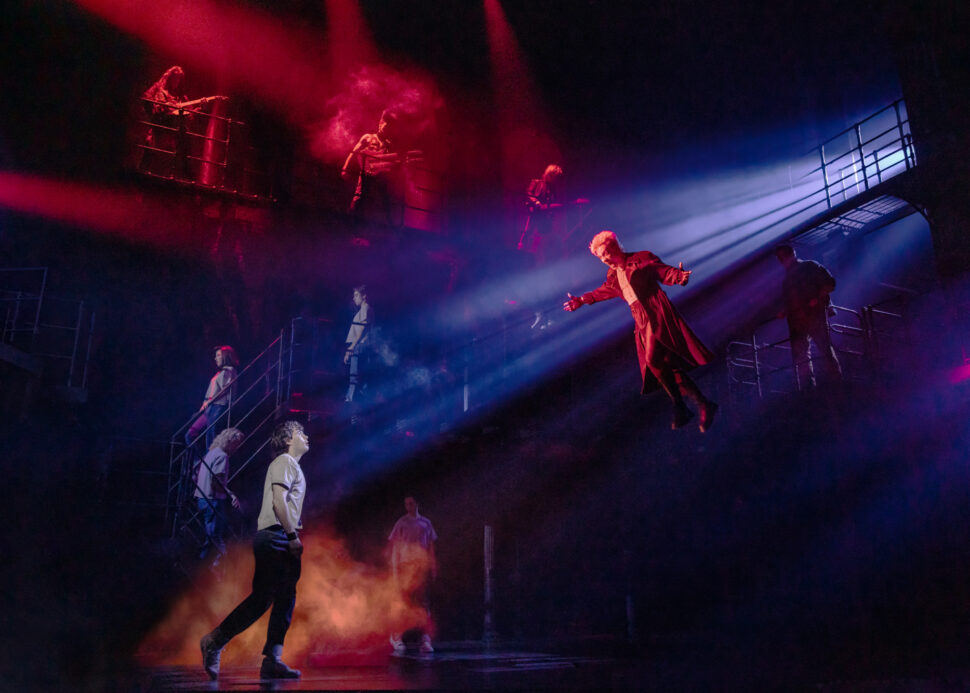
BroadwayRadio
Special Episode: Jen Schriever on lighting the supernatural world of ‘The Lost Boys’
00:25:03
Loading summary
Transcript33 lines
- [00:00]
A
Foreign.
- [00:08]
B
Interview episode of Broadway Radio. My name is Matt Tamnini. I am bringing this episode to you first on Patreon on Sunday and then in the regular feed on Monday. We will be back with Last Week on Broadway tomorrow because of the Easter holiday, we're just pushing things back one day. So we will have Last Week on Broadway coming to you a day later than normal. But in today's episode, I'm in conversation with lighting designer Jenn Shriever, who is taking on the herculean technical and creative task of lighting what is reportedly the second most expensive show in the history of Broadway, the Lost Boys. Along with director Michael Arden, Shriever is co designing this adaptation that is set in the real world of California, but with a decidedly supernatural and otherworldly twist. In our conversation, we discuss the beautiful first look images released by the production. How important lighting is for a flying effect, how Jen and the rest of the creative team are tweaking things and as she says, turning dials throughout this fairly long preview process. How she is working with Michael Arden, who is both the director, as I said, and her co lighting designer. Whether or not you need to have watched the movie before seeing the musical and much, much more. The Lost Boys is currently playing at the Palace Theater on Broadway and will not open up until April 26th. The show is did not have an out of town tryout, so they are going through a lot of both the technical and creative aspects of refining this show in front of Broadway audiences. So as I was getting ready to talk from Jen, she found herself a little quiet nook up in the balcony of the Palace Theater to talk to me. So I, I really, really appreciate her squeezing us in during what is a very busy and stressful, but also from what she says, a pretty exciting time for the entire team. Of course I'll have information in the show notes on where you can purchase tickets to see the Lost Boys on Broadway. And we talk quite a bit about these first look images that were put out on the day of the first preview back in March. So I will have a link to that in the show notes if you have not yet seen them. So with all that out of the way, here's my conversation with the wonderful Jen Shriver. So Jen, I feel like we have to start with these incredible first look images that the production put out. A lot of people have been talking about, you know, the flying because that's cool. But what really stuck with me about that image was how incredible like the shadows on everybody was coming through like the windows, then through the Balconies and the railings and then the different spots of red throughout. Obviously, that is going to be a highlight in the entire show when you have this big flying moment. How do you go as a lighting designer to make sure that all aspects of that scene focus on what the audience needs to take out from such an incredible effect?
- [03:03]
A
Yeah, I mean, it is, you know, the thing that gave me the most agita, honestly, like, you know, in terms of making sure that we were delivering, you know, suspense and. And setting, you know, the scene and the emotional story. And, you know, the shell of the set doesn't actually change very much. So. So things are delivered through our. Our. Our set. But. But, you know, the lighting, obviously, and the staging shape a lot of, you know, what we're trying to uncover or reveal. So I think what we've nailed is leaning into. I mean, it's vampires. So it's about darkness, it's about the moonlight, it's about time of day. You know, we really want to make sure that they can exist in the time and space that they would. So we're using a ton of technology to track the flyers. But also it has to be a thoughtful choice about where the light is coming from and not revealing. And then with lighting, as if any lighting designers are listening, know, you're expected to work extremely fast under duress. So, you know, all the pre planning we did coming into this feels like it's paid off in a way that allows us to have a beautiful moment where the. The people are also able to feel like they're magically existing, I mean, and not tethered, which is really fun.
- [04:44]
B
What I think has always kind of made the source material so resonant is that it does live in both this supernatural and everyday world. And you kind of mentioned, like, you have to make the lighting look like a place where a vampire would actually live, presumably the night, but also it has to look otherworldly and supernatural. How do you balance in literally one scene on one set having part of it look like moonlight, but then also something that looks very eerie and gives that tone of something sinister and evil and supernatural coming as well?
- [05:21]
A
I mean, the thing I like to try to do, which sometimes you can do quite literally and sometimes it's a thread that develops, is like taking something that's real and letting that take it to the next step. So I think in the photo you're referring, like, David is in this sort of red, fiery light, and he's in these blue moonbeams and, like, in my imagination and hopefully in the spirits of the audience, whether they notice it literally or not, it's sort of like maybe the flame of a bonfire or the. You know, that moment happens on the beach we're on. You know, so, like, maybe the bonfire is what's carrying David, you know, into the light from the bonfire. So, you know, I think it is important to differentiate between sort of what is natural, though. Santa Carla is a magical place. You know, we're in the midway, we're on the boardwalk. It's, like, kind of freaky, you know, like, there's something up obviously, with Santa Carla. So I think leaning into the magic reality of what Santa Carla is, they're in Grandpa's sort of creepy house. Like, there's a lot of ways, lighting wise, we get to lean into sort of this fun reality that can then turn us into the shadows that the vampires live in and exist in. It's playful, actually, in a. In a fun way. Yeah.
- [06:58]
B
Well, you. You mentioned this kind of special supernatural place without betraying any of the stage magic involved. How important is the lighting when it comes to making a flying effect work? I assume it's a bit more nuanced than just make it dark enough so that the audience can't see any wires.
- [07:16]
A
Totally. Because you. You notice, you know, and what we've been crafting over previews is like, you know, toeing that line of, like, not making it so dark. Obviously you want. You're looking, staring at Michael singing, or, you know, you're watching the guys, so you don't want to lose connection with them. But it is so satisfying when you are not aware of what they're connected to. So I do think it just takes time. So we just finished a session this morning where we perfected a sequence. We're constantly refining and perfecting, working with Foy and Fifth Wall, who's the choreographers of the flying, constantly dialing in what. How far we can push the light until it's too revealed, and perfecting the angles of light. Obviously, sometimes many folks are flying at once, so that adds another layer of complication because you don't want to run into each other's lights and you want it to exist in the context of the scene. So it can't just be the ideal light, isn't always the right light for what we're trying to pull off, storytelling wise. So it is. It is a lot of sort of technical. Technical dialing in that we're. We're constantly doing. But I'm really proud of. Of what we've been able to do. And I'm excited. Over the course, you know, we're constantly dialing. So over the course of the next two weeks, we'll hopefully get it to a place that feels. I already feel good about it, but that feels even better.
- [08:54]
B
Yeah, well, that dialing. What is that process, like? Cause, like, with the choreography and the singing, they can do most of that in a rehearsal room. There's only so much pre pro and everything you can do before you get into the space and have people in the building in their costumes. All of that stuff is it just a little bit of, like, here's what we think, and then we trial and error until we get it right.
- [09:16]
A
It starts with trial and error, but now we kind of know. So now it's a bet of like, it's math, right? So it's like the distance between the flyer and the light changes as they move. So it's changing, you know, particular programming for lighting to make sure that the handoff of, as, you know, it's like literally the Pythagorean theorem. Like, you know, A squared plus B squared equals C squared. Not that we're actually doing that, but it's basically that, you know, so. So the distance between the flyer and the thing. The distance between the flyers and each other. Flyers sweat unless they're going straight up and down. You know, there's. There's sway involved and the human emotion and the way they hold themselves. So it started as our best guess, and now we know what works for each sequence, which is very different. Every sequence is lit very differently because every sequence also exists in the world in a different way. So now it's getting someone in a harness. We have to turn all the lights off now. We're like exit signs, you know, like, we're like. We're in the nitty gritty of it.
- [10:25]
B
Well, I've always been interested in lighting because to me, it feels like the. The best blend in theater of, like, hardcore technical while also hardcore creative. Because, like, everybody else lives in all of the spaces, but, like, all of the instruments, all of the, like you were saying, the math, all of the tech of lighting is so specific. But also it's, you know, everything you see has to be lit in a creative way. It's like, how do you go back and forth to make sure that both sides of that story you're telling are represented in the decisions you make?
- [10:59]
A
Totally. I mean, I. You know, it's like I always joke about, like, artists are like, I'm a storyteller first. And like, I. Which I. I Think we all are, obviously. But like, you have to, if you approach it so, you know, obviously it's all creatively begun, you know, with an art intention and setting the mood and figuring out the composition and all of that. But if you don't know how to pick the right things and the tools, you're sort of sunk. I mean, it's like being a sculptor maybe or, you know, like you have to know your tools. And in lighting your tools are a bit, you know, are super technical. Like, does this light, you know, does it even dim the way, you know, I need it to do? Or can the shutters of the light close completely or do I need that? Does it zoom the way I need it to be? Honestly, there's some flying that's so fast. You have to have the right light that can actually move as fast as the foil lines can, which not our whole rig can't do that. We have to choose selectively which lights those are. But it's a hugely. I rely also on my team who's amazing, you know, like I have. We have two programmers, we have my associate and an assistant. And so together it's so big. This show is so big. I mean, it's so big. So like, I don't think that we're all, you know, the five of us were working on the sequence we just did before I came to you. The five, all our brains, you know, someone in the mezzanine, eyes everywhere, you know, all of us working towards the same goal. So really it's people with good brains that help lighting be not just about your desired stage picture and also how to transition, pull it off, do the things you want to do.
- [12:51]
B
Yeah, well, you mentioned good people and you are accredited as co lighting the show with Michael Arden, who I think is one of the great creative minds of his generation in theater and has had some incredibly well lit shows. His Christmas Carol, I thought was one of the most me too brilliant things ever. Yeah, you said, like, you've got to rely on this technical stuff. I mean, maybe Michael has a deep wealth of knowledge of all of the equipment, which I'm sure he does. But like, how do you go about that process working with him, who I'm assuming comes from a little bit more of the creative side than the technical side than most lighting designers. How do you make sure that what he is seeing and what you are seeing and what you know can work actually happens when you are building to something that is in both of your minds separately?
- [13:40]
A
Yeah, it's funny, someone else asked me like, what like, what's it like? Actually, they asked me before we started. Or like. Right. Like, what. What's it like working with Michael? I'm like, you know, I'm. I'm curious too, you know, but it's. It's. It's been so. First of all, it's. Before we talk about that, it's been so fun. Like, we are having a blast. Like, it's been having. Not that lighting design is lonely because you have a team with you, but being the principal designer alone can feel lonely. And it's been so. In this huge show, it's felt so freeing, actually, to have a second brain. So that's been amazing. And weirdly, I mean, I don't know how he knows all that. He knows. Like, he knows so much more than I expected him to know about how lighting, like, he. Like, he's just absorbing constantly. So everything he's been doing has been leading to this moment that he is aware of how it all works. Like, of course, are there gaps? Sure. But they don't reveal themselves in any way that would make a difference. And the second he hears a syntax thing I say or the way I talk about something, he immediately picks it up, knows how to use it to his advantage in the future. So. So it's been. And he's pushed me, you know, sometimes you get in your own rut. Like, I am in, you know, like, just the things I normally do or, like, you know, I wouldn't necessarily grab this light to try this thing. And he's going for that, and it's a great choice. So it's been really freeing, actually, to have him as a teammate. And I think it's really put the show looks. I'm really proud of how the show looks, and it's been really fun to, like, you know, not one up each other, but, like, build on each other, you know, like, build on each other's ideas in a way that, you know, and we still like each other, which is really helpful. We're not, you know, I was like, are we gonna. Are we gonna get into a fight?
- [15:41]
B
Yeah, well. And you're. You're joining not only Michael, but. But they and Laffrey, they work together a lot in a lot of different contexts. And so is there kind of a little bit of fun? And you talk about, like, the fun you're having, and there's, like, the ability to play a little bit when you're joining people that know each other and work together so much, to be able to throw in some different perspectives that they might not have normally gravitated toward totally.
- [16:03]
A
Dane and I have been friends for, like, for over a decade, so we have a close friendship. So. And we just. And we've done. We did, you know, we've done a lot of weird shows together, so we have a bit of a, you know, working. We did the Strange interlude at Irondale with David Greenspan, like the six hour. I don't know if, you know, saw that one. Bananas. So with Dane, there's a familiarity. And now Michael and I, I mean, I feel like we're siblings. I keep joking because, you know, I'm like, there's two best friends. And Jen, you know, like, I'm like, I'm the little sidecar. But it's. We all have remarked, and I felt this way. It feels like creatively very open and we are able to. To work through each other's ideas together. All. All of us. Not just even the three of us. Like, sort of the whole, like this show has been a very open creative process in problem solving and solving these big things, these big transitions, these big ideas. It's been a really help, like, one of the healthiest design and creative processes I've ever been on, which, you know, for a show this large, I think is maybe pretty rare. I don't know. I mean, this is probably one of the largest shows I've ever done. So, you know, and I think all of us, and we're all exhausted. You know, I feel like I'm sitting down with you. I'm like, I have a single brain cell right now.
- [17:33]
B
Yeah, no, no, no. It's firing on all cylinders. Don't worry, Jen, you're good. Yeah, yeah.
- [17:37]
A
Great.
- [17:38]
B
Back to those first look images. I am far from an expert, so please tell me if I am just making up connections that I'm not seeing. But you ment boardwalk and I loved looking at that one versus the flying image that we talked about earlier. And it seemed to me obviously one supernatural world, one more grounded in real world. But it seemed to me just from the little images that we got when not seeing the whole stage picture, that it looked like it was something like the same color palette just a degree or two off. Like the reds we saw on the flying were maybe a little bit more purple. On the boardwalk, the blues were a little less harsh. The white light or the yellow light was a little warmer. So I love that. That idea of kind of living in both of those worlds in a magical place, like you said earlier, at all times where everything is recognizable, but the audience can see the difference. Am I reading too much into that? Is that there?
- [18:30]
A
No. No. Yes. I think, like, color story, you know, it's actually, I think, one of the hardest things for a lighting designer because you. You know, at this point right now, all the lights make all the colors, so you have to really make a choice. You know, you could easily have. Have hundreds of options. And personally. And I think we all agree, like, not to be restrained, because I think, you know, especially when we're fully on the midway, which is, you know, seen in the. You know, in the boardwalk that we are, there is an explosion of color, but. But trying to figure out, you know. Yeah. When. When David is present, like, what. How. How does that affect the color that we're seeing when the moonlight is the moonlight, a steely moonlight. And how does that track through what is the sunlight when we're in the light of day in the Emerson house? And then there's also these incandescent bulbs. So how does the incandescent bulb on the midway translate to what might be in Michael's bedroom? So I think we're constantly sort of threading the through line of color and angle through the whole thing. Yeah. So the midway is the most extreme expression. Expression of our color story, for sure.
- [19:50]
B
Yeah. No, I love that. Okay. I know you've got work you still have to do, so I won't take too much more of your time, but is there a moment again, without spoiling anything, but is there a moment or even an effect or just an overall feeling that you get from the lighting side of things that you are most looking forward to audiences seeing? Obviously, you're already in previews, but once you're finished, as the. The whole thing opens and everybody's ready to go, like, is there something you're most excited for them to experience?
- [20:18]
A
Yeah, I mean, I think, like, in. In the broad stroke, I'm just. I love how we hand off from one thing to the next. Like, I think the. The transitional work from space to space, not just lighting, actually, but it obviously, with scenery and music, like, is really thrilling. And I. I think the bridge scene is my most. Like, I just like the famous bridge scene from the movie, which, if, you know, the movie is pretty epic. And I'm. I still feel like you're really in suspense with the Lost Boys in this moment. And I'm. I think we're. We're. We're hiding all the things we're meant to hide very well, and we're showing all the things we're meant to show very well, and it creates A good tension that. That I'm excited to be part of creating.
- [21:11]
B
Yeah, Very cool.
- [21:12]
A
Yeah.
- [21:12]
B
Well, I want to end on the movie. When you have a source material like that, which I think cult classic is probably underselling it a little bit, but when you have, you know, source that is as beloved as this is and is, like, kind of iconic in its own way, that, like, nothing else has really ever done what Lost Boys did, how much do you lean on that to say, okay, we want to make sure this is recognizable to the people who love the film while not being completely beholden to the images that were presented. Because it's a completely different medium. Going from film to stage.
- [21:50]
A
Totally. Especially film to musical, which is like, you know, making a musical is hard enough, and then trying to have source material that people is beloved is like, you know, I think, you know, quite a task, I think. I think in hope, what we're doing is like the emotional core, Whether it's fear, playfulness, the ride that the movie takes you on, and the way it takes you on that ride, I think is the goal and what we're all working towards. And imagery wise, it's hard. We're on a stage, you know what I mean? But I think the cinematic experience, that. The way, you know, obviously, we can't do that intro shot for the movie, you know, it's like flying into Santa Carla, basically. Vampire point of view, you know, over the ocean and landing on the boardwalk. Obviously, we can't do a cinematic, you know, ocean arrival, but I think we can do. Make that feeling, that same feeling in the. In the only way that live performance can. So I think. I think there's some images that, you know, you would never put two images side by side and be like, you know, they match. But I think the spirit of it is all there, which I. I'm proud of. Yeah.
- [23:18]
B
Yeah. Well, last question. Because, you know, not to out my own age, like, because the movie came out at a certain era in time, there might be people who might even be the target demographic for this musical. I don't know who might not be familiar with the film at all. Knowing what, you know, having seen everything that you guys are doing on the stage, do you recommend for people who've never seen it to watch the movie before they come or watch the movie after they see the show?
- [23:44]
A
Oh, it's such a good question. I think that they should come without having seen it, then watch the movie and then come back. I mean, I kind of like, well done.
- [23:53]
B
Yeah. Sell multiple tickets. There you go.
- [23:56]
A
No but really, I think like, I think it stands. What we're making does stand on its own and is like a really. I don't think it would hurt you if you saw the movie. I think it would, it would contextualize some things. But I don't think you need it. I really do. I think that, like, it really stands on its own. So I don't think you could go wrong either way. Yeah.
- [24:17]
B
Okay. Fair. Very diplomatic way to say it. While also trying to sell as many tickets as humanly possible. Well done. The producers will be happy with that answer. Well, thank you so much for breaking this stuff down. I am fascinated by this and I cannot wait to see the show continued success with all of the tweaking and the dial turning that you're doing over the next few weeks. And I hope that everything goes as wonderfully as you hope and plan.
- [24:39]
A
Thanks, Matt. I hope my brain cell survives. My single brain cell survives two more weeks of dialing.
- [24:46]
B
Good luck.
- [25:04]
C
Cantu heard you loud and clear with their new Ultra Moisture collection. Powered by Batana Oil and Jamaican Black Castor Oil, this new lineup collection is clinically proven to deliver non stop moisture for up to five days. Five whole days. The shampoo gently cleanses without stripping and the leave in and stylers keep curls soft, defined and nourished long after wash day. Plus, it's free of sulfates, parabens, silicones and mineral oils. If your curls have been craving real moisture, this is it. So if your hair's curls have been thirsty, go ahead and try the new Cantu Ultra Moisture collection. Your curls will thank you. Available now at Walmart.