
Podcast
Brown and Happy
Hosted by Dr. Payal Patel Ghayal · EN
Brown women work so hard and invest decades to do all the right things. Despite following the perfect checklist to do everything the way she should, she's still not happy. I have been down that path of doctor, wife, daughter and mother- and totally get it! I am a certified life and parent coach after a career change from an exhausted, overwhelmed, unfulfilled four decades. In this podcast we discuss how South Asian women look happy on the outside but are suffering on the inside. These women feel ashamed to admit it because they think they should just be grateful.
I bring forward topics that exist but have been brushed underneath the rug for centuries. Some of the topics include the over-involvement of our families in our personal lives and the constant habit of doubt ourselves before making decisions to avoid making a mistake. It's time to change the trajectory of your life now and generations to come with the coaching tools I share and teach.
I coach South Asian women in my private coaching program and currently accepting new clients. Book a call to connect and inquire about availability.
www.payalghayal.com
10episodes
Episodes
Newest firstAll episodes
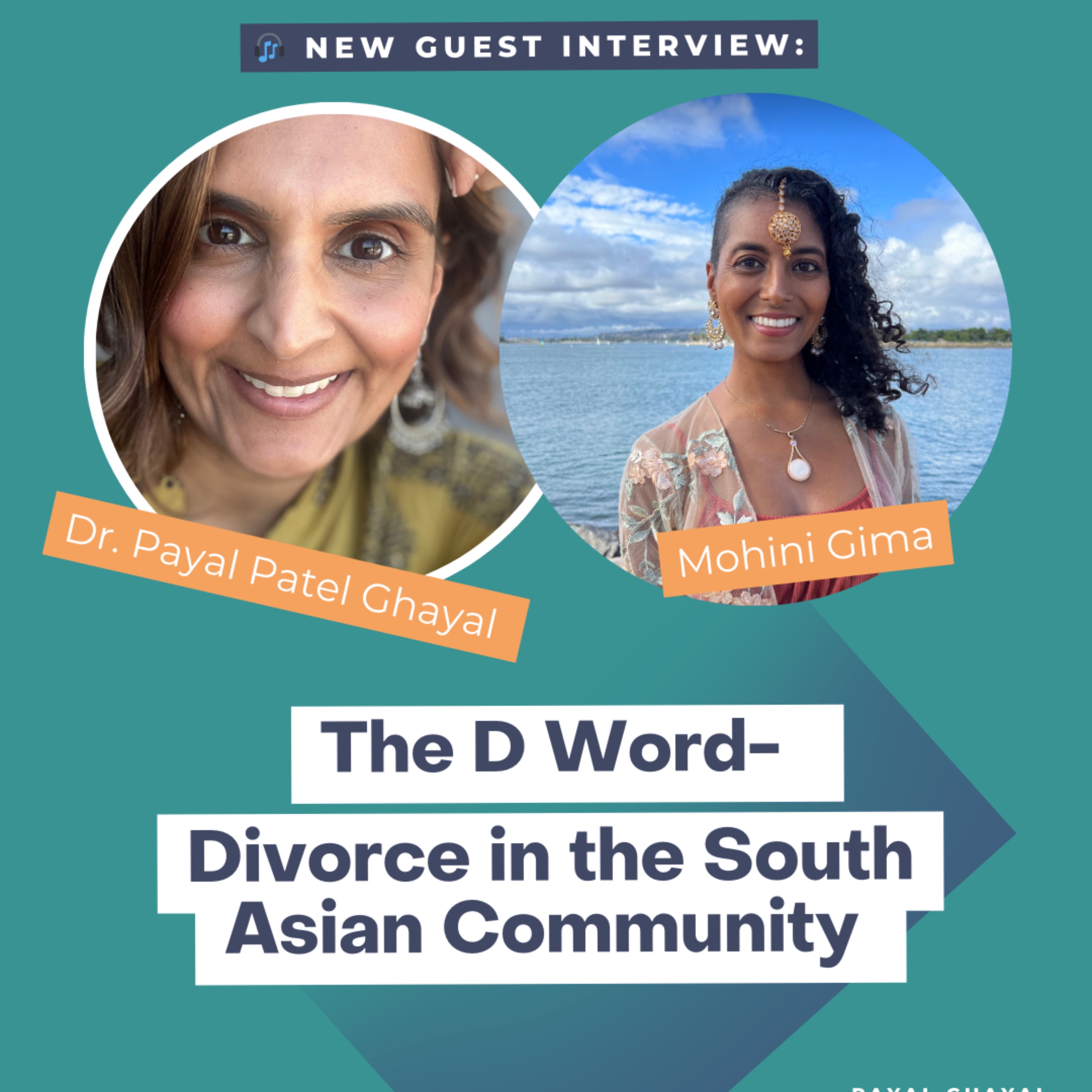
Episode 124: The D-Word: Divorce in the South Asian Community with Mohini Gima
Mar 600:40:49Tap to summarize Divorce in the South Asian Community is a taboo topic but today we will uncover the conditioning, trauma and healing journey. I have a special guest join me to discuss this topic. Mohini Gima is a holistic relationship coach and the founder of Rani Rising. A proud Desi divorcee, she supports high-achieving South Asian women navigating divorce and major relational endings. After a 14-year marriage where everything “looked right” on paper, her work focuses on helping women untangle cultural guilt, identity disruption, and emotional burnout so they can make grounded, self-trust-based decisions about their lives and relationships.
Transcribe →
Episode 123: No One Is Immune: The Model Minority Myth, Politics & Speaking Up
Jan 200:38:13Tap to summarizeWhat does it really mean to be a “model minority”? In this raw and timely conversation, Payal sits down with a fellow Brown physician, Dr. Maheetha Bharadwaj, to unpack the model minority myth, privilege, politics, mental health, and the responsibility that comes with having a voice. Dr. Maheetha Bharadwaj, 4th year Urology Resident at the University of Washington, dancer, advocate, and social media creator. Together, they explore how this myth silences Asian American communities, why political complacency is dangerous, and how immigration policies and power structures affect all of us—citizens included. They dive into generational differences within South Asian families, the pressure on eldest daughters and high-achievers, and the emotional cost of constantly chasing success without fulfillment. This episode also tackles the role of social media and advocacy—when to call out, when to call in, and how to stay rooted in integrity rather than fear or performative activism. This is not about politics as opinion. This is about human rights, accountability, and choosing courage over comfort. ✨ If you’ve ever felt torn between honoring your roots and speaking your truth ✨ If you’ve questioned silence, success, or the cost of “fitting in” ✨ If you’re ready to live and lead more authentically This conversation is for you.
Transcribe →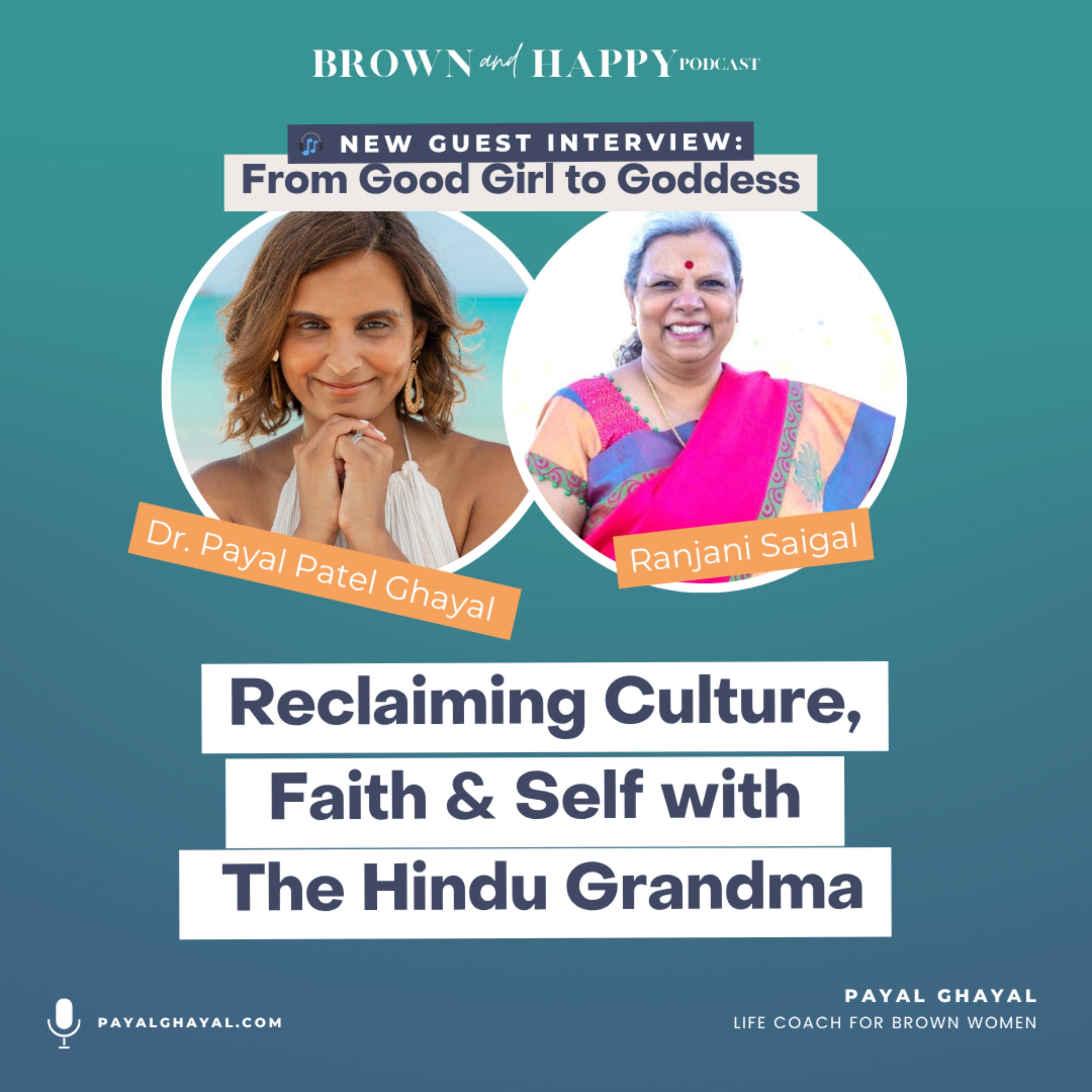
Episode 122: From Good Girl to Goddess. Reclaiming Culture, Faith & Self with The Hindu Grandma
Nov 1400:48:37Tap to summarizeIn this heartfelt and intergenerational episode, host Dr. Payal Patel Ghayal sits down with Ranjani Saigal, the creator of the viral platform @thehindugrandma, to explore how South Asian women can rediscover spiritual depth beyond cultural conditioning. Together they unpack what it means to pass down Hindu wisdom to the next generation without passing down guilt, perfectionism, or pressure. They reflect on how tradition, feminism, and identity can coexist—and how women can finally release the “good girl” expectations to embrace joy, freedom, and self-love. This episode blends laughter, storytelling, and truth bombs—reminding listeners that honoring our roots and honoring ourselves can, and must, go hand in hand. Ranjani Saigal is the founder of @thehindugrandma, a social media platform with over 200K followers dedicated to sharing Hindu wisdom with the next generation. Raised in a deeply religious family and trained in Sanskrit and the Gayatri Pariwar lineage as a qualified Purohita, she has conducted Hindu weddings and authored the children’s book My First Om.As Executive Director of the Ekal Vidyalaya Foundation USA, she leads efforts supporting over 100,000 rural schools serving 2.8 million children across India and pioneered Ekal on Wheels mobile computer labs. An IIT Bombay graduate and lifelong arts advocate, Ranjani has been honored by multiple governors and the Commonwealth’s Asian American Commission with a Lifetime Achievement Award. Connect with Ranjani: Instagram: @thehindugrandma Website: Ekal Vidyalaya Foundation USA If this episode reminded you of your own cultural tug-of-war, share it with another woman reclaiming her story. Subscribe, leave a review, and join the Brown and Happy community at payalghayal.com .
Transcribe →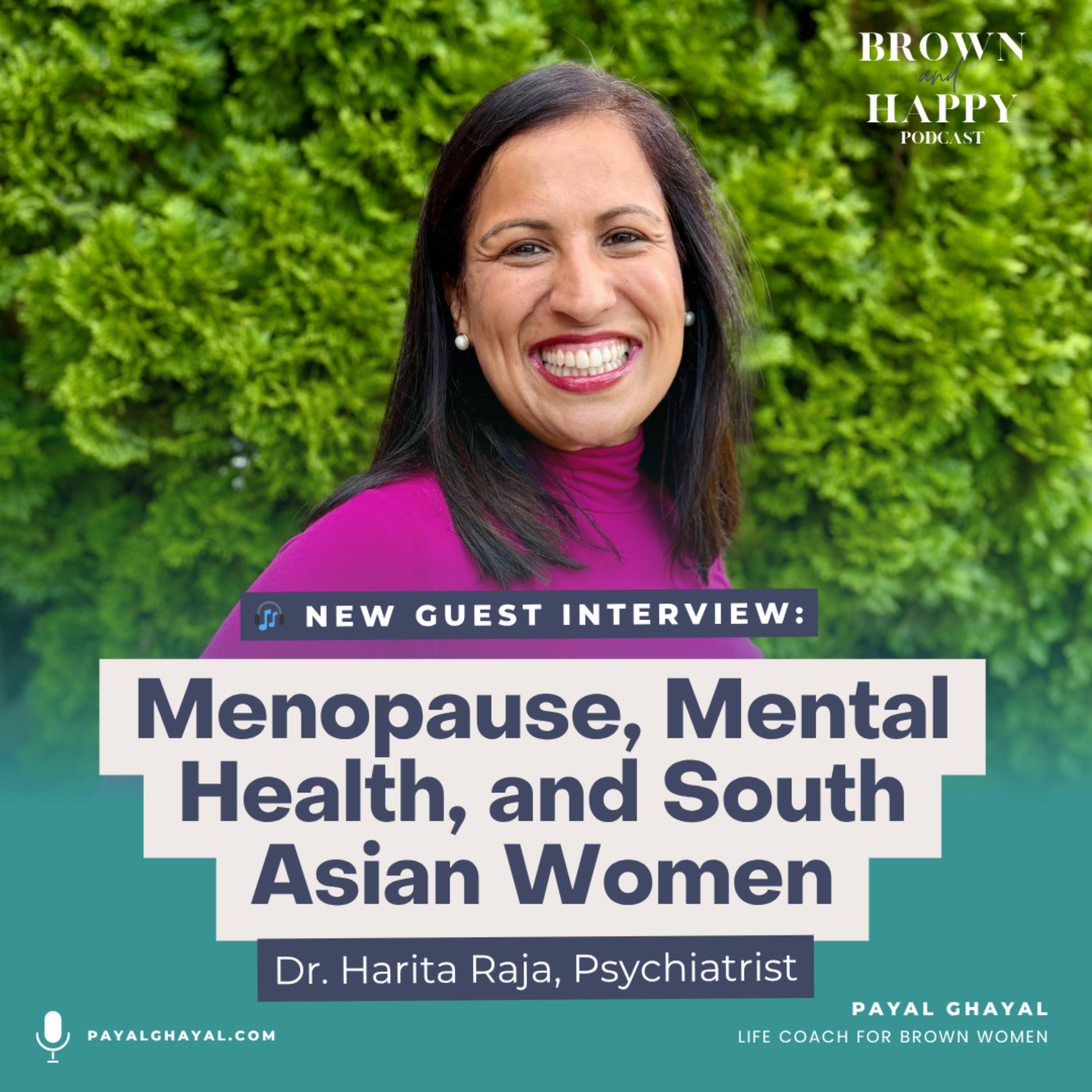
Episode 121: Menopause, Mental Health, and South Asian Women with Dr. Harita Raja
Nov 700:48:46Tap to summarizeIn this heartfelt and empowering episode, Dr. Payal Patel Ghayal sits down with psychiatrist Dr. Harita Raja to unpack how perimenopause and menopause uniquely affect South Asian women—physically, emotionally, and culturally. Together, they explore what it means to age with awareness, strength, and self-compassion while breaking generational cycles of silence around women’s health. Dr. Harita explains how South Asian women tend to experience menopause earlier than Western counterparts and how hormonal changes can impact everything from mood to metabolism. Dr. Payal reflects on her own experiences in midlife—navigating divorce, motherhood, and self-discovery—and how the mind-body connection becomes even more vital in this season. The conversation also dives into topics like: Cultural conditioning around women’s roles and reproductive health How perimenopause can start as early as your late 30s The link between hormones, sleep, anxiety, and mood Why community, nature, and strength training are essential to thriving midlife The importance of self-education and advocacy around hormone therapy and women’s health Dr. Payal and Dr. Harita model vulnerability and courage as they redefine what it means to be Brown and Happy in midlife — choosing joy, movement, and authenticity over silence and shame. Dr. Harita Raja is a South Asian women’s psychiatrist, mom of two, and advocate for open conversations around mental health, hormones, and holistic wellness. She’s passionate about empowering women to understand their bodies and emotions through every life stage. Resources: IG: @drharitaraja LinkedIn: Dr. Harita Raja Website: www.bwmhc.com Others recommend by Dr. Raja-@drmaryclaire, @menopause_doctor, @heatherhirschmd
Transcribe →
Episode 120: How to Stop Going to Battle with your Teen
Oct 2400:31:15Tap to summarizeYour sweet little one has officially turned into a teen—and suddenly the relationship feels less like nurturing and more like constant clash after clash. In this episode of Brown and Happy, I dive into the real, exhausting, and often heart-wrenching dynamic of parenting a teenager—especially through the lens of South Asian familial and cultural expectations. We’ll explore why the “battles” happen, where they come from, and how you can shift from conflict to connection—without sacrificing your values or your own peace of mind. Whether you’re already in the thick of teen upheaval or bracing yourself for what’s ahead, this is for you. 🧭 What We Cover The shift from childhood parenting to teenage parenting: what changes and why it feels so dramatic. Cultural and generational expectations that add extra pressure: why “just obey,” “respect,” and “don’t challenge” can turn into rebellion in a teen body. Common battle grounds: technology & screen time, identity & belonging, freedom vs. rules, and how they play out uniquely for South Asian youth. How to recognise when you’re stuck in the “battle mindset” (you vs. them) and transition into a “co-growth mindset” (us = parent + teen). Practical coaching tools you can begin using today to decrease defiance, increase connection, and maintain your role as both parent and model of emotional intelligence. How self-care, boundaries and your own modelling of behaviour become the secret sauce for healthy teen relationships. 👤 Who This Episode Is For South Asian parents who feel disconnected from their teen and are tired of the power‐struggles. Any parent who worries that the teen years meant “dropping the ball” and wants to reclaim the narrative. Coaches, therapists, educators working with families navigating adolescence and cultural intergenerational dynamics. Teens who want their parents to “get it” and open up a conversation grounded in respect and authenticity. 🌟 Key Take-Aways You are not the only one fighting—and the conflict often isn’t about “you” or “them”, but about transition. The teen brain is wired for independence; what looks like defiance is often their way of finding identity—and you can guide it instead of reacting to it. Boundaries + connection = the winning combo. You’re not choosing one over the other. Your emotional health matters: when you bring calm, presence and curiosity instead of fear and shame, you lead the relationship. Small shifts in language and posture can completely change the tone: “Tell me what you’re thinking” beats “Because I said so.” 🔗 Connect & Resources Visit my website: www.payalghayal.com Instagram: @payalghayalmd Want to dive deeper? I coach South Asian women and moms in private & group programs—book a call to see if it’s a good fit. Love this episode? Please hit subscribe, leave a review on Apple Podcasts, and share with another parent who needs to hear: you’re not alone. Want to take it further? DM me on Instagram or drop me a voice note—tell me your biggest teen challenge and we’ll explore it together. Thanks so much for listening and choosing to engage with topics that matter. These conversations aren’t easy—but they’re sacred. 💙— Payal
Transcribe →
Episode 119: Divorce Isn't Failure-It's The Courage to Choose You
Oct 300:45:41Tap to summarizeDivorce is often seen as taboo in the South Asian community, especially for immigrant women raised with deep cultural conditioning around marriage and family. But what if divorce isn’t a failure at all—what if it’s an act of courage, a choice to finally choose you? In this episode, I sit down with Maneesha Ahluwalia, founder of Life Coaching for Indians. Maneesha and I have a candid conversation about the stories we were told as brown women when choosing partners, the unspoken pressures that shaped those choices, and what happens when marriage doesn’t turn out the way we imagined. We talk about: The cultural and family conditioning that influences how many South Asian women pick partners The shame, guilt, and fear around divorce in our community What actually went “wrong” in our marriages—and why it wasn’t about personal failure How choosing yourself, even when it means ending a marriage, is an act of radical courage Practical tools and perspectives for anyone navigating love, family expectations, or difficult decisions ✨ This is an empowering conversation for anyone who’s ever felt trapped between cultural obligations and personal happiness. Divorce isn’t the end—it can be the beginning of finally living life on your terms. Maneesha Ahluwalia is the founder of Life Coaching for Indians. She helps Indian professionals who feel torn between family expectations and their own desires find the courage to make choices that actually feel right for them. Instagram: @lifecoachingforindians 👉 If this episode resonated with you, don’t forget to subscribe, leave a review, and share with another South Asian woman who needs to hear this reminder: divorce isn’t failure—it’s freedom.
Transcribe →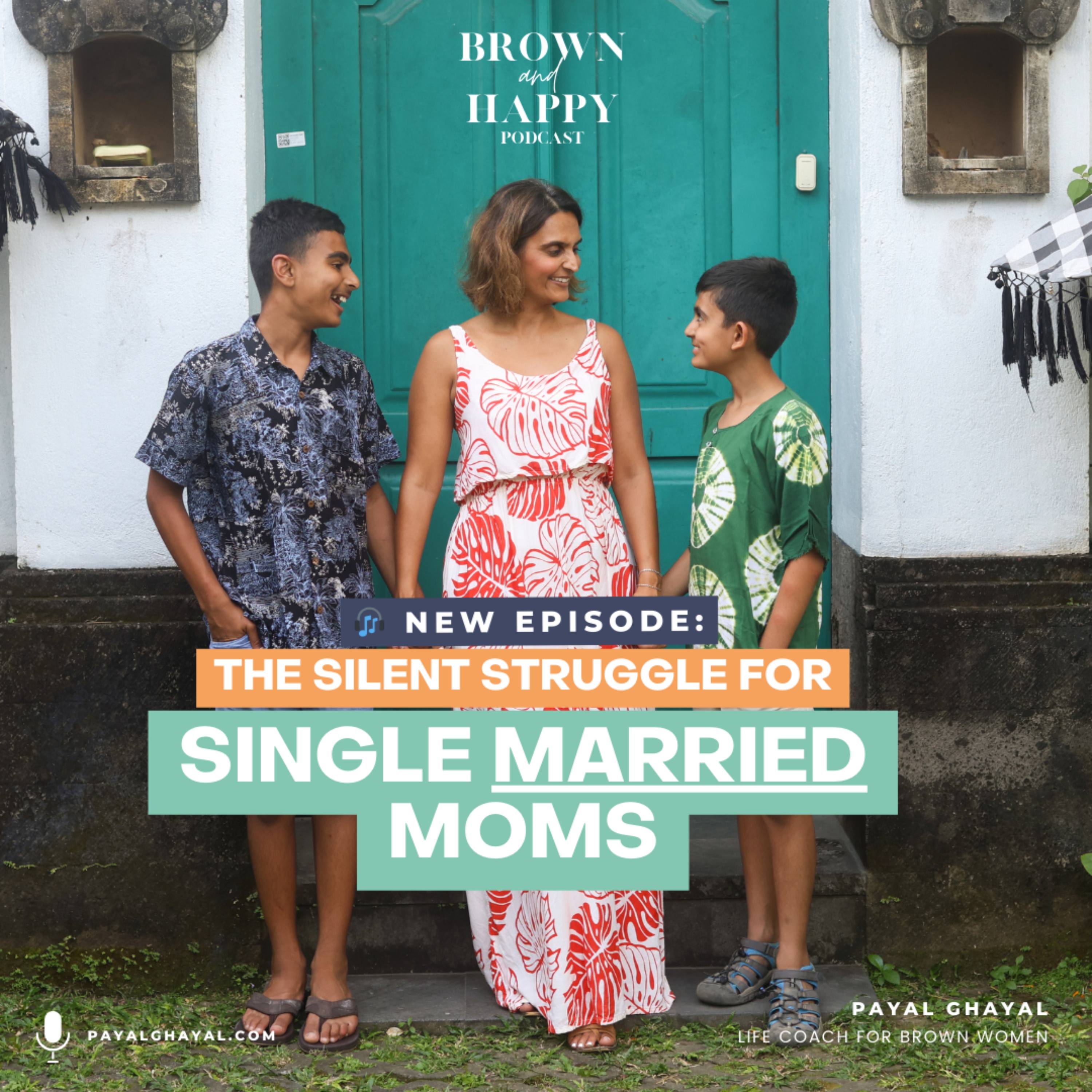
Episode 118: The Silent Struggle of Single Married Moms
Sep 500:15:18Tap to summarizeWhat happens when you’re legally married—but living like a single mom? In this episode of Brown and Happy, we dive into the quiet, exhausting, and often invisible reality of single married moms—South Asian women who manage careers, kids, and homes, while their partners live unchecked. We talk about: ✨ What it really looks like to be a single married mom ✨ Why South Asian cultural norms make this role even heavier ✨ The emotions no one talks about—resentment, loneliness, guilt, shame ✨ Practical ways to reclaim support, joy, and rest If you’ve ever felt like you’re carrying it all while being told you ‘have it all,’ this episode is for you. 💌 Share this episode with another woman who needs to hear it, and connect with Payal on Instagram: @payalghayalmd
Transcribe →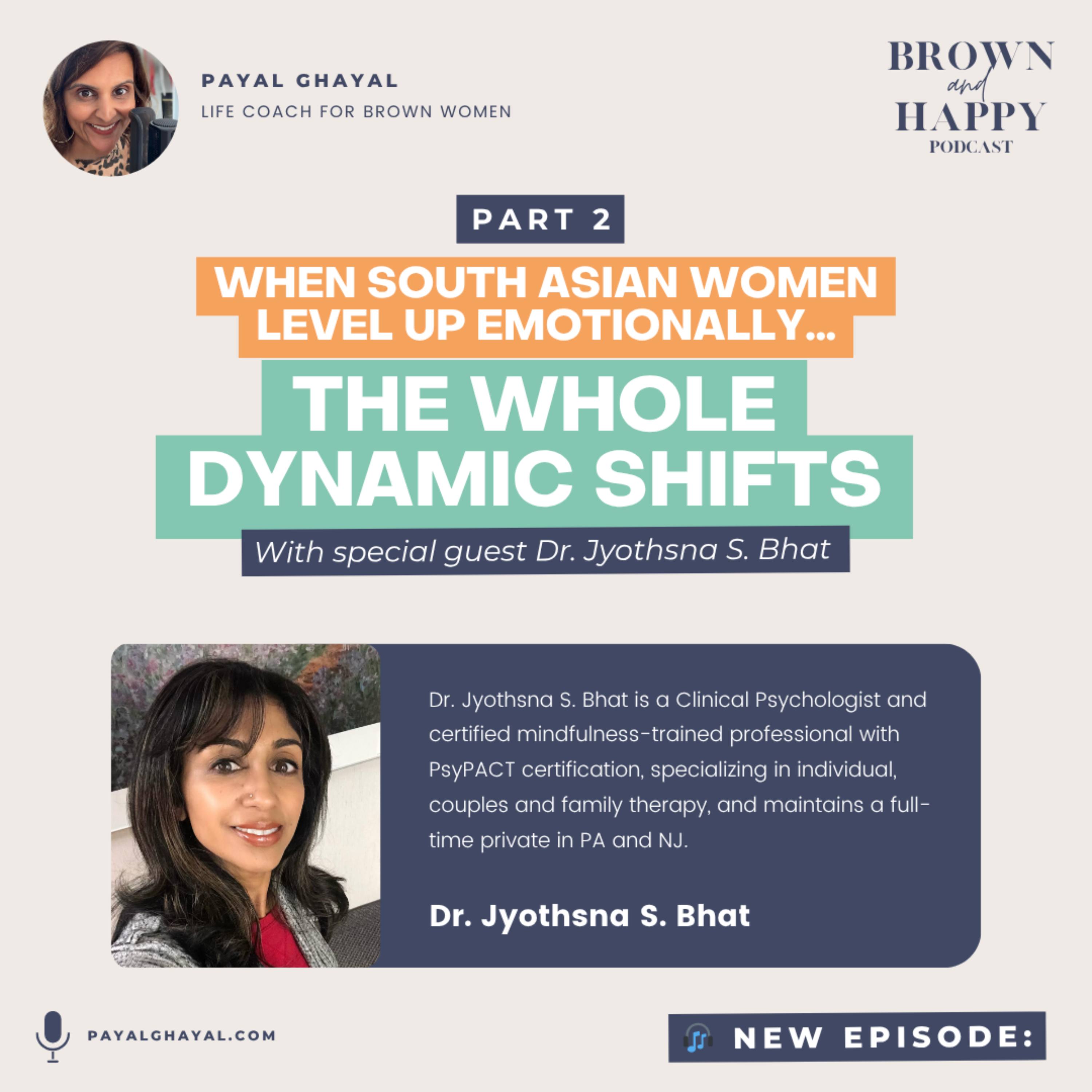
Episode 117: When South Asian Level Up Emotionally... The Whole Dynamic Shifts (PART 2)
Jul 3, 202500:18:54Tap to summarizePART 2: South Asian Women accepting and utilizing mental health resources has made the emotional intelligence gap between the genders even more obvious in the best way. We have special guest join us to discuss this very necessary and relevant topic. Dr. Jyothsna S. Bhat is a Clinical Psychologist and certified mindfulness-trained professional with PsyPACT certification, specializing in individual, couples and family therapy, and maintains a full-time private in PA and NJ. Among her areas of expertise are depression, anxiety, ADHD, marital stress, grief/loss, adjustment/mild traumas, and corporate stress. She has also conducted corporate wellness programming for such companies as Fragomen, Yieldstreet, and Deloitte. Dr. Bhat is an avid advocate for mental health in the South Asian community and hosts the first ever South Asian blog on Psychology Today. As a leading voice for Southasian mental health, Dr. Bhat has been interviewed by Refinery 29, The Juggernaut, Harvard Political Review,Forbes Inc, NBC online, Diversity Inc, among other high-ranking journals. Given her passion for advocacy, Dr. Bhat has had the privilege to speak on several panels, including Yahoo, Disney, and Double Verify, across the country to help increase mental health awareness in South Asian communities. She has also appeared on such podcasts as the Happy and Human Podcast, Toxic Leadership and Immigrantly Pod. Dr. Bhat is currently in the process of cowriting a Southasian mental health children’s book series, with the first book releasing later this year. www.payalghayal.com
Transcribe →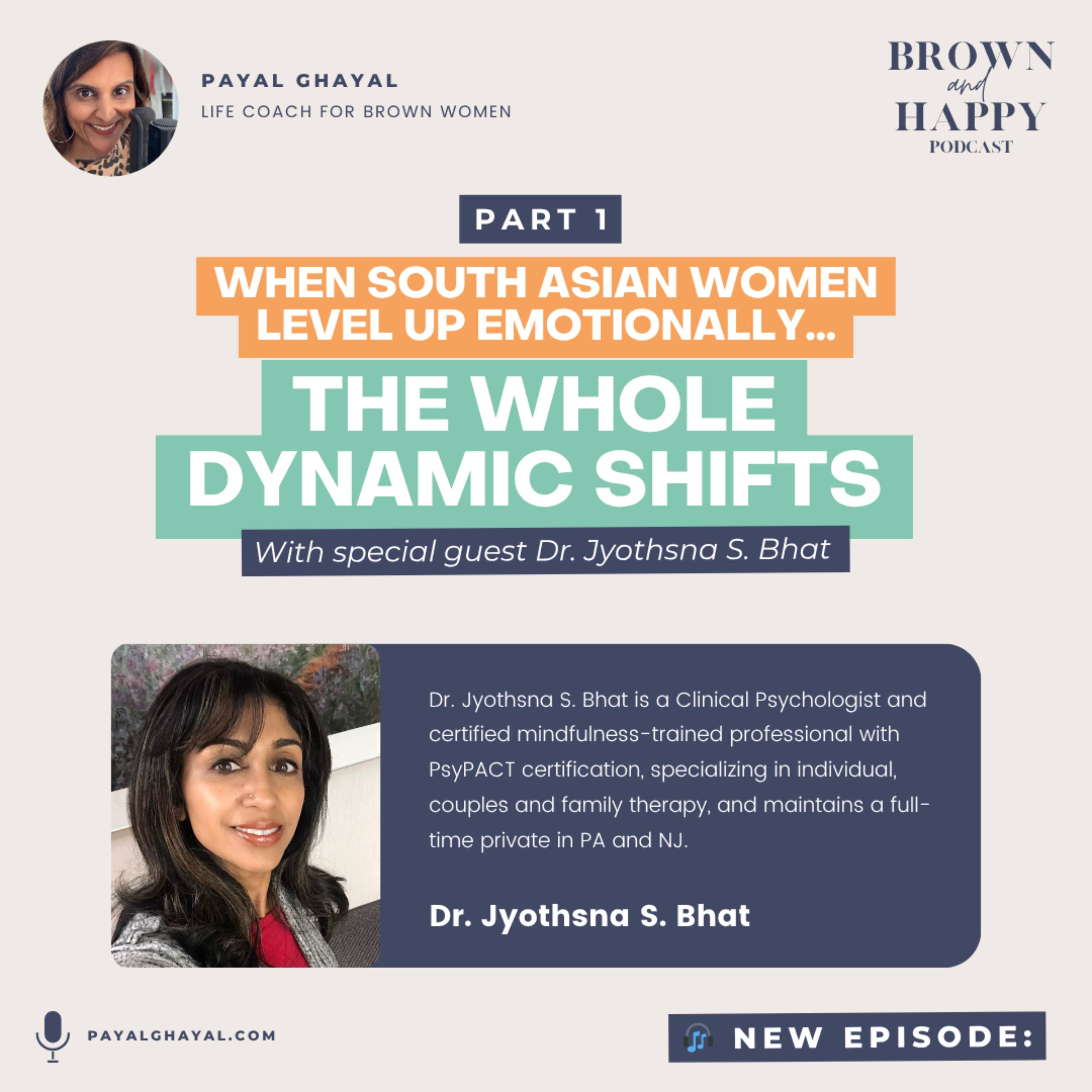
Episode 116: When South Asian Whole Level Up Emotionally... The Whole Dynamic Shifts (PART 1)
Jun 28, 202500:31:54Tap to summarizePART 1: South Asian Women accepting and utilizing mental health resources has made the emotional intelligence gap between the genders even more obvious in the best way. We have special guest join us to discuss this very necessary and relevant topic. Dr. Jyothsna S. Bhat is a Clinical Psychologist and certified mindfulness-trained professional with PsyPACT certification, specializing in individual, couples and family therapy, and maintains a full-time private in PA and NJ. Among her areas of expertise are depression, anxiety, ADHD, marital stress, grief/loss, adjustment/mild traumas, and corporate stress. She has also conducted corporate wellness programming for such companies as Fragomen, Yieldstreet, and Deloitte. Dr. Bhat is an avid advocate for mental health in the South Asian community and hosts the first ever South Asian blog on Psychology Today. As a leading voice for Southasian mental health, Dr. Bhat has been interviewed by Refinery 29, The Juggernaut, Harvard Political Review,Forbes Inc, NBC online, Diversity Inc, among other high-ranking journals. Given her passion for advocacy, Dr. Bhat has had the privilege to speak on several panels, including Yahoo, Disney, and Double Verify, across the country to help increase mental health awareness in South Asian communities. She has also appeared on such podcasts as the Happy and Human Podcast, Toxic Leadership and Immigrantly Pod. Dr. Bhat is currently in the process of cowriting a Southasian mental health children’s book series, with the first book releasing later this year. www.payalghayal.com
Transcribe →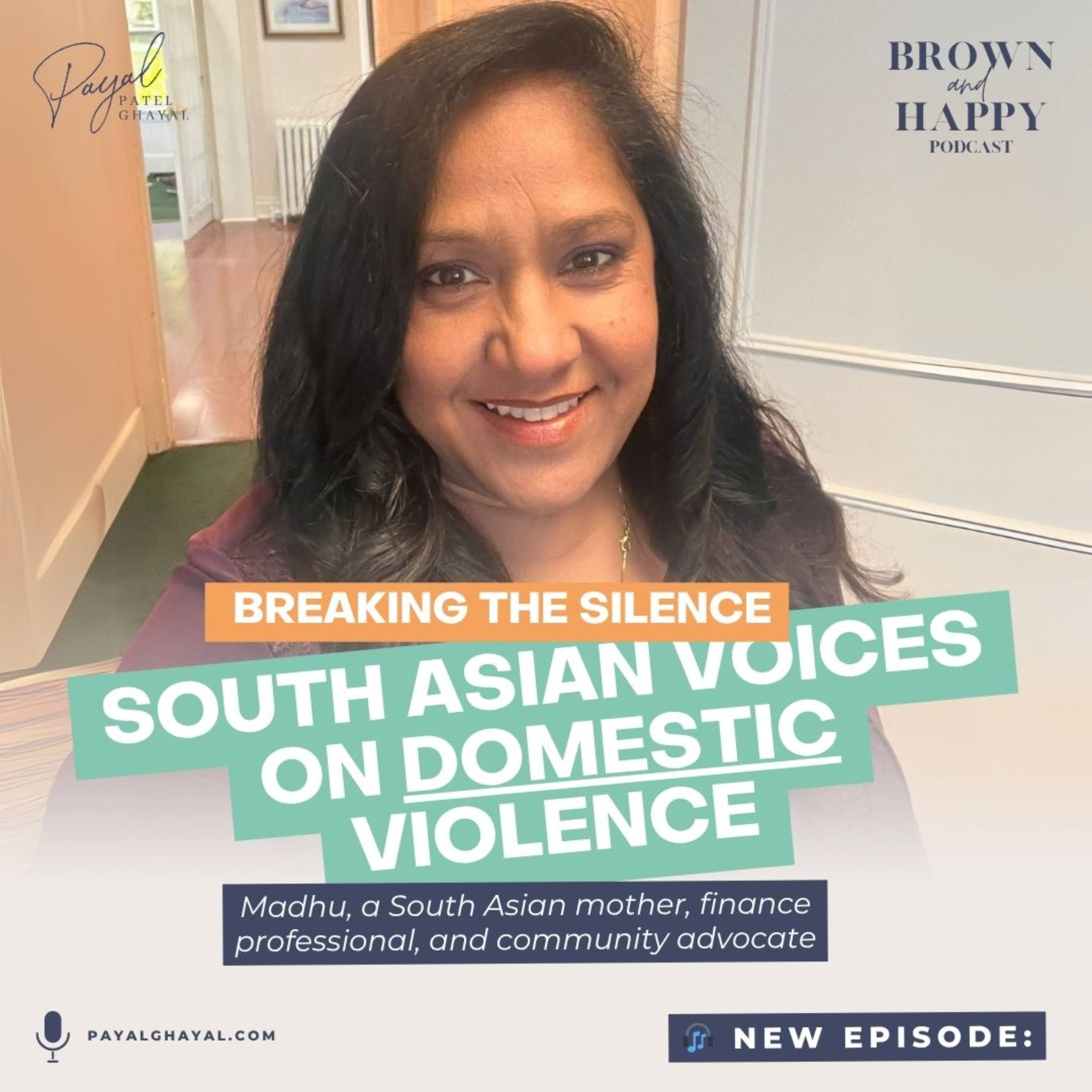
Episode 115: Breaking the Silence: South Asian Voices on Domestic Violence
May 28, 202500:44:18Tap to summarizeIn this episode of Brown and Happy, we sit down with Madhu, a South Asian mother, finance professional, and community advocate, for a deeply personal and powerful conversation about domestic violence in South Asian communities. Madhu lives in Somerset, NJ with her beautiful 9-year-old daughter and her adorable 5-year-old, four-legged son, Tofu. She is the Chief Compliance Officer and Senior Client Manager at Wealth Planning Advisory Group in Bedminster, NJ. Madhu also serves as the Board Treasurer for Manavi, a pioneering organization dedicated to ending violence against South Asian women. Madhu shares her insight and experiences, along with her work as Board Treasurer for Manavi—a New Jersey–based nonprofit that has been supporting South Asian survivors of gender-based violence since 1985. Together, we explore the cultural stigma that keeps survivors silent, the role of organizations like Manavi, and how community-based healing and justice are possible. This conversation is for anyone who wants to understand the intersection of culture, silence, survival, and strength. 👉 In this episode: Why domestic violence is rarely talked about in South Asian families How cultural expectations and immigration status impact survivors What Manavi does to support women across the U.S. Madhu’s story and why she chooses to advocate Ways to support survivors and break cycles of silence 🔗 Learn more or support the work at www.manavi.org
Transcribe →