Loading summary
Transcript32 lines
- [00:01]
A
I knew exactly what car I wanted, I knew exactly what spec and we had the money. How long did it take me from walking to the showroom to be naturally able to talk about buying the car? It was a physical hour. Sat there.
- [00:14]
B
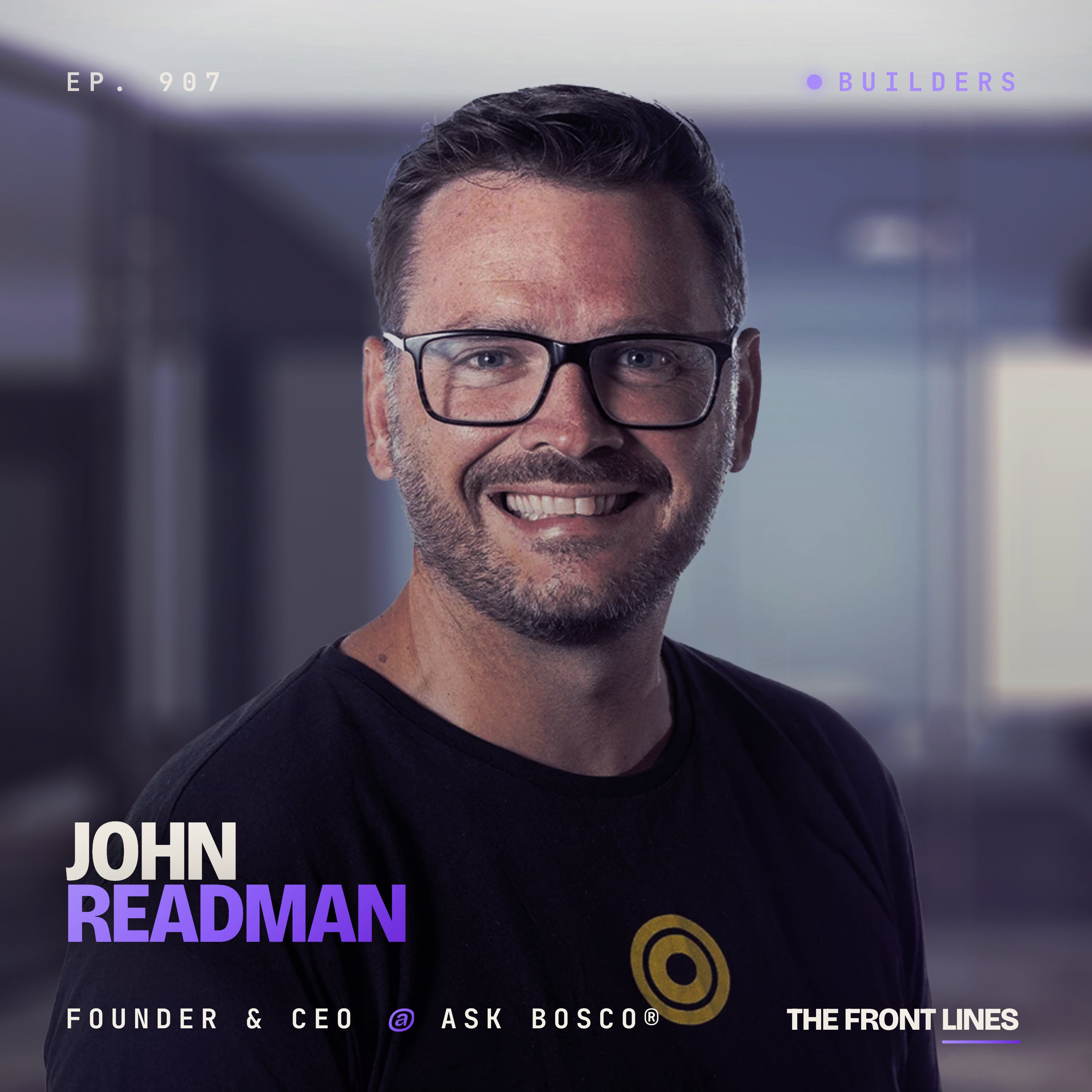
Welcome back to another episode of Builders. As always, this show is brought to you by Frontlines IO, Silicon Valley's leading B2B podcast production studio. If you're bringing technology to market and want to learn from your peers, we have a library of more than 1200 interviews with Venture backed founders and marketers. Where they talk, all things go to market. Of course, if you want to launch your own podcast, we offer podcasts as a service to more than 80 tech startups. The idea there is very simple. You show up and host and we do everything else. Now with all that said, let's jump into today's episode. Today we're speaking with John Redman, founder of Ask Bosco. John, thanks for being here.
- [00:52]
A
Thank you for having me on. Brett. Excited to get into this?
- [00:54]
B
Of course, super excited as well. I want to talk about your company, what you're building, how you're building it. But before we do, let's talk about your LinkedIn. So we were just chatting a bit pre interview. 25,000 followers. I'm guessing that didn' happen on accident. Take us behind the scenes on what the strategy looked like to to get to that follower account.
- [01:09]
A
Well, I think the big thing for me was I've always been interested. I think this came from my father. My father ran his own business in like the local city and he would go around and I thought everybody in the city knew him but they didn't. But he was just had a way of talking to people, remembering their names, keeping hold. And I just thought it's quite interesting how you can get on in business remembering people you've worked with, connecting. So I used to run this pre LinkedIn spreadsheet of people, whether it would be customers, whether it be former colleagues. So when LinkedIn came along this was like amazing. But the first problem was there wasn't anybody else on LinkedIn. I was one of the first people Certainly in the UK, if not the world, first few thousand on LinkedIn. I was so excited about this thing. And then over time I've just made an effort to not only connect with the people I actually physically meet with, talk to, have engagement with, meet at conferences with. I also regularly post both videos, content, whatever's relevant, get my team to repost, get people to like, share, follow. I'm always learning. I'm fascinated About I think that LinkedIn's got so many opportunities that they're not leveraging. I could help write them a paper on how they could do better. But yeah, no, it's been on purpose and I speak at a lot of events and the last slide is connect with me on LinkedIn if you and the QR code will go up. I've got my own QR code. Just, just go straight to it, as I'm sure lots of people have. But so, yeah, it's just been a thing and I enjoy the conversations I actually have. So the other big thing, I think if anybody is listening, the people listening to this is the easiest way to increase Your visibility on LinkedIn is actually commenting meaningfully on other people's posts. Right. And I know that takes effort.
- [02:53]
B
In terms of business impact, how do you think about the business impact that you've seen? I'm sure there's some ways that are hard to quantify. But for the things you can quantify, what does that look like for you?
- [03:02]
A
So the business impact for me from LinkedIn, I can, absolutely. So I went through a phase on LinkedIn of qualifying who wants to connect with me and challenging why they want to connect with me, which is a good tactic sometimes because most people are trying to sell me outsourced dev services. Right. Or recruitment or whatever. And if they've got a good picture, a good story, or they look like an interesting person, I'll connect with them. I'm not overly egotistical about I'm not connecting you, but I once had this inbound thing of, oh, I want to buy SEO services from your agency. And that's often people trying to actually sell you white labeled SEO service for some random country. And so I was like, oh, can you just qualify exactly what you're talking about? I don't just want to connect with random people on LinkedIn. I value my network anyway. They were the head of global digital marketing for one of the world's largest print on demand businesses called Vistaprint. And he needed SEO for 14 countries and he was genuine. And he said, I found. I've been following you. I've read some of your articles. I like what you talk about with multilingual SEO, ppc, that sort of stuff. Can you come and see me in Barcelona next week? And I got on the plane and then they were a customer for many years. So it was hundreds of thousands of pounds worth of revenue that I can directly attribute to someone following our content, following our stuff on LinkedIn. But I think you've got to be consistent, you've got to be genuine. And I think people often underestimate. They try and be too corporate. My sister's very good on LinkedIn as well. Maybe this was where my father's influence came from, all of this. But she, in my opinion sometimes is too personal and too cringy. So she will talk about. I've had a really bad day today because I almost like leave that for Facebook or Instagram or TikTok or somewhere. But people then comments are like, yeah, I've had a bad day too. Yeah. And so people, you've got to remember everybody's a human being at the end of the day and people buy from people. And I think founder led messaging is important and yeah, I don't share what I'm having for my lunch but I often share opinions that sometimes are slightly controversial and they're the posts that often do the best or like videos where you're genuinely sharing something that was hard or difficult. But yeah, we get business all the time from posts we share and we actually have categories in our internal CRM around. How did you find out? Right company LinkedIn or some of John's LinkedIn content. But I think it's also important to engage and share other people's content, not just constantly be spamming people with your
- [05:37]
B
own content and spamming with the comments. I feel like I get that all of the time where you can just totally tell it's AI slop. Like they listen to part of what you just said of like go and comment but they're missing the other part you said which was meaningful comments and you can just tell like what AI comments are. Right.
- [05:53]
A
See the AI responding to someone else's I it's just like and I think AI has its place and is useful for helping you generate content but I think you've also got to make sure you read it. You remove all the double hyphens and you make sure that you train your AI to sound more like you if you are using it to you do content. We had a conversation the day he's like I must spend an hour a day doing stuff on it. And everybody's like, I haven't got better things to be doing as a. But it's like we are building a business. There's a separate thing is at some point if I want to exit the business, I don't want the business to all be about me because I'll have to stay. But yeah, so we'll have to evolve that over time and maybe what we're Trying to encourage now is our senior leaders in the business to do more of this stuff. But they're a bit more reluctant. But they're excellent at it. When they do it seems like that's
- [06:38]
B
the path for everyone. Like the thing I saw getting shared around the other day was, how do they word it? It was something like everything you want is on the other side of cringe and you just have to embrace it that it's going to be cringy. But the nice thing is like, literally no one cares at the end of the day. Like, people have this fear that they're going to post something and people are going to like laugh at them. But like no one, like absolutely no one cares.
- [06:58]
A
Yeah, yeah. And I think the biggest thing that stops people like say, recording a video on their phone whilst they're walking down the street to post on LinkedIn. And they often are the best ones, like, because people like, where are they? What are they doing? Why is it suddenly where they are is the people are paranoid about what people think and if they don't like it, they won't watch it then. I haven't seen much bad mouthing on LinkedIn yet. It's not like it's not that platform. I think people just ignore it and move on.
- [07:25]
B
So this show is brought to you by Frontlines Media podcast production studio that helps B2B founders launch, manage and grow their own podcast. Now, if you're a founder, you may be thinking, I don't have time to host a podcast, I've got a company to build. Well, that's exactly what we built our service to do. You show up and host and we handle literally everything else. To set up a call to discuss launching your own podcast, visit Frontlines I.O. podcast. Now back to today's episode. That's the nice thing about LinkedIn is it's tied to like an identity. I think it's a little bit different if you're like throwing yourself into like the death pit of Twitter or Reddit or anonymous platforms. But there's some level of safety with LinkedIn given that it is tied back to someone's real job, that they can only be so unhinged in theory with their comments. But like we said, like, I really think that most people are much more worried about themselves than what people are posting. What I found interesting about LinkedIn was we were doing this very premium video production, founder led content, speaking into the camera from a studio and then the video type that you just talked about, like the walk and talk, just kind of facetiming a POW that performed 5x better than these heavy production ones that we spent all this time, all of this money on. And that was an important inflection point for us, I think, to kind of reevaluate how we were even thinking about founder led content in the first place.
- [08:40]
A
And I think the other thing, Brett, people overthink it and you probably know your subject matter. You probably know what's important and interesting to you as a founder and what resonates with your customers or your peers. People over script it, they can see they're like reading a script or they're trying to get some teleprompter and they overthink it and they end up being like five takes and then give up and they never post anything. As a general rule, I will try and just post the first take. Right. Because that's normally the best. If you get yourself jumbled up doing like, pause, go away, do something else, come back, first take. And I learned that the hard way, getting frustrated with stuff because actually it doesn't need to be perfect. You don't the ums and the R's and the looking off camera make it more human. So. But yeah, it's sort of. Sometimes you're looking at different platforms and you forget, am I on Facebook or AM I on LinkedIn now or Twitter or whatever, Instagram? Because there's just so many videos now of people talking. And I find the. Sometimes people post a video, like a native video into LinkedIn and there might be some important stuff in the, in the message below, but you can't really read that unless you click on it. And so some of the UX needs work in my opinion.
- [09:53]
B
I was, yeah, yeah. Sad to of course hear about layoffs, but also shocked to hear that LinkedIn had 17,500 employees. That just seems like a massive, massive organization for the user experience and the pain that I deal with day to day using the platform.
- [10:08]
A
Wow, I didn't know that. Yeah, we could do a better job with 50. Yeah,
- [10:14]
B
it's crazy. Like the technical limitations and errors I run into on that platform on a near daily basis. For you, if you look at content types, content formats, is there anything that was working previously that you've since just stopped doing? I feel like LinkedIn goes through phases. Was there a preview, previous content style that you can think of that's just no longer working?
- [10:35]
A
Well, the thing that annoys me at the moment, well, I'll tell you what I think shouldn't work, but the moment seems to be working and I find myself falling for this all the time is that I've invented this thing. If you want it, put Claude in the bottom or put Pipeline and then you see everybody going for it and half the time people don't even get back to you because if it is really interesting, they get loads of comments and they haven't thought about, right, how am I going to respond to this? How am I actually going to engage these people? And then they're just trying to sell you something, right? So I think if you're going to offer something, it should be a genuine offer. That or it's caveat by the way, it's this bit free. But I am going to try and sell you something because it's my lead generation, right. So I think getting people trying to give the value on the platform if you can so give an interesting insight or video inside the platform or give a multi purpose carousel with lots of insight and rather than trying to, oh, click here to get this. So what I don't think works at the moment or hasn't worked for a while is just read this now, go there and do that. Give as much away as you can. Because if it's useful and genuinely interesting. We recently did a league table and everybody in the team were like, oh, we want to go, we want people to go onto the website and then download it. And I just published it as a PDF on LinkedIn. They're like, why are you just giving it? I'm like, because it'll work better because people will share it and they will get the brand out there. So I think the idea of having gated content just to get people on your website, I think is suggesting that the buyers aren't very intelligent. Whereas I think people, if people are genuinely interested in what you do, they'll get in trouble.
- [12:13]
B
Just speaking from my own like, you know, personal behavior, I would guess that there's been literally zero times that I've ever downloaded an ebook and then been excited when a sales rep contacted me. Yeah, normally you want the ebook and then you immediately go and unsubscribe just to try to like not get sucked into the funnel. And I think those like, you know, comment here, blah, blah, blah, that's just like the next iteration of gated content. Sometimes it's useful but like I don't want to be pitched like to me that is not actually intent but they understand that to be intent that you wanted that, that asset.
- [12:43]
A
Well, the interesting thing, and this is tangential but hopefully will resonate with some people. In my previous agency, we, we actually Started helping people in Europe buy cars online. And this is like, I don't know, 12, 13 years ago, people said nobody's going to buy a car online. I said the only thing stopping people buying a car online is a buy now button. Right. Because people. The worst thing about. Well, I'll ask you the question. What is the worst thing about buying a brand new car?
- [13:08]
B
Having to go in to do it.
- [13:10]
A
Yeah, it's the sales guy.
- [13:12]
B
Yeah, right.
- [13:13]
A
That's the worst thing about the whole process. So if you think about like we're going to spend, I don't know, tens of thousands of dollars, maybe hundreds of thousands of dollars on a brand new car and you've done the research, you've watched maybe tens, if not hundreds of hours of videos of people driving around in this car, you probably know more about that car than the sales guy. But you go into the showroom and then they start you off with this process. So if you're buying a Range Rover, there's a thing called the Pendle seven step process and they have to run you through this process before they're even allowed to talk to you about what car. We did a test with Jaguar Land Rover and we went in like mystery shopping. And how long do you think it took me? I knew exactly what car I wanted. I knew exactly what spec we would do. Like mystery shopping. Exactly. The car, the spec, and we had the money. How long did it take me from walking to the showroom to be naturally able to talk about buying the car? It was a physical hour. Sat there whilst they grilled me. And we then did some consumer survey and we started getting into and we interviewed women who could afford to buy brand new cars. But 80% of women who could afford to buy brand new cars would buy a secondhand car one year old or two year old, so they didn't have to go speak to the sales rep. Right. So the problem here was the process that historically people have drilled into. And I think B2B companies do this all the time. Everything's behind a gated content, everything. Well, actually if you put your content front and center, if your messaging story product service is good enough, people will get it and contact you. Right. Make it easy for them to contact you. Give them multiple ways. You could say, look, why not just have a free trial or book a demo with a sales guy or just watch a video of someone else having a demo or play with it yourself. I just think we're too obsessed with building the data in the funnel and actually how people buy stuff. We Just want information and I want to make my own decision because how people buy stuff has changed. So as I was going back to answering your original question, I think people driving people to gated content and I think a lot of the LinkedIn automation tools and just content for content sake, right? Like the whole, like, yeah, it's nice that you say happy birthday to me, right? But I've got 25,000, I've got 25,000 LinkedIn connections, I'd say a tenth of those have all got some LinkedIn automation tool that says Happy birthday to me every year or congratulations on this or that. So I sometimes call them out and it's people I know and I reply, which is quite funny because I know it's automation or AI and actually some of that has led to business. So but maybe it's just you and me, but we can spot some of this automation and content for content's sake. So I think the sort of spammy gated content is a no and stuff that's overly corporate. I think we need to. It's your brand, it's you representing your company. And I think also companies don't empower their teams to have a personality on LinkedIn. All right, so what actually ends up happening is nobody says anything. So I think people probably need training, support, education around. Right? It's okay. If you want to record a video and post it on LinkedIn, that's fine, go for it. All right, we'll support you and back you up. But then you've got to make sure you trust and employ the right people. I suppose. But yeah, so I went a bit off topic there, but I think that just general slop and corporate noise we need to stop doing and make it more. More useful, more personal, more accessible. This show is brought to you by the global talent company, a marketing leader's best friend. In these times of budget cuts and efficient growth, we help marketing leaders find, hire, vet and manage amazing marketing talent for 50 to 70% less than their US and European counterparts. To book a free consultation, visit globaltalent.co.
- [16:57]
B
that was a nice detour and a logical detour and I think an important one, so we'll take it. Now, I know we only have a couple minutes left or five minutes left here, so I do want to talk about kind of the next iteration or at least part of your founder led strategy and that is that you're now a reluctant podcast host. So sounds like the team convinced you to launch a podcast. What's the intended business impact of that podcast?
- [17:18]
A
So I was trying to find podcasts that talked about. So our business helped. We've got business technology that helps mainly Shopify mid market merchants scale online by joining all that data together, making sense of it and helping them make better business decisions. And I was trying to find a podcast that focused on the scale up Shopify world and there's tons and tons of podcasts out there focusing on Shopify startup worlds and there's tons of general e commerce podcasts talking at lots of stuff and I'm like, well there just isn't what I want, isn't there? So the team like well why don't you start it and why don't you then get the enterprise brands that are scaling to talk about their story and how they're using Shopify to do that. But more importantly all the e commerce agencies who are building that, they'll want to talk on it and share their story and all the other apps that support that ecosystem. So we're trying to create this sort of conversation ecosystem because a lot of people think Shopify is still mom and pop shops, but some of the world's largest online retailers are powered by Shopify. So. And what's their story? How hard actually is it? Because it's not as easy as Shopify tell you. Right. It's not. But let's get underneath the curtain of that and unpick that with people who've had that lived journey. And I suppose the thing I've found is I actually enjoy it. I've learned a huge amount. Yeah. And people seem to want to listen to it and like the guests we've had on and yeah, we've not been cancelled yet. But yeah, I don't think you can get canceled from your own podcast.
- [18:49]
B
Yeah, that's the whole point of having a podcast here. Uncancellable. What about in 12 months when you look back on it and you're gonna have to at some point make a decision. Do I continue? Do I stop? Like what are you gonna be looking at to make that decision?
- [19:03]
A
A good friend of mine who's got a very successful sort of podcast, YouTube channel, everything, he was like, you've just anybody's a bit like that. We would like the cringe thing. You've just gotta push through. Right. We've already had some stuff where the audio's not good enough or. But actually 80% of it's excellent. So it's like it doesn't need to be perfect and good is good enough sometimes. And we're using I think some good tools. We're using Some good editing tech, but it's also about for us making our customers on the podcast of our guests. Make them share their story, ask them good questions, let them open up. Yeah. So early signs are we will continue, but we're not just doing it to try and generate leads. I'm genuinely doing it because I'm curious so I can gain more knowledge. All right. And I'm fascinated by talking to founders who three years ago had a $5 million E commerce store, and now they've got a $200 million E commerce store. Well, how did you do that? And actually, the issue was nothing to do with Shopify. It's all about warehousing or it's all about robotics, or it's. So there's just loads of fascinating stories. So. But I don't know. Contact me in a year. Brett, ask me, where's the podcast gone?
- [20:20]
B
Well, it's a good prompt to have you come on back for a part two. We always like to do these updates with people about 12 months after. So, John, we're gonna wrap here. Before we do, where should we send people if they wanna follow along with you? Follow along with Alex Bosco. And of course, check out the podcast.
- [20:32]
A
Yeah. So just find me John Redmond. I am the main John Redmond on LinkedIn. So it's just forward slash John Redmond. J O H N R E a D M A N or AskBosco IO. We'll tell you about our business and what we do, or find us in the Shopify app store. Just type in AskBosco and the podcast is called Leaders on Shopify. So if you just put that in whatever podcasting app, and we interview scaling E commerce merchants, agencies that support them, and some of the upcoming enterprise apps. Just trying to increase the knowledge of how to build a big business on Shopify.
- [21:07]
B
Amazing. I love it. All right, John, thanks so much. Great to meet you.
- [21:09]
A
Great to meet you. Thanks for having me on, Brett.
- [21:14]
B
Well, that's all for today's episode of Builders, brought to you by the Frontlines. If you want more amazing content like this, visit Frontlines IO, where you'll find a library of more than 1500 interviews with founders, marketers and other GTM leaders, where we unpack the tactical lessons from their journey. And of course, as always, if you do want to launch your own podcast, we'd love to have a conversation with you. Visit Frontlines IO podcast as a service. Mention that you listen, mention you love the show, and we'll give you a 10% discount. Thanks for listening. We'll catch you on the next episode.