Loading summary
Transcript26 lines
- [00:01]
A
Like the charging block for your laptop that takes the power from the wall and runs the laptop.
- [00:08]
B
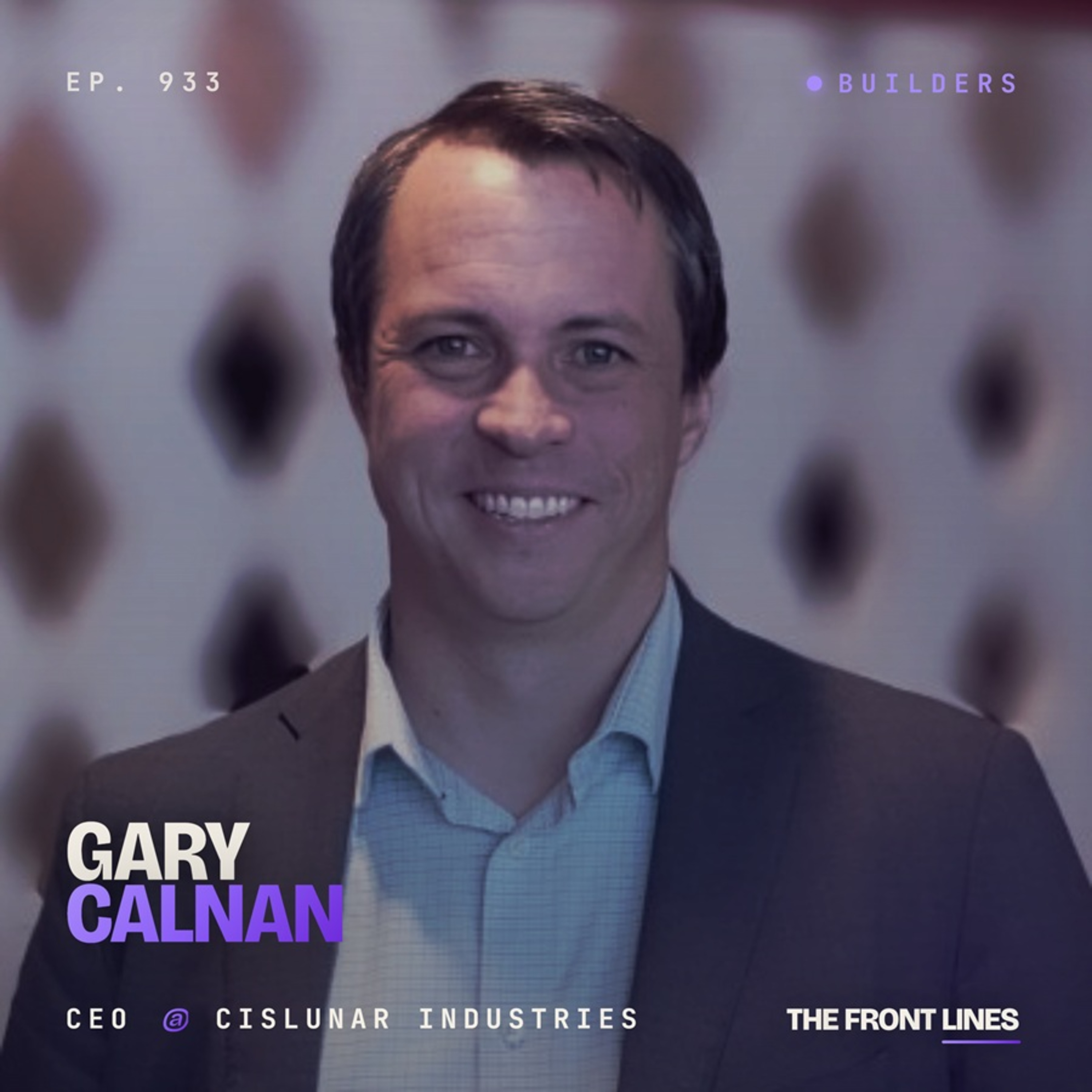
Welcome back to another episode of Builders. As always, this show is brought to you by Frontlines IO, Silicon Valley's leading B2B podcast production studio. If you're bringing technology to market and want to learn from your peers, we have a library of more than 1200 interviews with Venture backed founders and marketers. Where they talk, all things go to market. Of course, if you want to launch your own podcast, we offer podcasts as a service to more than 80 tech startups. The idea there is very simple. You show and host and we do everything else. Now, with all that said, let's jump into today's episode. Today we're speaking with Gary, CEO and co founder of CIS Lunar Industries. Gary, welcome back to the show.
- [00:47]
A
Great, thanks for having me on.
- [00:48]
B
I should say welcome back to the show. You're a friend of the pod. You were here a few years ago. So excited to chat with you again and catch up. Before we do, let's just maybe introduce the company for those who are listening in for the first time.
- [00:59]
A
Sure. So Cislunar Industries is the name of the company. We were founded in 2017 and over many twists and turns, we have now, you know, pivoted into our, we think is the big idea, which is power electronics for space. This will be, you know, everything in space today runs on electricity. And things are getting bigger, more powerful, scaling up massively. And one of the key bottlenecks is being able to take the power that's generated, turn it into, process it, shape it, turn it into what's needed to run whatever it is you have on your satellite. And we make that box like the charging block for your laptop that takes the power from the wall and runs the laptop. So everything that runs electricity needs one of those. And that's what we made for space. And it's getting really exciting.
- [01:42]
B
What was the journey like to figure out that that was the product you should build? Because I don't think that was the product that you were building three years ago, or you had mentioned it, but I don't think that was the thing. Three years ago.
- [01:52]
A
Yeah. I mean, yes. Yeah. So the company was founded the steel mills of space that might seem very, you know, like, different from power, but, you know, the way we approached that was we wanted to be in the front, like the edge, the frontier of human expansion into the solar system. And one of the foundational pieces needed for that is utilizing resources you find in space. And so when we started the company in 2017, you know, at that time, there were asteroid miners, and, you know, there was lunar mining being talked about. And that's the. Also still growing and becoming a thing. But. And then there was manufacturers, but we didn't see anybody who was like, the company that would take that raw material and turn it into something could be manufactured like the steel mills of that industrial economy. And so we thought, hey, somebody's got to do that job. And that was kind of the origin idea we went. You know, there was a point where we were looking at space debris recycling as one of the feedstocks for this. And all that stuff is still kind of out on the roadmap. Like, that is something that we think is going to be a big need, especially as we start to build lunar bases and that kind of thing. But what was really interesting is the technology we were building, the foundry that was, you know, electrically driven for that. We made our own power supply, and we just did it for our own purposes. And, you know, it's interesting how this fed into where we are today, because when you melt metal in an electromagnetic induction field, as the metal heats up, its electrical properties change its resistance and, you know, various different, you know, electrical properties. In order to maintain the temperature where it needs to be, you need a power supply that can kind of automatically adjust, you know, the inputs that it's putting into that system. And so our engineers came up with this hybrid digital analog architecture, which does that just automatically without any, you know, you don't have to tell it to do certain things because of the analog piece. The analog piece kind of automatically adjusts. And that flexibility proved to be very applicable to electric propulsion as one of the first secondary applications of the power system. And the only reason we would have approached the electric propulsion that way is because we made it as a foundry. So it's sort of an interesting, like, totally disconnected, seemingly reason for doing it that way. But it's opened up this whole better architecture for electric propulsion systems to power those systems, to run them. And then as we figured out, like, okay, we made a power supply that could run a foundry. We've made basically the same power supply with some additional pieces that could run electric propulsion system like a plasma thruster. Those are very different, seemingly. And everything in space runs on power. So maybe we can use this for lots of other things in space, too. And that, like, that was the aha moment. I mean, PPUs for electric propulsion is already a pretty big niche that's growing. And the other piece of the puzzle is that we discovered that I'm an electrical engineer. I'm a finance guy by background. And so I was surprised to find out that, you know, no one else was capturing this market already. But it turns out that there have been some new developments in some of the subcomponents that have kind of enabled this new approach. And also, like, the size of the satellites are going up because launch costs are going down. That means that you can start to pursue higher power systems. And higher power systems can do more. You know, you can sense more detail, you can transmit farther, you can go faster. So everything, you know, as power scales up, enables more activity. You know, manufacturing. All these things kind of scale on power. And, you know, if you've been watching the space industry news at all, I mean, of course everybody's heard about the SpaceX IPO, you know, one of the biggest news stories of last month. But there's massive amount of growth in the space industry across all these different sectors. And all of it needs power to grow kind of orders of magnitude from where it is today. Power production, which is usually part of the satellite, but also processing that power. And so those subsystems are going to need to be in every single satellite. And it just, it's a bottleneck today and it creates an opportunity for us. And we got there because we wanted to power our foundry. And we realized, oh, wow, there's a big market for this today. So here we are. And now it's, it's getting, you know, even bigger.
- [06:07]
B
And how do you go from being a finance guy to being a space guy? Like, that's a big, big gap.
- [06:13]
A
Well, I mean, I personally have always wanted to be in the space industry. And, you know, since I was a little kid, I have this, one of my earliest memories of space, I guess after the Challenger explosion. But around the 1990 or so, I think there must have been some kind of push, you know, in the media with NASA to do lunar Base. And I just remember, like, taking a bunch of graph paper, taping it together and like, mapping out what would go on. My vision of a lunar base like this, you know, dome here and whatever, all the different parts I thought would go there. I wish I still had that thing. But anyway, so that's sort of one of those memories of getting really hooked on this idea of going to space and doing things for space. And I still want to go to space someday. And then when I went to college, I didn't end up going down the engineering path. I ended up getting a finance, like, economics degree with a business minor and ended up in this finance career that kind of grew out of that. I had my first startup right out of college. So I got the bug for entrepreneurship in my senior year. A totally unrelated, you know, business but very interesting experience that taught me a lot about business, like a real time MBA over four years. Then I went to the corporate world and I did some consulting, some FP and a stuff, financial planning, analysis. I did some portfolio management for a little while, went back to corporate finance before I got to the space industry. You know, at that time, 2015, 2016 timeframe is really when there were some successes of entrepreneurial space. You had companies like Planet Labs, it launched, you know, Constellation of satellites, and SpaceX was starting to have some successes with their early rockets. And, you know, I started to notice that and I realized that this had a lot of echoes of what I saw in the 90s with the Internet. Like, it just felt like that same moment in the development of an industry where, oh, now it's starting to become plausible for entrepreneurs to do something here. And I just had this feeling that there's a massive wave of economic growth that's going to happen out of this. And it's just the beginning. And, you know, those only come around a couple times in your life that you can tap into those moments. I still think that's true. That was, you know, almost 10 years ago. But we're now starting to get to the point where, like, probably past that initial stage, but now we're at that knee of the curve where it starts to actually happen. I mean, and we've seen a market shift in the market on that regard for how that's occurring.
- [08:30]
B
So this show is brought to you by Frontlines Media, a podcast production studio that helps B2B founders launch, manage and grow their own podcast. Now, if you're a founder, you may be thinking, I don't have time to host a podcast. I've got a company to build. Well, that's exactly what we built our service to do. You show up and host, and we handle literally everything else. To set up a call to discuss launching your own podcast, visit Frontlines I.O. podcast. Now back to today's episode. The space market, you know, feels somewhat obvious today. I feel like there's a lot of activity, there's a lot of excitement. Like, how did it feel in 2017? Like, how crazy did you feel? Like, what was the rejection? Like, what was the pain like?
- [09:10]
A
I went to the International Space University in 2017, which is a very unique place that most people haven't heard of, but, you know, it Turns out that there are many space company founders from companies you know about that are alumni there. They're in every agency around the world. They're all, you know, they're in companies big and small in the space industry. And that session I went to was a nine week, like, intensive where, you know, everybody there is from all these different industries. No one is an expert in the stuff, mostly in the stuff that we're talking about, or they're an expert in one thing but not everything else. Right? And it was this place where you could just, you could try to do anything and everybody was like, yeah, do it. Like, it was like a very unrealistically supportive environment and a very magical experience where, you know, I just got to try everything without any fear at all, you know. And, you know, of course, coming back into reality was a little bit of a wake up call, but I came out of that with this just very big belief that this was real. Maybe the rest of, you know, society doesn't realize how real it is, but they're using space all the time. Every, you know, everybody, from the moment you wake up, you're using space stuff immediately, multiple times. And so it is a key parallel. And I just, I never doubted that it was real. And I kept getting more and more evidence that it was becoming more and more real, more, you know, growing faster and faster. The challenge is when you try to go, you know, and raise money around it or like as a total outsider saying, hey, I'm gonna, I'm gonna found and build a space company, you know, that seems like kind of crazy. But I found other founders, you know, co founders of mine who were the technical minds behind it. And I also had read this book by Peter Diamandis called Bold at the time, and, you know, he's this exponential thinker. It just hit me at just the right moment to inspire me to think that I could do this. It was kind of what inspired me to go into ISU at that point in time. And one of the points he makes is that you don't have to be the expert. If you come with a big vision, you will attract other experts who want to do that thing. And I've kind of found that to be true. I mean, like, it sounds crazy on the outside, but it's not as crazy as it sounds. You do have to be persistent though, because we have faced, you know, corporate death many times and survived.
- [11:30]
B
But what's like, the most painful near death experience that comes to mind?
- [11:34]
A
Oh, for sure the most painful. It was, let's see. That was a couple years ago. We've been trying to raise some money. I mean, all the fundraising up through the close of that, of the seed round we did last year has been much longer and more difficult than I imagined it would be. But, you know, it got to the point where we had lined up, we thought a pretty good plan. One of our customers ran into their own financial difficulties, and unfortunately, they were our first and only commercial customer. And then our Space Force contract had ended, so we were no longer getting. We were sort of between government contracts, we're no longer getting payments from government contracts, and when we had gotten a couple payments from this commercial customer. And that would have carried us on to the next phase of development without any issues. But once that happened, I was like, oh, like we're going to run out of money in, like, weeks if we don't figure something out. And so we scrambled. You know, we had. But it got really close to running out completely, and we ended up having to partially furlough our team. You know, pretty much everybody went down to halftime and, you know, took not a complete pay cut, but a pretty big pay cut, like, for at least half of December that year. And we got some angel investors came in and gave us some loans and, like, so we were able to bridge it, you know, piece this bit together. But it did get close enough that we felt like we had to do that just to make sure we could stretch the Runway out a little bit. And then coincidentally, there was this opportunity to get a matching grant or from NASA as an extension to our phase two sbir. But it needed investors, so we were able to use the deadline for that, which was The, I think January 6th that year, and to force investors to get off the fence. And it worked and actually ended up pulling in the investor who ended up becoming our lead for the last round after a few investments. And, you know, as soon as that started to come in, we turned the corner and we were able to pay back everybody from the salaries they didn't get for the second half of December. So we sort of reimbursed people and, you know, pretty much everybody came back on. I mean, in the end it proved it was a know, it was good experience in a way that we saw how dedicated the team was to what we were doing. But, man, like, in the moment, there's nothing. And it was also. We had to tell our team, like, three days before Thanksgiving. I mean, it was like. It was kind of brutal, the time, the timing. My instinct was just to, like, to just go for it and you know, like ride it out. And I just believe we were going to figure it out. But you know, my maybe more prudent co founders were like, we better just cut down our expenses enough to make sure we get a little bit further. And I don't know, I mean, when you start to cut back, it's like, am I just like slowing my death? More like it's stretching the pain out. It's a challenging moment. Companies face this all the time, right? But yeah, we made it through and you know, we're, we've been cooking ever since. So there were others before that where you know, we would like, well before we had employees and stuff. There were many times when I would look at my co founders and you know, we didn't have, we weren't paying ourselves from the company, we didn't have contracts yet. We were trying to get money from investors or grants and like it was like this thing that ever happened, should we like pull a plug and move on with our lives or. And then somebody would come along and give us some evidence that we were onto something. So we would just keep plugging away and you know, we made it. Sometimes if you survive long enough, you know, if your idea has merit, like you'll be one of the people who make it. So this show is brought to you by the global Talent company, a marketing leader's best friend. In these times of budget cuts and efficient growth, we help marketing leaders find, hire, vet and manage amazing marketing talent for 50 to 70% less than their US and European counterparts. To book a free consultation, visit GlobalTalent
- [15:19]
B
co. Like, there's very few successful companies in history who don't have stories like that, right? Of these near death stories experiences, most
- [15:28]
A
of the companies I, you know, talk to have seen this at some point in their life. SpaceX is among them, right? I mean they were, as far as I know, like Elon had to take out big loans to cover the, you know, the costs at one point there. And if they hadn't, you know, made that last launch that worked, they might have been one launch away from having to shut down. So, you know, even mighty SpaceX had its near death experience.
- [15:53]
B
Theirs is famous. I feel like at this point it's
- [15:55]
A
like, yeah, it is, yeah.
- [15:57]
B
Founder lore. I had a buddy of mine, you know, they had raised a bunch of money for his startup in 2021 and then they were kind of, you know, just dealing with the pain there of trying to live up to that valuation and had a happy ending, just had a huge exit and I was Talking with him and just laughing of, like, dude, people are going to read this headline and just see the headline. What they're not gonna know is, like, for three years, we would go on, you know, runs all of the time together, and just him talking about, like, the depression that he was under, and, like, you're thinking med sport and, like, the pain and, like, how many times you almost quit and, like, just the absolute fucking hell that this guy had to go through to get to that outcome. It's like, no one will ever know that. And at some point, someone's going to look at it and be like, must be nice, you know, to. To be so successful. Like, they'll have no clue, the pain. And I was just laughing with him about how, like, funny that is that people miss the pain that actually goes into all of this stuff.
- [16:44]
A
Yep, yep. Yeah, that's very true.
- [16:47]
B
For you. On the contract side, what have you learned about winning government contracts? Sounds like that's been very critical to your success.
- [16:54]
A
It has been very critical to getting us to where we are today. There were some really good pieces of advice I got early on that I think made a big difference in winning our first contract. And, you know, that first contract was the beginning of it. And then from there, we kind of strung them together based on our successful performance at that one and the next one. But the one piece of advice that I got, I tell anyone who's really early and hasn't, you know, is trying to figure out how to do an sbir. John Gough, who's known in the industry to many who he had told us that he was notoriously good or famous for being, like, winning lots of sbirs, and even ones where he, like, wrote them in just two days and got the nine. It's crazy stories, right? But he said that when you're starting out, no one knows who you are. If you're not, like, a known quantity yourself, make friends with, you know, one of the bigger players, the known players, and, you know, get them into your tiny phase. One sbir, you know, which don't have a lot of money in them at all, but give them some of the money. Like, pay them something, even if they don't really need it. Like, pay them, like, five grand to do some part of the study for you. And then, you know, once they take that deal, then you've got that bigger name on your proposal, and it's kind of an endorsement. I mean, you know, it's not explicitly an endorsement, but they're willing to put their name on there to take Part in it and work with you. So it's more than just like a, you know, LOI or something like that, that. So on our SBIR Phase 1, we got nanoracks to come in as a partner and I think, you know, we wanted to do stuff that would eventually end up with, you know, in space manufacturing and like test out. The space foundry was the what it was all about. And those guys were, had their own in space manufacturing visions that they were pushing at the time. But they mainly had a lot of payload services on space station. So they were very well embedded with NASA and NASA. Marshall were, was, you know, this where this one came from. And I think that was like instrumental to us winning that deal. So that's one thing. The other big thing, I think we have proposed the same idea more or less like multiple times even after we were established and had a good reputation before it got accepted. And you know, for example, the direct to phase two we have today, which is a dual mode power processing unit that can run a Hall effect thruster and an arc jet thruster from the same system. That one we previously did not include big contractors on. I mean, we had some other partners on there, but in the last version we included Lockheed Martin and Safran Space as suppliers of both of the thrusters. And we think that made a material difference to us getting approved. It was essentially the same thing we had proposed like two other times, two or three other times. So keep doing it. You get feedback, your idea gets socialized. That's another one. The last piece I would say is getting to know the people inside the agency that you're targeting is essential. I mean, they have to build their trust for you. They try to be merit based around it, but at the end of the day, like these guys are somewhat putting their reputation on the line for picking yours among the many as the one that gets, you know, selected. So, you know, it helps if they've met you two times at conferences and talk to them and find out what they need so you can shape that proposal the right way.
- [20:04]
B
And final question for you, let's talk about the big picture vision. So when we talk again three years from now, what do you think's gonna have happened? What's the big picture vision?
- [20:13]
A
Yeah, so the big picture vision right now is really a massive step change from where we are today. We have gone from, you know, built up the company at this point. We've pivoted into power. We've been delivering units, you know, one or two at a time, kind of prototype level units but they are flying in space, so they're at that level and delivering to customers and the federal government. We're at this point now where the market needs our product at higher quantities and we need to raise the capital so that we can scale up massively to manufacture at scale. And so we're talking about in the scale of like 10 to 50 units a month starting next year, and then increasing to over 100 units a month the year after that. And really then the market kind of dictates how fast we can scale that up. But our ambition is to be not just doing PPUs, and we've already done PPUs. High voltage furnace, a couple other things. But there's a whole host of verticals with special niche cases where they need power electronics at higher power levels. Our vision is to have a product ready for all of those verticals in the next year or two that our customers can choose. Hey, I'm going to buy that one instead of trying to make it myself or acquire some other company that I think could make it themselves. And in that way, really, the vision in three years is I want to. I want it to look like, you know, we're like the intel inside, but for power electronics and space hardware, like it should be in everything across the whole industry. So that's where I see it going. And I think it's now is the moment in time to do it and we're in the best position to make it happen.
- [21:46]
B
Amazing. I love it. Every time I talk with you, man, I'm always inspired. Love what you're building, love how you're building it. Appreciate the honesty, talking through the pain that you go through, that every founder goes through to build a successful business, especially if you're on the cutting edge of innovation and in different markets. So, Gary, thanks so much, man. Really appreciate it.
- [22:02]
A
Yeah, thanks. Appreciate it.
- [22:06]
B
Well, that's all for today's episode of Builders, brought to you by the Frontlines. If you want more amazing content like this, visit Frontlines IO, where you'll find the library of more than 1500 interviews with founders, marketers and other GTM leaders, where we unpack the tactical lessons from their journey. And of course, as always, if you do want to launch your own podcast, we'd love to have a conversation with you. Visit Frontlines IO podcast as a service. Mention that you listen. Mention you love the show, and we'll give you a 10% discount. Thanks for listening. We'll catch you on the next episode.