Loading summary
Transcript28 lines
- [00:01]
A
I'm a big believer in just say what you gotta say and say it as clearly as you can. And if your grandma over Thanksgiving dinner can't understand what the heck it is you do and why is it useful to people, then you gotta work on it.
- [00:17]
B
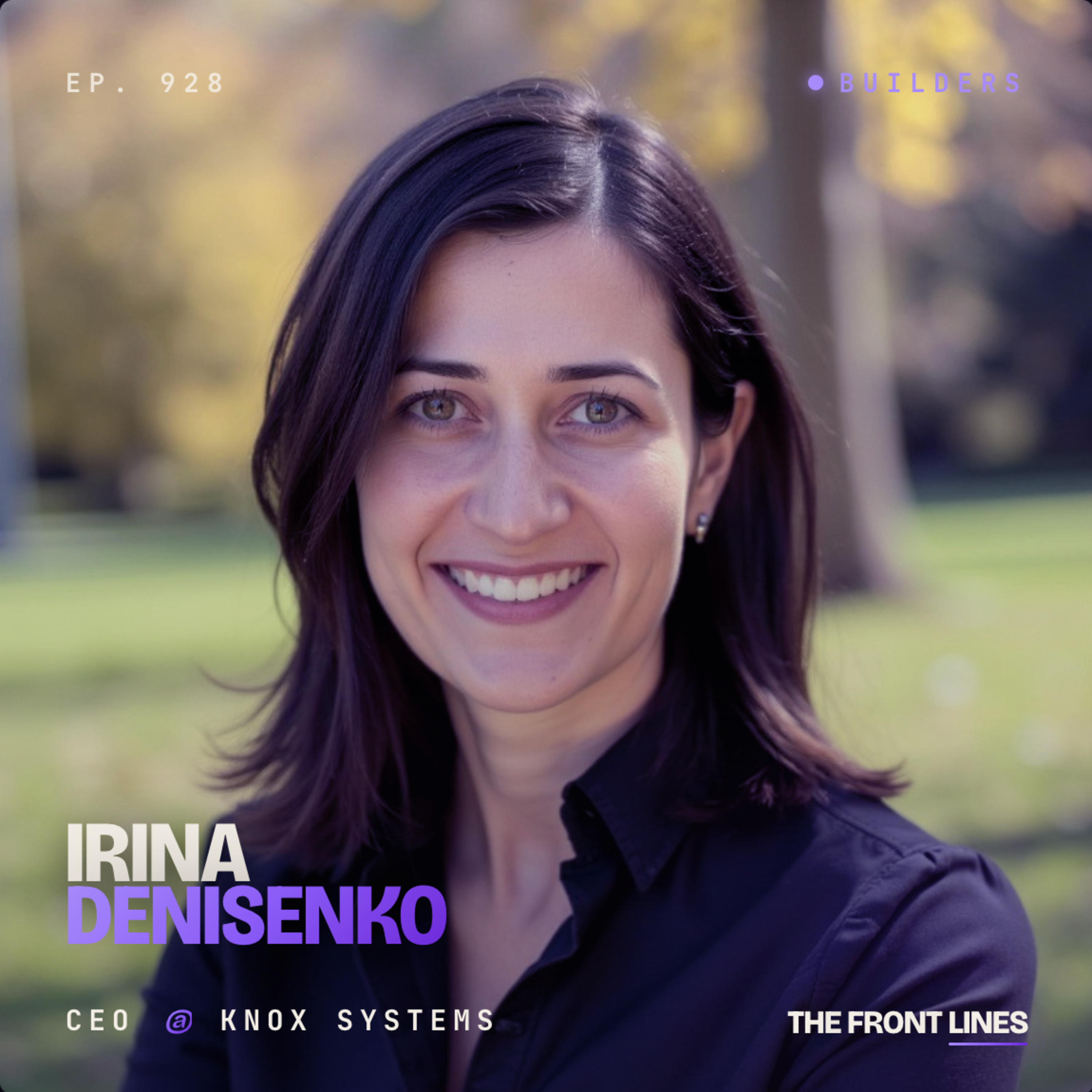
Welcome back to another episode of Builders. As always, this show is brought to you by Frontlines IO, Silicon Valley's leading B2B podcast production studio. If you're bringing technology to market and want to learn from your peers, we have a library of more than 1200 interviews with Venture backed founders and marketers where they talk. All, all things go to market. Of course, if you want to launch your own podcast, we offer podcasts as a service to more than 80 tech startups. The idea there is very simple. You show up and host and we do everything else. Now, with all that said, let's jump into today's episode. Our guest today is Irina Denisenko, CEO of Knox. Irina, welcome to the show.
- [00:56]
A
Thank you, Brett, for having me.
- [00:58]
B
Of course. So fedramp in 90 days for 90% less. I want to talk about how you're able to do that.
- [01:04]
A
Absolutely. So again, thanks for having me. And you know, the way I always describe this to folks is if you think of Fedramp, which, if you haven't heard of Fedramp, it is the standard that you have to meet as a cloud company to serve the U.S. government. If the U.S. government or the Department of Defense is going to put data into your systems, you, you need to be secure against this very, very high level of both compliance and security. So long story short, it's very hard to get. There's fewer than 500 companies total that have this in the world. That's it. There are 500 companies. Compare that to, you know, 10,000 plus apps that are listed on the AWS marketplace just as one benchmark. There's obviously many, many more companies than just even that. So how do we do this in 90 days? The way I always describe it is Fedramp. You could think of it like a very exclusive zip code. And to move into that zip code on your own as a SaaS company, it's going to take you a few years, usually three years, three million bucks. And that's, oh, by the way, if you can get the permit to break ground, and that is the federal sponsor, you need a CISO or CIO from within the federal government or within the DoD to underwrite your cybersecurity risk and give you what's called an authorization, a sponsorship, and that's today. And then they need to keep doing it every year from there on out. So no wonder it's such a small group that have gotten it. There's so many obstacles, both financial time and ultimately convincing, beyond just them buying your software to underwrite your cyber risk. What Knox does in that metaphor of the exclusive zip code, is rather than you building your own house, you are moving into Knox's already standing on Main street, luxury condo, high rise, and my customers move into a floor. And that means that they inherit all of our sponsors. So we have 16 and counting sponsors from every agency within the DOD, Army, Air Force, Navy to DHS, Treasury, VA Commerce, all the big buyers of technology within the government. And what that means is they're able to do this in 90 days because they don't have to worry about rebuilding everything from scratch, getting it reauthorized, reassessed, et cetera. They're inheriting all of that, and that's ultimately how we do this in 90 days.
- [03:16]
B
When you were looking at this market, one way to look at it would be like, wow, there's a lot more businesses to try to bring into this. But it would also be looking at the fact there's only 500 companies. Were there any pushback from investors that the market may be too small.
- [03:28]
A
I think there is always a set of investors who are going to not get it and not understand just how much of an unlock fedramp is. Because the way to think about fedramp or Disa, for those who are really in this space and know that there's all these nuances and so on which we sit across all of them. But the point is FedRamp doesn't just unlock government. And by the way, government's nothing to sneeze at. Federal government alone is upwards of 150 billion a year in IT spend. That's a third of all the IT spend that happens across the United States. So it is no small market. But once you achieve FedRamp, because you're in such a small, exclusive club, your ability to compete as a cloud service provider, whether, you know, today we just announced Sierra AI is now fedramp high on Knox. Very exciting. Brett Taylor was on CNBC talking about that. So whether you're in the, you know, customer experience space and voice AI space to armis, is fedramped with Knox. And they're obviously, you know, heavily in the OT cybersecurity space. What it allows you to do is not just compete for government business. It sets you apart when you're going in front of financial services, healthcare, industrials and really what I'll just call kind of the Fortune 500 and beyond. Right. It is as a CISO of, you know, let's just pick on JP Morgan for a second for no other reason than they're kind of a, you know, certainly one of the biggest financial institutions out there is the CISO of JP Morgan. Would you rather put your data into a pick your tool that has to have your assessment and you gotta kick the tires to make sure that it's up to spec from a cybersecurity perspective or do you want to put your data into an environment that's been pre diligenced by the US Air Force, by the dhs, by the treasury, et cetera, or all of them? It's really as simple as. Well, of course, all things being equal, of course you're going to take the pre diligenced environment. That's a no brainer and that's really what all of our customers see from day one. It is not just the government, it is all of their enterprise, existing customers and new customers that really raise their eyebrow in a great way and say, ooh, this is really good, I want this.
- [05:43]
B
What do the consultants and maybe the status quo think about what you're doing and you're talking about the ones who provide FEDREP compliance or helping you go through that process. He says, you know, a three year process, you come in as a startup saying hey, we're gonna get it done in 90 days for 90% less. How hostile are they treating you at this moment?
- [06:00]
A
I wouldn't say it's super hostile. I would say there are absolutely still environments that are inherently just more complex and require that bespoke consulting. And those are the, you know, the Ciscos and the Oracles of the world who have massive applications sprawl, they've done acquisitions, they've obviously they're themselves very mature companies. You know, that's who has always been really the core market for these guys and continues to be, you know, now in some ways we are a startup, in other ways we are not in that we have Knox in this incarnation is, you know, a year and a half old. The technology, the core technology, the boundary, if you will, the condominium, if you will, that I described earlier, that's been running for 15 years and for, you know, 13 and a half of those it was serving only Adobe, Adobe Learning Manager, Adobe Connect and a number of other Adobe applications. And basically what we've done is we've opened it up to more than just Adobe and kind of built on top of that. So we continue to serve Adobe to this day and then have obviously at this point added now 50 plus additional applications on top of that and no signs of stopping. So what we've done is we've unlocked access to a market to companies that would have never actually even went into it. And we've unlocked, you know, the government to have access to technologies that it would have never actually had. That's really what we're seeing, which is why, to your question, we haven't seen a whole lot of hostility. We actually work very closely with what you would consider the legacy DIY players, the three PAOs, as they're called in this market. And then as far as the, you know, the Vantas and the Dratas and so on of the world, we are customers of GRCs, right? So, you know, if you're a landlord and you run a building, you don't build your own software to, you know, track if the pipes have been inspected on a regular cadence and so on. It's the same concept for us. We didn't rebuild a grc. There was no need to do that. We've invested heavily in technology for autonomous cloud management and, you know, ultimately self healing infrastructure. But that is very different from kind of that core skillset of GRCs. And so we play extremely nicely with them because we need those tools to be able to do this at scale.
- [08:16]
B
This show is brought to you by Frontlines Media, a podcast production studio that helps B2B founders launch, manage and grow their own podcast. Now, if you're a founder, you may be thinking, I don't have time to host a podcast. I've got a company to build. Well, that's exactly what we built our service to do. You show up and host and we handle literally everything else. To set up a call to discuss launching your own podcast, visit Frontlines I.O. podcast. Now back to today's episode. And that makes a lot of sense. So the 500 that are, you know, currently in the market, those aren't the ones that you would be going after. They already have it. And it's all about opening up a totally new market to bring them in.
- [08:49]
A
Exactly. We want to get to, you know, folks ask me like, well, how big is the market? And my response is always, well, go back to that statistic of the US Government is a third of all IT spend in the United States. I mean, it's a wild number to think about. But then you start digging into it and it's like, well, the VA is the largest hospital system on the planet, not Just in the United States. And then you add to that HHS and Defense Health Agency. The treasury is easily one of the largest financial institutions on the planet. The SEC is the largest law firm, kind of single law firm. If you think of it as a law firm in the United States. I mean, unless you just, you know, look at the data, Google it. It might not be intuitive to you or certainly wasn't to me, but even above that, as I said, it opens up so much more. So long story short, what do I think is realistic and adequate? I would say until there's at least a few thousand applications that are fedramped, at least we're just doing our country a disservice, our citizens a disservice, but also ultimately the entire world a disservice because again, you know, a lot of the technologies that we Fed ramped, you know, I've mentioned a few of them. You know, they're Armis is an Israeli company. Right. They're out. Salonis is a customer of Knox, that's a German company. Like this is not just American companies serving the United States government. It's allied nations, best of breed technology. Getting the government having access to it and them having access to that market, that's ultimately what matters. So at least a few thousand until we're even at a point where, you know, you have some parity.
- [10:19]
B
This was like, I don't know why I remember this, but I remember just having an early conversation with a SoC2 compliance platform like kind of during the COVID times and they were just talking about kind of their big shift of making it all about sales and unlocking sales. And I think all of them are now doing that. But I think at the time that was somewhat novel to really focus on the sales aspect of being SOC2 compliance. Why you need to be SOC2 compliance for you, how much do you view that as your responsibility to go out and educate the market and convince companies that this is even something they should consider if it wasn't on their radar in the first place?
- [10:50]
A
Yeah, I would say out of every four conversations we have at this point, it's probably one of every four. And I say that because there is so much pent up demand. You know, we're at a moment in time, you know, you brought up kind of COVID times 2020ish, even right before then, if you remember there was in the few years before that Silicon Valley really was not friends with the US government, let's just put it that way. And you know, I think a lot of Things have happened since then and certainly, you know, today, everything from American dynamism to, you know, even when you look at the SpaceX IPO that's going out right now and so on and so forth, they're obviously Palantir and all the work they've done. There's been a really big culture shift of investing in doing business with the government. Even if your core business is not defense tech, Right? Of course defense tech is always going to do, you know, defense. But you know, again I point to Armis and CRA and many of our other customers. Their core business has nothing to do with the government or defense tech. It's just really good technology that should be in the hands of the Veterans affairs and the treasury folks and Department of Justice and DHS and you know, just large institutions within the government. So long story short, there is a lot of pent up demand and that's why I think today we see kind of three out of four conversations we're having. Folks have already decided that of course we should be in this market. Wow. We didn't know that there was a provider out there who could help us lower the barrier so significantly. This is really interesting as opposed to me trying to convince someone, hey, did you know that the US government spends a lot on it and is desperate for modern technology? It's less of that and more of the former. But I do think as we hit that, you know, few thousand applications kind of, let's call it saturation point, that's when it will be maybe a flip, it'll be one out of four in the. We've already decided we're doing this and three out of four of. Well, let me help you really paint
- [12:49]
B
the picture and going back a little bit to that, the story about where this technology came from. What is that story there? He said it's 15 year old technology, the company's a year and a half old. Help me with math.
- [13:01]
A
The short answer is I was the co founder and chief operating officer of another company called Class.com in the synchronous learning space and I had to acquire a company to get class.com fedramped and the company I acquired had been hosting Adobe's federal production environment as a managed service provider for the prior at the time, 11 and a half, 12 years and two years later, it became very clear with AI officially arriving, if you will, in the last two, three years at the enterprise level, I think it's been here for a little longer than that at the consumer level, but certainly at the enterprise level it was very clear that by the end of 2024 and also after the election that we were a, AI is here, it's in every part of the software stack and it's not going anywhere. And AI needs the Internet and someone's gotta secure that. And in the US government at least that's called Fedramp. And B, again you had an administration coming in that has certainly, at least on this issue, has been very consistently pro technology from day one and they've remained very pro technology throughout the. And that certainly includes hardware and things that we don't touch, but it also includes kind of the mundane type of software which is our world. It's the ERP systems and the CRMs and the health EHR systems, right? That's where actually 90% of IT technology, et cetera, spending is happening. Even when you look at AI. And that's what again, it was just so clear that this was going to be a need. And so that's really when Knox was born.
- [14:33]
B
Let's talk about messaging. I feel like when you first booked, that got stuck in my head 90 days for 90% less and that's still there. What was the journey like to get the messaging so crisp?
- [14:43]
A
I have to say I am not a marketer kind of by training. Maybe it's the New Yorker in me, but I'm a big believer in just say what you gotta say and say it as clearly as you can. And if your grandma over Thanksgiving dinner can't understand what the heck it is you do and why is it useful to people, then you gotta work on it. And so that's just my fundamental comms belief, the ultimate, you know, how did we arrive on it was, you know, at the end of the day because we could deliver on it. You know, like that is it didn't happen overnight for us to be able to shave it down to that much of a science and to make it, you know, kind of like a factory, if you will. But once we got there, we were ready to go live with the messaging because, you know, it's interesting when you make your tagline an sla, you can't miss that sla, you know, like it's, it's like it's not even in the T's and C's of the contract. It's literally the first thing you see when you get on our website. But it's also, you know, there are certainly listeners here that are in a similar position. They're building companies, they're figuring out go to market strategies. It certainly helps to be Provocative, right? As long as you can back it up. It always helps if, as long as it's not offensive, et cetera. But if it's provocative, people will remember. They may not believe you until you prove it to them, but they will remember it. This show is brought to you by the global Talent company, a marketing leader's best friend. In these times of budget cuts and efficient growth, we help marketing leaders find, hire, vet and manage amazing marketing talent for 50 to 70% less than their US and European counterparts. To book a free consultation, visit globaltalent.co.
- [16:31]
B
i mean that has to be the key part, right? Is that you can deliver on that message. I think about there was like a time In I think 2021, 2022, everyone was making it about like revenue, revenue, revenue and it was like, I don't wanna pick on them, I do like the company. Like I use Calendly, but it was like calendly and you went to their homepage and it's like boost revenue and like all these types of things and everyone's like, guys, it's calendar software, it's good calendar software but like let's not try to make this like a revenue story.
- [16:55]
A
Yeah, yeah, absolutely.
- [16:57]
B
I think for you you can actually back it up, which is like the secret ingredient to having very, very good messaging.
- [17:02]
A
The key is, you know, and I would say our entire brand is from how we communicate, how we put content out, how we just the entire experience soup to nuts. We over index on, say what you're going to do, do it in the time that you said you would do it and then rinse and repeat and obviously, you know, no surprises at any point, at any time. I mean that's it, that is what we're in the business of doing.
- [17:28]
B
What else do you believe deeply about marketing?
- [17:31]
A
Certainly that it can't all be just facts. So I think I talked just now, right, about how blunt we are and factual and pointed. There is a whole other side of this. Certainly what we do at Knox that is the mission is just so exciting. You know, the mission is unlock access to cutting edge technology for the U.S. government. And you know, we have everything from veterans here on staff to immigrants like myself and just you know, born and raised US citizens here. So kind of all flavors of folks here who are just incredibly honored to get to unlock sometimes it's basic stuff, right? It's like you know, using EPIC instead of using Allscript, the totally defunct, you know, legacy EHR system that only the NIH still uses, by the way, that is its only remaining customer for this legacy software. Like, it's that kind of stuff that is easy to get excited about. And so back to the marketing point, being able to tell those stories and see the impact, it's like, okay, great, we got them Fedramp, but what's the point? You know, we just had our quarterly customer and government official forum called Knox Exchange, where we bring together our customers and senior level officials from government to learn about, hey, what are all these new technologies that are getting, you know, brought online by Knox and, and we had the CEO Resilink speak. Resilink is a very large supply chain intelligence company that literally helps track missiles and the components of missiles and ensures that, you know, things get delivered on time and somewhat on budget, but more importantly on time when you need them. And kind of timely that I think today or yesterday Wall Street Journal's front page said, how does a Patriot missile go from. From factory to frontline, right? And again, we're not talking about the manufacturing of the hardware components. We're talking about the fact that to do that process, that two plus year process, there was so much paperwork, there was so much checking and rechecking that every component is accounted for and is US based or sourced from an allied nation, et cetera, et cetera. That's the type of stuff that, you know, one of our customers, Resilink enables. And that's awesome. Like, we want that. That's very exciting. So the other part of marketing that I really believe is you can't leave that piece out at all. If anything, you know, we could do certainly a better job of telling those stories more and more. And I think you'll see a lot more of that come from us soon.
- [19:55]
B
I know you touched on that earlier, but it is interesting. Just, you know, the, the vibe shift, as much as I hate to use that word of that, it's now okay and now it's, you know, cool even to work with the government. I remember a few years ago when it was uncool to do so. And I was watching this documentary, I think it was called the Secret History of Silicon Valley. And like, I think all these people have no clue, like just how deeply rooted Silicon Valley was in defense. Like, it truly was built around defense in the early days and it was interesting to see how that shifted. But I guess my question is like, do you ever think it's going to shift back?
- [20:25]
A
Yeah, I think the reality is the government is very big and the piece where the shift happens the most is on spending on military directly in theater capabilities. And that I Think, as culture always does and fashion always does, it will swing one way and then the next way, back and forth and back and forth. So yes, it probably will. What I think has been unlocked though is the fact that again, the vast majority of the spend, and I think Silicon Valley is understanding this is not happening in, you know, what I affectionately call as space lasers. Right? Like space lasers are cool and they're fun to talk about, but that is not even when you look at all the money that the government spends with SpaceX. Again, just as like a very like obviously current item, it pales in comparison to what the government across the board spends on literally HR systems and literally ERP systems and literally on workforce kind of productivity tooling, on basic cybersecurity tooling, whether that's endpoint or firewall. It is not the sexiest stuff. It is the vast majority of what it takes to run very large institutions. Like at the end of the day, what are these? These are just massive, super, massive organizations with a lot of sensitive data in them, obviously, and they need to function and they have a lot of systems to do that and those systems need to be protected and run and so on. So all that to say, and because so many of these systems have been so antiquated and because AI has really, you know, kind of burst the top off of like, what's the art of the possible in terms of what both productivity, security, all of these things can look like in a new world. That piece has generally been non controversial. You know, no one gets kind of put on the front page of the New York Times or the, you know, Bloomberg or whatever for serving Department of Justice, you know, licenses of Adobe, like that's not where the protests will happen when they inevitably come back in full force. And so long story short, I think that's the piece that if AI wasn't happening, I would not be saying this, but because it is in a huge way and we're talking about some of the most antiquated systems were, you know, out there. They have the most opportunity, they have the most to gain by adopting, they have the most to lose by not adopting. And so that piece I don't see going away anytime soon.
- [22:55]
B
Amazing. This has been a super fun conversation. I see that we're up on time, so we're going to wrap here. Where should we send people if they want to follow along with you in this journey?
- [23:02]
A
Absolutely. Come to nocsystems.com we have a ton of stuff going on all the time and we post all about it there. So thank you so much, Brett, for having me.
- [23:11]
B
Of course. Thanks for joining. Well, that's all for today's episode of Builders, brought to you by the Frontlines. If you want more amazing content like this, visit Frontlines IO, where you'll find the library of more than 1500 interviews with founders, marketers and other GTM leaders, where we unpack the tactical lessons from their journey. And of course, as always, if you do want to launch your own podcast, we'd love to have a conversation with you. Visit Front Frontlines IO Podcast as a service. Mention that you listen, mention you love the show, and we'll give you a 10% discount. Thanks for listening. We'll catch you on the next episode.