Loading summary
Transcript47 lines
- [00:00]
A
Once somebody gets their code merged into the project, they're bought into it, right? They now feel a sense of ownership and they're going to be a champion for you for a very long time.
- [00:10]
B
Welcome back to another episode of Builders. As always, this show is brought to you by Frontlines IO, Silicon Valley's leading B2B podcast production studio. If you're bringing technology to market and want to learn from your peers, we
- [00:21]
A
have a library of more than 1200
- [00:23]
B
interviews with Venture backed founders and marketers. Where they talk, all things go to market. Of course, if you want to launch your own podcast, we offer podcasts as a service to more than 80 tech startups. The idea there is very simple. You show up and host and we do everything else.
- [00:36]
A
Now, with all that said, let's jump into today's episode.
- [00:44]
B
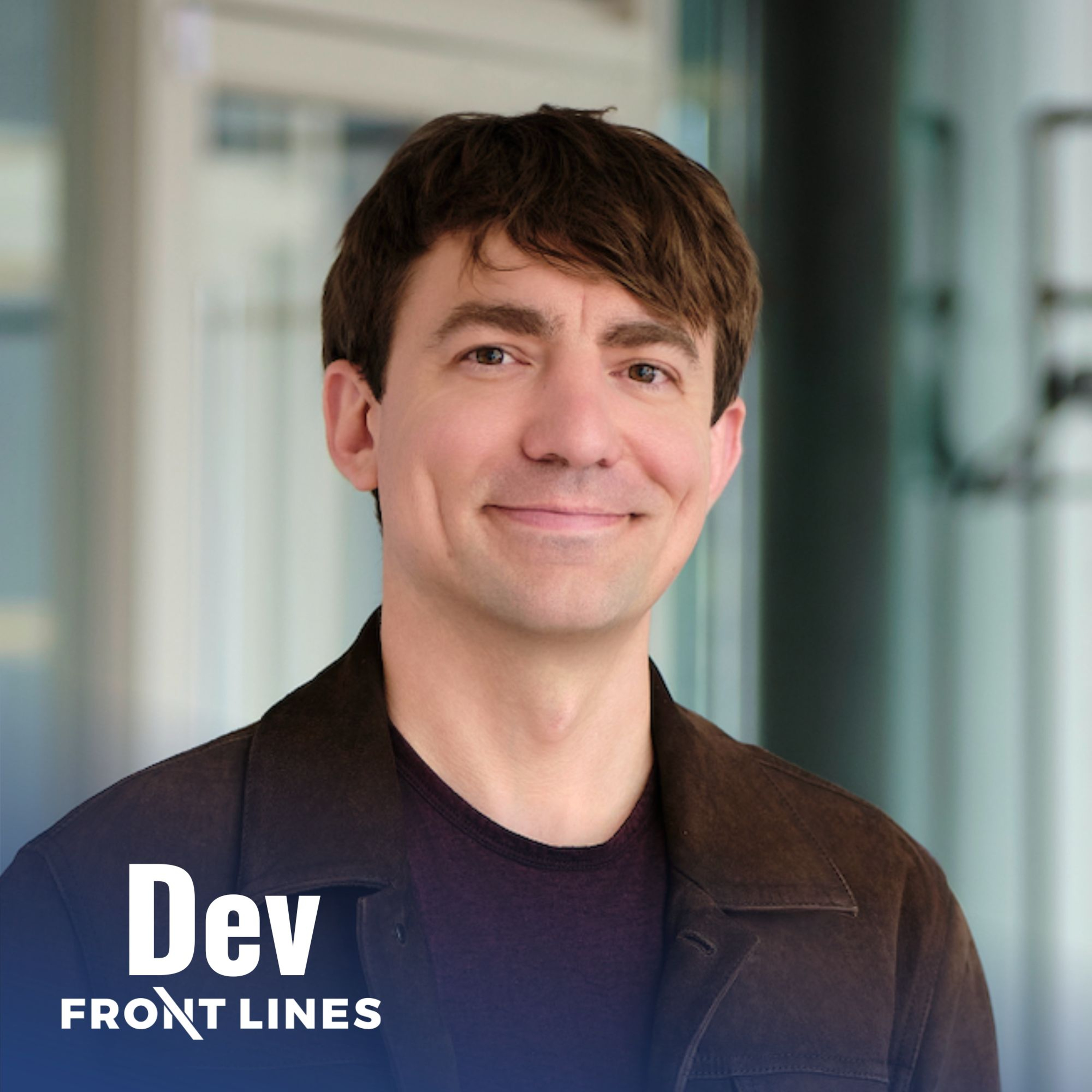
Today our guest is Robert Brennan, co founder and CEO of Open Hands.
- [00:48]
A
Robert, thanks for being here. Thanks for having me.
- [00:50]
B
Of course. Let's go ahead and talk about what you've been building so far.
- [00:53]
A
Yeah, so we're building Open Hands, which is the largest open source platform for Agentix software development. Essentially, we give software engineers the tools that they need to automate the parts of their job that they don't really want to do, right? All the toil that goes into maintaining code bases, there's a ton of work that goes into just maintaining your dependencies, keeping vulnerabilities out of your code base, making sure you've got proper unit test coverage, doing code review. There's all this work that is often just toil, doesn't really involve a lot of creativity or critical thinking. And we're helping software developers automate that using AI.
- [01:25]
B
Talk to us about the decision to go open source. Was that like a no brainer when you were founding the company? Is it something you debated?
- [01:30]
A
Yeah, it's something that's been in my blood for many years. I've been doing commercial open source for over a decade and really that's how the company was born, is that we saw this technology emerging. There was a really famous demo video from Cognition of their agent Devin, before agents were really even a thing, showing that it could automate the whole software development process. And that video got the whole software engineering community very excited about what the future of software development looks like, but also a little scared that it was happening kind of in a black box. Right. This was kind of being pushed on us by this stealthy company that no one had ever heard of before. And so my co founders and I got together and we were like, hey, like There needs to be an open source alternative here. Like that's exactly the opening in the market is the development community needs a way to contribute to this change, right? If our jobs are going to be changing as drastically, we need a say in how that change happens. And so we started a project called OpenDevin the next day and quickly renamed it to Open Hands once we realized we were going to commercialize it. But it really started as an open source project and then we, after the fact, decided to commercialize.
- [02:22]
B
When you look through history and look at the companies that have been open source, they've tried to commercialize, are there any patterns for what they've gotten wrong and why they've struggled?
- [02:30]
A
Yeah, it's a really tricky line to walk, right? You're building up a whole bunch of goodwill by, you know, putting stuff out there for free, letting people use it, letting people contribute to it, and building this like, ecosystem around your software. But then you do, you know, you need to make sure it's sustainable, right? You need to make sure that there's money coming in to sustain the support on that repo, sustain continued development on that repo. Fixing bugs, fixing vulnerabilities, right? And so it's a balance that needs to be struck. I think on the one hand, you've seen some companies that have created a ton of value for the ecosystem. I think like Docker is a really good example here of like, you know, they created a ton of value for the world. They created a world changing technology, right? It's something that every developer uses today. And they did okay as a company, right? They grew fairly big, but there wasn't like a giant IPO or anything like that. And you know, that's kind of a shame, right? They only really captured a tiny, tiny fraction of the value that they created for the world. So they maybe set the dial a little bit too hard and the, you know, we're going to give everything away for free direction. And then meanwhile there's other companies that, you know, have released a lot open source and then realized, you know, we're struggling to commercialize this or like the big players like Amazon are coming in and basically offering our open source as a service and cannibalizing our business model. And so they changed their license and upset the open source community and do a lot of damage to the community that they created in the first place. Right. And so walking that line between like, how much are we going to hold back commercially and what are we going to give to the world for free is a really tough one. And we've tried to set a really clear line there. You know, we want every developer to be able to run the latest and greatest agentic technology on their laptops. And so everything we do, even from like a research perspective, goes into the open source. And then it's only once you start to scale into the cloud, start to connect into, you know, a lot of work related applications like Slack and Jira and Linear and things like that, that's stuff that we hold back commercially and that's where we expect you to start paying us. And that's been a really great why in the community seems to really appreciate it. It's very clear to them what they can expect to continue getting in open source in perpetuity. And it creates a clear upsell for any team with a budget that starts using it. They're going to want to scale up to a point that they want those commercial features.
- [04:29]
B
When I just think about this drive from like San Francisco to Palo Alto, I see a lot of companies that are saying that they not do exactly what you do, but you know, they're trying to tackle that same problem. How do you think about just competing in such a noisy world? Is open source really the pillar that the positioning is built around?
- [04:44]
A
Yeah, open source is a big piece of it. It creates a lot of trust both with developers and with large enterprises. Right. They have a feeling that this isn't going to just get pulled out from under them all of a sudden. Right. There's a clear off ramp. There's not as much lock in with open source. So enterprise buyers tend to really like that. And they also, especially given that this is such a powerful new technology, they appreciate the transparency. Right. They appreciate they can look under the hood and understand how is this thing working. Right. They appreciate that they can run it all inside of their own cloud or their own data centers. They can run it even air gapped if they want to using open source language models. And that gives them a much clearer sense of safety. Right. This is, you know, a world changing technology. And so like one of the very large banks that we work with has said very plainly we will not use a closed source solution here. We want it to be open source so that we can look under the hood and understand how does this thing work, what is it doing? So that's very important to them. But yeah, I would say it is a very competitive landscape. We've really carved out a niche for ourselves by defining our ICP around, you know, mainly highly regulated industries. So a lot of banks, finance, healthcare, insurance, cloud Infrastructure companies that really care about data sovereignty really want to know where is this data going? Where is my source code going? They really like again that we're open source and they like that they can run everything inside of their own cloud. So that's helped us a lot. And then we've also really carved out a sort of product niche as well where there's the cloud codes and the cursors of the world that kind of operate as like a pair programmer on your laptop. And we're much more oriented towards these more cloud based automations that are doing things end to end instead of working hand in hand with a developer. So different set of use cases for both of those technologies, but that we basically carved out a set of use cases that we can specialize around and do better than the other people.
- [06:18]
B
Did you know on day one that highly regulated industries was going to be the focus in terms of icp or did you have, you know, one bank or healthcare company that said yes and then he said, okay, let's dive deeper?
- [06:27]
A
Yeah. It wasn't clear on like day one when we started the project that that would be the case, but it became apparent very, very quickly. I think there were some cool commercial technologies that were emerging, but you know, any regulated company has a hard time doing like a whole vendor onboarding and getting those technologies in place. It can take, you know, as much as a year. And these companies were very hungry to start using AI and working with AI. Especially the engineers on the ground were like, this is a game changing technology, I need to get my hands on it. And generally they had permission to start using open source because it is, you know, totally. They control the source code, they control the data. They have kind of a blanket acceptance for bringing open source in house and operationalizing it. And so we got our foot in the door at a bunch of large banks much faster than any of the vendors could because they didn't need to talk to a salesperson, they didn't need to talk to their security team. They just had to like make sure they followed the rule book that's in place for open source. So very quickly we started getting into discussions with highly regulated companies and that just kind of snowballed from there.
- [07:19]
B
This show is brought to you by Frontlines Media podcast production studio that helps B2B founders launch, manage and grow their own podcast. Now if you're a founder, you may be thinking, I don't have time to host a podcast, I've got a company to build. Well, that's exactly what we built. Our service to do, you show up and host and we handle literally everything else. To set up a call to discuss launching your own podcast, visit Frontlines I.O. podcast. Now back to today's episode. What are the downsides of selling to highly regulated companies? I have to imagine that they are scared of new stuff, open source, it sounds like that helps. But what are some of the other maybe non obvious downsides of the selection you made for your icp?
- [07:55]
A
Yeah, I would say there's a pretty stark split between about half the highly regulated companies we talk to are like, yes, we understand this is a game changing technology. We don't want to fall behind. Like we need to adapt and start using it very quickly. And like a they're interested in the tech and B, they're also like fast tracking us through legal review, security review, procurement. Like we're getting sped up because they realize like this is just a very fast paced technology. Right. But then there's another half that are much more slow moving. So some of them have not adopted any of the tech in our space right now, which is kind of nuts given how much it's transformed Almost every engineering org. There are some banks that are just like, we're not doing agents, we're not doing any of this AI in our code base until it gels out a little bit more. A little, very, very risk averse. Right. There is like by default a very long sales process, sometimes multiple years to get in as a vendor. So it is definitely a double edged sword.
- [08:46]
B
As you locked into that ICP was that difficult to start saying no or did you have to start saying no to other markets?
- [08:53]
A
Yeah, I think learning to qualify folks out was a big, I would say edge for us. When it was just the founders doing sales. We didn't really have qualification criteria. That was one of the disciplines that bringing on a CRO. He immediately was like, okay, we're going to start, we're going to start bucketing these and qualifying them. And so he actually came up with a rubric, basically puts folks in four buckets. It looks along two axes. Right. There's a size of the company, right. Is it you know, hundreds of developers or is it like thousands or tens of thousands of developers?
- [09:18]
B
Right.
- [09:19]
A
You know, big enterprises versus you know, more mid market. And then the other axis is level of maturity. Right. Are they like very forward thinking? Are they like ready to adopt this tech? They've already experimented with a bunch of different stuff or are they like very early days, they're still trying to figure out what's what and like they're just kind of kicking tires. And we very quickly decided the low maturity small guys, we don't talk to them. We just say, hey, here's our open source, go play with it. Like we're not getting on a call with you. The high maturity, both big and small, those are great. Those are like our ideal customers. And you know, it's really just a matter of like, how big is the check that they give us. And then the tricky one is the low maturity big guys because that could be a very big check and we want to help them along that process and we want to be there with them. But those are the ones we have to be very careful about because they can take up all of our time. They want to talk to us and learn from us. But we have to be very clear with like, here are the guardrails for if we're going to do a POC. It's going to be 30 days or 60 days and then like after that it's you know, take it or walk away.
- [10:12]
B
And what's the evaluation look like to determine maturity?
- [10:14]
A
It's asking them a, like how much they've adopted other tooling in the space. Right. Do they have no AI at all? They're probably not ready for us. We're much further along in the maturity curve. They should start with a smaller technology like, you know, an AI powered IDE or something like that. There's a lot of questions of like, who are we talking to? Is the buyer and the interested party? Is it, you know, a middle manager somewhere in the engineering org who like doesn't really have a lot of sway? Or are we talking to. Most mature companies have like an AI team for developers. Right. There's specifically a team focused on dev productivity or shipping AI to developers. If we're working with one of those teams, like we know we're in a high maturity organization.
- [10:50]
B
What are the titles of those people who are on those AI teams? I'm guessing it's one of those titles where it's completely different from org to
- [10:56]
A
Org sadly probably for targeting become very nebulous. I would say the traditional title or background that a lot of these folks come from is like a principal platform engineer or sometimes like a principal software engineer. But platform is coming up more and more. These are folks who think about engineering very holistically and think about engineering productivity and like how do we maintain a healthy code base, things like that, transitioning to AI engineer or agent engineer. Titles like that are starting to come up where the AI is right there
- [11:23]
B
in the title you mentioned your CRO. What was the process like to find your CRO?
- [11:29]
A
Yeah, it was tricky. We talked to a lot of folks. We actually brought on an advisor through my network who has helped a bunch of companies scale up from, you know, basically to get their first 10 customers right. And he's helped a lot of folks with founder led sales and then transitioning out of founder led sales. So bringing him on as an advisor was a huge help because now he has a huge network of sales folks that we can tap into. But he connected us with Ben Solari, who was the head of sales at Jellyfish. Similar industry there. Right. They're selling to engineers to like help deliver productivity metrics and like help you understand the health of your engineering Org from a data driven perspective. I mean he took them from 500k in ARR to 50 million in ARR over like 4 years. Wow. So he was exactly the kind of person we need. Right. He's familiar with our space, he knows how to sell the platform teams, he knows how to sell the devs and he's seen this transition from like, we've pulled in a handful of sales as founders to like, we've built a repeatable sales motion with a large sales team.
- [12:18]
B
What were the signals for you that said it's time to go out and hire a CRO? It's time to start transitioning out of founder led sales?
- [12:24]
A
Yeah, I would say, you know, we had a lot of folks coming in who wanted to talk to us, wanted to run POCs and we closed a few of them, but we weren't like closing them very regularly and we were just kind of getting stuck in the POC phase and it was very clear, like we just didn't really know how to run a, like a good process here. You know, for instance, I mentioned we're working with one very large US bank. We had worked with them for probably about a year at the point that our CRO came in and within six weeks of him joining, we had them closed. He immediately came in and said like, you know, here are the success criteria. The poc. Once we prove X, Y and Z, then you're going to buy. Like he just laid it all out, he laid out a plan and you know, we followed the plan and he signed the deal. It seems silly in retrospect that like that's what we should have done, but we were just kind of like giving them the software and saying like, do you like it? Do you want to sign? Are you ready yet? Oh, you're not ready yet? Okay, we'll keep giving it to you for free. So he brought on a lot of discipline, which is really, really helpful.
- [13:15]
C
This show is brought to you by the global talent company, a marketing leader's best friend. In these times of budget cuts and efficient growth, we help marketing leaders find, hire, vet and manage amazing marketing talent for 50 to 70% less than their US and European counterparts. To book a free consultation, visit globaltalent.co.
- [13:35]
B
what else have you learned so far from the CRO coming in?
- [13:38]
A
I think just in general having like a clear definitions of, like, you know, this is what our ICP is, you know, this is how we run a poc. You know, it's not just a blanket. Like, use the software for a while and tell us what you think. It's like, here's a menu of potential routes you can go and you're going to pick one of these three paths and then like, these are the success criteria. Getting that, that discipline and that structure in place. Super, super helpful. And then I think the other tricky thing that I'm still in the process of learning is that when you've got the, when you've got the founders on the call with the customer, the prospect, the message is very clear, right? Like, we know how to pitch the product, we know where the value is. We use it every day. Right? Now that we have a sales team, there's like a game of telephone happening now, right, where we have to enable the sales team to talk about this intelligently and they're doing a great job, but it's a constant. Like we're reviewing how they're talking to the customer, we're giving them feedback, they're refining their pitch, they're coming up with new ways to talk about it that we would never would have come up with. But there's a little bit more like bureaucracy and like an extra layer of communication that has to happen that I'm still learning to navigate.
- [14:38]
B
When you think about your growth, what are the channels that are really working well right now? And what channels have you maybe tested and said, yeah, not going to dump money into that anymore.
- [14:46]
A
Yeah. So the biggest thing for us is open source, right? That's really our bread and butter, right? Everybody comes to us through the open source project and then we're able to see that in a few different ways. One, we can see, you know, who is interacting with us on GitHub, who's joining our Slack, like, who's just like officially a member of the community. You know, what company do they work for? What's their position? And we can start to build a relationship with that person. You know, usually they're reaching out to us and saying, you know, they're opening an issue, saying this didn't work, you know, what gives? Or would you add this feature or something like that? And that's a great conversation starter, right? Those are probably the highest, like the warmest leads that we could possibly get. You know, they're actively using the software. We also can see when folks are navigating our documentation, right? We can see what companies are in our docs based on their IP address and we can start to, you know, build a picture of like, okay, there's you know, 50 developers at this particular company who are all looking at our docs. We can see that they're looking at these pages in our docs. So they're interested in integrating with Slack or they're interested in integrating with Jira and we can start to zero in there. And then we also have a SaaS offering that people can just like sign up and plug in a credit card and go, that's a pretty good funnel for us. We can see who's in there. That especially works well for more of the like, small to mid market companies that are comfortable signing up for SaaS, whereas the enterprises are a little bit more like they don't want to just sign up for random SaaS products, but it's mostly like organic inbound stuff. We haven't really tried advertising. You know, we generate a lot of content just about the product and put that out there for the community to see more active on Twitter, things like that. But I would say mostly we're guiding people towards the open source project and then funneling them to the sales team from there.
- [16:13]
B
And will that sustain you, do you think for the growth that you need at least to get to the next stage of say your Series B, like can that sustain you or are you going to have to turn on paid or other channels, do you think?
- [16:23]
A
Yeah, it really should be able to sustain us, right? We've got a very large community there. We've touched pretty much every major engineering org in the world, right? Like if you look at, you know, we've got a little, you know, almost like a CRM that just shows who has joined our Slack, who's interacted with us on GitHub, who's looked at our docs and you know, at least some engineer from pretty much every major engineering work has seen us. And I think if we can keep growing that open source funnel and keep growing our mind share, you know, how many people look to open hands, at least the open source project as a standard way of running agents at their company or for their personal projects. That will be a really great feeder for us.
- [16:58]
B
What would be your number one piece of advice to a founder who's listening in and they're going to go open source, they're going to start an open source company. What do you recommend they think about what should be top of mind for them?
- [17:08]
A
Yeah, I would say the biggest thing is to, you know, keep your community engaged and happy. Like, don't lose track of them. I think it's easy, especially once you have a handful of customers to start putting all your attention on the ones that are paying you money. But it's the open source folks that are kind of the lifeblood of the whole system. It's always been a struggle for us to balance. Like we get hundreds of pull requests and thousands of issues getting opened and making sure that we're paying proper attention to those and trying to get them merged has always been a struggle. But that's really what gives the community a sense of ownership, a sense of buying to the project. You know, once somebody gets their code merged into the project, they're bought into it. Right. They now feel a sense of ownership and they're going to be a champion for you for a very long time. So that's been really important to us. I wouldn't say we've always done a great job of it, but that's, you know, really where we're trying not to lose sight as, especially as we take on more and more paying customers.
- [17:51]
B
And final question for you, let's talk about the big picture vision so we can go out three years, five years, 10 years. What's the big picture vision for everything that you and the team are building?
- [17:59]
A
Yeah, I mean, we're really trying to reimagine what software development looks like in an AI powered world. It's very clear that it's going to look a lot different than it did two, three years ago. It already looks a lot different than it did two, three years ago. I don't open an IDE anymore. Right. Like I don't write any code anymore. I just tell agents to do stuff. And I spent some time reviewing and thinking about architecture and thinking about product and what do I want to build. But the job itself has changed drastically already and it feels like we're just in the first innings. It feels like the core tech is still getting better and better. Right. Anthropic just announced a new model yesterday that is head and shoulders above anything that's been launched in the past. It's not generally available yet, but eventually it will be. And, you know, once that hits, it's just going to be a whole new game. Right. And so we're really trying to help the software development community really define what that feature looks like and help them shape it into something that feels good for software engineers rather than something that's just, you know, trying to replace software engineers or, you know, making the work not fun. All right.
- [18:54]
B
I love it. We're going to wrap here. Before we do, for those listening in that just want to follow along with you. Where should we send them? Where should they go?
- [19:00]
A
Yeah, check out our GitHub repo on GitHub.com openhands and then openhands.dev is our main site. And then please do come and join our Slack. The link is inside the GitHub readme. We'd love to chat with you there.
- [19:11]
B
Amazing. Thanks so much for taking the time.
- [19:12]
A
Thank you. Well, that's all for today's episode of
- [19:17]
B
Builders, brought to you by the Frontlines. If you want more amazing content like this, visit Frontlines IO, where you'll find the library of more than 1500 interviews with founders, marketers and other GTM leaders, where we unpack the tactical lessons from their journey. And of course, as always, if you do want to launch your own podcast, we'd love to have a conversation with you. Visit Frontlines IO podcast as a service. Mention that you listen, mention you love the show, and we'll give you a 10% discount. Thanks for listening. We'll catch you in the next episode.