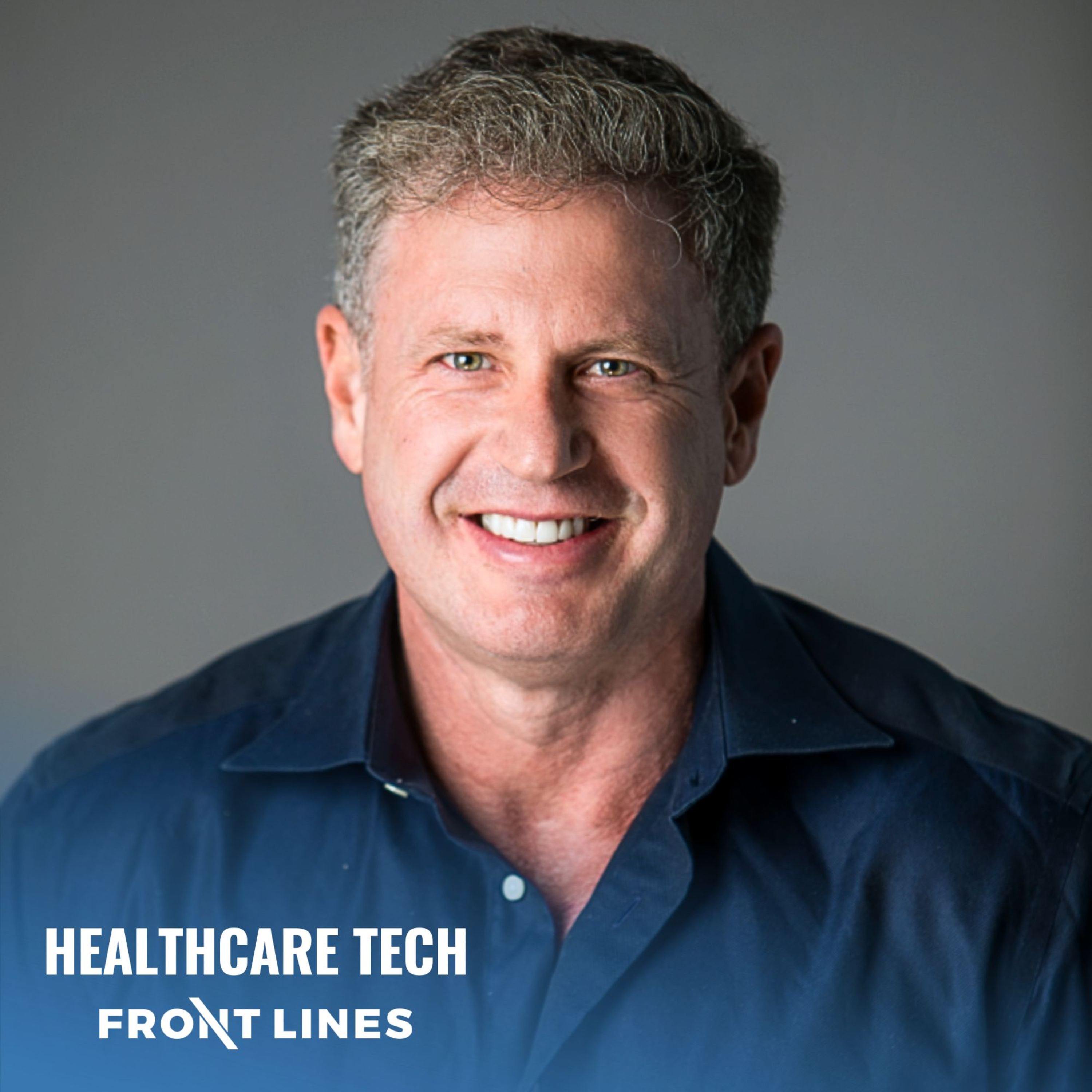
Loading summary
Transcript42 lines
- [00:01]
Scott (CEO and founder of Faro Health)
The earlier sales were people who were more believers that, you know, if you could measure this surrogate for what we really want to do, that's a strong enough case to keep going. And then as we've evolved as a company and have gotten better at measuring this and have a much more repeated fashion, then it's gotten easier and easier to sell.
- [00:21]
Podcast Host
Welcome back to another episode of Builders. As always, this show is brought to you by Frontlines IO, Silicon Valley's leading B2B podcast production studio. If you're bringing technology to market and want to learn from your peers, we have a library of more than 1200 interviews with Venture backed founders and marketers. Where they talk, all things go to market. Of course, if you want to launch your own podcast, we offer podcasts as a service to more than 80 tech startups. The idea there is very simple. You show up and host and we do everything else. Now, with all that said, let's jump in today's episode. Today we're speaking with Scott, CEO and founder of Faro Health. Scott, how are you?
- [00:59]
Scott (CEO and founder of Faro Health)
I'm great. Thanks for having me.
- [01:01]
Podcast Host
Of course. Looking forward to this conversation. Let's talk about your background, your journey, and what you were doing before you decided to start this company.
- [01:07]
Scott (CEO and founder of Faro Health)
Okay. Yeah, well, I never set out to be a CEO. I think that was definitely not on the cards. You know, my background is more in what I call clinical sciences. So from Australia originally, that's where I trained. And in this space, just for reference, when I talk about clinical trials, clinical development, what I basically mean is how do you prove a new drug is safe and effective? Like it's a science in itself. So I jumped early from the clinical part of medicine into this as a career. I worked for large pharma, small pharma, a med tech. Took being part of one company that went public, so that was a success. Another one that was sold and we crashed one into the ground. That's a whole massive learning curve in itself. I kind of did my job, I proved it didn't work, but unfortunately we proved it didn't work. From there, Google X actually reached out to me. And this was in the early days of like Google Health, before that got formed. So I joined that group. We spun out, verily, Life Sciences, they formed Calico and we'd help build that company up. But I felt like I was solving the wrong problems and I told them that many times. Is that at least in clinical development? I've been doing it a bit over nearly 25 years. It hasn't changed. So people are Pretty shocked. The vaccines for the pandemic. The actual trial was designed in a table in Microsoft Word that was state of the art. We made big decisions about what we're going to measure in people and when we're going to measure it and how we're going to measure it. And we did it all in a table in Microsoft Word and then we write hundreds of pages around it and then I hand it to colleagues and they read it and they interpret it and there's about 60 different departments and kind of like other things that flow off that and it's all done by hand. What we learned in the pandemic is that if you throw enough people at something, you can compress what is typically a 10 to 12 year timeline down to about a year. And it was done because just shut. If you throw enough people at this manual problem, you can really shrink timelines. Unfortunately, it didn't save any money because imagine a company like Pfizer who normally has 50 to 60 or a couple hundred programs in development, and if you pivot everybody almost onto one thing, you can do something pretty amazing, which they did, and Moderna as well, but that's not practical. So, you know, back to Faro. So I kind of proved the thesis that if you could automate and bring better information to people while they're making decisions and when they're sitting in a table in Microsoft Word and going, what am I going to measure in this person to make sure I protect their safety while they're on an experimental medication, how do I prove this thing works so it's effective? How do I kind of prove to the that there's like a return on investments for a vaccine, like there's a reduction in infection and the cancer, obviously reduction in tumor size occurring. Choose your favorite thing. So you're balancing a lot of stuff. Then you're also thinking, we're all scientists, so we also have scientific questions about, oh, hang on, I might want to do another drug later. So I've got to collect samples because I'm always thinking, well, I can't go back and get to these people again. And then I might want to be able to look at this. So you're trying to balance in your head all of these competing things which will have cost implications, time implications, they have implications on patients because they all require the travel burden hospital system. We, a lot of patients go for these types of trials. Balance it all so far is kind of the way to think about us is we automate the human labor that's required and at the Right time, give people information and insight. Are you collecting the right thing? Are you collecting at the right frequency? So how often am I collecting it? And then we can show you, well, how much will this cost? What's the impact on timelines? What's the impact for success of the program with prediction and then start to go on to, I would say like automate what the next person in the chain would do. And we're very early on, so we've done the first thing, which is how do you massively improve design? Just for some proof points I'll throw out there, we have a paper with Merck. They avoided a bit over something like $100 million or cost avoidance by having the ability to not collect things they learned they weren't going to use. That's common in industry. They're actually probably a high performer in this regard that they tend to not over collect, but depending on the company, it can get a lot worse. But what we're on the journey now is how do you start tackling the next silo within this chain? So after design, we hand it to colleagues who do other types of work. And so how do you start to help everything through the entire chain till you get to the very end and you kind of have to build it as you go because everything right now, as I said, is done by hand. So it's worth the start of what I would say a fast moving journey now. Because what happened is when LLMs came in, they massively accelerated our ability to build, but also our ability to kind of what I would say a lot of the inherent technology capabilities and our speed to deployment. So everything's kind of getting faster, just like we're seeing everywhere. And that's how I ended up as CEO. It wasn't because I really want to be a CEO, I really want to be a founder. I just built what I wish someone. I gave up waiting for someone to build this. And so I started just thinking, well, if no one else is going to build it, going to build it, what
- [06:12]
Podcast Host
does that look like? Just from a change management perspective, if you have user base that's, you know, very used to doing everything by hand, I'm sure they've spent, you know, long careers doing things a certain way. What's that like to try to come in and say, let's do things completely different?
- [06:25]
Scott (CEO and founder of Faro Health)
That's actually the biggest challenge. That's 100% it take. This isn't a problem of if you can build it, we've shown you can. It's having a system that people actually want to use and will want to displace. That's the trick. So coupled with our platform and our products, we have a significant investment in change management. So our kind of professional services team, other like the standard API integration and stuff, we actually have specialists like former consultants who help companies think through with them like what is process go from A to B all through to the end and then how to rethink it and how to measure the value at each step and report it back to leadership. And that's kind of one of the most critical things to our success is we invest heavily very early on, within a few months to being able to show a return on investment. I think for us, you know, the strongest unlock is being able to do that in a quarter. We can deploy in and within that single quarter show you know, from a number of perspectives what the impact has been and then we use that to kind of get more adoption. I think the other thing just from a product perspective, you have to solve a real pain point. So to do the equivalent work that kind of what I would call like trial optimization does, we got benchmarked against one of the. Our customers took a team of five people working for three weeks and they still couldn't do what is done in an hour in our platform. And so that's. And it's worked. No one really wanted to do anyway, but I had to. So there's a big and easily measurable ROI in what we do. But we also right now tend to only tackle problems that are like that because it's a pretty big space as you can imagine. So we've really tried to focus on, you know, what are the big levers we can pull before we tend to, you know, because as a startup it's all about focus. So we can't do everything everyone would love us to do, but we're highly focused on doing like what are the big returns right now? And some of the polishing bits, which we'd love to do, kind of have to wait till later. That sucks probably. Who would have been a user as a product? I would love to finish some things, but I would say or polish them a bit more, but you just don't get that luxury as a startup.
- [08:30]
Podcast Host
What did you have to do in order to be able to prove the ROI case so quickly? I speak with a lot of AI founders and I know a lot of AI founders and I think that's the number one thing everyone is trying to figure out is how do you make the ROI case and make it clear that there's an ROI case for you, given how you're building. Was that just an easy thing? I don't want to say easy thing to do. Was that a straightforward thing to build in, or did that take massive effort and initiative on your side to really be able to make that quick ROI case and story?
- [08:56]
Scott (CEO and founder of Faro Health)
No, it was a lot of effort and it was a lot of iteration. I'm a big believer in discipline and learning through repetition and just getting better. That has been an evolving process for several years now to get it to that speed. It used to be nearly a year. And I've got this slide, you know, I use for fundraising. It's a very simple slide and we're in probably reasonable number of the top 10 farmer now, the majority and what it is is from our first customer, the size of the pilot in dollars and then growing to like expansion and into like an enterprise deployment. And that's like across the X axis. And as you go down, over time, as we roll in new and new customers, the pilots get shorter and the time like. And basically the numbers, the numbers we're talking about, like the Bobby Charge has gotten, like, much, much larger. There's like another zero behind things now. And it's been that investment in being able to quickly measure the ROI that has mattered. And sometimes we can't get at exactly what we want, so we have to use surrogates. And in the beginning, we had to kind of use surrogates and sell to the people who believed that surrogate was a good measure for the actual thing you really want. But as we've evolved, we can actually start to measure some of those things. So the earlier sales for people who were more believers that, you know, if you could measure this surrogate for what we really want to do, that's a strong enough case to keep going. And then as we've evolved as a company and have gotten better at measuring this and have a much more repeated fashion, then it's gotten easier and easy to sell. But it's work.
- [10:28]
Podcast Host
This show is brought to you by Frontlines Media, a podcast production studio that helps B2B founders launch, manage and grow their own podcast. Now, if you're a founder, you may be thinking, I don't have time to host a podcast. I've got a company to build. Well, that's exactly what we built our service to do. You show up and host, and we handle literally everything else. To set up a call to discuss launching your own podcast, visit Frontlines I.O. podcast. Now back to today's episode. Do you feel like you've crossed the chasm yet, or is it still mostly the early adopters that are actively buying right now?
- [10:57]
Scott (CEO and founder of Faro Health)
No, we're on the hockey stick now. So two things happen. I mean, it's interesting and I would say the pain of Faro in the beginning because we're not a young company, we're about 4 to 5 years old, and we mistimed the market a little bit. Like this shift of what we're doing was always inevitable. And that was my thesis. Automation for clinical development has to happen. We have to use data to improve clinical trial design. We can't. In an area where I think we said this in the beginning, you know, there's not too many areas. You spend 1 to 2 billion dollars of R&D and you have an 8% chance of success. That's it. Actually, every year we drop about a percentage. So we're actually spending more money and getting worse. The only way to kind of cost correct that is to want to have better data when we design if we're going to fail or not and to automate because the timeline is all a manual labor. And so this is inevitable. This have to happen. We're a little early for the market by probably about a couple of years. But you're also selling to enterprise. So, you know, we didn't start in the small and medium industry. We sell to like enterprise pharma and you have to have a certain level of platform maturity to do that. So we had a couple things all converged at once. Is our platform got to a level of maturity that enterprise could widely deploy it. The other thing that happened is the market matured in itself and inflected. And we saw this net starting about 14 months ago and now it's the opposite. It's insane. Like we have like Paul and we don't advertise and so it's exciting. But you actually go to another product, you actually face another series of problems now, like how quickly can you really grow and maintain quality? Because we're in a field, quality is everything. It's the most important thing. The thing I'm most proud about is every one of our customers thinks they're the most important customer on the planet to us. And I, what keeps me awake at night is scaling and keeping that reputation and keeping that like belief because they are all important. And that worries me all the time. But part of it is market driven. I mean, you can't, as I said, like we had to wait a little bit for the market to catch up, but then it did. So it's you know, sometimes timing is everything.
- [13:06]
Podcast Host
I think most founders would agree with that. Timing is everything. And for some that's good and some that's bad. Let's talk about our final question. Let's just talk about 2026. So we're somehow already two months in. I don't know about for you, but for me this seems to be flying by. What's 2026 have in store for you? What's the top priorities?
- [13:23]
Scott (CEO and founder of Faro Health)
Yeah, it's a great question. I mean, without going into anything proprietary for me, again, this is our year of scale and it's keeping the things that are core to us, like, you know, our customers trust us. We spend a lot of time building trust for very expensive R and D pipelines in the market. We have to scale that and that is a slightly different skill set to some of our team have. So it also means we have to kind of bring in outside talent now to make sure that we can scale effectively. That doesn't mean necessarily to be clear that we plan to like replace people is bringing in what I would say like experience scale people. That's essential right now. So that's number one on our mind. And our website's going to explode with job offers slightly shortly and I think you can only hire so many people at a time. So we have to balance again like top priority hires. I think the other thing is around like we have to make sure that we build the right things at the right time because we're getting a stronger customer base. I think one of the risks you can and maybe this is just found a fear but I think one of the things that as we grow and you kind of way past the ability for me now to know a hundred percent of what's going on everywhere and exactly like product feedback, but it's making sure we build things with the highest ROI for our customers and we stay on track for this year because we're at that point. Enterprise customers are very loud and they ask for a lot of stuff all the time. Doesn't mean they're going to pay for the stuff they're asking for. It might be because we touch so many departments and so many people now. Some of the asks are like it's important for them but it's not necessarily we'll do it but it's not like existential right now and it's making sure that we stay on that this year because I can see very quickly how that could drift off just because as we've grown and we've got more and more enterprise Customers, we're being asked for more and more stuff, you know, so it's balancing that and then it's. I think everyone is like balancing that with, you know, cash, dilution, you know, Runway and all the other stuff that is essential now as we kind of much more mature into a, you know, resilient business versus necessarily needing to fundraise. So I think that's the other. Like, my focus is being resilient at this point because we, you know, shortly should have in some ways the luxury to do that. But then that's its own series of things. And then the big one is I get asked all the time, are you worrying one of the big behemoths in your space will do this? And I think part of my answer is no. I think there's space for appeal play here. We still are probably the only real company in the space, but I worry we've done a successful job of suddenly generating a whole heap of new startups wanting to come in. I was at a conference two weeks ago and even my own team, we were shocked. The whole theme was basically digital clinical protocols, which is what we do. We've been like one of only a few people talking about it for years. It was the entire thing. There were so many companies all of a sudden saying they do this and all these startups. And that was kind of like eye opening in some ways. You know, my co founder said, just be flattered, but I don't want, you know, like anyone.
- [16:26]
Podcast Host
I'm probably.
- [16:27]
Scott (CEO and founder of Faro Health)
Maybe it's a superpower of founders. Maybe we're all deeply paranoid.
- [16:31]
Podcast Host
So you have to be. I think you have to be paranoid.
- [16:34]
Scott (CEO and founder of Faro Health)
Yeah. This show is brought to you by the global talent company, a marketing leader's best friend. In these times of budget cuts and efficient growth, we help marketing leaders find, hire, vet and manage amazing marketing talent for 50 to 70% less than their US and European counterparts. To book a free consultation, visit globaltalent.co
- [16:56]
Podcast Host
People always say that about competition, but it doesn't make it any easier. You know, even if you're just like looking at a market, it's like, look at a market that, you know, has a lot of competitors or your competitors copy you and it's a compliment. Like, no, it hurts. Like when I go and look at our competitors websites and like, they've just copied us completely. Like, I don't feel good from that. Like, I can't delude myself to feel good from that.
- [17:15]
Scott (CEO and founder of Faro Health)
I don't. And it's happening.
- [17:16]
Podcast Host
And that's.
- [17:17]
Scott (CEO and founder of Faro Health)
This is a new experience for Me, I'm like going, hang on, that's just a complete ripoff. Like we spent years working out how to do this and then you kind of look at it and go, oh, okay, I'll just rip that off. And it's like some stuff would be hard for them to replicate. It's not obvious. But yeah, maybe I'm less gracious than my co founder. I'm not flattered. Yeah, I get irritated and a lot of other short words I could use as well.
- [17:41]
Podcast Host
I mean messaging is easy to just copyright, but capabilities and actually delivering is a whole nother beast. So I think that's what is also.
- [17:49]
Scott (CEO and founder of Faro Health)
Yeah. And it's delivering its scale, I think into pharma. It's a high, high trust industry. Like these are multibillion dollar pipelines. And then once if you have a blockbuster drug, the revenue from that is enormous and then that one has to pay for all your failures back to the 8% success rate. Yeah, so by the way, that's a real reason why drugs are very expensive is you're paying for all the failures to get to the success unfortunately. And so yeah, it's an interesting time on this. So yeah, I worry about just competition because it's also noisy, which means we have to fight through that noise. Makes the sales process just that little bit harder, that little bit longer, I think. Thankfully we kind of have an established brand reputation now, but it doesn't mean that again you just got to. The chairman of our company was like I think the first CEO of Upwork. And he says to me all the time and to the entire like team when you sign a contract, he almost says the same thing, which is congratulations. Now the real sales work begins. And it's true, you win a customer, then the real work goes on to retaining them and that's actually more work and you know, deliver and trust every day. You know, people have to show up. Back to my discipline comment. Like, even when it sucks, this is the hardest thing I think is of being a founder is even when it sucks and you get knocked down. You've pitched a million times and everyone says no, you still have to turn up, then you still have to keep doing it. And as long as you can do that, I kind of believe you eventually can get successful. Not sure if you know, as I talk to some of the other or hear the podcast of the other founders, I think some of it is just for me is you have to survive long enough to be able to iterate to get really good and then just keep going and keep showing up. Even when you're tired and you have screaming kids and you didn't sleep, you still have to turn up.
- [19:40]
Podcast Host
What's that called? Like, someone told me the phrase the other day, a cockroach founder. Like, you just don't die or can't die and you can just keep going and survive to live another day. And that's the name of the game with startups is if you can live long enough, you can always figure things out.
- [19:52]
Scott (CEO and founder of Faro Health)
Yeah. And I think that's 100% true. And I look at Viva in my space. Is this amazing. You know, It's a legacy SaaS company, really well run and, you know, I don't know if this is a common opinion of them, but I think they just outlit, outlasted everyone to become a behemoth by just turning up and iterating again and again and again until they just had really great products. And I think now they've just got a massive brand reputation from that and like everyone trusts them, but I think that's how they got there. And yeah, you've got to keep learning and keep turning up and keep doing it even when it sucks.
- [20:26]
Podcast Host
Summarizes being a founder perfectly.
- [20:29]
Scott (CEO and founder of Faro Health)
Yeah, that's pretty much it.
- [20:31]
Podcast Host
That's the pitch.
- [20:33]
Scott (CEO and founder of Faro Health)
It's funny, people ask all the time, would you recommend being a founder? And it's like, I don't know. Sometimes I think it depends on the person. As I said, I did a personality survey. I did it for the leadership team and I think you can do almost anyone. And it was really insightful, probably for me, because I do make the joke. I'm a reluctant, like CEO. I never really wanted to do it, but the personality went okay. Oh, by the way, this is probably most likely thing you would ever have done. It's kind of your personality. It's like, well, I like getting beaten down and getting up again and I think. But then there's the fun times. I mean, it's one of those things I think you have. The thing I'm getting better at is enjoying the wins because I'm also the type of personality that I win and I just shrug and I get up and I keep going. Yeah, if you knock me down, I get a shrug, I get up and keep going. It doesn't matter what it is. I kind of just. Yeah, what I'm learning is to celebrate the wins a lot more and sometimes not necessarily for me, but for everybody else in the company who's probably not quite wired the same way I am, so that they can kind of feel Successful. I think that's another, you know, learning curve for me is that, you know, the way I'm wired is not necessarily the same way everyone else is wired. So I kind of have to be. I've got some good, I would say, leaders around me now, which is the other key is who can kind of like fill in for the things that I'm not necessarily will ever be. I'm never going to be the cheerleader, like jumping up and down on like, you know, the front of something. It's just not my personality. It'll be very fake. But I can hire some excellent leaders who can fill that role, you know, who can kind of build around me. Because man, it would suck in this company if everyone had my personality style. It'd be the most flat, boring company on the planet. I even have had like our VCs. They even hired me. I don't mind admitting this, like a communication coach to try and get me to be more up. Cause I mean, at my heart I'm a scientist and I talk very well to my colleagues and we're very similar in the way we think. But that doesn't necessarily mean I'm going to be the best non technical salesperson. So I had to realize very quickly I need to marry myself with someone who's kind of not me. I'll do the technical part and I kind of let them do the, you know, the exciting and the other part. And I think that's another key is to kind of have to. You have to work out quickly who you are.
- [22:52]
Podcast Host
Yeah.
- [22:53]
Scott (CEO and founder of Faro Health)
And then like build around that or you'll just get really kind of worn out.
- [22:58]
Podcast Host
The founder journey.
- [23:00]
Scott (CEO and founder of Faro Health)
Lot of fun.
- [23:01]
Podcast Host
Oh yeah.
- [23:01]
Scott (CEO and founder of Faro Health)
It doesn't stop. But yeah. Back to the original question. Like, you know, would I recommend someone be a founder? I honestly don't know. I think I'd have to ask them why they want to do it because I think that's really. You got to really want to do it and you want to really sell the world.
- [23:14]
Podcast Host
You'd be a little sick in the head. Yeah, that's what I always joke with friends. It's like you have to be, I think two things, right? To be an entrepreneur, founder, got to be a little sick. And then to do it in tech, you have to be really sick in the head to just like maximum pain. Because I think it's like founding a company and being an entrepreneur is hard enough. But you can go into some markets where there's no market risk or there's no technology risk, but you go into tech There's a lot of new risks there. There's a lot of new pain there.
- [23:40]
Scott (CEO and founder of Faro Health)
Yeah. And I think I get it. The other one is you have to have thick, thick skin. The new experience for me is having, I'm not that young, is having like people younger than me come up to me who run like peer firms. It's like, I will buy your company off you, I can run it better than you and, you know, we'll govern it better. But you can stand as CEO. And I'm like, wow, that is like really pricey, like to come up to a founder and say that because it's like, yeah, that's interesting. And you, I said you get a lot of. I think one of the things you've also got to work out pretty quickly is like constructive feedback from well meaning people is what's constructed feedback versus just like abstract criticism. And is it useful? I think you got to get really good at like filtering through, like what can you take away, you know, from a discussion. It doesn't matter if it's like at a board level, investor level, customer level. It is like finding that real, like the real things you can do something with and that you could actually improve on versus stuff that is probably sometimes just wrong. And I think that's hard. And you've got to get past yourself pretty quickly. And you're an ego on that. And I think once you can get past that, you can learn a lot from a lot of people very quickly. But you got to get thick skin. And that's something I coach my team on all the time is like, you know, when you get feedback, listen for like the constructive part, try to pull out the constructive part, like how to do better and then just get thick skin for the rest of it.
- [25:08]
Podcast Host
Yeah, good advice, good counsel. We are up on time. We're going to wrap here. Before we do, for those who are listening in that just want to follow along with you in this incredible journey. Where should we send them? Where should they go?
- [25:18]
Scott (CEO and founder of Faro Health)
Farahealth.com is our website. There's news on there. Thankfully, it's managed by marketing people who are not me, so it's somewhat readable and presentable, but yeah. And if you're interested in a career or something else. Yeah. Keep looking at our website. As I said, we've got lots of opportunity coming up.
- [25:34]
Podcast Host
Amazing. Well, thanks so much for taking the time. Great to meet you.
- [25:36]
Scott (CEO and founder of Faro Health)
Great to meet you.
- [25:40]
Podcast Host
Well, that's all for today's episode of Builders, brought to you by the Frontlines. If you want more amazing content like this. Visit Frontlines IO, where you'll find the library of more than 1500 interviews with founders, marketers and other GTM leaders, where we unpack the tactical lessons from their journey. And of course, as always, if you do want to launch your own podcast, we'd love to have a conversation with you. Visit Frontlines IO Podcast as a service. Mention that you listen, mention you love the show, and we'll give you a 10% discount. Thanks for listening. We'll catch you in the next episode.