Podcast
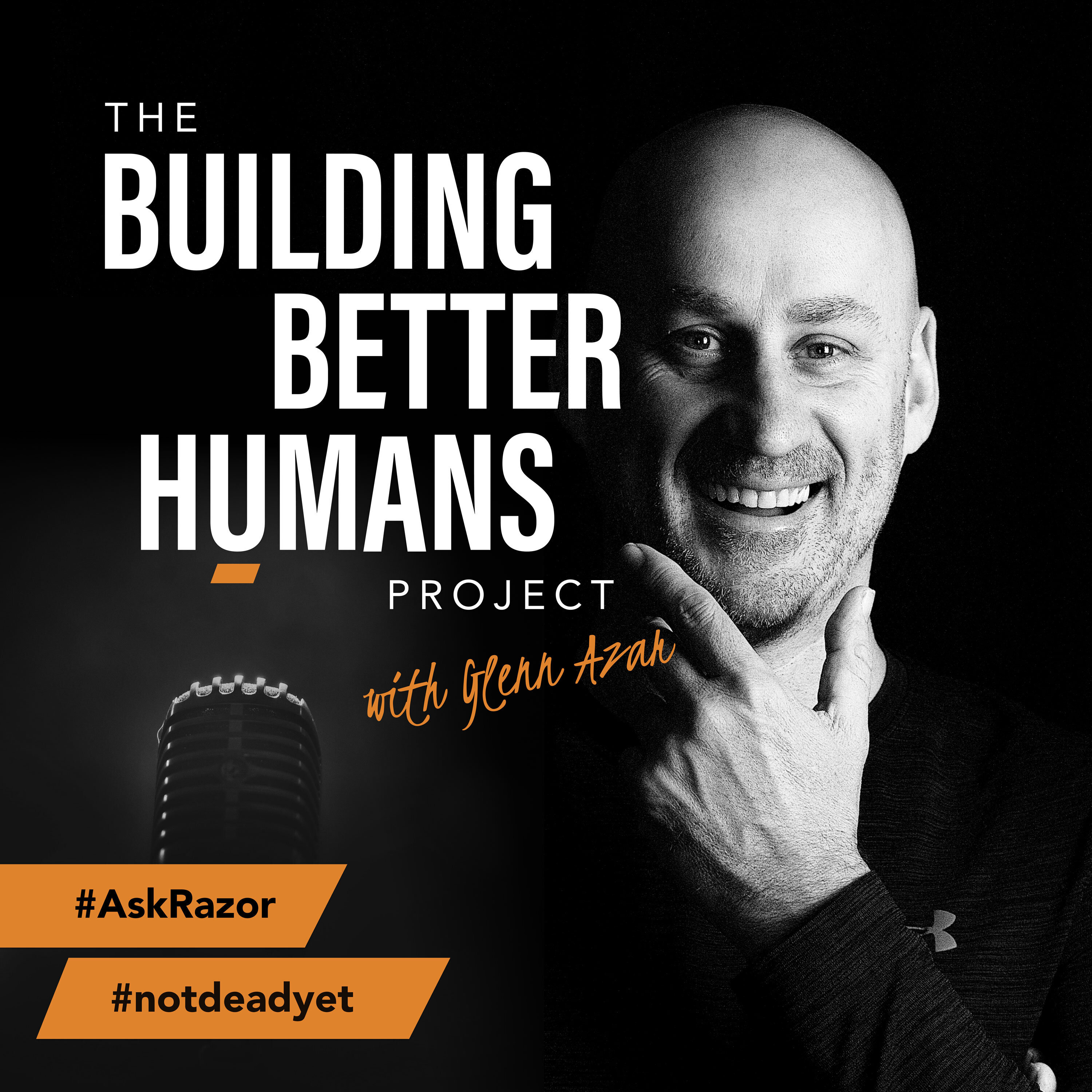
Building Better Humans Project
Hosted by Glenn Azar · EN
Inspiration, tips and advice to help you conquer your life, one day at a time. Glenn Azar is a former soldier, boxer and Helicopter Evacuation Medic who now runs an adventure business called Adventure Professionals. He uses his background, knowledge and lived experiences to share authentic tips that are useful, usable and implementable immediately to give you a boost in every area of life.
45episodes
Episodes
Newest firstAll episodes
Monday Motivation #1 - Before You Lead Others… Lead Yourself
3w ago00:11:27Tap to summarizeMonday Motivation #1 – Before You Lead Others… Lead YourselfWelcome to the very first Monday Motivation episode of The Building Better Humans Project Podcast.In this new weekly series, Glenn shares the same leadership, mindset and performance principles he teaches inside organisations ranging from small family businesses to companies employing hundreds of people.This week's episode explores a fundamental truth of leadership: before you can lead others effectively, you must first lead yourself.You'll discover why people follow your example more than your words, how to create calm under pressure, why your emotional state influences those around you, and the importance of holding yourself to the same standards you expect from others. Whether you're leading a team, running a business, raising a family or simply striving to become a better version of yourself, these practical lessons will help you start your week with purpose and intention.In this episode: Why leadership always starts with you How to create calm in the chaos The difference between responding and reacting Why your mood is contagious The standard you walk past is the standard you accept A practical, no-nonsense episode designed to help you become the kind of leader others want to follow.Because when we build better humans, we build better businesses, better teams and better lives. The Building Better Humans Project is brought to you by ADVENTURE PROFESSIONALS. Visit www.adventureprofessionals.com.auADVENTURE WITH GLENN ONLINE MINDSET PROGRAMS 1-ON-1 MENTORINGSee omnystudio.com/listener for privacy information.
Transcribe →The Greatest Gift you can ever give your Kids
4w ago00:09:51Tap to summarizeTwenty years from now, your kids probably won’t remember the car you drove, the phone you owned, or how many hours you worked. But they’ll remember whether you were there. In this episode, Glenn explores the power of presence over perfection and why the greatest legacy you’ll ever leave your children isn’t your career, your bank account, or your possessions—it’s the memories you create together. Whether you’ve missed moments in the past or you’re determined to make the most of the future, this episode is a reminder that it’s never too late to start showing up for the people who matter most. Because your family doesn’t need a perfect version of you. They need a present one. In this episode: Why presence is more valuable than possessions The hidden cost of chasing success at the expense of family Letting go of guilt and focusing on the memories you can still create How small daily moments become your greatest legacy Choosing significance over status If this episode resonated with you, please share it with another parent or someone who could use the reminder that the best investment they’ll ever make is in the people they love. The Building Better Humans Project is brought to you by ADVENTURE PROFESSIONALS. Visit www.adventureprofessionals.com.auADVENTURE WITH GLENN ONLINE MINDSET PROGRAMS 1-ON-1 MENTORINGSee omnystudio.com/listener for privacy information.
Transcribe →Do Hard Things
4w ago00:12:22Tap to summarizeConfidence isn’t something you’re born with—it’s something you earn. In this episode, Glenn explores why your brain only starts believing you’re capable after you’ve repeatedly faced hard things and survived them. From business and leadership to relationships and adventure, you’ll learn why action always comes before confidence, and why the life you’re chasing is waiting on the other side of discomfort. Stop waiting to feel ready. Start building the evidence that proves you already can. The Building Better Humans Project is brought to you by ADVENTURE PROFESSIONALS. Visit www.adventureprofessionals.com.auADVENTURE WITH GLENN ONLINE MINDSET PROGRAMS 1-ON-1 MENTORINGSee omnystudio.com/listener for privacy information.
Transcribe →We Were Never Meant to do Life Alone
Jul 700:11:21Tap to summarizeIn this episode of the Building Better Humans Project, Glenn explores one of our deepest human needs: the need to belong.Drawing inspiration from the Māori concept of Whānau, the Papua New Guinean philosophy of Wantok, the Samoan concept of Aiga, and the African principle of Ubuntu, this episode challenges the modern idea that success is achieved alone. Through a powerful story from Māori leader Riki Niania and reflections on leadership, community, and culture, Glenn shares why the strongest teams, families, and organisations don't just work together—they truly belong together. If you've ever wondered what it takes to build genuine connection in your family, workplace, or community, this episode will leave you thinking differently about the people around you and the culture you're creating. The Building Better Humans Project is brought to you by ADVENTURE PROFESSIONALS. Visit www.adventureprofessionals.com.auADVENTURE WITH GLENN ONLINE MINDSET PROGRAMS 1-ON-1 MENTORINGSee omnystudio.com/listener for privacy information.
Transcribe →The World is a Circus
Jul 500:09:36Tap to summarizeThe headlines would have us believe the world is falling apart. Every day we're bombarded with stories of conflict, outrage and division, making it easy to lose faith in humanity. But what if that's not the real world? Inspired by a powerful reflection from singer-songwriter Marc Scibilia, this episode explores why our brains are naturally drawn to negativity, why good people rarely make the front page, and why some of the most remarkable people you'll ever meet will never be famous. If you've been feeling weighed down by the news or questioning where the good in the world has gone, this episode is a timely reminder to step away from the headlines and reconnect with the quiet acts of kindness happening all around us.In this episode you'll discover: Why bad news dominates our attention. The psychology behind negativity bias. Why ordinary people are doing extraordinary things every day. How changing what you look for can change how you see the world. Why your greatest legacy won't be your fame, but your character. Because the world isn't defined by the people making the headlines. It's built by the people who never do. The Building Better Humans Project is brought to you by ADVENTURE PROFESSIONALS. Visit www.adventureprofessionals.com.auADVENTURE WITH GLENN ONLINE MINDSET PROGRAMS 1-ON-1 MENTORINGSee omnystudio.com/listener for privacy information.
Transcribe →Own The Day Own Your Life
Jul 200:09:19Tap to summarizeWe all want a better life, but too many of us try to change everything at once. The truth is, you don’t build a great life overnight—you build it one great day at a time. Inspired by Own the Day, Own Your Life, this episode explores the power of intentional living, daily discipline, and focusing on what you can control today. Because if you can consistently own your day, you’ll eventually own your life. Small actions. Daily wins. Extraordinary results. The Building Better Humans Project is brought to you by ADVENTURE PROFESSIONALS. Visit www.adventureprofessionals.com.auADVENTURE WITH GLENN ONLINE MINDSET PROGRAMS 1-ON-1 MENTORINGSee omnystudio.com/listener for privacy information.
Transcribe →Judgement Creates Suffering
Jun 3000:10:20Tap to summarizeJudgement Creates Suffering. Self-Assessment Creates Growth. We all make mistakes. But too often, we turn those mistakes into an identity. There’s a world of difference between honestly assessing your behaviour and judging your worth as a person. Self-assessment helps you learn, adapt and improve. Self-judgement creates shame, self-doubt and unnecessary suffering. In this episode of the Building Better Humans Project, Glenn explores why the stories we tell ourselves after failure matter more than the failure itself. You’ll learn how to take responsibility without attacking your character, why shame keeps us stuck, and how shifting your internal dialogue can transform both your personal and professional life. If you’ve ever called yourself lazy, weak, not good enough or a failure after making a mistake, this episode is for you. In this episode, you’ll learn: The critical difference between self-assessment and self-judgement. Why behaviour should never be confused with identity. How shame sabotages growth and confidence. The military’s After Action Review and how you can apply it to your own life. Practical ways to replace self-criticism with constructive accountability. Why your next decision matters more than your last one. Key Takeaways Assess your actions, not your worth. Behaviour is data. Identity is a choice. Mistakes are events—not definitions of who you are. Accountability and self-compassion can exist together. Growth begins when honesty replaces self-criticism. Challenge of the Week Before you go to bed each night, spend five minutes reflecting on your day by asking yourself: What did I do well? What could I have done better? What’s one thing I’ll improve tomorrow? No judgement. No labels. Just honest reflection and a commitment to keep moving forward. Memorable Quote “You’re not defined by your worst decision. You’re defined by what you choose to do next.” Enjoying the Building Better Humans Project? Please subscribe, leave a review and share this episode with someone who needs the reminder that growth comes through honest reflection—not self-condemnation. And if you’re ready to challenge yourself physically, mentally and emotionally, join us on one of our life-changing adventures through Adventure Professionals. Whether it’s the Kokoda Track, Everest Base Camp, Kilimanjaro or the Aussie 10 Peaks, we’d love to help you discover what you’re truly capable of. Keep building a better human. The Building Better Humans Project is brought to you by ADVENTURE PROFESSIONALS. Visit www.adventureprofessionals.com.auADVENTURE WITH GLENN ONLINE MINDSET PROGRAMS 1-ON-1 MENTORINGSee omnystudio.com/listener for privacy information.
Transcribe →The Sixth Regret
Jun 2500:08:40Tap to summarizeThe Sixth Regret of the Dying We've all heard about the Top Five Regrets of the Dying, made famous by Australian palliative care nurse Bronnie Ware. After spending years caring for people in the final weeks of their lives, she identified five common regrets that surfaced time and time again. But what if there is a sixth regret emerging? In this episode, Glenn revisits Bronnie Ware's powerful work and explores what he believes could become one of the biggest regrets of the modern generation: "I wish I hadn't spent so much time looking at my phone." This isn't an anti-technology episode. It's a conversation about presence, connection and the limited time we have with the people we love. From families sitting together but disconnected, to couples spending more time scrolling than talking, Glenn challenges listeners to consider whether our devices are quietly stealing some of life's most meaningful moments. Drawing on personal observations, Stoic philosophy and a heartbreaking story of a friend who lost his 22-year-old son, this episode asks a confronting question: If you knew how little time you had left with the people you love, would you spend it the same way you do now? You'll learn practical strategies to become more present, reconnect with the people who matter most and ensure that technology remains a tool rather than becoming a barrier to meaningful relationships. Because one day, the greatest regret may not be what we did. It may be what we missed while looking down. Key Takeaways The original Top Five Regrets of the Dying centre around authenticity, relationships, courage and connection—not money, status or possessions. Modern technology has created unprecedented connection, but many people feel more disconnected than ever. Being physically present and being emotionally present are two very different things. Phones are not the problem; unconscious and habitual phone use is. Attention is one of the most valuable gifts we can give another person. Many of life's most meaningful moments are being interrupted by screens and distractions. We often assume there will be more time with the people we love, but none of us are guaranteed another conversation, meal or opportunity. Presence is one of the purest expressions of love and respect. Children learn what matters by watching what we pay attention to. Relationships thrive when we intentionally create space for connection. The Building Better Humans Project is brought to you by ADVENTURE PROFESSIONALS. Visit www.adventureprofessionals.com.auADVENTURE WITH GLENN ONLINE MINDSET PROGRAMS 1-ON-1 MENTORINGSee omnystudio.com/listener for privacy information.
Transcribe →The Courage to Chase Your Dreams
Jun 2300:09:30Tap to summarizeMost people don't miss out on their dreams because they lack talent. They miss out because they never give themselves permission to try.In this episode, Glenn explores the courage required to chase meaningful goals, the price of living according to other people's opinions, why failure is part of the process, and how to avoid carrying the burden of "what if?" through life.This episode is a reminder that courage isn't the absence of fear—it's moving forward despite it. Key Takeaways Dreams require courage long before they produce results. Most people stop because they seek certainty before taking action. Other people's opinions are often projections of their own fears. Failure is not the opposite of success; it's part of the journey. Resilience is built through repeatedly getting back up. Self-respect grows when you honour your ambitions. The greatest risk isn't failure—it's lifelong regret. Courage is a skill that grows every time you act despite fear. Success is becoming the person willing to pursue the dream. A life spent chasing meaningful goals is far more fulfilling than a life spent wondering "what if?" The Building Better Humans Project is brought to you by ADVENTURE PROFESSIONALS. Visit www.adventureprofessionals.com.auADVENTURE WITH GLENN ONLINE MINDSET PROGRAMS 1-ON-1 MENTORINGSee omnystudio.com/listener for privacy information.
Transcribe →You're Never Stuck - The Science of Neuroplasticity
Jun 2100:08:56Tap to summarizeMost people believe they're stuck because of their personality, their past, or their circumstances. Neuroscience tells a different story.In this episode, Glenn explores the concept of neuroplasticity—the brain's ability to physically rewire itself based on repeated thoughts, behaviours, and experiences. You'll discover why confidence, discipline, resilience and even self-belief are not traits you're born with, but skills you build through repetition.If you've ever felt trapped by old habits, negative thinking or self-doubt, this episode is your reminder that you're never stuck. You're simply practicing something—and what has been practiced can be replaced. Key Takeaways Your brain is constantly rewiring itself through repetition. Neuroplasticity means change is possible at any age. Every thought and behaviour strengthens neural pathways. Confidence, discipline and resilience are built, not born. Your brain reinforces whatever you practice most often. Identity follows evidence, not intention. Small daily actions create massive long-term change. You don't need a new life—you need new repetitions. Every action is a vote for the person you're becoming. You are literally building your future brain today. Quote of the Episode "The brain doesn't become what you want. It becomes what you repeatedly practice." – Glenn Azar The Building Better Humans Project is brought to you by ADVENTURE PROFESSIONALS. Visit www.adventureprofessionals.com.auADVENTURE WITH GLENN ONLINE MINDSET PROGRAMS 1-ON-1 MENTORINGSee omnystudio.com/listener for privacy information.
Transcribe →