← Business Daily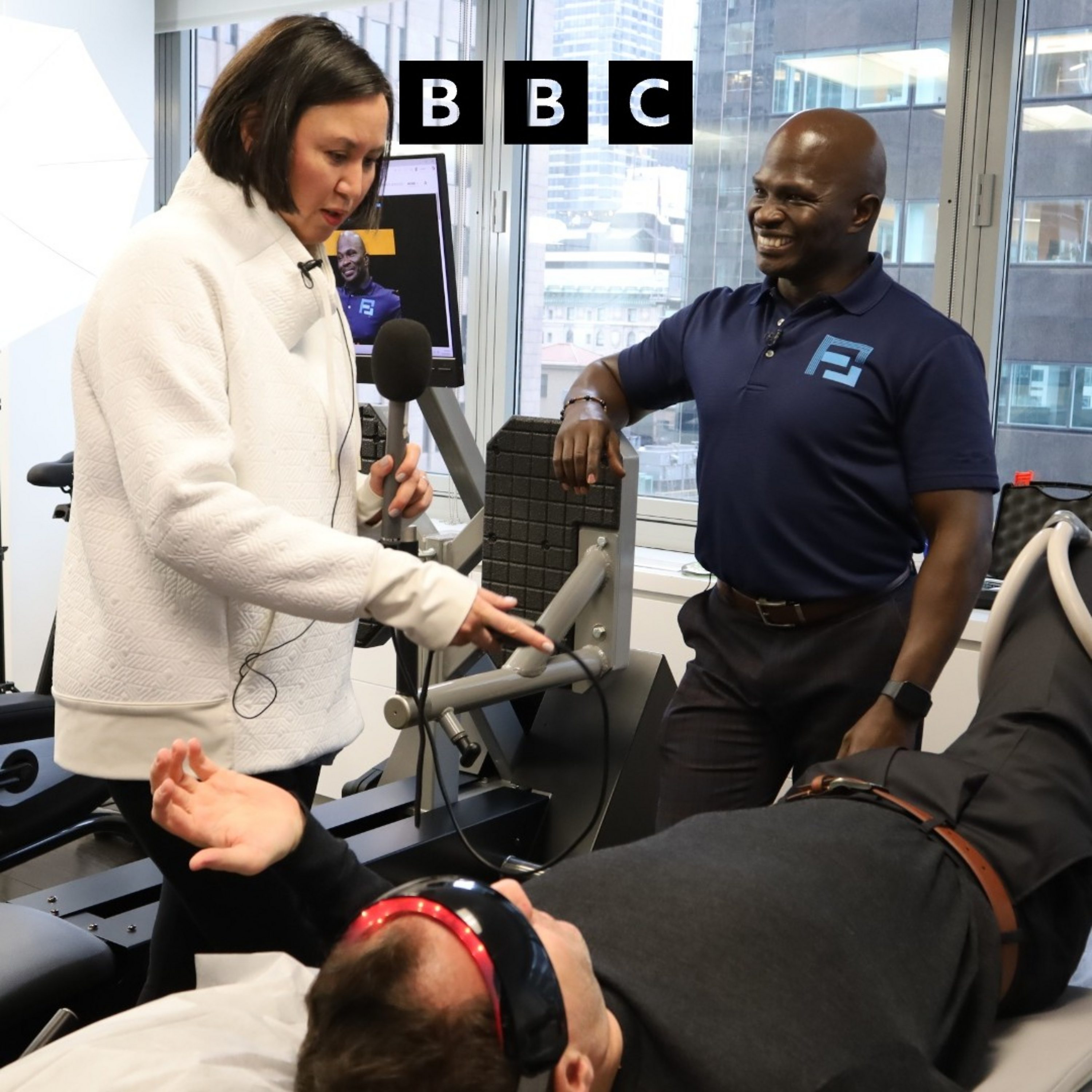
Business Daily
Biohacking: Where fad meets finance?
00:17:28
The industry that promises to optimise you with supplements, treatments and gadgets
Loading summary
Transcript75 lines
- [00:00]
BBC Podcast Advertiser
This BBC podcast is supported by ads outside the UK. The best B2B marketing gets wasted on the wrong people. So when you want to reach the right professionals, use LinkedIn ads. LinkedIn has grown to a network of over 1 billion professionals, including 130 million decision makers. And that's where it stands apart from other ad buyers. You can target your buyers by job title, industry, company role, seniority, skills, company revenue so you can stop wasting budget on the wrong audience. It's why LinkedIn Ads generates the highest B2B return on ad spend of major ad networks. Spend $250 on your first campaign on LinkedIn Ads and get $250 credit for the next one. Just go to LinkedIn.com Broadcast that's LinkedIn.com Broadcast. Terms and conditions apply. This message comes from Schwab at Schwab. How you invest is your choice, not theirs. That's why when it comes to managing your wealth, Schwab gives you more choices. You can invest and trade on your own. Plus get advice and more comprehensive wealth solutions to help meet your unique needs. With award winning service, low costs and transparent advice, you can manage your wealth your way at Schwab. Visit schwab.com to learn more.
- [01:18]
Michelle Fleury
Hello and welcome to Business Daily from the BBC World Service. I'm Michelle Fleury and today I'm asking for what's really behind the biohacking fad, why people are doing it, what exactly they think they're upgrading.
- [01:31]
Teresa Lollie
It works for our family. Every day we wake up and we understand the bullets that we dodged.
- [01:37]
Michelle Fleury
Biohackers say they're making their bodies and brains run better by hacking their biology. And it's not just kitchen counter experimentation anymore. There's now an entire industry promising to optimize you with supplements, treatments and increasingly strange gadgets. And because I'm lazy, I'm trying a treatment that claims it can work out my body for me.
- [01:58]
Anthony Lollie / Chuck Morris
We can give you 5,000 crunches in 10 minutes.
- [02:03]
Michelle Fleury
But a lot of these methods are controversial and none of them have been proven to extend anyone's lifetime. In real, well designed clinical trials they're.
- [02:12]
Dr. Nir Barzilai
Using maybe unconventional or unproven treatment that could be also dangerous.
- [02:19]
Michelle Fleury
So is the business of biohacking brilliant or just bonkers? That's coming up on today's Business Daily. Biohacking is when ordinary people start treating their bodies like machines, tweaking sleep, diet and exercise, tracking every metric and trying to slow down aging in the process. It's a fast growing industry blending medicine technology and AI technology, now worth an estimated $17 billion with luxury brands racing to cash in. High end gym chain in the United States. Equinox is the Latest launching a $40,000 longevity membership later this year. On social media, the trend is everywhere. Influencers promise that real time personalised data can optimise everything from performance to lifespan. Among the most prominent are the Lolli family.
- [03:14]
Anthony Lollie / Chuck Morris
I'm Anthony.
- [03:14]
Teresa Lollie
I'm Tereza.
- [03:15]
Michelle Fleury
I'm Legend, I'm Love.
- [03:17]
Teresa Lollie
And we are the Biohack yourself family.
- [03:21]
Michelle Fleury
That's the Lollies. A family of four who have turned their own medical crises into a high gloss multi platform media brand. Why am I doing this? Because I want to know what it.
- [03:32]
Teresa Lollie
Takes to be strong, kind and be ready for whatever comes next.
- [03:38]
Michelle Fleury
The working out and the playing sports. We sit down and we interview people like the biohacking people.
- [03:46]
Anthony Lollie / Chuck Morris
This is my gallon of water. Every day I fill it up with ICE and BCA's.
- [03:52]
Michelle Fleury
They're not tinkering in a garage. They're part of a growing movement that treats the human body like software. Something that can always be upgraded. I hear we have a fun day.
- [04:03]
Teresa Lollie
Planned for you guys as we do ibu. They're gonna do PEMF and red light.
- [04:08]
Michelle Fleury
I met them at a high end biohacking facility. The kind of place where the air smells faintly of ozone and at day past costs well about as much as a monthly mortgage payment. I started by asking the parents, Anthony and Teresa, why they decided to turn their family life into a 24 hour biological experiment.
- [04:28]
Teresa Lollie
The spark was when my husband got diagnosed with morbid obesity. That really hit us hard and that's.
- [04:34]
Michelle Fleury
Hard to believe today looking at Anthony now, you know that's not, you know, you're a picture of health.
- [04:39]
Teresa Lollie
Yeah, absolutely. But he ballooned up to 315 pounds and right around the same time our son was being misdiagnosed time and time again. Seven times we thought that's it, we have to take responsibility for our own health and not outsource the responsibility of our health to doctors or you know, the medical system.
- [04:59]
Michelle Fleury
It's a powerful narrative. The system failed us so we fixed our cells and that fixing has become a full time job. We're talking DNA based supplements, PEMF mats that mimic the earth's frequency and red light therapy. And it's not just the parents, even their children. 9 year old love and 7 year old legend are in on the optimization. Typical day supplements, PEMF books, go outside.
- [05:26]
Teresa Lollie
Ground, red light play all day and.
- [05:28]
Michelle Fleury
I wouldn't be able to act, I.
- [05:30]
Teresa Lollie
Wouldn'T be able to compete. I wouldn't be able to invest in real estate if my mom had like settled.
- [05:38]
Michelle Fleury
That's right. A seven year old talking about his ability to invest in real estate. This is where the fad meets the finance. The lollies aren't just consumers, they're influencers. With a magazine on 5,000 retail shelves and award winning documentaries, they are the marketing arm of an industry that is rapidly moving from tech bro fringe to upper east side made mainstream. I asked Anthony, how do you convince the average person that these expensive hacks are actually worth the investment?
- [06:08]
Anthony Lollie / Chuck Morris
It's a lot like when the cell phone was first invented. It was expensive and it was a luxury. Now it's a necessity. Right. So a lot of people, it's affordable. You can go there and get a day pass like you would in a gym.
- [06:19]
Michelle Fleury
The cell phone ification of health, it's a seductive pitch, one I had to try out for myself. I've hit that point in life where an upgrade sounds pretty great. So I've come to see firsthand what biohacking looks like, what it is, what it isn't, and maybe fine tune myself a bit in the process.
- [06:42]
Anthony Lollie / Chuck Morris
How are you guys doing?
- [06:43]
Dr. Nir Barzilai
Welcome, welcome.
- [06:44]
Anthony Lollie / Chuck Morris
Come on in, come on in.
- [06:45]
Michelle Fleury
Fabulous. Thank you for hosting us today.
- [06:49]
Anthony Lollie / Chuck Morris
My pleasure.
- [06:51]
Michelle Fleury
This is Chuck Morris. Like the Lawley family, his journey started with a medical crisis. Stress induced ulcers on his corneas that nearly blinded him. It sent him on a 30 year global search for human engineering. Today he runs Midtown biohack, part of an industry that's exploding, expected to quadruple in the next decade. In a room full of blinking lights and humming pads, Chuck, who has experience working with elite athletes and celebrities, starts me on something called red light therapy. It looks like a glowing brain band.
- [07:25]
Anthony Lollie / Chuck Morris
This is red light therapy for your brain. In essence, the light and the frequency is increasing the amount of oxygen functioning in your brain. It's not a jolt, it's more of a vitamin shot in your brain.
- [07:39]
Michelle Fleury
But we're just warming up. Next, chunk puts me on a PMF pad, pulsed electromagnetic fields. He calls it the sleepy night night table.
- [07:50]
Anthony Lollie / Chuck Morris
And then you will feel a pulse. As the pulse happens, it gets a.
- [07:55]
Michelle Fleury
Little bit of what you're saying is basically jiggly bits are gonna jiggle, there's.
- [08:00]
BBC Podcast Advertiser
Gonna be some jiggling involved.
- [08:01]
Michelle Fleury
First of all, it feels like pin pricks, you know, like when you're just coming out of pins and needles.
- [08:06]
Anthony Lollie / Chuck Morris
Wherever you feel that pins and needle scratchy feeling, that means there's a lot of inflammation in that area.
- [08:12]
Michelle Fleury
It feels like a gentle hammer wielded by smurfs. It's strange, it's expensive. And for Chuck's clients, it's the new standard. Specifically, the 10 second workout Chuck calls electric exercise.
- [08:25]
Anthony Lollie / Chuck Morris
We're going to use electrical current that can go all layers deep into your muscles, and it can make your muscles contract faster than you can contract by coming up and down. Yeah, there we go. Now we're getting the contraction ready.
- [08:39]
Michelle Fleury
1, 2, 3, 4, 4, 5, 6, 7, 8, 9, 10. That was a hundred crunches in ten seconds. And I was just lying here relaxing. But then why don't I feel the level of pain or exhaustion that I would if I had done 100 crunches?
- [09:06]
Anthony Lollie / Chuck Morris
That's the biohack.
- [09:09]
Michelle Fleury
And that's the pitch. In a world that won't slow down, humans are looking for a shortcut to keep up. Chuck is now expanding into the Hamptons, Atlanta, and Miami. He's targeting what he calls the industrial athlete. That's you. The office worker, the filmmaker, the person staring at a screen for 12 hours a day. Do you worry? You know, obviously the term biohacking is becoming more well known. Do you worry that it's a fad, or do you think it's here to stay?
- [09:38]
Anthony Lollie / Chuck Morris
It's definitely here to stay. True. Biohacking is the engineering of the human experience. How do we help the individual master who they are with what they already have, which is themselves. If you think that biohacking requires you to be super wealthy or the top 1%, I want to crush that. The price point here is equal to three personal training sessions a week. So anybody that's paying for a personal trainer in this area three days a week, you reallocate that same money and you get 10 times the scenario. But at least nowadays, when people hear the word biohack, they have some association. Some. Some of it is extreme, but it's helped us because there becomes a point of reference. There's. I've heard that word before, and in, I think, for most scenarios, it creates a sense of curiosity.
- [10:25]
Michelle Fleury
As I walk out of Midtown biohack, my muscles aren't sore and my abs aren't screaming. Just this lightness like the mental fog got sucked out. Chuck's bet is simple. Once you feel the mountain air, you're hooked. Because in 2026, we're not just looking for health, we're looking for the upgrade. This is Business Daily from the BBC World Service.
- [10:51]
MIDI Health Advertiser
This podcast is supported by midi Health. Are you in midlife, feeling dismissed, unheard or just plain tired of the old healthcare system. You're not alone. In fact, even today, 75% of women seeking care for menopause and perimenopause issues are left entirely untreated. But it's time for a change. It's time for MITI. MITI's not just a health care provider. It's a women's telehealth clinic founded and supported by world class leaders in women's health. Their clinicians provide one on one face to face consultations where they truly listen to your unique needs. They offer a full range of holistic, data driven solutions. That isn't one size fits all care. This is care, uniquely tailored for you. At miti, you will find that their mission is clear to help all women thrive in midlife, giving them access to the healthcare they deserve. Because they believe midlife isn't the middle at all. It is the beginning of your second act. Ready to feel your best and write your second act script? Visit joinmitty.com today to book your personalized insurance covered virtual visit. That's joinmitty.com MIDI the Care Women deserve.
- [12:10]
Michelle Fleury
Reggie, I just sold my car online. Let's go, grandpa. Wait, you did? Yep, on Carvana. Just put in the license plate, answered a few questions, got an offer in minutes. Easier than setting up that new digital picture frame.
- [12:22]
Dr. Nir Barzilai
You don't say.
- [12:23]
Michelle Fleury
Yeah, they're even picking it up tomorrow. Talk about fast. Wow. Way to go. So, about that picture frame. Ah, forget about it. Until Carvana makes one, I'm not interested.
- [12:34]
Teresa Lollie
Car selling made easy on Carvana. Pick up fees may apply.
- [12:41]
Michelle Fleury
I'm Michelle Fleury and today we're diving into the fast growing biohacking industry. A gold rush attracting lots of new players. It's a messy landscape, a kind of wild west of bold claims and very few clinical studies. So if we're going to talk about biohacking going mainstream, if we're going to talk about whether we should actually be doing this stuff, we have to separate the science fiction from the science fact. Because right now it feels like a free for all. I wanted to find the adult in the room. Someone who. Who isn't trying to sell me a subscription box, but who is actually studying the mechanics of getting old. I've just got in the elevator and I'm on my way to the apartment of Dr. Nir Bazilai. He's the director of the Institute for Aging Research at the Albert Einstein College of Medicine. I met Nir at his home. It's light, it's airy. Honestly, it's the kind of place where you just feel healthier. So you have a beautiful home.
- [13:43]
Dr. Nir Barzilai
Thank you. I hope it helps my longevity.
- [13:47]
Michelle Fleury
And that's the dream, right? That everything around us, our homes, our habits, our hacks, can somehow keep the clock from ticking. I asked Nia how he even got started in this.
- [13:58]
Dr. Nir Barzilai
I thought, wow, getting old is like the biggest biological adventure that I, that I could ever think or imagine. It was science fiction, and I knew that. This is the question that I want to get into.
- [14:16]
Michelle Fleury
For people listening to you and I talking right now, they just want to know, as they hear about biohacking, as they're curious about it, maybe they want to try it out, is it safe?
- [14:25]
Dr. Nir Barzilai
So, first of all, a lot of your listeners are doing biohacking, right? If you have high cholesterol and you lower that, that's biohacking. And if you have diabetes and if you have hypertension, you do biohacking.
- [14:38]
Michelle Fleury
Okay?
- [14:39]
Dr. Nir Barzilai
So biohacking is not a curse word. What confuses us is those biohackers that are a very intensive. Or maybe we should say they're really trying more than to biohack their aging. They want to be mortalist, maybe, or they fear death a lot, and because of that, they're using maybe unconventional or unproven treatment that could be also dangerous.
- [15:10]
Michelle Fleury
But it's not just billionaires or influencers trying to outsmart death. This industry is coming for the rest of us, too. Shelves are flooded with powders and pills promising to turn back the clock. And according to Nia, when it comes to what is actually in those bottles, we're flying completely blind.
- [15:28]
Dr. Nir Barzilai
Most of the things that are are marketed out there. We don't know if they're safe, and we don't know if they're safe in combination. That's a problem. There's lots of companies that are marketing lots of supplements or vitamins or other things that they market as a longevity drug. And that's a problem because we don't know if that's true at all.
- [16:00]
Michelle Fleury
So it's not necessarily that they're bad. It's just we don't have enough information to understand it right now.
- [16:07]
Dr. Nir Barzilai
Correct. We don't have enough information to understand it. And they should have the ability to do clinical studies so they can show for real that they have a good effect. When an individual is studying himself, and eventually it's all personalized medicine, but all we'll know about the individual is what happened to them. Okay. When we talk about science, you have to take a group and divide it to two. One will get the chemical, the drug, the supplement, the vitamin, and one will get a placebo. And they will have an outcome. They'll decide what outcome they want to show. And if there's a statistical outcome to what they are doing, we'll accept it as science. But if you don't have that, it's hope. It's not even a promise. I'm sure that some supplements out there will prove to be good, but a lot of them will prove to be dangerous.
- [17:12]
Michelle Fleury
With increased attention on biohacking, with the industry expected to kind of quadruple over the next decade, what do you think of the upsides and the downsides?
- [17:24]
Dr. Nir Barzilai
Look, the upside is that when the industry is increasing like that, it means that people know that aging can be hacked, okay? And they want it. Okay. The challenge for us is how do we shift the huge jungle out there? How do we shift it so it's safe?
- [17:48]
Michelle Fleury
So do you think it's ready for a consumer mass market?
- [17:52]
Dr. Nir Barzilai
I think the consumer mass market is kind of happening. What we're hoping that we're not killing anyone on the road to success.
- [18:03]
Michelle Fleury
Hope, not a promise. That's the line. But in the world of the Lolli family, hope is precisely what's for sale. When you listen to the medical establishment, they see a jungle of unproven supplements. But when you talk to Teresa Lollie, she sees a scoreboard, and according to her, she's winning. Teresa told me she tracks her aging pace using tests championed by longevity mogul Brian Johnson. According to the data, she's only aging at 78% of the normal rate.
- [18:34]
Teresa Lollie
He has the Olympics of longevity, by the way, and you have to test yourselves for two years to be able to qualify for the Olympics. I ranked top 96 in his Olympics, the longevity Olympics, because the tests show what is your aging pace. His aging pace is ultimately 47%. So per every year he's aggravating aging, he's only aging 47%. He does have a higher chance of potentially hitting that 150.
- [19:01]
Michelle Fleury
I guess we're gonna have to wait and see.
- [19:02]
Teresa Lollie
We're gonna live to that, to see. You know, I feel like everyone is inching into understanding because there's so much proof now that biohacking works. If, let's say, an infrared sauna is available and it's great for detoxification, why not take advantage of that? If an oxygen bath is available and you can sink your body and oxygenate your body and, you know, get the health benefits of that, why not take advantage of that.
- [19:30]
Michelle Fleury
But here's the thing. We don't actually know if Theresa's score means she'll live longer. We won't know until the clock actually stops, but the markets aren't waiting for the results. We are currently living through a biological gold rush. From the 40,000 membership at Equinox to the DNA specific supplement in the Lolly's kitchen, we're witnessing the birth of a multi billion dollar economy built on the one thing you can't actually verify until it's too late. How much time do you have left? This episode has been presented by me, Michelle Fleury and produced by Natalie Jimenez. Thanks for listening and you can hear more episodes. Just search for business daily or wherever you get your BBC podcasts. Next time you fly on business, arrive feeling fresh in Emirates Business Class. On your flight, you can sink into leather seats that recline flat for a better sleep. You can enjoy delicious regional meals and premium drinks. And there's onboard Wi fi if you need to work along with Emirates chauffeur driven airport transfers and entry to the luxurious Emirates Lounge, it's just a better way to do business. Book now on emirates.com.