← Business Daily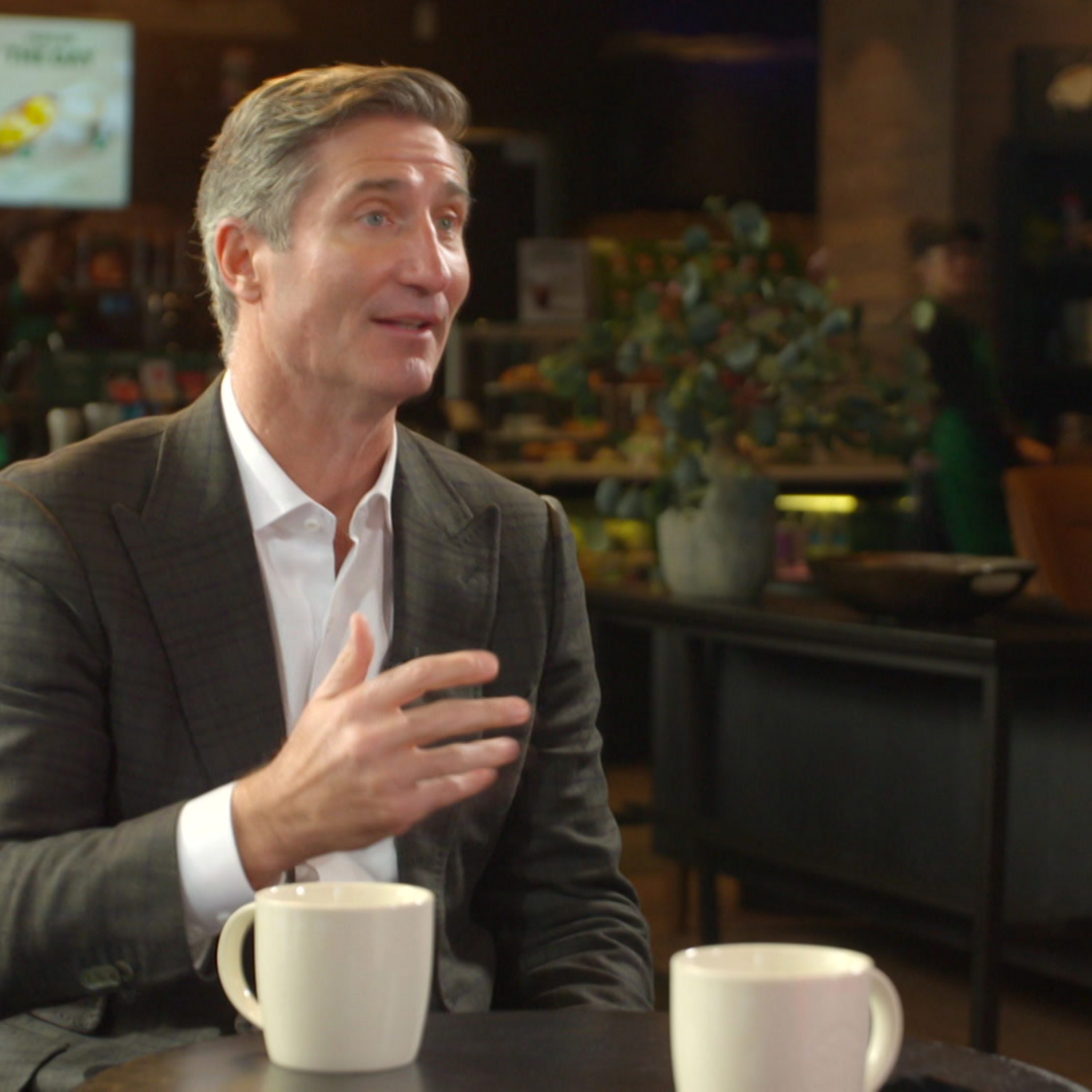
Business Daily
Can Starbucks regain its buzz?
00:17:28
CEO Brian Niccols on how the coffee brand is persuading customers to give it another shot
Loading summary
Transcript56 lines
- [00:00]
Podcast Advertiser
This BBC podcast is supported by ads outside the UK. The best B2B marketing gets wasted on the wrong people. So when you want to reach the right professionals, use LinkedIn ads. LinkedIn has grown to a network of over 1 billion professionals, including 130 million decision makers. And that's where it stands apart from other ad buyers. You can target your buyers by job title, industry, company role, seniority skills, company revenue so you can stop wasting budget on the wrong audience. It's why LinkedIn Ads generates the highest B2B return on ad spend of major ad networks. Spend $250 on your first campaign on LinkedIn Ads and get $250 credit for the next one. Just go to LinkedIn.com Broadcast that's LinkedIn.com Broadcast. Terms and conditions apply. This message comes from Schwab at Schwab. How you invest is your choice, not theirs. That's why when it comes to managing your wealth, Schwab gives you more choices. You can invest and trade on your own. Plus get advice and more comprehensive wealth solutions to help meet your unique needs. With award winning service, low costs and transparent advice, you can manage your wealth your way at Schwab. Visit schwab.com to learn more.
- [01:16]
Michelle Fleury
Starbucks is probably the world's best known coffee chain. But just over a year ago, things weren't looking great. Sales had slipped, customers were drifting away and the magic just wasn't there. That's when Brian Nicoll was handed a tough task. Stop the fall and make the coffee shop somewhere people actually wanted to return to.
- [01:36]
Brian Niccol
We want you to stay. We want you to make this your community coffee house. People want these places to gather. The humanity of it is important.
- [01:45]
Michelle Fleury
Hi, I'm Michelle Fleury, the BBC's North America business Correspondent. And today on Business Daily, I'm speaking to the Starbucks CEO about how he's changing stores, updating menus and most importantly, persuading customers to give the coffee brand another shot.
- [02:03]
Brian Niccol
Hi, welcome in.
- [02:04]
Customer/Interviewer
Hi. Can I have a grande caramel protein latte?
- [02:08]
Michelle Fleury
Starbucks began in Seattle, Washington State, a city famous for grunge music, rain and Boeing airplanes. When it launched in 1971, the company sold coffee beans, spices and tea. But in the 1980s, the company's CEO at the time, Howard Schultz, saw a much bigger opportunity and set Starbucks on a path to become a global brand.
- [02:31]
Brian Niccol
If you hold off on your morning coffee because it has to be Starbucks.
- [02:35]
Commercial Sponsor
Consider the Starbucks bean for the perfect cup at home.
- [02:38]
Michelle Fleury
Today, the company operates around 32,000 stores in 80 countries. But the journey hasn't been smooth in recent years. Brian Nicoll took over as CEO in 2024, rolling out a radical back to Starbucks strateg. Stores have closed, their look has been refreshed and the menus changed. There are early signs his methods are paying off. Sales at the company's established US branches growing for the first time in two years. But he wants to do more on the opposite side of the country. In New York's midtown Manhattan, I met Brian Niccol at one of Starbucks new look coffee shops.
- [03:21]
Customer/Interviewer
We're one year into your turnaround plan Back to Starbucks. What do you think is the one thing that perhaps you underestimated that maybe investors and employees would be surprised by?
- [03:32]
Brian Niccol
You know, look, I think the thing that's most exciting about the back to Starbucks strategy is it really is just a change to getting back to putting the customer at the center of everything we do. That is part of the reason why I was saying this is back to Starbucks because I really think that's how the company started. But I think we lost our focus because we got a little too distracted on efficiency and technology and lost, I think our focus on experience, customer and connection. And so, you know, whenever you're making kind of a shift in culture and then just mindset, it takes a little bit of a time for that change to take hold. But I will say our stores adopted it really quickly. And then as we started to roll out these initiatives that then gave them the ability to do that consistently over and over again, you kind of get the results that we just had in our first quarter.
- [04:25]
Customer/Interviewer
So then as you look ahead to the next year, at the end of this year, what do you think will be the sort of mark of success?
- [04:33]
Brian Niccol
Well, to continue the top line performance, right, we have to consistently deliver the comp performance of 3% or better. And I think that'll be a great signal that we are doing this now consistently. Our customers are recognizing it. Our partners are getting the reps, they have the team, they have the tools to consistently deliver the experience and the top line results.
- [04:55]
Customer/Interviewer
Let's go into the operational side. Yeah, you've brought back ceramic mugs, handwriting on cups. You're giving a lot of the stores a makeover to make them warmer, comfier places. How do you think that change has made a difference to guests?
- [05:11]
Brian Niccol
Well, hopefully they've noticed a big difference. We want you to stay. We want you to make this your community coffee house. People want these places to gather. The humanity of it is important. And I think ultimately people want this in their community. So to have the comfortable furniture, to have the ceramic mug, all these things are signals that say we want you to stay. And then when you spend time with our partners or our baristas, you realize that there's a connection with them. And the personalization that you get or the personal experience that you get just carries, I think the brand with people when they leave the store even.
- [05:48]
Customer/Interviewer
But how does that translate in financial terms? Is it customers spending more money, are they visiting more frequently, or is it something else?
- [05:56]
Brian Niccol
It's all of the above, you know, and what you saw in our most recent quarter is just that, right? Our rewards, customers are coming more often. We provided innovation where people are adding cold foam to more drinks, protein, cold foam. And then you've also seen the frequent customer that hadn't shown up in the past showing up again because we now have the right experience, the right menu offering the right innovation. And so you end up making progress on all those fronts, transactions, and then obviously the frequency of those transactions.
- [06:27]
Customer/Interviewer
Now you have set a speed target per order of about four minutes. At the same time, you know, you and I are talking about the baristas kind of forming more of a connection, slowing down, engaging with customers more. I mean, do those goals, they don't necessarily seem aligned. So how, which one of those two do you prioritize?
- [06:48]
Brian Niccol
Well, I think actually they are, because in our business there are peaks. And during the peaks, in that ritual moment where people just need their coffee or their drink and want to get going, we need to be able to provide that convenience and that experience and that connection in that moment can just be as simple as a hello or a simple, you know, have a great day written on the cup. Then there are other moments in the time of day where there is freedom of time to actually have a more robust connection. So we can do both. And what you're seeing in our businesses, the winning in the morning around peaks is working. And then as you look through the balance of the day, we're seeing transactions grow in other day parts because we're meeting those occasions correctly.
- [07:31]
Customer/Interviewer
And where does technology fit into that? We keep hearing about, for example, how AI is going to improve productivity for companies in lots of industries in your business. What role does it play?
- [07:44]
Brian Niccol
Yeah, look, technology is both a behind the scenes tool and then it's also a way for us to make the experience less, you know, have less friction. And behind the scenes is our smart queue technology, right? This is organizing orders and production time for the drive thru mobile order cafe so that we can hit those timelines that we want to hit for our customers. Then there are other things with like AI where we're getting smarter forecasting, smarter supply chain management, smarter scheduling. And then there are other things where it's like we're piloting this right now where when you pull up in the drive thru, we still want you to have a person to person connection, but the order is actually being inputted by AI. So even though you're talking to a person, they're not having to now actually input the order because it's actually just going straight into our system, which then queues up the order because they know there's three cars in front of you. This is the time to start pulling the shot. This is the time to start making the egg bites. And then when you go all the way down to the app, you're gonna be able to hold up your phone and say, you know what, I've got an appointment at 9 o'. Clock. It's at this location. Find me the nearest Starbucks. I want my, in my case, vanilla protein latte ready at 8:45. Give me the directions. And it'll just load the order in, give you the directions and when you show up, your coffee's ready to go. So it is really a powerful tool that can make our baristas spend more time on the craft and the connection or give them more time to do that and at the same token give the customer access in ways they've never had access before.
- [09:18]
Customer/Interviewer
Yeah, I was reading about one of the technologies you introduced, Green Dot, which is a real time assistant for baristas. I mean, does that help empower the baristas or, or is it helping them sort of enforce both the speed but also the kind of continuity that people expect. The standards that people expect from.
- [09:36]
Brian Niccol
Yeah, no, absolutely. It does all of those things because now it can also help solve problems. You know, if you have somebody call off what's the right way to deploy for the day? You know, it also can help them if they're having to troubleshoot something, solve the problem at hand. And then also it has the ability to give them an idea of what their day might look like based on, you know, like in this case, it snowed. Right. So it's going to have a little different travel pattern or yeah, Visitation pattern than we've had historically. So it definitely sets them up for success. And you know, we've also got a really new exciting tool too for inventory counting where you just hold up the iPad and it uses, I think it's LiDAR technology to, to be able to count versus manually counting, which is really beneficial for managing supply chain customers.
- [10:28]
Customer/Interviewer
Increasingly, they're on their phone, they're on their apps, they want to order their drinks online. For example, the office worker coming in at 9 to the local Starbucks and there's a crowd of people waiting for drinks. There are so many drinks stacked up. How do you sort of make sure that your baristas aren't overwhelmed?
- [10:44]
Brian Niccol
Yeah, well, look, we got to make sure the team is staffed correctly and deployed correctly. And then behind the scenes, I think we can cue the orders. And there's another thing that we're piloting, which is scheduled ordering. So we're an on demand business, but we can also be a scheduled order. You know, for some people, they know they're going to be at the office at 8am and they swing by their Starbucks every day at 7:30am now, you can just schedule that 7:30am coffee versus in the last minute, just putting in the order. By being able to schedule certain orders, it smooths out the ordering process while still allowing us to do the on demand orders. And it gives us the prediction so we can staff correctly.
- [11:21]
Customer/Interviewer
But I was going to say, I mean, if you have in a tall office building, you know, 100 people ordering for 9 o', clock, how do you do that? Or do you kind of stagger it.
- [11:30]
Brian Niccol
And say, do you, you even have to. Well, you have to give promise times on those orders. Some of those orders will be ready in three minutes. Some of those orders will be ready in six minutes. Some of those orders will Be ready in 10 minutes. Our goal is to not let any order take longer than 12 minutes and be on time. When we give you the promised time.
- [11:48]
Customer/Interviewer
And we're sitting here in New York, do you worry at all about competition from foreign brands like Luckin who maybe don't face the same business conditions, the same sort of regulatory oversight? How do you address that?
- [12:00]
Brian Niccol
Yeah, look, I've always told our team what we have to focus on are the things we can control. And the things we can control is the Starbucks experience. And what makes Starbucks. Starbucks. Starbucks. And the competitors you mentioned, they don't offer what Starbucks offers. They don't offer the experience. They don't offer the humanity. They don't offer the craft or the connection that I think we have in our. Or the community space that we have. So when we do all those things, we.
- [12:28]
Commercial Sponsor
If you're the purchasing manager at a manufacturing plant, you know, having a trusted partner makes all the difference. That's why, hands down, you count on Grainger for Auto reordering with on time restocks. Your team will have the cut resistant gloves they need at the start of their shift and you can end your day knowing they've got safety well in hand. Call 1-800-GRAINGER Click grainger.com or just stop by Grainger for the ones who get it done.
- [12:58]
Mint Mobile Advertiser
Well, the holidays have come and gone once again. But if you've forgotten to get that special someone in your life a gift, well, Mint Mobile is extending their holiday offer of half off unlimited wireless. So here's the idea. You get it now, you call it an early present for next year.
- [13:12]
Brian Niccol
What do you have to lose?
- [13:14]
Mint Mobile Advertiser
Give it a try@mintmobile.com Switch limited time.
- [13:18]
50% off regular price for new customers. Upfront payment required $45 for three months, $90 for six months or $180 for 12 month plan taxes and fees. Extra speeds may slow after 50 gigabytes per month when network is busy. See terms.
- [13:30]
Customer/Interviewer
Plain bagel with butter toasted.
- [13:31]
Michelle Fleury
You're listening to Business daily from the BBC World Service. Michelle I'm Michelle Fleury, the BBC's North America business correspondent, and I'm speaking to Brian Nicoll, CEO of Starbucks, on his plans to get customers back to their coffee houses.
- [13:50]
Customer/Interviewer
Tariffs has been such a big issue for businesses around the world. What has that been like for you in terms of coffee purchasing? You know, as a huge buyer of coffee, but beans?
- [14:02]
Brian Niccol
Yeah, look, you know, the tariffs created some headwind for sure. The good news is globally there's no longer tariff on green coffee. So we'll get some relief from those tariffs probably in the back half of this fiscal year. We'll start rolling off of it. And then, you know, the coffee prices in general as a commodity really took off too. And that's starting to finally moderate as well. It's not all the way back to where historically it's traded but, but it's well off of its big highs. So we should be getting some help on those input costs going forward.
- [14:34]
Customer/Interviewer
So where does that leave prices for customers this year?
- [14:38]
Brian Niccol
You know, look, pricing, we've not moved pricing over the last year and it really is the last lever I want to pull. And if we, in the event we do have to take some pricing, it should be fairly muted. You know, the good news is inflation has really come down in a meaningful way on all our input costs. So if we do have to take some action, it'll be minimal.
- [14:59]
Customer/Interviewer
I wanted to ask you about labour. Hundreds of stores have unionized but they're still awaiting a labour contract Obviously, there are strikes still over pay and staffing levels, and there's disagreements from both sides about sort of why this is taking so long. You're the CEO. Can you tell us when we might expect a national labor contract?
- [15:20]
Brian Niccol
Yeah, look, I would love to get to a deal. It's got to be one that can be a viable, sustainable deal that will ensure our partners have a great opportunity to have a successful career at Starbucks. So, you know, wildly open to having that conversation and getting to that solution. With that said, I do think it's important to remind everybody we have one of the best jobs in the industry when it comes to retail jobs. One of the things that really was, I think, a surprise and delight was the low, low turnover that we have at Starbucks. It's around 50%. It's below 50%, which in this industry is traditionally over 100%. Okay. So it is significantly lower. And, you know, you ask the question, well, why is the turnover so low? Well, the answer is in working part time, so 20, 20 hours, you get access to health care benefits. You have access to a free education program through Arizona State. There's mental health benefits, parental leave benefits, and then not to mention the wage opportunity and the career growth opportunity. So it really is a special job.
- [16:29]
Customer/Interviewer
And clearly, I mean, there is this tension about, you know, you hear understaffing or staffing issues, the pressure that baristas feel to deliver on sort of the connection and the service levels. This seems to be something you've thought a lot about. You know, when we talk on the operational side.
- [16:46]
Brian Niccol
Absolutely.
- [16:46]
Customer/Interviewer
How are you sort of addressing that?
- [16:49]
Brian Niccol
Yeah, look, the biggest thing we've done since I've gotten here is we've put a, I think it's 500, $600 million investment into our partner's ability to provide that service experience. You know, we've simplified a lot of things, especially the way the metrics that we ask you to be accountable for. There used to be this thing called the Health Pyramid where there were, like, I don't know, 100, 200 metrics in here. We've simplified that down to five things, and the five things are in our partner's control.
- [17:15]
Customer/Interviewer
And what are the five things?
- [17:17]
Brian Niccol
So basically, it's going to be staffing correctly, customer experience, throughput, and in stock, being in stock on items. That right there just simplifies what you need to be doing. And then also, we're giving power back to the store where they can be accountable for the customer experience that they provide, as opposed to trying to manage these all things. From a centralized location and use averages. The business is not an average business. The business is a coffee shop by coffee shop business with a coffee house leader. I had the opportunity to meet the coffee house leader here. You know, this is her store and we're setting them up to be successful. For every experience that comes in, you've.
- [17:55]
Customer/Interviewer
Set the clear path for the things you can control. What about the things you can't? Whether that's tariffs or cost of living, prices or weather. I mean, how. What keeps you up at night?
- [18:08]
Brian Niccol
Look, you know, what keeps me up at night is making sure that our partners are set up for success and making sure that they can run this business for the long haul. And the things you mentioned that I can't control. The best thing I can do is make sure I make Starbucks always on its front foot. One thing I know for sure is I don't know what's about to happen.
- [18:29]
Customer/Interviewer
Two years from now. If we're sitting down, tracking again, what will be the measure of success.
- [18:34]
Brian Niccol
Look, you know, two years from now, hopefully we'll have all of our coffeehouses uplifted so they'll have great seats. I think you'll see a really strong customer experience culture. I think you'll see our partners experiencing 90% promote within because we're building, you know, in at least around the world, over 2,000 plus new units. And I just think you're going to see the shine of Starbucks around the world and you're going to see it show up in the numbers with comp and earnings. But I think the culture, this aspect of a true third place and just this feeling that you can be really proud to be a part of Starbucks because you can grow your career here and then you can be really proud to be a customer of Starbucks.
- [19:18]
Customer/Interviewer
Brian Nichols, CEO of Starbucks, thank you very much for talking to us today.
- [19:21]
Brian Niccol
Yeah, thanks for having me. It was a lot of fun.
- [19:24]
Michelle Fleury
My thanks to Brian Nicol, CEO of Starbucks. Today's episode was presented by me, Michelle Fleury and produced by John Mervyn and Justin Bones. You can hear more big interviews on Business Daily, including Google's Sundar Pichai. Just look for Business Daily wherever you get your BBC podcasts.