← Business Daily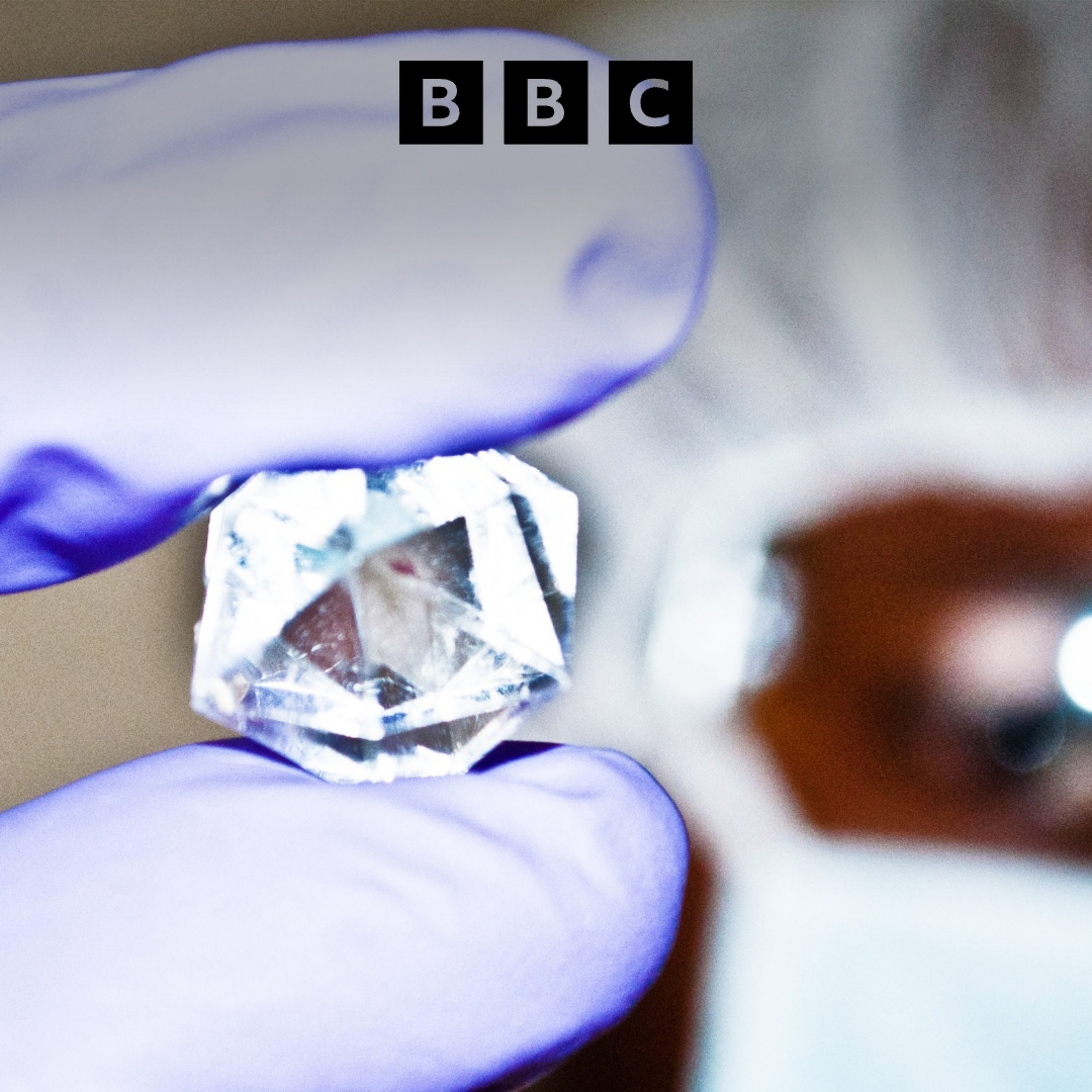
Business Daily
Diamonds: lab-grown vs mined
00:17:28
We look at the economic threat to mining in Sierra Leone posed by synthetic gems
Loading summary
Transcript77 lines
- [00:00]
Ed Butler
This BBC podcast is supported by ads outside the uk.
- [00:06]
Podcast Sponsor Announcer
Today's episode is sponsored by Smart Travel, a podcast from NerdWallet. You know that one friend who always finds the best travel deals, picks the right credit cards and somehow ends up in first class for the price of coach? Smart Travel is like that friend, but in podcast form. NerdWallet's travel journalists sort out what's worth paying for. From lounge access to travel advisors to hotel loyalty programs, make your travel dollars work harder. Follow Smart Travel on your favorite podcast app. Ever invest in something that seemed incredible at first but didn't live up to the hype? Like those five dollar roses at a gas station? Or a second hand piece of technology that breaks in the first ten minutes. Marketers know that feeling. We optimize for the numbers that look great, impressions reach and reacts. But when they don't show revenue, well, that's a not so great conversation with the CFO. LinkedIn has a word for that. Bullspend. Now you can invest in what looks good to your CFO. LinkedIn Ads generates the highest roas of all major ad networks. You'll reach the right buyers because you can target by company, industry, job title and more. So cut the bull, spend. Advertise on LinkedIn, the network that works for you. Spend $250 on your first campaign on LinkedIn ads and get a 250 credit for the next one. Just go to LinkedIn.com Broadcast. That's LinkedIn.com Broadcast. Terms and conditions apply.
- [01:44]
Ed Butler
Hi there, I'm Ed Butler. Welcome to the second of our programmes on Business Daily from the BBC World Service looking at the troubled state of the diamond industry. I'm in Sierra Leone where artisanal diamond mining has become a way of life.
- [02:02]
Daniel Thibault
Well, I have not made a lot of money yet. Sometimes for the year you can't get anything. For the whole of the year you can't get anything. It is by the grace of God that you find a diamond.
- [02:17]
Ed Butler
As we heard in yesterday's program, there is a history of war here and also deep rooted corruption. Can new lab grown diamonds made in other countries take the place of traditionally mined gems?
- [02:32]
Rohit Mehta
People are going to all over the world are going to get more conscious about extracting too much from the earth and the dependence of the industry on the naturally mined diamonds is going to be less.
- [02:45]
Ed Butler
Is there trouble in diamond land? The future of the industry On Business Daily from the BBC. We're now walking into the flea market area of Koidu City. This is where they sell everything from old Shoes to cleaning products to clothing, soap and soft drinks. There's still plenty of people around, but they say that trade is down here substantially in the last few months.
- [03:31]
Daniel Thibault
It is not really easy, but you try, you have to push, you have to find mints.
- [03:40]
Ed Butler
Is it worse than it used to be here?
- [03:43]
Raymond Alpha
Yeah, yeah, yeah, yeah, yeah.
- [03:45]
Ed Butler
Really? It is not easy, really.
- [03:49]
Rohit Mehta
Right.
- [03:49]
Ed Butler
We're now stepping into Benza market. This is the main fish market in the middle of the town. It's a huge hallway with a big corrugated iron roof. There are hundreds of people in here. What's your name, madam?
- [04:04]
Finda Konomani
My name is Finda Konomani.
- [04:07]
Ed Butler
And Finda, what are you selling here?
- [04:11]
Finda Konomani
Fish. This one airy. This one pollock.
- [04:16]
Ed Butler
So how much profit do you make? I mean you take home at the end of the day.
- [04:22]
Finda Konomani
50.
- [04:23]
Ed Butler
That's all? Just a couple of dollars?
- [04:26]
Finda Konomani
Yes.
- [04:28]
Ed Butler
Wow. Is business less good than it used to be? Has it got worse?
- [04:34]
Finda Konomani
No. Fire again?
- [04:36]
Ed Butler
First time.
- [04:37]
Finda Konomani
This one we sell 300 in local creo.
- [04:41]
Ed Butler
Finder tells me how hard trade has become recently due to the closure of the country's largest diamond mine. Based here in Koidu town in the east of the country. Victoria Avopombo has seen the wider consequences. She's a women's rights activist based in the town.
- [04:59]
Finda Konomani
There was a lot of saga, a lot of deprivation, a lot of issues. Laying down 1,000 workers, it was a chaos. So women were coming to our asking us, this is our pain, this is our challenge. Our husbands, our children are no longer going to school. Some have five kids, some have. Some marriages have already collapsed. In fact, the abuse case is increasing every day just because of the closure of that mining company.
- [05:30]
Ed Butler
More abuse, more robbery, more robbery, more abuse.
- [05:33]
Finda Konomani
Even in the sites a lot of things are happening.
- [05:37]
Ed Butler
What are people doing to get by?
- [05:39]
Finda Konomani
Yeah, some of them are digging gold. Because diamond is now scarce. The crime rate is increasing every day. Breaking of houses, the child abuse, the domestic violence. Violence has increased to a higher level just because of this mining company. The mining economy is closed and the government is not saying anything. And the workers are suffering and there is no money.
- [06:09]
Ed Butler
Some miners are switching to this, digging for diamonds in the in any free plot of land they can find. It has been a part time endeavor across the region for decades. It's often unregulated with diamonds found frequently smuggled out to avoid the payment of duties. I'm standing in an open valley. There are huge pits in front of me. Pits filled with orange sandy water. Men digging at the sand along the banks and others sifting Silting through the mud and the gravel, all aiming for one thing, to find the rich, precious stones that lie abundantly naturally in this landscape.
- [06:53]
Daniel Thibault
Whenever we come, we take the soil and through it, it is the gravel. There we find the diamond.
- [07:02]
Ed Butler
It's kind of like a bright blue grey soil that you're crushing in your fingers now. And inside you have the stones. I'm fingering it now.
- [07:11]
Daniel Thibault
Yeah. Sometimes the damu lies in it.
- [07:16]
Ed Butler
So it'd just be a tiny, tiny little fragment, like a tiny piece of dirt.
- [07:20]
Daniel Thibault
Yeah, yeah, yeah. Like this.
- [07:22]
Ed Butler
How much money do you make normally doing this work for me?
- [07:27]
Daniel Thibault
Well, I have not made a lot of money yet. Sometimes for the whole of the year, you can't, you can't get anything. For the whole of the year, you can't get anything. It is through by the grace of God that you find a diamond. It is not a spot.
- [07:47]
Ed Butler
Thin pickings, then, decades of extraction mean the remaining worthwhile stones now lie mostly at a deeper level, beyond the reach of picks and shovels. So this what it's all about, I'm holding in my hand now a stone, a diamond. It's maybe the size of my small fingernail, smallest finger. Fingernail. And it's what, 12 carats? Apparently it's got some imperfections on the outside. This is a rough diamond, but it's worth, I'm told even here, before it leaves the country, 80 to $100,000, this small stone. And when it reaches the Western market and cut, it'll be worth an awful lot more. But diamonds of this size and purity are rare and prices have been falling sharply over the last five years. This is why lab grown diamonds, diamonds produced in factories either by chemicals, chemical vapor over several days, or by using high pressure and high temperature. India alone is producing perhaps 3 million of these diamonds a year, collapsing global prices by as much as 40%. Jason Cohn is a documentary maker who has researched and visited some of the diamond making foundries.
- [09:14]
Stanley Maturam
The factory that I went to was the size of a college campus and they had these enormous, enormous rooms that you could not see the end of, you know, each one with, you know, I think a thousand plus huge diamond making machines. And they were just growing. So because there is no limit on how many synthetic diamonds can be made, there's no limit on how low the price could go, essentially.
- [09:38]
Ed Butler
Jason Cohn, you're listening to Business Daily on the BBC World Service.
- [09:47]
Energy Trust of Oregon Announcer
At Energy Trust of Oregon, we know it isn't easy. The tremendous costs of maintaining a home, living in a house with drafty windows, poorly insulated spaces, or equipment that's running well past its prime. But we also know how to help you upgrade your systems, insulate your spaces and replace what is old with new energy efficient solutions. Find cash incentives@energytrust.org Energy Trust of Oregon More power to you. At Energy Trust of Oregon we know it isn't easy the tremendous weight of today's operating costs working in cold, drafty spaces with inefficient heating systems or under lights that have seen brighter days. But we also know how to help you upgrade those systems, lower those costs and meet the demands of your business with smart energy efficient solutions. Find cash incentives@energytrust.org Energy Trust of Oregon More power to you.
- [10:48]
Ed Butler
I'm Ed Butler and today I'm looking at the challenges facing the natural diamond industry. Specifically the rise of lab grown diamonds, gems made in factories, an industry which is now valued at some $30 billion a year. Rohit Mehta is CEO of 4Link Ventures. It's a commodities house based in India's diamond capital Surat. He says that lab grown diamonds aren't just cheaper, they're also more ethically and environmentally sourced. There's no blood on these stones, he argues.
- [11:19]
Rohit Mehta
I see a situation where people are going to all over the world are going to get more conscious about climate change, about extracting too many, too much from the natural, from the earth. And because of this there may be a situation where the dependence the industry on the naturally mined diamonds is going to be less and people will be looking more towards lab grown diamonds. And that is where a big boom in the lab grown diamond industry is going to happen.
- [11:53]
Ed Butler
There is a counter view.
- [11:55]
Stanley Maturam
Prices have significantly collapsed which has reduced the beauty of the story behind the diamond and brought down the value of the natural diamond market.
- [12:08]
Ed Butler
Stanley Maturam is a US based environmental consultant who studied the growth of the lab grown industry from 1% of the global market in 2015 to some 20% now. He completely rejects the idea that lab grown is somehow better either for the planet or for humanity.
- [12:26]
Stanley Maturam
I would bluntly say it's untrue. It is factually not defined by science. That is, these are really not lab made. So these are manufactured in mass amounts in a factory and the biggest impact that they make is energy. These reactors run at the temperature of the sun. They're like data centers. That's the kind of energy that they require to operate these. And how many people did you help? What was the broader benefit of the community and all of that stuff? There's nothing really socially or Environmentally responsible about this.
- [13:00]
Ed Butler
Where are they mostly being made?
- [13:01]
Stanley Maturam
The lab grown diamond right now, as I know, most of them are made in India and China. All of the CBD stuff is made in India. HPHT is made in China. Those are the two different forms of making lab grown diamonds, which is chemical vapor deposition. And HPHD is high pressure, high temperature. Two different processes. That's how they do it.
- [13:20]
Ed Butler
Stanley Matharm also says that the allegations of environmental destruction levelled against artisanal diamond mining have been exaggerated.
- [13:28]
Stanley Maturam
It's hard rock mining. It is the cleanest form of mining. There are no chemicals used. You're not talking about iron ore mining or gold mining. These all have other issues. But diamond mining, classic hard rock diamond mining is the cleanest form of mining. And when done correctly is not only does it provide a lot of social benefits, it's like these holes in the ground become future reservoirs, clean, properly maintained ecosystems. These are the carbon sinks. They become the most biodiverse, ecosystem friendly mining form that you can sustain for climate. And the most important thing, you can actually quantify the social impact. Economies develop, you create jobs, you create entire ecosystems, you uplift the lifestyles of women and children, education, the best significant benefits. So to compare it, a most sustainable diamond would probably be a natural diamond when done correctly.
- [14:33]
Ed Butler
The traditional diamond industry is trying to push back now. The British multinational diamond company De Beers has recently launched ads like this one promoting the traditional stones.
- [14:48]
Stanley Maturam
The diamond you choose should match your journey, match the patience you took to find each other, and match the resilience that formed the essence of your course. And that is a natural diamond. Because just like your journey, a natural diamond is worth the wait.
- [15:15]
Ed Butler
As well as TV commercials, De Beers has launched gemfair. It's a venture in Sierra Leone aimed at giving artisanal miners better equipment and a fair price for their diamond finds. You might call it fair trade for diamonds. Part of the campaign to change that difficult association some people have with war and corruption. Raymond Alpha is gemfair's local representative.
- [15:39]
Raymond Alpha
The idea is to connect the market so that they can be able to find a place to sell their diamonds when they find diamonds. And also to empower them to be able to know what they are doing, access to markets and a fair value. We give them training, we give them skills to make sure that they are polehumorized at the mine site. We make sure that no forced labor is practiced at the mine sites. We provide them with the working equipment
- [16:04]
Ed Butler
and hopefully to improve the reputation of
- [16:07]
Raymond Alpha
diamond mining, the reputation of the industry, which I Think we are following by introducing the GemFlow standard.
- [16:13]
Ed Butler
Do they get a better price from you guys?
- [16:15]
Raymond Alpha
That's what I've heard them testify. They are happy with fair price. If you're not happy, you are free to walk out and find another buyer
- [16:26]
Ed Butler
to sell a diamond. I guess that has this story, the story of a piece of stone that was dug by guys like these guys standing next to us who are digging in a soil, in a well regulated pit with good cleaning, good sanitation, good human rights, all the rest of it that you've mentioned that improves the value, I guess of the stone when it comes to market.
- [16:49]
Raymond Alpha
Yeah, I agree. And that's the reason why we are trying as much as possible possible.
- [16:54]
Ed Butler
Gemfare is growing.
- [16:56]
Raymond Alpha
Yes, gemfare is growing because we started from few membership and now we are getting to 500 about that mine sites that have joined the program since so. And we still get people expressing interest to join.
- [17:09]
Ed Butler
It's a difficult time though, right, because prices are falling in the diamond market because of these lab grown diamonds that are coming out of China and India and other places. So do you think there's a long term future for the diamond industry here?
- [17:24]
Raymond Alpha
I think it will be best to contact maybe De Beers then we'll talk about that.
- [17:30]
Ed Butler
Well, I did contact De Beers and they told me that West African diamonds are an important source for the global market. And they said with people increasingly wanting to know where other products like coffee, cotton or chocolate come from, the gemfair model connects people more closely to the stories of their individual diamonds as well and the livelihoods that it supported along the way. Well, that's the intended message, but is it really being heard?
- [17:58]
Doug Meadows
The determining factor has been the price and the size of the stone. You know the phrase size matters. They're going for the biggest bling that they can afford.
- [18:08]
Ed Butler
I guess that's Doug Meadows. He's an Atlanta based jeweler.
- [18:12]
Doug Meadows
At the end of the day I have to give my consumer what they're asking for or looking for. In the past 5, 6 years our natural diamonds have dropped to represent about 20% of our total diamond sales. And lab grown has become 80% of my diamond sales.
- [18:29]
Ed Butler
It's just collapsed.
- [18:30]
Doug Meadows
Yeah, some of it's perception, you know, people coming in thinking of the idea of a blood diamond. The lab grown community has touted it as being ethical and eco friendly and all this kind of stuff and you know, I could never buy that. I've always been an advocate for what I call mine to market to where I can know the traceability of either a gemstone or a diamond. But to try to educate a consumer the value in a natural diamond is it's a new task, a new challenge that I don't know how we do it yet. I'm hoping the industry can give us some help.
- [19:12]
Ed Butler
The thoughts of the US Jewelry retailer Doug Meadows. Back in the pit. Daniel Thibault is still digging and hoping for his first diamond find.
- [19:27]
Daniel Thibault
I think I have one here. Wherever you find these things, those blacks,
- [19:33]
Ed Butler
the black stone is a sign there may be diamonds as well. Whatever the taste and the falling value of diamonds on the global market, Daniel and tens of thousands of other Sierra Leoneans are still digging and hoping. For now, they say they don't have much choice.
- [19:55]
Daniel Thibault
So unfortunately, there is no diamond here.
- [20:02]
Ed Butler
That's it for these two programs on the challenges facing the diamond industry here in West Africa from me, Ed Butler. Take care.