← Business Daily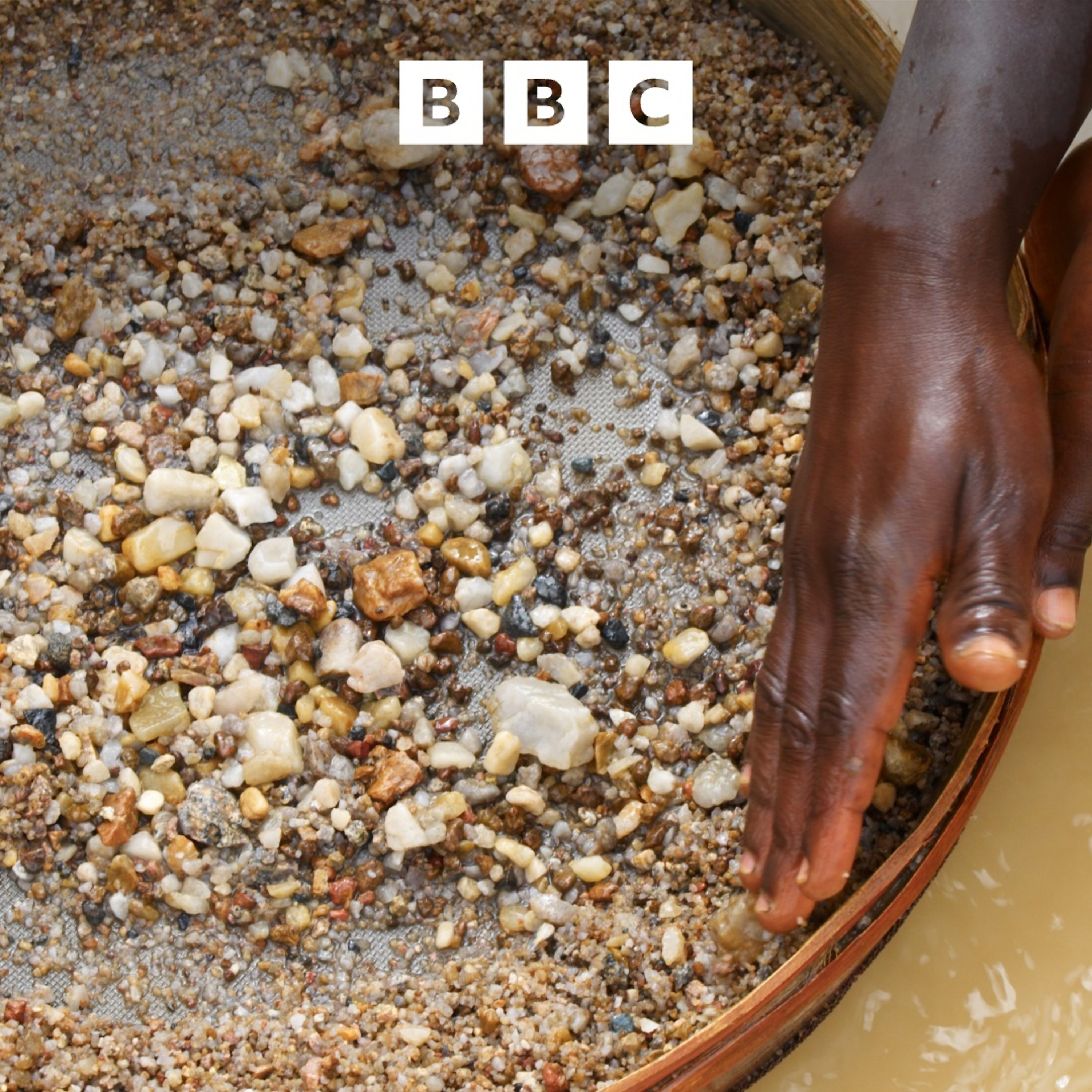
Business Daily
Diamonds' uncertain future
00:18:29
We're in Sierra Leone, where the country's biggest diamond mine has closed
Loading summary
Transcript136 lines
- [00:00]
Ed Butler
This BBC podcast is supported by ads outside the uk.
- [00:06]
Podcast Sponsor Announcer
Today's episode is sponsored by Smart Travel, a podcast from NerdWallet. Do you have a friend who treats airfare like a puzzle and somehow always ends up with a first class upgrade? Smart Travel is like that friend, minus the group texts. NerdWallet's travel journalists break down the pros and cons of travel decisions like when lounge access is worth paying for and and which hotel loyalty programs actually pay off. Make your travel dollars work harder. Follow Smart Travel on your favorite podcast app. Ever invest in something that seemed incredible at first but didn't live up to the hype? Like those five dollar roses at a gas station? Or a second hand piece of technology that breaks in the first ten minutes? Marketers know that feeling. We optimize for the numbers that look great, impressions reach and reacts. But when they don't show revenue, well, that's a not so great conversation with the CFO. LinkedIn has a word for that. Bullspend. Now you can invest in what looks good to your CFO. LinkedIn Ads generates the highest roas of all major ad networks. You'll reach the right buyers because you can target by company, industry, job title and more. So cut the bull. Spend. Advertise on LinkedIn, the network that works for you. Spend $250 on your first campaign on LinkedIn ads and get a 250 credit for the next one. Just go to LinkedIn.com Broadcast. That's LinkedIn.com Broadcast. Terms and conditions apply.
- [01:44]
Ed Butler
That's the sound of the gate here. The security people coming out to look at me suspiciously as I bang on the door. Hi there, my name's Ed Butler. Welcome to Business Daily on the BBC World Service. Today I'm in Sierra Leone in West Africa and I'm standing outside an old mine site, one of the most contested, contentious areas in all of Sierra Leone.
- [02:14]
Sheriff Simbo
Right now I feel so bad, so devastated when they close the mine. My source of income was closed down.
- [02:23]
Mani Simbo
This is our challenge. Our husbands have been laying off and there's no money.
- [02:28]
Narrator/Reporter
An industrial dispute and what it says about the legacy of diamonds here in West Africa.
- [02:34]
Ed Butler
That's Business Daily from the BBC.
- [02:40]
The view is extraordinary. Around here. You've kind of got the mountains in the distance, palm trees, verdant forests. This is the richest, most fertile region of an already pretty lush green country. You feel like Sierra Leone should be doing a lot better than it is. But nowadays it remains one of the poorest countries in the world, dependent on its mineral resources for what Foreign income it makes.
- [03:10]
Augustin Sheko
Kano is very rich in terms of biodiversity. It's very rich in terms of the soil. Almost everything does well here. You know, cash crops, tree crops, livestock, all of them are here. We all need the requisite investment.
- [03:27]
Narrator/Reporter
That's Augustin Sheko.
- [03:28]
Ed Butler
He's the chairman of the local Kono District Council.
- [03:32]
Narrator/Reporter
As well as a lush landscape, the region enjoys vast majority mineral riches.
- [03:37]
Ed Butler
Underground, too.
- [03:38]
Narrator/Reporter
Dag Kramer is the CEO of Koidu Ltd. The country's biggest diamond mining concession.
- [03:44]
Dag Kramer
Historically, diamond mining in Sierra Leone goes really back to the 1930s due to the nature and the quality and the consistency of quality of the diamonds found there. The significant, if not the most significant, contributor to private sector gdp from a mining perspective. We've seen ups and downs in the mining industry in Sierra Leone over the last two decades. But as a mining operation, Koidoo managed to survive both the good times and the bad. And this is reflected in the relative prosperity of the district and the area.
- [04:22]
Narrator/Reporter
Relative prosperity. But this view of Sierra Leone's economic potential hasn't always been so rosy. Back in the 1990s, after years of
- [04:34]
Ed Butler
stagnation and state corruption, Sierra Leone found itself thrown into a brutal civil war. Violence spurred in part by foreign actors
- [04:44]
Narrator/Reporter
targeting the country's diamond wealth.
- [04:46]
Ed Butler
It helped to coin the term blood
- [04:48]
Narrator/Reporter
diamonds, one made famous by a Hollywood
- [04:52]
Ed Butler
film of that name starring Leonardo DiCaprio.
- [04:57]
Augustin Sheko
It came from the heart of the earth. All who touch it are left with
- [05:06]
Podcast Sponsor Announcer
blood on their hands.
- [05:09]
Ed Butler
The film certainly helped to instill the
- [05:11]
Narrator/Reporter
idea worldwide that the diamond industry is
- [05:14]
Ed Butler
just another resource curse, as it's known, an economic blessing that in places like Africa seems only to have fueled corruption and killing. The Kono chairman, Augustin Scheco, says the horrors of the 1990s remain fresh from. For everyone in the district, it is
- [05:33]
Augustin Sheko
a very sad memory. Kono was regarded as a breadbasket of Sierra Leone because of its mineral wealth. So when the war struck, Kono was very attractive. And what we saw was very harrowing because when the rebels came, they shot at random. They killed people, burned the entire town. All houses were mined.
- [05:57]
Ed Butler
They stuck mines inside the houses as well.
- [06:00]
Augustin Sheko
Absolutely, absolutely. It was war of terror. So if you see somebody being killed before you or somebody being maimed before you, it was how they, you know, established their aim here. It was very demonic, I would say. Each time I think of loved ones that were lost.
- [06:17]
Ed Butler
Did you lose a lot of loved ones?
- [06:19]
Augustin Sheko
Oh, yes, ma'.
- [06:20]
Sheriff Simbo
Am.
- [06:20]
Augustin Sheko
I lost my mother. The rebels struck and burnt the house, and she, unfortunately, was the victim of
- [06:29]
Ed Butler
that she died inside the house?
- [06:31]
Augustin Sheko
Absolutely.
- [06:33]
Ed Butler
How awful.
- [06:34]
Augustin Sheko
It was a nightmare. I would really not want to think about it.
- [06:41]
Ed Butler
Do you fear that something like that could ever happen again here?
- [06:50]
Augustin Sheko
I don't have that fear, but sometimes I get paranoid.
- [06:59]
Narrator/Reporter
Paranoia. Fueled perhaps by the events of last year.
- [07:03]
Ed Butler
The strikes and protests were some of
- [07:05]
Narrator/Reporter
the most active unrest seen in Kano in the last two decades. The anger was directed by families of mine workers towards Koidu Ltd. The international firm that runs the diamond concession. It employs 1,000 local workers.
- [07:25]
Ed Butler
Suleiman Mansari is the Secretary General of
- [07:28]
Narrator/Reporter
the Mine Workers Union.
- [07:29]
Ed Butler
He claims that an initial deal to resolve the industrial dispute was broken by management.
- [07:36]
Suleiman Mansari
We came to an agreement that they would give us 30% a bag of rice for you every month and they will provide toilet facility for you. They will be giving you water because Kodulimited was not giving us water. These are all some of the things we are saying. So we are just waiting for them to implement. They failed to do that.
- [07:53]
Ed Butler
It didn't happen.
- [07:54]
Suleiman Mansari
It didn't happen. They failed to do that. Started to dismiss people. Just started to dismiss people. If you talk, they will just dismiss you.
- [08:02]
Ed Butler
The essence of the dispute between the company and the workers boiled down to rates of payment. Suleiman Mansari and other miners say wages were being squeezed following a company move some years ago to switch from paying local staff in dollars to the Sierra Leonean currency instead.
- [08:19]
Suleiman Mansari
At first they will tell you that you will be paying a sum of this in a US dollar payable using the prevailing exchange rate at a time. If the dollar goes up, you see it on your pay slip. If it comes down, you see it again in your pay slip. But early 2016 it is fixed at 650. Now the dollar is not 650 in Sierra Leone.
- [08:42]
Ed Butler
What is it now?
- [08:43]
Suleiman Mansari
It's something like 23.23.5 Lyons. That is the policy.
- [08:50]
Ed Butler
So miners say the company was profiting thanks to the falling value of the Lyon. Koidu Limited categorically denies this. Here's the CEO Dag Kramer again.
- [09:01]
Dag Kramer
A lot of the narrative out there is convoluted. It's fake, it's wrong. This pegging to the dollar and so on is part of that narrative and there is no factual foundation for it is false.
- [09:16]
Ed Butler
You were using an up to date exchange rate for their rates of pay, were you?
- [09:20]
Dag Kramer
No, we were paying the local workforce in Sierra Leonean currency which we were obliged to do by regulations in the country. The lowest paid worker at Koidu was paid three times the national minimum wage going into this and the working conditions at Koidu. Any person who has been there visited will confirm that the conditions were exceptionally good, not only by Sierra Leonean standards, but by mining standards in Africa.
- [09:54]
Ed Butler
You're listening to Business Daily on the
- [09:56]
Narrator/Reporter
BBC World Service
- [10:00]
Investment Advertiser
for accredited investors who follow emerging consumer trends, the zero Proof spirits category has been showing consistent momentum over the past few years. Alcohol free spirits have grown at a double digit pace as more consumers look for full flavor options without alcohol. Retailers have responded by expanding shelf space and bringing in more premium alternatives within that broader shift. RK0 proof is one of the early brands offering a full lineup of non alcoholic spirits, whiskey, vodka, rum, gin, tequila and others. The category has moved beyond niche interest and is increasingly driven by consumers who want flexibility rather than abstinence. RK has established global distribution and a portfolio that scales easily, which positions the company to participate in the category's continued growth. The company has opened investment discussions under Rule 506, available only to verified accredited investors. As with any investment, there is risk including possible loss of principal and offering materials are available upon request. More information can be found at rk0proof.com investinrk that's a R K a Y zeroproof.com investinark for accredited investors watching shifts in consumer behavior, the ZeroProof Spirits category has become a notable data point. It's been posting steady double digit growth and retailers have been expanding shelf space for alcohol free options. One of the early brands in that space is RK0 proof, offering non alcoholic versions of whiskey, vodka, rum, gin and tequila. The company has opened conversations with verified accredited investors under Rule 506. More information is available at rk0proof.com investinark
- [11:33]
Ed Butler
I'm Ed Butler and today I'm looking at the massive industrial dispute in Sierra Leone that's threatened development and some say peace in the country. Both sides have been accusing each other of misrepresenting the pay issue here based on pay slips, the BBC has seen one submitted to the court. Koidu miners do appear to have experienced a substantial pay cut in real terms. While the company has been selling its diamonds on the global market in dollars, salaries paid in local currency have not kept pace. By early last year the President's wife Fatima Bio had intervened. She was taking the mine workers side in what was becoming an increasingly vitriolic dispute.
- [12:17]
Mani Simbo
Kwaidu holding not make money and for any day Kwaidu holding no work for 24 hours. It'll cost them millions.
- [12:27]
Ed Butler
A mass strike was called and in May last year Koidu Ltd. Suspended mining operations altogether, laying off the entire workforce. CEO Dag Kramer says the First Lady's intervention had had the effect of heightening tensions. He blames the government for not guaranteeing security.
- [12:45]
Dag Kramer
We spent the last two weeks of this saga greatly concerned that this could escalate into a situation beyond our control. And many of the staff on the mine, both local and expat, were petrified. And we had never been in a situation that felt this threatening. And we ultimately, you know, had to evacuate people from the mine site.
- [13:08]
Narrator/Reporter
What is happening now?
- [13:10]
Dag Kramer
Well, regardless of us following our obligations and entitlements and having given the government notice of arbitration, we literally haven't heard a word from them. Zero silence. It's bizarre because it's not rational. I think the silence has a lot to do with who's going to take responsibility for this fiasco, because that's really what it is. There has been no benefit, only downside. One of the few cows that was healthy and giving milk was slaughtered. Now, nobody wants to step up and own that. I don't think that there is a single serious investor or a provider of risk capital who would invest in that country today.
- [14:01]
Narrator/Reporter
Are you willing to go back in?
- [14:04]
Dag Kramer
We would love to restart the mining operations, but we can only do that with the needed guarantees. Once you've been hijacked, pickpocketed, beaten up, you know, you need all kinds of guarantees, and I don't see those guarantees forthcoming. I wouldn't feel comfortable sending anybody who has been involved on our side of the equation to that country today. I just don't think it's safe.
- [14:31]
Suleiman Mansari
We are in discussions with Kwaidu because we are government and we have an agreement. We're working very hard, assiduously, to make sure that the people of Kono continue to benefit from the mineral wealth that really belongs to them.
- [14:43]
Narrator/Reporter
The words there of the Attorney General, Al FA Sisay, who does insist that
- [14:47]
Ed Butler
negotiations to restart the mine are still ongoing despite there being no signs of this. Well, we asked the first lady for an interview as well. She didn't respond.
- [14:58]
Narrator/Reporter
There is now a class action lawsuit
- [15:00]
Ed Butler
against Koidu limited in Freetown, the capital, for what miners say are unpaid wages.
- [15:06]
Narrator/Reporter
Whether they win or not, the economic consequences of the region's biggest single employer
- [15:11]
Ed Butler
shutting its gates are clear for everyone.
- [15:17]
So we just stepped into a dusty courtyard here just outside the mine site. There's a small gathering of people. There's some clothes lying on the floor which are clearly for sale. This is the empty only business these people now have now that the mine is closed and the head of the family has lost his job. Hi, sir.
- [15:42]
Mani Simbo
Hello.
- [15:44]
Ed Butler
Nice to meet you. What's your name?
- [15:46]
Sheriff Simbo
Sheriff Symbol.
- [15:47]
Ed Butler
Sheriff Simbo. Nice to meet you. Can I sit down?
- [15:50]
Sheriff Simbo
Yeah, yeah, yeah. I feel so bad, so devastated. When they close the mine. My source of income was closed down. I manage it right now to take care of my family is a part time job. Odd job.
- [16:08]
Ed Butler
Just doing odd jobs. But it's not the same as a mine job, right?
- [16:13]
Sheriff Simbo
Definitely. Definitely.
- [16:16]
Ed Butler
Sharif's wife Mani leads me inside their home. She speaks to me both in broken English and in her local Creole language.
- [16:25]
We are coming into just a little shack. It's. How many rooms? How many rooms here?
- [16:32]
Sheriff Simbo
Five rooms.
- [16:33]
Ed Butler
Five rooms. Bare concrete walls. How many of you live here?
- [16:39]
Mani Simbo
15. 15 there.
- [16:42]
Ed Butler
There are 15 people in this house?
- [16:43]
Mani Simbo
Yes.
- [16:45]
Ed Butler
Including the children?
- [16:46]
Mani Simbo
Yes.
- [16:47]
Ed Butler
How many children do you have?
- [16:48]
Mani Simbo
I have four children.
- [16:51]
Ed Butler
Fifteen of you in these five rooms?
- [16:54]
Mani Simbo
Because we are suffering. We don't have water. We don't have food to eat. Our children are straining.
- [17:01]
Ed Butler
What's it been like the last 12 months since the strike?
- [17:10]
K
It's really hard for me to keep my children. Especially now. They have drove them out of school and the school fee is not there. Life is so difficult for my family.
- [17:24]
Ed Butler
How are you making money now?
- [17:27]
K
I have a cookie shop. That's where I raise some money to support my family.
- [17:33]
Mani Simbo
They do business.
- [17:35]
K
Other people are doing petty trading, mining, agriculture, just to make ends meet.
- [17:42]
Ed Butler
Was life better when your husband was mining?
- [17:51]
K
Life was okay for me and my family during the time when my husband was working. At the end of the month, we received a bag of rice and money to sustain the family. But since the closure of the mine is really difficult. Life is so terrible for me. Even to provide daily food is a challenge.
- [18:10]
Ed Butler
Your children are here today. Why are they not at school?
- [18:14]
Mani Simbo
For school fees.
- [18:16]
Ed Butler
You can't afford the school fees.
- [18:19]
Mani Simbo
Two weeks now, look.
- [18:20]
Ed Butler
Two weeks you've been out of school. He's looking at me. He's looking sad. What's your name?
- [18:26]
Mani Simbo
Joshua.
- [18:27]
Ed Butler
Joshua, would you like to be in school today?
- [18:31]
Mani Simbo
Yes.
- [18:32]
Ed Butler
You like school? What do you like most in school?
- [18:36]
Mani Simbo
Reading.
- [18:36]
K
I like reading.
- [18:37]
Ed Butler
Reading. You like reading?
- [18:39]
Mani Simbo
But they struggle for it. But they suffer. But they really suffer. Suffer.
- [18:46]
Narrator/Reporter
As I was preparing to leave, Sharif,
- [18:49]
Ed Butler
the former mine worker, took me to one side.
- [18:52]
Narrator/Reporter
Winning the legal claim for lost wages, he said was now the key.
- [18:57]
Sheriff Simbo
If I don't get another job. The date that has been said. If we don't get the final say of our case in court, we do not get our benefiting. We'll go on the rampage.
- [19:12]
Ed Butler
You will go on the rampage?
- [19:13]
Sheriff Simbo
Yes, on the rampage. We are angry of our money. Of our money. Definitely. We'll go on the rampage. Definitely.
- [19:24]
Narrator/Reporter
It's unclear how seriously to take such threats. I never felt at personal risk in Koidu, nor saw anything to suggest serious violence was imminent. But the country's troubled past continues to hang like a shadow. There is, of course, another more positive vision for Connor. At this school, I met children with dreams, studying, they said, to become teachers, doctors, web designers. Abubakar Amara is the school's head teacher. He believes literacy and mathematics are the country's best hope, the only true path out of poverty.
- [20:11]
Suleiman Mansari
We want to make the future bright for the kids that are going to school now. With education, they can change this community.
- [20:19]
Sheriff Simbo
Really?
- [20:19]
Ed Butler
You think so?
- [20:20]
Suleiman Mansari
Yes, I'm quite sure. I'm very confident that we can transform this community. Maybe if the diamonds have failed us, the education cannot fail us. So education is one of the tools I think we can use to transform this community. No more mining, no more diamonds because the diamonds have failed already. The people of this country. The people of this community.
- [20:40]
Ed Butler
You think the diamonds have failed this community?
- [20:43]
K
Yeah.
- [20:44]
Suleiman Mansari
To me, the diamonds have failed us. War, poverty. If you ask now, what have those diamonds done for our community? What have those diamonds done for Corner? What have those diamonds done for Sierra Leone? Up to now, we are considered as poor in the world. So to me, yeah, diamonds have failed us.
- [21:05]
Narrator/Reporter
But still the local people dig, sifting gravel amidst the mud in homemade pits
- [21:10]
Ed Butler
to supplement their income.
- [21:12]
Narrator/Reporter
In tomorrow's Business Daily, I'm going to be looking more at that industry here and the new economic challenge that's threatening the traditional diamond miners.
- [21:21]
Ed Butler
The emergence of industrial made gems grown in labs in faraway countries like India and China. What's the best choice for today's diamond consumers? The lab grown or the traditional diamonds?
- [21:36]
Narrator/Reporter
And what's best for those still digging for a living? Join me, Ed Butler for that.
- [21:49]
Investment Advertiser
For accredited investors who follow emerging consumer trends, the zero proof spirits category has been showing consistent momentum over the past few years. Alcohol free spirits have grown at a double digit pace as more consumers look for full flavor options. Without alcohol, retailers have responded by expanding shelf space and bringing in more premium alternatives. Within that broader shift, RK0 proof is one of the early brands offering a full lineup of non alcoholic spirits. Whiskey, vodka, rum, gin, tequila and others. The category has moved beyond niche interest and is increasingly driven by consumers who want flexibility rather than abstinence. RK has established global distribution and a portfolio that scales easily, which positions the company to participate in the category's continued growth. The company has opened investment discussions under Rule 506c, available only to verified accredited investors. As with any investment, there is risk, including possible loss of principal, and offering materials are available upon request. More information can be found@rk0proof.com investinark that's a R K a y0proof.com investinark.