← Business Daily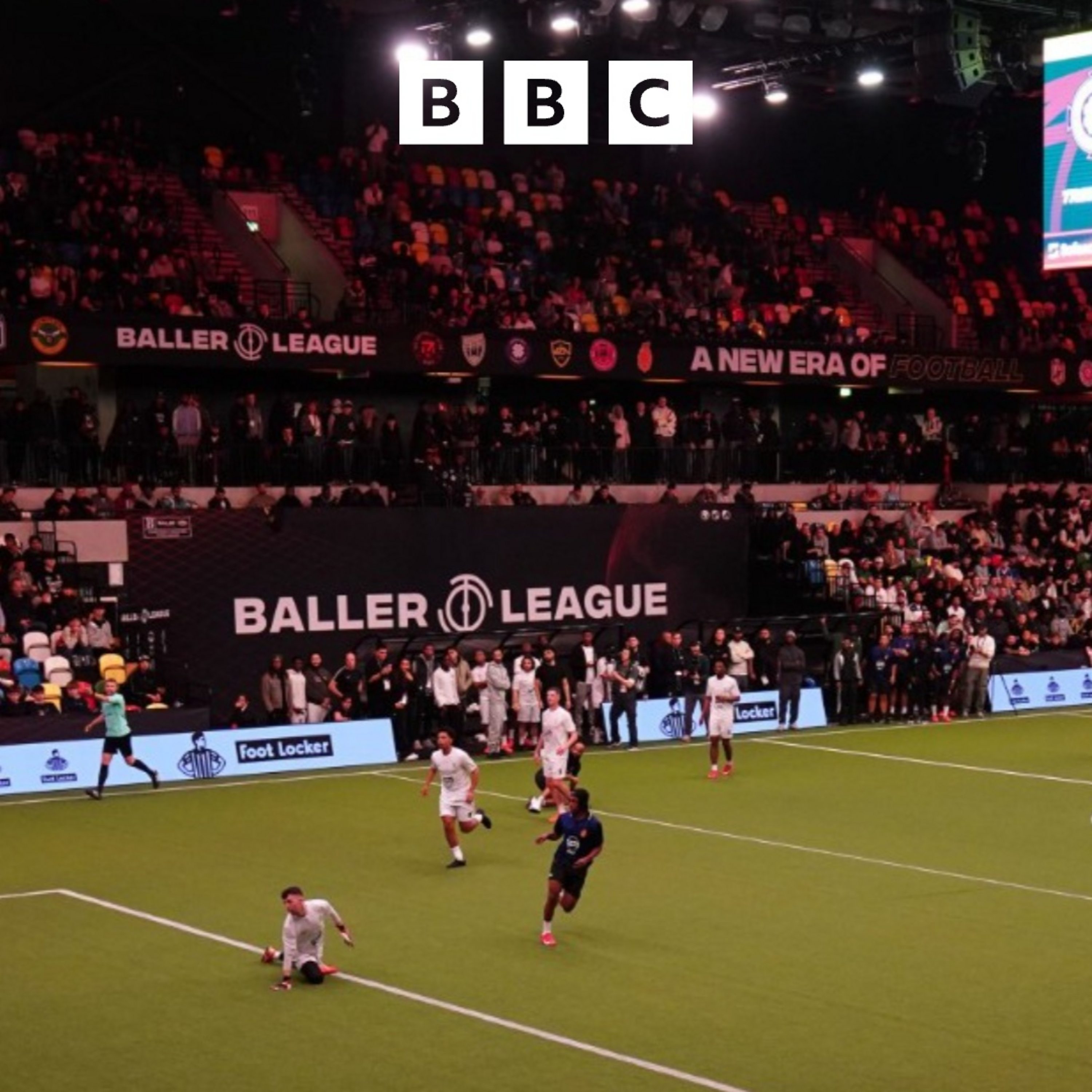
Business Daily
Does cutting game time boost the bottom line?
00:17:28
Sports are changing to fit the algorithm‑era and reach more fans
Loading summary
Transcript57 lines
- [00:00]
Matt Lyons
This BBC podcast is supported by ads outside the uk.
- [00:06]
Podcast Sponsor Voice
Today's episode is sponsored by Smart Travel, a podcast from NerdWallet. Do you have a friend who treats airfare like a puzzle and somehow always ends up with a first class upgrade? Smart Travel is like that friend, minus the group texts. NerdWallet's travel journalists break down the pros and cons of travel decisions like when lounge access is worth paying for and and which hotel loyalty programs actually pay off. Make your travel dollars work harder. Follow Smart Travel on your favorite podcast app. Ever invest in something that seemed incredible at first but didn't live up to the hype? Like those five dollar roses at a gas station? Or a second hand piece of technology that breaks in the first ten minutes? Marketers know that feeling. We optimize for the numbers that look great, impressions reach and reacts. But when they don't show revenue, well, that's a not so great conversation with the CFO. LinkedIn has a word for that. Bullspend. Now you can invest in what looks good to your CFO. LinkedIn ads generates the highest ROAS of all major ad networks. You'll reach the right buyers because you can target by company, industry, job title and more. So cut the bull, spend. Advertise on LinkedIn, the network that works for you. Spend $250 on your first campaign on LinkedIn ads and get a 250 credit for the next one. Just go to LinkedIn.com broadcast that's LinkedIn.com broadcast. Terms and conditions apply.
- [01:43]
Matt Lyons
Hello, I'm Matt Lines and welcome to Business Daily on the BBC World Service. The world of sport is changing and its aim is to get on your social media algorithm. Tennis matches where pros play amateurs, football teams managed by influencers and three aside games of ice hockey and basketball. The game has changed. Responding to social media and shrinking attention spans by innovating and creating new shorter formats to keep fans engaged.
- [02:11]
Christina Filippou
This is innovation and it's good for for engaging new audiences. It's good for money. I think it's a bit of a winning formula.
- [02:19]
Matt Lyons
For some it's the future. For others it's a flash in the pan that won't ever become mainstream. But is it working and are the new games getting the financial backing they need to stick around?
- [02:29]
Peter Moore
You'd like to think some of these shorter formats are going to be around in 10 years, but I'm not sure because it just feels sometimes like they're built to be controversial.
- [02:37]
Matt Lyons
They're built for TikTok short formats, social media and the future of sport. That's business daily from the BBC. What is Bowler League anyway? All right, we've got a brand new football league that's changing the game. Bowler League is coming to the uk.
- [02:54]
Peter Moore
The best part of hockey is going global.
- [02:56]
Chris Beer
Introducing the 3ice World cup, the undefeated king of YouTube, KSI will face undefeated
- [03:06]
Matt Lyons
pro boxer Tommy Fury. From football to ice hockey, cricket to basketball, sports all around the world are now rolling out new, faster, more action packed versions of their games, all designed to be shorter, sharper and hard to ignore. The aim is clear. Create shareable moments that dominate social media, appeal to younger viewers and attract the sponsorships that follow. One of the newest of these formats is tennis's One Point Slam, an event at the Australian Open where professionals and amateurs play in matches of a single point with the winner going home with 1 million Australian dollars. After a quiet first year, this year saw the event hit the headlines as amateur Jordan Smith stunned some of the world's very best Jannik Sinner and Amanda Anisimova on the way to bagging the prize money.
- [03:52]
Felix Stark
Oh, my goodness me, he's worth a million dollars.
- [03:56]
Matt Lyons
So has it worked for tennis? Has the gamble of creating an event for social media brought the eyes and the sponsors? Lawrence Robertson is the tournament director of the event.
- [04:05]
Lawrence Robertson
We completely outperformed all of the metrics we set ourselves in terms of community reach, domestic audience reach. We've delivered well over almost close to $200 million of equivalent advertising value from an international audience perspective and then at a domestic level, another 10 million on top of that. So as we sit here now in March with nine months to go until next year as the Strain Open, we're already in fairly advanced talks with brands and partners about who want to get involved with the One Point Slam. So anecdotally we know that we were reaching into new audiences and I think that's showing in the sort of the segmentation of sponsors who are now reaching out and saying, we'd love to have a conversation with you.
- [04:51]
Matt Lyons
What does the future look like for you? You mentioned about expanding it around the world. Can you see a future where there's celebrities involved in the tournament, for example, influencers, that sort of thing?
- [05:01]
Lawrence Robertson
I think we'll expand carefully and into 2017. So I think we've got four, possibly six international markets that we'll look at. Let's take the UK for example. We might look at an event or an international tennis event taking place in the uk partner with them, or we may go ourselves and have a. Let's say it's a 128 draw. But we have 16 celebrities and 16 pros involved in some shape or form, and the winner of that qualifies to come down to Australia and compete in the AO 1 point slam. And we'll always feel that that's the original and therefore has that appeal. So you're absolutely right, Matt. That's some of the thinking that we're applying at the moment in terms of our international expansion strategy.
- [05:48]
Matt Lyons
And how do you make sure that copycat events don't pop up around the world and it's something that you specifically can grow?
- [05:54]
Lawrence Robertson
It's the very question that we're wrestling with at the moment. So I know that we've taken the necessary steps to protect the name One Point Slam and any of the associated sort of visual identity that we created around it. The lawyers would say you step into gray territory when how do you protect a format of the game that is built around one point? What's the uniqueness about that? How do you protect that? And so we're kind of, we're kind of working through what that looks like. You're right. It's striking the right balance about how do you ensure that tennis remains one of the world's biggest and most popular sports? And what can we do to innovate and make it more entertaining and appealing, accessible, but not ensuring that Commercial imperatives are the only thing that are driving that.
- [06:43]
Matt Lyons
And it's not just about shortening the game and making them ideal for TikTok or Instagram. It's also, as Lawrence mentioned, getting names involved who have big social media followings. It started in boxing with YouTubers getting in the ring to battle it out against each other and more recently tangling with former pros like Mike Tyson. And now it's moved to football with the baller league, a 6 a side football tournament pitting non professionals against each other in 30 minute games with the teams managed by the likes of former Premier League greats Alan Shearer and Ian Wright to England women's star Chloe Kelly and Hollywood actor Idris Elba. There's also a host of influencers and YouTubers involved, including KSI and Angry Ginge. It's a fun six aside experience and
- [07:24]
Peter Moore
it gives those that could never make
- [07:25]
Matt Lyons
it to the top, top level a
- [07:26]
Felix Stark
chance to perform in front of crowds.
- [07:28]
Matt Lyons
It's not early 2000s anymore, so social
- [07:30]
Felix Stark
media is running the show.
- [07:31]
Matt Lyons
Felix Stark is the CEO of the Baller League.
- [07:34]
Felix Stark
We are the definition of the football ecosystem, right? We are the most played sport in the world, not elevener Side football is small sided. Football is the most played sport in the world by a big margin by the way. Of course our audience is younger than the Premier League's audience and for some people that's like, oh, kids, watch it, whatever. They want to use it as an insult. Our 80% of our viewing is between 20 and 35. That's our biggest chunk of audience.
- [07:58]
Matt Lyons
And when did you know that it was becoming successful and that you got something that got off the ground and had more seasons to come?
- [08:04]
Felix Stark
I mean, very early on, once you have a curve, a graph, a viewing ship graph that keeps going up and not falling. Like maybe the Premier League right now is losing audience year in, year out, right? And we're gaining audience year in, year out. And that's maybe what the UFC did to boxing, right? The boxing was losing audience, the UFC was gaining audience. So arguably we're on a similar track to that. Even though it's a bit early to judge that once millions are watching you, you and they're not turning off the week after which yeah, I think it's quite easy to have millions of people watching you once the question is, can you do it week in, week out and if you can, you have a case. Are we going to succeed? The odds are still against us. I'm not sitting here and saying 100, the odds are still against us, but luckily we're doing one more right thing, that wrong thing every single day. And that way, yeah, we're still able to gain viewing every single week.
- [08:58]
Matt Lyons
And what does sustainability look like financially? Is it continuing with sponsorship money? Is it looking to broadcast deals? What does sustainability look like for you?
- [09:08]
Felix Stark
The only two great role models that exist in this emerging sport league world since 20 years. Unbelievable. Well ran leagues, the 100 and the IPL. Unbelievable how they could attract the fans so quickly and make them retain. Right? Like they're not just focusing on tension, they're focusing on retention as well. So two big role models for me. Two, the two only leagues that I see as a role model to be honest, in emerging sport league. What is sustainability to us? We are quite sustainable of what we do already, right? Like we're, we, we're not cash negative in any way. Can we make huge profits? Sure. We could allow brands that maybe other rights holders allow to partner with us for a huge payday. We're only allowing blue chip a lister brands right now to partner with us in very respected categories. We're not focusing on profits, we're not focusing on that right now. We're focusing on improving the quality on the pitch and therefore improving the experience in front of the TV or in front of the device of your choice. That's the only focus we have the next five years.
- [10:13]
Matt Lyons
I asked Chris Beer, senior data journalist at gwi, to take a look at the numbers for me to see if these formats are attracting new audiences.
- [10:20]
Chris Beer
Fans of Baller League, Kings League, these are almost all football fans, so I wouldn't say that this is getting new people into the sport, but serving an existing audience in a new way. And as much as they are football fans, this is still quite a distinctive subsection of that audience. So this is a younger audience, much more likely to be aged between 16 and 24. And probably even more distinctive about them is the overlaps they have with gaming culture.
- [10:48]
Matt Lyons
And is it growing? Is it working in terms of that audience that it's gaining and has that grown over the last few years?
- [10:55]
Chris Beer
It's certainly a decent benchmark that those competitions have hit in the UK and Spain in particular with the Kings League. So for context, in the UK, baller league is about as popular with those 1624s as the world Snooker Championship. So for, you know, for competition that's going out on terrestrial tv, in the case of World Snooker, it's been around for quite a long time. I think that's pretty good going. And in Spain, Kings League has got even higher penetration. So it's followed by as many 1624s, as Formula One put it simply.
- [11:25]
Matt Lyons
For people who are listening, what is it about these events that appeals to that age demographic?
- [11:31]
Chris Beer
I think it's more the distribution. If you cut the data by generation Gen Z, they're still interested in sport, they're still interested in football. To use an example, they're still interested in the established football competitions. You know, Premier League, Champions League. What has happened over the last 10, 15 years is that they're watching less broadcast TV and that has obviously had an impact on how they consume live sport because that is so often how live sport is packaged and sold. And I think what's emerging is the recognition that there's a need to meet people where they are.
- [12:05]
Matt Lyons
You're listening to Business Daily from the BBC World Service.
- [12:11]
TikTok Advertiser Voice
Who says renting can't feel like home. Make your rental feel like yours. It all starts with one scroll. Download TikTok to discover easy home decor ideas. Craving something specific? From global flavors to viral snacks, TikTok has it all. If you can dream it, you can make it right at home. Find your next favorite dish on TikTok.
- [12:45]
Matt Lyons
I'm Matt lines. And today we're finding out is the move to shorter and more social media friendly formats of sport attracting new viewers and more money. Now, the clearest example of a sport moving in this direction is cricket. A game where you can play for five days and it can be a draw can now be all over in the time it takes to watch a film at the cinema. First there was the original shortfall format T20, which began in 2003 and takes around four hours to play. Piggybacking on that, we now have the even shorter 100. Launched five years ago, it lasts around two and a half hours with each team facing just 100 balls. As the name suggests, it's going to
- [13:21]
Christina Filippou
be fast, it's going to be quick,
- [13:22]
Matt Lyons
it's going to be world class players in every team. Mashing six is all about attack.
- [13:26]
Peter Moore
It's cricket like it's never seen before. What more do you want?
- [13:29]
Matt Lyons
Through these, the game has seen money flood in. The Indian Premier League, the world's most valuable cricket tournament has recently been valued at US$18.5 billion by global investment bank Houlihan Loki. And many of the owners of teams in that competition have bought stakes and sides in the hundred, with an auction last year valuing the teams at over US$1.2 billion. Christina Filippou is Associate professor in Accounting and Sport Finance at Portsmouth University and thinks a template for these events is starting to happen.
- [13:58]
Christina Filippou
I think there's three things there. Yes, I think they are all inevitably linked to money. You've got the sort of the younger audiences piece, right? You want stuff that's short, sharp, interesting kind of appeals that can be easily streamed, that doesn't need, require a lot of attention for long periods of time, then you have the sort of diverse audiences. So again, if we look at something like in the hundred, which is having men's and women's teams there and having it all kind of as a package, you sort of bring in different audiences that might not have thought that the traditional sport was for them. And then I think the third way around is a lot of sports are kind of all working towards innovation and I honestly see the hundred as the start of that idea. Let's do something short, sharp, exciting that people want to watch men's, women's teams, bring in new audiences, bring in younger people. I suspect a lot of these will become a victim of their own success and eventually the, the governing bodies will want to a little bit in on the action because if they start becoming profitable, I think we will see them come more into the Traditional space.
- [15:08]
Matt Lyons
And where is the money mostly coming from at this point? You know, established sports often rely on broadcasting that drive the financial side of things. But with this, is it largely still relying on sponsorship?
- [15:18]
Christina Filippou
It's not necessarily a bad thing to be dependent on sponsorship, right? If you look at the Kings League, I think surrounding roughly 70% sponsorship income, that is the equivalent of say traditional women's football or that is the dependence of some of the traditional football clubs on broadcasting. So I think being dependent on sponsorships is not necessarily a bad thing. And most startups in any business lose money anyway. So it should be about looking to be sustainable more long term rather than necessarily making money in their first or second year.
- [15:58]
Matt Lyons
But is this all just a flash in the pan trend or does it have a long term future?
- [16:02]
Peter Moore
I think it's probably necessary innovations and what they are. If you want to attract a younger audience, you've, you've maybe got to do it in a different way. And look, traditional sport has got everything we love. Legacy, authenticity. I mean, I'm a multigenerational Liverpool fan and you know, that's hard to replicate, but Gen Z, shorter attention spans, the gamification of the experience, which maybe I'm responsible for my past life, I don't know.
- [16:28]
Matt Lyons
Peter Moore is the former CEO of Liverpool FC and a man who knows a thing or two about innovation and attracting younger audiences from his time as head of EA Sports and overseeing Xbox at Microsoft.
- [16:39]
Peter Moore
Traditional sport has to adapt and bring along younger consumers who didn't grow up like I did, going to a game with their dad and it's just not the way. They don't even exist in the living room for the most part. They're in bedrooms, they're consuming YouTube, TikTok, Instagram, bite size Entertainment. And so I think traditional sport probably has to adapt to bring them along. All of these, you know, formats that you just mentioned sit on the periphery. They're not at the core but you know, they're kind of nipping away, if you will, traditional sports. And we, we in traditional sports, if I put myself in, in that basket, you know, just have to be aware of it. You've got to evolve and adapt to the tastes and needs of the generation
- [17:23]
Matt Lyons
coming through sports execs like yourself. Is it something that you're taking note of?
- [17:28]
Peter Moore
Yeah, I mean you have to, you have to bring that generation along. You know, living here in the US as long as I've done it, I've watched the traditional American sports struggle with this. The NFL game lasts three and a Half hours with commercials. And so even the NFL has to figure out how to bite size, that games last a long time and that doesn't fit with the wants and needs of the younger generation. Problem here in American sports is the average fan of NFL and particularly baseball, they're in their 50s. And so what you've got to do is find ways and formats and platforms that regenerate people like myself and look, I'm in my 70s, you know, it's just like how do we, how do we make the game more interesting and stickier for a 17 year old?
- [18:14]
Matt Lyons
Does it excite you when you see these sort of things come along? You know, do you think it's a good thing that people are trying these sorts of things?
- [18:20]
Peter Moore
Yeah, I mean for me it's, it's, it's been my life. Look, I lived in the confluence of technology and entertainment and sports. You know, president of VA Sports, CEO, Liverpool Football Club, you know, head of Xbox. I've lived this life and the gamification and bringing technology along, that feels more like a video game, if you like. And those two worlds colliding I think is essential.
- [18:44]
Matt Lyons
What do you think? Do you see a long term future for these sorts of formats?
- [18:47]
Peter Moore
Yeah, look, if they're built for just clicks, they'll fade and die. Traditional sports are multi generational. My dad was a red, my granddad was a red in Liverpool. Thank goodness I had no choice, right? I'm a red. These peripheral sports that we're seeing now, they need to have that substance and that longevity and that sustainability. So you've got them year after year. They can't come in and disappear. We've seen that in the US where leagues have tried to compete with the NFL. You'd like to think some of these shorter forms formats are going to be around in 10 years, but I'm not sure because it just feels sometimes like they're built to be controversial. They're built for TikTok. They're built for clicks and engagement. They're not built for sustainability and substance.
- [19:31]
Matt Lyons
Peter Moore there, wrapping up today's Business Daily, presented and produced by me, Matt Lyons. And remember, you can listen to more episodes of Business Daily wherever you get your BBC podcasts. Thanks for listening.
- [19:47]
TikTok Advertiser Voice
Who says renting can't feel like home? Make your rental feel like yours. It all starts with one scroll. Download TikTok to discover easy home decor ideas.