← Business Daily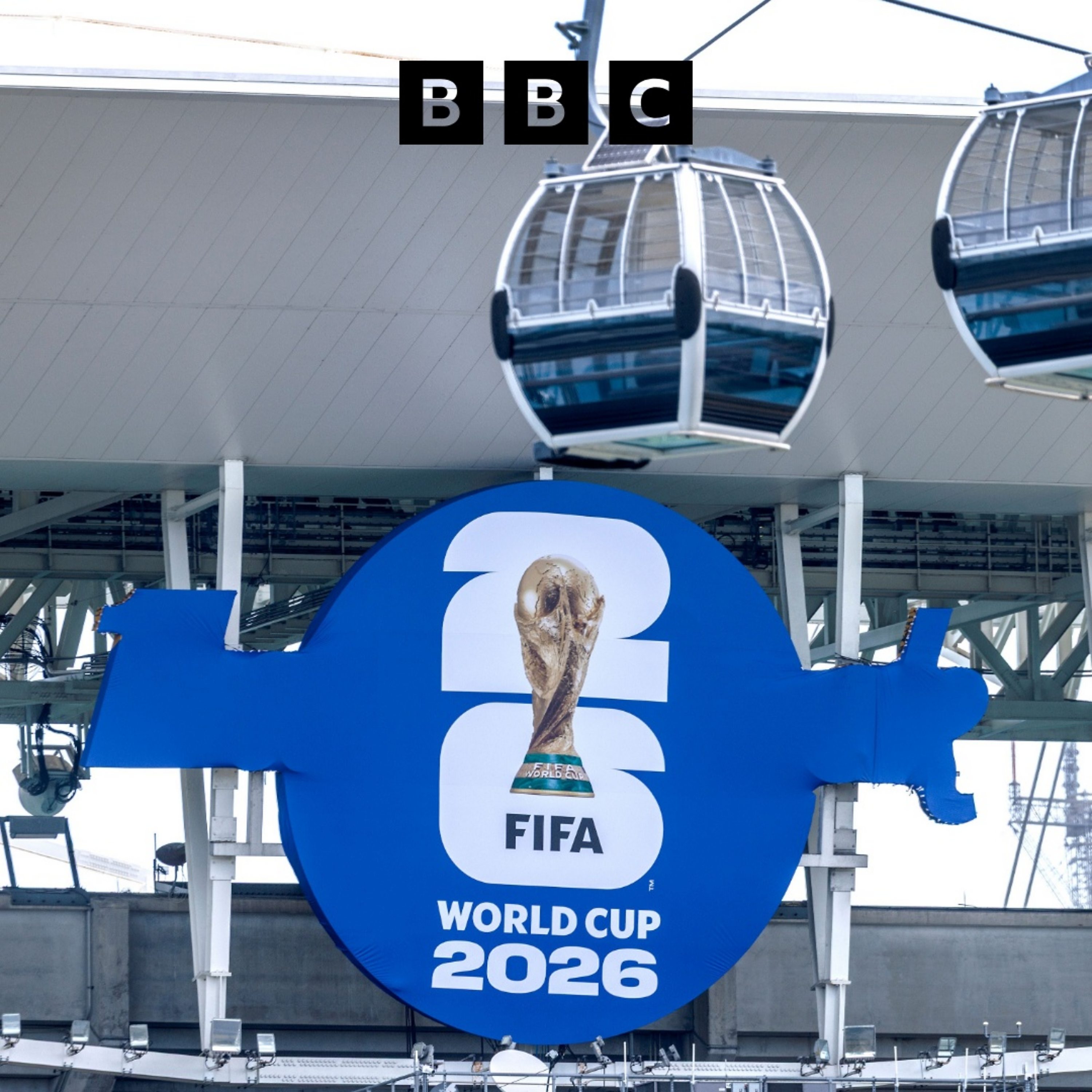
Business Daily
Has the World Cup broken dynamic pricing?
00:17:27
As dynamic pricing expands, so does the backlash
Loading summary
Transcript57 lines
- [00:00]
Will Bain
This BBC podcast is supported by ads outside the uk
- [00:07]
Aramco Advertiser
Seeking, pushing, optimizing, creating, learning, discovering. At Aramco, we believe in harnessing the power of data to push the limits of what's possible. That's how we deliver reliable energy to millions across the world. Aramco, an integrated energy and chemicals company. Learn more about us@aramco.com
- [00:36]
NerdWallet Advertiser
Today's episode is sponsored by Smart Travel, a podcast from NerdWallet. Do you have a friend who treats airfare like a puzzle and somehow always ends up with a first class upgrade? Smart Travel is like that friend minus the group texts. NerdWallet's travel journalists break down the pros and cons of travel decisions, like when lounge access is worth paying for and and which hotel loyalty programs actually pay off. Make your travel dollars work harder. Follow Smart Travel on your favorite podcast app.
- [01:07]
Will Bain
Right. Question for the room, then Live events. What's top of your bucket list? Theater, film, sport, music, Anything anybody's queued up for Manically Michelle well, I gotta
- [01:19]
Michelle Fleury
say, Oasis was at the top of my bucket list and I did manage to see them last year at the stadium where the World cup is playing.
- [01:26]
Will Bain
What about you? You love your concerts.
- [01:28]
Rahul Tandon
Look for me and I dream about it all the time. Go and see India in the T20 World cup final. Michelle I had the chance last year. Tickets were a little expensive. Told my wife, gotta look. I thought cricket or divorce. I chose not to get divorced.
- [01:44]
Will Bain
The prices you paid for that, was it a shock? Did you get in at face value?
- [01:49]
Michelle Fleury
I bought it on the secondary market cause the initial, you know, tickets were too expensive. So I definitely had to wait till the last minute.
- [01:56]
Will Bain
Now, not just on the secondary market, but on the primary market a lot of the time. It is very much a market, isn't it? Because that's because we're very much in the world of dynamic pricing. So where the price goes up and down in theory about demand. So we're going to get into all of that today, what it is, if you've not heard about it before, how it works, why it's controversial and what impact it's having on the world's biggest sporting event. The FIFA World cup that kicks off in just a week's time with Michel is in the United States. Yes. Welcome back to Power Blazers from Business Daily here on the World Service. I'm Will Bain in the studio in the uk.
- [02:34]
Rahul Tandon
I'm Rahul Tanden also in the studio. Different one from Will here in the
- [02:37]
Michelle Fleury
uk And I'm Michelle Fleury in sports Mad New York, where everyone is excited for the Knicks.
- [02:43]
Will Bain
Yes, this has been an issue, Michelle, that's been around for ages. It's not new, is it? It's perhaps being used more in entertainment. But whether people think they know about this or not, they almost certainly will have used it every day in their daily lives. Right. For probably a couple of decades at this point.
- [03:02]
Michelle Fleury
Yeah. I mean, I think people know about it from airlines, from Uber surcharges during kind of peak hours and stuff like that, and also concerts. But the difference here is that it's being applied to the world's biggest football tournament. And essentially what it means is, is that when demand is high, ticket prices go up and when demand falls, ticket prices also fall. Hence the word dynamic.
- [03:28]
Rahul Tandon
Right.
- [03:29]
Michelle Fleury
It's not a fixed face value ticket and they're released in batches often. And that's kind of where you get this sort of technology meets ticket pricing because it's thanks to kind of, you know, the rise of data and our ability to analyze that and algorithms to kind of read that data and make sense of it and kind of alter prices to reflect kind of what is going, going on in the market in terms of supply and demand at any given moment.
- [03:55]
Will Bain
And Rahul, from that sort of explanation and the way we've kind of set it up, you might think, oh God, the house always kind of wins. A bit like our story on prediction markets last week. But actually the whole point is, right, that consumers, us people queuing up for a gig or queuing up for an airline should get a good deal out of this sometimes as well. There's two sides to it.
- [04:14]
Rahul Tandon
There certainly is. And you do get a good deal sometimes, don't you? I mean, if you look at electricity when you go to pay your bills, when we're not in those peak times, we pay less, don't we? When we go to the gym and off peak times, it goes less as well. Those prices go down. So we often do benefit from dynamic
- [04:30]
Will Bain
prices and even something like Uber that Michelle's talking about. Right. The price for the same journey that you take on Uber could be different depending on what time of day you're going or what the traffic's like. Unfortunately, it's starting to creep into more and more of life. Isn't it incredibly controversial here in the UK for coming into pubs and things like that and whether people know what the starting price is? Rahul as well, I suppose the thing
- [04:52]
Rahul Tandon
with it is we think of it as a very new concept, don't we? Dynamic pricing. But actually, if you go back into the. Right, at the start of when we were doing business, it was all dynamic pricing, wasn't it? Because we were all bartering. The idea that we have.
- [05:05]
Will Bain
So you're going back to the 1600s for wife.
- [05:09]
Rahul Tandon
I'm a little older than the pair of you there. But this concept that it's, you know, something new, it's coming technology means, I think that we see a lot more of it, don't we? That it's a bigger player in our life now than it was 10 or 20 years ago.
- [05:21]
Michelle Fleury
Picking up on your point about bartering. I mean, if you think about supermarkets, what happened was food was local, so you did have that bartering. Then you got into kind of the megastore and everything. You know, that became impossible to have these sort of fluctuating prices and everything had to have a sticker price on it. And that's where technology comes in today. Because now when you can have digital sticker prices, you don't have to have a sort of fixed number on there. So it's very easy now for the store owner to change prices. And I think that's where you get technology kind of behind this resurgence that we're seeing right now in dynamic pricing and.
- [05:57]
Will Bain
Absolutely. And the way that we buy those tickets, you know, whether it be Oasis that Michelle was talking about at the top or the cricket that Rahul was talking about, more often than not, we are not queuing up anymore for a kiosk and buying a physical stub off someone, are we? We're logging onto our laptops, hitting our iPads, hitting our. Hit our phones and trying to buy them there as well. And as a result, it's become much more prevalent. So not odd, particularly Rahul, that FIFA have turned to it last year, but it is the first time that it's happened at a World cup before. Normally there is a set price for the tickets in different categories of the type of ticket you can get and for the how important the game is, at what stage of the tournament it is. All that kind of stuff someone gives a sense about. We're talking about here.
- [06:40]
Michelle Fleury
Then look, it was. I was looking at the cost of a seat to the finals and I was going on various sites, resale the official FIFA site. And what I found was the cheapest ticket was $8,000. And if you were in the trophy box, premium seating that went up as high as $35,000. When you compare, consider that the average British worker makes $977 a week. That's 35 weeks to be able to afford a seat in the trophy box.
- [07:14]
Will Bain
Why don't we hear from the man who's kind of set all of this in motion. I suppose that's the boss of FIFA, the world governing body of football, Gianni Infantino, talking about the cost of getting into games at this World Cup.
- [07:25]
Gianni Infantino
There are certain elements that, that we need to understand. You know, if. If some people put on a secondary on the resale market, some tickets for the final at $2 million, number one, it doesn't mean that the tickets cost $2 million. Number two, it doesn't mean that somebody will buy these tickets. Actually, if somebody buys a ticket for the final 2 million, I will personally bring him a hot dog and a Coke.
- [07:51]
Will Bain
So that's FIFA's argument. And Rahul, because ostensibly their mission, right, is to redistribute that money to even countries that haven't qualified. You mentioned India, lots of others as well, to try and grow the game of football around the world.
- [08:06]
Rahul Tandon
That is. That is one of the big points of this, isn't it? And I think, because it's not like Taylor Swift, is it the Football World cup, once every four years, FIFA has this one opportunity. They've got the FIFA Club World cup now, which helps a little bit, but this is their moment. It's the biggest thing in sport to get as much money in as possible. Ticket sales, if you look as a percentage of their revenue, it's much higher in this World cup than it was in the previous World Cup. Stadiums are big in the US People pay more money in the US Generally to go and watch sporting events. So you can understand some of the criticism there. But from FIFA's point of view, if they get more money, some of those countries in Africa, they'll get more money. The game grows as well. I suppose it's the balance between that and making sure that the fans have an opportunity to go and follow the teams they love.
- [08:53]
Will Bain
Critics, though, Michelle, have been plentiful, haven't they? And not always natural allies either. In the United States, Yeah, I mean, this was extraordinary.
- [09:03]
Michelle Fleury
President Trump, who obviously was at the Club World cup final last year, which was in Rutherford, New Jersey, you know, he was asked would he pay $1,000 to go watch the opening game of US versus Paraguay. And he said, well, I'd like to be there, but, you know, he wouldn't pay it either. This is meant to be the host country. What kind of salesmanship is that? But he's not alone because he's found common ground with some sort of rather unusual bedfellows. You've got the mayor of New York, the sort of left wing politician Zoran Mumdami. And this is what he had to say.
- [09:36]
Zoran Mamdani
I've long been clear that I am concerned about the ways in which this World cup is pricing out so many working class supporters of the game. Soccer as a game is born out of the working class. And when you're looking at the ticket prices to attend the game, you're looking at the cost of getting to the game. It is something that is out of reach for many.
- [09:57]
Will Bain
So that's Zora Mandani there, the mayor of New York, and he's managed to negotiate some cheaper tickets certainly for some of the warm up games and some tickets for New Yorkers as well. You're listening to Business Daily on the BBC World Service.
- [10:13]
Aramco Advertiser
What if a marginal gain unlocked greater performance? What if an insight in data could change everything? At Aramco, our focus on detail helps us deliver reliable energy to millions across the world. Because margins aren't marginal, they're where we can truly push the limits of what's possible. Aramco, an integrated energy and chemicals company. Learn more@aramco.com Grainger knows when you're a
- [10:44]
Grainger Advertiser
procurement manager for an office park, you're not managing one building, you're managing all of them. And to stay ahead, you need to see through walls and around corners. Lights about to fail, filters ready to clog H Vac on its last leg. If you wait until something breaks, you're already behind. Count on Grainger for quality products, easy reordering and 24. 7 support. Call 1-800-GRAINGER click grainger.com or just stop by Grainger for the ones who get it done.
- [11:15]
Will Bain
And today we are looking at why the World cup just days away, of course seems quite so expensive for fans this time around and what it might tell us about the future of dynamic pricing for big events. And on that future, Michel we've done a lot of kind of where the price is set and how it's being sold by FIFA here running the World Cup. But there's a couple of other things to factor in here, aren't there? One, there's a heck of a lot of other things that fans are upset about that they feel they're being squeezed on in the US for their trip, hotels, travel, et cetera. And also America's a more expensive country than a lot of the countries that that are coming to visit this time around. That's got to be important too, hasn't it?
- [11:56]
Michelle Fleury
Yeah, I mean, Raoul and I were talking about it. He's got an upcoming trip stateside and I was warning him, you know, if you like coffee, expect to pay a lot for your cup of joe.
- [12:06]
Will Bain
But Michelle, that, that battle as well, because it's, it's changed kind of state by state, hasn't it? And I was chatting to someone a few weeks back on the World Service, the head of the Hoteliers association, about their kind of worry from members and they represent big companies, Marriott, Hilton and others, right down to really small Airbnbs run by one person saying they're a bit shocked at the low numbers of take up for rooms from the hotels. And everybody seems to be pointing at everybody else saying, well, you raised your prices and that's the reason why we haven't got as many visitors as we were expecting.
- [12:36]
Michelle Fleury
I mean, you know, it's one of those where you want to say, read the room. There's a cost of living crisis and you're asking people to pay American fees, you know, for a world event where they're not just paying for the ticket price, but as you point out, the hotel rooms, you know, the airfares are going up. With the current crisis we've got in the Middle east and the impact that's having on jet fuel, you know, you've now even got local train tickets. So for example, here in Manhattan, if you want to take the train to New Jersey, the cost of that went up to $150. In fact, there was so much backlash they had to push it back down to $98.
- [13:13]
Will Bain
I personally have been on that train to watch the American football and I, I don't think I'm being controversial. This is a place where, you know, the BBC, we don't have personal opinions often, but I would say I can categorically say that that journey was not
- [13:26]
Michelle Fleury
worth $100 because normally the ticket costs under $20. So it's just going up for the World Cup. And that sense of being gouged and that unfairness kind of just sits wrong with some of the things.
- [13:38]
Will Bain
But you made a good point when we were chatting about this the other day, Michelle as well though, that there is a reason for that, right? That the states are picking up a lot of the bill for this. Taxpayers who might not be interested in football, soccer at all, not going to watch a game, don't really care whether it happens there or not. They are also picking up the tab
- [13:54]
Michelle Fleury
for this bit of a local grudge match you've got going on here between New Jersey and New York because of course, a lot of People will be staying in Manhattan, going to restaurants in and around Manhattan, Brooklyn, Queens, but they're not necessarily going to spend their dollars in New Jersey. And yet New Jersey is having to foot the bill because that's where the stadium is, that's where the transportation is, that's where the policing costs are going to be incurred. And so there's a bit of frustration. And this was kind of their sticking their nose up, if you like, back at New York and back at the World cup.
- [14:23]
Rahul Tandon
We mustn't forget, if you're listening, in Canada and Mexico, this World cup is not just only in the U.S. you know, I've got a friend from India, I was chatting to him before we came on air and he said, look, he's going to Mexico to watch games because all the other expenses afterwards are going to be a lot cheaper there. So obviously we do have these problems in the US but it isn't the only place where this World cup is
- [14:44]
Will Bain
being held and ever was it thus, right, guys? Like if Taylor Swift, we mentioned her earlier. I remember her contest. I remember us doing endless stories on the World Service about the price of hotels in the various cities around Europe or Asia where she was playing. I mean, is that the nub of this here, that the demand issue isn't going away? And actually, people seem to want to go to live events, whether they be music, whether they be football, whether they be whatever, more than ever. And that meeting the, you know, supplying that demand is becoming harder and harder.
- [15:15]
Rahul Tandon
It is, it is. And post pandemic in the world that we live in. And after what everybody went through, we want to enjoy life a little bit more than we did before, don't we? So I think the numbers, the demand for us to go and see those tickets, we've all been on the computer, haven't we, when we want to go and see something, waiting for hours, hoping, praying that you're going to be able to get the ticket. And we don't like dynamic pricing, but what's the other way of doing it?
- [15:38]
Michelle Fleury
I mean, one of the arguments behind dynamic pricing, you know, the reason people like it, is they say that if you have a price cap that opens the doors to scalpers, that they can buy up, you know, swoop up tons of tickets and sell it at a higher price. And they're the ones claiming the benefit, not the artists, not the organizers. And that's why they, they push for dynamic pricing. The problem with dynamic pricing, though, is obviously you get that huge swoosh of prices up at the top if it's an event that's hugely in demand. And then maybe, you know, because it doesn't just go one way, you get that big drop in that last few hours or minutes before sort of kickoff time or before the concert starts, whatever it is.
- [16:18]
Will Bain
And that's a new dynamic here, Rahul, this time as well, because a lot of our listeners, perhaps if they're in Europe or in Asia, Michelle, talking about scalping, it's got more names than anything else, I think. Black market tickets, secondary market tickets, isn't it? Depending on touts. Yeah. Wherever you are, listening at its basis, a man standing on the street outside a stadium trying to. Trying to sell you a ticket to get in that wasn't necessarily an official one at its most advanced, tons of the biggest companies in the world now doing this legally in The United States, StubHub and others via Gogo. Less so in other places where it's been regulated more. And I was just looking this morning before we were chatting at the regulator here in the uk, really been clamping down on this because of what went on with the band Oasis last year. And talking about clarity and people really knowing what was the start price, what are they getting into? Where could it go up to? Do you sense that those are two different things here too? One, that we've got more liberal laws in America and two, that regulators are sort of chasing what is still a brand new Internet market a bit too.
- [17:23]
Rahul Tandon
It's about transparency, isn't it? If you're on there trying to buy a ticket for something, and that's one of the criticisms of FIFA here. They've released tickets, but we don't know how many are still left. You want to know when you're buying that ticket, whether there are still thousands of tickets that might hit the market, because that's going to change your mind on what you make at that moment. The decision you make at that moment
- [17:44]
Will Bain
is that the long and short of it going forward, Michelle, it's going to be about clarity and actually probably more regulation around this stuff.
- [17:50]
Michelle Fleury
I mean, look, I think in the US side, there is already some regulation around this and I think the determination is just free markets work and free markets are good at determining prices and that's the model they've gone for. And you're seeing it at play here with the World Cup. The problem is, is anything actually wrong with dynamic pricing or is the. The problem that, you know, what is the World cup about which to pick up on? Raul's point is like, is it a public good or is it an asset, you know, that should be commodified, made exclusive, not inclusive. And that really is sort of the debate. And it's going to play out again because we've got the Olympics coming up in another four years.
- [18:34]
Will Bain
On 12 June, I think it is the second game, third game of the, of the World Cup. Will it be full in LA, do we think?
- [18:42]
Michelle Fleury
Oh, 100%. There is no way that FIFA or anyone is letting that, that go forward with empty seats. Even if they're selling them, you know, on discounts, you know, at the last second they will have bums in seats.
- [18:56]
Rahul Tandon
I disagree with you, I'm afraid, because, you know, India World Cup, I've been there, don't care, you know, if they're not full, they won't give them away sometimes as long as there's enough people and they get to do wonderful things with TV cameras to make it look bigger, more full than you think it is.
- [19:10]
Michelle Fleury
Overall, this is dynamic pricing.
- [19:14]
Will Bain
Well, if you're going charge up your wallets, good luck, close your eyes and just punch your PIN number in. That's going to be my bit of advice for you, especially when you hit the concession stand. Enjoy it, enjoy it with us on the BBC. Going to be blanket coverage, of course, across our website and here on the World Service as well. But from Rahul, Michelle and me, thanks so much for listening.
- [19:42]
Aramco Advertiser
What if a marginal gain unlocked greater performance? What if an insight in data could change everything? At Aramco, our focus on detail helps us deliver reliable energy to millions across the world. Because margins aren't marginal, they're where we can truly push the limits of what's possible. Aramco, an integrated energy and chemicals company. Learn more@aramco.com.