← Business Daily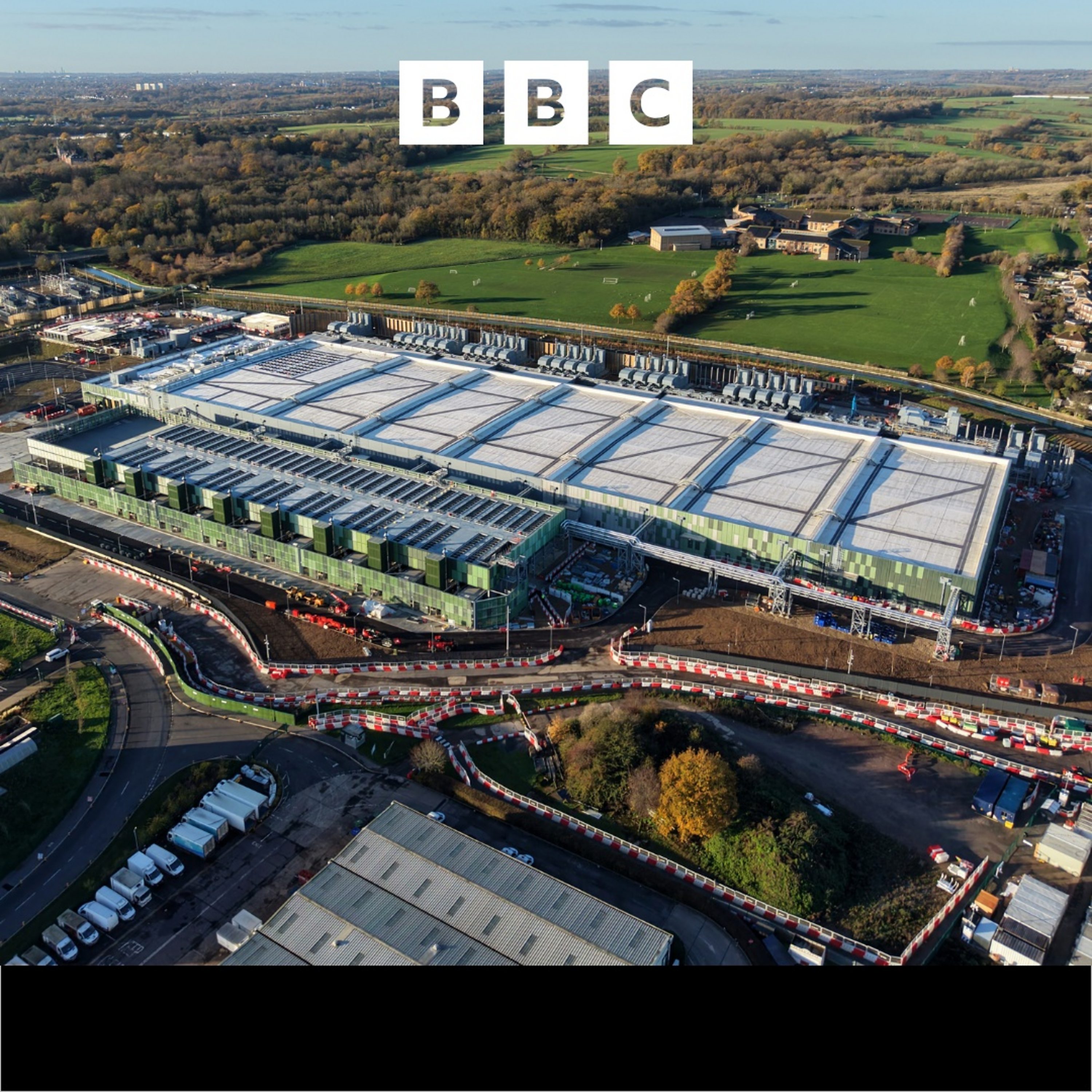
Business Daily
How do we live with data centres?
00:19:53
They're being built at breakneck speed to meet global demand for digital storage
Loading summary
Transcript72 lines
- [00:00]
Gideon Long
This BBC podcast is supported by ads outside the uk.
- [00:06]
Podcast Sponsor Announcer
Today's episode is sponsored by Smart Travel, a podcast from NerdWallet. Do you have a friend who treats airfare like a puzzle and somehow always ends up with a first class upgrade? Smart Travel is like that friend, minus the group texts. NerdWallet's travel journalists break down the pros and cons of travel decisions like when lounge access is worth paying for and and which hotel loyalty programs actually pay off. Make your travel dollars work harder. Follow Smart Travel on your favorite podcast app. Ever invest in something that seemed incredible at first but didn't live up to the hype? Like those five dollar roses at a gas station? Or a second hand piece of technology that breaks in the first ten minutes? Marketers know that feeling. We optimize for the numbers that look great, impressions reach and reacts. But when they don't show revenue, well, that's a not so great conversation with the CFO. LinkedIn has a word for that. Bullspend. Now you can invest in what looks good to your CFO. LinkedIn ads generates the highest ROAS of all major ad networks. You'll reach the right buyers because you can target by company, industry, job title and more. So cut the bull. Spend. Advertise on LinkedIn, the network that works for you. Spend $250 on your first campaign on LinkedIn ads and get a 250 credit for the next one. Just go to LinkedIn.com broadcast that's LinkedIn.com broadcast. Terms and conditions apply.
- [01:42]
Gideon Long
Hello and welcome to Business Daily from the BBC World Service. I'm Gideon Long. Data centers are increasingly becoming part of our daily lives and our landscape. Great big warehouses packed with computers that power pretty much every digital thing we do. From surfing the Internet, using AI chatbots or filing our tax returns. They've popped up around the world in recent years. And whether we like it or not, more are coming.
- [02:07]
Dan Diorio
We are going to over triple our demand for data centers. And so the industry is building out in the United States, but also globally to meet that demand. All indications are that we are still behind.
- [02:18]
Gideon Long
The trouble is, people don't necessarily want to live next to these places. They're big warehouses, often built close to the towns and cities they serve. And there's a perception at least, that they're pushing up electricity costs and consuming precious water.
- [02:30]
Alexandria Ocasio-Cortez
People's energy bills around the country are skyrocketing in order to pay for these AI data centers.
- [02:38]
Ros Naylor
For them, building it on agricultural land is not the answer.
- [02:43]
Gideon Long
You can't even data so as the artificial intelligence revolution rolls on, fueling the need for ever greater digital storage capacity. How do we learn to live with data centers? That's what we're asking here on BBC Business Daily. I'm on the edge of a field just north of London. It's a lovely spring day and the field is full of yellow flowers from the rapeseed crop that's planted here. And there are hedgerows and trees nearby. And I'm here because there's a plan to build a big data centre here, one of the biggest in Europe. And some of the local residents from the nearby commuter town of Potters Bar are not happy about it. And with two of them, Ros Naylor and Odette Garvey. Ros, what have you got against this plan?
- [03:32]
Ros Naylor
You're losing a large part of the countryside south of Poz Bar. You're using up a large amount of productive farmland that has produced agricultural crops for centuries.
- [03:46]
Gideon Long
And Adet, you live nearby. What does this land mean to you? And what will it mean to you if the data centre is built?
- [03:53]
Odette Garvey
It'll be devastating. There won't be a place to come to. It'll just be another urban sprawl with warehouses and concrete and our green space will be gone forever.
- [04:03]
Gideon Long
So just give me a sense of what people use, this landfall.
- [04:07]
Ros Naylor
They walk, run, cycle, horse ride, walk down to the river and also schools come out as well.
- [04:15]
Gideon Long
The company that's building this data centre says they will make sure that there are trees planted here. They actually say that they're going to increase the biodiversity by 10%. Are you not reassured by that promise?
- [04:27]
Ros Naylor
10% is nothing. You cannot improve on nature and what's already there. One oak tree of say 150 years old supports 2,300 species. Ancient hedgerows. These hedgerows have been here since the 1750s. You cannot replace that centuries old ecology with any bionet diversity claims.
- [04:52]
Gideon Long
We need data centers. They have to be built somewhere.
- [04:55]
Ros Naylor
Yes, but building it on agricultural land is not the answer. You can't eat data.
- [05:03]
Gideon Long
Odette. What about that argument though? That we do need data centres? I mean, I guess you use technology, you use mobile phones, you use computers, as we all do. And there is an argument that we have to build these data centers somewhere, so why not here?
- [05:16]
Odette Garvey
I'm not against data centers, it's just where we place them. I thought I was going to stay here to retire and I don't think think this is going to be the dream anymore. When this is.
- [05:26]
Ros Naylor
Well, even, even you were saying earlier, Odette that she doesn't want to walk here anymore because the prospect of it makes her feel so sad.
- [05:35]
Gideon Long
Another of the arguments the company makes, of course, is that this brings economic benefits to the area. Investment jobs, 200 jobs.
- [05:44]
Ros Naylor
In the end, that is peanuts. Okay, jobs during construction, maybe, but they won't be local to jobs. There'll be teams of people that they've already booked.
- [05:54]
Gideon Long
I guess some people might say, you know, it's a nice piece of outdoor space, but it's not exactly pristine countryside. You're quite close to the M25, you're close to the M1 motorway.
- [06:03]
Ros Naylor
Well, it may not be the Cotswolds, but to the people of Potters Bar, it is an incredibly special place. This is like a jewel in the crown for Potters Bar. It might not look very much to a lot of people, but to the people of Potters Bar, it is incredibly special. And to take it away, it's almost taking the soul out of Potters Bar.
- [06:26]
James Tyler
We have to do archaeological digs as part of the planning process.
- [06:31]
Gideon Long
Right on the other side of the site, just a few hundred meters away, I meet James Tyler, the managing director for the UK at Equinix, the company that will build and operate this data center. The site looks very different here. Not as pretty. The rape seed has been hacked down to stubble and you're much closer to the busy M25 motorway that surrounds London. So, James, just give me a sense of what this area will look like once the data center is constructed. At the moment, it's an arable field, or clearly was used for agriculture. There are electricity pylons here, there are trees. You can see the motorway from here. What will it look like? What? Once the project is complete, we'll build
- [07:14]
James Tyler
a number of data centers that will be very sympathetic to the local environment. We'll be planting thousands of trees. We'll keep at least 50% of the entire site as green. I mean, if you look here, we're standing in a field that was oilseed rape. What you'll see in a few years time is very rich diversity. So ponds, wildflower meadows, thousands more trees and the wildlife will actually become richer. And then we'll be building new pathways and making sure that the site really remains very accessible to the local community.
- [07:50]
Gideon Long
What will this data centre bring to the local economy and indeed to the UK economy?
- [07:55]
James Tyler
Well, as we build it, we're going to be creating two and a half thousand jobs through the construction period. Once we've got the data center up and running, have 200 permanent jobs in terms of the UK economy, already about 15% of the UK economy depends on data centres. And we anticipate that just by building this campus alone, it's going to generate hundreds of millions of pounds worth of economic benefit to the uk.
- [08:23]
Gideon Long
A lot of people say we need data centres, but why do they have to be built so close to London in the southeast of England, which is all very heavily populated and heavily built on?
- [08:33]
James Tyler
The business that Equinix is in is serving customers who need applications to be highly responsive. And milliseconds matter, whether that's financial transactions, healthcare support systems. We live in a very live and dynamic digital environment. The amount of time it will take information to travel from this data center into central London, for example, over the fiber networks, is less than a millisecond. And that really matters to our customers.
- [08:59]
Gideon Long
So building this data center, let's say, on a disused industrial site in the north of England, or, I don't know, in the north of Scotland or a remote part of England, that's just not
- [09:06]
James Tyler
going to work well for our customers. Latency matters and proximity to economic hubs matters.
- [09:13]
Gideon Long
And what do you say to those people who have listened to your arguments and still say we need all the green space we can get and this shouldn't be built here?
- [09:22]
James Tyler
I would say that the UK needs to continue to invest in very high quality data centre infrastructure that needs to be proximate to its largest economic hubs. So we do need to invest in data centres if we want the economy to grow and thrive because it underpins so much of our underlying economic growth.
- [09:42]
Gideon Long
The technology is moving incredibly quickly. All technology is moving incredibly quickly. Isn't there a danger that you build this data center and by the time you've built it, or maybe in five, 10 years, it's already obsolete and we've moved on to something else, some other way of storing data?
- [09:57]
James Tyler
Well, I've been in this industry over 25 years. The core need for secure, highly connected digital infrastructure is only going to grow.
- [10:07]
Gideon Long
We've talked about the importance of data centers. If this data centre were not constructed and other data centers centres around London were not constructed, what would that mean for the local economy, for the British economy and British digital infrastructure, we would
- [10:21]
James Tyler
start to fall behind. I mean, that sounds quite dramatic, but frankly, the modern economy requires high quality, reliable, connected data centers, such as the one we're going to build here.
- [10:33]
Gideon Long
We've got eight systems in this building. You've got your generator room, LV room and what the NV1 batteries are. So you got four systems. So once that data center is built, it will look something like this. I've come to another data center owned by Equinix west of London. And this is the second biggest hub for data centers anywhere in the world after North Virginia. It's pretty warm in here. It's like a big warehouse full of computer servers. And the sound you can hear is the sound of the fans that are inside those servers that are being used to cool them down and keep them as cool as possible. This is Business Daily from the BBC World Service.
- [11:20]
True Nature Meats Advertiser
Craving bold, authentic taste without kitchen chaos. True nature meets Hawaiian Kahlua. Pork delivers slow roasted tenderness with smoky tropical notes. Pre cooked perfection. 30 years supplying the finest restaurants. Chances are you've already had their pork heat in two minutes. Shred for plates or bowls, complaints turn to second helpings and laughter. Real meat, real flavor. Go to TrueNatureMeats.com code free meat for 20 off plus free New York strip Texas smoked brisket and Mediterranean chicken with code free meat@truenaturemeats.com yes you can.
- [11:53]
Alistair Spears
A five minute quick and easy calorie burning workout. Give it a try.
- [11:58]
Dan Diorio
Come join our sweat sesh on TikTok.
- [12:09]
Gideon Long
I'm Gideon Long. Cooling is a big issue at data centers. Think of the heat that your laptop or even your mobile phone generates when it's in constant use and then multiply that many times over. These facilities house powerful computers and they get hot. The one I visited is mostly air cooled, but some data centers are cooled using water, and in some countries, that's a problem. In Chile, back in March, thousands of people marched through the capital, Santiago, to mark World Water Day. Much of Chile is incredibly dry and even the area around Santiago is semi arid. Access to water is a constant worry. And yet the country has tried to turn itself into something of a data center hub. Dozens of facilities have sprouted up, including at least eight in Kilikura, an urban industrial zone just north of the capital. Google owns one of the sites. Rodrigo Vallejos is an environmentalist who lives in Kilicura, and he says Google's data center is sucking precious water out of the ground, leaving nearby wetlands parched.
- [13:22]
Rodrigo Vallejos
Ten years ago, the wetlands had water, but nowadays parts of them are completely dry. The problem is that Google has been granted the right to extract up to 50 litres of water per second from underground from the same sources that feed the wetlands. That's 1.5 billion liters of water a year. They use the water to cool the data centers and it isn't recycled from the cooling towers. You can see the water evaporating into the atmosphere.
- [13:52]
Gideon Long
In response, Google says its data center in KiliKura consumes around 460 million liters of water a year than one average sized golf course. It also says it's offsetting its water use by helping to build state of the art irrigation systems on nearby farmland. If water is a worry in Chile, in the United States, the concern is often that data centers put strain on the energy grid. They consume huge amounts of electricity. There are also worries about the sheer number of them. 40% of the world's data center capacity is in the US and the likes of Google, Amazon and Meta have plans to build many more. The Data Center Coalition is the industry association in the U.S. dan Diorio is its vice president of State policy.
- [14:37]
Dan Diorio
We've seen the increase in data center construction really for the last 10 years, if not 15. And demand is really the way to measure the level of data center construction. Right now. Demand in the US will reach 80 gigawatts by 2030, and that's up from 25 gigawatts in 2024. So we are going to over triple our demand for data centers. And so the industry is building out in the United States, but also globally to that demand. All indications are that we are still behind.
- [15:05]
Gideon Long
And Dan, are all local authorities in the US Enthusiastic about having data centers built in their areas? Or have some decided they just don't want them?
- [15:14]
Dan Diorio
Well, that's certainly true. Some have decided that data centers don't fit their economic development goals. But for all of those communities that may have said, you know, we don't want a data center, we have many more communities in which data centers will significantly fit their economic development needs. We certainly see concerns raised, but a lot of it is based on what I would consider or classify as significant misperceptions about the industry. We see concerns that if a data center is being built and then your utility bill goes up, that they are one and the same. The real data shows that utility regulation and utility rates, electricity rates, are far more complicated than that. We see concerns that data centers are excessive water users, when in reality they're amongst the most efficient water users in the economy.
- [15:58]
Gideon Long
But there have been some calls, haven't there, for a nationwide moratorium on the construction of data centers in the United States, at least for now. Those calls have been led by the Democrats, Senator Bernie Sanders and Congresswoman Alexandria Ocasio Cortez. Let's have a listen to what Ocasio Cortez said recently.
- [16:19]
Alexandria Ocasio-Cortez
These companies are now so desperate to profit off of the AI boom that they are racing to construct thousands of giant AI data centers and jacking up the utility costs of everyday Americans to pay for it. These data centers power thousands of high intensity computer chips that are processing at all times and require massive amounts of energy to operate. Just one hyperscale data center consumes the same amount of energy in one second as 100,000 households. Because of the massive amounts of energy they use, power and water, utility companies must build multi billion dollar infrastructure to keep up with the demand. And these companies are not paying for their own energy infrastructure. People's energy bills around the country are skyrocketing in order to pay for these AI data centers for them. And across the country, Democrats, Republicans and Independents are standing up to Big Tech and saying no to these data centers being built in their own communities. More than 100 local communities across 12 states have already enacted local moratoriums on data centers. And Congress itself has a moral obligation to stand with them and stop Big Tech from ruining their communities.
- [17:38]
Gideon Long
Alexandria Ocasio Cortez There Dan Ruining communities
- [17:43]
Dan Diorio
well, I think it's very disappointing to see a member of Congress espouse basically untrue statements and significant misperceptions about the industry. We need to have fact driven conversations. If I could address the Congresswoman's desire to have a national moratorium. Data centers are the leading source of construction activity. We are employing millions of construction workers throughout the country to build these facilities. We are providing years of reliable work for the skilled trades. We are using energy and water efficiently. And I think a national moratorium would be utterly devastating for the economy.
- [18:18]
Gideon Long
So if we're struggling to live with data centers, what can we do about it? How do we make them more palatable to local communities?
- [18:25]
Alistair Spears
My name is Alistair Spears. I'm the general manager for Azure Global Infrastructure. Azure is Microsoft's cloud platform that powers banks, financial services, healthcare operations and a lot of other cloud services.
- [18:37]
Gideon Long
At Microsoft, Alistair spends much of his time thinking about how we can make data centers more efficient, make them consume less energy and less water. A few years back, for example, Microsoft came up with a novel way of of keeping data centers cool.
- [18:50]
Alistair Spears
We decided to essentially build an underwater data center and drop it off the off the coast of Scotland in the North Sea. Underwater temperature is much more regulated. You can cool the facility much easier as well. We found that the reliability of our underwater data center was higher than our land based data centers as well. But in the end, it is still more economical to build on land than it is to build underwater.
- [19:16]
Gideon Long
So you feel as though there isn't much of a future in underwater data centers.
- [19:21]
Alistair Spears
It's a great technology. It's a good option for us in our kit bag of options. But it does come with its own challenges as well, like maintenance is required. It's more challenging to do maintenance in scuba gear than it is to just walk down a data center hallway from sea to space.
- [19:39]
Gideon Long
Elon Musk and others have proposed building data centers in space. How feasible is that?
- [19:44]
Alistair Spears
You could think that in space, with solar power being more abundant and with space being cold, you could essentially run data centers. You know, the overall life cycle cost of launching data centers into space. There have to be some fairly major breakthroughs in access to space before it becomes truly economical.
- [20:07]
Gideon Long
So interesting concepts are there other, perhaps less eye catching, but perhaps more workable innovations in the pipeline that might solve some of these problems that we face with data centers.
- [20:18]
Alistair Spears
One of the ways that you can keep a component cool is to essentially bring the cooling closer to the areas that generate heats. And that's the idea of a technology called microfluidics. If you think about a cooling chip today, primarily it's done air cooling. And more modern chips that we see in gaming PCs or in AI data centers essentially use liquid cooling, and so they'll use liquid to move around that heat off to a radiator or something very similar to a car. Microfluidics is the idea of bringing that liquid cooling pipeline into the chip itself. More and more chips are being made in three dimensions. They're essentially wafers on wafers on wafers. Using microfluidics, you can essentially cut channels into the chip itself and get a much more efficient cooling of that chip.
- [21:06]
Gideon Long
And so when you look to the future, Alistair, can you envisage data centers that use far less electricity, far less water as well, and that therefore are more acceptable to the general public?
- [21:18]
Alistair Spears
This is the irony today about digital society, that almost everything we do, whether it's from banking to healthcare to communicating, uses the cloud. And the cloud is using these data centers to essentially operate and run. But it's really important then, as we build these data centers, that we maintain that social license to operate. And part of that is making sure we're not using more power or more water or more land than the local community can provide. And the one thing with technology is that it gets better and better, smaller and smaller and more and more efficient over time. And that's the same curve we're seeing now with data centers.
- [21:59]
Gideon Long
Alistair Spears there offering perhaps a glimmer of hope that the data centers of tomorrow might be more palatable to the public than those of today. In the meantime, the debate about how we live with these giant warehouses, monuments to our digital age, is likely to continue. That's it for this edition of Business Daily. I'm Gideon Long. Thanks for listening.
- [22:29]
Liberty Mutual Advertiser
And, Doug, there's nowhere I wouldn't go to help someone customize and save on car insurance with Liberty Mutual. Even if it means sitting front row at a comedy show.
- [22:39]
Gideon Long
Hey, everyone. Check out this guy and his bird. What is this, your first date?
- [22:42]
Liberty Mutual Advertiser
Oh, no. We help people customize and save on car insurance with Liberty Mutual together. We're married. Me to a human, him to a bird.
- [22:49]
Gideon Long
Yeah, the bird looks out of your league.
- [22:50]
Liberty Mutual Advertiser
Anyways, get a quote@libertymutual.com or with your local agent.
- [22:54]
Gideon Long
Liberty. Liberty. Liberty. Liberty.