← Business Daily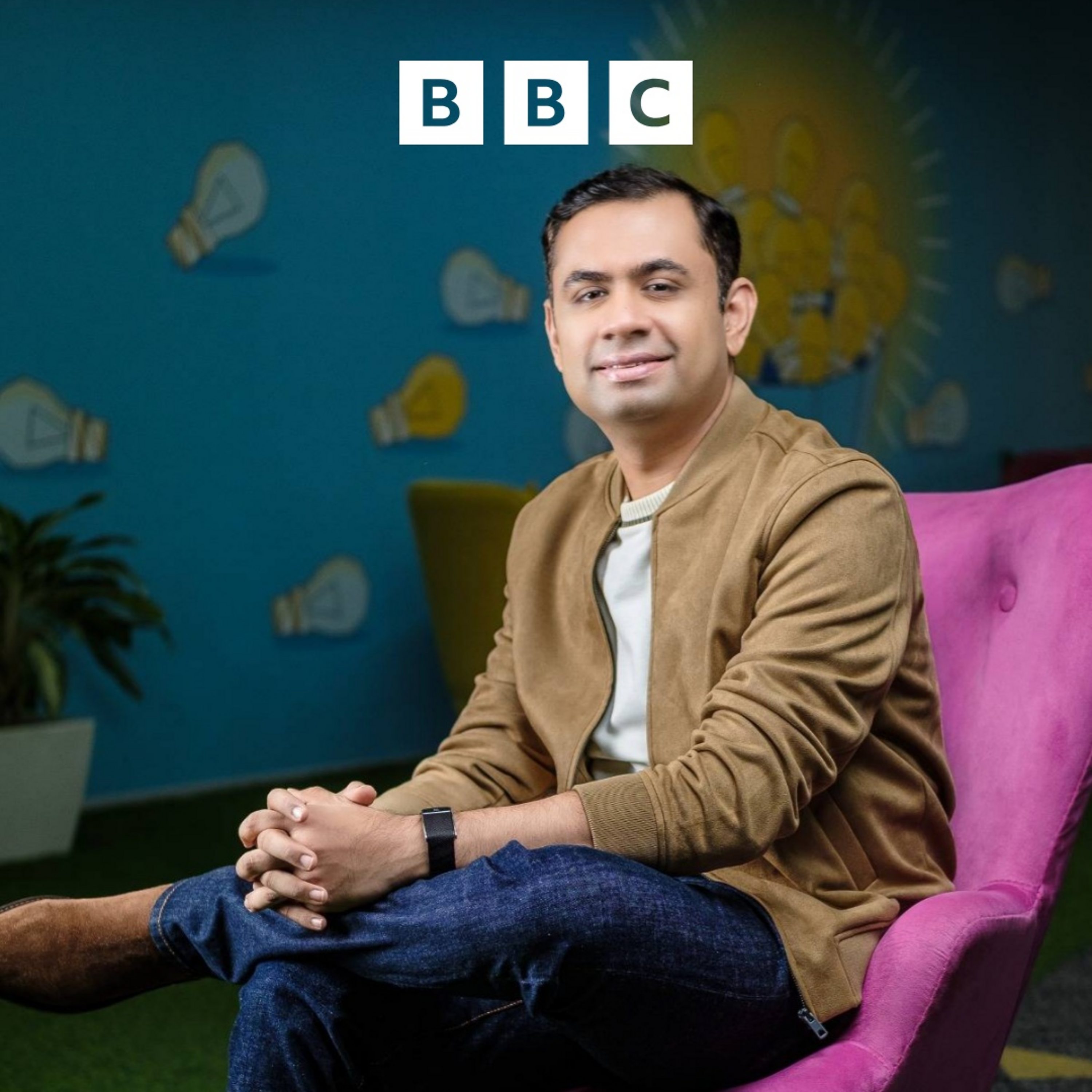
Business Daily
How karate helped a shy kid transform how India pays
00:17:28
Harshil Mathur on building Razorpay into one of India’s biggest payments companies
Loading summary
Transcript72 lines
- [00:00]
Harshil Mathur
This BBC podcast is supported by ads
- [00:03]
Rahul Tandon
outside the UK
- [00:07]
Aramco Sponsor
Seeking, pushing, optimizing, creating, learning, discovering. At Aramco, we believe in harnessing the power of data to push the limits of what's possible. That's how we deliver reliable energy to millions across the world. Aramco, an integrated energy and chemicals company. Learn more about us at Aramco.
- [00:36]
NerdWallet Sponsor
Today's episode is sponsored by Smart Travel, a podcast from NerdWallet. Do you have a friend who treats airfare like a puzzle and somehow always ends up with a first class upgrade? Smart Travel is like that friend, minus the group texts. NerdWallet's travel journalists break down the pros and cons of travel decisions, like when lounge access is worth paying for and which hotel loyalty programs actually pay off. Make your travel dollars work harder. Follow Smart Travel on your favorite podcast app.
- [01:09]
Rahul Tandon (Narrator)
From a shy kid doing karate to building one of India's biggest fintech companies,
- [01:14]
Harshil Mathur
I would have met at least 100 ish bankers trying to get a bank to approve us. The reason I was getting rejected is because we came from no finance background.
- [01:21]
Rahul Tandon (Narrator)
That's Harshil Mathur, founder of Razorpay, here on Business Daily from the BBC World Service Foreign. I'm Rahul Tandon and I'm excited to bring you this next interview because Harshal Mato's story is one that genuinely fascinates me. Here's a man who grew up as a shy middle class kid in Jaipur doing karate to build confidence, who got laughed out of bank boardrooms and still managed to build one of India's top fintech companies valued at $7.5 billion. His journey runs parallel with India's own transformation from a cash only economy to one that now processes more digital payments than anywhere else on the planet. Anyway, let's get into it. Hey, how are you doing?
- [02:15]
Harshil Mathur
Hey. Hi.
- [02:16]
Rahul Tandon
Where are you? Which city are you in?
- [02:17]
Harshil Mathur
Today we are in Bangalore.
- [02:19]
Rahul Tandon
Ah, Bangalore.
- [02:20]
Harshil Mathur
Traffic city.
- [02:21]
Rahul Tandon
I like that.
- [02:22]
Harshil Mathur
Yeah, traffic is very popular.
- [02:24]
Rahul Tandon
There must be moments even in your busy day where you stop and sort of pinch yourself and go, wow.
- [02:31]
Harshil Mathur
Really? I think it happens once in a while. I mean, of course there are moments we celebrate when the teams achieve something. When you close a large merchant that you always wanted. I think when some of those things happen, it just feels wow. Like for example, I can tell you that recently I was booking travel to somewhere in Vietnam, I was making a payment and went to Airbnb and the entire checkout was through Razorpay. And it felt wow. Because Airbnb is such a massive global brand name for Razorpay to achieve that scale where today we are powering almost all payments for Airbnb from India. I think that impact feels amazing. But honestly, I mean, where we are today, of course, couldn't have imagined at all.
- [03:13]
Rahul Tandon
So how do you get to that point? Is the question I'm sure many people sitting at home one answered. And so if we go back to your childhood and just to tell people you grew up in Jaipur in Rajasthan, it's not one of the huge Indian cities. It's not a Mumbai or a Bengaluru where you are now.
- [03:33]
Harshil Mathur
Yeah, no, it is a smaller town. So I grew up in an average middle class family. My dad used to work in a bank, my mom was stay at home, worked as a beautician. So I had a very fairly normal childhood. I mean, I was always a slightly shy child. I mean, I was naughty.
- [03:50]
Rahul Tandon
But what did you used to do that was naughty?
- [03:55]
Harshil Mathur
I used to have fun with friends. I would like hang out a lot after school and chill with poor people. So I, I had my fair share of fun, but in the classes and everything else, I was fairly shy. So I meet, like sometimes I meet my class teachers when I go back to school and they say, like, we can't imagine you doing like an interview like this. Are you speaking publicly on stage? And all of those things. So I would never, like, I would never do any class participation. I would never speak up or do stage shows or all of those things that people participated in, debates, any kind of stage activity. I was very scared of stage.
- [04:31]
Rahul Tandon
Where did some of the confidence come from that you have now that we can hear you in your voice and the fact that you've been so successful, you have to believe in yourself to be able to achieve that. You did karate as a kid. Was that an important part of growing up for you? Did that give you some confidence?
- [04:49]
Harshil Mathur
It did help. So karate, I'll say more than confidence. It gave me discipline. So I got into karate from very early days, then old time, became a black belt and then I actually fought in nationals in India and got a silver medal. But I think the reason that karate helped me, my dad really wanted me to do karate. He used to do it himself, was that it really builds discipline. What you really learn in karate is that how do you stay calm once you get punched in the face? Literally. Right. And I think some way that is helpful when you're building a startup, right? Because like building a company is like getting punched in the face. Maybe not literally, but metaphorically almost every day. Yeah. My mom never wanted me to do karate once I got in a championship and I came back with a bloody nose and all that and my mom wanted me to stop it completely. Similarly, there used to be this karate demonstrations once a year and when one of those demonstrations a bike was going to be run across my stomach and my mom like didn't want me to send me to school that day. So yeah, I mean mothers are mothers
- [05:48]
Rahul Tandon
as you know, growing up. And again, you know, we come from similar backgrounds. So I presume you had the same career options that I did, which I ignored. Engineer or doctor?
- [06:01]
Harshil Mathur
Yeah, very clearly I think it was me. It was very clear engineering. I was never very interested in biology and I was always very deeply interested in computers and mathematics. Yeah, I started preparing for competitive exams since 9th standard, got into IIT, if
- [06:15]
Rahul Tandon
you know India, you know IIT, I mean these are the best places to go and study just about it. And so for you to get into iit, Rocky is. It's not easy, is it?
- [06:26]
Harshil Mathur
Yeah, it's one of the toughest entrance exams in the world. For example, I stopped doing karate in my 11th standard because 11 12, two years I couldn't do anything except prepare for IITs. So my entire schedule was just IIT preparation, morning, evening, night. Because I wanted to get into computer science but I didn't get enough of a rank so I got into mechanical as a branch. And I think against it is just that my personal passion was computers. So as to. I wanted to find a way to hone my computer skills even though I was not in computer science branch. So I started scouting for people I could work with, people who we could build software together. So I found five, seven people together who all wanted to build software, wanted to write code together, but didn't either were not in computer science or weren't really getting as much as they wanted to.
- [07:13]
Rahul Tandon
Was this for fun or was this for commercial purposes?
- [07:17]
Harshil Mathur
Just fun. We wanted to, we loved coding so we wanted to get together with people so we could learn how to get better at coding. So we all got together and created a college group called SDS Labs. This is 2010, 2011, so you couldn't really watch online streaming. So the only way to watch a cricket match was to go down to one TV room in every hostel where thousands of students will sit together and watch a cricket match. And cricket is extremely popular in India, as you know. So I wanted to build a way for people to be able to watch cricket from their rooms. So I built a streaming system which connected to the disc TV and streamed the Cricket matches on the hostel intranet. And that got extremely popular. Thousands of students started using it as, because the World cup came up. And as cricket is extremely popular in India, everyone wanted to watch that. And that was my most popular application at that time. Almost every student, not just student, even professors, and everyone started using it.
- [08:17]
Rahul Tandon
And what did you learn from that? Do you think that has helped you in your business?
- [08:22]
Harshil Mathur
It did give me a confidence that, hey, I can build software that people use. So when I graduated from college, I got placed in Shambhajan Oil company in Middle East. But I loved the experience of building something of people using it, of having an impact where people come and say, hey, you built something cool that I use. So I, I just genuinely enjoyed that experience so much that I was missing it.
- [08:42]
Rahul Tandon
But you come from this middle class, lower middle class family in Jaipur in Rajasthan and you go and work for, you know, a pretty big oil company in the Middle East. So the salary is good. A lot of people would say, look, you're set for life now.
- [08:56]
Harshil Mathur
Yeah. And see, this is one of the most popular companies when it comes to placements in IITs, right? So because it pays really high. So when I got placed into it, there was a lot of celebration at home, there was a lot of celebration with friends that, hey, you got placed in one of the most high paying companies in college. And somewhere, of course I wanted to make a job work. I was just somewhere missing that satisfaction, that satisfaction of building something of your own, of satisfaction of somebody saying that, hey, I built something that you build. And that satisfaction of being able to interact with people, improve things and then get that impact. And that, that inkling kept growing and growing.
- [09:32]
Rahul Tandon
Was there a day where youth went, I'm not going to do this anymore and I want to go and set up my own business. What was that moment that started the next part of your journey?
- [09:42]
Harshil Mathur
So we wanted to build like a side project. The good thing software is like, there's not a lot of cost to start. So we built a crowdfunding platform, a social crowdfunding platform as a side project, not as a startup. And for that we wanted to accept payments. So we ran into the problem that it was how painful it was to accept digital payments in India. And we struggled with it. We massively struggled with it.
- [10:02]
Rahul Tandon
Because I remember those days when I would go to visit, you know, my grandparents and go and visit family in India. It was cash. Everything was cash, wasn't it?
- [10:10]
Harshil Mathur
Yeah. And we started asking other people that, hey, we are struggling with digital payments. How does everyone Else solve it. And people told us that hey, just start by accepting cash because cash is easier than digital payments. And that just felt absurd to us. The point of technology in general has been democratization. Internet allows everyone access. Social media gives everyone a voice. E commerce gives everyone an ability to sell stuff online. And that was the thought at that point of time that hey, if we don't have a way to do digital payments, how would somebody build any kind of commerce on Internet? Because commerce on Internet runs on payments. So with that thought we started spending more and more time researching into it and at some point we just felt that this looks right. And then we left our jobs to build it full time.
- [10:55]
Rahul Tandon
Yeah, that must have been scary.
- [10:57]
Harshil Mathur
I think we could convince ourselves very easily. But convincing our parents was the harder part. Like I remember like calling my dad and saying that hey dad, I want to leave this well paying job. That we all celebrated that our entire neighborhood and everyone celebrated that. I got into and six months into this job, I want to leave it. I want to do something of my own where I don't know when I'll get paid again. It was not an easy conversation.
- [11:20]
Rahul Tandon
He was more annoyed dad or mom?
- [11:22]
Harshil Mathur
Mom was okay. Actually mom was like do whatever makes you happy, like a typical Indian mom. But dad does. Dad had a lot of questions that are you sure? Like are you sure you want to do this kind of job? Might not come again. He was worried about the ability to like settle down, ability to get married. All of those questions came in.
- [11:41]
Rahul Tandon (Narrator)
You're listening to Business Daily from the BBC World Service.
- [11:48]
Aramco Sponsor
Seeking, pushing, optimizing, creating, learning, discovering. At Aramco, we believe in harnessing the power of data to push the limits of what's possible. That's how we deliver reliable energy to millions across the world. Aramco, an integrated energy and chemicals company. Learn more about us@aramco.com
- [12:18]
Capital One Sponsor
this message comes from Capital One Commercial Bank. Your business requires commercial banking solutions that prioritize your long term success with Capital One. Get a full suite of financial products and services tailored to meet your needs today and goals for tomorrow. Learn more@capitalone.com Commercial Member FDIC
- [12:44]
Rahul Tandon (Narrator)
I'm Rahul and today I'm sharing the story of Harshil Mathur, co founder and CEO of Razorpay, one of India's biggest fintech companies.
- [12:56]
Rahul Tandon
So there you are. You've got your idea which is digital payments. You have left your job. But here comes the hard bit. Now you have to get some money. I know you said software doesn't need a lot of money, but you need some money.
- [13:09]
Harshil Mathur
So money part was actually not that worrying because it was still starting up like we could manage our money. We had to get a bank to approve that, hey, you can accept payments on behalf of us. And that was the hardest, hardest part of our startup journey. So I remember like walking into a bank branch next to my home in Jaipur and saying, hey, I want to start a payment gateway. And the guy said, do you want a payment gateway? I said, no, I want to start my own. So it like we of course got rejected there, then we went to the next bank, then we got rejected. I went to a senior of that person who was in Delhi and got rejected there, then went to senior that person in Mumbai. So I would have met at least 100 ish bankers. And the reason I was getting rejected is because we came from no finance background. When I went to the bankers and say, hey, I want to do in payments, they said, this is a finance problem. You have no finance experience. You don't know what you're getting into. You are just this young techie who feels you can solve anything. We got laughed out a lot of those rooms, right? So I am what, 22, 23 year old. During this time we applied for Y Combinator, which is the best exor in the world. And and we were the like the second Indian company ever to get selected into it.
- [14:18]
Rahul Tandon
Oh wow.
- [14:18]
Harshil Mathur
So we went to IC in US in sf and at that point of time, Sam Altman was the head of ic.
- [14:25]
Rahul Tandon
I was going to ask you about that, what was that like?
- [14:27]
Harshil Mathur
Then we met Sam for one of those advice sessions. We had told him that, hey, we have this, we have a problem that every bank is rejecting us. And he said, why are these banks rejecting you? Said, we don't look like them, we look really young. And the way we dress up, the way we look and all of that, they don't take us seriously. So he said, if that's the problem, why don't you fix that? And he said, what do you mean? He said, like, if looking young is a problem, start looking bold. Like, dress up for the part. So that time I bought my first suit, I started keeping a slight beard and then dressing up the way bankers dress up so that they feel that, hey, we understand what they do and we are in some way similar and not that different from what they do. And it did help. Like, first impressions do matter to people.
- [15:10]
Rahul Tandon
Thanks to Sam Altman's advice. You smarten up, you've grown a little beard and you get the banks on Board. And do you remember when you got that first customer for your payment system and how that felt?
- [15:22]
Harshil Mathur
Yeah, I mean, see, the first few customers came from people who were very young startups like us. I remember going to a lot of these education institutes and colleges and trying to sell payments and it was extremely hard because we didn't know how corporate sales work, we didn't know how enterprise sales work. So we pushed really hard. In six months we made zero sales.
- [15:43]
Rahul Tandon
When you don't get any sales for six months, that's disheartening, isn't it? Did you question your business model then?
- [15:51]
Harshil Mathur
We definitely did. And what we agreed was that Education Institute is not a good market. Like we can't sell to that segment. Let's focus our energy into what works and what world was selling to startups.
- [16:01]
Rahul Tandon
And let's paint a picture of India at this time because I remember this period quite vividly. It's the start of the startup movement. It's when Bangalore becomes one of the big startup capitals of the world. There's so much energy around and it's all to do with technology, isn't it?
- [16:16]
Harshil Mathur
Yes. We moved to Bangalore at this time. As you know, India was a cash heavy economy and cash had its a lot of problems. Leakage to black money, to corruption, to multitudes of things and the entire ecostrum essentially worked together to solve that problem. I remember upi, the Unified Payment Interface was launched in the country in 2016. We were the first payment gateway to launch support for upi.
- [16:37]
Rahul Tandon
How were you?
- [16:38]
Harshil Mathur
And then suddenly started getting really popular because it was like Indians had never used cards. So when something like UPI came on their phone and smartphones were really popular in India, people started using it to send money very like, very naturally. And it became such a massive wave that suddenly in six months, every single large company in the country wanted to accept upi. And because we were the only payment that is supporting UPI at that point of time, we became the default partner and then demonetization happened and suddenly everyone migrated to UPI overnight and massive volume started flowing through.
- [17:09]
Rahul Tandon
Just to remind, that was the moment when Prime Minister Modi decided to withdraw some of the larger banknotes in the country, basically which meant that a lot of people couldn't use cash for quite a period of time. So here you are, you've created this incredibly successful company that is at the heart of the Indian business community. What is it that keeps you going?
- [17:29]
Harshil Mathur
One rule of thumb I've had since the day we started Razorpay is to speak to Customers and I, even at this scale, I speak to at least one customer a week. So in spite of all the discussions and strategies and plans and business plans that we have, that conversation is my testing ground. Hey, this is what we are building. This is what we are thinking. And just testing with that customer that, hey, is this alignment to what you expect us to solve or is there something else you'd expect us to solve? It gives me that energy that, hey, we are solving some real problems. So one of my best questions to ask these customers is that if Razorpay wasn't there tomorrow, what would you miss the most? And just understanding what do they really care about?
- [18:05]
Rahul Tandon
What ambitions do you have left?
- [18:07]
Harshil Mathur
I think the next milestone for me is how can I make Razorpay into an institution? An institution is like a company that can outlast any people, structure, process. It can outlast everyone. And I think we are still far away from becoming an institution.
- [18:21]
Rahul Tandon
Let's go back to the start of the conversation. That shy kid in Rajasthan, your dad wants you to do karate. Your mom says no. If you went back to that kid again, what advice would you give them about setting up a business? What have you learned on the way?
- [18:37]
Harshil Mathur
I think a lot of young people like me, especially when you come from no business background, you're starting a company for the first time, there is a massive imposter syndrome. But the advice I would give is that, like, believe in yourself. And I think just if you have that belief and that passion to change something, a lot of these things are fairly possible.
- [18:57]
Rahul Tandon
We talked about your family at the beginning. They were keen that you kept the job, didn't set up your business. They must have changed their mind now.
- [19:05]
Harshil Mathur
Oh, yeah, yeah, of course. My dad is extremely proud.
- [19:08]
Rahul Tandon
Harshal, been a real pleasure. Thank you so much for talking to us.
- [19:11]
Harshil Mathur
Thank you. Very nice talking to you.
- [19:13]
Rahul Tandon (Narrator)
That was Harshil Matto.
- [19:15]
Harshil Mathur
Thank you.
- [19:15]
Rahul Tandon (Narrator)
Thanks to producers Amber Mahmoud and Niamh McDermott. You can hear other founders by Business Daily podcasts, including my interview with Vivian Wong, the creator of the Japanese inspired global dessert brand Little Moons.
- [19:36]
Aramco Sponsor
What if a marginal gain unlocked greater performance? What if an insight in data could change everything? At Aramco, our focus on detail helps us deliver reliable energy to millions across the world. Because margins aren't marginal. They're where we can truly push the limits of what's possible. Aramco, an integrated energy and chemicals company. Learn more@aramco.com.