← Business Daily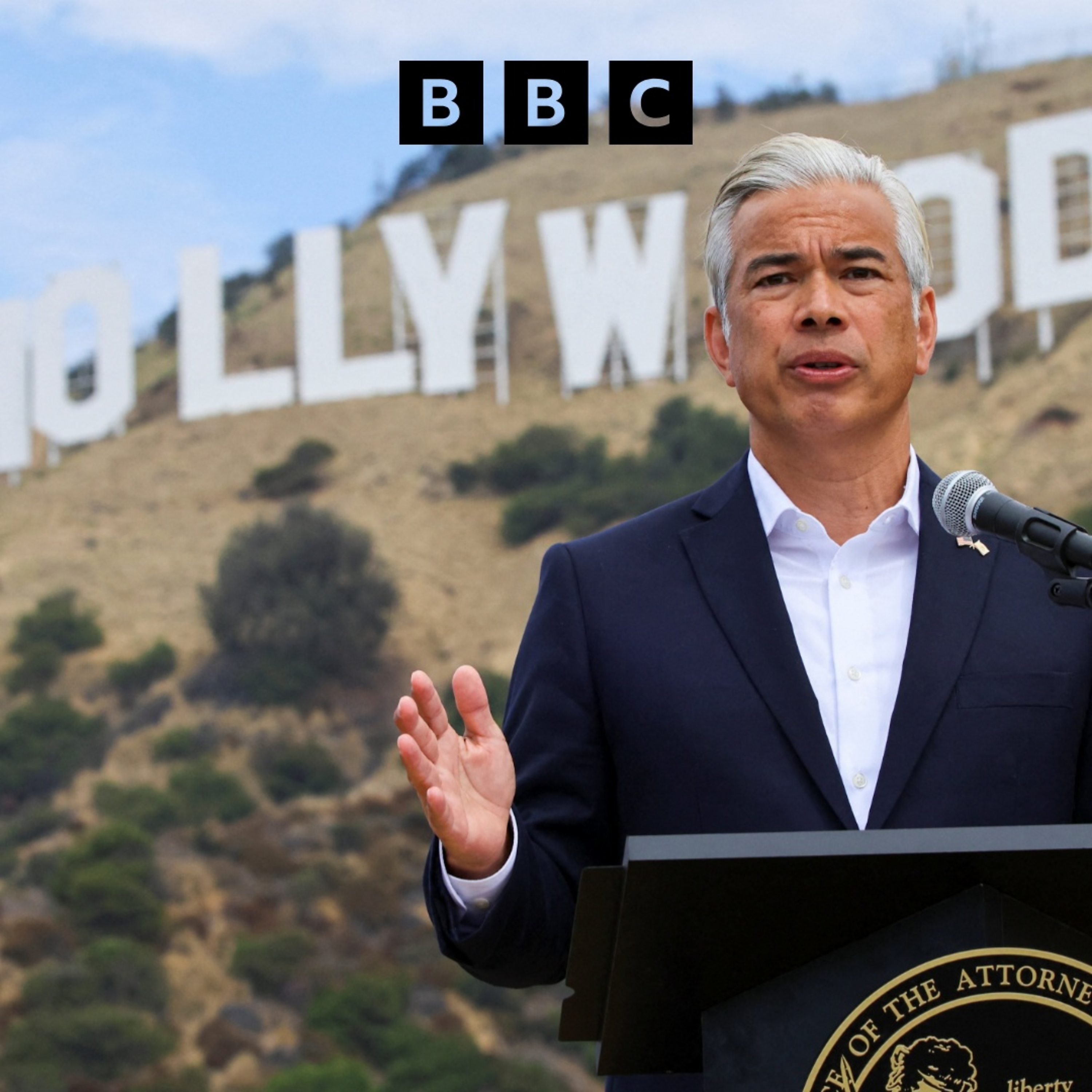
Business Daily
Power Players: Can the Paramount–Warner merger survive?
00:26:50
Why 12 US states are among those trying to block the two studios from merging
Loading summary
Transcript100 lines
- [00:00]
Will Bain
This BBC podcast is supported by ads outside the uk.
- [00:06]
Whole Foods Market Announcer
This is summer at its peak. Whole Foods Market Summer Fruit Fest is your invitation to eat the season fresh, organic, and bursting with flavor. Start your day with peaches and organic blueberries and yogurt. Build a grazing board with fresh fruit, prosciutto and artisanal cheese. Then fire up the grill with no antibiotics ever. Proteins and fresh produce. Savor the season. Shop Summer Fruit Fest at Whole Foods Market.
- [00:31]
Michelle Fleury
I cashed out my entire 401k thinking
- [00:34]
Will Bain
someone stole my identity.
- [00:36]
Eva Longoria
A fake email cost me my dream home.
- [00:38]
Dawn Chmielewski
After I sent my personal information to
- [00:39]
Rob Bonta
a scammer, my AI agent wired thousands
- [00:42]
Michelle Fleury
to an account I'd never seen.
- [00:44]
Gen Digital Announcer
When billions of people feel unsafe, that's no longer a security problem. It's an economic one. At Gen, we're building the trust layer for a more fearless planet with products and technologies from our global brands, New Norton, Lifelock, Avast and Money Lion. See it in action@gendigital.com
- [01:04]
Will Bain
so the company that brought us this. Did you ever make anything happen? Anything you couldn't explain? You're a wizard, Harry. And the company that gave us this.
- [01:18]
Dawn Chmielewski
Good morning, aviators. This is your captain speaking.
- [01:23]
Will Bain
Are trying to become one. Paramount and Warner Brothers, two of Hollywood's most powerful players, are pushing for a $110 billion merger that would see them become one. Super studio executives say it's the only way to survive the streaming wars. But now 12 attorneys general, regulators around the world, and a whole host of creators are saying no deal. So today we're asking, how does Paramount and its ambitious chief executive, David Ellison, make their dream deal a reality? And what does the holdup, the row and any future resolution mean for all of us when. When it comes to what's on our screens, big, small and handheld? Yes. That's today's episode of Power Players. From Business Daily, I'm Will Bain here
- [02:10]
Michelle Fleury
in the UK I'm Michelle Fleury here in New York.
- [02:12]
Will Bain
And with Rahul Tandon still endangering sunbathing snakes on the golf courses of Greater Calcutta, we've drafted in this week. Michelle, after you dissed our accountancy chops last week on the podcast, we've drafted in some Hollywood glamour. This week, some expertise daunt, some malewski, entertainment business correspondent for Reuters, joining us from, for now at least, dawn, the cinema capital of the world in la. Thanks for being with us.
- [02:38]
Dawn Chmielewski
Thank you.
- [02:39]
Will Bain
I was trying to think of a more original film, perhaps comp for what's going on in terms of your working life at the Moment. But are you Bill Murray in Grand Groundhog Day here at the moment covering this?
- [02:51]
Dawn Chmielewski
It does that. That is an apt. That is an apt description. It seems as though Paramount has been at the center of every media deal over the last two years. So here we are again.
- [03:02]
Will Bain
This has been going on since September. This particular Will they, Won't they, with Warner Brothers as well. What's the mood in Hollywood that this is kind of turning into Groundhog Day?
- [03:11]
Dawn Chmielewski
You know, there was. There was a feeling perhaps even a week ago that this deal was inevitable. Paramount had gained approvals around the world. The U.S. justice Department gave it a thumbs up and it seemed as though it was cruising toward a deal closed by the end of the potentially even July. Right. But California and other states attorneys general had other plans, as you described at the time.
- [03:34]
Will Bain
Yeah, Michelle. To stretch our film kind of analogies to absolute breaking point. That sort of piece in Lord of the Rings, Thou Shalt Not Pass. That's basically been this week from these 12 top legal officers across the stage. Why don't you round us up on what happened, what their decision was.
- [03:51]
Michelle Fleury
Yeah, from Blockbuster to Will this be a flop? I think that's the key question. And you've got these 12 states attorneys general coming in here and I was going through the legal document, picking out some of the lines that they've kind of put in their lawsuit. And they're saying this merger combines two of the nation's five major film distributors and it will give them 85% control. They say that for every dollar generated by wide release theatrical films and basic cable channels in this country, the combined company will pocket more than a quarter. So, you know, it's about competition. They're saying this will have a huge impact on it.
- [04:30]
Will Bain
Well, shall we hear from one of them? Because Rob Bonter, who's been leading this sort of coalition, if you like, of attorneys general across the United States. He's the attorney general for California and he spoke to Gideon Long and the team on World Business Report a little earlier this week.
- [04:43]
Rob Bonta
Well, you have two major, highly diversified companies trying to engage in a $110 billion merger that would be the largest deal of its kind in the history of Hollywood. And they have been long time competitors and now all of a sudden will be merged into one company that will give them negotiating power in specific markets that will extinguish competition and give. Allow them to dictate terms with movie theaters when it comes to 2 of the markets, distribution of wide release theatrical films and distribution of top grossing theatrical films. And it will also give them incredible negotiating power when it comes to licensing of basic cable channels to cable companies. They will have 50 of the most soft after cable channels in the nation, and they will be able to raise prices, set dictate terms with cable companies. That means higher prices for people who have satellite or cable tv, higher prices at movie theaters. So it is exactly the type of thing that we have seen historically and that you'd expect to see when competition goes away.
- [05:47]
Will Bain
Loads in there, guys. Dawn, how much of a shock was this?
- [05:50]
Dawn Chmielewski
It was not a shock. Banta has been signaling that this deal ran afoul of antitrust. He has been hinting that he had been weighing it. We'd had conversations with a number of individuals and groups in Hollywood who were briefing Banta on kind of the mechanics of the industry. So it was not a surprise that Bonta and the other major states here in the US Would challenge this deal.
- [06:17]
Michelle Fleury
Yeah, I mean, you had Letitia James, also in New York as one of the states, one of the attorneys generals sort of joining in this case. But, Dawn, I was curious to get your take about the Writers Guild. Are you surprised they joined in or are you surprised they didn't go earlier?
- [06:29]
Dawn Chmielewski
I was shocked that they weren't, you know, that they weren't cited in this complaint. The Writers Guild has been outspoken on this case from the onset, calling it disastrous. The writers see some parallels to a planned combination with a book publisher, Simon and Schuster. It was going to be acquired by another major publisher, Random House, and the Justice Department blocked that deal. And the reason it did so was it said that this combined publishing entity would have nearly 50% control of the publishing world and could effectively set prices for acquisition as blockbusters and limit the kinds of advances that that writers would receive. So the Writers Guild is making the same argument in this combination.
- [07:14]
Will Bain
And that brings us to the specifics here, Michelle, as well. So we heard a little bit of Rob Bonter laying out, but, I mean, he's really blunt. He goes on in that interview with Gideon, and people can hear that on the World Business Report podcast, goes on to kind of basically say, this is illegal, full stop in his mind.
- [07:30]
Michelle Fleury
Yeah. So it all centers around the Clayton act, which is part of the antitrust law here in America about market control and who controls how much. And that is sort of the part of the law that they're using to challenge this deal, to say, well, hang on, this is going to. Under section 7 of the Clayton act, prosecutors are trying to show that competition is going to be harmed in the future. They don't have to show that there's a monopoly today. And then the question is also, dawn, you know, what it means for consumers.
- [08:02]
Dawn Chmielewski
In the end, what the attorneys general are arguing is if a combined studio has so much market power, it can actually command higher fees from the movie theaters that are licensing the rights to show the biggest films in the world. And that can translate to either to higher ticket prices for consumers or less money in the coffers for these movie theaters to make improvements like better seating or better concessions or bigger screens. That's how they, the attorneys general say this. This might harm not just the exhibitors, but also the consumer.
- [08:38]
Will Bain
And that's a slightly mad thing, guys, about all of this, isn't it? That you've got these actions in the United States going on at state level, but you've also got regulators all around the world. Lots of places where our listeners are either clearing this deal, Brazil, South Korea, South Africa, Australia, all saying it's all okay, Go ahead. Canada, too, and then other jurisdictions here in the UK for examp the European Union to the 27 block across Europe looking at completely different bits of this deal. So the UK seems to be worried about what goes on with the TV channels. The European Union is worried about where the money for this deal is coming from. Michelle, it's a sort of real kind of web, isn't it, of intricacies, I guess, that they're trying to work their way through here. Paramount.
- [09:21]
Michelle Fleury
Look, I think there's going to be a lot of lawyers collecting a lot of fees on this one.
- [09:25]
Will Bain
Always the way, isn't it? Lawyers always do seem to be the winner.
- [09:29]
Michelle Fleury
Yeah. And because we should point out, we were talking about the Writers Guild of America just now, the labor union that represents film and TV writers. Theirs is a separate lawsuit from the one brought by the attorneys general. So there's multiple lawsuits here in America, as you say, challenges on the regulatory front globally. I guess the question is, Paramount, what are they going to do? What are they saying? And you know, what has been their early reaction to this? I mean, I don't know if, dawn, you've been following sort of how they've responded.
- [09:59]
Dawn Chmielewski
Oh, I have. Paramount is insisting this deal is pro competitive. They're arguing, look, the world has changed and the biggest competitors aren't necessarily other studios. They're technology giants that are also playing this place, players like Apple and Amazon who have enormous resources. So Paramount is arguing, look, we need to combine to fortify ourselves and compete.
- [10:23]
Will Bain
You're listening to Business Daily on the BBC World Service.
- [10:29]
Whole Foods Market Announcer
This is summer at its peak. Whole Foods Market Summer Fruit Fest is your invitation to eat the season fresh, organic and bursting with flavor. Start your day with peaches and organic blueberries and yogurt. Build a grazing board with fresh fruit, prosciutto and artisanal cheese. Then fire up the grill with no antibiotics ever, proteins and fresh produce. Savor the season. Shop Summer Fruit Fest at Whole Foods Market.
- [10:54]
Michelle Fleury
I cashed out my entire 401k thinking
- [10:57]
Will Bain
someone stole my identity.
- [10:59]
Eva Longoria
A fake email cost me my dream home.
- [11:01]
Dawn Chmielewski
After I sent my personal information to
- [11:02]
Rob Bonta
a scammer, my AI agent wired thousands
- [11:05]
Michelle Fleury
to an account I'd never seen.
- [11:06]
Gen Digital Announcer
When billions of people feel unsafe, that's no longer a security problem. It's an economic one. At Jenn, we're building the trust layer for a more fearless planet with products and technologies from our global brands, Norton, Lifelock, Avast and Moneylion. See it in action. @gendigital.com
- [11:27]
Will Bain
I'm Will Bain with Michel Fleury and Dawn Chmielewski. And today we are talking about the Paramount Warner Brothers deal. Bluntly, will it ever happen or is it left in legal limbo forever? Michelle, we started getting there, didn't we, about David Ellison, the boss of Paramount and what they say about all this deal and why it's necessary. I mean, they don't think it's necessary. They seem to sort of almost see this as existential, right?
- [11:52]
Michelle Fleury
Yeah. I mean, again, I want to go back to the statement from Paramount in response to this lawsuit. I mean, let me just read you this. They say the practical effect of this lawsuit is to shield those dominant streaming platforms like Netflix and technology companies from much needed competition. And that's at the heart of this. They think that they need to be bigger to kind of succeed. And have a listen to David Ellison, the boss of Paramount. Here he is talking to CNBC a while back, long before this lawsuit about sort of the kind of philosophy behind
- [12:26]
Will Bain
this deal for the creator economy.
- [12:28]
Dawn Chmielewski
Having another scaled buyer as a place
- [12:31]
Will Bain
that where we want to grow.
- [12:33]
Dawn Chmielewski
And our only way to obviously grow and to get to first place in streaming is to invest more in content. That's going to be good for the creator economy. It's going to be good for Hollywood.
- [12:41]
Will Bain
We should say, Michelle, they are not the only ones, are they? You and I, we talked about Disney, dawn, on the podcast with Rahul a couple of weeks ago. Bigger is better is the mantra and not just it in, in media is it Right now we're seeing it actually in sort of big tech in AI and lots of spaces that actually the financial firepower you need in global business to compete is such that actually all of them are looking for this sort of scale.
- [13:03]
Dawn Chmielewski
It's true. Look, you know, Paramount, even after it acquired Skydance, is still a tiny competitor in the world market. It's arguing that. That its competition isn't just, you know, those vying for the TV screen in our living rooms or the TV screen in theaters, but all of our entertainment time. We're looking at social media feeds, we're looking at TikTok clips. So it is a world where the competitors are global in scale and have enormous resources. So Paramount, like every other company, is arguing it needs more heft, it needs more ip and it needs to be just simply a larger force to compete.
- [13:39]
Michelle Fleury
So, I mean, it sounds like you agree with the rationale behind the deal.
- [13:43]
Dawn Chmielewski
I understand the argument they're making, but let's also be clear that it is also an existential moment here in Hollywood. There are concerns that a deal like this with something like $80 billion in debt is going to necessarily result in some cuts. It's going to result in thousands of people perhaps being out of work. It's going to result in perhaps, you know, reduced film slate or reduced purchasing as this combined entity tries to service the debt and create content. That's not Paramount stance, but that is what some in Hollywood are seeing and some in Hollywood really fear from this consolidation is fewer buyers, fewer opportunities.
- [14:22]
Will Bain
Well, someone who's made that argument, in fact, is the actor turned producer Ava Longoria, famous of course, for Desperate Housewives, among other things, runs her own production company now. She spoke to us about that a couple of months ago.
- [14:34]
Eva Longoria
The consolidation is the scary part of it, especially when you see a consolidation and you see a massive amount of job loss of creatives because now it comes into this siloed system of intake. And so when I probably will just pitch one person for five different buyers, but that one person, you know, pitching to one person, what happens in that process is innovation dies, diversity dies. It becomes very cookie cutter of like we're looking for a medical procedure. And then it just becomes about that and will.
- [15:07]
Michelle Fleury
You know, listening to Eva Longoria talking to you a while back there, it's sort of the same thing I'm hearing from friends, this idea that if you have fewer people to speak to than maybe independent projects, quirkier projects that maybe don't, you know, turn into huge blockbusters, those are harder to get greenlit.
- [15:25]
Will Bain
Yeah, that sort of sweating the hits idea, especially given what dawn was saying about the vast amounts of debt Right. They're taking on. To make this deal, you need sure fire winners. Right?
- [15:36]
Dawn Chmielewski
Right, exactly. The movie exhibitors are totally dependent on these blockbusters and these big popcorn movies. They account for an outsized amount of ticket sales. And so. So the whole Ecosys has become reliant on these big effects driven extravagances.
- [15:52]
Will Bain
And is that a fair argument? I mean, you guys have seen where you are in the U.S. both of you. The Disney and Fox tie up, what decade or so ago Are there lessons from that? What did we see?
- [16:05]
Dawn Chmielewski
It appears prominently in the lawsuit that Bonta and the other attorneys general filed. They said, look, when Disney acquired Fox or made the argument for acquiring Fox, it said, look, this is going to be great, will lead to increased output. And it led to the exact opposite. It led to a 50% reduction in the number of films that combined studios are releasing. And it led to thousands of people losing their jobs. This is the example that Bonta and others point to when they say, look, when you consolidate two big Hollywood studios, the only reason the economics work is through cuts.
- [16:37]
Michelle Fleury
Yeah, and if you're a fan of Star wars or Marvel, you know, the fatigue as these giant companies have tried to kind of exploit that intellectual property, you know, to the point where even the hardcore supporters are beginning to scratch their heads and go, really guys, like, we need another one, another spinoff.
- [16:55]
Will Bain
There are, though, I mean, I don't know whether you guys have talked to people like this too, but one of my sort of best contacts here in the uk, guy called Tim Richards, who runs one of Europe's biggest cinema chains, they called View, he used to be an exec for Warner for a long time. He basically, and I'm paraphrasing Tim a bit here, last time I chatted with him was kind of saying sort of a bit better, the devil you know, that David Ellison's got a good track record, like he actually loves films and that, you know, it could have been Netflix or someone else who really is trying to get people out, in Tim's view, get people out of cinemas and sitting on their sofa more. So to that extent, you know, when David Ellison stands up in front of the industry and says, 30 films a year, I promise, I mean, is there really reason to tell him yes?
- [17:33]
Michelle Fleury
I'm curious, Dawn. You know, when you see these threats from Paramount that if they get sued, they're going to leave Hollywood, I mean, how serious is that and, and also how existential a threat is all of this to Hollywood and to the kind of culture that you know is such a global brand.
- [17:51]
Dawn Chmielewski
Look, look, Hollywood is struggling. The employment is down, over. We've lost tens of thousands of jobs. The production spaces are at 60% capacity. So California is really struggling and trying to claw itself back. It's offered more tax incentives to sort of bring productions back. So the state is really desperate to have this industry thrive because it is so identified with the California economy, the veiled threats of relocation. I don't know how seriously to take those threads candidly, because so much of the industry, where would they go? Dawn, look, they're already gone. Let us be candid. If you're in London, you see where Hollywood is. They're doing giant productions in the UK precisely because of these generous tax incentives. Hollywood is in Canada, which also extends tremendous tax breaks to incentivize these productions. And as a condition of these incentives, the intent is to create local employment in these other jurisdictions. So while stars are iconic and identifiable, the hair and makeup folks and the lighting folks are folks who are benefiting from this transition. And conversely, here in California, they're really suffering. It's hard to find work.
- [18:59]
Michelle Fleury
I mean, so you've got, on the one hand, I guess, the existential threat, and we haven't even got to the topic of AI. How much is that driving sort of some of the fears, both in terms of. Of the rationale for the merger, but also in terms of the people who work in the industry.
- [19:15]
Dawn Chmielewski
I mean, the fear is already here. It's already being used in ways that aren't obvious to consumers, but it's already being used in production planning. It's already being used in pre visualization, which is how a movie or a series is mapped out. It's already being used in visual effects. So the fear is already here. The ultimate expression of that is a character like Tilly Norwood, a fully synthetic performer. There are concerns that one day our actors to be replaced. I'm not sure that that's realistic, but that is definitely a fear.
- [19:46]
Will Bain
So AI, sort of one of the clocks that's ticking or boiling the pot or whichever cliche you like behind in the sort of background of everything that's going on with this deal. The other thing, and again, you two would be much better placed being in the States than me. To get across this is, let's be blunt about it, the politics of all of this, right? Because there are TV channels tied up in this, one of them being cnn, the news channel. There is the fact that the Ellison family, Larry Ellison, the founder of Oracle, David Ellison's, dad is a big donator to the Trump campaign and is seen at lots of his events. And dawn, as a result, these 12 attorneys general were all, I think I'm right in saying that every single one of them was Democrat. Right. And these are elected officials, too. So how much is the politics in the backdrop of all of this? And you've met David Allison. Tell us a little bit about him, too, in that context.
- [20:36]
Dawn Chmielewski
Well, let's start. David Ellison is actually very well liked. He's an incredibly genial, you know, nice guy who, as Michelle was mentioning earlier, truly loves movies. I mean, he just is passionate about it and is a powerful advocate. You know, I've talked to Jane Fonda who adores him. She's concerned about the outcome of this merger. But he's an incredibly popular figure in Hollywood because he has such passion for the industry. And he's also a new generation of media moguls, someone who actually comes from the industry and loves it. And he's not, not an accountant. He's not a number cruncher. He's a guy who loves the industry and loves storytelling. So in some corners of the industry, people are rooting for him. So he is not this monster. But it's hard to ignore the politics that you mention. All of the Democratic attorneys general who brought this suit all mention that the Trump administration has not done its job in terms of its regulatory review, that it was somehow that was it, that the Ellisons are favored and therefore the deal got a glide path to approval. So politics is definitely coloring this, how this deal is viewed and I should
- [21:43]
Will Bain
say, clearly an element in Europe of that, too, as well.
- [21:45]
Michelle Fleury
Sorry, Michelle, I was just going to say, you know, Dawn, Will, if you listen to the conversations in Washington, there's been lots of discussion about the fact that the Department of Justice cleared this merger. And now it's kind of left to the states to take a sort of tougher, anti competition stance on this and to kind of play the role of the regulator where others are not. And just to kind of prove that idea of that intersection of politics with all of this. There's also a shareholder lawsuit against the Ellisons, both David, the son, but also the father, Larry Ellison, saying that somehow the transaction allegedly appeared to involve the promise of private benefits to President Trump in order to remove federal regulatory barriers. Now, I have no idea about the legal merits of this lawsuit, but it speaks to the kind of conversation that we're seeing right now.
- [22:38]
Will Bain
And on that, then, dawn, in terms of the TV element of this, I'm going To mention cnn. There's a whole bunch of like cable TV stations right in this as well. And actually the, the culture minister here in the uk, in her statement to us here at the BBC was saying she was looking at that bit rather than the films that we've talked about quite a lot. It was actually about the discovery element of Warner Brothers Discovery. You know, the Discovery TV, National Geographic, Channel 5 here in the UK, TNT, sports, all that kind of stuff as well. What's the kind of future for that? For people who know these brands around the world, probably watch some of them. What's the future for that?
- [23:11]
Dawn Chmielewski
Well, that was a core part two of the antitrust suit that these attorneys general filed. The combined Paramount, Warner Brothers entity will have 50 cable networks, some of the best known brands in news like CNN and entertainment and children's entertainment. Cartoon Network and Nickelodeon, for example, will have it be in the same house. And the attorneys general argue that, that this outsized control of all of these cable networks will have a real impact on the kinds of terms they're able to negotiate from distributors like cable companies or satellite TV providers. And that too will have an impact on consumers and what they pay.
- [23:47]
Michelle Fleury
Yeah, I mean, going back to the lawsuit, it says that the combined company plus Disney together will control 59% of all basic cable in the United States.
- [23:57]
Will Bain
And people kind of forget that, don't they? I think we kind of brush it off because of streaming. But there are millions of people right around the world who aren't perhaps maybe like us, using your tablet for everything anymore. These are vital bits of people's life and often more vulnerable people. People are already a bit left behind anyway.
- [24:12]
Dawn Chmielewski
Right, exactly. Particularly, you know, people who are older or, you know, people who are cost conscious. They're not paying for five streaming services in it, you know, to augment everything else. So there is a. There is a strong case to be made.
- [24:25]
Will Bain
Well, where do we go next then? Dawn, you were chatting just before we got going about this case on Friday. Tell us about that, because that seems the next natural step for where we're going.
- [24:34]
Dawn Chmielewski
The Rob Bonta, the California Attorney general and other attorneys general are arguing or requesting a temporary restraining order. They're asking the courts to halt this deal so that the courts can consider the arguments that the attorneys general laid out that this deal actually is anti competitive. And that will have consequences for Paramount, some economic consequences, should it result in a delay.
- [24:55]
Michelle Fleury
Yeah, I mean, to pick up what dawn was saying there, you know, when you've got $110 billion corporate wedding and you've got 12 angry state attorneys general crashing the party. The costs add up quickly. And that's because, you know, it was so keen to get this deal across the finish line that Paramount legally committed to paying out $650 million every quarter that the deal is delayed past October.
- [25:20]
Dawn Chmielewski
That is $7 million a day for every day that this deal goes beyond, beyond September 30th. So that is the actual cost of this.
- [25:30]
Michelle Fleury
And bear in mind that, you know, federal antitrust lawsuits, they take on average, eight months to resolve. So imagine how long this is going to take to drag out through the courts. You know, Paramount is just going to burn through billions of dollars to keep this deal alive.
- [25:44]
Will Bain
And is that why, Michelle, I'm just looking to my left here at the screen. Paramount shares down 36%. Near 37% this year.
- [25:52]
Michelle Fleury
Yeah, I mean, this is a real fear. What happens. They thought, investors thought this was done, that with the DOJ approval, with regulators smiling on it favorably in other parts of the world, that the worst was behind them. Now the nightmare is resurrected. And bear in mind, there isn't just that ticking fee that we just talked about. But if Paramount, if the deal does collapse, Paramount is on the hook for $7 billion termination fee to Warner Brothers.
- [26:21]
Will Bain
For you, Michelle, then we've used the word existential already in this. We've talked about the ticking clock. We've talked about a bomb ready to go. Like, there's no ifs here. Then from what you're saying, this has got to happen basically from Paramount's perspective, however it's done.
- [26:36]
Michelle Fleury
Yeah, I mean, David Ellison has bet the house on it. You know, he's trying to build an empire here. And you look at instead, you know, so desperate was he to kind of beat out Netflix that there's now a financial trap door that it finds itself stuck in.
- [26:51]
Dawn Chmielewski
Dawn, I think that this is the best action thriller that Hollywood has produced in the last year.
- [26:57]
Will Bain
The only thing is, it sounds like you're going to be watching it for quite a lot longer.
- [27:05]
Dawn Chmielewski
Let's just say I hope I'm not. I'm not going to be eating popcorn throughout. Let's just say that.
- [27:09]
Will Bain
Come on. Then Warner mounts. That's the portmanteau people have gone for. Dawn, as our guest, you go first. Will it be a company then?
- [27:16]
Dawn Chmielewski
That is an excellent question. It is so hard for me to guess. If I were to bet, I would imagine that this deal concludes with some concessions. Bata is looking for some structural remedies. He hasn't articulated what those are. But perhaps there's a way that this deal gets done with some concessions.
- [27:31]
Will Bain
Michelle, I tend to kind of think that the Ellisons, Larry and David, have shown over the years that they do find a way. So it might be bumpy, but they get there. What do you think?
- [27:42]
Michelle Fleury
Look, I mean, I think the financial incentives for this company to follow through on this are so high, it's hard not to see any compromises being done just to get it done. But if you're Netflix, of course you're sitting back. Maybe they are the ones eating the popcorn just watching how this plays out.
- [28:00]
Will Bain
Yeah, absolutely. And who says we don't like repeats? Because I'm looking forward to talking about this again and again because I just think it's so juicy, isn't it? It's like it's the perfect business story. It's got celebrities, it's got sizzle, it's got Hollywood, it's got the deal, it's got the Wall street drama, it's got a bit, I take it to the scriptwriters and say greenlight this now. Dawn, we've been so grateful for all your time. Thanks so much for coming on Power Players. We really appreciate it.
- [28:23]
Dawn Chmielewski
Thanks.
- [28:23]
Will Bain
Well, Michel, Dawn Chmielewski of Reuters there, thanks so much to all of you for listening as well. Remember, if you don't already, we'd really appreciate it if you subscribe to the podcast Search for Business Daily wherever you get yours from. And if while you're there, you do have time to give us a five star review, perhaps even write something nice about the program, what you like, then we would really appreciate it because it massively helps us in our digital fight to be found by more of your ears. But that's just about it from us. Thanks so much for listening.
- [28:56]
Michelle Fleury
I cashed out my entire 401k thinking someone stole my identity.
- [29:01]
Eva Longoria
A fake email cost me my dream home.
- [29:02]
Dawn Chmielewski
After I sent my personal information to
- [29:04]
Rob Bonta
a scammer, my AI agent wired thousands to an account I'd never seen.
- [29:09]
Gen Digital Announcer
When billions of people feel unsafe, that's no longer a security problem. It's an economic one. At Gen, we're building the trust layer for a more fearless planet with products and technologies from our global brands, Norton, Lifelock, Avast and Money Lion. See it in action@gendigital.com.