← Business Daily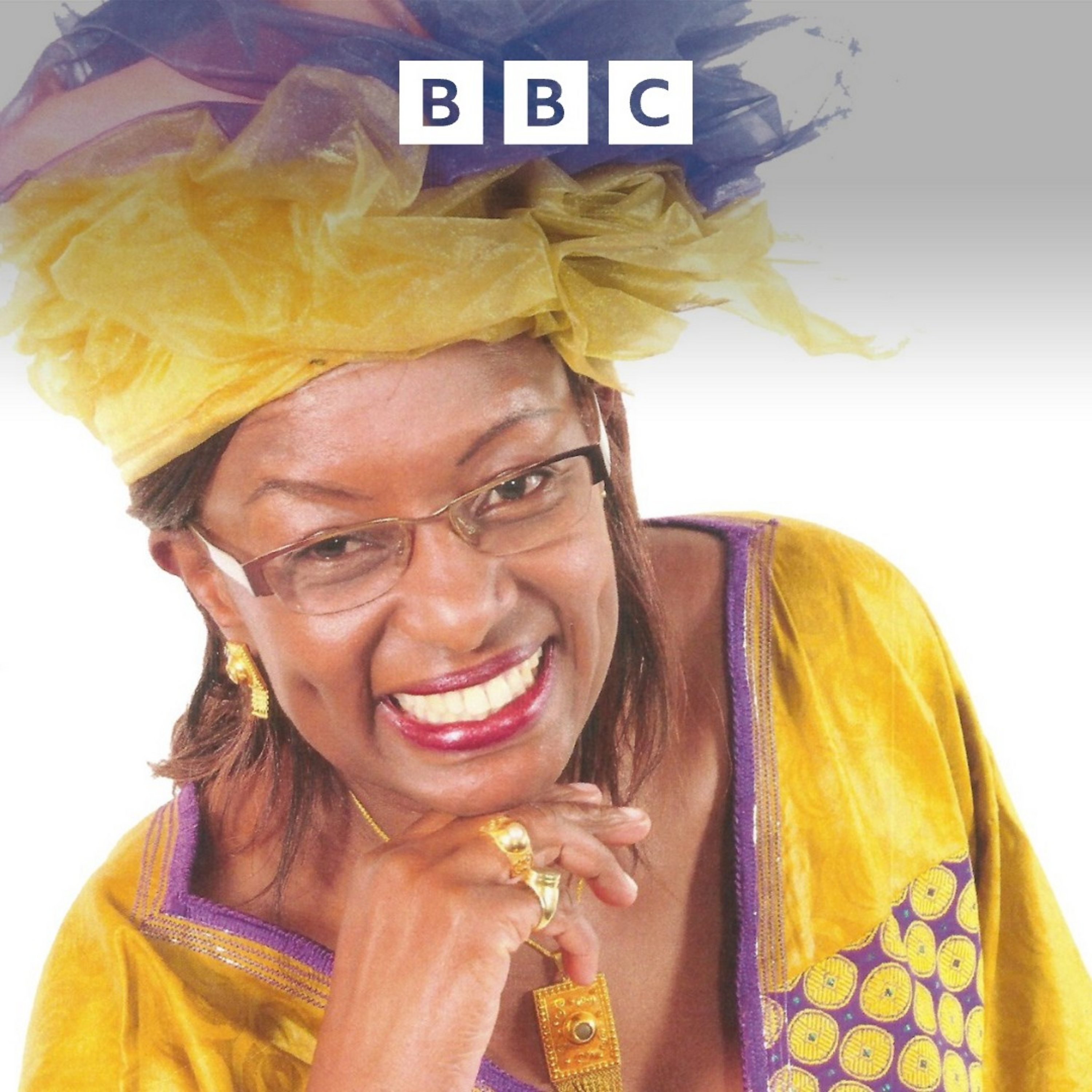
Business Daily
The banker who loaned to women when no one else would
00:17:28
We meet Dr Jennifer Riria, one of Africa's leading female entrepreneurs
Loading summary
Transcript41 lines
- [00:00]
BBC Podcast Advertiser
This BBC podcast is supported by ads outside the UK. The best B2B marketing gets wasted on the wrong people. So when you want to reach the right professionals, use LinkedIn ads. LinkedIn has grown to a network of over 1 billion professionals, including 130 million decision makers. And that's where it stands apart from other ad buyers. You can target your buyers by job title, industry, company role, seniority, skills, company revenue so you can stop wasting budget on the wrong audience. It's why LinkedIn Ads generates the highest B2B return on ad spend of major ad networks. Spend $250 on your first campaign on LinkedIn Ads and get $250 credit for the next one. Just go to LinkedIn.com Broadcast. That's LinkedIn.com Broadcast. Terms and conditions apply. This message comes from Schwab at Schwab. How you invest is your choice, not theirs. That's why when it comes to managing your wealth, Schwab gives you more choices. You can invest and trade on your own. Plus get advice and more comprehensive wealth solutions to help meet your unique needs. With award winning service, low costs and transparent advice, you can manage your wealth your way at Schwab. Visit schwab.com to learn more.
- [01:18]
Lianna Byrne
Hello, I'm Lianna Byrne and welcome to meet the founders from Business Daily on the BBC World Service. This is where we speak to innovators around the world about the ideas, risks and realities of starting a business. Today I'm meeting someone who spent most of her life getting women who never had access to finance alone.
- [01:38]
Dr. Jennifer Riwira
Now remember, nobody now at that point in times in early 90s, nobody's thinking a woman can borrow a loan in this country and repay. Women were not supposed to be credit worthy.
- [01:49]
Lianna Byrne
She's the founder of Kenya Women Finance bank and Kenya Women holding institutions that help millions of women across Kenya borrow, save and build businesses of their own. And she helps others because at one point in her life she needed help too.
- [02:06]
Dr. Jennifer Riwira
My having a baby as a teenager had no place in my family. My father was very bitter about it. My mother never said a word.
- [02:15]
Lianna Byrne
That's Dr. Jennifer Riwira, our founder this week. Now one big part of the story is understanding how microfinance works. Access to capital for women is still a big challenge in much of Africa. And that's where microfinance plays a role in giving small loans and financial services to people who can't access traditional banks and helping them start to grow their business. Jennifer Rira is a central figure in this field. In 1991 she relaunched the Kenyan Women Finance Trust, which had Originally started in 1981 but collapsed without full time leadership. The trust gave rural women loans so they could set up businesses. At a time when many women were considered too risky to lend to. Jennifer was reviving an idea many didn't believe in. But her own path to that point wasn't straightforward. Growing up in a village in central Kenya, she became a mother in her late teens. She says a series of experiences pushed her to leave home and pursue higher education, first in Tanzania and later in the uk.
- [03:30]
Dr. Jennifer Riwira
I grew up in a village like any other African little girl in the village, fetching water and firewood, putting in the kettle and the sheep in the evening, taking care of the baby in support of mother, and going to school in the village. It was not an easy child in a village that was actually poor, but that's where I came from.
- [03:57]
Lianna Byrne
Did you enjoy school?
- [03:59]
Dr. Jennifer Riwira
I enjoyed school very much. I loved being at school instead of being at home cooking and looking after babies. I loved school and I performed very well. And that is where my character was molded in that primary school.
- [04:12]
Lianna Byrne
And did you ever imagine that you would be getting into finance or did that come later?
- [04:17]
Dr. Jennifer Riwira
All I knew when I was very little, that meaning five, six, seven, eight, even up to 10 years, is that I wanted to get away from the village. It was hard. It was poor life. I hated to see my mother suffer. At that point in time. I thought it was my mother who was always suffering. It's only later in high school that I knew it was not my mother only. It was about that girl in the village. It was about that woman in the village receiving beatings when food is not ready on time. I knew it was not my mother only at that time it was other women. And that is what shaped what I am today, that I needed to get away.
- [05:02]
Lianna Byrne
Now, a major turning point for you was at the end of high school when you became a young mother. Can you tell me about that time?
- [05:08]
Dr. Jennifer Riwira
That was not planned. It was just the stupidity of a teenager enjoying a teenage and thinking that's how things should be. You have a boyfriend, you are not happy with it, and there you get a baby. And then that was more difficult than I remember because my parents were staunch Presbyterians, Christians, and therefore my having a baby as a teenager had no place in my family. My father was very bitter about it. My mother never said a word, but my father said, you need to get away. And I got away. I went to my sister and I took my baby with me to the university, Dar es Salaam University after completing.
- [05:52]
Lianna Byrne
Her bachelor's degree in education at the University of Dar es Salaam in Tanzania, Jennifer won a scholarship to do a Master's degree in the UK at the University of Leeds in the north of England.
- [06:04]
Dr. Jennifer Riwira
And I took my baby with me to uk. That required bravery. It was also very, very difficult to be in a foreign country with a baby with meager resources. Wherever I went I found very kind people who even fed us when we didn't have any food with my child.
- [06:25]
Lianna Byrne
Really amazing that you kept up your education while rearing a child.
- [06:30]
Dr. Jennifer Riwira
I wouldn't have managed to do anything else without education. So I was bent on completing my education. It was very difficult. A very young baby. I have lectures to go to, have homework to do and one time I put my baby on my back and I intended to jump into the swimming pool and I stood by the edge of the swimming pool and I wanted to jump in. But at that time the baby on my back, tied on my back, said mom. And I realized I can't do this. So that's how I managed.
- [07:02]
Lianna Byrne
Tell me about your early professional life because you didn't start in banking, did you?
- [07:07]
Dr. Jennifer Riwira
No. When I came back those days getting jobs was not difficult because government officials came to the university and we already knew where you were going to work before you got out of the university. I reported to a boys school. That's why I was sent. It was interesting because the boys saw me as their age mate. You know, I was young but I was very tough. Then I taught at the girls school before I left for my diploma education in England where I did diploma and then I did my masters. When I came back, that's when I then registered for a PhD in women education and development. Development. That's how I began my career. After a good while I taught at the university for 10 years. The 11th year I went on sabbatical and joined UNICEF in a full time consultant on women education for child survival. And while I was there, I worked with the women to see the relationship between education for women and survival for children.
- [08:18]
Lianna Byrne
You're listening to Business Daily from the BBC World Service.
- [08:23]
Dr. Jennifer Riwira
It's the ultimate business trip flying in Emirates first class with your own fully enclosed private suite. You can order from an extensive international menu along with premium drinks. There's even a bar and an exclusive shower spa on the Emirates A380 along with chauffeur driven airport transfers and the Emirates Lounge. It's a better way to do business. Book now on emirates.com this is the.
- [08:51]
Grainger Advertiser
Story of the one as the purchasing manager at a manufacturing plant, she knows the only thing more important than having the right safety gear is having it there when you need it. That's why she partners with Grainger for auto reordering, so her team members can count on her to have cut resistant gloves on hand and each shift can run safely and efficiently. Call 1-800-GRAINGER click granger.com or just stop by Grainger for the ones who get it done.
- [09:22]
Lianna Byrne
I'm Liana Byrne and today I'm talking to Dr. Jennifer Rira, a microfinance entrepreneur in Kenya whose organizations help women get business loans. In 1991, she joined the Kenya Women Finance Trust, a microfinance nonprofit organization that was poorly staffed and losing money. Jennifer saw its potential and set about turning it around.
- [09:44]
Dr. Jennifer Riwira
Knew of t and collapsed because the people who are working there before I got there, the really, really original thinkers of it were women who are already working. So it was like a hobby for them. It's only when I stepped in, we began now working at a professional financial microfinance institution that provided financial services and non financial services to low income women.
- [10:16]
Lianna Byrne
Jennifer took the struggling organization and turned it into a for profit microfinance bank.
- [10:22]
Dr. Jennifer Riwira
What we did was to make sure that we work with women. We bring women together in groups and together women in groups. We are to travel in the country. Women don't come to us. We went to the women, we went to the villages, we went to the markets and introduced and went through church, went through the government offices, the Ministry of Culture and Social Services and said we need to meet women. So we were able to meet women by word of mouth. Women had their people here working with us. So we began reorganizing and getting women to get into groups and into groups. We began training them with little money, little money as $30 for them to do something small like bake chapati or madazi and sell and resell and save. And then we taught them the art of saving and it was compulsory for them to save. Then every year I had a very big meeting in Nairobi. We organized. They are coming into Nairobi. Some of them are never set afoot in Nairobi. So it was great every year for them to come to Nairobi to meet me and meet other women, you know. By this time the institution was growing so that we can have a day talking about women and businesses. And the women repaid their loans. The loans were you get $30. If you repay, we will give you $50. If you pay, we'll give you $75. If we pay, we give you $100 like that, it was incremental. But the women had to prove that they can repay. Now remember, nobody now at that point in time, in early 90s, nobody's thinking a woman can borrow a loan in this country and repay. Women were not supposed to be credit worthy.
- [12:22]
Lianna Byrne
Do you remember the first woman you ever lent money to and what she did with it?
- [12:27]
Dr. Jennifer Riwira
To begin with, I would take money and go and sit at a market. We were sitting under a tree. The first woman I gave a loan to, she didn't repay. She was my friend. So she said, you know, a woman came and gave me money and she never repaid.
- [12:46]
Lianna Byrne
You're still looking for the money.
- [12:49]
Dr. Jennifer Riwira
The second one I gave, I think repaid once, but this time I'd already hired one young girl from a cooperative college to help me now to lend. That's when now we began sitting down and putting the processes in place. I had also gotten a few staff to be able to assist in going to lend instead of me going. Because when I went there, they looked at me as their friend. They never saw me as a lender. But when the young people came in aggressively, they already trained what to do, what to say. That made a big difference. And the institution grew cell by cell. Because when we went into an area, we made sure that the women are repaying their loans 90% before we opened another office. By the time I moved on and let someone else run it as a bank, we had transformed into a microfinance bank. Now that is 2009. We were working with over 1 million clients.
- [13:57]
Lianna Byrne
And you became CEO of Kenya Women holding at that time, didn't you?
- [14:01]
Dr. Jennifer Riwira
When I began knwft, it was very small. So the institution grew to a level that it was having a lot of clients. As I said, you have 1 million clients and 700,000 of them are borrowers. When you get to that, you are a big financial institution. And at that point we began thinking, look, we run the risk of getting political intrusion in the operations because this institution was not registered as a financial institution. It was a public institution. So we got advice that you need to be regulated by central banks so that women can own their own institutions legally. So nobody can play with it, nobody can mess with it. We learn from a friend of mine who was running this assemilia institution in Sierra Leone. His institution was taken over by a ruling party. And because as large as in the institution it is in the country, it can be very easily used by politicians for political purposes. So you have to be very careful to professionalize It. So the board at that point in time decided, let's get the process of transformation.
- [15:20]
Lianna Byrne
And it grew and grew from then, didn't it? You know, grew across countries. It grew in office size and staff size.
- [15:27]
Dr. Jennifer Riwira
Yeah, it grew. We had branches all over by the time I handed the bank over. Because now my vision now drove me to work on another institution now to work on the holding company, to be able to serve women in a different way.
- [15:45]
Lianna Byrne
Even today, millions of women across Africa remain outside the formal financial system. According to the World Bank's global index, around 49% of women in sub Saharan Africa do not have a bank account, compared to 38% of men. Jennifer Rerera thinks that there are several challenges that cause such a big gap.
- [16:07]
Dr. Jennifer Riwira
Most of Africa is rural. Although urbanization is taking root now, the financial systems that deliver financial services to women are still eluding women. Now you go to some parts in this country and other countries in Africa where I've traveled, and you find the infrastructure is so poor and you know, most people living in rural areas consistently are women because they are confined in their homes. So that access becomes a very big problem. Then poverty also because you can have a router passing through your gate. But a woman has to think, do I want a phone, do I want a digital phone? Or do I want to save that money to feed my children?
- [17:04]
Lianna Byrne
So in some ways, as banking advances in technology, it could risk leaving some women behind.
- [17:11]
Dr. Jennifer Riwira
Yes, because education also is there. So you might have technology and you can't operate it. There are so many things that operate against women in terms of access to financial services.
- [17:22]
Lianna Byrne
Can I ask you about microfinance? Because obviously you have helped so many women with microfinance and it is promoted as a solution for women. But sometimes there are critics and they argue that microfinance actually risks trapping women in cycles of debt rather than empowering them. What would you say to that?
- [17:39]
Dr. Jennifer Riwira
That question has been raised with me not only here, but everywhere. It is a very complicated question in the sense that disbursement alone, it demands that it has to be repaid. Now, what happens is that when training information, and I'm not saying class schooling, information, access to information, that will enable women to realize that if I over borrow and the systems are not there to stop a woman from over borrowing, so you find a client as over borrowed and therefore repayment becomes a problem. So there is need for any institution to keep close to their clients, giving them information so that they understand the danger of over borrowing. Women also, once we began providing them with loans and I say this with a tongue in my cheek. This is where the gender question comes in. They took on so much in the family setting and their husbands relaxed. So women, the imbalance, the gender workload, which also is a financial load, increased for women as we continued to give them access to financial services. But what is the worst evil not to give them? I don't think so.
- [19:08]
Lianna Byrne
Jennifer Wiwira and that's it for today's Meet the Founders from Business Daily on the BBC World Service with me, Liana Byrne. The producers were Ahmed Adan and Amber Mahmood. To listen to more conversations like this, search and subscribe to Business Daily wherever you get your podcasts and you can get in touch with the team. Our email address is businessdailybc.co.uk.