← Business Daily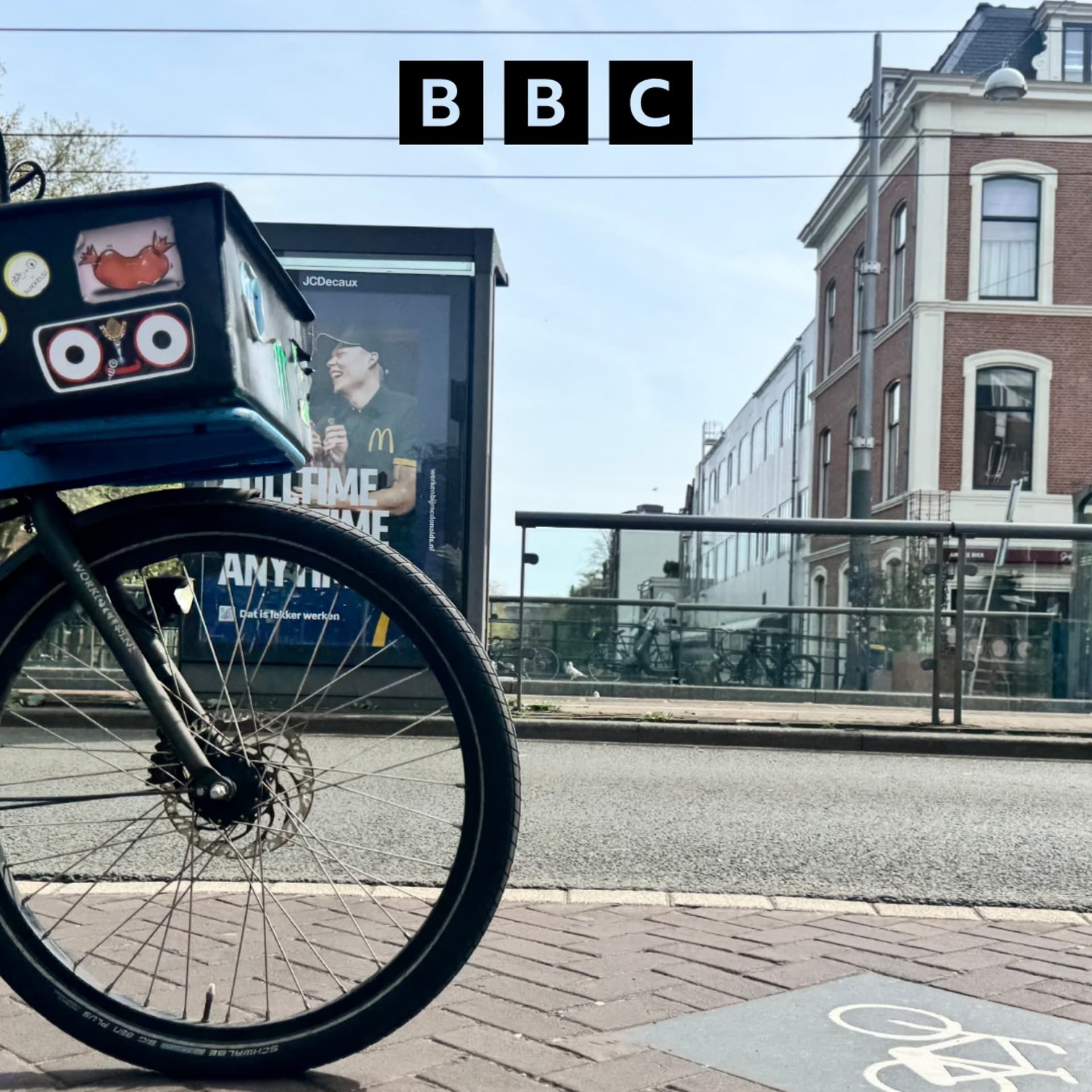
Business Daily
The city that’s banned meat adverts
00:17:28
Commericals for flights, petrol and diesel cars, and meat have gone from Amsterdam
Loading summary
Transcript77 lines
- [00:00]
Podcast Host
This BBC podcast is supported by ads outside the uk.
- [00:06]
Podcast Sponsor Announcer
Today's episode is sponsored by Smart Travel, a podcast from NerdWallet. You know that one friend who always finds the best travel deals, picks the right credit cards and somehow ends up in first class for the price of coach? Smart Travel is like that friend, but in podcast form. NerdWallet's travel journalists sort out what's worth paying for. From lounge access to travel advisors to hotel loyalty programs, make your travel dollars work harder. Follow Smart Travel on your favorite podcast app.
- [00:34]
Podcast Host
Ever invest in something that seemed incredible at first but didn't live up to the hype? Like those five dollar roses at a gas station? Or a second hand piece of technology that breaks in the first ten minutes? Marketers know that feeling. We optimize for the numbers that look great and impressions reach and reacts. But when they don't show revenue, well, that's a not so great conversation with the CFO. LinkedIn has a word for that. Bullspend. Now you can invest in what looks good to your CFO. LinkedIn Ads generates the highest roas of all major ad networks. You'll reach the right buyers because you can target by company, industry, job title and more. So cut the bull. Spend. Advertise on LinkedIn, the network that works for you. Spend $250 on your first campaign on LinkedIn ads and get a 250 credit for the next one. Just go to LinkedIn.com Broadcast. That's LinkedIn.com Broadcast. Terms and conditions apply.
- [01:43]
Anna Holligan
You're listening to Business Daily on the BBC World Service. Hi, I'm Anna Holigan. Today, Amsterdam is the first capital in the world to ban commercials for flights, fossil fuel cars and meat products from billboards, bus stops and metro shelters.
- [01:59]
Anka Bakker
What we see in our public space is what we find normal in our society. And I don't think it's normal to see murdered animals on billboards.
- [02:06]
Anna Holligan
But the travel and meat industries argue it's a violation of their rights.
- [02:11]
Frank Radstacker
We are actually talking about the freedom of speech and even the though it's the freedom of speech of companies, it is still a freedom of speech today.
- [02:19]
Anna Holligan
Does ripping high carbon adverts off the streets really change anything beyond the optics?
- [02:25]
Irensha Mackenbach
This is a for an epidemiologist like me, fantastic natural experiment.
- [02:29]
Anneke Vaynhoff
Later we will look back and say what were we doing all this time? Why did it take so long?
- [02:33]
Anna Holligan
That's all coming up in Business Daily from the BBC. Here at one of the Dutch capital's busiest tram and metro stops, a grassy roundabout is bursting with Bright yellow daffodils and blazing orange tulips. Until last week, the Perspex panels here pushed chicken nuggets and SUVs and cheap package holidays. Now they're advertising the Rijksmuseum and a piano concert. For those responsible for the makeover, this is more than a cosmetic cleanup.
- [03:09]
Anka Bakker
Hello.
- [03:09]
Hannah Prinz
Yes, hi, so nice to meet you.
- [03:11]
Anna Holligan
Anka Bakker from the Party for the Animals instigated the new bylaw. I meet her and Anneke Vaynhoff from the Green Left Party that supported the legislation outside Amsterdam south train station, right in the heart of the business district.
- [03:26]
Anneke Vaynhoff
The climate crisis is very urgent.
- [03:28]
I mean, if you want to be leading in climate policies and you rent out your walls to exactly the opposite, then what are you doing?
- [03:36]
Anna Holligan
They say it's about bringing the city's streetscape into line with its climate targets, which include becoming climate neutral by 2050 and halving meat consumption over the same period.
- [03:46]
Anneke Vaynhoff
Most people don't understand why the municipality should make money out of renting our public space with something that we are actively having policies against.
- [03:59]
Anna Holligan
The Dutch meat industry body, the Central Organization for the Flay Sector, or Citizen cov, condemned the decision. They declined to be interviewed, but did share a statement.
- [04:10]
COV Spokesperson
COV considers broad advertising bans to be an undesirable way to influence consumer behaviour. Meat is a nutritious food product. A nutritious product that delivers essential nutrients should remain visible and accessible to consumers. The Dutch meat sector provides meat products, but also produces a broad range of plant based and hybrid products. Freedom of choice is essential.
- [04:36]
Anna Holligan
Meat may be a relatively small slice of Amsterdam's outdoor advertising market, but politically it sends a message. Grouping meat with flights, cruises and petrol cars reframes it from a purely private dietary choice to a climate issue that belongs in the same conversation as oil, gas and aviation. We reached out to the advertising industry. The world's biggest outdoor ad company company, JC de Crow, which runs many of Amsterdam's bus shelters. A spokesperson declined to comment. But behind the scenes we understand they'd been warning councillors of far reaching financial and legal consequences if they backed the ban, saying it could undermine the ad revenue that helps fund public amenities. The Green Left and Animal Party also had to overcome opposition within the city council. Anke and Anneke again?
- [05:28]
Anneke Vaynhoff
Yeah, there was a right wing party. They positioned themselves to make fun of the proposal and to show it's more populist to say. It's also patronizing to say what people can and cannot eat anymore. Well, that's not the point of the proposal. Everybody can Just make their own decisions. But actually, we are trying to get the big companies not to tell us all the time what we need to eat and buy.
- [05:55]
In a way, we're giving people more freedom because they can make their own choice.
- [05:59]
Ryan Seacrest
Right.
- [06:00]
Anneke Vaynhoff
Instead of putting it in their face.
- [06:03]
Hannah Prinz
This ban doesn't touch people's smartphones. And if we look around at the people who are walking into the station, most of them have got their heads down. They're not looking up at the billboards, they're looking down at their screens. Is there a way to tackle that too, or is that simply out of reach? You're shaking your head.
- [06:18]
Anneke Vaynhoff
I think this would be something for the European level. And it's really hard.
- [06:23]
Anna Holligan
You know, we've got planes overhead, we're so close.
- [06:26]
Hannah Prinz
We're like 10 minutes away from Schiphol Airport. There is a bit of hypocrisy there that fossil fuel ads are banned in a city which is so close to one of the major airport hubs in Europe, which is a huge carbon emission contributor.
- [06:42]
Anneke Vaynhoff
Yes, absolutely. But the public space also sets a norm, right? So that's what we're doing. We can't control all the other stuff, but we have actually a say in our public space.
- [06:51]
Hannah Prinz
Is it even possible to work out whether taking nuggets and juicy burgers off the billboards will result in fewer people going into fast food restaurants and eating meat?
- [07:02]
Anneke Vaynhoff
I think eventually it will add up to denormalize using fossil fuels and consuming meat.
- [07:10]
Like with the smoking, you know, it communicates, oh, let's have a smoke and party, and oh, look how cool this is. Well, that's exactly what we're doing with the meat advertisement. We're just telling people, oh, look, you know, you want to be with us, you, you want to belong with us. We want to fly for €19 to Berlin. I just saw that ad, by the way. So I was just cycling there and I thought, oh, yeah, it would be nice to travel. Oh, wait a minute. Oh, €19.
- [07:33]
Hannah Prinz
Oh, have you created the blueprint? Now then, can cities anywhere in the
- [07:37]
Anna Holligan
world take all of that research that
- [07:39]
Hannah Prinz
you've collated and all of the legal precedent that you've secured and say, well, look, here it is on paper, we want this too.
- [07:48]
Anneke Vaynhoff
Yeah, we have this. It's almost copy paste. But of course, in all the other parts of the world, I can imagine that the local laws are a bit different. We made it much more easier now for other cities all around the world to adopt this.
- [08:04]
Well, if we are serious about climate change and our health and environment. Then don't give your walls of the city that we all own to exactly the opposite. I mean, people can eat what they want, but don't manipulate people to do unhealthy things for themselves and the planet. Later we will look back and say, well, what were we doing all this time? Why did it take so long?
- [08:27]
Anna Holligan
This is Business Daily from the BBC World Service.
- [08:34]
Kleenex Advertiser
Allergy season always has a way of sneaking up on you. One minute you're listening to your favorite podcast, the next it's non stop sneezing and a runny nose. That's why it's essential to keep Kleenex Ultra Soft Tissues on hand. They're silky soft for up to 100% irritation. Free skin and allergist approved so when allergies hit. And they will be ready with Kleenex Ultra Soft Tissues for whatever happens next, grab Kleenex.
- [08:59]
Ryan Seacrest
Hey, it's Ryan Seacrest. For Albertsons and Safeway, Spring is a time to give yourself a refresh. So spend time on self rejuvenation. Shop in store and online for great savings on all your favorite personal care Items. Now through May 26, earn four times points when you shop participating items like Pantene shampoo, Crest Toothpaste, Tampax Radiant Native shampoo and Secret Gel deodorant. Then redeem points for discounts on future purchases of groceries or fuel. Offer ends May 26th. Restrictions apply. Offers may vary. Visit albertsons or safeway.com for more details.
- [09:35]
Anna Holligan
I'm Anna Holigan and today we're in Amsterdam exploring how and why it's just become the world's first capital city to ban meat and fossil fuel products from billboards and other public spaces.
- [09:49]
Anka Bakker
Hannah, nice to meet you. This is also the sound of like the big city, right?
- [09:54]
Hannah Prinz
It's so pretty around here.
- [09:56]
Anka Bakker
Yeah, it's beautiful. Apart from those ads that are ruining
- [10:00]
Anna Holligan
our public spaces, Hannah Prinz and her group Advocates for the Future worked closely with campaigners at Raclan Fossil Fry to ensure the ban stood up to the legal challenges.
- [10:12]
Anka Bakker
You see an ad and you buy stuff. So if you see ads for unhealthy food hundreds of times a day, then, yeah, then I also want to eat ice cream. So I think part of it, it will actually really work. Part of it, it's more of like saying this is the norm. We do not find it normal that there are flights for €70, that there are hamburger ads everywhere, that. That there are fossil fuel cars which are being advertised. I think it's partly symbolic and I think that's totally fine. Like some things, it's good if it's symbolic that we say, hey, we don't find it normal that we see these things in our public spaces, even if people still buy certain things, go on certain trips. So I think even if it's super symbolic, that's not an issue. I was at the court case in the Hague where this was being decided that Fossil Frei started and my organization, Advocates for the Future. We supported them together with the municipality in the Hague in court. And the room was full of people from the advertising business because they were like, oh my God. In Dutch we say wisite beu all hange. Like we see the rain clouds coming in. I think they think, ah, if we're not allowed to make advertisements anymore for diesel cars or for deep fried chicken, what will be next? Will the next thing be fast fashion?
- [11:26]
Hannah Prinz
And do you think it can achieve anything tangible in terms of changing people's behavior? Because comparisons have been made in the past with the battle against the tobacco industry. Do you think that's a fair comparison? And do you think it can actually change behavior?
- [11:40]
Anka Bakker
Definitely, definitely. Because if I look now back at like old pictures, you have Johan Cruijff, right? The famous Dutch footballer. He would be in advertisements for tobacco that used to be normal. He died of lung cancer that you were allowed to smoke on the train, on restaurants. For me, that's like, whoa, why did people do that? You know, that feels so weird. So it really is like what we see in our public space is what we find normal in our society. And I don't think it's normal to see like murdered animals on billboards. So I think it's very good that that's going to change.
- [12:12]
Hannah Prinz
And when you say murdered animals, you're talking about burgers and nuggets.
- [12:15]
Anka Bakker
Yeah, yeah. So you see that now in the Netherlands we have 19 municipalities who have done this. You know, it started with one and now it's 19. Because a judge said this is totally okay. It's not against freedom of speech. You can just decide to say, no, we don't want some kinds of advertisements. So I think you really see that the ball is starting to roll. And once one has done it, why not everyone? I really think that in like 10, 15 years time, we're going to look back and we're going to think, whoa, did we ever have advertisements for flights for €15? Insane. I think. And I hope that big polluting companies will be extra scared and maybe will rethink the kind of products they are selling and Also, why they need advertisement. I think you can really see that change is possible.
- [13:02]
Train Announcer
Dear passengers, good afternoon. Welcome on board of the city's office.
- [13:09]
Anna Holligan
The Dutch capital isn't starting from scratch. A short train ride away. The Hague successfully defended a ban on fossil fuel ads last year. And in Harlem, a ban on meat advertising came into force in 2024. It was the first in the world. Globally, cities from Stockholm to Sheffield are moving to curb fossil fuel ads, while France has already introduced a nationwide ban. Campaigners hope Amsterdam, because it's a capital and includes meat, could set the pace. But that's exactly what the industries affected are concerned about.
- [13:45]
Frank Radstacker
Are you literally standing outside or is that a very fancy background?
- [13:48]
Anna Holligan
Frank Radstacker is the CEO of anvr, the association representing travel agencies and tour operators in the Netherlands. We're speaking remotely. He's on the other side of the Netherlands, and I've got my laptop propped up on my cargo bike from a
- [14:05]
Hannah Prinz
lovely green spot outside. Welcome to the Hague.
- [14:08]
Anna Holligan
He argues that blocking adverts for trips that include flights is disproportionate curb on companies commercial freedom.
- [14:15]
Frank Radstacker
We are actually talking about the freedom of speech. And even though it's a freedom of speech of companies, it is still a freedom of speech. And to ban that freedom of speech just with the possibility that a certain measure may lead to a certain goal, we think that is not the right way to go. So the reason why we are now starting a second lawsuit against the municipality of the Hague is because we want to be pretty sure and we want to have it very clear which types of advertisements are allowed and which aren't. So it's not allowed to advertise any type of travel that includes a flight, but is it allowed to advertise a destination that can only be reached by plane? If we can't advertise at all, that will definitely impact us a lot.
- [15:02]
Hannah Prinz
So what will you do with the cash that was being used for billboards? Will it get reinvested or redirected into places where more people's eyes are anyway? Different media, for example, on their smartphones, on social media platforms instead of bus stops and tram shelters?
- [15:17]
Frank Radstacker
Well, absolutely. Travel companies have a certain budget for marketing and advertising. If it's not spent in the public sphere in the Hague or any other municipality, it will go to newspapers, TV and certainly online. It's not something that shouldn't be normalized. It's an industry that had lots of positive impact, negative impact as well. And we have to work on the negative impact. That's the obligation we as travel industry have and I'd rather work together with the municipality than than being on the opposite side of a lawsuit, but they give me no choice. That's why the lawsuit we're now starting is of great importance, not just for travel companies in the Netherlands, but for travel companies all around the world. And in all honesty, not just for travel companies, but for other industries that might be next on the list as well.
- [16:08]
Anna Holligan
Here at the tram stop in Amsterdam, you might no longer see a juicy burger or a €19 flight to Berlin on the shelter. But the same eye catching offers can still pop up on your algorithm. If municipal bans leave digital platforms untouched, how much real world impact can they actually have on our habits?
- [16:24]
Irensha Mackenbach
This is a. For an epidemiologist like me, fantastic natural experiment to see what the effects are of such policies.
- [16:33]
Anna Holligan
Irensha Mackenbach describes herself as a curious scientist.
- [16:37]
Irensha Mackenbach
My research focuses on how our living environments affect behaviors and health outcomes.
- [16:43]
Anna Holligan
She's an associate professor at the Department of Epidemiology and Data Science at Amsterdam umc.
- [16:50]
Irensha Mackenbach
If we see advertisements for fast food everywhere, it normalizes fast food consumption. So if we take away those types of cues in our public living environments, then that is also going to have an impact on those social norms.
- [17:04]
Anna Holligan
Is there any evidence that taking nuggets and burgers off billboards will change our eating habits and create a more plant based society?
- [17:12]
Irensha Mackenbach
I don't think there's any evidence at this moment. But there is plenty of evidence that marketing leads to increased consumption, but also changed social norms. And the other way around, taking away advertisements leads to lower consumption of the targeted products. So one such measure, such as an advertisement restriction, is really not the silver bullet, but it is a really important element that we should not forget in a broader policy package. The lawsuit in the Hague is a very important precedent. The court has ruled that public health and sustainability, planetary health, is at the municipal level, more important than the commercial freedom of expression. And this court ruling can be used by other municipalities to implement their restrictions or bans. There are cities that do not allow any advertisements under the premise that it is just pollution of our living environment to have advertisements Everywhere. In 20 years time, I think and hope that we will look back at these types of policies the same as we look back now on policies around, for instance, tobacco. Back in the days it was a very bold move to restrict tobacco advertisements. And now we think why didn't we do this earlier? And in the future this is very likely to contribute to changes in consumption behavior as well.
- [18:43]
Anna Holligan
It's still easy to swing by a drive through, pick up a burger, or book a cheap flight from one of Europe's busiest airports. And many people will continue to do so. Industry groups, meanwhile, argue these choices reflect consumer demand and support jobs and economic activity, and warn against policies they see as overreach. But Amsterdam's streetscape has begun to shift, offering a visible sign of changing priorities. And Hannah Prince believes local businesses will will gain as the big corporate billboards come down.
- [19:20]
Anka Bakker
And maybe we'll rethink the kind of products they are selling. And also why they need advertisements. Because like everything we love, festivals, nice cheese, flower, shop around the corner, all the stuff that we love, we don't hear from through ads, usually through people that we know or we walk past the building. So I think local businesses will be able to thrive because of this, because it's just wrong that these companies can decide what we see and can take up so much of our attention.
- [19:49]
Anna Holligan
You've been listening to Business Daily, presented by me, Anna Holligan. For more stories at the heart of the global economy, just search for Business Daily wherever you get your BBC podcasts.
- [20:15]
Liberty Mutual Spokesperson
And Doug, there's nowhere I wouldn't go to help someone customize and save on car insurance with Liberty Mutual, even if it means sitting front row at a comedy show.
- [20:24]
Liberty Mutual Spokesperson Partner
Hey, everyone, check out this guy and his bird. What is this, your first date?
- [20:28]
Liberty Mutual Spokesperson
Oh, no. We help people customize and save on car insurance with Liberty Mutual together. We're married. Me to a human, him to a bird.
- [20:34]
Liberty Mutual Spokesperson Partner
Yeah, the bird looks out of your league.
- [20:36]
Liberty Mutual Spokesperson
Anyways, get a quote@libertymutual.com or with your local agent.
- [20:39]
Liberty Mutual Spokesperson Partner
Liberty. Liberty. Liberty. Liberty.