← Business Daily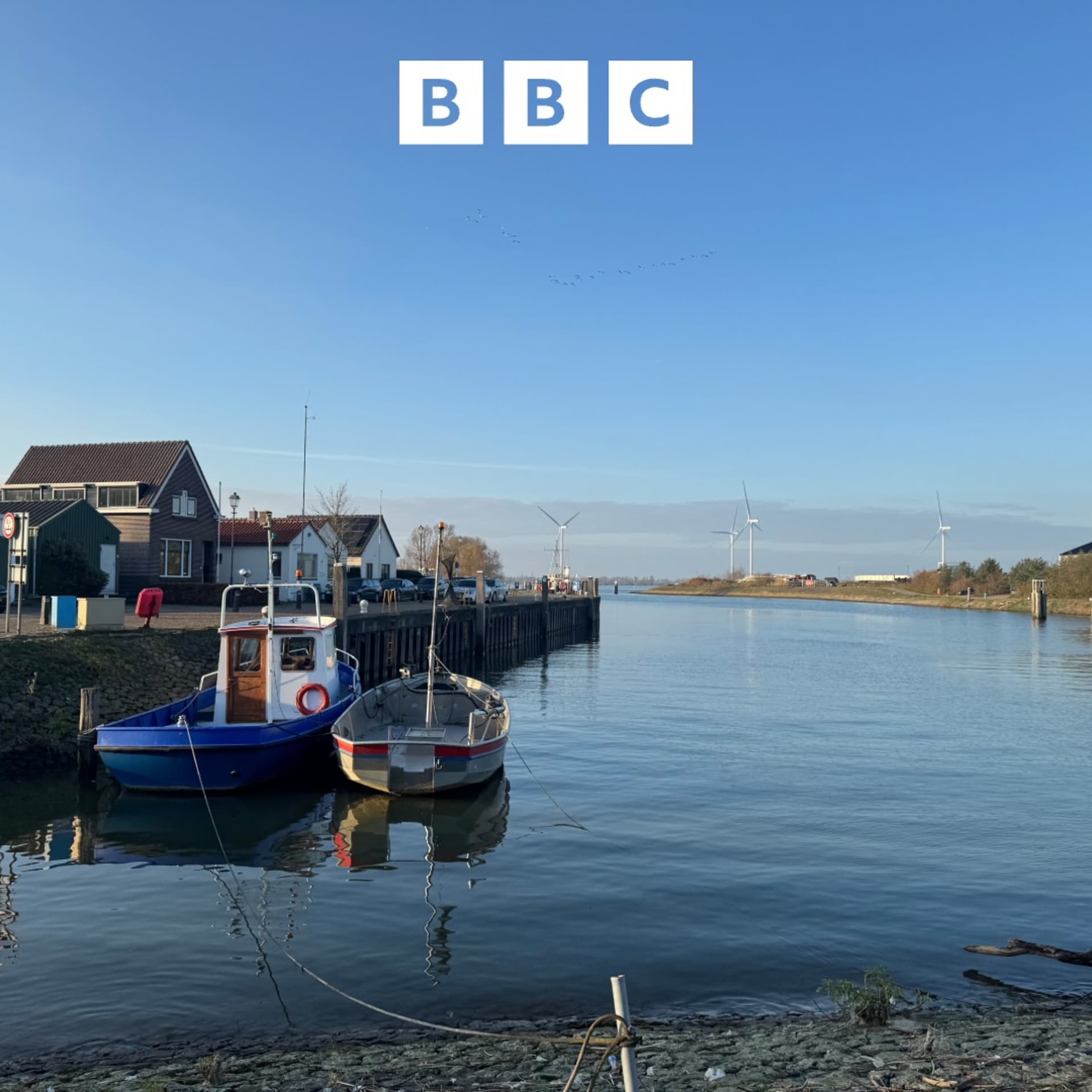
Business Daily
The Dutch village at risk from an energy project
00:17:35
Moerdijk lies in the path of a mega-energy hub and could be destroyed to make way for it
Loading summary
Transcript123 lines
- [00:00]
Podcast Sponsor/Advertiser
This BBC podcast is supported by ads outside the uk. Today's episode is sponsored by Smart Travel, a podcast from NerdWallet. Do you have a friend who treats airfare like a puzzle and somehow always ends up with a first class upgrade? Smart Travel is like that friend, minus the group texts. NerdWallet's travel journalists break down the pros and cons of travel decisions like when lounge access is worth paying for and and which hotel loyalty programs actually pay off. Make your travel dollars work harder. Follow Smart Travel on your favorite podcast app. Ever invest in something that seemed incredible at first but didn't live up to the hype? Like those five dollar roses at a gas station? Or a secondhand piece of technology that breaks in the first 10 minutes? Marketers know that feeling. We optimize for the numbers that look great, impressions reach and reacts. But when they don't show revenue, well, that's a not so great conversation with the CFO. LinkedIn has a word for that. Bullspend. Now you can invest in what looks good to your CFO. LinkedIn Ads generates the highest roas of all major ad networks. You'll reach the right buyers because you can target by company, industry, job title and more. So cut the bull. Spend. Advertise on LinkedIn, the network that works for you. Spend $250 on your first campaign on LinkedIn ads and get a 250 credit for the next one. Just go to LinkedIn.com Broadcast. That's LinkedIn.com Broadcast. Terms and conditions apply.
- [01:44]
Anna Holligan
You're listening to Business Daily on the BBC World Service. Hi, I'm Anna Holligan. Today, what happens when the global race for clean energy collides with the fate of a single village?
- [01:55]
Jacko Coleman
It's not human. It's absolutely not human. Just tell 1100 people to go.
- [02:00]
Anna Holligan
In the south of the Netherlands, the government is considering wiping a whole community off the map to make space for power lines, pylons and new industry.
- [02:08]
Andrea
I'm scared I lose my house. My husband built our house with his own two hands.
- [02:15]
Anna Holligan (Reporter/Narrator)
What happens here could shape how countries
- [02:18]
Anna Holligan
everywhere balance clean energy, security of supply and the people who live beneath the pylons. This one village has become a test case.
- [02:27]
Anna Holligan (Reporter/Narrator)
How does it feel for you as mayor when you have to look those people, those villagers, in the eye and say, do you know what? I'm sorry, but all of this has to go.
- [02:36]
Anna Holligan
That's all coming up on Business Daily from the BBC.
- [02:46]
Anna Holligan (Reporter/Narrator)
Hi, hello.
- [02:48]
Anna Holligan
Jack o' Coleman takes me into a room with a view.
- [02:50]
Jacko Coleman
We can, we can sit There. If you want we can sit upstairs. Then you have a nice view on our river.
- [02:56]
Anna Holligan
Jacko's fish business overlooks the Holland's deep estuary where South Holland meets North Brabant. He's clearly proud of his port side office.
- [03:06]
Anna Holligan (Reporter/Narrator)
From right up here you can see
- [03:08]
Anna Holligan
why this place matters to planners. Deep water, road and rail links, existing industry and open land. So much open land. For Jacko, though, it's simply home, you
- [03:21]
Jacko Coleman
know, you're listening and I think, are they really saying that? That you have to go with your village?
- [03:27]
Anna Holligan
He remembers the moment residents heard their village could eventually disappear to make way for expansion linked to the powerport Regio Moordite plan.
- [03:36]
Jacko Coleman
Everybody was shocked. Really, really terrible.
- [03:38]
Anna Holligan
His family's been living off the water here since 1918.
- [03:41]
Jacko Coleman
And now it looks like they are bringing us to the slaughter bank. You go to bed with it and you wake up with it. The feeling as soon as you wake up, what's going to happen.
- [03:50]
Anna Holligan (Reporter/Narrator)
And it's a family business.
- [03:51]
Jacko Coleman
It's a family business. Correct. We are here. I'm the third generation and my son is also involved in the company. So that's the fourth generation.
- [03:59]
Anna Holligan (Reporter/Narrator)
What will this mean to you then?
- [04:01]
Jacko Coleman
Then it means that our company has to go. I live on the other side of the dyke in the village, so I have to go as well personally. And well, in meantime you also have to do your business. You have your family at home. And I'm not the only one. Not, not nice.
- [04:16]
Anna Holligan (Reporter/Narrator)
Moor Dyke started out as a fishing village.
- [04:19]
Anna Holligan
Fishing was the first industry here.
- [04:20]
Jacko Coleman
Long time ago. Yeah. On the smelt, the cum. Cum cummer fish. That was one of the biggest, the biggest thing. This is where we keep live fish.
- [04:31]
Jacques
So.
- [04:31]
Anna Holligan
So I can show you. We've moved through to a storage space full of tanks.
- [04:38]
Anna Holligan (Reporter/Narrator)
So what do you have in here?
- [04:40]
Jacques
Eels.
- [04:41]
Jacko Coleman
Live eels.
- [04:44]
Anna Holligan (Reporter/Narrator)
Oh my gosh.
- [04:45]
Anna Holligan
Okay, I'm going to take this.
- [04:47]
Anna Holligan (Reporter/Narrator)
The eels are black and squirming. I wasn't expecting. Live eel.
- [04:55]
Jacko Coleman
Yeah, they are used in Holland by smokeries. We smoke them ourselves as well. It's a very popular dish for this.
- [05:06]
Anna Holligan (Reporter/Narrator)
This industry. Your fishing industry is thriving right now.
- [05:11]
Jacko Coleman
So far, yes. We cannot complain. Luckily, these are smoke fields. Your big ones, your small ones.
- [05:20]
Anna Holligan (Reporter/Narrator)
It's kind of ironic that the thing that has been such a draw and such a positive and the lifeblood of this village is ultimately the thing that
- [05:28]
Jacko Coleman
is going to kill us.
- [05:30]
Anna Holligan
The state and grid operators see something
- [05:32]
Anna Holligan (Reporter/Narrator)
very different when they look at this
- [05:34]
Anna Holligan
same stretch of water and land around Mordyke.
- [05:37]
Anna Holligan (Reporter/Narrator)
They're looking for Hundreds of hectares to
- [05:39]
Anna Holligan
land power from new North Sea wind farms, build high voltage stations and lay cables and create space for hydrogen ready industry.
- [05:49]
Anna Holligan (Reporter/Narrator)
It's a very strategically valuable location.
- [05:53]
Jacko Coleman
It is, it is. I think you have seen our situation a little bit. We have a motorway over there, a motorway over there, and water over there. And I only look at big money. I understand that, but don't do it here. Do it 20, 30 kilometers away at the in the North Sea. Plenty of space there, plenty of windmills. I know that there are other possibilities. They don't really have to put the whole plant in this area. They can build it at sea, where the power is coming from. Put there a converter station.
- [06:24]
Anna Holligan
Officials say Moerdyke makes sense because it already sits at the crossroads of ports, pipelines, motorways and the national grid plugged into everything.
- [06:34]
Anna Holligan (Reporter/Narrator)
It's a really densely populated country and very small. And that's one of the key tensions here. 1,100 people live in this village.
- [06:44]
Anna Holligan
The Netherlands wants more clean power, more energy security and more space for industry. But there is almost nowhere left to put it. Some companies and housing projects have been told they'll have to wait years for a connection.
- [06:58]
Anna Holligan (Reporter/Narrator)
And the grid is overloaded already. But still, in the 21st century, it's hard to imagine that one of the most progressive countries in the world is considering just making a village disappear.
- [07:13]
Jacko Coleman
Yeah, what can we do?
- [07:18]
Anna Holligan
The country's offshore wind roadmap envisages enough wind capacity in the North Sea to cover most of today's electricity demand if the power can be brought ashore and into homes and factories.
- [07:30]
Anna Holligan (Reporter/Narrator)
Looking at those eels squirming around in the tank, it's just like a reminder of how alive, how much life there is here in Moordyke and how much there is to lose.
- [07:44]
Jacko Coleman
This is a tradition. It's really difficult to let that go. But we are really going to fight.
- [08:02]
Anna Holligan
Step away from the water on the other side of the dike and you feel that same uncertainty on the streets. Walking around Mordyke, you get a sense of the limbo lingering in the air. There are for sale signs planted in
- [08:19]
Anna Holligan (Reporter/Narrator)
some of the gravel driveways. But who wants to invest in a property in a village that may be
- [08:26]
Anna Holligan
entirely uprooted in two decades time?
- [08:31]
Anna Holligan (Reporter/Narrator)
So the flags are flying at half mast because of what people fear is the impending death of Mordyke.
- [08:37]
Andrea
Yes, yes, Y. And I'm not happy about it. Very scary.
- [08:41]
Anna Holligan
Andrea runs the village grocery store. On the glass door there's a drawing of a grassy hill with sheep grazing.
- [08:49]
Andrea
The poster says, hands off our Moadyke.
- [08:52]
Anna Holligan (Reporter/Narrator)
There's so much life here, but in 10 years time it may be nothing.
- [08:56]
Andrea
They want the land from the farmers, the land from our house. I'm scared I lose my house. My husband built our house with his own two hands. All our three children are born here.
- [09:15]
Anna Holligan (Reporter/Narrator)
So how many generations have your family?
- [09:18]
Andrea
4. My grandparents are buried here.
- [09:26]
Anna Holligan
The gate to the cemetery is old iron.
- [09:29]
Anna Holligan (Reporter/Narrator)
Plastic flowers sit next to fresh tulips. Photographs propped up against weathered headstones.
- [09:36]
Anna Holligan
This is where Andrea's grandparents and in laws are buried.
- [09:40]
Anna Holligan (Reporter/Narrator)
It's where many of the people who
- [09:41]
Anna Holligan
built Moordyk and fought to stay here expected to end up themselves.
- [09:46]
Anna Holligan (Reporter/Narrator)
If the village goes, they ask what happens to this place?
- [09:50]
Anna Holligan
Who looks after their dead when the living are told to move on? This is Business daily from the BBC World Service.
- [10:05]
Vrbo Advertiser
With Vrbal's last minute deals, you can save over $50 on your spring getaway. So whether it's a mountain escape with friends, a family week at the beach or sightseeing in a new city, there's still time to get great discounts. Book your next day now. Average savings $72. Select homes only.
- [10:35]
Progressive Insurance Advertiser
You're listening to this podcast, so I know you've got a curious mind. Here's a helpful fact you may not know yet. Drivers who switch and save with Progressive save over $900 on average. Pop over to progressive.com, answer some questions and you'll get a quick quote with discounts that are easy to come by. In fact, 99% of their auto customers earn at least one discount. Visit progressive.com and see if you can enjoy a little cash back. Progressive Casualty Insurance Company and affiliates. National average 12 month savings of $946 by new customers surveyed who stayed with Progressive between June 2024 and May 2025. Potential savings will vary.
- [11:07]
Anna Holligan
I'm Anna Holligan and today we're in Moerdijk, a village in the southwest of the Netherlands. It's between Rotterdam and Antwerp and this entire village is currently fighting for its life.
- [11:22]
Anna Holligan (Reporter/Narrator)
Hi, it's Anna Holliday.
- [11:23]
Anna Holligan
To understand how a whole village can end up in this position, I called Girten Bogard, professor of Local Government at Leiden University.
- [11:32]
Girten Bogard
In the end, we are a centralist state. So when the national government says, well, this is vital national interest, there are instruments to effectively implement that.
- [11:44]
Anna Holligan
So everyone in this village is against the plans. The council could in fact refuse to sacrifice the land for industry.
- [11:52]
Girten Bogard
They could. Then they start a fight and the central government can in the end respond by Taking over control. But that comes with a very high cost, both politically and financially.
- [12:03]
Anna Holligan
It feels like a real battle of our times. The pressure for the Netherlands to be able to produce more clean energy domestically and become more resilient and from the global shock. And at the same time, being a
- [12:18]
Anna Holligan (Reporter/Narrator)
country that is so short on space,
- [12:20]
Girten Bogard
there are no easy choices left.
- [12:22]
Anna Holligan (Reporter/Narrator)
The pull on both sides very compelling.
- [12:25]
Girten Bogard
It is also a way of life, the way of life of a local community versus the way of life of the energy changes and the development for the electric energy and so on. So it is in a way a much bigger collision.
- [12:42]
Anna Holligan
This small Dutch village matters far beyond its borders because the global green transition will always need space. And someone somewhere must live under or move for the power lines of progress.
- [12:55]
Jacques
Yes, of course I like to stay here because if you look where I'm living with the farming and everything, you never get this back.
- [13:03]
Anna Holligan
Jacques is 71. He's a retired engineer.
- [13:07]
Anna Holligan (Reporter/Narrator)
We're outside your house. It's a beautiful Grand Villa from 1995.
- [13:12]
Jacques
An eco friendly house.
- [13:14]
Anna Holligan (Reporter/Narrator)
You built this yourself?
- [13:15]
Jacko Coleman
Yeah.
- [13:16]
Jacques
In eight to ten years it will be.
- [13:18]
Anna Holligan (Reporter/Narrator)
None of this was here when you moved in.
- [13:20]
Anna Holligan
I'm pointing out towards pylons, logistics sheds and chimneys.
- [13:24]
Jacques
No, just the land here. So the farmer here.
- [13:27]
Anna Holligan (Reporter/Narrator)
And then you look out on the horizon, you see the windmills. Now, I guess they weren't there when you built your home.
- [13:34]
Jacques
It also is no problem. But that is where the industry starts. What you see there is the main road and that is the road from Rotterdam to Belgium. So all this part will be electric station where the blue building is. So the very big logistic park. That was also a farmer with cows.
- [13:55]
Anna Holligan (Reporter/Narrator)
And now it's the biggest logistics hub in Europe.
- [13:59]
Jacques
This village will be demolished. That I know for sure.
- [14:03]
Anna Holligan (Reporter/Narrator)
Is it important for a lot of people here to keep the community of Moordi together?
- [14:07]
Jacques
There are people here that are far in the 90s. Barborne. The Second World War was incredible here. The Second World War because of the bridge.
- [14:17]
Anna Holligan
For people like Jacques, this place has already survived one era of strategic sacrifice. Mordyke was heavily damaged during the Second World War because of the strategic importance of its bridge crossing over the Hollands.
- [14:31]
Jacques
Deep bridge from Rotterdam to Andrew. There was Murdijkbrugh. When they built where my house was, there was somebody with a mine detector to look if there were still hand grenades in the ground.
- [14:44]
Anna Holligan (Reporter/Narrator)
Because more than half of the village was destroyed during the Second World War.
- [14:47]
Jacques
And they have to build bunkers, concrete walls for the Germans to hold the English from across the river.
- [14:55]
Anna Holligan (Reporter/Narrator)
So as part of the Atlantic Wall
- [14:56]
Anna Holligan
here, that history helps explain why the latest threat, delivered not by bombs, but by planning documents, feels so existential.
- [15:08]
Jacques
I like to stay in this house and the memory of my wife and everything. But yeah, if they give you an envelope with money, I want a fair price. And that's my worry that I don't get a correct price for my house. That is my worry for my job. I was electrician on board ships. I went to the ships by plane every time to repair the ships. And I did it more in 41 years, more than 960 times. But the nice thing every time was to come home and sit in your own chair.
- [15:39]
Anna Holligan
The Dutch government declined our request for an interview about the situation in Moerdyke, saying they would consider it after a decision on the village's fue future. That decision's already been pushed back. It's now expected in June, extending the uncertainty for residents.
- [15:55]
Anna Holligan (Reporter/Narrator)
Okay.
- [15:59]
Anna Holligan
But we did manage to get in touch with the local mayor.
- [16:10]
Local Mayor
It's primarily about the energy demand. We've received a demand from the state to provide 450 hectares of land within our municipality. That's the equivalent to about 700 football fields. So it's a huge area and it's to make space for energy infrastructure. And that has everything to do with the global situation we're in today. The Netherlands and Europe must become more self sufficient. But also our large industrial area around the port must be transformed to become more sustainable and environmentally friendly.
- [16:41]
Anna Holligan (Reporter/Narrator)
And your position is okay. We accept the village must be sacrificed to make space for these 400 to 500 hectares. Is that correct?
- [16:53]
Local Mayor
Yes. The decision had already been made, but the exact location is still to be determined. And there are two possibilities. First, that the infrastructure could be laid between four villages. That would mean the people living in those villages would have to endure lots of overhead cables and considerable disruption that would have a dramatic and detrimental impact on their quality of life. The second option is to sacrifice one village entirely, which means that the village Mordic has to disappear. Neither are easy choices, but with guarantees about investment and ensuring the villagers of Mordig get a fair price for their homes. Then we decided giving up the village of Mordig is is the least painful option. But ultimately the central government makes the final decision. And that's expected in June.
- [17:47]
Anna Holligan (Reporter/Narrator)
In your negotiations, did you feel like you had any real leverage?
- [17:53]
Jacko Coleman
Arizona IN Nederlands the Diebelschleesing is all.
- [17:56]
Local Mayor
We didn't have a choice. It had to be our municipality. We have a very large port and industrial area here, which already produces something like 60% of the CO2 emissions for our province. We have the water close by, we have the railway close by. So actually, logistically, we are the only possible option. We would have preferred to see it somewhere else in the Netherlands, but that choice was taken out of our house.
- [18:23]
Anna Holligan (Reporter/Narrator)
When I was walking around Mordyk, I spoke to Andrea, who runs the village shop, and she talked about her. Her husband building their home with his own hands and their children growing up there. I went to the port and I spoke to. To Jack O', Coleman, whose family has fished there for generations, four generations. I spoke to a 71 year old called Jacques, who nursed his wife through breast cancer at their home that used to overlook fields. And he just wants to be able to stay sitting in his armchair. I found it really difficult hearing those stories, but how does it feel for you as mayor when you have to look those people, those villagers in the eye and say, do you know what? I'm sorry, but all of this has to go. It's for my own.
- [19:11]
Local Mayor
It was almost impossible for me. This really is the most difficult decision I've had to make in my entire career. And the night I had to deliver the message to my own residents was a night I will never, ever forget.
- [19:26]
Anna Holligan
What's being decided here in the Netherlands isn't just about a few streets on the edge of an estuary. It's what a government decides can or must be sacrificed for the sake of energy, sustainability and industry. Here in Moerdyke, that dilemma is no longer an abstract or hypothetical calculation. It's real and imminent and set to radically change the lives of Jaco, Andrea Jacques and all the other people living on the fault lines of the green transition. You've been listening to Business Daily, presented by me, Anna Holligan. For more stories at the heart of the global economy, just search for Business Daily wherever you get your BBC podcasts.
- [20:23]
Grainger Advertiser
If you work in university maintenance, Grainger considers you an MVP because your playbook ensures your arena is always ready for tip off. And Granger is your trusted partner, offering the products you need all in one place, from H vac and plumbing supplies to lighting and more. And all delivered with plenty of time left on the clock, so your team always gets the win. Call 1-800-GRAINGER visit grainger.com or just stop by Grainger for the ones who get it done.