← Business Daily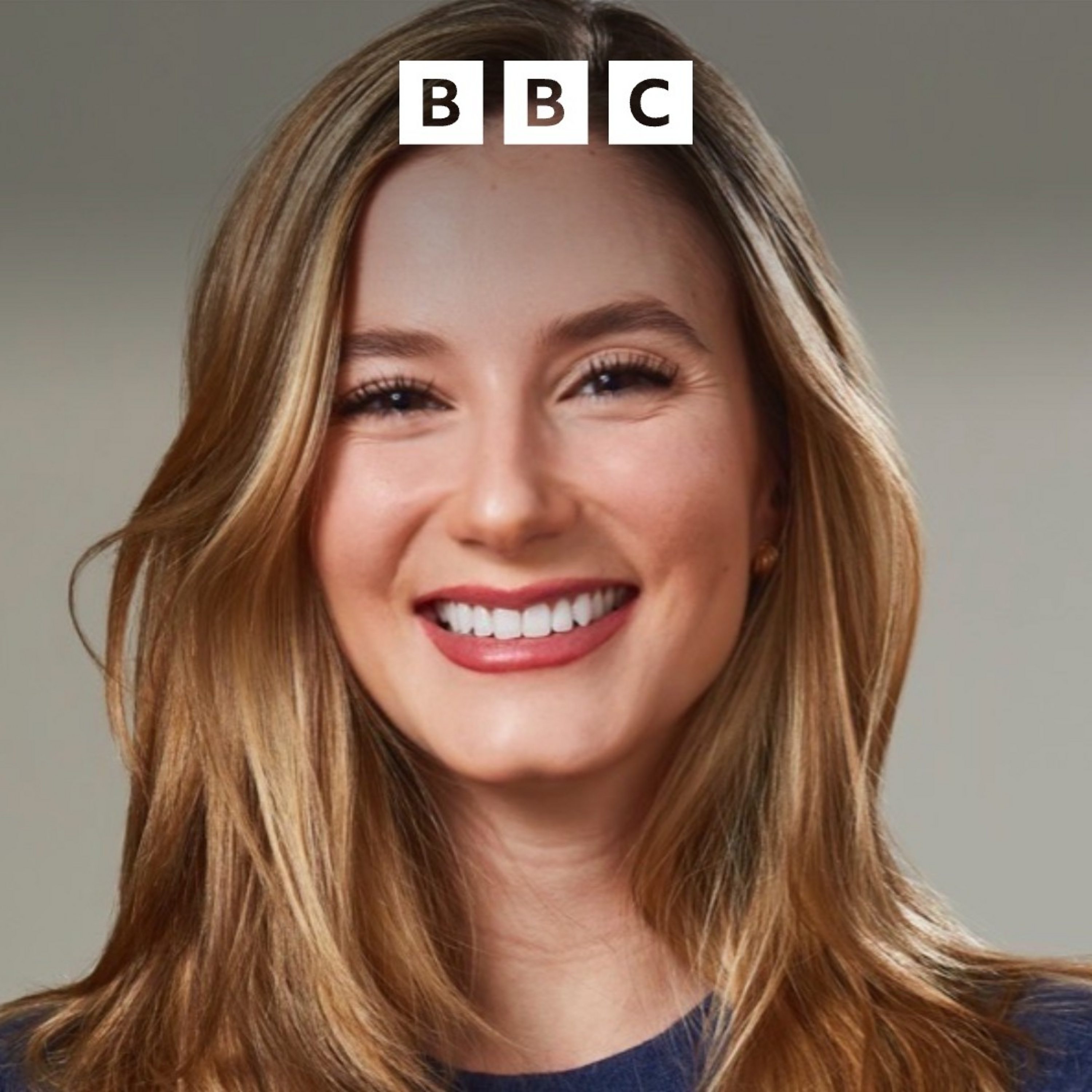
Business Daily
The ex-ballerina betting big on prediction markets
00:17:28
We speak to Luana Lopes Lara, whose firm Kalshi lets users trade on the outcome of events
Loading summary
Transcript56 lines
- [00:00]
Advertisement Voice
This BBC podcast is supported by ads outside the UK. The best B2B marketing gets wasted on the wrong people. So when you want to reach the right professionals, use LinkedIn ads. LinkedIn has grown to a network of over 1 billion professionals, including 130 million decision makers. And that's where it stands apart from other ad buyers. You can target your buyers by job title, industry, company role, seniority, skills, company revenue so you can stop wasting budget on the wrong audience. It's why LinkedIn Ads generates the highest B2B return on ad spend of major ad networks. Spend $250 on your first campaign on LinkedIn Ads and get $250 credit for the next one. Just go to LinkedIn.com Broadcast that's LinkedIn.com Broadcast. Terms and conditions apply. This message comes from Schwab at Schwab. How you invest is your choice, not theirs. That's why when it comes to managing your wealth, Schwab gives you more choices. You can invest and trade on your own plus get advice and more comprehensive wealth solutions to help meet your unique needs. With award winning service, low costs and transparent advice, you can manage your wealth your way at Schwab. Visit schwab.com to learn more.
- [01:17]
Sam Fenwick
Hi, I'm Sam Fenwick and this is Meet the Founders from Business Daily on the BBC World Service. This is where we speak to innovators from around the world about the ideas, the risks and the realities of starting a business. This week, a billionaire founder whose company allows users to speculate on real world outcomes. My guest is betting big on the business of prediction markets, an area of finance that's attracted intense scrutiny from regulators. An unlikely career change for someone who began as a professional ballerina.
- [01:53]
Luana Lopez Lara
Combining how young I was at the time I was a teenager with the physical side and the psychological side was was pretty hard but also made in comparison everything later on in my life a lot easier.
- [02:04]
Sam Fenwick
Hear how she built the company, why she believes markets can sometimes tell us more than the experts and how she responds to critics who say prediction markets blur the lines between finance and and gambling. It's a journey that's made her one of the world's youngest self made billionaires. That's Luana Lopez Lara, our founder. This week. We start at the Bolshoi Theatre School, one of the world's most demanding ballet academies and the only institution outside Russia to carry the Bolshoi name. This is where Brazilian born Luana Lopez Lara's professional life begins. The training program is famously tough, with days that stretch from early Morning academic classes through to long evenings of ballet. For Luana, it would become one of the most grueling periods of her life.
- [03:04]
Luana Lopez Lara
I used to practice eight hours a day, and your joints, your bones, your muscles are just a lot of pain for a lot of things. But the other side, there are very few roles. There are very few places that you can work at, and a lot of girls work very hard. So it's just a very, very competitive environment. Ballet is like. There's few spots, and you just need to get one spot. So I think combining how young I was at the time I was a teenager, with the physical side and the psychological side was. Was pretty hard. But also made in comparison everything later on in my life a lot easier. I remember one incident that I had. One of the instructors had a cigarette under my leg, and he's like, hold your leg. You have to hold your leg. And. And, you know, you'd be surprised how long you can actually hold your leg up.
- [03:42]
Sam Fenwick
It's amazing how high you can keep your leg for a very long period of time when someone's potentially going to burn you.
- [03:48]
Luana Lopez Lara
It is. But I guess there's a positive side to it, which is, like, you learn like that you can actually do a lot more than you think you can do. And I think that that type of mentality of resilience and pushing forward and believing that you can do more, I think is very important for life. So, obviously, everything has a negative and a positive side.
- [04:04]
Sam Fenwick
I mean, some people listening to that would hear that sort of story and wonder where discipline ends and where harm begins.
- [04:13]
Luana Lopez Lara
I think that there's a good point and definitely something to think about. For me, it ended up, all in all, being good. I think I learned a lot of great things from ballet, like discipline, as you said. You know, in ballet, it doesn't really matter if you're injured or if you're upset that you lost a role. You need to rehearse and you need to go in every single day. And I think that mentality of it doesn't matter what's happening. I have to go and improve my 1% every day and try to get my technique a little better. That discipline is just, I think, very, very important.
- [04:37]
Advertisement Voice
And.
- [04:38]
Luana Lopez Lara
And I think ballet is amazing at that.
- [04:39]
Sam Fenwick
After ballet school, Luana went on to dance professionally in Austria, but not for long. She did it only for about nine months before deciding to stop, swap her ballet shoes for books, and head to the United States to study at Massachusetts Institute of Technology. By then, living away from her parents was nothing new. And she was already starting to question whether ballet was really where her future lay.
- [05:04]
Luana Lopez Lara
Way before going to Austria, I was already set on like, I'm getting to the age to go to college and I need to make a decision. And I never thought it was going to be like the end game for me. I loved it. But I always had very big ambitions and I wanted to kind of learn and focus and try to build things outside of ballet as well.
- [05:19]
Sam Fenwick
At mit, Luana studied computer science and maths, later moving into statistics and quantitative finance, a world away from professional ballet.
- [05:29]
Luana Lopez Lara
One of the reasons I decided to go to MIT was actually I thought it was the school that was going to take me out of my comfort zone the most. I wanted, wanted to have this kind of shock of experience on the other side. And it was, it was interesting, right when I was at the maybe like second or third year of college, I realized that inside of computer science and math, what I liked the most was really the math side and statistics. And in that is very kind of usual transition from statistics to go to more like quantitative finance and hedge funds.
- [05:57]
Sam Fenwick
She also spent time interning on Wall street, where she began to notice what she saw as a gap. In traditional markets, the views about the future were usually implant rather than traded on directly.
- [06:11]
Luana Lopez Lara
Most trading happens when you have some view about the future and you try to put it in the market. So at the time, Brexit was a very big thing, actually. And then everyone was calling Goldman and calling Bridgewater, the place we worked at, and asking to find a way to express that opinion in the markets. And what we wanted to create is a place where you could actually go and trade whether Brexit would happen or not, and not trade a lot of different instruments that are trying to mimic what's going to happen. Maybe short the pound or a lot of different. So we just wanted to create an exchange where you could trade directly on the Future.
- [06:44]
Sam Fenwick
Then in 2018, she founded a company called Kalshi with Tariq Mansoor, a friend she'd met at mit. Kalshi means everything in Arabic. It's a prediction markets platform. Instead of trading shares in companies, people trade on the outcome of real world events. Elections, inflation data, interest rate decisions, sports, and even the weather. Each event is set up as a simple yes, no question. The price tells you how likely the market thinks the outcome is. And when the event is settled, the contract pays out.
- [07:24]
Luana Lopez Lara
Prediction markets, they function like the stock market, but instead of trading stocks, you're trading the outcome of future events. So think about who's Going to win an Oscar, who's going to win an election? The direction of the economy. So basically we allow people to make money on what they know and get better information about the future.
- [07:41]
Sam Fenwick
Okay, so who decides then what I can put my money on?
- [07:44]
Luana Lopez Lara
We have a team in the company that actually puts these markets up, but we have a federally regulated exchange. Before we even launched a single product, a single market in the US we went for a three year regulatory process with the government here to regulate this market, bring prediction markets in a safe way to the US and obviously every single market that we add to the platform has to be approved by the government. And there's a process there, but there's this markets team internally that writes these contracts, but they have to be approved and passed by the government before.
- [08:12]
Sam Fenwick
These sorts of markets have been in the US for 100 years or so, haven't they? But they were banned, weren't they? Because they weren't seen as being something that people should put their money on, yet you've managed to resurrect them.
- [08:28]
Luana Lopez Lara
Election markets used to exist in the US back in like the 1900s, right at the start of the century. I think it was the Great Depression that ended up stopping the election markets in the US and in 2024 we had to sue a regulator in the US, the CFTC, to allow us to bring back these markets in a legal way. For us, the data you get from these markets, the unbiased data you get about the state of an election, who has higher odds of winning or not, it's actually very important and it's very kind of important antidote to polls that are getting worse and worse by the day. And we thought it was very important to bring them back to the US in a safe, regulated way onshore.
- [09:05]
Sam Fenwick
In July of last year, 2025, your attorney Josh Sterling said that people are adults, they're allowed to spend their money on whatever they want and if they lose their shirt, that's on them.
- [09:18]
Luana Lopez Lara
If you go to our website or our app, we have like a responsible trading part of the website that lets you set limits on trades, on deposits, timeouts, all of those things that we see as very important in the US we actually are pushing actually a lot of other industries to bring this type of protection as well. Because I think if we allow retail to trade in our platform, it is our responsibility to make sure it's a safe environment. So we actually been pioneering a lot of these changes and protections.
- [09:42]
Sam Fenwick
And so how big have you become in terms of daily trades, in terms of users and in terms of investment.
- [09:50]
Luana Lopez Lara
Right now at around $2 billion traded a week, last year was a fantastic year for us. And I think in the U.S. also, we started going more mainstream, which is a little surreal. Like, there's a South park episode that mentioned us, and it's been great.
- [10:03]
Sam Fenwick
One question you asked on your site is whether Gaza will experience extreme famine in 2025 or how many people will Donald Trump's administration deport this year. There are obviously lines that you are willing to cross.
- [10:19]
Luana Lopez Lara
Well, I think that those two examples you mentioned, they are actually very important to have information on the lines that we won't cross about violent activity, war, terrorism, those are things we don't cross. But, for example, knowing if a very important part of, you know, a President of the United States policy that actually a lot of people voted for and a lot of people really care about it, there are so many studies out there that say, like the number of people being deported and whether he's going to be successful or not successful in his policy and how it impacts kind of American politics and American economy. And it's important to get data on these things. I mentioned, obviously, war, terrorism, assassination, those things we don't touch. But also things that are very much changed by a single person. For example, in the LA wildfires, we didn't add a single market related to that because, again, it's incentivizing bad activity in some way. And for us, those are things we don't touch. But markets that the data is very important. I think it's things we are willing to do.
- [11:14]
Sam Fenwick
For many critics, prediction markets still look and feel like gambling, a perception the industry has struggled to shake.
- [11:21]
Luana Lopez Lara
The fundamental structure of a prediction market is a market, right? We don't make money when people lose. We're not setting prices. Our revenue is not equal to customer losses. We actually have nothing to do if someone's winning or losing money. We are just matching users that have different opinions. When you think about in gambling or casinos and all of that, you're trading against the house, like you're betting against the house. The house always wins. The game is rigged against you. And if you're making a lot of money, they'll cap your winnings and all of that. And with us, we function like a market, like a fair market, the same way with options markets and futures markets.
- [11:54]
Sam Fenwick
You're listening to Meet the Founders from Business Daily on the BBC World Service.
- [12:01]
Luana Lopez Lara
If you're the purchasing manager at a manufacturing plant, you know, having a trusted partner makes all the difference.
- [12:08]
Sam Fenwick
That's why hands down, you count on Grainger for auto reordering with on time restocks. Your team will have the cut resistant gloves they need at the start of their shift and you can end your.
- [12:18]
Luana Lopez Lara
Day knowing they've got safety well in hand. Call 1-800-GRAINGER Click grainger.com or just stop by grainger for the ones who get it done.
- [12:31]
Advertisement Voice
Dreaming of hydrated skin Amidst these dry winter months, Daim offers clean, master esthetician crafted skin care products that deeply nourish, protect and hydrate. Their formulas, made with clean ingredients, lock in moisture for skin that stays soft, smooth and radiant all season long. Hydration starts with Dime's best selling Hyaluronic Acid serum, delivering deep moisture where your skin craves it most. This lightweight, fast absorbing serum helps quench dryness, plump skin and boost elasticity from the inside out. Once your skin is prepped with the serum, seal in all that hydration with their Dewy Day Cream, a rich, luxurious moisturizer designed to provide all day softness and lasting glow. Together, this powerful duo keeps your skin smooth, supple and luminous even in the harshest weather. Shop the duo now@dimebeauty.com that's dimebeauty.com and get the hydrated skin of your dreams.
- [13:32]
Sam Fenwick
I'm Sam Fenick. Today I'm speaking to Luana Lopez Lara, founder of the prediction markets platform Kalshi. Prediction markets really entered the mainstream in the run up to the 2024 US presidential election, when markets on platforms like Polymarket pointed to a clear result, even as many opinion polls were suggesting a much tighter race. And in the run up to the 2025 New York City mayoral election, this happened when you see the Kalsh odds.
- [14:05]
Luana Lopez Lara
That have our chances of victory in.
- [14:07]
Sam Fenwick
The 90s, candidate Zoran Mandani even cited Kalshi's market odds on the campaign trail. The idea behind prediction markets is that when people put real money behind what they believe will happen, markets can pull together information and in some cases forecast outcomes more accurately than polls or experts alone. But that growing influence has also sharpened criticism of the industry. Kalshi's rapid growth has put it on a collision course with US Regulators, who've taken a tough line on prediction markets. They argue these markets can look too much like gambling and risk undermining public trust, particularly around elections. Those concerns have been fuelled by how prediction markets are being used elsewhere on platforms like polymarket. Traders recently placed bets on the possible capture of Venezuela's president Nicolas Maduro, a high stakes geopolitical scenario which has intensified questions about ethics, insider information and where regulation should draw the line. Kalshi itself has faced criticism from organisations like the ncaa, which oversees college athletics in the us, and from some US states seeking to apply existing gambling laws to its platform.
- [15:30]
Luana Lopez Lara
Every financial innovation always comes with a lot of pushback, and I think that it's expected. There are two things that really keep us. The first one is that we think it's really important to allow people to make money on what they know. One of our biggest traders is actually an Ariana Grande superfan. His main hobby was just following music charts and music in Ariana Grande and he found our music markets and has been able to pay back his student loans, buy a car. Now he's putting himself through the Masters and expanding what people can trade on and access to make money on things that are more accessible to people, we think is very important. And the other side that's very important about prediction markets really, is the data that you get from these markets. You think about an election getting unbiased data that actually was proved again and again way better than polls is actually very important for a good democracy to have access to these things.
- [16:15]
Sam Fenwick
When you describe that, though, can you understand that some states in the US have become concerned about it because they think that you are undermining their gambling laws that are designed to protect consumers?
- [16:26]
Luana Lopez Lara
I understand that there's pushback and I think that pushback is fair in a lot of ways. But I think that we are very comfortable in our legal position and that's why we've been winning or our lawsuits pretty much. We are federally regulated. There's federal preemption and saying that there's like less regulation or less customer protections. We think it's actually very wrong to say that. We strongly disagree with that.
- [16:45]
Sam Fenwick
I suppose it's just the type of regulation though, isn't it? Because if, if I'm a gambler and I want to go and put some money on a game of soccer or whatever, then there will be specific regulations that will protect me as an individual consumer.
- [16:58]
Luana Lopez Lara
Well, I think we also need to look at the fact that the states are very worried about their tax revenue that comes from this and the amount of money that they think they're going to lose. We know we actually have way more information about our customers than in the state regulation in terms of who they are, what they are doing. There's federal oversight also. The other thing to think about is, like with sports betting, there are unfair prices, there's no transparency on who's trading and how the trades or the bets are going. There's obviously if you start winning a lot of money, they ban you, they block you.
- [17:29]
Sam Fenwick
Despite questions from regulators, money has continued to flow in. Last year, Kalshi raised $1 billion from investors and that lifted its valuation to around 11 billion, up from 5 billion earlier in the year. According to US business magazine Forbes. That valuation means Luana Lopez Lara is now the world's youngest self made female billionaire at just 29 years old.
- [17:58]
Luana Lopez Lara
It's crazy. It's been really surreal looking back and a girl from Brazil that was passionate about ballet and just had a dream of coming to the US and building stuff. It's just crazy to see this.
- [18:10]
Sam Fenwick
You described at the beginning of our conversation that ballet was all consuming. Is starting a business similar to that?
- [18:17]
Luana Lopez Lara
In a lot of ways it is. Everything is very much in your control, right? Like how hard you work, how big the company is going to be. It's about your decisions, about the team you hire. And I think in a lot of ways ballet has also helped me be very calm in situations that are very high pressure and a lot of things. And starting a company, there's not a lot of physical strain that comes from there except sitting down for way too many hours in a row. But long hours, I bet.
- [18:42]
Sam Fenwick
And endurance, I bet you need a lot of endurance in your role.
- [18:46]
Luana Lopez Lara
That's true. So yeah, no, we're in the office like 12, 14 hour days. But the good thing is I always remember every two hours I least go for a little walk in the office or go get a coffee or something. I think it's important, but I think it's more. The difference is in ballet it's always about you and yourself. The good things and the bad things are just about one person. But now we're 120 people. My decisions and everything that we do actually impact the job of 118 people that trusted me and trusted my co founder and wanting to join us and put a lot of hours in their career here. So I think that type of pressure is very, very different from ballet.
- [19:22]
Sam Fenwick
Now one last final question is can you still stand on point or can you still get your leg above your head?
- [19:31]
Luana Lopez Lara
No. Can you show us? Can you show us? I can't. If it were me to try to do ballet again, it would be disaster.
- [19:38]
Sam Fenwick
So you don't walk around on point?
- [19:40]
Luana Lopez Lara
I don't, I don't. Maybe I should try, but I don't.
- [19:46]
Sam Fenwick
Luana Lopez Lara, co founder of Kalshi, the prediction markets platform, was talking to me. Sam Fennec that's all from today's edition of Meet the Founders. To listen to more conversations like this, search and subscribe to Business Daily. Wherever you get your podcast.
- [20:21]
Advertisement Voice
Dreaming of Hydrated Skin Amidst these dry winter months, Daim offers clean, master Esthetician crafted skincare products that deeply nourish, protect and hydrate. Their formulas, made with clean ingredients, lock in moisture for skin that stays soft, smooth and radiant all season long. Hydration starts with Dime's best selling Hyaluronic Acid Serum, delivering deep moisture where your skin craves it most. This lightweight, fast absorbing serum helps quench dryness, plump skin and boost elasticity from the inside out. Once your skin is prepped with the serum, seal in all that hydration with their Dewy Day Cream, a rich, luxurious moisturizer designed to provide all day softness and lasting glow. Together, this powerful duo keeps your skin smooth, supple and luminous even in the harshest weather. Shop the duo now@dimebeauty.com. that's dimebeauty.com and get the hydrated skin of your dreams.