← Business Daily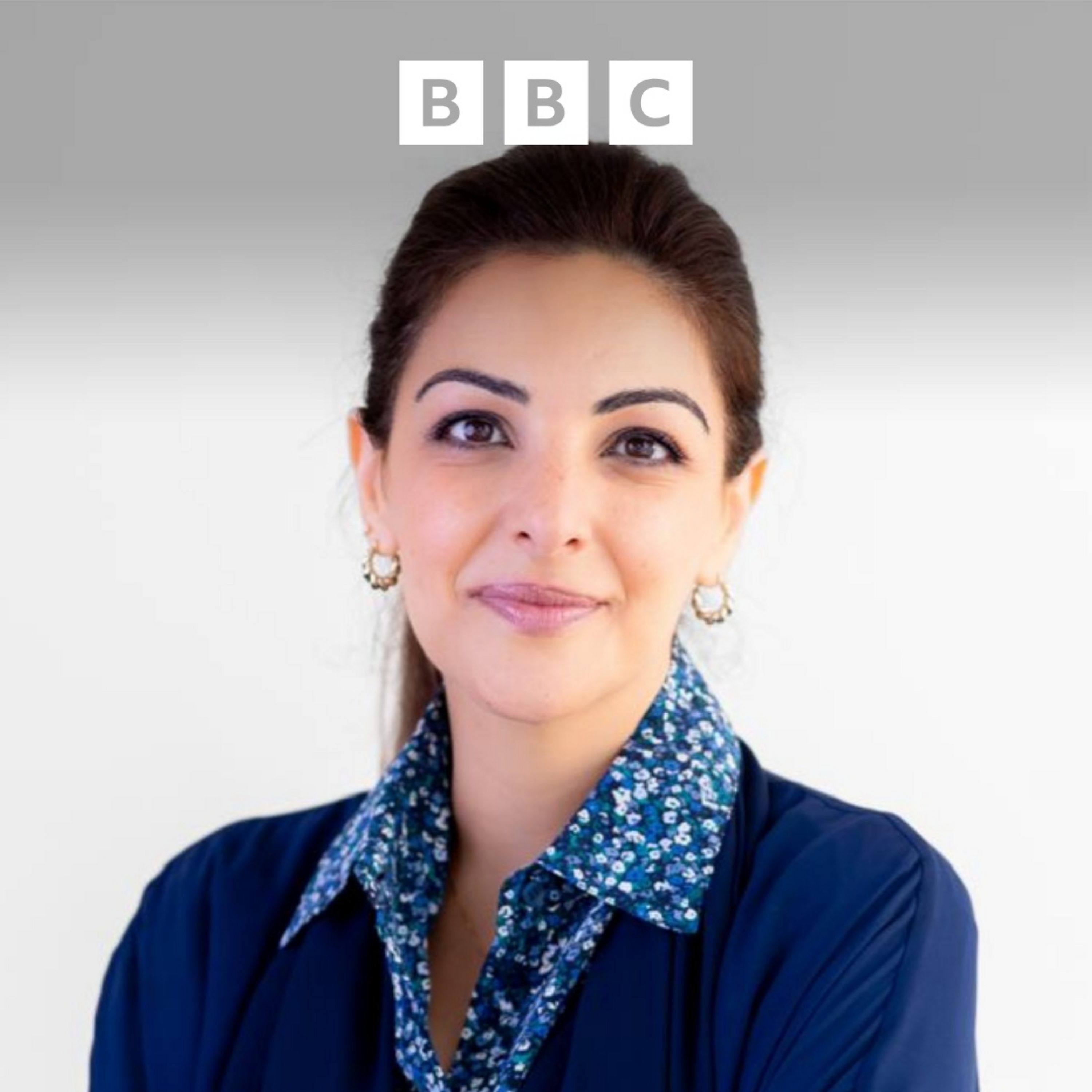
Business Daily
The founder making cutlery out of palm leaves
00:17:58
We meet Lamis al-Hashimy, whose startup turns agricultural waste into eco tableware
Loading summary
Transcript64 lines
- [00:00]
Advertisement Narrator
This BBC podcast is supported by ads outside the uk. Ever invest in something that seemed incredible at first but didn't live up to the hype? Like those $5 roses at a gas station? Or a second hand piece of technology that breaks in the first 10 minutes? Marketers know that feeling. We optimize for the numbers that look great, impressions reach and reacts. But when they don't show revenue, well, that's a not so great conversation with the CFO. LinkedIn has a word for that. Bullspend. Now you can invest in what looks good to your CFO. LinkedIn Ads generates the highest roas of all major ad networks. You'll reach the right buyers because you can target by company, industry, job title and more. So cut the bull. Spend advertise on LinkedIn, the network that works for you. Spend $250 on your first campaign on LinkedIn ads and get a 250 credit for the next one. Just go to LinkedIn.com broadcast that's LinkedIn.com broadcast. Terms and conditions apply. Today's episode is sponsored by Smart Travel, a podcast from NerdWallet. You know that one friend who always finds the best travel deals, picks the right credit cards and somehow ends up in first class for the price of coaches? Smart Travel is like that friend, but in podcast form. NerdWallet's travel journalists sort out what's worth paying for. From lounge access to travel advisors to hotel loyalty programs, make your travel dollars work harder. Follow Smart Travel on your favorite podcast app.
- [01:42]
Sarah Rogers
Hello, I'm Sarah Rogers and welcome to meet the founders from Business Daily on the BBC World Service. This is where we speak to innovators around the world about how they build businesses, the ideas behind them and the risks today turning palm tree waste into millions of pieces of eco friendly cutlery.
- [02:01]
Lamees Al Hashimi
If you think about impact, we've diverted 16 million single use plastics from our environment.
- [02:09]
Sarah Rogers
My guest is the co founder of Palm Made, a company using discarded date palm leaves to create sustainable, sustainable alternatives to plastics. It's a business born out of personal change, persistence and plenty of early failures. That's Lamees Al Hashimi, our founder.
- [02:25]
Lamees Al Hashimi
Today,
- [02:29]
Sarah Rogers
Dubai is a city known for rapid transformation. But one thing has remained constant. The date palm tree. For Lamees Al Hashimi, it became a starting point for an entirely new kind of business. But her story starts in the Dubai that she grew up in. Back when the city skyline and her own ambitions were yet to take shape.
- [02:50]
Lamees Al Hashimi
I was born in the 80s, so I'm an 80s child. I can't remember if that Makes me a Gen X or a Gen Z. I can't keep up.
- [02:57]
Sarah Rogers
I think you're a millennial, aren't you, in the 80s?
- [02:59]
Lamees Al Hashimi
Oh, millennial, yes.
- [03:00]
Sarah Rogers
Same as me.
- [03:01]
Lamees Al Hashimi
All right, Good. Yes, great. Life was a lot simpler, Sarah, as you can imagine. Dubai was a different Dubai than I'm sure you've seen recently. Although it could get really hot in the for some reason, we still were able to bike around to go to the local grocery store and just to enjoy simple moments on the beach or birthday celebrations. I'm one of three siblings. I'm a middle child. I have an older sister and a younger brother.
- [03:33]
Sarah Rogers
Do you have middle child syndrome? Because I'm a middle child as well, and I definitely do.
- [03:38]
Lamees Al Hashimi
We have a lot in common. I can see.
- [03:41]
Sarah Rogers
And you got to a teenager and then you decided to leave the UAE and go to America. Erica, what was behind that move?
- [03:47]
Lamees Al Hashimi
So that was in the 90s. Dubai did not have a lot of strong postgraduate or university institutions. I remember there was just one or two. And if you had really good grades, you can apply for a scholarship from the Ministry of Education. So my parents cut a deal with us. They said if you get the good grades and you get a scholarship, then you get to go. And at the time, it wasn't very common, but if you did get accepted, it was something that you couldn't just let it pass by. My sister was at the forefront, so she went to Boston, and I had no other choice but to follow her to Boston. And that's what gave us the reason to travel abroad to get a better higher education.
- [04:30]
Sarah Rogers
And so how different was that, growing up in the UAE and then suddenly being a teenager in America?
- [04:36]
Lamees Al Hashimi
It was a culture shock, to say the least. I think a little less for me because my sister went before us and we did travel to the U.S. but nevertheless, we graduated quite early in those days as well. So I was 16 going on to 17 and then leaving my small town like Dubai and going into a much bigger state as Boston was. We struggled a lot with the culture shock, with the weather. It gets really, really cold in Boston. So I remember crying at times because I just didn't know how many more layers I could put on to keep warm. It's very cold, but then you get used to it. It's amazing how you adap now Boston has such a special place in my heart. It's where we truly grew into ourselves.
- [05:21]
Sarah Rogers
It's really interesting hearing you talk about leaving Dubai, a small town, because we don't know it as a small town. Now it's bustling. The tourist industry there is huge. It's a mecca for business as well. Did you just move back home?
- [05:38]
Lamees Al Hashimi
No, I didn't feel like I was ready to go back. I wanted to continue, so I pursued a master's degree as well in accountancy. And then there was a program for international students where they could work for a year. So I worked at Deloitte in audit and assurances. And then I still didn't feel like I was ready to come back. So I worked for a few years in New York, in Manhattan. And every time I would come back to visit family, Dubai would completely, like, transform and shock me. The roads that I take to come home changes. The little mall that I used to go to is no longer a little mall. Buildings are popping left, right and center. So I would say Dubai really changed from, like you had mentioned, a small town to what it is today.
- [06:23]
Sarah Rogers
Was it just unrecognisable to you by the time you got back?
- [06:26]
Lamees Al Hashimi
Yes, it was. Because I can tell you, Sarah, when we used to go to school, Sheikh Zayed Road, which is one of the main arteries, it's a highway in Dubai, had a few buildings on either side. Right now there is no space to put any skyscraper on that highway. And to see from an infrastructure point of view, from a cultural point of view, everything, it just completely transformed when I finally came back. And that was in, I believe, 2008 or 2009. So 10 years later, it was a different Dubai and it continues to change.
- [07:02]
Sarah Rogers
Sarah, did you have any idea when you came back what you wanted to do because you'd been working in finance? Is that what you thought you were going to come back to do? How did then sustainability come about?
- [07:13]
Lamees Al Hashimi
Yes, so I did work in finance only because it made sense, because that was what my degree was all about. It was where I had experience. But I always felt void. I was never really happy doing my job. It was more of like, getting a paycheck at the end of every month, climbing up the corporate ladder. And I've been really lucky. I was around really good people. I didn't struggle with all, you know, the toxic environments, but deep inside, I always felt like there was a void. I didn't feel very purposeful. It didn't feel like I was doing something with impact, but I just didn't have the courage to resign or to try something new. And even culturally, going abroad and getting a degree and having all these opportunities, it would be shameful for us to turn our backs on it and completely try something else. You know, there was also a cultural aspect in the way we grew up, where we had to be very thankful and grateful for the opportunities that we had. And so I stuck to it. And the only thing that encouraged me or gave me the courage to resign was when I had my first child and I tried to go back to work. And in a few months, I just couldn't bear leaving her at home. And then, unfortunately, I lost my mom at a young age, so I didn't have someone that I could fully trust to look after her.
- [08:33]
Sarah Rogers
How old were you then?
- [08:35]
Lamees Al Hashimi
So I lost my mom when I was 25.
- [08:37]
Sarah Rogers
Oh, that's really tough.
- [08:39]
Lamees Al Hashimi
Yeah. Thank you. And I had my daughter when I was 31, so it was just a very difficult time. And I just had trouble trusting anyone to look after her. I remember having all these cameras at home and I'd go into the office and I'd have, like two iPads having different angles of the nursery so I could keep an eye on her. And I'm not keeping an eye on my emails or any of my work. So it was just. It wasn't sustainable. I had two other kids after her, so I'm a mom of three. And between my second and my third pregnancy, I felt like I wanted to do something different. And because I was away long enough from the corporate world, your mindset shift. You look at things differently. You don't feel so attached to the things you were stuck to in the past. And my husband was very supportive of this initiative. And I thought, if I'm going to do something, it has to be something meaningful.
- [09:36]
Sarah Rogers
So you co founded Palm Made. Where did the idea come from for that? Because, I mean, I suppose we've been talking a lot about life changes, how the city that you grew up in changed. I suppose you could say one thing remained the same. This date palm tree in between all of that transformation was still there.
- [09:57]
Lamees Al Hashimi
Absolutely. Sarah. The date palm tree is such a symbol of resilience and such a relatable tree for those who lived around this region. Everyone has benefited from it one way or another, either through its shade or through its fruit with the dates. And even in the past, they built their homes from it. And it just took a different set of eyes or a different mindset to look at those leaves in a different way. I never thought I would be making cutlery. If anything, I thought I'd be in another area, probably. I love fashion. I thought maybe that would be something I'd be interested in or yoga or something else. But making spoons and forks never Crossed my mind. And so what happened was my husband and I were on a trip. This was before we had kids. We were in Florence, and we saw people make paper by hand, handmade paper. And he was intrigued, and it looked beautiful, and it became a hobby. He started making paper by hand out of our garage, which I found very interesting. Maybe midlife crisis, whatever it was. And then we started thinking to ourselves, well, what if we tried to make this paper with a local resource, because we were importing cotton to make the paper? And that's when we were walking, and I saw a pile of these leaves. And just for you to know, the date palm leaves have around 15 or 16 fronds that need to be trimmed every year so that you can make way for harvesting the date. And these fronds, the leaves that come out of them are so heavy, each one is around 10 to 15 kilos. And what happens is they get thrown into green landfills or they get burnt, which is terrible. And so I always passed by them. You know, you see them on the. On the sidewalk, and then the garbage truck comes and collects. And on that day, as we were walking, I just looked at them and thought, hey, shall we try and use these leaves to make the paper? And we called our gardener to help us. I didn't realize how heavy they were. And we managed to make paper. And it was a long journey. Five years of R and D before we had our first prototype, and then a couple of years later, before we were able to enter the market.
- [12:06]
Sarah Rogers
So was that process, how did you get from paper to spoons and then cutlery?
- [12:10]
Lamees Al Hashimi
So the fibers of the date palm leaves, we discovered that they were strong enough to make paper, so they had strength. But if you combine them with extracts of sugar cane, so they're known as biopolymers, that acts like a glue, and it binds the fibers together. Then you have this, like, material that is bendy and hard, and then you can mold it into anything you want. So when we saw that little stick, the first thing I thought of, okay, could we turn this into a spoon? Because if we could, then it would replace a plastic spoon, except this would be natural and it would not have any plastic in it. And they said, yeah, you can. And of course, when you do something in a laboratory, it's completely different when you start doing it in a factory and at scale. But from the conceptual point of view, it was possible. And then years later, with a lot of trial and error, we managed to make it into a viable product.
- [13:05]
Sarah Rogers
You said the trial and error, what were some of the errors. Did you have some interesting prototypes?
- [13:10]
Lamees Al Hashimi
Oh, my goodness. There was one in the beginning where he was so upset at us, his owner, but I'm very grateful that he told us what was the problem because that's the only way we could get better at it. Our fork melted in the pizza because the cheese was so hot. And when they put the fork in the pizza, it started bending, you know, and he was like, it melted in the pizza and we were so sorry.
- [13:34]
Sarah Rogers
Was that the end of that contract then back to the drawings.
- [13:37]
Lamees Al Hashimi
Yes, it was. It was. And it makes you second guess yourself. It puts you down. It takes a lot of courage to start over and try again and remind yourself of why you're doing what you're doing. And honestly, it may sound cliche, but I look at my kids and I think of the legacy that I want to leave behind. I think of how proud they are when they look at pomade products around. And that for me is enough reason to keep going.
- [14:05]
Sarah Rogers
You're listening to Business Daily from the BBC World Service.
- [14:11]
Advertisement Narrator
Want to keep up with everything trendy? From breaking news to shareable jokes, pop culture bites to viral food spots, it's all on TikTok. Download TikTok now to explore.
- [14:27]
At Energy Trust of Oregon, we know it isn't easy the tremendous weight of today's operating costs, working in cold, drafty spaces with inefficient heating systems or under lights that have seen brighter days. But we also know how to help you upgrade those systems, lower those costs and meet the demands of your business with smart energy efficient solutions. Find cash incentives@energytrust.org Energy Trust of Oregon. More power to you.
- [14:58]
Sarah Rogers
I'm Sarah Rogers and in Meet the Founders today I'm talking to Lamees Al Hashimi about building a sustainable business from palm tree waste and the challenges of scaling it. From those early setbacks, Palm Made has grown into a company supplying major clients across the region.
- [15:15]
Lamees Al Hashimi
Benny's and Waitrose. So they have fresh foods like an open kitchen where you can buy like ready made foods. And they use our cutlery, Emirates Flight Catering use our cutlery for all their crew members. And then we have the Amar Hotels which are flagship hotels here in the uae.
- [15:33]
Sarah Rogers
What's your business worth? I mean you're still considering it a startup, aren't you? At the moment.
- [15:38]
Lamees Al Hashimi
So we're on our fourth year of operations and to date we've made 60 million single use products. So if you think about impact, we've diverted 60 million single use plastics from
- [15:51]
Sarah Rogers
our environment in January. So A ban came in on single use plastics, didn't it, in the uae? Have you managed to take advantage of that?
- [15:59]
Lamees Al Hashimi
Yes, we have. So the UAE took a phased approach two years ago. They banned, banned the straws a few years before that, plastic bags. And this year was a complete ban on everything that's plastic. I was definitely waiting for 2026 to come so we could take advantage of it. And thankfully this entire time legislation was on our side. The government supported everything that we are doing and restaurants have slowly come around. In the beginning it was very difficult to shift that mindset.
- [16:30]
Sarah Rogers
Well, because plastic's cheaper as well, isn't it? So was it a challenge to get companies to spend more to buy your product?
- [16:37]
Lamees Al Hashimi
Absolutely, until they would realize that their customers are expecting that of them.
- [16:42]
Sarah Rogers
Does it mean you're going to have to wait to grow though to export to other places?
- [16:47]
Lamees Al Hashimi
We recently got our Europe license, so we are accredited in Europe. So we're looking at ways in which we can export to Europe. But we have exported to Saudi Arabia, to Bahrain, to the GCC countries. I think as people start getting more and more used to alternatives to single use plastics, they will look at the different options. Our biggest hurdle at the moment is the pricing. So those who are using plastics, it's still very, it's expensive, so it would be almost double the price of plastics. But those who are using the same kind of quality of our products know we are actually cheaper. It all depends on the customer.
- [17:26]
Sarah Rogers
You spoke earlier about how different things are in the UAE now to what they were like when you were a younger girl. How have you found being a woman in business in the uae? Have there been any challenges? Because you know, traditionally things like access to funding can be quite difficult.
- [17:42]
Lamees Al Hashimi
Sarah, the UAE has really pioneered in the region for promoting and supporting women in all spaces of leadership, government positions, businesses they very much encourage and in cases they also sort of provide special sort of permissions and circumstances. Like for women who want to work out of home or start businesses from their homes, they encourage that and make paperwork easy for them. So thankfully, if anything, I felt very, very supported and encouraged. It was always a plus that it's a woman behind the company.
- [18:19]
Sarah Rogers
What impact has the war in Iran had on your business?
- [18:24]
Lamees Al Hashimi
So we were very afraid in the beginning. Yes, there has been a decrease in tourism which, and we rely on hotels, the tourism sector, but a lot of people continued to go out to go to cafes. We did not feel a big shake in our business because we produce everything locally, we're a local manufacturer. So what is happening outside is not impacting us and that really sort of shone during these times.
- [18:54]
Sarah Rogers
Has the war in Iran affected your production costs at all? Is it more expensive to produce them now in the factory?
- [19:00]
Lamees Al Hashimi
It has increased our costs from because of the suppliers that we rely on and they are impacted by the war. So most of our inventory is the date palm leaves which is in abundance here, but then the sugarcane extracts and some other materials, the cartons, the paper, all of these other supplies have increased in cost.
- [19:20]
Sarah Rogers
I know we're talking a lot about the business, but I am very aware we're talking to you from Dubai. How are you and how are your family coping?
- [19:29]
Lamees Al Hashimi
We're good now. Things are a lot better than they were a few weeks ago. Dubai has done an amazing job in making us feel safe and comfortable. But regardless, the sounds that we would hear in the sky, I think that was the most difficult part. It's not knowing and not understanding sort of in limbo of how long this is all going to take.
- [19:50]
Sarah Rogers
Lamees Al Hashimi, founder of Parmaid it's been an absolute pleasure to speak to you today. Thank you very, very much for your time.
- [19:58]
Lamees Al Hashimi
Thank you. Sarah, you thank. It's been a pleasure meeting you as well.
- [20:02]
Sarah Rogers
And that's it for today's edition of Meet the Founders with me, Sarah Rogers. The producers were Bissy Adebayo, Victoria Holland and Jay Behruzzi. To listen to more conversations like this, search and subscribe to Business Daily wherever you get your podcasts and you can get in touch with the team. Our email address is businessdailybc.co.uk thanks for listening. Hey Mama.
- [20:32]
Advertisement Narrator
Thanks for making all my favorite recipes.
- [20:35]
Hi Ma. Thanks for your unfiltered advice.
- [20:38]
Sarah Rogers
Hi Mom.
- [20:39]
Lamees Al Hashimi
Thanks for always being by the phone. Hey Mom. Happy Mother's Day.
- [20:44]
Advertisement Narrator
When you ship UPS Air at the UPS Store, your items arrive on time or your money back guaranteed at no extra cost. Exclusively at the UPS Store US retail location. Visit the upsstore.com airshipping for full details. Terms and conditions apply. Send your Mother's Day gifts at the UPS Store and we'll get your gratitude there on time.