← Business Daily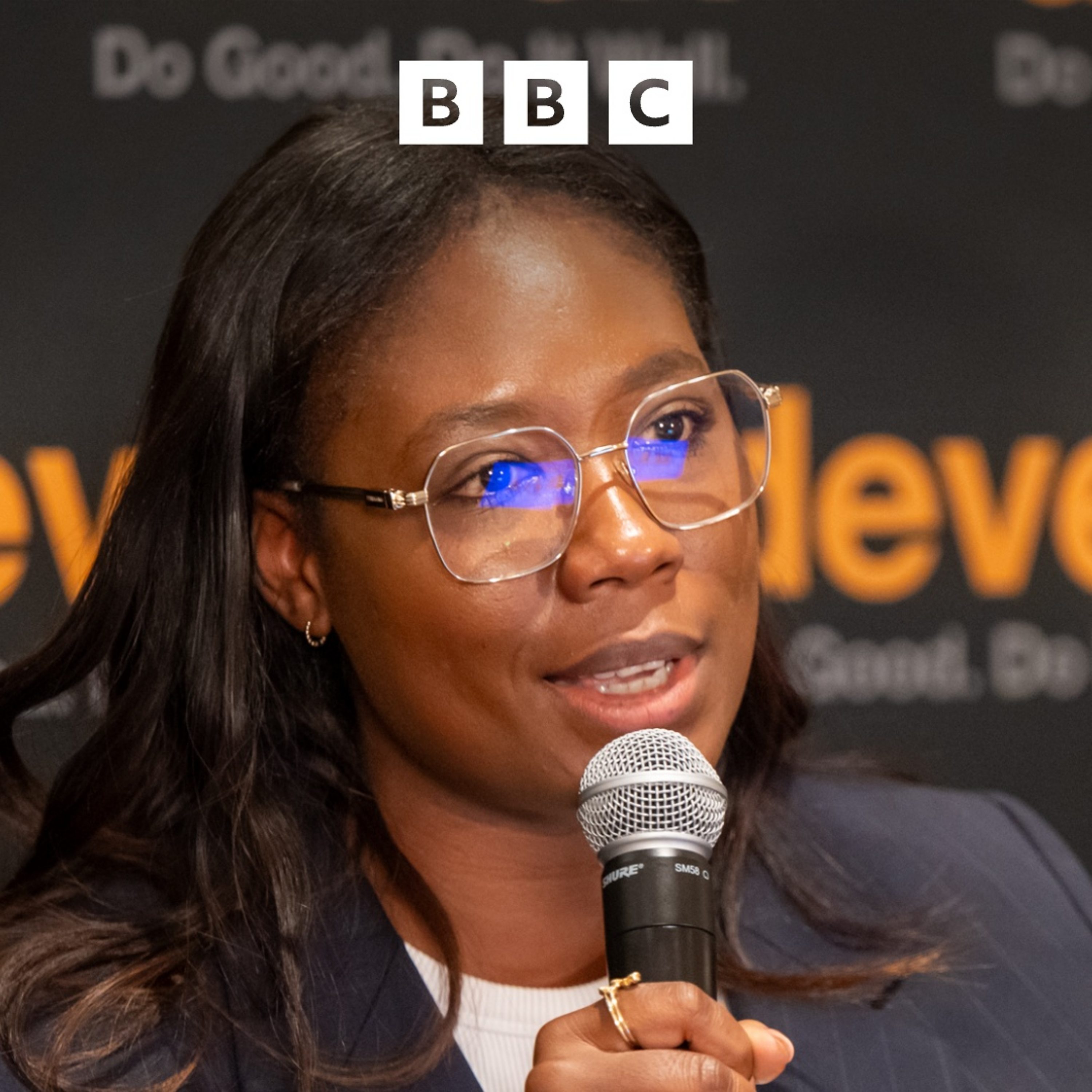
Business Daily
The founder tackling Africa’s data scarcity problem
00:17:39
The CEO of Amini AI, Kate Kallot, shares her story in life and business
Loading summary
Transcript55 lines
- [00:00]
Podcast Advertiser
This BBC podcast is supported by ads outside the uk.
- [00:06]
Smart Travel Sponsor
Today's episode is sponsored by Smart Travel, a podcast from NerdWallet. Do you have a friend who treats airfare like a puzzle and somehow always ends up with a first class upgrade? Smart Travel is like that friend, minus the group texts. NerdWallet's travel journalists break down the pros and cons of travel decisions like when lounge access is worth paying for and and which hotel loyalty programs actually pay off. Make your travel dollars work harder. Follow Smart Travel on your favorite podcast app.
- [00:35]
LinkedIn Ads Sponsor
Ever invest in something that seemed incredible at first but didn't live up to the hype? Like those five dollar roses at a gas station? Or a secondhand piece of technology that breaks in the first 10 minutes? Marketers know that feeling. We optimize for the numbers that look great, impressions reach and reacts. But when they don't show revenue, well, that's a not so great conversation with the CFO. LinkedIn has a word for that. Bullspend. Now you can invest in what looks good to your CFO. LinkedIn Ads generates the highest roas of all major ad networks. You'll reach the right buyers because you can target by company, industry, job title and more. So cut the bull, spend. Advertise on LinkedIn, the network that works for you. Spend $250 on your first campaign on LinkedIn ads and get a 250 credit for the next one. Just go to LinkedIn.com Broadcast. That's LinkedIn.com Broadcast. Terms and conditions apply.
- [01:43]
Leanna Byrne
Hello, I'm Lianna Byrne and welcome to meet the founders from Business Daily on
- [01:47]
Interviewer
the BBC World Service.
- [01:48]
Leanna Byrne
This is where we speak to innovators around the world about the ide risks and realities of starting a business. Today, the founder of an African AI startup working to make farming and environmental data easier to obtain across the continent and other emerging economies.
- [02:05]
Kate Callett
We've now proven that you can build a company that does impactful work but that can also make profit out of it.
- [02:14]
Leanna Byrne
That's Kate Callett, my guest today.
- [02:20]
Interviewer
So hello, welcome to meet the founders. Kate, thank you so much for joining me today. To just begin, just introduce yourself for us and tell us what Amani does.
- [02:28]
Kate Callett
Thank you so much. So I'm the founder and CEO of Amini and we are an AI company building the sovereign data infrastructure for the global South. Started a couple of years ago with Africa, but have now expanded throughout the Global south. Doing a lot of work in Latin America, Caribbean and Southeast Asia. A little bit of the backstory. My grandfather Joseph was born under French colonial rule in the Central African Republic. He was one of the first African graduates of Saint Cyr, which is the national police school in France. He studied in Washington Police Academy in Vienna. He met with President Kennedy and started working for Interpol, traveling the world, which was quite unusual for a black man from the Central African Republic at the time. And in 1960, when the country got its independence, he decided to move back to his country. He really made bold choice. And the reason why he decided to move back was because he really wanted to help develop and accelerate his country's development. But in 69, he was arrested and killed by the dictator at the time, Bokassa. So after that, my grandma and her five kids, including my mom, were put in survey residence of prison at the border of Sudan. And my grandma was continuing to educate her kids by hiding textbooks into cassava bags. They got released a couple of years later. They managed to immigrate to France. And this is how I was born and educated in France. But I grew up with that story really at the back of my mind and also going back to the Central African Republic almost every year while growing up. So I've always thought, okay, at some point I will need myself to do potentially the same choice as Joseph and come back to the country or to the continent and really put my skills to use.
- [04:18]
Interviewer
It sounds like because of that story and that legacy that you carry, a sense of responsibility.
- [04:24]
Kate Callett
I do. A big sense of responsibility, not just for me, but I think for the African continent at large, but even for the global south at large. Because I'm now a citizen of the world, right? Yes. I grew up in France. My origins are on the continent, but I used to live in Barbados in the Caribbean. I've studied in Japan, I've worked in the US in the uk And I feel a sense of responsibility for mostly the global south because I see how a lot of the challenges that we face very similar across the entire belt. And a lot of the opportunities we face are also very similar. So there's this kind of duality and also a lot of these things. Although we far in terms of geographic spread, we actually extremely similar in terms of culture and knowledge systems and in terms of challenges and opportunities.
- [05:13]
Interviewer
Well, let me bring you back. What was it like growing up in France?
- [05:17]
Kate Callett
Growing up in France was good. Was good. France really taught me diversity. I grew up in a place that was extremely multicultural. We were living in the suburbs of Paris and it really showed me that there is this place where although we are very far from our country of origin, There is a place where we all kind of like meet and congregate. And I think even in the way I operate today, I've always kept some quite close ties with France. And I think for me, if I have to describe my identity, I would be Franco, Central African, but also representing a lot of the countries that are similar. So when you think about opening our eyes to what is possible, then using what we're seeing, where we grew up, as a template to support the places we are from, to catch up with the rest of the world, I think this is what France has taught me.
- [06:08]
Interviewer
Originally you studied law and political science, then you did communication. So how did you end up in tech and then in AI specifically?
- [06:16]
Kate Callett
I always say I have a bit of unusual path into technology because, you know, growing up with African immigrant parents, you have two choices. It's either you become a lawyer or you become a doctor. These are the two career paths that are open to you. So I picked the former. I wanted to first become a lawyer, then decided that law was not for me. So I decided to orient myself towards journalism. It's actually journalism that I was studying when I was in communication school and I wanted to become a journalist and write about geopolitics across Africa and write about the imbalance of natural resources in Central African Republic. So kind of like going back also to where I was from. But I did a year abroad, was an exchange student in Japan, and if you've been to Tokyo, it's technology everywhere in your face and it's kind of like quite apparent in your day to day life. So when I got to Japan, one of my professors was working at Sony. He used to lead the marketing team, which is the campaign for the Walkman at the time. And he was teaching us about how technology could change behaviors for the best. And I was so inspired by that that when I came back, I applied for an internship at intel and got hired at Intel Paris. And then that's how my career in tech Kickstart and I started teaching myself how to code and became a data scientist like this. Because for me it was okay. If I'm getting into a field, I need to understand really how this works. I'm a very curious person. So I need to dig a little bit deeper. I need to be able to build myself. And that's kind of how I ended up into AI and emerging technologies. Because I this like passion for really understanding how the convergence of machine learning, emerging technologies, computer vision, drones and such were working. Because that's what I was working on when I was at Intel. And since then, I actually never left the field. It just became what I live and breathe on a daily basis.
- [08:09]
Interviewer
When you started, were there many women doing that?
- [08:11]
Kate Callett
There were not many women doing that, let me tell you. There were not many people of color. When I used to lead emerging technologies for the group in Europe. I was based in Poland when I started. And I remember at the time we were two black employees in the country out of like maybe about 2,000 people. And for me, that always was quite shocking. But then you move to the US and you have so many black executives and you're like, oh my God, this is a different world.
- [08:38]
Interviewer
I mean, you didn't just work for intel, you worked for arm, Nvidia. These are huge companies that still people know today. They were always hearing about company stories about them. Was that the same when you went to those companies too, or was it a little bit different?
- [08:53]
Kate Callett
It was similar, but also different. ARM had a few black executives that were quite well known and were the face of the company. But ARM gave me a chance when I was at arm. Something that not many people know was that I was one of the co founders of the Black at Arm ERG, a company of about 30 years old. Getting a Black at Arm Employee Resource Group for the first time was quite a big step. But we got a lot of support of the leadership at the time. They really pushed us towards making sure that black and brown employees were cared for and had systems and had leadership that they could emulate. So ARM gave me that first point of entry in that kind of like diversity world and becoming a diversity champion within the field I was, I was into When I joined Nvidia, it was in the middle, George Floyd being killed. So it was a very particular time. And I remember when I was interviewed by the CEO asking him about what his thoughts were for the representation of the black community across the company, where. And he presented me with their numbers and how they were increasing the pool of talent to be able to attract more, you know, black employees, but not just across like the broad company, but at the executive level, all the way up to the board members. They had a board member, I think from Caltech who was an African American as well. So that also kind of like convinced me to make the switch from ARM to Nvidia, but also continue pushing into, you know, being a torch for potentially diversity and bringing more representation at every single layers of the executive pool across those tech companies.
- [10:29]
Interviewer
It seems like, you know, you have been learning and accumulating a lot of knowledge about where the gaps are in technology. Was there a particular moment when you realized the Global south was being left out?
- [10:40]
Kate Callett
Yeah, it was in 2018. I was still at ARM at the time. And at that time ARM had a partnership with UNICEF, so they were bringing a couple of executives in Africa. Actually, we traveled to Ethiopia and to Malawi, and it was my first time being back to the continent since 2014. So I had spent about four or five years away. And when I got to Malawi, we went to a school in a rural village. I can't even describe. It was a big realization and it was a feeling of I need to be doing more and I need to be doing more for Africa. Don't ask me why. It's very difficult to describe that feeling. But this is when I felt a deep switch in my heart and where I decided that now it would be the time that everything I would do onwards in my career, I would actually do it for the benefits to the continent.
- [11:31]
Interviewer
So, yeah, you had the opportunity, you got that feeling that you want to do something, but then you have to start the business. Where did you start from?
- [11:38]
Kate Callett
We started from the data. Because our biggest bet was, okay, if you know, 80% of that data is fully unstructured, fragmented and random, then how do we go about contextualized data pipeline to make sure that AI systems that are built from the ground are actually reflective of local reality. But when we solve for the data layer, we realized, okay, well, now we have beautiful contextualized data pipelines, but we have no trained models, so we now have to solve for the compute. So when we started looking at compute, we thought, well, you know, these big tier three, tier four data centers, gigawatt AI factories that we're talking about can't be operated here. So how can we about it differently? And we started looking into deploying modular systems that are prefabricated, literally data center in shipping containers that you could ship everywhere, especially in rural areas that are hard to reach. And those systems are renewable ready, so they can work with any source of renewable energy, but they're also very small. So it's not like we're talking about gigawatts, we're talking about sub megawatt or a few megawatts. So they are modular and they can grow as a country and an ecosystem needs. And then once we had that, we spent the past two years looking at how we could solve for the connectivity issue. Because if you have the contextualized data pipelines, you compute to train your model, you're now generating insights that you want to distribute to the communities. But actually that distribution channel doesn't exist because a lot of our communities in rural areas don't have access to Internet data today. So we were like, if we console for that last bit, we won't be able to make any progress. So we actually a few months ago released a research paper and looked at how we could repurpose underutilized spectrum bands that every country has, including the ones that you're using to broadcast radio or to do TV broadcasting into 4G and 5G without having to expand and add more cell towers, which is the way to do it today. So we've been using our know how in machine learning and AI to do so and we've now managed spin up our first private 5G network that does just that. So now we've sold for the data, for the compute, for the connectivity. We have a full stack that allow us to make meaningful progress and allow us to reach populations that haven't been rich before.
- [13:58]
Leanna Byrne
You're listening to Business Daily from the BBC World Service. I'm le.
- [14:03]
Podcast Advertiser
I'm here on the job site with Dale who's a framing contractor.
- [14:07]
Dale (Framing Contractor)
Hey, good morning.
- [14:07]
Podcast Advertiser
Dale traded up to Geico Commercial Auto Insurance for all his business vehicles. We're here where he needs us most.
- [14:13]
Dale (Framing Contractor)
Yep, they sure are.
- [14:14]
Podcast Advertiser
We make it easy for him to save on all his insurance needs. All in one place with coverage that fits his business and bottom line. Oh, I shouldn't have looked down.
- [14:23]
Dale (Framing Contractor)
It's alright.
- [14:24]
Podcast Advertiser
We're so far up here.
- [14:25]
Dale (Framing Contractor)
Look at me. Take a deep breath.
- [14:26]
Podcast Advertiser
I'm good. So good.
- [14:28]
Geico/American Express Advertiser
Get a commercial auto insurance quote today@geico.com
- [14:31]
Kate Callett
and see how much you could save. It feels good to Geico.
- [14:34]
Geico/American Express Advertiser
My Amex Blue Cash Everyday Card is my go to accessory. When I shop, I can earn 3% cash back on US online retail purchases. Try on the Blue Cash Everyday card. Learn more at americanexpress.com explore-bce terms and cash back cap apply
- [14:51]
Leanna Byrne
Anna Byrne and today in Meet the Founders, I'm talking to Kate Callett, a tech entrepreneur who set up Amity AI, a farming and environmental data startup. We've been hearing how Kate's work in Big tech showed her what wasn't reaching emerging economies and why she decided to start her own company.
- [15:09]
Interviewer
How did you fund all of this?
- [15:11]
Kate Callett
So at that point I had already left my job. All this happened after I moved to the continent and when I first moved in I was just thinking about, okay, I need to be closer to the problem. So I spent a few months really exploring and trying to understand exactly where the problems were, Assembled a team as well, a local team that I knew from mentoring some students at university and such. So it was more about, okay, let me move closer to the problem, find a team to help me solve that, and just start building. So we bootstrapped for the first couple of months, and then we raised up our first round, I think, was March 2023, and then we raised the second round, November 2023. We raised a total of $6 million. But at the end of last year, we actually became profitable for the first time. So we've now proven that, you know, you can build a company that does impactful work for the region, impactful and meaningful work for the Global south, but that can also make profit out of it. That doesn't have to rely on the mechanism and system that has been poured into, you know, the way the Global north is doing AI, which is spending hundreds, if not billions of dollars building gigawatt factories and large general purpose models. But you can do it by building purposeful technology that is different and more adapted to the local context.
- [16:33]
Interviewer
The story's amazing, and it feels like, you know, you have this idea, you took it from an idea to getting funding, actually making the idea work as well. But I'm sure every founder knows it's at certain points and that there's huge challenges where you have to decide whether you're not. You want to continue. Were there any big hurdles for you that you had to overcome?
- [16:53]
Kate Callett
Yeah, it was hard. I mean, I'm a black woman trying to raise funding. Right. It's not the usual technology funder type that you can find in the market. So I was going against all odds against, you know, the very small pocket of funding that's going to women founders, the very small pockets of funding that's going to black funders, the very small pockets of funding that's going to funders solving for Africa and the Global South. What truly helped me is a lot of the ecosystem I had built in the Silicon Valley, working at the center of the AI revolution, the relationships that I've been able to build, the trust that I had been able to get from there stayed with me when I left. And I think that helps me be fortunate and blessed to be able to skip some of those levels and bring that credibility that was needed to the table. If I had not worked in the us, I had not worked at Nvidia, at Intel, I wouldn't have been able to achieve all that in the timeframe that we have today.
- [17:53]
Interviewer
Well, Kate, you're moving forward and you're active in more than 25 countries, so you're at a point as a founder where you're really scaling up your business.
- [18:01]
Kate Callett
So what does that look like?
- [18:02]
Interviewer
Like in the next couple of years?
- [18:04]
Kate Callett
For me, it looks like building in more markets, you know, and making sure that the talent we bring in, the company understands deeply the markets in which we operate in. We want a mini to really be a representation of the global South. We have employees from everywhere from the Caribbean, from Latin America, Brazil, the Philippines, and we want to continue being, you know, showing that you can build a company doing good in the global south in all these many markets that look different from the first look but are actually extremely similar. So when we succeed, I think you see Amini being the biggest distributed cloud company in the global south. And that's what we're working towards too.
- [18:44]
Interviewer
Kate, if you could go back to when you started this, could you give yourself any advice that you know might help you when you started on this journey?
- [18:52]
Kate Callett
I would probably tell myself that the journey is going to be hard, but I have to stay focused because it is all worth it. You know, I make a point always or I have made a point in my career quite a lot to pay to forward and just make sure I am not just a model for the next to come, but I also support the next generation as much as I can. And I think sometimes when you are in the trenches, when everything becomes hard, you feel like the world is falling apart, which I think is the the case for many founders out there. You kind of just forget that. And I think I would tell myself to just really stay focused on that because yes, the journey is hard, but I'm only going through this so I can pay it forward and give those lessons to others to make sure that they avoid making the same mistakes I've made myself.
- [19:40]
Leanna Byrne
That was Kate Kallet. And that's it for this week's edition of Meet the Founders with me, Leanna Byrne. The producers were Victoria Holland and Nev McDermott. To listen to more conversations like this, search and subscribe to Business Daily. Wherever you get your podcasts and you can get in touch with the team. Our email address this is business daily@BBC.co.uk thanks for listening.
- [20:12]
Autotrader Advertiser
Are you really buying a car online on Autotrader right now? Really? I can get super specific with dealer
- [20:17]
Kate Callett
listings and see cars based on my budget.
- [20:20]
Autotrader Advertiser
You can really have it delivered or pick it up. I think kid is walking up the slide.
- [20:24]
Interviewer
Really?
- [20:25]
Leanna Byrne
Autotrader, buy your car online.
- [20:27]
Autotrader Advertiser
Really?