← Business Daily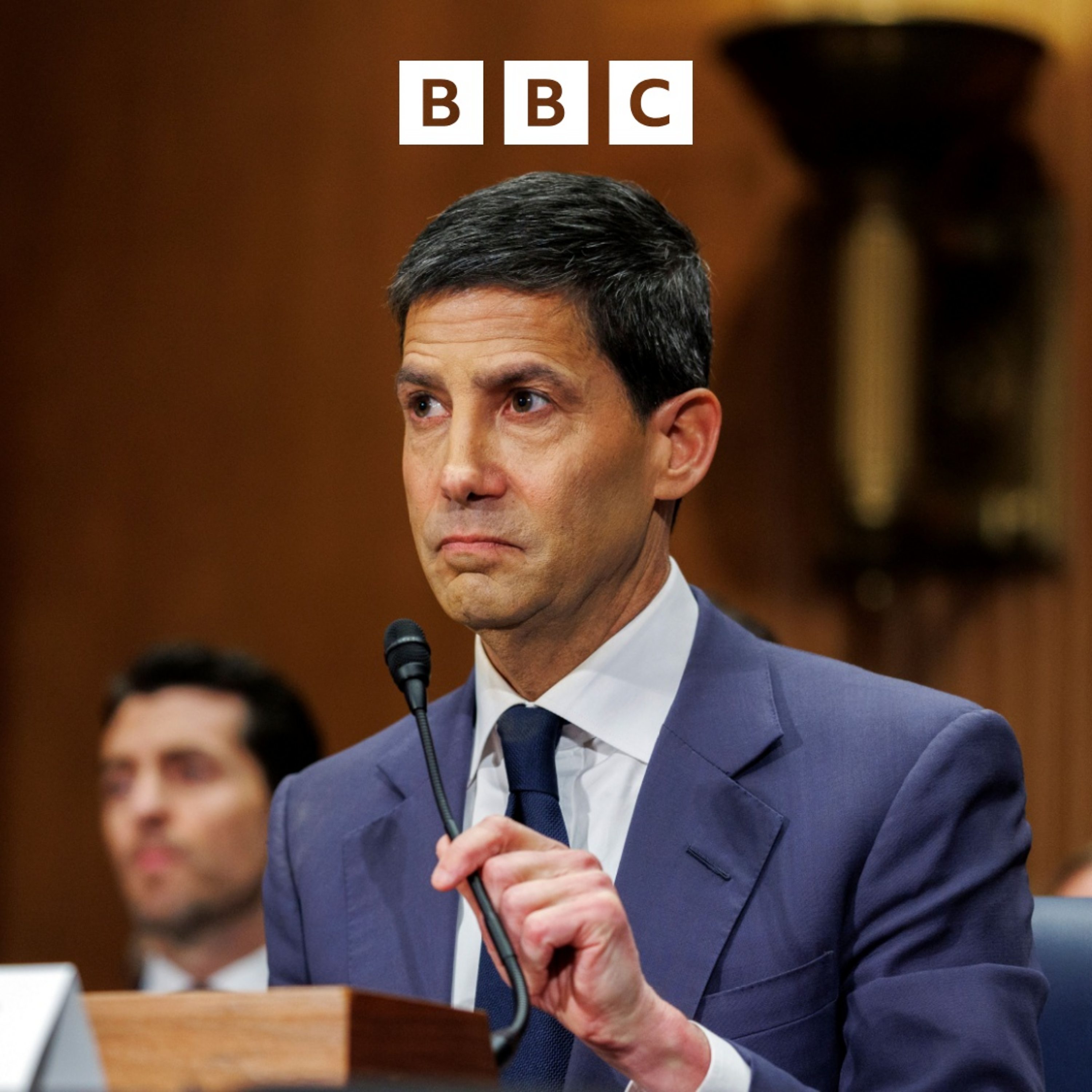
Business Daily
Trump v The US Federal Reserve
00:19:24
Trump's pick for the US Fed chair risks rebuke from the president if rates do not fall
Loading summary
Transcript48 lines
- [00:00]
Ed Butler
This BBC podcast is supported by ads outside the uk.
- [00:06]
Aramco Announcer
What if a marginal gain unlocked greater performance? What if an insight in data could change everything? At Aramco, our focus on detail helps us deliver reliable energy to millions across the world. Because margins aren't marginal. They're where we can truly push the limits of what's possible. Aramco, an integrated energy and chemicals company. Learn more@aramco.com Today's episode is sponsored by
- [00:38]
Ed Butler
Smart Travel, a podcast from NerdWallet. You know that one friend who always finds the best travel deals, picks the right credit cards, and somehow ends up in first class for the price of coach? Smart Travel is like that friend, but in podcast form. NerdWallet's travel journalists sort out what's worth paying for. From lounge access to travel advisors to hotel loyalty programs, make your travel dollars work harder. Follow Smart Travel on your favorite podcast app. Just imagine stepping into a room. Not just any room, but one that sets the interest rates that direct the world's biggest economy. Decisions made in this room effectively determine how goods are priced in your local shop, your mortgage payments, the shape of the jobs market. I, for one, would love to listen in on that committee room. What's more, it's trusted because people generally believe it's politically impartial. But are they starting to doubt? Yes. Welcome to Business Daily on the BBC World Service. My name's Ed Butler, and today we're looking to the future of the Federal Reserve under its new chair, Kevin Walsh. He's President Trump's pick to run this institution. With me to discuss where the Fed is headed, I'm joined by Claudia Sahm. She's a former Fed economist herself, now at New Century Advisors. Claudia, hello. I mean, are you expecting fireworks within that committee room? Now that Kevin Walsh has got the
- [02:04]
Claudia Sahm
hot seat, I expect the committee room to really be business as usual going forward. Now, there could be a lot of fireworks outside of the Fed and pointed at the Fed, but in the room, I think they're going to keep doing their job.
- [02:15]
Ed Butler
Interesting. With me also is Mohamed El Arian. He's chief economic advisor at Allianz. Mohamed, does this feel like a pivotal moment, do you think, for the world's most influential central bank?
- [02:27]
Mohamed El-Erian
It does. And like Claudio, I don't expect fireworks inside the room, but I do expect a very difficult conversation because the Fed is facing challenges to both sides of its mandate, the inflation side and the employment side.
- [02:44]
Ed Butler
Well, you may recall there have been many arguments over this. Kevin Walsh's appointment to the Fed was far from guaranteed. Until it was confirmed on May 13. He was picked by President Trump, who had for months before been berating his Fed predecessor, Jerome Powell. Mr. Too late, as the president called him because of Jerome Powell's alleged failure to cut interest rates fast enough, which the president keeps thinking are too high. The outspoken criticisms of the Fed's direction have guaranteed the issue of its independence has come center stage. The US Senate Banking and Finance Committee convened to consider Mr. Walsh's confirmation and Senator Elizabeth Warren was among those attacking what she thought were the president's motives.
- [03:27]
Claudia Sahm
He has cooked up a ridiculous scheme, install sock puppets at the Federal Reserve Board who are willing to artificially juice the economy. It will be American families who pay the price when this scheme backfires and raises prices and the cost of borrowing even more. Now Donald Trump has not been subtle about this takeover attempt. Trump proclaimed, quote, anybody that disagrees with me will never be the Fed chairman. And about a month later, he nominated Kevin Warsh to be his sock puppet
- [04:08]
Ed Butler
on the Fed, the take of the Democratic Senator Elizabeth Warren. Well, for his part, speaking to the committee, Kevin Walsh made clear that he wants to see the Fed change and he has criticized the record of the Federal Reserve in recent years. He said he wants to see a good family fight over monetary policy. Interest rates need to be forward looking, need to be based on better data. I tend to favor messier meetings than some where people don't show up with rehearsed scripts. But we can have a good family fight. If the central bank has that good family fight, I think that they're going to make better decisions. So I'm not one for pre deciding what interest rates should be. I never said to the president where I think rates should be. I never committed any such thing. So Claudia, a good family fight, I mean you've said you think not too feel like aggressive an atmosphere inside the committee room. But clearly as you mentioned, there are some pretty opposing views right now over the direction of rates.
- [05:09]
Claudia Sahm
Right. And I think that's entirely appropriate. And I would argue, I mean, I worked at the Fed, Kevin Warsh worked at the Fed. Frankly, there are family fights over policy because the world is really hard to figure out. Like what's happening in the economy, what's happening inflation and employment. And you have a lot of well meaning people. I mean it's true maybe the debates are more scripted than Kevin Warsh would like to have, but it's not so much the style of debate, it's just that an over $30 trillion economy is really hard to sift through the details
- [05:37]
Ed Butler
Nonetheless, Mohammed, I mean, the context here has been President Trump pushing very, very hard on the entire direction of the interest rate setting policy. He believes that the Federal Reserve completely dropped the ball in 22:23. Perhaps it's gone on dropping the ball in terms of keeping rates too high when inflation has, well, until recently was coming down. And so the whole point was they are tardy, they are old fashioned. And also that Kevin Walsh is going to step in and change all of that. He does seem to be, as Elizabeth Warren was saying, the. The guy who's simply been put there by the President to carry out his bidding.
- [06:21]
Mohamed El-Erian
Yeah, I think that's a very unfair characterization of Kevin Walsh. Many people think that the Fed has slipped. It made a major policy mistake in 2021, 2022, when it held on to the notion that inflation was transitory and CPI inflation went up to 9%. Its modeling and its forecasting have been consistently wrong in the same direction. That is not a great track record. So the Fed needs to look at itself and needs to ask some fundamental questions. And one of the questions that came out in the clip rightly is don't just be data dependent. Don't communicate as if you're a play by play commentator. Look forward. And I think Kevin Walsh is committed to that. And many economists, including me, would say we need a better mix of data dependencies and forward looking.
- [07:14]
Claudia Sahm
Well, the one thing that I would push back on is the idea that the Fed needs to shift its attention from the data, what's often referred to as data dependence, and get into the forecast. Forecasting is incredibly difficult in a world where we have one shock after another coming at us, whether it's tariffs or Middle east forecasts. So I think this Fed is really in a show me the evidence. Inflation is coming down before they start cutting again. And that's going to be a real pressure point that WARSH is going to come up against. Even if there's some logic to it. I think the reality of the uncertainty, the shock, it's just we are so much in. We need evidence before we move.
- [07:50]
Ed Butler
The context here, of course, is rising prices in the US Economy. With the rapid spike that we've seen in the price of oil, consumers in the US Are really feeling it.
- [08:01]
Mohamed El-Erian
Tomatoes are nuts. What used to be, you know, half of what we used to pay is now like $90 for a case of tomatoes.
- [08:09]
Claudia Sahm
Astronomical. You can't get anything for under $100 just for some, like lettuce, some juices, some things for a party, a watermelon, $10 for a watermelon.
- [08:18]
Ed Butler
Some anxious US consumers there, and business owners. Mohammed. The Fed meets eight times a year to set central bank interest rates, right? I mean, mortgage lenders generally follow these. It's the way that central banks everywhere, most typically try to control the rate of domestic inflation. The target for inflation is 2%. Currently the annualized rate is 3.8%. And it's going upwards, isn't it, because of the oil spike? It's the highest it's been for some three years. Is there any good reason to cut now? Do you think anybody will be pushing for that, other than perhaps the new Fed chair?
- [08:55]
Mohamed El-Erian
Maybe someone will, but they will not cut. And the market has priced out the two cuts that were priced in at the beginning of the year. I mean, the inflation picture is worrisome. We've now had 62 consecutive months in which inflation has exceeded the Fed target. And now we've had a major shock that has not just resulted, as you pointed out, in headline inflation almost at 4%, but what's in the pipeline is even higher.
- [09:29]
Aramco Announcer
What if a marginal gain unlocked greater performance? What if an insight in data could change everything? At Aramco, our focus on detail helps us deliver reliable energy to millions across the world. Because margins aren't marginal. They're where we can truly push the limits of what's possible. Aramco, an integrated energy and chemicals company. Learn more@aramco.com at CVS, it matters that
- [10:01]
Claudia Sahm
we're not just in your community, but that we're part of it. It matters that we're here for you when you need us, day or night. And we want everyone to feel welcomed and rewarded.
- [10:12]
Aramco Announcer
It matters that CVS is here to
- [10:14]
Claudia Sahm
fill your prescriptions and here to fill your craving for a tasty and, yeah, healthy snack. At cvs, we're proud to serve your community because we believe where you get your medicine matters. So Visit us@cvs.com or just come by our store. We can't wait to meet you. Store hours vary by location.
- [10:36]
Ed Butler
You're listening to Business Daily on the BBC World Service. My name's Ed Butler, and today I'm with the former Fed economist Claudia Sahm and the economic advisor to Allianz Mohamed El Erian. We're looking at the tenure of Kevin Walsh as Federal Bank Governor now that he's taken over the job and what it could mean for the reputation of the Fed as an independent body. One of the biggest talking points here, I guess, has been the various efforts by the White House to target individual rate setting Governors. Lisa Cook, one of the governors, was fired last year by the Trump White House over alleged mortgage fraud. And it's a claim she denies. The case is going to the Supreme Court, but I mean, the court has yet to give a final ruling. What do you think? How are people in the markets regarding this challenge, I suppose, to the sovereignty, the independence of the Fed and its governors, the rate setters.
- [11:29]
Mohamed El-Erian
So on the Lisa Cook issues, most people who listen to the Supreme Court hearings came away with the impression that the Supreme Court is likely to rule in favor of Lisa Cook, meaning that she could stay on the Board of Governors. The worrisome thing is that the political attacks on the Fed went from words to the legal system. There was also a Department of justice investigation into the chair, which triggered one of the most amazing responses on a Sunday in January by the chair and that bluntly said this is an attack on the independence of the Fed. So far the legal system is holding and I suspect that this will also be confirmed by the Supreme Court ruling on Lisa Cook.
- [12:16]
Ed Butler
So then we await the decision into Lisa Cook's situation and the case against the former Jerome Powell that was paused because it was holding up the Senate confirmation proceedings of his successor, Kevin Walsh. Senators basically push back against what they saw as White House overreach. But is even the existence of these legal cases a threat enough to shape the views of Fed rate setters? I wonder.
- [12:40]
Claudia Sahm
I would imagine among the Fed officials that this has been at least a thought. And I would agree with Mohamed. There have been a lot of presidents that have said words about the Fed, but when it moved to actions and threats, criminal investigation, I mean, this really upped the ante. And, you know, it's hard to know where this goes. The White House has really pushed past the boundaries in terms of the way they've been trying to strong arm the Fed.
- [13:06]
Ed Butler
Okay, Mohammed, let's say the Supreme Court goes the other way. Let's say it rules that the White House does have the freedom to fire Lisa Cook and perhaps others within the Federal Reserve. What happens, I mean, on the markets, what is the risk here? What's at stake?
- [13:24]
Mohamed El-Erian
There's overwhelming evidence that an independent central bank is in the interest of the economic well being of nations. So if that independence were to be seriously eroded, which I don't think it will be, but if it were to be seriously eroded, then the markets would price in higher inflation for a very long time, which would mean higher interest rates, which would mean higher mortgage costs, and which would also mean a possibility of what economists call demand destruction when prices get to be so high that people simply stop consuming, and then you end up with that awful combination of high inflation and low or negative growth called stagflation. So that's what would happen, but I don't think we're going to get there.
- [14:12]
Ed Butler
You say it's not going to get there, but whether it gets there or not, doesn't it also depend on the will of the White House to stand back, to step back, as it did with the threatened prosecution of Jerome Powell, and say, actually, we're not going to go this far?
- [14:28]
Mohamed El-Erian
So, as you know, the checks and balances come not only from the legal system but also from Congress. The remarkable thing is that Congress actually stood up to the attacks on Chair Powell. They would not schedule the confirmation hearing of Kevin Walsh until there was some resolution to the DOJ investigation of Chair Powell. So there's more than just a legal system here. I think Congress also understands that an independent central bank is in the interest of the nation.
- [15:03]
Ed Butler
Claudia? The US Dollar remains the backbone of global finance. It accounts for 56%, I'm reading, of global foreign exchange reserves and 89% of global foreign exchange market trades. I mean, how exactly is, let's say, the role or the position of the dollar internationally at risk if the perceived independence of the Fed is undermined?
- [15:27]
Claudia Sahm
The Fed becoming a political arm of the White House, so the White House decides interest rates, not the Fed. That would be a disastrous case for the dollar if we get there. I'm less upbeat than Mohammed about what the risks are here. We've got multiple years of the Trump administration still ahead of us, and an ongoing campaign could really chip away at the Federal Reserve. I'm not sure how it might happen, but I don't think we should be too sanguine about Congress or the Supreme Court always being the backstop for it. Financial markets so far have been going with the base case, everything as usual. Fed independence holds. But if that were to break, if there would be a real political shift at the Fed, I think we would see financial markets react very suddenly and sharply. A hit to the dollar, a hit to the dollar.
- [16:20]
Ed Butler
The bond market goes up, which, you know, basically the cost of the lending, the debt pile that the US Is having to service, that goes up in price and what I mean, people flee to other markets.
- [16:33]
Claudia Sahm
That's the potential. It's hard. And I think one of the things is, as we've seen over the last year since the Trump administration has come in, we've had all these moments where the Fed independence seemed under pressure and markets tend to just look through it and not react.
- [16:48]
Ed Butler
Mohamed, markets are not very good at pricing risk. Will they be any good at pricing this one?
- [16:52]
Mohamed El-Erian
I think they have been pricing this one and as Claudia said, they've been seeing it as low probability as to what will happen. You asked the right question. Where would they go? And the US Is right now the cleanest dirty shirt. It may not be pristine, it has fiscal issues, it has these attacks on the central bank, but compared to other countries, it looks much cleaner. And that is why the US has been able to continue to attract a significant amount of foreign capital despite everything that has gone on.
- [17:23]
Ed Butler
Claudia, one thing to add to all of this, I suppose, is the fact that Jerome Powell, the former incumbent, is going to remain there. I mean, does that cramp the style of the new Fed chair?
- [17:35]
Claudia Sahm
Nothing about this leadership transition has been usual, right? So Fed Chair Jay Powell staying on as a governor as he can through the beginning of 2020. He has promised, I take him at his word, that he's just gonna shrink away, not be overpowering, not be a shadow Fed chair. But, you know, the reality is it's gotta be a little uncomfortable to have him in the room for those family fights over monetary policy, to have the former Fed chair. So, you know, but, but there is only one Fed chair at any one time, and that will soon be Kevin Warsh.
- [18:09]
Ed Butler
Indeed, Mohammed, if he is an independent figure and as you're both saying, not necessarily going to stir things up too much, Kevin Walsh, when he steps in. We do have to remember that he doesn't have a deciding vote when it comes to setting a rate policy, does he? It's going to be the majority and he may be in the minority. If he's somebody pushing for rate cuts,
- [18:33]
Mohamed El-Erian
he could well be like Claudio. I hope he transitions. I hope he transitions quickly out of the Fed. I understand his personal reasons for staying. It has to do with legal defense. It has to do with, with what has been now his legacy of being there to defend the independence of the central bank. However, him being there risk attracting political attacks from the White House, risks complicating the formulation of monetary policy.
- [19:05]
Ed Butler
Claudia, quick thought. I mean, you've obviously seen, at least at a distance, at arm's length, the decisions of many monetary policy committees or those setting the price each time the decision gets made. What does it feel like? Does it feel like this is going to be particularly difficult if, as some are forecasting, the chair, the new chair is taking a counter view, a contrarian view to the mainstream and the majority.
- [19:35]
Claudia Sahm
I think a deciding factor will be how quickly Warsh wants to move the committee as chair. I mean, the Fed really does work by consensus and it can take some time to shift the consensus. If he is willing to be patient and put in the work to move the committee, I think we could see some real, kind of, maybe even some fundamental changes over his four year term. But if he's in a big hurry to move things, this could be kind of messy.
- [20:03]
Ed Butler
Okay, well, which takes me to my final question. I guess the question I started with as well. Claudia, what Next? The next FOMC meeting is June 16th and 17th. How will that go and what will we be talking about afterwards?
- [20:18]
Claudia Sahm
Do you think the change in leadership at the Fed is a potential off ramp for the White House? Right. Let the Fed do its job. Kevin Warsh is in charge. Right. This could be a moment where we actually take some pressure off, external pressure off of the Fed now, all the internal pressure of what do they do with rate policy, how do they think about the economic risk, how Kevin Warsh communicates this, this to the world. He's talked a lot about a regime change and we don't quite know what to expect with that. So hopefully that's what we're talking about a month from now is what happened at the meeting, how did he think about the economy? And this, the political interference piece just kind of fades into the background. That would be the best case.
- [20:58]
Ed Butler
Mohamed.
- [20:59]
Mohamed El-Erian
I would add one thing which is in addition to what happens on interest rates, keep an eye on, on his reform agenda. So keep an eye on what he intends to do with things that we don't talk about very often but are critical to the effectiveness of monetary policy over time.
- [21:16]
Ed Butler
All right, we will keep our eyes very much peeled on that. Thank you both. That's it for this edition of Business Daily, A double take on Kevin Walsh's ascension to the Fed throne and what it might mean for the bank's long cherished independence. I'm Ed Butler. From me and the the rest of of the team here, thank you very much for listening.
- [21:42]
Aramco Announcer
What if a marginal gain unlocked greater performance? What if an insight in data could change everything? At Aramco, our focus on detail helps us deliver reliable energy to millions across the world. Because margins aren't marginal. They're where we can truly push the limits of what's possible. Aramco, an integrated energy and chemicals company. Learn more@aramco.com.