← Business Daily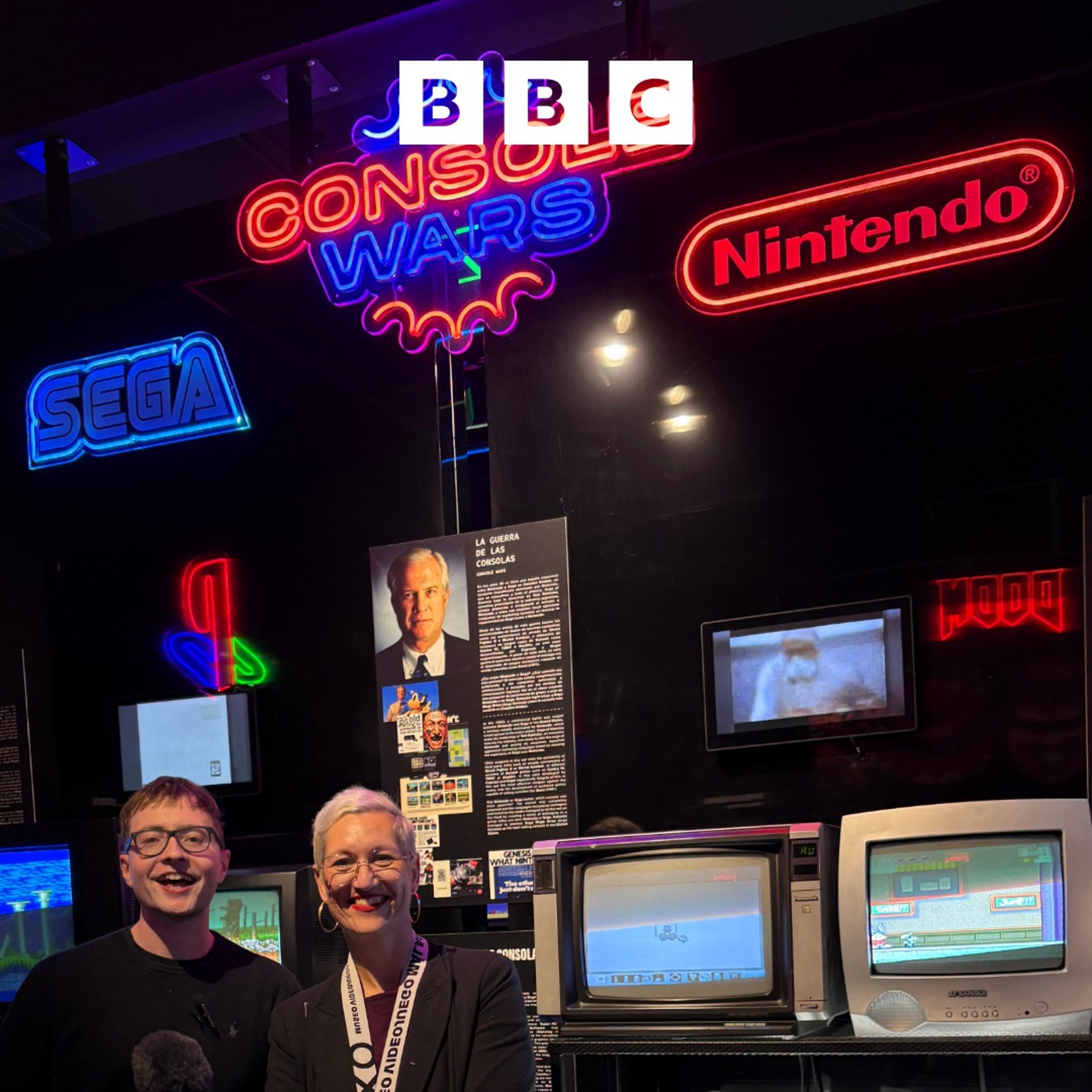
Business Daily
Video Game Console Wars
00:17:27
We explore the rivalry between gaming giants Sega and Nintendo in the 1990s
Loading summary
Transcript67 lines
- [00:00]
Sean Allsop
This BBC podcast is supported by ads outside the uk.
- [00:06]
Podcast Sponsor Announcer
Today's episode is sponsored by Smart Travel, a podcast from NerdWallet. Do you have a friend who treats airfare like a puzzle and somehow always ends up with a first class upgrade? Smart Travel is like that friend, minus the group texts. NerdWallet's travel journalists break down the pros and cons of travel decisions like when lounge access is worth paying for and and which hotel loyalty programs actually pay off. Make your travel dollars work harder. Follow Smart Travel on your favorite podcast app. Ever invest in something that seemed incredible at first but didn't live up to the hype? Like those five dollar roses at a gas station? Or a secondhand piece of technology that breaks in the first 10 minutes. Marketers know that feeling. We optimize for the numbers that look great, impressions reach and reacts. But when they don't show revenue, well, that's a not so great conversation with the CFO. LinkedIn has a word for that. Bullspend. Now you can invest in what looks good to your CFO. LinkedIn Ads generates the highest roas of all major ad networks. You'll reach the right buyers because you can target by company, industry, job title and more. So cut the bull. Spend. Advertise on LinkedIn, the network that works for you. Spend $250 on your first campaign on LinkedIn ads and get a 250 credit for the next one. Just go to LinkedIn.com broadcast that's LinkedIn.com broadcast. Terms and conditions apply.
- [01:44]
Sean Allsop
I'm Sean Allsop and like a lot of people I grew up playing home consoles and like many people I had to decide which console to with. But what's the secret in selling a console?
- [01:55]
Tom Kalinske
Do anything you can to get the hardware in the home and then the software sales will follow if you have decent games to play.
- [02:03]
Jeff Glendling
It was creating that army of ambassadors that would actively be talking about console.
- [02:09]
Monica Ebers
Having a competitor puts you in a position that you have to improve fast.
- [02:15]
Sean Allsop
This is Business Daily from the BBC World Service and in this program I'm going to explore the history of the console wars, the marketing strategies the companies use to compete and what the console business looks like today.
- [02:28]
Monica Ebers
With the first console which was the Magnavox Odyssey. And then we start with Pong.
- [02:34]
Sean Allsop
Most recognizable. Sounds so simplistic. I'm in the heart of Spain, Madrid, being shown around a museum showcasing the history of of the most profitable form of entertainment today. Video games. I've never actually played this one.
- [02:51]
Tom Kalinske
How do we.
- [02:52]
Monica Ebers
Oh, you have to play that one
- [02:53]
Sean Allsop
later it's called the OXO Museum and I'm being shown around by Monica Ebers, the director of the museum. Around me are consoles and cartridges from gaming's 50 plus year history. And I'm here to see one exhibition which showcases a turning point in gaming history.
- [03:12]
Monica Ebers
Wow. Yeah.
- [03:15]
Sean Allsop
What does it say?
- [03:16]
Monica Ebers
Up next, a Console wars panel is the place where we explain what happened between mainly Nintendo and Sega in the beginnings of the 90s. And we have here some of the most iconic consoles that they had at the time, and the most iconic games also for the people to play with them.
- [03:39]
Sean Allsop
Currently, the home console market is a juggernaut valued at 45 billion in 2025, with Nintendo Systems, Sony PlayStations and Microsoft Xbox being in homes across the world. But how did gaming get here?
- [03:54]
Podcast Sponsor Announcer
Magnavox presents Odyssey the electronic game of the future. A new dimension for your television.
- [04:00]
Sean Allsop
Home consoles first came onto the market in 1972 with the release of the Magnavox Odyssey. Technology was sparse and the cost was high. Slowly, they found popularity with companies like Atari and Intellivision, bringing arcade hits to their home consoles like Pac Man, Space Invaders, and creating original games Like Pitfall. Home gaming had become a worldwide hit. However, this rapidly growing industry soon suffered a major setback. In the United States, the video game market crashed in the early 1980s following the release of one hotly anticipated title. It was a game so infamous that copies of it were later dug up from a desert landfill.
- [04:42]
Monica Ebers
Ah, really? We have the infamous Atari original Atari, the ET that was dug up from the. From the desert.
- [04:51]
Sean Allsop
It was true, the rumor that.
- [04:53]
Monica Ebers
Yeah, yeah, it's not Aladdin. So we have also a certificate of authentity authenticity. And you can see the sun even
- [05:03]
Podcast Sponsor Announcer
only from Atari, the video game that lets you help ET get home just in time for Christmas. Happy holidays from Atari.
- [05:15]
Sean Allsop
Et, the game, based on the biggest box office film at the time, is often cited as one of the worst video games ever made. Released in huge numbers for Christmas 1983, it failed spectacularly as a poor, confusing mess of pixels and sound made in a rush for the holidays, but had none of the charm of Spielberg's extraterrestrial adventure many had hoped for. And millions returned the game in droves, turning their back on video games completely. And ET wasn't alone, as the market was oversaturated with other poorly made Games. In under two years of ET's release, the American video game market had collapsed by more than 95% in 1985, video games were no longer seen as the future, but A short lived fad. And in one of the industry's most infamous moments, which was thought to be just an urban myth for decades, thousands of unsold cartridges were buried in a New Mexico desert. Like this copy of ET now on display in the museum.
- [06:17]
Monica Ebers
You know, when the decline of video games after the crash of the 80s and the end of Atari and everything, Nintendo was dominating the market.
- [06:27]
Sean Allsop
While the crash had massively affected the United States, international developers were less affected as Japanese company Nintendo continued to develop games and consoles. And in 1985, in the Ashes of the crash, it launched its first home console outside Japan, the Nintendo Entertainment System. Now you're playing with power. And unlike previous game systems, Nintendo had a much higher quality control with its library of games. And soon titles like the Legend of Zelda, Metroid and Duck Hunt helped gain back trust of gamers as they helped pioneer what games could be, all led by their mascot, Mario. Nintendo came to control the market nearly entirely. Their dominance lasted throughout the 80s until one company split and reshaped the industry.
- [07:17]
Tom Kalinske
Sega.
- [07:19]
Monica Ebers
They divided the market of the video games Nintendo was dominating at that time. And then Sega erupted in the market with this more edgier idea with Sonic and the way that they marketed. Also the video games were bolder than Nintendo. They reached out to this area of the video games that didn't have anything to play with. And it was like this being part of two teams and really hardcore because people who were full Nintendo were still no Nintendo's beta. And then people pulled Sega but no Sega is better. And then they were really colliding.
- [08:02]
Sean Allsop
At that time Sega, a Japanese gaming company, had found some success in Japan with its consoles, but couldn't break Nintendo's grip on the American market until they were led by a strategy that changed the industry. This museum in Madrid doesn't just show off the games. Across its halls are large scale portraits of people who shaped the industry. And at the centre of the console wars was one of them, Tom Kalinske, former CEO of SEGA of America, who was brought in to make Sega a household name against the height of Nintendo mania.
- [08:38]
Tom Kalinske
You know, remember Atari crashed and so did Intellivision. So the video game market changed dramatically. There was no more Intellivision, there really was no more Atari. And Nintendo picked up the slack, if you will, and became very much the dominant video game system. And in fact, when I joined in 1990, Nintendo had a 98% market share. Imagine that, hardly any industry has that kind of dominance from one company.
- [09:08]
Sean Allsop
Tom hatched a plan to have Sega's Latest console, Genesis, or known outside the US Mega Drive, fight for dominance in the western market and presented it to Sega headquarters.
- [09:20]
Tom Kalinske
So it was a five point plan. Obviously I studied the marketplace and so I decided that to introduce Genesis in the United States properly, the price was too high. We had to lower the price. We're going to take on Nintendo and advertising, we're going to make fun of them, we're going to position them as the little kids system, whereas Genesis is for the older brother, the teenager in the college age. And we're going to develop more software games in the United States using United States licensing and characters and sports.
- [09:57]
Sean Allsop
Tom wanted to steer Sega in a more Western image compared to its competition. So part of his plan was to create a mascot.
- [10:05]
Tom Kalinske
That was another part of the plan was we needed a character to compete with Mario.
- [10:11]
Sean Allsop
Which led to the creation of Sonic the Hedgehog, designed to appeal to Western audiences with an emphasis on speed and attitude that reflected the cultural mood of the early 90s. He embodied Sega's edgier identity, standing in contrast to Mario's more clean cut image.
- [10:29]
Tom Kalinske
You know, my team at SEGA of America, they really helped craft Sonic's personality and even his appearance knew the team developing it in Japan. And I said, as soon as it's available Sonic 1, we're going to put it in the hardware. So it was a five point plan. And when I presented it to the board of directors in Tokyo, the board universally hated everything I said. They didn't want to do anything, they didn't want to lower the price because they weren't making enough profit on the hardware as it was. They sure as hell didn't want to put Sonic the Hedgehog in with the hardware because then you're losing a profitable software sale. They didn't think it was wise to take on Nintendo. Nintendo was too big and powerful. The chairman kicked over a chair and he said, no one agrees with anything you said, but I hired you and I promised you you could make the decisions for the United States. So go ahead and do it.
- [11:21]
Sean Allsop
You're listening to Business Daily from the BBC World Service.
- [11:28]
TruNature Meats Advertiser
Grocery prices are skyrocketing, but true nature meets beef. Carne asada delivers zesty flair for under $6 per person. Juicy pre cooked with Sornoran marinade. Ready for tacos or plates. Heat in two minutes. Vibrant restaurant level. Taste at home, exceptional taste, honest value. Visit trunature meats.com code free meat for 20% off free New York strip, Texas smoked brisket and Mediterranean chicken with code
- [11:55]
Podcast Sponsor Announcer
freemeat@trunaturemeats.com Ever invest in something that seemed incredible at first but didn't live up to the hype? Like those five dollar roses at a gas station? Or a secondhand piece of technology that breaks in the first 10 minutes? Marketers know that feeling. We optimize for the numbers that look great, impressions reach and reacts. But when they don't show revenue, well, that's a not so great conversation with the CFO. LinkedIn has a word for bullspend. Now you can invest in what looks good to your CFO. LinkedIn Ads generates the highest roas of all major ad networks. You'll reach the right buyers because you can target by company, industry, job title and more. So cut the bull. Spend. Advertise on LinkedIn, the network that works for you. Spend $250 on your first campaign on LinkedIn ads and get a 250 credit for the next one. Just go to LinkedIn.com Broadcast. That's LinkedIn.com Broadcast. Terms and conditions apply
- [13:05]
Sean Allsop
around the world. Sega launched one of the biggest in your face marketing campaigns of all time, saying with no problem that if you play Nintendo, you are a massive loser. This aggressive marketing, along with a stellar range of titles, caught the public's attention. Phrases like blast processing became known worldwide despite no one really knowing what it meant. But it sounded cool. And some phrases are on display here at the OXO Museum as Monica shows
- [13:31]
Monica Ebers
me strategies that they did. Hence men. Words like Super FX or things like that just to win people from the other council.
- [13:42]
Tom Kalinske
Did they actually mean anything?
- [13:44]
Monica Ebers
Not really. Sometimes they use the same stuff. They just incorporate words just to try to win. Like Genesis does. What nitin don't.
- [14:00]
Tom Kalinske
The Sega Genesis has blast processing.
- [14:02]
Sean Allsop
Super Nintendo doesn't.
- [14:04]
Tom Kalinske
Excellent.
- [14:05]
Sean Allsop
It's better than Nick Nintendo.
- [14:07]
Tom Kalinske
Why can't it be more like that nice boy Mario? If you're not playing these games, you're a giant loser.
- [14:14]
Sean Allsop
Along with Sonic the Hedgehog, Sega's games appeal to a more adult audience with titles like Altered Beast, Mortal Kombat and sports games. And within a year, Sega had achieved the impossible.
- [14:26]
Tom Kalinske
I remember sitting in a conference room at our headquarters and one of the marketing people came in and said, we just got the data from the industry reports and we now have passed Nintendo in share of market. And of course we all screamed and yelled because that was quite an achievement given we started with a 2% share of market and we'd grown to a 51% share of market. So pretty impressive.
- [14:52]
Sean Allsop
But what makes the console market so versatile is that every new generation Changes the race. When a new console launches, dominance can disappear and a new player can take the lead. And by the mid-1990s, technology was moving fast and a new player was entering the game.
- [15:08]
Podcast Sponsor Announcer
The Japanese electronics giant Sony is moving into the video games market for the first time. But many believe it marks an escalation in the real battle to dominate new
- [15:17]
Sean Allsop
technologies in the home since the early 90s, Sony, the tech and entertainment giant, had been trying to break into video games for years, even experimenting with prototypes along with Nintendo and Sega. But when those partnerships collapsed, Sony decided to enter with its own console, the Sony PlayStation. In 1995, at a video game expo, Sega had a new console they were announcing called the Sega Saturn, a system famous for its rush development, limited titles, and a high price tag of $399. As Tom recalls his presentation, I didn't
- [15:57]
Tom Kalinske
want to introduce Saturn at that June ces. I wanted to introduce it in the fall when we had more games available and it was better timing. But they insisted I introduce it at that ces, which was a terrible mistake because we had hardly. I think we had two games or something. I knew we were gonna, we were gonna fail and I didn't wanna do it.
- [16:19]
Sean Allsop
Despite some strong game titles and hardware achievements, the Saturn's high price tag put a lot of people off buying Sega's next console. But one of the issues Sega had was PlayStation taking much of its market from this very moment. Following Tom's speech, Sony took to the stage for a brief presentation that became infamous.
- [16:52]
Podcast Sponsor Announcer
299,
- [17:01]
Jeff Glendling
Sony PlayStation America. They were doing the keynote speeches and he just stood up, went to the mic and just said 299 and put the mic down and walked off.
- [17:13]
Sean Allsop
That's Jeff Glendling, former head of marketing for PlayStation in the United Kingdom, talking about PlayStation Speech, which is known as the price herd across the world. With its lower price tag and higher catalog of games, Sony was able to steal much of the market from Sega. And one of the ways they did this was their unique marketing strategy. Sega had already pushed gaming's image beyond families, aiming at a more mature audience. Sony went further still, targeting young adults, especially in Europe, where clubbing festivals and extreme sports defined youth culture. As Jeff explains, the best way to promote PlayStation was to put them in all the hottest clubs. London's top clubs have more than great music, they have PlayStation.
- [17:59]
Tom Kalinske
This is the killers club, where you
- [18:01]
Monica Ebers
can come, play PlayStation and have a good time, listen to some good music as well.
- [18:07]
Jeff Glendling
So during 95, my job is to start building that hype and expectation that word of mouth in the underground. I was quite interested in club culture and music and fashion and art and board sports. So for me, I felt that those areas of culture were much more influential than just spending millions to stick your logo on a team shirt. It was creating that army of ambassadors that would actively be talking about console. We gave them consoles, TVs, games ahead of launch. We only worked with the top clubs in each city and town so that they had a unique selling point over their competition. They put our logo on every flyer so there were millions of flyers going out every week across the country, you know, highlighting that this club has got a PlayStation room, but we also built a skate park, we did club tours, we did festivals.
- [18:56]
Sean Allsop
PlayStation pushed even further who games can be for. And with its expanded audience, it became the first home console to sell over 100 million units worldwide. Soon the next generation of consoles were available. Nintendo and Sega had original game series like Mario and Sonic to support their upcoming systems. Sony had also used this exclusivity formula to support its successor, the PlayStation 2.
- [19:22]
Jeff Glendling
What absolutely made that fly was not just the legacy of the brand and the edginess of the the PlayStation 1 marketing and console, but also you had an exclusive deal with Rockstar Games.
- [19:33]
Sean Allsop
PlayStation's partnership with Rockstar Games helped secure one of the most popular gaming franchises, Grand Theft Auto. That exclusivity, combined with the console's ability to Double as a DVD player helped make PlayStation 2 lead the sales. And in 2001, Sega was struggling to remain competitive and exited the console race altogether, shifting its focus to game development, ending what many consider as the console wars. And since then, a lot has changed. Over a quarter of a century in gaming, PC, gaming, online and streaming means now there are more ways to play than ever. Much more than a home console. One thing for sure is the competition from the console wars helped make gaming the highest grossing form of entertainment today. From a successful launch, competitive pricing and getting the right audience, There are many ways you can win in a console war. But perhaps the best method is simple. Have good games, do anything you can
- [20:35]
Tom Kalinske
to get the hardware in the home and then the software sales will follow if you have decent games to play.
- [20:41]
Sean Allsop
This has been business daily for the BBC World service produced and presented by me show no soft
- [20:52]
Lowe's Advertiser
during Memorial day at Lowe's Shop household must haves for less. Save $80 on a Char Broil Performance Series 4 Burner Grill to chef up something special plus get up to 45% off select major appliances to keep things fresh. Our best lineup is here at Lowe's. Lowe's we help you save valid through 527 while supplies last selection varies by location. See lowe's.com for details.
- [21:15]
Monica Ebers
Visit your nearby Lowe's.