← Business Daily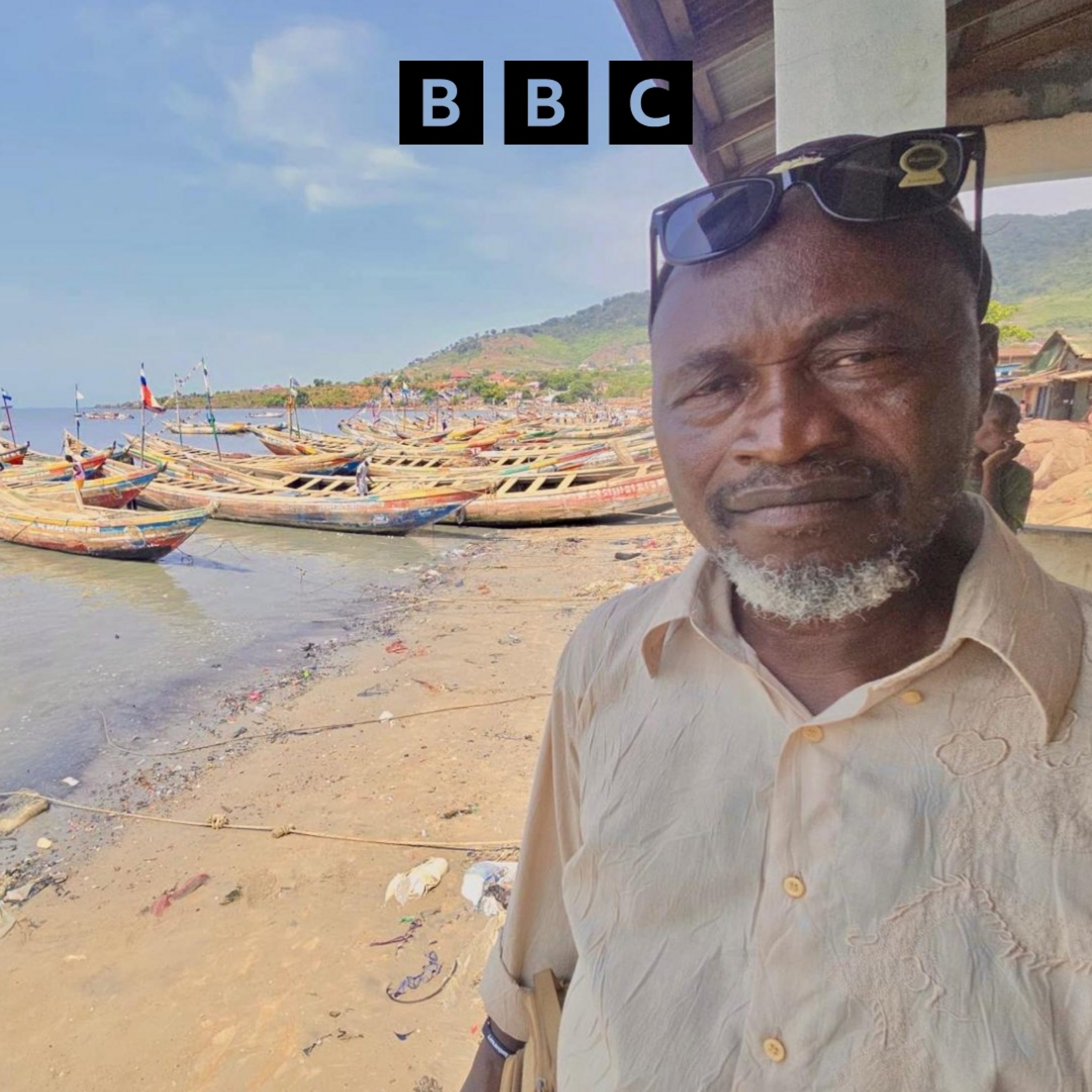
Business Daily
Who’s behind Sierra Leone’s illegal fishing problem?
00:17:28
We try to ascertain who is behind it and what the country's government is doing to help
Loading summary
Transcript108 lines
- [00:00]
Ed Butler
This BBC podcast is supported by ads outside the uk.
- [00:06]
Podcast Sponsor Announcer
Today's episode is sponsored by Smart Travel, a podcast from NerdWallet. You know that one friend who always finds the best travel deals, picks the right credit cards and somehow ends up in first class for the price of coach? Smart Travel is like that friend, but in podcast form. NerdWallet's travel journalists sort out what's worth paying for. From lounge access to travel advisors to hotel loyalty programs, make your travel dollars work harder. Follow Smart Travel on your favorite podcast app.
- [00:34]
Ryan Seacrest
Hey, it's Ryan Seacrest for Albertsons and Safeway for you. Save days are here now through June 23rd. Find hot deals throughout the store and earn four times the points. Look for in store tags to earn on eligible items from Monster Energy, Kettle Chips, Kraft Best Foods and Kellogg's. Then clip the offer in the app for automatic event long savings. Stack up those rewards to save even more. Enjoy savings on top of saving. Shop in store or online for easy pickup or delivery. Restrictions apply. See the website for full terms and conditions.
- [01:09]
Local Fisherman 1
Morning. Morning.
- [01:10]
Reporter/Interviewer
Morning.
- [01:11]
Local Fisherman 2
Morning.
- [01:11]
Commercial Advertiser
Morning.
- [01:11]
Local Fisherman 2
How's your head?
- [01:13]
Reporter/Interviewer
My head is all right. It's my stomach I'm worrying about. Thank you. Thank. Hello and welcome to Business Daily. My name is Ed Butler and today I'm going to sea
- [01:41]
Ed Butler
to sea off the coast of Sierra Leone, West Africa, to be precise, where fishing for local people has become an increasingly challenging business.
- [01:51]
Local Fisherman 3
They do stealing, poaching, they clear our nets here. So some of us even died through that.
- [01:58]
Interviewer/Investigator
People were killed.
- [01:59]
Local Fisherman 3
Illegal fishing is too much here. If we hadn't been here, there should have been no fish.
- [02:05]
Ed Butler
West Africa's illegal fishing trade and its consequences. That's Business Daily from the BBC.
- [02:14]
Reporter/Interviewer
So we're coming along the beach here. Virgin sand and there is nothing on it except the occasional dugout canoe from the fishermen who live here and who go out in these tiny vessels hewn from the trunks of trees. They go out miles to cast their nets.
- [02:45]
Local Fisherman 2
Six o', clock.
- [02:46]
Local Fisherman 1
Six in the morning.
- [02:47]
Reporter/Interviewer
You go out at six and you're just in one of these little wooden dugout skiffs.
- [02:51]
Local Fisherman 1
Yeah. For fishing.
- [02:53]
Reporter/Interviewer
How deep can you go in one of those in the open Atlantic?
- [02:56]
Local Fisherman 1
Yeah, we used to go more than three hours out sea. They leave the shore and be more than three hours out sea. It's only this ocean that supplies they are living or feed them. Go out sea.
- [03:11]
Ed Butler
I'm on the island of Sherbro off the southern coast of Sierra Leone. The entire community here lives off marine resources one way or another. Herring, snapper, the abundant prawns that lurk within the mangroves. Thomas Toure is president of the Sierra Leonean Fishermen's Union.
- [03:30]
Reporter/Interviewer
How long have you been a fisherman?
- [03:33]
Local Fisherman 3
Since I was born, because my father was a fisherman. He got the fishing money to marry my mom. They gave birth to me. I attended school. Then I started selling fish for my mom and Kwendu.
- [03:47]
Reporter/Interviewer
So tell me about the life of a fisherman. Is it a good life?
- [03:52]
Local Fisherman 3
Their gratitude is sickness and pneumonia.
- [03:56]
Interviewer/Investigator
Really?
- [03:56]
Local Fisherman 1
Yes.
- [03:57]
Reporter/Interviewer
You get sick all the time.
- [03:58]
Local Fisherman 3
You get sick.
- [04:00]
Reporter/Interviewer
Is it a dangerous profession, a dangerous job?
- [04:03]
Local Fisherman 3
Actually, it gets money if you are lucky. If you don't. If you are not lucky, it is dangerous.
- [04:08]
Reporter/Interviewer
But this is like the fish is most people's source of protein, right? It's how people get their strength.
- [04:14]
Local Fisherman 3
Yes. Without fish, we could have been dead people. Because it is somehow cheaper.
- [04:19]
Reporter/Interviewer
Fish is the staple food for us in Sierra Leone.
- [04:29]
Ed Butler
People travel from across the country to buy the fish from coastal markets like this one. But it seems the abundant catch from these rich waters is beginning to dwindle.
- [04:41]
Reporter/Interviewer
In front of me is a bunch of guys dragging in a huge net onto the sand. How big is that net?
- [04:51]
Local Fisherman 1
Ah, it's more than 200 meters.
- [04:54]
Reporter/Interviewer
Wow, a 200 meter net. So they cast that one out and then in the morning they're pulling it in and you can see the fish wriggling inside. There's a woman here. She's picking among the jellyfish just to pull out some of the smallest sardines. Are they just to go into her bucket? Everything will get eaten except the jellyfish. Is this a good catch? This is a small catch, is it? Do you. What's your name, Madam? What's your name?
- [05:47]
Ed Butler
Mary Pierre explains to me the problems the fishing communities are facing, most especially, she says, from the large foreign fishing boats that seem to be arriving here in ever larger numbers. There's supposed to be a 7 mile coastal exclusion zone off the shoreline here reserved for the local boats. But trawlers keep coming in, she says, and cutting the fishermen's nets at night to steal their catch. Thomas Toure, the union chief, confirms this account as well.
- [06:16]
Local Fisherman 3
Illegal fishing is too much here. If we hadn't been here, there should have been no fish because government authorities at times do be afraid to come to the fishes. I know that somebody who is doing illegal business has the money to bribe and pay so that he sustains himself. If there is no fish, we cannot feed our children to go to school.
- [06:41]
Reporter/Interviewer
So this captures pretty much what Thomas is saying. We're standing now on Tombo beach you can see out to sea. I mean, there is now three or four major trawlers, big industrial boats. They're completely different from the local ones. These are definitely closer in than seven miles. They fish at night.
- [07:02]
Local Fisherman 3
They fish at night.
- [07:03]
Reporter/Interviewer
Do they sometimes fish inside the exclusion zone?
- [07:06]
Local Fisherman 3
Moreover, they fish inside the exclusion, inside inshore exclusive zone.
- [07:10]
Ed Butler
These boats aren't just taking the coastal catch. They're sometimes said to be physically attacking artisanal fishermen as well as Musa Casimo is one of them.
- [07:23]
Reporter/Interviewer
You saw three trawlers. He's pointing out to see now.
- [07:25]
Local Fisherman 2
Yesterday,
- [07:29]
Local Fisherman 1
it was yesterday that they throw their chain. Where would they heap the chain? They live on the shore. Around 3:34pm they go into the ocean. So when they drop the chain, they have to come back to the shore for the night. But when they are not there, the tallers will come and sweep the chin.
- [07:49]
Reporter/Interviewer
They cut the nets?
- [07:50]
Local Fisherman 1
Yeah, yeah, they cut the nets. They cut all, all, everything. All the fishing nets.
- [07:57]
Reporter/Interviewer
Do you know who these people are? No
- [08:02]
Local Fisherman 1
sooner they saw them, the trawlers move out of deep into the ocean, so they cannot meet them there. They leave the area. It happens often. We have a lot of financial constraints. Because you have to invest more than
- [08:16]
Reporter/Interviewer
50, 60,000, that's 2 or $300.
- [08:21]
Local Fisherman 1
Without retrieving the cash, you have to go into debt.
- [08:25]
Ed Butler
Other fishermen told me of more violent encounters.
- [08:33]
Fisherman Victim
I was fishing around midnight and then this Korean trawler just came right behind me and rammed into my net. I went up the boat and they held me by the arm and threw me right inside the water.
- [08:44]
Interviewer/Investigator
They threw you into the sea?
- [08:49]
Fisherman Victim
So they threw me right into the sea. If I couldn't swim, I would have drowned.
- [08:57]
Local Fisherman 3
They come right into the inshore exclusive zone. They just ram them, divide the boat into the middle. Officials got drowned. Why am I here? Because they do stealing, poaching, that's why they came at night. They don't want us to see them even.
- [09:14]
Reporter/Interviewer
Did you complain to anybody?
- [09:15]
Interviewer/Investigator
Did you talk to the police?
- [09:20]
Local Fisherman 3
They do complain, but they were not adhered to.
- [09:25]
Interviewer/Investigator
Nobody listens.
- [09:25]
Reporter/Interviewer
Nobody.
- [09:26]
Local Fisherman 3
Nobody listens.
- [09:27]
Ed Butler
The view there of fishermen in Tombo beach, south of Freetown. I've been hearing stories like this for years in my visits to West Africa. Steve Trent is the co founder of the Environmental Justice Foundation. It's a campaign group that's been researching the issue.
- [09:42]
Steve Trent
The challenge for West African fisheries is illegal fishing. You've got a situation where billions of dollars now are being lost to those local economies, most of which are very poor. They are targeting species that are the bedrock not just of livelihoods and jobs, but of food security for those people. And in a country like Sierra leone, where around 60% of all protein comes from fish, if you take that away, people have no options. They go hungry. Much bigger problems.
- [10:21]
Ed Butler
The Environmental justice foundation collects videos like this one, shot by artisanal fishermen showing direct clashes with foreign trawlers. Here you can see the trawlermen throwing projectiles at the artisanal fishing boats who are complaining that their nets have again been cut. Steve Trent says the evidence, although patchy because of a lack of detailed research, does indicate that there's been a massive collapse in fish stocks.
- [10:47]
Steve Trent
We were seeing declines in productivity in what's called catch per unit effort, how many hours you have to fish to catch how many fish? We were getting multiple reports, consistent reports over time from the coastal community saying there's no fish left. As fish stocks have collapsed globally, those economic pressures have driven a push towards illegal fishing. And I don't see in the near future that demand declining.
- [11:16]
Ryan Seacrest
Hey, it's Ryan Seacrest for Albertsons and Safeway for you. Save days are here now through June 23rd. Find hot deals throughout the store and earn four times times of points. Look for in store tags to earn on eligible items from angelsoft, Silk, All Spam, Hormel Planters and Canada Dry. Then clip the offer in the app for automatic event long savings. Stack up those rewards to save even more. Enjoy savings on top of savings. When you shop in store or online for easy pickup or delivery, restrictions apply. See the website for full terms and conditions.
- [11:48]
Commercial Advertiser
Grainger knows when you're a procurement manager for an office park, you're not managing one building, you're managing all of them. And to stay ahead, you need to see through walls and around corners. Lights about to fail, filters ready to clog, H Vac on its last leg. If you wait until something breaks, you're already behind. Count on Grainger for quality products, easy reordering and 24. 7 support. Call 1-800-GRAINGER, click grainger.com or just stop by Grainger for the ones who get it done.
- [12:20]
Ed Butler
Steve Trent While we approached the Sierra Leonean government for an interview on this matter, Sheku Se is the acting director of Fisheries for the government.
- [12:30]
Sheku Se
Illegal fishing, it used to be a big problem. At the moment we've put in place measures, so it's reducing the vessel monitoring system that enable us to see all the vessels that are licensed to fish in our waters. We used to have more than 10 infractions in a year. And if we Catch anybody engaged in illegal fishing, they will be brought to the law.
- [12:50]
Interviewer/Investigator
Well, hang on. I mean, you say this, but there was a case of Atlantico Fishing Company's vessel, jan May in 2024, outstanding payments of around $100,000 because they illegally entered the exclusion zone. And you let them off.
- [13:09]
Sheku Se
No, we don't let them off. The vessels were brought to port, the company was told to pay, but what happened is that the fine was so high the company was unable to pay it. So recently we reviewed the fines and we have now $150,000.
- [13:25]
Reporter/Interviewer
You let them off.
- [13:26]
Interviewer/Investigator
That's what the Auditors General is saying.
- [13:28]
Sheku Se
No, no, we never let Jamie off. I've just said they requested the Ministry to consider the impact of COVID and those who were unable to pay their fines that had accrued were let off.
- [13:40]
Interviewer/Investigator
So you did let them off.
- [13:42]
Sheku Se
Yes, but in principle, the government, through the Cabinet, has considered that because of the COVID I mean, you see, the
- [13:49]
Interviewer/Investigator
point is here that we don't see very much clear data of many fines actually being applied in this country. It's not published information. And frequently the people concerned, the regular fishermen out there, are saying, you're looking after yourselves. You're not looking after us. The Sierra Leonean fishermen, no.
- [14:10]
Sheku Se
If they want data, the data cannot just be thrown out there.
- [14:14]
Ed Butler
Why not?
- [14:15]
Sheku Se
We have the data that is available in the ministry and we can make it available. If you want to know what is happening with regards to infractions, we make them available.
- [14:24]
Interviewer/Investigator
Well, I spoke to journalists who have no idea who is being prosecuted. It never seems to be said. And the point is, there is a suspicion that you're taking kickbacks from the major international fishing organizations because the local fishermen say they are having their nets cut regularly. And I've spoken to several fishermen who are saying they're having their nets cut by big trawlers and they are not getting any relief from the ministry officials.
- [14:49]
Sheku Se
There are two issues you raise. One, that we do not make the data available. I've just said we make the data available to you. On the other hand, you've raised concern that the fishermen say their fishing nets are being caught by trawlers. And that's not also true.
- [15:05]
Ed Butler
It's not true.
- [15:06]
Interviewer/Investigator
They're lying.
- [15:07]
Sheku Se
It's not true.
- [15:07]
Interviewer/Investigator
Who is cutting their nets then? Because they keep saying they're losing nets, cut their own nets.
- [15:12]
Sheku Se
When that happens, Artisana fishing canoes, they do go out in the open waters. They compete for fishing grounds with the industrial trawlers. And so when they go there There's a tendency that their net will be caught, especially if their lines are not on. When there is verification that the nets are being caught, the fishing companies will compensate them every time when they caught their net.
- [15:31]
Interviewer/Investigator
Well, I am being told by fishermen a they've never been compensated and they've never heard of anyone compensated by the Fisheries Ministry. But also they are saying they cannot identify these boats. They are hiding their identifications and there is never a patrol boat coming past to stop them when they come into the iez. This is happening, they say regularly. You're denying that's true.
- [15:55]
Sheku Se
Blunt and lie.
- [15:57]
Interviewer/Investigator
You think it's a blatant lie.
- [15:58]
Sheku Se
It's a blatant lie. The Government of Australia is very responsible. We have fisheries observers deployed on board every fishing vessel to verify whether in fact the net were caught. If their nets are caught, and we have the evidences definitely they will be compensated.
- [16:13]
Interviewer/Investigator
Can you name all of the fishing boats that have actually been prosecuted for illegal fishing in the last five years?
- [16:21]
Sheku Se
I will not be able to name all the fishing boats.
- [16:24]
Interviewer/Investigator
Would you be able to present me with that information?
- [16:26]
Sheku Se
Of course. Of course we can make it available for you.
- [16:29]
Ed Butler
Cheku say, and despite repeated requests after this interview, that information was never made available to us at the BBC. The latest flashpoint around Freetown is here, at a pristine coastal resort called Black Johnson beach, just south of the capital. The government is building an international harbour here specifically for the large foreign trawlers defying local opposition. It's being funded almost exclusively by China. According to campaigner Steve Trent, the bulk of illegal fishing across this region and the rest of the world is now being carried out by China's large international fishing fleet.
- [17:11]
Steve Trent
In the past, we've seen South Korean vessels there, we've seen Taiwanese, we've seen European vessels there doing bad things. But now when you look across that region, across the Gulf of Guinea, you can see it is overwhelmingly Chinese. What we found consistently over this last 10 years and more is where you have vessels that are fishing illegally. It's highly likely that there will be other associated abuses. That includes violence against crew. Quite recently, over the last year, we were able to document the use of North Korean forced, I would call slave labor on these Chinese vessels. They were being held on those vessels without ever landing. We've also now got interviews with witnesses across the Chinese distant water fleet of violence against crew up to and including deaths.
- [18:07]
Ed Butler
And what do the Chinese say? Since you're pointing the finger mostly at them, what are they saying to these reports you're gathering?
- [18:16]
Steve Trent
So the Chinese to date, it's been denial, flat denial. China to date still is not doing nearly enough to control their fleet. In fact, I would say they're doing virtually nothing. They're enabling it through subsidies, through a lack of oversight and control. What we need to see now is the Chinese government take this issue seriously, understand that it's reputationally damaging for them, and most of all that is harming these communities and these invaluable ecosystems in some of the poorest countries on our planet.
- [18:47]
Ed Butler
I did attempt to speak to China's local trade representative in Sierra Leone for this program, without success. Much of the fish finds its way into processed foods that are sold around the world. Steve Trent says that's why consumers everywhere should start paying more attention to the origins of the seafood on their plates.
- [19:08]
Steve Trent
The European Union should be pushing back on China and asking for them to take the necessary steps. The UK should be doing the same. Do you want to take a product that's been fished illegally, probably unsustainably, stolen from a poor third party nation and caught by a slave, or do you want a product that you actually enjoy eating?
- [19:29]
Ed Butler
Steve Trent, that's it for this edition of Business Daily. More from us online with all our additions. Till the next time, from me, Ed Butler. Take care.
- [19:43]
Commercial Advertiser
When you're a maintenance engineer in a beverage manufacturing plant, you keep production lines moving and quality on track because there is no room for slowdowns. With Grainger's vast selection of high quality motors, sensors, belts and hard to find parts, you can get what you need fast and all in one place so nothing gets in the way of getting the job done. Call 1-800-granger clickranger.com or just stop by Granger for the ones who get it done.