← Business Daily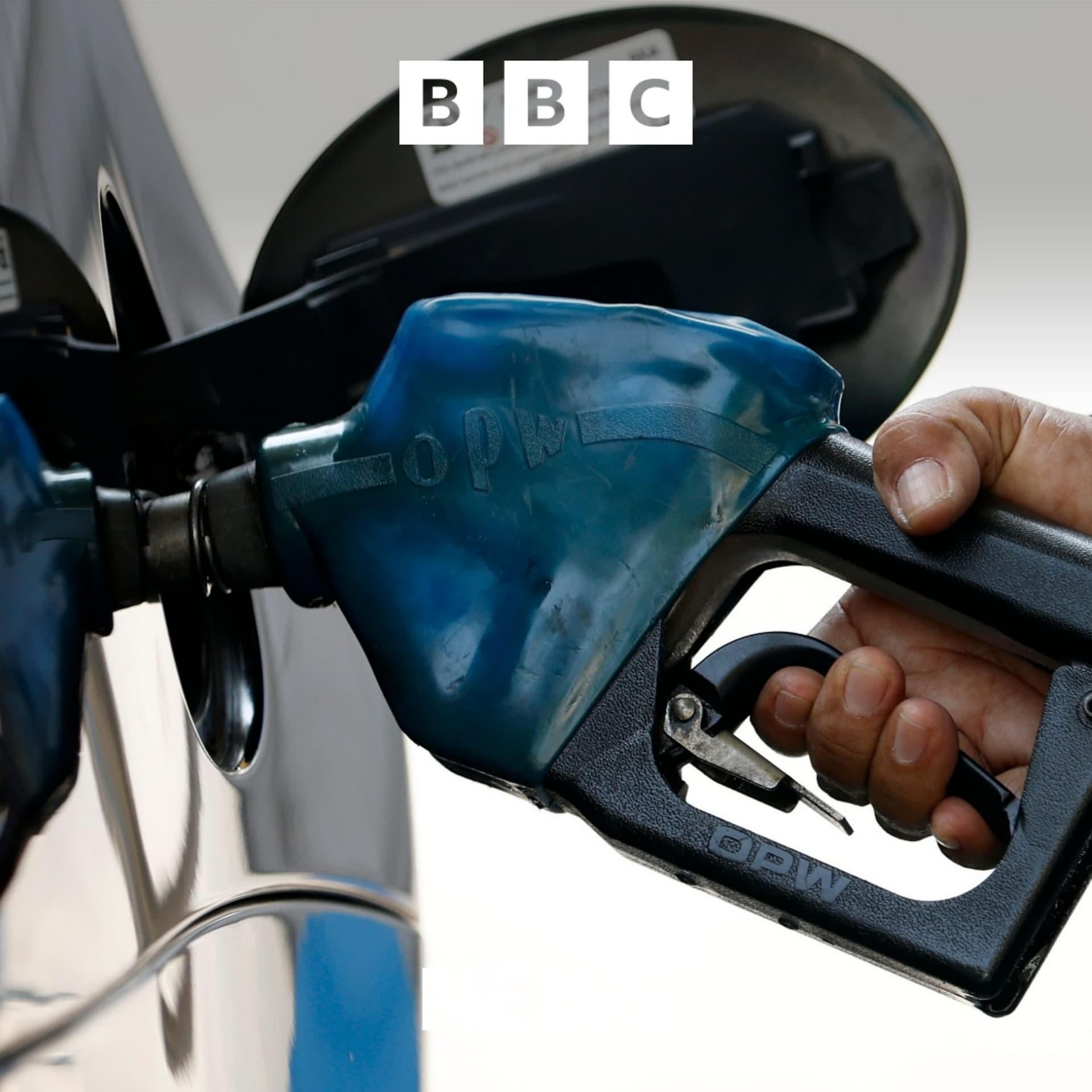
Business Daily
Why is filling your tank costing so much?
00:17:39
We follow the money behind a tank of petrol - from an oil field in the Gulf to the pump.
Loading summary
Transcript49 lines
- [00:00]
Matt Lynes
This BBC podcast is supported by ads outside the uk.
- [00:06]
LinkedIn Ads Advertiser
Ever invest in something that seemed incredible at first but didn't live up to the hype? Like those $5 roses at a gas station? Or a secondhand piece of technology that breaks in the first 10 minutes? Marketers know that feeling. We optimize for the numbers that look great, impressions reach and reacts. But when they don't show revenue, well, that's a not so great conversation with the CFO. LinkedIn has a word for that. Bullspend. Now you can invest in what looks good to your CFO. LinkedIn Ads generates the highest roas of all major ad networks. You'll reach the right buyers because you can target by company, industry, job title and more. So cut the bull. Spend. Advertise on LinkedIn, the network that works for you. Spend $250 on your first campaign on LinkedIn ads and get a 250 credit for the next one. Just go to LinkedIn.com Broadcast. That's LinkedIn.com Broadcast. Terms and conditions apply. Today's episode is sponsored by Smart Travel, a podcast from NerdWallet. Do you have a friend who treats airfare like a puzzle and somehow always ends up with a first class upgrade? Smart Travel is like that friend, minus the group texts. NerdWallet's travel journalists break down the pros and cons of travel decisions, like when lounge access is worth paying for and which hotel loyalty programs actually pay off. Make your travel dollars work harder. Follow Smart Travel on your favourite podcast app.
- [01:43]
Sam Fenwick
This is Business Daily from the BBC World Service. I'm Sam Fenwick. Today we're following the money behind a tank of petrol. A war has shut down a fifth of the world's oil supply and right now you're paying for it.
- [01:56]
Nicholas Sakos
If anybody could do a voyage in the Hormuz, they would get paid tenfold.
- [02:02]
Saad Rahim
It's really at the end of the day, what people consume, diesel, for example, that is trading above $200 a barrel
- [02:09]
Sam Fenwick
from an oil field in the Gulf, through the world's most dangerous shipping lane, through the commodity markets, through a refinery. And right back to you standing at the pump. Who profits, who pays? And what does a war in the Middle east actually have to do with the price on the pump? I'm standing at the petrol pump, filling up my car and watching the numbers tick up. This is the bit I really hate, watching the numbers keep climbing. It just feels like money is floating away into nothing. And lately it feels like that's been happening a lot faster than usual. Because right now A war thousands of miles away from where I am is pushing up the price of fuel in everyone's tank. Fuel prices are rising around the world and we wanted to know what you're seeing where you live. Here are some World Service listeners. This is Dan from church, Jamaica. Prices of gasoline went up by about 15 to 20% per liter. So I can only imagine what diesel's like. I didn't even want to know.
- [03:18]
Saad Rahim
This is Abdul Hamid in Accra, Ghana. Before the war, it cost me 600 Ghana cities to fill my tank. That's almost about $50. Now.
- [03:28]
Sam Fenwick
It cost me almost 700 to $750. This is Petra speaking from Tenerife. From March 2026 in Spain, the diesel prices have risen up between 25 to 29%. Some World Service listeners there now. Producer Matt Lynes and I have been looking at this and Matt, this is one of those global stories, isn't it, that, you know, starts to feel very personal.
- [03:55]
Matt Lynes
Yeah, definitely. Is that price on the petrol pump. What's happening right now in the Middle east is affecting one of the world's most important oil routes. The Strait of Hormuz, a narrow stretch of water between Iran and Oman. Before the war, around a fifth of the world's oil passed through every sing. Now it's barely a trickle.
- [04:12]
Sam Fenwick
And those costs don't stay at sea. They move through the system and end up at the pump and your fuel tank. So if you want to understand why you're paying more today, you have to follow the money. Let's start at the very beginning, where it comes out of the ground. The petrol starts life as crude oil. And in some parts of the world, it's surprisingly cheap to get out of the ground. Dr. Saadat Al Husseini spent nearly two decades in charge of finding, developing and producing southern Saudi Arabia's oil. At Saudi Aramco, it's the world's largest oil company, he oversaw the redevelopment of Gawa, that's the world's largest conventional oil field. The New York Times has called him one of the most respected oil men in the world. And I asked him in round numbers, what does it actually cost to get a barrel of oil out of the ground in the Gulf?
- [05:05]
Saadat Al Husseini
We have to cover the cost of it, that's for sure. And it's not just the extraction, it's the pipelines, it's the stabilizers, it's a pressure maintenance. What used to be $10, you know, in 1995 or 2000, may well be today $25. And that's just the bottom line now, if you can't recover your cost and cover the additional cost, then you're going to end up with saying, why am I doing this?
- [05:35]
Sam Fenwick
$25 a barrel. And the market price right now? Well, since the end of February, it's jumped around a lot. It's hit more than $125 a barrel. And, and even at its lowest, around $85, it was still well above the $72 it was the day before the war. So let's say for argument's sake, it's around $95 today. Who's making the money on that gap?
- [06:01]
Saadat Al Husseini
We don't set the price. The way the price is set is by what people are prepared to pay for North Sea oil within the North Sea and then what countries or companies are prepared to pay for US oil WTI within the US So those are the two, you might say, price setters. If we were trying to displace them from the market, we would go broke and there wouldn't be any oil very soon.
- [06:31]
Sam Fenwick
Saudi Arabia, then, for all its power, is a price taker, not a price setter. The benchmark is set by the most expensive barrel the world needs to keep the lights on. North Sea Brent and US Shel Sale. Saudi Arabia just pockets the gap between its $25 production cost and whatever the benchmark lands at. But here's the thing. When Gulf oil disappears, that cheap barrel has to be replaced by a more expensive one. And at the moment, you need more north sea oil, more US shale, more of anything that costs 40, 50, $60 to produce. The benchmark moves up to meet it. And that's why closing a waterway in the Gulf sends the price of oil in Texas through the roof and then the strait closed.
- [07:17]
Saadat Al Husseini
It's unfortunate. It wasn't, frankly, a surprise. I mean, many of us knew that there was a lot of Sebre rattling up north. So yes, you will have to shut down production and you will have to leave oil in the ground. At some point in time, the inventory that has been drawn out in the US or elsewhere in the world will start running out. And hopefully they will have come to some resolution long before then.
- [07:45]
Sam Fenwick
So Saudi oil starts at around $25, but it has a long way to go. And right now that journey has just become the most expensive thing in the world. Matt Lyons is still here. What comes next?
- [07:58]
Matt Lynes
Well, our barrel of oil is now out of the ground and it has to move from there. In the Gulf, that means going through what we've talked about before, the Strait of Hormuz before the war there were 178 ships a day sailing through it laden with crude oil. Millions and millions of barrels heading to refineries in India, China, Japan, South Korea, here in Europe. And then on February 28th it closed.
- [08:21]
Sam Fenwick
And that changed things overnight. Dr. Nicholas Sakos is the founder and CEO of Sakos Energy Navigation 10. He runs 83 vessels, including VLCC's Very Large Crude Carriers, each capable of carrying around 2 million barrels of oil per voyage. So what happened when it closed?
- [08:42]
Nicholas Sakos
For the first few hours it was challenging because we had the six vessels in the straits in the area. So I think the safety of the crew, the safety of the asset, the safety of the cargo was the first thing in our minds.
- [08:57]
Sam Fenwick
Now lots of these tankers leaving the Strait of Humuas will end up in India. It sits right on the doorstep of the Gulf and will reach an Indian port in a matter of days. Its refineries were built specifically to run on Gulf crude and it imports more oil than any country except China. In normal times, shipping a barrel of crude oil from the Gulf to India adds around 2 to $4 to the cost. Now around 210 oil laden tankers stranded inside the Persian Gulf, nowhere to go. Each one is carrying up to 2 million barrels worth. At current prices, around $190 million per ship. They're just sitting there and the insurance market tells you exactly how dangerous this has become.
- [09:44]
Nicholas Sakos
The costs overall have moved as a reaction to the war premiums that we are facing. The one war premium is in the Ormu Straits where you have more than a tenfold increase of insurance costs. And then you have the alternative, which is the Red Sea. The Red Sea up to recently was a relatively, you could not call it safe, but it was a relatively navigational risk free area. This morning you had the Somali pirates, the Houthis, who actually abducted two vessels earlier this morning, creating another dangerous zone very close to the Hormuz Straits.
- [10:27]
Sam Fenwick
By mid April, insurance premiums for oil tankers were eight times higher than pre war. And there's also a cost that people don't think about. When ships have to go the long way round, there are tolls, extra fuel, extra days at sea, and all that adds up.
- [10:41]
Nicholas Sakos
If anybody could do a voyage in the Hormuz, they would get paid tenfold. So they would be paid, let's say $500,000 a day instead of $50,000 a day that it was pre crisis. That's huge. You have a three fold increase in every route, even in normal safe routes.
- [11:03]
Sam Fenwick
Nicholas Sakos, the CEO of ten, one of the world's largest independent tanker operators. So, Matt, where does that leave our running total?
- [11:12]
Matt Lynes
Well, Sam, so in normal times, a barrel of Saudi crude, once it's been shipped to India, costs somewhere between $15, $20 all in. Right now, with the straight in crisis, it's a very different picture. Shipping plus insurance is adding at least 5 to $10 extra per barrel. So we're already looking at somewhere closer to 30 or $40 before the crude has even been refined.
- [11:34]
Sam Fenwick
So that barrel is still crude. So it's still unusable and has become dramatically more expensive just by sitting still. Because right now, getting it moving again requires something no amount of money can easily buy. And that's safety. You're listening to Business Daily from the BBC World.
- [11:55]
UPS Store Advertiser
Hey Mama, thanks for making all my favorite recipes.
- [11:58]
Matt Lynes
Hi Ma. Thanks for your unfiltered advice. Hi Mom.
- [12:03]
UPS Store Advertiser
Thanks for always being by the phone.
- [12:05]
Saad Rahim
Hey Mom. Happy Mother's Day.
- [12:07]
UPS Store Advertiser
When you ship UPS Air at the UPS store, your items arrive on time or your money back guaranteed at no extra cost. Exclusively at the UPS Store US retail locations. Visit the upsstore.com airshipping for full details, terms and conditions. The of. Send your Mother's Day gifts at the UPS Store and we'll get your gratitude there on time. Shop the Sherwin Williams sale and get 30% off duration woodscapes and superdeck products May 1st through the 11th. Whether you're refreshing your interior or exterior, we've got the colors to bring your vision to life. And with delivery, getting everything to your door is easier than ever. Shop online to have it delivered or visit your neighborhood Sherwin Williams store. Click the banner to learn more. Retail sales only some exclusions apply. See store for details. Delivery available on qualifying orders.
- [12:57]
Sam Fenwick
I'm Sam Fenwick, and today we're following the cost of a tank of petrol from the oil field to the fuel pump. And here's something that will surprise you when you hear the price of oil on the news. The $95 figure, that's not actually what anyone is paying for a real physical barrel of oil right now. Not even close. So what is that number and why does it exist? Think of it like this. When you buy a share in a gold fund, what's called an etf, you don't actually own any gold. You own a piece of paper that tracks the price of gold. It moves when gold moves. But if you actually want the metal in your hands, you'd have to pay more. Oil works in the same way. Right now, the price you hear on the news Brent crude at $90 is the paper price, the idea of oil, and the real thing is costing considerably more. Saad Rahim is the chief economist at Trifegora, one of the three largest commodity trading companies in the world. It moves one in every 10 barrels of oil traded on the planet every single day.
- [14:05]
Saad Rahim
The price you're quoting is the price of Brent oil as quoted through something like Bloomberg or Reuters or some other financial reporting mechanism.
- [14:15]
Saadat Al Husseini
Right.
- [14:16]
Saad Rahim
That price represents something that you can trade like a stock or a bond, but it doesn't actually really give you the physical barrel of oil. There's a gap between the Brent on the screen, as we would say, versus what we would call dated Brent, which again, is the first step in that physical market. That differential normally trades at a few cents up to maybe a dollar or two, but it has at this point traded as high as $20. And then ultimately, when we're talking about oil prices, it's really, at the end of the day, what people consume, and those prices are much, much higher than what is being reflected in that $95 or so.
- [14:53]
Sam Fenwick
So what sort of figures are we looking at?
- [14:55]
Saad Rahim
So if you look at diesel, for example, that is trading above $200 a barrel already. And if I look at jet, it's trading at almost $220 a barrel in places like Asia, for example, those prices are going to be higher. And that is having a whole host of impacts that we're already starting market. But I think there's a little bit of that complacency in the financial community, maybe as a whole, because they're looking at, again, a very particular price, because they're not specialists in this area. They're looking at something that they think is the price of oil and it really isn't.
- [15:26]
Sam Fenwick
So for the consumer at the pump, filling up the car, really the price of a barrel of Brent crude is misleading?
- [15:34]
Saad Rahim
Yes. I mean, I think it is indicative, obviously, that is moving in a certain direction. It does tell you where the market is headed. But to just look at that number, we think it is misleading in terms of what the actual cost to the consumer is, because again, people will look at the disconnect between, say, $95 on Brent and what they're getting charged for diesel, and they say, hold on, there's a. There's a big gap here.
- [15:56]
Sam Fenwick
So the price you see on the news is at best a starting point. The real cost of a barrel, by the time it's physically delivered is already well above that. And we haven't finished yet because that crude is still unusable before it becomes petrol or diesel, before it goes anywhere near your car, it has to go. One more transformation, the refinery. So our barrel has made it through the strait. It's arrived at a refinery. It gets heated to around 350 degrees Celsius and separated petrol, diesel, jet fuel, all coming apart at different temperatures. Robin Mills is the CEO of Karma Energy, a Dubai based energy consultancy. He's a former Shell executive and a former strategist at the Emirates National Oil Company.
- [16:44]
Robin Mills
In normal times, the refining business is a margin business. It buys crude at whatever the price is and let's say pre war, you know, that was $60 per barrel or so. It processes it into various products and it takes a margin which is enough to cover the cost of refining and that's a few dollars per barrel. So perhaps it buys crude at 60 and sells the mix of products at $65, takes a $5 margin which represents its costs and profit. That's in normal times now, because there's a shortage of refining capacity and a shortage of fuel, the price becomes whatever people can pay.
- [17:18]
Sam Fenwick
So Robin says the bigger problem is what happens after crude is refined diesel, jet fuel, the fuel that goes into your tank and in the plane you're about to board. That is where the real crisis is.
- [17:29]
Robin Mills
This crisis has been particularly severe on those kind of end products, partly because there's a lot of refining capacity in the Gulf, which of course is now cut off, in some cases physically damaged. Then refining capacity elsewhere, particularly in Asia, can't get crude supplies, so it's running at lower rates or not able to operate at all. So there's a reduction in the supply of jet fuel and diesel and so on, and that is translating to higher prices at the pumps, higher prices for airlines and so on.
- [17:57]
Sam Fenwick
Robin Mills, the CEO of Karma Energy. So, Matt, where does this leave our running total?
- [18:03]
Matt Lynes
At the peak of this crisis, diesel and jet fuel prices in Singapore, which is one of the world's key trading hubs for refined products like these hit above $290 a barrel. Compare that to the crude oil price on the news of $95. The refined product was almost three times the raw material it came from. And because there are almost no alternative routes for diesel or jet fuel, unlike crude, there's no way of bringing extra supply in quickly from somewhere else. The price has got nowhere to go but up.
- [18:33]
Sam Fenwick
So let's come back to where we started, Matt, at the pump.
- [18:36]
Matt Lynes
Yes. So here in the UK, petrol was 133 a litre. The day before the war. By mid April, it was $1.58. That's around $2. Diesel crossed $1.91, around $2.40, a rise of more than a third in just under two months. And more than half of that goes straight to the government fuel duty, vat. And when the prices go up, the treasury takes more. Every single penny. Now, taxes for this sort of thing will vary where you are. And in the United states, petrol crossed $4 a gallon for the first time since 2022. One of the world's biggest banks, JP Morgan, has calculated the combined increase has already cost American consumers $100 billion in lost purchasing power.
- [19:17]
Sam Fenwick
But the place that shows you most clearly what Gulf oil actually means is India. It's close enough to the Gulf that in normal times, a tanker arrives in days and dependent enough to feel the loss. Almost immediately, 60% of India's cooking gas passes through the Strait of Hummus. So the war didn't show up at the Indian petrol pump because the government stepped in and froze prices. Drivers then didn't see a spike, but cooking gas was hit. Queues delayed deliveries and people switching back to kerosene, to coal and to wood. So that's the chain from oil field to trading floor, from tanker to refinery, from the dock to the pump. And right now, every link is under pressure. Thank you for listening to Business Daily. Follow the Money from the BBC World Service with me, Sam Fenwick and producer Matt Lines. What do you want us to follow next? Your morning coffee? Your phone bill or the price of a flight? Get in touch business daily@BBC.co.uk.
- [20:29]
Saad Rahim
Use math to make the world a better place. Become an actuary through the Society of Actuaries and find solutions to the world's most pressing challenges. As an actuary, the only thing higher than the pay is the satisfaction.