← But Why: A Podcast for Curious Kids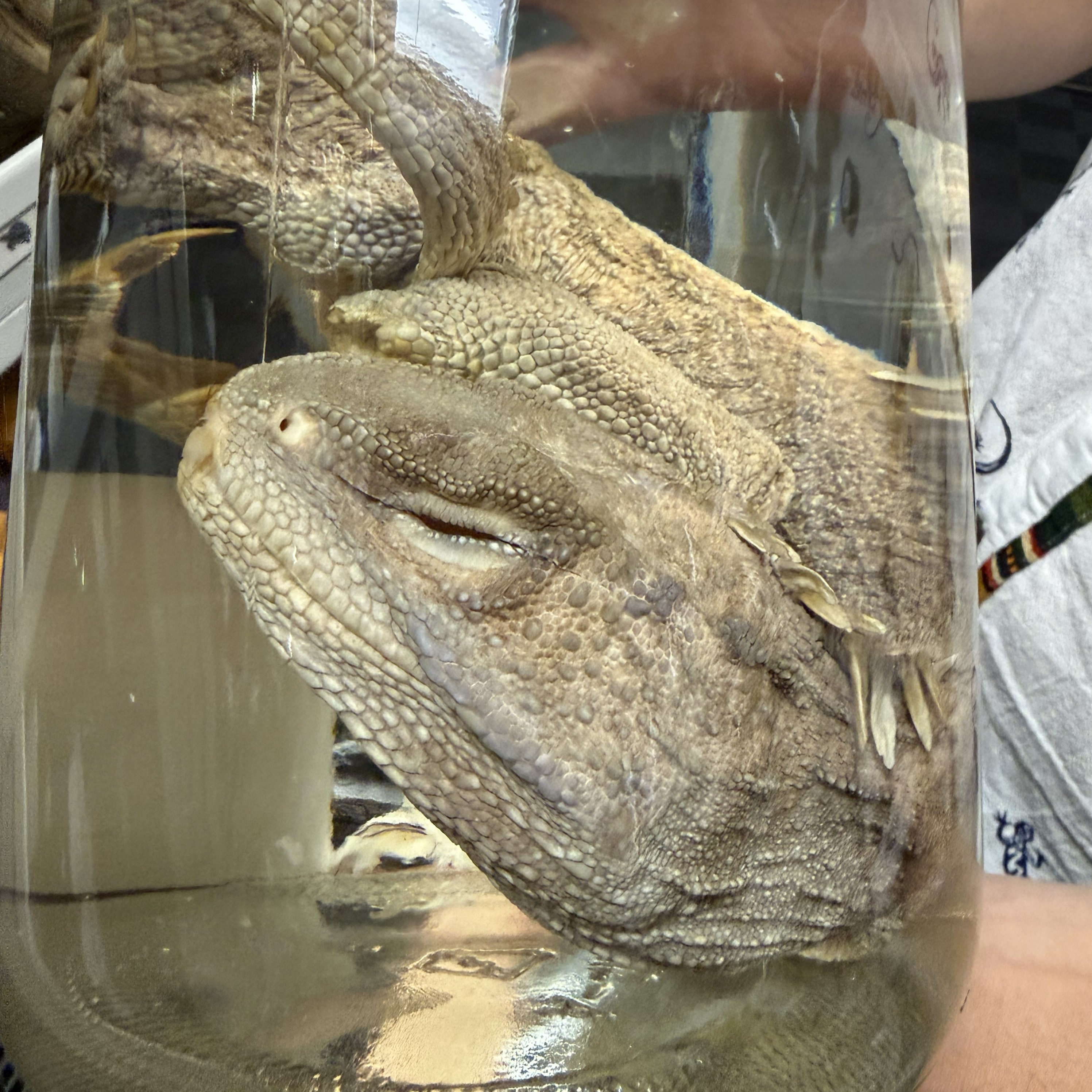
But Why: A Podcast for Curious Kids
Are Komodo dragons really dragons?
00:20:51
Can’t get enough of lizards? We’re back with a bonus episode answering more of your lizard questions with Adam Clause of the San Diego Natural History Museum. This week, chameleons, Komodo dragons, …
Loading summary
Transcript51 lines
- [00:02]
Jane Lindholm
Hi, it's Jane. Every summer my family makes a list of the things we want to do while the weather is warm. It includes things like how many different lakes we want to jump into, what animals we hope to see, and new crafts we want to try out this summer. But why has made a Summer Bucket List and an invitation to you to join the but why Fan Club so you can get it. New members of the fan club will get a special but why Summer Adventure Kit with a notebook, a magnifying glass, a drawstring bag and a list of fun summer activities and adventures to have together. With a $10 a month donation, you're supporting all we do at Boatwide to explore and encourage curiosity and learning. And you're getting the Summer Adventure Kit. Check it out and make your gift@butwhykids.org donate before we get started, here's a message for the adults who are listening. Support for but why is brought to you by Progressive Insurance. Do you ever find yourself playing the budgeting game? Well, with the name your price tool from Progressive, you can find options that fit your budget and potentially lower your bills. Try it@progressive.com Progressive Casualty Insurance Company and affiliates Price and coverage match Limited by state law not available in all states One thing experts and parents tend to agree on is that learning to swim isn't just about strokes. It's about confidence, safety and consistency. Goldfish Swim School takes a thoughtful approach to swim lessons, combining research based teaching with a warm, kid friendly environment. Making swim lessons feel encouraging, not intimidating. They offer year round swim lessons for children as young as 4 months up through 12 years old. Safety is never optional at Goldfish. Every lesson includes dedicated, professionally trained lifeguards on deck, all certified through Ellis and Associates, a global leader in lifeguard training. If you're ready to take the next step, Goldfish Swim School has a special offer just for waived membership and your first lesson free at participating locations. Head to goldfishswimschool.com free find your local school and use promo code. Free to enroll. It's an easy way to get started with lessons that focus on safety, confidence and real progress in the water. This is but why? A podcast for curious kids From Vermont Public, I'm Jane Lindholm. Today we have a bonus episode for you all about some very special lizards we're picking up right where we left off last week, down in the basement of the San Diego Natural History Museum. I went there to talk with Adam Claus, who manages the herpetology collection at the museum. Herpetology is the study of Reptiles and amphibians, which is actually kind of an odd pairing, as it turns out, because reptiles and amphibians aren't actually all that closely related.
- [03:22]
Adam Claus
It's really just a historical thing that has been carried through to the present day. So it dates back to the founder of taxonomy, Carolus Linnaeus. I don't know if anybody's heard of him, but he's the one who sort of created the system of scientific names for animals, which can always consist of two parts, right? And so he considered anything that didn't have sort of blood that sort of could control its own temperature. So the way we control our own blood temperature, reptiles and amphibians do not. And so he considered anything that sort of didn't have these characteristics as very primitive, sort of creepy, kind of disgusting organisms. And so, just by virtue of that very arbitrary classification, reptiles and amphibians were lumped together, even though they're not necessarily each other's closest relatives. So birds are actually more closely related to reptiles because they actually are a type of reptile. But we don't study birds in herpetology. That sort of got pulled out, and it's the ornithologists who study that. So it's this weird mix. These are not necessarily animals that are all that similar. They're not all that closely related. But we continue to study them in this way today. And for me, it's really exciting because I get to study a very diverse group of animals. It's hard to imagine a more different group of animals than frogs and snakes, Right? But these are all lumped together, and so it's a very exciting group of animals to work with and to study.
- [04:40]
Jane Lindholm
We went to see Adam because you all have sent us a lot of questions about lizards, and you've sent us so many lizard questions, in fact, that we couldn't even fit them all in one episode. So we started last week, and we're back today. And in this bonus episode, we're going to narrow our focus even more, from reptiles to lizards to specific types of lizards. And a lot of you have questions about one of the most famous lizards, the chameleon. And when I say a lot of you, I mean a lot of you.
- [05:11]
Children/Listeners
Hi, my name is Jonathan. I'm six years old, and I'm from Australia. My question is, how do chameleons change color? Bye. Hi, my name is Noah. I live in New Hampshire, and I'm 4 years old. My name is Hank. I live in Lubbock, Texas. I am about to be six. My name is Lorelai, and I'M five years old and I live in New York and I want to know what colors do chameleons change? My name's Jasper. I'm eight years old and I'm from Pennsylvania. Hi, my name is Luke. I'm 8 years old and I live in Hong Kong. My name is Clara. I'm seven years old. I live in St. Paul, Minnesota. I'm Miko. I am six years old. I live in Seguin, Texas. Hi, my name is Brent and I live in New Jersey and I'm 6 years old. My name is Henry and I am 8 years old. I live in Georgetown, Texas. My name is Lucy and I live in Connecticut and I'm six years old. Hi, my name is Holly. I'm from Calgary, Alberta. I'm seven years old. My name is Abraham and I'm from Newton, Massachusetts. How old are you? And I'm six years old. Hi, my name is Sadie and I'm eight years old and I'm from Munster, Indiana. My name is Kellen. I am eight years old. My name's Otis. I'm six years old. I live in Baltimore. My name is Caroline and I live in Houston, Texas and I am six years old. Hi, my name is Berkeley. I live in San Antonio, Texas. I'm eight years old, almost nine. Hello, my name is Harlan. I live in Aspen, Colorado. I'm five. My question is what happens in inside chameleon's body when they turn color? My name is Web and I live in Abilene, Texas and I am 6 years old. My name's Dashiell and I am from Durham, North Carolina and I am six years old. I live in Rochester Hill, Michigan and My age is 3 and a half. My name is Anakin. My name is Leo and I'm four years old and I'm from North Dartmouth, Maine. Hi, my name is Brandon and I am 7 years old and I live from Bradford, Vermont. Hi, my name is Vivian. I am six years old. I live in Michigan. Hello, my name is Asher. I am five years old. I am from Millburn, California. Hello, My name is J.D. i am from Chicago. I am nine years old. My name is Riley. I'm five years old. I live in Longmont, Colorado. My name is Shayna. My age is 6. I live in Woodinville, Washington. Hello, my name is Miles. I'm six years old and I'm calling from South Africa and Pretoria. My name is Will and I'm four years old and I live in Lisbon, Virginia and my good name. How does comeron? Same color.
- [08:42]
Adam Claus
I want to start by saying that it's important to remember that there's not just one type of chameleon out there. There's actually hundreds of different types of chameleons. And they can range from really big, like the size of your bearded dragon to smaller than your pinky finger. So there's a lot of diversity within chameleons, but one of the things that they share is that they can all, to some degree or another, they can change the patterning on the surface of their skin. And the way they do that is in the individual scales of their skin. There are these little packets of pigment. And these packets of pigment can sort of be expanded or contracted through muscular action and nerve endings. And so the lizards can expand or contract all over their skin, sort of all at the same time, all these little tiny pinpricks worth of color that are in their scales. And by changing whether they're expanded or contracted, they can show certain colors or conceal other colors. And through that mechanism, they can sort of become whatever they want to in a way.
- [09:39]
Jane Lindholm
If you want to know more about how chameleons change their color, we have a video episode all about it. If you ask your adults to help you get to but why kids? On YouTube, you can watch me change color. Coming up, Komodo dragons, green iguanas and tuataras. Oh my. But first, a message for the adults who are listening. Support for our program comes from Oak Meadow. Providing secular student centered homeschooling curriculum and a teacher supported distance learning school for K through 12. Oak Meadow has encouraged kids to follow their curiosity and uncover the answers to but why for 45 years. To learn more, visit oakmeadow.com this show
- [10:20]
Sponsor Representative
is supported by Blueland. We hear a lot about microplastics in oceans and food, but they can also come from products we use every day at home, including cleaning products. Blueland is on a mission to make it easy for everyone to make sustainable choices. Blueland believes that hardworking clean products can be the norm, not the exception. So that you can do better for your family and the planet at the same time. From cleaning sprays and toilet bowl cleaner to dishwasher and laundry detergent tablets, Blueland's products are independently tested to perform alongside major brands. And the formulas are free from dyes, parabens and harsh chemicals. You'll love not having to choose between the safe option and what actually gets your house clean. Blueland is a certified B Corp and Leaping Bunny cruelty free certified. Their formulas are EPA Safer Choice certified and many products have also earned cradle to Cradle's Gold material health Certificate. If you're looking to make a small change in your routine, you can get 15% off your first order at blueland.com prx get 15% off your first order by going to blueland.com prx blueland.com prx
- [11:29]
Jane Lindholm
this is but why? And today we're learning all about lizards with herpetologist Adam Kloss, who manages a collection of 80,000 reptile and amphibian specimens at the San Diego Natural History Museum. He's helping us learn about some very specific kinds of lizards today. We've gotten a lot of questions about Komodo dragons, and I share your interest in them. Kids are curious about is a Komodo dragon.
- [11:54]
Adam Claus
Yeah. So Komodo dragons are the largest lizard that currently lives on planet Earth, so they can be well over 20ft long. They're only found on a few small islands in Indonesia, which is in Southeast Asia. They're really remarkable animals in many ways, not just because of their size. They're also really interesting because they have bacteria in their mouth as well as actual venom in their salivary components.
- [12:21]
Jane Lindholm
So you don't want to get bitten
- [12:22]
Adam Claus
by one for both reasons? No, they have very dirty mouths and they have venomous mouths as well. And so they're using that combination of bacteria and venom to help subdue their prey. And so they'll often eat really large things like water buffalo. And so they will sort of bite a water buffalo, break some blood vessels, and introduce both the bacteria and the venom into the animal's bloodstream. It's getting a little bit gruesome, maybe too gruesome, but they're.
- [12:53]
Jane Lindholm
Nothing's too gruesome for us.
- [12:56]
Adam Claus
And so the animal, basically, they're anticoagulant compounds. So the animal, the blood doesn't coagulate, and so the blood just continues to flow from that wound until the animal then loses consciousness. And then the Komodo dragon is using its very long, forked tongue to track where that prey animal went and where it died. And then they follow it to that point, and then they finish eating it at that point.
- [13:18]
Children/Listeners
Hi, I'm Max and I live in Prison Grove, Utah, and I'm 8 years old. And my question is, why are Komodo dragons called Komodo dragons if they're not a dragon? Hello, my name's Summer and I live in Portland, Oregon, and I'm four and a half years old. And why are Komodo dragons called Komodo dragons? Are they really dragons?
- [13:43]
Jane Lindholm
The Komodo part Comes from the Indonesian island of Komodo, where Europeans and Americans first saw these lizards. People who lived on the islands where these giant reptiles roam called them ora, meaning land crocodiles. The visiting scientists thought these creatures had a fearsome reputation, and they're really, really big, so they called them dragons.
- [14:04]
Children/Listeners
My name is Quincy. I'm 8 years old, and I live in Austin, Texas. How do Komodo dragons survive when they're endangered?
- [14:19]
Jane Lindholm
There are a lot of factors why Komodo dragon populations are declining, including things like habitat loss and poaching and natural factors like earthquakes, volcanoes, and fire. Climate change is another big factor that threatens their survival. A lot of people are working to protect Komodo dragons, and the largest population of these lizards are in the Komodo national park or where they have protected status.
- [14:43]
Children/Listeners
My name is Ashra, and I live from Rockville, Maryland, and I'm four years old. How do Komodo dragons fight on two legs without falling off the two hind legs?
- [14:57]
Adam Claus
They just have really good balance, so it gets back to that tail. So they'll use their tail as a counterbalance. And so they'll have, by having their tail out, extended really well, that helps keep them from flopping over.
- [15:11]
Children/Listeners
My name is Silas, and I'm from Louisville, Kentucky. I'm seven years old, and my question is, how do Komodo dragons get bacteria in their mouth?
- [15:25]
Adam Claus
It's just part of the bacteria that's just sort of around in their environment. And so similar to the way all of us have bacteria in our guts. Right. They pick that up from the environment. Part of it maybe comes from their moms. We're not quite sure.
- [15:39]
Children/Listeners
Hi, my name is Alexandra. I live in Fort Collins, Colorado. My question is, how many babies do mantories have at a time?
- [15:49]
Jane Lindholm
Alexandra is wondering how many babies do monitor lizards have at a time?
- [15:54]
Adam Claus
Totally depends. Again, similar to chameleons, there's no one type of monitor lizard. There's dozens of different monitor species that range from the largest lizard on the planet, the Komodo dragon, to dwarf monitors, which are smaller than your bearded dragon. And so it depends on the species. Anywhere from probably a couple eggs to maybe a dozen, something like that.
- [16:16]
Jane Lindholm
All right, and one more related question.
- [16:18]
Children/Listeners
My name is Will, and I live in Atlanta, Georgia. My question is, if the Komodo dragon is the biggest lizard, what is the smallest lizard?
- [16:32]
Adam Claus
There's a number of different competitors for the title of smallest lizard in the world. So we talked a little bit earlier about these little dwarf mini chameleons that are like, smaller than your pinky finger. So some of those are a good candidate. And then there's also these really tiny geckos called dwarf geckos, many of which occur only on islands in the Caribbean. And those are also extremely tiny, where you could have a full size adult coil up comfortably on a dime, a US dime.
- [17:00]
Jane Lindholm
So they're like maybe your biggest fingernail size.
- [17:03]
Adam Claus
Yeah, they're really, really tiny. And what's interesting is that most of these really tiny lizards, they live in leaf litter. That's their habitat. So the same for these tiny chameleons, they're in the leaf litter as well as these little tiny geckos on Caribbean islands. They're hanging around in the leaves, fallen leaves on the ground.
- [17:20]
Jane Lindholm
That would be so cute to see. How about iguanas?
- [17:24]
Children/Listeners
I'm Hudson and I am 5 years old and I live in Nevada, Colorado. And what my question is is why are iguanas or lizards green most of the time?
- [17:44]
Adam Claus
Mostly it's a camouflage thing. So iguanas, green iguanas specifically, they're arboreal, which means they spend most of their lives up in trees. And so their green color helps them to camouflage among the leafy branches where they live.
- [17:56]
Jane Lindholm
Interestingly, Hudson, green iguanas aren't always green. When I was in Florida doing some. But why? Reporting about invasive species. A few years ago, I saw a lot of big green iguanas that were actually orange. Mature males often turn orange during the breeding season from about December through April.
- [18:15]
Children/Listeners
Hi, my name is Rosen and I live in Chevy Chase, Maryland. And, and I'm 5 years old. And I want to know, why do iguanas have spiky things out of bag?
- [18:25]
Adam Claus
That's a great question. So male green iguanas in particular, they're using those spikes as a way to show off to females how healthy and vigorous they are. And then it's a little bit of a defensive thing where those scales can sort of protect against predators, but it's mostly for sort of showing off the females.
- [18:46]
Children/Listeners
My name is Wyatt and I am five years old. I live in Los Angeles, California. My question is, why do male iguanas have dewlaps?
- [18:57]
Jane Lindholm
Wyatt has obviously learned a little bit about iguanas. For people who don't know what a dewlap is, can you tell us that too?
- [19:03]
Adam Claus
Yeah. So a dewlap is this sort of thin, flexible flap of skin that hangs down from the throat of iguanas. They can't really control it. It just sort of lays there. There are other lizards called anoles, which some of you may have heard of. And they can actually push their dewlap out or retract it flat against their throat. In the case of the anoles, the dewlap is often very brightly colored. And so it's mostly male anoles that have these colored dewlaps or flaps of skin under their throat. And they're using them to signal to other males for territorial interactions and also to signal to females, hey, I'm over here. I'm very vigorous. I might be a good mate. For iguanas, they're more. It's just a thing that males have again, to sort of signal their vigor. So bigger adult male iguanas have bigger dewlaps and they might make better mates in minds of the female iguanas.
- [19:53]
Children/Listeners
Hi, my name is Joseph. I'm six years old. I live in Etiquette City, Maryland. I'm wondering how some gliding reptiles like the jago lizard, glide halfway through the air and catch themselves on trees.
- [20:11]
Adam Claus
This is one of my favorite groups of lizards. So if you're listening right now, what you can do is you can, if you hug yourself, not sort of on your shoulders, but sort of around your stomach where your hands are positioned, they're positioned over your rib cage. You can sort of feel your ribs if you press into your body. So the draco lizards, the wings that they have are basically their modified ribs. They're modified rib cage. So now if you take your arms and you keep your elbows pressed tightly against your sides and you flare your arms out, you can imagine that your arms are sort of your ribs. And that's what draco lizards do. They can take their ribs from being sort of flat against their bodies and they can flare them out to create these wings effectively. Wings. And they use those wings to then glide from tree to tree in the forest where they live.
- [20:58]
Jane Lindholm
How do they catch themselves on the tree without smashing into it?
- [21:03]
Adam Claus
So they'll sort of break. They'll sort of flare their wings up and catch the air and slow down right before impact. But because they're so light, these are not large lizards, you know, they're about the size of fence lizards. For those of you who might grow up, might have grown up with those. They're much smaller than a bearded dragon. They're sort of like half the size of a leopard gecko, typically. And they're very sort of silent. So they're not super heavy. So they don't have a big impact when they hit a tree after flying from another tree. And so they're not creating a lot of force and so they can just sort of plop onto the side of the tree and grab on with their claws and they're good to go.
- [21:38]
Jane Lindholm
All right. One other type of lizard that we have a question or type of animal that we have a question about.
- [21:43]
Children/Listeners
Hi, my name is Nikki and I'm nine years old. I'm from Israel. Why is tuatara not a lizard?
- [21:52]
Adam Claus
This is another really good question. And so without getting too much into the details, it's because they have a bunch of different structures in their skeleton that no lizards have. And so tuataras branched off on the tree of life before, earlier than any other lizard. And so they're what we call sister to all other lizards. So a good way to think about it is that all true lizards are more closely related to each other than any of them is to the tuatara. So the tuatara is sort of this weird offshoot in the tree of life, the reptile tree of life. And even though they look externally a lot like a lizard, there's a number of different features of their ribs, of their skull, of their teeth that no lizards have. And so they're very special in that way.
- [22:37]
Jane Lindholm
What do they look like?
- [22:38]
Adam Claus
They look kind of like iguana, like a brown iguana. They don't grow quite as big as green iguanas, and their tail isn't as long as. But they're sort of spiky. They have a crest along their back. To all intents and purposes, they sort of just look like a big lizard, but they are not lizards.
- [22:57]
Jane Lindholm
Is there anything else that you think kids should know about lizards? A lot of us are very interested in them, but what's something that you could send us off with as something else to think about or investigate on our own about lizards?
- [23:10]
Adam Claus
Yeah. So one of the things that I'm really interested in and is really important to me is making sure that we're trying to do our best to keep lizards around. A lot of lizards are in trouble all across the world, and Southern California is no different. And one of the biggest things that anybody can do to help protect lizards is to not use pesticides in your gardens. So pesticides typically kill insects, and most lizards feed on insects. And so if you're killing off all the insects, the lizards have nothing to eat and they disappear. So by not using pesticides, you will help out your local lizards, and I think we all stand to benefit from that.
- [23:48]
Jane Lindholm
That's a great place to end it. Thanks so much to Adam Claus, collections manager of herpetology at the San Diego Natural History Museum. We loved going to see the reptile and amphibian specimens in the museum's collection. As you know, you can ask us a question on just about anything. Have your adult help you record you asking the question. They can use a free voice app that comes on a smartphone, then send it to questionsutwhykids.org but why is made at Vermont Public and distributed by PRX. Our producers are Sarah Bake, Melody Beaudet and me, Jane Lindholm. Joey Palumbo is our video producer and Luke Reynolds wrote and performed our theme music. If you like our show, please give us a review or a like on whatever platform you use to listen to us. We'll be back in one one week with an all new episode. Until then, stay curious.
- [24:53]
Children/Listeners
From prx.