← But Why: A Podcast for Curious Kids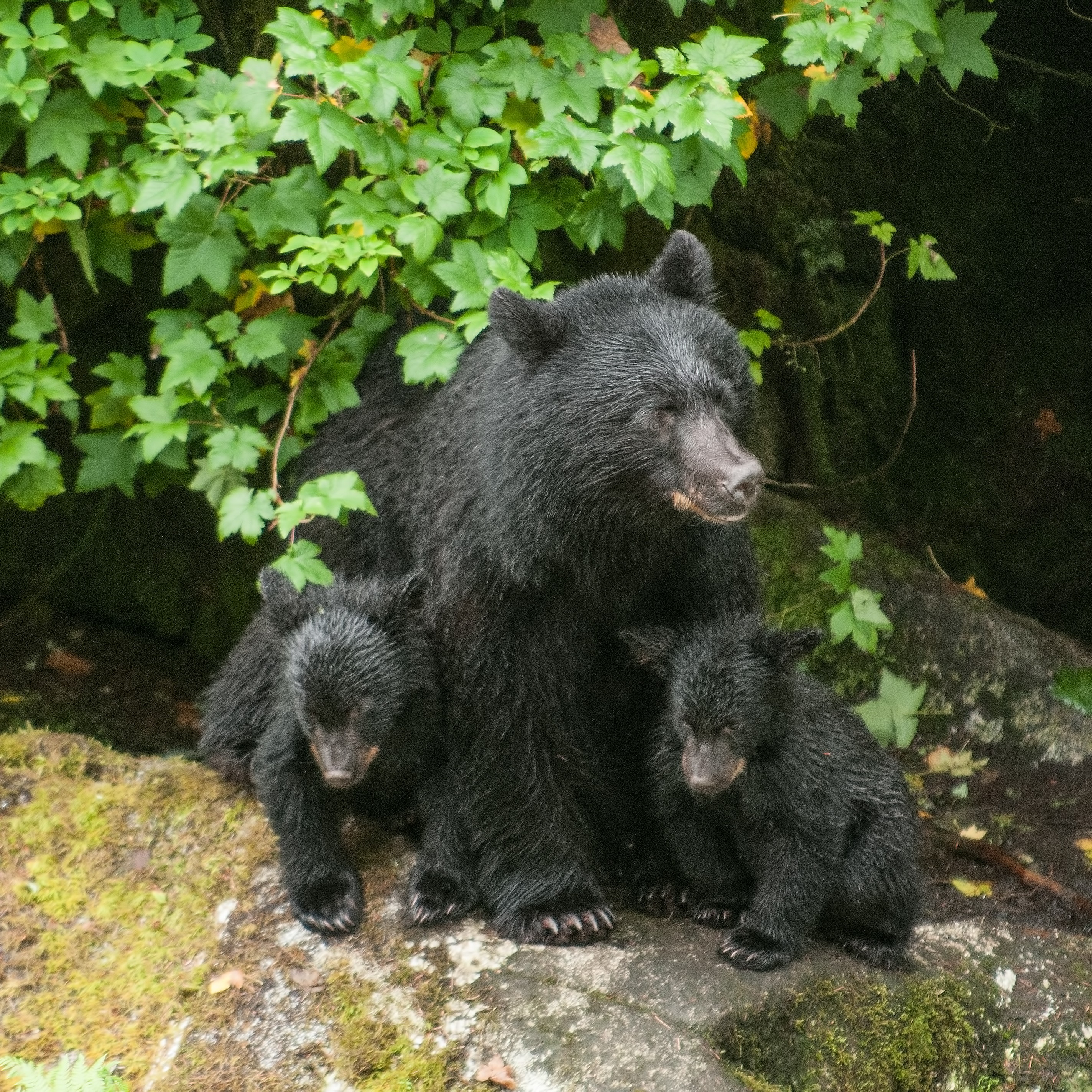
But Why: A Podcast for Curious Kids
But Why turns 10!
00:22:37
But Why turns ten years old on April 1, 2026! To celebrate this milestone, we’re listening back to our very first episode. We’ve got owls and turtles and bears. Naturalist Mary Holland gets into the…
Loading summary
Transcript45 lines
- [00:01]
A
Want to help shape future episodes of but why? Join the but why? Fan Club along with other great Perks, Fan club members now get previews of upcoming episodes and can send questions on the topics we're working on. Beyond the Perks, but why, Fan club members play a big role in supporting our work and help keep this show free for curious kids everywhere. To learn more or join the fan club, head to butkids.org donate, thanks and stay curious.
- [00:29]
B
Hi everyone, it's me, Jane. But why is celebrating a huge milestone this week. We are turning 10. Our first episode was published on April 1, 2016. So much has happened since then. We've followed your curiosity through the world and met with so many wonderful guests and learned so much about, well, everything. Some of the kids who sent us questions 10 years ago are in college now, and some of you listening today probably weren't even born yet. To celebrate this special milestone, we thought it would be fun to bring back our very first episode. So that's what we're going to listen to today. See if you can hear any changes in how we made the show back then and how we make it now. This is but why? A podcast for curious kids. From Vermont Public Radio, I'm Jane Lindholm, your host. Today on the show, we've got owls and turtles and bears. Oh my. It's all about animals. This is our very first episode, so I want to tell you what but why is all about. It's a show led by you. You ask questions and we find someone who can give you an an. And that way all the rest of us listening get to learn something cool. It's a big, interesting world out there and there is a lot to learn. There's plenty to scratch your head about, like why is the sky blue? Or how did they get the graphite inside the wood in a pencil. So if you have a question that you want some help answering, let us know. To send us a question, ask an adult, maybe a parent, to help you record it. Your adult can record you asking your question on a smartphone using the Memo app and then send it to questionsutwhykids.org we have all the instructions@butwhykids.org we want your first name and where you live and what your question is. Our question this week comes from a friend of mine. His name is Finn. He lives in Hinesburg, Vermont, and he's 4 years old.
- [02:54]
C
How do bears sleep all winter?
- [02:57]
B
Did you hear that? Finn wants to know how bears sleep all winter. Now, there are actually eight different species of bears, and not all of them do sleep during the winter. The polar bear, for example, is very active in the wintertime, Although females do build a little den and spend a few months in it when they have babies or cubs. But in Vermont, where Finn lives, there's only one type of bear, the North American black bear, and it usually does hibernate or sleep all winter long. So I turned Finn's question over to someone who knows a lot about animals and nature.
- [03:30]
C
In Vermont, I'm Mary Holland. I write natural history books, and I spend much of my time outdoors looking for things to write about and photograph. Black bears do sleep all winter, and they do so because they can sort of shut their bodies down before they go to sleep. In late summer, they go on an eating binge, and they eat and eat and eat lots and lots of plants and fruits and insects, and they get fatter and fatter and fatter. Sometimes they even double their weight. So A bear weighing 200 pounds would weigh 400 pounds, possibly. And then when they get all big and fat, they find a den to sleep in. And sometimes the den is under a root, or sometimes it's in the snow under a broken branch, or sometimes they even sleep right out in the open under some evergreen trees. But what they do is they slow down their body and their hearts beat much, much slower than when they were active. And then they also breathe much less frequently. They take a breath every 45 seconds or almost every minute, which is much slower than they normally breathe in the summer, and they go into hibernation.
- [04:56]
B
So what Mary's saying is the bears get really fat, so their bodies have enough energy to allow them to sleep all winter, and they slow their breathing down. It's a way to survive through several months of cold, harsh weather when there's not enough food outside to eat. Sleeping all winter is what is meant by hibernation.
- [05:15]
C
People didn't used to consider bears hibernators because their temperature only drops about 10 degrees. It's roughly from about 100 degrees Fahrenheit down to about 88 degrees Fahrenheit, about 12 degrees, actually. And scientists, biologists used to think that your temperature had to drop way, way down in order to be called a hibernator. But they've since decided that bears are hibernators. And you can be a hibern if your temperature doesn't drop very, very low. So once they go into hibernation, they don't eat, they don't drink, they don't pee, and they don't poop. And they're in hibernation for four to five months, sometimes even longer. And what they have is they have a plug actually in their butt that keeps them from going to the bathroom. And when they wake up in the spring, in April, and come out of their den, the plug comes out naturally and they start eating again.
- [06:17]
B
So does anything happen to bears in winter, or do they just sleep?
- [06:22]
C
While they're sleeping, they are using up their fat, and those cells break down and provide them with water and calories. And they also break down some of their muscle and organ tissues, and those turn into proteins to keep the bear alive. Female black bears actually give birth in January to tiny little cubs, anywhere from two to five of them, usually. And they are actually not completely asleep. Their sleep is quite shallow, so that when the baby cubs need to nurse, then the mother wakes up and arranges herself so that they can get her milk. And then when the baby cubs nap, the mother naps. It's very much like people.
- [07:13]
B
And so the babies, how big are they? When they're born, they weigh about half
- [07:18]
C
a pound, and they're roughly 7 inches long. They're tiny, Very tiny. Very tiny.
- [07:25]
B
So when they come out of hibernation in April, though, the cubs are much bigger. Are they able to feed themselves? And they have the bear fur that everybody thinks of a bear as looking like.
- [07:35]
C
They're not completely weaned.
- [07:37]
B
I'm going to stop Mary right there for just a second. Weaned means a baby has stopped getting milk from its mother. But when the bears come out of their dens and Mary says they're not fully weaned, it means they're still getting some of their food from their mother's milk.
- [07:52]
C
They look like a miniature adult. They can walk and climb. They're very agile, and they are starting to eat solid food. Usually it's some of the green vegetation that comes up earliest in the spring, often by ponds.
- [08:07]
B
Mary, do you think the bears dream while they're hibernating? I mean, I would dream if I was asleep for that long.
- [08:13]
C
I would, too. I think I would be, yes. I would be dreaming about the coming summer and turning over logs and finding all kinds of ants to eat. That's what I'd be dreaming about.
- [08:26]
B
Black bears usually sleep for four or five months in places like Vermont, where the winters are cold and dark. In Alaska and northern Canada, they'll sometimes hibernate for six months or even more. But in some places where it's warmer and there's food throughout the winter, like Mexico, black bears will barely hibernate at all. When the bears wake up, they have one to gain weight. So they spend most of their time eating, eating, eating. At the beginning of the spring, they look for green plants to eat. But over time, as trees and plants start to blossom, they find nuts and berries, and if they're lucky, things like honey or fish. They can also get a taste, though, for human garbage and birdseed. So if you share your habitat with bears, you should try to keep your trash cans away from them. And you might want to think about putting away your bird feeder during the spring, summer and fall months so the bears can't get at them. By the way, I mentioned there were eight types of bears. Some of them hibernate, like the black bear we've been talking about. Brown bears also hibernate, and if you've ever heard of a grizzly bear, A grizzly bear is a subspecies of brown bear. So it's a type of brown bear. The other species are polar bears, panda bears, sun bears, sloth bears, Andean bears, which are sometimes called spectacled bears, and the Asiatic black bear, which is also called a moon bear. And just so we're clear, the koala bear is not a bear. It's what is called a marsupial. Mary bears aren't the only animals that hibernate for the winter. Can you talk about a few other kinds of animals?
- [10:12]
C
There are other animals, such as bats and woodchucks that hibernate with the woodchuck. It has a very similar response as black bears. They stuff themselves at the end of the summer. If you have a vegetable garden, you're well aware that woodchucks visit it frequently at the end of the summer. And they put on lots and lots of weight, About a third of their body weight they put on. And then they leave their summer burrow and head to the woods for their winter burrow. And then they curl up and they go to sleep and enter a very deep hibernation. Their body temperature drops much lower than black bears, so they're in a much deeper sleep. Black bears can waken up quite readily when they're sleeping, Whereas a woodchuck, if you were to dig into a woodchuck burrow where it was hibernating and lift it up, it wouldn't move. It would look as though it was dead. Its temperature drops from about 97 degrees, which is roughly what a black bear's is. But whereas a black bear only drops down to 88 degrees Fahrenheit, woodchucks are about 47, 46, 47 degrees Fahrenheit. So they're just hovering above freezing.
- [11:26]
B
So that would be like what it feels like inside your refrigerator.
- [11:28]
C
Exactly, exactly. And they stay in that state. Well, we have February is the month of groundhogs day, but in Vermont at least, woodchucks are fast asleep on February 2nd. And it's probably another month or month and a half before the males wake up. And then they come out of their burrows and they look for a female burrow and a female to mate with. And then after they mate, the female goes back to sleep and the male trots back to his burrow and he goes back to sleep for a few weeks.
- [12:05]
B
What about some amphibians? They have interesting ways of hibernating.
- [12:08]
C
Yeah, I'm sorry, I was thinking of just mammals. Frogs and turtles, reptiles and amphibians both hibernate. The reason for hibernation is because there's a lack of food. Frogs, basically, a lot of people think they bury themselves in the mud. They don't. Aquatic frogs, frogs that live in a pond will go down to the bottom of a pond and just sort of lay on top of the mud because they breathe through their skin and they need to be exposed to the water to get the oxygen in the water into their skin. But they are not, for the most part, they're not active. Turtles, on the other hand, do bury themselves in mud. Like a snapping turtle, an aquatic turtle or a painted turtle will bury themselves in mud and shut down their body even further so that they need little oxygen and they remain there until spring as well.
- [13:02]
B
One of the other really interesting animals that I learned about hibernating just recently is what a lot of us know as the woolly bear caterpillar. So it's that caterpillar that's pretty fuzzy and it's black and orange. And usually it's black on both ends and orange in the middle or orange sort of rusty red. And people often say you can tell how harsh the winter is going to be because the more orange, the milder the winter it's going to be. So if you see a woolly bear that's very orange in theory, we're going to have a warm winter and it's not going to have too much snow or cold.
- [13:36]
C
Do you want to know the real truth?
- [13:38]
B
Yes.
- [13:39]
C
The amount of orange is simply a reflection of how many times the caterpillar has molted.
- [13:47]
B
Molting means shedding the skin. It's how some animals grow bigger. They shed their outer skin and they grow into a new sk or a new shell, depending on what kind of animal it is. One that's a little bit roomier.
- [14:00]
C
Each time it molts, there's an additional section of orange.
- [14:06]
B
So the orange ones are the older. They're the elder woolly bears.
- [14:09]
C
Yes. The more orange, the older, the longer the growing period has been. So if we have an early spring or late fall, it's able to feed longer and therefore probably have more orange.
- [14:23]
B
Mary I also read that these caterpillars have an interesting thing that goes into their bloodstream that's kind of like antifreeze that you put in your car. So they can hibernate and they just freeze solid?
- [14:35]
C
Yes. A lot of insects have sort of glucose substances just like antifreeze and that's how they can survive. They're not warm blooded so they don't try to stay warm but. And they can't. But they have this, you named it antifreeze in them that keeps their cells from freezing.
- [14:55]
B
And it's called a cryoprotectant.
- [14:57]
C
Yes, exactly. It's interesting you mention the woolly bear because woolly bears are one of the few moths that overwinter as a larva, not in a cocoon, as a pupa and not as an egg, but as a caterpillar or larva. And they don't turn into a moth until the spring. So in the spring you'll be seeing really ragged looking woolly bears crawling around before they form their cocoon and emerge as moths.
- [15:30]
B
And the type of moth they turn into is called an Isabella tiger moth. Do you know what that looks like?
- [15:35]
C
I'm afraid it's quite dull. It's a tannish brown, nondescript little moth, maybe an inch wingspread.
- [15:44]
B
That was naturalist Mary Holland telling us why bears sleep all winter and about some of the other animals that hibernate. If you want to learn more about animals in nature, check out Mary's book. It's called Naturally Curious and it tells about what's happening in nature in the New England region in every month of the year. But first, a message for the adults who are listening. Support for our program comes from Oak Meadow providing secular student centered homeschooling curriculum and a teacher supported distance learning school for K12. Oak Meadow has encouraged kids to follow their curiosity and uncover the answers to but why? For 45 years. To learn more, visit oakmeadow.com. Do you recognize that call? That's a barred owl. Sometimes people say their call sounds like
- [16:52]
C
who cooks for you? Who cooks for you?
- [17:15]
B
If you live in the eastern half of the United States or Canada or in the Pacific Northwest and parts of western Canada. You may have been able to hear one of these elusive creatures. But have you ever seen a barred owl up close? They're pretty cool to see in the wild, flying almost silently through the woods at dawn or dusk. Some lucky kids recently got to meet a barred owl named Chapin, and we paid a visit too. Chapin was seriously injured several years ago and can't live in the wild anymore. But she was rescued and she's now taken care of by an organization called Outreach for Earth Stewardship. She lives in an aviary that's like a really big birdcage. Chapin is pretty quiet when she's visiting with human friends. When we got to meet her, she was sitting calmly on a leather glove worn by a cotton Craig Newman. And Craig told us a little bit about Chapin and what it's like to take care of a wild animal like this.
- [18:12]
D
She was injured when she was hit by a car in 2006 and she's been with us since then. She is very distinctive in that she has dark colored eyes, they're dark brown. The only owl that we have here in Vermont that does have dark eyes. The rest have light green, greenish yellow or some light color like that. So. And she also has vertical dark bars on her chest that the name is derived from the barred owl. And she has a sort of a nice round, earless head. She has no ear tufts, feather tufts. They live outside in a large aviary. And she actually has two roommates. They're all barred owls.
- [19:12]
C
Yes.
- [19:12]
D
We don't mix species because somebody might be breakfast for another bird if we were to put them together. Well, for me, it's a lot of fun. Of course, it's a lot of work, a lot of cleaning, a lot of feeding, maintaining their habitat. She mostly eats mice and small rats. Wild living barred owls eat a variety of different food, especially summertime. They eat lots of amphibians and songbirds, mice. But in captivity, she mainly gets mammals. We've had some other owls that we've had for over 20 years. This time of year, once the sun goes down, there's quite a barred owl party because we have wild living barred owls that live nearby. And there's lots of conversations going on. So it's pretty noisy.
- [20:13]
B
Can you imagine what an owl party would be like? It might sound something like this. That's a pair of barred owls calling with their nestling, their little baby owl. And here's what it sounds like when two pairs of owls are calling back and forth. What they're communicating to each other is something along the lines of this is my space or my tree. Buzz off. You can't live here. The sounds you've been hearing of the barred owl's calling were given to us to use by the Macaulay Library at the Cornell Lab of Ornithology. They have a pretty cool website if you're interested in hearing more bird calls of all kinds, and the website will tell you a lot about where birds live and what their behavior is, what things they eat and what they look like. We have a link up@butwhykids.org thank you so much for listening. Back to our first ever episode of but why. Thanks to all of you for listening for 10 years and to our wonderful guests who have shared your curiosity and their expertise with us. But why is produced by Sarah Bake, Melody Beaudet and me, Jane Lindholm at Vermont Public and distributed by prx. Our video producer is Joey Palumbo and our theme music is by Luke Reynolds. If you like our show, please have your adults help you give us a thumbs up or a review on whatever podcast platform you use. It helps other kids and families find us. We'll be back in two weeks with really an all new episode. Until then, stay curious.
- [23:31]
C
From prx.