← But Why: A Podcast for Curious Kids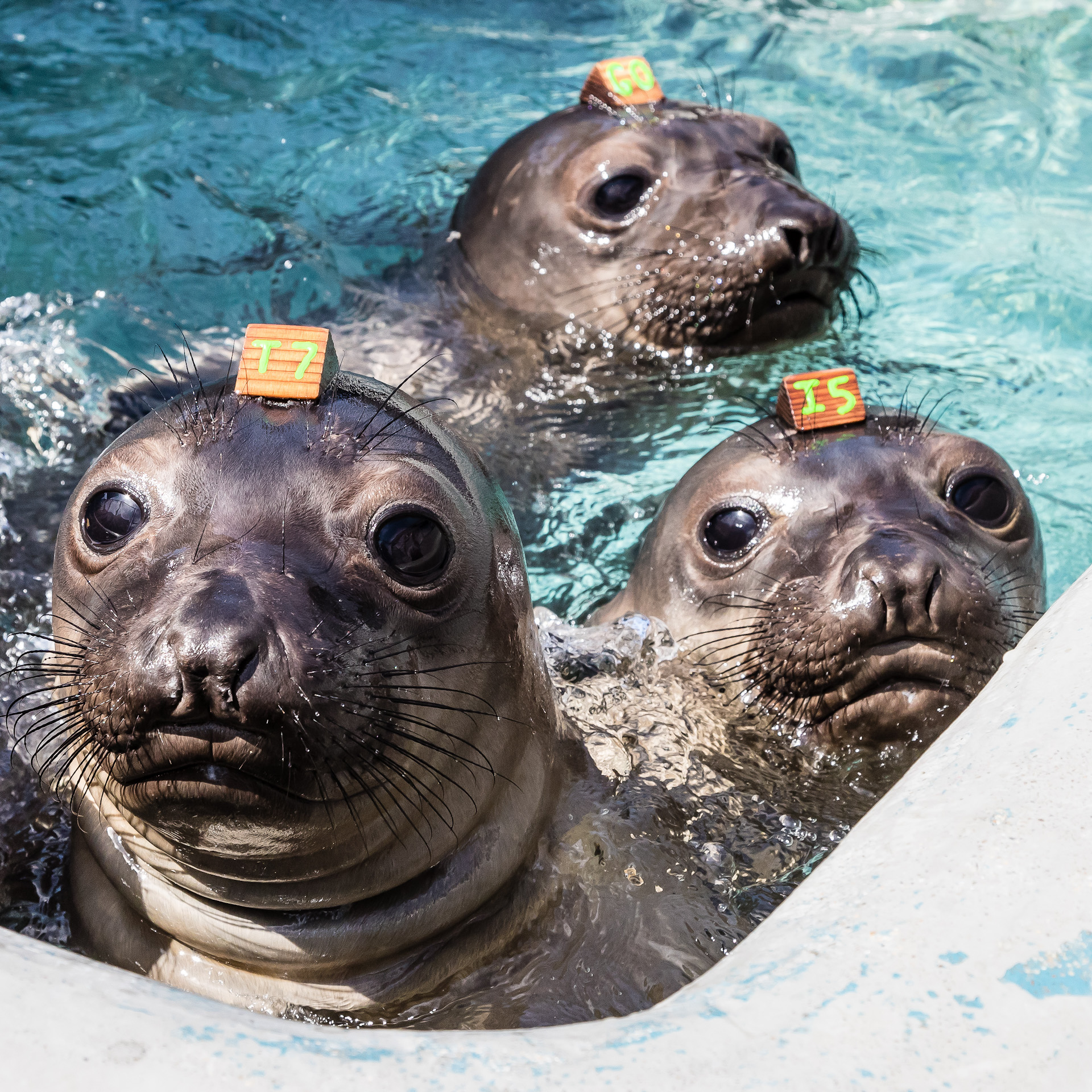
But Why: A Podcast for Curious Kids
What’s a seal? What’s a sea lion?
00:28:44
What’s the difference between seals and sea lions? Do seals bark? Are they gray? Do harbor seals live in snowy regions? Why do sea lions eat fish? Why do sea lions fight each other? Seals and sea l…
Loading summary
Transcript63 lines
- [00:03]
Jane Lindholm
Why is the sky blue? Why do birds sing? Why do we need your support? Because but why is powered in part by listeners like you. If but why sparks curiosity and learning in your home, help us keep the show going Strong. Head to butkids.org donate to become a But why fan club member or make a gift in any amount to support the show. Thanks and stay curious. Before we get started, here's a message for the adults who are listening. Support for but why comes from Progressive Insurance. Do you ever think about switching insurance companies to see if you could save some cash? Progressive makes it easy to see if you could save when you bundle your home and auto policies. Try it@progressive.com Progressive Casualty Insurance Company and affiliates. Potential savings will vary. Not available in all states. This is but why a podcast for welcome to Curious Kids from Vermont Public. I'm Jane Lindholm. On this show, we take questions from curious kids just like you, and we find answers. When I was little, I wanted to be a marine biologist. I wanted to learn all about the animals that live in the ocean. And I know I'm not the only one fascinated by marine animals because we get lots of questions about them. We've done episodes about fish and jellyfish and whales and sharks and lobsters and snails and and we've written about even more marine wildlife in our book Do Fish Breathe Underwater? But we've never done a podcast episode about pinnipeds. Do you know what a pinniped is? Don't worry, neither did I. Their name means fin footed, and they have flippers for both front and back legs. They're all meat eaters. They're mammals. They live in the ocean, but they come on land to rest and to have their babies. And some of them bark almost like dogs. Maybe you guessed it, but pinnipeds are seals, sea lions, and walruses. In today's episode, we're going to talk about the first two, and next week we'll release a bonus episode, just about walruses. To make this episode, one of our producers, Sarah, traveled to a research and rescue center in Sausalito, California. And there Sarah found someone who actually did become a marine biologist, unlike me.
- [02:49]
Adam Ratner
My name's Adam Ratner and I'm the Director of Conservation Engagement at the Marine Mammal Center. I study seals and sea lions. I help to get them better and healthy if they're sick, and then what we learn from them. I share those stories so that people all around the world know how they can help give seals and sea lions and other marine mammals A second chance at life in a healthy ocean.
- [03:13]
Jane Lindholm
So tell me a little bit about the center and how you do this work. What kind of facilities, facility do you have, and what are we hearing at the center now?
- [03:21]
Adam Ratner
The Marine Mammal center is the world's largest marine mammal hospital. So we rescue, rehabilitate, and release sick and injured marine mammals from up and down around 600 miles of California coast. We'll get the animals better, get them back out into the wild. And while they're in our care at the hospital, we're learning about them, figuring out what's going on out in the ocean, and then being able to teach folks around ways that we can all take action to create a healthy ocean for marine mammals and people alike. Right now, we've got just under 50 patients that we're taking care of. And you're hearing some of the baby elephant seals that are at the hospital. These animals are around two to four months old. They've been separated from their mom early and are just really, really skinny. And they make this kind of weird cackling sound, kind of like an evil chicken. And that's what's happening in the background. And they've become really famous for it as well.
- [04:12]
Jane Lindholm
Sea lions are among the animals movie makers used as models for the fictional creatures you can see on screen in Jurassic Park, Lord of the Rings, and How to Train youn Dragon. Listen closely if you watch any of those movies and see if the velociraptors, orcs, and baby dragons sound anything like what you're hearing in the background at the Marine Mammal Center. But of course, the babies Adam takes care aren't evil, even if he says they do sound like evil chickens. They make those sounds because they're trying to get the attention of their parents or in this case, their human caretakers.
- [04:49]
Adam Ratner
Correct? Yeah. So elephant seals, particularly the babies, they have a lot to talk about. Mom and baby certainly know each other's voice. It makes sense to all of them from our perspective. It's always a little hard to know what they're trying to say. Sometimes it might be them saying that they're hungry. Sometimes it could be saying, hey, give me a little bit of space. If one gets too close to them. They are also babies. So I think sometimes they're just saying, like, hey, look at me, look at me. I'm over here. Look at me, look at me. A little bit of a mix of all of them, to be honest.
- [05:21]
Jane Lindholm
Why do you have so many? What is happening that so many of them are getting separated from their mothers.
- [05:26]
Adam Ratner
So Each year, we tend to see a lot of these baby elephant seals coming into the hospital in the springtime, and that's because they're born in the winter, basically December through February. And unfortunately, these baby elephant seals can get separated from their moms. Things like big storms can separate them or the babies can struggle to find food on their own. So what happens is starting in around February through April, we see a lot of these really, really skinny elephant seals coming up onto the beaches, sick and starving. Luckily, people, families walking along the beach see these animals. They get on the phone, they call the marine mammal center, and we can bring them into our hospital and get them better. They are just really, really underweight. So a baby elephant seal, the moment they're born, they're already about the size of a third grader. They weigh 75 pounds.
- [06:14]
Jane Lindholm
Wow.
- [06:15]
Adam Ratner
By the time they turn one month old, they should weigh 300 pounds. So these are massive babies. The elephant seals we have right now are around two to four months old, but instead of being 300 pounds, they only weigh around 75. So they're just skin and bones struggling to find food. They might not even know how to eat fish yet. So our team of veterinarians and volunteers are teaching them how to eat fish, plumping them up, getting them really fat, and making sure that they're gonna be able to go back out to the wild soon.
- [06:46]
Jane Lindholm
In the wild, how long would an elephant seal pups? How long would one live with its mother?
- [06:50]
Adam Ratner
So it's a really short period of time with moms. So elephants seals actually spend only one month with their mom. That's it.
- [06:57]
Jane Lindholm
Wow.
- [06:57]
Adam Ratner
All they do is they sit side by side with them up on the beach and they drink their mom's milk. And every day they drink their mom's milk, they're going to gain eight pounds. So they get super fat in this one month, and then mom takes off and doesn't come back, and the pup's up on the beach, never having been in the water before. So it doesn't know how to swim. It's never seen a fish, it's never eaten anything. And they have to learn it all by themselves. And what's amazing is that they do. They use a lot of that 300 pounds, those fat reserves, to give them the time that they need to kind of practice and learn and are able, within around a month to two months, to be able to head out into the ocean on their own. The problem that we see with our animals is if they don't get to that £300, they don't have all that fat, those reserves to give them the time. So they're really struggling to just simply survive, and they don't have that time to kind of learn and spend time in school, if you will, in that kind of right mental space.
- [07:53]
Jane Lindholm
So how do you, at the center, make sure that you're teaching them how to do the things they need to do in the wild when they're not in the wild and they're interacting with humans?
- [08:03]
Adam Ratner
So it's a really tough balance here at the hospital because we don't want any of these animals getting used to people. So all the work that we're doing is trying to keep. Keep them wild. So when it comes to swimming, we're just giving them access to the water. We have different pens and pools that are different depths, so they can just kind of get into it a little bit and feel wet. They can dive down real deep. When it comes to food, we make them a delicious fish smoothie that we can pump directly into their bodies. And then once they're able to start eating fish, they all go to what we call fish school. So we take a fish, we put it on a string, and from a distance, we drag that fish around the pool. And over time, the elephant seals get curious. Just like babies, they see this kind of shiny thing moving, and they want to explore it. So they touch it with their mouth, they might put it in their mouth. Then all of a sudden, they realize fish is delicious and they are willing to start chasing after it. And we can just throw the fish into the pool, let the animals fight over it. And that's when we know they've graduated from fish school and are on their way, ready for release.
- [09:06]
Jane Lindholm
So only a little bit different from how we humans eat in our own families.
- [09:10]
Adam Ratner
Exactly.
- [09:11]
Jane Lindholm
While we're talking about these elephant seals, can I ask you a few of the questions that kids have sent us about seals more generally?
- [09:18]
Adam Ratner
Please.
- [09:19]
Rowan
My name is Rowan. I'm six years old, and I live in North Carolina. Why do seals bark?
- [09:27]
Adam Ratner
Seals and sea lions all have different sounds that they make. And with sea living sea lions, those are the ones that bark a little bit more, Kind of like a dog. Seals, like the elephant seals, have this cackling sound. Harbor seals have this more kind of like ma ma call that they make. So just like with people, every type of animal has a different voice, and it's how they talk to each other. They definitely know what they're saying. Moms and babies know each other's voices. Just like if you're at the grocery store with your mom. And you turn around and you realize that you don't know where your mom is right now. You can just scream, hey, mom, where are you? And mom knows exactly your voice. And you reunite at the cereal aisle. Same thing happens with these elephant seals out on the beach. So it's how they talk to each other and communicate.
- [10:15]
Rowan
My name's Lucy. I live in Columbia, South Carolina. And I want to know, why are seals gray?
- [10:23]
Adam Ratner
So seals and sea lions can be actually all different types of colors. So with the elephant seals, for example, that we have at the hospital, they're born with a black fur. So that first one month, they've got this thick black fur. And that's actually gonna help keep them warm, because you think about, like, wearing a black T shirt outside on a sunny day, it absorbs all that sun. It helps. Those elephant seals, when they turn one month old, they get rid of the black fur, and they get a gray fur or a silver fur. And other seals and sea lions have different things as well. So harbor seals are actually spotted. They're one of the only spotted seals or sea lions you'll find in the United States. So each one's a little bit different. Gray, just in terms of all different kind of animals in the wild, helps you blend in in the water a little bit. So if you're kind of at the surface, you can blend in a little bit with the silhouette of the sun or the darkness of the ocean below you. So it's one way to maybe hide from other animals in the ocean if you're gray.
- [11:20]
Jane Lindholm
You've mentioned harbor seals a couple of times, and Maisie has a question about those seals in particular.
- [11:26]
Rowan
I'm five years, and I live in Sacramento, California, and I want to know why harbor seals have to live in the snow.
- [11:34]
Jane Lindholm
Why harbor seals live in the snow?
- [11:36]
Adam Ratner
So harbor seals you can find in a lot of different parts of the world. So some of them live up in the Arctic area where it is snowing. Others actually live in California. So here at the hospital right now, we've got five baby harbor seals that we're taking care of. So I always like to think about with the harbor seals the same way with people sometimes. Some just like different climates. So some people like living in Maine and Vermont, where it's really, really cold. I'm not that person. I like to be out in California where it's a little bit warmer. So you've got different populations. They don't necessarily swim that big distance. They have kind of their home area. They like Spending time in, but they're built for it. The ones that live in the cold wear the snow. They're a little bit bigger, a little bit fattier, and they've got that blubber to keep. Keep them warm compared to some of the ones that are in California where it's a little bit warmer.
- [12:25]
Jane Lindholm
Tell us a little bit more about blubber. Because not only is blubber an amazingly fun word to say, it's also really important to these marine animals, especially ones that live in cold water.
- [12:35]
Adam Ratner
Exactly. Blubber is fat. It's a very fun word for fat. And seals and sea lions and whales and dolphins are very fat. So it's what's going to help them stay warm in this really, really cold. Because they're mammals just like us. If you stand a seal or a sea lion up against you, they have all the same bones, they have all the same organs in all the same places. So blubber is what we call an adaptation. It's going to allow them to live in this different environment than what people live in.
- [13:04]
Jane Lindholm
How many different kinds of seals are there?
- [13:07]
Adam Ratner
There are so many different types of seals. I think There are over 30 different types of seals and sea. So pinnipeds, these flipper footed animals.
- [13:17]
Jane Lindholm
That's another amazing word. And I'm really glad you said it, Adam, because I want to know more about what a pinniped is. I love saying that word.
- [13:25]
Adam Ratner
Yeah, so if you break the word down so the n part ped, you might think of that. In other words, that we use every single day. So pedal or pedestrian or pedometer, it means foot. Pinna means foot, Flipper or feather. So these are flipper footed mammals. So it's seals, sea lions. And then the walrus also fits into that group. They're kind of like the one man out. One of these things doesn't look like the others is the walrus within the pinnipeds.
- [13:55]
Jane Lindholm
Walruses have flippers just like seals and sea lions, but they look pretty different from the other two pinnipeds. For starters, walruses have two big tusks and a mustache. And there are no walruses at the Marine mammal center. That's because walruses live up in the Arctic. We're going to get to walruses next week in our bonus episode. But coming up, we're going to learn about sea lions and we'll take a side trip to a very special place famous as a hangout for them. Stay tuned. But first, a message for the adults who are listening. Support for our program comes from Oak Meadows providing secular student centered homeschooling curriculum and a teacher supported distance learning school for K through 12. Oak Meadow has encouraged kids to follow their curiosity and uncover the answers to but why for 45 years. To learn more, visit oakmeadow.com this is but why? A podcast for curious kids. I'm Jane Lindholm. Today we're learning about pinnipeds, flipper footed marine mammals. Those are sea lions. At a place called Pier 39, part of the Fisherman's Wharf area in San Francisco, California. Lots of sea lions come and hang out on the boat docks at Pier 39. They play with each other, but mostly they just seem to nap. Tourists go to visit them because it's so fun to be able to see these huge animals up close. Producer Sarah went to Pier 39, but instead of interviewing the sea lions, she talked with some of the kids who were watching them. And sure enough, those kids had lots of questions.
- [15:37]
Rowan
My Name's Om. I'm 10 years old. I'm visiting from Fresno, California, from the Central Valley.
- [15:44]
Adam Ratner
Why are there so many sea lions in Pier 39?
- [15:47]
Jane Lindholm
I asked our guest for this episode, Adam Ratner, a marine biologist at the Marine Mammal center, why there are so many sea lions at Pier 39.
- [15:56]
Adam Ratner
Basically, over 30 years ago, some sea lions found these open docks that no one was using. They had just been doing construction on them and the boats hadn't come back. And they realized that this was an awesome place to come and just rest and hang out. So in the very first year in 1989, there were a handful of sea lions that showed up. No one really did anything. They just let them be there and they told all their friends. And then pretty soon hundreds of sea lions started showing up there. And now, depending on the time of year, you might show up to Pier 39. And we saw over 1500 California sea lions at Pier 39 last year on one day. So it's this huge hangout spot basically for sea lions. And the reason why we think they like Pier 39 the best is because it's a safe place. It's away from any predators. People have kind of given them these docks so they don't have to worry about people kind of interrupting them and bothering them. And the same reason why people are there. There's a lot of good fish and food in the bay, so you've got this kind of resting spot. I think about it as almost like a gas station or a rest up on the highway when you're on a big road trip. Up and down the California coast. That's what the sea lions are doing. And this is a place to kind of rest, grab a little bit of food, relax for a few days before you head either down to Southern California to hang out with all the females or up to kind of the Northern California Vancouver, British Columbia area. Or maybe you're going to your favorite restaurant for food.
- [17:28]
Jane Lindholm
And they don't mind that so many people like to watch them.
- [17:31]
Adam Ratner
They don't. They seem to kind of ignore us. What's really great is there is a separation so you're not able to touch them. It's against the law to feed them or throw anything towards them so we can be close, close enough that we can see them really well. But they do have their space, which is really important. And we've seen if people do get close, we actually scare them away. So it's a sign that if we can view wildlife responsibly and safely, always keep our distance. Use your zoom on your camera. Rather than get too close, be really quiet around them. We have this really amazing opportunity to see wildlife up close and enjoy what's in our own backyard.
- [18:08]
Jane Lindholm
Even if you don't live anywhere near San Francisco, you can watch a live video stream of the sea lions at the pier. The website is pier39.com sea lions. We'll put that in our show notes too. But if you're looking at a big four flippered animal swimming through the water and you're not on that live stream, how do you know if it's a seal or a sea lion?
- [18:31]
Rowan
My name is Kiara. I am from from Dublin, California and I'm nine years old. What is the difference between sea lions and seals?
- [18:44]
Adam Ratner
So sea lions in my mind are like lions. So lions have ear flaps just like we have that you can see. Lions have these big front paws that they can walk around on. And lions are brown. Sea lions are like lions. They have all those same features. Seals, if you want a way to remember them, are kind of more like sausages. So sausages don't have any ears that you can see. Seals will just have little tiny holes in their head. They don't have these big flippers. They kind of scoot around on their bellies like big caterpillars or worms. And then seals are either going to be kind of this one grayish or brown color or they could be spotted kind of like how sausages usually look. So I always remember sea lions are like lions. Seals are like sausages.
- [19:29]
Rowan
My name is olivia. I mean 8. Why do sea Lions swim.
- [19:38]
Jane Lindholm
Do all pinnipeds swim?
- [19:40]
Adam Ratner
Yes. So all pinnipeds swim, and they're built different ways to swim. So sea lions have these really big front flippers. They can use them kind of like our arms. And they're really, really fast swimmers. So they can swim 25 miles an hour, which is five times faster than the fastest human swimmer. So they're really, really quick and agile, and they can also come up onto land, they jump up onto docks like at Pier 39. Seals are also really good swimmers, but they're going to use their back flippers instead. And those tiny short front flippers are kind of like the steering wheel. It's going to help them kind of just make little turns more than anything else.
- [20:18]
Rowan
My name is Tade T E J. Why do they need to eat fish?
- [20:30]
Jane Lindholm
That really sounded just like the sea lions. And Maggie from San Francisco has the same question.
- [20:36]
Rowan
Why do sea lions eat fish?
- [20:40]
Adam Ratner
So fish is delicious. Fish is super healthy for them. It gives them all the nutrients they need. Obviously, there's a fair amount of fish out there for these animals to eat. Seals and sea lions are top predators, so they eat a lot of different things. Here at the hospital, we feed them herring, which is a relatively small fish. But out in the wild, a sea lion or an elephant seal could eat something like a stingray. It could eat, actually small sharks, octopus. So these animals do eat a lot of different types of, of things, but fish is just gonna be one of the things that's maybe a little bit easier to catch and gives you all those yummy nutrients that you need to grow big and strong.
- [21:21]
Rowan
My name's Avery. I'm nine years old and I'm from Indiana. And my question is, how do we tell the females from the males?
- [21:30]
Adam Ratner
Sea lions, there are two different types that we find in the United States, so the Steller sea lion and the California sea lion. And Steller sea lions are really why sea lions were called. So Steller's sea lions are found up in Alaska and Washington state and they are huge. The boys get up to be over £2,000 and they actually do develop this thick mane around their neck. And it's only the boys that get that, and the females, the girls, they don't get that. It's a difference between the boys and the girls. And it allows the boys to show that they are a full grown adult kind of, hey, look at me, look how big I am. Look at my beautiful mane. And it's a way for them to get maybe girlfriends out on those beaches with The California sea lions, it's a little bit different. The boys are still much bigger. So boys get to around £750. The girls only around 250. So the boys are three times the size.
- [22:25]
Jane Lindholm
Yeah, that's a big difference.
- [22:27]
Adam Ratner
Yeah. And they don't get a mane. But the male sea lions, when they turn around five years old, they actually develop a bump on the top of their head. It's what we call a sagittal crest. And what it kind of looks like is a big mohawk as they get older. And it's the same way. It's the way for the male sea lions to show off to all the females, saying, hey, look at my big mohawk. I am the biggest, strongest male out here. I'm Braden. I'm 12 years old, and I'm from Plainfield, Indiana. Why do sea lions fight each other? They put on a good show at Pier 39, certainly. So all those sea lions at Pier 39, again, you might have 50 of them there at one time, or you could have over 1,000 of them at one time. And almost all of them are actually males. And it's because the sea lions migrate. They go from Southern California all the way up to around Washington state, but the females stay closer to Southern California. And it's the males that go up and down the California coast the most. So all those males at Pier 39 are hanging out. They're resting either on their way up to their favorite restaurant or on their way down to the breeding grounds where all the females are. So one of the things that we tend to see is all these males are actually practicing their fighting, because when they go down to Southern California, they kind of have to fight with each other to get the girlfriends. This is a place for them to do that. It could also be that they just have their favorite spot on the dock, and they don't want to be bothered. So they're going to fight for that really sunny spot away from some of the other animals. But it's never really to hurt the animals. It's to show that they're the biggest, they're the strongest, and that's going to help them when it comes time to be around the girlfriends.
- [24:12]
Jane Lindholm
As humans, we have more in common with seals and sea lions than you might think. We mentioned that they're mammals, and so are we. Mammals give live birth to their babies and feed them milk. That's what seals and sea lions do. They don't lay eggs.
- [24:28]
Adam Ratner
So what we're going to see with seals and sea lions, when it's time to have their babies. For the sea lions, they're going to go all down to Southern California, and they're going to go to these big beaches down at the Channel Islands, and they're going to have typically one baby at a time. We almost never see twins, and we don't really see siblings the same year type of thing. So one baby at a time. The sea lions, they spend six to nine months with their mom, and they're gonna learn to swim with their mom, and they're gonna go find food with their mom. And then at around nine months old, they're out on their own, and that's when they might start swimming up and down the California coast with the elephant seals. We talked about this one a little bit earlier. Born in the wintertime, and the baby only spends one month with mom, and they just get really, really fat. They drink all their mom's milk, and then they have to learn everything else on their own. So it is different than people. But it's always a live birth with a baby, and the mom will spend a little bit of time with them, getting them ready for life on their own. It's so fascinating as well to think you look at these animals that look so different, like a sea lion, like a walrus, like an elephant seal, but you realize how much like humans they are. They're all mammals, so we all breathe the same air, we eat the same food, we swim in the same areas, but they're different at the same time.
- [25:49]
Jane Lindholm
And the really cool thing is, by studying seals and sea lions, researchers not only learn new things about these animals, but they can also learn important things about our oceans and even human health.
- [26:01]
Adam Ratner
Oh, so much so seals and sea lions, because they're like people, they're mammals. We call them sentinels of the sea, or ecosystem indicators. So they tell us about the health of the ocean. They eat the same food that we do, they swim in the same water that we do, they breathe the same air that we do. So here at the hospital, the issues we see seals and sea lions coming in with give us signs of what are the impacts of climate change, or what are the impacts of toxins and poisons that are in the water? What's happening to the fish right off our coast? Is the fish healthy? Is the fish plentiful? So, so many things where we can get these animals better at the hospital, but it actually helps us do better human medicine. We use the same treatments that you might get at a human hospital, and we've actually discovered new treatments here at the hospital on animals that people might get at the hospital if they get sick.
- [26:55]
Jane Lindholm
So how are sea lions doing generally? What are we seeing in their population?
- [27:00]
Adam Ratner
So, luckily, California sea lions and elephant seals, their populations have been growing. They're really success stories. These animals used to be hunted, and the numbers were really low. But with protections for the past 50 years, the Marine Mammal Protection act, we've seen them really thrive. So sea lion, California sea lions, and elephant seals, they're not endangered or threatened, and they're a sign that we can help save these animals if. If we take the right action. Elephant seals are one of my favorite animals in the whole world, and it's because of their story. They were hunted to less than 100 animals. We actually thought that they had gone extinct back in the 1800s. And they found a small group of them hidden on an island in Mexico and realized that we had this chance to kind of bring an animal back from the brink of extinction. So they protected the island. We put in place different rules. And the elephants seals now went from 100 animals to around 175,000. So we've got this ability to help save species. Same thing with the sea lions. So those animals are sentinels for the sea because we're seeing them so frequently as well. They give us lots of clues. There are other types of seals and sea lions that aren't so lucky. They are on the endangered species list. One that we work with at the Marine Mammal center is the Hawaiian monster. As the name says, they're only found out in Hawaii. They're the only seal or sea lion that you'll find in warm water. So they, like, figured it out. But their numbers are only around 1600, and that number has been growing with protection over the last few years. But every single one of those is really important, and that's why the Marine Mammal center has a hospital out in Hawaii. We work with a lot of different groups to help get them the second chance. And it's a sign that conservation and rehabilitation can make a really big difference.
- [28:49]
Jane Lindholm
Thanks to Adam Ratner and the Marine mammal Center for helping us learn about seals and sea lions. That's it for this episode, but we have a bonus episode coming up, all about walruses. Remember walruses, Those funky cousins of seals and sea lions with their big tusks and mustaches? We'll learn all about them in a bonus episode in one week. Now, if you have a question about anything, have an adult record you asking it. It's easy to do on a smartphone using an app like voice memos. Then have your adult email your question file to questionsouthwhykids.org Our show is produced by Melody Beaudet, Sarah Bake and me, Jane Lindholm at Vermont Public and we're distributed by PRX. Our video producer is Joey Palumbo. Check out our YouTube series but why Bytes. We put out a short bite sized video episode every other Friday. Our theme music is by Luke Reynolds and if you like but why? Please like and comment wherever you listen and share us with your friends. We'll be back in one week with an all new bonus episode. Until then, stay curious.
- [30:08]
Rowan
From PRX.