← But Why: A Podcast for Curious Kids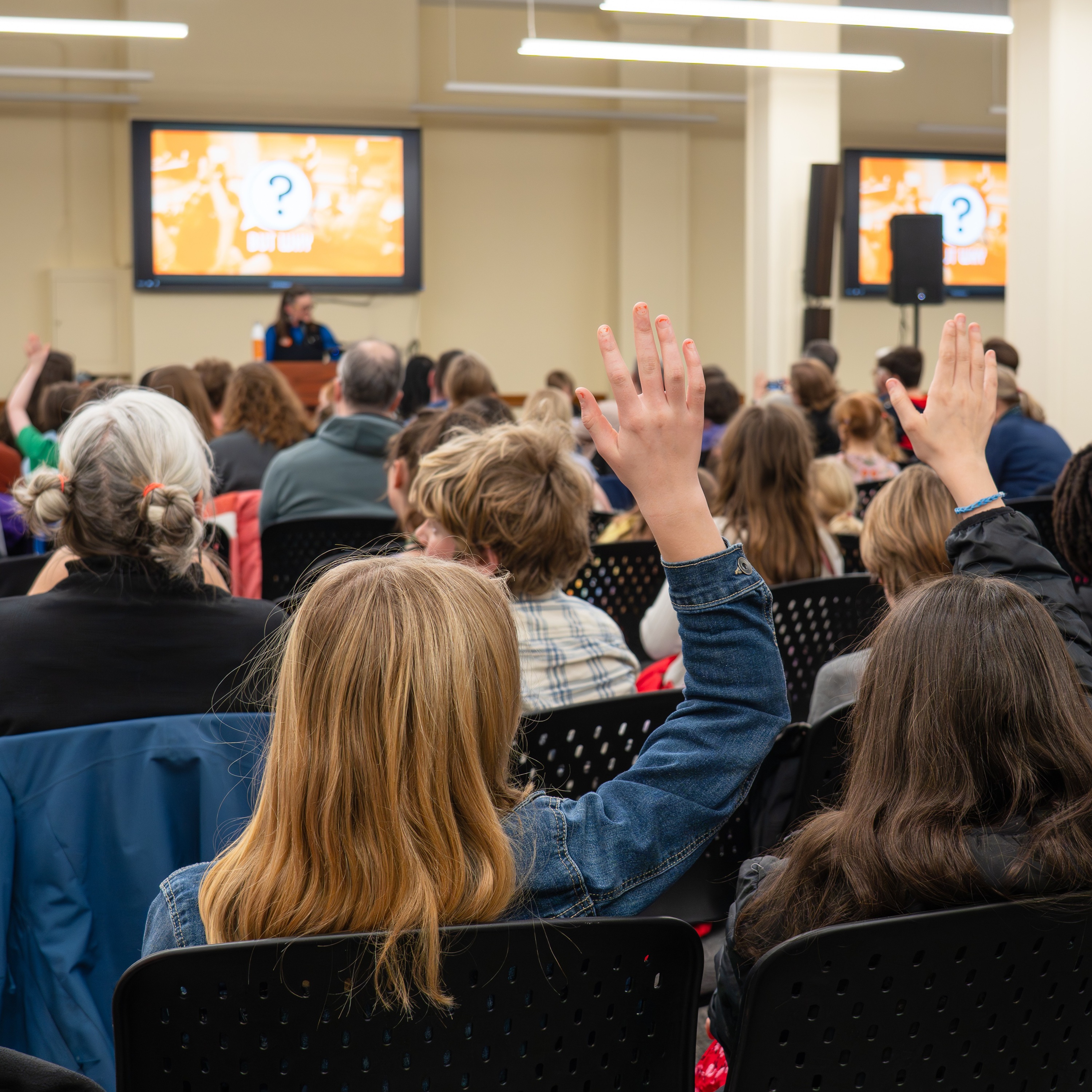
But Why: A Podcast for Curious Kids
What's it like to be a Kid Governor?
00:26:39
In the United States, voters in each state elect a governor every two or four year terms. The governor is the top official in the state government. But did you know five U.S. states also elect a…
Loading summary
Transcript112 lines
- [00:02]
But Why Host
At butwhy we believe that curiosity is key to learning. That's why we bring kids questions to life with experts, fun stories and fascinating facts in our podcasts and video episodes. But we can't do this without you. Support from people who love the show and believe in what we do helps keep curiosity thriving. Head to but whykids.org donate to become a But why Fan club member or make a gift in any amount to support the show. Thanks and stay curious.
- [00:32]
Jane Lindholm
But first, here's a message for the adults who are listening. Support for but why comes from Progressive Insurance. You chose to hit play on this podcast today. Smart Choice make another smart choice with Auto Quote Explorer to compare rates from multiple car insurance companies all at once. Try it@progressive.com Progressive Casualty Insurance Company and affiliates not available in all states or situations. Prices vary based on how you buy. This is but why? A podcast for curious kids from Vermont Public hello, I'm Jane Lindholm. On this show we take questions from curious kids just like you and we find interesting people to answer them.
- [01:29]
Melody Beaudet
A lot of the time those experts
- [01:31]
Jane Lindholm
are adults, but as we've Learned in the 10 years we've been making but why? You all are experts in your own rights. Our guests today are governors. They're finding ways to learn about civics and government and make their home states better places. All while they're in the fifth fifth grade. Now in the United States, voters in each state elect a governor who then serves a two or four year term as the top government official in that state. Governors get to approve or veto bills for new laws sent to them by that state's legislative branch. And they run the day to day business of the state. And they're adults. If that sounds like something you'd like to do, maybe you'll get into politics when you get older, but in a few places you don't have to wait. Five states participate in a civics education program called Kid Governor. Fifth graders in those states develop political platforms focusing on an issue they care about. Participating schools will vote for one student that they want to put forward for statewide candidacy. Seven students across the state are nominated as final candidates. They create campaign videos about the issue they want to focus on and why kids should vote for them. And then students around the state get to choose. The six finalists who are not elected governor get to serve in the eventual Kid Governor's cabinet. The five states with Kidd governors are Connecticut, Nebraska, New Hampshire, Oklahoma and Vermont. Since we live in Vermont, one of the states that now has a Kid Governor, we thought we'd check out what it's all about. And since Melody and I both spent a lot of our careers working in news as hosts, reporters, editors, and producers, we. We thought it would be fun to host a Kidd press conference where the Kidd governor and Cabinet could answer questions from Kidd reporters. Today on the episode, we're going to hear a little bit from that Kidd press conference and what it's like to be the kid governor of Vermont or a member of the cabinet. And we'll also hear from kid governors in Connecticut and Nebraska. When we hosted our Kidd press conference, I started by asking the hundred or so people in the room if they'd ever watched or listened to a press conference before. Some of them raised their hands. Then I asked if they ever thought about becoming politicians at some point. Again, a smattering of hands went up. Fewer hands were raised when I asked who wanted to become a reporter, which was a little sad for me, but not all that surprising, to be honest. But I wanted to see if there was something everyone in the room might agree on.
- [04:07]
Melody Beaudet
All right, one more question. Anyone here think it's important to know what's going on in your community, in your state, in your country, around the world, what the big issues are and
- [04:20]
Jane Lindholm
what the leaders who have power are
- [04:23]
Melody Beaudet
doing to address the issues? Anyone here think that's important?
- [04:28]
Kid Governor Charlie (Nebraska)
Good.
- [04:28]
Melody Beaudet
I was worried not all the hands would go up. And just about all the hands went up. You are in the right place today.
- [04:34]
Jane Lindholm
Before we got to the kid governor, I then invited Vermont's Secretary of State up to the podium. The Secretary of State in each state is in charge of making sure elections run smoothly and fairly. And for the states participating in the Kidd Governor program, it's the Secretary of State who runs it. Here's Vermont's Secretary of State, Sarah Copeland Hanzas.
- [04:55]
But Why Host
I am so excited that all of you are here. I'm excited that you get to hear from the kid governor and her cabinet, and I'm excited that you get to ask them questions, too, because one of the most important things about living in a democracy is that we get to ask our leaders questions and we get to tell them ideas that we have. Have you ever thought about or what would you think about doing this instead of that? That is our job as citizens in a democracy is to ask our leaders questions. And I think it's so exciting that we are here today with the but why Podcast and the whole team from Vermont Public. Thank you all for being here. I want to tell you just a few little snippets about the Kid Governor program. We had over a thousand fifth graders this year participate in the Kid Governor program. 47 schools across the state and over 20 students ran for Kid governor, including some of the kids in the audience today. We like this program because it does more than just hold. Hold a mock election. It actually teaches kids how to put together a platform, how to put forward an idea of something that they want to fix in the world. And the exciting thing is, is that our office gets to work with this fabulous group of cabinet and governor and we get to help try to implement some of their ideas. So remember, in a democracy, it is our job to hold our leaders accountable for the things that we think are important. So I'm looking forward to hearing your questions today. And team Kid Governor and Cabinet, I'm looking forward to hearing your answers. Thank you so much for being here.
- [06:39]
Jane Lindholm
Because this event was a press conference and all the people in the audience were the press. I wanted to make sure we all understood the role of the press reporters and other journalists who help make sure you know what's going on in the world and who ask tough questions of politicians. So I invited my friend and colleague Bob Kinzel to give us some tips. Bob is one of our political reporters here at Vermont Public where but why is made, and he's been covering governors since the 1970s.
- [07:07]
Bob Kinzel
I've covered Vermont politics for pretty much my adult life. And one of the reasons I enjoyed it so much, and I still enjoy it, is the access that we have to public officials and being able to ask them questions. It's really quite remarkable in Vermont, and it's something that I really enjoy. And I also have the feeling that all of you who are here today, you're here because you care. Otherwise you wouldn't be here. So I think that's a great sign for the future.
- [07:36]
Melody Beaudet
All right, so, Bob, what is the point of a press conference? What is a press conference designed to do?
- [07:42]
Bob Kinzel
There are two different types of press conferences. One might be the Secretary of State might hold a press conference to talk about a. A ballot initiative. So it's very narrowly focused on that particular issue. Another one might be the governor's weekly press conference. Now the week. It's an incredible tradition in Vermont that the governor holds a weekly press conference and the governor will come in. Governor Scott this week came in yesterday, talked about his housing initiative, and then said, okay, I'll take questions from the floor. This does not happen in, in many other states that it's a wide open press conference. You can talk about anything.
- [08:22]
Melody Beaudet
So Often the politician or the person who calls a press conference has something that they want to say, something they want to get out to the public through the press. And then often they do take questions. What do the reporters, who are the attendees at a press conference? What are they trying to get out of it?
- [08:41]
Bob Kinzel
I think we're trying to understand what the issue is. And I'll take the example with the secretary of state of a ballot initiative. She might be talking about mail in balloting, and we allow mail in ballots 45 days before an election. And so we're trying to understand what is the issue that the secretary of state trying to tell us about. And then you may have some questions about it. Well, how is this going to work? What's the cost of this? Why do you think this is a good idea? Sometimes the best questions are the simplest ones of just why do you think this is a good idea? And to be able to get a response in that way. Now, sometimes people don't answer questions, and then we ask the question again.
- [09:25]
Melody Beaudet
What do you do after the press conference? Because you've gotten the information that you want but your job isn't done?
- [09:32]
Bob Kinzel
No, my job has just started. So I go back to our office here in Montpelier, and I think about what is the story here, what is what we'll call the lead of this story, and then start to fill in the blanks as we go along and tell a story as best as I can.
- [09:50]
Jane Lindholm
Do you have advice for the kid
- [09:52]
Melody Beaudet
reporters in our audience today of how they might think about framing a question or what they might ask? The kinds of things I would say,
- [09:59]
Bob Kinzel
keep your questions simple. Don't piggyback them. Don't say, well, I'd like to know this and what about that? And while you're at it, let's talk about this. So make your first question just very concise. What is it that you want to know? Ask that question and then listen to the answer.
- [10:21]
Melody Beaudet
Well, this was really helpful, Bob. Thank you very much for helping us understand what our job is here as the people who are watching the program. Press conference, and thank you for your reporting.
- [10:29]
Bob Kinzel
Oh, thank you.
- [10:35]
Jane Lindholm
At this point, Vermont's Kidd governor and her cabinet joined us on the stage.
- [10:40]
Melody Beaudet
So we have coming up today to speak with us kid Governor Rosalyn Fortin of Highgate. Come on up, Rosalind.
- [10:51]
Kid Governor Tessa (Connecticut)
Hi.
- [10:51]
Kid Governor Rosalind Fortin (Vermont)
My name is Rosalind and I'm Vermont's kid governor. I'm from Highgate, Vermont, and attend Highgate Elementary School. My platform is homelessness. I chose homelessness because everyone deserves a Safe place to live. And I want to help bring awareness and hope to people who need it. And did you know that Vermont is the fourth highest in the country for homelessness? I have also learned that working together is really important in projects like these because you need lots of ideas, hear others ideas, and you need lots of of teamwork too. Thank you.
- [11:24]
Jane Lindholm
In addition to Rosalind, there are six cabinet members who join her in making their voices heard. Here's just a tiny bit about what each of them is focused on.
- [11:33]
Kid Cabinet Members (Galen, Corinne, Lincoln, Romano, Weston)
I'm Galen McNaughton. I attend Wethersfield School. My platform's improving school lunches because I always hear kids complaining about the taste and nutrition.
- [11:45]
Kid Governor Rosalind Fortin (Vermont)
My name is Corinne Ashley. My platform is mental health, and I chose mental health because I used to live in Japan. And in Japan you can trust people. But when I came to America, our school had to do safety drills and you don't have to do those in Japan. And I was thinking that the main reason usually for people like intruding schools is when they were little, they didn't have a good time at school. So I decided to make that my issue.
- [12:24]
Kid Cabinet Members (Galen, Corinne, Lincoln, Romano, Weston)
Hello, my name is Lincoln Ratta. I go to Lincoln Community School. I currently live in Lincoln, Vermont, but I was born in Highgate. My platform is healthcare accessibility. 3% of people in Vermont are uninsured, or about 22,000 people. Vermont has a shortage of doctors, dentists, nurses, and other medical professionals. Also, since we live in such a rural state, it takes some time to get to a hospital or other help that people need.
- [13:02]
Kid Governor Rosalind Fortin (Vermont)
Hi, my name is Romano. I go to Champlain Elementary School in Burlington, Vermont. My platform is called Vermont Strong inside and out. I wanted to run for kid governor because I started noticing that a lot of people in my community were struggling with their mental health. I saw kids feeling stressed and adults feeling overwhelmed. And it made me realize this is something we should talk about more and work on together. That inspired me to run and try to help make a difference. My platform focuses on helping students take care of their minds and support each other.
- [13:48]
Kid Cabinet Members (Galen, Corinne, Lincoln, Romano, Weston)
My name is Weston Danforth. I go to Bradford Elementary. I'm also from Bradford, Vermont. My platform is anti bullying. I chose anti bullying because I believe it's a very important, important topic. One out of every five kids get bullied. I believe that that number can be lowered.
- [14:09]
Jane Lindholm
The sixth member of the cabinet, Phoebe, was sick the day of the press conference and wasn't able to attend the event. Her platform is addressing mental health issues. Now, remember how Bob Kinzel told us that politicians will often Start with a little bit of information and then reporters get to ask whatever questions they might have on those topics or others. After the opening remarks from each member of the cabinet and the kid, it was time for the kids in the audience to ask those questions. Here are just a few of the ones they directed to Vermont's kid governor.
- [14:40]
Kid Governor Rosalind Fortin (Vermont)
This is for Rosalind.
- [14:42]
Kid Governor Charlie (Nebraska)
Do you know anyone that's homeless?
- [14:45]
Kid Governor Rosalind Fortin (Vermont)
I don't know anyone that's homeless, but I have like seen like, I don't personally know anybody that's homeless, but I have seen homeless people.
- [14:55]
Kid Governor Tessa (Connecticut)
What can Vermont do to help the homeless?
- [14:58]
Kid Governor Rosalind Fortin (Vermont)
I think Vermont could help by like donating. Donating like clothes that they don't use
- [15:09]
Bob Kinzel
or
- [15:11]
Kid Governor Rosalind Fortin (Vermont)
like, Like clothes or like blankets or something, or they could donate to local homeless shelters. And yeah.
- [15:27]
Jane Lindholm
One of my favorite questions of the evening went to Galen, whose platform is to improve school lunches. There were a lot of kids in the audience who had questions about that.
- [15:36]
Kid Governor Rosalind Fortin (Vermont)
This question is for Galen.
- [15:38]
Jane Lindholm
I have a couple people in my
- [15:40]
Kid Governor Charlie (Nebraska)
school with dietary restrictions and allergies. Do you have any ideas to help
- [15:46]
Kid Governor Rosalind Fortin (Vermont)
their meals become better?
- [15:48]
Kid Cabinet Members (Galen, Corinne, Lincoln, Romano, Weston)
Yeah. So recently we changed things for lactose intolerant. They never get chocolate milks. So we have chocolate almond milk now for those kids who can't have the regular milk because they thought it was not fair to not have the same things that the kids without the allergies have. And, and we have sunbutter and jelly sandwiches and sometimes we have gluten free, dairy free, most of the time nut free meals. But others we always have parfait sandwiches and other things like that. But that's. I'll keep that in mind because a lot of meals are not compatible with dietary problems like that.
- [16:50]
Jane Lindholm
I like that question and answer in particular because it showed a reporter asking a question about people in their community who might not be getting served well by school lunches. And Galen, who is working to improve them, was able not only to share what he's been doing at his school to try to make sure everyone gets to enjoy chocolate milk if they want to, but. But also that then the question reminded him to think a little bit more deeply about what else he could do in his role. Thanks to the Vermont kid governor and Kidd cabinet and all of the kid reporters in the audience for making our Kidd press conference such a big success. Coming up, we'll hear from kid governors in Connecticut and Nebraska. This is but why? I'm Jane Lindholm and today we're learning about Kid Governor, a civics education program where fifth graders take part in a statewide election to choose a kid governor for a one year term in their state. Five states have a kid governor this year and each governor is working to raise awareness and take action on a specific issue. In Connecticut, kid governor Tessa wants to address inclusion for students with disabilities.
- [18:01]
Kid Governor Tessa (Connecticut)
It's great to be able to make a change in Connecticut and work with a team to help make the state a better place.
- [18:11]
Jane Lindholm
What changes are you hoping to make to Connecticut that would make it a better place?
- [18:16]
Kid Governor Tessa (Connecticut)
I'm hoping to make it more inclusive and more non judgmental towards disabled children.
- [18:26]
Jane Lindholm
How do you get to do that
- [18:27]
Melody Beaudet
as the kid governor? How do you use that platform to
- [18:31]
Jane Lindholm
try to achieve those goals?
- [18:33]
Kid Governor Tessa (Connecticut)
Well, I'm going to use my three platform steps which are creating videos to show how to include students with disabilities, creating a buddy system where fifth graders pair with students with disabilities, and creating a buddy lunch table where students can sit together and have an inclusive lunch.
- [18:57]
Jane Lindholm
I know you're only a couple of
- [18:59]
Melody Beaudet
months in so far, but how are you implementing it?
- [19:02]
Jane Lindholm
Like how are. Who's helping you?
- [19:04]
Melody Beaudet
How do you use this role to
- [19:05]
Jane Lindholm
like make that happen statewide?
- [19:07]
Kid Governor Rosalind Fortin (Vermont)
What?
- [19:07]
Kid Governor Tessa (Connecticut)
Well, my school, my teachers, my friends, my family have all been helping me and I've been doing a lot of interviews. I've been at a couple of events where I've told people about my platform and helped raise awareness about what's happening. But so far we haven't moved forward on my platform as much. We will get started soon though.
- [19:32]
Melody Beaudet
That sounds a lot like politics at
- [19:34]
Jane Lindholm
the adult level too.
- [19:36]
Melody Beaudet
You run with all of these ideas
- [19:38]
Jane Lindholm
and then you get started and it's hard. There's a lot to do and there are a lot of different people who
- [19:43]
Melody Beaudet
have to get involved and sometimes things are harder than just saying here's what I want to do and I'm the governor and I get to implement it. Are you experiencing some of that?
- [19:52]
Kid Governor Tessa (Connecticut)
A little bit. There are some kids who don't know who I am, so I have to explain myself over and over. And then there are some kids who I think a little afraid to talk to me because, well, I'm much more statewide known than most people have. Than people most people have met.
- [20:18]
Melody Beaudet
Yeah. So are they intimidated a little bit
- [20:20]
Jane Lindholm
to talk to you, do you think?
- [20:21]
Kid Governor Tessa (Connecticut)
I think so.
- [20:23]
Melody Beaudet
So what do you do when you think people either don't know who you are or are intimidated to talk with you?
- [20:28]
Kid Governor Tessa (Connecticut)
If they don't know who I am, I try to explain a little bit and if they're intimidated, I try to just talk to them. Like I would to my friends or to somebody before I was kid governor. And does it work most of the time?
- [20:42]
Jane Lindholm
If there are other kids who are
- [20:44]
Melody Beaudet
fourth graders this year who are thinking, maybe I want to do this, or maybe my state doesn't have a kid governor program, and I think I'd like to encourage them to have one.
- [20:52]
Jane Lindholm
Do you have advice?
- [20:54]
Kid Governor Tessa (Connecticut)
I would say go for it. The kid governor community is an awesome program, and it's a great way to learn about civics. And it's also a great way to think about what you want to do, how you want to change your state. And I would say that if you're feeling nervous, just take a deep breath and make sure you have people who are proud of you no matter what.
- [21:22]
Jane Lindholm
That was kid governor Tessa of Connecticut. Meanwhile, in Nebraska, kid governor Charlie wants to raise awareness about cancer, an issue that's really important to her.
- [21:32]
Kid Governor Charlie (Nebraska)
I know that I'm a natural leader, and I really want to help people with that. At first, I didn't actually think of it as, like, this big.
- [21:55]
Jane Lindholm
When did you start to realize, uh,
- [21:58]
Melody Beaudet
oh, I've gotten myself into something big.
- [22:01]
Kid Governor Charlie (Nebraska)
When I was one of the seven candidates for the statewide election. Cause I honestly didn't think I would get that far. I was the only one from my school to be in the statewide election because the other one, Delaney, my best friend, she for some reason didn't make it into the statewide election.
- [22:27]
Jane Lindholm
So then you were in the statewide
- [22:28]
Melody Beaudet
election, and kids from all over Nebraska got to vote.
- [22:31]
Jane Lindholm
And one of. I mean, kids in your school know
- [22:35]
Melody Beaudet
who you are, so they might know,
- [22:36]
Jane Lindholm
oh, yeah, Charlie's a natural leader.
- [22:38]
Melody Beaudet
This makes sense. But kids around the state don't necessarily know who you are. And so one of the things that
- [22:42]
Jane Lindholm
you had to do was have a platform that you run on, some ideas
- [22:46]
Melody Beaudet
of the things that you'd like to work on to benefit your state if you were elected kid governor. What's your platform?
- [22:53]
Kid Governor Charlie (Nebraska)
My platform is cancer awareness.
- [22:56]
Jane Lindholm
How did you choose that?
- [22:57]
Kid Governor Charlie (Nebraska)
Both of my sisters, their father died of cancer. I wasn't born yet, but their father died of cancer. And I just. I've never experienced what it felt like, but I came pretty, pretty close to. Because in 2024, my father had a heart attack.
- [23:30]
Jane Lindholm
So this feels personal to you?
- [23:33]
Kid Governor Charlie (Nebraska)
Yes.
- [23:34]
Jane Lindholm
Yeah.
- [23:35]
Melody Beaudet
And it affects people you love?
- [23:36]
Kid Governor Rosalind Fortin (Vermont)
Yes.
- [23:37]
Jane Lindholm
So how do you hope to bring
- [23:39]
Melody Beaudet
awareness to people in Nebraska or to the issues of cancer and cancer research and cancer care and prevention?
- [23:47]
Kid Governor Charlie (Nebraska)
First off, I want to raise money for places that can help people with that, like Camp Kesem. And I also just want to have people to be aware and know how hard cancer is if a friend or family member doesn't. And for people who do have friends or family members that have cancer, I want them to know that you're not alone and that we can help.
- [24:24]
Melody Beaudet
Is Camp Kessim a camp for kids who've been affected by cancer in their families?
- [24:29]
Kid Governor Charlie (Nebraska)
Yes. So Camp Kesem is for kids ages 6 through 18, for kids whose family members or friends even have been affected by cancer. And my sisters went there when their father died.
- [24:53]
Melody Beaudet
So part of your platform is raising money for organizations that.
- [24:57]
Jane Lindholm
That help people who are affected by this.
- [25:00]
Melody Beaudet
Clearly, your platform resonated or spoke to
- [25:05]
Jane Lindholm
kids who were voting for who the governor should be.
- [25:09]
Melody Beaudet
So you won the state election. How did you get the news?
- [25:14]
Kid Governor Charlie (Nebraska)
We waited a while for the news, but one Friday after school, Mr. Billisbach, our science and social studies teacher, he called me down to his room after school and said that we needed to talk about something. So I didn't assume I was in trouble. I just didn't know what was going on. And then he broke the news that I won, and my brain was just spiraling. I could not believe it at all.
- [25:52]
Jane Lindholm
That was kid governor Charlie in Nebraska. There are two other kid Livia in New Hampshire who's working to address the dangers of smoking, vaping, and drugs, and Caitlin, the kid governor in Oklahoma who wants to address issues of animal abuse. So far, only five states have kid governors. If your state isn't one of them, maybe you can help get it started. Ask your teacher to look into the program. Even if you don't want to be kid governor, we have some homework for you. We want you to think about an issue in your community that you think needs attention. Then come up with three ideas for how you could work to address that issue. Write them down, then talk to an adult about what you can do to move forward on your goals. After all, it's not just governors, kid or adult, who get things done in our communities, you, too can make a difference. That's it for this episode. As always, if you have a question about anything, have an adult record you asking it on a smartphone using an app like voice Memos. Then have them email the file to questionsoutwhykids.org Our show is produced by Sarah Bake, Melody Beaudet and me, Jane Lindholm, at Vermont Public and distributed by PRX. Our video producer is Joey Palumbo, and our theme music is by Luke Reynolds. If you like our show, please have your adults help you give us a thumbs up or or a review on whatever podcast platform you use to listen to us. It helps other kids and families find us. We'll be back in two weeks with an all new episode. Until then, stay curious.
- [27:39]
Kid Governor Rosalind Fortin (Vermont)
From prx.