← But Why: A Podcast for Curious Kids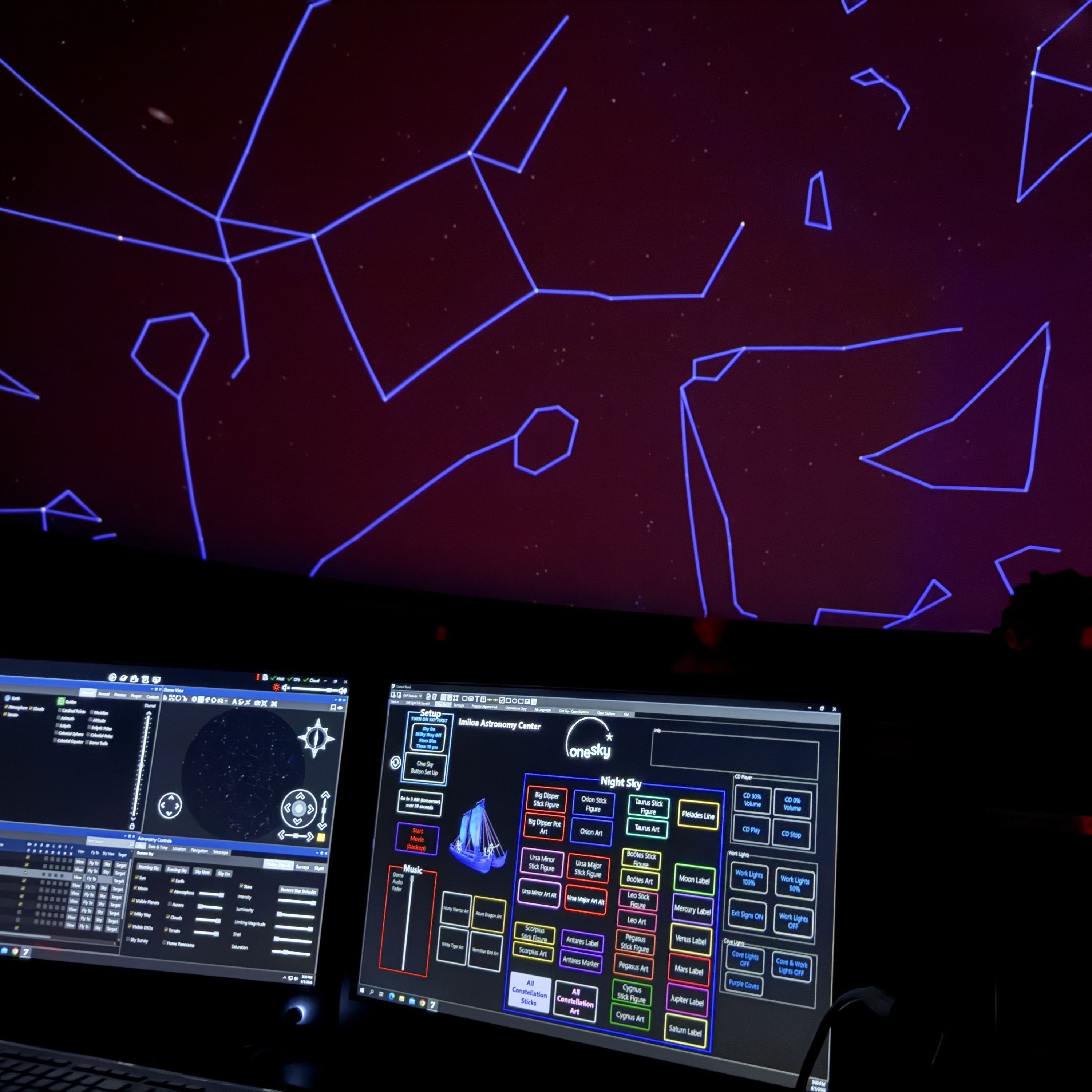
But Why: A Podcast for Curious Kids
Where do constellations come from?
00:47:58
How are constellations formed? How many stars are there? What are stars made of? Why are there stars in the sky? Why are stars white? Why are some stars red? Why do stars twinkle? Why do we only…
Loading summary
Transcript179 lines
- [00:02]
A
Summer's still going, and there's still time to become a member of Budweise Fan Club. For a donation of $10 per month, we'll send you a Budweise Summer Adventure Kit and a bucket list full of things to keep busy as summer winds down. Your gift to Budweise helps keep our program strong into the future. Check it out@budwaikids.org donate.
- [00:29]
B
But first, here's a message for the adults.
- [00:32]
C
August always feels like the perfect time to reset your routine after a busy summer and one of the easiest places to start your bed. Quince brings that comfortable, hotel like feeling to your own home. Their bedding is beautifully made, calming and comfortable. Whether you're refreshing your entire bed or simply upgrading a few everyday essentials, Quince makes it easy to create the space you want. Their 100% European linen bedding is woven from premium flax and gets softer with every wash. Or if you prefer the crisp feel of classic sheets, check out their organic cotton bedding that's breathable and incredibly soft because colder nights are setting in. I treated myself to the Quince cashmere wool blanket. It's warm but still lightweight and looks really great with my decor. It also looks more expensive than it is. Everything at quince is priced 50 to 80% less than similar brands, and you're just paying for quality, not brand markup. Upgrade here every day. Download the Quince app for App Exclusive offers or go to quince.com butwhy get free shipping on your order and 365 day returns now available in Canada and the UK too. That's Q-U-I-N-C-E.com butwhy.
- [02:03]
B
This is but why? A podcast for curious kids from Vermont
- [02:06]
D
Public, I'm Jane Lindholm.
- [02:08]
B
On this show, we take questions from curious kids just like you, and we find answers. One of my favorite things to do on a summer night is to go outside after dark and look up at the night sky. In Vermont, especially in rural areas like where I live, we don't have a lot of light pollution and I can see so many stars.
- [02:30]
D
Well, as long as the moon isn't shining super bright.
- [02:34]
B
Right now for this episode, we're going to go stargazing. And it doesn't matter if you're listening on a bright sunny day, sitting in a car or a classroom or lying on your bed. It doesn't matter if you live in a city and you do have a lot of light pollution and you have trouble seeing as many stars and it
- [02:50]
D
doesn't Even matter if you're in the
- [02:52]
B
northern hemisphere, because we're going to go to the southern hemisphere too. We're going to stargaze in this episode with the help of a very special place called a planetarium. I went to the Museum of Science in Boston to do some middle of the day stargazing. But if you want to wait and take this episode outside with you at night and maybe take some bug spray too, if you have a mosquito filled
- [03:13]
D
yard like mine, all the better.
- [03:16]
B
Let's meet our celestial guide, Talia Sapersky.
- [03:20]
E
So I am somebody who works in a planetarium, which is a place, usually dome shaped room, where we're very good at simulating the night sky. So we can pretend that we're out on a clear dark night looking up at constellations.
- [03:36]
B
As Thalia said, a planetarium is a
- [03:38]
D
big theater like room.
- [03:40]
B
Often the seats lean back and they make it nice and dark and cozy.
- [03:44]
D
Sometimes it's really cool in there as
- [03:46]
B
well for some reason. And images are then projected up onto that dome shaped seat. Planetariums have been around for over 100 years now in some places, and they got really popular in the 1950s and 60s. Often what's projected onto the ceiling is the movement of the planets and stars. Using special technology, the projector can often be programmed to show you the sky on any night and at almost any time, past, present or even future.
- [04:15]
E
And in our planetarium, we can also pretend to fly anywhere in the universe. And I am the person who will be there helping fly and helping to tell everybody what they're seeing because I love talking about space.
- [04:29]
D
And you don't even need a pilot's license or to be an astronaut.
- [04:32]
E
Not for this spaceship, no.
- [04:36]
D
So it's like 2:45 or 3 in the afternoon here, bright sunny day. But here we are inside the planetarium at the Museum of Science in Boston and it's very dark and up above us there are some squiggly lines. What are we looking at?
- [04:52]
E
We are actually looking at a nighttime sky. And what I have done is those squiggly lines are the constellations. There are 88 official constellations and these are the ones that are up over New England tonight.
- [05:10]
D
All right, so tonight being August 7th, the day this episode is being released.
- [05:16]
B
So this is what the sky would
- [05:18]
D
look like maybe around bedtime or just after bedtime for a lot of the kids who are listening.
- [05:23]
E
Yep, I've got it set for 9 o' clock right now because August is the time of the year where the sun is setting. Really late. So if you want to get a nice dark sky to go stargazing, you do have to stay up a little bit later, at least in the Northern hemisphere.
- [05:38]
D
That's right. If you're in the Southern hemisphere, it's probably pretty dark. And maybe you'll fly our special vehicle over to the Southern hemisphere a little bit later.
- [05:47]
E
We can absolutely do that. One of the great things about being here in the planetarium is not only can I instantly go anywhere in the universe, I can instantly go anywhere on Earth.
- [05:56]
D
So this doesn't look much like the sky if I was looking up at it because of these lines. And these lines are outlining constellations. One of the questions we've gotten is, what is a constellation?
- [06:10]
F
Hi, my name is Skylah, and I am six years old. I live in San Diego. And where do constellations come from? Hi, my name is Leah. I'm 10 years old. I live in Stuttgart, Germany. And my question is, why do we have constellations? My name is Harry. I live in New York City. And my question is, how are constellations formed?
- [06:37]
E
A constellation is really any pattern or shape that you're making out of the stars in the sky. We have, As I said, 88 official ones. But that's just from really one culture's patterns, sky patterns that they made. There's actually thousands of different sets of constellations out there. Because it was very, very common in ancient times for people to look up at the sky and make shapes out of the stars and give those shapes names and tell stories about them. So a constellation really is any shape or pattern that you're making out of the stars. And I always tell kids to go outside with their adults on the next clear night and make up their own.
- [07:19]
D
Yeah, I think that's fun. It's like looking at clouds and seeing shapes. You can make up your own star patterns?
- [07:25]
E
Oh, absolutely. The human brain loves making shapes and patterns out of things.
- [07:30]
D
And that's actually what people have done. Since there have been people. It's not just us here saying, make up some patterns. Like, that's why we have constellations, because
- [07:37]
B
people love to do that.
- [07:39]
E
Absolutely. We think astronomy may be the oldest science there is because people have been looking up at the sky and noticing things about it since ever as far
- [07:51]
D
as we know, and maybe even some animals, too. My dog will look up and find the moon. So I wonder if some animals look at the sky and see stars. And we know some animals navigate with celestial navigation using the magnetic field of the Earth and using things like weather patterns and sky Patterns to actually migrate. So we're not even the only creatures out there looking up at the stars. No.
- [08:15]
E
One of my favorite stories is apparently dung beetles track their movements against the Milky Way. And I know they've done experiments where they've actually released birds inside of planetariums and seen the birds orient themselves based on what star patterns they had projected on the ceiling.
- [08:32]
D
No way.
- [08:33]
B
Really?
- [08:33]
E
Yeah. So there seems to be bird species as well who, at least at some level, are using sky patterns as a navigational tool.
- [08:42]
D
Wow. And even within a planetarium, so not even just outside, but they're actually looking at the patterns when they're not even real stars.
- [08:51]
E
They don't know they're not real.
- [08:54]
D
So I'm looking straight up right now at one constellation that's kind of, you know, kind of like shaped like a house, I guess, a traditional house that you might draw when you're a little kid. And then coming out from the house is what looks like a claw, and it looks like a crab. Tell us about that constellation.
- [09:14]
E
So that's actually an interesting one because that historically was one constellation, and it has since been split up into three because it's so big. So that house shape in the middle is Ophiuchus, the serpent bearer. And the lines that are coming off of either side, that's the snake that the serpent bearer is holding. And the side that looks like a claw, that is the. The snake's head. So that one is serpent's Caput, which means serpent's head. And then the other side is the tail.
- [09:45]
D
Wow, that's so cool. And next to it, it looks like the serpent is almost. It's reaching towards a kite. Or you might think of it like a stingray.
- [09:56]
E
Yes. I love that stingray. That one is actually a part of what we call the summer triangle. It's three constellations, as you can see pretty much from anywhere in the northern hemisphere. And, you know, there's a chunk of the southern hemisphere that might be able to see it as well. And it's really three bright stars in the summertime sky. And each of those three stars is in a different constellation. And one of those constellations is that stingray looking one. That is Aquila the eagle.
- [10:27]
D
Aquila, the eagle. Where do people come up with these names and the stories that go along with them? Because you said we're looking at kind of one culture's interpretation of the sky.
- [10:36]
E
Yes. So these names I'm giving you and these shapes I've got up on our planetarium dome, these represent those Official constellations, which are mostly the ones that were made up by the ancient Greeks and ancient Romans. That is a set that's been sort of accepted to be the one set that everybody can use as a reference point. But they're certainly not the only ones who were doing this.
- [10:59]
D
Tell us about the one that's very clearly shaped like a W. The W.
- [11:05]
E
That one is actually supposed to be a queen on her throne. That is the constellation Cassiopeia, the queen. Frankly, right now it looks like a W at different times of the night and at different points in the year, it looks like an M or an E or the number three.
- [11:21]
B
Right.
- [11:22]
D
So, Thalia, I mean, it's kind of a stretch to get some of the animals and images that we're supposed to be seeing. And I can remember as a kid being told about the constellations. And one of them, for example, Orion, who I could always find Orion's Belt. That was a series of stars that was easy for me to find. But then I would look up and be like, you gotta be kidding me. That you see a whole guy hunting in this star pattern. I couldn't find it. Somebody would need to draw on the sky for me to see what they're talking about.
- [11:55]
E
Yeah, there's a lot of constellations that you really got to scratch your head and wonder what they were thinking. I always tell people, well, you gotta, you know, also remember that back in the day, you know, imagine you're in ancient Greek or in ancient Rome, and you're looking up. It's the middle of the night. You don't have anything else to do. There's no television. You can't play on your switch. You're just looking up at the stars. And sometimes their imaginations seem to be really far out there.
- [12:22]
D
I want to ask you more about the constellations, but we should probably back up because we have other questions that might help us understand a little bit more about the night sky and what we're looking at when we look up at the stars.
- [12:34]
F
My name is Johannes. I'm four years old. I live in San Francisco. How many stars are there? My name's Bobby. I live in Houston, Texas. I'm five and a half years old, and I want to know how many stars are there. Hi, my name is Oscar and I am five and I live in Hong Kong. How many stars are there in the whole universe? My name is Luke, I live in Chester, Connecticut, and I'm 5 years old. My question is, how many stars are there in the universe?
- [13:16]
E
We have no idea, but it is a very, very, very, very, very big number. So just to give, you know, our sun is a star. It is one of the stars in the Milky Way galaxy. The Milky Way galaxy contains a few hundred billion stars, and it is only one of about 2 trillion galaxies that we know about. And some of those are bigger than the Milky Way and some of them are smaller. But you start to see that there's a lot of really big numbers out there, and we really put a hard number on how many stars there are. One analogy I've heard used a lot is that there are more stars in the universe than there are grains of sand on all the beaches in all the world. But the answer is very, very large.
- [14:05]
D
So if everybody who's listening now started counting and didn't stop counting for the rest of our lives, we probably still all together wouldn't have counted the number of stars there are out there.
- [14:17]
E
I don't think so. I think it would take one person to do the Milky Way alone their entire life. If they devoted their entire life to counting one star per second in just the Milky Way, it would take. And they lived a night long life. It would take their whole life. And that's one person. And then you've got the other 2 trillion galaxies to worry about.
- [14:39]
D
Yeah, and then we can't even stop for snacks.
- [14:41]
E
No, you can't stop. You just gotta do nothing but count stars.
- [14:45]
F
Hi, my name is Cam. I'm six and a half years old. I live in Ambler, Pennsylvania. What are stars made out of?
- [14:54]
E
So stars are made out of pretty basic gases, actually. If you've ever looked at a periodic table, maybe you have them in your classrooms. Or if you've ever heard of things like hydrogen or helium, it's the same thing that's making up stars. Stars are mostly made out of hydrogen and helium. And what happens is there are these enormous clouds of these gases out in space. And something can be many things. We'll start that gas cloud to collapsing down on itself, sort of squishing all the gas together. And it will form a big clump of gas. And that clump will get bigger and bigger and bigger. And as it does, it will also get hotter and hotter and hotter in its insides. And then once it gets hot enough, it's actually going to start smashing those atoms together. And this is something we do on Earth. It's called nuclear fusion. It is a way we can generate energy, or a way we hope to generate energy, at least on Earth, efficiently someday. And stars are doing it. And basically, when you smash Hydrogen atoms together hard enough, they release a ton of energy. And that's what makes a star a star. It is this giant ball of these roiling gases that is smashing atoms together and generating a bunch of energy in the form of heat and in the form of light. And that is why the sun is so warm, and it's why the stars shine so brightly.
- [16:26]
F
Hi. But why? My name is Spencer. I'm 10 years old. I live in Studio City, California. My question is, why are the stars in the sky? My name is Ezra. I'm five years old. I live in Georgia. Why? Why are there so many stars in the sky? Hi, my name is Zoe. I'm seven years old, and I'm from Sydney, Australia. My question is, why is there stars in the sky?
- [17:02]
E
Well, a big thing is, you know, the reason those big gas clouds start collapsing down in the first place. It's gravity. Frequently, if you have a question about why something's happening out in space, the answer is going to be gravity. It plays a huge role in how things operate out in space. So you have gravity causing these gas clouds to collapse down, and they would just keep collapsing down further and further and further. But when they start making heat inside themselves, when they start to heat up, that starts to push outward. So you have gas, the gravity pulling everything inward, and this pressure from heat inside pushing everything outward. And kind of when it comes to a balance, that's where you're gonna get a star. So our sun you can think of as being a constant war between these two forces. The gravity of all the mass, all the stuff that's inside the sun wants to pull everything in towards its center, but it's also making all that heat and light that we enjoy here on Earth, and that's sort of trying to push everything outward. Now these two forces are in balance. So we have a nice healthy star. Eventually, stars do reach a point where they start to run out of fuel, and one of those forces wins. But we've got another 5 billion years or so before that happens with the Sun. The Sun's going to be a healthy star for a very long time.
- [18:23]
D
Do we see it happening? Can we see it with our own eyes when that happens to other stars?
- [18:29]
E
Well, sort of. You can't, when it's not something that's happening all the time. But there are stars you can look out at. And for instance, one of them is in the constellation Orion. There is another one in the constellation Scorpius, which is up in the sky tonight. Doesn't matter actually which hemisphere you're in. You can see it from the Northern hemisphere or the Southern hemisphere. And it's the heart of the scorpion is a red star named Antares, which is. It's so red that the name Antares roughly means not Mars, just to make
- [19:02]
D
sure, because Mars is also called the Red Planet.
- [19:05]
E
Yes. So Mars also looks red in the sky, and the star Antares also looks red because this is a really large star that is much farther along in its life than the sun is, and it is approaching the end of its
- [19:18]
D
life, and we're already sort of seeing into that process.
- [19:23]
E
Yes. So it's at the. The reason it looks red in the sky is because it is approaching this sort of end stage, this end game in its life. And it's starting to fuse different types of gases in its core, and it's really heating its core up. So it's actually making the star swell up into a giant, and that makes it also turn red. And eventually it's not going to be able to keep that up anymore. And that's when the gravity's gonna kick in, and that's when that star is going to explode in a supernova, which is something that only the biggest stars do. But Antares is very large.
- [20:00]
D
Are we gonna be alive to see that?
- [20:02]
E
Probably not. This is gonna happen sometime in, like, the next hundred thousand years or so, which is a very short time in the period of a star, like in the lifetime of a star, but not so much the lifetime of a person.
- [20:12]
D
All right, fine. Well, I won't get hopeful then that I'm gonna see it. So you mentioned that Antares looks red. And some of the questions we've gotten are about the colors of stars.
- [20:23]
F
I'm Eliza, I'm from Missouri, and I'm seven years old. And my question is, why are stars white? My name is Willow, and I'm four and a half years old, and I live from British Columbia, Coldstream. And my question is, why are stars bright? My name is Reed. I'm six years old. I live in Exeter, California. And my question is, why are some stars blue and some stars red?
- [21:02]
E
Excellent question. It's all about the temperature of the surface of the star. So, you know, here on Earth, we usually use red to mean hot and blue to mean cold, but it's kind of the opposite when you're talking about stars. The redder stars have cooler surfaces. Now, you know, I say cooler. You can go up and give it a hug. We're still talking several thousand degrees. But the reason Antares is red is because those outer layers have puffed up so far away from its super hot core that they've cooled off and they've turned red. The blue stars, those are the. In blue and white. We tend to say stars are blue or white when they're at this stage. They're the biggest and the hottest. They're big stars right in the prime of life. Antares was probably a blue star before it began to enter this end stage of its life. So we do have several of these blue stars visible in the summertime sky. In fact, if you're looking up at your summertime sky from the northern hemisphere, one of the brightest stars you can see is the star Vega. And Vega is a sort of a bluish white color because it's a young hot star.
- [22:16]
D
If we're looking up right now here in the planetarium, can you orient me and show me where it would be and what constellation it might be a part of?
- [22:24]
E
Absolutely. It's part of the constellation Lyra, the lyre, which means it's like a harp. Although I gotta say, this is one of the constellations that really doesn't look very much like what it is supposed to be. And right now we're looking at about 9 o' clock on August 7th, and it's almost straight up. It's very close to. It's part of the summer triangle. It's what I was talking about before. Those three bright stars that appear in the summertime sky. Vega is the brightest of the three. And at 9 o' clock on August 7th, it is almost straight up.
- [22:57]
D
Is it the one that looks like it's part of a fish?
- [22:59]
E
It does look like it's part of a fish. Yep, that's it.
- [23:02]
D
Yeah, it looks like a fish to me. I'm not seeing a harp.
- [23:04]
E
No.
- [23:05]
B
After the break, more secrets of the night sky. Like why do stars twinkle? And how do you navigate using the stars? If you're lost, stay with us. This is but why I'm Jane Lindholm. Today I'm with planetarium educator Talia Sapersky at the Museum of Science in Boston. We're learning all about stars and how they make up these imagined shapes called constellations, as well as how stars form. And to do it, we're looking at a projection of the night sky in Boston, Massachusetts, which is in the northeastern part of the United States on August 7, which is the day this episode comes out.
- [23:45]
F
Hi, my name is Dhriti and I'm seven years old and I'm from India. My question is, why do stars twinkle? Hi, my name is Amelia. And I'm eight years old and I live in New Jersey. Why do stars twinkle? This is Dia from El Israel. I have a question. Why does stars twinkle? Hi, my name is Josie. I'm six years old. I'm from Shingle Springs, California. How do stars sparkle? My name is Esther. I'm from Warsaw, Poland. I am five years old. Why do stars twinkle?
- [24:31]
E
Ah, the fun part of that is they're not actually twinkling. You know, Twinkle, Twinkle, Little Star, the classic song. They're not twinkling. Our atmosphere is making it look like they are. So when starlight reaches your eye so you can see the star, when the light from the star gets all the way through space and reaches your eye, but the last step before it reaches your eyes, it's got to get through Earth's atmosphere, the air around us. And that can actually change the light a little bit. For one thing, especially in the summer when it's really, really hot, air moves a lot when it's really, really hot. And it can make the starlight that's coming through the atmosphere look like it's wiggling. And we see that as a twinkle. So when we're actually seeing, you know, stars twinkle, twinkle, little star, the star's not doing that. It's Earth. It's the air around us playing tricks on our eyes.
- [25:30]
D
But I can remember as a kid being told, if you see something that's not twinkling, it's a planet, and if you see something that is twinkling, it's probably a star. So what's the deal with that? Or is that just wrong?
- [25:41]
E
Nope, that is a pretty good rule. It has to do with the fact that starlight is coming from something so far away from us that even though a star is actually a huge, enormous object, it's so far away from us that it essentially looks like a dot. We call that a point source, but the point is that it looks like it's coming from a single spot. Whereas those things that don't look like they're twinkling look like stars that aren't twinkling. Those are planets in our own solar system. And they're not nearly as big as the stars, but they're so much closer to us that they're more like little circles than single points. And that actually affects the way the light comes through Earth's atmosphere. And it's why planets, unless it's a really hot day and the atmosphere is really dancing around, planets are not going to appear to twinkle the way that stars do.
- [26:36]
F
Hi, my name is Georgia. I'm four Years old. I live in Toronto, Canada. Why do we see stars at night?
- [26:44]
D
Why do we only see the stars at night?
- [26:46]
B
We can see the moon during the day.
- [26:47]
D
Sometimes we can.
- [26:49]
E
And the reason we can see the Moon during the day is because it's also quite close to us. It is less than 250,000 miles away, which I know sounds like a huge distance, but that is right next door when it comes to things in space. These stars that you see at night, they are up during the day. They're all still shining. They don't switch off during the day, but they are really, really, really far away from us and the sun, Even though it's a lot of these stars that you see at night are bigger than the sun, but the sun is so close to us, it's only 93 million miles away, which, yes, is a short distance. When you're talking about distance to a star, it's like a giant spotlight shining right in your face. Now, if you've got a humongous spotlight right in your face, you might be able to see something that's right next to you, like the Moon, but you're not going to be able to see anything else. And so we really can't see these other stars because our sun is just so bright in our daytime sky. That's why we only see them when the Sun's not in the sky.
- [27:55]
D
Will you tell us about another constellation before we move on to some other questions? Maybe one of your favorites.
- [28:00]
E
Absolutely. Actually, one of my favorites is the third corner of the Summer Triangle. So we talked about Aquila the Eagle, which has the star Altair in it. And we talked about Lira the Lyre, which has the really bright star Vega in it. The last corner of the triangle is the constellation Cygnus the Swan, which I like because it is actually one of the few constellations that looks like what it is supposed to be. It looks like a swan in flight. It's got a long body and a long neck. And then it's got the wings spread out to either side. And then behind the wings is its little tail. And that tail star is Deneb. And the eye star, the one that's in the middle of the triangle, the eye of the swan, is Albireo. And those two stars are both really interesting. Albireo, if you ever get a chance to look at it through binoculars or a telescope, is actually two stars. And they are very different colors. They're two stars that are very different colors. One of them is very, very blue. And one of them's much redder. And then Deneb, the tail of the swan. That is one of the most distant stars you can see with your eyes. It doesn't look super big and bright, but it's actually really huge. Really really, really ridiculously huge. And really, really, really ridiculously bright. It's just also really, really far away.
- [29:26]
D
Why do you like that one? Just because it looks like a swan or because of some other reason?
- [29:31]
E
I mean for that one it's because I like that it actually looks like what it is supposed to be. I also always love if you look at the constellations of the Summer Triangle, Cygnus and Aquila, the swan and the eagle. They look like they're flying at each other. And I always ask guests in the planetarium who they think is gonna win if there's a fight between the swan and the eagle. And everybody always picks eagle. And I say that means everybody is severely underestimating how mean swans are.
- [30:00]
D
Yes, totally. So what we're looking at right now, the whole time we've been talking all of these stars have been in the same place. But if we were lying down in a field watching the stars we might not notice at first but over time we that they have kind of changed position in the sky from where we were looking at them in the past.
- [30:23]
F
My name is Lucy Hein, I live in Oakland, California and I am 8 years old. My question is how do stars stay in space? And do they look like dots or do they look like the shape of a star? Why do the moon and stars look like with their following us but they're really just staying in one spot.
- [30:46]
D
Do stars move or are they staying in one place and we're moving or what's happening?
- [30:52]
E
Well, there's sort of two answers to that question. If you're talking about over the course of like a night you do see the stars appear to move across the sky. And that's not because the stars are moving, that's because Earth is moving. Earth is spinning or rotating. It takes about 24 hours for Earth to rotate completely once. That's why we have a 24 hour long day. And, and because of that's why the sun appears to rise in the east and set in the west. It's same with these stars. They're going to appear to move across the sky. And that is all down to the way Earth is spinning. Now that said, the stars do move. They are all moving through space. They're all moving through the Milky Way galaxy. They're just moving on really long timescales. It's not something you're going to notice from night to night or year to year, or even lifetime to lifetime. But if you look over the course of a few thousand years, you definitely see the stars appeared. Some of the stars appear to start to change their position compared to the other stars. So the constellations of say, somebody who was living 10,000 years ago aren't gonna be exactly the same as the constellations you're gonna see today because the stars will have moved a little bit. But again, that's not what's happening on a day to day basis. That movement is not actually the stars. That's us.
- [32:13]
D
So it didn't. I mean, they're not moving enough though that the serpent really looked like a serpent. And now it doesn't.
- [32:20]
E
Oh, no, that's just down to those ancient Greeks having a really active imagination.
- [32:24]
F
Hi, my name is max and I'm 8 years old. I live in Flint, Michigan, USA. And my question is, why is the North Star always facing north?
- [32:35]
E
That is an excellent question. And it actually has nothing to do with the star itself. So the North Star, or what we now call the North Star, Polaris is its official name. It has to do with where the star is in space. So if you've ever seen maybe a globe of the Earth in your classroom and there's a stick that runs right through the center of the Earth, we call that the axis. If our real Earth had a stick running through it and that stick came out of the North Pole, it would be pointing at Polaris. So Polaris itself isn't a particularly remarkable star. It's not very bright, it's not particularly interesting looking, it's just a normal star. But it sits almost directly over Earth's North Pole. And that means that when Earth is spinning and all of these other stars are appearing to move, the North Star, Polaris, really just isn't moving. It's kind of like if you spun in a circle, everything around you would appear to be moving. But if you looked straight up, the spot on the ceiling above you would appear to hold still. So Polaris is just sitting in a particularly useful spot. And the funny thing is, if you want to go crazy, if you go wait long enough, the North Star isn't going to be the North Star because
- [33:52]
D
of that star movement you talked about?
- [33:54]
E
Nope. This one's down to Earth again. Earth actually wobbles like a top. Yeah. Over the course of about 26,000 years, it wobbles in a complete circle. So again, this is a very long, slow process. But remember I was talking about the star Vega in the Constellation Lyra. Earlier 13,000 years ago, Vega was the North Star, and it will be again in another 13,000 years. So right now we have a nice bright star sitting pretty much right over at the North Pole. That's not going to stay the case. So it's actually kind of cool that we are living in a point in Earth's wobble where we have a North Star.
- [34:35]
D
Well, you talk about where these stars are and how we sort of think of them in the night sky. And if you know the North Star, then you know where north is. But we got a question from Hannah,
- [34:47]
F
who says, how do you navigate the stars when you get lost?
- [34:51]
E
So a big one is being able to tell which way is north. So that's always a good thing to be able to find the North Star. That will at least tell you which direction you're fac. And then I believe I've never personally had to navigate by the stars. You can also, if you know what stars are rising when at different times of the year. And they used to have very, you know, sailors, for instance, used to have very detailed charts saying what rose when at different times of the year. That can actually help you figure out your longitude, how far east or west you are. If you've got really precise clocks and really precise charts knowing, say, if you're in, you know exactly when a star appears to rise in the east on this day in London, and then you know what time of day it appeared to you. Wherever you are, if you have a really accurate clock, you can then use that to figure out how far east or west of London you are. It's pretty complicated. And I'm really glad we invented the gps.
- [35:59]
B
I guess also, if you, let's say
- [36:00]
D
you took a long nap and you woke up and you were like, have I been asleep for three months or seven months? If you knew where you were and you saw what was rising when, you could be able to tell maybe what
- [36:11]
B
even what day or what month it is.
- [36:13]
E
Yes. For instance, I always know that we're approaching the beginning of spring because the constellation Leo starts appearing in the east when the sun sets. Leo is only in that spot in the sky at that time of day in, like, late February, when it's starting to be towards springtime. And that's always exciting for me because I'm always ready for winter to be over. I should say it's springtime in the Northern Hemisphere, not for the Southern Hemisphere. And similarly, I can tell how far we are into summer by how high the summer triangle is when the sun sets. It's not precise. I can't be like, oh, it's 6:03pm But I can tell roughly what time of year it is from that.
- [36:56]
D
So, Talia, you don't even have a calendar at home. Probably you just navigate by the stars to see, oh, I know what day it is today. I have to go to work early because I saw when the stars rose last night.
- [37:07]
E
I can't do that. But there were ancient cultures that I think could do that. They tracked the stars so precisely. And there's even, you know, ancient architecture, ancient monuments built, built around these very precise appearances of specific things in the sky at specific times of the year. They were truly great astronomers.
- [37:30]
D
Yeah, that's kind of amazing to think about how precise they could get it on a certain day to have the sunlight stream through, you know, kind of a frame of stone or something like that.
- [37:42]
E
Absolutely. And there. I know there are things that are built around, you know, the time that the Pleiades rise on a specific day. The Pleiades is a little star cluster that we see in, like, the wintertime sky here in the North. And there are things built around when that appears on specific dates or the orientation of the Milky Way relative to different things on different dates. Like, people tracked this stuff very, very precisely, considering they didn't have any telescopes or any tools like that to work with.
- [38:13]
D
The Pleiades is one of my favorite constellations. I love going out in the winter and seeing it. And to me, it looks kind of like a kite.
- [38:20]
E
I mean, I always see it look like a little, Little, Little, Little Dipper, personally.
- [38:24]
D
Yeah, I can see that, too. Speaking of the Dipper, my name is
- [38:30]
F
Living Spoken Washington. How does the Big Dipper appear?
- [38:37]
D
How does the Big Dipper appear?
- [38:40]
E
Oh, I always think it looks like a pot that has a bent handle. So there are seven stars in the Dipper, and four of them make up the pot, and then three of them make up the handle. And the handle has a bend in it. It has kind of an arc in it. So I've heard people call it a big spoon or things like that. I think it looks like a cooking pot with a bent handle.
- [39:04]
D
What's the difference between the Big Dipper and the Little Dipper?
- [39:07]
E
Oh, many things. The Big Dipper, first of all, is made of much brighter stars. So if you're looking, you see it, and you're not sure if it's the Big or the Little Dipper. It's the Big Dipper. It's Much, much brighter than the Little Dipper. And their handles actually curve in different ways. So the Big Dipper has a handle that curves up, and the Little Dipper kind of has a handle that curves down.
- [39:30]
D
So here on August 7th in the planetarium, as we are looking at the sky tonight, again, this is the Northern Hemisphere, summertime, and we're looking from the perspective of New England. But some of the Northern Hemisphere stars are going to be seen in a lot of different places. In the Northern Hemisphere, this may look fairly similar. If you're in the Northern Hemisphere, how would you advise us to start stargazing?
- [39:56]
B
Because, as you told us, there are
- [39:58]
D
so many stars in the sky, it can feel a little intimidating or overwhelming to know how to start thinking about stargazing at night.
- [40:06]
E
I like to find one or two patterns that I can find fairly reliably and then use them to sort of learn the sky around them. And then you can use those, the sky around them as markers for figuring out what's beyond that. So, for instance, the Big Dipper is a good one because the Big Dipper you can use to find, like if you follow the direction that the handle arcs and you keep going, you can find the constellation Bootes directly under the Big. Well, the Big Dipper is part of the constellation Ursa Major. Directly under the bear is Leo the lion. The bear is standing on the lion's
- [40:48]
D
back, and Ursa means bear. So Ursa Major is Big Bear.
- [40:51]
E
Yes. So Ursa Major, Big Bear, and Leo is the lion. So the way they're positioned in the sky, it looks like Ursa Major, the bear is standing on the lion's back. And, you know, for instance, if you can find. If you can use the handle of the Dipper to find Bootes, the herdsmen, I use Bootes to find the northern crown, which is right next to it. So I can use the Dipper to find one thing and then use that thing to find another thing. So some good markers to use. Like I said, the Big Dipper is a good one. If it's summertime, I like to use the summer triangle. If it's wintertime, I like to use the constellation Orion, especially his belt. His belt is very handy for pointing at things. So. So that's my advice. Find one or two, two or three patterns that you can find pretty reliably and then use them to learn the sky immediately around them. And then you can use the things immediately around them to find even more things. And you'll gradually learn the whole sky.
- [41:57]
B
And if you live in a Big
- [41:58]
D
City where there's a lot of tall,
- [42:00]
B
lit up buildings and car traffic and street lights. That doesn't mean you can't see any stars. Talia says when the planets are in the visible part of the sky, you'll likely be able to see them because they are very bright. And while you might not be able to see entire constellations, you could still spot a few really bright stars within those constellations. Plus, many cities have museums or universities with either planetariums or telescopes or both, and you might be able to visit one. Okay, but what if you live in the Southern Hemisphere in a place like Australia or Chile or Botswana, and you have been patiently listening to all this talk about the summer sky in the Northern Hemisphere? It's true, the sky looks really different depending on where you are. And the Southern and Northern hemispheres have particularly different constellations and celestial seasons. Well, we haven't forgotten about you. I asked Talia to take us to see the night sky in the Southern
- [42:58]
D
Hemisphere on August 7th.
- [43:00]
E
Absolutely. Let me go. Let me bring us to Australia. Why not?
- [43:04]
F
Woo.
- [43:04]
D
This is a very fast flight.
- [43:06]
E
Yes. We are now in Australia. We are looking at. And because the sun is setting earlier, we are now looking at the sky the way it would look at about 7:00'. Clock. And we've got a lot of constellations I'm not that familiar with because I'm not as familiar with, with the southern
- [43:22]
D
sky, but some of them are similar. I'm seeing some of the same constellations.
- [43:27]
E
Yep. I can still see Aquila, the Eagle. I can see Lyra the Lyre. And I can also see some really cool constellations like the Southern Cross that I don't ever get to see in Boston because I live too far north. Oh, and nice and high, I should point out. Right. Almost directly overhead From Australia at 7 o' clock on August 7th is Scorpius the Scorpion with that bright red star and Tauris at his heart.
- [43:53]
D
And that kind of to me looks like a jay, like a wonky J.
- [43:57]
E
Absolutely a J. It's supposed to be the curl of the scorpion's tail, but I know, for instance, if there are any fans of the film Moana listening to this, there were Pacific island cultures that referred to it as Maui's Fishhook, for instance.
- [44:12]
D
And you could see that in New England too, but it was much, much lower in the sky when we were looking in the Northern Hemisphere.
- [44:19]
E
Yes. So you can see all of Scorpius from New England, but his tail barely. The bottom of his tail barely clears the horizon. Now we're in Australia, and the whole scorpion is right overhead.
- [44:30]
D
I want to point out two other constellations before we go. One is, to me, what looks like a kid, maybe with no arms, kicking a soccer ball.
- [44:40]
E
Is it the one that's right next to Scorpius? Yes. So that one, I always see a teapot with that one.
- [44:45]
D
See, I love that we can see different things.
- [44:47]
E
That is the constellation Sagittarius, the Archer. And that's actually the direction of the center of the Milky Way. And you can see that from New England as well. Again, it's gonna be quite low, but that's the direction that the center of our galaxy is in.
- [45:02]
D
And then there's another constellation. Well, actually, it's a couple of constellations, and it's above the Southern Cross. And one of them looks very much like an animal. Maybe a wolf kind of animal with four legs and a big tail. And then there's another animal, maybe a person, I don't know, but definitely some other kind of animal. Kind of looks like a Minotaur. And they look like they're in conflict.
- [45:30]
E
Well, I can tell you that the one that looks like a Minotaur, that is Centaurus. So it is.
- [45:34]
C
It's a Centaur.
- [45:35]
D
Centaur. That's what I was thinking.
- [45:36]
B
Yeah.
- [45:37]
E
And then the one next to it is a wolf. That is Lupus, the wolf. So very good with your guesses. And Centaurus is actually the location of the star system that is closest to Earth. It is one of the two bright stars, sort of marks. The front feet of the Centaur is Alpha Centaurus, and that system has three stars in it, one of which is Proxima Centauri, which is the closest star to earth at only 4.25 light years away.
- [46:08]
D
Oh, so you're practically next door.
- [46:10]
E
Yes, it's right in the backyard.
- [46:12]
D
Talia, is there anything else that you think would be fun for us to know as we start looking up at the sky and trying to understand what's going on up there?
- [46:20]
E
Yes. If you're looking at the sky on August 7, you should come back out and look on August 12, because the Perseid meteor shower is going to be peaking that night, and there isn't going to be any bright moon to get in the way. And the great thing about a meteor shower is you don't need any special equipment to enjoy it. You just go find the darkest spot you can make yourself comfortable, lay back, let your eyes adjust, and look for shooting stars that are actually pieces of a comet's tail. That got left in Earth's path, and we're plowing into them and they're burning up in Earth's atmosphere, and it's one of the better meteor showers of the year.
- [46:55]
B
Since we're talking about shooting stars, here's one last question.
- [46:59]
F
My name is Jenna. I'm from Long Island, New York. I'm six years old. Our shooting stars for real?
- [47:08]
B
Yes, shooting stars are real, but it's so magical to watch them in real time. And if you blink, you might miss one or you see one and your friend doesn't, or your sibling sees it and you don't.
- [47:19]
D
So what is a shooting star if not magic?
- [47:24]
E
It's a piece of space debris burning up in Earth's atmosphere.
- [47:26]
D
So, I mean, that doesn't sound quite as cool.
- [47:30]
E
I don't know, something from space tearing itself to shreds in Earth's atmosphere sounds pretty cool to me.
- [47:36]
D
Thank you so much for sharing this with us and helping us get excited about the night sky. I'm really excited to go out and start using your technique of just trying to know a couple of things and then knowing a couple things more by using those constellations or those stars as my guide.
- [47:52]
E
Oh, yeah, always start small. I mean, the sky's not going anywhere. You have plenty of time to learn it. And if you want to just go out and just look up and enjoy how beautiful the night sky is, that is also a great way to be an astronomer.
- [48:07]
B
And if you have any constellations that you see in your mind's eye, will you draw us a picture of what constellation you see? Maybe your adults can help you look
- [48:17]
D
up which stars are in your constellation.
- [48:20]
B
And then you can send the shape that you see, whether it's an animal or an instrument or a toy.
- [48:26]
D
And send us a picture of what you've drawn.
- [48:28]
B
I really want to hear what you would call your constell and what you think it looks like. Send it to questionsutwhykids.org thanks to Talia Sapersky, planetarium educator at the Museum of Science in Boston, for taking us on
- [48:43]
D
a guided tour of the night sky. That's it for today.
- [48:46]
B
As always, if you have a question about anything, have an adult record you
- [48:50]
D
asking it on a smartphone using an
- [48:52]
B
app like Voice Memos. Then have your adult email the file to questions.org Our show is produced by Sarah Bake, Melody Beaudet, and me, Jane Lindholm at Vermont Public and distributed by PRX. Our video producer is Joey Palumbo, and our theme music is by Luke Reynolds if you like our show, we'd love it if you and your adults would give us a thumbs up or a review on whatever platform you use to listen to us. It helps other kids and families find us and that helps us keep going. We'll be back in two weeks with an all new episode. Until then, stay curious.
- [49:43]
F
From prx.