← But Why: A Podcast for Curious Kids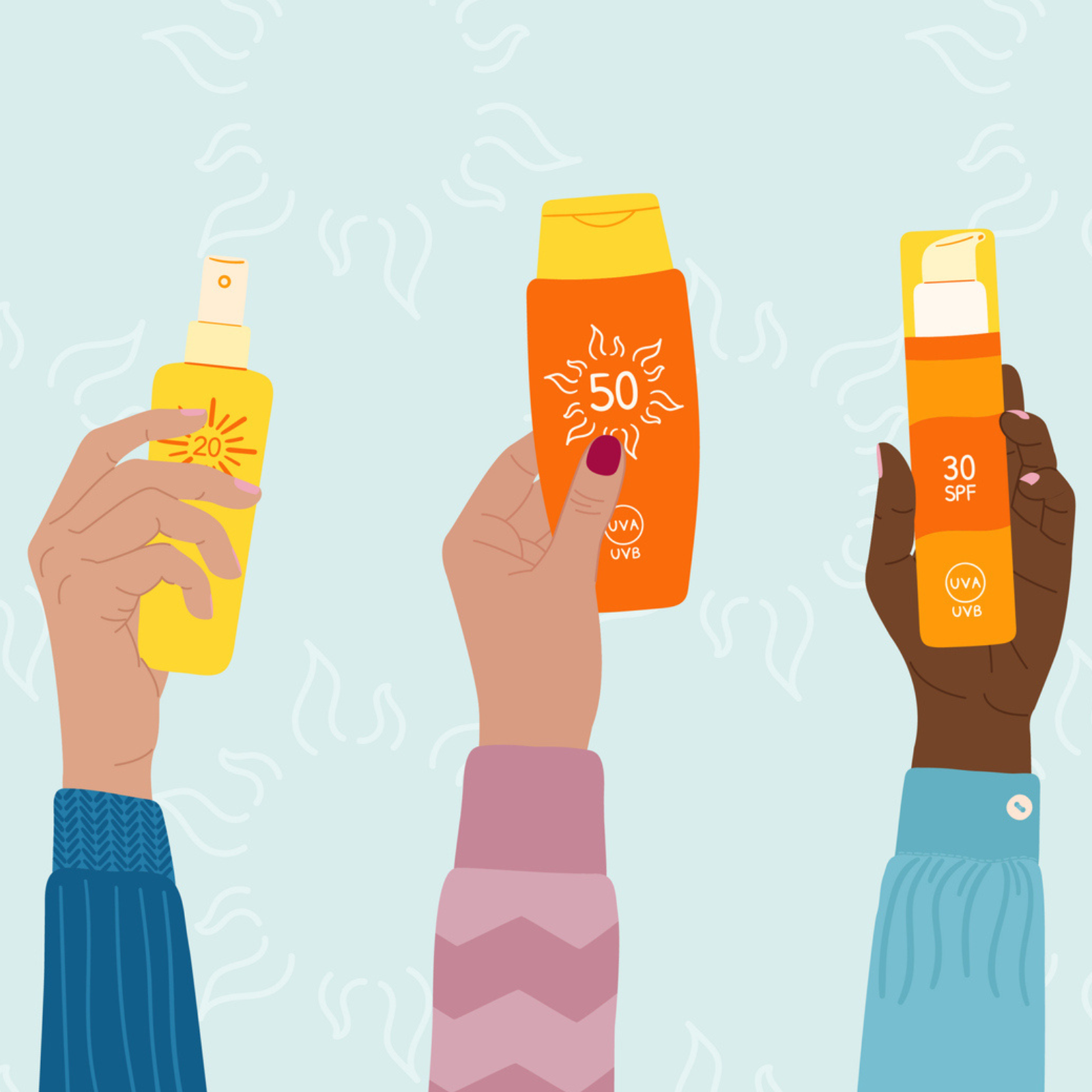
But Why: A Podcast for Curious Kids
Why do we need to use sunscreen?
00:22:15
It’s summer and that means slathering yourself with sunblock before you’re allowed to go run around outside. Not everyone loves that ritual: sunscreen can be cold or sticky. Sometimes it gets in you…
Loading summary
Transcript52 lines
- [00:01]
Unknown Host
But why is there for you and the kids in your life every other Friday with episodes that explore the world through the curiosity of children. But our work is under threat and we need your support. Recently, the White House sent a request to Congress to claw back $1.1 billion in already approved funding from the Corporation for Public Broadcasting. If passed, this would strip $770 million from local public media stations, including more than 4 million in critical support for Vermont Public. Where but why Is Made? Now is the time to rally behind this important resource. Listeners like you keep quality educational programming freely available to all children in our community. Consider joining our but why Fan club or make a one time donation and proudly let the world know that you're one of the individuals that make sure but why and Vermont Public are here to stay. Join now@butwhykids.org donate before we get started.
- [01:01]
Jane Lindholm
Here'S a message for the adults who are listening. Support for but why comes from Progressive Insurance. Do you ever think about switching insurance companies to see if you could save some cash? Progressive makes it easy to see if you could save when you bundle your home and auto policies. Try it@progressive.com Progressive Casualty Insurance Company and affiliates. Potential savings will vary. Not available in all states. This is but why? A podcast for curious kids from Vermont Public Hi, I'm Jane Lindholm. On this show, we take questions from curious kids just like you and we find answers here in the United States and in other countries in the Northern Hemisphere. We're entering summer. In the summer, the sun is out longer and the weather warms up, so it's a great time to play outdoors. I like taking long hikes and runs, going to baseball games, and having picnics when the weather cooperates here in Vermont. But just as you're about to run out the door to go play outside, you have probably had this experience. An adult telling you, hold on, you gotta put on your sunscreen. Lots of you have asked us, what's the deal with sunscreen? Why do we need to put this thing on our skin that sometimes feels cold and clammy? Well, we have a guest today who can give you all the tips you need for summer outdoor fun.
- [02:39]
Dr. Jeff Yu
My name is Dr. Jeff Yu and I am a dermatologist and pediatric dermatologist at Massachusetts General Hospital here in Boston, Massachusetts.
- [02:48]
Jane Lindholm
A dermatologist? What's that?
- [02:51]
Dr. Jeff Yu
I am a skin doctor. I am somebody that looks at people's skin and I diagnose various types of diseases and I give information about how best to protect your skin to my patients. Small and large.
- [03:03]
Jane Lindholm
What's cool about skin?
- [03:05]
Dr. Jeff Yu
It's certainly the largest organ of the body. It covers your entire body, and it grows with you as you gets older. Not only does it include just your skin, but we also think about hair. We also think about nails. So there is a lot to it that we are experts in.
- [03:19]
Jane Lindholm
We wanted to talk a little bit about sun safety today and how we can make sure that we are keeping our skin and our whole bodies safe during the summer season.
- [03:28]
Child Listener
My name is Kiran. I live in Israel. What is the sun born and how does sunscreen work? I am two and a half. My name is Evie and I live in Lyman. Name and I five year old. Yes. Do sun. Did you sunburn? My name is Charlee. I live in Sarasota, Florida, and I'm 6 years old. Why do people get sunburn? And why do we have to wear sunscreen? And how does the sunscreen make it so we don't get sunburn?
- [04:03]
Jane Lindholm
So let's first talk about what is a sunburn?
- [04:06]
Dr. Jeff Yu
A sunburn is something that happens on your skin after your skin has been exposed to a lot of sunlight. And when you get a sunburn, the cells on top of your skin and you have a lot of those cells get damaged by the sun, and they get burned by the light that is produced by the sun called ultraviolet light. So when you get too much ultraviolet light, your skin's not so happy about it and it ends up being burned. When you get a sunburn, the skin turns red, a common sensation that probably many of us have had. And it hurts when you touch it. It feels hot to the touch. And after about a few days or a week or two, you start to notice some of those dead skin cells kind of peeling off or sloughing off, and then new skin comes in from below it. People who have darker skin tend to be more protected from sunburns because if you imagine the color in your skin cells acting as kind of an umbrella protecting your skin from those ultraviolet lights or from those sun rays, it is a little bit harder for people who have darker skin to get a sunburn, but not impossible. And folks who have lighter skin cells just don't have that type of protection.
- [05:18]
Jane Lindholm
And.
- [05:18]
Dr. Jeff Yu
And they can get sunburned more easily.
- [05:21]
Jane Lindholm
If you get a sunburn and then you get over it, is there a problem?
- [05:26]
Dr. Jeff Yu
Short term, your body has an amazing ability to heal itself. So short term, probably not a huge issue. But if you're someone who grew up getting sunburns over and over again every single summer, this leads to many Problems when you get a little bit older. So when people are in their 30s and 40s and 50s, one of the first things that we as dermatologists really worry about is the increased risk of. Of developing skin cancers. So these are these abnormal growths that can show up on the skin, whether they're a lump, whether they're a bump, something that is bleeding, uncomfortable, can be painful. And if they're untreated, they can grow bigger and bigger, and sometimes it can travel to other parts of your body, and they can really cause health problems down the road. So we tend to see this more in people who had a lot of sun exposure, especially sunburns, when they're younger.
- [06:16]
Jane Lindholm
Dr. Yu says, when it comes to protecting our skin, practicing sun safety and avoiding sunburns is key. We'll talk more about the different things we can do to play safe in the sun in a couple of minutes. But before we get to that, when your skin is exposed to the sun, sometimes there's something else that happens that's a little bit different from a sunburn. Sometimes instead of your skin turning all red and itchy, it just gets a little darker. People call this a tan. And Dylan, who's 4, is wondering, how does our skin get tanned?
- [06:47]
Dr. Jeff Yu
Yeah, that's a great question. In your skin cells, there are these very specific type of cells that are kind of scattered among them called melanocytes. These are special types of cells that contain the ability to produce a type of color in your skin called melanin. And when you get a lot of sun exposure, these melanocytes kind of eat it all up, and they get really happy, and they start making more of this chemical called melanin that is supposed to be used to protect your skin against sunlight. So these are the little umbrellas that I was talking about earlier that people who have darker skin tend to have more of in their cells. And the purpose of them is to kind of reflect that sunlight or deflect it and prevent it from damaging the cells. So when your skin gets a lot of sunlight, it sees this as a signal to make more of the melanin. And the more melanin you make, the darker your skin becomes.
- [07:46]
Jane Lindholm
So should you go out first thing in the spring and summer and try to get really tan so that you're protected against getting sunburns?
- [07:53]
Dr. Jeff Yu
So that's a very common question that I get asked by my patients, and the short answer is no, because every time you are getting a tan, you are exposing yourself to large amounts of ultraviolet rays or sunlight.
- [08:07]
Jane Lindholm
So one of the ways that I've been thinking about the way your skin changes color is a little bit like when you put bread in a toaster, and if you toast it a little bit, it gets a little bit of a light kind of caramel color. If you toast it a little longer, it gets a little bit darker. And if you toast it for too long, it burns. Is a similar thing happening with our skin?
- [08:25]
Dr. Jeff Yu
Absolutely. You know, you can always do too much, but even a little bit, even a little bit of heat or a little bit of exposure, that doesn't mean that you are sparing your cells from getting damaged. You are still damaging your cells to a certain degree. Just not enough point where you are burned.
- [08:40]
Jane Lindholm
Okay, so then one of the main ways that we can protect our skin if it's exposed to the sunlight is by wearing sunscreen. What is sunscreen and how does it work?
- [08:50]
Child Listener
My name is Ida. I am six years old. I live in Portland, Oregon. What's in sunscreen that makes you not get a sunburn? My name is Jack. I live in Holliston, Massachusetts. I'm five years old. If you don't put sunscreen on, why will you get a sunburn? But if you do put sunscreen on, why will you not get a sunburn?
- [09:15]
Dr. Jeff Yu
Yeah. So sunscreen is something we recommend to all kids, no matter your age, whether you are an infant, if you are a toddler, if you are an adolescent, if you're a teenager. And even my adults that I see at my work who are 90 plus years old, I still recommend that they wear sunscreen. So sunscreen, in essence, is just a type of lotion that you put on your skin to protect your skin from the light. It's almost like putting on invisible armor to protect your skin from the harmful effects of sunlight and ultraviolet rays. We often recommend people to use sunscreen starting in the springtime and then extending it through the summer into the fall, and then sometimes even into the early winter, when the sun can still be strong enough to cause both tanning as well as any sort of a sunburn.
- [10:08]
Jane Lindholm
If you've ever been in the sunscreen aisle in a store, you might know there are lots of different options to choose from. We asked Dr. Yoo to walk us through the different types of sunscreen.
- [10:20]
Dr. Jeff Yu
Sunscreen is not all made the same. So how do you pick which one to use? There are two main types of sunscreen that are out there. One of them is called a chemical sunscreen, and the other one is called a mineral sunscreen. The chemical sunscreens like to go on very Clear, they tend to rub in very nicely into the skin. And the reason for that is because chemical sunscreens include these chemicals that are made to go into your skin cells. Mineral sunscreens are the ones that tend to go on a little bit whiter. And the reason for that is because the minerals used in these sunscreens do not get absorbed into the skin. The most common minerals that you are going to see in mineral sunscreen is either titanium or zinc. Both of these are different types of metals. And these are really small, tiny little metal particles, zinc and titanium, that will then sit on the top of your skin. So chemical goes in, but the mineral sunscreens sit on top of your skin and they actually deflect the light. So imagine if you have these little particles, these little glass looking things that the light shines on and it just kind of shoots that light right off of of your skin, so preventing the cells underneath it from coming in contact with the ultraviolet light.
- [11:37]
Jane Lindholm
Sometimes, too, with zinc sunscreens or mineral sunscreens, you don't have to get white ones. And in my family, we have a lot of fun with some colorful mineral sunscreen, and we put it on our bodies to make patterns that are pink or blue or yellow and green.
- [11:52]
Dr. Jeff Yu
Yes, that's really fun for the kids to put it on in different colors. And then sometimes for kids who might have darker skin tones, One of the other things that some companies have done a good job with is actually making tinted mineral sunscreens that will then match your skin tone much better than some of these more traditional mineral sunscreen that just come out chalky white. So I would definitely encourage kids and parents to kind of look for these.
- [12:18]
Jane Lindholm
When you talk about the mineral sunscreens having zinc or titanium, I think of titanium kind of seems like something a superhero would use. And you're putting titanium all over your body. It makes me feel like maybe I'm a superhero. And then deflecting all of the sun's rays when I'm wearing it.
- [12:36]
Dr. Jeff Yu
Absolutely. Yeah. And that is a great way to put it.
- [12:40]
Jane Lindholm
Coming up, we tackle other sun safety questions, like why are adults always telling us we need to drink water? And are sunglasses just for looking cool? Stay with us. But first, a message for the adults who are listening. Support for our program comes from Oak Meadow providing secular student centered homeschooling curriculum and a teacher supported distance learning school for K through 12. Oak Meadow has encouraged kids to follow their curiosity and uncover the answers to but why? For 45 years. To learn more, visit oakmeadow.com this is but why A podcast for curious kids. I'm Jane Lindholm. Today we are talking with pediatric dermatologist Dr. Jeff Jeff. He's a skin doctor. He's helping us learn how to keep our bodies protected when we play outside. This summer, we were just talking about why it's important to wear sunscreen when we go play in the sun, and that's because it protects us from ultraviolet rays that can damage our skin. But a few of you pointed out to us that when you put on sunscreen, it can feel not great.
- [13:48]
Child Listener
Hi, my name is Emerson. I'm six years old. I live in Oakville, Canada. And my question is, why is sunscreen so cold?
- [13:54]
Dr. Jeff Yu
I.
- [13:55]
Child Listener
My name is Zip. I'm six. I live in Wakefield, Vermont. So I just break sunscreen so cold.
- [14:05]
Dr. Jeff Yu
You know, the bottle the sunscreen is usually kept in doesn't allow a lot of light or heat into the bottle itself. So therefore, it's probably going to be a little bit cooler than where you are, whether that's at the beach, whether that is out on a grassy field or if you're by a river or wherever you are, where it's much hotter. So that sunscreen is going to feel like it is much colder when it first comes out of that jar or that tube and when it goes onto.
- [14:32]
Child Listener
Your skin when you're four years old. I live in San Francisco. Can hair get sunburned?
- [14:40]
Jane Lindholm
Can hair get sunburned?
- [14:42]
Dr. Jeff Yu
Hair cannot get sunburned because hair is not made out of these live skin cells that you kind of have on your arm or on your hand or on the back of your neck. So hair itself cannot be sunburned. However, your scalp can absolutely be sunburned. So if you are someone who maybe has a very short haircut and there's a lot of your scalp that is exposed, or if you are wearing your hair in such a way with a very wide part down the middle and your scalp is exposed, you can absolutely get sunburnt on your scalp. So in the summertime, we often recommend people to wear a hat of some sort, whether it's like a bucket hat or a hat with flaps on the side or nice wide brim. Because not only can the hat itself protect your scalp from the sun, but the brim can protect your face, for example, your ears, back of the neck, from getting too much sun exposure and be sunburned.
- [15:39]
Jane Lindholm
Here's a related question about protecting our eyes from the sun.
- [15:44]
Child Listener
My name is Benson. I live in Richmond, Texas. I'm four years old. How do you sunglasses work, they protect your eyes from the sun.
- [16:00]
Dr. Jeff Yu
So sunglasses are a great way to not just look cool, but also to kind of protect the skin around your eyes and your actual eyes from the sun. So, like your skin, your eyes can be damaged by too much sun exposure. If you're constantly looking into the sun or the sun is reflecting off a surface, kind of like the ground or the water, or if you're skiing and the sun is kind of bouncing off of the snow and hitting your eyes, all of those things are exposing your eyes to ultraviolet light. Not only can ultraviolet light damage skin cells, it can also damage the cells in your eyes. So using sunglasses is a really good way to prevent you from suffering from some of these side effects of too much ultraviolet exposure.
- [16:45]
Jane Lindholm
I guess sunglasses are better than trying to wipe sunscreen directly onto our eyes. I don't know about you, but I hate it when sunscreen gets in my eyes. It stings. So sunglasses are a much better way of doing it.
- [16:59]
Child Listener
My name is Eli, and I'm from Arlington, Vermont, and I'm 7 years old. Why does the earth look different when you put sunglasses on?
- [17:09]
Jane Lindholm
Eli is wondering why everything looks so different when you put sunglasses on.
- [17:12]
Dr. Jeff Yu
So sunglasses are made out of special lenses that are tinted or colored in different ways. A lot of these kind of tinting can make what you see different, because imagine you're kind of putting on either a brown filter or a green filter or a red filter or something, so everything around you starts to look like that color. So that's why things look different when you're looking out from the sunglasses. But more importantly, those lenses on the glasses are able to filter ultraviolet light, just like what sunscreen is doing. So when the sunlight goes through those lenses, all the bad ultraviolet light kind of gets filtered out or gets eliminated. And therefore, what is actually reaching your eye is a much safer amount of ultraviolet light. So, therefore, wearing sunglasses, especially if you're on the water, if you're skiing, or if it's just a really bright and sunny day, that can really protect your eyes from too much light exposure.
- [18:09]
Jane Lindholm
So as we talk about how we should take care of our skin and bodies this summer so we can play as hard as we want and for as long as we want outside. Another thing kids often hear their adults say is, make sure you drink water. Or some adults might use the word hydration, like, stay hydrated.
- [18:27]
Child Listener
My name is Nika, and I am 12 years old. Why does my mom ask me to stay hydrated? My name is Lily, and I'm 2 years old. I live in Dallas, Texas. Why does Baba So it's obviously dehydrate. Is that true?
- [18:48]
Dr. Jeff Yu
So your body is actually mostly made out of water. So there is a lot of water in your body, between the cells in the cells, between your organs, in your blood vessels, there is a lot of water or fluid. And in the summertime, what you might notice when you're out there playing around is you're sweating. And sweat is the process with which your body kind of tries to cool itself off. Just like the reason you get into a pool or into the ocean in the summertime is because you get water on you, and then that water on you makes you feel cooler. So your body tries to cool itself off by sweating, by producing water that then will kind of soak your face, your arms, your hands, whatever it is. So you start to cool down. But when your body does that, you are losing a lot of water from your skin, from the bloodstream, and from other parts of your body. So when you start to lose too much water, you can get what's called dehydrated, or there's not enough water in your body. And when you get dehydrated, a lot of bad things can happen to you where you start to feel dizzy, you might start getting a headache, you might start to feel sleepy. Some of your body organs might not work normally. People who are dehydrated also feel really tired. So you may not be able to run as far or jump as high in the summertime. So drinking water is really good, good for you, just to make sure that you do not get dehydrated in the summertime.
- [20:16]
Jane Lindholm
So, Dr. Yu, we've talked a lot about the sun and how to make sure that you're protecting yourself. And it starts to feel like if I'm not drinking enough water or I don't have sunscreen on, or if the sun is out, maybe I should be worried and maybe I should just avoid going outside altogether because the sun sounds dangerous. Should we be scared of the sun? How should we think about protection without thinking danger?
- [20:42]
Dr. Jeff Yu
I do not think you need to be scared of the sun. The sun's been around for millions of years and is going to be around for millions more. And people for as long as, you know, have lived have really taken to having a good time in the sun and doing so safely. So I absolutely do not think you need to be afraid of the sun. I do think when you are in the sun, practicing sun safety is the best way to go about making sure that you are enjoying the summer, enjoying the sun and really being able to spend time with your friends in nature, which I think is really important. The way that I would think about it is if you can try to practice more sun safety, maybe even a little bit of seeking shade and sun avoidance, especially between the hours of 10am to 4pm during the day, that is when the sun is the strongest. That doesn't mean you can't be outside, but maybe if you were able to find areas under trees where there is shade, or if you're at the playground and there's a nice shaded area that you can play in, or if you're having a picnic and finding a nice shady spot, that might not be a bad idea because that can protect you from the sun during those hours. It's also very important to make sure that you are using sunscreen. Making sure that you are reapplying the sunscreen every, you know, 40 to 80 minutes, depending on what it says on the bottle, and or wearing clothing that offers you some sort of ultraviolet protection factor, or upf, such as a hat, a shirt, pants, things that will protect your skin from the sun. But I do not think you need to be afraid of the sun before those hours. So before 10 o' clock in the morning, after 4 o' clock in the afternoon, the sun's a little bit weaker. That's not to say the sunlight is not out there, but it's a little bit weaker. And therefore perhaps you don't need to be as focused on finding shades. But I still would encourage you to wear sunscreen and wear protective clothing just so you can stay as sun smart and sun safe as possible.
- [22:41]
Jane Lindholm
Thanks to Dr. Jeff Yu, pediatric dermatologist at Massachusetts General Hospital. Now put on some sunscreen, grab a hat and a water bottle and go play outside. We're putting this episode out on Friday, June 13th. If you're in the Northern hemisphere, you'll have the longest day of the year a week from now, which is a day called the summer solstice. If your family has a special way to celebrate the solstice, we'd love to hear it. You can send us a voice recording or a video and email it to questionsutwhykids.org as always, if you have a question about anything that you want us to tackle, have an adult record you asking it and then have your adult email the file to the same place. Questionsoutwhykids.org but why is produced by Melody Beaudet, Sarah Bake and me, Jane Lindholm at Vermont Public and distributed by prx. Our video producer is Joey Palumbo and our theme music is by Luke Reynolds. If you like our show, please have your adults help you give us a thumbs up or a review on whatever podcast platform you use to listen to us. We'll be back in two weeks with an all new episode. Until then, stay curious and hydrated it.
- [24:05]
Child Listener
From PRX.