← But Why: A Podcast for Curious Kids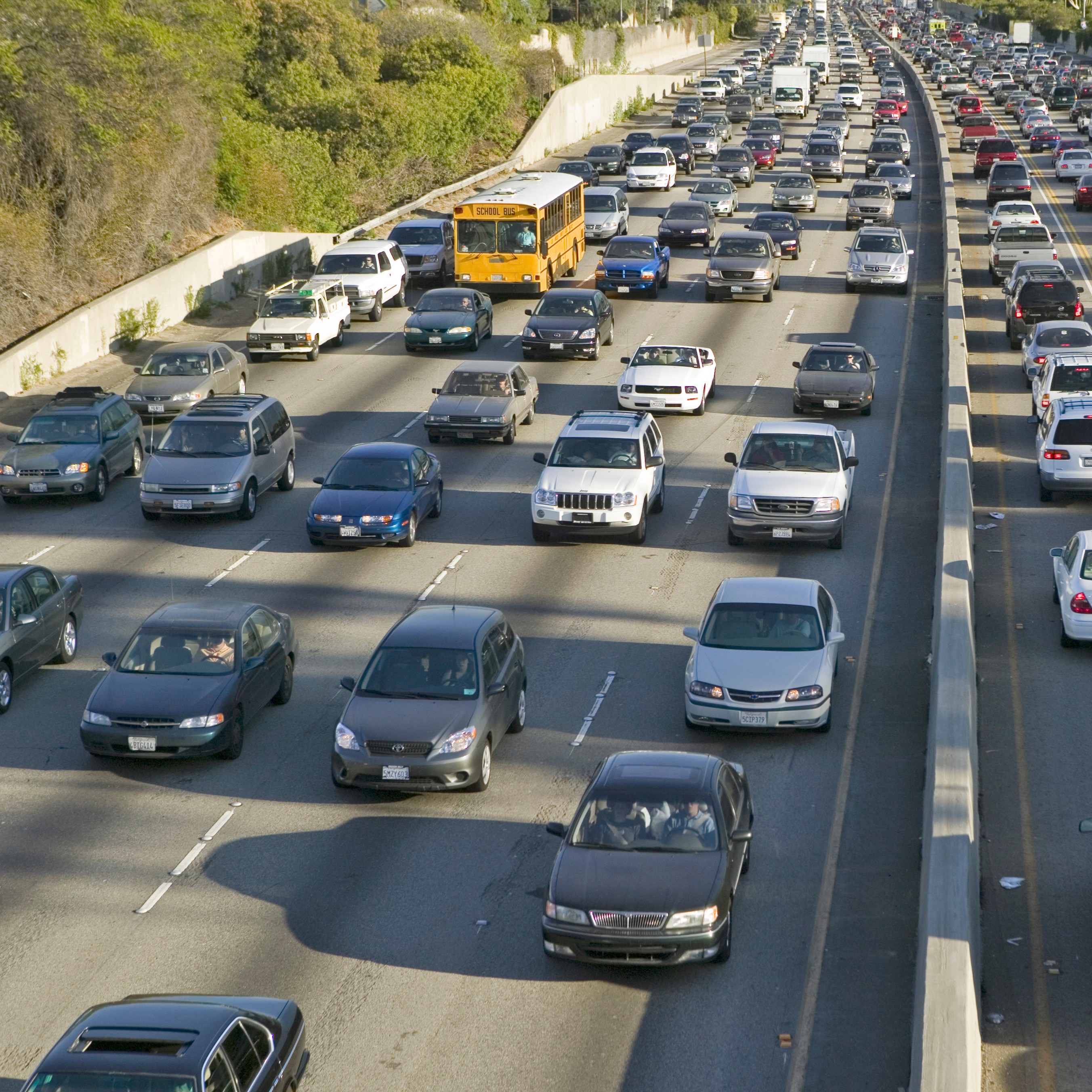
But Why: A Podcast for Curious Kids
Why does green mean go and red mean stop?
00:36:03
Why is there traffic? How do traffic lights work? How do they know when to turn red and green? Why does green mean go and red mean stop? Why are cars able to go faster than they are allowed to go…
Loading summary
Transcript72 lines
- [00:02]
Jane Lindholm
Hi, it's Jane. Every summer my family makes a list of the things we want to do while the weather is warm. It includes things like how many different lakes we want to jump into, what animals we hope to see, and new crafts we want to try out this summer. But why has made a Summer Bucket List and an invitation to you to join the but why Fan Club so you can get it. New members of the fan club will get a special but why Summer Adventure Kit with a notebook, a magnifying glass, a drawstring bag, and a list of fun summer activities and adventures to have together. With a $10 a month donation, you're supporting all we do at Boatwide to explore and encourage curiosity and learning. And you're getting the Summer Adventure Kit. Check it out and make your gift@butwhykids.org donate before we get started, here's a note for the adults who are listening. One thing experts and parents tend to agree on is that learning to swim isn't just about strokes, it's about confidence, safety and consistency. Goldfish Swim School takes a thoughtful approach to swim lessons, combining research based teaching with a warm, kid friendly environment, making swim lessons feel encouraging, not intimidating. They offer year round swim lessons for children as young as 4 months up through 12 years old. Safety is never optional at Goldfish and every lesson includes dedicated, professionally trained lifeguards on deck, all certified through Ellis and Associates, a global leader in lifeguard training. If you're ready to take the next step, Goldfish Swim School has a special offer just for listenerswaved membership and your first lesson free at participating locations. Head to goldfishswimschool.com free. Find your local school and use promo code. Free to enroll. It's an easy way to get started with lessons that focus on safety, confidence and real progress in the water. Support for Boatwise comes from Progressive Insurance. Do you ever think about switching insurance companies to see if you could save some cash? Progressive makes it easy to see if you could save when you bundle your home and auto policies. Try it@progressive.com Progressive Casualty Insurance Company and affiliates. Potential savings will vary. Not available in all states. This is but why A Podcast for curious Kids I'm Jane Lindholm and right now I am actually standing on an overpass in Los Angeles, California. Maybe you can hear the traffic behind me. I'm here in Los Angeles talking about traffic, partly because Los Angeles is known for traffic. There are almost 8 million cars registered in Los Angeles county, which includes more than just the city. There are only about 10 million people who live here. So. So that's a lot of cars. And when you think about all the miles that people drive around this city and around this county every day, it's astronomical. In fact, one of the most crowded highways in the whole world is here, the 405 Freeway. Close to 400,000 vehicles go on it every single day. And its congestion problems are pretty legendary. Some people call it Carmageddon when the cars are just stopped on the freeway. Other times people say it's called the 405 because people can only go about 4 or 5 miles per hour. Los Angeles has a lot of cars and a lot of drivers, and it's a good place to start our conversation today, which is all about traffic, but not just about lots of cars on the road. You want to know about things like how traffic lights work, and we're also going to tell you things about, like how they make highways and traffic lights the most efficient to try to ease the congestion that I'm seeing right now here at 5 o' clock on a Friday, which is called rush hour. Hey, it's Jane back in the studio now. It was way too loud to do the whole episode there. And actually that was like seven years ago that I recorded that while I was visiting Los Angeles, where I used to live. We've been wanting to make an episode about traffic and roads and traffic lights for a long time, even before I went and recorded that. And today, finally, we found someone who's excited and ready to answer all of your traffic related questions.
- [04:54]
Mike Knoedler
My name is Mike Knoedler, and I'm the director of the Transportation center at the University of Massachusetts, and I'm a professor of civil and Environmental Engineering at UMass.
- [05:04]
Jane Lindholm
Mike's job is all about helping people and things get from one place to another safely and efficiently. When he was little, Mike wanted to be a math teacher. But as he grew up, he realized he wanted to focus more on applying mathematical concepts to the real world to solve problems. And he still teaches, too.
- [05:22]
Mike Knoedler
So that was the switch to engineering, and then within engineering, that's when I found transportation. I really love it when we teach things in our classes and then see our students go on and design or build that same thing, maybe in other places. Or if we're working on a design and then you see it get built, that's really, really rewarding. And if it works as you'd intended and you've potentially saved someone's life or you've made their life better because they're able to get where they need to go, that's really, really rewarding.
- [05:54]
Jane Lindholm
Of course, when we're talking about transportation, it's way more than just cars on the road. But we've made episodes about trains and boats and bikes, and we'll link to all of those in our show notes. But our episode today is going to be about how we've developed the systems that help us know when to go, when to stop, when to walk across a crosswalk. Whether you're a pedestrian or in a car, these things are really important, and the systems are what help us be able to move efficiently and safely. Now, speaking of moving, have you ever been stuck in traffic in a car? I know lots of you have, and maybe that's when you get your good. But why? Listening in. You've sent us a lot of questions about why we get stuck in traffic.
- [06:38]
Children (Various Kids Asking Questions)
My name is Ben. I'm five years old. I live in Rockford Center, New York. Why is there traffic? Hi, my name is Lainey and I'm six years old. I live in Nashville, Tennessee. And my question is, why do we have traffic? My name is Wallace. I live in Montreal. I'm seven years old. And my question is how does congestion get made on the road?
- [07:06]
Mike Knoedler
Yeah. So traffic, in terms of, you know, the buildup of cars, let's say, or, you know, creating a bit of congestion is when there's a lot of people that want to use the same space at the same time. That's really the basic sort of underlying cause of traffic. You know, it gets a little bit more complicated when we start talking about people that might be in a car versus walking versus on a bike. And now you've got what we call mode. So we've got all these different modes trying to use the same space at the same time, and that causes that disruption in that traffic.
- [07:41]
Jane Lindholm
I live in a town that doesn't have any traffic lights. We don't have any stores. We are a very small town.
- [07:48]
Children (Various Kids Asking Questions)
But.
- [07:49]
Jane Lindholm
But we still have stop signs and we have some intersections where the roads cross or a driveway comes in where you have to know the rules even without a sign. So even for people who live in rural places, there is usually some sort of infrastructure that helps us be safe or know who's going to go when and some sort of rules or ideas around how we can move around on the roads in a way that allows all of us to go as efficiently as possible. Right. When did that kind of system start to develop?
- [08:24]
Mike Knoedler
Yeah, no, that's been. That's been in existence since people started navigating. A lot of it, even predates, you know, cars in many, in many ways. And so it's all the signs, the traffic signals, all the pavement markings that you see, all of those are intended to help keep drivers and other users of the system informed as to what they're supposed to do. But more importantly, we're really talking about trying to keep it orderly. And by keeping it orderly, we hopefully keep it safe and then also keep it efficient.
- [08:56]
Jane Lindholm
What did those systems look like before we had cars?
- [09:00]
Mike Knoedler
Some of it goes back to horse and buggy days. Right. So when we used to have people navigating. And so some of the early signage was referring to where you could and couldn't ride and what you could and couldn't do. And then obviously with the introduction of the cars, you know, we started to add in things, but we had speed limits before we had cars as an example. So, you know, people were limited in terms of how fast they were allowed to go. And then as we've added more and more technology, we've added more and more of the rules and the markings and the devices that are intended to help keep the system orderly.
- [09:34]
Jane Lindholm
So were the speed limits for things like trains or were they even for how fast you could go on your horse?
- [09:40]
Mike Knoedler
Yeah, so I think you had some horse related ones. And then obviously the early days of automobiles had speed limits as well. And so there was definitely trying to keep speeds, particularly in areas where same things we see now, but in areas where you're likely to see somebody walking, a pedestrian, interact with somebody that might have been on a horse or in a vehicle, you know, we know that that difference in speed causes a safety concern. So how do we control the speeds to make everybody safer in that situation? Situation.
- [10:08]
Jane Lindholm
And eventually we got to traffic lights and a lot of kids have questions about traffic lights.
- [10:14]
Children (Various Kids Asking Questions)
Hi, my name is Ishan, I live in San Jose, California. I am 5 years old. How do traffic lights work? Hi, my name is Evie, I'm seven years old and I live in Rockville Center, New York. And my question is, why do we have traffic lights? I'm Isidor. How do traffic lights work? I am Alice, I am seven years old. I live in Seoul, Salt Lake City, Utah. How do traffic lights work? Hi, my name is Jackson, I live in Orlando, Florida. I'm seven years old. How does a traffic light work? Hello, my name is Emily, I'm six years old. I come from London, uk. How do traffic lights work? Hi, my name is Sarah and I'm from St. Paul, Minnesota and I'm six years old. And my question is how are traffic lights made?
- [11:13]
Mike Knoedler
So traffic lights are actually more than 100 years old now. So the patent goes back to the early 1900s. 1920, right around there. And again, they were all created with the idea of keeping orderly flow. And so primarily the idea of stopping one stream of traffic so that another stream of traffic going in an opposite direction would be able to go. And so some of the early traffic signals, if you look at them, they're actually kind of unique. They were arms, and the arm would go up and say go, and then another arm would come up and say stop. And that was sort of the way that they worked.
- [11:45]
Jane Lindholm
Not like a train arm, but smaller.
- [11:47]
Mike Knoedler
Yeah. No, so it was on a mast arm. So it would be up on a regular pole, and then at the top of the pole would be an arm that would raise up and say stop or an arm that would raise up and say go.
- [11:57]
Jane Lindholm
So that was before we had electricity.
- [11:59]
Mike Knoedler
Yep.
- [12:00]
Jane Lindholm
That we could have on poles.
- [12:01]
Mike Knoedler
Yeah. And then now. Now we have a lot more technology and a lot more capability. And so we switched to lights being sort of the primary measure by which we do that. And then now we have a lot more complexity as well in terms of what we've designed at intersections. And, you know, some of the different. We call it the signal phasing. So what are some of the different phasing things we can do where we maybe tell this they can go and hold another group back, or maybe we tell the pedestrians they can go and stop all the other traffic. And so there's a lot that goes into what we can actually do to make them operate again with the idea of trying to keep everybody safe.
- [12:37]
Children (Various Kids Asking Questions)
Hello, my name is Lael, I'm five years old. I'm from Phoenix, Arizona. Why does traffic lights always work by themselves? Hi, I'm Alice and I'm seven years old and I live in Iowa. Why do traffic lights know when to go and to stop? Hi, my name is Elliot, I'm 11 years old. I live in Great Falls, Virginia, and I would like to know how big is a traffic light and how does it know when to go from red to yellow to green and keep in sequence with all intersecting roads? Hi, my name is ELLIOT and I'm 4 years old and I live in Charlotte, Vermont. My question is, how do stoplights know when to turn green or red? My name's Max and I'm five and I live in Michigan. And I want to know, why are traffic lights smart?
- [13:34]
Jane Lindholm
How do traffic lights know when to turn from green to yellow to red and back to green by themselves. And how do the traffic light patterns change depending on the amount of traffic on the road or the time of day?
- [13:47]
Mike Knoedler
Yeah, no, that's so true. So, so on some level we actually can just make them what we call pre timed where the timing is just fixed. And no matter what, it's always 30 seconds of green for this street followed by 30 seconds of green in the opposite direction. Perhaps that's pretty basic. There are some where we don't have the technology in place to sense the traffic that's there and they might operate on that pre timed schedule. So that's sort of basic. That might be in smaller locations where you don't worry about sort of traffic flows building up. But, but what's more likely. Now, a lot of the intersections that you come up to have sensors. The easiest way to think about this is that each of the legs of the intersection typically has some relationship to the different sensing technology that's there. And so if we, for example, if we're using an overhead camera, we might be able to look and say, hey, there's a car over here. As soon as you get a chance, we need to bring the green back over here because there's a car waiting to go. That's sort of the basic of how it works. But some of the sensing technologies in the ground, sometimes we put it on some of the legs of the intersection, sometimes we put it on all the legs. It's really a function of how much data we really need to be able to make the best decisions for that traffic signal and how to make it work. And then not to add too, too much, but now we actually go even further than that. We actually can operate multiple traffic signals all together. And so the traffic signals are talking to each other and saying things like, hey, I'm going to release a group of vehicles on green and they're coming your way. So you probably want to be ready to turn on a green as soon as they get there. And then we calculate out what the time is so the traffic signals can coordinate in that way to be able to again, try to optimize it.
- [15:40]
Jane Lindholm
Now when you describe it in my head, it makes me think that there's like some person in either a building who can see the cameras or, you know, it sounds like there's some little person in the traffic signal itself saying, okay, now is the time, I'm going to release all those cars. But this is. There's not a person doing this.
- [16:00]
Mike Knoedler
No, not in real time. So in fact you probably drive by them hundreds of times and maybe never notice it. But most of these signalized intersections that you would drive by, if you look to one of the corners, there's probably a cabinet, a metal box on the side of the road. And in that metal box, the easiest way to think about it is there's a mini computer. And that mini computer is really the brain of the traffic signal. We call it a controller. And that's what's taking in all the input from the detectors and anything else that might be operating at that intersection.
- [16:34]
Jane Lindholm
And.
- [16:34]
Mike Knoedler
And then that's what makes the decisions that the traffic engineers would have programmed into the logic, saying like, okay, here's what you can and can't do. Here's how you should be thinking about it. And then that controller actually implements it and runs it.
- [16:47]
Jane Lindholm
So in some ways you can think of it like it's all kind of computer programming. And the computer programming might have in its code something that says, if this happens, then you do this.
- [17:00]
Children (Various Kids Asking Questions)
If.
- [17:01]
Jane Lindholm
If this other thing happens, then you do this. So it's an automated system, but it is all coded for different, what we would call variables. Different things that could happen in an intersection.
- [17:12]
Mike Knoedler
Yep. Yeah. Not all intersections have that, but by and large, I'd say most of the intersections do indeed have that where it'll be able to go through. For example, we're not going to put on a pedestrian phase at some intersections if there's never a pedestrian that's there. But then as soon as a pedestrian walks up and hits the pedestrian push button, we'll turn on that pedestrian interval to give the pedestrian some time to cross the street. So, yeah, so the traffic engineers are the ones that have a lot of that control to be able to sort of program in the rules, and then the controller actually makes it happen.
- [17:44]
Jane Lindholm
And you mentioned that one of the most important things is to think about the different types of transportation or modes of transportation that might be using the same road or the same intersection. And so when we think about that, there are cars, there are trucks, sometimes there are trains that cross roads, Lots of times there are people walking, we call them pedestrians. There are bikes that use the same lanes as traffic, but go at different speeds. Where I live, there are sometimes horses that are using the roads or people who are using vehicles like tractors that are also allowed to use the roads, but go at very different speeds. And so part of the job of somebody who is a traffic engineer is to think about all of the different types of vehicles and people on the roads and how to allow them all to use that road safely. That must be something that you have to think really hard about.
- [18:39]
Mike Knoedler
Yeah, no, that's probably one of the more challenging things because as you were hinting at, they all have very different characteristics. So, for example, people walking might walk at one speed, and that's much, much slower than somebody has the ability to drive in a car. And a bike is probably somewhere in between those two, obviously in terms of the speed. So. So we're trying to manage the amount of space they take up, coupled with the speeds that they travel, coupled with where they're looking to go at the same time. And managing what we call those conflicts is indeed one of the more challenging things to think about from a transportation big picture system perspective.
- [19:19]
Jane Lindholm
Transportation professionals like Mike think a lot about human behavior when they design systems to keep us safe. Because whether we're talking about pedestrians, people on bikes, or, or drivers, it's the humans who are making decisions and interacting with these traffic systems and driving these big vehicles. And we humans sometimes get confused or fail to follow directions or drive over the speed limit. So it's Mike's job to take all of those possibilities into consideration when designing a system to keep people safe. After the break, we ask Mike, why does green mean go and red mean stop? And why do we drive on the right side of the road, at least in the United States? Stay with us. But first, a message for the adults who are listening. Support for our program comes from Oak Meadow. Providing secular student centered homeschooling curriculum and a teacher supported distance learning school for K through 12. Oak Meadow has encouraged kids to follow their curiosity and uncover the answers to but why? For 45 years. To learn more, visit oakmeadow.com this show
- [20:29]
Sponsor Representative
is supported by Blueland. We hear a lot about microplastics in oceans and food, but they can also come from products we use every day at home, including cleaning products. Blueland is on a mission to make it easy for everyone to make sustainable choices. Blueland believes that hard working clean products can be the norm, not the exception. So that you can do better for your family and the planet at the same time. From cleaning sprays and toilet bowl cleaner to dishwasher and laundry detergent tablets, Blueland's products are independently tested to perform alongside major brands. And the formulas are free from dyes, parabens and harsh chemicals. You'll love not having to choose between the safe option and what actually gets your house clean. Blueland is a certified B Corp and Leaping Bunny cruelty free certified. Their formulas are EPA Safe for choice certified and many products have also earned Cradle to Cradle's Gold material health Certificate. If you're looking to make a small change in your routine, you can get 15% off your first order at blueland.com prx get 15% off your first order by going to blueland.com prx blueland.com prx
- [21:38]
Jane Lindholm
this is but why? A podcast for curious kids. I'm Jane Lindholm. Today we're learning about transportation systems with Mike Knoedler, director of the Transportation center at the University of Massachusetts. Let's jump right back in with your questions.
- [21:54]
Children (Various Kids Asking Questions)
My name is Joseph and I am 7 years old and I live in New York. Why does green mean go and red means stop? My name is Alondra. I'm four year old. I am from Richardson, Texas. Why does do you mean dough? Hi, my name is Colette. I am seven years old. I am from Maryland. Why are traffic lights green, red and yellow? Why did they choose those colors?
- [22:30]
Mike Knoedler
Yeah, so there's a lot that actually goes into the actual design of traffic signals and the colors. And it's very precise, in fact. But one of the reasons that red is associated with stop is really two reasons. One, we tend to think of red just being that. That damage, that danger sort of, you know, if somebody was bleeding or concerned. Right. So. So it has that. That already alarming message, which is, you know, potentially good when it comes to thinking about traffic signals. But the other re. And the more important reason is it's more visible from further away. And so given how important red is in a traffic signal, we want that to be the most visible, visible. And so as a result of that, that's one of the reasons that we ended up with red. Now, the other colors that ended up on there, a lot of what we're actually thinking about is how are colors going to appear to people that might have color deficiency, so people that might be colorblind. And so if we think about some of the more common colorblindness patterns, we're trying to make sure that we're using colors that are going to show up differently to people that might have different color deficiencies. And so that's one of the reasons, as an example, that red is always on the top. So even if somebody can't distinguish between red and green, they can see that the top section of the traffic signal is illuminated, so they know that that's red. Or if they see that the bottom section of the traffic signal is illuminated, they're going to know that that's, you know, sort of the green. And so that's Another one of those human factors things that we can take into consideration in the design of traffic signal displays.
- [24:04]
Children (Various Kids Asking Questions)
I'm Arlo and I'm from Durham, North Carolina. Why is stop signs red?
- [24:10]
Jane Lindholm
And stop signs are red, and you talked about that color. But stop signs, at least in the United States, are also always one specific shape.
- [24:18]
Mike Knoedler
Yeah, so that's a really, really awesome question. So the red, the cautionary message and being visible from greater distances. But one of the reasons so that we. We make stop signs, octagons, is so that they're really recognizable to people. They know whether they're in Massachusetts or Florida or California, when they see an octagon, they know that it's going to be a stop sign. The other reason that we use that particular shape is, let's say that I'm on a roadway and I look to the side street next to me. I can tell from the back. I can tell from the back of the sign that that driver has a stop sign. So because it's a very recognizable pattern, that octagon, I can look. If I'm on the main street, I can look and say, oh, the driver on the side street's going to stop, because I know they have a stop sign. And so that's another reason that we use. So we use combinations of the letters or the symbols on the sign, as well as the shape of the sign, as well as the colors that are on the sign to communicate messages to people. And each of them has an intended purpose.
- [25:22]
Jane Lindholm
Okay, but then what about the color yellow or amber? Sometimes it seems like the adults around us think that an amber light at a traffic signal means speed up really fast so you don't get caught at a red. That's not what it's supposed to mean.
- [25:37]
Mike Knoedler
Yeah. So by nature, the yellow is intended to imply a cautionary message. So when you see it, for example, on a sign, it's usually warning you about some, you know, a curve coming up or some hazard that might be there on the roadway. In a traffic signal, when we see yellow, it tells you that whatever was previously on is coming to an end. That's the other meaning of that. That steady yellow is to tell you what's happening. And you're right. Some people do say, I know this means it's ending. I better speed up and go. And that's. That's not the way that we're intending it, but we do want people to be able to get safely through the intersection.
- [26:10]
Jane Lindholm
Right. So if you're already in the intersection, the message is keep going, hustle up, it's going to turn red soon. You don't want to be caught in the middle of the intersection.
- [26:18]
Mike Knoedler
Exactly, yeah. So when we time that yellow in between, we're really timing it so that if somebody had just entered, they have enough time to be able to make their way out.
- [26:27]
Jane Lindholm
And of course, these signals aren't just for drivers as pedestrians, people who are walking or rolling or strolling. We need to pay attention to the walk signal that tells us when it's safe to cross the road and when you need to wait. In the United States, the walk sign is usually an outline of a person brightly lit up in white. Once the walk sign turns to flashing, that's usually saying, if you haven't started crossing, you should wait for your next turn because you don't have enough time to get to the other side before the traffic can start going again. Sometimes there's even a countdown of numbers, which is helpful so you know exactly how many seconds you have left to cross the road.
- [27:05]
Children (Various Kids Asking Questions)
Hi, my name is Marley. I live in Pinole, California, and I'm 8 years old. My question is, why can cars go past the speed limit if it's not allowed?
- [27:17]
Mike Knoedler
Yeah, this comes up a lot. Should we be putting technology on vehicles that limits their speed, or should the roadway be able to communicate to the car, take the human out of it and tell the car, you can't go faster than this speed on this roadway? One of the reasons that cars have that ability, though, is because of when. So the. Probably the easiest way to think about this is if you're merging onto a highway, your car has to be able to get up to speed or accelerate up to speed really quickly. Well, that same thing that allows you to accelerate, you know, if you're coming onto the highway to accelerate up to speed, to be able to merge in with the traffic and the highway is the same thing that gives your car the ability to travel faster. And so that. That capability, that horsepower, that acceleration capability, gives that vehicle ultimately that. That speed capability.
- [28:08]
Jane Lindholm
Hi, my name's Nicole, and I'm a mom from Wakefield, Massachusetts. Why do we drive on the right side of the road? And of course, here in the US that's the side we drive on.
- [28:18]
Mike Knoedler
Yeah, so. So this one. This is actually goes back to what we were talking about a little bit ago. So this actually goes back before cars, back to the horse and buggy days. And so when somebody was operating a horse or right. So a group of horses, they would typically sit on the back left horse, and they would sit on the back left horse because it made it easier for them to be able to believe it or not. This is going to sound really, really funny, two things. It kept it easier for them to be able to navigate and keep the horses on track. But it also, if back in the olden days, if they had to defend themselves, they would be able to use their right arm, armed, to pull out their, their weapon and defend themselves. And so that capability existed. And so then when somebody was on that left side, they just made it easier if the vehicles or the horses and buggies that were coming at them were on the safe. So the drivers were, were side by side with each other, you know, so left, you know, left to left. And so that just became what we knew. And then, and then that became how. How we, we drive and just became the rules of the road and the norm.
- [29:33]
Jane Lindholm
That's the rules of the road in the United States. And if you drive into Canada or from Canada into the United States, it's the same. You're probably driving a car that has the steering wheel on the left side and you're driving on the right. But if you're driving in some other countries, that is not the case. And your car might look quite different. You might have a steering wheel on the opposite side.
- [29:53]
Mike Knoedler
Yeah, no, and it's, it's really, really such a weird feeling. And it's, it's a lot of historical carry over at this point. And so, you know, as you look at country by country across the world, the majority now drive right side of the road, similar to what we have. But there are still some that certainly do, and I don't envision them ever changing or at least anytime soon.
- [30:13]
Jane Lindholm
Let's talk a little bit about roads themselves and how they work. Saoirse lives in Fletcher and wonders why
- [30:20]
Children (Various Kids Asking Questions)
are some roads bigger than others?
- [30:22]
Mike Knoedler
So it kind of depends, right? So the easiest way to think about this is every road has a function, or every road has a purpose. So what's the purpose of that roadway? And so some roads are maybe they're a really important roadway because they link a town with a city, but then there's roads in that city that link that city to a bigger city. And so when we're expecting that there's going to be a lot of cars wanting to use that road, we'll design a bigger road to be able to accommodate more traffic. And then there's some other reasons too. So, for example, you know, we want to make sure that there's access to all the places that need access. And so sometimes we might design Even though it might be, like you mentioned, that you live in a smaller town, rural area. But we still want to make sure that there's the ability to get where people need to go. And so we might design a road that would be able to accommodate that. Now, roads might get bigger if we want to add bike lanes or if we want to add sidewalks. So those are some of the decisions that we make with saying, okay, how much space do we actually have available to us?
- [31:32]
Children (Various Kids Asking Questions)
My name is Hazel, and I'm six years old, and I come from Canada, Ontario. Why are there so many cars on the highway?
- [31:43]
Mike Knoedler
Yeah, that's. I mean, that human decision making is really at the heart of it all. So when we make it easier for people to be able to travel in their car, then we, as a result of that, end up with more cars on the roadway. And so that's. That's really. So there's. There's obviously we, as we make it easier for people to travel in their cars, you know, we get more, but we still see people traveling in their cars even when they know that they're going to be sitting in traffic. Traffic. And part of the reason for that might be that people want to have their car with them because maybe they need to leave by a certain time to go somewhere or they have to pick somebody else up, or they might have some other thing that they have to do. But also, and this is where we could debate, sometimes when we build up roadways to the extent that we do, we're not necessarily thinking about what other options do people have. And so this becomes a really big push to say, well, let's design better bike infrastructure. Let's design better public transportation. If people want to take a bus or a train, you know, if we design those systems, will we end up with less cars? And oftentimes the answer is yes. So we're trying to figure out what the balance is in terms of, you know, where to invest the money that we have building the infrastructure that people need or want to have based on where they live and where they want to go.
- [33:05]
Jane Lindholm
Yeah. It's also interesting because there are so many interlocking pieces that need to be in place for people to be able to live their lives in a way that allows them to do everything they need to do. And cars, for many of us are a big piece of that. But for some of us, we don't have cars or we feel like we can't get around without a car. Like when I used to live in a big city and I didn't have a car, but the nearest grocery store was five miles away, and I could only get a few groceries if I was going to take the bus back home afterwards. So thinking. Thinking about how all of these pieces fit together is a really important part of being an engineer of certain kind of engineer or a designer or thinking about city and town infrastructure. And if that interests kids, that might be a great career to go into.
- [33:49]
Mike Knoedler
Yeah. And what's really. And what's even more fun now is we're starting to see a lot of different modes emerge. So the example you just gave is you live in a city, and you want to go to the grocery store, but you can't carry five bags of groceries on the bus or the subway, for example. But now there's companies that make electric cargo bikes. And so now you can actually rent a cargo bike or own a cargo bike for the day and take the cargo bike to the store and be able to fit your five bags of groceries and then go home, but not take up the same amount of space as a car, for example. And so one of the things that excites me now and some of the challenges that the students today might encounter in the near future is thinking about what some of those technological innovations are that solve some of these problems that we're talking about.
- [34:39]
Children (Various Kids Asking Questions)
My name's Noah, and I'm five years old from Louisville, Kentucky. And my question is, how do roads carry cars without breaking?
- [34:48]
Mike Knoedler
Yeah, there's a whole science that goes into this. You could actually make an entire career studying roadways. And so, for example, think about airports. It's kind of the same exact thing, but they're carrying much heavier vehicles and expectations. So the design is really saying, how much weight is that roadway going to carry? And then based on that, weight will govern a couple of things. So what types of materials we might use to build that roadway, and then oftentimes how thick it is. So when we put together the types of materials with the thickness, that gives us a strength. And so we're able to say, based on this anticipated load of weight, what strength of roadway do we need? And then we construct that roadway with that strength so that we're able to make sure that the road doesn't break.
- [35:38]
Jane Lindholm
It's not something that you would probably look for unless you're specifically keeping an eye out for it. But, kids, if you're riding in the car or on a bus and you look at the road signs, sometimes you will actually see a sign that tells vehicles how much weight they're allowed to have to be on that road. There is often a weight limit on a road, and it will say, you cannot bring your truck on this road if it weighs more than 28,000 pounds or whatever the road limit is. And again, in my town, some of our roads are dirt. And so at certain times of the year, heavy trucks aren't allowed on the road, but they are allowed on the road when it's dry or in the winter when it's frozen.
- [36:19]
Mike Knoedler
Yeah. No. So the. So a lot of times we think about bridges as a good example, where obviously there's a weight concern at bridges, roadways themselves, and then on the highways. Sometimes when you're driving on the highways, you'll see way stations where the police or similar will be out there weighing trucks. Because the single fastest way to destroy a road is to have an overweight truck drive on that road. It would. It will really break the material and break it down so that it ruins the roadway. Because once the roadway gets ruined, it's really, really hard to fix it.
- [36:53]
Jane Lindholm
Well, both Hannah and Evelyn have noticed that sometimes roadways don't look as good or operate as well as they should.
- [37:00]
Children (Various Kids Asking Questions)
My name is Hannah, I'm five years old, and I live in Roswell, Georgia. How does the road get cracks in it? My name is Ella Wynne and I live in Philadelphia, and I'm five years old. And my question is, why are roads
- [37:20]
Mike Knoedler
sometimes so bumpy with lots of cars go over that roadway all the time. And at the same time, that pavement or that roadway section is having to sort of handle the elements of the weather. So sometimes it gets water on it, then the water goes into. Into the pavement and then freezes. So it starts to break the pavement apart a little bit. And you put all these together, and then at the same time, and this is one that people don't actually see, there's material underneath the ground so that when it freezes, it actually starts pushing up on the roadway from the bottom. So we think about what the traffic is on the top, but the roads are sort of fighting from the bottom as well, because the, you know, as the temperature changes, the soil does some really interesting things as well. So. So that's what leads to cracks and potholes. And a lot of the deformations that you see is just the amount of loading that you'll regularly see as part of that. And then we can go out, we can do some maintenance to help sort of make roads last longer. But one of the things is it costs money, and so we don't always have the money available to go out and fix the roadways as soon as there's a crack. So usually when you see one crack, you know that there's going to be another crack before long and then there'll be another crack and then you hope you're able to make the repair before you have to just fully redo the roadway. And so it becomes a bit of a game trying to figure out when to do what and then what to do specifically.
- [38:41]
Jane Lindholm
Transportation is something that affects every one of us, and it's thanks to people like Mike that a lot of times we don't even think about the systems, even though they're all around us. Mike says one out of every 10 jobs in the United States is related to transportation, which just goes to show how important these systems are in helping to make sure people and things get where they need to go safely and as speedily as is allowed. Thanks to Mike Knoedler for answering all of our transportation questions. As always, if you have a question about anything, have an adult record you asking it on a smartphone using an app like Voice Memos. Then have them email the file to questionsutwhykids.org Our show is produced by Sarah Bake, Melody Beaudet and me, Jane Lindholm at Vermont Public and distributed by prx. Our video producer is Joey Palumbo and our theme music is by Luke Reynolds. If you like our show, please have your adults help you give us a thumbs up or a review on whatever podcast platform you use. It really helps other kids and families find us. We'll be back in two weeks with an all new episode. Until then, beep beep. Stay Curious.
- [40:04]
Children (Various Kids Asking Questions)
From prx.